Open Countdown: Troon, Foursomes, Kümmel, and the Queen

Foursomes is a game in which two golfers take turns playing the same ball. In the United States, it’s usually called Scotch foursomes or alternate shot, and it’s often a prelude to divorce. (The great British golf correspondent Henry Longhurst once recounted, with disapproval, an old joke about a male golfer who was “alternately playing and kicking his ball” because he was “practicing for the mixed foursomes.”) Foursomes moves fast, and hitting just half the shots ensures that someone in the group always has a hand free to hold the kümmel, a clear, anise-and-fennel-flavored alcoholic beverage, which is sometimes called the golfer’s liqueur:

kummel

Kümmel is a popular drink at Troon. Every year, its members play a cross-country foursomes match with members of Prestwick, which is right next door. Half the field starts on the first tee at Prestwick, and half starts on the first tee at Troon. Everyone plays to the eighteenth green on the other course, breaks for lunch, and then plays all the way back. Two Troon members I played a non-foursomes round with in 2009 told me that, usually, a team scores better if it starts at Prestwick, because a typical Prestwick lunch includes so much alcohol that golfers who make the turn there sometimes have trouble finding their way home.

  (Photo by David Cannon/Getty Images)

(Photo by David Cannon/Getty Images)

Competitors who start at Prestwick get to eat lunch in the dining room at Troon. Hanging on the wall at one end is a portrait of one of the club’s founders:

troon dining room founder.jpg

Hanging on the wall at the other end is a portrait of the Queen:

troon dining room queen.jpg

A member told me that pictures of the Queen are always supposed to be hung so that her eyes are higher than the eyes of any person in any other picture in the same room. Doing that at Troon would have meant pushing her almost all the way up to the ceiling. So they didn’t.
Back-Roads Scotland: Tarbat Golf Club

P1030235

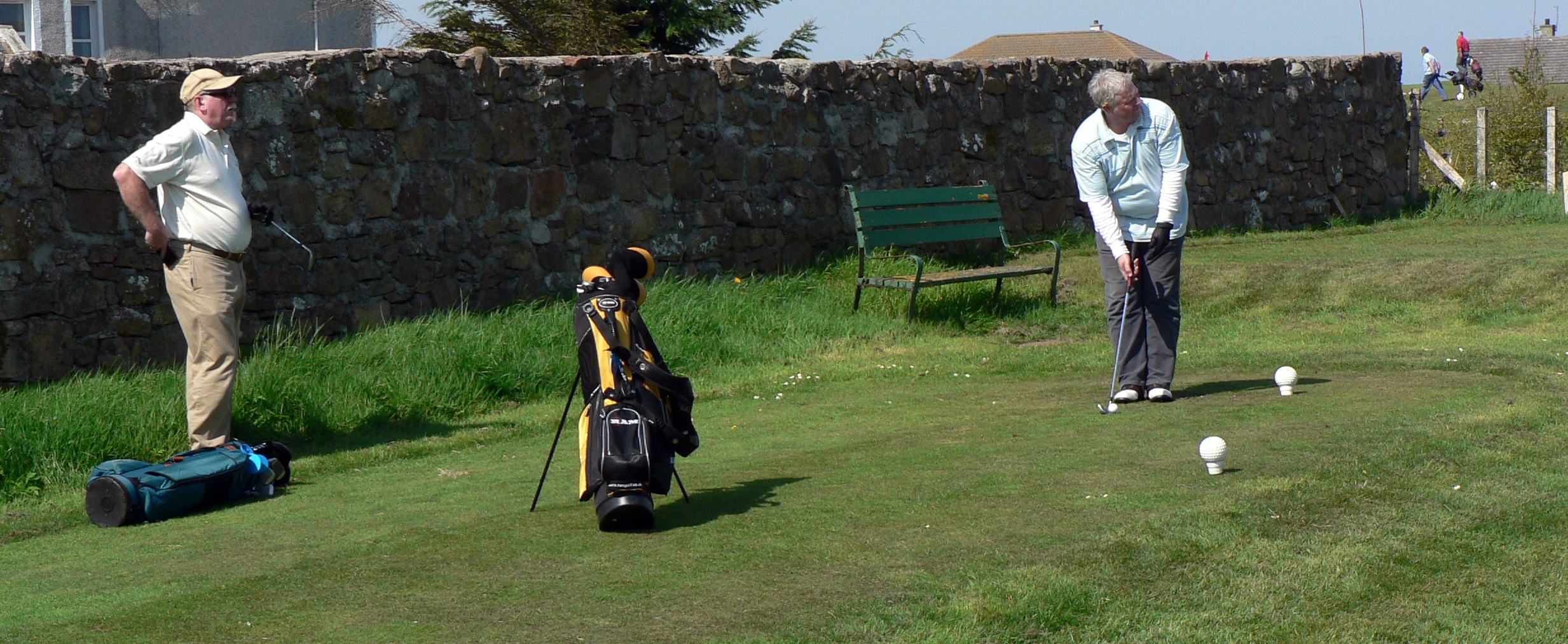
Last week, Alex Noren, of Sweden, won the Scottish Open at Castle Stuart Golf Links, in Inverness. About an hour farther to the north is Tarbat Golf Club, in the microscopic village of Portmahomack. I played a round there in 2007, and, although I wouldn’t suggest planning a trip around it, if you happen to be in the area you could do worse than to stop by.

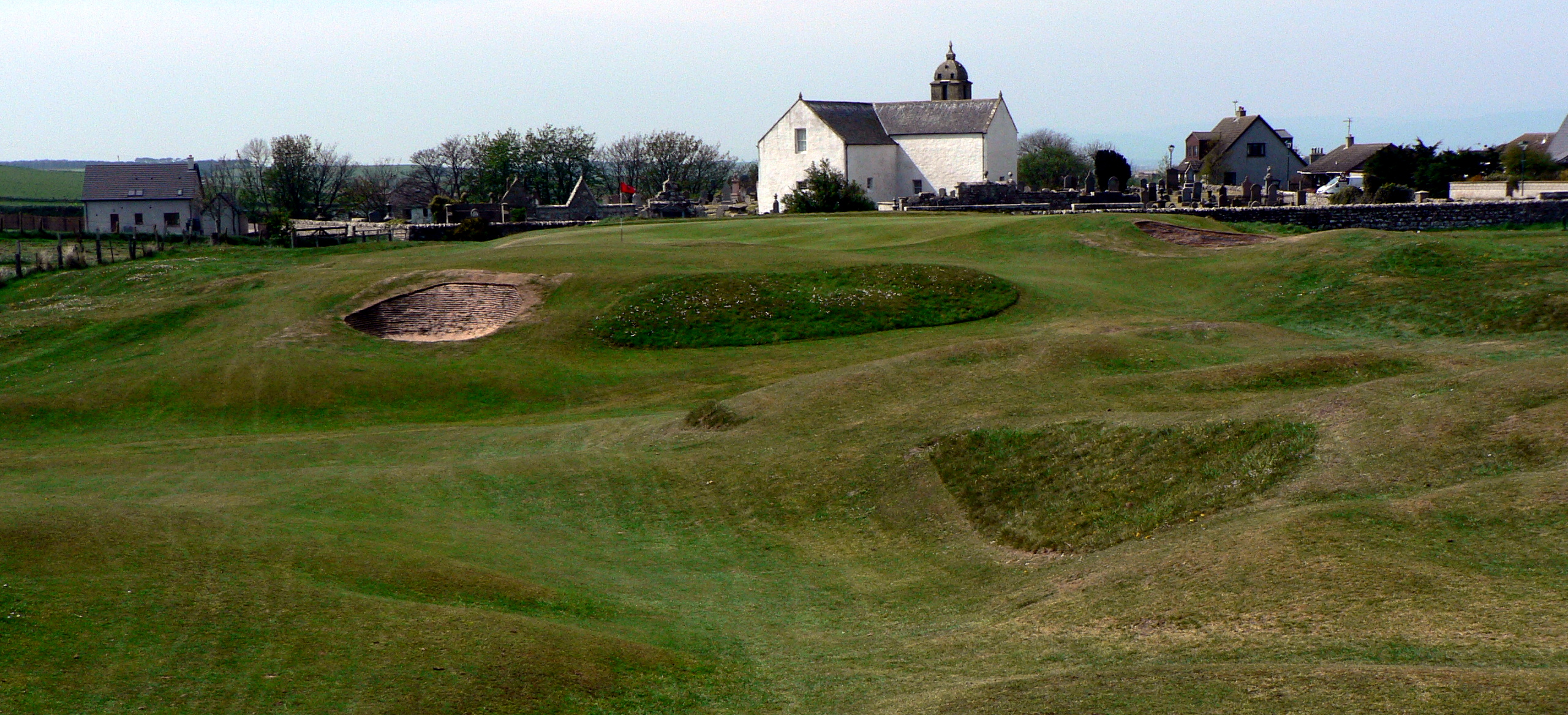
Tarbat is a links course on a sandy promontory on the southern side of Dornoch Firth, and on a clear day you can look across the water to Dornoch itself. The course has 10 holes, which are listed on the club’s website as 1-9 and 14. To make an 18-hole round, you play all the holes twice, from different tees the second time around—except the fifth, a 125-yard par 3, for which you substitute an entirely different hole, a 155-yard par 3—the fourteenth. I played with two middle-aged members, both of whom lived nearby and worked in the oil industry.

P1030229

They were competing in a club tournament but had no expectation of winning any prizes and so didn’t mind having me along. My favorite hole—in fact, one of my favorite holes of the trip—was the ninth/eighteenth, a short par 4 that plays either around, over, alongside, or into a cemetery, depending on the shape and length of your tee shot.
P1030237.JPG

P1030234.JPG

P1030239.JPG

P1030248.JPG

This is the Wrong Way to Take Divots on the Driving Range

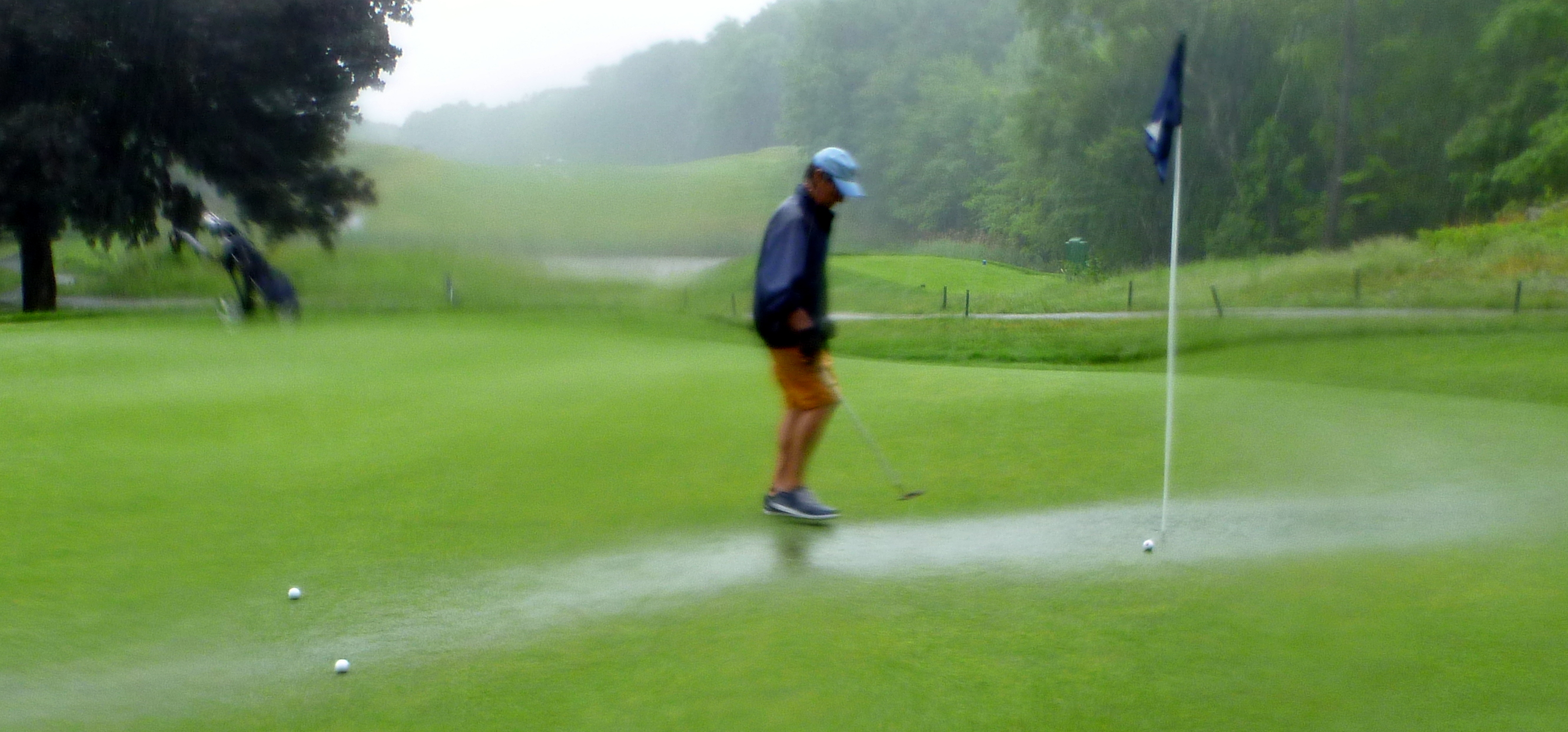
home course has a terrific practice area, which our greens crew has built and steadily improved over many years. Here are Corey (our pro, left) and Gary (our superintendent) last March, in the rain. They’re measuring yardages from various positions on the freshly re-graded and sodded teeing area, which is almost as big as our entire golf course:
P1170702.JPG

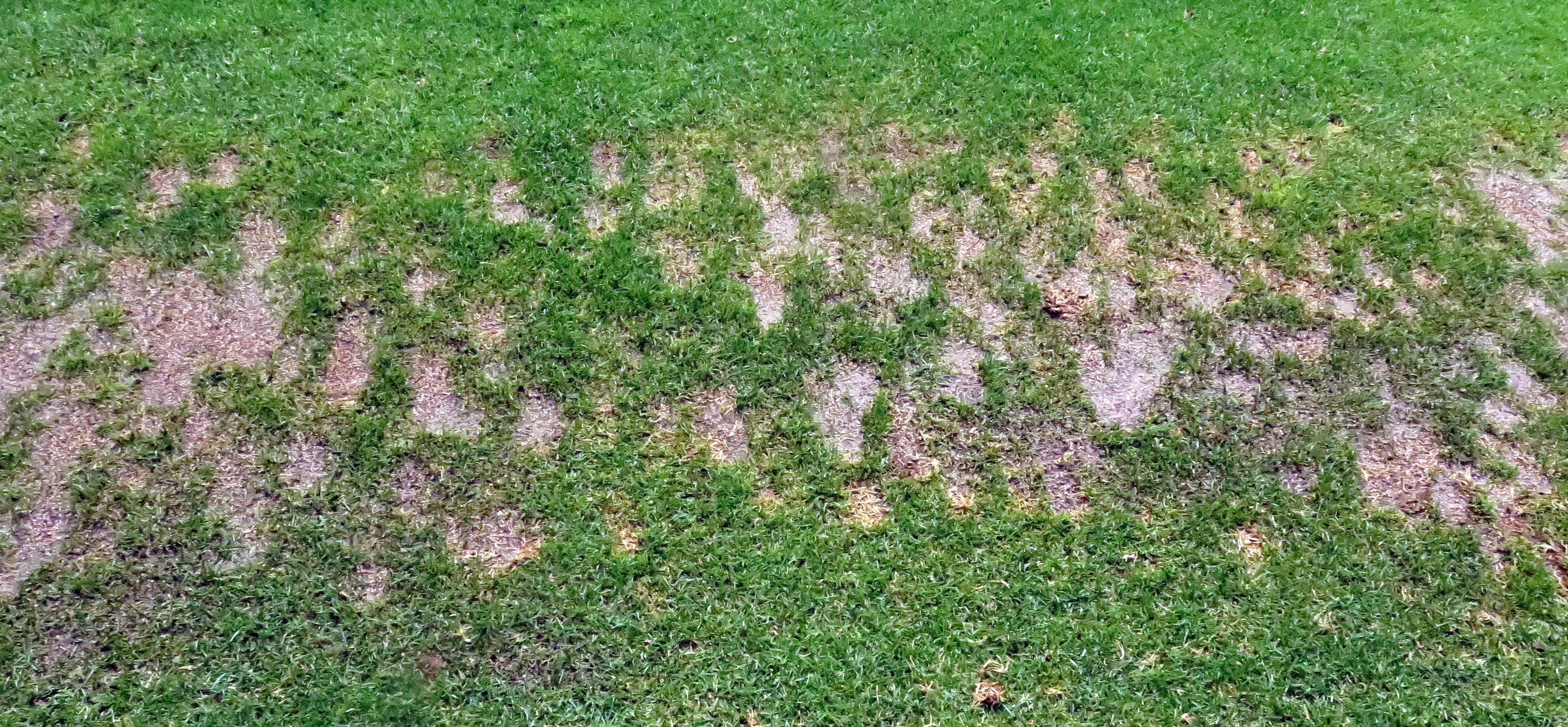
I never practice, but other people do, and recently Gary reported that repairing the damage they do to the range was becoming more time-consuming than taking care of our fairways and greens. The main problem is lazy divot-taking. People see all those acres of brand-new sod and can’t resist chopping it to smithereens:

IMG_2698

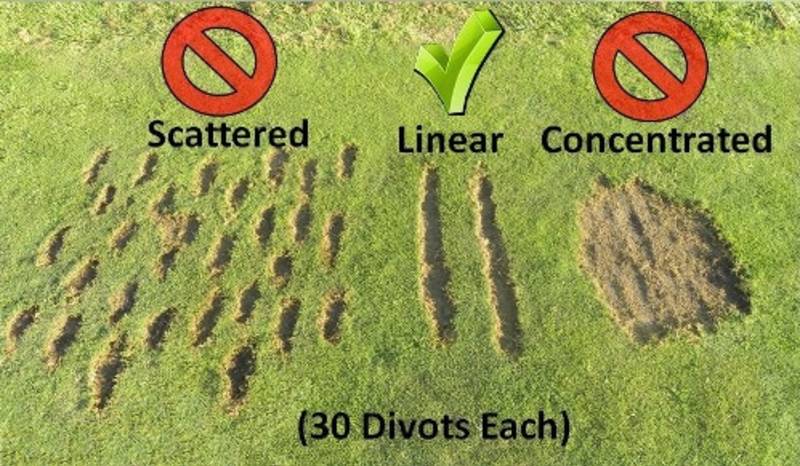
The problem is that they don’t know the proper way to take divots on a driving range: in neat lines separated by bands of intact turf, as in this diagram from the USGA:

Divotpatterns

Here’s the USGA’s explanation:

A scattered divot pattern removes the most amount of turf because a full divot is removed with every swing. Scattering divots results in the most turf loss and uses up the largest area of a tee stall. This forces the golf facility to rotate tee stalls most frequently and often results in an inefficient use of the tee.

A concentrated divot pattern removes all turf in a given area. While this approach does not necessarily result in a full-sized divot removed with every swing, by creating a large void in the turf canopy there is little opportunity for timely turf recovery.

The linear divot pattern involves placing each shot directly behind the previous divot. In so doing, a linear pattern is created and only a small amount of turf is removed with each swing. This can usually be done for 15 to 20 shots before moving sideways to create a new line of divots. So long as a minimum of 4 inches of live turf is preserved between strips of divots, the turf will recover quickly. Because this divot pattern removes the least amount of turf and promotes quick recovery, it is the preferred method.

Thoughtful golfers know how to do it the right way. Here’s Todd, who probably practices more than any other member of our club but does way less damage than guys who just slash their way through a quick half-bucket before heading to the first tee, because he takes his divots in neat lines, the way the USGA recommends:

IMG_2719.JPG

Backyard Golf: Broken Windows and Divot Equilibrium

AMSTERDAM, NETHERLANDS - AUGUST 25: A can on the course has its window smashed by a golf ball during the third round of The KLM Open at Kennemer Golf & Country Club on August 25, 2007 in Zandvoort, Netherlands. (Photo by Stuart Franklin/Getty Images)

(Photo by Stuart Franklin/Getty Images)

A number of years ago, I paid two men a thousand dollars to repair broken windows in my house. The men worked silently for a while. Then one of them said, “If you don’t mind my asking, how did all this glass get broken?”

“Oh, you know—loose stones, disoriented birds, that sort of thing,” I said. The men gave me a long look before going back to work.

In truth, I had broken the windows myself. I play golf in my yard, and the house sometimes impinges on the flight of my ball. In one year, I had managed to break at least one pane in almost every window. Now winter was approaching, and I wanted to seal the place up tight before the first hard frost.

The good thing about hitting windows with golf shots is that you seldom lose the ball: just follow the plume of broken glass across the top of the dining-room table. The bad thing is that each shattered pane means one more check mark on the debit side of the mental ledger in which your wife computes the costs and benefits of remaining married to you. (Let’s not even go into the time I broke the windshield of her car.) I often find myself wishing I had something on her—say, knowledge that she’s a sixties radical on the lam from the F.B.I.

When I started playing golf in my yard, I was careful to replace my divots. But I like hitting balls in my yard, and replacing divots is boring, and after a while I stopped. Hamburger-sized chunks of turf sometimes smack the side of the house and stick there — or slide down slowly, like a handful of Jell-O on a cafeteria wall. “Why is grass growing on the front door?” my daughter asked once, when she was little. Anyway, I’m not convinced that divots are bad for a yard: they shift the dirt around, the way earthworms do. And if you never replace them you eventually reach a point where every new one is almost certain to land in the hole left by an old one: divot equilibrium. Little by little, you move the right side of your yard to the left; then, little by little, you move it back.

P1010524.JPG

My Friends and I Went to Yale (for One Day)

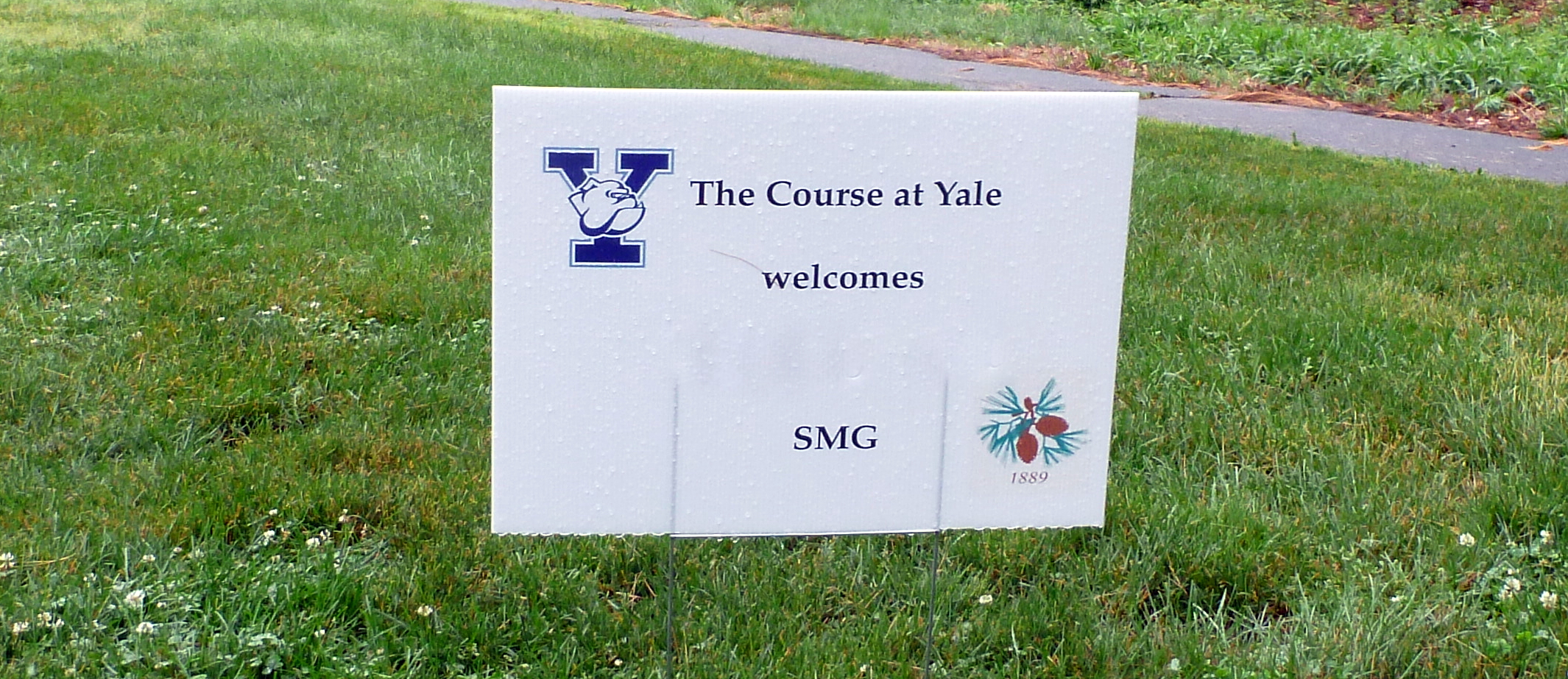
bulldogNot long ago, two honorary members of the Sunday Morning Group invited the rest of us to play a round on Yale University’s golf course, whose official name is the Course at Yale. (The U.S.G.A. lists Yale on its GHIN handicap website under “T,” for “the”—an approach to alphabetization that may not be entirely unrelated to the rules mess at this year’s U.S. Open.) Seventeen of us accepted the invitation, and the sign below greeted us when we arrived (I stole it on our way out, so that we could hang it in our locker room at home):

P1180780

Yale was a collegiate golf powerhouse in the late 1800s and early 1900s — as I learned from Golf at Yale: The Players, the Teams, the Course, by John A. Godley and William W. Kelly. In 1923, the widow of a wealthy alumnus bought a 720-acre estate near the campus and gave it to the university, and Yale hired Charles Blair Macdonald and Seth Raynor to design a golf course that would put Princeton’s to shame. The property was rocky and densely wooded, and the construction ended up costing more than $400,000, making Yale’s the world’s most expensive golf course, by far, up until that time. (Augusta National, completed five years later, cost a quarter as much.) The fairways and greens were poorly maintained the first time I played it, in the early 1990s, but everything is gorgeous now. Yale is one of my favorite courses anywhere, not least because it has more interesting blind shots than modern courses ever do. Here’s my brother, John, fiddling with the hole-location indicator on the third, whose green is invisible from the fairway:

P1180710.JPG

We had good weather for most of our round, but shortly after we made the turn it started to rain.

P1180733.JPG

Then it started to rain more:

P1180752.JPG

There was no lightning, though, and when the locals had all run for cover we had the place to ourselves. Here’s what the fifteenth green looked like when we got to it:

P1180755.JPG

And here’s Barney lining up a putt on the sixteenth:

P1180763

After our round, we were treated to lunch by Mark, our host, who used to be a member of our club but switched to Yale after his wife got a job nearby:

P1180767.JPG

I drove home with the seat heater on high, to dry out my pants. I had to run the defroster, too, because of the steam. Fun day.

P1180715.JPG

18 Good Things About Golf: No. 18

babygolfmatchbook-001

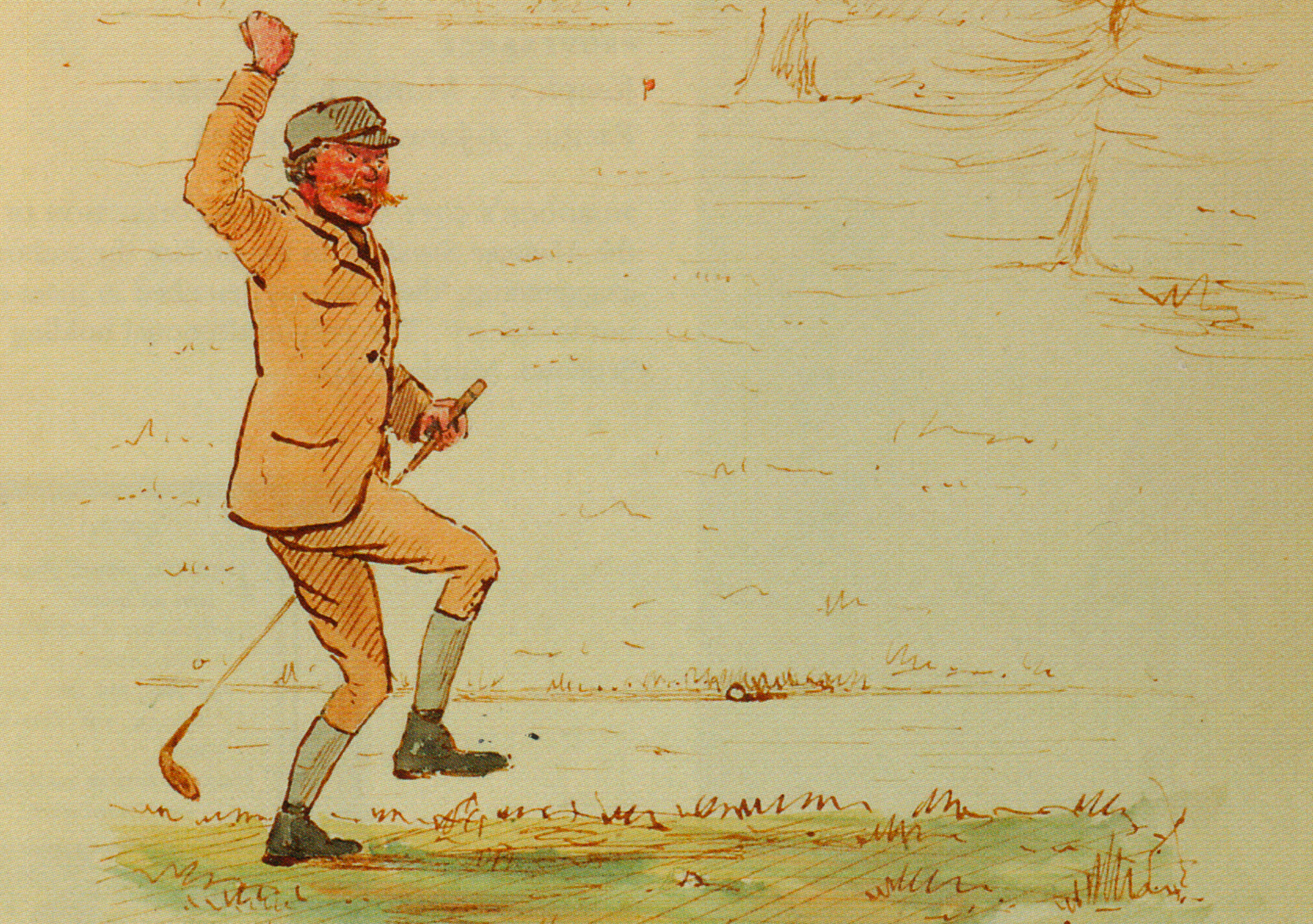
18. Golf reminds you of your mortality. Like life, a round of golf begins in easy optimism, progresses through a lengthy middle period in which hope and despair are mingled, deteriorates into regret, confusion, and resignation, and comes abruptly to an end. Teeing off on the tenth hole, I usually find myself feeling pretty much the way I did when I turned thirty-five: Hey, what happened to the first nine? Then: Oh, well, maybe I’ll birdie in. Being reminded of one’s mortality is good for one’s game. If you knew you were going to live forever, how hard do you think you would work on your putting?

angry golfer

Still, what is finally fascinating and appealing about golf is not its similarity to life but its differences from it. Unlike life, golf has rules, internationally recognized governing bodies, and a clearly defined purpose. When people say that golf is like life — or, in extreme cases, that golf is life — what they really mean is that they wish life were more golflike than it actually is. Golf is life simplified and improved. Golf would be truly like life only if, as John Updike once wrote, “some players were using tennis rackets and hockey pucks, some were teeing off backward from the green to the tee, and some thought the object of the game was to spear other players with the flagsticks.” In the end, the game is really just a game. Its tragedies are ephemeral, its victories are artificial, and the pro overcharges for balls.

Hmmm. Like life after all.

You can read the other 17 reasons here.

I Used My Awesome New Laser Rangefinder to Watch a Chipmunk Eating a Mouse

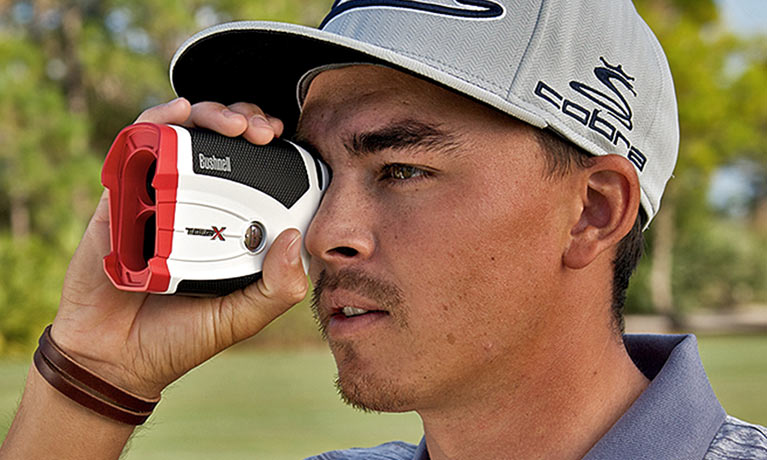
had an issue with the rubber eyepiece on my previous laser rangefinder. But my current rangefinder, a Bushnell Tour X, is great. It’s the same one Rickie Fowler uses:

tourx rickie fowler

It’s accurate and fast, it’s easy to focus, and the eyepiece is firmly attached. I can set the LED display to either black or red—a useful feature as light conditions change:

tourx modes.jpg

It gives my hand a satisfying “jolt” of haptic feedback when it locks onto a flagstick. And the battery life is seemingly measured in years. That fact alone makes it better than any GPS rangefinder, in my opinion. The Tour X comes with a hard zippered case that attaches to a golf bag and works pretty well, between shots, as a rangefinder holster:

P1170796.JPG

The Tour X is little too big to fit easily into my pants pocket—the only negative I can think of. I usually carry it in the compartment in the handle of my push cart, into which it just fits:

P1170632.JPG

The Tour X has a slope-reading feature. When you aim it at a target that’s higher or lower than you are and shoot the yardage, it tells you how much the change in elevation increases or decreases the effective distance. You can’t legally use that feature (or use a rangefinder that has that feature) in events that allow rangefinders. But you can disable it, making the Tour X legal, by changing the face plate. The red one turns the slope feature on; the black one turns it off:

tourx-w-face-plates.png

I’d always thought that measuring slope was kind of dorky, but my friend Ray, whose handicap is 3, told me that it’s actually very helpful. He uses during practice rounds, and says it’s quite accurate:

P1180803.JPG

Just remember to switch face plates before you play in a tournament. Ray forgot to do that before our Professional’s Cup, and he had to disqualify himself.

A Tour X is also useful for looking at stuff that’s too far away to see clearly with just your eyes. I’ve used mine to identify birds and distant golfers whose swings I didn’t recognize, and the other day I used it to get a closer look at a chipmunk that was sitting on a stone wall near our practice green and doing something I’d never seen a chipmunk doing before: eating a mouse:

P1180784.JPG

My Favorite Golf Shoes Keep Breaking My Heart

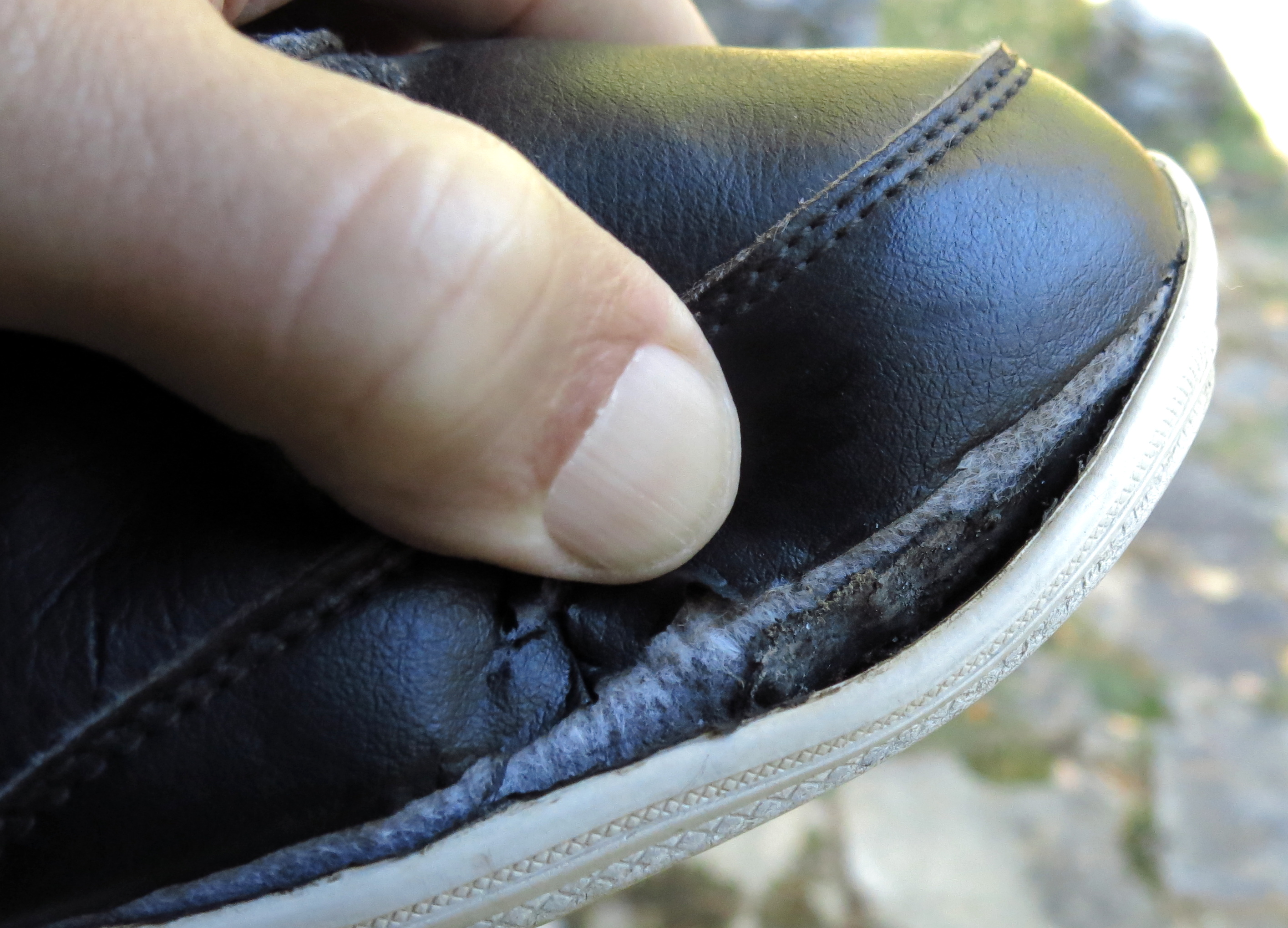
In 2011, I became an enthusiastic unpaid shill for True Linkswear golf shoes, the most comfortable golf shoes I’ve ever worn. I now own more than a dozen pairs, and I wear them even when I’m not playing golf, and many of my friends have switched to them, too. Last October, though, my most recent pair, called True Motion, basically came apart during the Sunday Morning Group’s annual buddies trip to Atlantic City:

IMG_1370

After I wrote about those shoes, I heard from a reader who had had the same problem:

image1

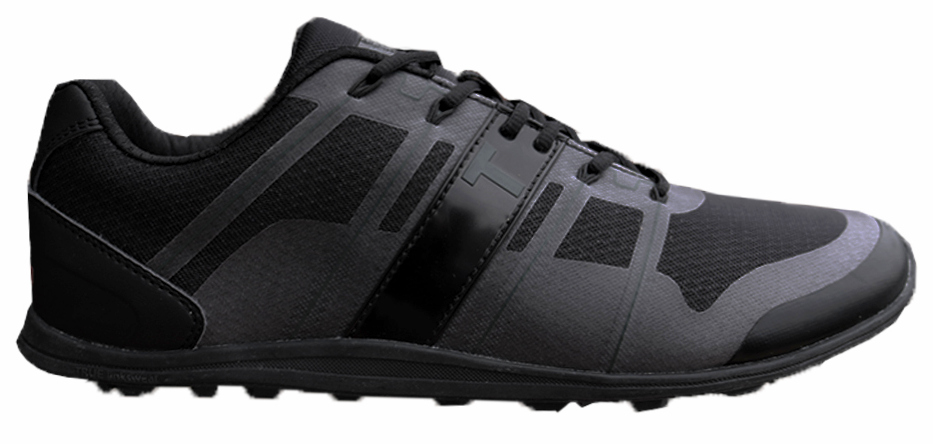
I also heard from a vice president at True Linkswear, who acknowledged that the company had had “past issues” with quality, but said that it had made “a significant switch in factories” and that the next model, called True Elements, would not only correct those issues but would also be “our first breathable & waterproof shoe” and would represent “a remarkable design and construction method” that had been subjected to “rigorous testing standards.” I bought a pair in March, as soon as I could find them online, and wore them several times to make sure they truly were waterproof—as I wrote here:

true-elements

They passed that test beautifully, so I bought a second pair of Elements and put both pairs away, the newer one still in its box, to keep them pristine for an upcoming buddies trip to Ireland, in early May. And here they are at Ballybunion:

20160505-IMG_3203

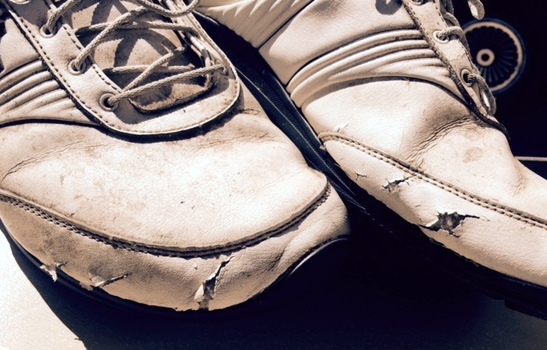
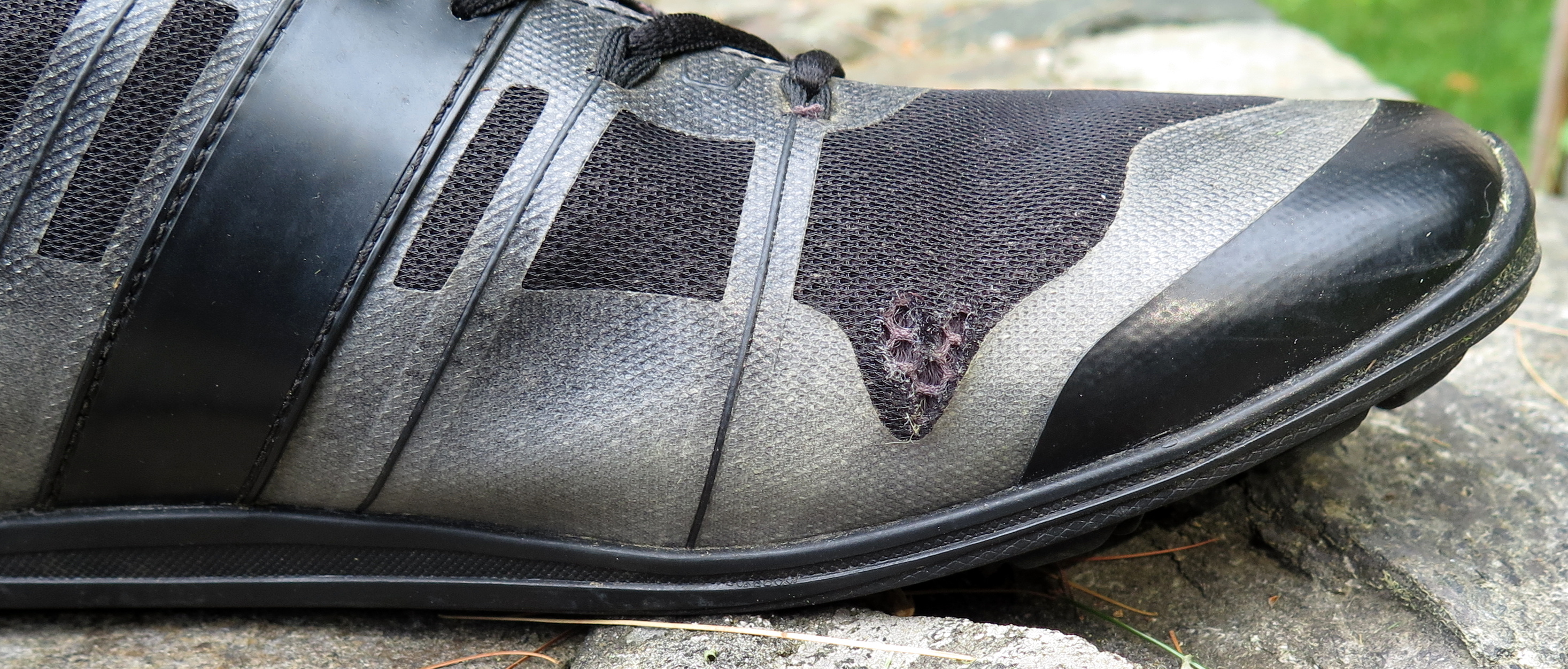
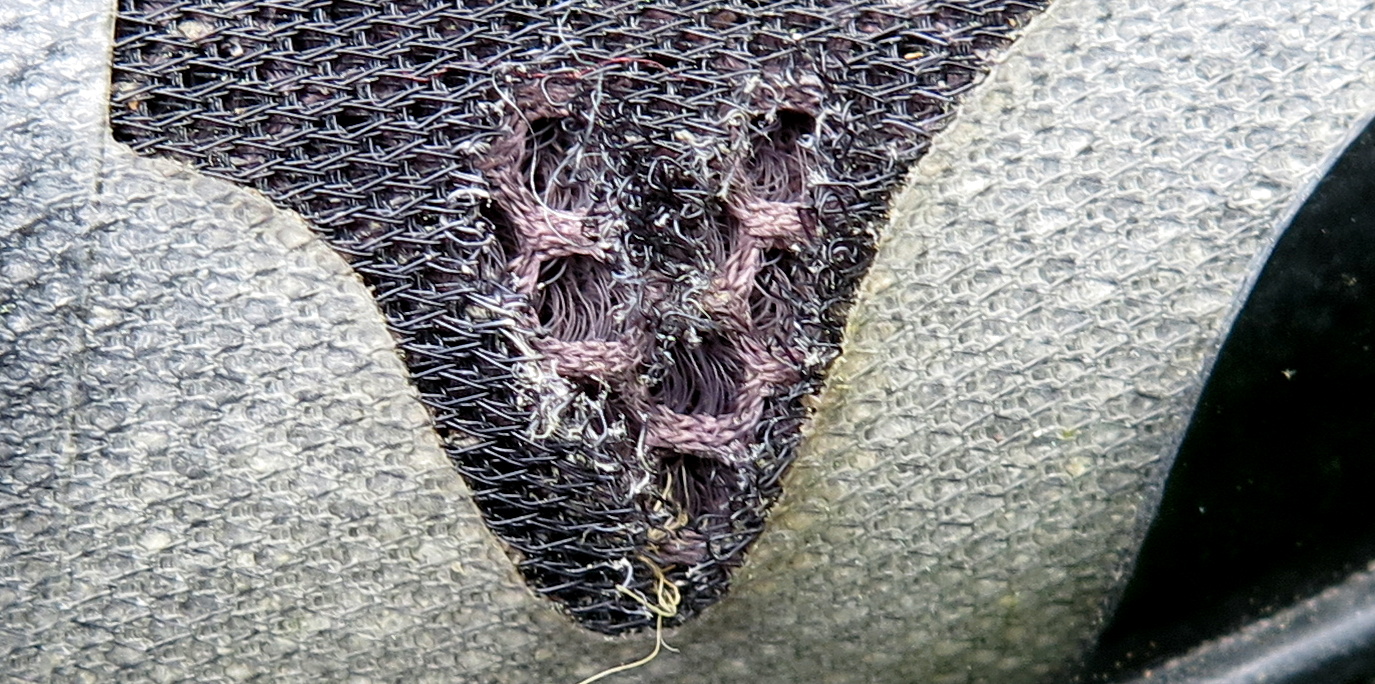
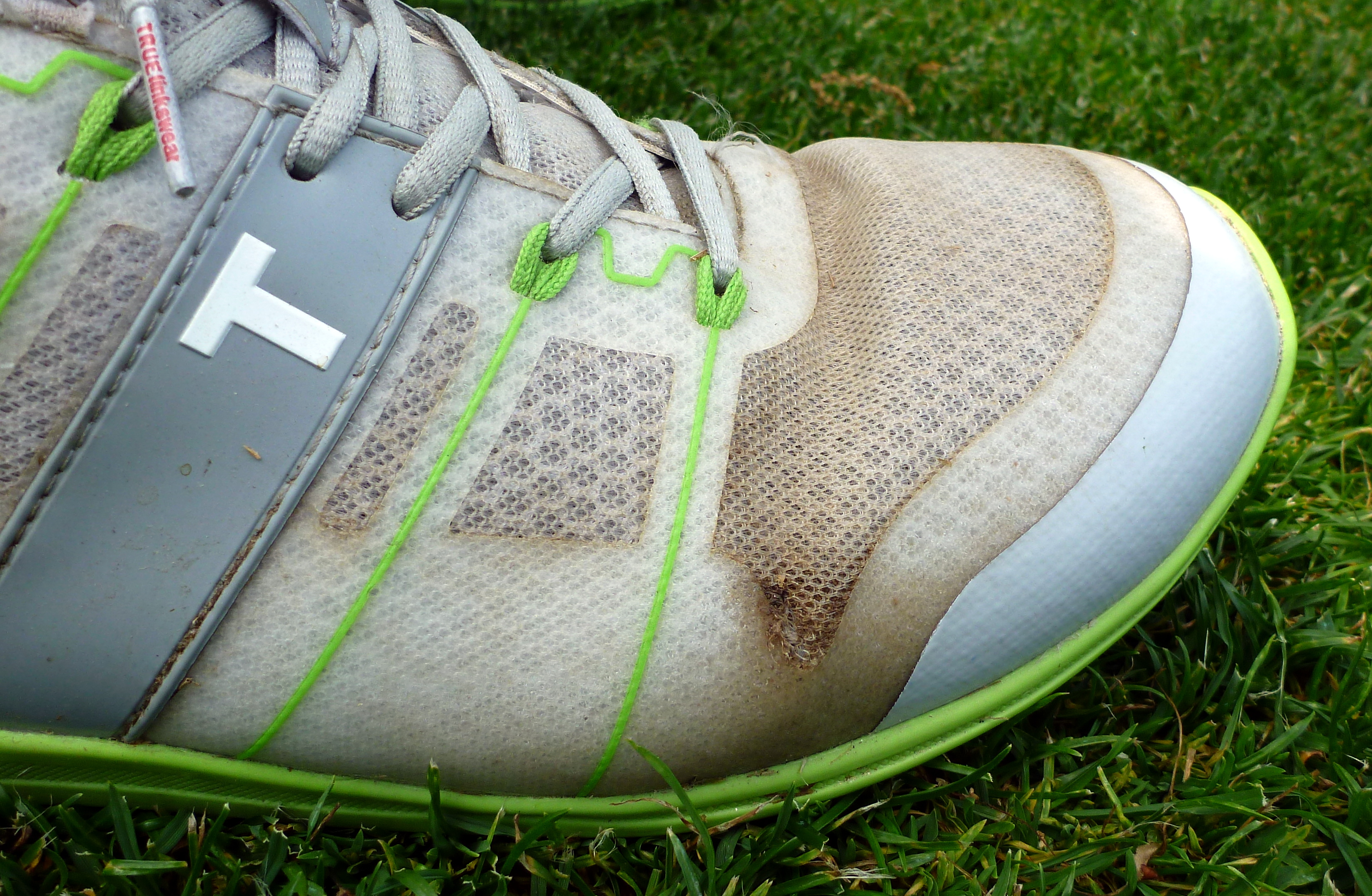
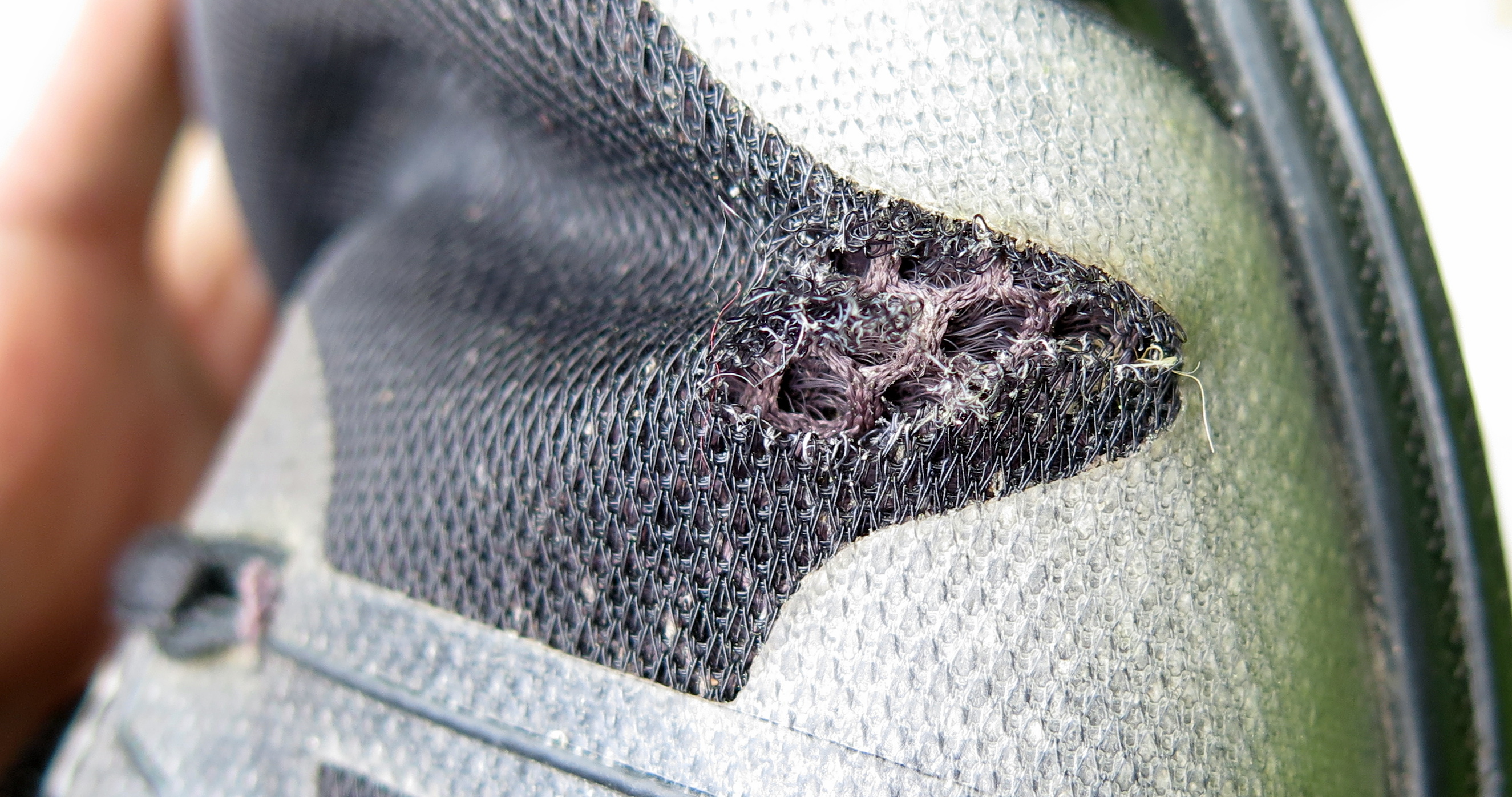
They were the only shoes I took with me on that trip, and they performed beautifully—with one big exception: before the trip was over, both pairs had developed serious holes in their fabric covering at the points where the shoe bends during walking, on either side of the ball of the foot:

IMG_2545

I don’t think the holes penetrate the waterproof lining. But they’re big, and every time I wear the shoes they get bigger. That V-shaped dip in the outermost layer seems to act like a tiny pair of scissors:

IMG_2538

I wore the newer of my two pairs of Elements only twice on the trip—and I hadn’t worn them before, and I’ve worn them only once since. But one of those shoes already has small holes on both sides, after just a few rounds. Tim D. also took Elements on our Ireland trip, and his shoes have the same kind of holes in the same places:

P1180704

Now, we played two rounds a day, on foot, on up-and-down terrain—but shouldn’t any pair of golf shoes be tough enough to survive a week in Ireland?

IMG_2541

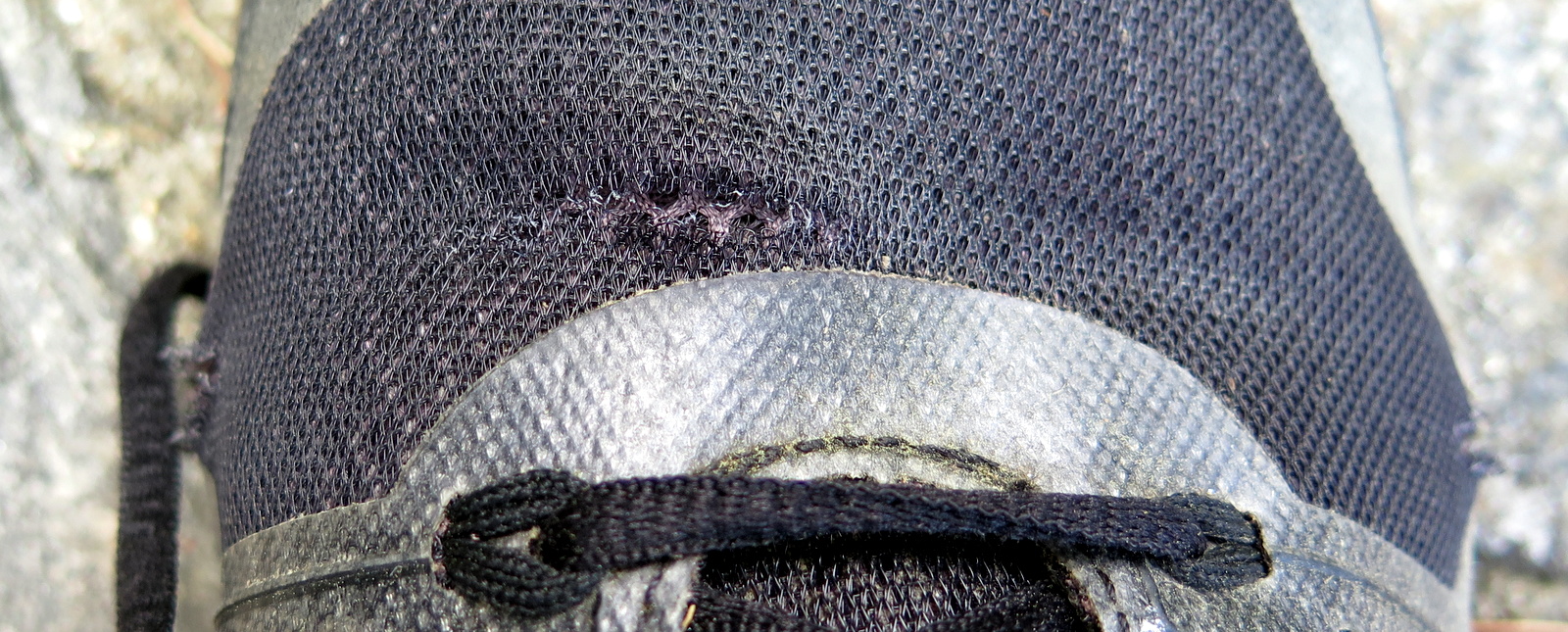
And not long after we got back from Ireland my shoes’ self-destruction opened up a new front, on the vamp, just below the laces:

IMG_2559

I sent two emails to the vice president who had told me about the company’s new manufacturing standards, but I haven’t heard back. Maybe I’ll hear from him now. But whether I do or not I’ve bought my last pair of Trues.

Dewar’s Profile: How About Scotch for Breakfast?

Because the Sunday Morning Group has an international reputation in the marketing world, the manufacturers of golf-oriented consumer items—and especially golf-oriented alcoholic beverages—sometimes come to us for help with product positioning. Recently, the people who make Dewar’s blended scotch whisky asked us to test a drink they’d come up with, called Dewar’s Hole-in-One Cold Brew. Here’s what it looks like:

dewars coffee-001

And here’s the official recipe:

3 shots of cold-brew coffee

2 shots of DEWAR’S 12-Year-Old

½ shot of simple syrup

1 dash of vanilla extract (optional)

¼ shot of heavy cream

Add the coffee, whisky, simple syrup and vanilla extract (if using) to a cocktail shaker. Add ice to the shaker to above the level of the liquid and shake for 3 seconds. Strain the mixture into tall glass with ice cubes. Top with heavy cream, optional.

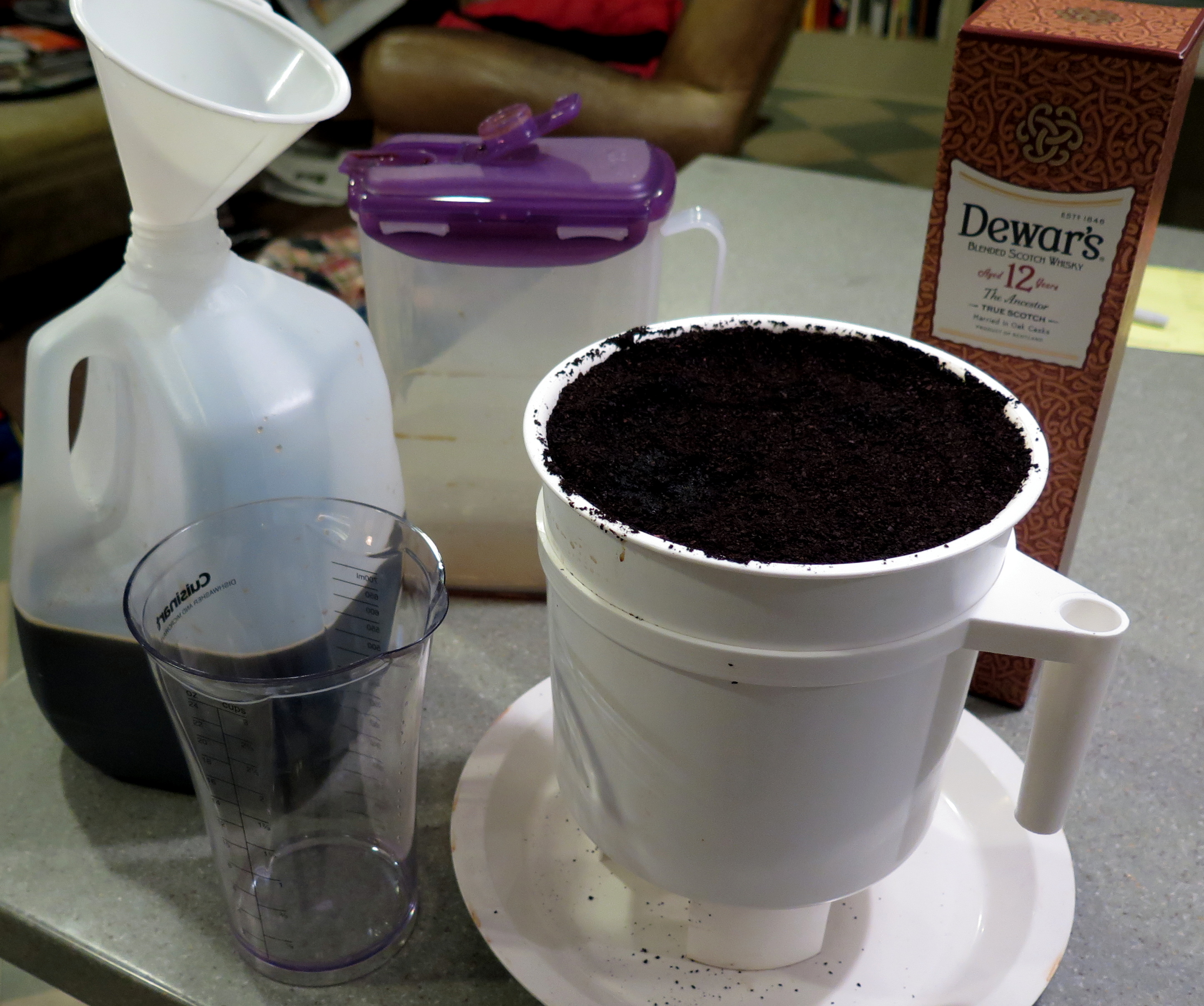
As it happens, my wife is a cold-brew nut. So with her help I mixed up a batch of Cafe du Monde Coffee and Chicory in our kitchen (and allowed it to cold-steep for 24 hours):

IMG_2405

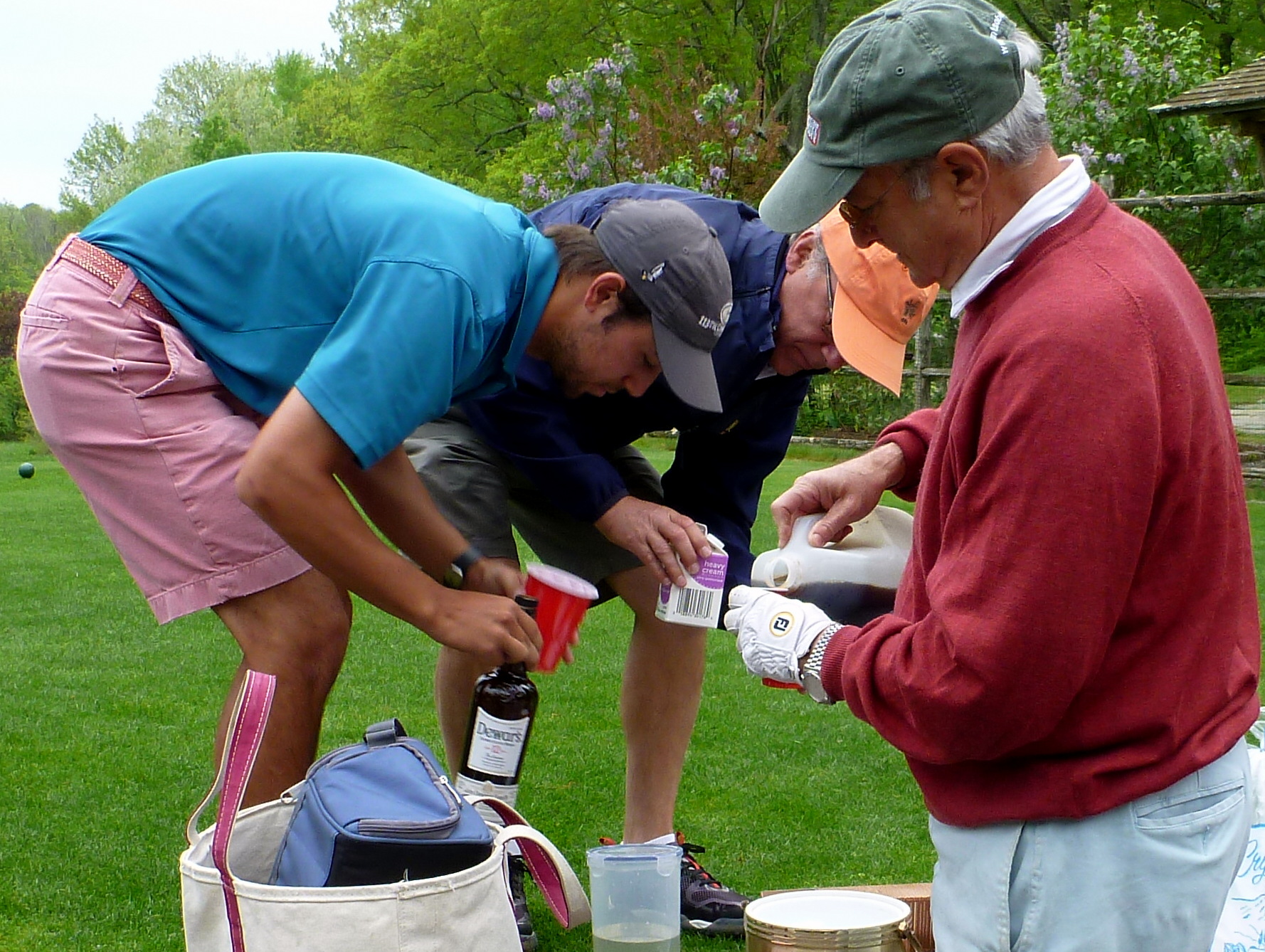
Then, on Sunday morning, I took the coffee to the club, along with all the other ingredients—including a bottle of scotch provided by Dewar’s—and set up a “test bar” on the first tee:

P1180579

The guys gave it an exhaustive work-up:

P1180609

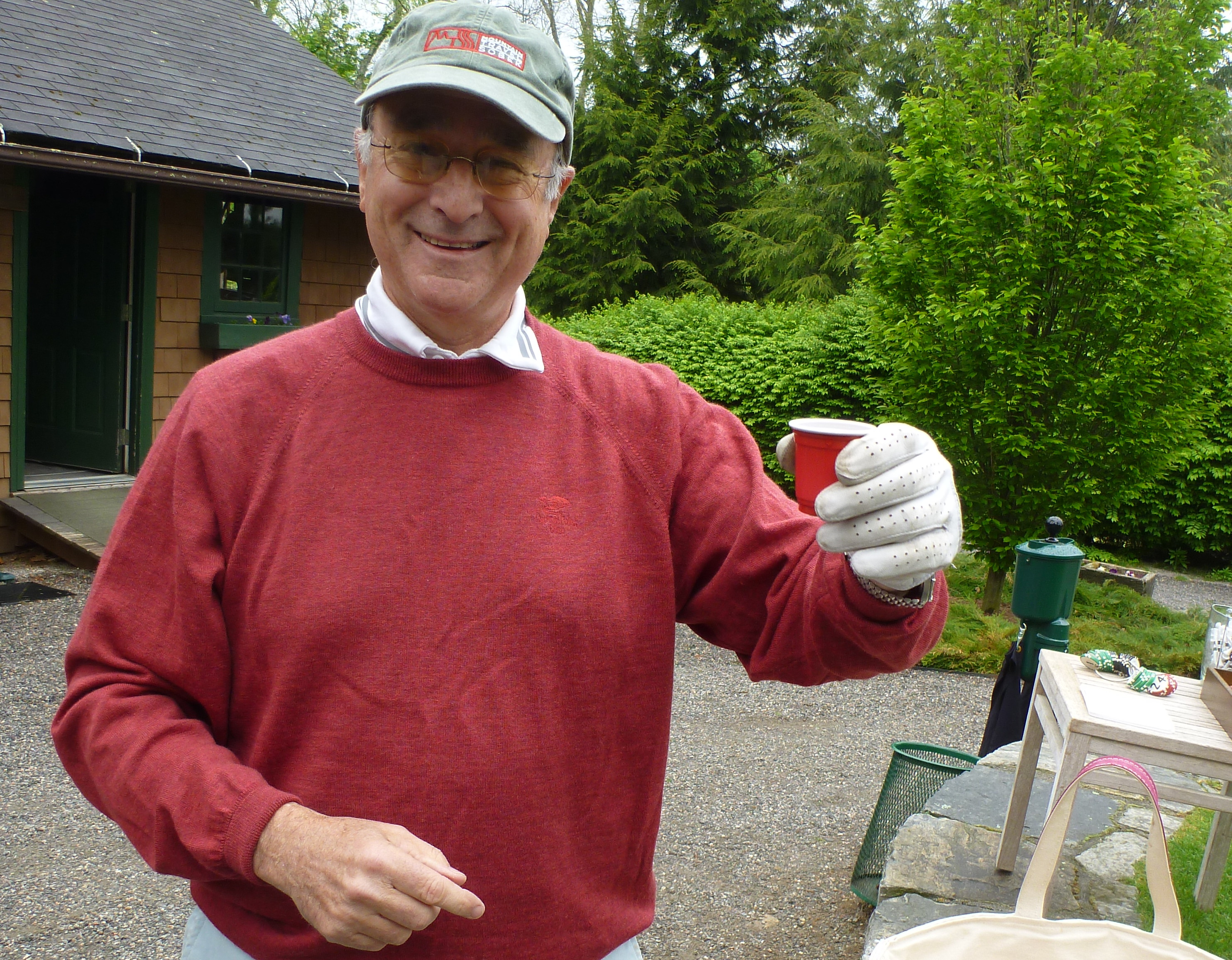
They even checked the purity of the individual ingredients. Did you know that red Solo cups came this small?

P1180573

Final verdict: all possible thumbs up. And there is no way that the vanilla or heavy cream should be considered “optional.” I had to leave the scotch out of mine, for personal reasons, but even in its virgin form Hole-in-One Cold Brew is great—like melted Haagen-Dasz coffee ice cream on the rocks. And Hacker (real name) finally had an excuse to wear his red Dewar’s fleece jacket, which he bought for $10 during a promotion of some kind at our liquor store a decade or two ago, before we had a working relationship with the company.

P1180594

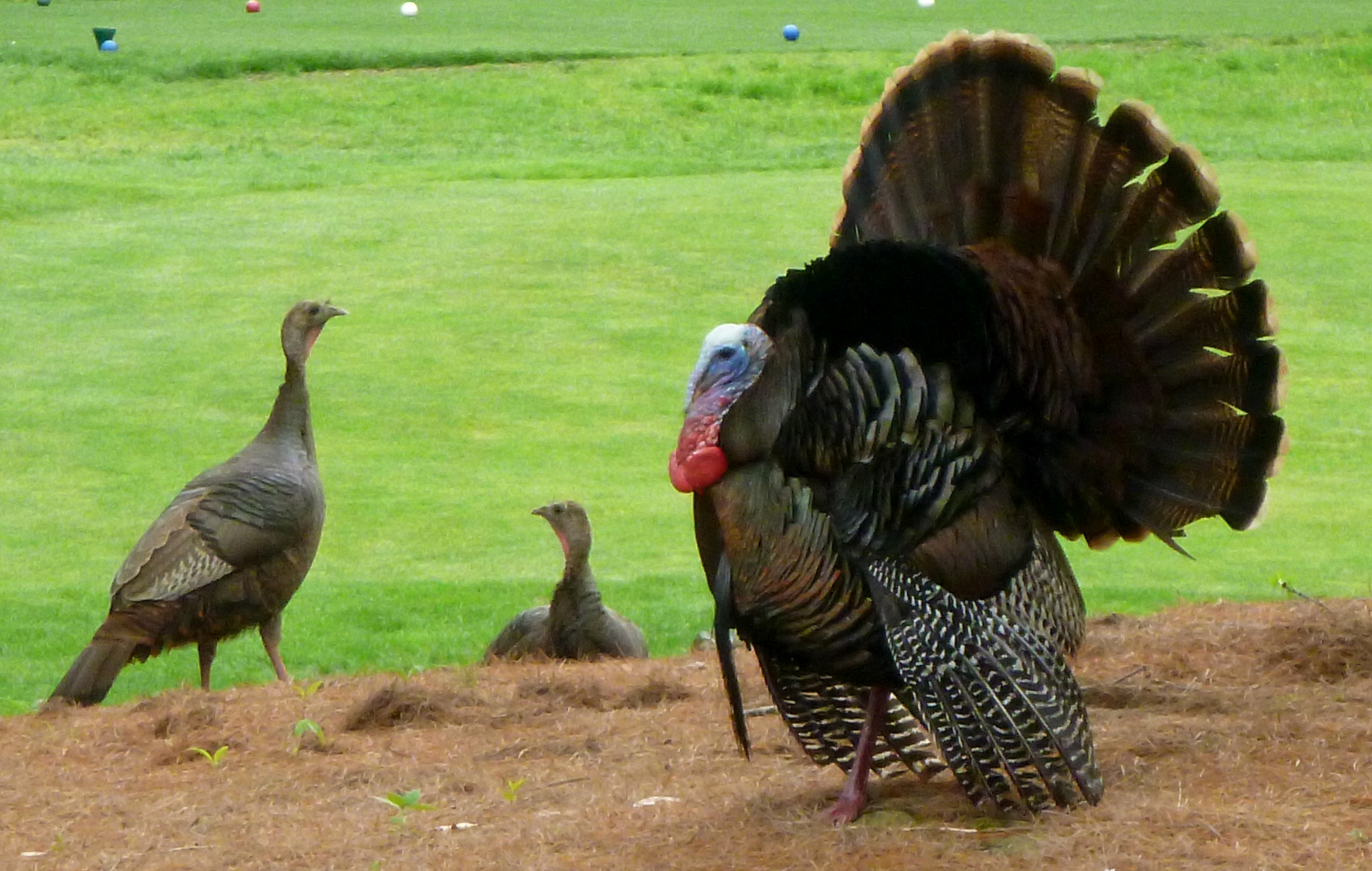
Next: how about something made with Wild Turkey?

P1180690

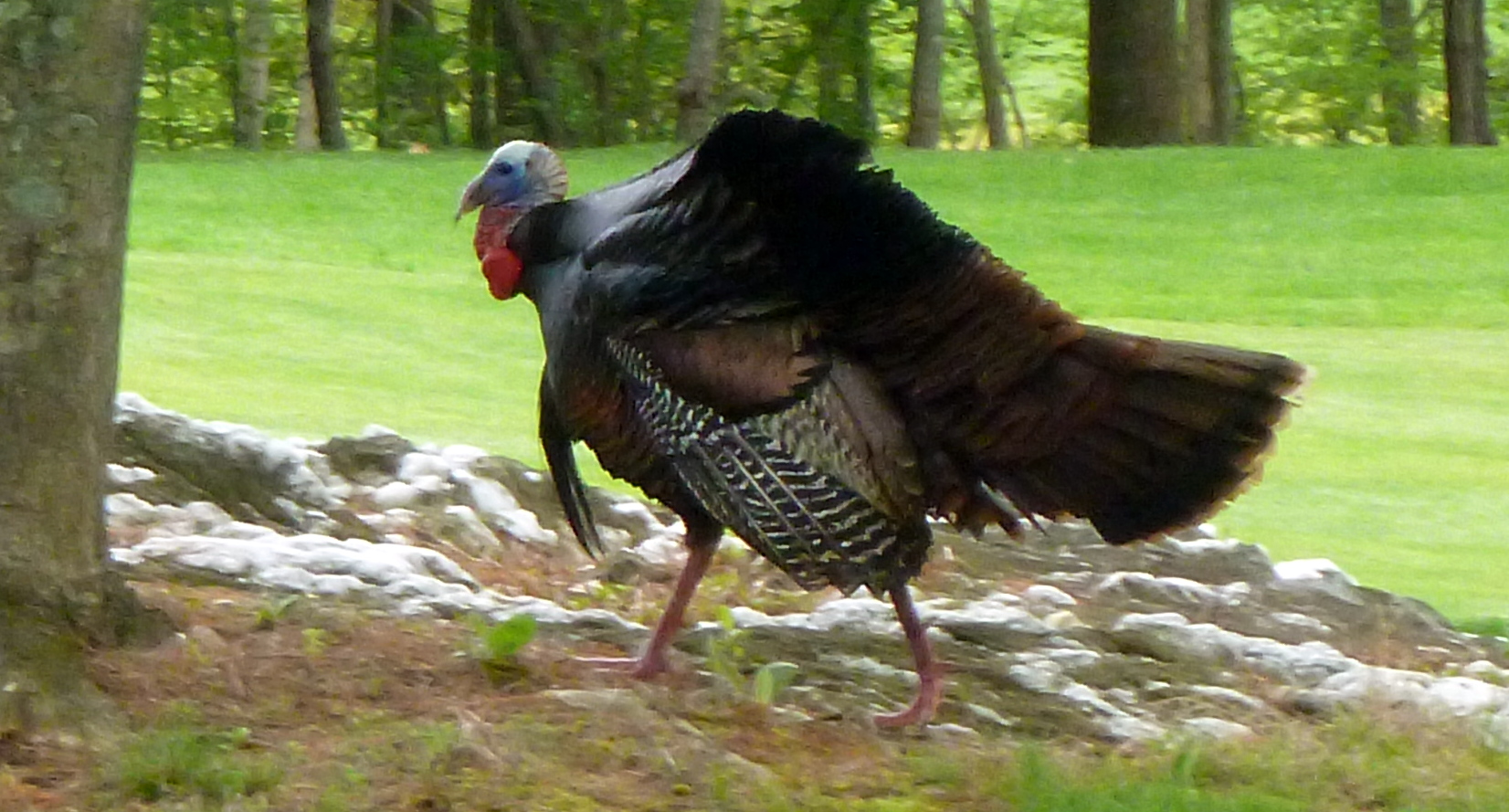
We have lots of them in our area—including on the eighth hole, above—even though Reese periodically thins the flock:

IMG_0260

Incidentally, when a detachment of the Sunday Morning Group was in Ireland, last month, Reese’s foursome spotted a fox on the third hole at Enniscrone. Reese has a den in his yard at home, and he knows how to speak fox:

He fox-barked at the Enniscrone fox three times, and all three times the fox turned around. And Reese can gobble, too.

P1180679