World’s Greatest Putting Contest

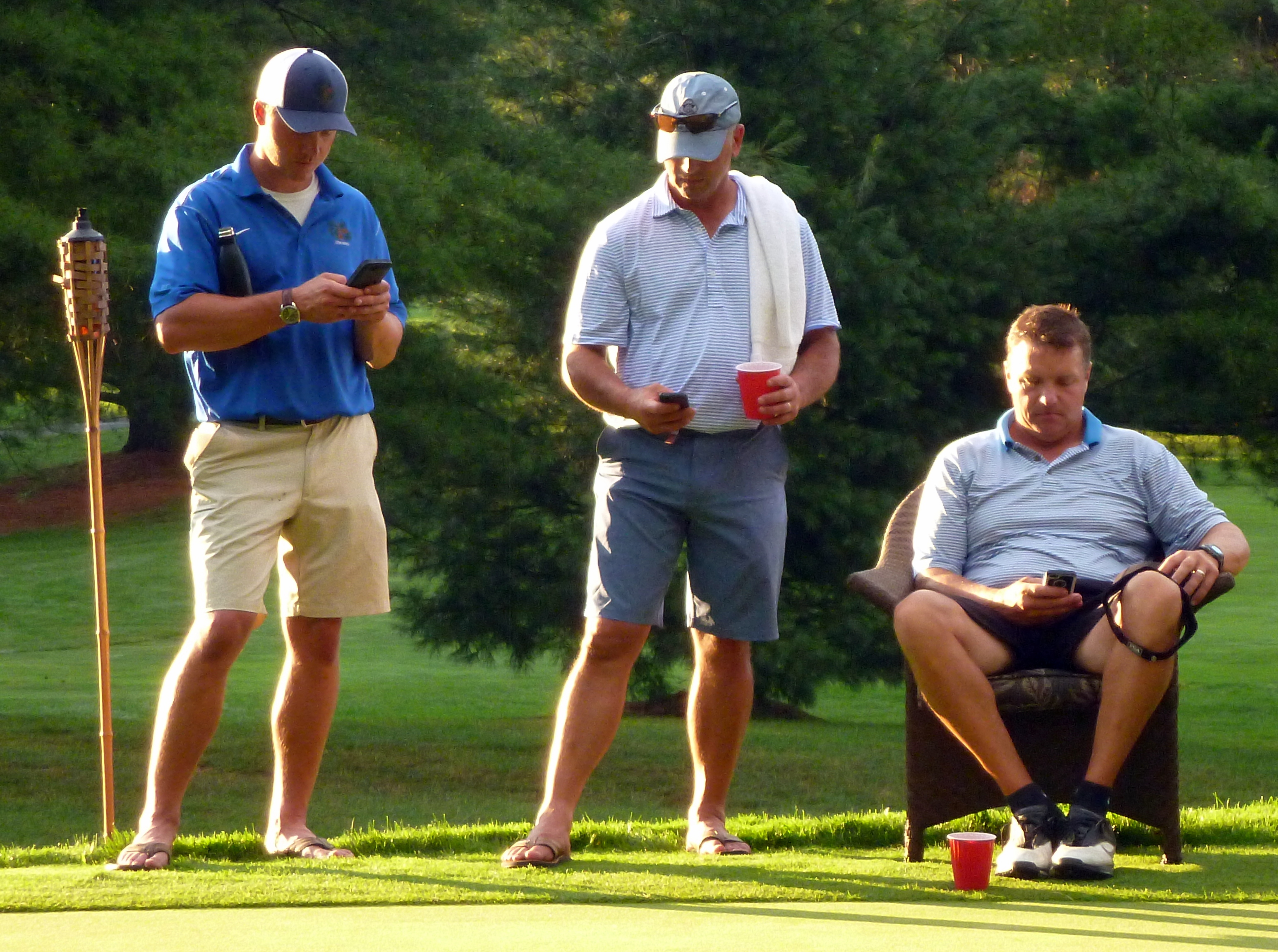
My golf club’s annual men’s member-guest is the world’s second greatest golf tournament, after the Masters, and our member-guest putting contest, which begins on Friday at noon and concludes on Saturday evening, is the world’s greatest putting contest. It takes place on the practice green:
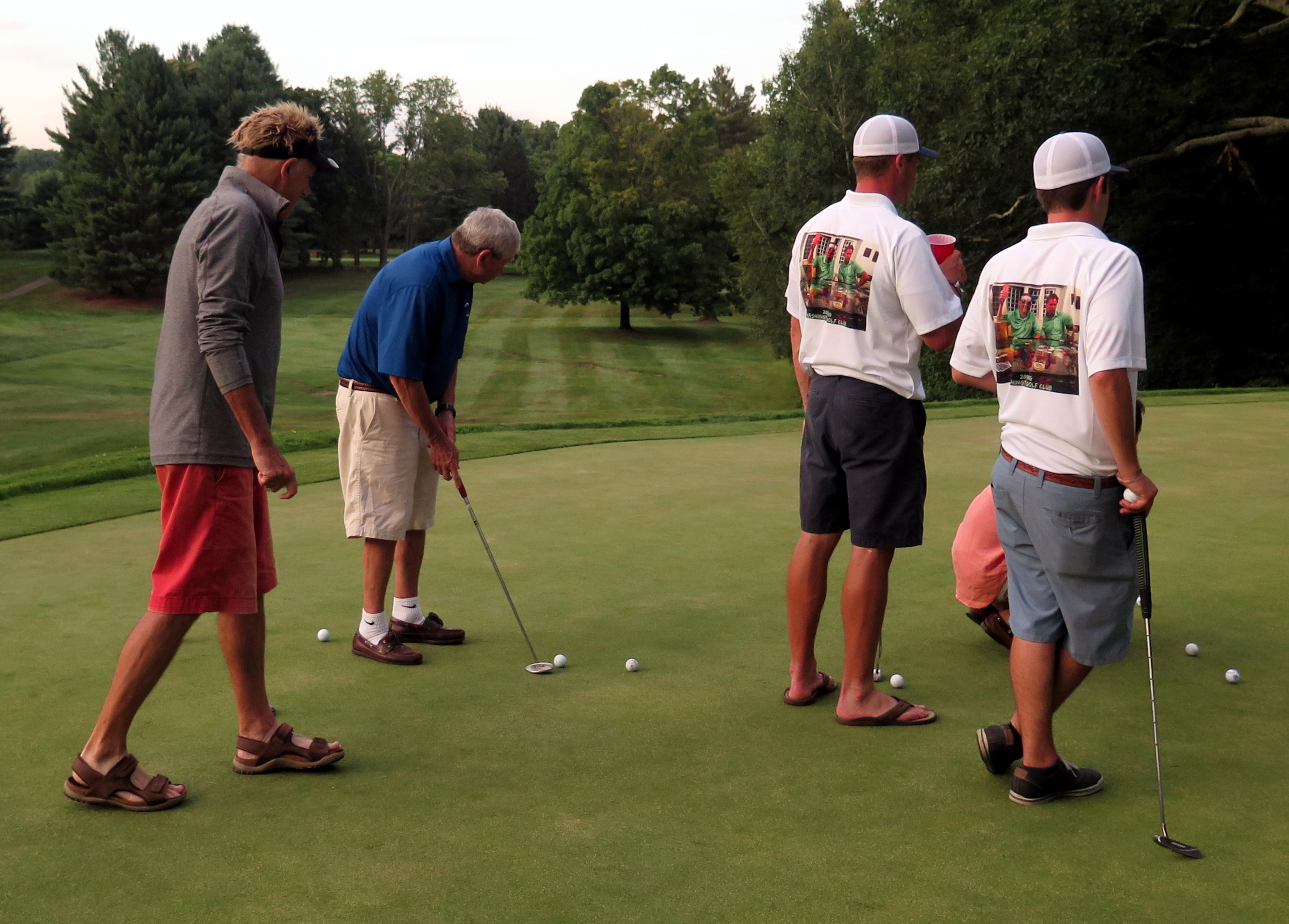
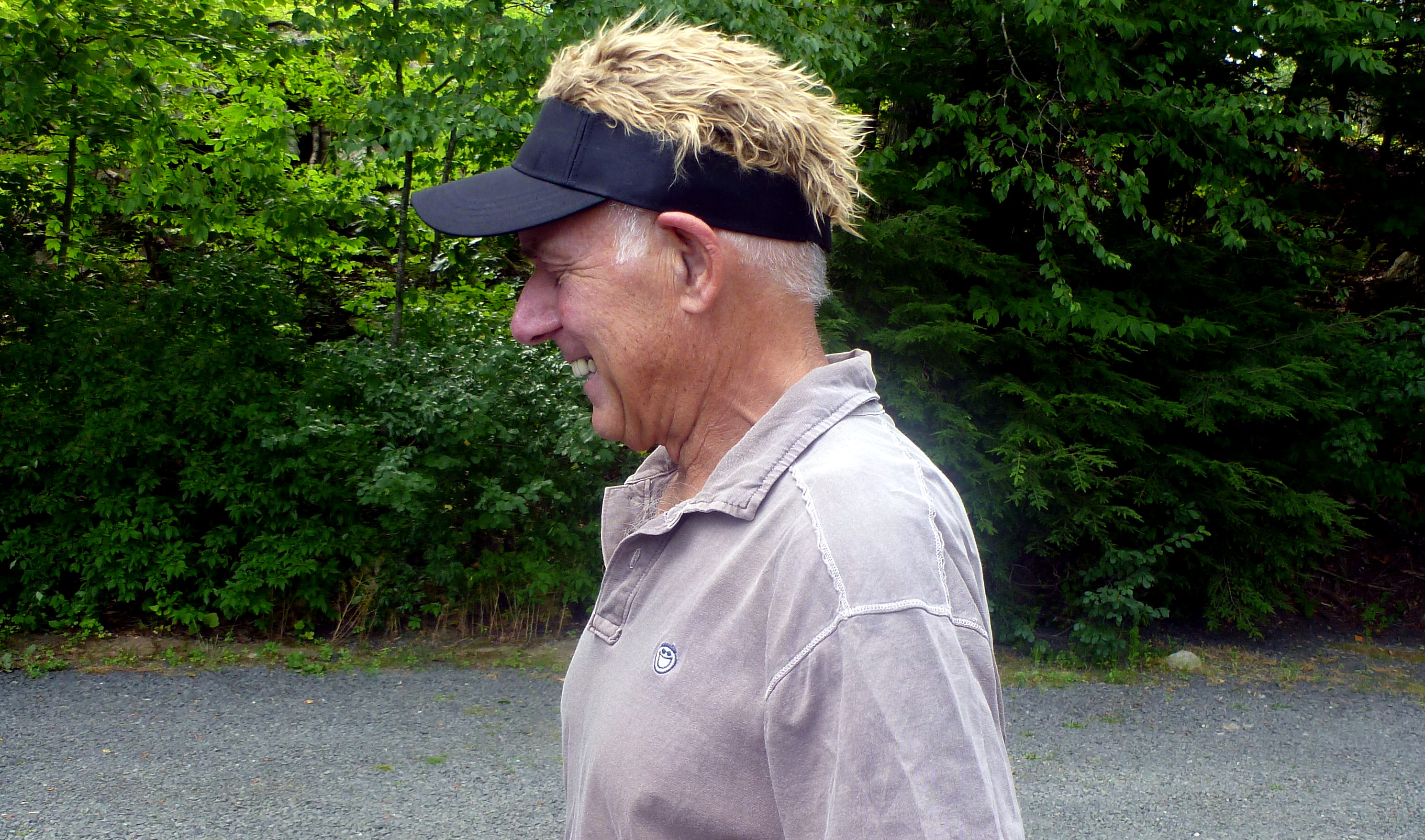
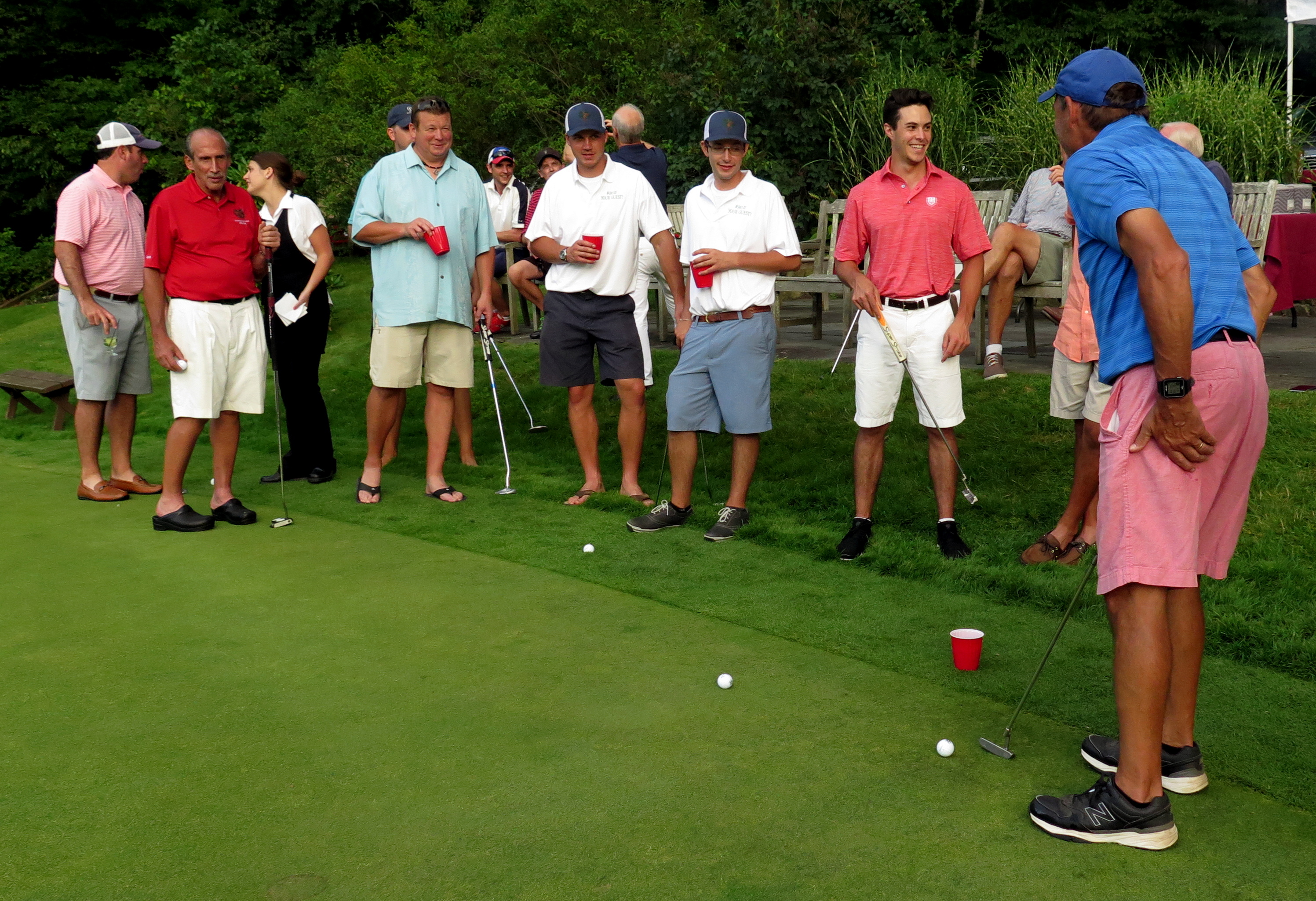
IMG_3240Our superintendent, one of our former superintendents, and our pro create the course, which has four holes. For ten bucks, you and your partner go around twice. Scoring is best-ball, and the four pairs with the lowest eight-hole scores qualify for the final. If your ball rolls off the putting surface—as it’s likely to do, since the holes are cut close to the edges, and the green is triple-cut and rolled—you are assessed a penalty stroke. In the photo below, Tony, at the far left, is wearing an Ian Poulter wig visor, to replace the hair he’s lost to chemotherapy, and Hacker (real name) is getting ready to incur a one-stroke penalty:

img_3262

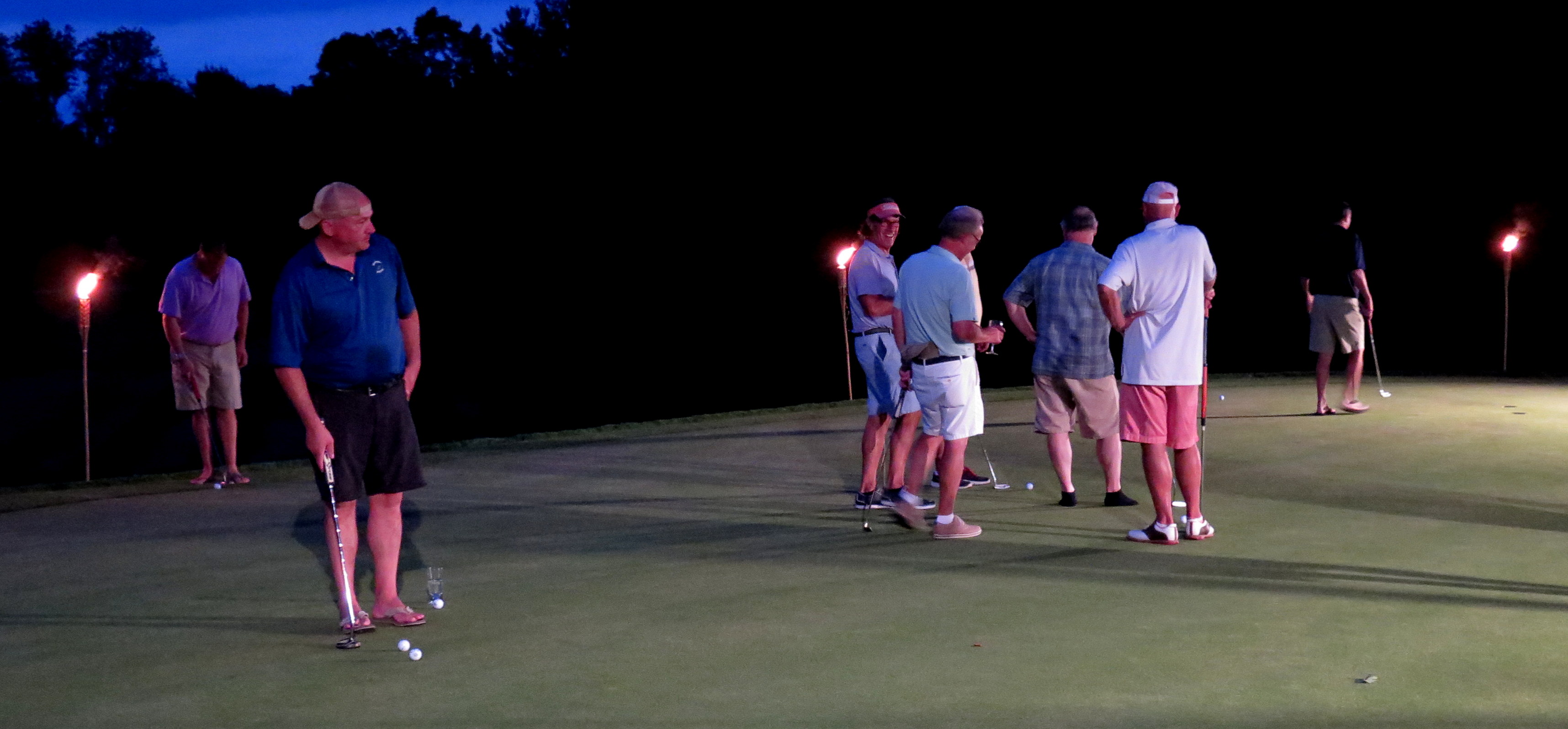
Qualifying continues into the evening:

img_3303

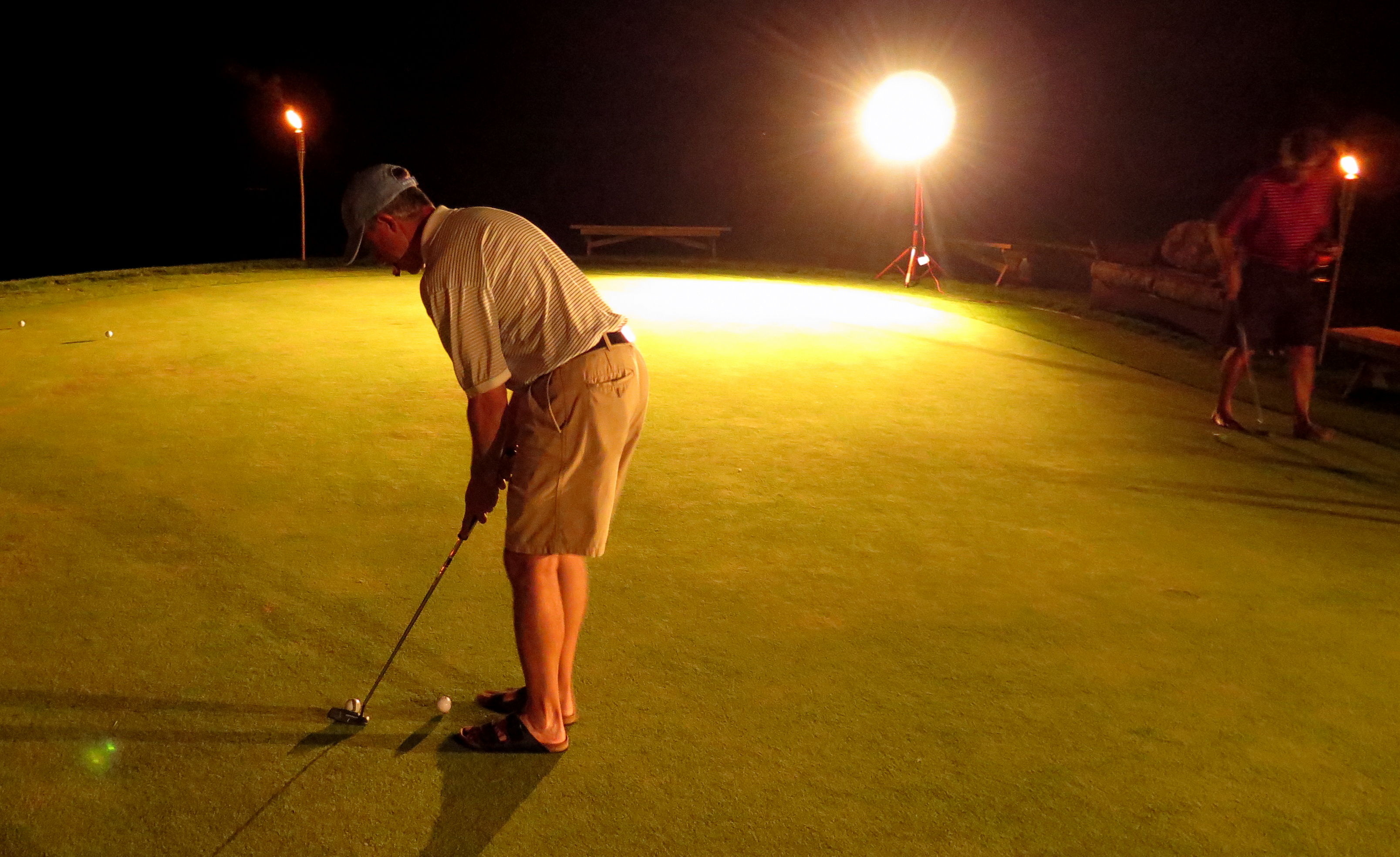
Once the sun has gone down completely, C.J. and Jaws supplement the club’s Tiki torches with a couple of super-powerful shop lights they own:

img_3323

This year’s course was especially diabolical because the fourth hole included a double water hazard: two bowls of blue-dyed water embedded in the green so that the tops of the bowls were flush with the putting surface. To have any chance of making the putt, you had to slide your ball between the hazards, as Reese is attempting to do here:

img_3330

The two balls you see on the right-hand side of the photo above are actually the tee markers for the water-hazard ball drop. Many players had to use the drop, including my brother and me. Late in the evening, one of the guests lifted one of the bowls out of the ground and drank a little of the water, to see what would happen. Somewhat surprisingly, nothing happened—at least, not immediately.

img_3344

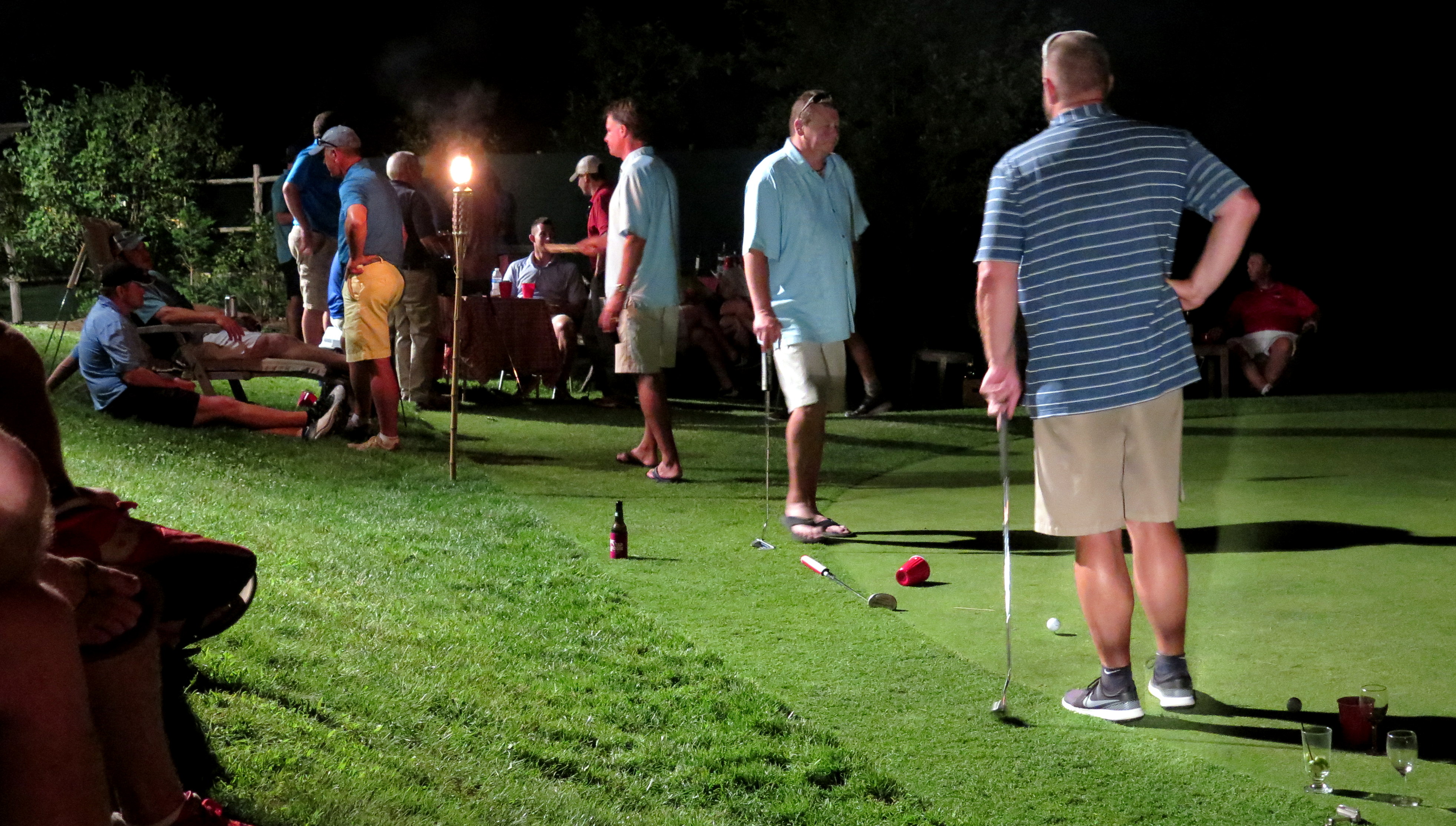
My brother’s and my best round was one under par. That got our names onto the scoreboard for a little while, but we ended up missing a playoff for the final by a stroke. So we ate pizza (supplied by Peter P.) and watched the main event from the gallery. Not everyone in the gallery gave the action his undivided attention:

p1190155

The format for the final was four holes of best-ball followed by four holes of aggregate. Mike G. and Matt, who are brothers, finished the final in a tie with Addison and Kevin, who are old high-school teammates. Mike and Matt won on the first hole of sudden death. Here are Mike and Matt:

p1190137

Night golf and poker followed, then a few hours of sleep, then—boo hoo—the final day of this year’s men’s member-guest.

p1190182

Breakthroughs in Golf-shirt Design and Beer Transportation

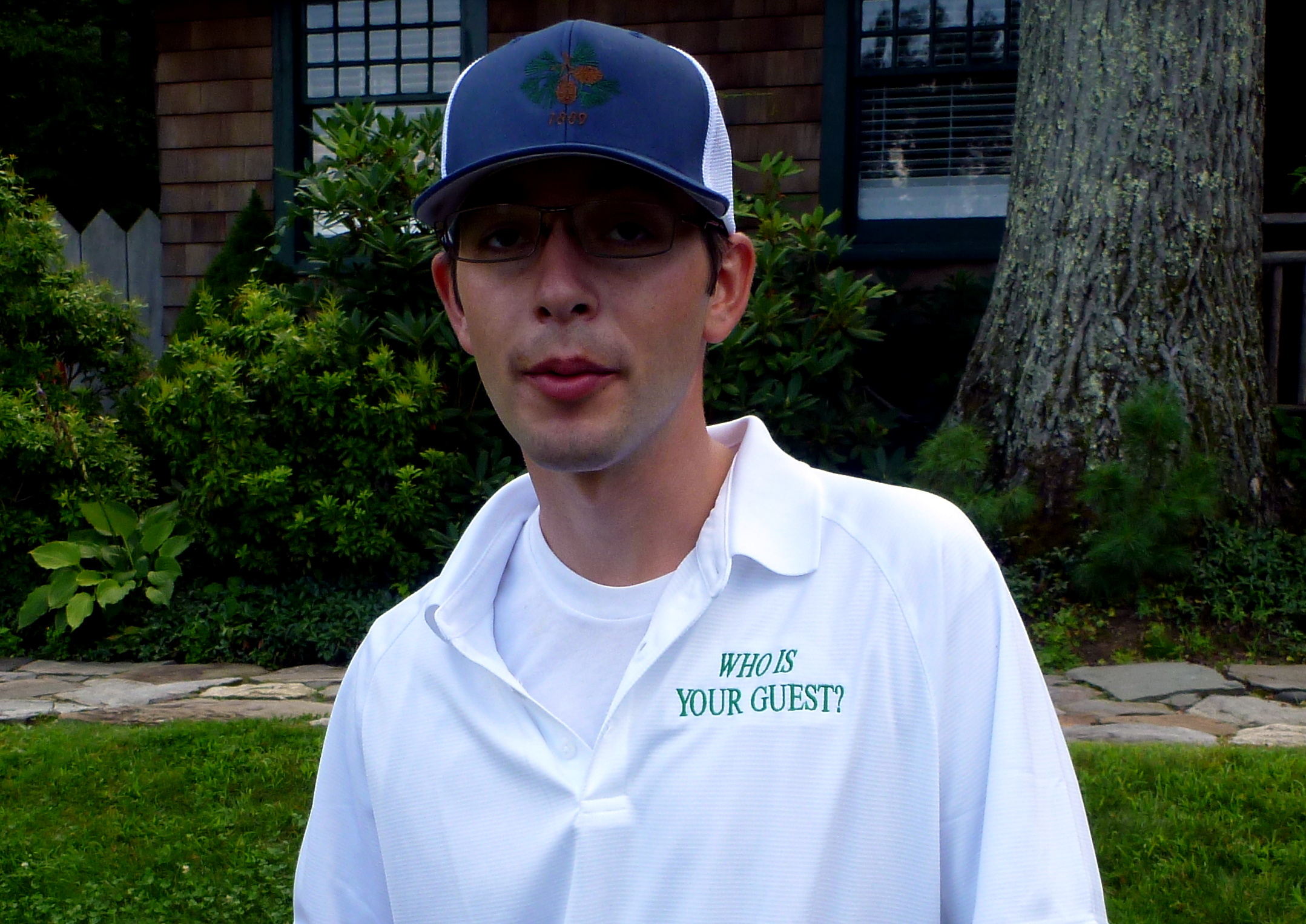
ck P., the Sunday Morning Group’s Jordan Spieth of beer-chugging, works for Custom Ts ‘n More, a company that, among other things, embroiders cool stuff on golf shirts. Here’s Nick last weekend, at my club’s annual men’s member-guest tournament, wearing one of his custom golf shirts:

p1190010

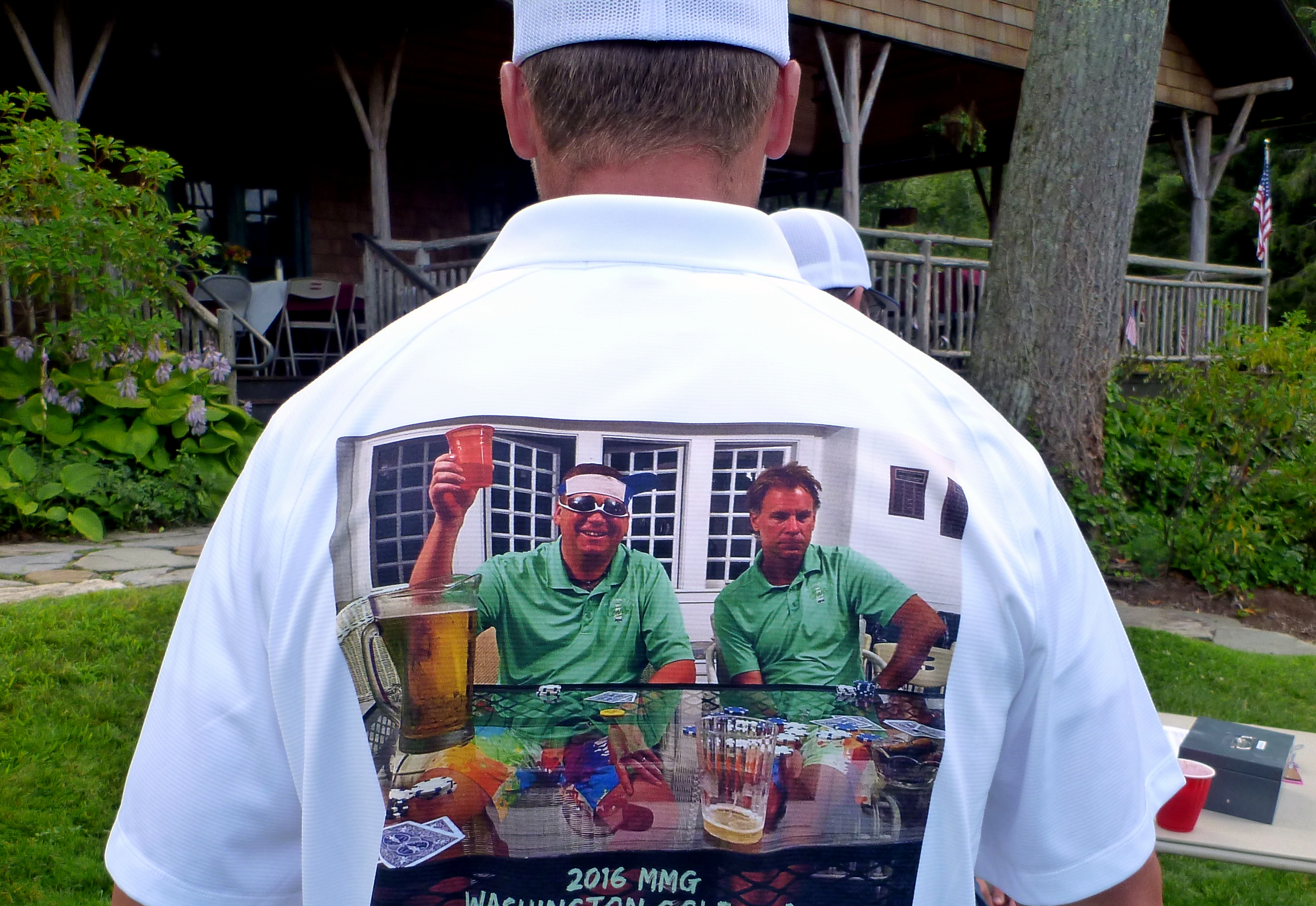
Recently, Nick’s company acquired a machine that prints on fabric, in full color, and Nick used it to make shirts for him and Carl, his regular guest. The image he chose was a photograph that someone took at last year’s member-guest. It shows Klinger and Fritz (during a low moment for Fritz) at the big poker game on Saturday night. Nick was worried that the ink would run on the fabric, which is synthetic, but he primed it somehow, or something, and everything came out great. All SMG shirts from now on will take advantage of this remarkable technology:

P1190009-001

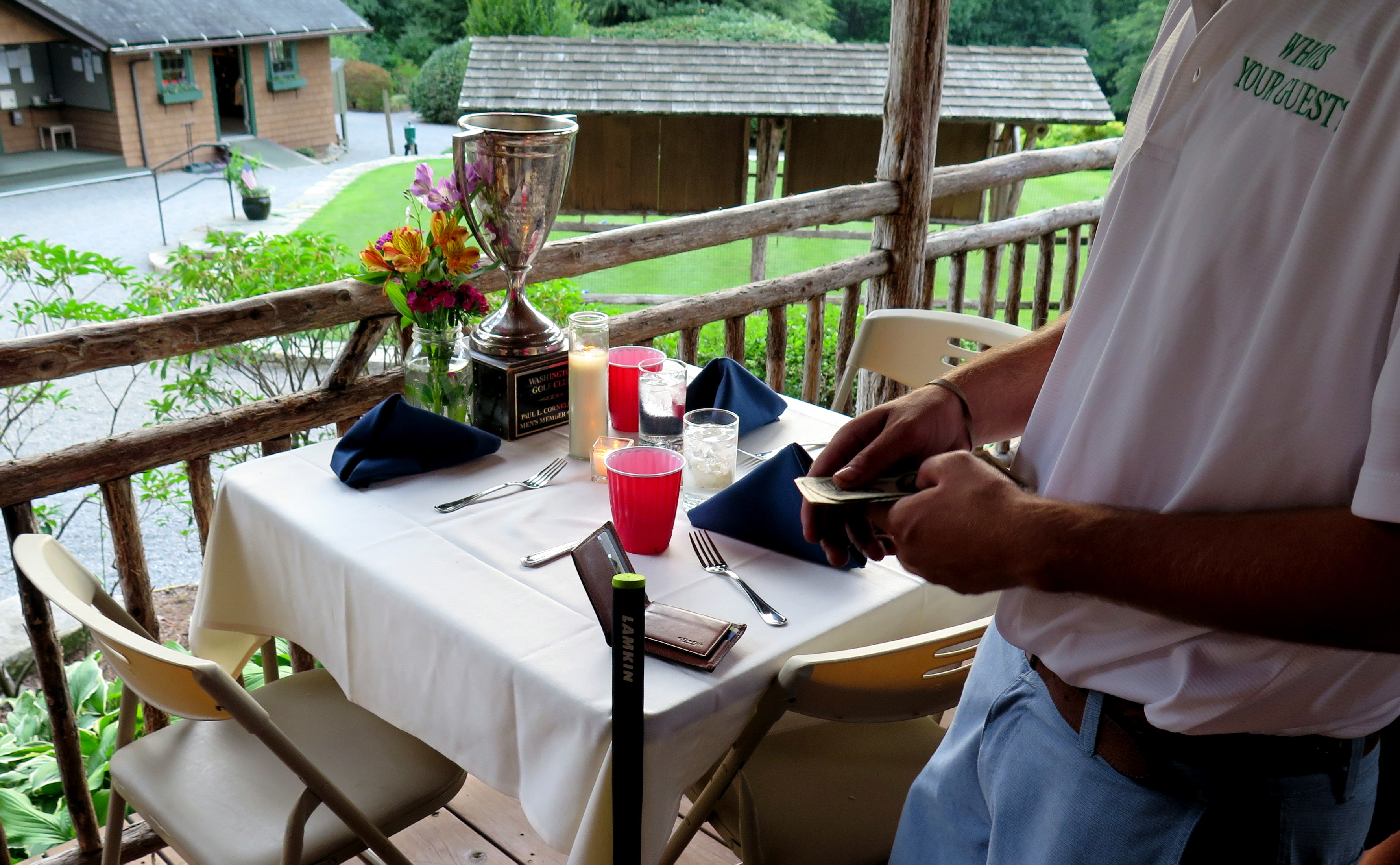
Nick and Carl were the defending champions, so during the big steak dinner on Friday night Corey, our pro, made them sit by themselves, at the Champions Table. I don’t know who the third place setting was supposed to be for:

img_3280

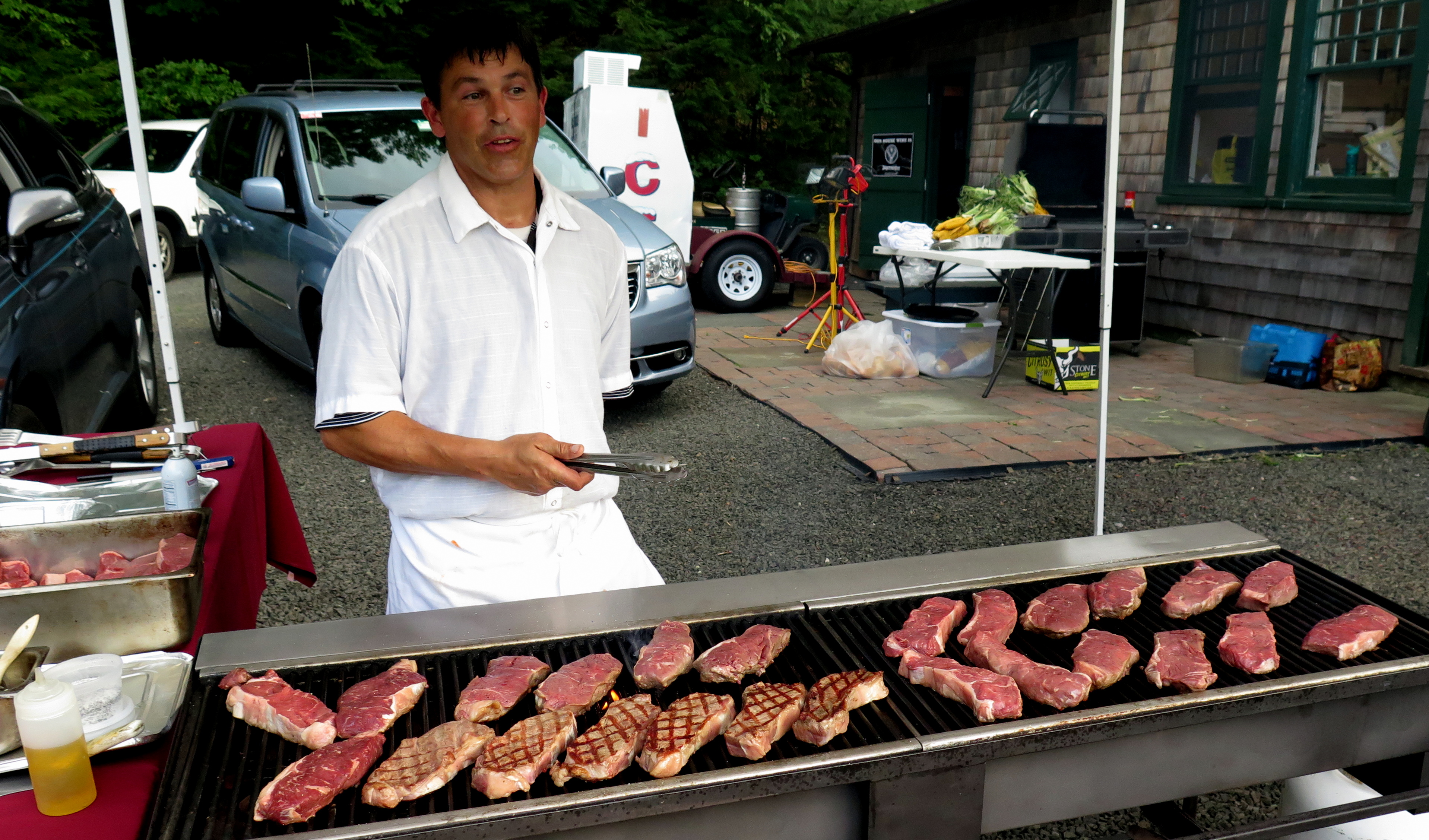
And here are the steaks:

img_3246

A second major innovation introduced at this year’s member-guest was the Arctic Zone insulated beer backpack. Fritz bought one at CVS for less than the cost of two sleeves of Pro V1s, and he was able to fit a full case into it. It freed his hands for other functions, such as swinging a golf club, caddying for Nick and Carl during the closing shoot-out, and holding additional beer:

img_3510

Fritz and Klinger are long-time member-guest golf-shirt innovators. Their wardrobe last weekend included this shirt, from Loudmouth Golf—now unfortunately out of stock in every size except small:

img_3618

Oh, I Know What It’s Like to be Abandoned by Nike Golf

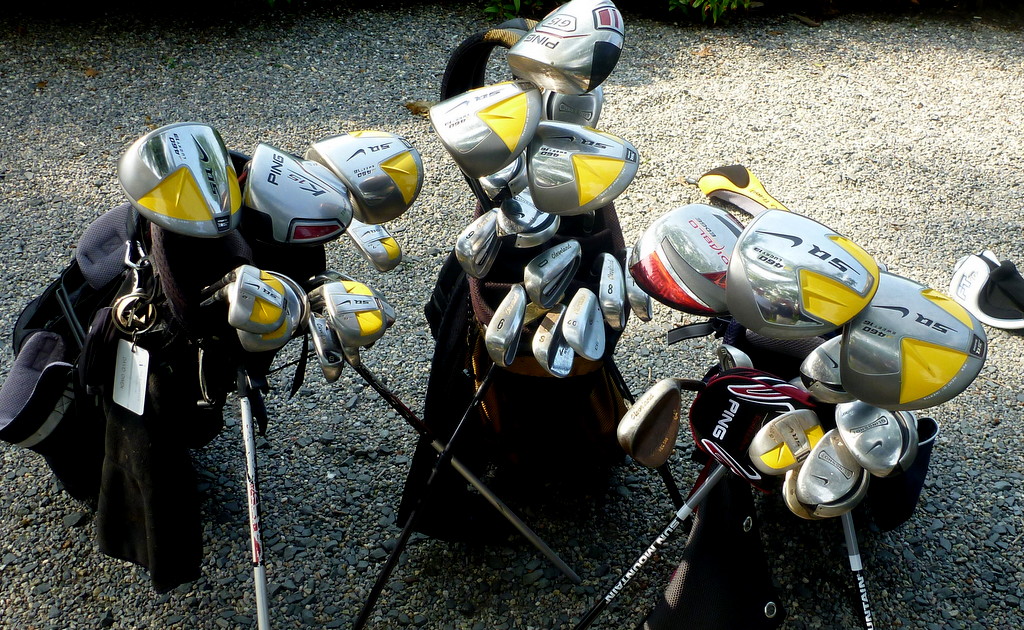
Nike’s announcement that it’s getting out of the golf club business was nothing new to me. Six of the clubs in my bag—a 16-degree Sumo Squared driver and six Sumo Squared hybrids—are clubs that Nike stopped selling years ago:
P1190034

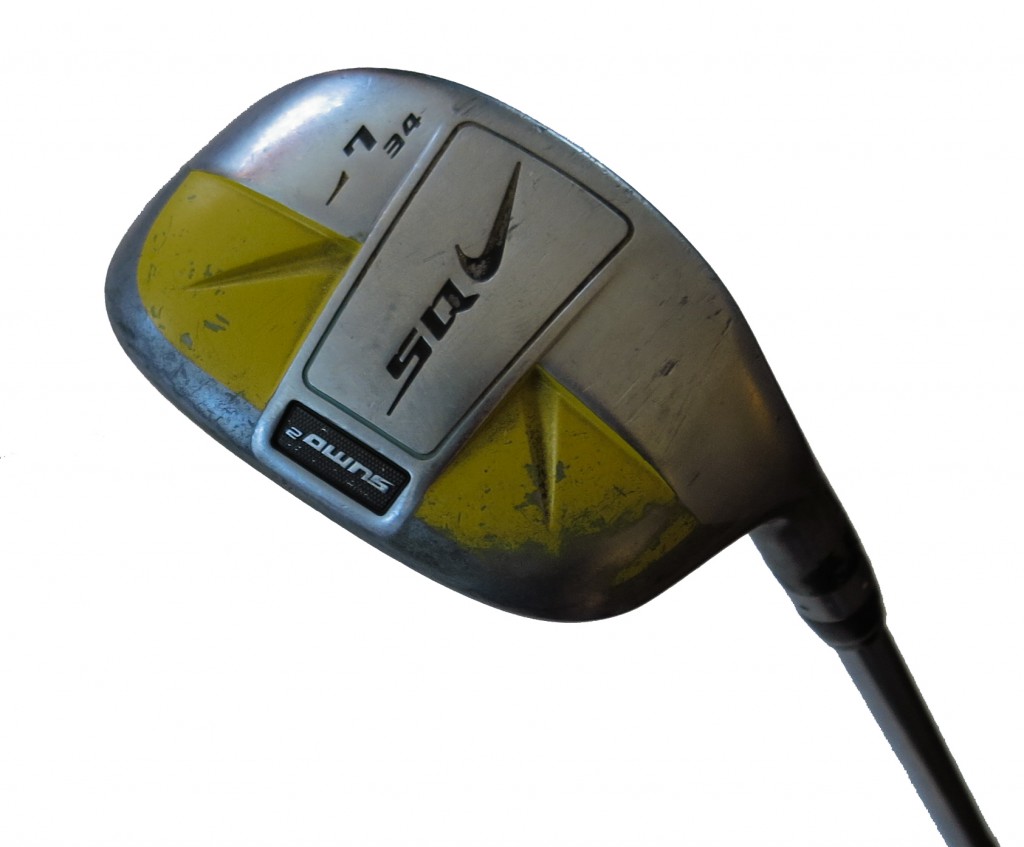
Two of those six clubs are among the greatest ever made. The most magical is the highest-lofted club in the group, the 34-degree 7-hybrid. I bought mine at the urging of my friend Tony, and, as he promised, I hit it longer, higher, straighter, and more consistently well than my 7-iron, which I’d had custom-fitted in Arizona a couple of years before. Not long after that, Tony and I played a round with a visiting friend of his, and we used our magical clubs on a 150-yard par 3. We both hit high draws to within six feet of the hole, and the friend said, “Gee, you guys could play on the LPGA Tour.” He meant to be devastating, but I’ve adopted his remark as a swing thought. And I carry four other Sumo Squared hybrids, too, even though they all go pretty much the same distance.

Sumo-7-1024x847

The other magical club in my bag the 16-degree driver, which Nike called the Sweet 16 and I call Baby Driver. I carry a regular driver, too, but Baby Driver is indispensable in certain critical situations: long par 3s, short par 4s, and tight holes of all lengths on which a hooked or sliced drive would be lethal. It’s basically a strongish 4-wood, but with a head that’s too big to slide under a teed ball—a consideration for those of us who occasionally make less than perfect contact. I sometimes hit it from the fairway, too.

nike-sweet-16

I once asked a Nike rep whether the company didn’t have a few old Sumo Squared clubs stashed away somewhere, maybe in a storeroom or on a shelf in a closet or under a table in the employee cafeteria. I was thinking that I’d offer to buy the lot, to keep on hand as spares, but he said Nike hadn’t saved anything—not even a few heads. He also claimed, preposterously, that the company had never sold a 34-degree hybrid—denying the existence of one of the greatest golf clubs of all time! No wonder they’re calling it quits.

nike-sumo

The Ideal Wide-brimmed Hat for Golf

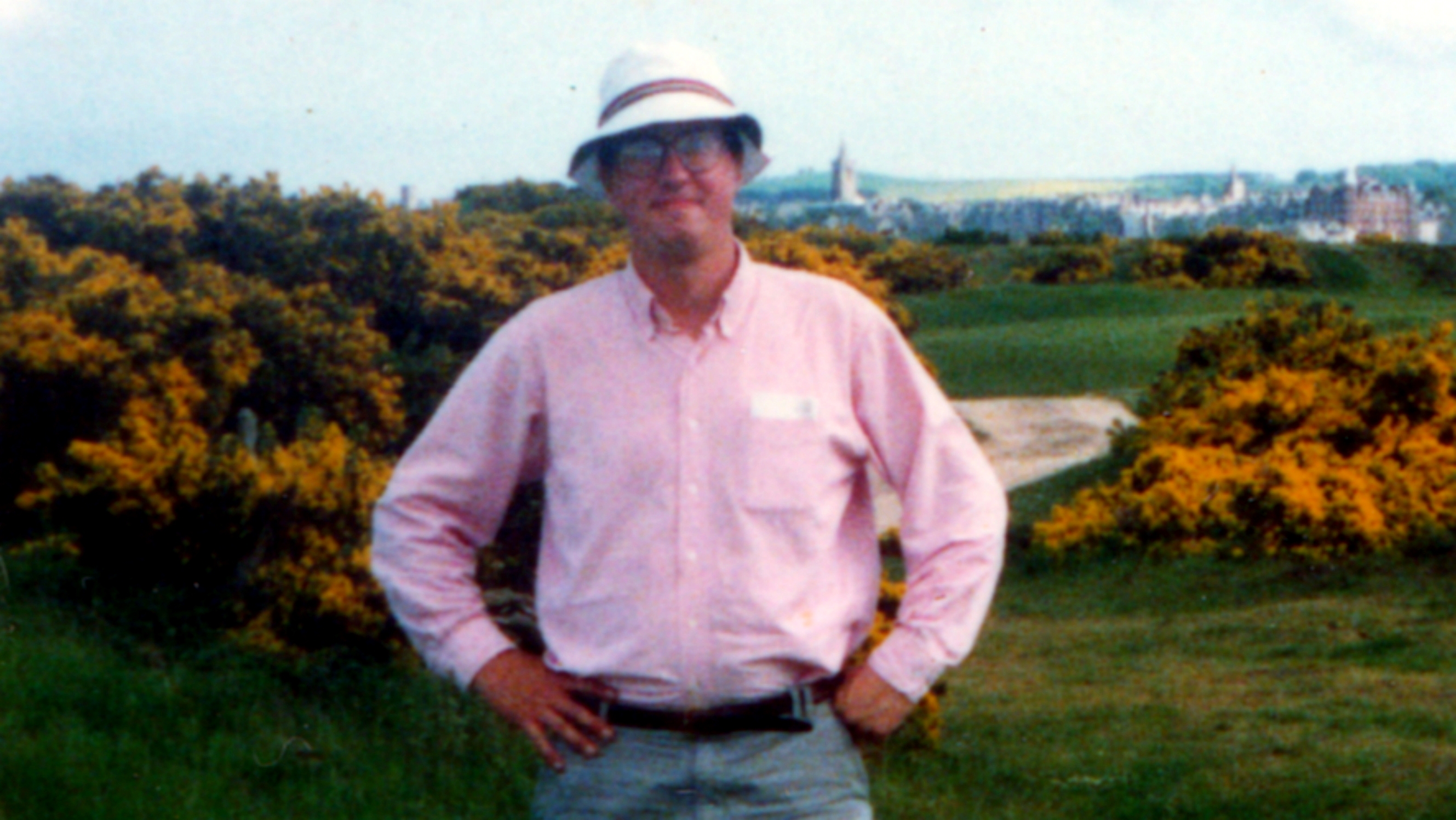
Earlier this year, two older members of the Sunday Morning Group underwent Mohs surgery for squamous cell carcinoma—the second most common type of skin cancer. Their stitches and bandages made me think I needed a golf hat that provided better sun protection than a standard baseball-type cap. When I took up golf, in the early 1990s, I bought a semi-wide-brimmed bucket hat made by a company called Duckster (which apparently no longer exists). Here’s the only known photograph of me wearing it, on the Old Course at St. Andrews, in Scotland, in 1992:

dlo-duckster

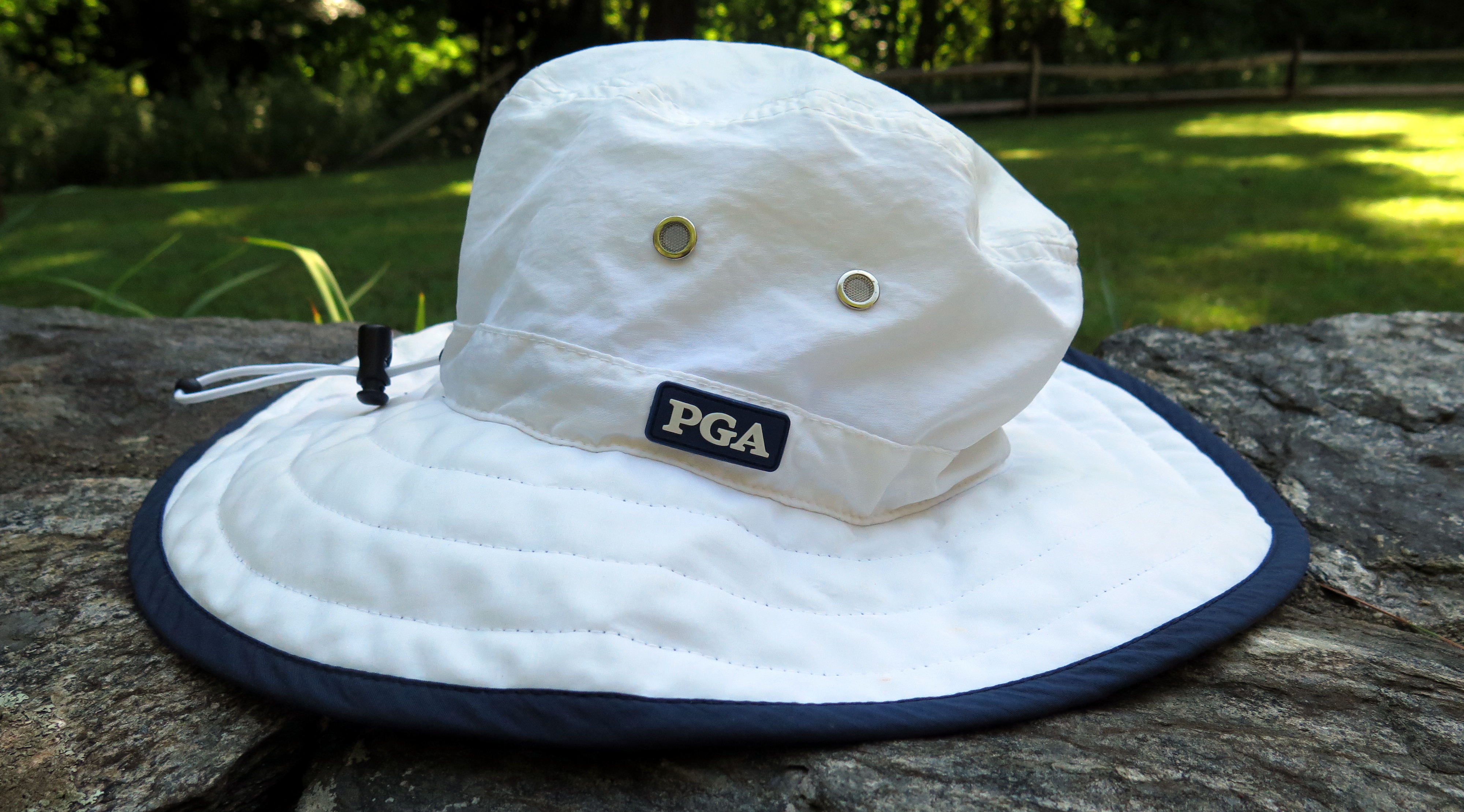
Shortly after that trip, I wore my Duckster hat during a round on my home course. Our superintendent, who was hand-watering a patch of brown grass near the fifth green, saw me, and said, “Where’d you buy that hat—Old Sturbridge Village?”, and I never wore it again. Quite a few years later, I bought a broad-brimmed hat made by Ahead (for the PGA’s golf-clothing line, which has since dropped it from its catalog). It worked fine, as sun protection, but I have a pumpkin-size head, and by the second or third hole I felt as though my brains were being squeezed, even though the size is supposedly “L/XL”:

img_3178

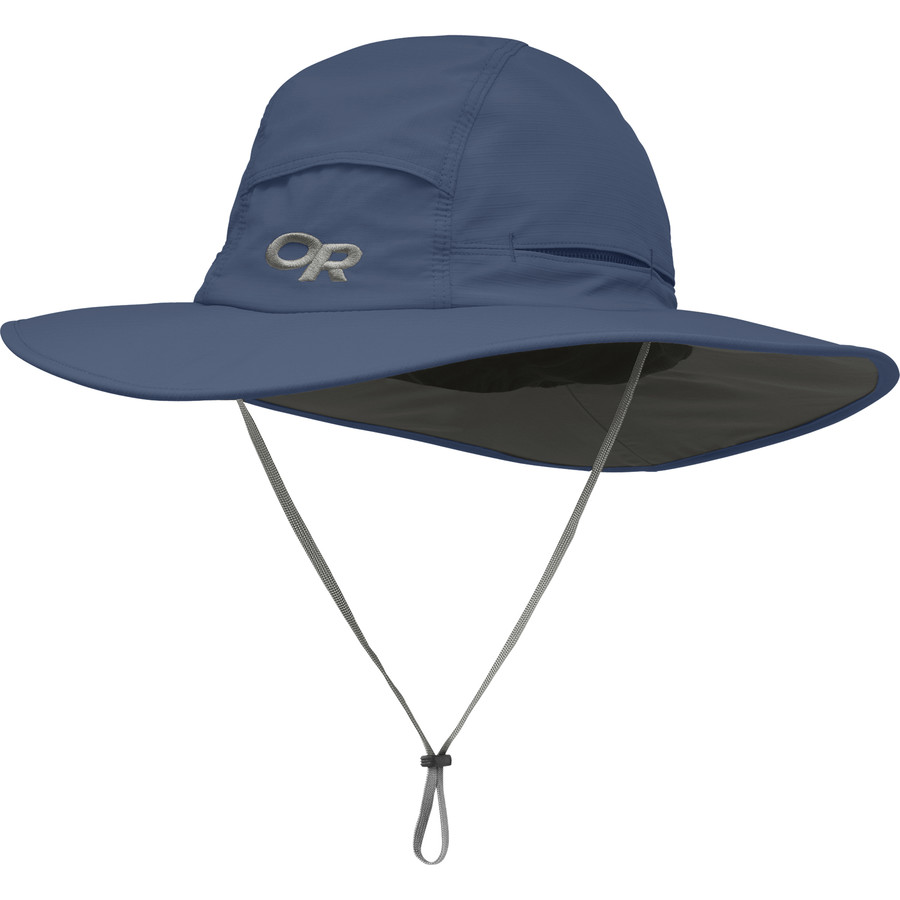
Last week, I solved my problem once and for all by buying a Sombriolet Sun Hat, from Outdoor Research. It’s light and well-ventilated, and it’s available in true XL, which is big enough to accommodate even my head:

blue sombriolet

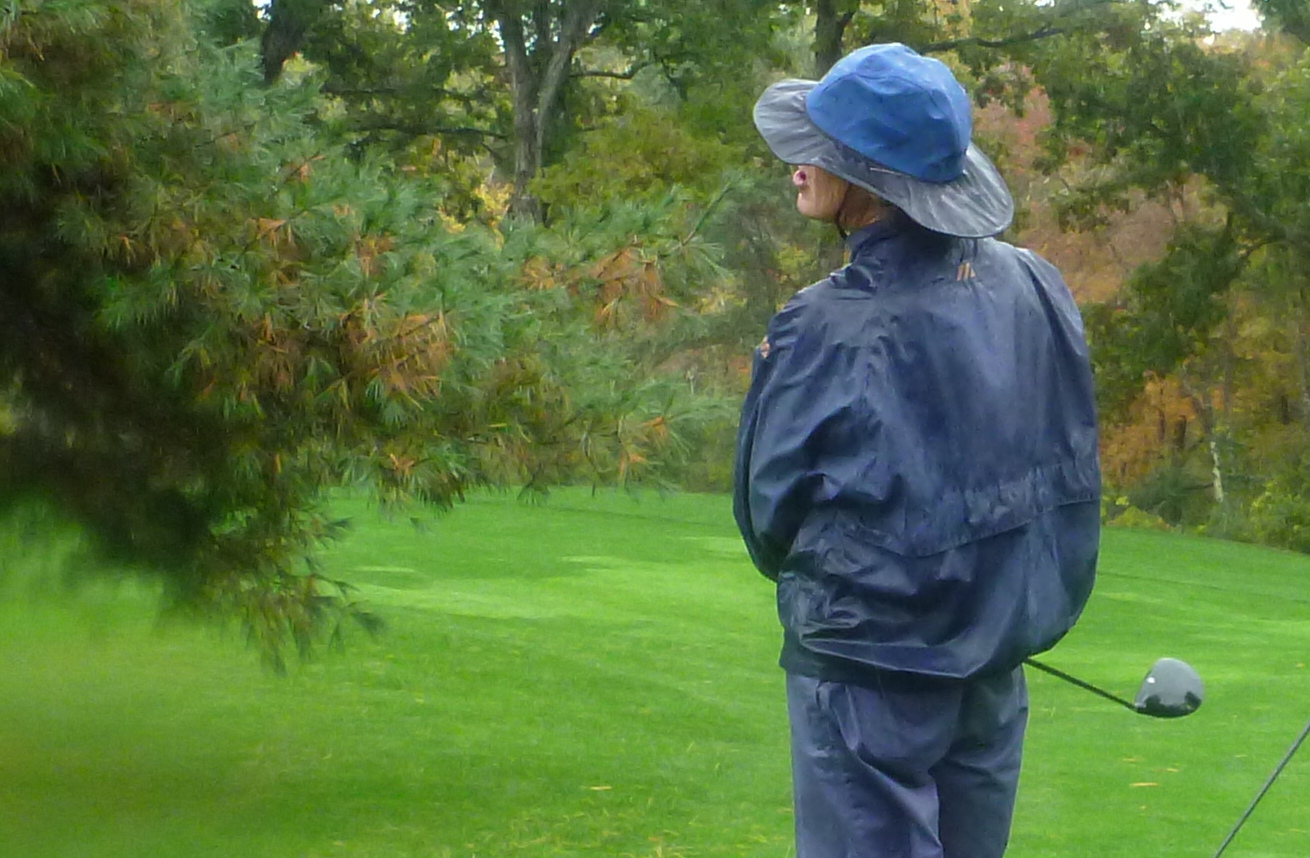
Outdoor Research is based in Seattle. It mainly sells stuff for hikers, backpackers, and kayakers, who apparently are much fussier about hat performance than golfers are. The company also makes my favorite rain hat, the Seattle Sombrero. Barney is modeling his own Seattle Sombrero in the photo below:

p1090716

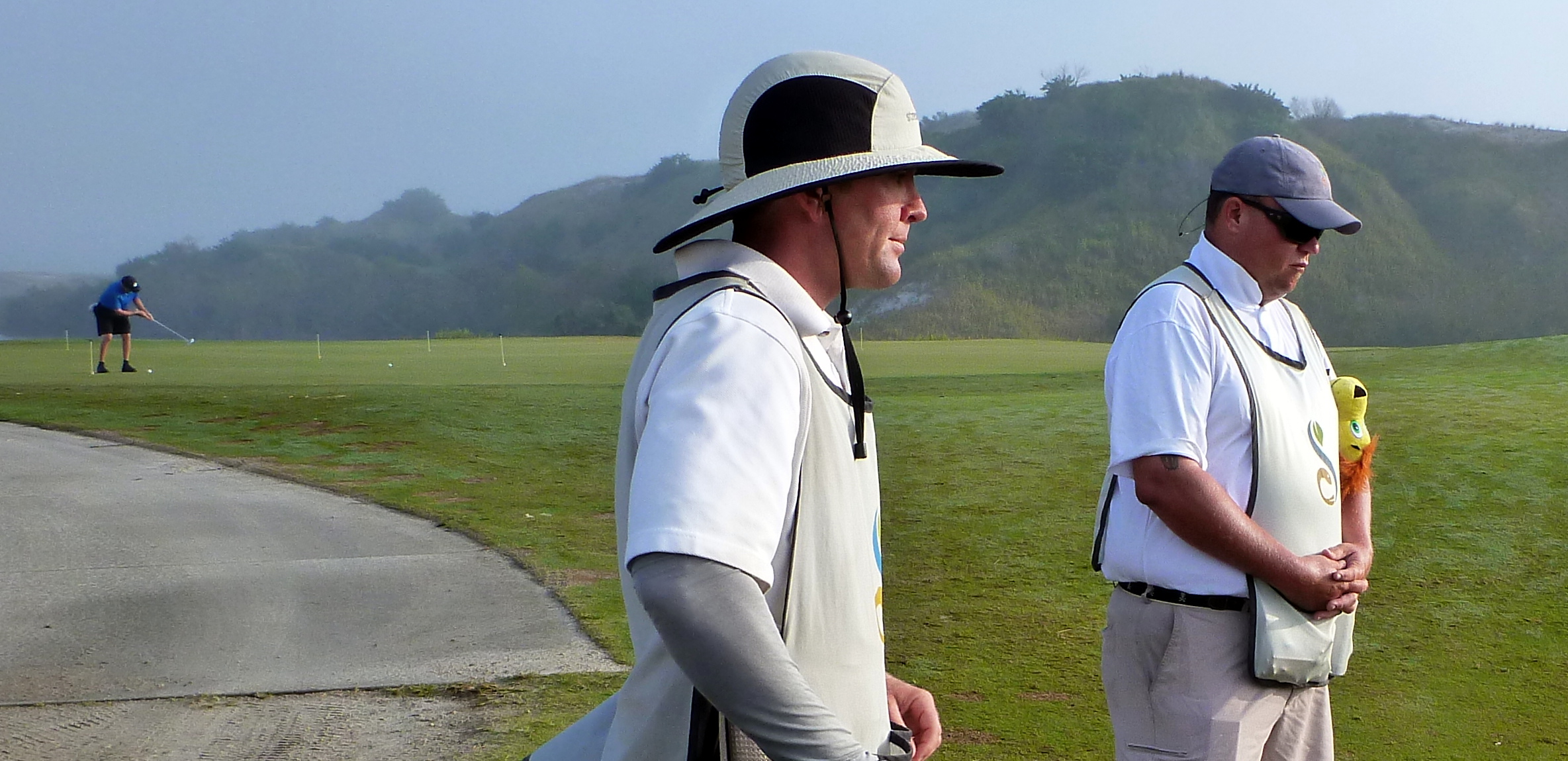
There are a few other sun-hat possibilities. Two years ago, my caddie at Streamsong, in Florida, wore a great-looking sun hat, although I neglected to ask him who had made it or find out whether Streamsong stocked it in the golf shop:

P1140764

Orvis sells something sort of similar. Or you could buy a hat like the one we just gave Tony, who is about halfway through the process of losing all his real hair to chemotherapy:

p1180955

A Genuine Cure for Stinky Golf Clothes

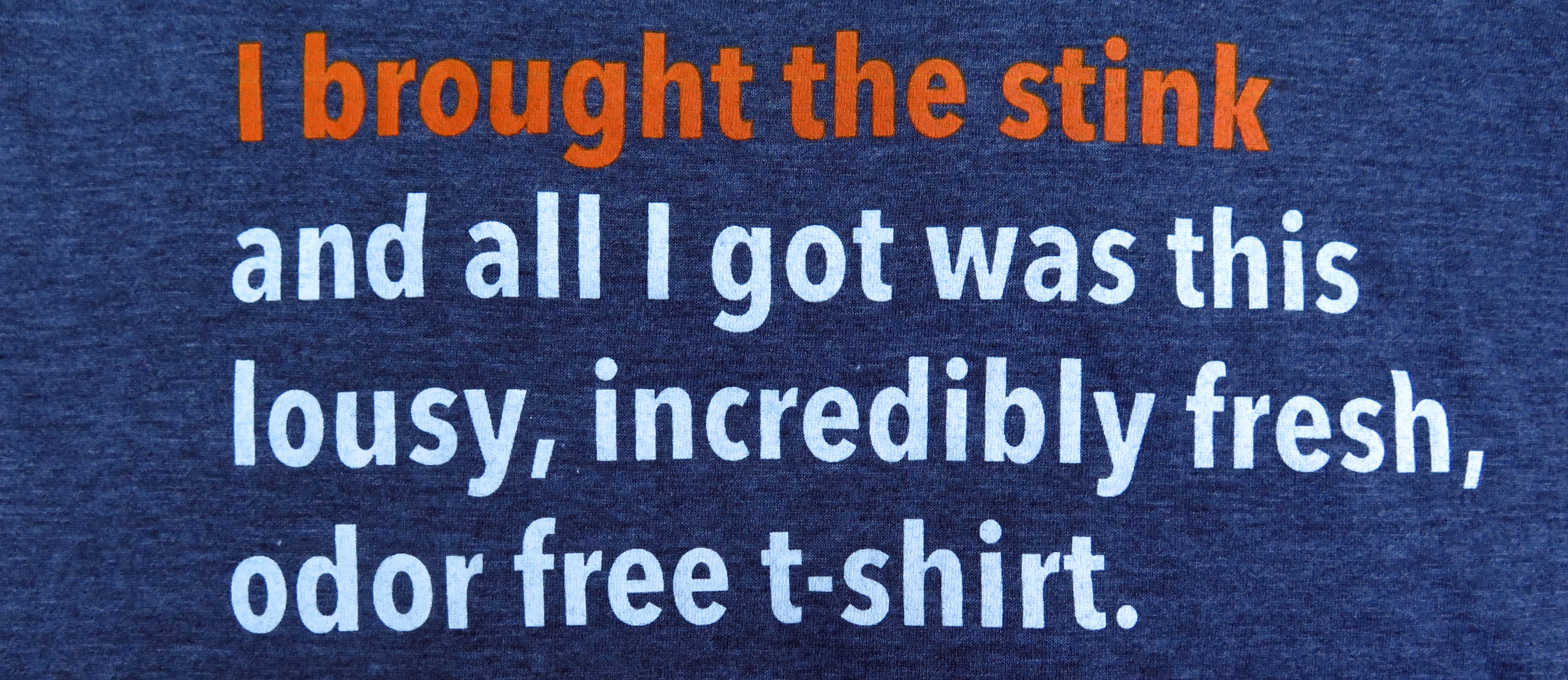
IMG_3161

If my wife could smell cocaine as readily as she can smell ordinary household odors, she could get a job at a major international airport. She can detect B.O. and mildew at homeopathic concentrations, and she will throw away even favorite clothes of her own if, after washing them with bleach and hanging them in the sun all day, she can still pick up what she calls a “mammalian” scent.

So it was with some trepidation that I asked her to let me have a go at an especially grungy tee shirt and hockey jersey of hers, both of which she was about get rid of. I added some golf clothes that had been lost for a couple of weeks under a pile of stuff in the trunk of my car (including two pairs of socks that were still sort of wet), and washed everything in regular detergent plus half a cup of Febreze In-Wash Odor Eliminator:

IMG_3162.JPG

Amazingly, when the load came out of the dryer, all the nasty odors were gone. And it wasn’t just that I couldn’t smell them anymore—my wife couldn’t smell them either. They hadn’t been masked by “fragrance,” because she doesn’t fall for that one. The ingredient that Proctor and Gamble describes on the bottle as “concentrated odor eliminator derived from corn” had made the bad smells go away, and the entire load of wash ended up with an executive reprieve. (It even works on cigar smoke.)

Playing Golf, and Counting Steps, With a Microsoft Band

IMG_1953

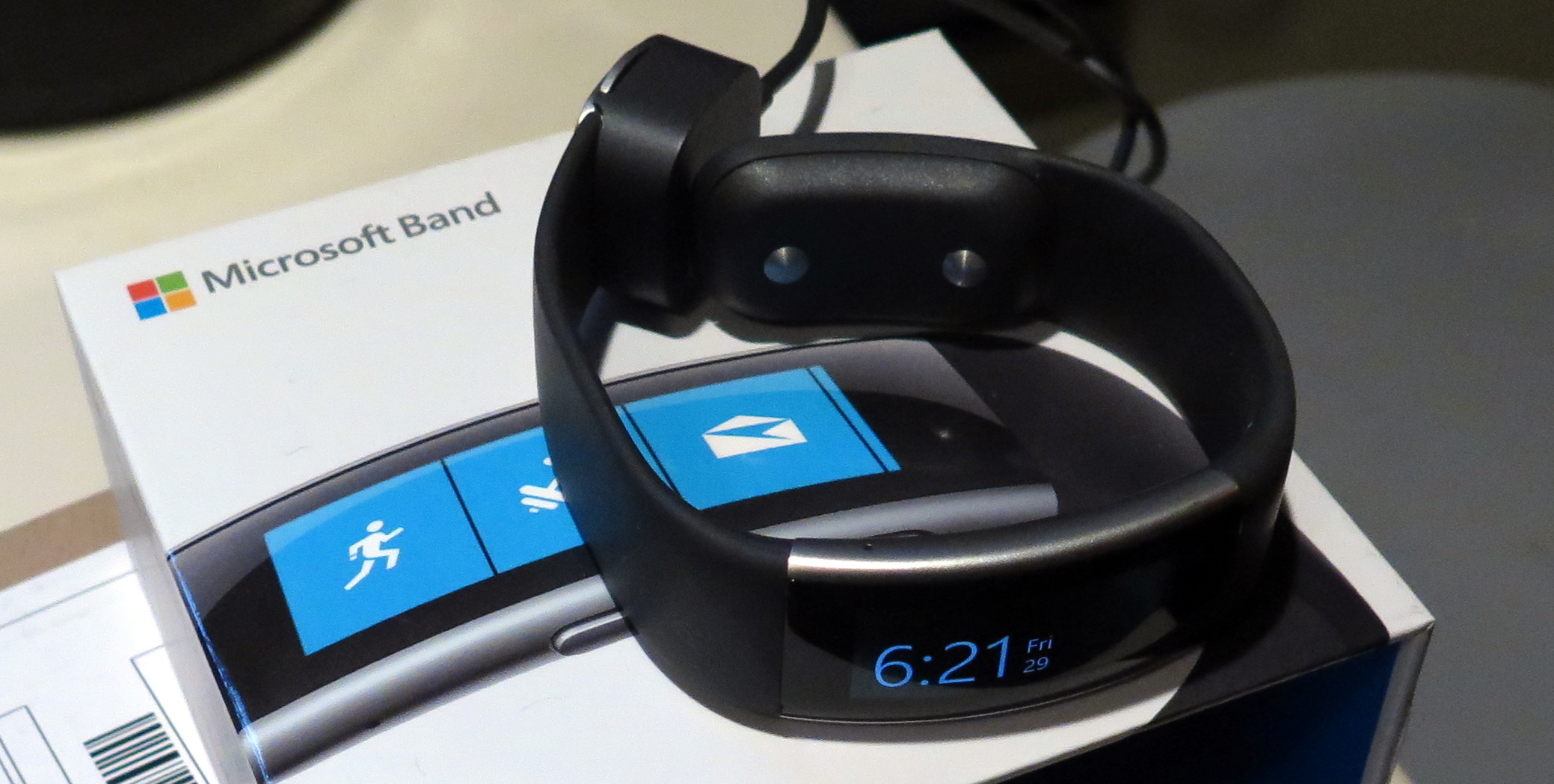
This past spring, eleven friends and I took a week-long golf trip to Ireland. Shortly before we left, Microsoft sent us four Band 2 activity trackers to field-test. Addison, Matt, Peter, and I wore them for the entire trip, then took them home. I’ve worn mine every day since we got back, and the other guys have worn theirs, too. One thing I like about the Band is that it’s sleek and futuristic-looking—a major difference from the Apple Watch, which to me looks like it was designed for preschoolers: My First Wristwatch.

band.jpg

During our Ireland trip, we mainly used our Bands to measure how far we walked. We played 36 holes every day but two, and I was especially interested to know whether longer, wilder hitters (Matt) walked farther than shorter, straighter hitters (me). And they did, by a noticeable amount—although the difference was blurred by the occasional willingness of the shorter, straighter hitters to detour into the dunes to help the longer, wilder hitters look for their ball. Overall, the four of us averaged about 15 miles a day, and roughly 100 miles for the week—a good workout. The longest day was the last (34,250 steps and 17.7 miles during 36 holes at Enniscrone) and the shortest was the fourth (21,336 steps and 11 miles during 18 holes at Connemara plus an afternoon hike along the shore of Lough Inagh).
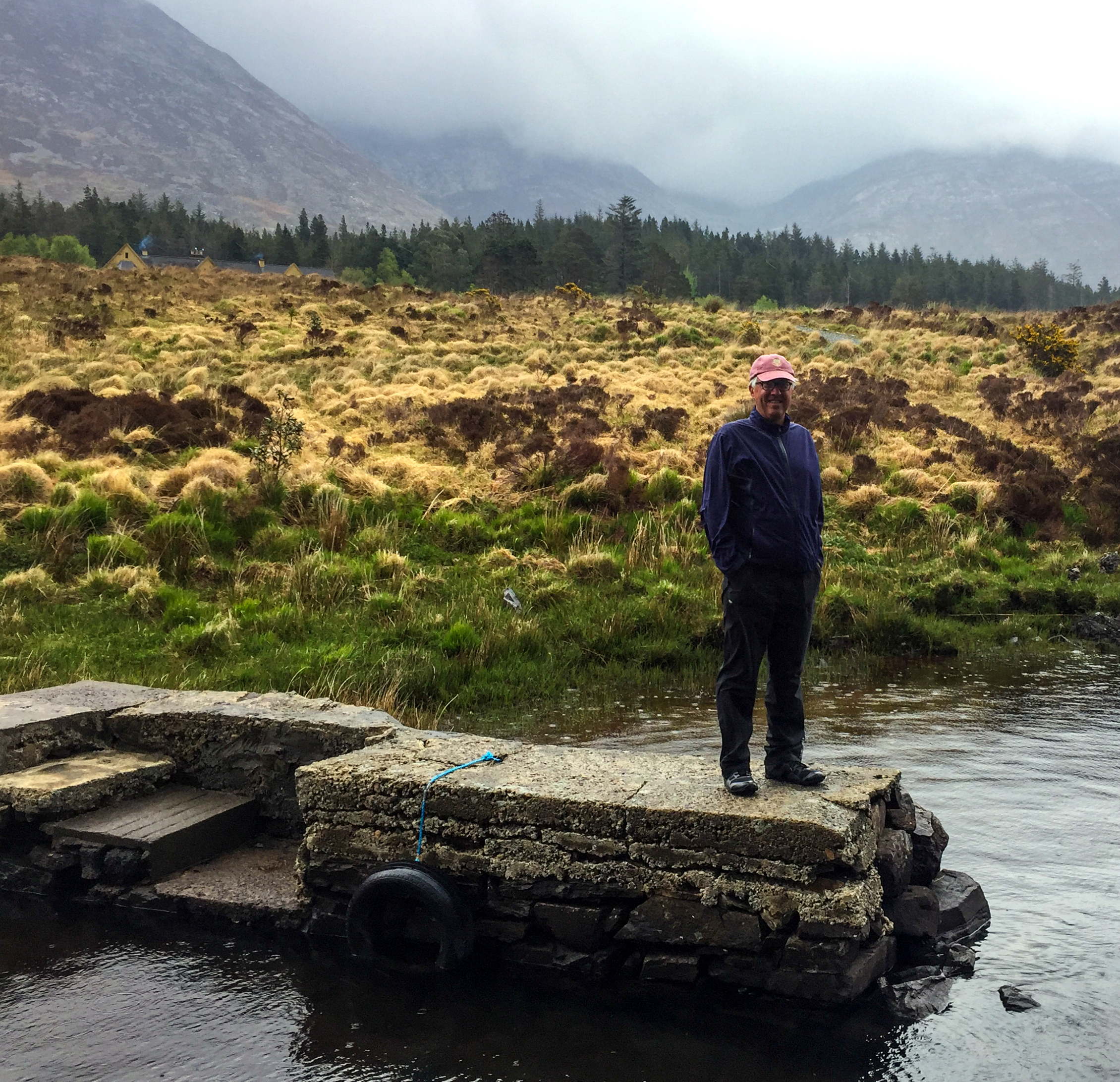
Lough Inagh. (Photo by Mike Bowman)

Lough Inagh. (Photo by Mike Bowman)

Setting up our Bands was pretty easy. You download a smartphone app called Microsoft Health, and pair the Band to the phone. For some of the Band’s functions—email, messaging, current-weather updates, Cortana—the phone needs to be within Bluetooth distance; for tracking walks, hikes, runs, bike rides, workouts, heartbeats, sleep quality, and so forth it doesn’t.

IMG_2013.JPG

The Band is not waterproof, although it’s something more than water-resistant. I’ve accidentally worn mine in the shower (many times), in the swimming pool (once, for fifteen minutes), in the hot tub (not as often as in the shower, but almost), and in the rain (several times) — and I haven’t destroyed it yet. I’ve gotten better at remembering to take it off, but I do worry that someday I’ll go too far and it will self-destruct, the way my wife’s iPhone did when she dropped it in the toilet. I assume that if there were an economical way to make fancy electronic gadgets fully waterproof they’d all be fully waterproof. If I were in the fitness-tracker business, I’d have a team of geniuses working exclusively on water.
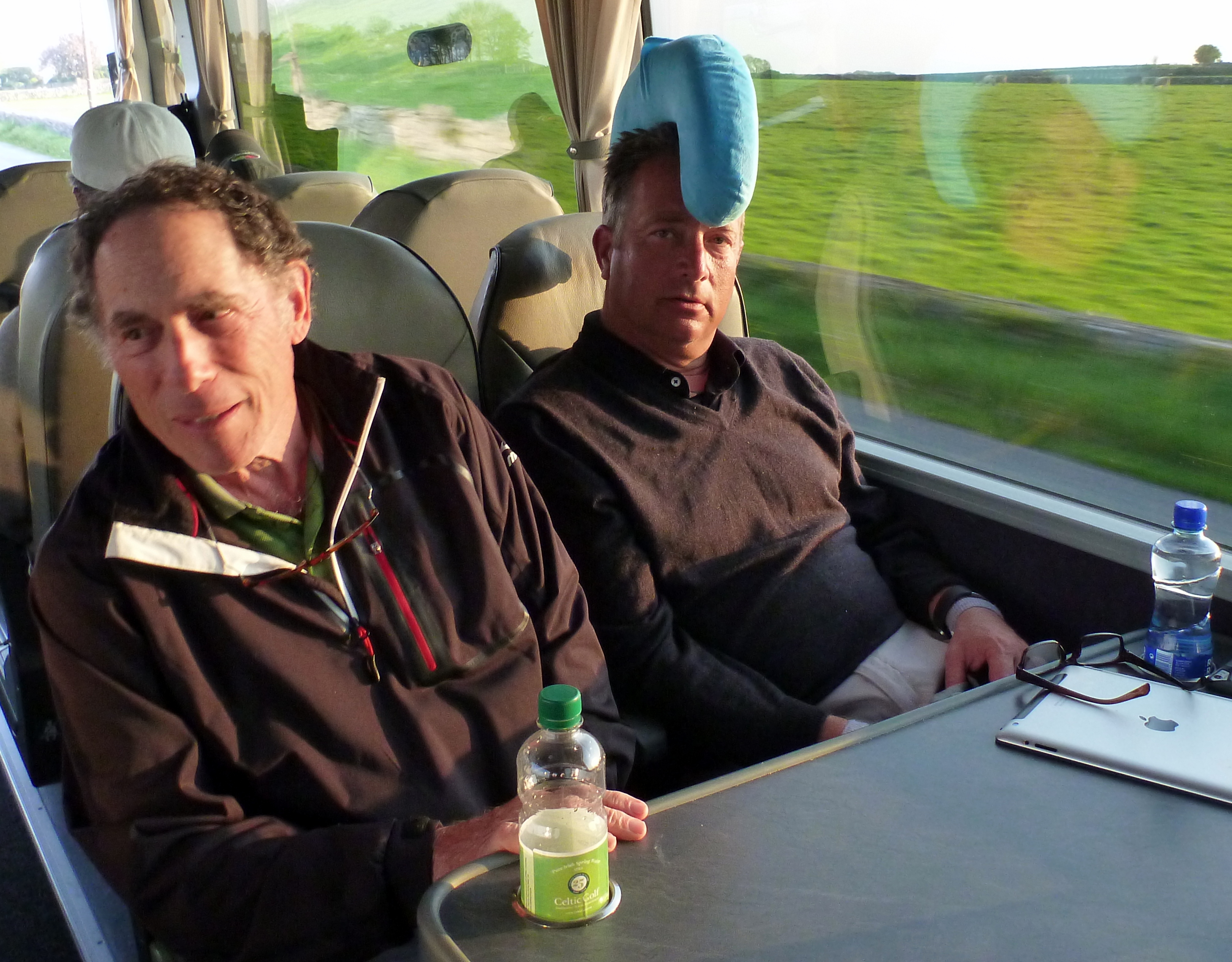
That's Matt on the right. His Band is the thing on his wrist, not his head.

That’s Matt on the right. His Band is the thing on his wrist, not his head.

Microsoft and TaylorMade worked together to create a golf app, which turns a Band into a GPS rangefinder, shot-counter, and golf-related-statistics-compiler. “Stay focused on your game and forget about score tracking,” the website says. “Microsoft Band tracks your shots and measures your performance as you play. Sensors can distinguish between a practice swing and an actual shot.”

IMG_1948.JPG

That’s all true, sort of. I wore my Band during a round at home, before our trip, and was impressed at how good it was at recognizing real golf shots. But it wasn’t perfect. It doesn’t understand about conceded putts, water hazards, out of bounds, provisional balls, or tap-ins, and if you knock away an opponent’s ball it thinks you’ve made a stroke at your own. That means that you can’t actually “forget about score tracking,” because you have to keep count independently, on a scorecard or in your head, and double-check the Band after every hole. Correcting miscounts is easy, but if you have to do all that anyway why bother with the app? The GPS part worked fine, although it was a little slow. Any GPS device pulls hard on a battery—it’s engaged in a two-way conversation with orbiting satellites—so to use it on a 36-hole day you almost certainly need to recharge between rounds. It does recharge quickly—much more quickly than a phone—and if you aren’t using an app that depends on GPS the battery will easily last two days.

P1180312.JPG

GPS is totally worth using with the app that tracks bike rides, since it gives you lots of information, including top speed, average speed, elevation gain and loss, best split, average split, and heart rate. It also superimposes your route on a map, and shows you exactly where you cruised and where you struggled. There are similar features for runners. I’m not one of those, thank goodness, but if I were I could upload Band data to various popular run-tracking utilities, too. The hiking app also maps your route, although if the GPS is in power-saving mode it makes some funny mistakes when it makes educated guesses about your next moves. I used the hiking app on the golf course one day, and it told me later that I had walked into the center of the pond on the fourth hole, then changed my mind and walked back out. But the big picture was correct.

Strandhill Golf Club, 29,730 steps, 15.3 miles.)

Strandhill Golf Club, 29,730 steps, 15.3 miles.)

The Band has some quirks. Like some other fitness trackers I’ve tried, it counts bumps and potholes on the Hutchinson River Parkway as steps (and lots of them); you can keep that from happening by taking it off, or turning it off, when you’re driving on rough roads. If I click on the “run” tile before walking my dog, it credits me with having burned more calories than it does if I leave the Band in standard step-and-heartbeat-tracking mode, even though my route and pace are exactly the same. And the difference is bigger still if I click on the “exercise” tile before taking the same walk, or before playing a round of golf. I assume that when I do those things the Band isn’t suddenly detecting some new and previously unsuspected source of energy expenditure, but is simply applying a different formula to the same small number of detectable variables. It’s a handy feature, though. I like being able to double the health benefit of taking a walk simply by clicking an icon. Look! I just earned an entire pint of Cherry Garcia!

This is the thing we're all trying to delay as long as possible (alongside the first fairway at Ballybunion, 32,282 steps, 15.6 miles)

This is the thing we’re all trying to delay as long as possible (alongside the first fairway at Ballybunion, 32,282 steps, 15.6 miles)

In lots of ways, I’m a non-ideal user of a sophisticated gadget like a Microsoft Band. I don’t want my wrist to tell me I’ve just received an email, a text message, or a smartphone notification, or to connect me to Facebook and Twitter—all chores that the Band is able to perform but that I don’t allow even my phone to handle. I don’t want to track my sleep every night (although I did do it twice, and was interested in the results, especially my “resting heart rate”). I don’t want to monitor my weight, and not only because I recently decided that from now on I’m going to weigh myself only twice a year, if that. I don’t care how many calories my activities supposedly burn, except as a rough approximation of how busy I was being, because I don’t think anyone really knows what the numbers mean. But all the potential annoyances are easy to turn off, or not to turn on on the first place, or to ignore. And there are many people who truly do love stuff like that.

band explode.png

I do like counting my steps and knowing how many miles I walk when I play golf or walk my dog, and I like the cycling app, and I like to be able to check the local temperature and forecast by glancing at my wrist. I also like the small but surprisingly effective nudge the Band gives me throughout the day. You can even have it remind you to get off your butt if you’ve been motionless for too long. Quantifying even ordinary activities can inspire you to be more active, especially if you like to compete against people who are easy to beat, such as yourself. If I notice that I’m a couple of thousand steps short of some big round number, I’ll grab the leash. And that’s good for the dog as well as for me.

Linksland is Not Called Linksland Because It “Links the Town to the Sea”

P1040785

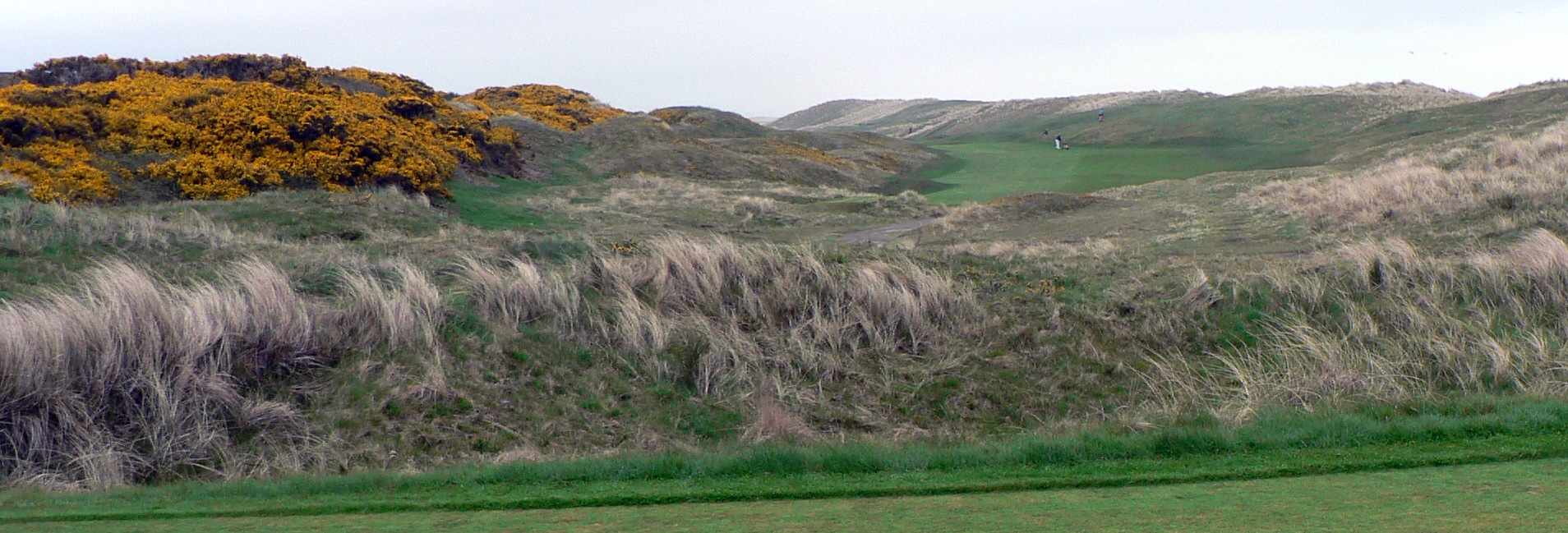
Despite what television announcers sometimes say (ahem), linksland is not called linksland because it “links the town to the sea.” Nor is “links” as a synonym for “golf course.” Links” is a geological term. Linksland is a specific type of sandy, wind-sculpted coastal terrain—the word comes from the Old English hlinc, “rising ground”—and in its authentic form it exists in only a few places on earth, the most famous of which are in Great Britain and Ireland.

Linksland arose at the end of the most recent ice age, when the retreat of the northern glacial sheet, accompanied by changes in sea level, exposed sand deposits and what had once been coastal shelves. Wind pushed the sand into dunes and rippling plains; ocean storms added more sand; and coarse grasses covered everything.

P1030153.JPG

Early Britons used linksland mainly for livestock grazing, since the ground closest to the sea was usually too starved and too exposed for growing crops, although even that use wasn’t always allowed. As someone in Aberdeen wrote in 1487, “No catall sale haf pastour of gyrss apone the lynkis.” When significant numbers of Scotsmen became interested in smacking small balls with curved wooden sticks, the links was where they went (or were sent), perhaps because there they were in no one’s way.

P1030097

The Other Major Tournament at Royal Troon

The southernmost end of the championship course at Royal Troon directly abuts a trailer park, called the Prestwick Holiday Park—which also separates Troon from Prestwick Golf Club.

Fullscreen capture 7132016 113319 AM.jpg

In fact, the trailer park is so close to the course that when you tee off on the tenth hole you practically hang your rear end over the fence. (In both the U.K. and Ireland, a surprising amount of what looks to an American like prime seaside real estate is occupied by mobile homes and RVs.)

Prestwick Holiday Park

A Troon member once told me that another Troon member, while traveling, overheard some other diners in a restaurant discussing a recent tournament at Troon and eagerly went over to introduce himself. It turned out that the tournament they were discussing was an event conducted surreptitiously by golf-playing residents of the trailer park, on the Troon holes nearest their caravans—including the Postage Stamp, which I played in 2009 (in neither the Open Championship nor the Prestwick Holiday Park Invitational):

P1060161

Troon is a Time-travel Wormhole to Machrihanish

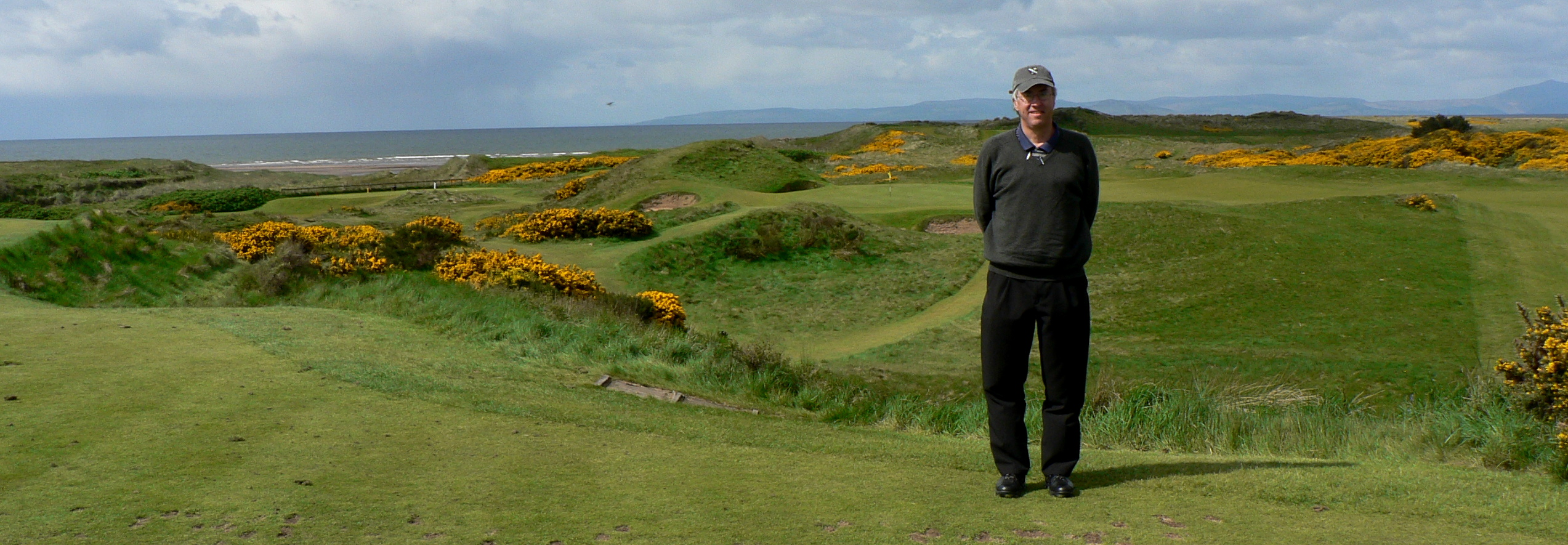
Machrihanish is a legendary links course on the Kintyre Peninsula, in western Scotland. Part of the routing was created by Old Tom Morris in 1879, when what was then called the Kintyre Golf Club acquired additional acreage and expanded from 12 holes to 18. Machrihanish has one of the awesomest opening tee shots in golf. Here’s the first tee:

P1120433.JPG

The rest of the course is terrific, too. The only difficulty with Machrihanish is that it’s tricky to get to. The drive from Glasgow Airport can take more than three hours, with little or no hope of golf along the way. But there’s a shortcut, if you do what 11 friends and I did in 2014: charter a boat from an outfit called Kintyre Express. The trip from Troon Harbor (which is just up the road from Royal Troon) to Campbeltown Harbor (which is just down the road from Machrihanish) takes 75 minutes. That means that the round trip saves you more than enough time to squeeze in one entire bonus round at either Machrihanish or Machrihanish Dunes. Here we are getting ready to set out from Troon:

P1120260.JPG

And here’s some of what we saw along the way:

P1120289.JPG

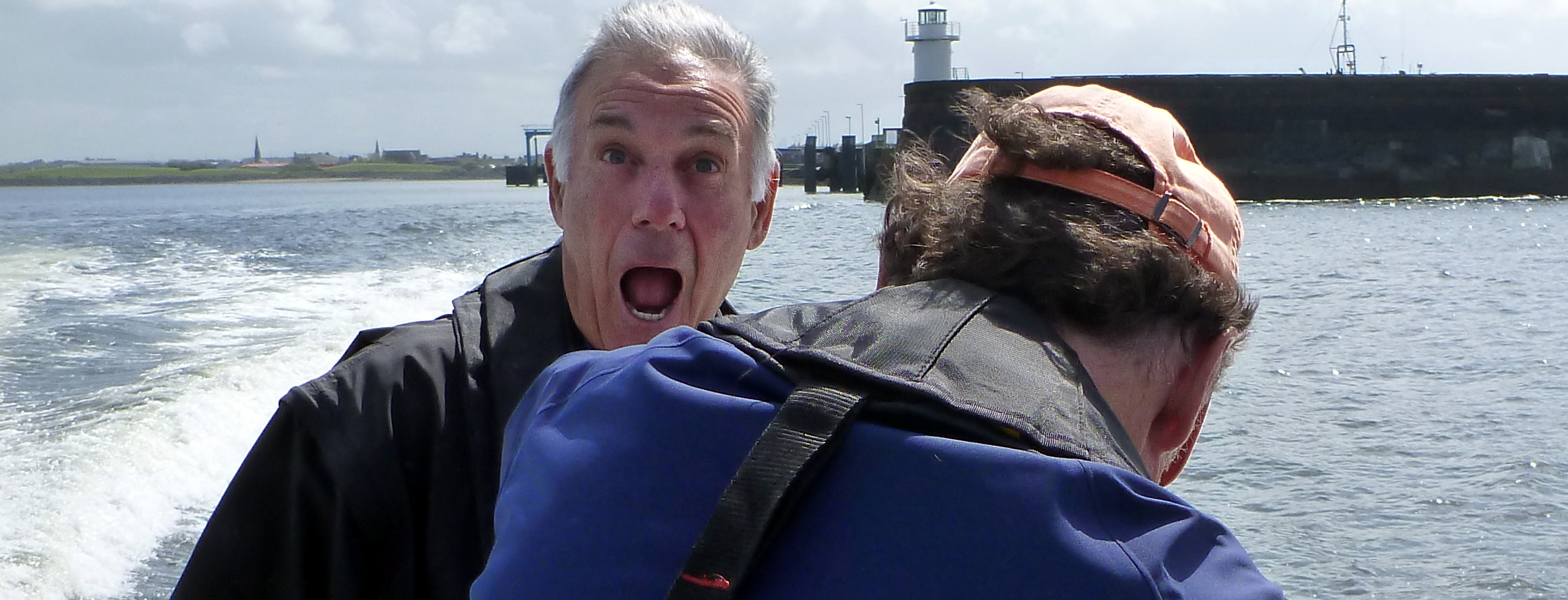
And here’s what Tony looked like when the skipper gunned his engine:

P1120269

And here’s what we saw as we approached Campbeltown:

P1120316.JPG

And here’s where we stayed, just up a long ramp from the dock:

P1120547.JPG

Three days later, we took the same boat to Northern Ireland—which is even closer to Campbeltown than Troon is. All our golf bags and suitcases went into the hold:

P1120622.JPG

Kintyre Express has lots of other routes, too. The Troon-to-Campbeltown trip starts at £500 for up to 12 passengers. Thanks to Brexit, that currently works out to only about $55 a head. Kintyre also operates regular ferry service to a number of destinations in the same region. Ask for Mairi!

P1120352