Our Awesome New Waterproof Scorecards Are Here!

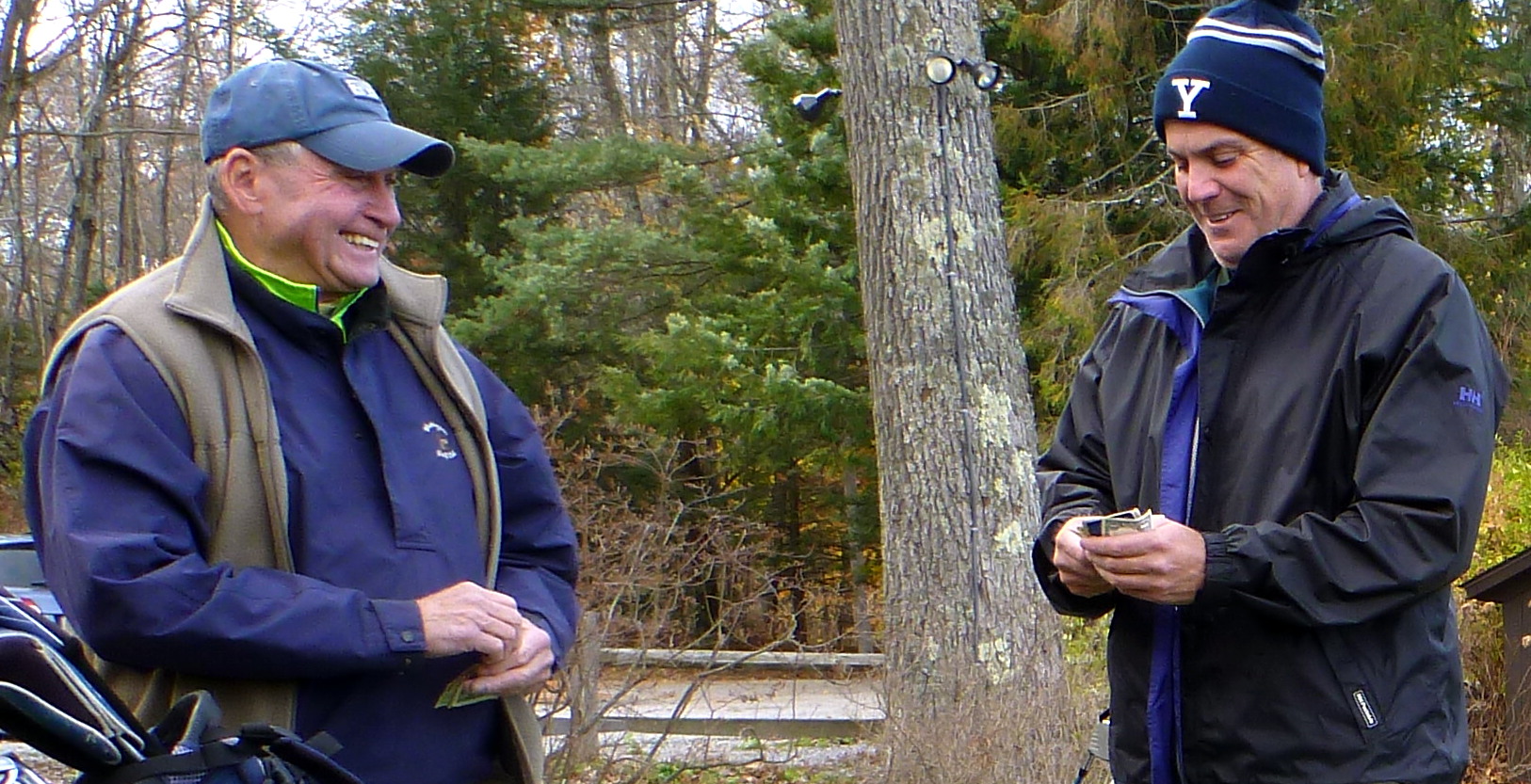
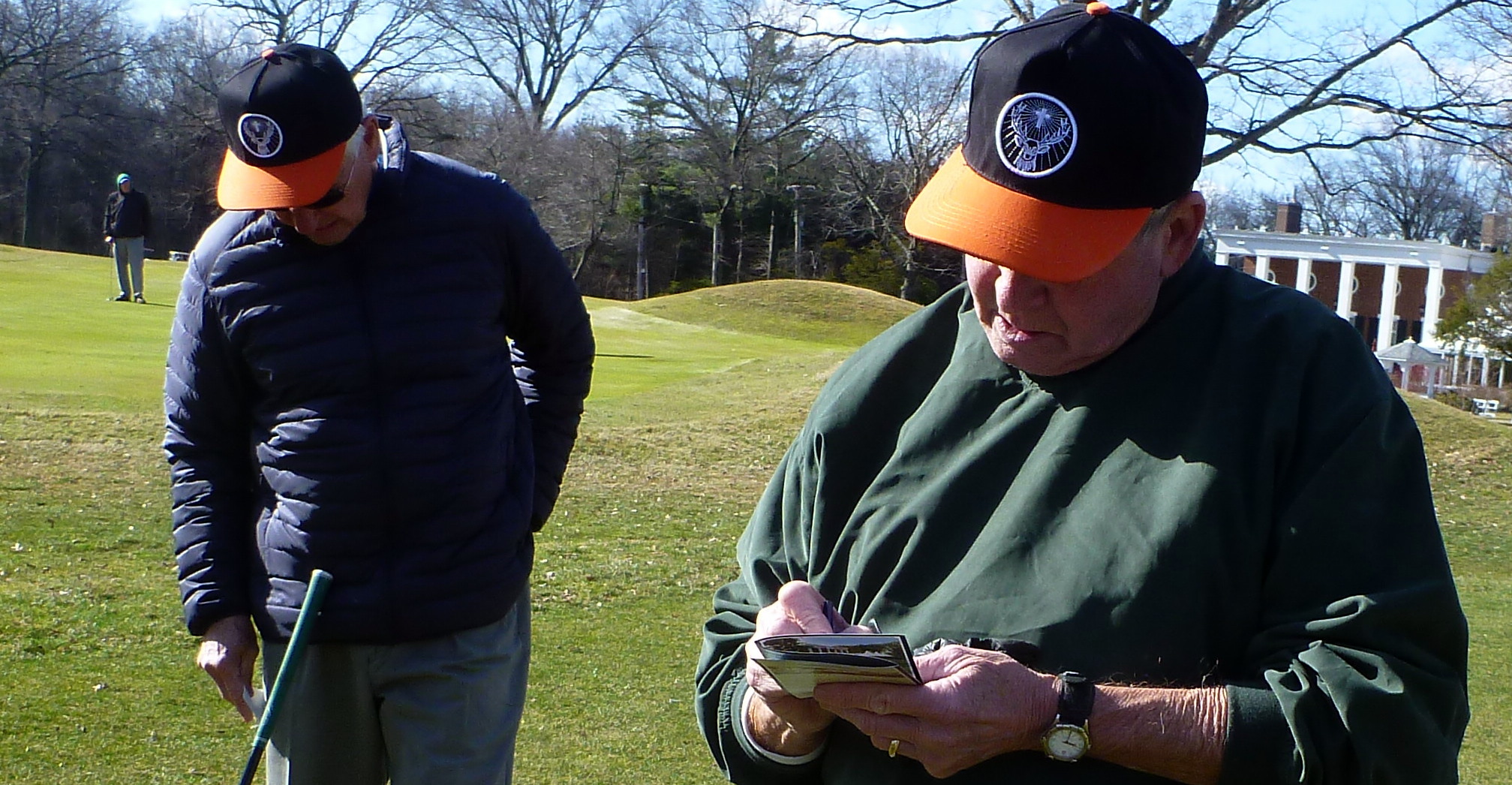
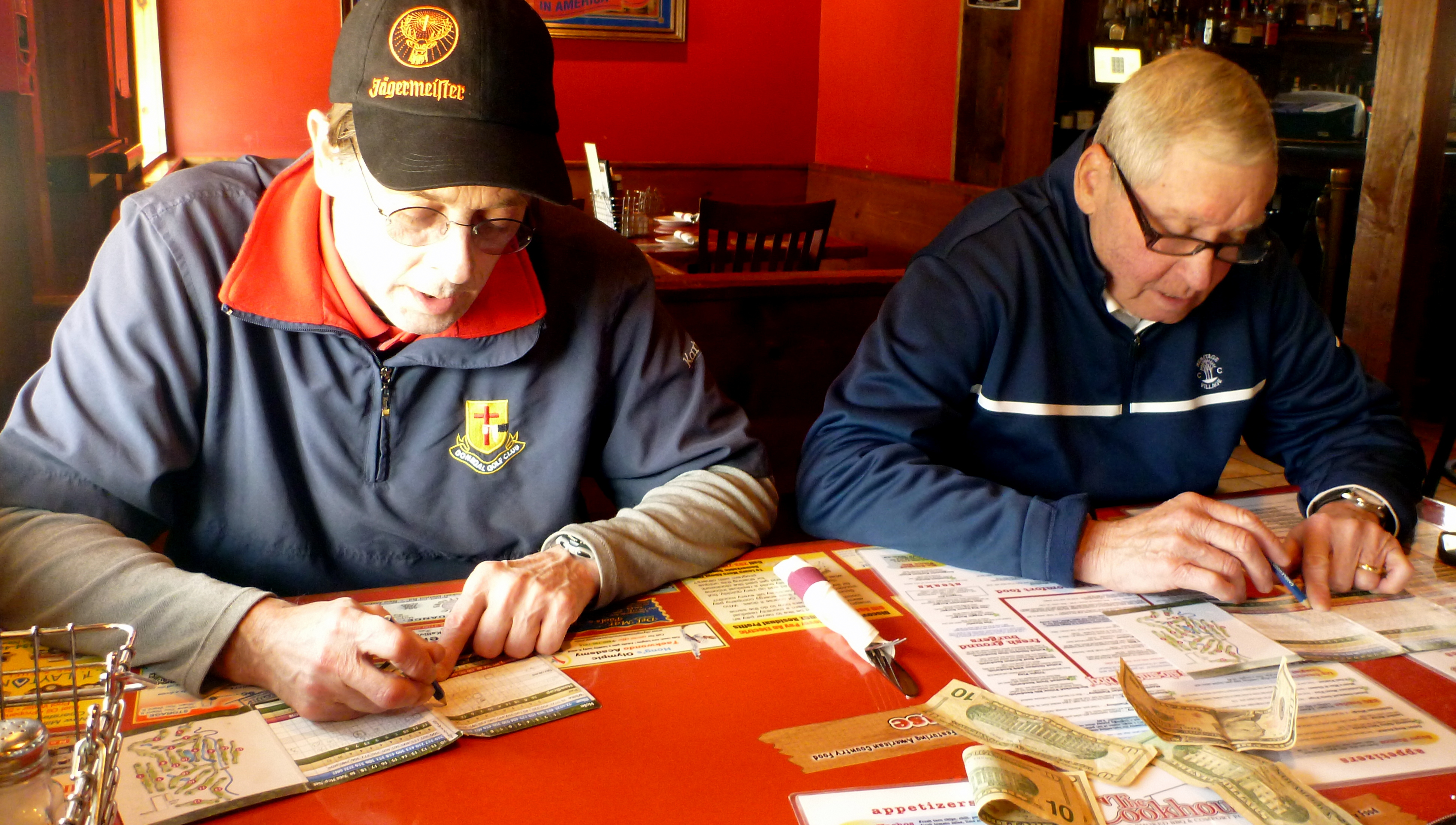
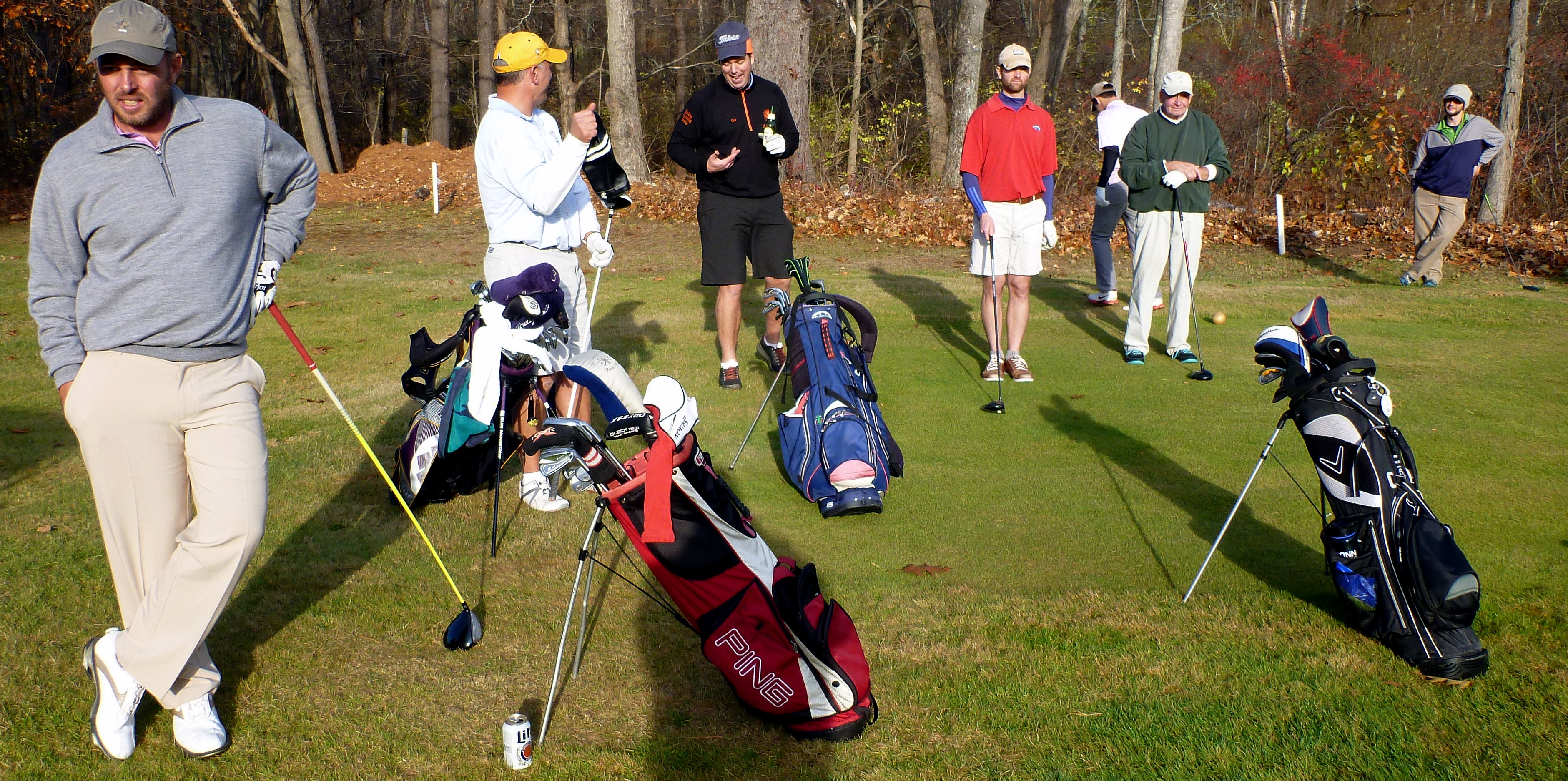
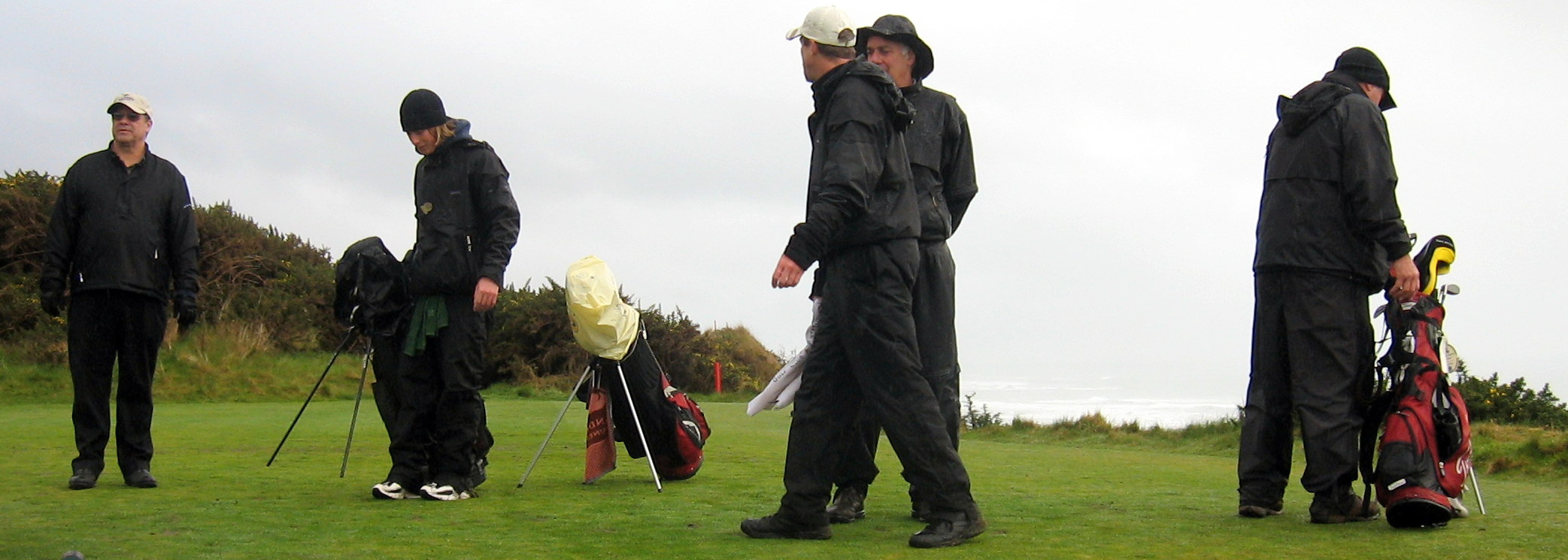
In February 2007, Ray, Tony, and I played golf in the rain for five days at Bandon Dunes. We had the same caddies for all ten rounds, and during an especially troublesome downpour they switched us to waterproof scorecards, which another Bandon caddie, Todd Petrey, had invented. Here are Ray, Tony, two of our caddies, and some other guy during a relatively dry moment on that trip:
IMG_0637

Petrey graduated from the University of Florida 1992 with a degree in sports therapy, and tried to play golf professionally for a while. He began caddying when he was short of cash, and one of the places he worked was East Lake, in Atlanta, where the weather is so disgustingly hot and humid that scorecards sometimes dissolve in perspiration. To deal with that problem, and also with rain, he invented Drycards. (“Like a normal scorecard, only better because you can use it as a coaster.”) Petrey’s company didn’t stay in business for long—apparently, the average golfer doesn’t play in bad weather as often as the Sunday Morning Group does—but he told me how to make the cards, and my friends and I now make our own. You can make them, too. Here’s how they work (my wife lent me a baking pan for this demonstration):

You can write on them with a regular pencil, even underwater, and you can erase what you’ve written with a regular eraser. The secret is synthetic paper, which Petrey first noticed in New Zealand, while caddying at Cape Kidnappers. New Zealand prints its banknotes on polypropylene, which has many advantages over paper made from cotton fibers: it lasts longer, stays cleaner, and is easier to make secure. It’s also waterproof and tear-proof. For our first batch, we used polypropylene card stock manufactured by a company called Yupo.

windshieldcard

Those cards worked great, but they were expensive, so when we ran out we switched to thinner stock, manufactured by Xerox, and had the scorecard part printed on both sides, so that each card can be used twice. The relative thinness of the new stock isn’t a problem, because the stuff is indestructible:

IMG_0041

As always, we had the printing done at PrintWorks, the official provider of graphic services to the Sunday Morning Group. The paper was still expensive — a buck a sheet — but because we got four usable sides out of each sheet our total unit cost was a little less than 30 cents.

IMG_0036

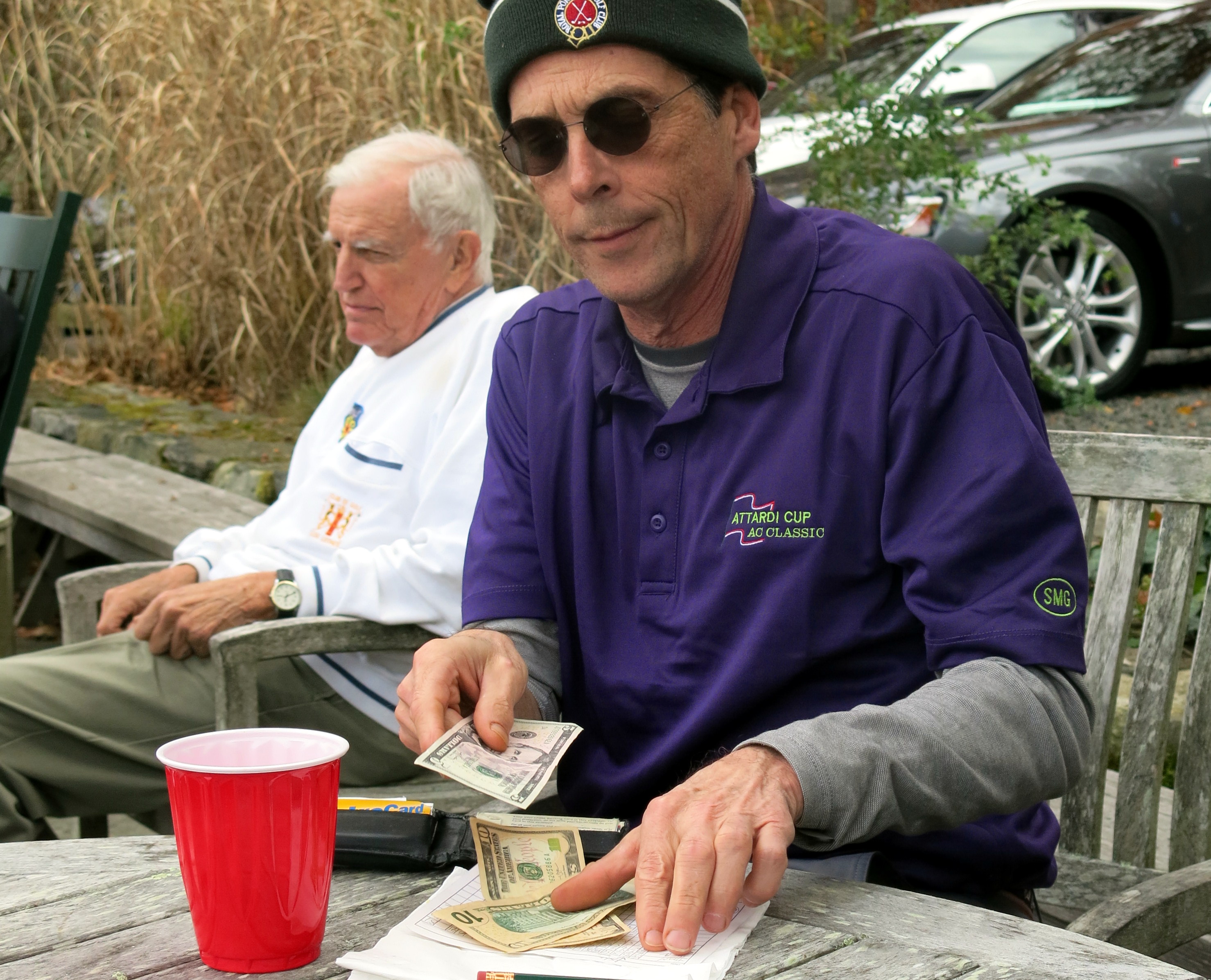
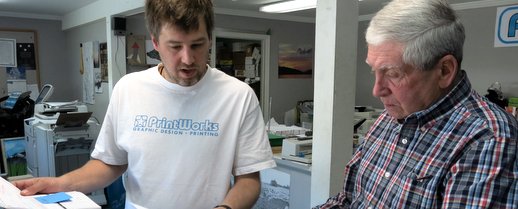
Doug, who runs PrintWorks with his mother, is an old hand at this stuff now. He’ll print waterproof scorecards for you, too, if you ask him nicely. Here he is consulting with Hacker (real name):
printworks1


You Have to Play for Something

IMG_4042

“What’ll we play for?” I asked.

“Oh, let’s not play for anything,” he said. “Let’s just play for fun.”

So we played for fun, but it wasn’t fun.

Some people have the idea that placing a modest wager on a round of golf is a desecration of some abstract ideal of recreation, or something. But golf without risk is also golf without reward. In my experience, the guys who insist on playing “just for fun” also tend to slap at six-footers as though the point of the game were merely to get on to the next hole. They never experience the exhilaration of sinking a ten-foot curler with a 25-cent greenie on the line.

P1150051

Hustlers aside, the purpose of playing for money isn’t economic; it’s psychological. The parties to a two-dollar nassau aren’t trying to get rich. They’ve merely agreed to suspend disbelief, for the next few hours, in the significance of what they’re doing. Competing for money is one of the few opportunities a grownup has to play the way children do—to increase the pleasure of a make-believe activity by taking it sort of seriously.

P1150478

The size of a golf wager doesn’t matter, as long as it isn’t so high that it makes any of the participants worry about the sum instead of the game. In Scotland once, I played a local stranger for a golf ball, and we both played as hard as if we were playing for the Ryder Cup. (And I still have his golf ball.) If we’d played “just for fun,” we’d have had a fine day anyway, but the round would have been less memorable.

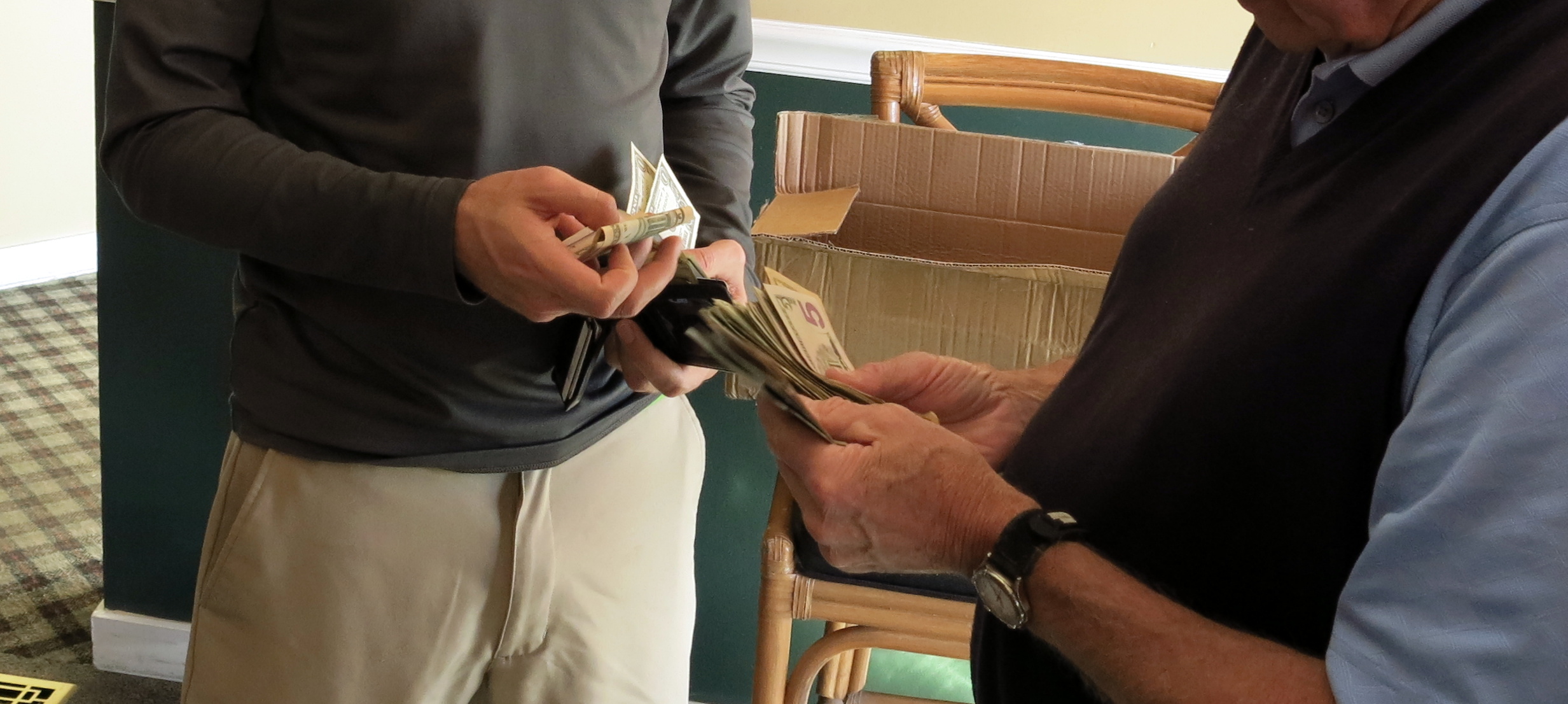
P1150520When the same players play together for long enough, their gains and losses tend to be self-canceling, because luck, over time, regresses to the mean. Every fall, the guys I play with on Sunday mornings take a weekend golf trip to Atlantic City. Before we start, we each give Hacker (real name) $100. He keeps track of all our competitions and distributes the winnings at the end.

IMG_4060

One year, he lost his master sheet and stayed up all night recreating it from our scorecards. I told him he should have just handed every player an envelope containing $100 and said, “Here’s what you won.” By that point, the actual money was irrelevant: we’d already had our fun.

IMG_1483

You Need to Subscribe to This Free Sports Newsletter

watercoolerWhen my friends and I play golf, we spend most of our time discussing stuff like continuous non-vanishing tangent vector fields and the sorites paradox, but most other guys, most of the time, talk about sports. That’s easy for the ones who skim money from their children’s college funds to finance killer teams on FanDuel, but it can be challenging for others. Now, though, there’s an equalizer: TipOff Sports, a weekly email cheat sheet “for people who want a quick and easy way to know what’s going on in the world of sports.”

date.jpg

TipOff’s editor is David Epstein, the author of The Sports Gene: Inside the Science of Extraordinary Athletic Performance, which spent many weeks on the New York Times bestseller list. The book explains how a regular dad, using items found in almost any kitchen or garage, can turn his children into athletic superstars by making simple modifications to just one or two of their chromosomes. Well, that’s not exactly right, but it’s a terrific book, and you should order a copy immediately for everyone on your list. In fact, order two, so they can keep one in their car.

Sports-Gene1.jpg

I spoke with Epstein recently. “The idea for TipOff originated with two founders of the food-delivery app Seamless,” he said. “One of them, Todd Arky, is a massive sports fan. The other, Paul Appelbaum, thinks RGIII is a new phone technology. They’re great friends, and Todd wanted to be able to talk at least rudimentary sports with Paul. At first, it was just text in an email, but we’ve been experimenting with different features, and recently we got an actual layout.” TipOff is useful even if you’re already a sports nut, because it enables you to keep up with stuff you aren’t interested in but would like to have an opinion about. Here’s a seasonally appropriate video from TipOff’s Thanksgiving edition:

Epstein has a long history in golf. “My first job, when I was thirteen, was as a caddie at the Westmoreland Country Club, in Wilmette, Illinois. I got interested in it because my older sister had a friend who was a star on the high school football team and also a caddie. The only problem was that I had trouble following the drives—so that’s actually when I realized I needed glasses.”

Epstein is married to Elizabeth Green, who was one of my daughter’s roommates in college. She’s also a terrific writer (as is my daughter). Green’s specialty is education. She’s the author of Building a Better Teacher: How Teaching Works (and How to Teach It to Everyone), which was also a New York Times bestseller. Why don’t you order a few copies of that book now, too?

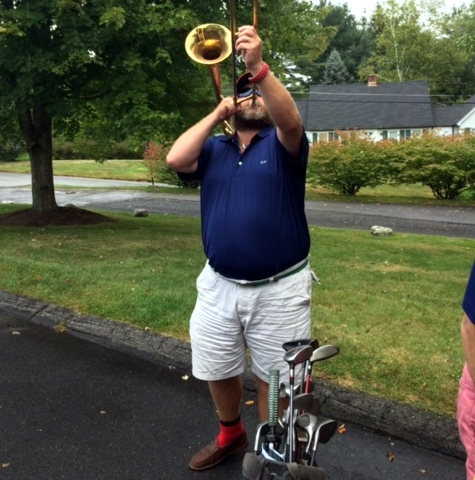
Green told me, “When I am not using TipOff to learn the meaning of obscure sports terms like ‘LeBron James,’ I am having a lot of fun with my website Chalkbeat.org, which we like to think of as the Golf Digest of the education-reform world. Our victories have to do with holding public officials accountable and drawing attention to promising (and sometime unhappy) happenings in schools.” And that’s something else you can talk about with your golf buddies when you’re not boring them with your theory of the golf swing or playing your trombone.

I don't recall who sent me this photograph.

I don’t recall who sent me this photograph.

Golf in the Shoulder Season

venn

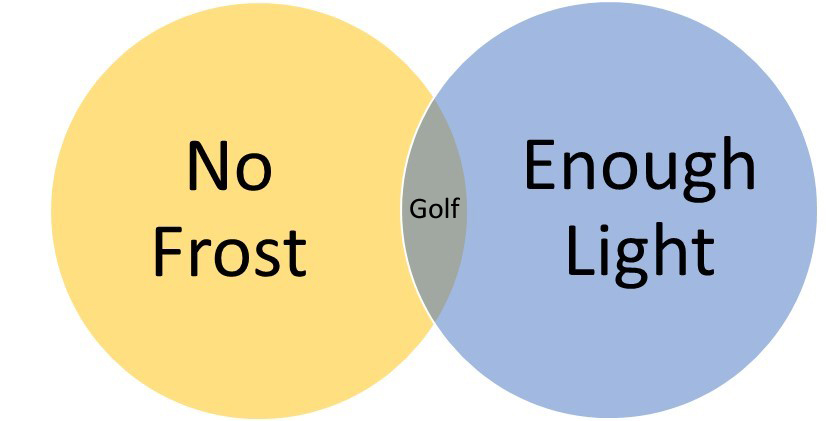
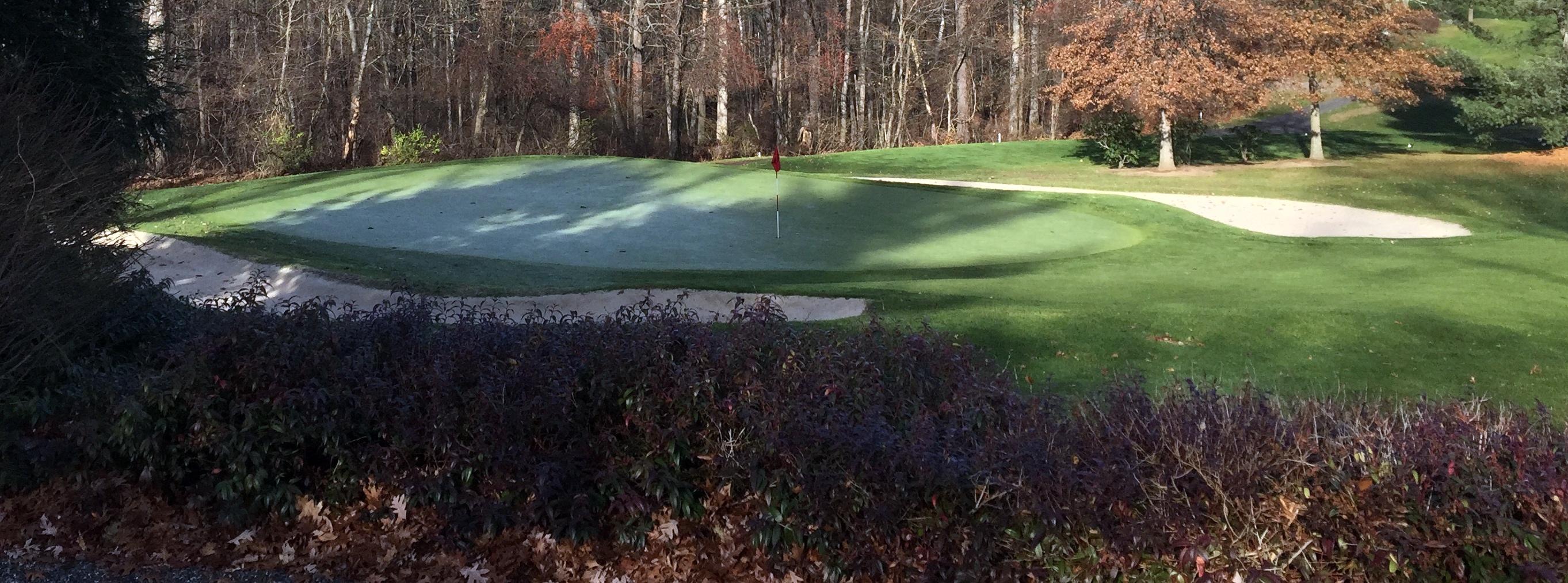
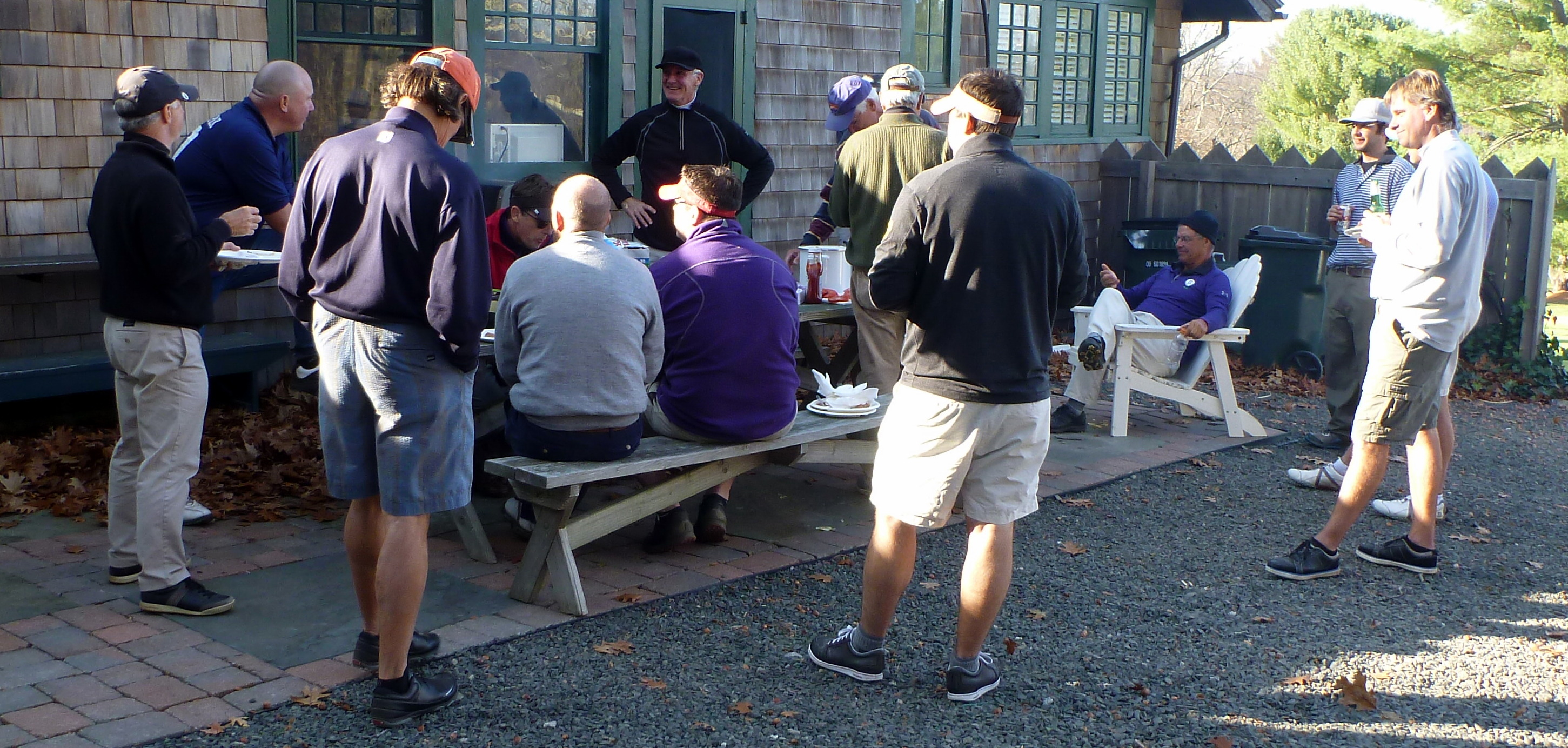
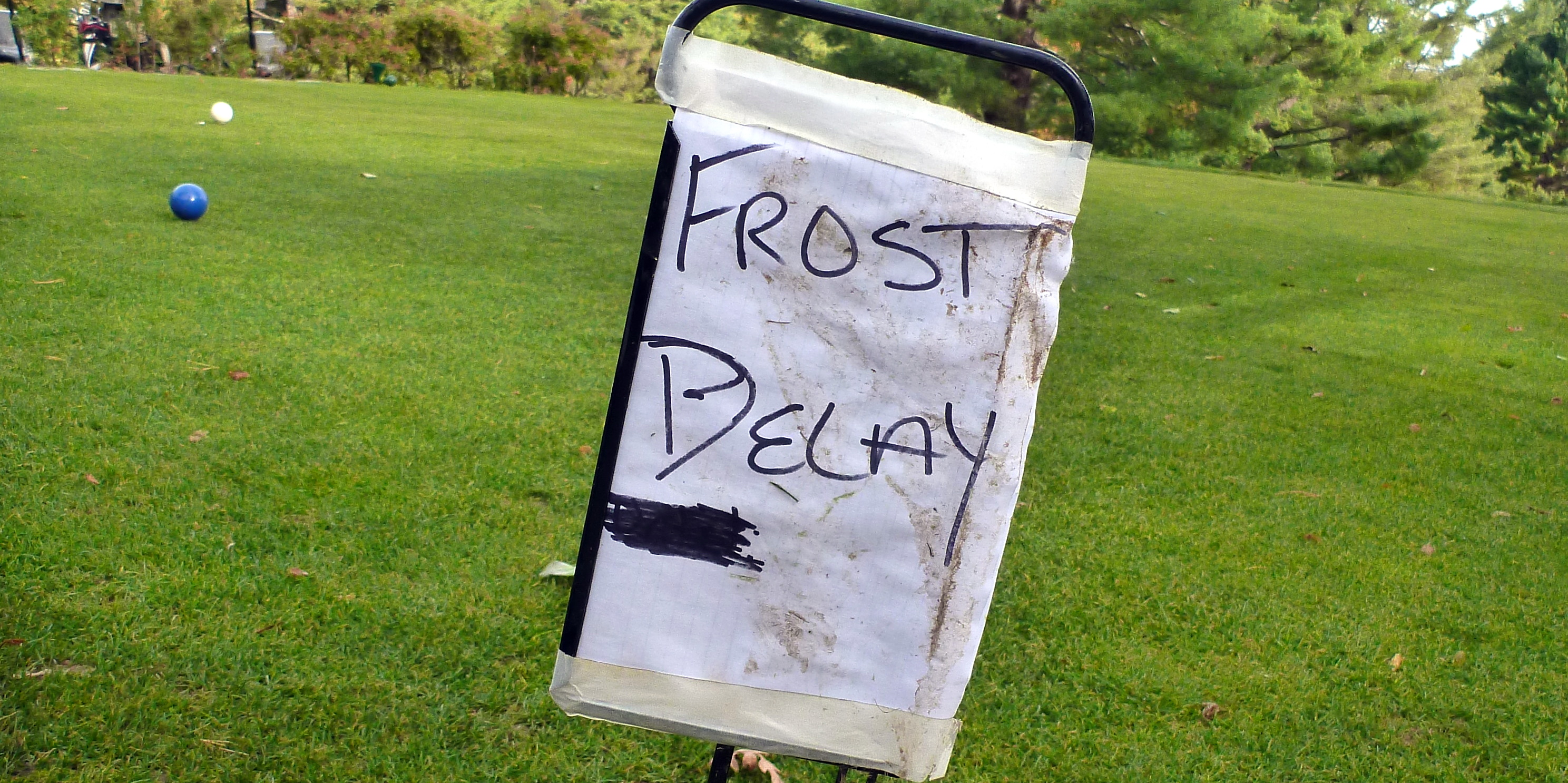
Quite a few members of my golf club think our course is closed for the season. That’s good, because it keeps most of the complainers at home, but even without them golf is becoming problematic. By the time the frost has melted, there’s not a lot of daylight left. On Sunday, we moved our starting time from 7:30 to 9:00, but when we arrived the frost still looked almost like snow, and we couldn’t tee off until 10:00. Here’s the ninth green at 9:30:

IMG_1201

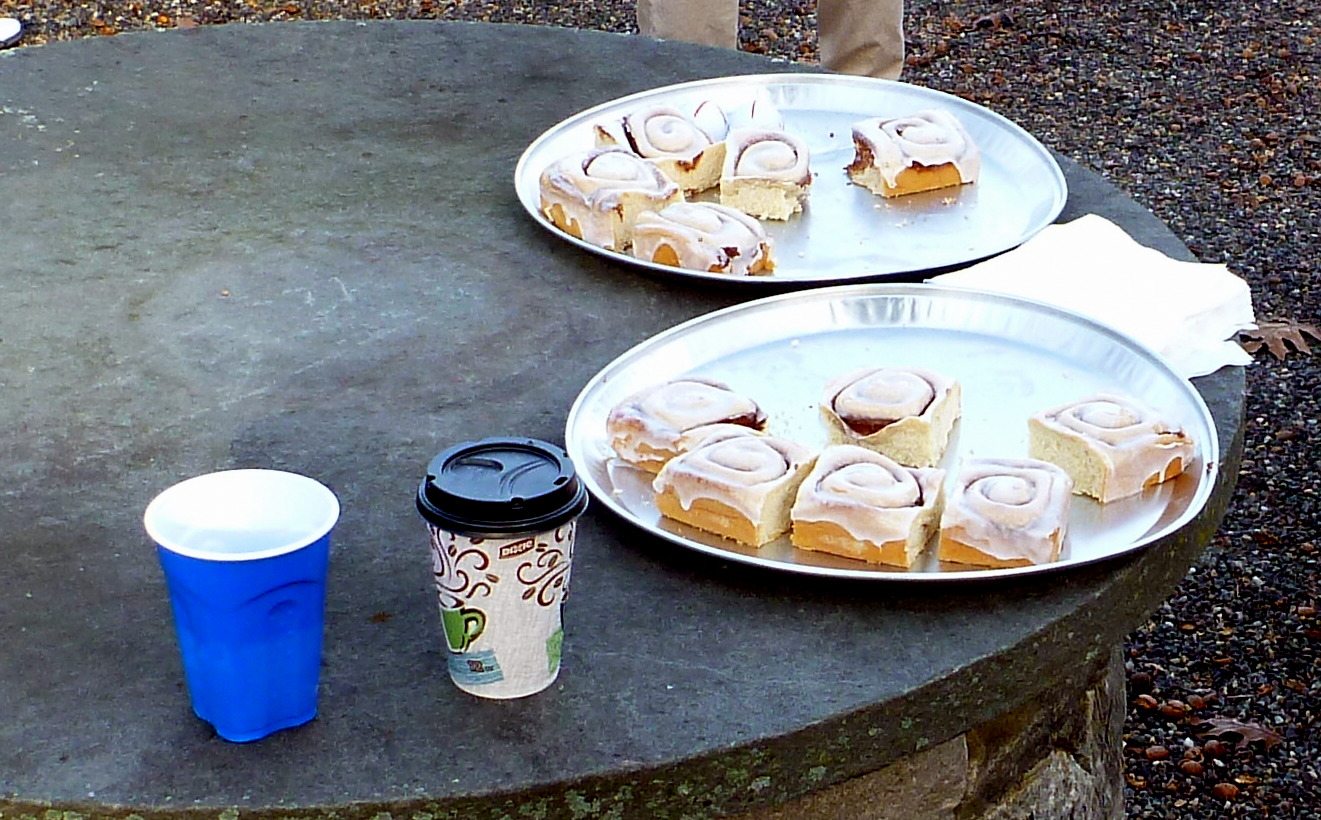
Tim D. took that photo, with his phone. Luckily, the other Tim, Tim C., had brought Bloody Marys and cinnamon rolls:

P1170188

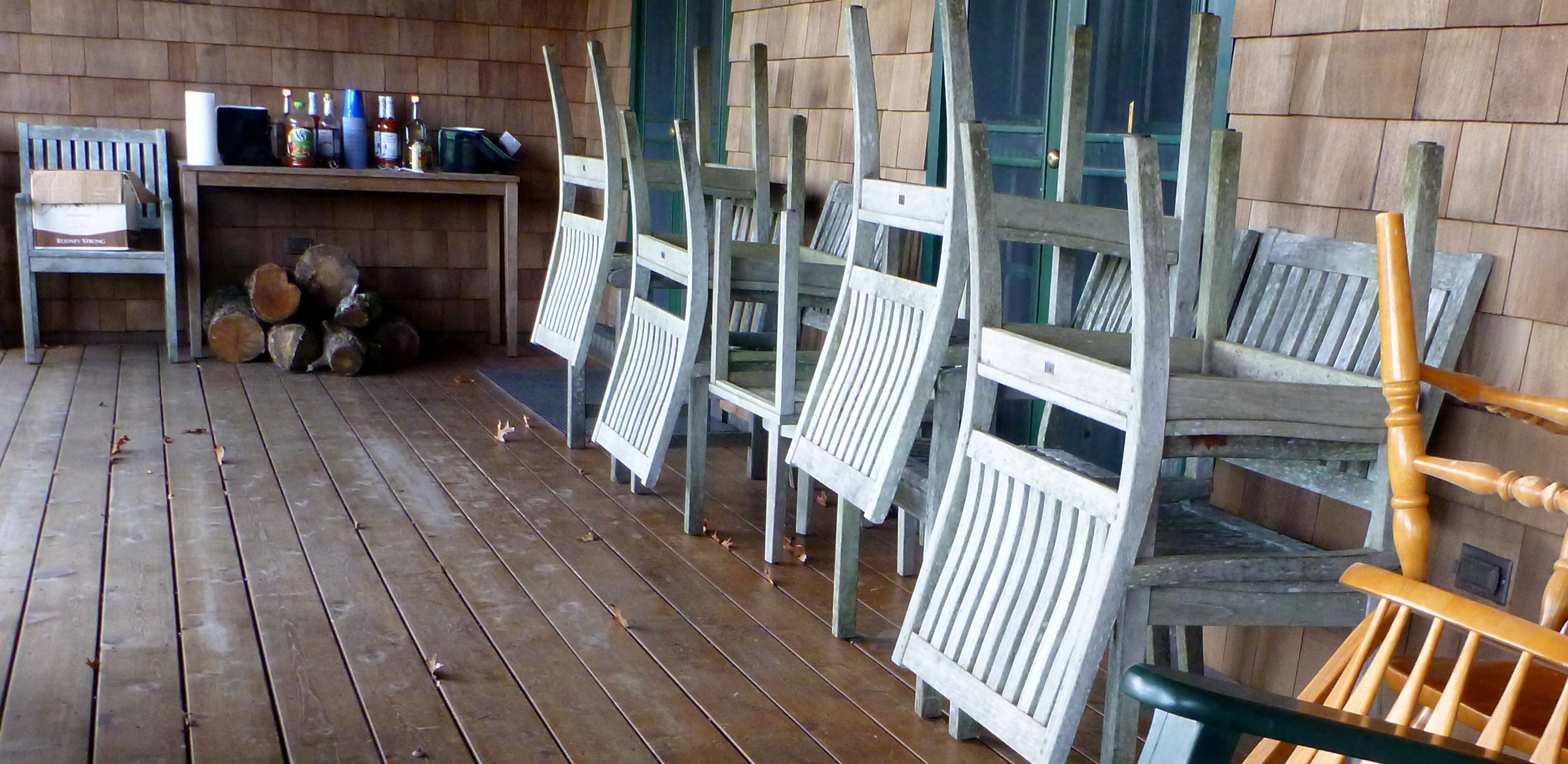
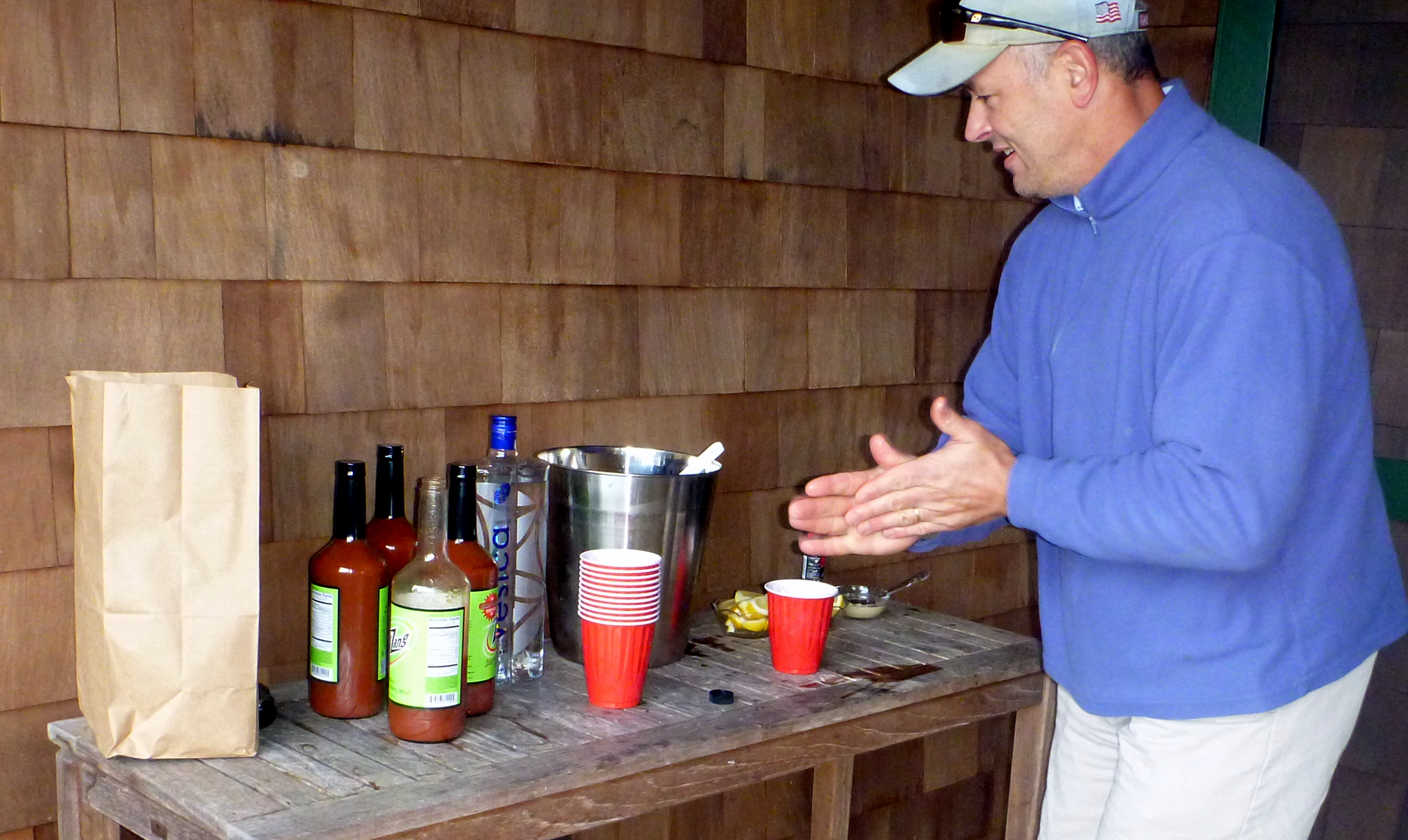
There was a plastic knife on one of the plates—not for cutting the rolls into smaller pieces, but for scraping up icing that had fallen or dripped off. The Bloody Marys were on the porch, where someone had stacked all the furniture from our patio, to protect it either from the elements or from us:

P1170172

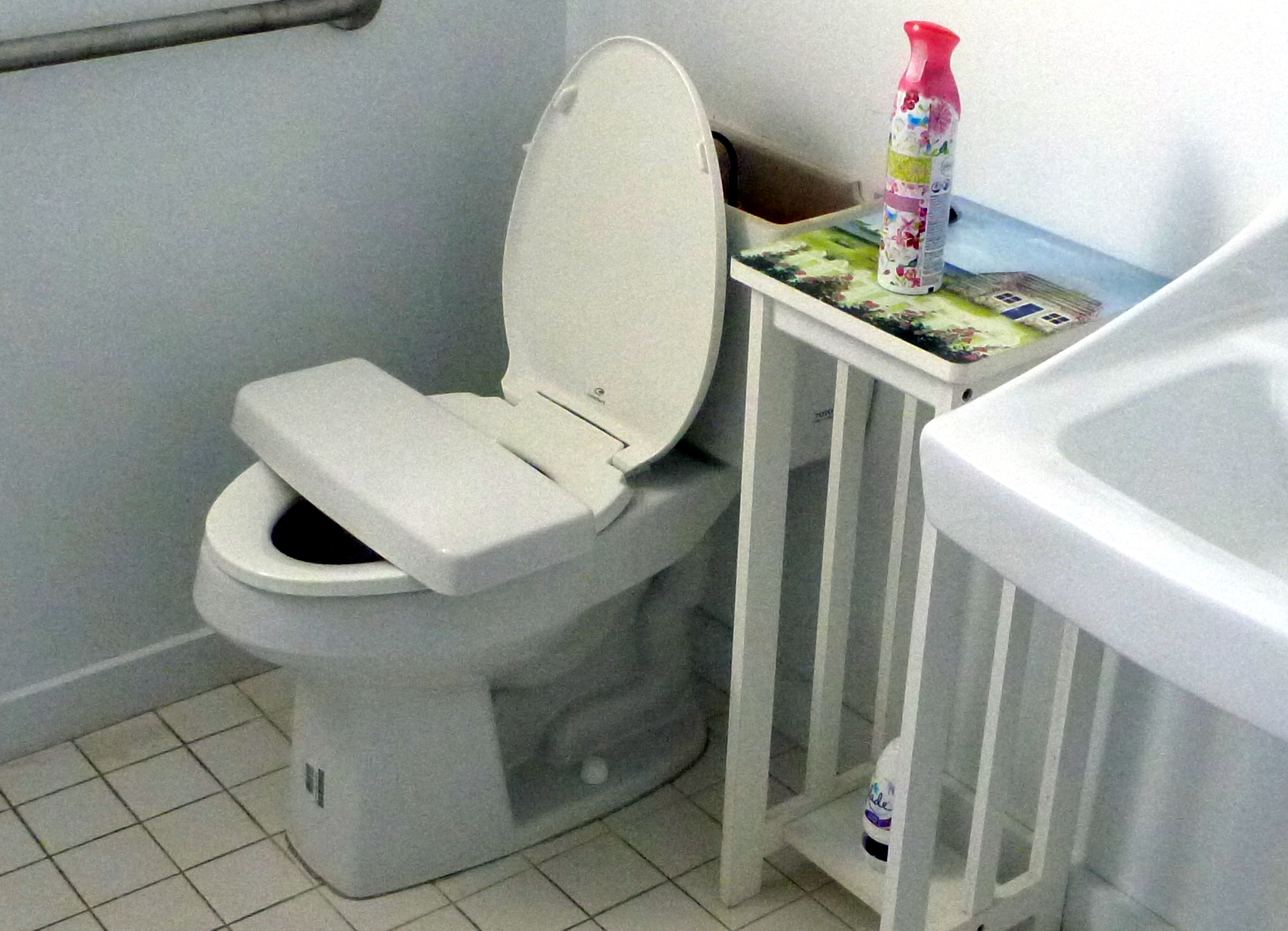
Our clubhouse isn’t heated, so every November the plumber has to drain the pipes and fill the toilets with antifreeze. One winter, someone (not a member of the Sunday Morning Group) used one of the toilets anyway, so now we try to make it clear that they’re out of commission:

P1170176

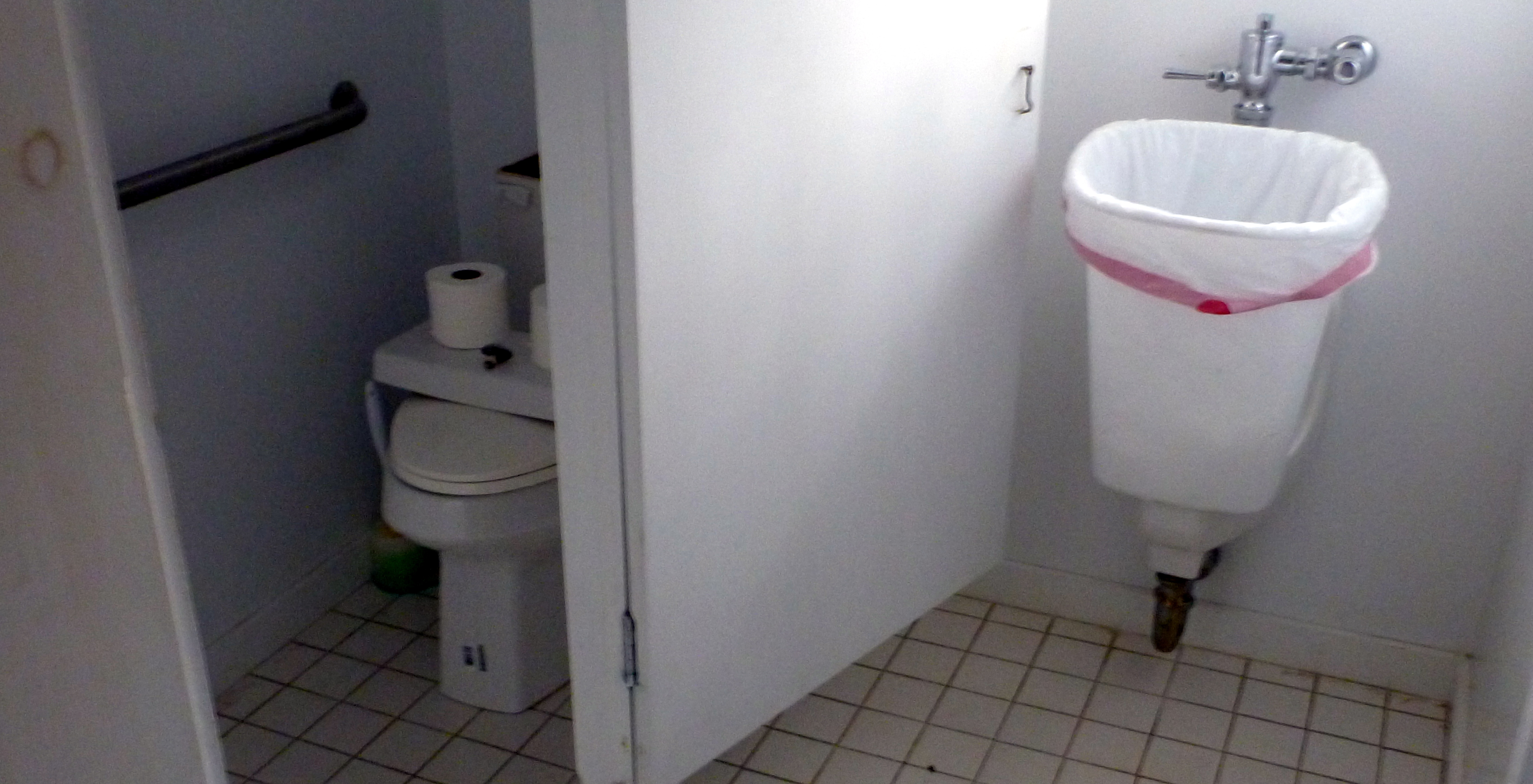
This is the VIP Suite, also known as the women’s restroom. It’s nicer than the restroom in our locker room, but it’s usually available only in bad weather and during the men’s member-guest:

P1170173

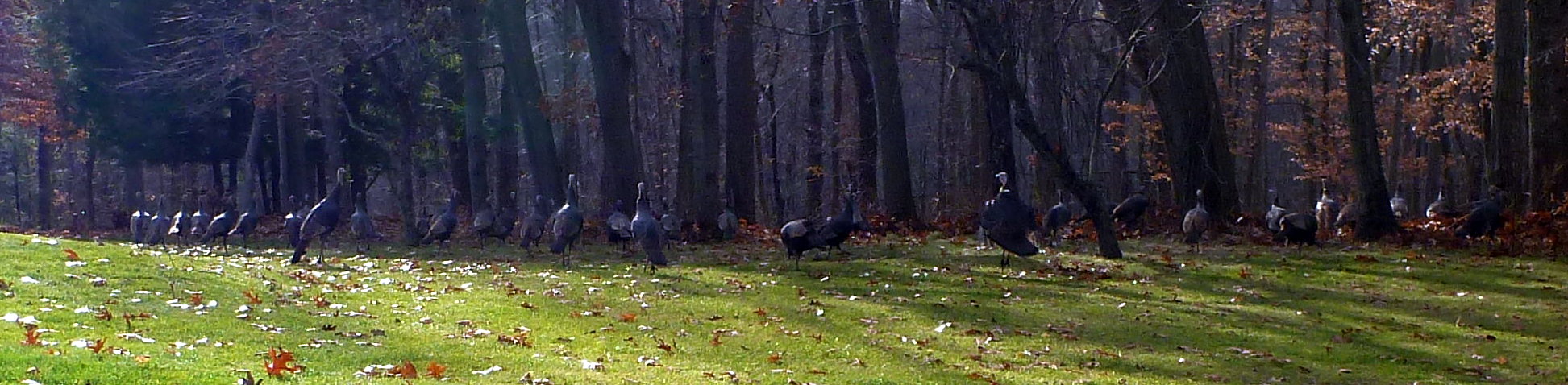
At last, someone decided that the remaining frost was probably just dew, and we teed off. In the trees beyond the fourth green I saw the largest flock of turkeys I’ve ever seen on the golf course, or anywhere. Here’s about half of it:

P1170153

Tim C. brought lunch. A recent report by the World Health Organization says that hot dogs and bacon cheeseburgers aren’t as good for you as people have always thought. No mention of beer, fortunately. And the hamburger buns that Tim brought were “multi-grain,” so if this really turns out to be a problem we could cut back on those.

P1170191

I couldn’t hang around for too long on Sunday, because I had to get home to meet the appliance-repair guy, who now does his appliance-repairing only on weekends. He had to take a regular job during the week (at an auto-parts store) because, he said, when appliances break nowadays people usually just dump them and buy something new rather than having them repaired. That is to say, they treat them like year-old golf clubs. His most recent example: a guy who bought a new dryer because he didn’t want to wait for a 25-dollar belt to arrive and be installed. An additional factor: the most vulnerable component of almost every modern appliance is the (basically unnecessary) computer board, which can’t be repaired and is so expensive to replace that buying a new appliance often actually makes sense. The Internet of Things!

Anyway, he said he always remembers where I live because he once came to our house to repair a broken dishwasher, and the source of the brokenness turned out to be some coyote teeth, which had gotten stuck in the thing that sprays the water. The teeth had fallen out of a coyote skull that I bought on eBay. I bought it because I wanted one, and although we have a lot of coyotes in our area I was tired of waiting for one to die in our yard. Anyway, putting the skull in the dishwasher turned out to be a big mistake, and not only because of the teeth. It made the whole house smell like a very wet, very dirty dog. So never again.

IMG_1199

Back-roads Scotland: Strathpeffer Spa

strathpeffer spa pump house

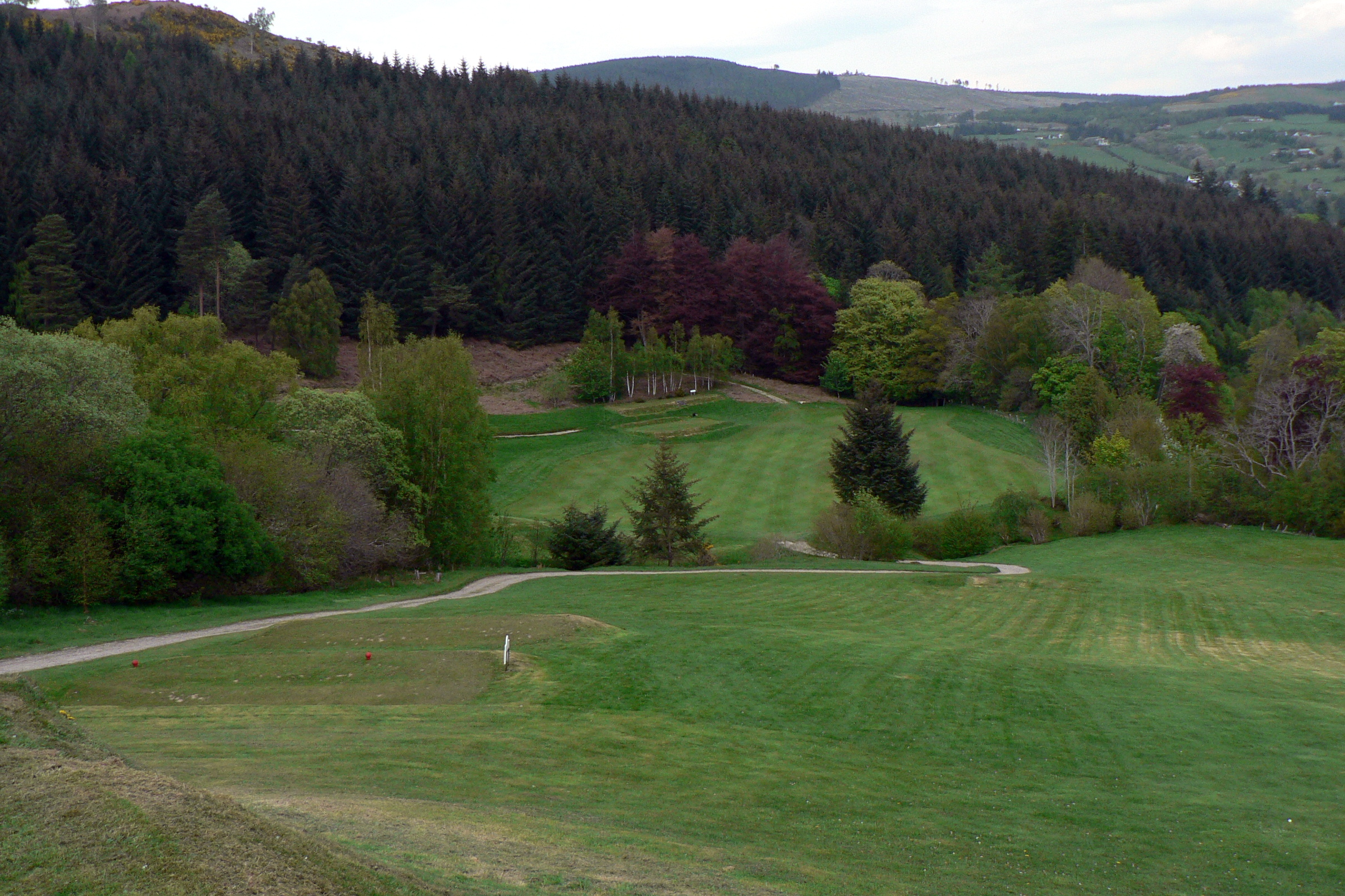
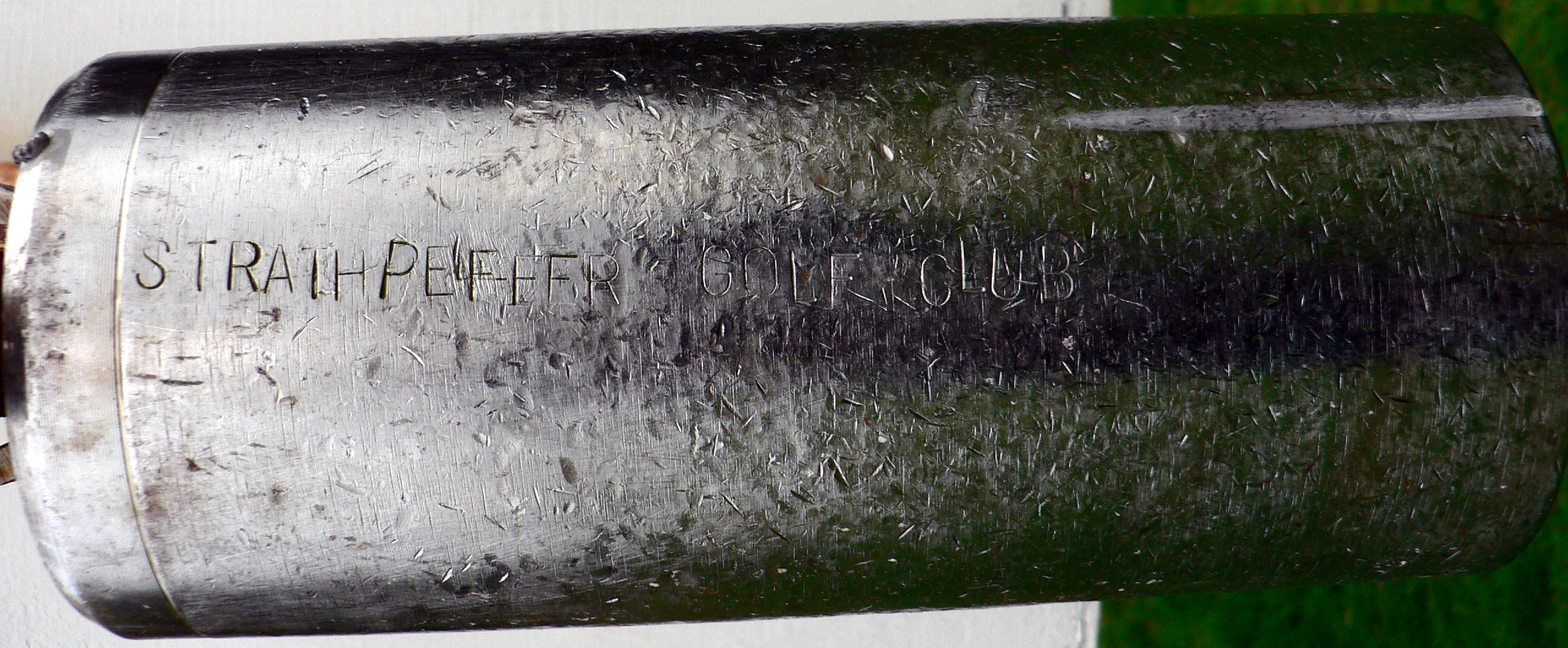
The village of Strathpeffer is roughly forty-five minutes northwest of Inverness, in the Scottish Highlands. It’s been a popular vacation destination since the Victorian era, when it was celebrated for its sulfur springs. It’s sort of on the route to Brora and and Royal Dornoch. If you’re headed that way on a golf trip and feel like playing an unusual course that none of your friends will have heard of, you should stop at the Strathpeffer Spa Golf Club. The course is barely 5,000 yards long, but it isn’t a pushover, and the scenery is spectacular, and Willie Park, Jr., and Old Tom Morris contributed to the design:P1030258

The first hole, a 330-yard par 4, plays down a vertiginous hill, and if you make a smooth swing, as you almost can’t help doing at that altitude, you can drive the green. According to the club, the tee shot has the longest drop of any hole on any course in Scotland:

P1030256

The second hole, a 250-yard par 4, plays straight up a different hill, and it’s followed by four consecutive par 3s.

P1030271

Here’s how severe the elevation changes are: The eighteenth hole is roughly the same length as the first, and the drop from tee to green is almost as long, and the eighteenth green is at almost exactly the same elevation as the first tee—yet the eighteenth tee isn’t the high point on the course.

P1030277

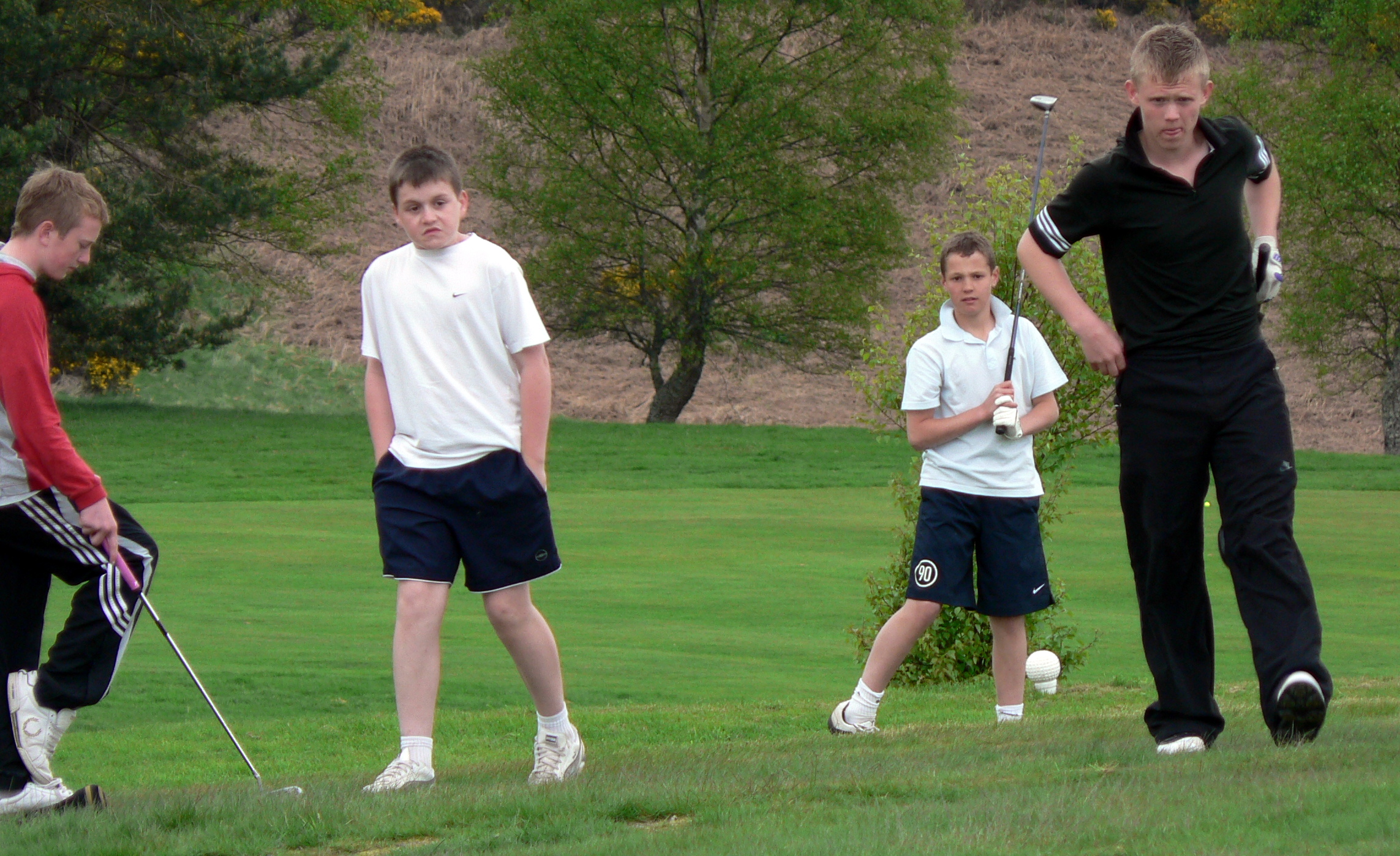
I followed a junior match, in which the competitors’ caddies—of whom there were five—were frequently unable to agree on which of them was supposed to be carrying what:

P1030282

The club, which was founded in 1888, has many active, involved members, and because of the topography most of them are as fit as Sherpas. Fifteen years ago, they renovated their clubhouse themselves:

strathpeffer clubhouse

I didn’t spend the night in the village, but I now wish I had—another reason to go back.P1030268

A Simple Trick to Speed up Play

P1170131

Most golfers are wussies when it comes to bad weather, even if they own lots of expensive bad-weather gear. There was a huge storm overnight in my area not long ago, and even though the rain had stopped by noon the next day hardly anyone played, except for my friends and me. The reason was that there was still a little rain in the forecast, and that threat was apparently enough to make everyone else stay home and clean out their garage. As a result, we played all eighteen holes without human interference—and in perfect conditions:
P1160982


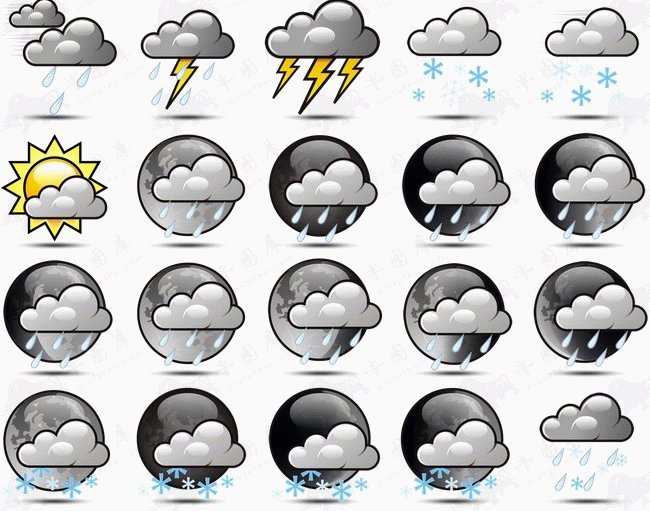
Afterwards, I got to thinking: couldn’t this quirk of human nature be put to some practical use? What I decided to do is create a free service that will send a next-day weather forecast, every evening, to all the other members of my club. The forecast will be accurate, except for days when my friends and I are planning to play, when it will include at least one of these:

badweathericons

I might put a big red exclamation mark in there, too.


Tracking Golf History With Google’s Amazing Time Machine

I first used Google Earth in 2004, before it was Google Earth. At the time, it was a subscription service called Keyhole Earth Viewer, and I used it while working on an article for the New Yorker about golf courses in New York City. Then Google bought Keyhole. It renamed Earth Viewer, and improved it, and made it free, and has continued to improve it. One of its coolest features is Historical Imagery, which lets you travel back in time by cycling through earlier images of whatever you’re looking at. For example, here’s what Augusta National looked like last February, from a little over 7,000 feet up:
ANGC 2014-2-27

And here’s what it looked like from the same altitude in November 2002, when the enormous tournament parking lot, to the left of the golf course in the picture above, was still a residential neighborhood (before the club bought all the houses and tore them down):

ANGC 2002-11-30

And here’s what it looked like in February 1993, two months before Bernhard Langer won for the second time, by four strokes over Chip Beck — who, you will recall, laid up on No. 15:

ANGC 1993-2-13

You can drill down, to study specific changes to the course. For example, here’s what the practice area looked like last year:

ANGC Range 2014-2-27

And here’s what it looked in 2009, when the club was building it:

ANGC Range 2009-6-24

And here’s what it looked like in 2002, when it was the (original) tournament parking lot:

ANGC Range 2002-11-30

Historical Imagery is a terrific time waster if you’ve got work or chores to do. Here’s the seventeenth fairway in 2013, when the Eisenhower Tree (which I’ve helpfully labeled) was alive and well:

ANGC Ike 2013-1-21

And here’s what it looked like last year, when the Eisenhower Tree was dead and gone. (The bunkers in the upper-right-hand corner are next to the green on No. 7.)

ANGC Ike 2014-2-27

Why do anything else when you’ve got a toy like this to play with? To learn how Historical Imagery works, go here.

ANGC 2007-6-24

Shorts Rule, Leaf Rule Now in Effect

IMG_4216

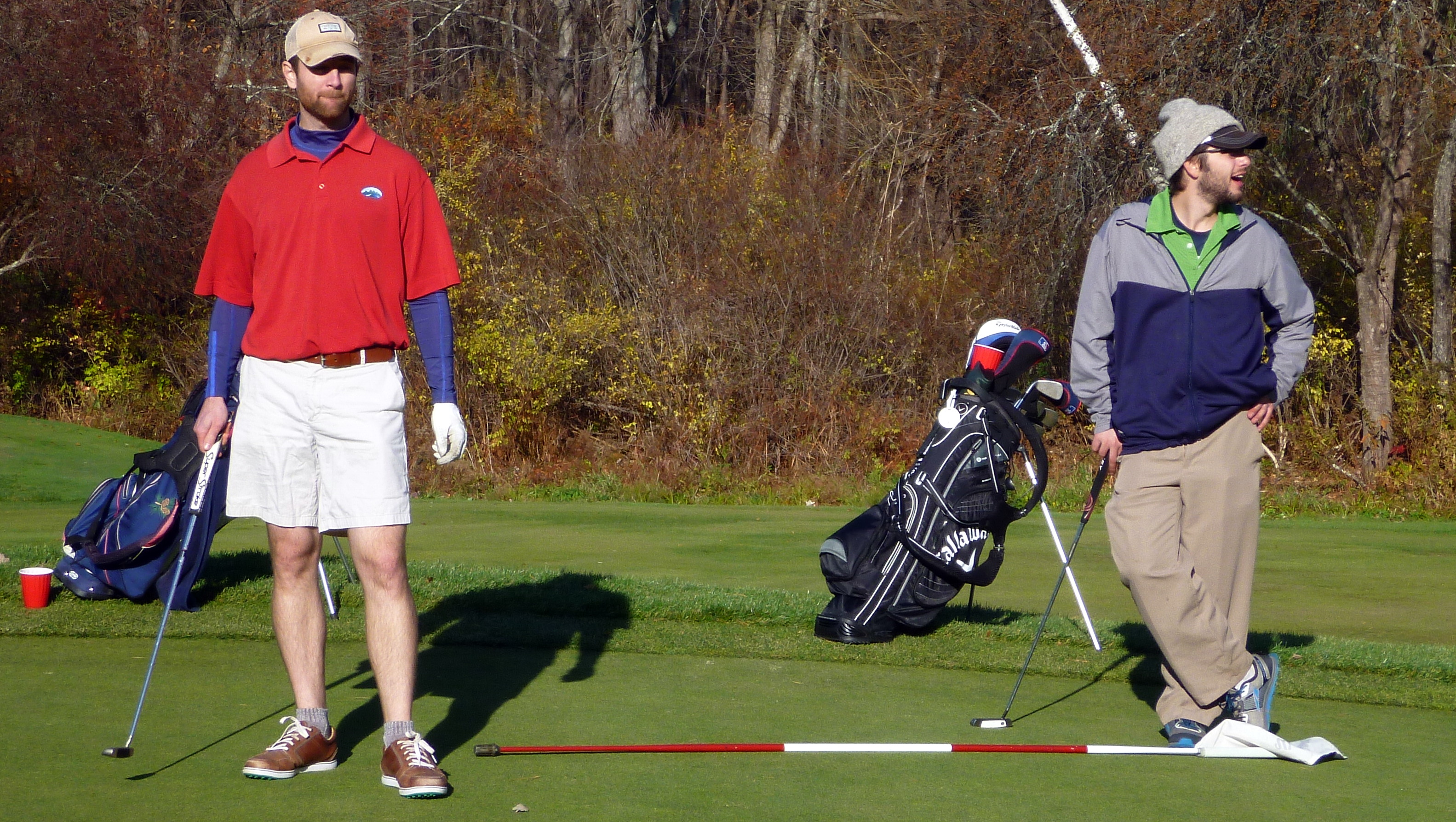
The Sunday Morning Group gives one extra handicap stroke to anyone who wears shorts after November 1, and two extra strokes after December 1. There are usually quite a few takers, even when the weather stinks.

P1160967

Wednesday was unseasonably warm, though, so Addison suggested we give the extra stroke to guys in long pants instead. (He had been working in the golf shop all morning and was wearing corduroys.) This was an intelligent suggestion, but, like many intelligent suggestions, it had to be rejected out of hand, because rules are rules.

P1160976

S.M.G. also abides by the International Leaf Rule, which states that, if everyone in your group agrees that your ball is lost in the leaves, you can take a free drop (in the leaves) in the likeliest spot. An especially sticky case came up recently during a field trip to Todd’s other club (photo above), which not only has more holes than our club does but also has more deciduous trees. Everyone agreed that Peter A.’s ball was at the bottom of the pile of leaves in the video below, but in order for him to take a drop in the proper spot he would have had to interfere with the maintenance guys:

Sorry, Pete. No relief. Rules are rules.

P1170107

International Drain-the-Beer-Keg Day

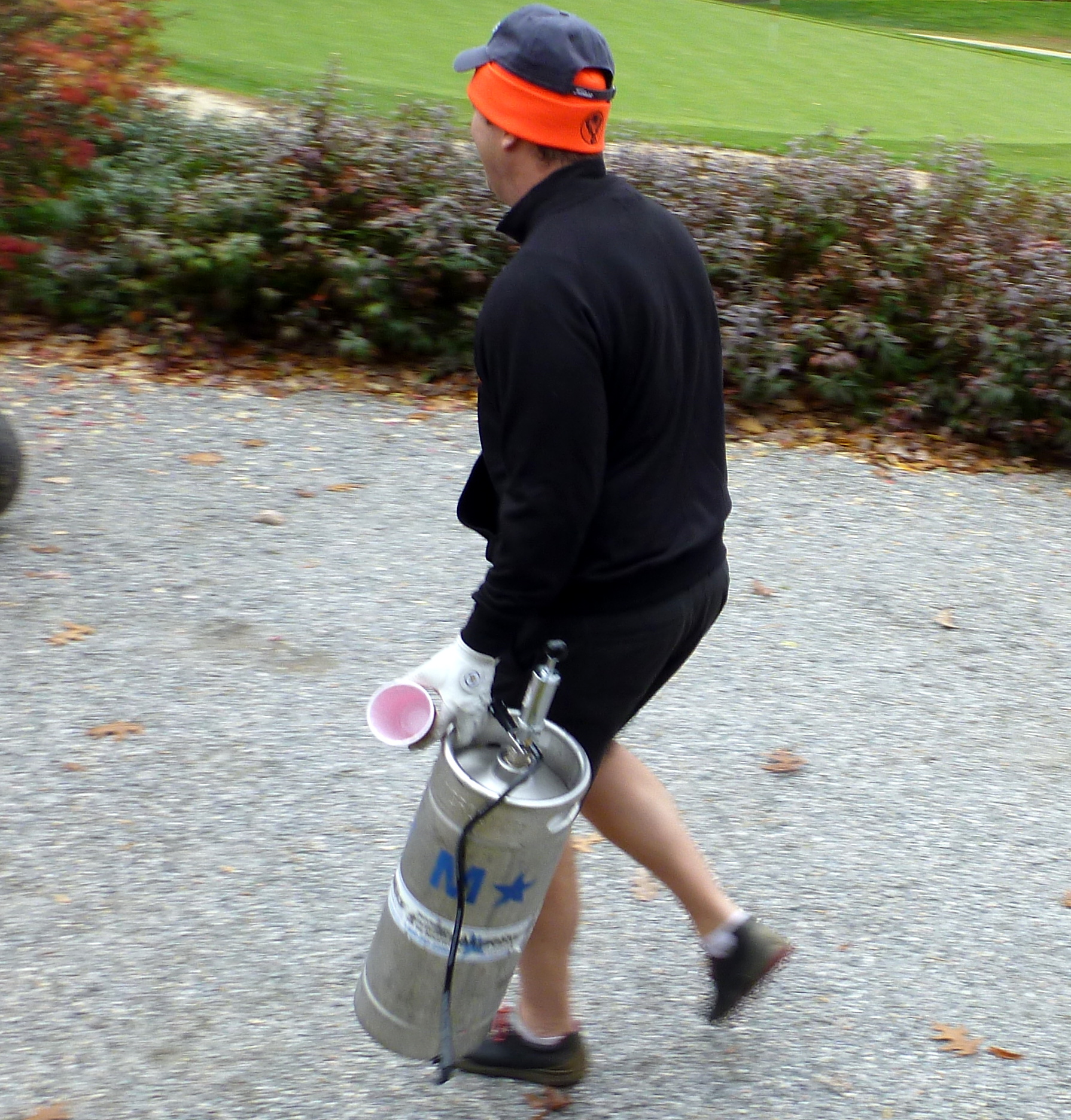
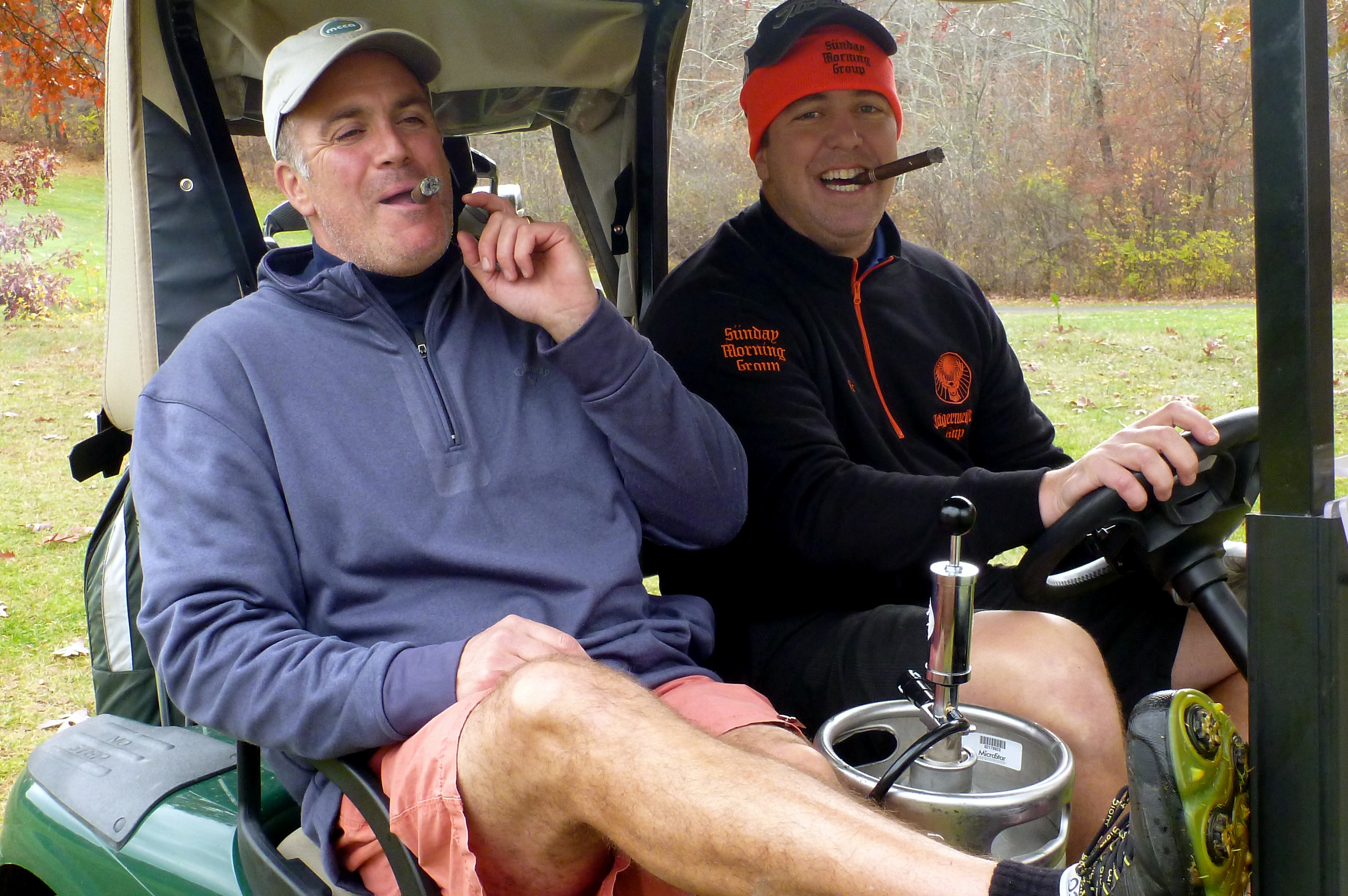
IMG_1444Every fall, around the time the golf shop closes for the season, the Sunday Morning Group prepares for winter by spending a day finishing all the beer that’s left in the kegerator, so that the kegerator can “self-clean” over the winter. This year, finishing the beer was made extra challenging by the fact that all the beer in the kegerator had actually been finished the day before. The solution (devised by Chic and Mike A.) was to buy a new keg, and finish that:

P1170018

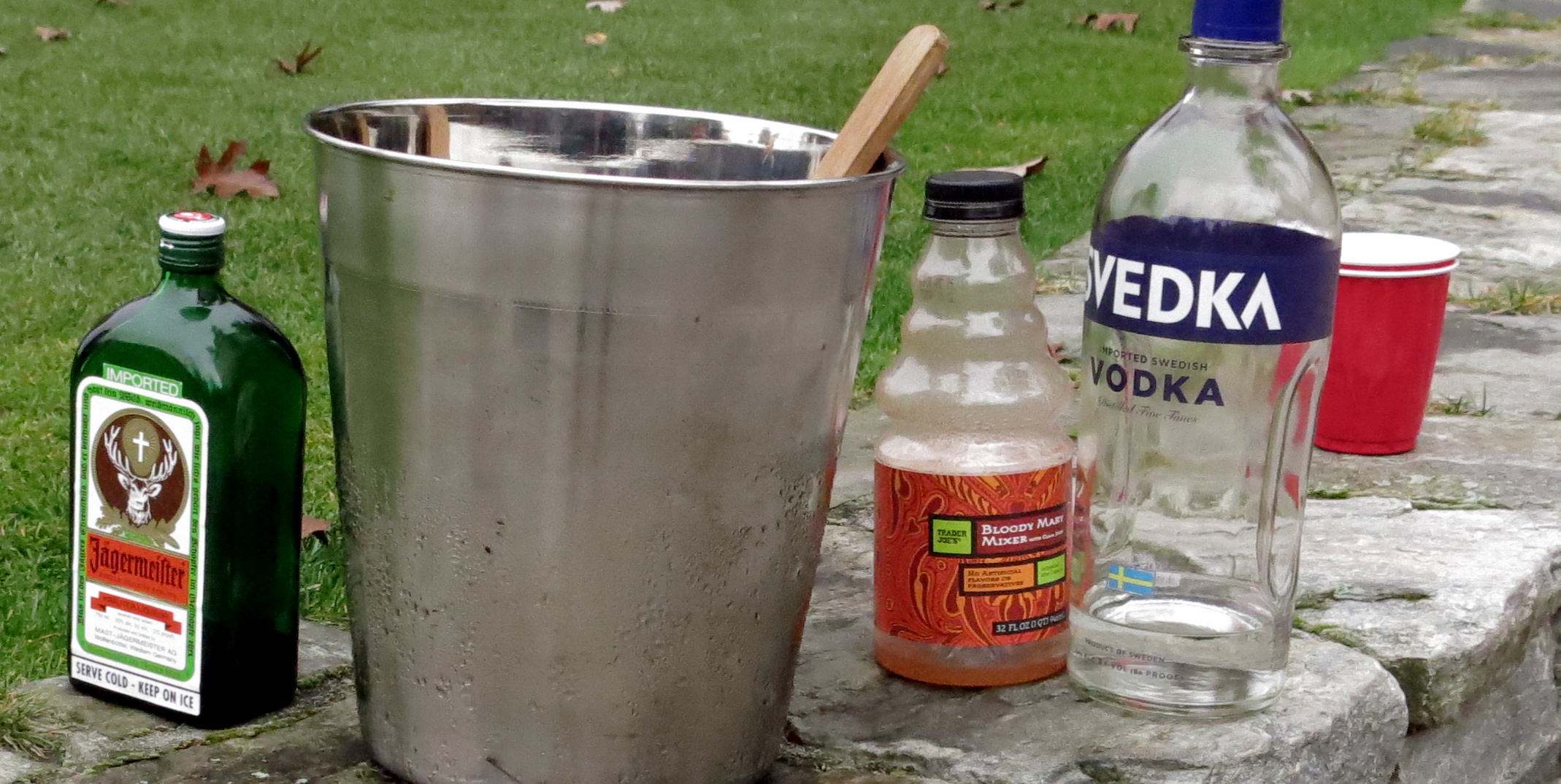
First, though, there were Bloody Marys and Jagermeister on the first tee:

IMG_1454

And, of course, we played our regular Sunday round, during which Tim D. secured his position as the year’s leading money winner:

IMG_1485

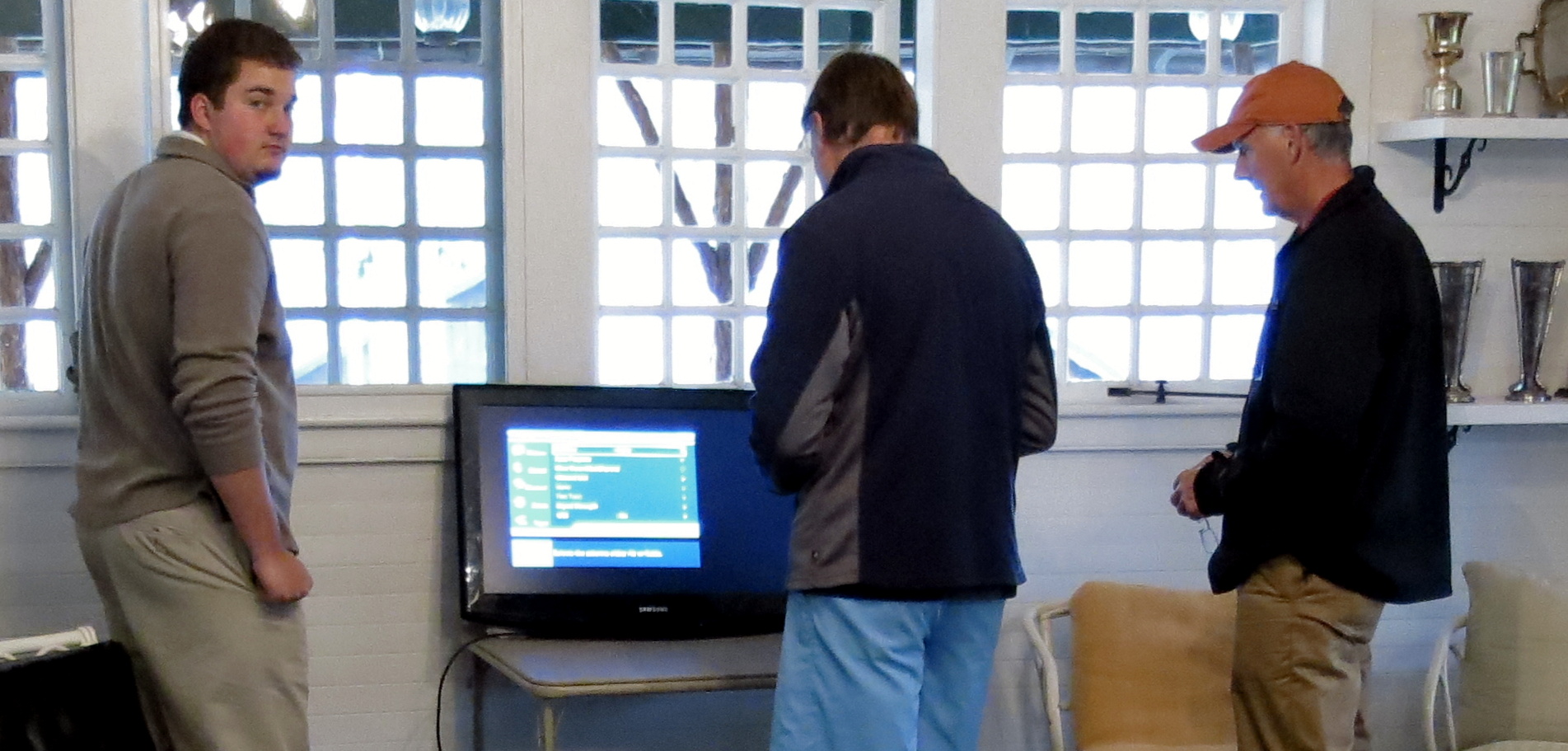
Then Justin helped Fritz and Tim C. run a hundred-foot-long cable from the golf shop to the clubhouse, so that we could watch football if anyone could figure out how to make the TV work. (No one could):

IMG_1446

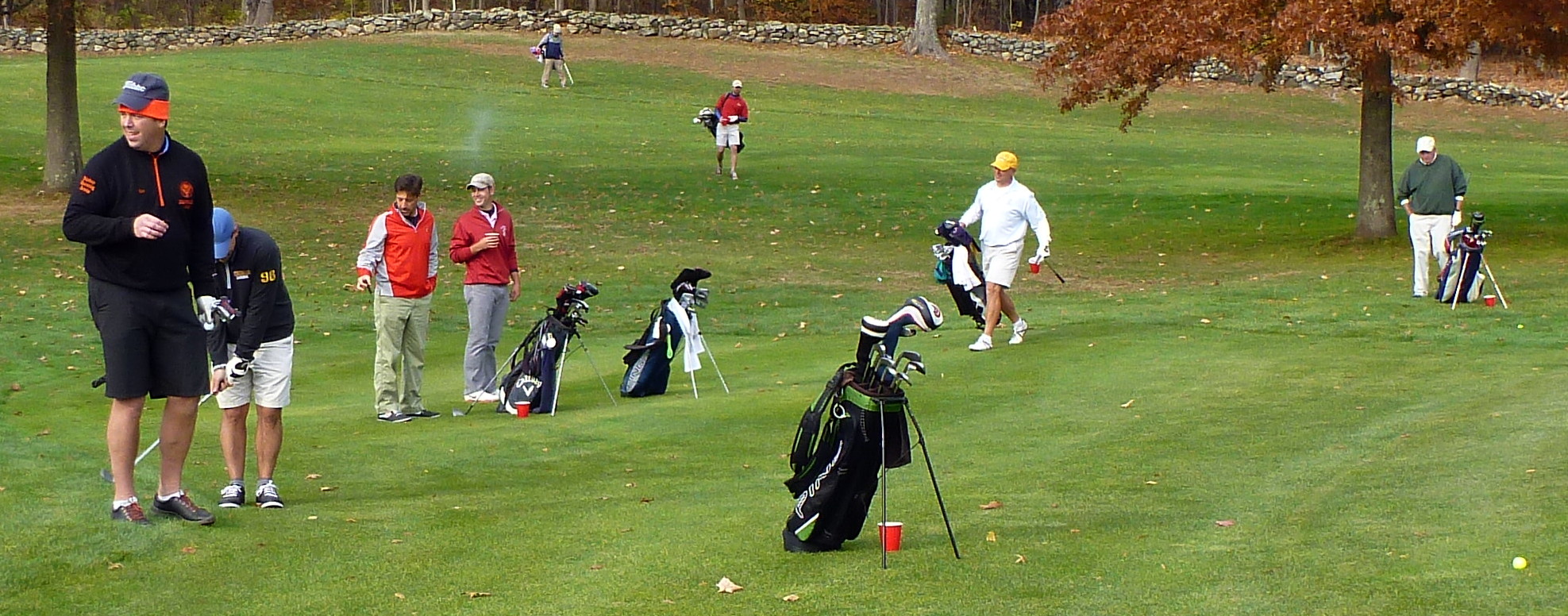
Then, because there was still some beer left in the keg, we played a five-hole cross-country tournament, ten dollars a man:

P1170055

The format was two-man scramble — but if you or your partner lost a ball you had to switch to alternate shot, and if you lost that ball, too, you had to switch to the beer cart:

P1170039

We played from the first tee to the sixth green, then the fifth tee to the seventh green, then the eighth tee to the third green, and so on. Surprisingly many members of my club think our course closes when the golf shop does, if not on Labor Day, so hardly anybody got in our way. Plus, Corey, our pro, was playing with us. Here we are waiting on the second tee while two non-participants finish the first hole, which is about to be “in play”:

P1170120

Sad to say, the new keg ran out before the afternoon was over. Our local liquor store had closed already, so Dr. Mike had to drive to the next town to buy more. But everything worked out in the end.

P1160901

I Wish My Favorite Golf Shoes Didn’t Leak

IMG_1370

I learned about True Linkswear golf shoes at the PGA Golf Merchandise Show in 2011. The pair I tried on at the show was too small—the company’s reps had sold out of my size—but they were still the most comfortable golf shoes I’d ever worn. I now have a dozen pairs, and I wear them even when I’m not playing golf, and many of my friends have switched to them, too. Tim even bought a True golf bag:

true-bag-tim

My only beef, until now, has been that the pairs I own that are supposed to be waterproof aren’t really—and other golfers who wear and love Trues have told me the same thing. My favorite model ever is one they don’t sell anymore, called “lyt/dry,” which I wear in preference to other shoes even when I’m not playing golf. They are definitely lyt but they’ve never been truly dry, even though the word “waterproof” is printed right on the side:

dloshoe

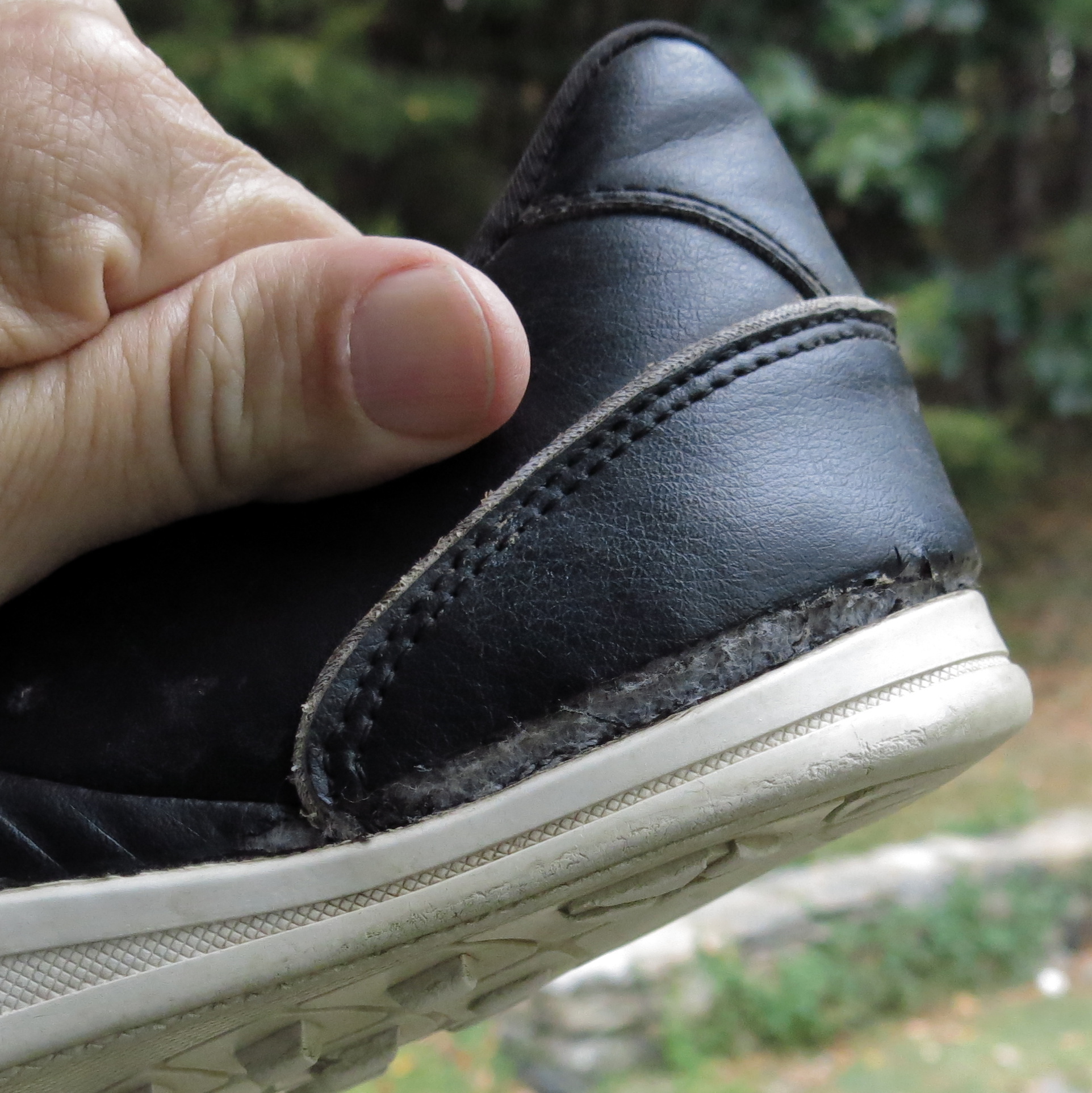
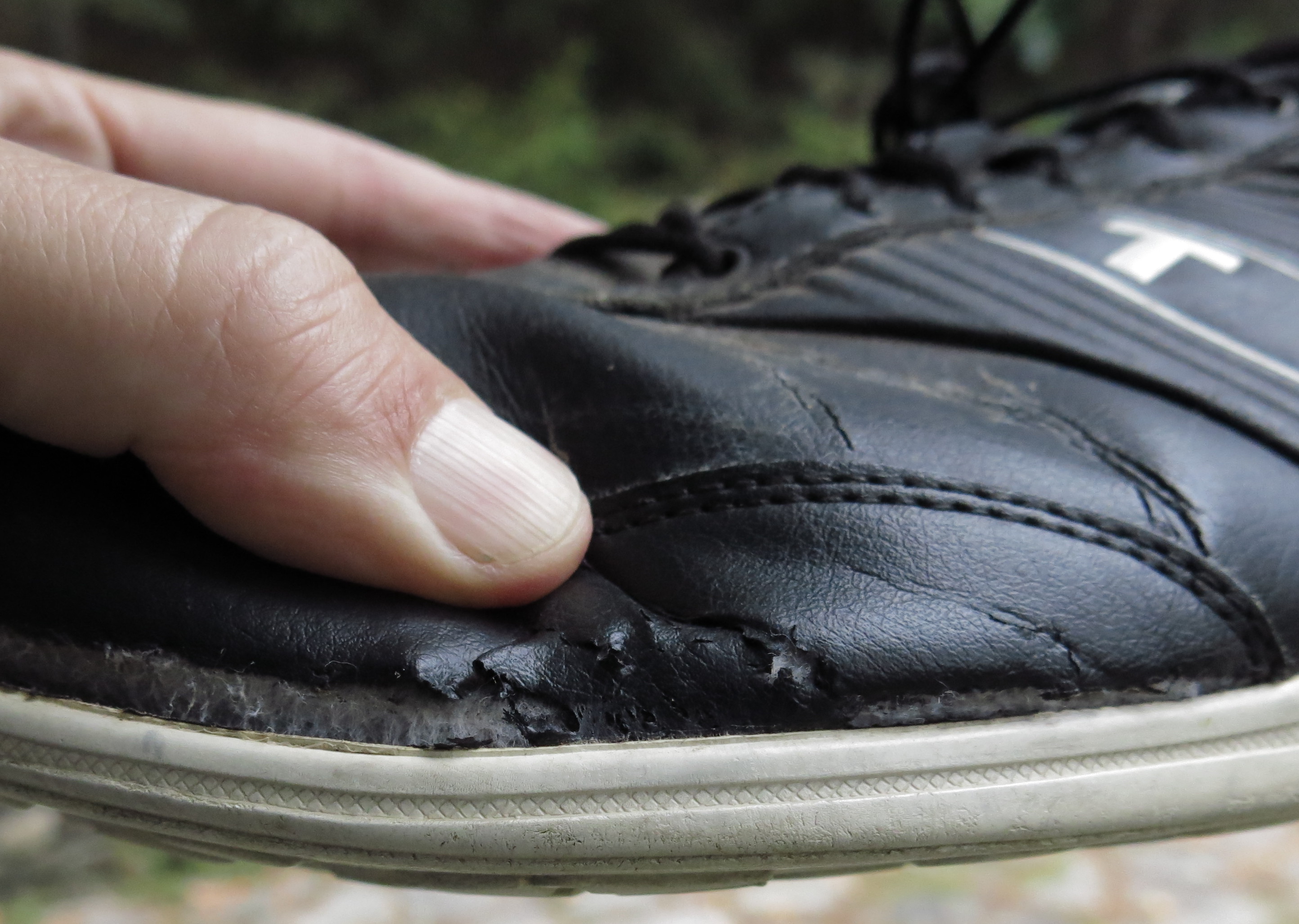
I’ve dealt with that issue by wearing wool socks when I play in the rain or when the grass is wet, and I’ve dried wet pairs between rounds by using the hairdryer in my hotel room, and I’ve persevered because even when my Trues were leaking they were way more comfortable than any other golf shoes I’ve ever worn. But during the Sunday Morning Group’s recent golf trip to Atlantic City my latest pair, called True motion, didn’t just leak — they basically came apart:

IMG_1382

Now, True doesn’t claim that motions are waterproof, and this particular pair had been in my golf-shoe rotation for more than a year. Still, we were playing in dew, not rain, and I had subjected them, cumulatively, to less wear and tear than I have to my very first pair of Trues, which is four and a half years old and which I still walk the dog in. Yet they didn’t hold up:

IMG_1378

I complained to the company, and a representative assured me that a new model coming in early 2016, called True elements, will really and truly be “breathable & waterproof.” And I hope he’s right, because even when they’re wet I really, really love these shoes.