Reader’s Trip Report: Masters Junior Pass Program

P1170496

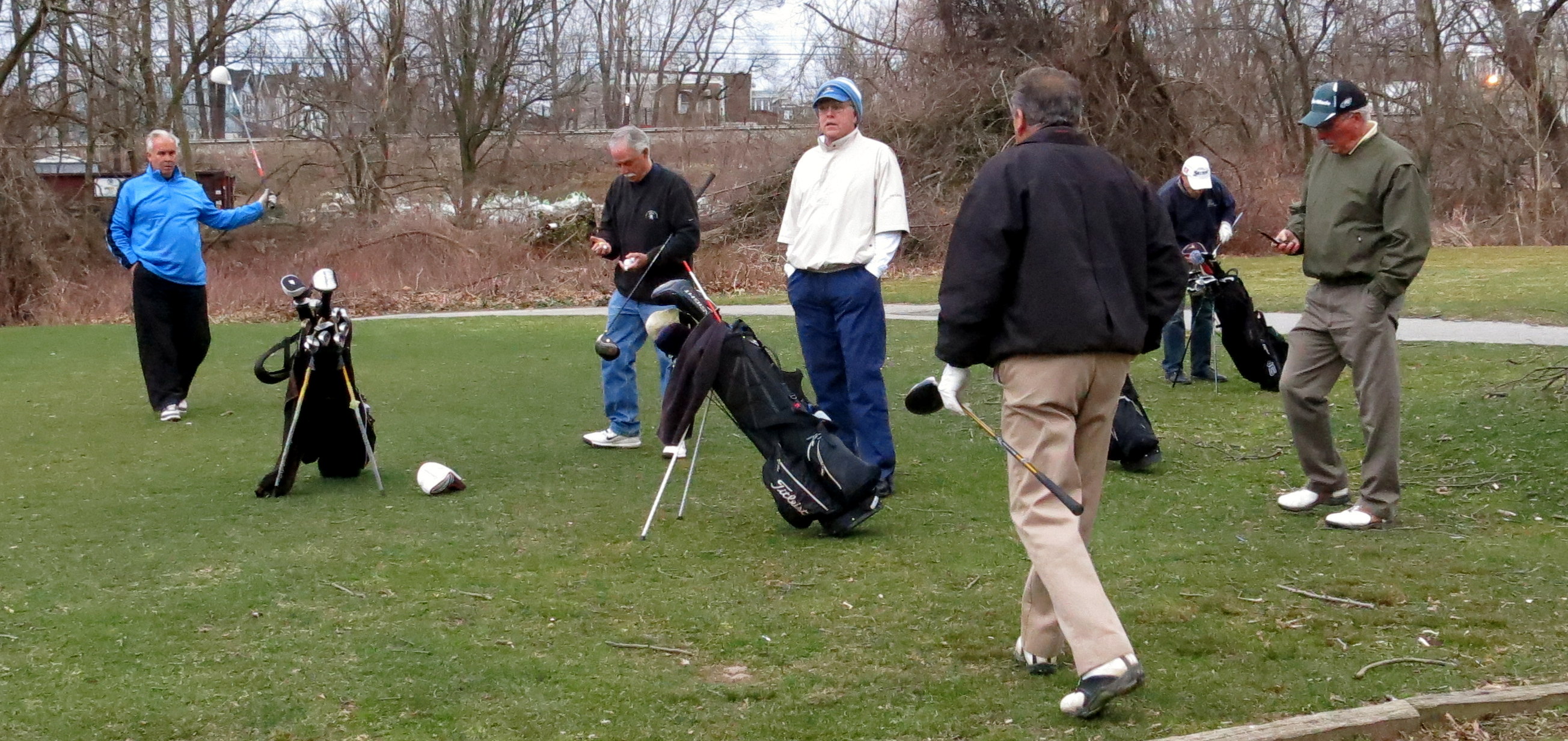
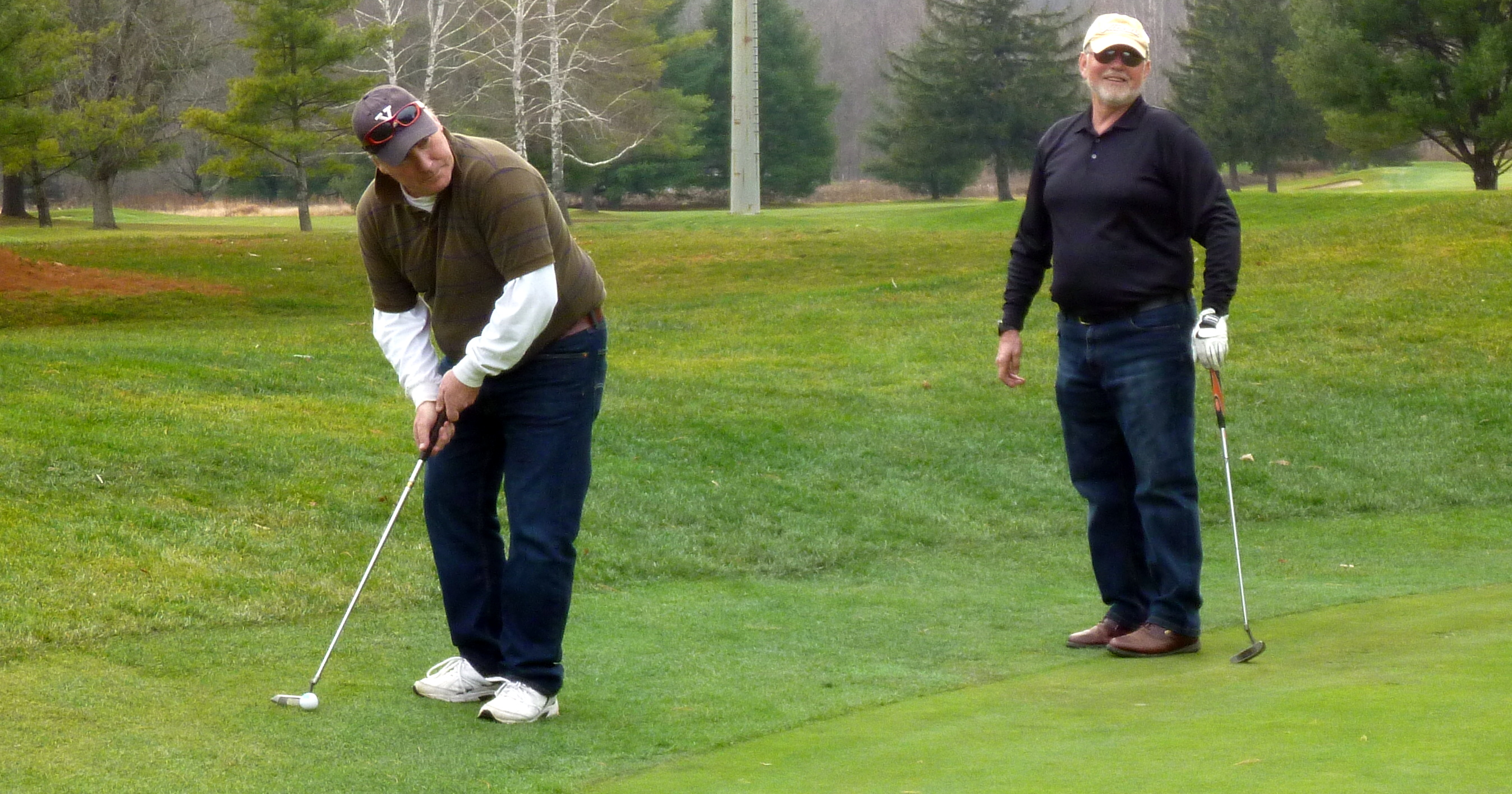
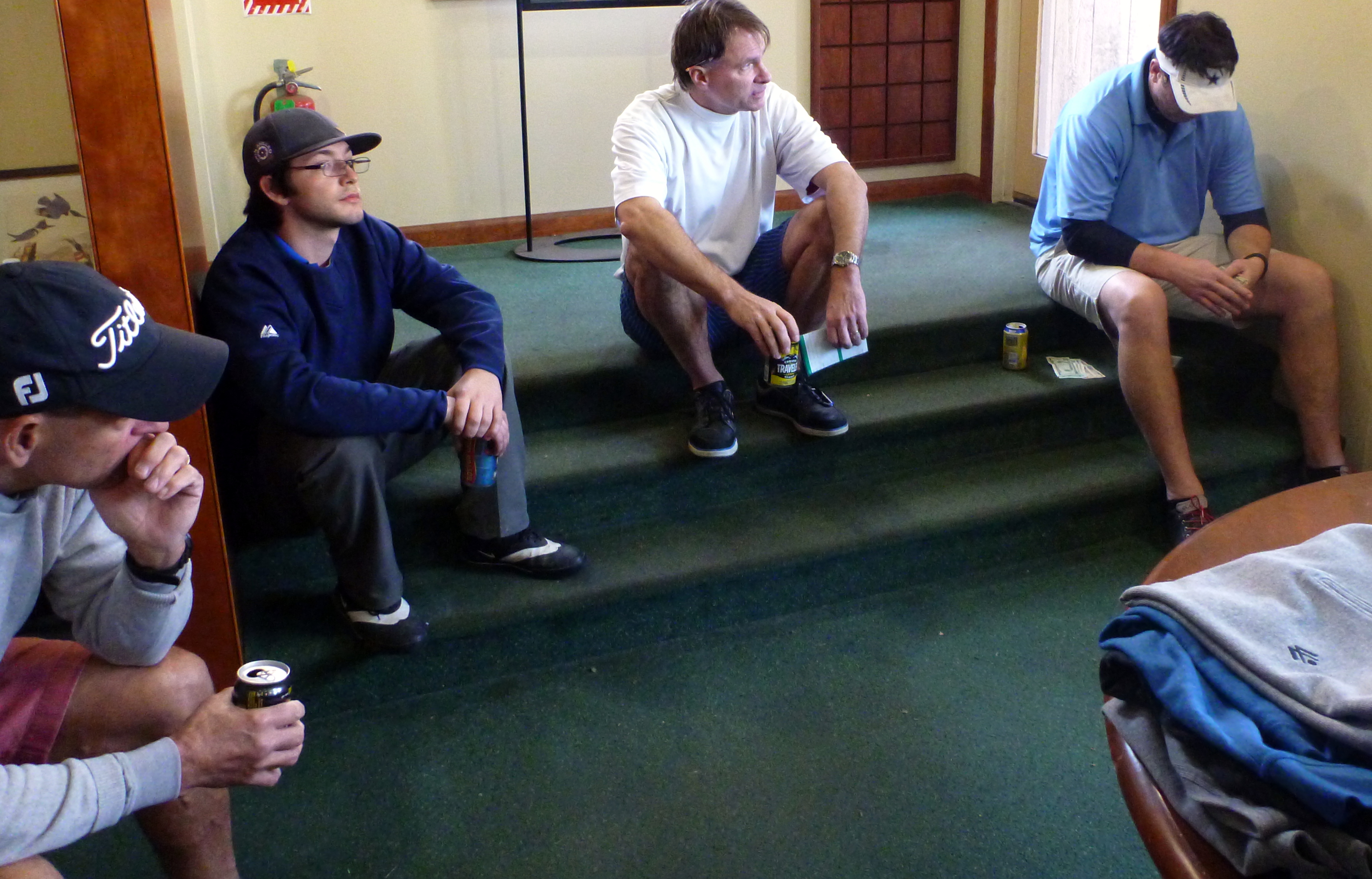
On New Year’s Day, twelve members of the Sunday Morning Group played the Black Course at the Wheel, the best course that’s still open within an hour’s drive of our home club, which shut down the Monday after Thanksgiving. Three of us wore shorts (thereby gaining two extra handicap strokes), and Mike B. wore a tuxedo, which he apparently hadn’t had time to change out of. He kept it on for all eighteen holes, too.

There are many reasons to celebrate January 1. The main one is that it’s the first day of the year during which the next Masters will be held—now just three months away.

P1170508

In 2013, Will Stegall, a reader in San Francisco, took his daughter, Annie, to her first Masters. (She turned nine on practice-round Monday. You can read her trip report here.) Last year, Stegall took Annie’s younger brother, William, who was eight at the time. Both kids were beneficiaries of Augusta National’s Junior Pass Program, which enables the children of existing badge-holders to attend for free. (Restrictions apply.) William had a great time, and not only because he got Tiger’s autograph.

Stegall Masters both-002

Here’s William’s report, as transcribed by his father :

“My experience at the Masters was beyond amazing in all ways. It looked beautiful: the flowers, the course, and the trees. Being able to get autographs because only kids can get them is amazing. I got to see the Big Three (Arnold Palmer, Jack Nicklaus, Gary Player) play in the long drive contest that was extra special. I got a Masters visor. You usually don’t see men more excited about shopping than women. I just got a green visor that said Masters on the front. I went to the spot where Bubba Watson hit his amazing curve shot. Everyone had to put a chair down somewhere on the course to watch but of course we could walk around, the people were so nice they would never take a chair of ours or anyone else’s. The pimento cheese sandwiches were DELICIOUS, they were perfect. My family has been going for years but it was my first time so I was very excited when I finally could go. But I never knew how many people went!”

Stegall Masters

Thanks, William! As it happens, the Sunday Morning Group has a Junior Pass Program, too, and Will, Annie, and William are all invited to join us for our first round of 2017, next New Year’s Day.
P1170512

Fire Destroys Golf Clubhouse Down the Road From Merion

Cobbs Creek clubhouse, March 15, 2013.

Cobbs Creek clubhouse, March 15, 2013.

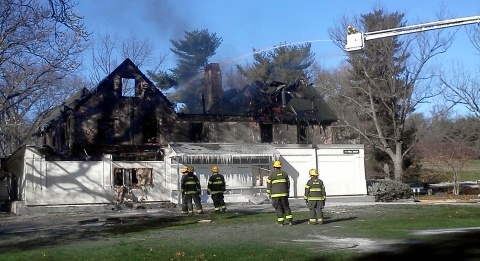
This year is the centennial of Cobbs Creek Golf Club, a muny in western Philadelphia. It was named after its most diabolical hazard, which also runs along the eastern edge of Merion Golf Club, a few miles away. Merion and the Crick—as intimates often call the older of Cobbs Creek’s two courses—share an architect as well: Hugh Wilson, who designed Merion’s East Course in 1912 and created the Crick four years later. The photo above is of the Crick’s clubhouse as it looked when I visited, two years ago. (You can read about that visit here and here and here.) On Monday night, the clubhouse burned down:
Cobbs Creek clubhouse, January 5, 2015.

Cobbs Creek clubhouse, January 5, 2015.

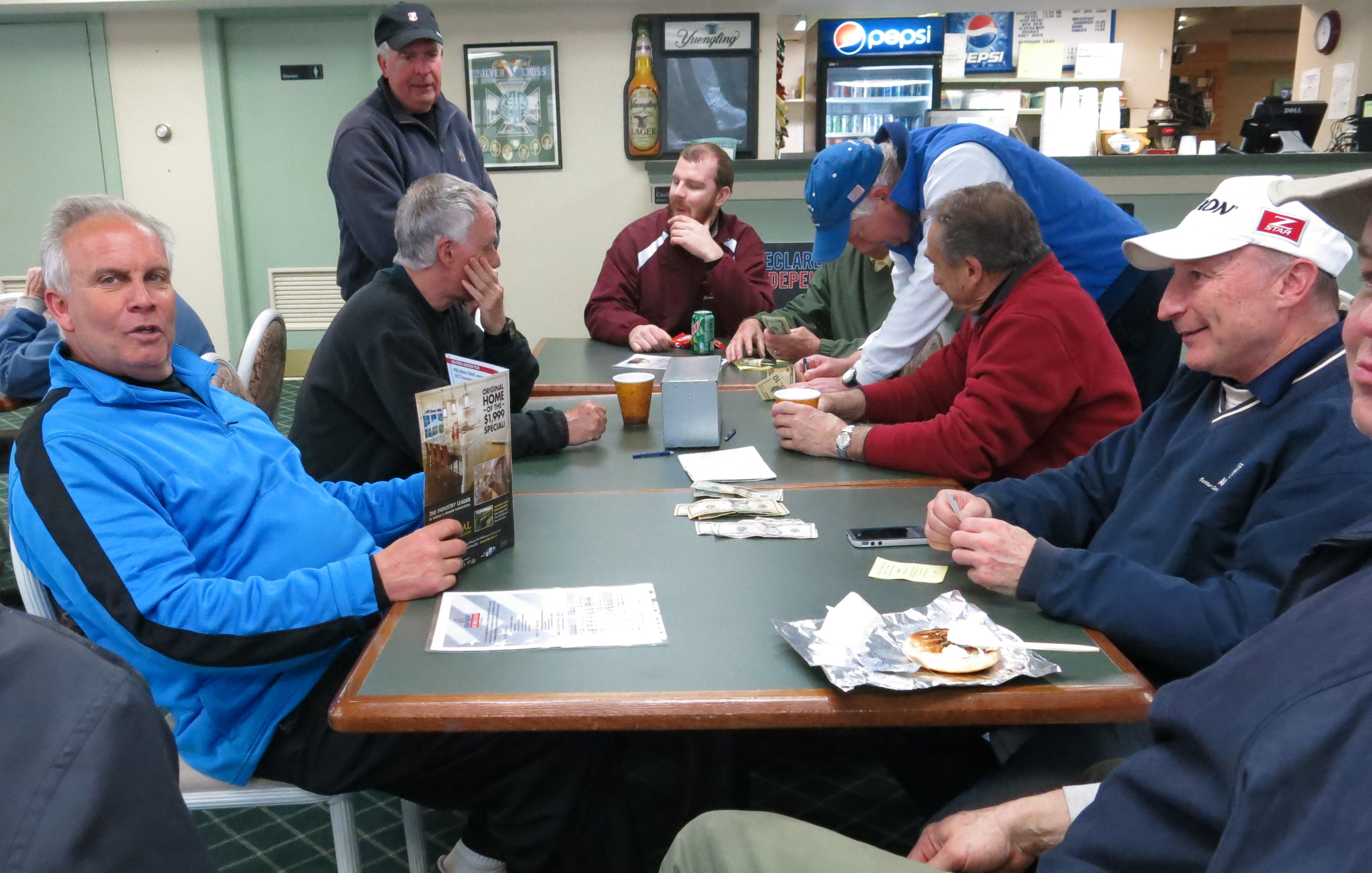
I learned about the fire from Hank Church and Paul Cornely, who are members of Cobbs Creek’s principal men’s group, the Cobbs Creek Publinks Golf Club. “What I’ve heard is that it started around 11:00 last night and took more than two hours to control,” Cornely told me. “The cause isn’t known, but it looks like the fire started near the lunchroom/beer tap area.” That’s the area in the back right of the photo below, which shows the Publinks group in happier times:

IMG_0629

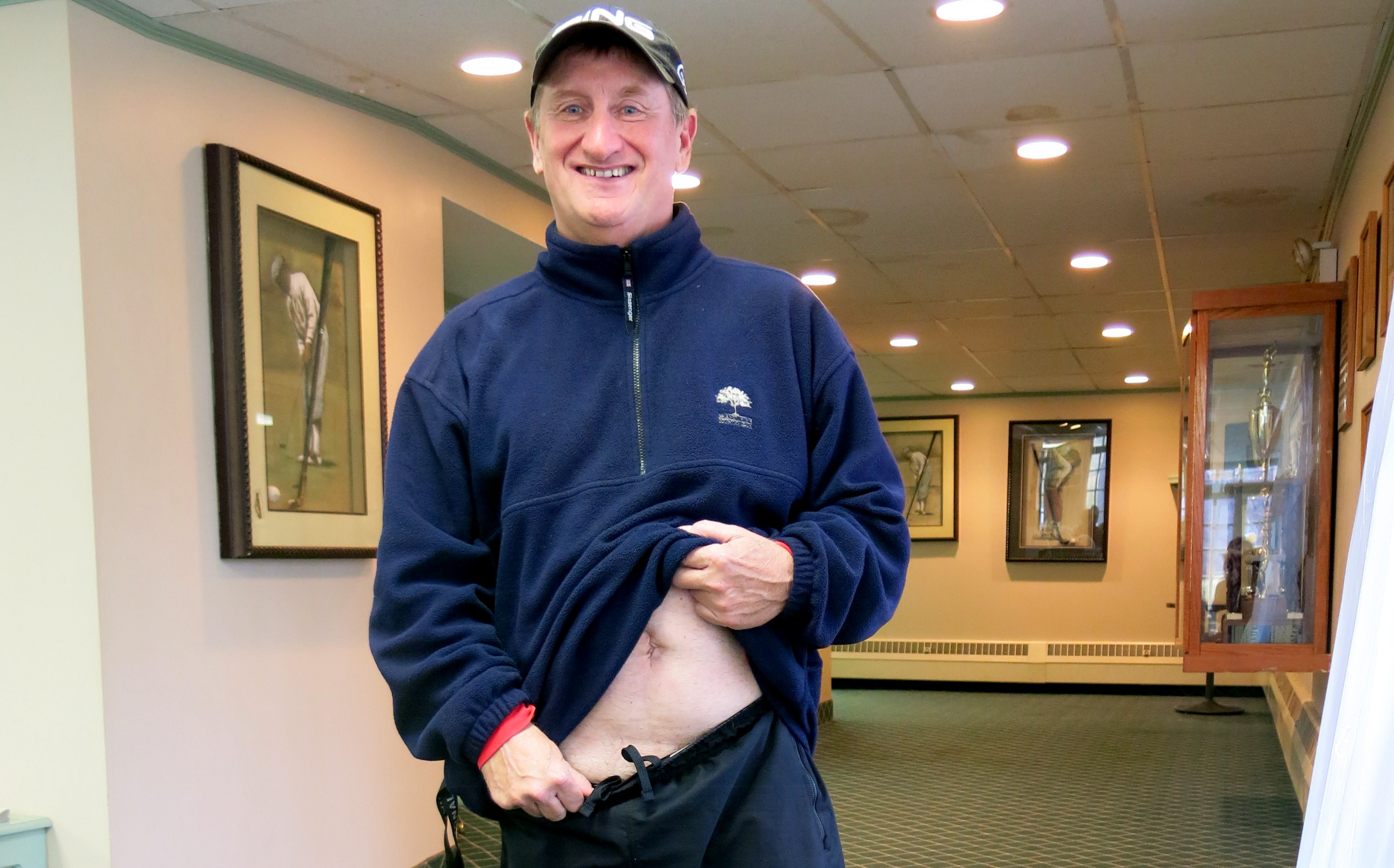
“It’s a sad day for many,” Church said. “That was my home-away-from-home for 50 years.” When I met Church, in 2013, he’d just had ten inches of his large intestine removed, and although he wasn’t playing again yet he had shown up anyway, to hang around in the clubhouse and show his scar to his friends:

IMG_0695-001

“On Sunday, we had our typical group, fifteen players,” Cornely said, “and then we had a few laughs and beverages.” The players on Sunday included Lou Camilli, who is just four years younger than the golf course. He was in the Marine Corps during World War II, and fought in the Battle of Iwo Jima. Three years ago, his optometrist’s receptionist gave him back a form he’d filled out and told him he’d made a mistake, because the birthdate he’d written down would make him ninety-three. “That’s what I am,” he told her. “And I’ve still got heat in my oven.” He plays more than two hundred rounds a year:

Here’s a video of the fire, shot by Frank Wesnoski:

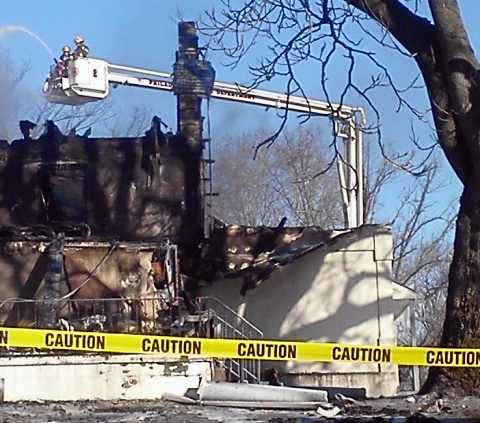
“The Temp was 11 degrees with a windchill of -5,” Wesnoski writes. “A steady wind was blowing the fire from the front to back. . . . The building was destroyed. Salt crews were requested from both the City and Upper Darby for icing conditions.” And here are some photos of the aftermath, which Bob Zecca and Mike Harms, both Publinks members, took this morning:

0105161050

0105161044a

0105161044b

Great group, great course, great clubhouse. Too bad.

IMG_0606

Golf With a Broken Neck (and Back)

P1070641

Rex Hauck is a brother-in-law of Tony’s and, therefore, an honorary-member-by-marriage of the Sunday Morning Group. That’s Rex on the far right in the photo above (and Tony on the far left). Hauck and a girlfriend went skiing in Aspen back in the nineteen-eighties, when he was twenty-eight. They got on a chairlift, and when he reached behind them for the safety bar he was surprised to discover that their chair didn’t have one. Partway up the mountain, the chair struck a tower and began to swing. Rex and his girlfriend were thrown out, and fell forty feet. His girlfriend landed first, in deep snow, and was unhurt; Hauck landed across her legs, on his back, and had to be taken down the mountain on a rescue sled.

“I fractured three vertebrae in my neck, and also suffered a compression fracture of two vertebrae in the middle of my spine,” he told me recently. “I had two operations to repair the damage. Doctors took out bone and muscle from the vertebrae in my neck but could do nothing for the compression fracture in my back.”
A representative of the ski company visited Hauck in the hospital, and offered him a free lifetime lift pass. He declined, and discovered later that the same chair had struck the tower before, damaging its safety bar, and that rather than fixing the problem or taking the chair out of service the lift operator had simply removed the bar. He also learned, to his sorrow, that Colorado law narrowly limits the legal liability of lift operators, to an extent that seems inconceivable to someone whose state’s economy doesn’t depend heavily on the profitability of its skiing industry. (He received a settlement in the low four figures.)

“I don’t ski anymore, but I still play golf,” Hauck continued. “The compression fracture in my back effectively fused those bones, leaving me much less flexibility and rotation in my torso. The surgeons didn’t fuse the vertebrae in my neck, but arthritis and the loss of the discs have limited my ability to rotate my head. I thought at first that having less movement in my neck would help my golf swing, but I still manage to lift my head too much on the way down. I have a fluid, PGA-style swing only in my imagination, but that doesn’t diminish the excitement I feel when I step onto the tee box.”

Hacker (real name) and Hauck.

Hacker (real name) and Hauck.

Here’s a video of Hauck’s swing, made on my home course a couple of years ago. The voice in the background, toward the end, is Tony’s.

Last year, I wrote a column in Golf Digest about Thomas Tami, another golf buddy of mine who plays despite having broken his neck. You can read about him [here](http://www.golfdigest.com/story/man-about-golf-playing-with-a-broken-neck), and watch a video here:

If You Use a Pushcart (and You Should), You Need This Brilliant Accessory

P1160675

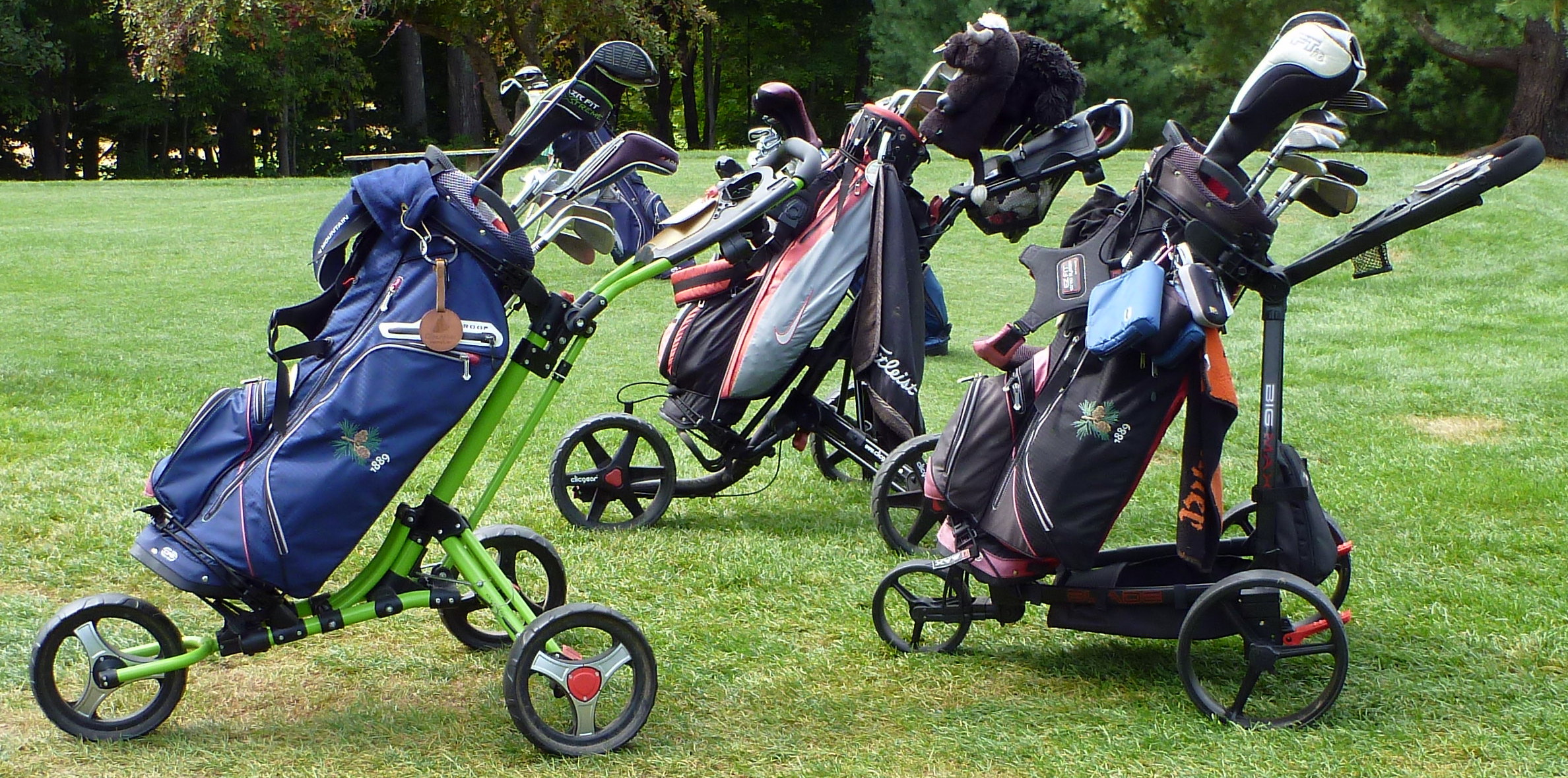
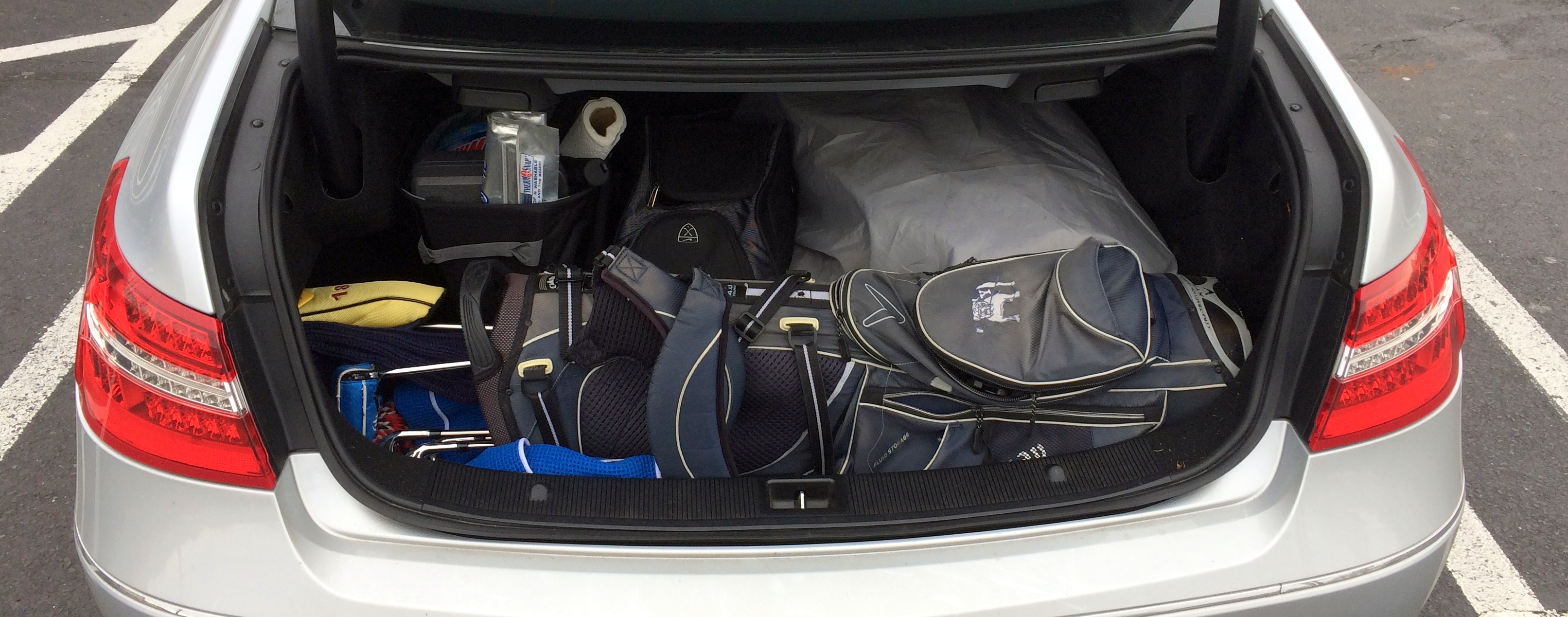
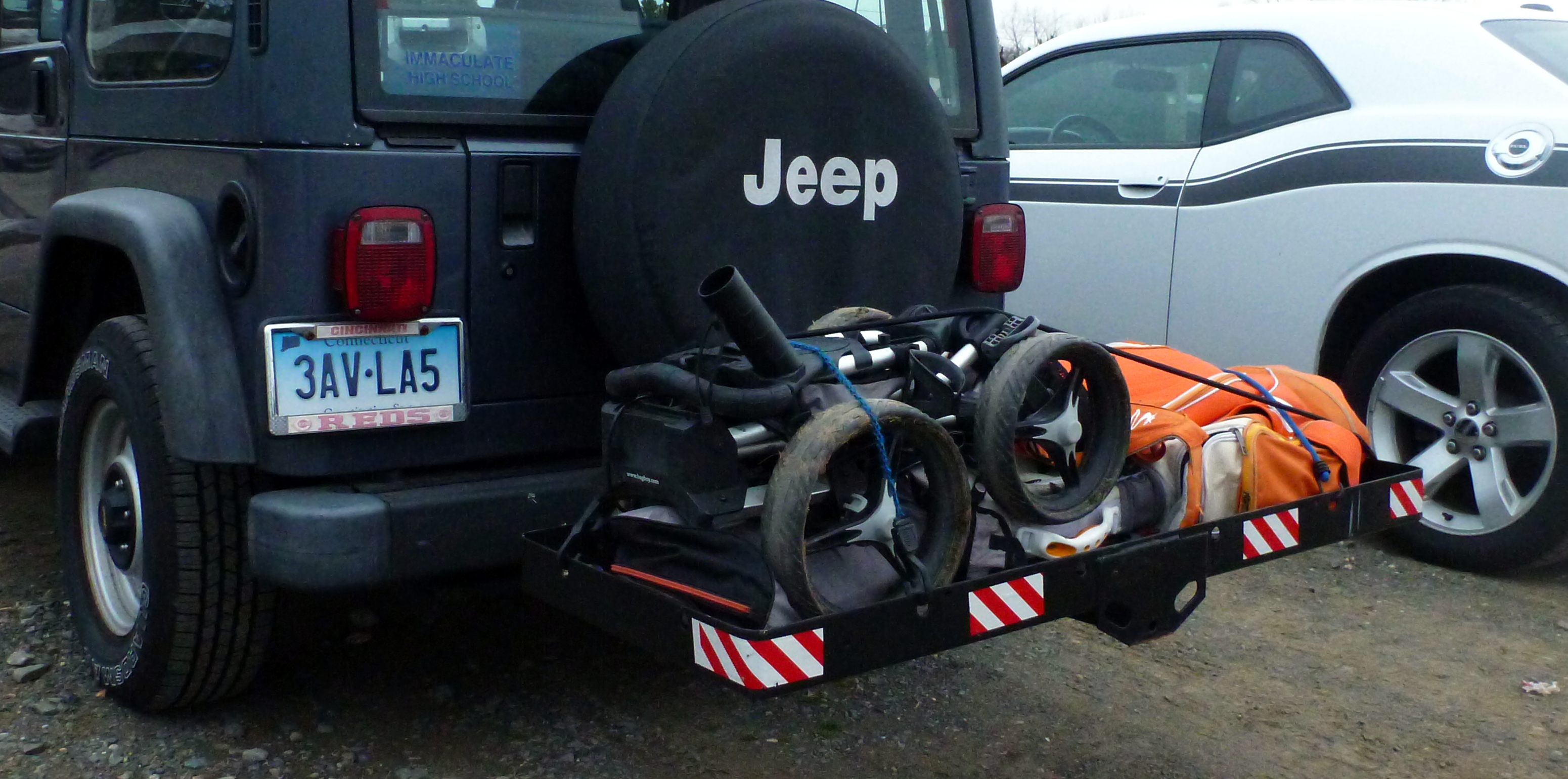
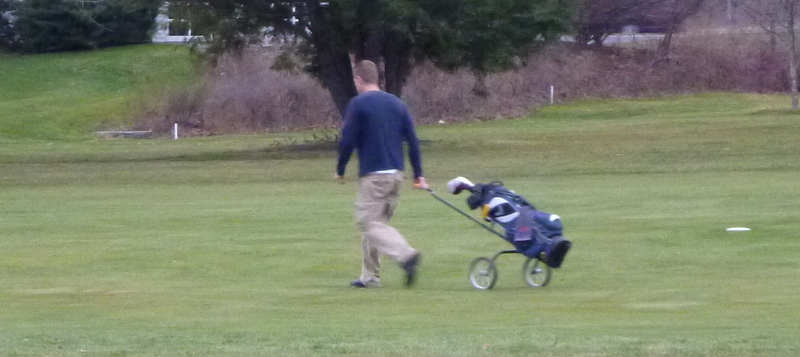
Most of my friends now play with pushcarts—a great relief for shoulders, backs, and knees. The only challenge comes at the end of the round, when you have to put the thing back in your car:
P1050150

Richard Hunt—a reader and honorary member of the Sunday Morning Group—has the solution. He writes:

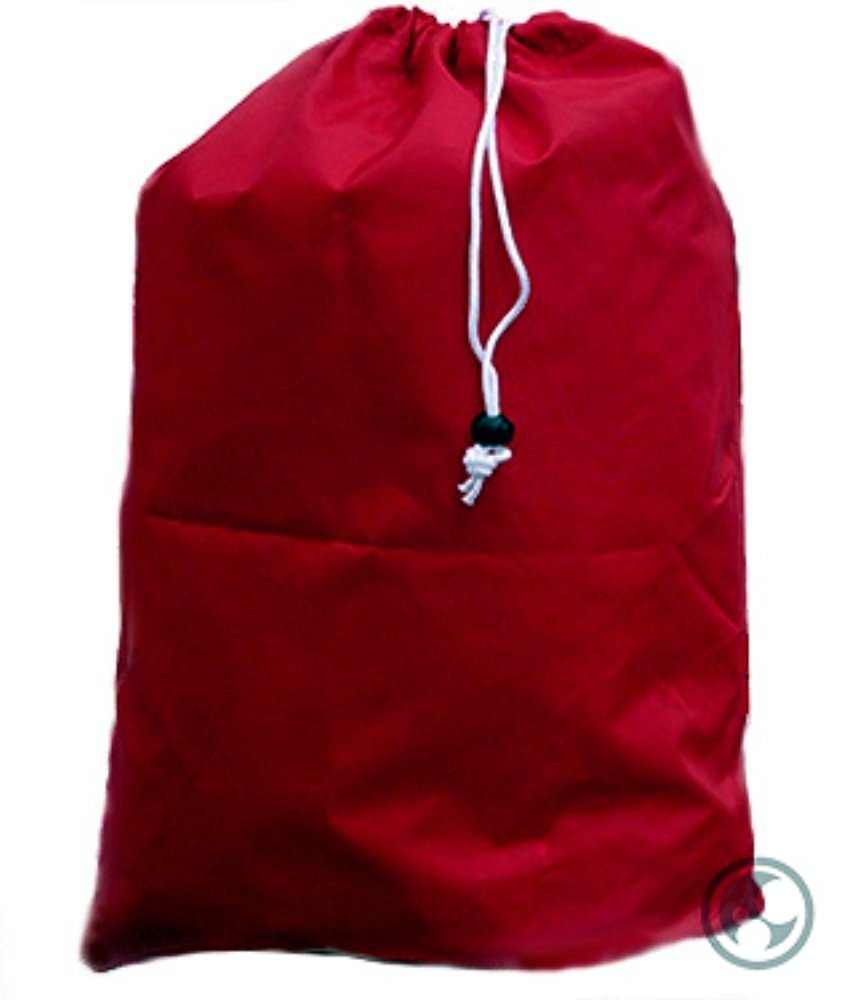
“I was in the parking lot after a fall round at Van Cortlandt, in the Bronx — our nation’s oldest public golf course, founded in 1895 — and I was scraping goose turds from the grooves in my cart tires with a tee, and cursing, when a guy across the lot opened his trunk and pulled out a gargantuan laundry bag. It took me a minute to realize the genius: the bag contained his Sun Mountain Speed Cart.”

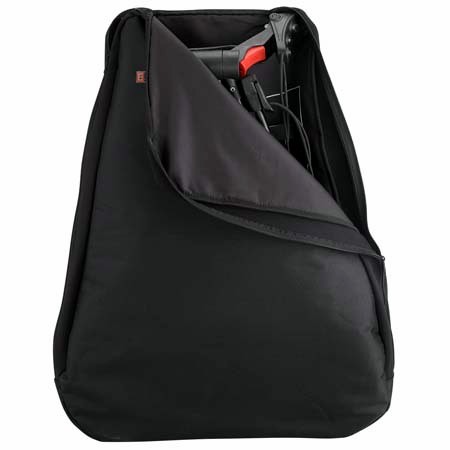
Richard immediately bought a gargantuan laundry bag of his own, from Amazon, for less than the price of a sleeve of balls. They come in lots of colors:

laundrybag

As a result, the trunk of his car looks like something you wouldn’t be ashamed to open for an agent from the Department of Homeland Security:

IMG_2056

My current pushcart—a Big Max Blade+—actually came with a bag. And it’s padded!

gal_blade_in_bag_black

Rick, an S.M.G. regular, saw my bag and devised a solution of his own, an enormous Williams-Sonoma shopping bag. (They give you one free if you order 100 pounds of peppermint bark.)

P1170451

Or you could try this:

P1170429

Woman Uncovers Corporate Golf’s Darkest Secret

P1170350

Nobody else could play on Saturday, so I decided to do chores and pay bills. But then I noticed that the temperature was almost 60, so I took the dog for a quick walk and went to Candlewood Valley as a single. The starter sent me out with Barbara, who had followed a similar logical path to the golf course. We were joined by Kevin and Steve:

P1170374

Steve was trying to master a new 65-degree wedge, which he had ordered from an infomercial. It’s the ideal club if you want your ball to end up either almost exactly where it started or in that pond over there, on the other side of the green. Kevin started playing golf just this year. Pretty quickly, Barbara and I learned that when he was hitting the best place to stand was either a little bit behind him or to the left. Nevertheless, he did hit a few good shots, including this tricky one, on the seventh hole:

P1170379

Barbara is the technology person at a private school for special-needs kids. She began her career, in the late nineteen-seventies, at IBM, and she took up golf when she realized that most of her male coworkers played. More recently, a friend from work invited her to fill in for his regular partner in his weekly golf league, which was all men. Some of the regulars grumbled, but the pro told her to ignore them, and after she had subbed a few times they invited her to join the group. Because of her experience in the business world, she understands one of golf’s darkest secrets: most of the men who play in corporate outings suck, and a women who can hit her driver even a hundred yards can end up being her foursome’s most valuable player, since she gets to play from the forward tees.

P1170377

Barbara recently switched from women’s shafts to senior men’s shafts, and when she did, she said, she picked up twenty-five yards with her driver. Her mother, who is 90, also plays golf. She took it up in her fifties, and when she was in her mid-eighties she won the women’s nine-hole championship at the club she belongs to, in Florida. “I would put her chipping and putting against anybody’s,” Barbara said. Barbara has four grandchildren, and she is trying to get them interested in playing, too—so far without much success.

I went back to Candlewood the next day, with the Sunday Morning Group.

P1170382

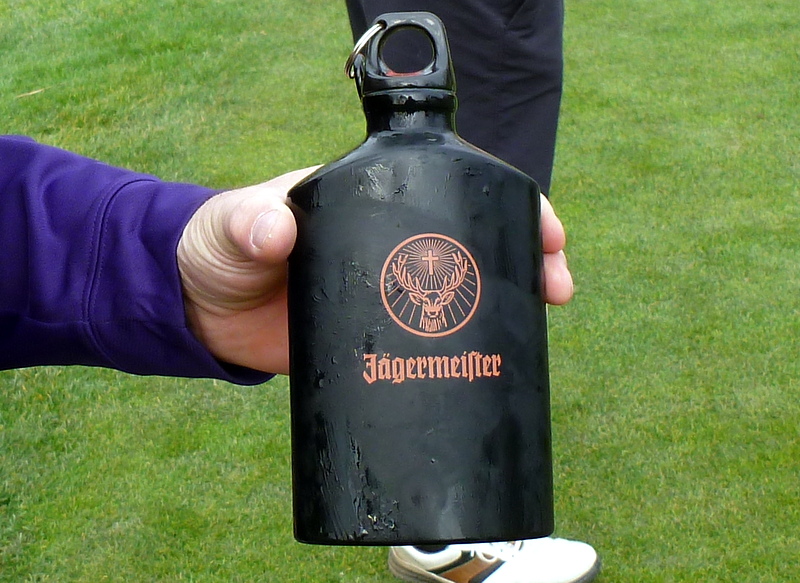
We played an old game of ours, called Fathers & Sons: the four oldest guys versus the four youngest. It was the second round of our winter-long competition, the Jagermeister Kup.

P1170389

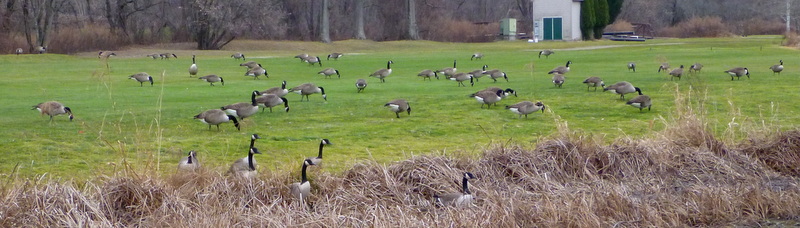
The course was crowded and slow, and we were pretty sure we were going to going to have to finish in the dark, with glowing balls, since at this time of year the sun is basically gone by 4:15—and when we made the turn, at 2:45, we saw that there were three groups on the tenth hole, which is only about three hundred yards long. But then the starter suggested that we replay the front, which was now empty except for a single two holes ahead. Plus about a million geese:

P1170404

We ended up playing a four-hour round the hard way: two hours and forty-five minutes for the first nine, an hour and fifteen minutes for the second. Everybody played better, because there was less time to think between shots. And on the last hole we caught up to the single. Out of the way, pal!

P1170415

The Sons beat the Fathers by a stroke, after making a miraculous charge on the second nine. Damn. But we had fun, and in the parking lot, as we were leaving, I spotted a solution to my car-clutter problem:

P1170428

We’re going back on Friday, unless winter suddenly arrives.

Back-roads Scotland: Grantown-on-Spey

P1020893

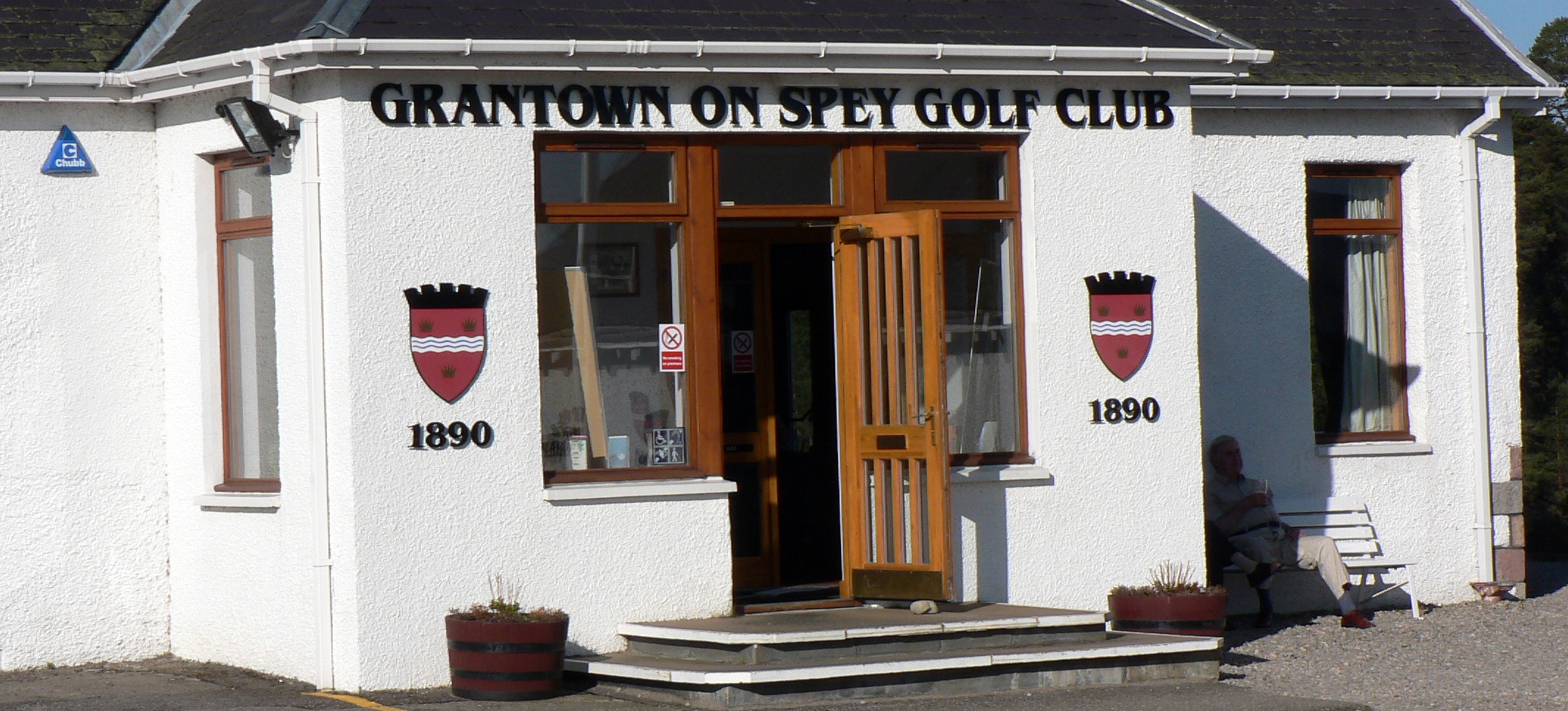
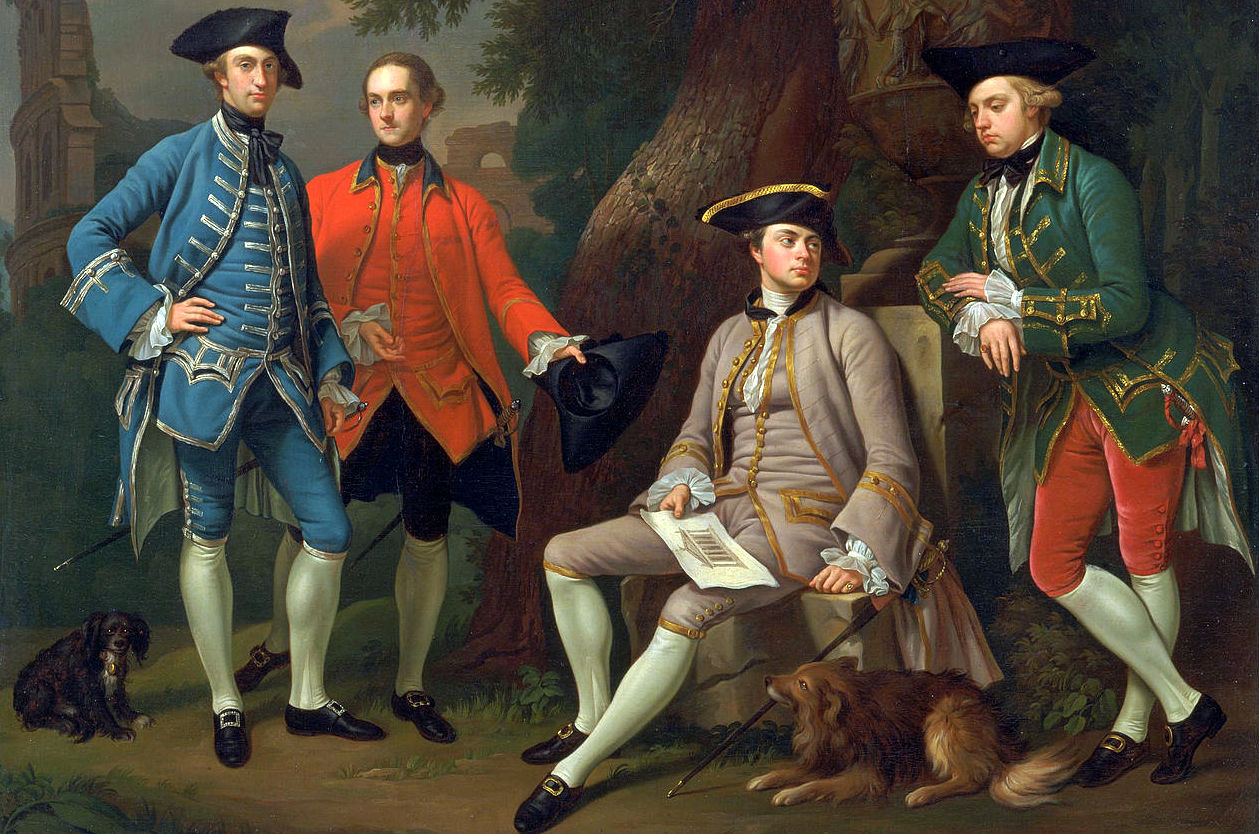
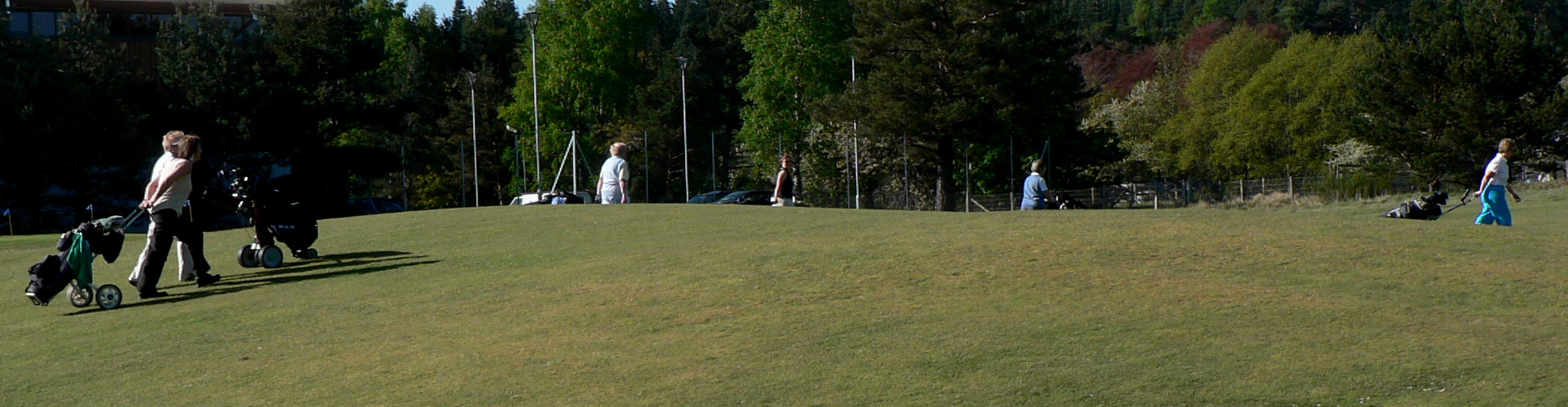
Grantown-on-Spey is a small town on the Spey River, near the northern edge of Cairngorms National Park, in Scottish whiskey country. It was the birthplace of Bobby Cruikshank, a Scottish golf pro whose principal claim to fame is that he lost to Gene Sarazen in a semi-final match in the P.G.A. Championship twice, in 1922 and 1923. The town was founded in 1765 and was named after a local rich guy, James Grant, who is at the far left in the foursome below. I don’t know why the golf clubs these guys are holding don’t have heads:

jamesgrant

The local course isn’t one I would plan a trip around, but I did enjoy playing it. It was designed by Willie Park and James Braid in 1890, during the second Scottish golf boom, which accompanied the rise of the railroads. (The first American golf boom took place at the same time. In those days, just about the only thing you needed to be a golf-course architect in the United States was a Scottish accent.)

P1020882

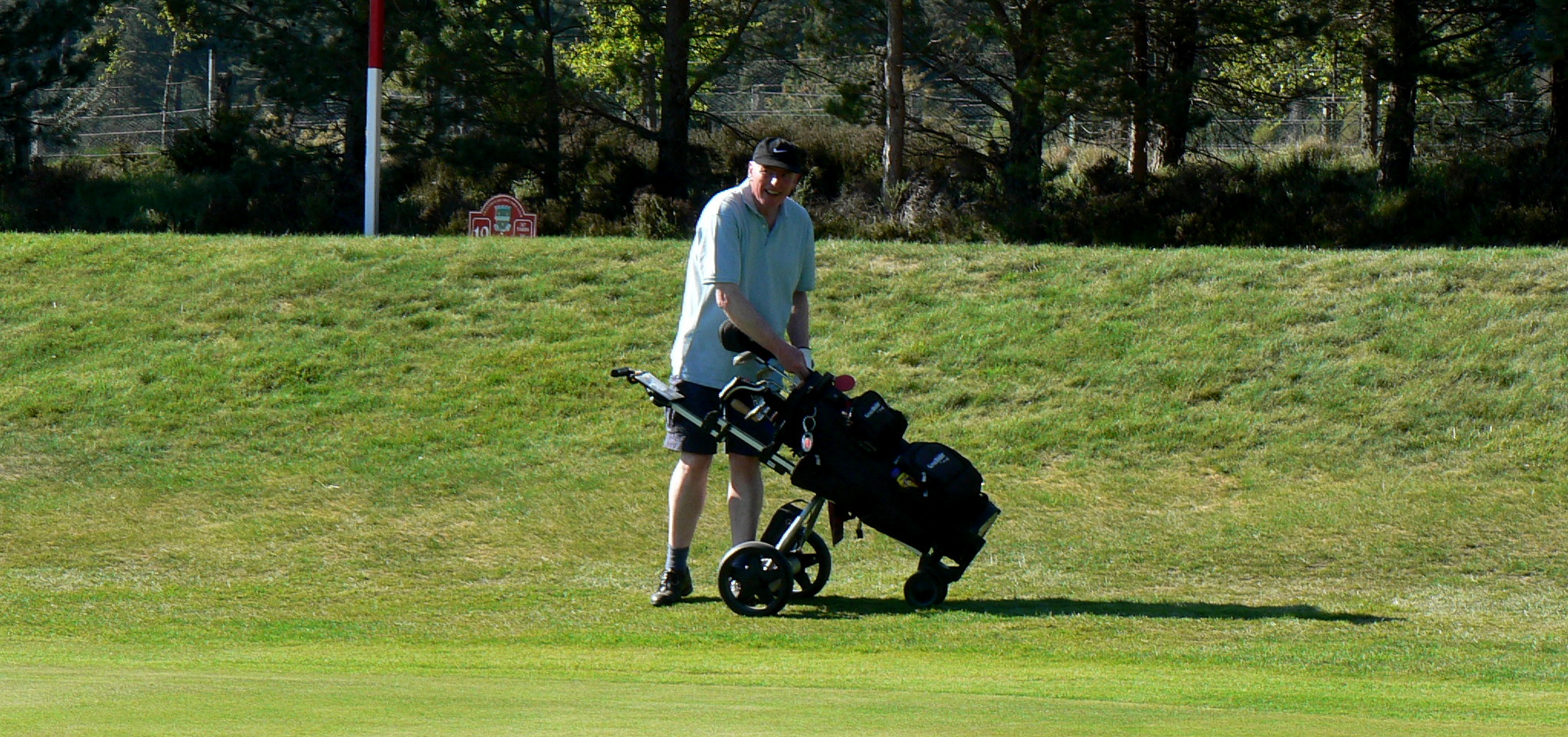
There’s a practice area in a field next to the course. A member with a tube of shag balls was working on his short game.

P1020879

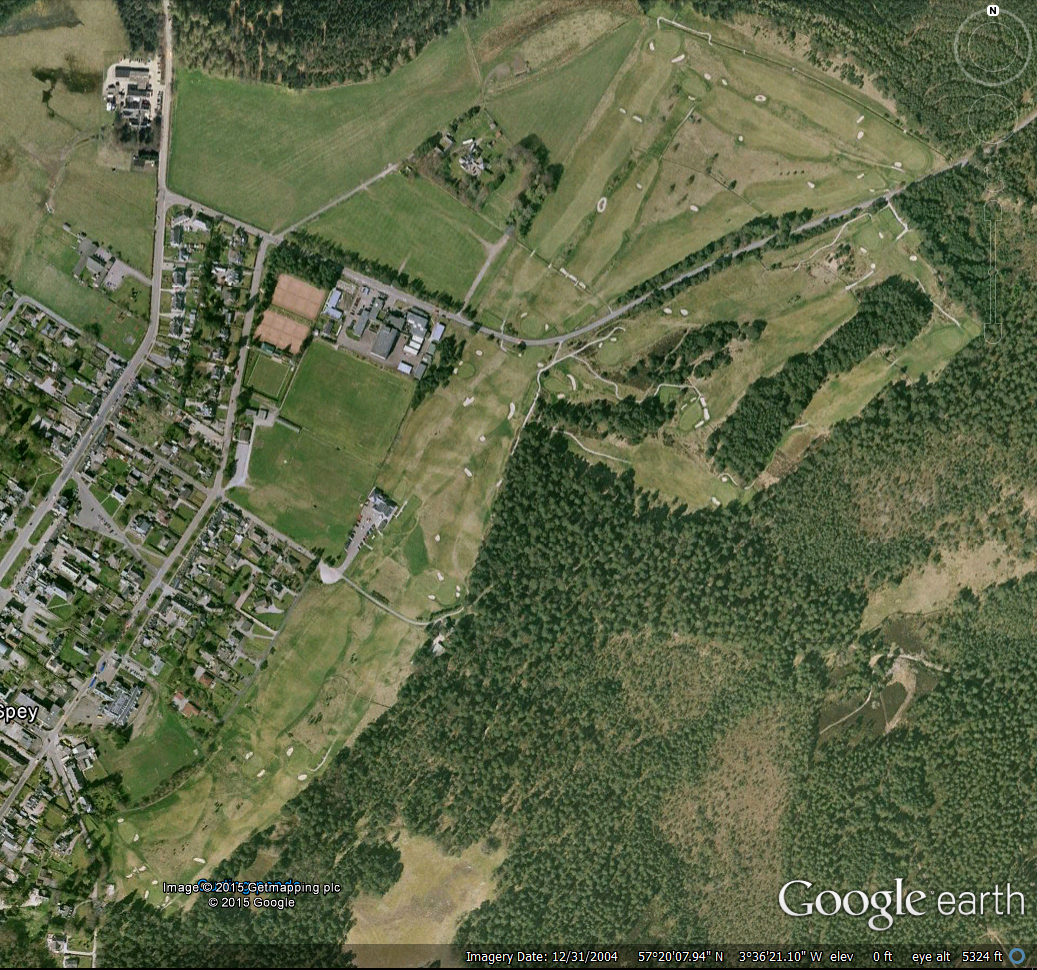
Ladies’ Night was about to begin, but the pro said I could tee off ahead of the crowd. A member of another club had told me that Grantown is really three distinct six-hole golf courses—and he was right. The first six holes are flat; Nos. 2-5 work around the corners of a big triangular field, at upper right in the aerial shot below. They were more fun to play than you might think.

grantowngoogle

To get to the second six holes, I went through a gate and across a road, into much more dramatic terrain.

P1020877

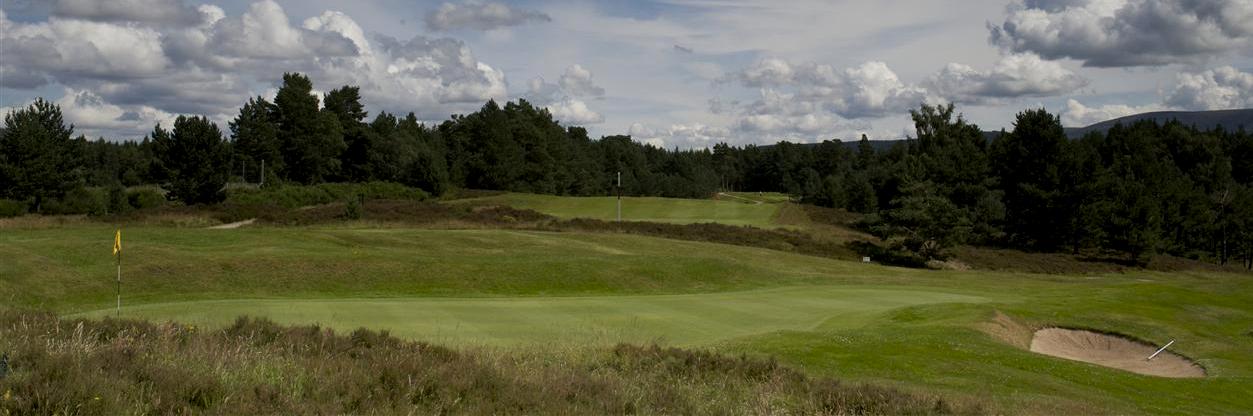
I liked those six holes the best.

grantownspeyhole-001

The final six holes are quirky, and are squeezed into a sort of open valley bordered by two schools. I surprised myself, after my round, when I realized that I could mentally walk through all 18 holes, something I’m usually terrible at unless I’ve played a course four or five times.

P1020876

As I finished, I saw the last of the women’s groups heading out—the grans of Grantown. There were several foursomes, and then the last group was a sixsome:

P1020892

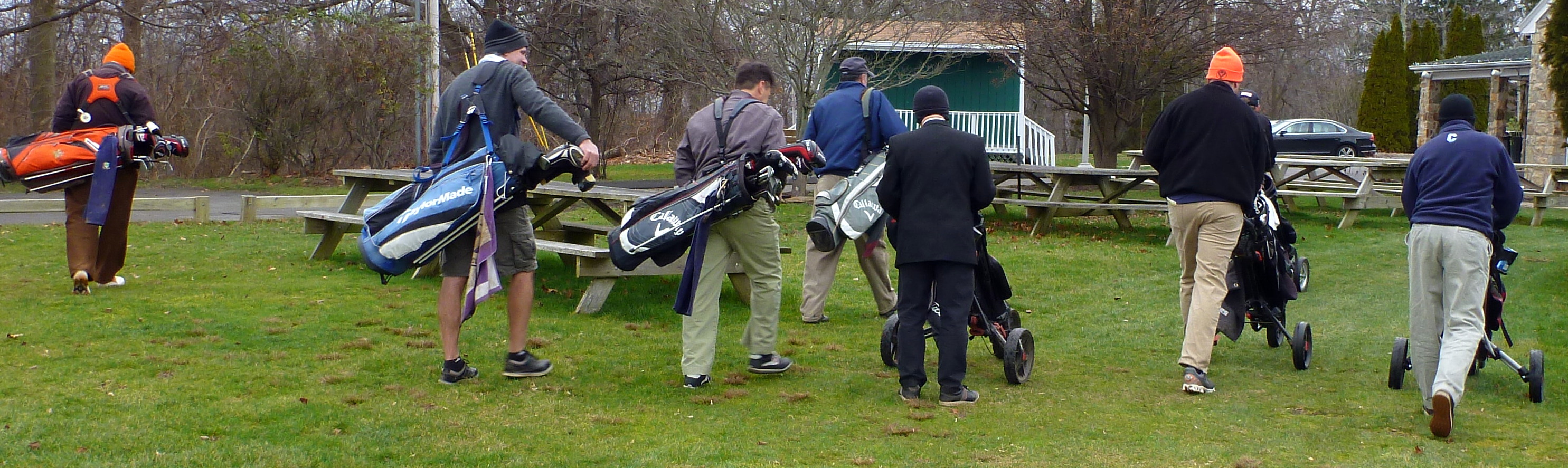
Two guys were drinking beer on a bench in front of the golf shop when I finished. A carnival had been set up in a field next door, but I didn’t stick around for that.

P1020894

The Single Most Important Ingredient of High-performance Sports Drinks

IMG_8076

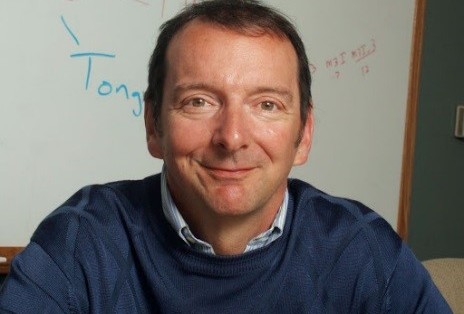
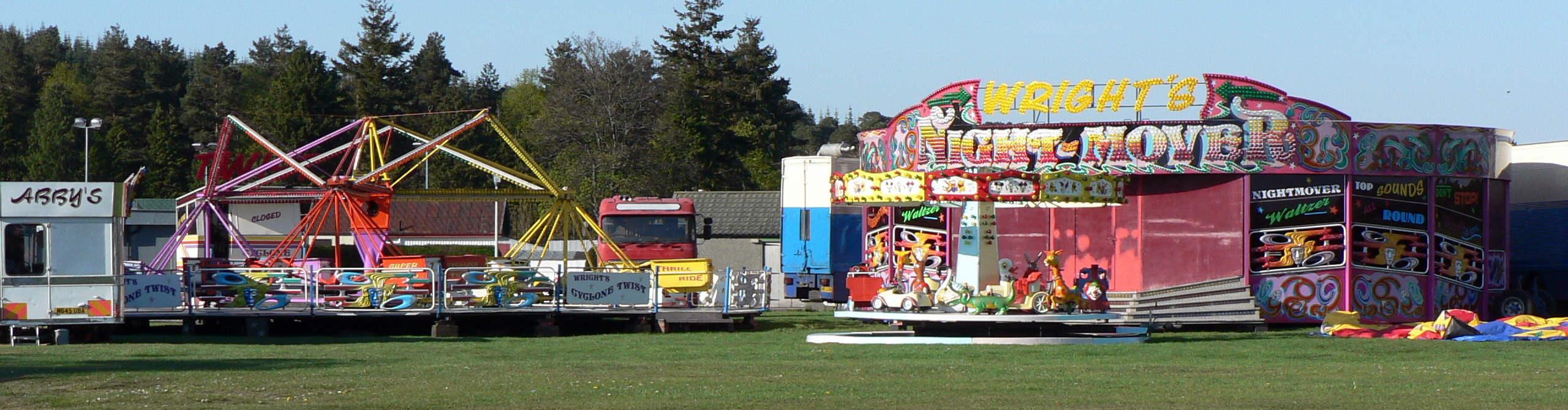
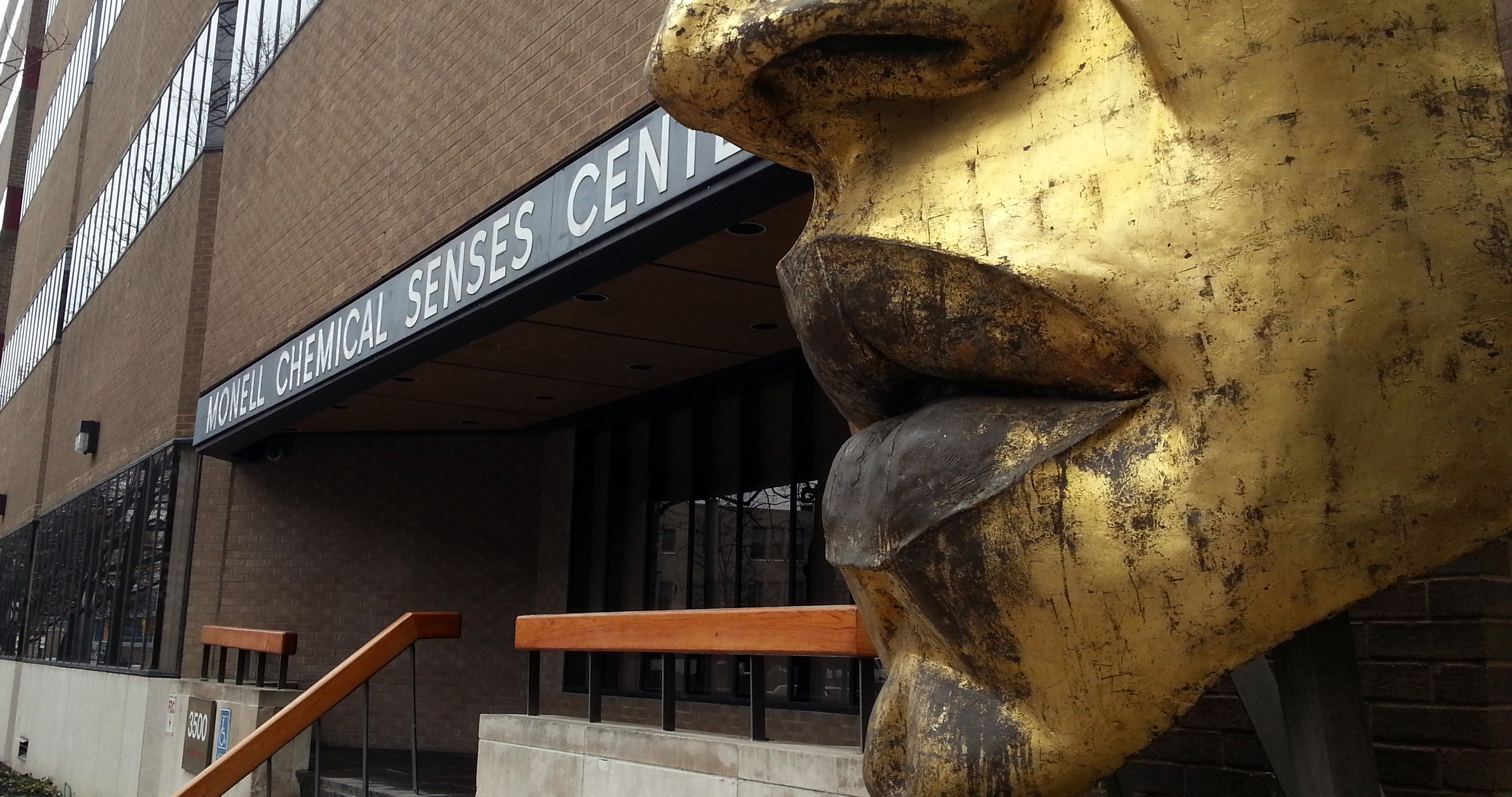
I have an article in the current issue of National Geographic about the sense of taste. While I was researching it, Michael Tordoff, a scientist at the Monell Chemical Senses Center, in Philadelphia, handed me a plastic medicine cup containing a clear liquid and asked me to drink it. It tasted like water. Tordoff said, “You didn’t taste much of anything, but this is something that rats and mice prefer to almost everything else we have ever, ever tested.”

20150327_123529

Tordoff said, “You didn’t taste much of anything, but this is something that rats and mice prefer to almost everything else we have ever, ever tested.” The liquid contained maltodextrin, a kind of starch. If an athlete takes a mouthful of maltodextrin solution and immediately spits it out, he said, the athlete will perform better, despite having tasted and ingested nothing, or next to nothing. “I don’t have a good explanation,” he continued. “There’s something very special about starch that we don’t understand.”

Tordoff-001

Some sports drinks contain maltodextrin, but that’s not the ingredient I mean. The ingredient I mean is mildly yucky taste. In foods and beverages that are supposed to be good for you, deliciousness is usually a liability, because people tend to believe that if something tastes good it can’t possibly be beneficial. Several years ago, Mattson, a food-and-development firm in California, was hired by a physician who wanted to develop a supplement containing glucosamine and chondroitin, which some people believe relieve the symptoms of arthritis.

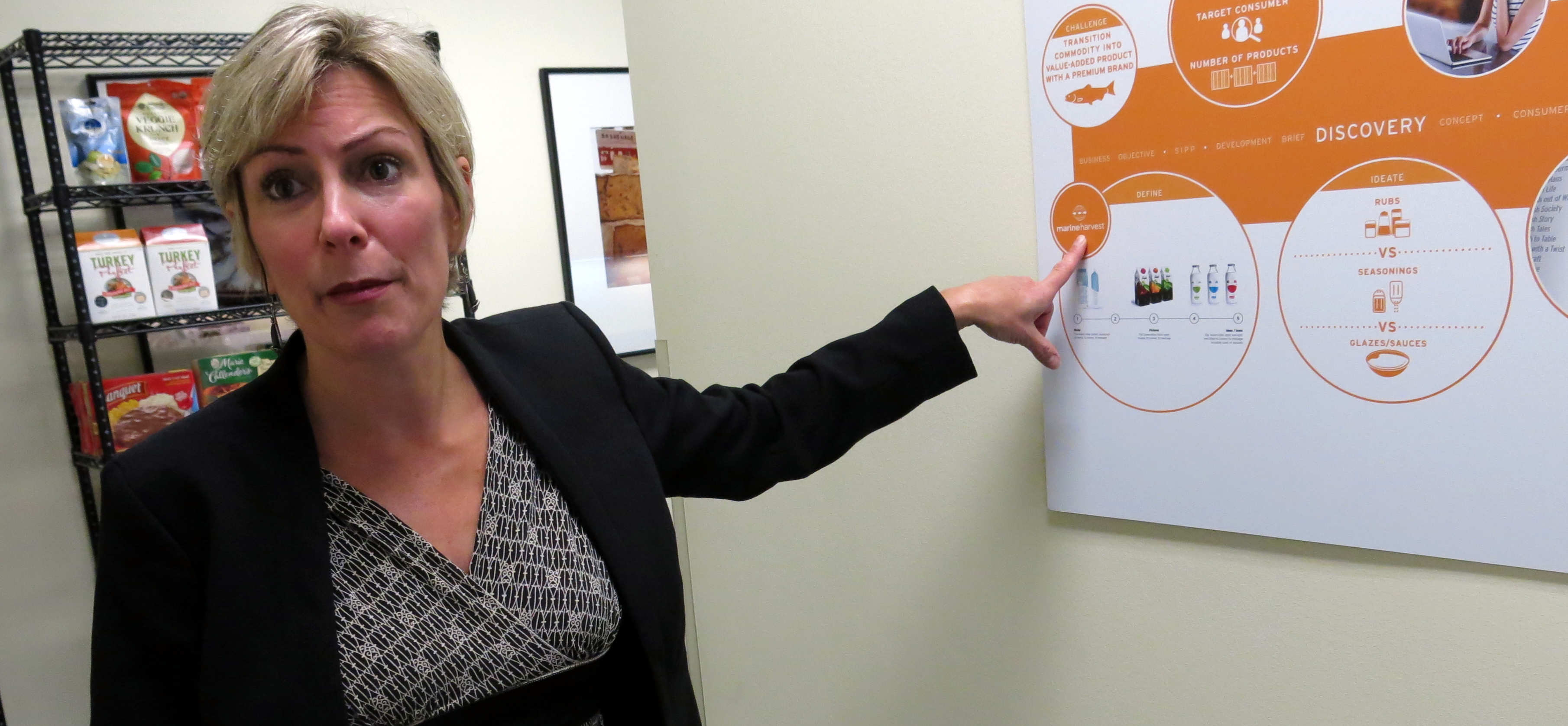
Barb Stuckey—who is Mattson’s chief innovation officer and the author of a good book called Taste—told me, “We talked him out of a bar and into a beverage, because in a beverage you can control the calorie count better.”

IMG_8112

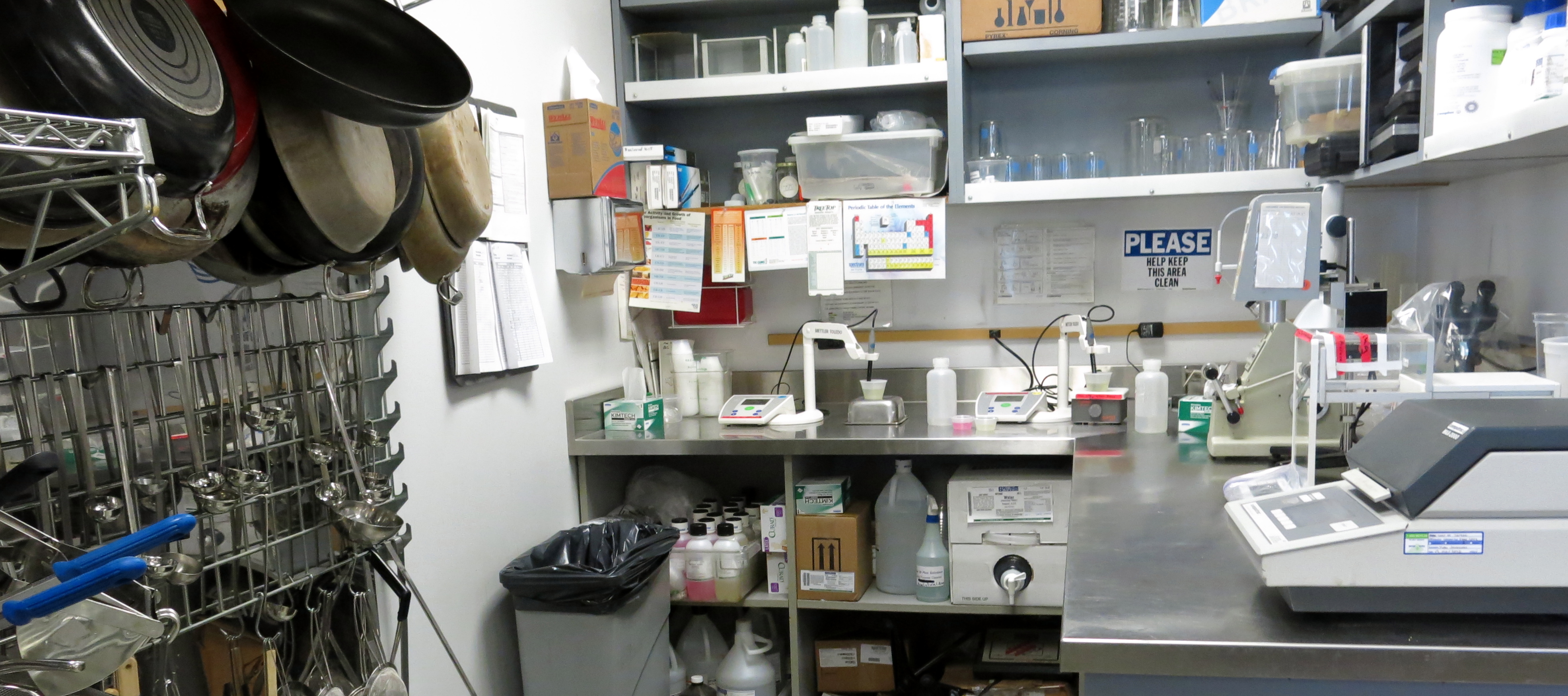
They found that “citrus” was better than “berry” at disguising the tastes they were trying to disguise, and that giving the beverage a slightly silky mouthfeel reinforced the idea that it was coating sore joints. But they didn’t make it taste too good. The model there, Stuckey told me, was the popular energy drink Red Bull—which, she said, was purposely given “just the right amount of bad.”

IMG_8087

The photo below is of some other things I tasted when I was at Mattson. They wouldn’t work in a sports drink: they tasted too good.

IMG_8154

Reader’s Trip Report: Tarandowah Golfers Club

tarandowah-golfers-club-1035962-1607522-regular

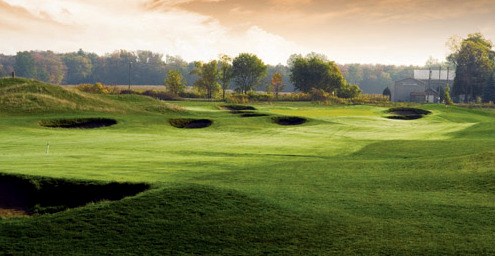
When my friends and I look for places to play during the winter, we usually go south—to Bridgeport, Brooklyn, or the Bronx—but maybe we should go north instead. John Wilson, a reader in Canada, wrote recently to say he had just played a round at Tarandowah Golfers Club, in Springfield, Ontario, a few miles north of the northern shore of Lake Erie, about halfway between Buffalo and Detroit. Pictures of the course made me want to jump in my car.

tarandowah

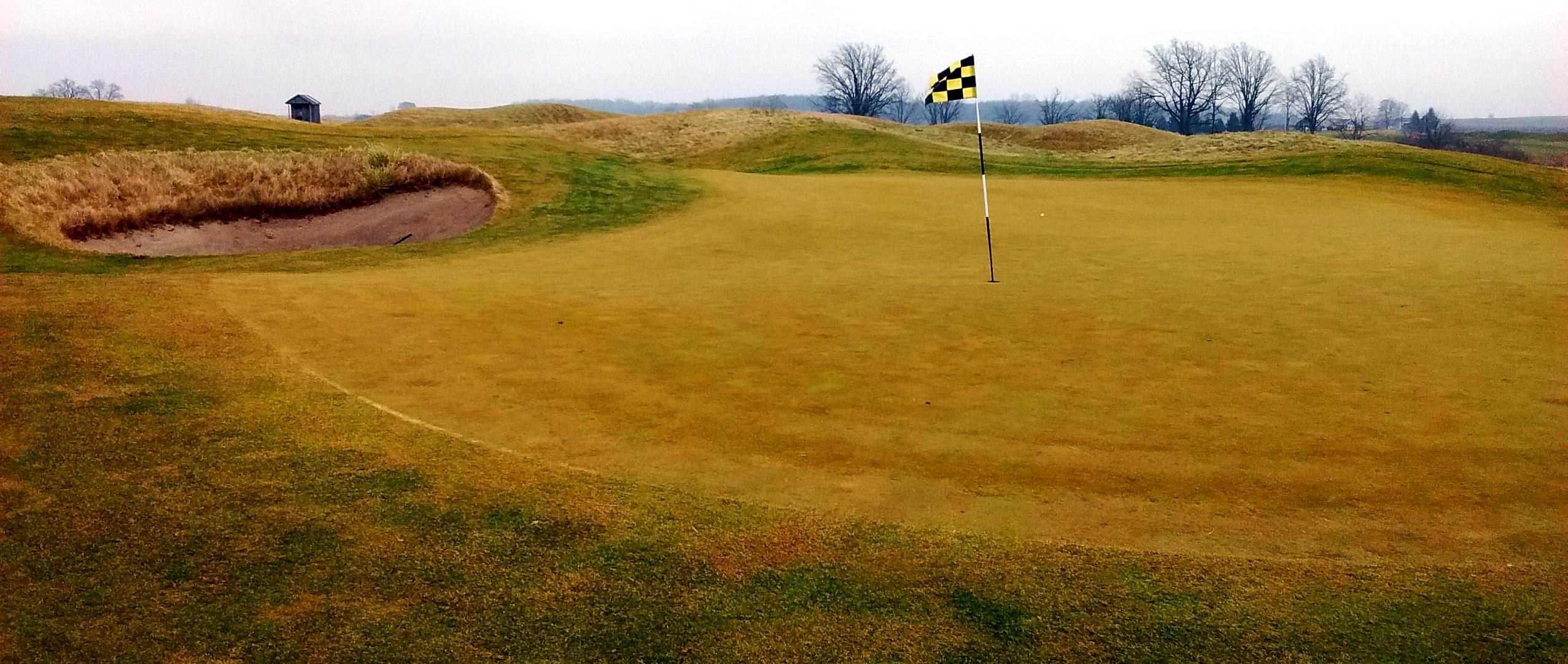
Tarandowah was designed by Martin Hawtree, who has done big projects at Lahinch, Portmarnock, Formby, Royal Liverpool, and Royal Birkdale — all among my favorite courses in the world. He also designed Trump International in Aberdeen, Scotland, and has done a major renovation and redesign at Trump International in Doonbeg, Ireland. His firm, Hawtree Ltd., was founded more than a century ago by his grandfather Fred; it’s the oldest continuously operating golf-architecture firm in the world. (All three generations of Hawtrees have worked on Royal Birkdale.) Tarandowah is very much in the spirit of all those great old links courses. Here’s a photo Wilson took during his recent round:

IMG_20151210_103615840

And here’s another:

IMG_20151210_111733042

His report:

“I work on the greens crew at St. Thomas Golf & Country Club, in Union, about half an hour away. It closes every year after the third weekend in November, so it has been shut down for a while. Tarandowah is one of several public courses in this area that stay open as long as the weather permits. I played with a St. Thomas member I see every day when I am working but rarely get to make a game with. We played in three hours (walking) at a cost of $25 per person — not bad for a Hawtree design.”

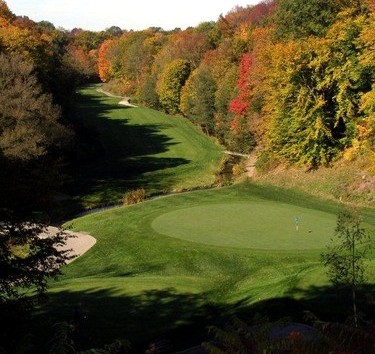
St. Thomas, which was founded in 1899, has a heck of a course, too. Here’s the third hole, on which nearly every shot has a decent chance of ending up in that creek:

stthomasthird

During the past three winters, St. Thomas has undertaken a major tree-thinning project — something many old golf courses need to do. “Joe Vargas, from Michigan State University, and David Oatis, from the U.S.G.A., were the primary consultants on the project,” Wilson told me, “and my superintendent, Wade Beaudoin, wrote an article about it.” (You can read Beaudoin’s article here.) So far, more than a thousand trees have come down. Here are some of them:

stthomastreeremoval2012

During a round at Tarandowah a little over a year ago, Wilson noticed that a sorry-looking dog was following his foursome. “I assumed she was a stray, because she was covered in burrs and thick mud,” he told me. “My friends thought I was crazy to rescue a dog during a round of golf, but I took her home and cleaned her up. Later, I learned that she belonged to a farm near the golf course. I shed a few tears when I dropped her off with her rightful owners. During my round last week, she came running across the fields, and my smile was a mile wide. Her name is Gracey.”

IMG_20151210_102248295_HDR

“The forecast for next week calls for temperatures in the mid-forties,” he continued, “so there’s still more time for December golf in Ontario. On Tuesday, though, I’m heading to L.A. for a family visit. I already have a tee time for Rancho Park, which I haven’t played yet. Hopefully, the round will be less than five hours.”

Well, good luck with that one. Maybe less than six.

004

Playing From the Wrong Side of the Ball on Purpose

magazine-maar01ms_wie0408

Michelle Wie once told Guy Yocom, in an interview in Golf Digest, that if she ever got bored with golf she’d take it up again, left-handed—one of many reasons to join her fan club. A few years ago, Mike Zimmerman, a reader in Glendale, Wisconsin, decided to try the same thing, mostly because he thought switching sides would pose an interesting challenge, especially for a guy in his late forties. He has now written a book about his experience, called The Wrong Side of the Ball.

wrongsideofballcover

The book, which Zimmerman published himself, contains slightly more autobiographical detail than people who don’t know him are likely to be fascinated by, but there’s lots of interesting stuff, too, including the fact that, of the four left-handed players who have won majors—Bob Charles, Mike Weir, Phil Mickelson, and Bubba Watson—only Watson is a natural lefty. There’s also the even more surprising fact that six other natural lefties have won majors, but all while playing right-handed: Johnny Miller, Greg Norman, Curtis Strange, Nick Price, David Graham, and Byron Nelson. I’m going to add my brother, John, to that list, because he’s a natural lefty who, while playing right-handed, served as the captain of his high-school and college golf teams, won the club championship at two different clubs, and won my club’s member-guest (with me):

IMG_5678

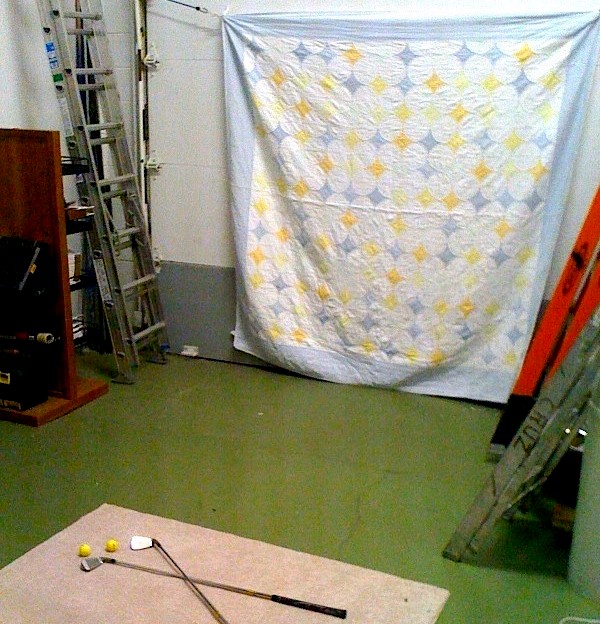
Teaching pros (and our late father, handicap 36) sometimes used to say that every golfer ought to play from the opposite side, because then the dominant arm could “pull” the club through the ball. I don’t think there’s any actual science to back up that idea, but lack of actual science has never been an impediment to golf-swing theorizing. In the old days, the main reason lefties played righty was the scarcity of left-handed golf equipment. That’s less of an issue now, although it’s still a consideration, especially when it comes to demo clubs. But a challenge is a challenge. Here’s where Zimmerman honed his new swing (his wife is still wondering what happened to their bedspread):

zimmermandome

And here’s a video of Zimmerman’s first public demonstration of his transformed technique. He doesn’t actually swing until almost the very end, but the long build-up helps to create dramatic tension:

The Champions Tour is probably safe. Still, Zimmerman gets major credit for trying. Here he is again (on the far left, of course), with the guys he regularly plays with—who lend support to my theory that middle-aged male golfers are all basically the same person:

zimmerman pals

The Muny Life: Country Club of Woodbridge

IMG_0164

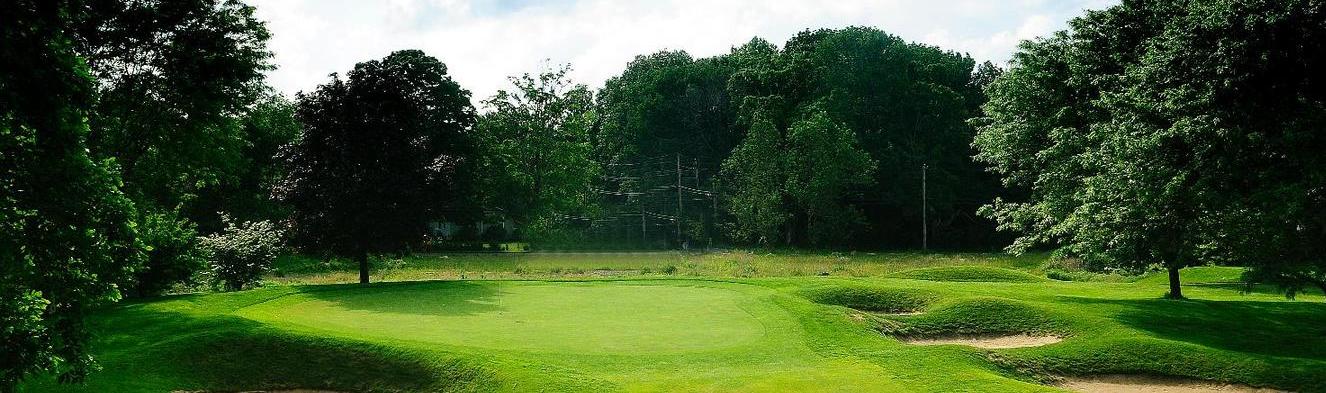
In my part of the country at this time of the year, avid golfers become migratory. Some fly hundreds of miles south and don’t return until spring, but most of us circle the ground closer to home, like Canada geese searching for open water. We study the sky and the Web and the Weather Channel, and when we hear rumors of snow-free fairways we hit the phones. Over the past decade or so, my friends and I have assembled an extensive portfolio of all-season golf courses, in three states. This past Sunday, we added a new one: Country Club of Woodbridge, about forty-five minutes southeast of our home course (which closed for the winter on the Monday after Thanksgiving).

woodbridge green

Woodbridge used to be a private club; the town bought it in the aftermath of the mortgage crisis, and Billy Casper Golf manages it. The course was designed in 1938 by Orrin E. Smith, who worked with Donald Ross on a couple of projects and designed or redesigned 20 courses in our state, including the course of our No. 2 Enemy Club, which we like a lot. The selectmen of the town of Woodbridge are thinking about turning part of the course into condominiums for oldish people, or something, but I hope they don’t, because we want to go back—maybe on New Year’s Day, when (the starter told us) they usually have a good crowd.

IMG_0144

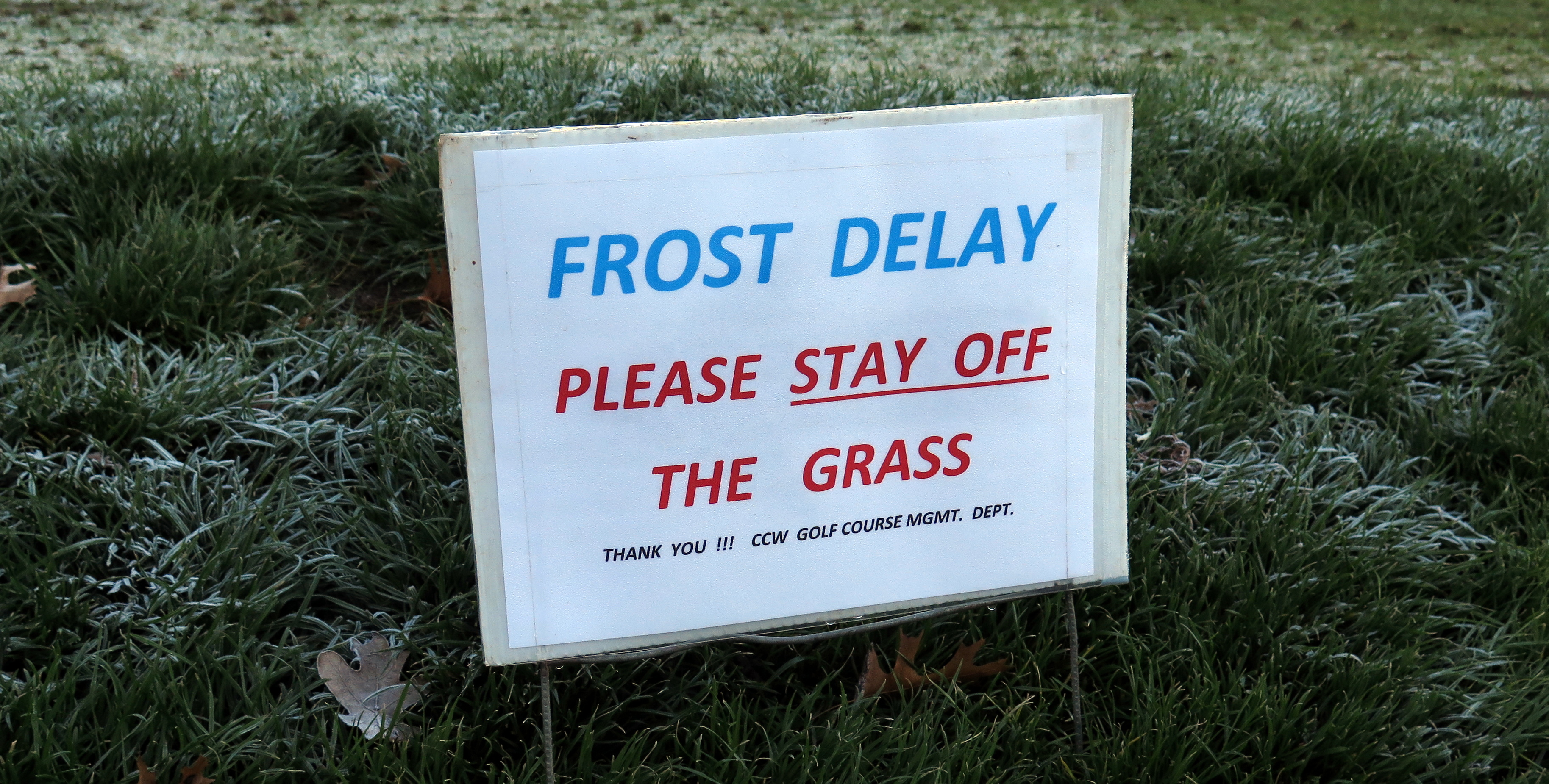
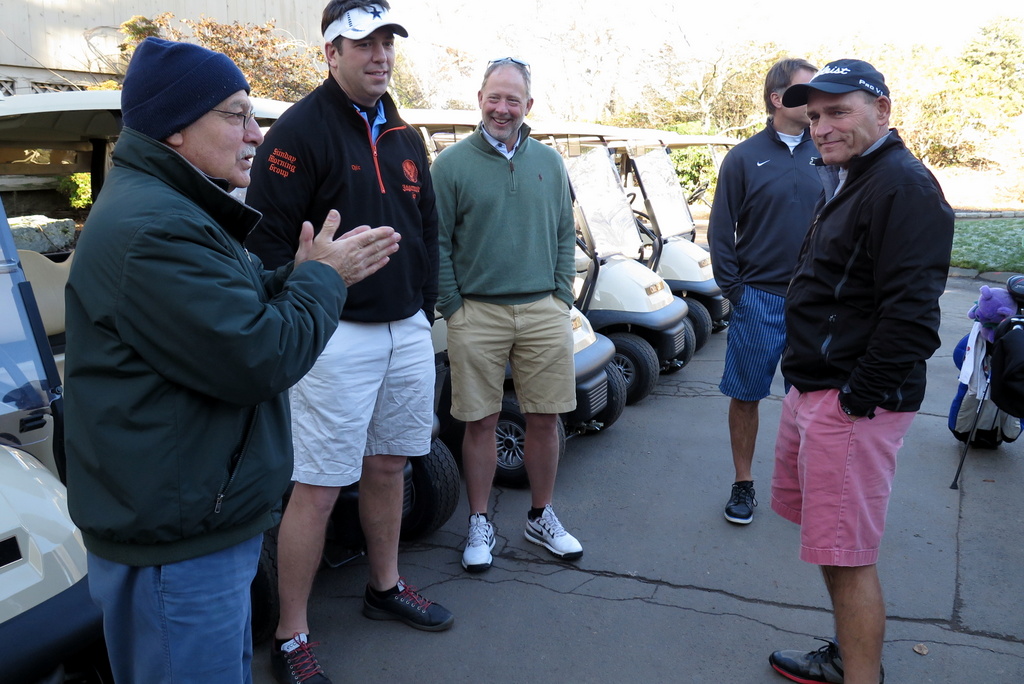
There was a frost delay, but that was OK because it gave us a chance to get caught up. Several of our guys were easy to spot in the crowd outside the golf shop, because after December 1 the Sunday Morning Group gives two extra handicap strokes to anyone who wears shorts. You would think that wearing shorts in sub-freezing weather would be unpleasant, but in fact your legs adapt fairly quickly, by becoming permanently numb:

IMG_0147-001

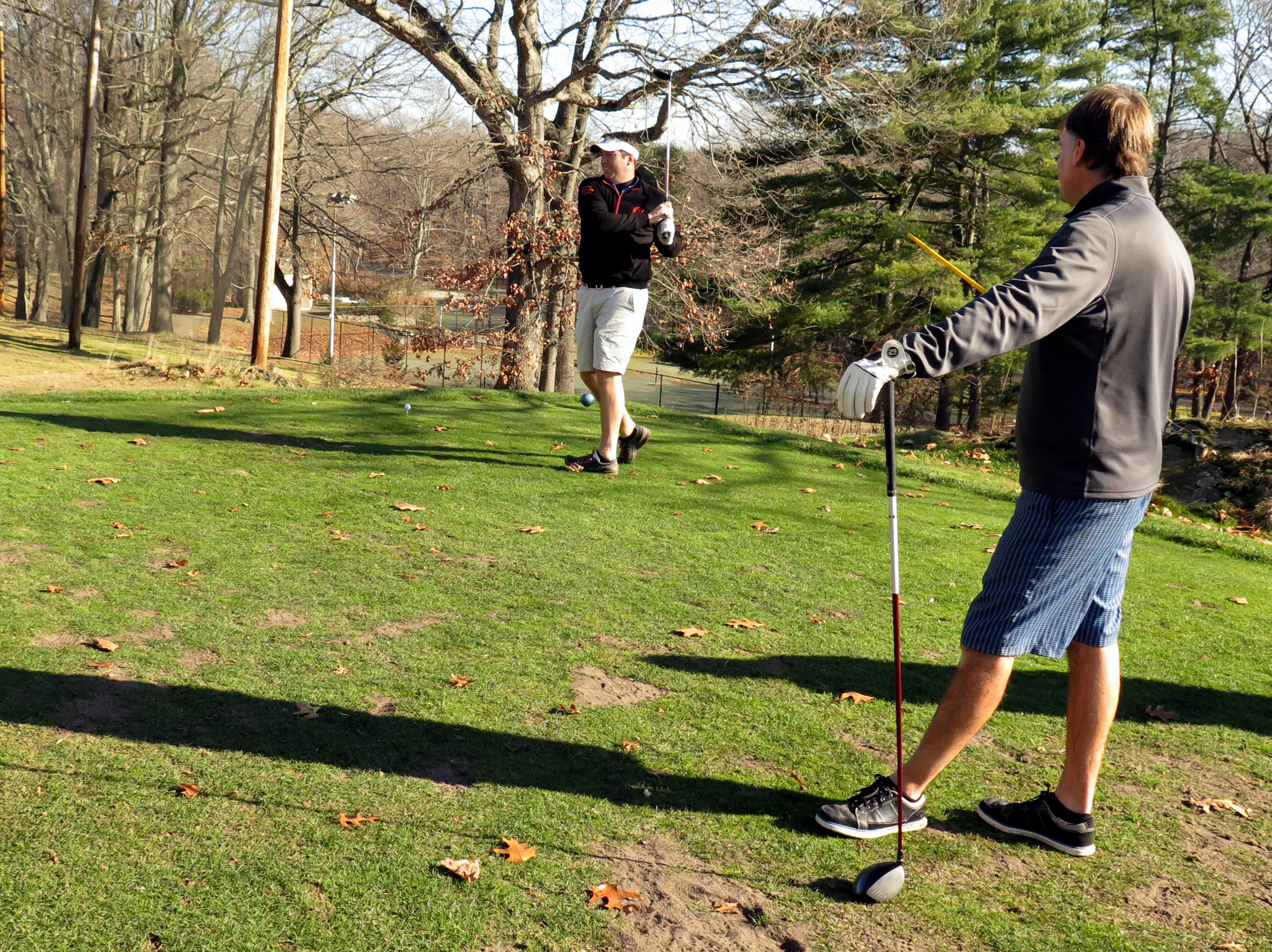
The frost delay didn’t last all that long, and when it was over the starter shotgunned everyone. We had twelve guys, and all three of our groups started on the first hole. By then, the sun had made the day seem sort of hot. We played two best balls, All Balls Count on the money hole (No. 12), and skins.

IMG_0166

On the third tee, we met a member of the town’s golf committee. He wasn’t playing, but had driven out to say hello. He told us that Woodbridge is unusual in that the property was once owned by Roger Sherman, the only person to sign all four of the principal founding documents of the United States: the Declaration of Independence, the Articles of Association, the Articles of Confederation, and the Constitution. Here’s a picture of Sherman dressed in an eighteenth-century golf outfit:

Roger_Sherman_1721-1793_by_Ralph_Earl.jpeg

The layout is Woodbridge is a little tricky, but it’s easy to navigate if you remember (as the starter told us) that when you leave a green your next tee is almost never the one you come to first. Near one tee, we saw a golf-ball vending machine installed by an entrepreneurial neighbor:

P1170332

Afterward, we drank beer and went over our scorecards in the golf shop. My team came in last, but I won two skins and split the money hole with Chic and Todd. That puts me closer to the top than to the bottom of the standings for the Jagermeister Kup, our all-winter competition.

P1170337

We had a great day—as I had known we would because the night before I had a dream about golf. In the dream, I discovered that Nancy Reagan is much younger and more interested in me than people have generally thought. She also loves golf, although she told me that when her husband was in the White House she kept her interest to herself. She drives a Cadillac convertible—Seville-type, not Escalade—and in the parking lot of the golf club where I ran into her I saw that there were two golf bags in the backseat, hers and Hedy Lamarr’s. Both sets of clubs were in “mint vintage” condition, and the woods had simple muted-pastel headcovers. Nancy said she wanted to give me Hedy Lamarr’s clubs, and maybe her own as well, along with some sort of golf journal she had kept for years. The journal was written in dream writing, so I couldn’t quite make out what was in it, but I was pleased because I knew that I would eventually get at least a couple of Golf Digest columns out of it. Nancy is totally not the calculating, vindictive ice queen that people have always made her out to be. I don’t think our relationship was “going anywhere,” but I’ll never know because right about then I woke up to take a whiz. When I described all this to a friend later, he said that Hedy Lamarr’s days of appearing in people’s dreams were probably just about over. He’s definitely right about that; in fact, I think that even my dream was probably a bit of a stretch.

country_club_of_woodbridge_logo