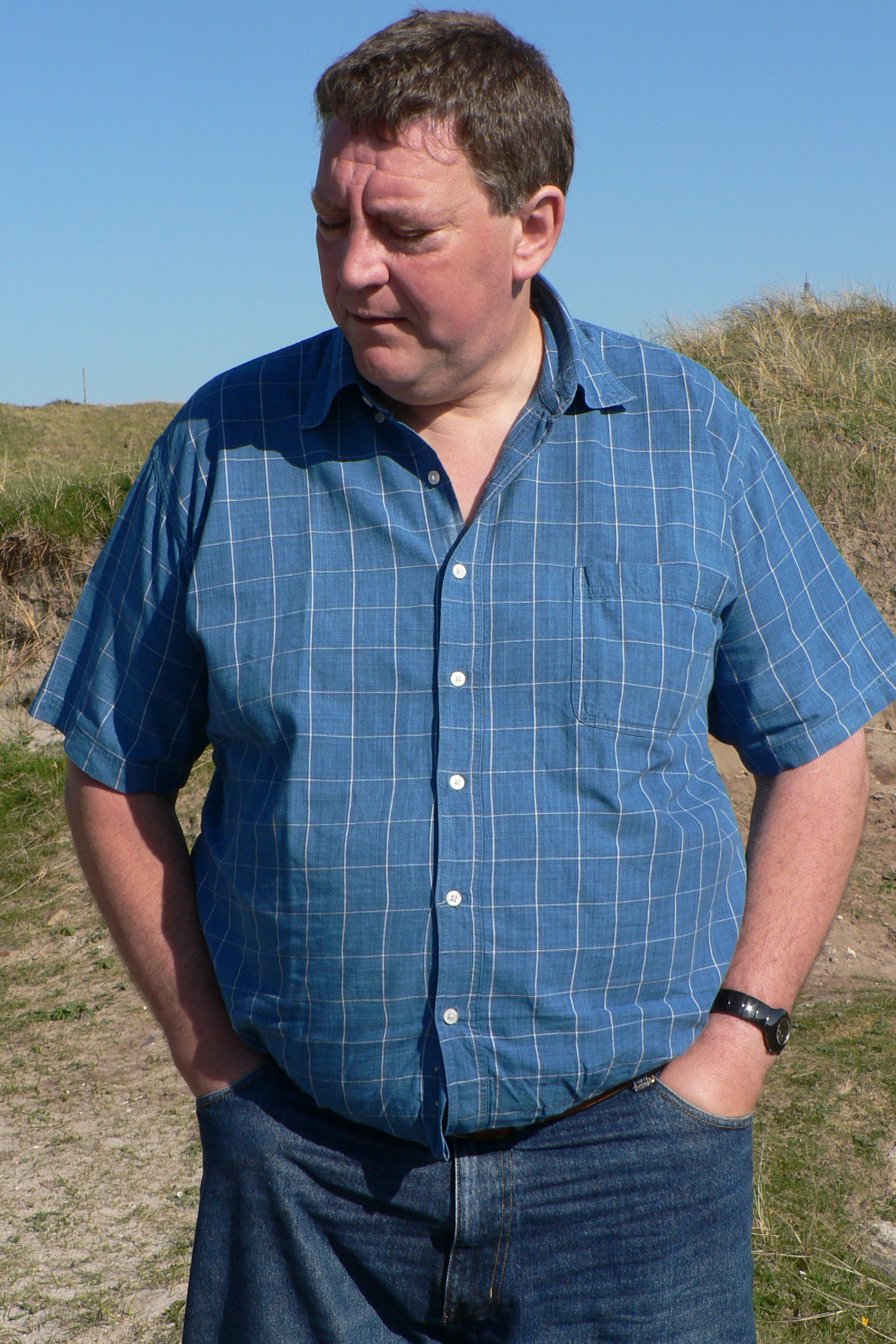
Tony and D.O., Royal Aberdeen Golf Club, Scotland, May, 2008.
Tony, who is a member of my Sunday Morning Group, lives in Atlanta for almost half the year. His golf buddies there are smarter, richer, and better-looking than his S.M.G. friends, and they hit the ball farther and have better short games. I’ve met several of them, though, and they’re not as bad as that makes them sound. They haven’t invented as many golf games as we have, but they do occasionally come up with something interesting, including a best-ball game that Tony told us about recently (by email, since he’s still down there). We played it Saturday, and decided to name it after him.
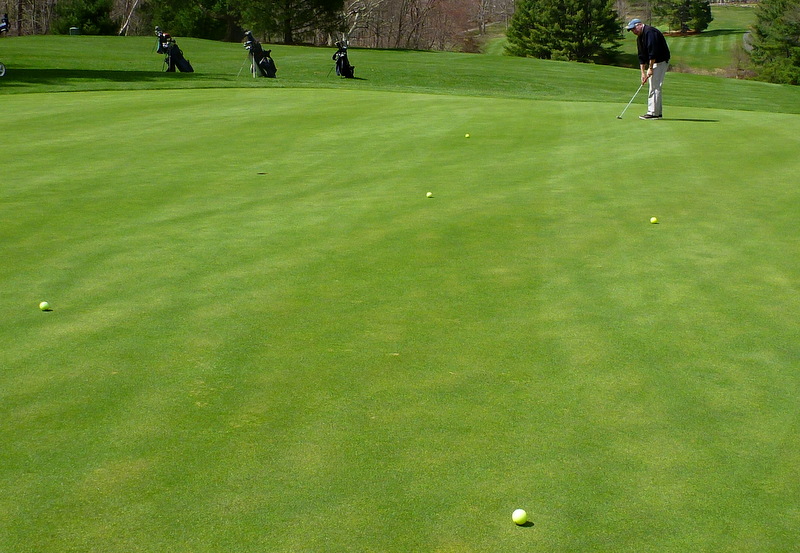
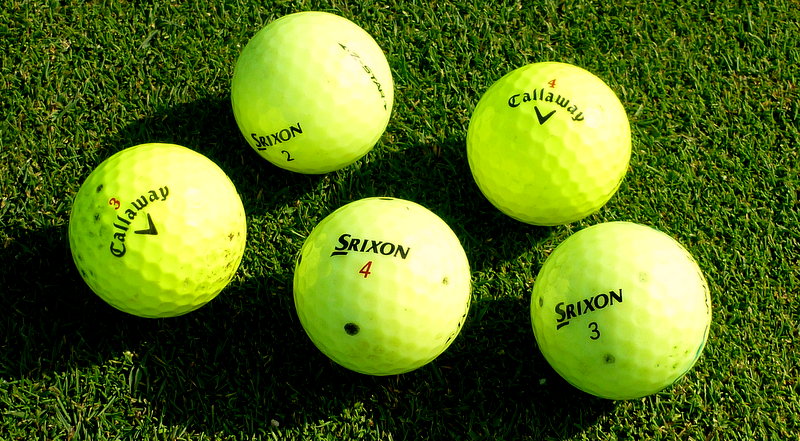
To play T-Bone (as we call both him and it), you need a group that’s evenly divisible into threesomes, foursomes, or fivesomes. Each group counts one best ball on the first six holes, two on the second, and three on the third. On Saturday, we had ten guys. We were going to pick two teams randomly, by pulling balls out of my hat, but once the balls were in the hat I noticed that there were five white ones and five yellow ones, so we just went by color. I was on the yellow team, and if you know anything about yellow balls you know that, technically, we had an overwhelming advantage. Somehow, though, we lost by six shots.
Five yellow balls plus Hacker (real name), eighth green.
Even when you have five guys on your team, counting three balls puts serious pressure on slicers, hookers, shankers, yippers, dubbers, flubbers, and choppers—in other words, on pretty much everyone. In an earlier test round, on Thursday, we tried T-Bone with two threesomes, and the trailing group came very close to making up a ten-shot deficit on the final six holes. There was quite a lot of pressure, too, because by that point we were all playing together, as a sixsome, on account of being stuck behind a slow group.
On Sunday, we played what might be thought of as modified T-Bone. We had eighteen guys, so we divided into six threesomes. The Committee realized that counting all three balls for the final third of the round would be too brutal and time-consuming, especially early in the season, so we decided to count two best balls on the first seventeen holes and all three on the eighteenth, which was also the Money Hole. That was brutal enough.
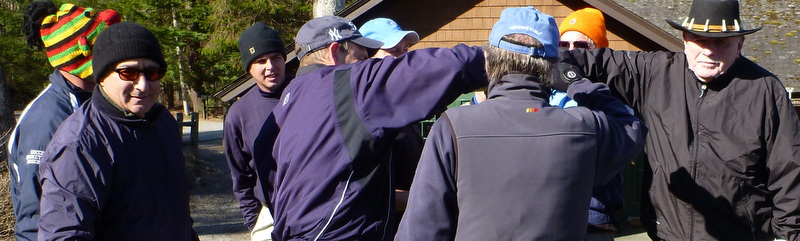
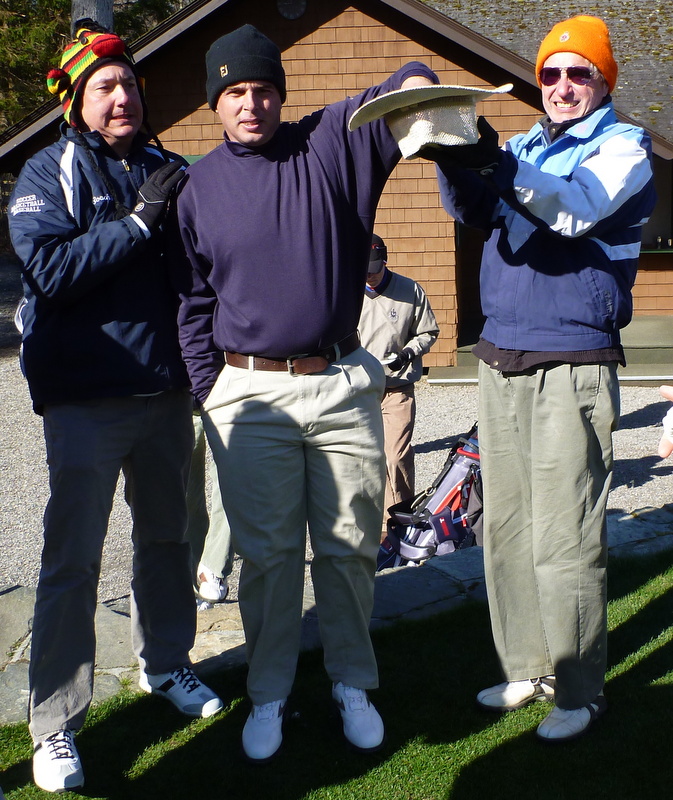
On Sundays, we pick teams by drawing numbered poker chips instead of balls—like this:
The guy in the middle is Corey, our pro. We’ve decided to call him a plus-2. Everybody gets excited when Corey plays, because we feel like we’re getting extra shots, but the advantage is an illusion because Corey, unlike the rest of us, can reliably play to his handicap, even when we have the kind of cold, windy weather that made Tony buy a place in Atlanta, as we did on Sunday.
It was a good day, though, as always. My team came in not-last, and Schoonie (whose hat Corey has his hand in in the photo above) brought lunch (although he forgot cheese for the cheeseburgers).
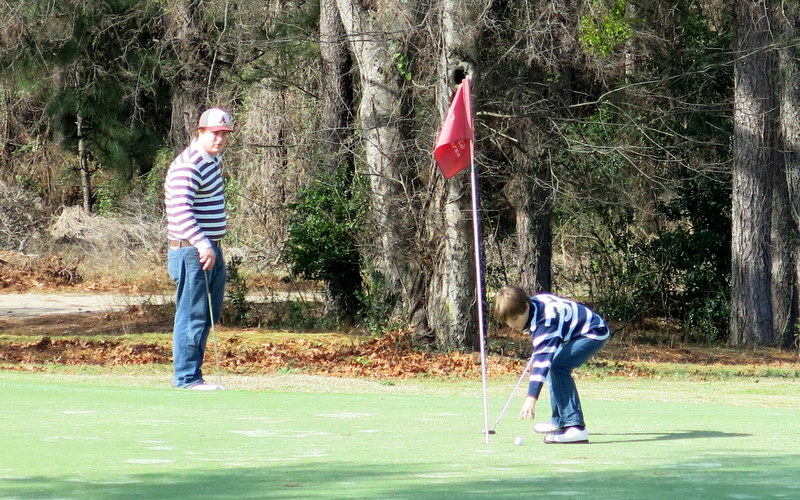
When we tried T-Bone for the first time, on Thursday, we shared the course with a nine-hole high-school tri-match. One of the teams was the boys’ varsity team from a boarding school in our town. The No. 2 player on that team is a girl (see photo below). She doesn’t hit the ball as far as Corey or Tony’s Atlanta friends, but she does hit it farther than any of us.They won, of course.
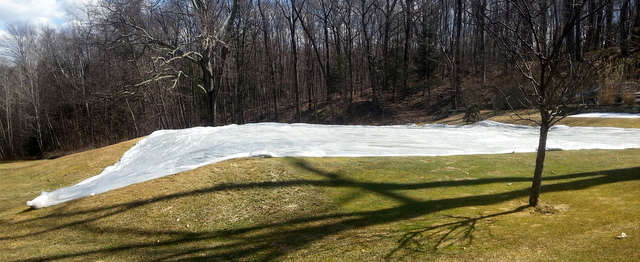
We had a snowstorm during the night three weeks ago, and you can see the result in the photo above. A few days later, my wife and I took our dog for a walk at the golf course. We got stuck in the Executive Parking Lot, which is back behind the clubhouse, between the Dumpster and the propane grill. Our retired superintendent, who still lives next door, helped me dig out, and as I rocked my car back and forth I figured I wouldn’t be playing golf until at least May. But Gary, our current superintendent, opened the course this past weekend, so everything is normal again. The only part of the course that was still out of play was the practice green:
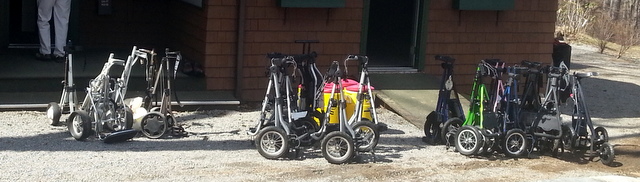
When I arrived, Nick, who is about to graduate from high school, was in the bag room performing pushcart triage. In the photo below, the pushcarts on the left are headed to the dump, the ones on the right are still fully functional, and the ones in the middle will be kept for parts:
Quite a few of the guys wore shorts—apparently in the belief that our Shorts Rule (one extra handicap stroke if you wear them after November 1; two if you wear them after December 1) still applies once the new season has begun. It does not.
Reese and Mike A, fourth green, no extra strokes.
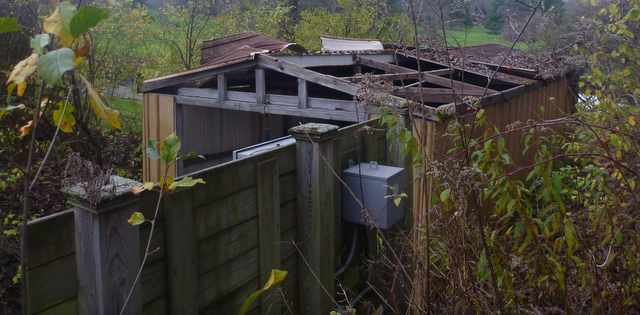
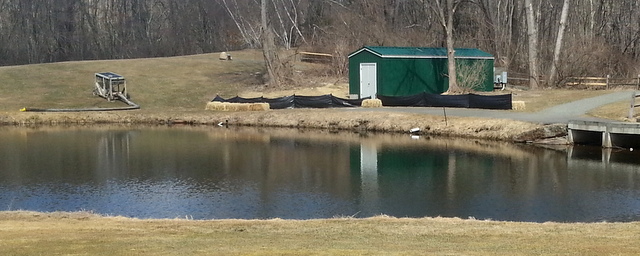
We inspected the new pump house, which Frank built over the winter. Here’s what it looked like before:
Pump house: before Frank.
And here’s what it looks like now:
Pump house: after Frank.
Unfortunately, Frank is taking a leave of absence this year. He’s having both knees replaced—something he has needed for a long time. A few years ago, during a storm, he helped me install an emergency patch on a hole in my roof, using a technique that he called “redundant half measures.” It worked great, but I had to do most of the kneeling.
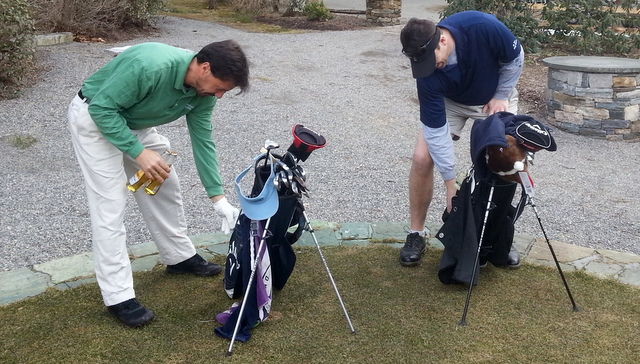
When we finished playing, Mike G. and Chic were getting ready to tee off. Here they are, loading provisions into their golf bags:
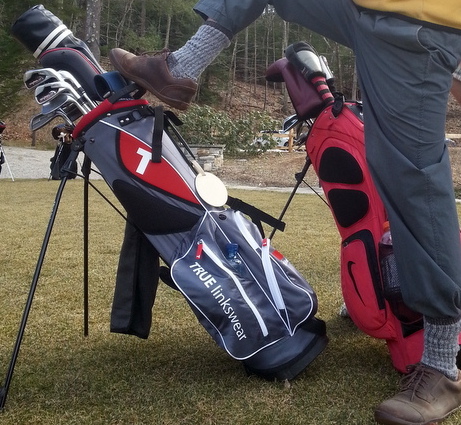
Addison had some new golf pants, which he got because he plays for the University of Hartford. The only other significant off-season acquisition I noticed was Tim’s golf bag, which is made by the same company that makes our favorite shoes:
And the next day, I played again, with Addison and Reese. We had the place pretty much to ourselves:
Reese and I played Addison in a series of close-out matches, with all our strokes. We won both World and Solar System, but Addison, with a par on the eighteenth, took Universe. Luckily, we have a full season to get it back.
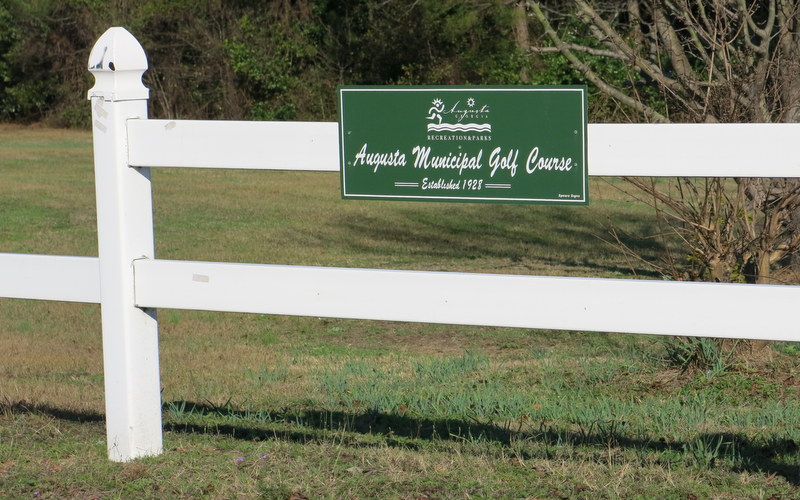
For my monthly column in the April issue of Golf Digest (on sale now), I played Augusta’s municipal golf course, which is known locally as the Patch—short for Cabbage Patch. There was frost when I got there, and the parking lot was virtually empty, so after nosing around a little bit I went to Krispy Kreme.
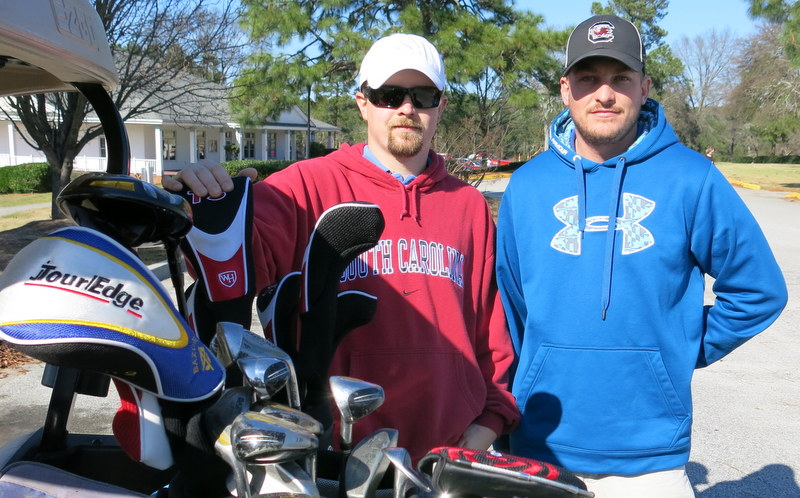
When I returned, I played with Josh and Steve, both journeymen pipefitters, who had driven over from Aiken, South Carolina. They’ve been working as welders on the Savannah River Salt Waste Processing Facility, a job that’s likely to last another two or three years. (“Salt waste” is a semi-euphemism for nuclear waste.) There was a golf-ball-shaped dent on the bottom of Steve’s driver. “That’s from the first time I played,” he said. “It was a sight.” Here they are (Steve is on the left):
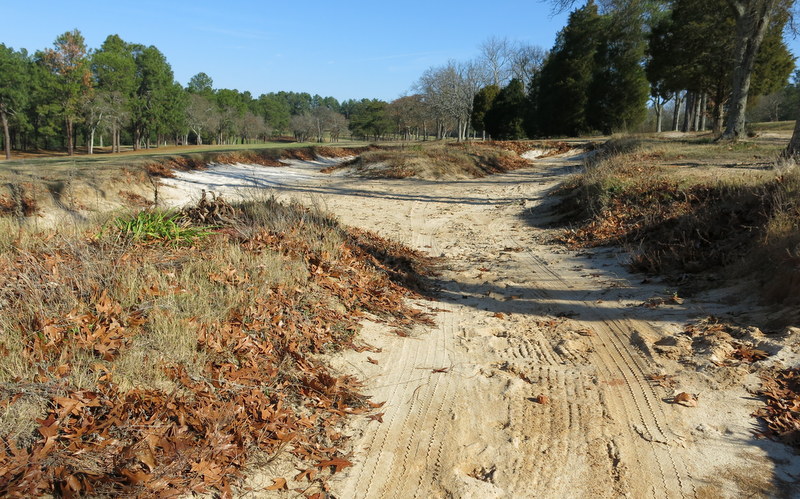
The Patch is scrappy, but it’s a good golf course, and it has some awesome bunkers, like this one, next to the first fairway:
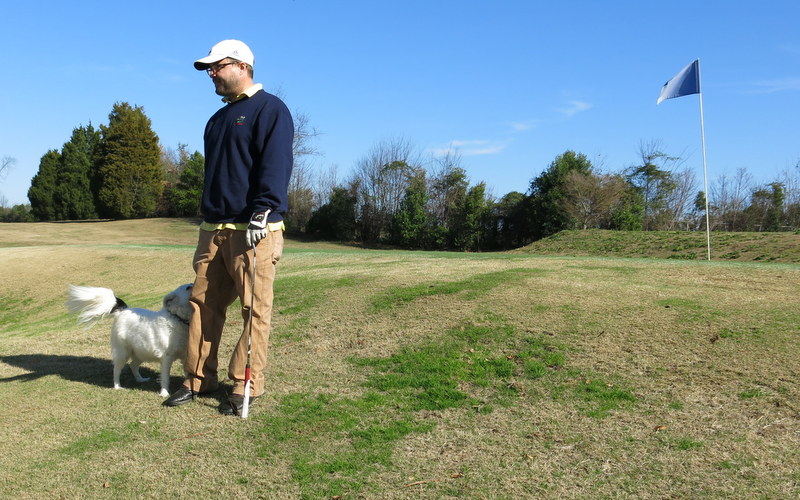
Later that day, I met the guy in the photo below, who was playing with his dog. He’s forty-five years old and has been a regular at the Patch since he was twelve. I asked him how the course had changed over the years. “Not at all,” he said. “It changes, but within a very narrow band. It has been twenty percent better, and it has been twenty percent worse, but it’s basically the same.” Once, during a single week, he played all the nearby golf courses with the word “Augusta” in their name: Augusta Country Club, North Augusta Country Club, Augusta Municipal, and Augusta National. He said that he and his dog had just played twenty-seven holes in three hours—a perfect day.
I also saw a couple of young dads, playing with sons:
And the next day, I played with the guys I wrote about in my column, two of whom are in the photo below:
In the same issue, Ron Whitten and I have articles about two days we spent in Orlando helping the people at EA Sports recreate the Augusta National course as it was in 1934, the year of the first Masters, for their new video game “Tiger Woods PGA Tour 14: The Masters Historic Edition.” The result, Whitten writes in the magazine, is “the closest thing to a time machine that golfers will ever experience.” The level of detail is extraordinary. Here’s Whitten during one of our sessions at EA, pointing out an incorrectly positioned tree:
Hacker, Pelham Bay Golf Course, Bronx, New York, March 1, 2013.
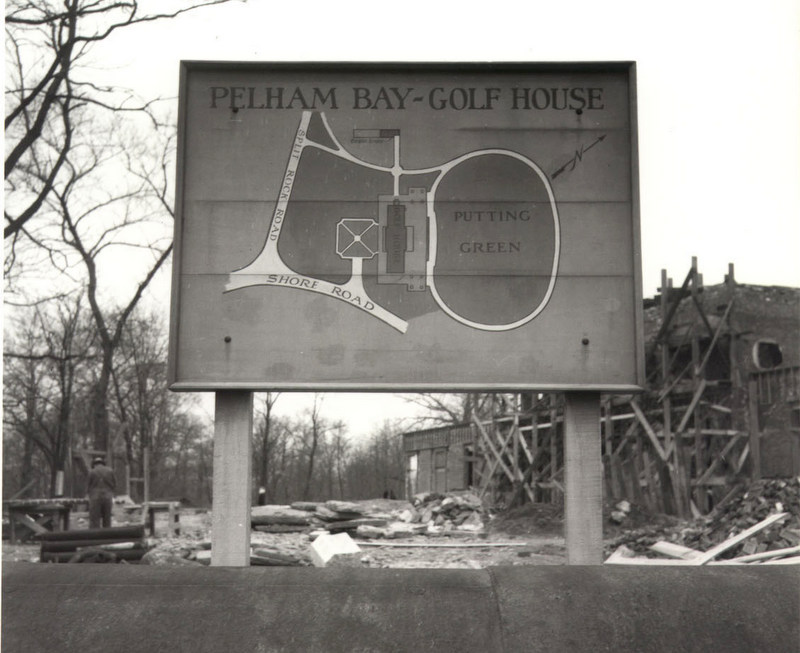
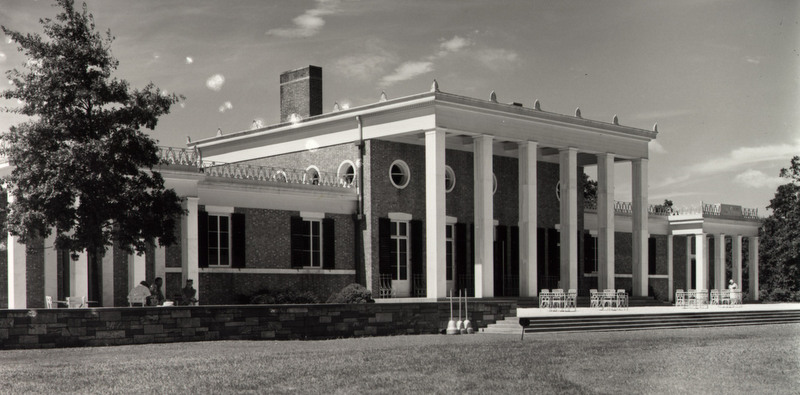
Hacker (real name), Rick, and I played in Pelham Bay Park, in the Bronx, on Friday. There are two golf courses, both owned by the City of New York—Pelham Bay and Split Rock—and they share a clubhouse, which you can see in the background in the photo above. It was built in 1936, and it has a cobblestoned driveway and front courtyard, and it has neoclassical columns made of white Tuckahoe marble. Here’s what the building looked like when it was under construction (beyond the sign):
Pelham Bay clubhouse, under construction, 1936.
And here’s what it looked like when it was finished:
Pelham Bay clubhouse, 1930s.
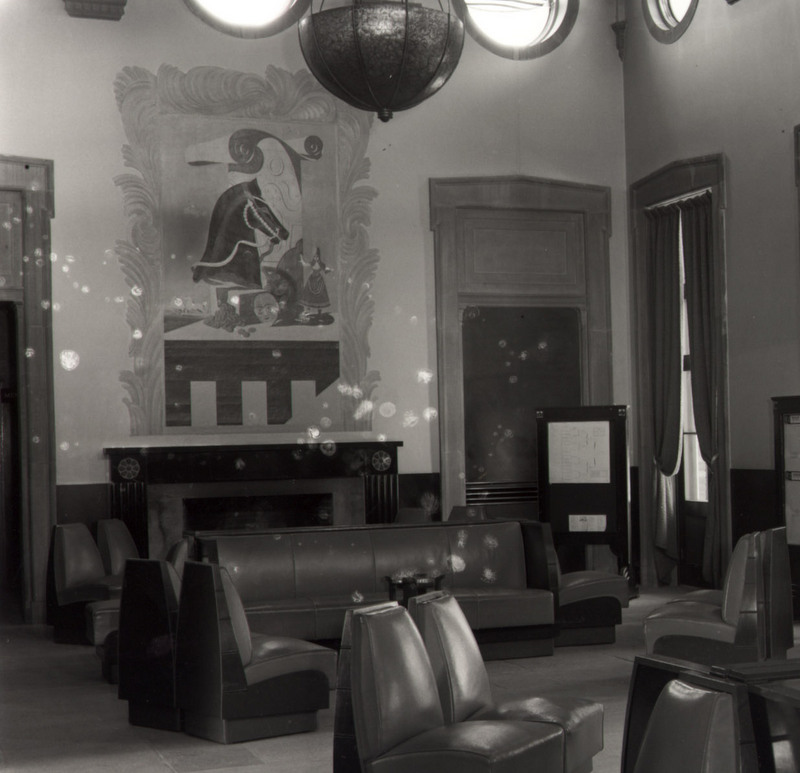
The first time my friends and I played Pelham and Split Rock, in 2004, the clubhouse was a mess. Glass was missing from many windows, and the front door had a hole that was big enough for rats to walk through on their hind legs. The Parks Department had bolted cheap outdoor floodlights to a pair of hemispherical hammered-bronze light fixtures in the Club Room, and it had installed an institutional drinking fountain in front of one of two basalt-and-marble fireplaces. The building was no longer heated, if it ever had been, and on one frosty winter morning we saw piles of construction debris burning in both fireplaces—Irish guys in front of one, Korean guys in front of the other. Here’s what the Club Room looked like in the 1930s:
Club Room, 1930s. The Parks Department later bolted flood lights to the Art Deco light fixture at the top of the picture, and installed a drinking fountain in front of the fireplace.
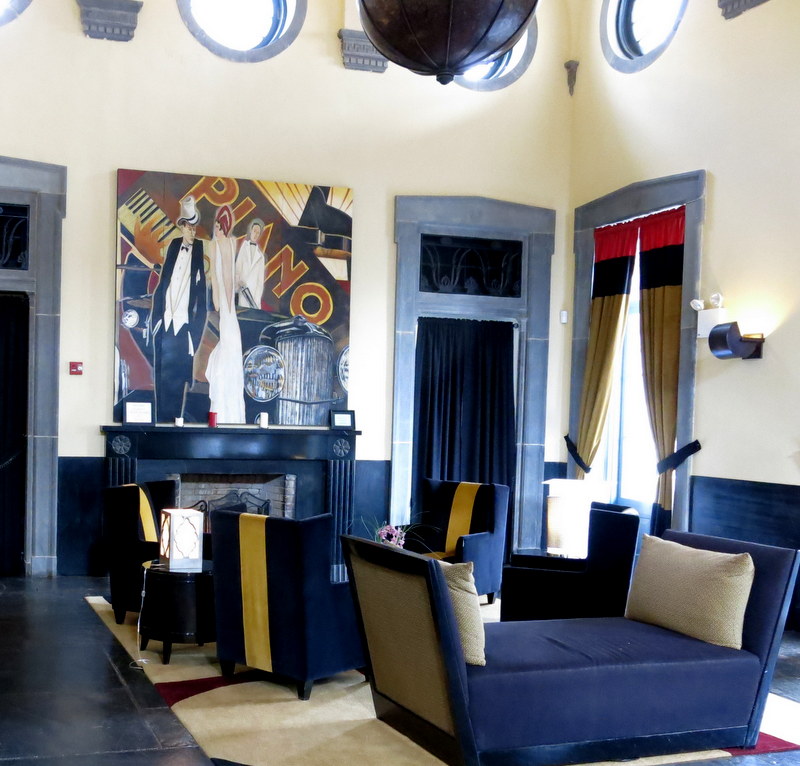
A year or two after we first played there, American Golf, which operates both courses on a twenty-year lease from the city, spent millions to restore the clubhouse. The architect was Page Ayres Cowley, and she and her colleagues did an extraordinary job. Here’s what the Club Room looked like on Friday:
Club Room, 2013. The floodlights have been removed from the hammered-bronze light fixtures. Why don’t you quit fooling around, and rent the clubhouse for your daughter’s wedding reception?
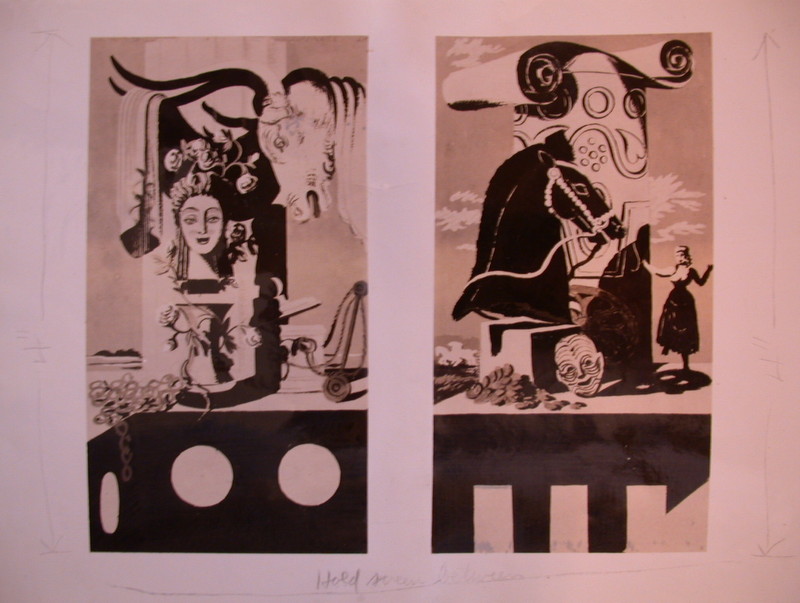
When the Pelham clubhouse was built, the artist Allen Saalburg created a Surrealist mural for the wall above each mantle. (Saalburg was a friend of Dorothy Parker, S.J. Perelman, Robert Benchley, and other early New Yorker contributors.) His murals—one of which is visible in the 1930s Club Room photograph—were still there when my friends and I first played the courses, but today the spaces they occupied are filled by a pair of hokey recent paintings, which depict what are supposed to be period scenes. The murals, Cowley told me, haven’t been destroyed, unlike similar ones that Saalburg painted, at around the same time, for the restaurant Tavern on the Green. But they need significant restoration work before they can go back up. Here is one of Saalburg’s sketches for the murals:
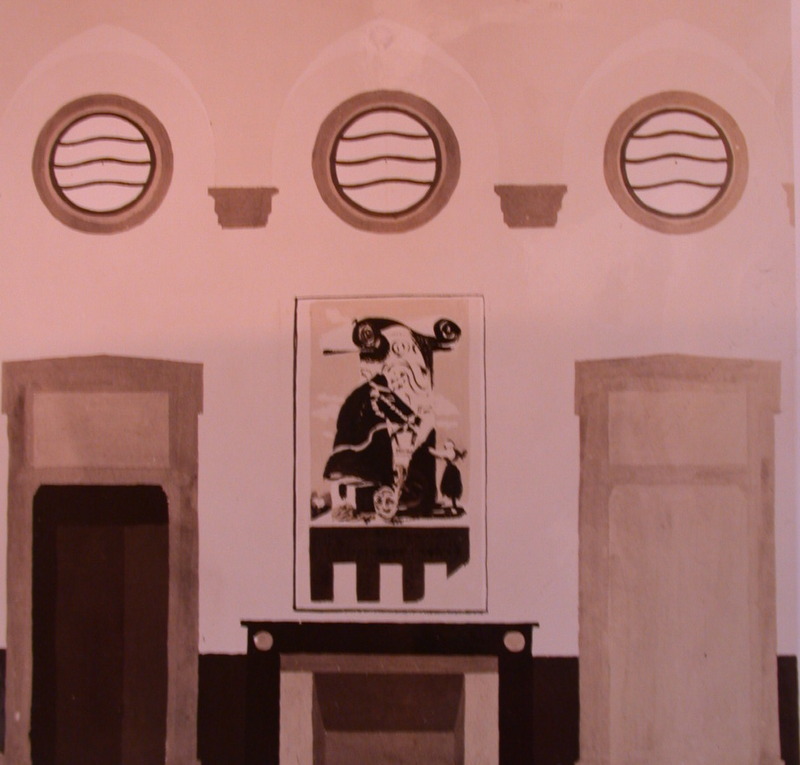
There’s not a lot of golf iconography in there, at least as far as I can see, but I hope somebody rich steps up and pays for their restoration. (Hey, Donald Trump!) And here’s how Saalburg visualized the fireplace wall you can see in the photos above:
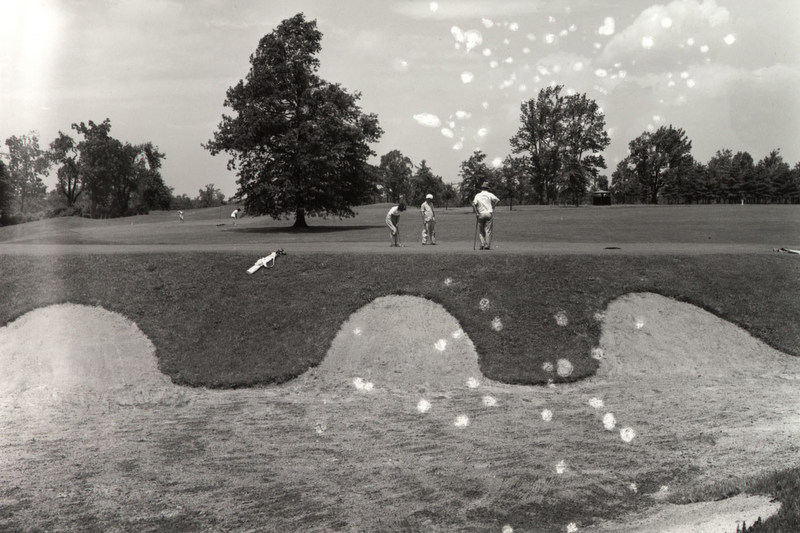
The round windows, and their wavy muntins, are still there—and they have glass in them now. Cowley told me she thinks some of the original bunkers on the course may have been designed to echo the shape of the windows, or vice versa. Here’s one of them, from the 1930s:
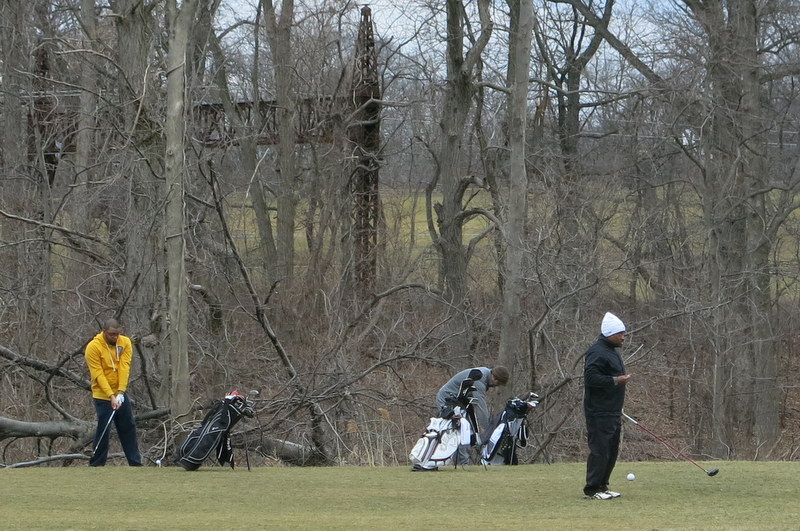
Maybe so. Anyway, Hacker, Rick, and I arrived at 10:30, and teed off almost immediately. (My greens fee was $39, walking; theirs, because they’re seniors, was $20.) There were pretty many other golfers, although we weren’t held up too seriously. We played skins and Ball Marker Stymies, and we finished in less than four hours. These guys were teeing off on the first hole as we putted out on the ninth:
The big rusty thing you see in the woods beyond them is part of a commuter rail line, which separates the two courses. And the grass you see through the trees is the eighteenth hole at Split Rock, which was closed—probably because it has more trees and takes longer to dry out than Pelham Bay does. I got home at 4:30 and took the dog for a nice long walk.
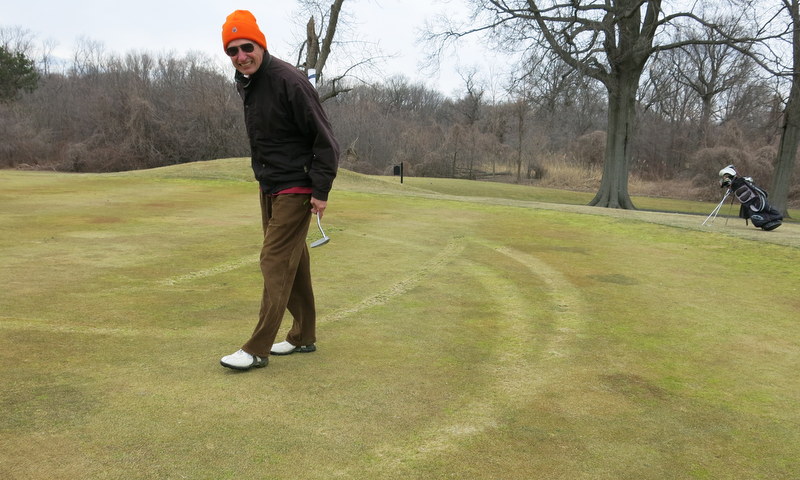
Some moron re-contoured several greens at Pelham by driving an R.V. over them. This one didn’t look too bad.
The blizzard that was supposed to pummel New England this weekend was a bust, at least as far as my town is concerned. We had a soft drizzle on Sunday morning, but that was as close as we came to getting buried under two feet of snow. The storm was still in the forecast when my friends and I made our weekend plans, though, so I ended up spending the day paying bills, doing the crossword, and obsessively touching up some old photographs that I borrowed from my mother last week, in Kansas City. The guy in the photograph above is my grandfather, in 1891, at the age of three. He never played golf, but he did join a country club, eventually. That’s the only connection I can think of. I like the picture, though.
This doesn’t look like a golf course, but it is one. I don’t know who that fancy car belongs to. Some guy with head covers on his irons, probably.
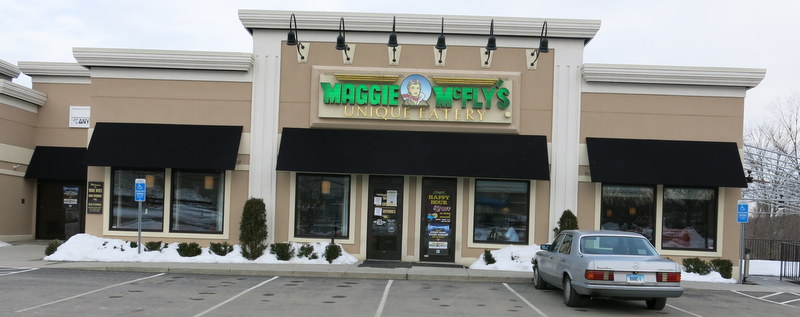
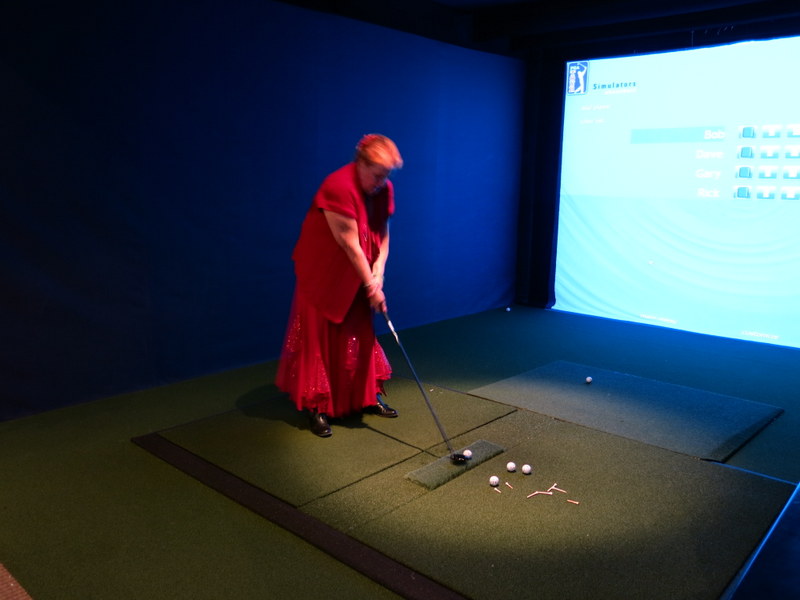
Two weeks ago, Hacker (real name) reserved one of the three simulators at Maggie McFly’s, a restaurant and bar not far from where we live. We first played there three winters ago, when snow covered the ground for months and we couldn’t find anyplace to play on grass. Since then, the simulators have become so popular that the only tee time we could get was for Wednesday afternoon.
Simulator technology has improved tremendously since the first time I played indoors, in the early 1990s. As always, you hit shots toward a picture on a screen, and a computer takes over once the ball is in the air. What has changed is the sophistication of the imagery and the accuracy with which the sensors pick up your ball’s velocity, trajectory, and spin. The machine we played was manufactured by a company called aboutGolf and is endorsed by the PGA Tour. It’s what you see on the Golf Channel.
That’s Rick, getting ready to hit a lob over a bunker. It’s a shot he’s good at because–unfairly, some would say–he practices.
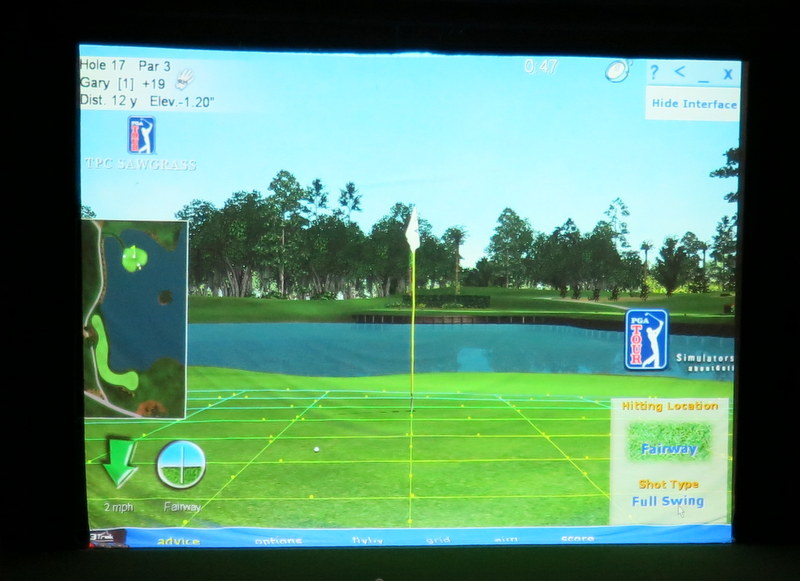
In the past, we’ve played Pebble Beach, Spyglass Hill, and the Old Course at St. Andrews, among other courses you may have heard of. This time we played the TPC at Sawgrass. Here’s what the famous 17th hole looks like when you’re standing on the fringe at the back of the green, looking toward the tee. I had a birdie putt, which I just missed:
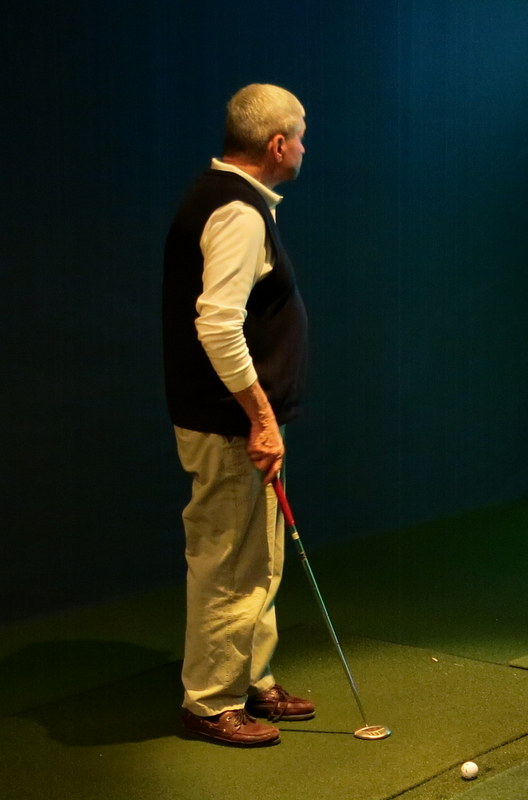
Simulator putting takes some getting used to: to read the breaks, you have to analyze the movements of dozens of virtual marbles rolling around on a projected grid that looks like a college-textbook illustration of the curvature of space-time. Once you get used to it, though, you begin to wish your home course had virtual marbles, too. Here’s Hacker—who was my partner—reading one of the many critical putts he drained:
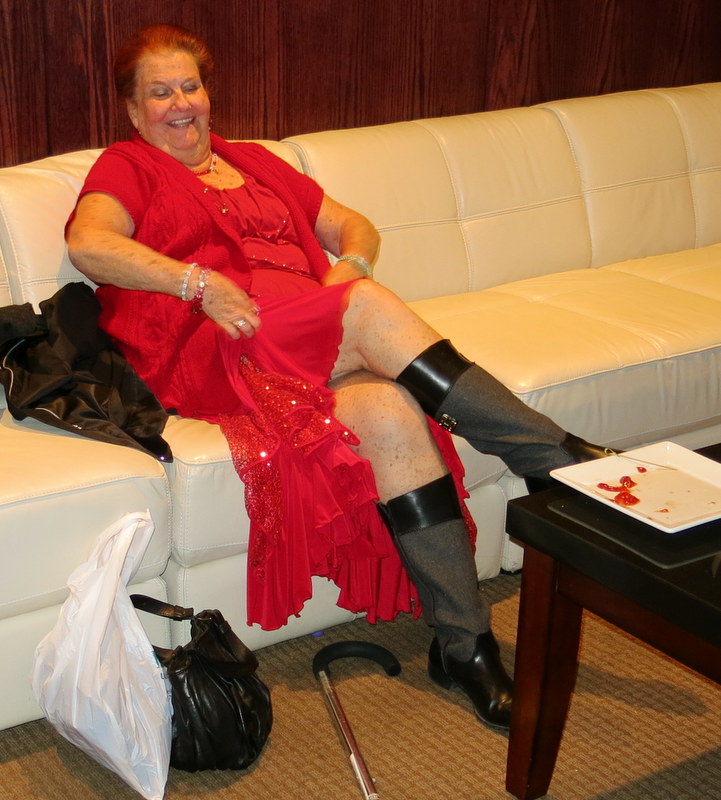
The simulators at Maggie McFly’s are great, because they’re in wood-paneled rooms that look like something you’d find in a fancy clubhouse. A waiter brought us beers and cheeseburgers, and there were four guys in the room next to ours who looked almost exactly like us, and if we had been able to figure out how to turn on the TV we would have been able to watch the football game. And about an hour into our round a woman with a cane walked in and sat down on our couch: our first gallery ever!
Her name is Linda, and she’s seventy-two years old. She said there was going to be karaoke at Maggie McFly’s that night, a favorite of hers, but that she would probably go home for a nap at some point, rather than hanging around for eight hours. Her husband, who died fifteen years ago, was an engineer. He worked on the Manhattan Project (though not on the bomb part) and on the Suez Canal, and he was a champion skeet shooter.
She said she had played a little golf when she was younger but hadn’t swung a club since sometime in the nineteen-seventies. She was very interested in how the simulator worked, and when we tried to explain it we sounded the way I did when my son, at the age of three or four, asked me what makes the car go. At one point, the manager came in to tell her to beat it, but we had already bought her a drink so we told him to beat it. I happened to mention that the following day was going to be my birthday, and when we weren’t paying attention she ordered dessert for all four of us. I got to pick the one I wanted, and then a waitress put a candle in it and lit it.
Linda wanted to try the simulator, so as soon as Hacker and I had wiped out Rick and Gary we gave her Hacker’s three-wood and let her rip a few. She went right under the first one, but after that she nailed it, repeatedly:
The only problem with simulator golf is that it’s the opposite of exercise, because between shots you don’t walk anywhere, or even climb in and out of a cart; you just plop down on the couch and steal a few more of Gary’s french fries.
My brother, John, used to play in a winter simulator league at a health club in Brooklyn. He said that it was embarrassing to stand around drinking beer and eating Doritos while beautiful women in butt-floss leotards trotted back and forth between the racquetball courts and the Nautilus machines. He suggested that the club install a treadmill next to the golf simulators, so that you could pick up your bag and pretend to walk to your ball while you waited for your turn to hit. That way, at least, you’d break a sweat.
This may be a direct reference to an early customer–a cop!–who took a whiz in a potted plant and was banished for life.
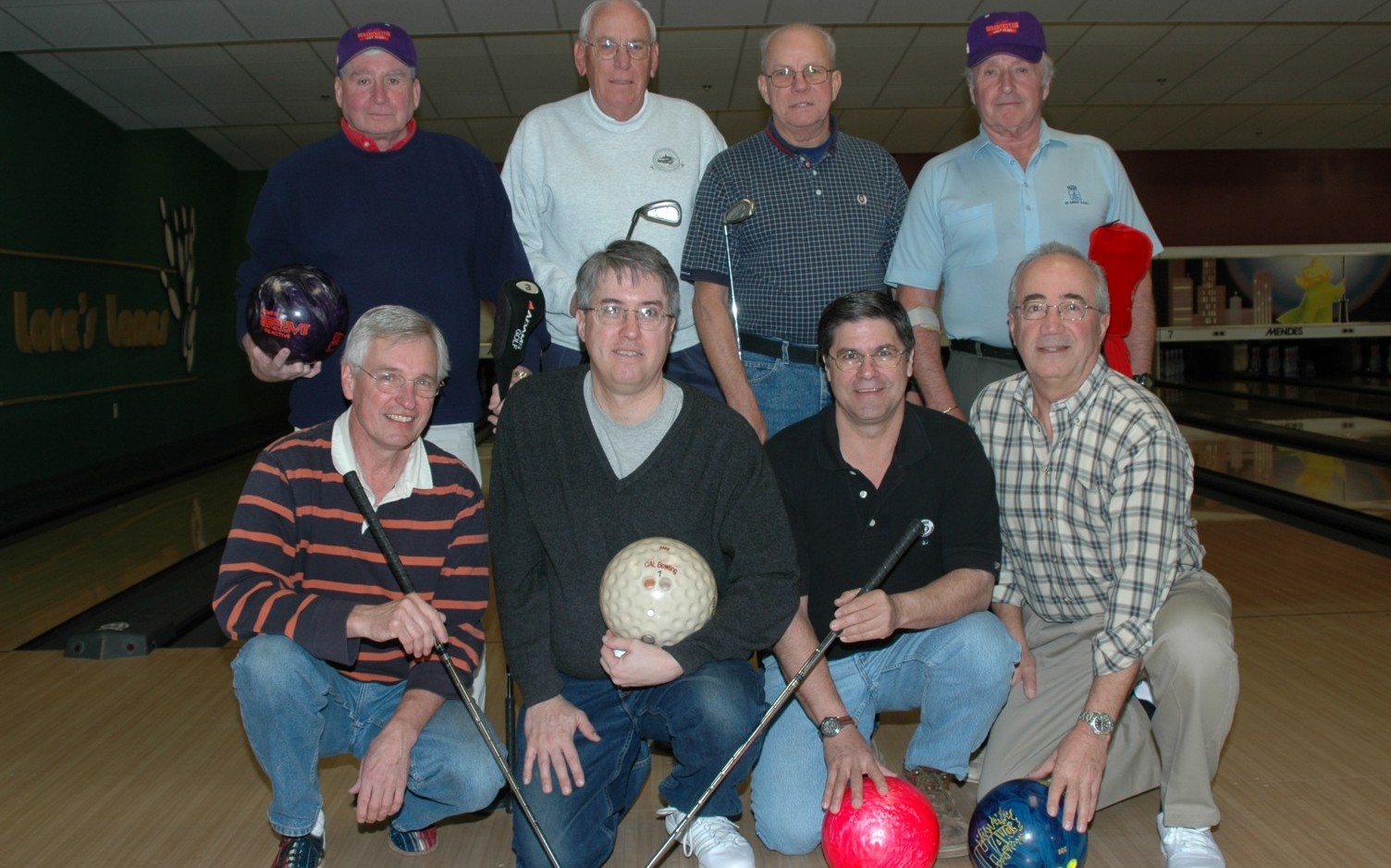
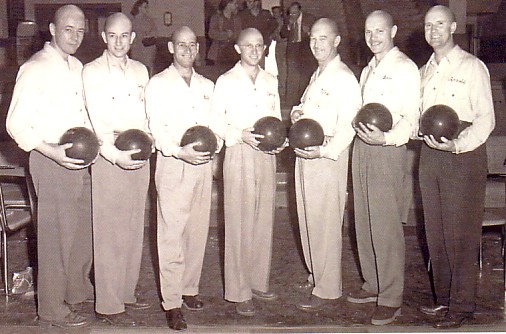
Eight years ago, my regular golf buddies and I decided that, instead of moping around all winter, as usual, we would go bowling. Eight guys showed up the first Sunday. Ferris, it turned out, had bowled in high school, and Billy had been a member of a hippie team in college. Nick and Gene already owned their own balls and shoes. Ray brought his old ball but couldn’t use it because his fingers no longer fit into the holes.
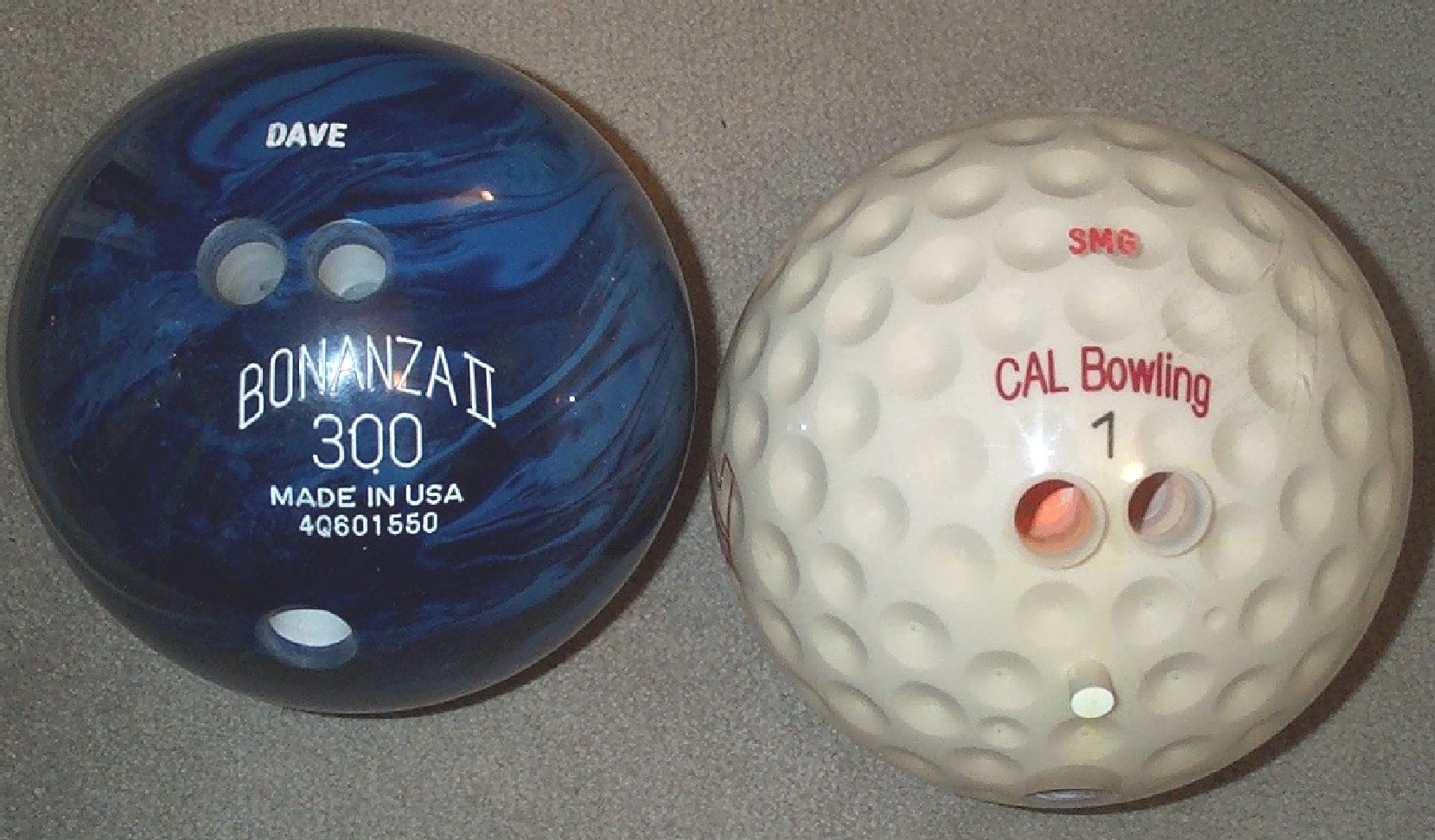
As soon as I got home, I went online and ordered bowling shoes, a bowling instruction book, and a bowling ball that looks like a giant golf ball. Two weeks later, I bought a second ball (with more spin) and a two-ball bag, to which I attached my golf-club bag tag. I had my name engraved on one of the balls, and “SMG” (for Sunday Morning Group) engraved on the other.
Taking up bowling was like discovering a previously unsuspected continent of things that you can buy. (Did you know that good bowling shoes have different right and left soles—one to grip and one to slide?) We transferred over all our regular junk, including skins, negative skins, nassaus, presses, and the money hole. We bowled in golf clothes and golf hats. We referred to frames as holes and to games as rounds. We used golf towels to wipe lane oil from our balls. I even managed to preserve most of my swing flaws: I came over the top in bowling, too.
I created an Excel spreadsheet that automatically updated everybody’s average and handicap whenever I entered new scores. In one of our earliest outings, after shooting a depressingly characteristic 82, I had six consecutive strikes, a spare, another strike, and two nines, for 226. Hacker (real name) said, “Aren’t you kind of sad that you’ve already shot the best round you’ll ever shoot?”
A bowling alley is one of the few sporting venues where a golfer can feel almost like an athlete. There were so many smokers at one of the ones we went to that even the parking lot smelled like cigarettes. Most of the regulars, who gave us dirty looks when we collapsed in hysterics over somebody’s double gutter ball, had very low centers of gravity—they were shaped like bowling pins—and their bowling bags had wheels on them. The specialty at the snack counter was panzarotti, which is made by combining all the things your doctor tells you never to eat and deep-frying them.
Bowling is fun, but it’s just golf methadone. We bowled for two winters, but then winters around here started seeming more like late fall or early spring. We found several open golf courses within an hour or two of where we live, and they made us forget all about our fancy bowling shoes. This winter, though, we’ve had a couple of big snowstorms, including a huge one this past weekend. We’re probably not going to see grass around here again for a while, even if it doesn’t snow this coming weekend, the way it’s supposed to. So who knows?
Quite a while ago, Tom Reynolds, a reader in Atlanta, asked me to suggest a packing list for a golf trip to Ireland. I said I would, then forgot all about it, and recently he asked again. So here it is.
This packing list is the result of two and a half decades of thoughtful experimentation. In making it, I’ve assumed that no spouse or health-department official will be in your group, and that you will buy at least one souvenir golf shirt, one souvenir golf sweater, and one souvenir golf hat while you’re abroad. I’ve also assumed that you are not planning to do anything rash, like meeting a client or going to a play. My strong preference with rain pants (which are also useful as wind pants) is to wear them as pants, if possible, rather than over pants. If the weather is nippy, I wear them over long johns.
The reason for minimalist packing is not to avoid airline luggage charges; the reason is to reduce the tonnage of the gear you have to lug from place to place, and to make the most efficient use of the storage space in whatever vehicle you’re traveling in. Packing light also leaves space for all the overpriced golf stuff that you are almost certainly going to buy and lug home.
Because linksland weather is highly unpredictable but within a relatively narrow range—I’ve played in shirtsleeves in Northern Ireland in November and been hailed on in Scotland in June—my list doesn’t change a whole lot from month to month. Think in terms of layers, and be prepared to allow time for wet items to dry out—especially shoes. Mike B. took his plug-in ski-boot driers on our most recent trip to Ireland. He never needed them, because our shoes never really got wet, but taking them wasn’t a terrible idea. On a golf trip to eastern Ireland twenty years ago, I took two rainsuits and needed them both.
It’s possible to pack more than this, of course. It’s also possible to pack less. My friend Tony gets by with just his rain pants and one pair of chef pants, and some people believe that he never changes his shirt. A few years ago, Golf Digest sent me to play all fourteen courses where the British Open has ever been held, and I realized toward the end of the trip, which lasted two weeks, that although I’d brought two pairs of pants I could have gotten by with one. The great thing about microfiber is that you can launder it with a hotel wash cloth, even if you’ve gotten chocolate on it. I recommend black.
Tony in chef pants, North Berwick, Scotland, May, 2008.
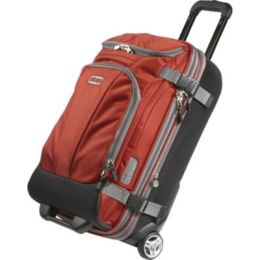
On my first golf trip to the British Isles, twenty years ago, I took a full-size suitcase. Now I take just a carry-on bag: a Mother Lode TLS Mini 21-inch rolling duffel, by eBags, which is currently selling for $190, shipping included (see photo at the top of this post). This is my favorite suitcase ever, even for non-golf trips. No matter what kind of suitcase you use, I recommend buying a selection of eBags Packing Cubes, which are soft, box-shaped modules that simplify intra-suitcase organization and make it easy to use your golf bag’s travel case for overflow packing.
Here’s what I take:
In the carry-on bag:
1 pair dark polyester microfiber pants (and a second pair worn on the plane—and I recommend black for both, because they never look dirty and you can remove stains, even chocolate, with a hotel wash cloth)
1 golf shirt (and a second one worn on the plane—and in cooler months I would make one or both of these shirts long-sleeved)
1 sweater (worn or packed, depending on the weather
1 pair of Under Armour-type long johns
1 long-sleeve Under Armour-type undershirt or turtleneck
1 tee shirt (to sleep in and serve in a pinch as an extra layer)
1 pair of “house pants”—fleece pants or nylon hiking pants or something similar (for lounging around, and for emergency duty under rain pants if the weather turns really foul, and for wearing on the trip home)
1 pair of shorts, maybe (something I’d never thought about before 2016, when sunburn was a bigger threat than rain in western Ireland)
Lots of cotton handkerchiefs (my new favorite golf accessory, useful for nose-wiping during wet, cold, windy, or allergen-dense rounds)
As many pairs of underpants and (wool) socks as I can cram into the remaining space
In the golf bag or golf-bag travel case (along with my golf clubs):
2 pairs of waterproof golf shoes
1 rain suit (the jacket of which, in combination with an undershirt, shirt, sweater, vest, etc., should be plenty of cold-weather protection, even for winter)
2 regular golf gloves and 2 pairs of rain gloves
1 Seattle Sombrero (or other truly good rain hat)
1 regular golf hat
1 knit cap
1 super-lightweight down vest, in its little stuff sack (weighs nothing, and is easy to cram into a golf bag; mine is by Uniqlo and is a recent addition to my packing)
As many golf balls as you think you’re going to need, because they’re cheaper here (a reasonable number is two balls a round; a couple of guys lost more, but some lost almost none)
A full box of Band-Aid or Compeed “blister cushions.” You won’t need them if you’re careful about the golf shoes you take, but if you have them in your bag you’ll be a hero to someone on your trip
Toiletry-type crap (if you put your toiletry kit in your checked bag you won’t need to worry about decanting your gels and liquids into tiny bottles and setting them aside in a Ziploc bag)
Other stuff:
1 or 2 twenty-four-inch bungee cords, for strapping your golf bag onto a pushcart (known abroad as a trolley), to keep the bag from falling off when you drag it into the dunes
1 water bottle (because on-course water isn’t common outside the United States; you can fill your bottle each day in your hotel room or in a golf-club locker room)
1 UK-and-Ireland-type plug adapter. Household current is 230 volts, but all your electronics will run on that with just the plug adapter—no need for a voltage converter. If all you’re going to need to charge is your phone, you can probably find a 110-volt shaver outlet (for an American-type plug) in the bathroom of your hotel room
1 mini-power strip (if, like me, you have a lot of stuff to plug in—mine’s made by Belkin—because no hotel room on earth has enough outlets, especially in other countries)
1 sleep mask (for creating darkness where there is none)
Earplugs (doubly useful if the locals are holding a Dallas-themed “Oil Barons’ Ball” in the main dining room—as happened to me in England a few years ago)
Travel clothes:
If you are going straight from the plane to a golf course—and that’s what you should be planning to do, in my opinion—you should wear golf clothes on the plane. For the trip home, it’s nice to have clean stuff. In my case, I flew home in a bought shirt, a bought sweater, and a pair of lightweight nylon pants that I hadn’t worn during golf.
If your golf shoes have nubs on the soles instead of spikes, you probably don’t need any other shoes—although you may be required to strip down to your socks in some parts of some golf clubs. On a recent trip to Ireland, I took a pair of “après-golf” shoes—which were actually just non-waterproof golf shoes—but wore them only a couple of times, because my two pairs of “working” golf shoes were just as comfortable and never really got wet. Tim brought two pairs of golf shoes plus a pair of Merrell Jungle Mocs, which he wore on the plane, on the bus, and when we weren’t playing golf—an idea I intend to steal next time
If you prefer to receive your packing instructions in video form, you can do so here:
For many years, I’ve accessorized my rain paints with farmer-type suspenders, my first pair of which I ordered from the Vermont Country Store. (I now use a different kind, which you can order here.) Suspenders eliminate the main problem of rain paints, which is that they creep down every time you put wet hands into the pockets. I also own, and sometimes use, a pair of Velcro bicycle clips, which are handy if the legs of your rain pants are so long they drag on the ground, as many are.
Vermont Country Store suspenders with rain pants, Scotland, 2004.
On a golf trip to England in 2010, my friends and I had to take sports coats so that we could eat dinner in the clubhouse at Royal Lytham & St. Annes. Hacker (real name) took a crummy old one, intending to abandon it there—a plan I foiled by spotting it in a closet on the day we left and returning it to him at the airport. But the concept is brilliant: clothes you can wear to extinction, then leave behind.
My bedroom in the Dormy House at Royal Lytham & St. Annes, May, 2010. My sports coat is in that pile somewhere.
On our trip to Scotland and Ireland in 2014, Peter A. brought many pairs of super-cheap socks, and threw away each pair after a single use. This seemed smart in the abstract, but he ended up being the only person on the trip who got blisters. For this most recent trip, he brought more expensive throwaway socks (roughly a dollar a pair versus roughly fifteen cents) and didn’t have a problem. My personal preference is to pack the best wool socks I feel I can afford, and lots of them.
I’ve always thought it was crazy to take shorts on a golf trip to the U.K. or Ireland, because indigenous golfers hardly ever wear them and some golf clubs have semi-ridiculous rules about them—like Hillside, in England, which allows shorts only if they’re worn with knee-height socks. (Dress codes abroad are kind of unpredictable. In 2016, the starter at Lahinch asked Matt to roll down the cuffs of his pants, which he had turned up maybe an inch, but let a local kid tee off in surfer shorts and an untucked tee shirt.)
It’s possible to pack more than this, of course. It’s also possible to pack less. On a non-golf trip to Europe a few years ago, my wife surprised me by packing lighter than I did. You don’t need to plan a lot of different “looks.”
My one reservation about my beloved True Linkswear golf shoes is that, even though almost all the models are waterproof, the shoes’ low profile makes them vulnerable in wet grass. The company’s new Chukkas, shown above, have eliminated that issue, by lifting their gunwales to ankle-bone height. If you’re the sort of middle-aged male golfer who dreams of seducing the beverage-cart girl, don’t wear them with shorts. But, if you own long pants and don’t stay home when the weather turns lousy, they’re great, as I proved to myself in Brooklyn last weekend. And they bring my personal True collection to six pairs.
The glove storage section of my mobile locker room.
I own many golf gloves. I keep most of them in the trunk of my car, which I think of as my mobile locker room, and I use their Velcro closures to stick them to the trunk’s carpet-like liner—a trick I learned from my golf buddy Billy. The rain gloves and winter gloves, which are black, look a little like the sleeping bats that used to hang upside down from the roof of my garage.
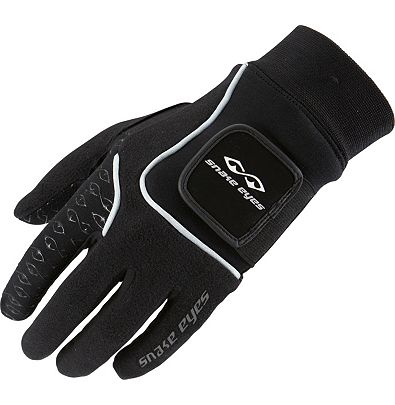
For winter golf, I always used to just wear rain gloves, and on really cold days I would wear two pairs, one on top of the other. But this year I bought several pairs of actual winter gloves, made by FootJoy and Snake Eyes. The FootJoy gloves, which are called WinterSof and cost $20 a pair at Golfsmith, look like this:
The Snake Eyes gloves, which are called Cool Weather Gloves and cost $13 a pair at Golfsmith, look like this:
Two of the four Golfsmith customer reviews of the Snake Eyes gloves mention crummy stitching, which is a problem I haven’t noticed with mine. I have found that my FootJoy gloves are slightly warmer. (In a recent scientific trial, I wore both kinds, one right and one left, and switched at the turn.) I like the grippy silicone webbing on the palms and fingers of the Snake Eyes gloves, even though the silicone feels creepy when I hold something made of metal, like a club shaft. I’ve worn both kinds, without incident, while walking the dog with my wife.
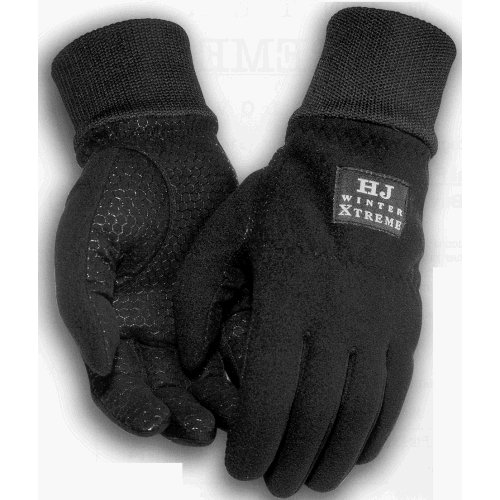
At the PGA Golf Merchandise Show a year ago, I tried some winter gloves I liked a lot, although I’ve never actually played in them. They’re call HJ Winter Xtreme, and they’re made by a 40-year-old Korean company called HJ Glove. They’re hard to find online—Golfsmith and Edwin Watts don’t carry them, and Amazon, at the moment, is out of stock in all sizes—but based on my brief indoor test a year ago I’d say that, at least theoretically, they combine some of the most appealing features of the FootJoy and Snake Eyes gloves: tall cuffs, grippy silicone stuff, extra warmth.
My friend Tim recently pointed out that rain gloves and winter gloves tend to wear out first in the thumbs. This is especially true if your swing isn’t everything it could be—holes in golf-glove thumb pads are usually a consequence of mid-swing re-gripping or some other bad habit—but rain gloves and winter gloves are made of stuff that isn’t as tough as leather, and they wear out faster no matter who’s wearing them. Because of what Tim said, I got the idea of buying some little iron-on patches and using them to reinforce my winter gloves, by turning the gloves inside out and ironing one carefully trimmed patch onto the inside of each thumb. I kept the patches in a pile of stuff on my desk, and they were constantly getting in my way. Then I forgot about them. Last week, I suddenly remembered them but couldn’t find them anywhere. Oh, well. I probably wouldn’t have gotten around to ironing them on anyway.
Speaking of gloves: when I was in Oslo in August (researching a non-golf article for the January 21, 2013 issue of The New Yorker), I took a tour of the Norwegian National Opera and Ballet, at the edge of the Oslo Fjord. Among many other things, I saw a bird costume intended for an upcoming performance of the opera “Flaggermusen.” It had been stitched together from dozens of yellow dish-washing gloves, whose dangling rubber fingers resembled feathers. Maybe my wife would be interested in making something similar from my old golf gloves:
In 1889, a twenty-one-year-old Englishman named Frederick Rea was offered a job running a small school on South Uist, an island in the Outer Hebrides, more than fifty miles off the west coast of Scotland. He didn’t recall having applied for the position, and when he accepted it his relatives thought he’d lost his mind. South Uist was windswept, treeless, and only intermittently accessible, and it was seldom visited by anyone from the mainland except a few wealthy sportsmen, who came to hunt and fish.
South Uist, May, 2007.
Rea’s students were the children of crofters, or small tenant farmers, the island’s principal residents. The crofters subsisted mainly by growing potatoes and grain, raising starved-looking cattle and sheep, and gathering seaweed, which they used as fertilizer or sold. Most spoke only Gaelic. The children went barefoot year-round and often walked miles to school, even in snow, and on winter mornings each was expected to bring a chunk of peat for the schoolhouse hearth. The Scottish historian John Lorne Campbell wrote that South Uist in those days was so primitive that “the appearance of a pedal bicycle was sufficient to send the island’s horses and cattle careering in panic.” Yet Rea was captivated. He didn’t return to the mainland permanently until 1913, by which time his students had included two of his own children.
Rea’s schoolhouse stood near (and resembled) this old house. Garrynamonie, South Uist, December, 2008.
When Rea arrived, South Uist and several neighboring islands were owned by Lady Emily Eliza Steele Gordon Cathcart, a wealthy Scotswoman, who had inherited them from her first husband, who had inherited them from his father. She is said to have visited South Uist only once, but she made business investments, including the construction of hotels and commercial fishing piers. In 1891, probably hoping to make South Uist more attractive to wealthy tourists, she commissioned a golf course near a tiny farming settlement known as Askernish.
The evening view from one of the guestrooms at the Lochboisdale Hotel, which was commissioned by Lady Cathcart and opened in 1882. Lochboisdale, South Uist, December, 2008.
Rea, the schoolmaster, played the golf course with a friend when it was new, and he described the experience in his memoir, A School in South Uist, which was published in 1927 and is still highly readable. Lady Cathcart’s factor, or estate agent, Rea wrote, “told me that a professional golfer from St. Andrews had been to the island and had specially laid out an eighteen-hole course along the machair near his house, expressing the opinion that this part was a natural golf-link course.” Machair is the Gaelic word for “linksland”; it’s the root of Machrihanish, and it’s pronounced mocker, more or less, but with the two central consonants represented by what sounds like a clearing of the throat.
The machair of Askernish, May, 2007.
The factor invited Rea and a friend to play the new golf course one Saturday, and they met at his house. “Here we found quite a small party assembled,” Rea wrote; “beside his wife and children were a young lady cousin from Inverness, two or three clergymen and two junior clerks. Introductions over, we selected balls and clubs.” Rea didn’t say so, but the St. Andrews professional who had created the course was the most famous golfer of his day, Tom Morris, Sr., better known as Old Tom Morris.
The house of Lady Cathcart’s factor, mentioned by Frederick Rea in “A School in South Uist.” Old Tom Morris’s golf course began not far from its door. Rea’s friend dismissed golf, initially, as “a silly, stupid game,” but both men quickly became hooked. Askernish, May, 2007.
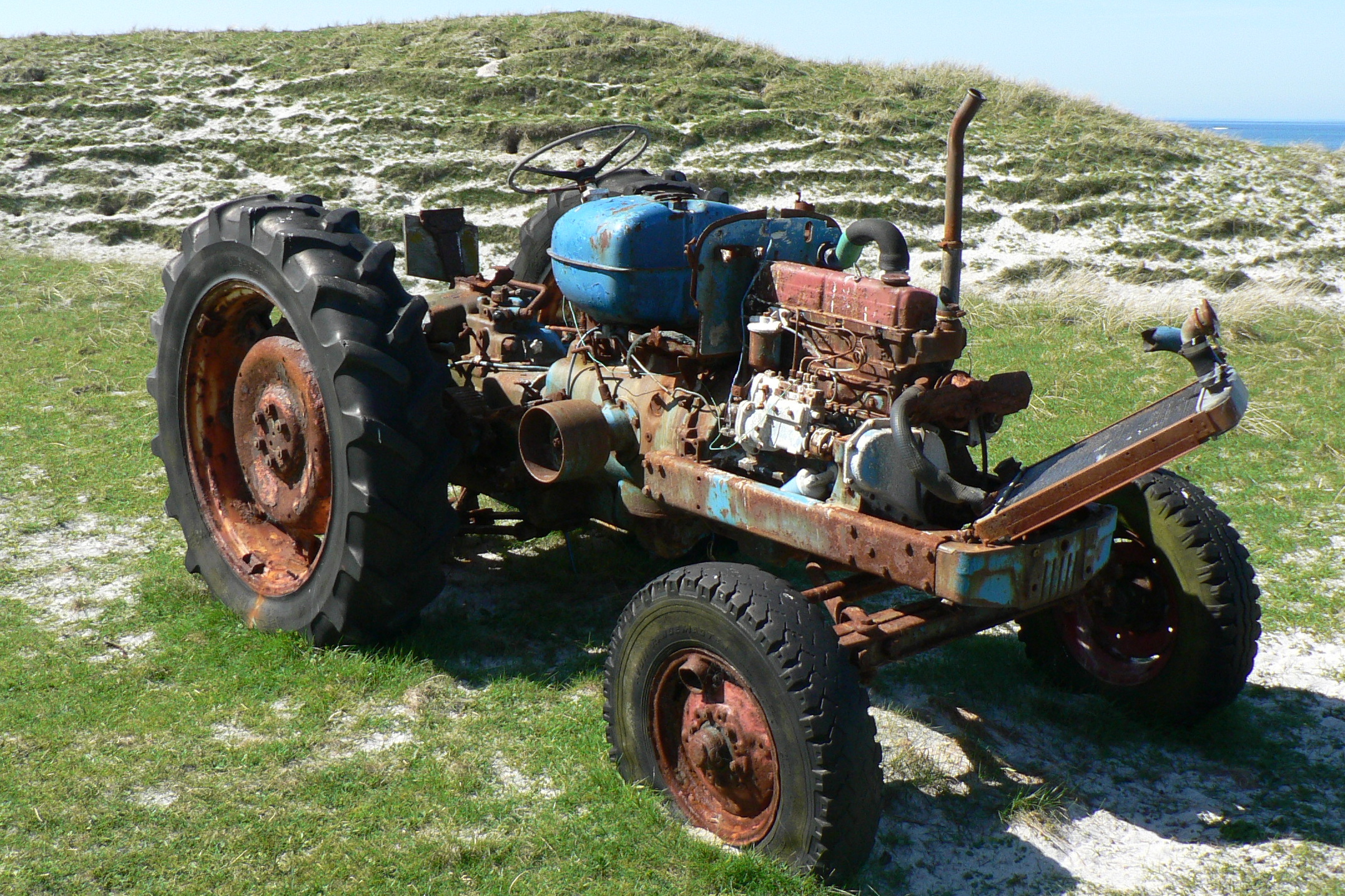
Lady Cathcart died in 1932. Her will included a provision for the perpetuation of the golf course. In 1936, a small airstrip was built near its northern end to accommodate wealthy tourists. (The passenger service was commercial but unscheduled; when a pickup was desired, the proprietor of a local hotel would send a homing pigeon to North Uist—the island still lacked telephones and, for that matter, electricity—and Scottish and Northern Airways would dispatch a plane.) Then the war came. The number of golfers dwindled. The course was reduced to twelve holes, then to nine, and the connection to Old Tom Morris devolved to legend. By 2000, what was left of the course was maintained by a small group of local diehards, who mowed the putting greens with a rusting gang mower, which they pulled behind a tractor.
Askernish , May, 2007.
I first visited South Uist on assignment for Golf Digest during the spring of 2007, and I visited it again in December of the following year, on assignment for The New Yorker. My New Yorker article about Askernish, called “The Ghost Course,” was published in 2009. Below are some more photographs I took during those two trips.
South Uist doesn’t have an airport. On my first trip, I flew from Inverness to Benbecula, one island to the north. It’s connected to South Uist by a causeway, as is the island of Eriskay, at the southern end. The only other passengers on my flight were two bank couriers, who were accompanying a load of cash, for ATMs. All the other seats were filled with “Bennetts Seat Converters” containing the day’s newspapers:
On my second visit, I took the car ferry from Oban. That trip took almost seven hours. We passed islands called Mull, Coll, Muck, Eig, Rum, Sanday, Sundray, Vatersay, Hellisay, Gighay, and Stack, among others. We also passed this lighthouse, on a tiny island called Eilean Musdile. It’s just off the shore of a larger island, called Lismore, which has a population of a hundred and forty-six. The lighthouse was built in 1833:
Most of the roads on South Uist are a single lane, and you share them with sheep. There are frequent bump-outs for yielding to oncoming traffic. Resident drivers become adept at gauging each other’s speed, and often slip past each other without seeming to slow down:
During my first visit to South Uist, I stayed at the Borrodale Hotel, about a mile and a half down the road from Askernish. The hotel’s laundry facility was just outside the door:
My guide to Askernish was Ralph Thompson, who was born on the mainland in 1955 and spent summers on South Uist, where his grandparents lived. One reason he liked those visits, he told me, was that he was allowed to go for weeks without bathing, because his grandparents’ house, like almost all the houses on the island at that time, had no running water.
His wife, Flora, was born on Barra, two islands to the south. Barra was even more isolated and primitive than South Uist, although today it has a small airport. Takeoffs and landings on Barra are scheduled to coincide with low tide, because the runway is a beach. Here’s one of the planes, which I photographed as it passed over Asknerish:
At the time of my first visit, Ralph Thompson was working with two links-course experts—Gordon Irvine, who is a turf consultant and a former greenkeeper, and Martin Ebert, who is a golf architect—in an effort to restore Old Tom Morris’s course at Askernish. In the photo below, Irvine is on the left and Ebert is on the right, and the flag in the background marks what they had decided was probably one of the original green locations:
I played all of the holes I could on that trip, and, with some of Ralph’s friends, helped test a few of the rediscovered ones:
We often had to play around cows and sheep, which grazed on the same stretch of linksland:
Even when there were no animals, the shot-making was challenging. This is a friend of Thompson’s:
When I returned to Askernish in 2008, the golf course had begun to look and play much more like a real golf course. The green in the photo below was puttable, and it had a single-strand barbed-wire fence surrounding it, to keep cattle and sheep from trampling it:
There isn’t much daylight in northern Scotland in December, but we had time for eighteen holes, and the weather was milder than the weather at home:
Since then, the golf course has come a very long way—as you’ll see if you visit the Askernish website. Someday, I’ll go back.
My most recent round at Askernish, December, 2008.


 The guy in the middle is Corey, our pro. We’ve decided to call him a plus-2. Everybody gets excited when Corey plays, because we feel like we’re getting extra shots, but the advantage is an illusion because Corey, unlike the rest of us, can reliably play to his handicap, even when we have the kind of cold, windy weather that made Tony buy a place in Atlanta, as we did on Sunday.