A Golfer’s Bucket List: No. 6

Home course, flooded fairways, September, 2011.

Home course, flooded fairways, September, 2011.

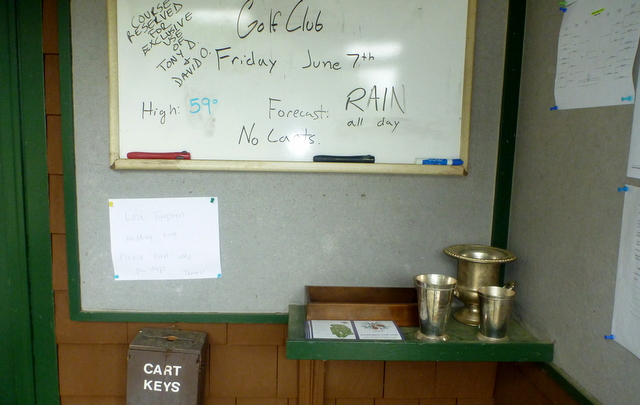
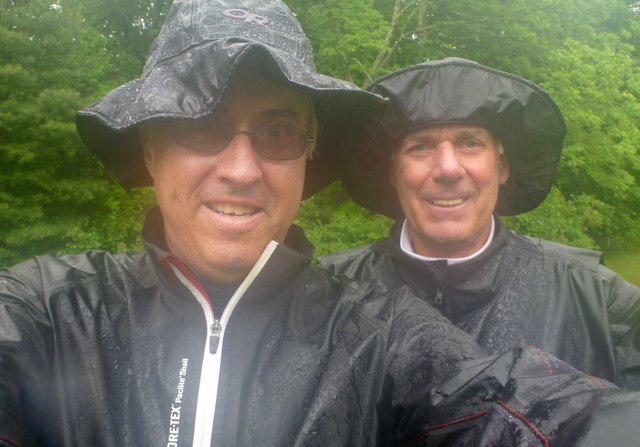
Play in weather so miserable (lightning excluded) that yours is the only group left on the course. Old golf joke: An obsessed golfer heads to the club in pouring rain for his regular Saturday-morning game. The storm turns out to be too intense even for him, so he returns home, takes off his wet clothes, and slides back into bed next to his wife. “The weather’s horrible,” he whispers, and she says, “And can you believe it? My idiot husband is out there playing golf.”

Gairloch, Scotland, May, 2007.

Gairloch, Scotland, May, 2007.

He should have stayed at the club. Golf was invented in a country where bad weather is almost the only kind, so to take the game’s full measure you have to play it occasionally when all the sensible people are indoors watching Sports Center. There’s something sublime about putting through casual water or over pea-size hail, especially if you have the course to yourself.

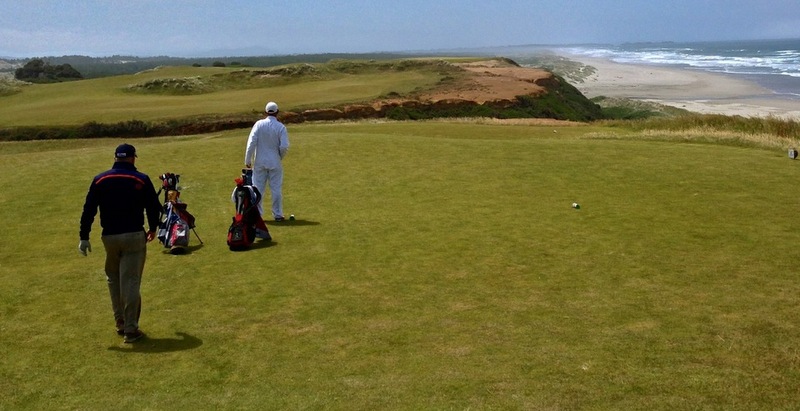
On the road to Tralee, Ireland, May, 2006.

On the road to Tralee, Ireland, May, 2006.

Field Test: Dealing With Sweaty Hands, Plus Playing Golf at Yale

Art-type shot of Shep, Josh, and Tony on the eighteenth tee at Yale, plus a padlocked water pump, July 23, 2013.

Art-type shot of Shep, Josh, and Tony on the eighteenth tee at Yale, plus a padlocked water pump, July 23, 2013.

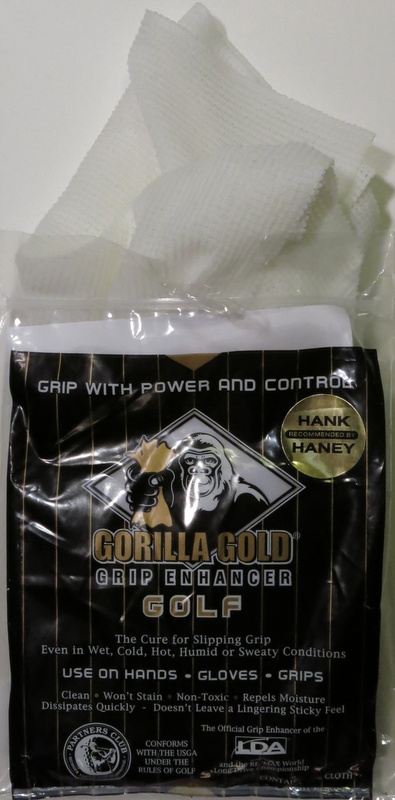
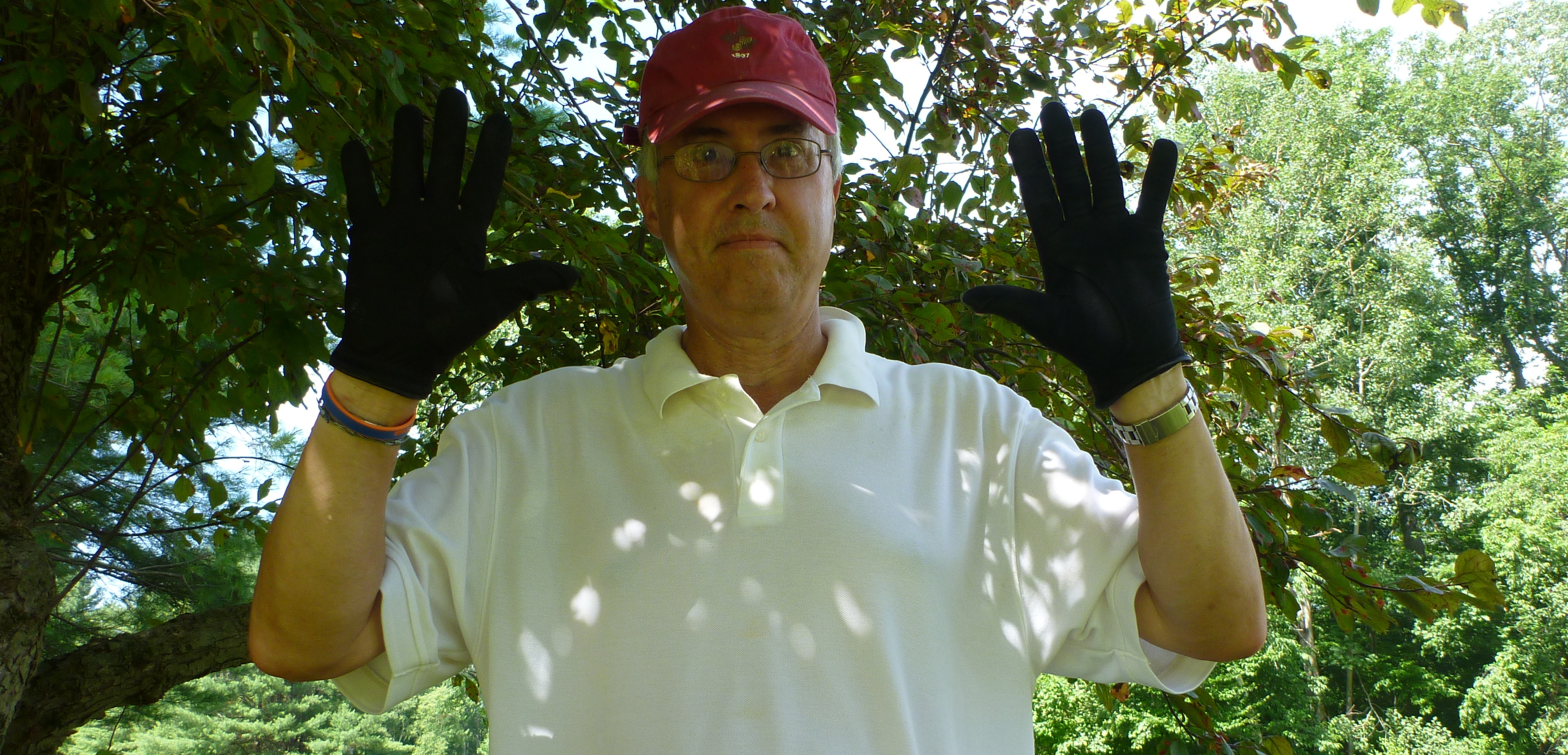
Not long ago, I wrote about using rain gloves as sweat gloves—a good thing, I said, because in hot, humid weather leather gloves become slimy and disgusting, while rain gloves continue to work even if they’re soaked with perspiration. A reader suggested trying Gorilla Gold Grip Enhancer, which is endorsed by Tiger Woods’s ex-coach Hank Haney. And, because I do what I’m told, I bought some.

On Tuesday, Tony, Shep, Josh, and I played Yale University’s terrific golf course, which was designed by C. B. MacDonald and Seth Raynor. (Incidentally, if you want to use the GHIN website to enter your score from Yale, you have to look under “T,” for “The Course at Yale.” How dumb is that?) The day was extremely humid, and after a couple of holes I decided to try Gorilla Gold. Here’s what it looks like:

IMG_2180

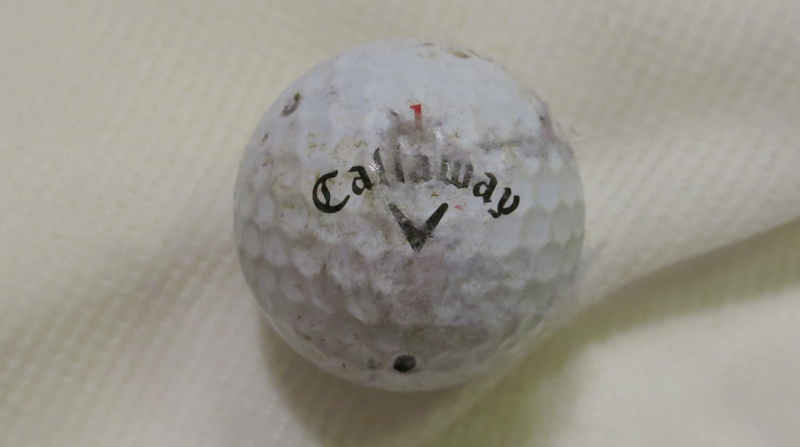
The package contains a sticky cloth, which you wipe on your hands, your glove, your grips, whatever. And it works as advertised, I would say, because it’s extremely sticky, and everything it touches becomes extremely sticky, too, even if it’s also wet. But after about five minutes I was cursing, because once you’ve got the sticky stuff on your hands you also get it on your ball, and that turns your ball into a magnet for dirt and pocket lint. And that, in addition to being a nuisance, almost certainly costs you distance, by altering the ball’s aerodynamics—like coating an airplane’s wings with ice.

Golf ball coated with Gorilla  Gold and pocket crud.

Golf ball coated with Gorilla Gold and pocket crud.

Long, repeated scrubbing in a ball washer did not remove all the sticky stuff: the next afternoon, the same ball was still picking up dirt from putting greens. And when I tried to use a towel to wipe the sticky stuff off the grip of my driver, the grip became covered with towel fuzz, which I’m still trying to remove. In fact, all the clubs I touched with sticky hands now feel like they need to be re-gripped, because the sticky stuff stops feeling sticky and starts feeling slick as soon as it’s coated with dirt or lint or towel fuzz. So I won’t be a repeat customer.

Tony and Shep at Yale.

Tony and Shep at Yale.

Shep, who doesn’t like rain gloves, has another anti-wet technique: he saves all his old leather golf gloves in a Ziploc bag, and on rainy or humid days he works his way through the bag, swapping wet gloves for dry. All the wet gloves go into another Ziploc bag, and by the time he needs them again they’ve magically refreshed themselves.

Sankaty Head Caddie Camp and Other Nantucket Wonders

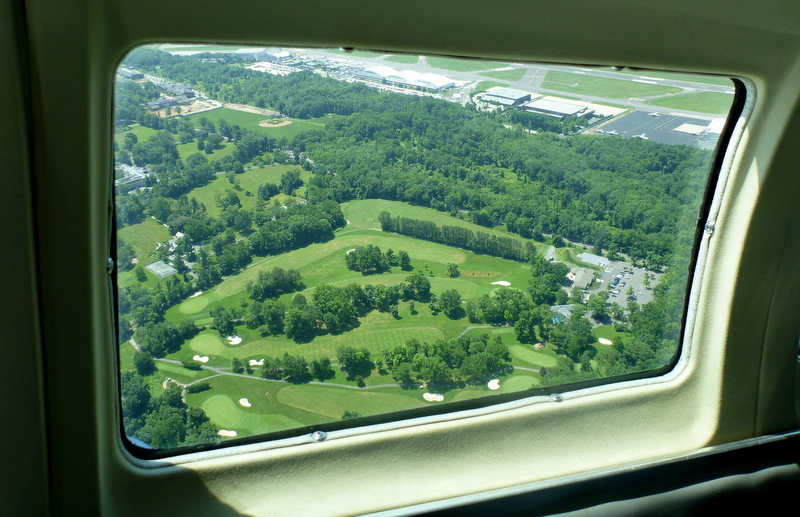
Bruce Memorial Golf Course and Westchester County Airport, July 8, 2013.

Bruce Memorial Golf Course and Westchester County Airport, July 8, 2013.

My wife and I flew to Nantucket earlier this week. In the air, we felt kind of rich, because we were the only passengers on the flight, but also kind of poor, because the plane was just a crappy Cape Air twin-engine Cessna eight-seater. I’d flown Cape Air before, on trips to and from Martha’s Vineyard, where my wife and I have spent summer vacations for many years. The weather during those flights was almost always terrible, and I spent most of each one gripping my seat and thinking, “We’re almost certainly going to die, but, if we don’t, this sure is faster than taking the ferry.” The weather this time was perfect, and from the plane I saw lots of golf courses, including the one in the photo above, a public course in Greenwich, Connecticut, right next to the airport. It was almost like visiting Google Earth!

This was our pilot. He never asked me to take the controls, but I studied them, just in case, when I wasn't scanning the ground for golf courses.

This was our pilot. He never asked me to take the controls, but I studied them, just in case, when I wasn’t scanning the ground for golf courses.

When we got to Nantucket, my wife took a nap, and Bob G.—an honorary member of the Sunday Morning Group, who had made our trip possible by arranging for me to give a talk in a local lecture series—took me on a tour of the island. Because our wives weren’t with us, our tour consisted solely of golf courses.

20130708_155350

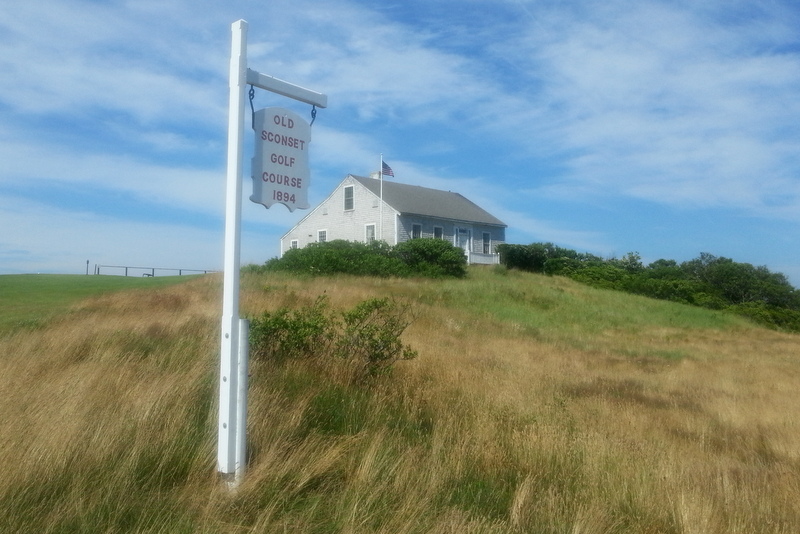
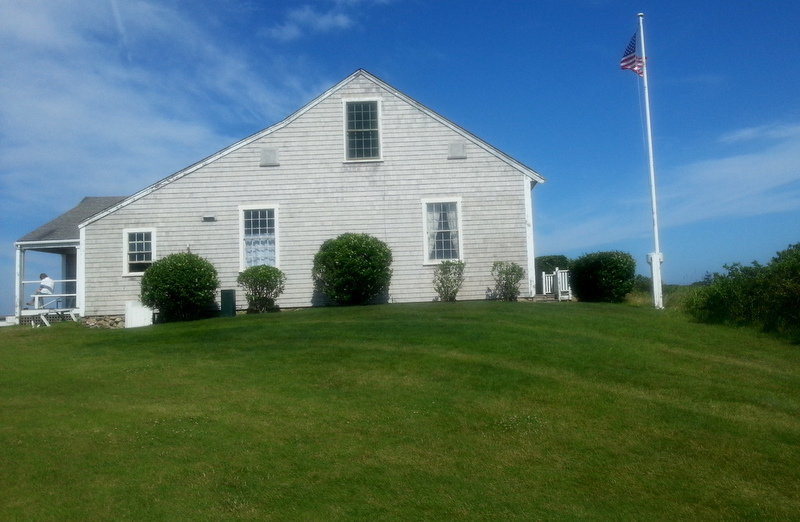
Old Sconset—the first stop on our tour—is known locally as Skinner’s, because Skinner was the middle name of one of the people who owned it for a while. (It’s now owned by the Nantucket Islands Land Bank.) You can read about the history of the course here.

Inside the clubhouse, Old Sconset Golf Course.

Inside the clubhouse, Old Sconset Golf Course.

When Skinner’s is crowded, players reserve their place on the first tee by placing a ball in a sloping chute on top of the fence:

20130708_155507

The next day, Bob and I actually played golf, at Sankaty Head Golf Club, a course that’s been on my to-play list for a long time.

Sankaty Head lighthouse, which recently had to be moved farther from the cruel, cruel sea, and the somewhat less cruel fifth fairway.

Sankaty Head lighthouse, which recently had to be moved farther from the cruel, cruel sea, and the somewhat less cruel fifth fairway.

There’s lots of cool stuff in the Sankaty clubhouse, including the plaque in the photo below, which hangs on a wall in the men’s locker room. Note that each result is annotated with a description of the day’s weather:

P1070790

Maybe the very best thing about Sankaty is its caddie camp. Every summer, sixty boys spend two months living at the club and caddying for members. They have their own bunkhouses and dining hall, and there are organized games, trips into town, and other activities, in addition to lots of after-hours golf.

Tom, Bob G., Charlie, and Peter. The caddies get Garmin G.P.S. watches, hats with their name on them, and other stuff, and they make good money. Also, they are so polite that they make you almost reluctant to use bad words in their presence.

Tom, Bob G., Charlie, and Peter. The caddies get Garmin G.P.S. watches, hats with their name on them, and other stuff, and they make good money. Also, they are so polite that they make you almost reluctant to use bad words in their presence.

Here’s the camp, which is near the eleventh, twelfth, and thirteenth holes:

P1070784

And here are more caddies, on the driving range. I felt angry at myself for not knowing, when I was thirteen or fourteen, that spending a summer like this was possible:

P1070751

The next day, Bob and I played golf at Miacomet Golf Course, which, like Skinner’s, is public and is owned by the Land Bank. We played with Phil Truono, the director of golf.

Phil Truono, Miacomet Golf Course, Nantucket, July 10, 2013.

Phil Truono, Miacomet Golf Course, Nantucket, July 10, 2013.

Miacomet used to have just nine holes, but in 2003 the Land Bank added a second nine and renovated the whole thing. It’s a terrific golf course, and playing it is a relative bargain. People on Nantucket sometimes say that Sankaty Head is for millionaires and Nantucket Golf Club (where we didn’t play) is for billionaires. If that’s true, then I guess Miacomet is for thousandaires and Skinner’s is for hundredaires—so there’s something for everyone, as there always should be. (Non-golfers can look out for themselves.)

20130708_160201


Rain Gloves Are Also Sweat Gloves

Sweat-soaked rain gloves, July 7, 2013.

Sweat-soaked rain gloves, July 7, 2013.

It’s been so hot and humid around here that we’ve had to make some adjustments. I’ve started wearing rain gloves even when it isn’t raining, because regular gloves feel slick and slimy when they’re soaked with perspiration. We’ve also tried bracketing the worst parts of the day by playing at the five-thirties: a Two-Hour Eighteen™ at 5:30 a.m. followed by a Two-Hour Eighteen™ twelve hours later, at 5:30 p.m. The course is empty and relatively cool both times, and you have room for a full workday in between, assuming you don’t fall asleep at your desk. And after the second eighteen you get home in plenty of time to ask, “Hey, what’s for dinner?”

Tony, Ian, Other Gene, Tim-o, Rex, eighteenth green, dawn patrol

Tony, Ian, Other Gene, Tim-o, Rex, eighteenth green, dawn patrol, July 3, 2013.

Kevin, Addison, evening session.

Kevin, Addison, evening session.

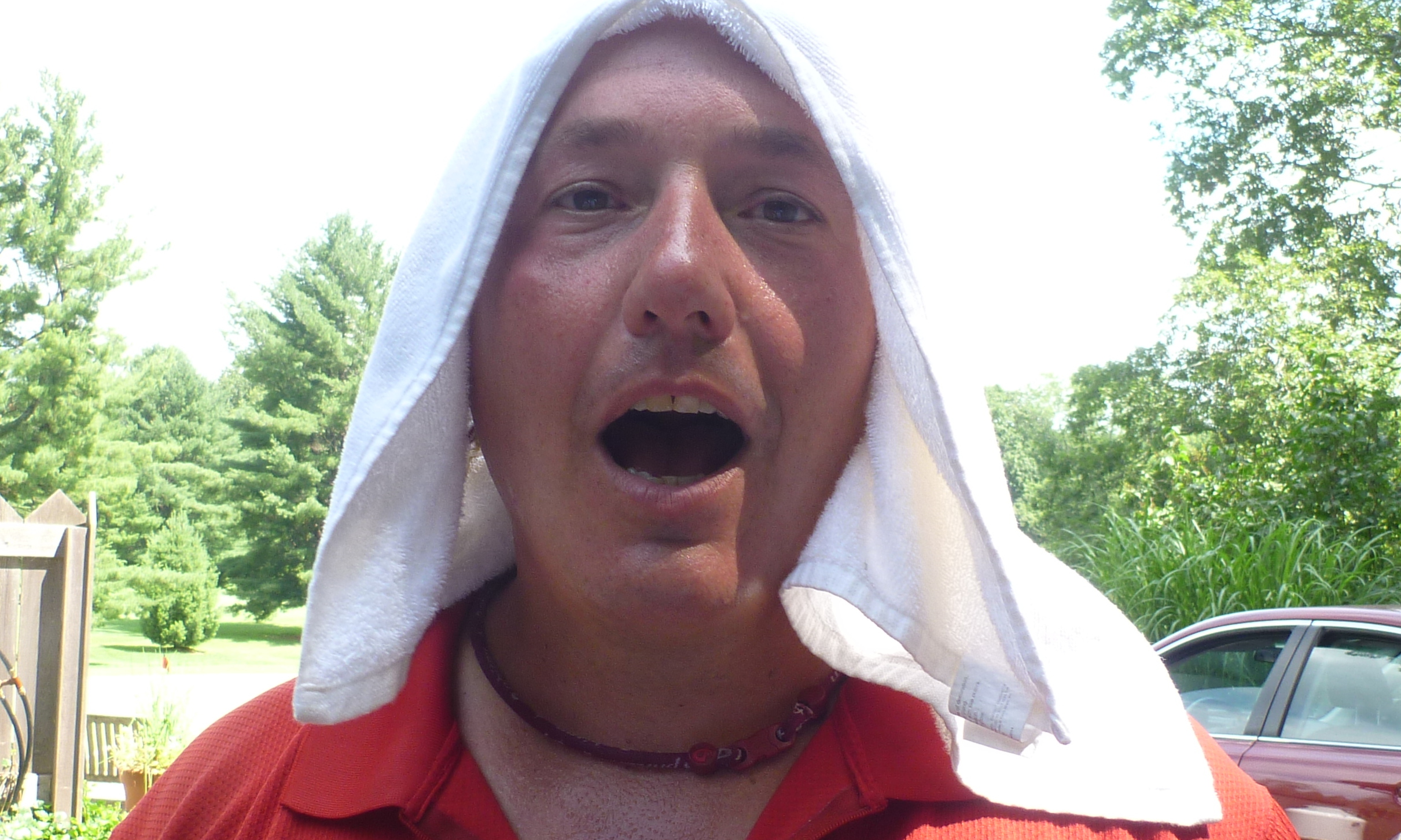
Sunday Morning Group met at the regular time—7:30—and the temperature was around 90 by the time we finished. Doug got so hot that he had to cover his head with a towel:

P1070679

Corey (our pro) wore shorts, and for the first time in living memory we ate lunch on the porch, to get out of the sun.

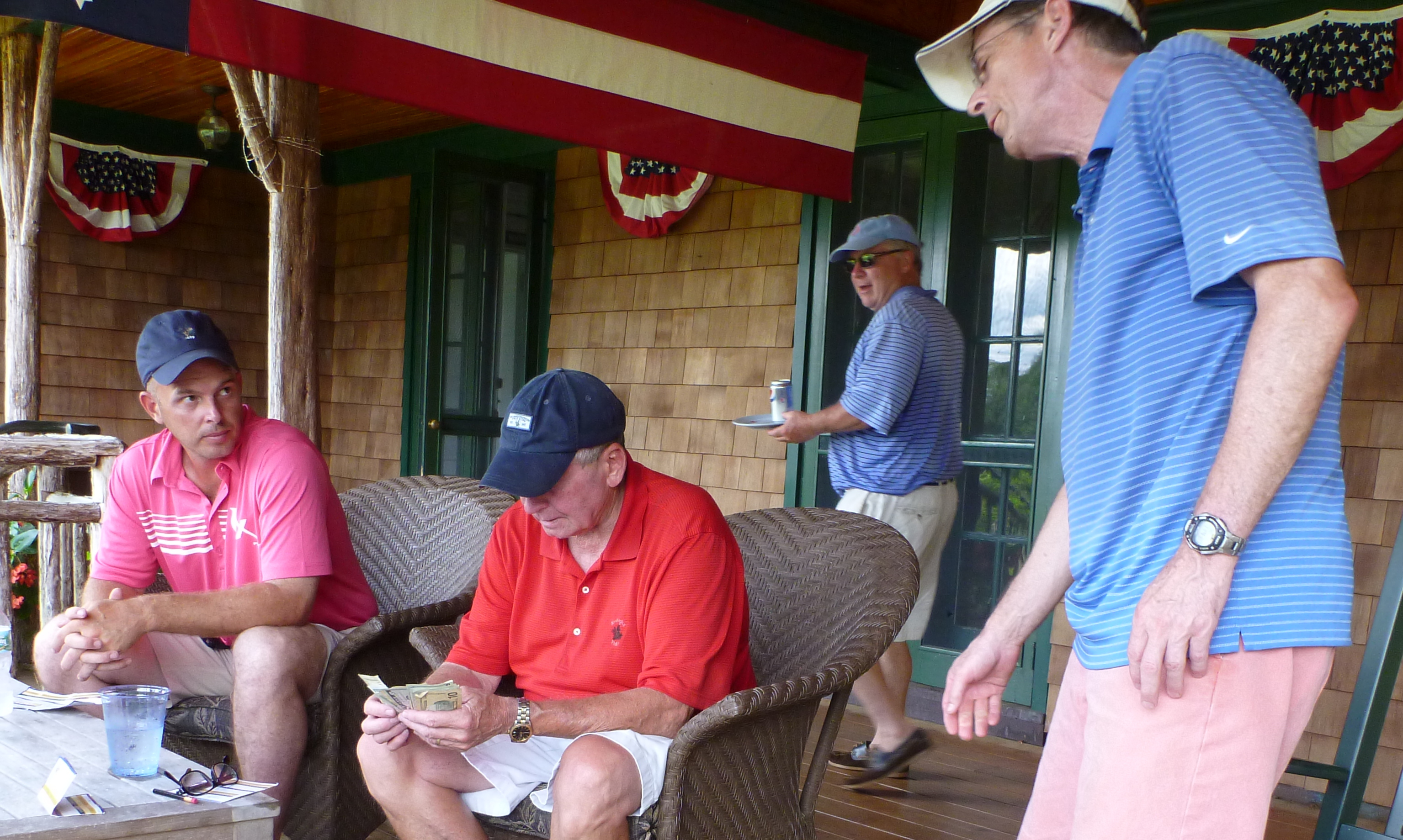
Settling up at lunch: Corey (our pro), Hacker (real name), Tom, Tim.

Settling up at lunch: Corey, Hacker (real name), Tom, Tim.

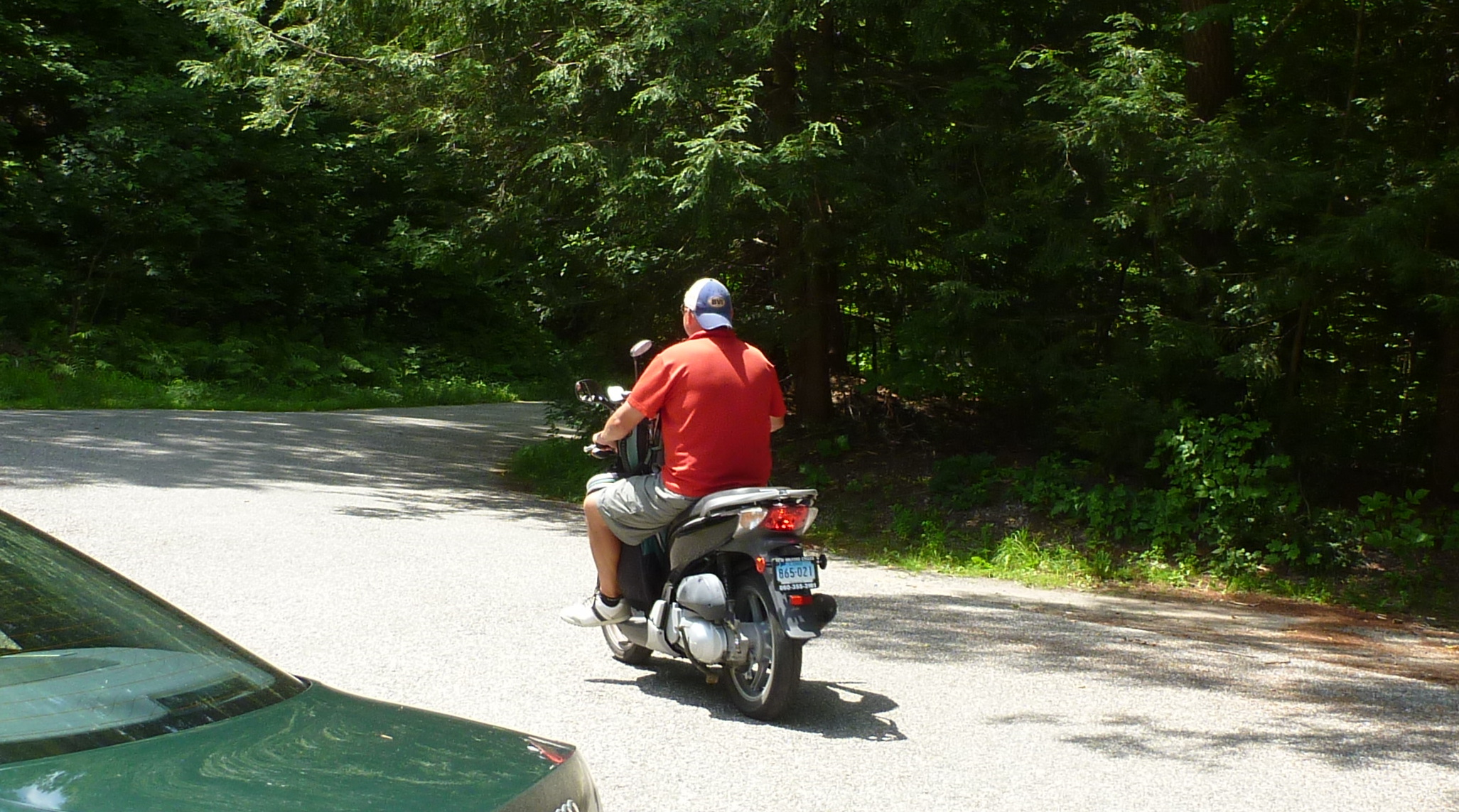
There were only three skins, and Tim got two of them. He was also on the winning team, so next week it will be his turn to bring lunch. Doug had a wife situation at home, so he left as soon as he had eaten. He doesn’t live very far from the course, so in decent weather he usually commutes by motor scooter:

P1070713 P1070715

That’s a dual-purpose helmet he’s wearing: turn it the other way and it’s a golf cap.

Summer Begins: Longest-Day Marathon and Other Golf News

IMG_1846

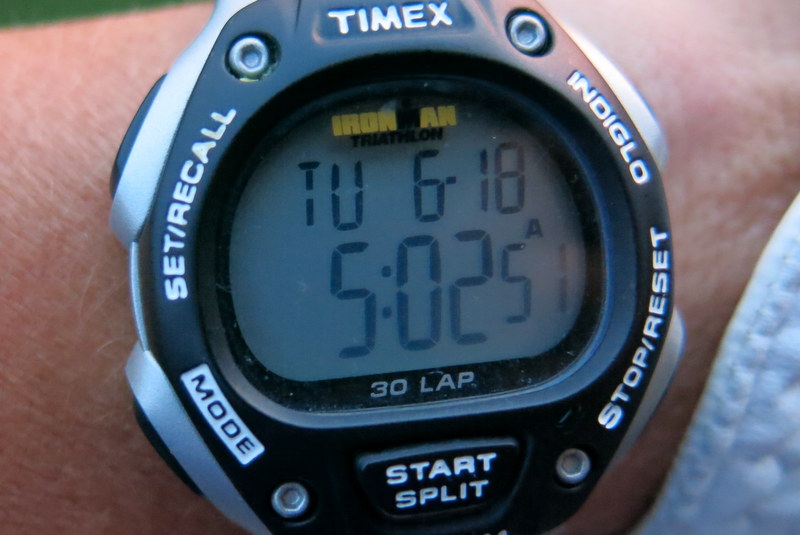
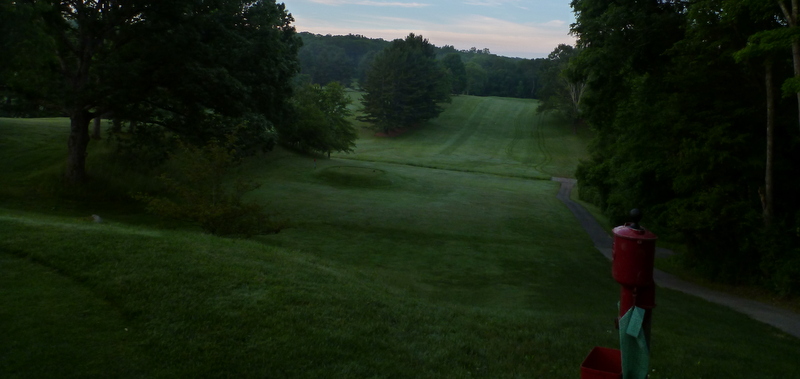
The longest day of 2013 fell on a Friday—not a good day of the week to try to commandeer a golf course. The day before, my club had a senior outing—also not good. And the day before that was Ladies’ Day—ditto. So my friends and I conducted our second annual Summer Solstice Marathon three days early, on Tuesday, June 18. The idea was to play “from can to can’t”—from when you can see until you can’t. I set my alarm for 3:30, and six of us teed off a little before 5:00, when the first hole looked like this:

IMG_1838

It was still pretty dark when we got to the fifth tee:

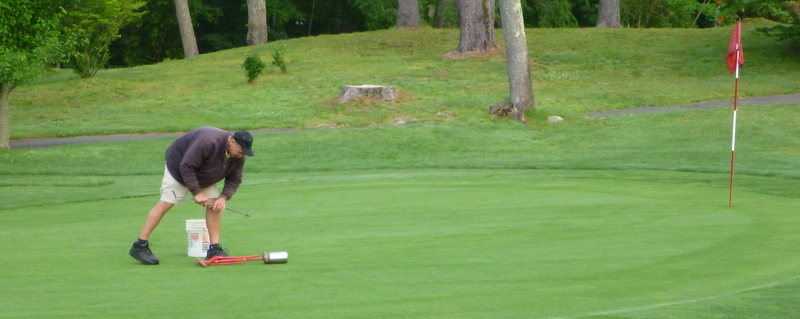
P1070446On the sixth green, we ran into Gary, who had just cut a new hole for us, in a diabolical location:

P1070450

After eighteen holes, we went to the little cafe on our town’s green for breakfast burritos, apple fritters, and coffee, just like we did last year. I forgot to take my camera, so the picture below is from last year. The participants were pretty much the same, though, except that Bob G. didn’t show up until after lunch, David W. had broken a rib, Addison was playing in the state amateur, and we didn’t run into Mike A.’s mother. I think Mike was wearing the same shirt, though—for continuity.

That's Mike A. on the right and Mike A's mother on the left. She just happened to be there.

That’s Mike A. on the right and Mike A’s mother on the left. She doesn’t follow him around. She just happened to be there.

When we got back to the course, I hit what felt like a pretty good fairway wood, but the ball tailed off, and instead of going into the hole it went into Steve’s mower cart. Steve said I could play it from the cart, but I elected to take relief.

P1070457

After forty-five holes, we stopped for lunch—hot dogs and freezer-burned hamburgers from the kitchen fridge—and then went back out.

Young Nick, Kevin, Bob G.

Young Nick, Kevin, Bob G., post-lunch.

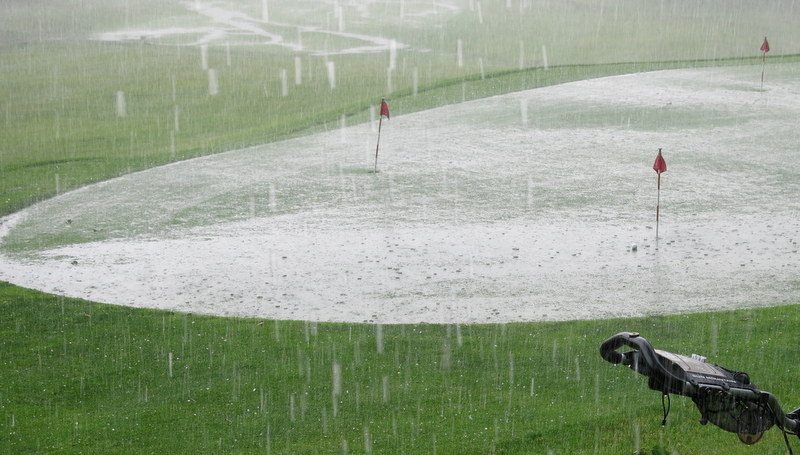
The weather forecast the night before had been decent, but when we got to our fiftieth hole we thought we heard thunder, and when we got to our fifty-second hole we were sure we did. The lightning horn in the golf shop blew, and we all humped back to the clubhouse. The rain and hail started a few minutes later, and pretty soon the first fairway and practice green looked like water hazards:

IMG_1862

I had left some socks and a pair of golf shoes on the roof of my car. Should I risk my life by running across the parking lot to get them? I decided I should. Then we all hung around on the clubhouse porch for half an hour or so, watching the gutters overflow:

P1070477

P1070468

The rain came down so hard that Mike U. couldn’t get from the golf shop to the clubhouse. Here he is, stranded in the doorway:

IMG_1872

We ended up playing just half as many holes as we played last year. That was disappointing, but a few days later twenty-six guys showed up for Sunday Morning Group—very possibly a record. We choose teams by drawing numbered poker chips from a hat, and because we have only twenty-four chips we thought for a while that we might have to send two guys home. But then Hacker (real name) came up with a workaround. Here’s the group:

Sunday Morning Group, June 25, 2013.

Sunday Morning Group, June 25, 2013.

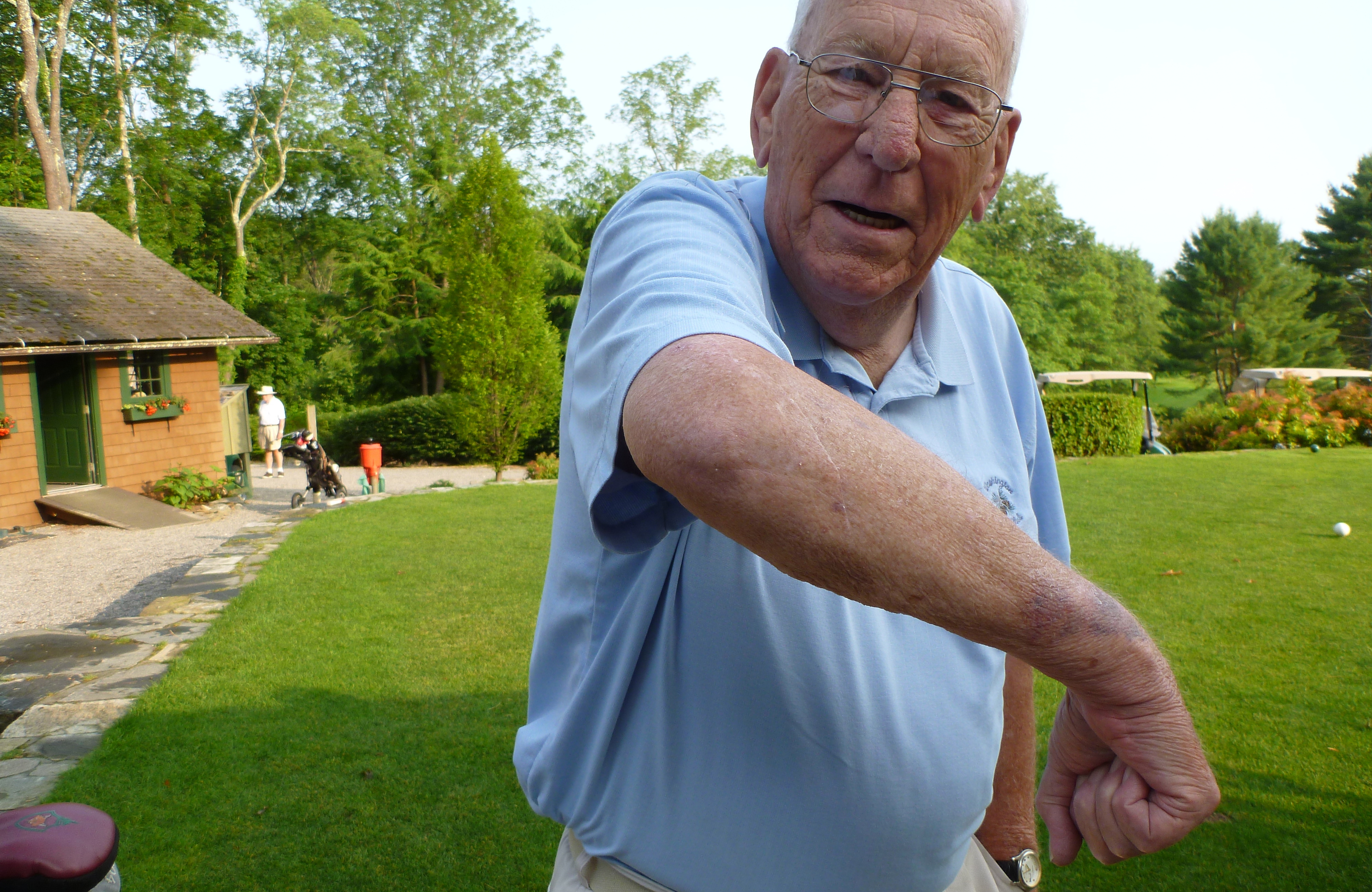
If you count the heads in the photo above, you’ll notice that there are twenty-seven, not twenty-six. The extra guy is Harry, who used to play with us all the time but now lives in another state, on account of his wife. He had played with Hacker the day before, but he broke his elbow a couple of years ago and can’t really swing anymore. On Sunday, he dropped by just to say so long before heading home. You can see the scar on his arm where they tried to put his elbow back together:

P1070494He has finally stopped smoking, though. So give him credit for that.

The Muny Life: Orlando, Philadelphia, Brooklyn, and Elsewhere

Winsteads

I’m just back from Kansas City, where I grew up. Among other things, it’s the home of Winstead’s, which makes the best hamburgers in the world. When I was a kid, you could order from your car by shouting into a thing that looked like a speaker at a drive-in movie theater, and then a waitress would bring your stuff on a tray, which she would hook over a partly rolled-down window. There’s no more curb service at Winstead’s, but there’s a drive-through window, open 24/7. You can also eat inside. When you go, here’s what to order (no substitutions, please):

Double cheeseburger with extra P.M.K. (pickles, mustard, ketchup) and grilled onions.
Single cheeseburger, ditto (for topping yourself off—just take my word for it).
Fifty-fifty (half onion rings and half fries; ask for the fries to be “well done”).
Large cherry limeade (or, if you insist, large diet cherry limeade).
Frosty (technically speaking, this could be considered a dessert, but the proper way to eat it is as a side dish).

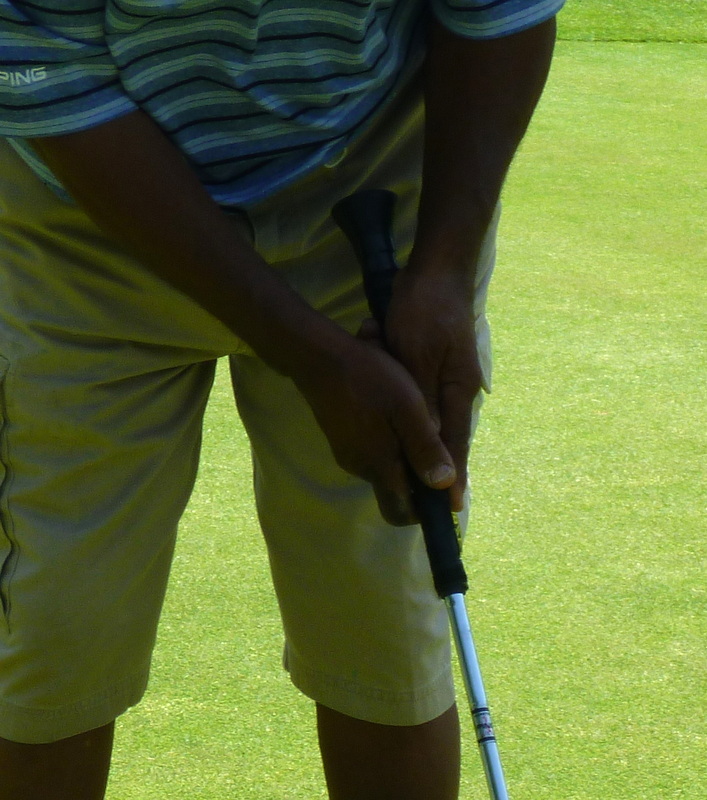
When I was in high school, my friends and I occasionally ate four meals a day at Winstead’s. You’d be crazy not to go, even if you weren’t planning to travel to Kansas City. Between trips there last week, I visited my mother and played three rounds on two terrific municipal golf courses, which I’ll write about in the September issue of Golf Digest, in my regular monthly column. Here, in the meantime, is a photo of the putting grip of one of the guys I played with, who I’m pretty sure is one of the three or four best putters in the world (his friends call him Drano):
P1070261

My Muny Life column in the May issue of Golf Digest was about Dubsdread Golf Course, in Orlando, Florida. The photo below is of two of the guys I played with there: Fletch, a semi-retired accountant, and Brian, his son-in-law, who is in the building-supply business. Brian lives near the course and gives Fletch hybrid clubs and gentle swing advice, plus the occasional grandchild.
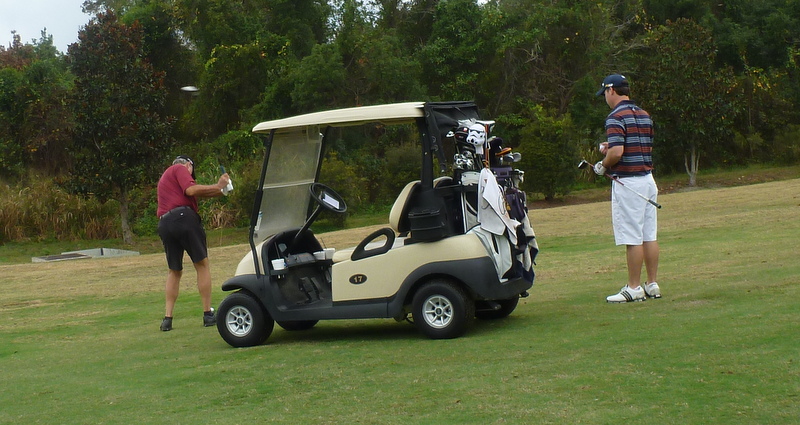
Fletch and Brian.

Fletch and Brian, Dubsdread Golf Course, Orlando.

During another round, I watched a guy on the driving range talk on his phone, which he was holding in his right hand, while hitting one-handed wedges with his left hand and smoking a cigarette. As Dr. Johnson said, in a different context, “It is not done well; but you are surprised to find it done at all.”

P1040845

In the June issue, I wrote about Cobbs Creek Golf Club, which is just down the road (and creek) from Merion Golf Club, where the Open was held last week. Here’s the maintenance building at Cobbs Creek, which, like the clubhouse and the course, dates to the early nineteen-hundreds:
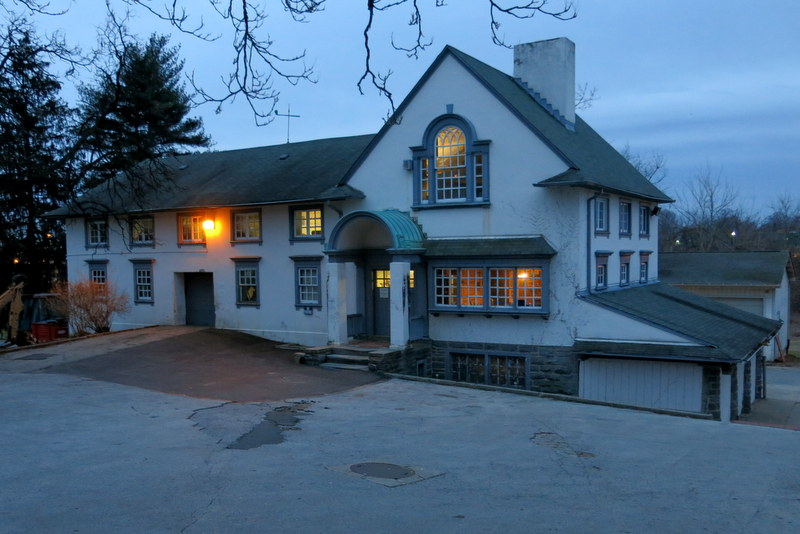
Cobbs Creek Golf Club, Philadelphia.

Cobbs Creek Golf Club, Philadelphia.

After one of my rounds, I met Hank Church, a regular, who didn’t play but dropped by the clubhouse to see his friends. “I had ten inches of my large intestine removed sixteen days ago,” he said, and he lifted his shirt to show the scar, which was barely visible. He wasn’t ready to swing a club yet, he said—but almost. And, like many of his friends, he served as a marshal at the U.S. Open, in his case on the eleventh hole, which is the one where Bobby Jones closed out Eugene Homans in the 1930 Amateur, thereby completing his Grand Slam.

hank Church, Cobbs Creek Golf Club.

Hank Church, Cobbs Creek Golf Club, Philadelphia.

For the July issue, I wrote about Dyker Beach Golf Course, in Brooklyn, where my friends and I often go to play during the winter, when our home course is covered with snow. A few months ago, eight of us set out a little before five in the morning so that we could get to Brooklyn in time to play as guests in the regular Sunday-morning game of Shore View Golf Club, a men’s group that plays at Dyker. John Perez, the club’s president, supervised the picking of the teams, using a handicap-based method that he referred to as Captain and His Men. It was kind of dark in the grill room when he did that, so one of the guys used his cell phone as a flashlight when it was his turn to choose:

That's John Perez at the far right. Dyker Beach Golf Course, Brooklyn.

That’s John Perez at the far right. Dyker Beach Golf Course, Brooklyn.

That day, my friend Hacker (real name) and I played with Ronnie Clyne, who works for a headhunter. “I grew up on the Brooklyn waterfront,” Clyne told us. “If you played golf, we beat you up and took your lunch money.” Like most Shore View guys, he’s self-taught and deeply addicted. “I had a hole-in-one once, at a course in the Catskills,” he said. “As I picked the ball out of the hole, a tear rolled down my cheek. It was the closest thing I’ve had to a religious experience.” Here’s Ronnie cleaning goose crap off his golf shoes on one of the tees:
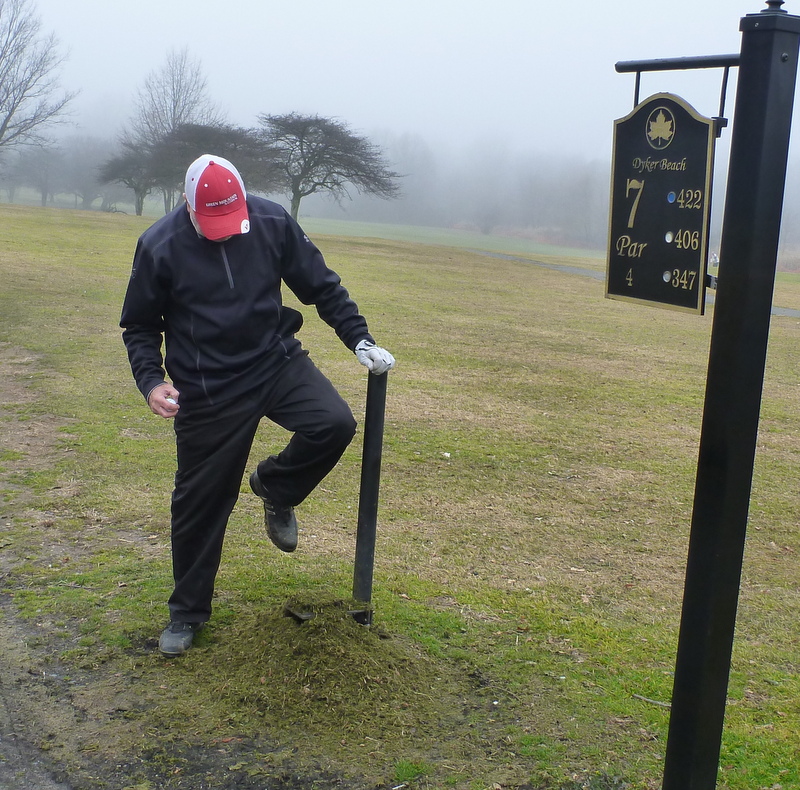
Ronnie Clyne, Dyker Beach Golf Course, Brooklyn.

Ronnie Clyne, Dyker Beach Golf Course, Brooklyn.

And here’s Hacker (looking very serious) with the Verrazano-Narrows Bridge in the background:
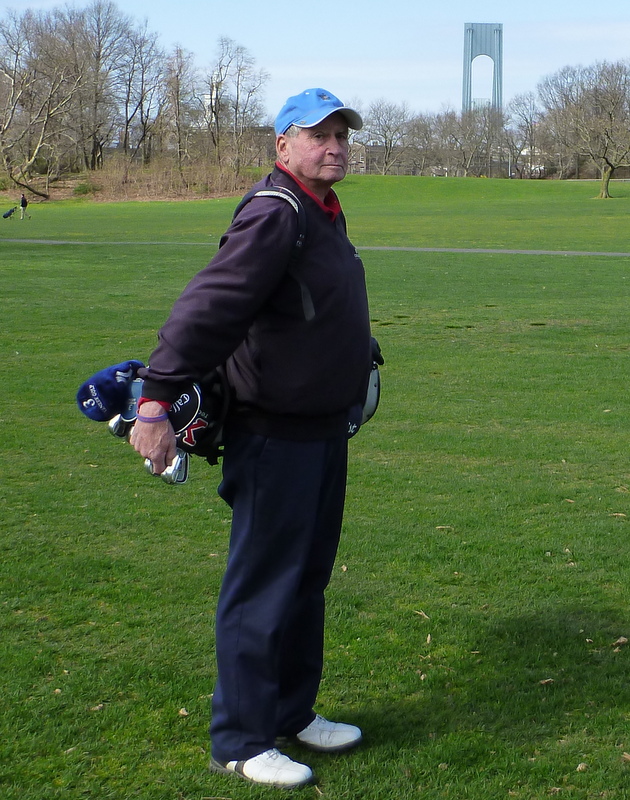
P1050604

On the morning we played with the Shore View guys, I picked up Other Gene. and Gary, our superintendent, at Gene’s house. They were waiting in front when I arrived, at 4:45 a.m., and when I opened the trunk of my car Gene’s dogs, which are huge, started barking inside his house. Gene was worried that the dogs would wake up his wife, so he kept saying “Shhhhhh, shhhhhhh, shhhhhh”—very quietly, so as not to make matters worse. I was standing next to him and could barely hear him, so I assume the dogs heard nothing, their famous ears notwithstanding. At any rate, they kept barking and, if anything, got louder. Miraculously, though (we learned later), Gene’s wife slept through the whole thing.
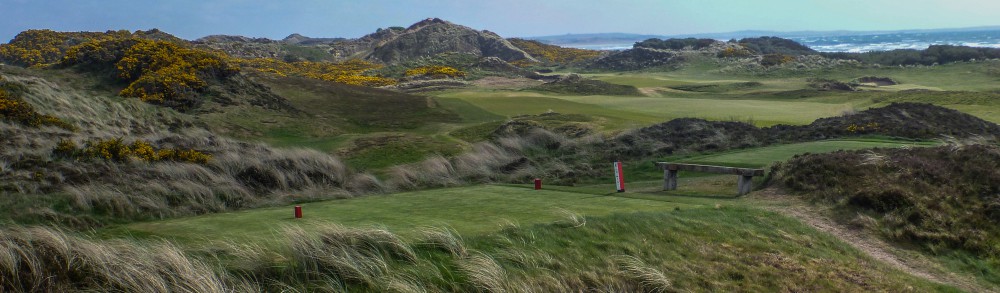
What’s In My Bag: Dana McQueen

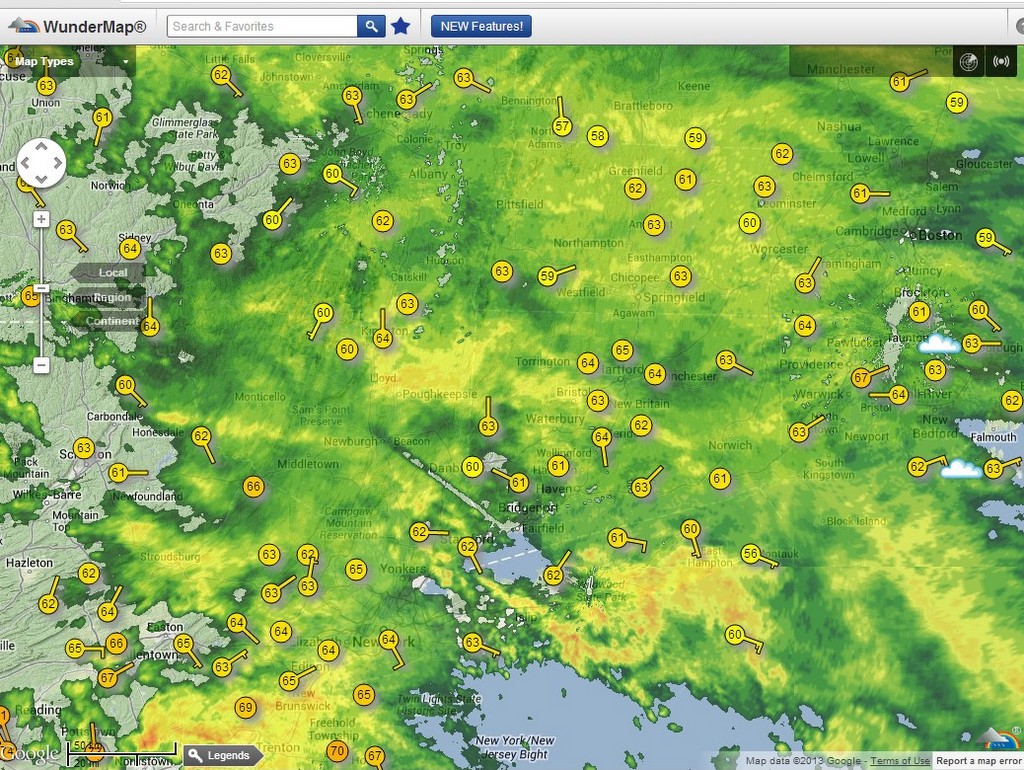
This is an aerial view of Tony's and my match this afternoon. We're somewhere there near the center of the map.

This is an aerial view of Tony’s and my match today. We’re somewhere near the center of that big green-and-orange thing.
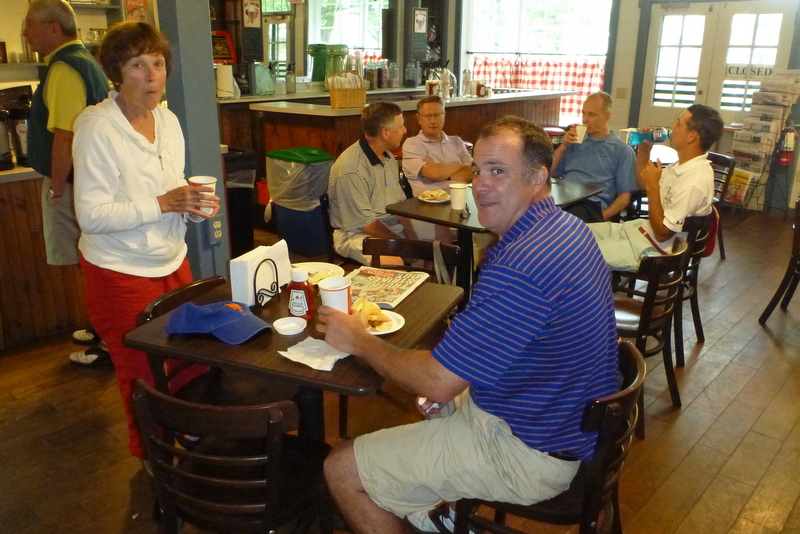
Tony and I happily played anotherA statewide tournament that I was supposed to play in tomorrow has been postponed because the rain that was falling when Tony and I played is expected to continue through the night. I was actually looking forward to slogging around all morning, then loading my soaking-wet golf bag into my travel case, racing a hundred miles to Newark Liberty International Airport without a shower, and taking a night flight to Kansas City to play golf on a Golf Digest assignment and visit my mother. In fact, my only chance to finish the tournament above the middle of the field was probably to go off in a downpour, since I actually like playing when the people I’m competing with don’t.

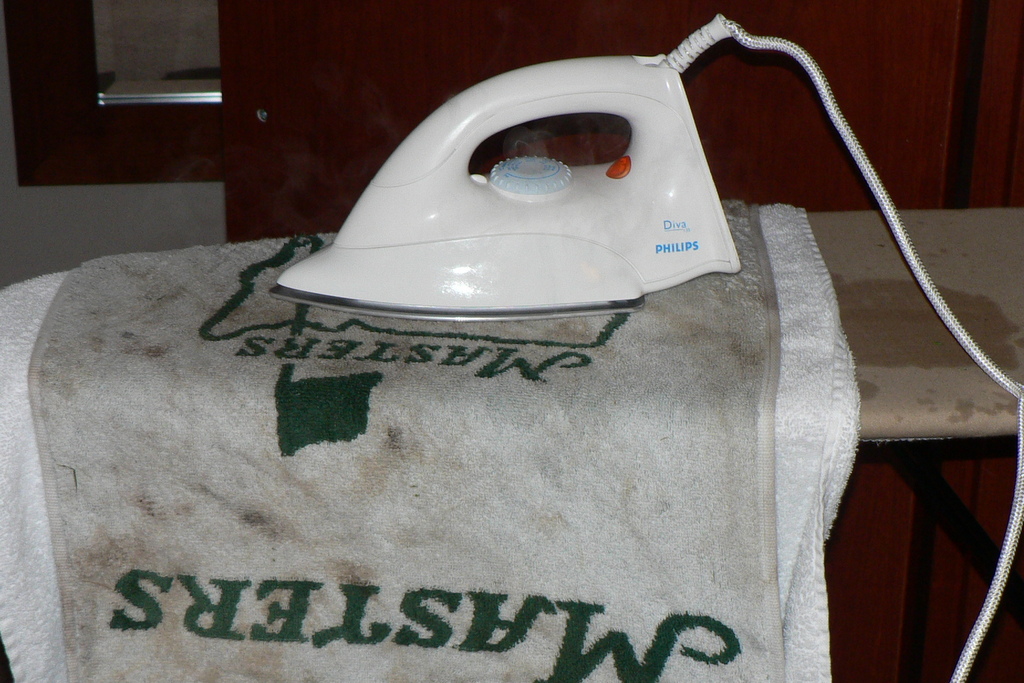
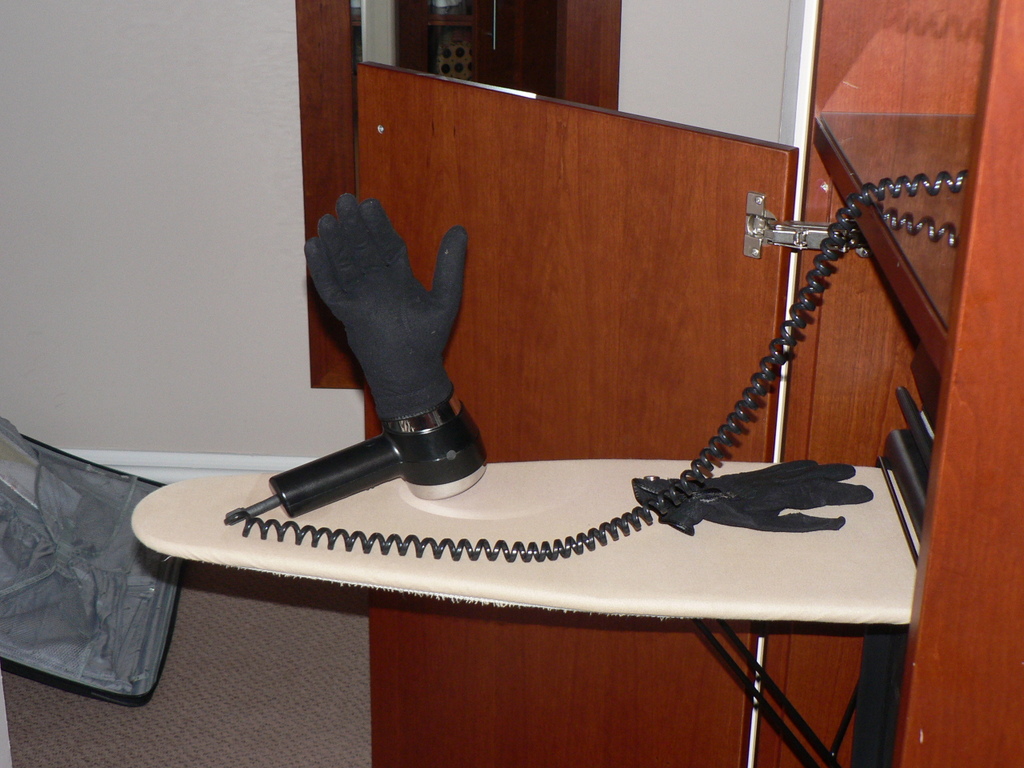
In 2006, I took back-to-back golf trips to Dubai and Ireland. During the Ireland portion of that two-climate packing adventure, I learned how to dry wet golf stuff with a hotel-room iron and hairdryer (after first blotting up the worst of the water by rolling up everything in bath towels and stomping):

Doing this produced tremendous clouds of steam. Getting the towel half dry took forever.

Doing this produced tremendous clouds of steam. Getting the towel half dry took forever.

Before using the hairdryer, I tried drying my rain pants in my room's heated trouser press, but that didn't work.

Before using the hairdryer, I tried drying my rain pants in my room’s heated trouser press. That didn’t work.

Rain gloves don't really need to be dry, but if you have the equipment why not?

Rain gloves don’t need to be dry, but if you have the equipment why not?

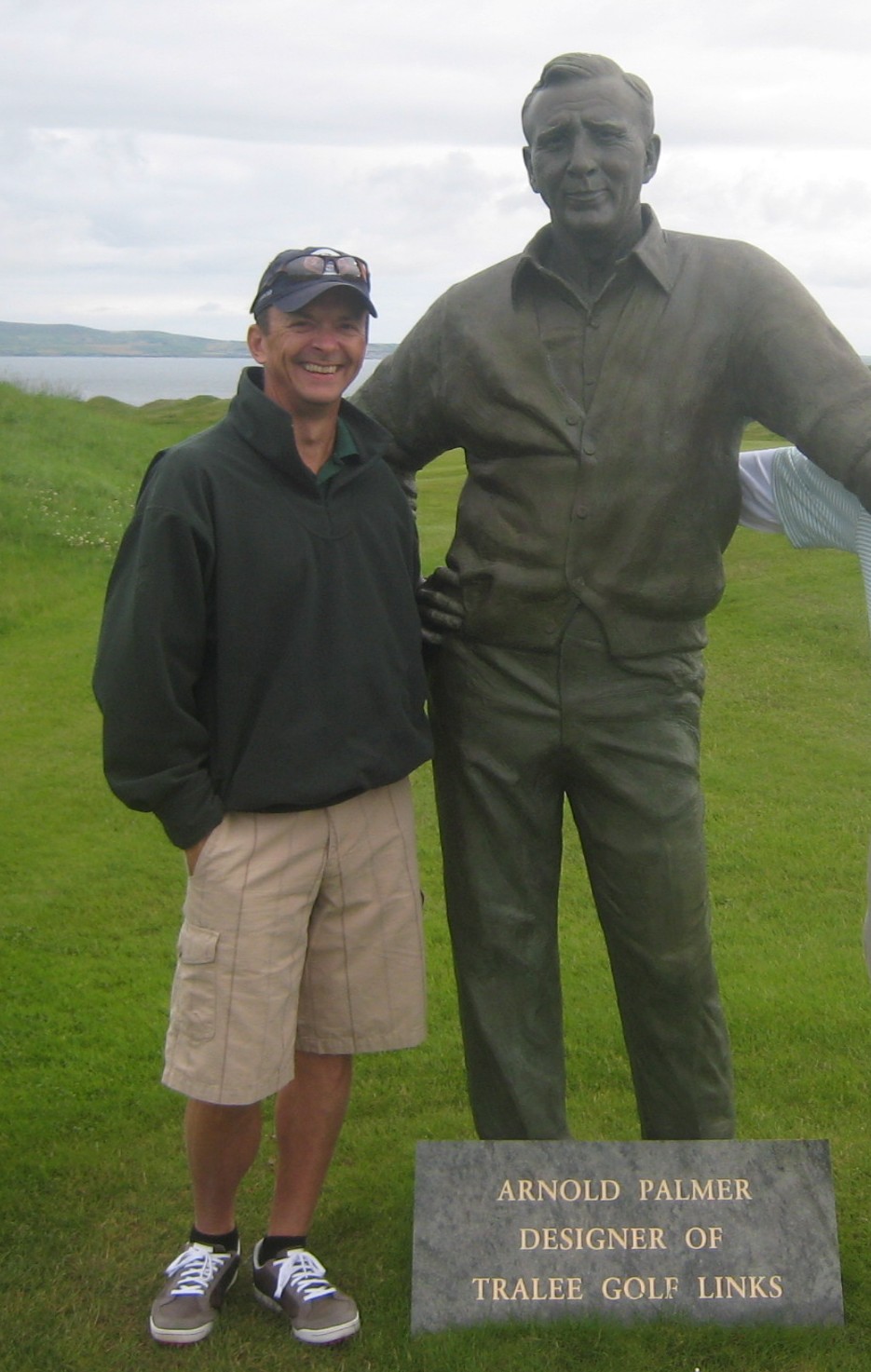
The hotel was in Killarney, and the golf course where I got so wet was Tralee—which is seldom ranked among the very best courses in Ireland but is plenty nice enough and is almost certainly the best course that Arnold Palmer ever designed. (It opened in 1985.) As we approached the middle of the (terrific) second nine, the wind reached the velocity necessary to propel liquid water through the fabric of my previously reliable Sunderland of Scotland rainsuit, and I stopped trying to clean my glasses between shots. It wasn’t just the worst weather I’d ever played golf in; it was the worst weather I’d ever been outside in. Nevertheless, my three companions and I all enjoyed ourselves immensely, and we played far better than you might think—perhaps because over-swinging and over-thinking are impossible when remaining upright requires most of your concentration. (I don’t know what our caddies thought.)

Recently, I heard from a reader who has also been to Tralee: Dana McQueen, who lives in Purcellville, Virginia, and is exactly the same age I am (fifty-eight). Here he is at Tralee last summer:

Dana McQueen and some other guy, Tralee, Ireland, July, 2012.

Dana McQueen and some other guy, Tralee, Ireland, July, 2012.

And here’s McQueen’s golf bag:

The first thing I notice about McQueen's golf clubs is that he keeps them a hell of a lot cleaner than I keep mine.

The first thing I notice about McQueen’s golf clubs is that he keeps them much cleaner than I keep mine.

Here’s what he’s got in there:

Cleveland Classic XL driver, 10.5 deg, stiff graphite
Cleveland FL fairway, 17 deg, stiff graphite
Cleveland Mashie hybrid, 18 deg, stiff graphite
Cleveland 588TT irons, 4 thru PW, stiff steel
Titleist Vokey 50 deg wedge
Titleist Vokey 57 deg wedge
Taylor Made ATV 60 deg wedge
Ping Redwood ZB putter

“Pretty standard stuff, overall,” he told me in an email. “Sometimes the 60-degree wedge comes out of the lineup, especially on courses with thick rough around the greens. I really haven’t gotten comfortable with the ATV bounce concept yet.” McQueen is a retired C.I.A. officer. He now works as a systems engineer for Stratos Solutions, and he also works for Britannia Golf, which puts together custom golf tours, mostly to Scotland and Ireland. He took up golf as a teenager.

“I started playing,” he wrote, “when I realized that my baseball career was going to come to a screeching halt, at about the same time that I got my driver’s license—trouble with the curve was reality, not a future movie title. I had a great mentor, and within three or four months I was shooting in the low eighties. As you might expect, dreams of grandeur invaded my thoughts. These lasted until I discovered that there were other golf courses on the planet, and that most of them were much more difficult than the little muny up in northern Ohio where I began my golf journey. Since that time, golf has been a series of peaks (nearly qualifying for the U.S. Amateur in the late nineteen-eighties) and valleys (being soundly trounced by an eighth grader in the club championship semifinals). Now I look forward to the weekly game with the Saturday morning group and the occasional trip to Scotland or Ireland. My favorite course (so far) is Royal Dornoch. Unfortunately, a sliver of beach on the North Sea is not exactly what my wife has in mind as a retirement spot.”

McQueen plays most of his golf at Stoneleigh Golf & Country Club, in Round Hill, Virginia. The course was designed by Lisa Maki, one of the very few women course architects in the history of the game. Anybody know if she’s still around?

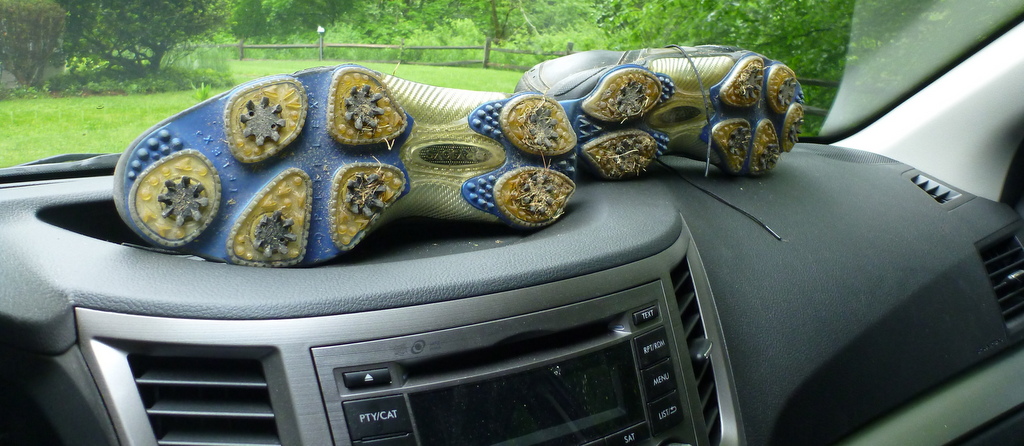
I have received a number of What’s In My Bag contributions. I’ll run them all eventually. In the meantime, send me yours. And here’s a bonus photo, showing how to dry wet golf shoes with the defroster of a rental car:

P1060642


Reader’s Trip Report: Bandon Dunes

P1070187

A bunch of us were supposed to play in a tournament today, but the rain started last night—over an inch so far—and everything was called off. Tony and I decided to play anyway, and because we couldn’t talk anyone into joining us we had the place to ourselves for a Two-Hour Eighteen™ (which actually took two hours and fifteen minutes). The golf shop was locked and empty, so we had to handle our own photography:

P1070196

The rain came down sideways for a while, and we were both reminded of a trip we took to Bandon Dunes with our friend Ray in February, 2007. On that trip, we had rain every day for five days, but still managed to play ten awesome rounds.  And although we got wet we didn’t get as wet as we might have. A starter told me that a few years before, on a day when the wind blew hard and the resort received almost seven inches of rain, all eighty-five golfers on the tee sheet played, as did two walk-ons, who were passing through the area and thought the day looked reasonable for golf. Like them, we had a great time, and ever since then we’ve been talking about going back.

Pacific Dunes, February, 2007.

Ray, mystery person, Tony, caddies, Pacific Dunes, February, 2007.

Coincidentally, last night, just as the rain began, I heard from Tim Miles, a reader, who is at Bandon Dunes right now with a group of friends. He began his trip report with a quotation from my first golf book—an effective way to get my attention:

I suddenly had a vision of a sort of ideal community of golfers: a golfing monastery, or golfastery. Men who worship golf living humbly with other men who worship golf. Simple food. Lots of putting practice. A big driving range with well-spaced target greens. Excellent video-taping facilities. Careful study of the rules. Pilgrimages to the great courses of the world. Beer making in the evenings. Who wouldn’t want to live like that?

I’ve changed my mind about some of that—no more range balls for me!—but I agree with Miles that Bandon Dunes comes close to my monastic vision. Here’s Miles’s report, with photos taken by him and his friends:

Tim Miles, our Bandon correspondent, June, 2013.

Tim Miles, our Bandon correspondent, June, 2013.

Bandon Dunes gets everything right for golfers. There’s not an ounce of pretense in the place (save for the occasional jackass, pink-plaid-panted golfer). The food and lodging are not fancy but perfect in every way. The staff is shockingly good. Every employee of every course in America should be required to witness the level of kindness, engagement, and  service delivered throughout the resort. My caddie, Paul, said employees are trained to consider Bandon Dunes Golf Resort to be Disney for Golfers. It shows, except unlike Disney it’s not loud, flashy, or overstimulating. Bandon lets the courses and their settings overwhelm you. 

bandon miles

It’s not the easiest place to get to, and it’s not the cheapest (though big discounts on a second 18 each day are perhaps the best bargain in all of golf), but it’s worth it. Oh, is it worth it.

IMG_0599

One final note for your visit: when you’re there, do not dismiss Bandon Preserve, a thirteen-hole par-3 course whose net profits go to charity. In its first short season, in 2012 (it opened last May), our starter told us, Preserve donated more than $510,000 to local non-profits. Its goal for this year is more than $750,000. With great ocean views and an opportunity to play 100-yard 7-irons and 160-yards wedges, you’ll never laugh or experience more sheer joy per hole than you will at Preserve. Be sure to try the final hole—a 109-yard downhiller— with your putter.

The Miles party: Chris, Rush, Tim, Steve, Carolyn, Paul, Gerard. Bandon Dunes, June, 2013.

The Miles party: Chris, Rush, Tim, Steve, Carolyn, Paul, Gerard. Bandon Dunes, June, 2013.

Never, Ever Take One of These on a Golf Trip to the British Isles

You won't need one of these if you travel to the British Isles to play golf. Royal Lytham & St. Annes, England, May 13, 2013.

You won’t need one of these if you travel to the British Isles to play golf. Royal Lytham & St. Annes, England, May 13, 2013.

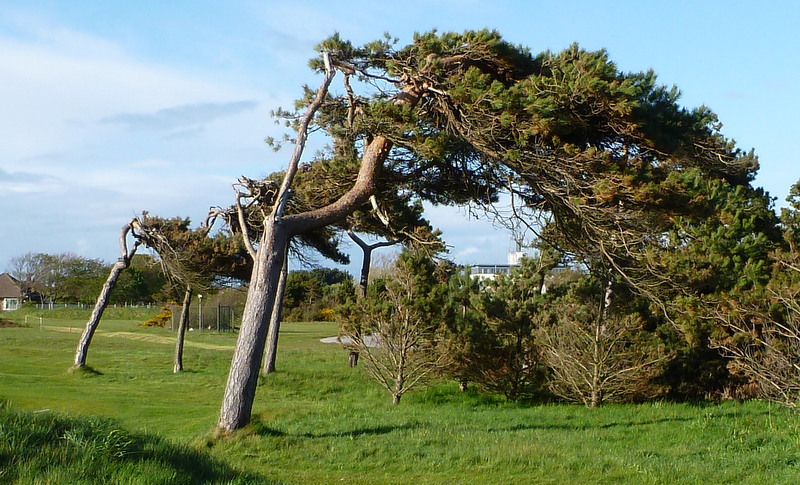
I’m in northwestern England playing golf this week. I didn’t bring an umbrella, and I’m glad I didn’t, even though there’s rain in the forecast for every day from now until the end of time. The trash can on the second tee on almost any links course in England, Scotland, and Ireland often looks like the trash can in the photo above, because American golfers typically come to the British Isles prepared for the rain but not for the wind. One hole is usually enough to destroy almost any umbrella. And carrying a “wind-proof” model isn’t the solution, because if your umbrella can’t be turned inside out it will carry you to sea, assuming you’re strong enough to hang on. Here’s why:

Wind-sculpted trees, thirteenth hole, Royal Lytham & St. Annes.

Wind-sculpted trees, thirteenth hole, Royal Lytham & St. Annes.

The wind was blowing hard yesterday, but the trees in the photo above look that way on calm days, too. Even scrubby little bushes get squashed in the direction of the prevailing wind. (I first wrote about the terrific golf courses of northwestern England almost twenty years ago. The opening sentence of my article was “You don’t need a weatherman to know which way the wind blows at Royal Lytham & St. Annes.” A Golf Digest copy editor, who apparently had never heard of Bob Dylan, changed “weatherman” to “weather report”—and that’s the way it ran.)

P1060129

Not carrying an umbrella will lighten your luggage by a couple of pounds, and it will spare you a lot of annoying housekeeping while you play. And you won’t miss it at all, if you have a rain suit, a rain hat, and a pair of rain gloves. The rain gloves are especially important, because if you have a pair of those you won’t need to even think about trying to keep your grips dry. In fact, if you have rain gloves you almost don’t need to carry a towel. And after my first trip to Scotland, in the early nineties, I stopped carrying an umbrella at home, too. Way too much trouble!

Reader’s Golf Report: Springtime Comes to Sweden, Sort Of

Stadium Course, Bro Hof Slott Golf Club, Stockholm, Sweden, February 7, 2013.

Stadium Course, Bro Hof Slott Golf Club, Stockholm, Sweden, February 7, 2013.

Patrick Kroos is a German golfer and blogger, who has been living in Sweden for the past five years. He’s also a publicist, whose main current project is persuading non-Swedes to travel to Sweden to play golf. That’s something I’ve been wanting to do for a long time, mainly because Sweden, despite having what might seem to be a crippling meteorological disadvantage, is one of the golfiest places on earth. It has fewer than ten million inhabitants, but a million of them are regular players—a significantly higher percentage than in the United States.

One in a million.

One of the million.

Sweden’s golf season is even shorter than Connecticut’s, however. Kroos took the photo at the top of this post in early February, at Bro Hof Slott Golf Club, in Stockholm. (The club has two courses, both of which were designed by Robert Trent Jones, Jr.) The weather has improved quite a bit since he took the picture, but it still has a ways to go. Here’s what it will look like once the weather decides to be cooperative:

This is what the Stadium Course looks like when it thaws.

This is what the Stadium Course at Bro Hof Slott looks like in season.

In a recent email, Kroos wrote:

Winter is loosening its grip on Stockholm slowly and very late this year. Only yesterday did the ice finally break open on Lake Mälaren, the third biggest lake in the country. For Swedish golfers, the wait has been painful and long. Usually, the driving ranges open up in early April, and the eighteen-hole courses follow suit. Not this year, though. By now, only a handful of courses are open, and temperatures are still pretty low. 

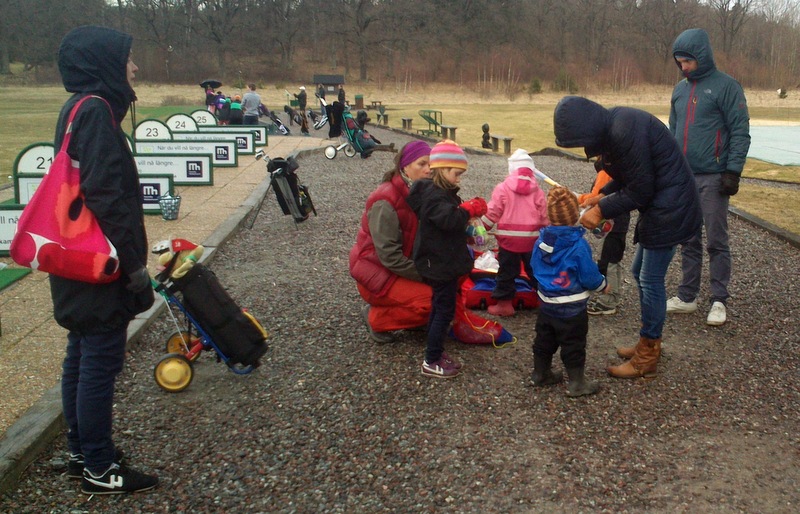
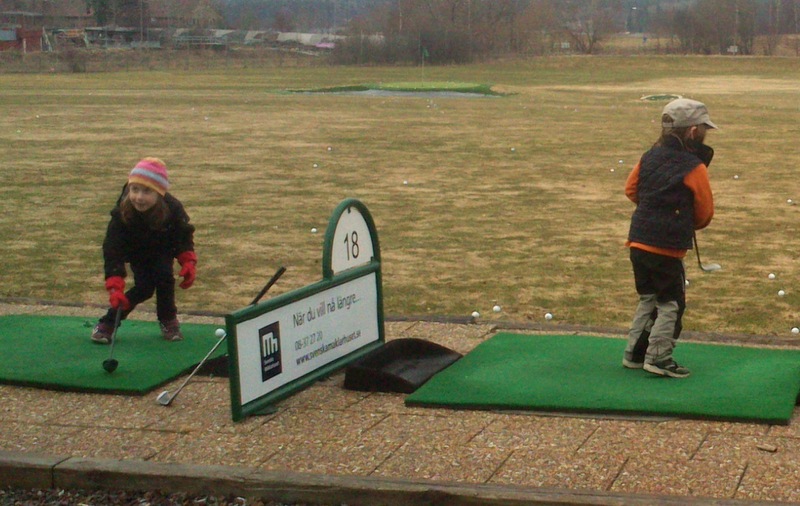
That hasn’t stopped the youngsters, however. Kroos took the photo below this past Monday at Hässelby Golfklubb, a nine-hole course with a year-round driving range just outside Stockholm.

2013-04-22 18.45.54

Kroos continued:

My son Paul and some other kids come together every Monday to play golf. And I really mean they play. They are only four and five years old, so at any given moment the tree next to range could become more interesting. But we believe that tree climbing is good for their balance and strength, and that it will make them better players in the future. 
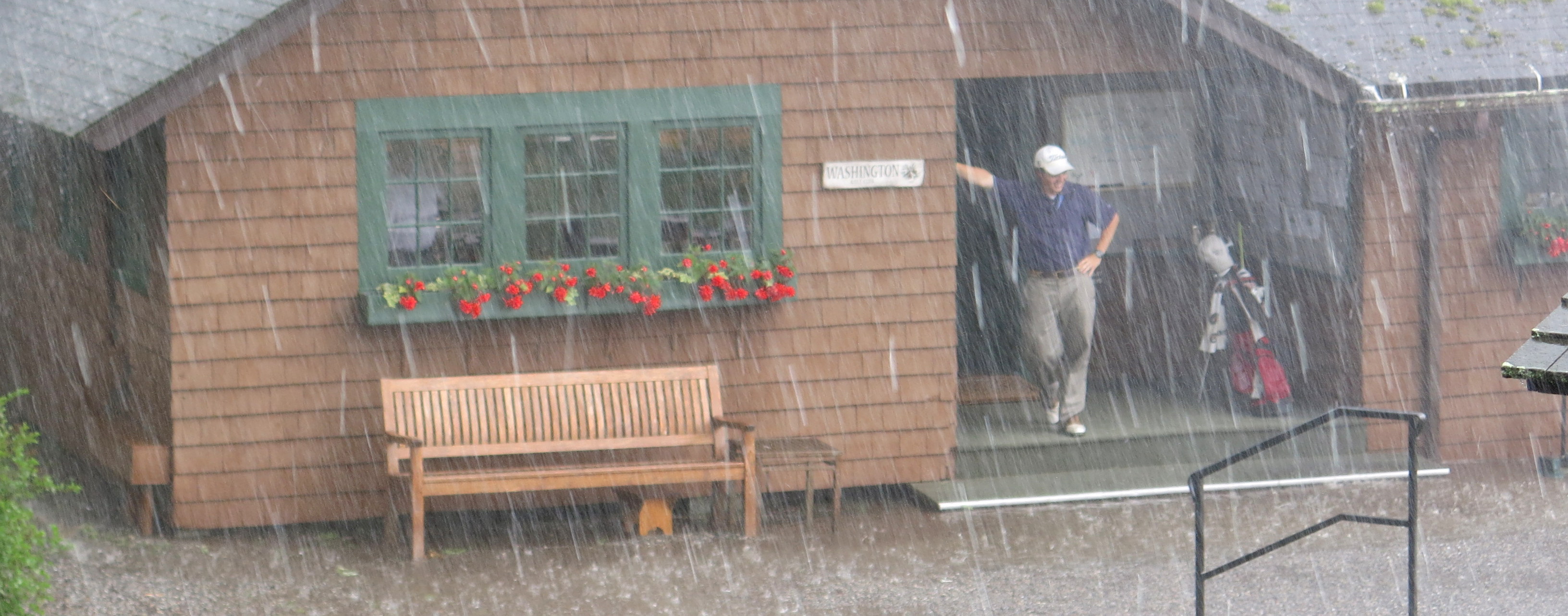

Note the junior push cart. Recent studies have suggested that all young golfers should use push carts at least until they've stopped growing. Golf clubs are heavy, and the load is one-sided.

Note the junior push cart. Recent studies have suggested that all young golfers should use push carts, at least until they’ve stopped growing. Golf bags are heavy, and the load on young shoulders is one-sided, even with two straps.

Kroos and his wife are expecting another future golfer in their family in the next couple of weeks. He continued:

All the parents here are golfers as well, and you can see how much they enjoy seeing their kids having fun. I am sure they all envision a not to distant future when they can go play with their own children on a Sunday morning. 

2013-04-22 18.45.37There’s another compelling reason to visit Sweden with your golf clubs: on the Summer Solstice, Swedes are able to play even more holes than my friends and I did last year. I’ll get there eventually.