Golf, Physics, and Shaft Length

John M. Friedman

John M. Friedman

I was sorry that my old bridge buddy John Friedman—who died a few years ago, in his sixties, from idiopathic pulmonary fibrosis—wasn’t around to see this year’s U.S. Amateur. Like Bryson Dechambeau, the champion, he had majored in physics (at Princeton) and believed that the shafts of golf irons ought to all be the same length. (You can read about DeChambeau’s clubs in this post by Mike Stachura.)
dechambeau-vest

John could be challenging bridge partner. He had trouble remembering bidding conventions, so we allowed him to respond to one of them by holding up fingers. And he wasn’t a very good golfer. But he was a firm believer in his shaft-length idea, which I enabled him to test, finally, by finding him an old set of Tommy Armour E.Q.L. irons on eBay. (Those clubs, which were sold briefly in the late 1980s and early 1990s, had shafts that were all 6-iron length.) I think I can say with confidence that he didn’t play any worse with them than he had with his previous set.

blocking-dummy

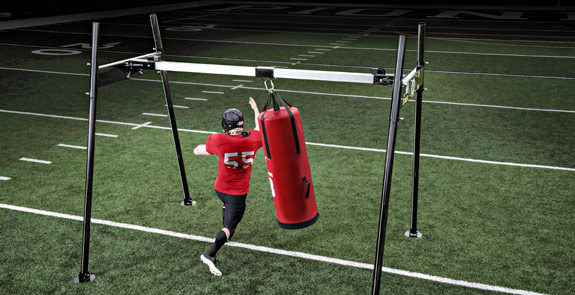
John wasn’t much of an athlete, but he played football in high school, and he applied his knowledge of physics there as well. His school’s practice field had an enormous cylindrical blocking dummy hanging from a bar, and according to legend only one lineman in the history of the school had ever succeeded in hitting it hard enough to spin it over the top. John wasn’t a big guy, but he understood force. He studied the dummy after school one evening, and decided that the reason no one else had replicated that feat was that they were hitting the dummy too low. At practice the next day, he laid his shoulder as close to the top as he could, and, to the astonishment of his coaches and teammates, sent it over the bar

Reader’s Trip Report: Midnight at the Grave of Old Tom Morris

Open-Cohens-Sachses

In July, Adam Sachs and Mark Cohen, readers in Kansas City, celebrated their sons’ bar mitzvahs by taking them to Scotland to watch the British Open and play golf at Cruden Bay, Kingsbarns and Luffness. Here are the boys, both thirteen years old, at the Old Course at St. Andrews—Elliott Cohen on the left, Phinney Sachs on the right:

Open-Elliott-Phinney

And here are Mark and Adam, setting an example:

Open-Cohen-Sachs

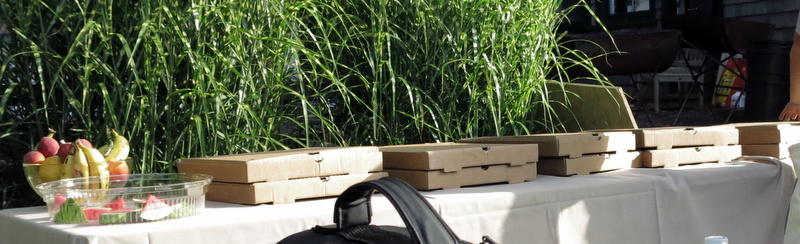
They saw Tom Watson, who during his heyday was known in Kansas City as the Fourth Franchise, and the boys learned that the Scots know nothing about making pizza:

Open-pizza

Adam writes:

“Because the Old Course is close to everything in St. Andrews, we couldn’t help running into players, caddies, journalists and golf-industry hangers-on. The boys got John Daly’s autograph, twice. On Tuesday, at Kingsbarns, which is one of the most enjoyable courses I’ve ever played, we were held up by the French pro Victor Dubuisson, who was two groups ahead of us. He ended up missing the cut, so maybe he should have been practicing on the Old Course instead. Tom Lehman’s sons were between us and him, and we all spent a lot of time standing around. On Friday night, I saw Darren Clarke, who also missed the cut. He was leaning against a wall outside a bar, smoking a cigarette and drinking a beer, and when I called to the boys to come back and meet ‘a real Ryder Cup hero’ he chatted with us and signed their golf flags.

IMG_8647

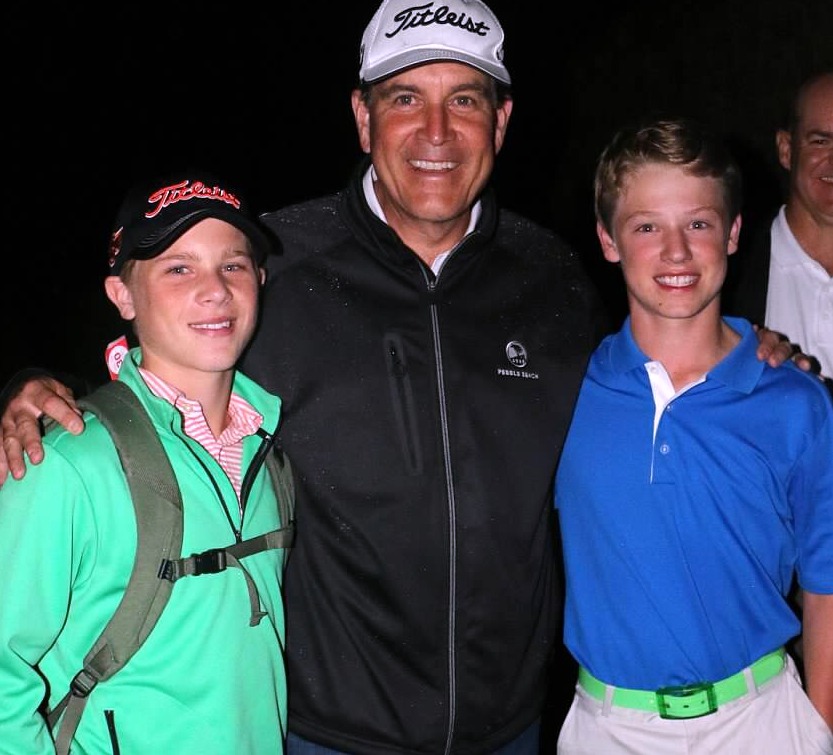
“On Saturday night, we ran into Jim Nantz, who was in St. Andrews as a spectator only (the U.S. broadcast was on ESPN).

Open-Nantz-street

“At midnight, we joined him and a group of his friends for a misty walk to the graves of Old and Young Tom Morris. The cemetery gate was locked, so Phinney and Elliott had to help Nantz, Mark, me, and all the other old guys get over the fence.

Open-Graveyard

Afterward, we went to the bar at the Dunvegan Hotel, around the corner from the 18th green. On the way, Phinney asked Nantz if he would record a voice-mail message for his cell phone. He did:

Nantz told Phinney that Phil Mickelson had asked him to do the same thing, and that Mickelson reciprocated by recording one for him.”

Open-Elliott-Nantz-Phinney

The Cohens and Sachses went back to the cemetery during the daytime, when the gate was unlocked. There was lots of death in the Morris family:

Open-Morris-grave

Among the trip’s many other highlights was golf at Cruden Bay. That’s where Adam took this photo of Phinney and Elliott:

Cruden-Bay-Phinney-Elliott

Cruden Bay is one of my favorite courses, too. I ate dinner in the clubhouse there after a late-afternoon round a few years ago, and I heard the waitress ask someone at the table behind me, “Would you like pineapple with it, or a fried egg?” I didn’t dare turn around to see what “it” was. But, like all four Cohens and Sachses, I love the course!

cruden-bay-green

Do You Get Free Relief From a Sinkhole?

Last year, a Champions Tour event made history by becoming the first PGA Tour-sanctioned tournament to be held partly on a par-3 course. his April, the same tournament returned to the same course, called Top of the Rock, and if the timing had been slightly different it might have made history again. Just a month after the tournament (the Bass Pro Legends of Golf at Big Cedar Lodge, won by Billy Andrade and Joe Durant), four sinkholes opened up near the driving range. Nobody was hurt, but the sinkholes were big enough to have held the full field, with plenty of room left for just about the entire Golf Writers Association of America. Sheets of fake white bunker sand and closely-mown artificial turf drooped over the edges of the main opening, like fondant icing on a wedding cake. The drop to the deepest part was forty feet.
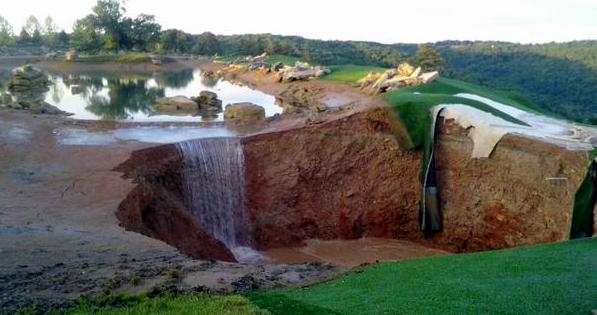
toprocksinkhole
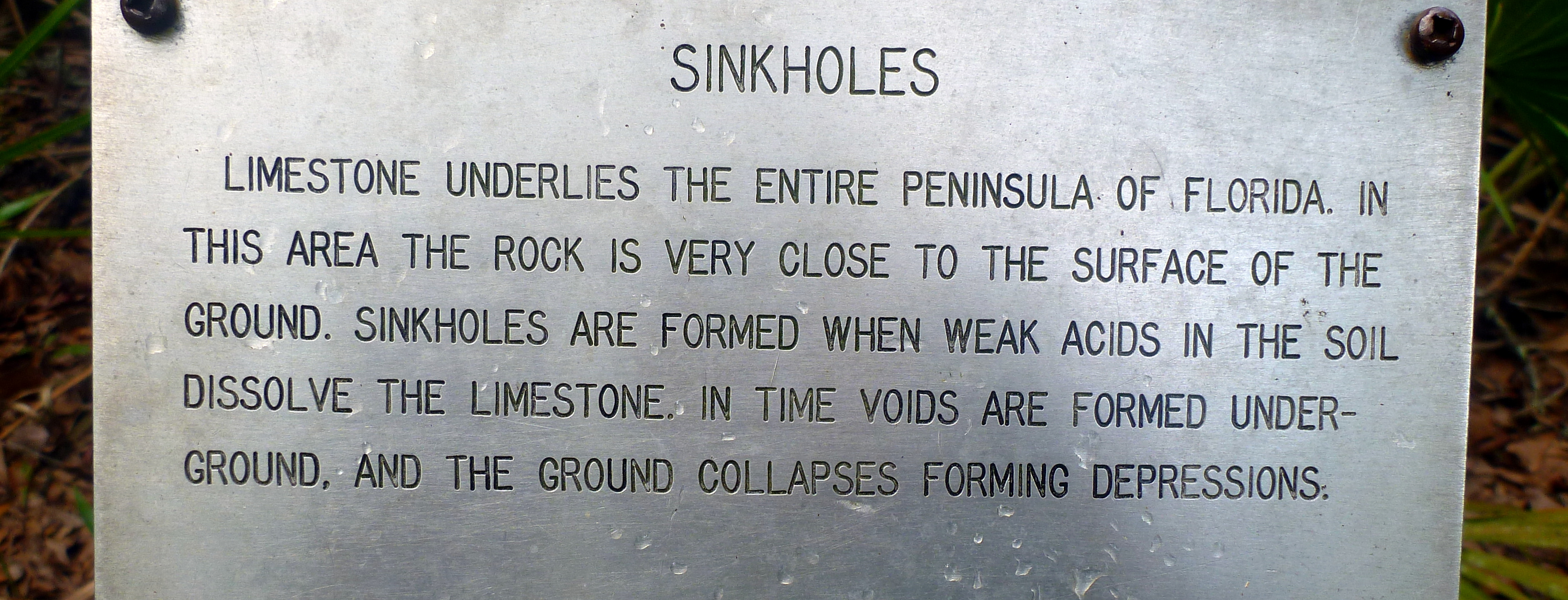
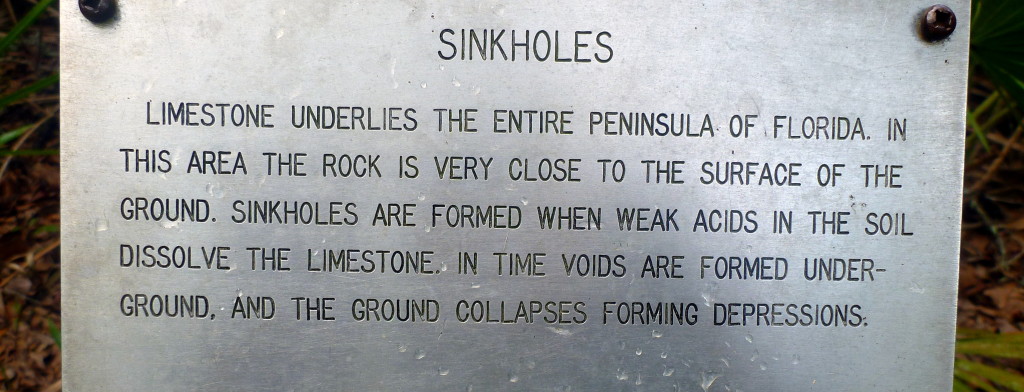
Top of the Rock was designed by Jack Nicklaus. It’s in southwestern Missouri, in a gently mountainous region called the Ozarks, and it’s virtually next door to the town of Branson, which is sort of what Disney World would be if you replaced Epcot Center with Dolly Parton. The bedrock underlying the area is mostly limestone, which consists of the solidified, calcium-rich remains of many millions of years’ worth of dead sea creatures. Rainwater becomes mildly acidic as it picks up carbon dioxide from the atmosphere. When it lands on terrain like that, it seeps through the soil and into fractures in the rock, then gradually enlarges the fractures into fissures and conduits and caves and subterranean streams, creating a Swiss cheese-like landscape of a type known as karst. If the voids become large enough, the ground above them can collapse. In 1981, a sinkhole in Winter Park, Florida, near the center of another golf-and-karst region, swallowed five Porsches, a three-bedroom house, and the deep end of a public swimming pool.
P1000554
Randall Orndorff is a geologist for the United States Geological Survey. Between 1995 and 2005, he spent a lot of his professional time in southern Missouri looking into sinkholes, crawling through caves, and mapping the geology of a formation called the Salem Plateau, which is the rock that’s next to the rock that Top of the Rock is on top of. I spoke with him recently, and he said that a neighbor who saw him using a garden hose to wash cave mud off his clothes once told him, “Thank god my husband’s a lawyer.” He also said that, although natural sinkholes are common in karst areas, human activity can accelerate their development.”
P1000474
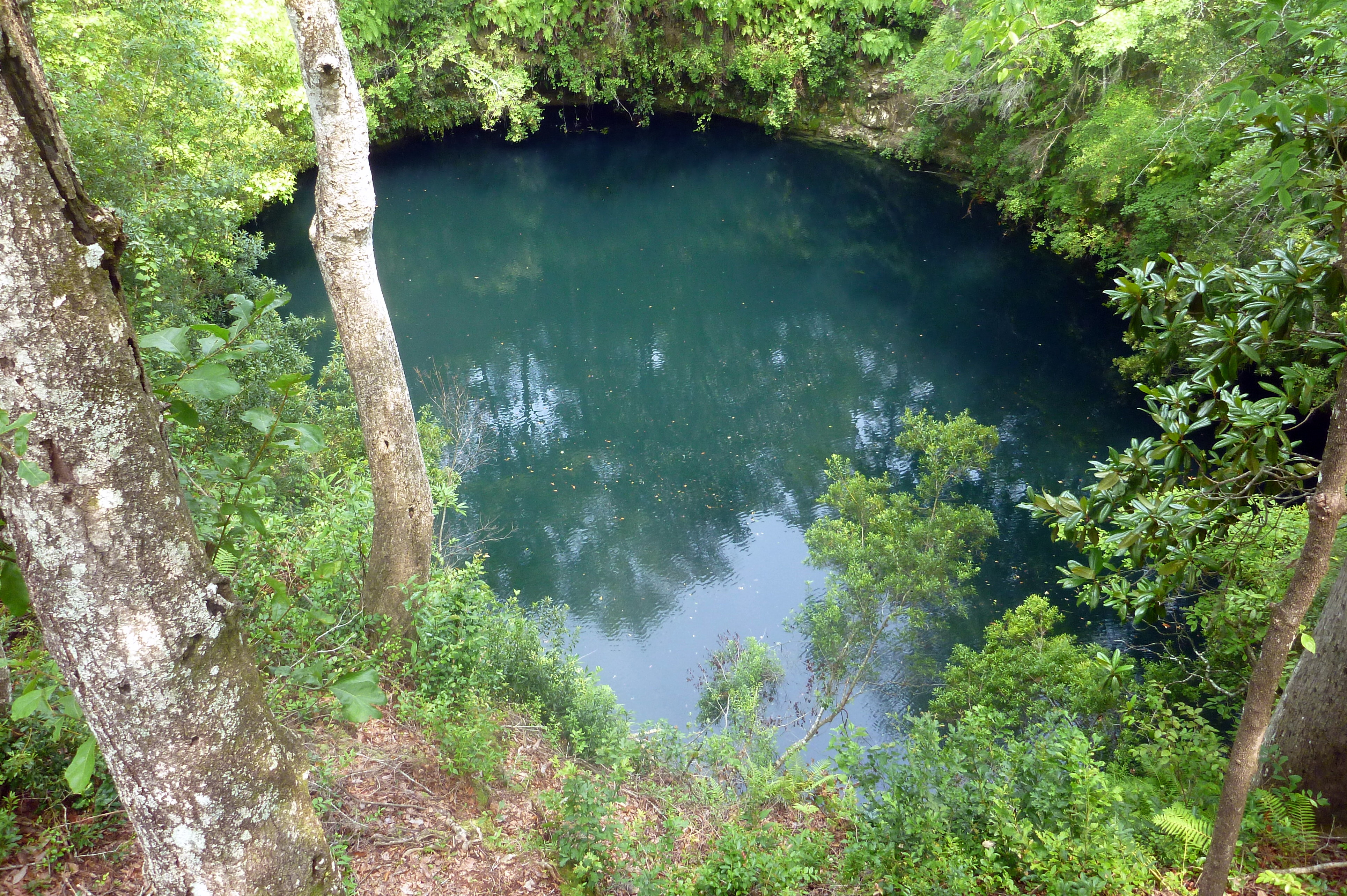
The photo above is of a sinkhole in Florida called Big Dismal. I visited it a couple of years ago while researching an article about sinkholes for The New Yorker—which you can read here. I also spent some time with a group of divers whose hobby is exploring sinkholes and underground streams.
P1000495
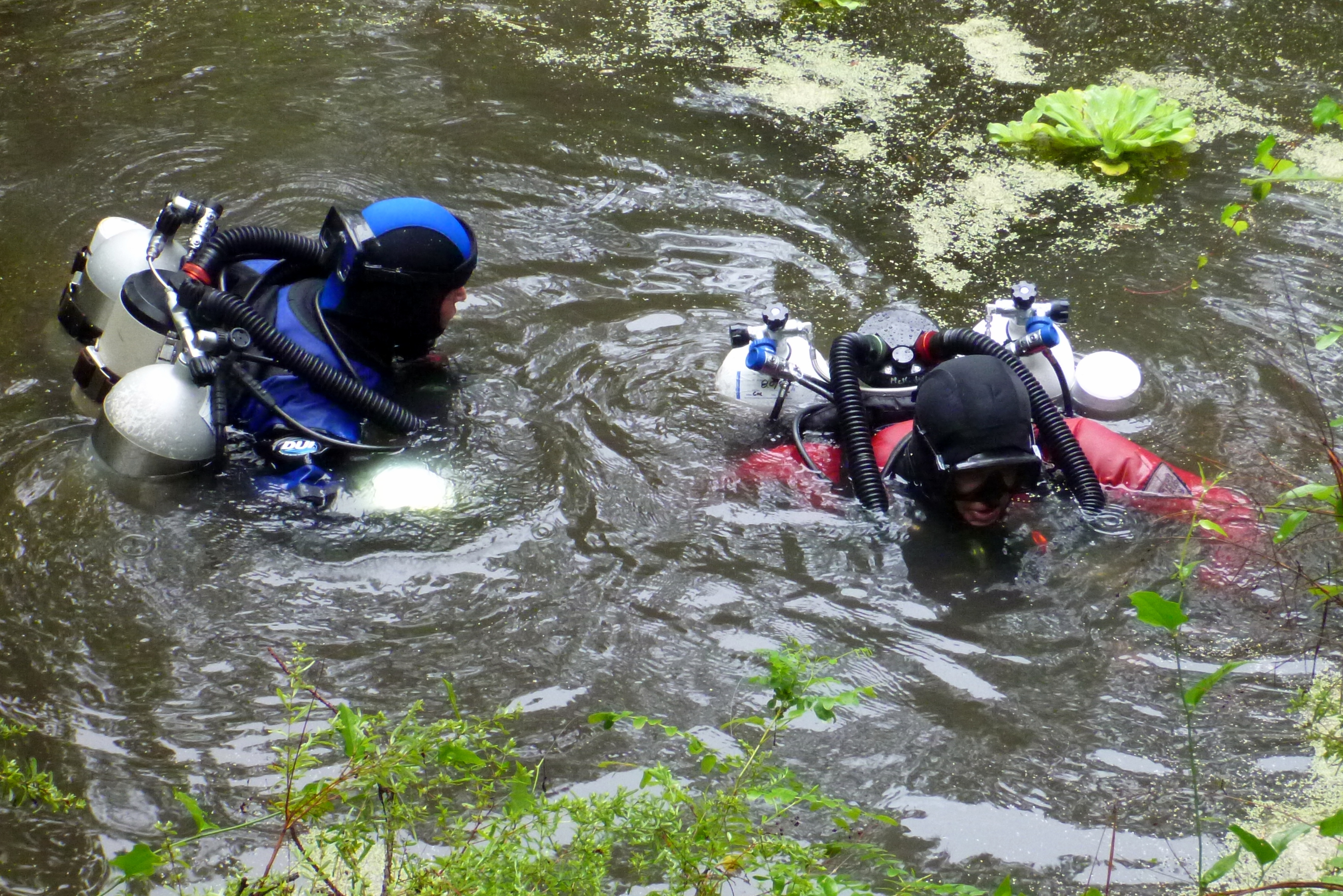
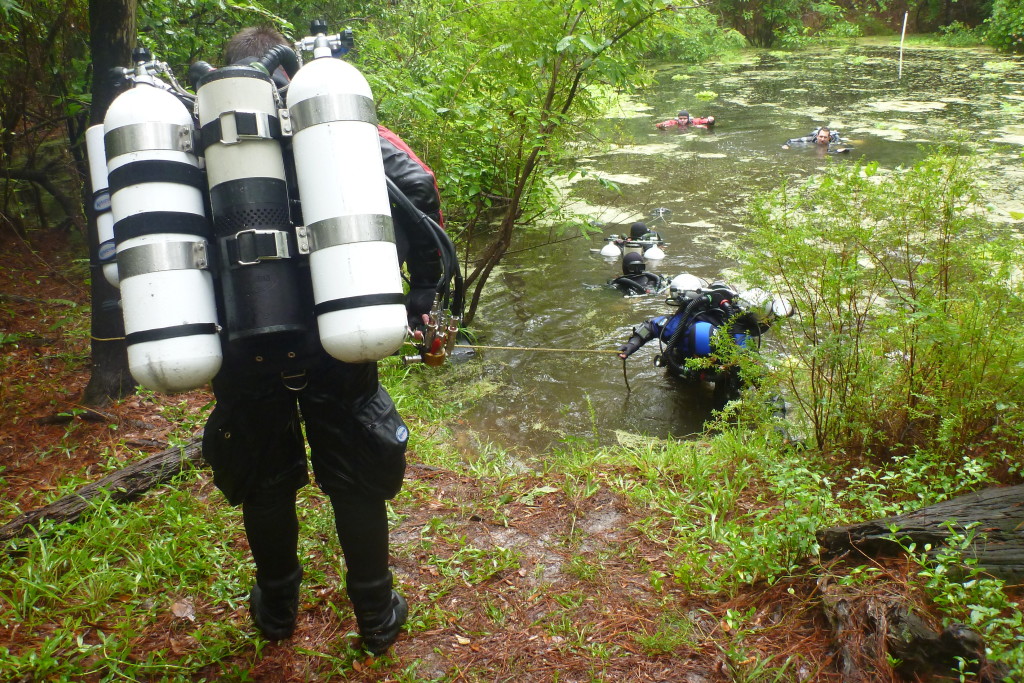
In 2007, two of them set a world record by making a seven-mile traverse through Florida’s Swiss cheese, from an opening called Turner Sink to Wakulla Springs, a state park about fifteen miles south of downtown Tallahassee. The average depth of the traverse was close to 300 feet—about the same as the wreck of the Lusitania—and the total submerged time was 21 hours. Here two of them are getting ready to make another dive in Turner Sink:
P1000522

Where do golf-course sinkholes come from? “There are a lot of factors,” Orndorff told me. “When you’re on a slope, you have more groundwater draining, and draining more rapidly—almost like flushing a toilet. The pond you see in those pictures of Top of the Rock is man-made, so now you’re changing the hydrodynamics of the area, and collecting water that used to percolate into the ground; you’re also adding weight to the surface. Something we see in suburban development is collapses near the outlets of retention ponds, where erosion is the greatest.”

P1000468

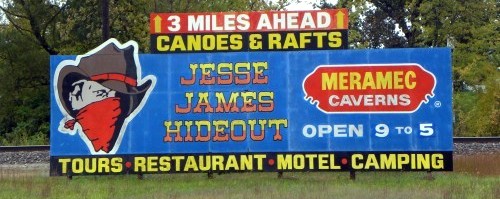
I grew up in Kansas City, about two hundred and twenty miles north of Top of the Rock, and when I was a kid my family visited the Ozarks fairly often. During one trip, I got into trouble for standing behind my father and pulling his hat down over his eyes while he was driving. (This was the era when dads wore fedoras and nobody wore seat belts.) My sister and I would beg him to stop whenever we passed a billboard advertising a cave, as we seemed to do every couple of miles. He always refused, saying the caves were just holes in the ground and could give way at any time. Now, half a century later, I guess I can see his point—although I still think we should have stopped.
meramec-caverns-sign

“Some people are asking why they didn’t close the golf course,” Orndorff said. “But that whole area is prone to sinkholes, and the next one could be miles away.” He also said that, as far as my father’s speluncaphobia was concerned, “You don’t hear of too many caves collapsing and killing tourists. In fact, I don’t know of any.”
P1000520

Why Isn’t the Men’s Member-Guest on TV?

P1160464-001

I wish the Golf Channel would drop the Champions Tour and broadcast my club’s member-guest tournament instead. Wouldn’t you watch? Among other reasons, there’s way more drama and beer, and the spectators are appreciative:

mmg15couch

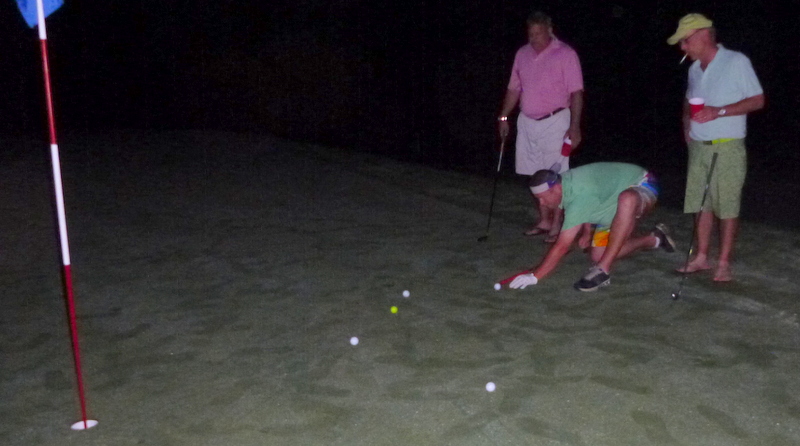
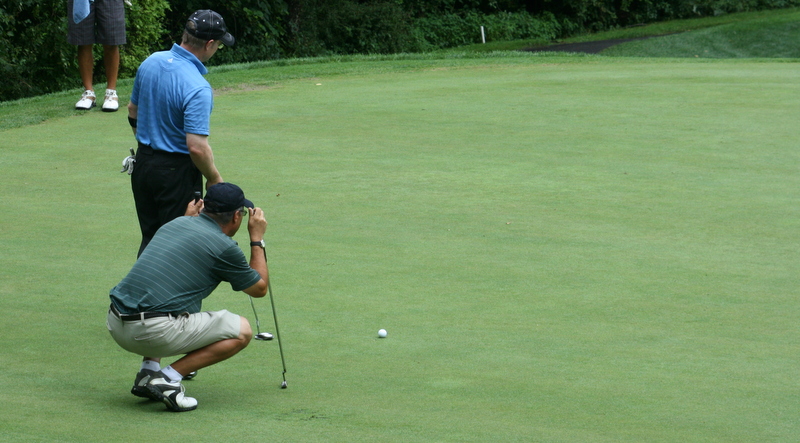
The putting is less tedious, especially after dark:

P1160502

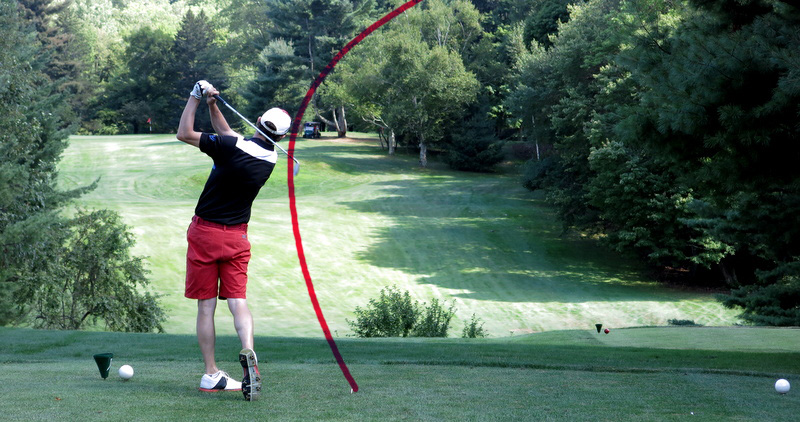
Protracer was practically made for it:

shottracker

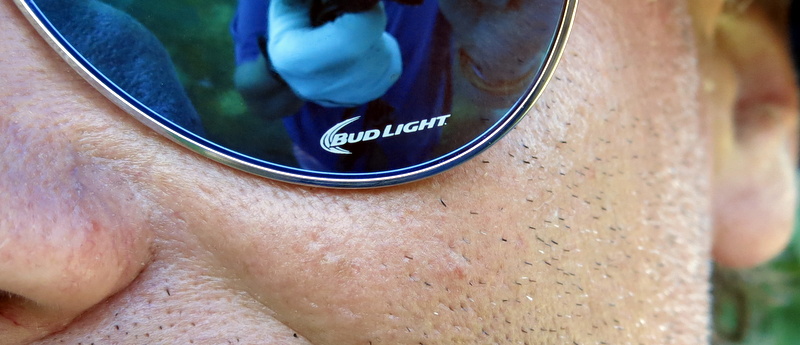
The player endorsements are more persuasive, because you know the players really do use they products they promote:

budlightglasses

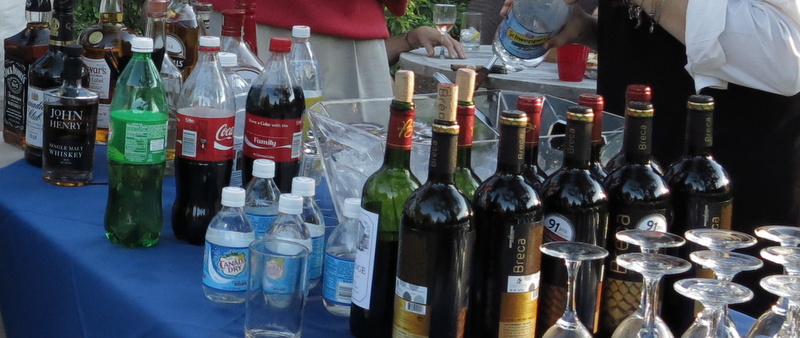
There are always plenty of refreshments:

cocktailparty

We get pizza during the putting contest:

puttingpizza

Faster foursomes are allowed to play through:

P1160458

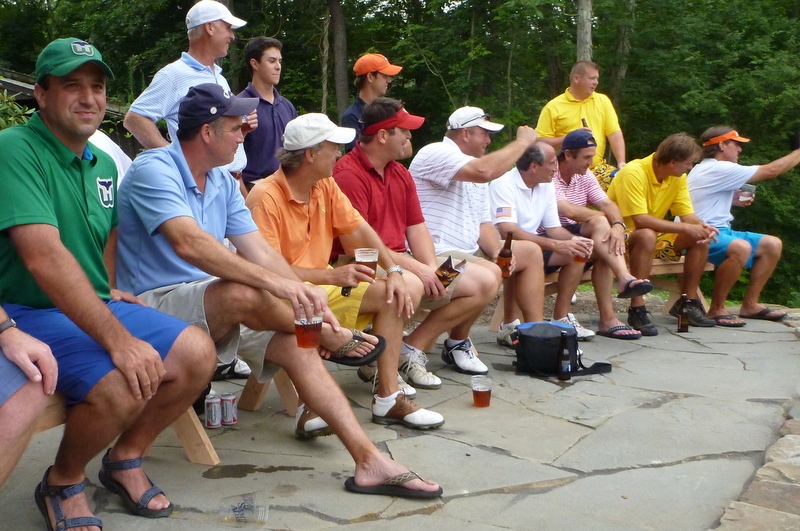
There are moments of high drama—like when the pro has to explain to a member who didn’t read her email that the course is closed all weekend, except for participants:

uhoh

And you see shots the pros won’t even try:

klingerrally

IMG_0517

How to Make a Golfer Choke

UNIVERSITY PLACE, WA - JUNE 21:  Dustin Johnson of the United States watches his missed birdie putt on the 18th green during the final round of the 115th U.S. Open Championship at Chambers Bay on June 21, 2015 in University Place, Washington.  (Photo by David Cannon/Getty Images)

(Photo by David Cannon/Getty Images)

When Dustin Johnson screwed up on the final green at Chambers Bay, avid golfers all over the world wept for him. After all, how many of us, at some point, haven’t three-putted from twelve feet to lose the U.S. Open? My friends and I were especially sympathetic, because we have just about perfected choking. In several of our regular games, we play an add-on feature on the eighteenth hole called All Balls Count—and that does it.

18rayputt

Our eighteenth (which is also our ninth, played from slightly different tees) is theoretically a pushover: a very short par 4, just 250 yards or so, slightly uphill:

P1160309

But it can be diabolical, because there are trees on both sides, and the green is a redan, and there are lob-devouring bunkers both in front and behind, and out-of-bounds is in play from the tee and the fairway and even the bunkers, and when the hole is cut in the front left corner getting close from almost anywhere can be virtually impossible.

P1160304

Note the expression of agony on Howard’s face:

18howardlob

Shots like that become even harder when guys are sitting on the picnic benches above the green, watching:

P1000804

And they become harder still when Hacker (real name) announces on the first tee that, even though we’re playing just one best ball that day, on the eighteenth hole all four scores in every foursome will have to be counted. That can be enough to make even a very good player slice his tee shot into the pine trees on the right, then pound his second shot straight down into the pine straw, then have no choice but to take an unplayable lie (still in the pine straw), then skull his fourth shot into the bunker over the green, and so on.

P1150935

Meanwhile, all three of his teammates—who are feeling even more pressure not to screw up, since they now know that their team score on the hole is virtually guaranteed to be at least four or five over par—are finding their own ways to implode.

18mikepitch

Try it.

P1160280

Which Nine Was That?

OldCourseLayout

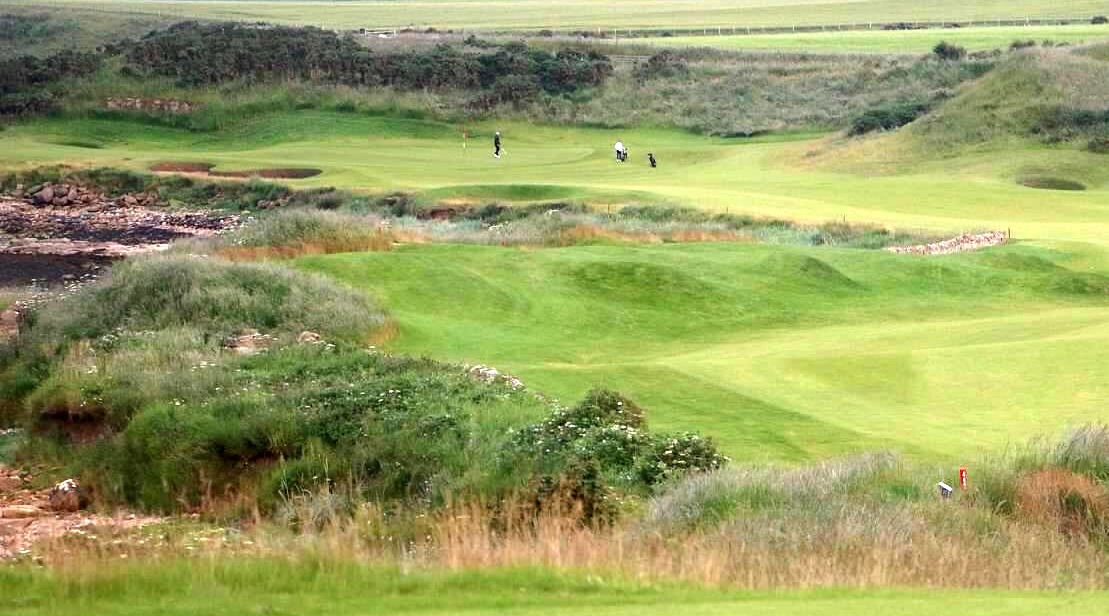
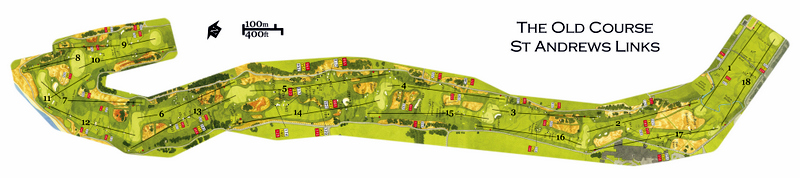
ESPN’s scorecard graphic for the Open Championship is labeled “front nine” and “back nine,” but the Old Course doesn’t have a front and back. You play nine holes “out,” making a little loop at the bend of the shepherd’s crook, then nine holes “in.” “Outward nine” and “inward nine”—he preferred local terms—would be more accurate. But not for every course, even on the Open Rota. People often say that out-and-in is a defining characteristic of links golf, but it isn’t. Troon (for example) does play nine out and nine in, more or less, but the holes at Carnoustie (for example) wander around:
CarnoustieLayout.jpg

And there many variants.
“Front” and “back” actually don’t make sense on many golf courses. It’s rare to find a club at which the first nine holes you play are laid out in front of something, and the second nine holes are laid out in back of the same thing. Sometimes the nines are right and left; sometimes the holes are all over the place; sometimes—as on nine-hole courses, where you play the same holes twice—the nines are essentially on top of each other (upper and lower?).
Bobby Jones wanted TV announcers to refer to the nines at Augusta National as the “first nine” and the “second nine,” partly because “front” and “back” weren’t accurate, and partly because he felt that “back side”—a common variant—was indecently anatomical. One nice thing about “first nine” and “second nine” is that they work for any golf course, including your course, my course, and the Old Course. Golfers will never change, naturally—but if it came to a vote I’d go with Jones.

OldCourseStarter1992

Reader’s Trip Report: The U.S. Open by Periscope

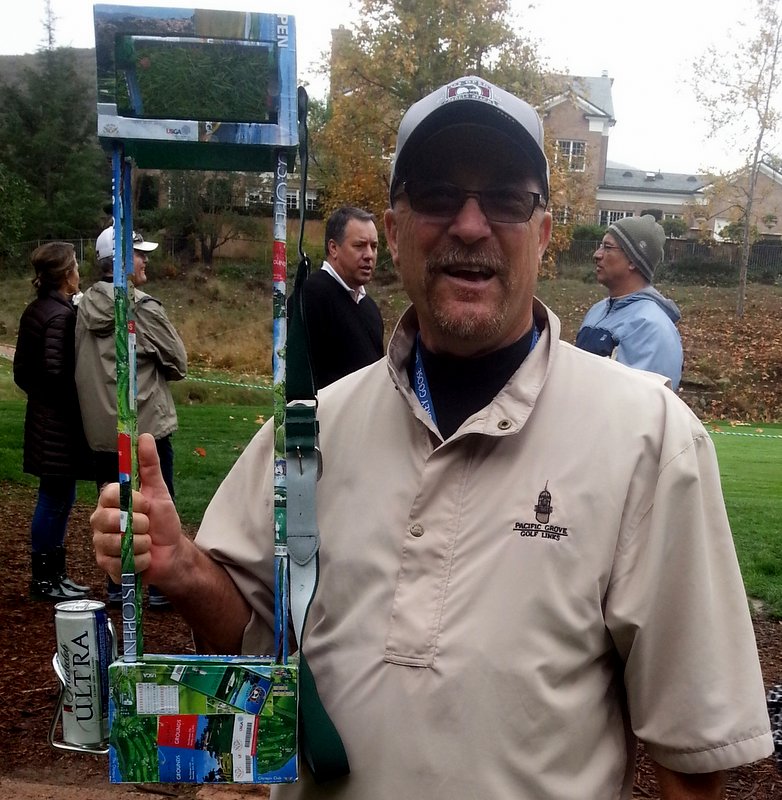
I met Steve Davis, a reader in California, at Tiger Woods’ World Challenge in 2012. He was easy to spot because he was carrying a homemade periscope, which he was using to see over the heads of people standing in front of him.  Note the beer holder:

stevedavisperiscope2012

Periscopes used to be common at golf tournaments, including the U.S. Open. These two are from 1988:

openperiscope88.jpg

Many spectators at the 1993 Ryder Cup, which I attended (at the Belfry, in England), watched the tournament through periscopes that looked like the boxes that bottles of Johnny Walker scotch come in. (Johnny Walker sponsored the tournament.) The Belfry is a terrible course for spectators, because there are few good vantage points. The periscopes made things better for the people who had them and worse for the people who didn’t. (I saw one guy carrying a paint can, which he stood on until he got too drunk to keep his balance.) Davis’s periscope is a big improvement over those old ones, because the mirrors are separated by dowels rather than solid panels: if you’re standing behind him, you can see through it. He has taken versions of his invention to many tournaments, including this year’s U.S. Open:

stevedavischambers.jpg

Davis works for a copier company, and has “wallpapered” his periscope with color copies of golf mementos. His report from Chambers Bay:
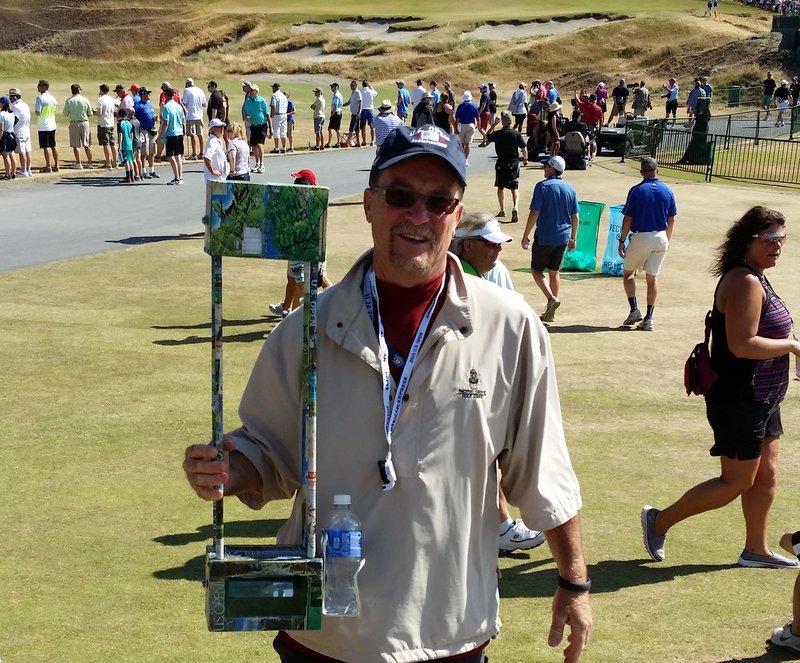
I probably don’t have to tell you how great the U.S. Open was this year. The average person walking the course couldn’t see a lot, though. The fairways were so brown that it was hard to pick up the ball off the tee box. If you were lucky enough to be standing close to a green, you were set—but don’t move and think you’re going to find another spot like that one. My periscope saved my ass, because I could go pretty much anywhere and still see. Here I am on the ninth hole, a par 3:

stevedavischambers2

Davis continues:
I let a lot of other people use it on Saturday and Sunday, and they were amazed at how well they could see from where they were standing—including one girl who was happy because she could watch Jason Day putting on No. 10. The periscope I took to Chambers Bay was an improvement over the one you saw at Sherwood Country Club. I changed the mirror angle, to give it a better field of vision, and I removed the belt strap, because I found that it was just as easy to carry without it, by putting my arm through the poles. I kept the beverage holder, though.
davischambersgate.jpg

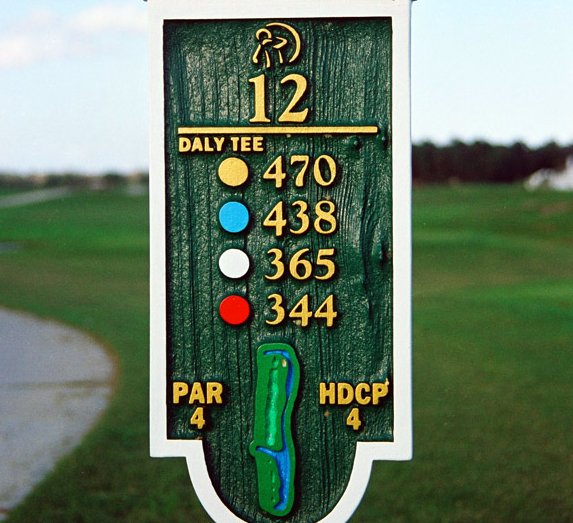
Beef Box: What’s With the U.S.G.A.’s Cheesy Tee Signs?

It’s a dumb thing to get worked up about, but I hate golf course signs that are either (a) made of plastic that tries to look like wood or stone, or (b) made of wood or stone that tries to look like plastic. Here’s an example of the second type (or maybe it’s the first):

golfsignwood

And here’s an example of the first type (or maybe it’s the second):
tee sign-001

Actually, I don’t know what it’s trying to look like. Cream cheese? Yuck.

wickedsticksign

Is This the World’s Greatest Golf Course?

P1130274

On Memorial Day weekend, I played Friday afternoon (lost five dollars), Saturday morning (came in third in a two-man scramble, playing with Tim), Saturday afternoon (advanced to the final in the member-member, also playing with Tim), Sunday morning (won six dollars), Monday morning (won low gross in the nine-hole Memorial Day mixed shamble, playing with Madeline—my golf wife—and an actually married couple), and Monday afternoon (lost five dollars). Then I played again on Friday (lost five dollars) and Saturday morning (won the member-member, one-up, playing with Tim.) That was a pretty good eight-day run, so I wasn’t totally bummed when we had thunder, lightning, and heavy rain just before 7:00 the following morning.

wundermapam
I sent an email to the Sunday Morning Group saying I’d bring a couple of decks of playing cards, and Hacker (real name) suggested that we eat our cheeseburgers and hot dogs (supplied by Barney) for breakfast, instead of lunch. But the lightning had stopped by 7:30, so we played golf instead of setback. One very good thing about rain is that it scares away slackers: twenty regulars showed up, and we had the course to ourselves.

P1150667

Getting soaked was better than inhaling pine pollen—something we’ve done a lot of this spring:

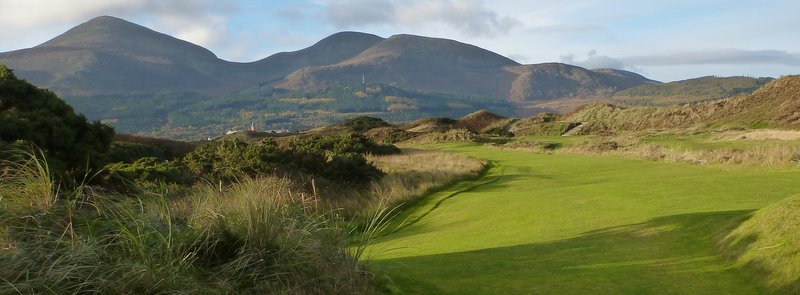
P1150687Because I was up early on both Saturday and Sunday, before I left for the club I watched some of the Irish Open — by which, of course, I mean the Dubai Duty Free Irish Open Hosted by the Rory Foundation. The D.D.F.I.O.H.R.F. was held this year on a course that many golfers would pick as the best in the world: Royal County Down, in Newcastle, Northern Ireland.
P1100527

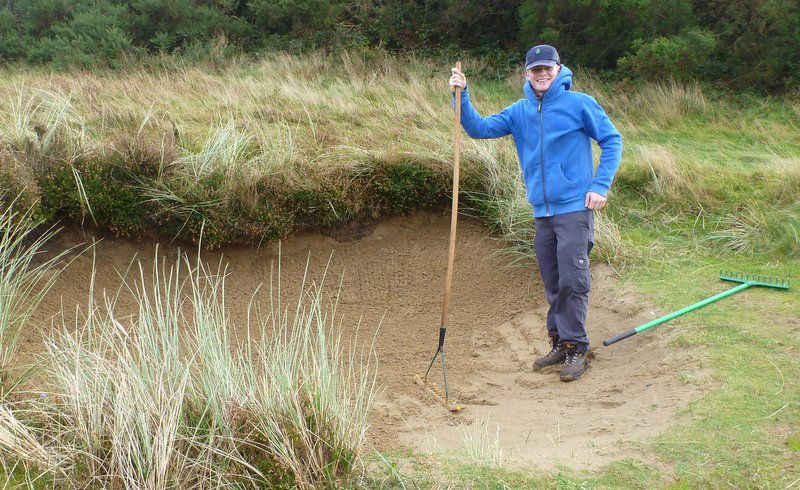
Among its many memorable features are its bunkers, which are maintained by vengeful demons:

P1100739

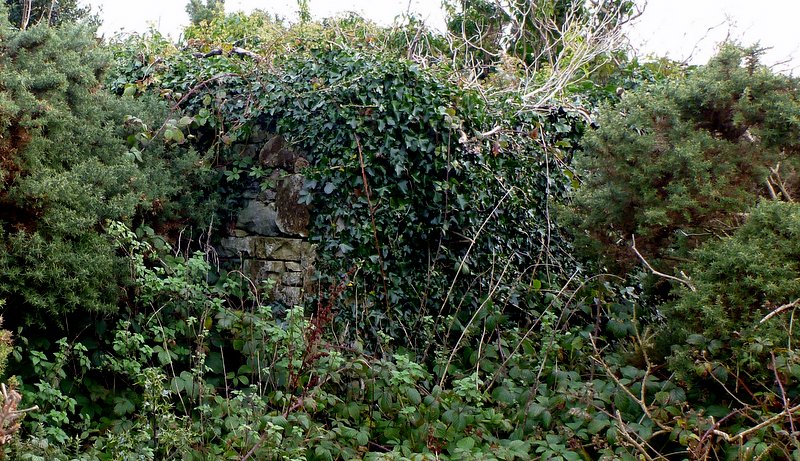
During a round at Royal County Down in 2013, my playing partner and I waded into a jungle of whins and briers near the eleventh tee to look for a century-old relic that a caddie had told me about two years before: the remains of a small stone building, which the maintenance crew had uncovered during an aggressive gorse-removal project. We found it, at some risk to our clothing, although it was so overgrown that we couldn’t see much more than one corner.

P1100734

Later that day, Harry McCaw—a past captain of both Royal County Down and the Royal and Ancient Golf Club of St. Andrews—told me that he thought the structure might once have served as the literal “club house”: the place where early players stored their clubs.

P1100513

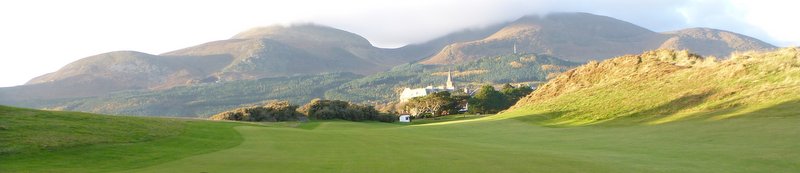
I had driven to Newcastle from Dublin, a hundred miles to the south, and during part of the trip I followed Mourne Coastal Route, a scenic highway. Irish roads are narrow under any circumstances; they become narrower if your eyes are repeatedly drawn to the hills and out to sea—a danger that day, because the sky was so clear that I could see the Isle of Man, halfway to the English mainland.

P1100797

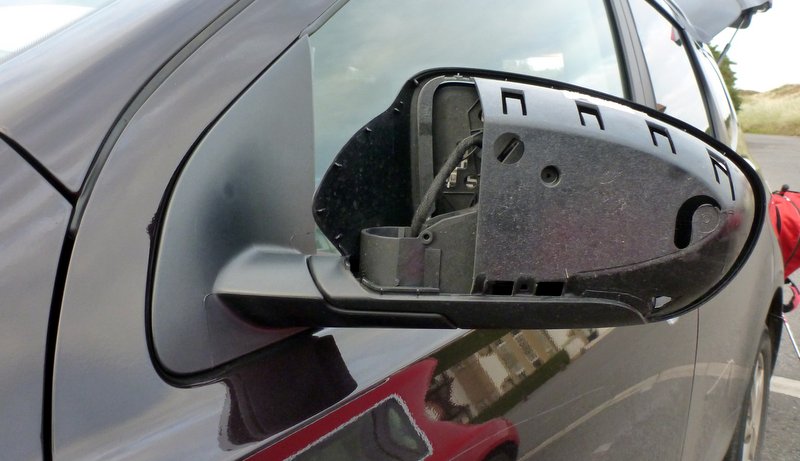
My parents once visited Ireland with another couple, and on an especially harrowing stretch of road my mother, who was sitting in the back seat with the other wife, yelled at my father to stop steering so close to the edge. He innocently raised both hands, to remind her that, in Ireland and the U.K., the driver sits on the right, not the left. During my own trip, I knocked the cowling off the passenger-side mirror of my rental car. I told the clerk at Avis when I returned the car, but she said it happened all the time, and not to worry about it.

P1100843

Will the Open Championship ever be held at Royal County Down? Fingers crossed.

Report (Including Lunch) From the Olympic Club

DSC2039

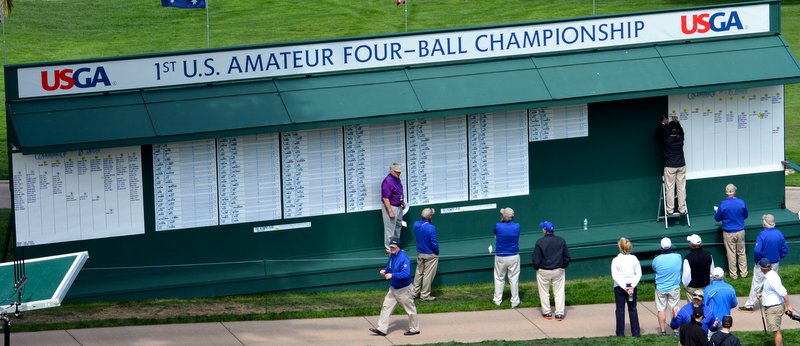
Our golf course has just nine holes, and from the tips it’s only a few inches longer than 5,500 yards, and if you want lunch you have to make it yourself. Nevertheless, the Sunday Morning Group managed to send two golfers—Addison and Todd—to the first United States Amateur Four-Ball Championship, which was held at the Olympic Club, in San Francisco, earlier this month.

DSC1829

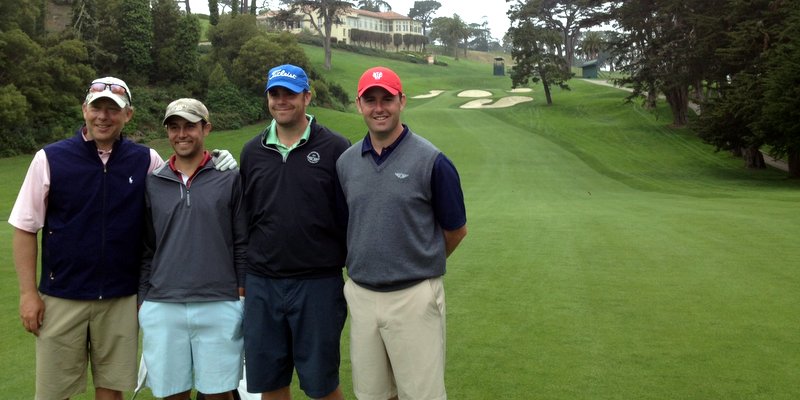
They qualified by shooting 65 at our state’s qualifier, at Mill River Country Club, back in September. As a matter of fact, we really sent three golfers to Olympic, because the other team that qualified in our state (by shooting 66) was Ben D.—an honorary SMG member by virtue of his having come on one of our annual golf trips to Atlantic City—and his brother, Daniel. Addison, Todd, Ben, and Daniel played their practice rounds together. In the photo below, which was taken on Olympic’s Lake Course, Ben is the one who didn’t listen when the photographer told them not to look at the camera; the others, from left to right, are Todd, Addison, and Daniel.

lakepractice

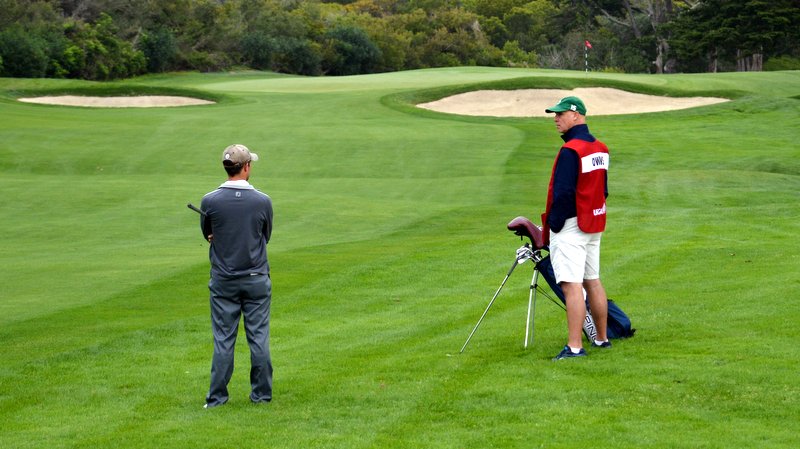
Addison and Todd didn’t make it to match play, and Ben and Daniel lost their first match, but they all had a great time. Addison’s mother, Vi, took lots of pictures. Here’s Todd and his daughter Amanda, who caddied for him:

DSC1934

Addison’s caddie was his Uncle Lance, who plays in our member-guest with Addison’s father, Reese, and is therefore an honorary SMG member, too:

DSC1991

Here’s Addison’s report:

We were treated like pros by the USGA and the Olympic Club. They shuttled us back and forth between the hotel and the course, and we were able to use every imaginable amenity in the clubhouse: pool, steam room, hot tub, you name it. Everything was complementary except alcohol. We had our own lockers, and our shoes were always polished. The practice facilities were open from 7 to 7 each day, and the range balls were Pro V1xes. I should have just packed my sleeping bag and stayed in the locker room.

DSC1890

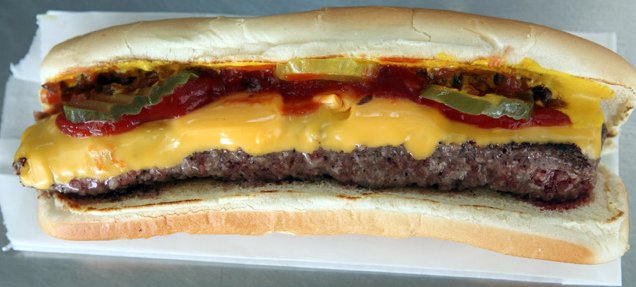
The trip gave everyone multiple opportunities to sample an Olympic specialty: the burger dog. It’s a hamburger that’s shaped like a hot dog and served on a hot-dog bun, and it was invented in 1950 by a man named Bill Parrish. It’s served in a little bag, so you can eat it with one hand and not drip mustard on your shirt.

Olympic burger dog

Todd says he’s going to try to reproduce burger dogs the next time it’s his turn to bring lunch for the Sunday Morning Group. Maybe add bacon?

burgerdogwitheverything-001