Don’t Miss the Coolest Feature on the Masters Website

Screenshot 2015-04-012

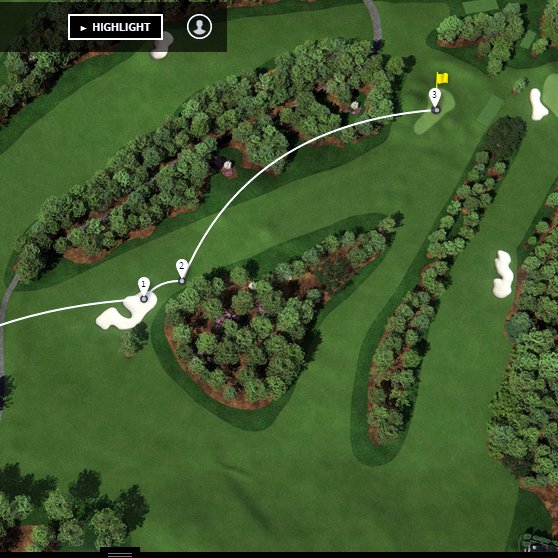
It’s called Track. Here’s how Zack Whittaker explained it on ZDNet:

The Augusta National Golf Club, which hosts the Masters every year, has dozens of lasers scattered throughout the course. Those lasers kick out a number of different pieces of data, including the location of the ball (determined on three-axes) and the resting position of the ball, which IBM runs through its cloud and visualizes. The end result is a play-by-play visualization that allows the viewer to interact and see the ball’s course, the distance of each drive, and other interesting nuggets of data. And this happens in a matter of seconds. Simply put, you can take any device and crank open the Masters’ website, and see how the ball traveled throughout the course. Using the HTML5 web standard, any smartphone or tablet user can access a simulated map of the course. iPad users have the benefit of using the internal gyroscope to visualize the play from any angle.

Click on any shot and Track displays both the yardage and the yardage remaining, and it gives the length of every putt. Keep it open in your lap while you watch the television broadcast. It’s like having your own universal instant replay. No more wondering about what your favorite players are up to off-camera.

Screenshot 2015-04-11 06.56.36.jpg

Masters Countdown: Why CBS Refused, for Sixteen Years, to Show Augusta National’s Twelfth Hole

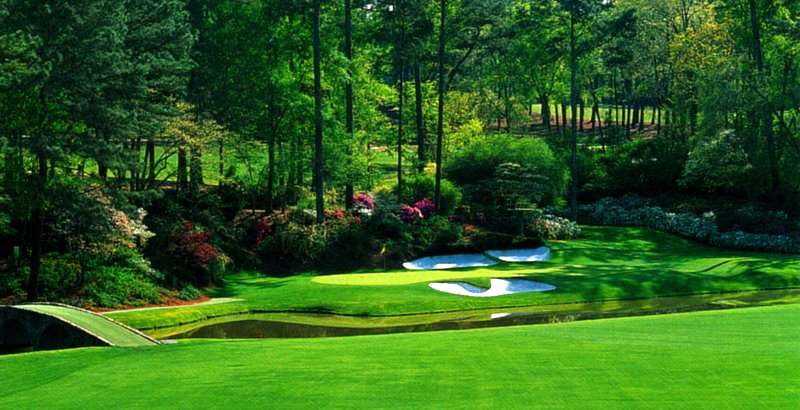
ANGC 12-001

The Masters first appeared on TV in 1956, on CBS. (NBC, which covered the tournament on radio, had turned it down.) CBS initially wanted to show little more than the eighteenth hole, but the club said it would forego $5,000, half its fee, if more of the course could be included. CBS added a second transmission station, but the coverage was still minimal: two and a half hours over three days, showing just parts of the last four holes.

Augusta National argued for more. The club’s television committee, in its report on the second broadcast, in 1957, wrote, “A most picturesque part of our golf course lies about the twelfth hole and thirteenth green. An attempt should be made through employment of portable cameras to bring this area into live broadcast. If this is impractical, a few films of the area could be shown.”

Seve 12-001


CBS disagreed that there was any need to show more of the course, even on film, and it stuck to that position. Seven years later, Clifford Roberts, the club’s chairman and co-founder—after reading in Golf World that CBS was planning to cover six holes at a lesser tournament, the 1964 Carling World Open, at Oakland Hills—wrote to Jack Dolph, who was then the network’s director of sports, to ask why the Masters could not be given the same treatment. Dolph replied: “It’s true that we are covering six holes of the Carling’s rather than four as we do at the Masters. This was a commitment made in acquiring the rights to the Tournament; one on which Carling’s insisted. We have grave doubts that this extra hole coverage will add to the overall impact of the tournament, and we are, in fact, giving the extra two holes the very minimum of coverage.”

Roberts did not give up, and in 1966 CBS finally agreed to extend its coverage beyond the fifteenth hole, by adding a camera near the fourteenth green. Coverage of the thirteenth green began two years later, in 1968, after Roberts suggested moving a camera from the far less interesting fourteenth tee. The twelfth hole wasn’t shown live until five years after that, in 1973—sixteen years after the club’s original suggestion.

The twelfth hole might not have received its own camera even in 1973 if Roberts had not effectively tricked CBS into putting one there. The year before, ABC Sports had asked the club for permission to film the twelfth hole during the 1972 Masters, for a prime-time sports special that it planned to broadcast on the Monday following the tournament. “As you know,” an ABC executive wrote to Roberts, “this hole has never been shown on the live presentations of the Masters, and our segment, which would probably be only five or ten minutes in length, would not only show how some of the top finishers play this hole but would also capture the many moods and some of the unique happenings that transpire at this locale.”

Roberts—who knew that ABC for years had yearned to win the Masters contract away from CBS—agreed. CBS noticed. The following year, for the first time, it placed a camera of its own on the twelfth hole.

Golf in Morocco: The King and Billy Casper

hassanfiver

The Hassan II Trophy, held last week in Morocco, was named for the man who ruled that country from 1961 until his death, in 1999—as I wrote in my previous post. Shortly after Hassan died, a journalist described his legacy as “economic backwardness, rising demographic pressures, widespread corruption, vast and open disparities of income, urban overpopulation, rural decay, illiteracy, inadequate public services, underutilization of resources and environmental destruction.”  But he loved golf! To help him learn the game and keep him company while he played, he imported a number of American pros, among them Claude Harmon (who was his teacher), Butch Harmon (who served as the head pro at Dar es Salaam Golf Club, in Rabat), and Billy Casper (who came to like the King and the country so much that he described himself to me as “half-Moroccan.”) That’s Casper on the left in the photo below, and King Hassan in the middle:

CasperHassan

During my first trip to Morocco, in 2000, I got to visit the royal stables, in Bouznika, with two other journalists—something tourists ordinarily aren’t allowed to do. Bouznika is linked to Rabat by one of the best highways in Morocco, a four-lane expressway that could almost pass for an American Interstate, but our driver was unable to find it, so we traveled instead on back roads, stopping every few miles to ask unlikely people for directions.
The landscape along our route appeared to have been constructed from rubble with a thin layer of litter spread unevenly on top. We saw children tending small flocks of ill-looking sheep on the shoulders of the road; greasy shops that appeared to specialize in the sale of bald tires; old men defecating in the middle of otherwise infertile-looking farm plots; and abandoned buildings that were distinguishable from their occupied neighbors mainly by their lack of satellite-television antennas.
At one point, our driver asked for directions from a grimy man and two small grimy boys, who were cooking sardine-size fish in the ashes of a smoky fire within a few feet of the roadway. The boys would languidly throw a couple of fish into the fire, then languidly pull them out and pop them, whole, into their mouths. They didn’t seem to know where we were going, either—but eventually we found the stables and were able to admire king’s extensive collection of Arabian horses, which live in stalls furnished almost like hotel rooms and are closely attended by workers whose main job is to clean up after them as they amble over carpet-like turf. We also got a distant look at one of the King’s private golf courses. It was part of the same complex, and at that moment (as at virtually all moments) it was being played by no one. That’s me in the photo below; the golf course is in the background:

DLOmoroccokingscourse2000

Casper was the architect. He said the King had asked him to design a course for the site, and that he made drawings and sent them to the palace but ever heard anything back. “Then someone told me the course had been built—and from my drawings,” Casper said. It turned out that the King’s construction crew had simply superimposed Casper’s layout on the existing fields, and had done none of the indicated contouring. As a result, the fairways all run as the fields used to run, and the greens are all flat (and huge). Casper told me he had never played it—something he could have done only at the invitation of the King. Another journalist explained: “Morocco is a real kingdom, not a constitutional monarchy, and the King thinks like a king.” In other words, inviting the architect to give his own course a try is something that wouldn’t occur to him. We did get to sit on the roof of the King’s personal clubhouse, though—and that’s where I am in the photo above.

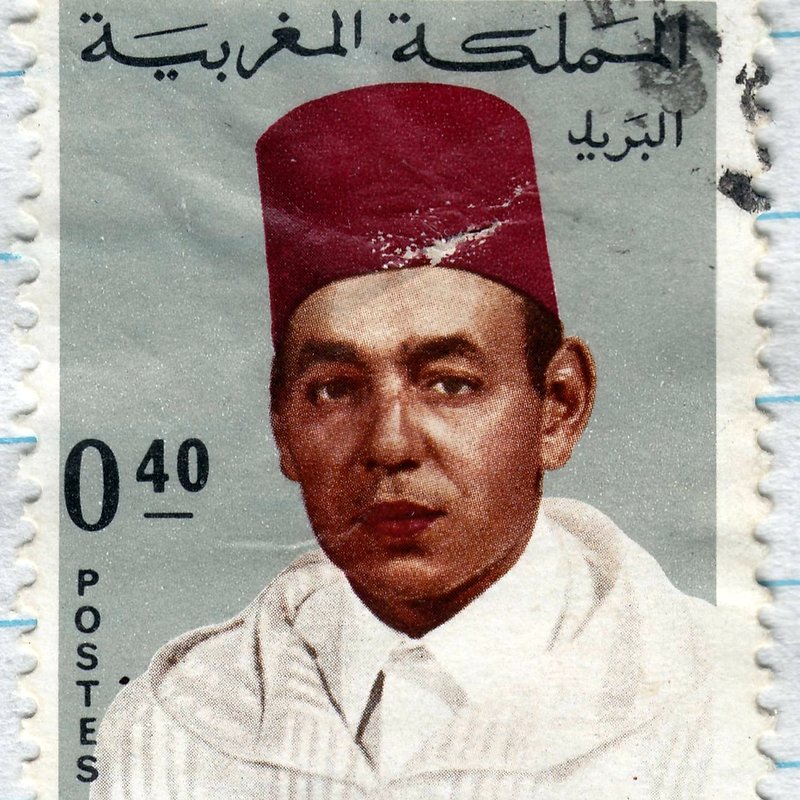
hassanstampsq

Golf in Morocco: Silver Tongs for the King’s Cigarette

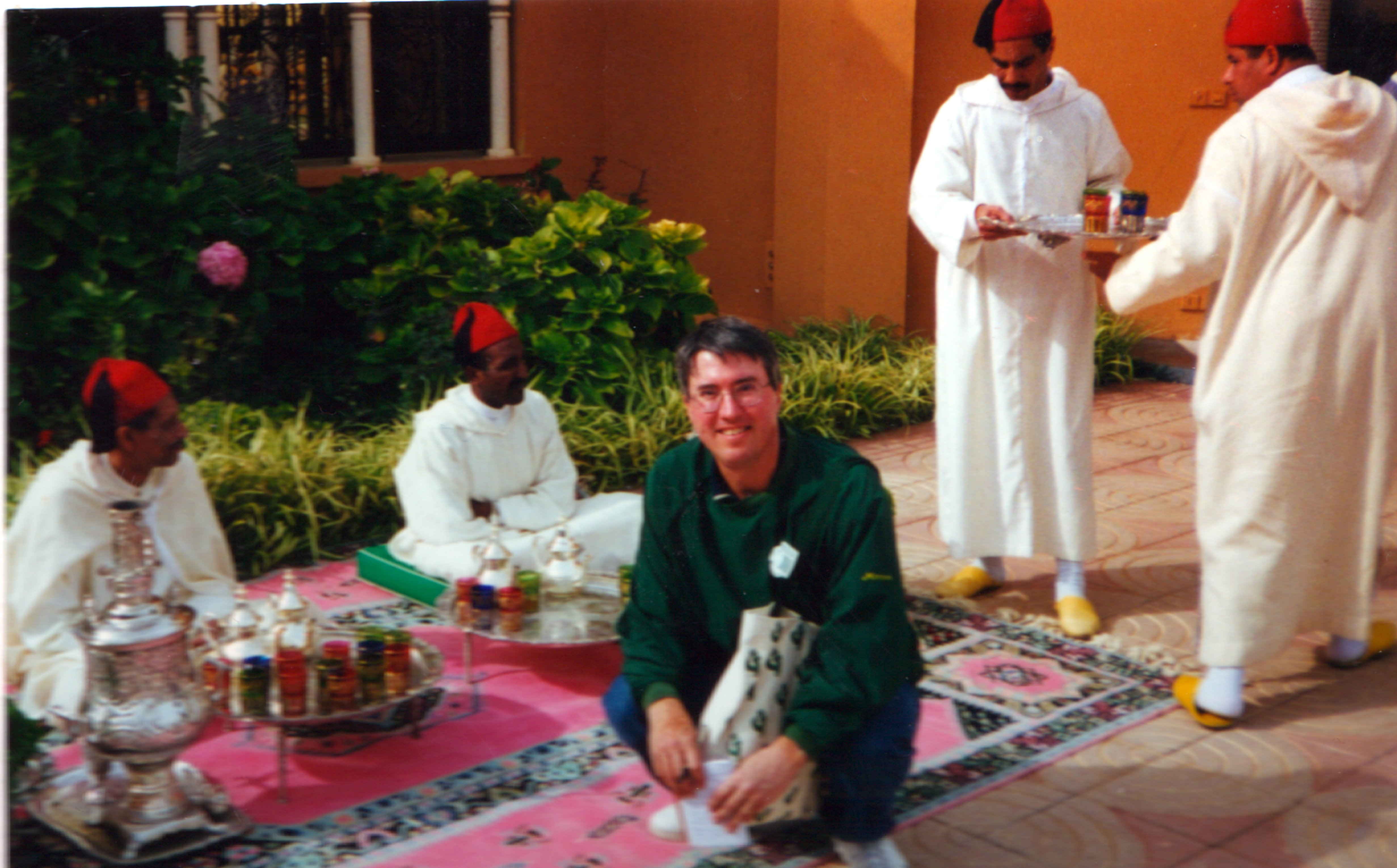
This past week, the European Tour was in Morocco, for the Hassan II Trophy. I attended that tournament in 2000, and I liked Morocco so much that, a few months later, I went back, with my wife and our two children. The Trophy didn’t become an official tour event until 2010, and when I was there it was played on a different course, but the broadcast of this year’s event brought back a lot of happy memories. Here I am having tea at the royal stables, in Bouznika:

dlomoroccotea2000

The tournament is named for (and was founded by) King Hassan II, who ruled Morocco from 1961 until his death, in 1999—the year before I visited. Hassan was a passionate golfer. He employed a squadron of caddies (one of whom was responsible for gripping the royal cigarette with a pair of silver tongs while the King swung his club), and shot mediocre scores that easily could have been worse (because kings are not obligated to play from bad lies or extricate themselves from bunkers). Hassan viewed golf not merely as a palliative to the tedium of absolute power but also as a potential bridge between his country and the United States—then, as now, the world’s most enticing source of exportable prosperity.

HasasanIIgolf-001

Hassan took up golf during the presidency of Dwight Eisenhower, whose widely chronicled enthusiasm had imbued the game with sort of hokey Free World allure—as did the contemporaneous rise of Arnold Palmer, who was golf’s first television star, and, a little later, the emergence of Jack Nicklaus, who turned pro the year of Hassan’s coronation.

morocco-lgflag (1)

The King was not a natural player, however, and by the mid-1960s he was looking for an American instructor to help him bring his scores out of the triple digits. He settled on Claude Harmon, who had won the Masters in 1948 and was the head pro at Winged Foot. Harmon made numerous visits to Morocco in the late sixties and early seventies, in return for which the King gave him, among other things, jeweled daggers, rugs, swords, a cigar box stuffed with cash and a Lincoln Continental Mark III. Harmon eventually moved his family to Rabat. In the early seventies, his eldest son, Butch—later the teacher of Tiger Woods—served as the head pro at Royal Dar es Salaam Golf Club, where the Trophy was held in 2000.

Dar-Es-Salaam-Rabat

During the tournament’s formative years, Hassan II had concerns unrelated to golf. In 1971, his forty-second birthday party was crashed by more than a thousand rebellious soldiers; they killed nearly a hundred guests before the King, who had hidden in a bathroom during the worst of the shooting, effected a change of heart in one of the revolt’s commanders by looking him in the eye and reciting the first verse of the Koran. (The rebel knelt and kissed his sovereign’s hand.) The following year, the King’s plane was attacked in the air by four F-5 fighters from his own Air Force. One of the plane’s engines was destroyed, but it managed to land in Rabat—where the rebels continued to strafe it until the King grabbed his plane’s radio and shouted, “Stop firing! The tyrant is dead!” Both incidents were followed by the inevitable bureaucratic shufflings and summary executions. Then the King went back to working on his game.

To be continued.

reaganhassan


Masters Countdown: Augusta National’s Worst Golfer Ever?

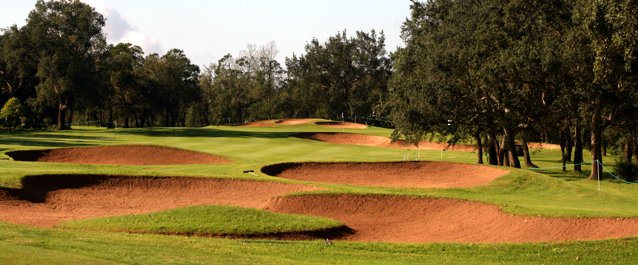
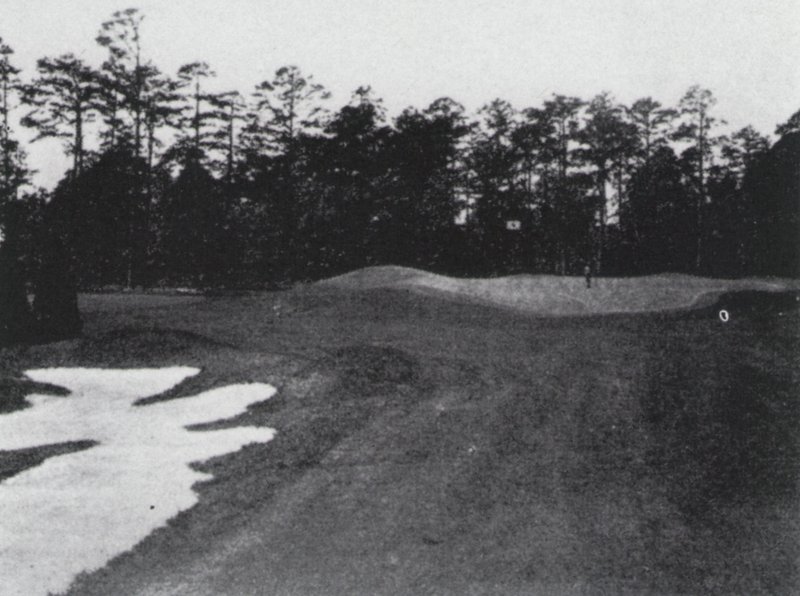
Here’s what Augusta National’s first green looked like during the first Masters, when the hole was still the tenth. That bunker was really more of a waste area. It was later removed, and a different bunker was added closer to the green:
ANGC-Hole-1

During the club’s early years, a small creek ran across the first fairway, at the bottom of the hill, less than a hundred yards from the tee. The carry over the ditch was so short that few players noticed, but a member named Clarence J. Schoo drove into it so often that it came to be known as Schooie’s Gulch. Schoo was the founder and president of a boxboard manufacturing company in Springfield, Massachusetts. The company doesn’t exist anymore, but Schoo’s name is preserved in the Schoo Science Center at Springfield College, of which he and his wife were benefactors.

schooiebox.jpg

At Augusta National one day, Schoo topped yet another drive into Schooie’s Gulch, and told Clifford Roberts, the club’s co-founder and chairman, “I wish you’d fill in that damn ditch.” Roberts did, during the summer of 1951—and sent the bill to Schoo. Or so the story goes. In truth, the ditch had always been a maintenance problem. Roberts also wanted to replace the club’s old Masters press tent, which really was a tent, with a Quonset hut. The new building was going to go to the right of the first fairway, near where the big scoreboard is today, and the ditch was in the way. The photo below shows the inside of the Quonset hut in the early 1950s. The sportswriters’ laptops look strange, but their beer cans and cigarettes are recognizable:

ANGC quonset.jpg

Schoo did pay for part of the alteration, but he did so gladly, and he almost certainly wasn’t surprised when he opened his bill. He and Roberts were close friends, He was also one of the most popular members, and he later served as one of the club’s vice presidents. Here’s a note that another popular member, former President Eisenhower, sent him after Schoo had missed Eisenhower’s birthday party:

Eisenhowerletter.jpg

Schoo was such a poor golfer that when he one day made a natural birdie Roberts decided that he should be paid the same cash pot that ordinarily went to a golfer who made a hole-in-one, on the theory that Schooie was never going to come closer. Another time, while Schoo was playing the seventh hole in a foursome that also included Roberts and Eisenhower,he hit a drive that traveled just a few yards, into a clump of pampas grass to the left of the tee. He said, “Well, in all the years I’ve been playing here, that’s the first time I’ve done that.” That summer, the grounds crew cut back the pampas grass and found many balls with his name imprinted on them. On another occasion, Schoo said with exasperation that he must be the worst golfer in the club. His caddie, who had been around long enough to hear stories but not long enough to recognize faces, said, “No, sir. The worst golfer in this club is Mr. Schoo.”

Nine Holes With a Mysterious Stranger, Plus Losing on Purpose

Dayton Olson was a talented amateur who turned pro in 1965. He played in one PGA Tour event and one Champions Tour event—the 1983 U.S. Senior Open, at Hazeltine—and made the cut in both. He also won the 1963 Manitoba Open, a PGA Tour Canada tournament now known as the Players Cup. He owned driving ranges in Minnesota, and died in 2011.
daytonolson

Recently, his son Mike, a reader in Oregon (and a talented amateur himself, with a lifetime low handicap of plus-2) wrote with some reminiscences:

Winning the Manitoba Open got my dad a ten-year exemption. We lived in Minnetonka, and every summer we would go up to Winnipeg for a little vacation, and my dad would play in the tournament. When I was old enough, I would caddie for him, and he would let me bring my clubs. I played with him during a practice round before one of the Opens, and at about five in the evening, when we were on the tenth tee, this guy comes walking around some shrubs and asks if he can join us. I thought he was a nut, or an old hacker, but he and my dad knew each other, and my dad whispered, “Just watch him.” He teed his ball on a golf pencil, and I was thinking I don’t want to play with this clown—but then he striped it 260 down the middle. He played very fast, and would often talk while he was swinging, but he kept hitting near-perfect shots. It was intimidating for me—but he was very friendly, and when I would hit one of my few good shots he would say, “There ya go, kid—good one.” He seemed like he was just fooling around, and he took zero time, especially for putts, which he didn’t even line up, but he still shot about two-under for nine holes.
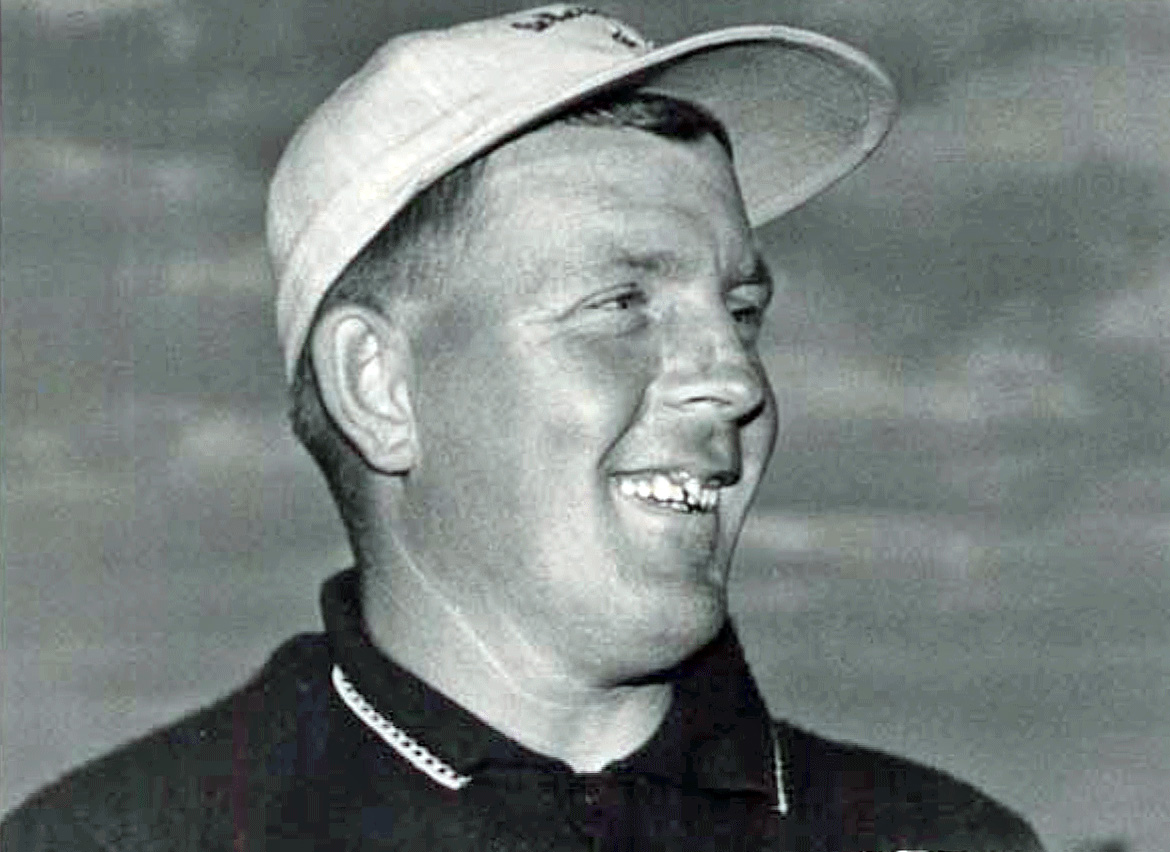
Moesmiling The stranger was the Canadian golf legend Moe Norman (photo above), who, among numerous other accomplishments, had won the Manitoba Open three years in a row, in 1965-67. Olson saw him again at the same tournament in 1971, when he was fifteen:

I caddied for my dad, and he did well in the tournament, and when he was finished we left his bag by the practice green and he went into the clubhouse. Moe was leading, so I stayed. He ended up in a tie, and 60 or 70 of us went out to watch the playoff. On the second hole, Moe has about a 40-footer for birdie, and he lags it up, like, two inches from the hole, and the other player, a young guy from Florida, says “Pick it up” —and Moe scoops up the ball with his putter. As they’re walking to the next tee, some tournament officials come running up, and they’re telling Moe he can’t pick up his ball like that, because this is stroke play, not match play. And Moe can’t believe it. He says, “He gave me the putt—are you guys deaf?” And then, “Well, this sure is a bunch of crap. I’m never coming back here. Winnipeg is a bush town anyway.” And he starts walking off the course.

The other player was John Elliott, Jr., then in his early twenties. He had served in the Army in Vietnam, and had won the Bronze Star. He was married to Sandra Post, a Canadian pro, who won eight times on the LPGA Tour, including the 1968 LPGA Championship. (The marriage didn’t last.) Today, Elliott is a teaching pro in Florida and an occasional Golf Digest contributor.

April 07-Your Game, : How to Hit Practice Shots

Elliott told the tournament officials that he was responsible for Norman’s violation, and that he didn’t want to win because of a mistake that he had caused. The gallery and the tournament sponsor got involved, too, and, in the end, the officials decided to let the playoff continue. Back to Olson:

They ran after Moe, and begged him to come back. You could tell he was really angry, and that he didn’t want to keep playing. But eventually he did. They let him replace his ball and tap it in. When they got to the eighteenth green, Elliott almost made a fifteen-footer for birdie, and made par. And Moe—who had hit one of the most beautiful 7-irons I’ve ever seen—had maybe an eight-footer for birdie. He doesn’t even look at it, but hits it way too hard, like six feet past the hole, and then he hits the next putt almost without stopping, and misses that one, too. And it was obvious to me that he had missed on purpose. He shook Elliott’s hand and walked straight into the parking lot. The whole thing was strange, but also kind of humorous, because to me Moe seemed funny when he was mad.

Elliott won $1,500, Norman $1,125. (One stroke back: John Mahaffey.) A week later, at the Alberta Open, Norman and Elliott tied for the lead and played together again, in the final round. That time, Norman birdied four consecutive holes on the final nine and won by three.
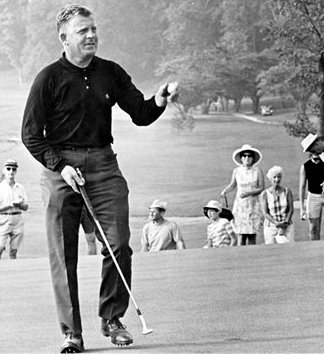
moefairway

Olson and his dad spent a lot of time together on golf courses, and they won a father-son tournament conducted by the Oregon Golf Association when his dad was a super-senior. Olson continued:

I have won four club championships and my lowest score ever on a par-72 course is 65, but I have never been and never will be one tenth as good as my dad was. He was just an outstanding player. The only rotten thing is that he had horrible arthritis in his fingers, wrists, and hands. And he didn’t have it just when he was old; it started when he was in his forties. He still managed to play good, though. I caddied for him all the time—Carson Herron, the father of Tim Herron, was a member of his regular foursome—and he never ceased to amaze me.

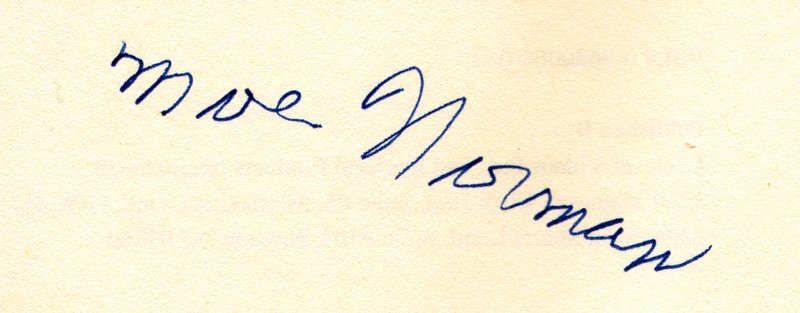
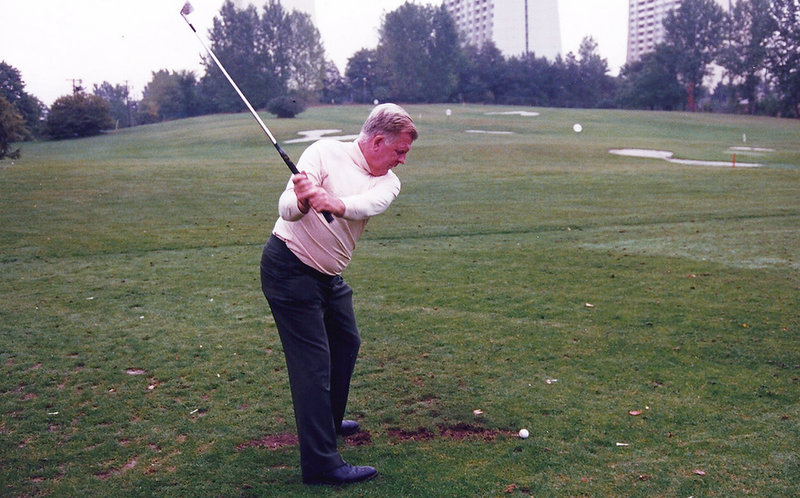
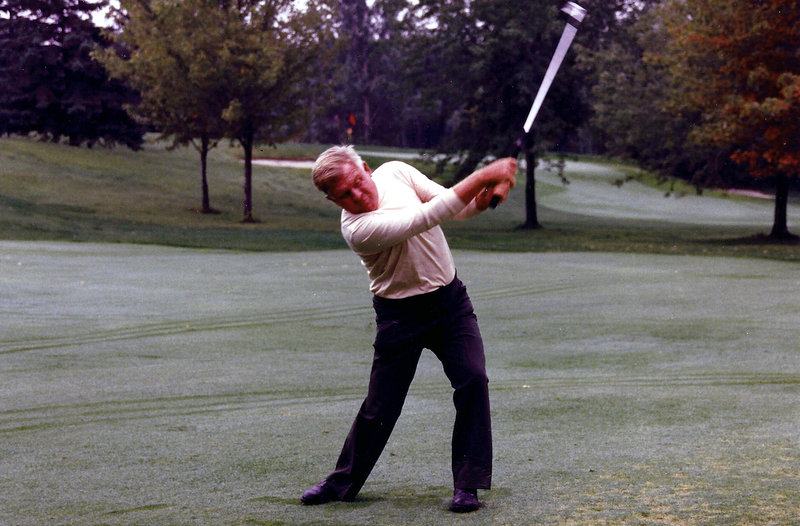
Here are a few photos, from 1987, of Norman swinging, courtesy of Tim O’Connor and Todd “Little Moe” Graves, who have just published The Single Plane Golf Swing: Play Better Golf the Moe Norman Way. (The autograph at the bottom is from my copy of an earlier book of O’Connor’s, a biography of Norman called The Feeling of Greatness.) Graves teaches Norman’s swing at his own school, the Graves Golf Academy. I’ve played several rounds with him, and I once played a round with both him and Norman, and I wish I could strike the ball one tenth as well as either of them. Make that one hundredth.
MoeOakdale87a

MoeOakdale87b

MoeOakdale87c

MoeNormanAutograph

Amy Alcott, Walter Keller, Dean Martin, and Riviera

amyalcott

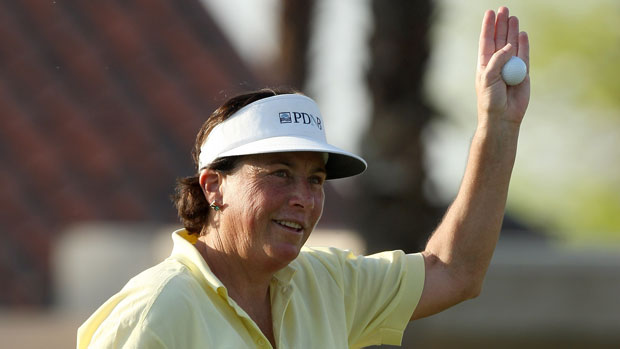
On Saturday, Jim Nantz interviewed the great Amy Alcott—who won twenty-nine LPGA Tour events, beginning in 1975, when she was nineteen—during the CBS broadcast of the Northern Trust Open (nee the Los Angeles Open), at Riviera. In 1995, on assignment at Riviera for Golf Digest, I met Walter Keller, who had been Alcott’s teacher. He told me that he first saw her on the practice tee at Riviera when she was a young girl. “I fell in love with the kid right there,” he said. “She hit a beautiful shot, and I said, ‘Hit another.’ She did. ‘Hit another.’ She did. I turned to her mother and said, ‘You are a blessed woman.’” Keller arranged for Alcott to become a member of the club—and here he is a little later, with Alcott and Tony Sills (another student of his) and a significant collection of junior trophies:

alcottkellersillstrophies.jpg

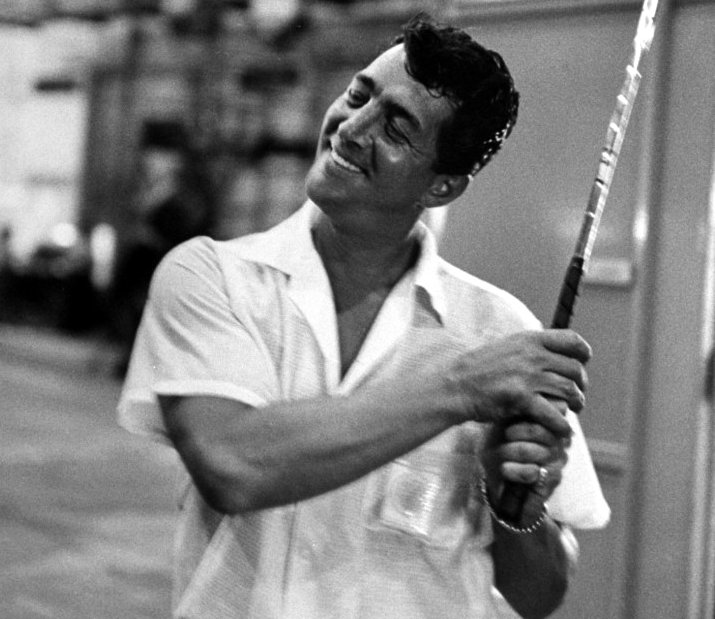
Keller, who died in 2003, at the age of ninety-five, said that Alcott had a difficult relationship with her father but that club members looked out for her. “She had twenty fathers here,” he said. “Dean Martin would see her on the driving range, swing by in his cart, and say, ‘Hey, Amy, let’s play nine holes.” One of many, many reasons to love Riviera.

Dinoandluckies

Let’s Check in With That Guy Who Has Played Every Golf Course in Ireland

P1010962

Kevin Markham lives south of Dublin and knows Irish golf better than anyone. He has played every eighteen-hole course in the country and written two excellent books about them: Hooked, a course-by-course guide, with ratings; and Driving the Green, the story of the seven-thousand-mile trip during which he played them all while somehow remaining married:

drivingthegreen.jpg

I’ve had the good fortune to join him for rounds on four of the very best: Portstewart and Royal Portrush, in 2012, Royal County Down, in 2013, and the Island, in 2014. Here he is (on the left) at R.C.D., with Kevan Whitson, the head pro:

P1100282

And here he is at Portstewart:

P1010945

Recently, Markham wrote to say that the County Sligo Golf Club—which I’ve played, though not with him—has been undergoing significant changes. His report:
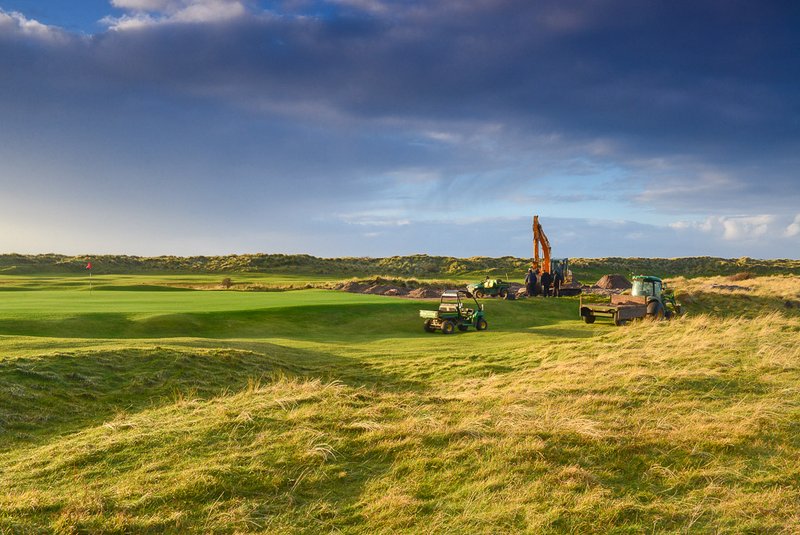
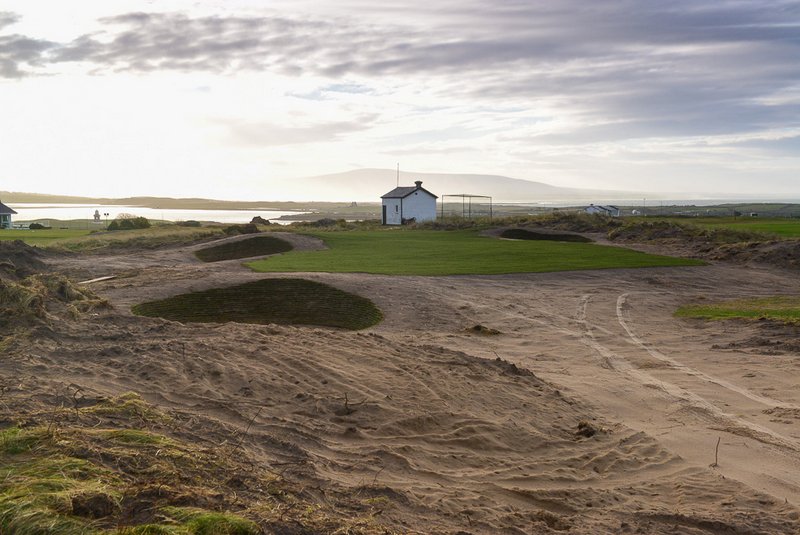
County Sligo Golf Club bears the hallmark of the great Harry Colt. His design work in the 1920s helped establish a global reputation for this links course, which is commonly known as Rosses Point. But times change, and in recent years the club’s profile, ranking, and revenues have declined. The response is a three-phase course upgrade under the guidance of the architect Pat Ruddy, a Sligo native. Phase One, which is underway, includes additional tee boxes, new bunkering, and extended greens, as well as one new green. It is a brave move to alter such a classic links course, but, Ruddy has said the improvements will “move County Sligo back to the very pinnacle of world golf.” One goal is to attract a major event. The ultimate prize would be the Irish Open in 2019, the same year that Royal Portrush is expected to host the Open Championship.

sligomarkhamA

sligomarkhamB

Ruddy is sometimes accused of creating courses that are too difficult. I once published a list of the five toughest Irish courses, and three of them were his (the European Club, Sandy Hills at Rosapenna, and Druids Heath at Druids Glen). That said, I adore the European Club, and I rate Sandy Hills highly. My issue with Druids Heath is that you rarely see the landing area from the tee, which I find unrewarding when you hit a good drive.
You can see more of Markham’s photos of the Rosses Point renovations, with informative captions, here.
I myself played Rosses Point in 2011. A club competition was scheduled for the day I wanted to visit—the toughest time to play a visitor round in Ireland (or Scotland or England or anywhere else) is Saturday morning, when tee times are usually reserved for members —but David O’Donovan, the director of golf, told me that he and I could play ahead of the pack if I didn’t mind teeing off at 7:26. To make certain I’d be there on time, I stayed at the Yeats Country Hotel, which, according to the website on which I made my room reservation, is 0.0 miles from the clubhouse. I could see the course from my window, and in the morning I arrived at the golf shop a few minutes before O’Donovan.
P1000167
Rosses Point had just held a major amateur championship, the West of Ireland (whose past winners include Padraig Harrington and Rory McIlroy), so the course was in great shape. O’Donovan, who grew up in town in a family of excellent players, insisted that we take a golf cart—an Irish first for me. When you’re in a cart, it’s hard to get a feel for any golf hole, but we did make excellent time.
Rosses Point begins with two good holes up a hill, followed by two very good holes back. Then you tee off over a cliff—on a par 5 called the Jump—and work your way around a stretch of linksland that appears flat from above but turns out to be filled with seductive complications. Here’s the view from the tee on the Jump (although the camera flattens the cliff):
P1000166
We finished in two and a half hours, and then, since the kitchen hadn’t opened yet, we played the club’s third nine, which adjoins the lower portion of the championship course. We caught up to and joined an older member, who gave up golf for twenty years to please his second wife but had now begun playing again (and was in the process of giving up the wife). “My game is coming back,” he said—a man at peace.
P1100199

Two Ryder Cup Shots You Didn’t See on TV

You didn’t see them because they happened in a different Ryder Cup, the one the Sunday Morning Group held while the American tour stars were getting whupped in Scotland.

upthecreek
Twenty-four guys signed up in advance, and Corey, our terrific pro, divided us into two teams, one red and one blue. The youngest guy in the field didn’t show, apparently because he had met someone interesting in a bar the night before. Corey took his place, after persuading his mother, our club’s immediate past president, to watch the golf shop for him. (The guy who didn’t show made a big mistake, in my opinion. The time to establish golf in a romantic relationship is at the beginning, before the non-playing party has had time to develop a case.)
smgrydercolors
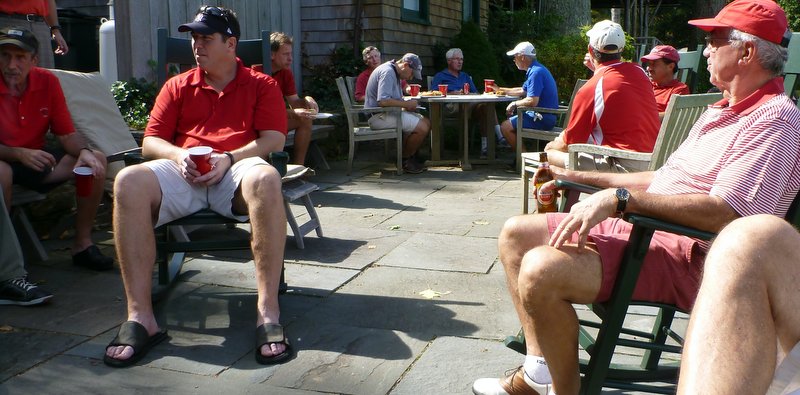
And after everyone had finished we had our usual lunch of cheeseburgers, hot dogs, and beer, on the patio near the practice green:
smgryderlunch
Before I get to the two shots that weren’t shown on TV, I’d like to make two general observations about the other Ryder Cup:
1. What is the source of Ryder Cup Europe’s pathological golf-course selections? In the sixties and seventies, the trans-Atlantic side of the contest was held exclusively on Open courses: Royal Lytham & St. Annes, Royal Birkdale, and Muirfield—an over-reliance on England, granted, but otherwise impeccable. Since then, the thinking has apparently been that crummy venues deserve international exposure, too. The worst is the Belfry, also in England, which has hosted the matches four times—more than any other course in history. The Belfry has just two good holes, the ninth and the eighteenth, and most matches don’t reach the eighteenth. This year’s course, at Gleneagles, was in the works when I first played golf in Scotland, in the early 1990s. At that time, the Scots had seemingly decided that the way to attract American golfers to Scotland was to hire Jack Nicklaus to build something that would remind them of Florida, cart paths included. Somebody, please, wake up the people in charge. The PGA Centenary Course, as Nicklaus’s creation is now known, isn’t even the best course at Gleneagles.
furykryder
2. There’s been lots of angry speculation about the reasons for this year’s American defeat, but no one, so far as I know, has hit on the real explanation: the extraordinarily annoying pre-shot routines of Jim Furyk and Keegan Bradley. In TV broadcasts of regular tour events, producers have become adept at keeping the cameras away from those two until they’re almost ready to make a real stroke. During the Ryder Cup, though, so little actual golf is under way at any moment that they had no choice but to make us watch full sequences—all the tics and twirls and feints and bird peeks and pocket scrunches and everything else. True, we were spared Furyk’s 5-Hour Energy wardrobe, and thank goodness for that. But the other stuff was increasingly infuriating, and by Saturday afternoon (I’m guessing) so many U.S. TV watchers were mentally rooting against Furyk and Bradley that the cosmic tide irretrievably turned. Those two golfers, between them, won two points and lost four; turn those Ls to Ws, and it’s a blowout the other way.
Now, back to the other Ryder Cup. The two shots you haven’t seen were both hit by Doug, who was my partner. In each case, he went on to triple- or even quadruple-bogey the hole. But that was OK because I had him covered.

The Sunday Morning Group Conquers All

trophythumb

Yale University has an undistinguished student body and a miserable football team, but it does have a tremendous golf course , which the U.S.G.A.—mysteriously but somehow characteristically—lists under “T,” for “The Course at Yale.” I’ve played two rounds there this year: one with Richard (a college classmate, who for two years lived within two doors of my own dormitory room but whom I didn’t meet until our thirty-fifth reunion), and one with Shep (an honorary member of the Sunday Morning Group) and his dad, Dick. Before I teed off with Shep and Dick, I visited the men’s locker room and discovered that the shelf above the sinks—mysteriously but somehow characteristically —held just a single toiletry item, a hair preparation I’d never heard of:

20140820_090031

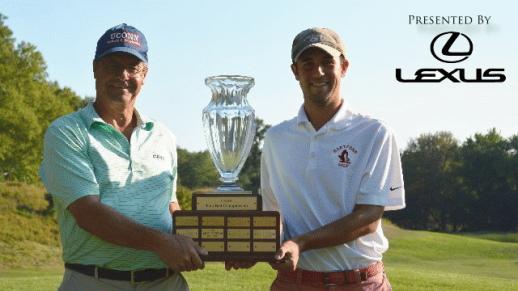
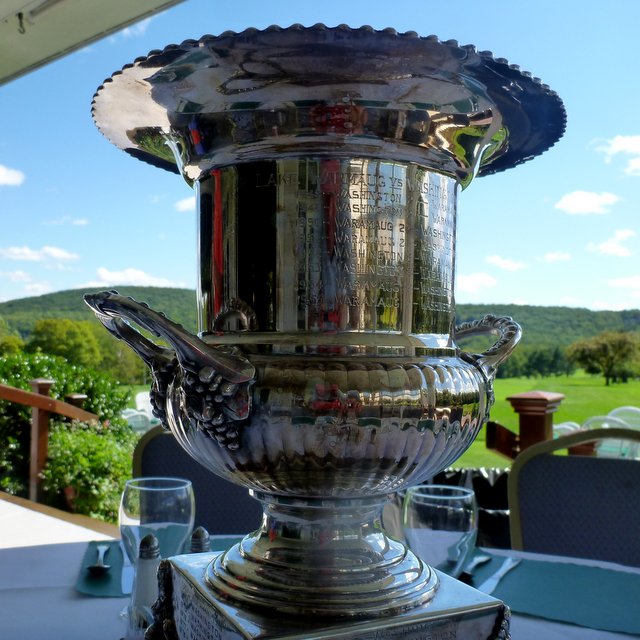
My two rounds at Yale, I’m pretty sure, “softened up” the course for Ray and Addison, who played there not long afterward, in our state golf association’s annual four-ball tournament, and won it by two shots, at seven under par. (They had no bogeys, and were one shot from tying the all-time tournament record.) They didn’t win a car, contrary to the clear suggestion in the photo below, but they did get their names engraved on a big trophy:

rayaddison

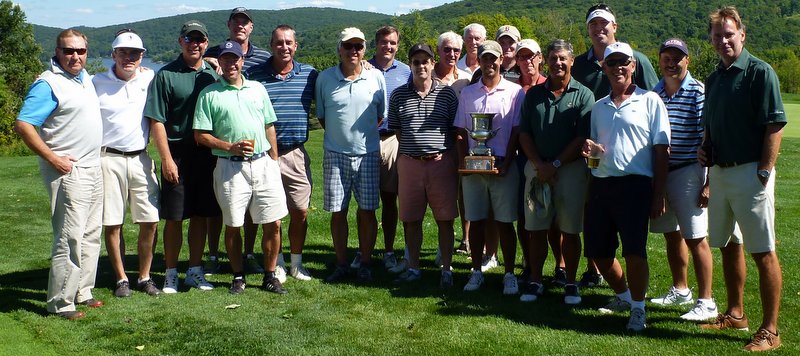
A few days later, our club beat our Enemy Club in our annual two-day home-and-home grudge match, which has been held every year since 1948. Each club’s team has ten players—in our case, all from S.M.G. Todd and I were partners the first day, and Ray and I were partners the second day, and when it was over the two teams posed together for a photo:

annualmatch

The very next day, Todd and Addison played in our state’s qualifier for the U.S.G.A.’s new national four-ball championship—and were the medalists, at five under par. (One stroke behind them were Ben D., an honorary member of the Sunday Morning Group, and his brother, Daniel—and just a week before that Ben had won another state event, the Tournament of Champions.) Because of their victory, Todd and Addison will be going to the Olympic Club, in San Francisco, in the spring, raising the possibility of a cross-country S.M.G. road trip.

One explanation for S.M.G.’s remarkable success in these things is that our locker room —despite being small, and equipped with just a single toilet, urinal, and shower—offers a rich selection of useful toiletries, plus a clock:

P1120121

Another is that hardly anybody went to Yale.

cathytattoo