Masters Countdown: How Augusta National Almost Built a Miniature Version of Itself

The National Baseball Hall of Fame and Museum opened in Cooperstown, New York, on June 12, 1939. The Professional Golfers Association responded by creating its own hall and inducting several legendary players, among them Bobby Jones. But the P.G.A.’s hall was merely conceptual: there was neither a building nor a plan for one.

Clifford Roberts, Augusta National’s co-founder and chairman, thought the ideal location for a golf hall of fame would be at the club. The site he favored was an elevated six-acre parcel roughly 250 yards to the east of the tenth green. In a letter to Jones, he wrote that visitors “would have four good views of the course instead of one,” and that “members using the golf course would have a good view of an attractive building.”
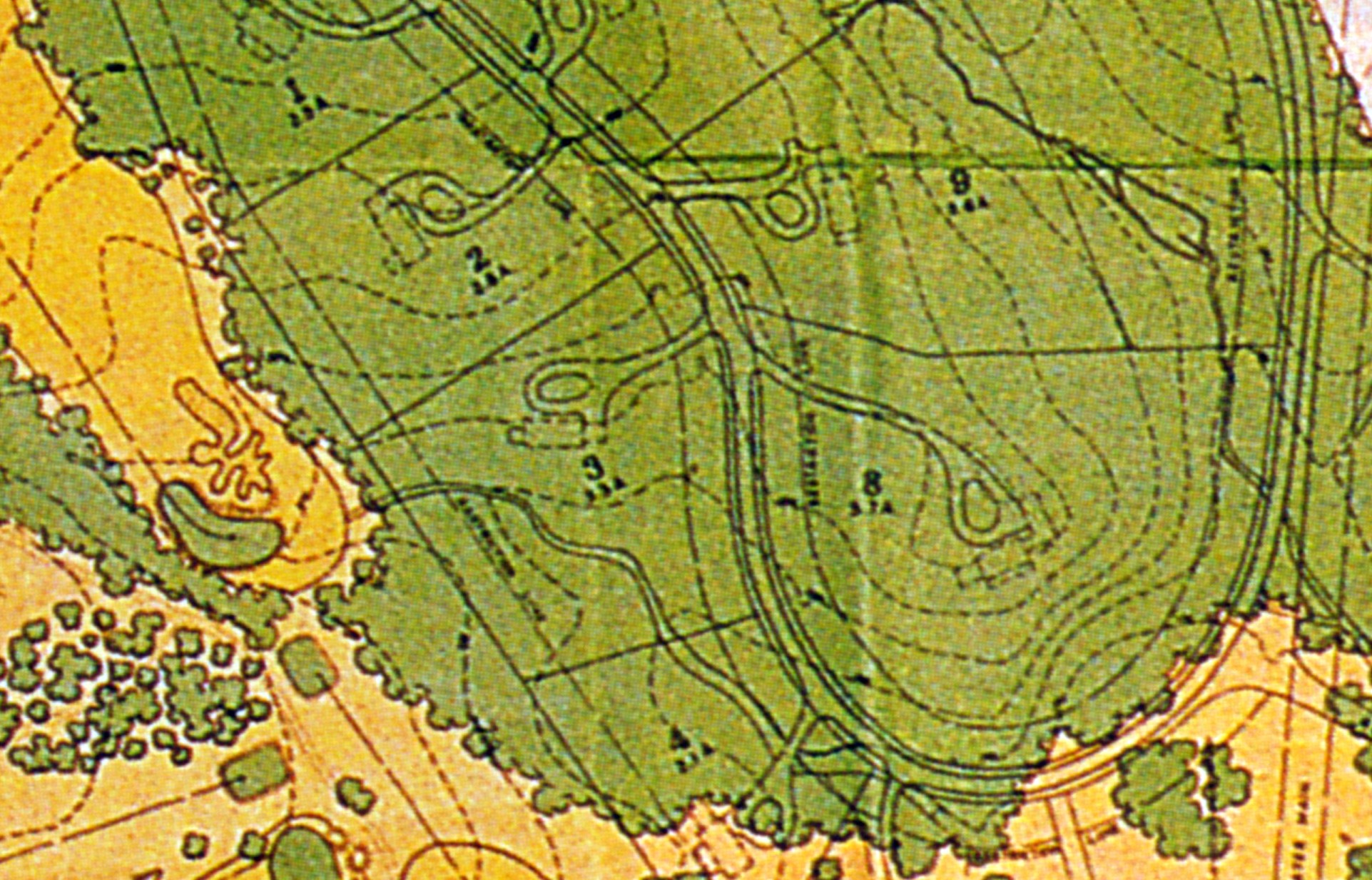
The site Roberts favored was in the upper right-hand quadrant of this image. (And, yes, those are building lots. Augusta National tried to sell them, unsuccessfully, for more than twenty years.) You can see the old tenth green at the left, next to the familiar amoeba-shaped bunker.

The site Roberts favored was in the upper right-hand quadrant of this image. (And, yes, those are building lots. Augusta National tried to sell them, unsuccessfully, for more than twenty years.) You can see the old tenth green at the left, next to the familiar amoeba-shaped bunker.

Roberts wanted one wing of his hall of fame to contain “automatic movie machines,” which, for a quarter, would show instructional films by the game’s great teachers. Another wing would serve as both a comprehensive library and a bookstore. Visitors would be able to buy “popular-priced copies” of some of the books in the library, as well as souvenir booklets and postcards depicting the course.

This is an early Augusta National postcard, showing the tenth green in its original location, before it was moved back and to the left. Roberts's preferred site for his golf hall of game was out of the frame to the left.

This is an early Augusta National postcard, showing the tenth green in its original location, before it was moved back and to the left. Roberts’s preferred site for his golf hall of game was out of the frame to the left.

Roberts also wanted to create “a miniature Augusta National course surrounding the Hall of Fame which would be a practical pitch and putt course and could be made a most attractive part of the landscaping scheme.” The holes would be scaled-down replicas of the holes on the big course. He proposed a greens fee of twenty-five cents.

Despite Roberts’s enthusiasm, the idea never came to anything. The two members he had been counting on to pay for the project lost interest in it, and the club didn’t have the money to proceed on its own. And then news from Europe and the Pacific made other concerns more pressing.

Incidentally, the first hall of fame in the United States wasn’t in Cooperstown; it was in the Bronx. It was built in 1900 by New York University, on what’s now the campus of Bronx Community College, and was designed by Stanford White.

Bronx CC library

It was called the Hall of Fame for Great Americans. It was inspired by the Ruhmeshalle, in Munich, which had been built 50 years earlier. The original inductees were John Adams, John James Audubon, Henry Ward Beecher, William Ellery Channing, Henry Clay, Peter Cooper, Jonathan Edwards, Ralph Waldo Emerson, David Farragut, Benjamin Franklin, Robert Fulton, Ulysses S. Grant, Asa Gray, Nathanial Hawthorne, Washington Irving, Thomas Jefferson, Robert E. Lee, Abraham Lincoln, Henry Wadsworth Longfellow, Horace Mann, John Marshal, Samuel F. B. Morse, George Peabody, Joseph Story, Gilbert Stuart, George Washington, Daniel Webster, and Eli Whitney.
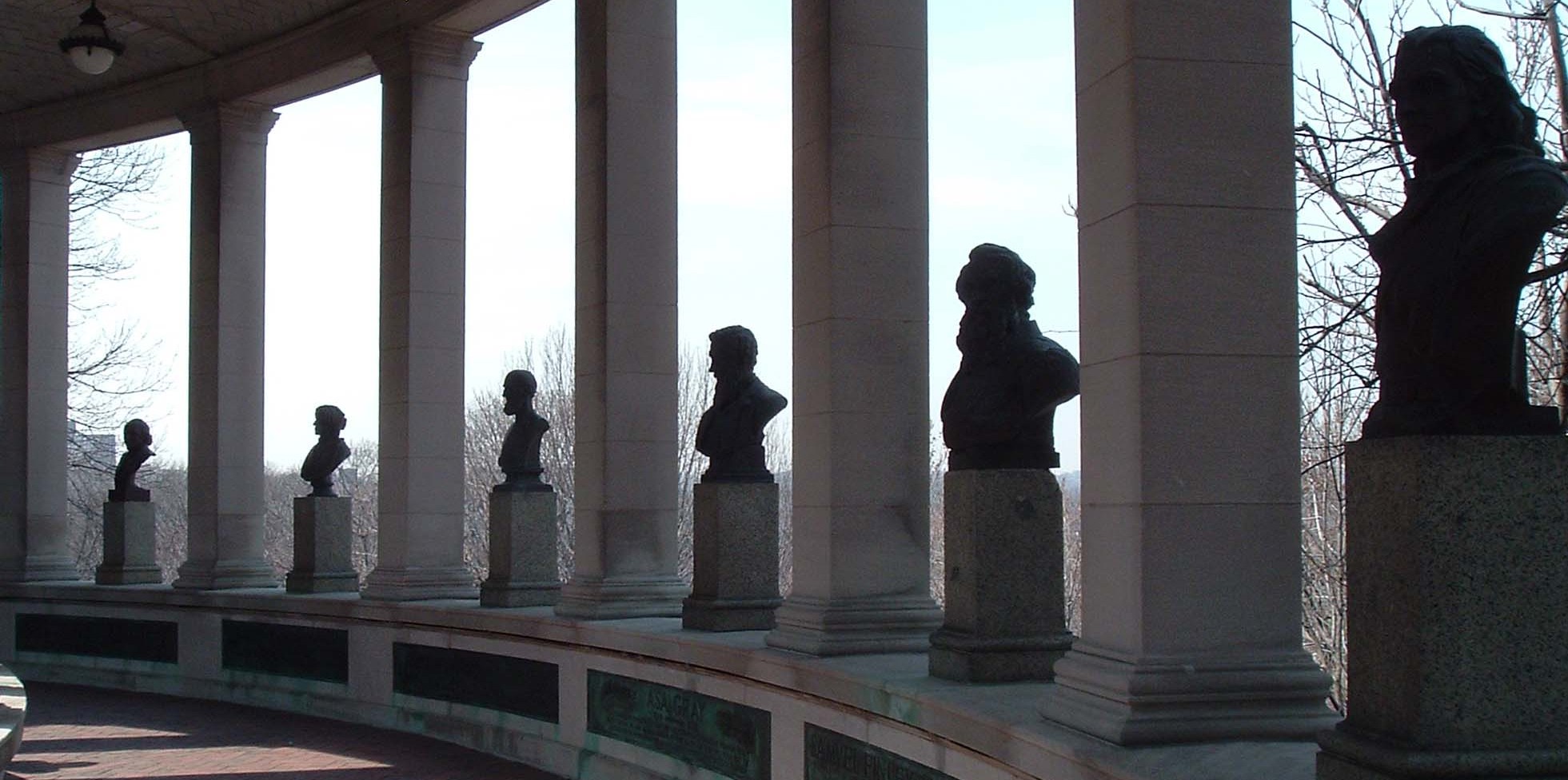
Bronx Hall of Fame

It’s still there, and you can still visit it—maybe after playing one of the four swell municipal golf courses in the Bronx: Van Cortlandt, Split Rock, Pelham Bay, and Ferry Point (aka Trump National).
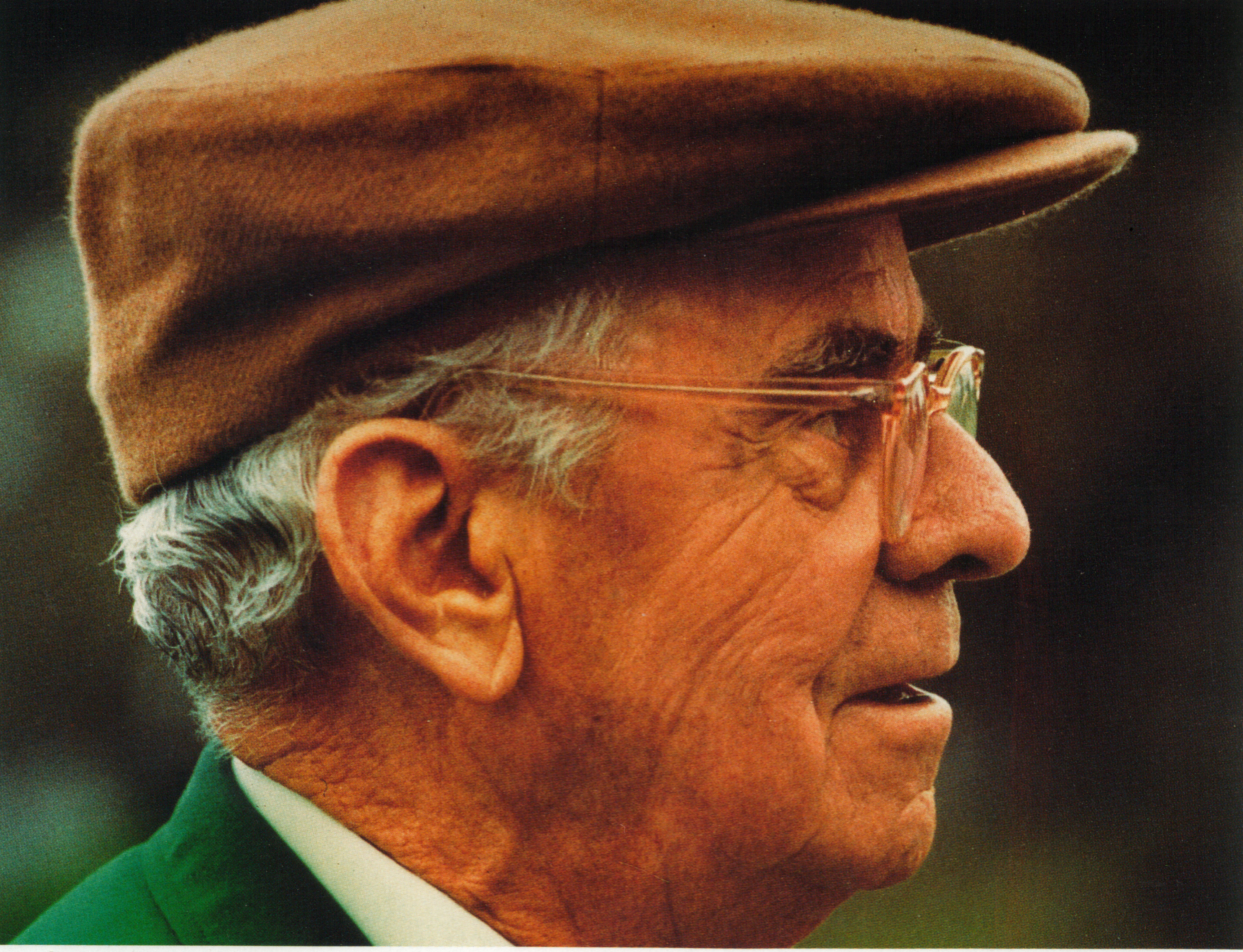
Masters Countdown: Clifford Roberts and the Thermostats

Clifford Roberts

Clifford Roberts was a co-founder (with Bobby Jones) of Augusta National Golf Club, and he was the chairman of the Masters from its founding, in 1934, until his death, in 1977. The room he slept in is at the far end of the east wing of the clubhouse. It’s named for him and is called a suite, but it is really just a single bedroom with a small bathroom, plus a closet in which Byron Nelson kept clothes between visits to the club. The room looks like a hotel room, and the furniture looks like hotel-room furniture. The only amenity is a fireplace, which Roberts would light at the first hint of cool weather. (He loved fires but was ambivalent about firewood; on his order, no log was ever delivered to his hearth which had not first been stripped of anything resembling bark.) In all weather, he kept his room warm — uncomfortably so, in the opinion of visitors. The room had two thermostats, and he would make minute adjustments in one or the other as conditions changed in ways that only he could detect.

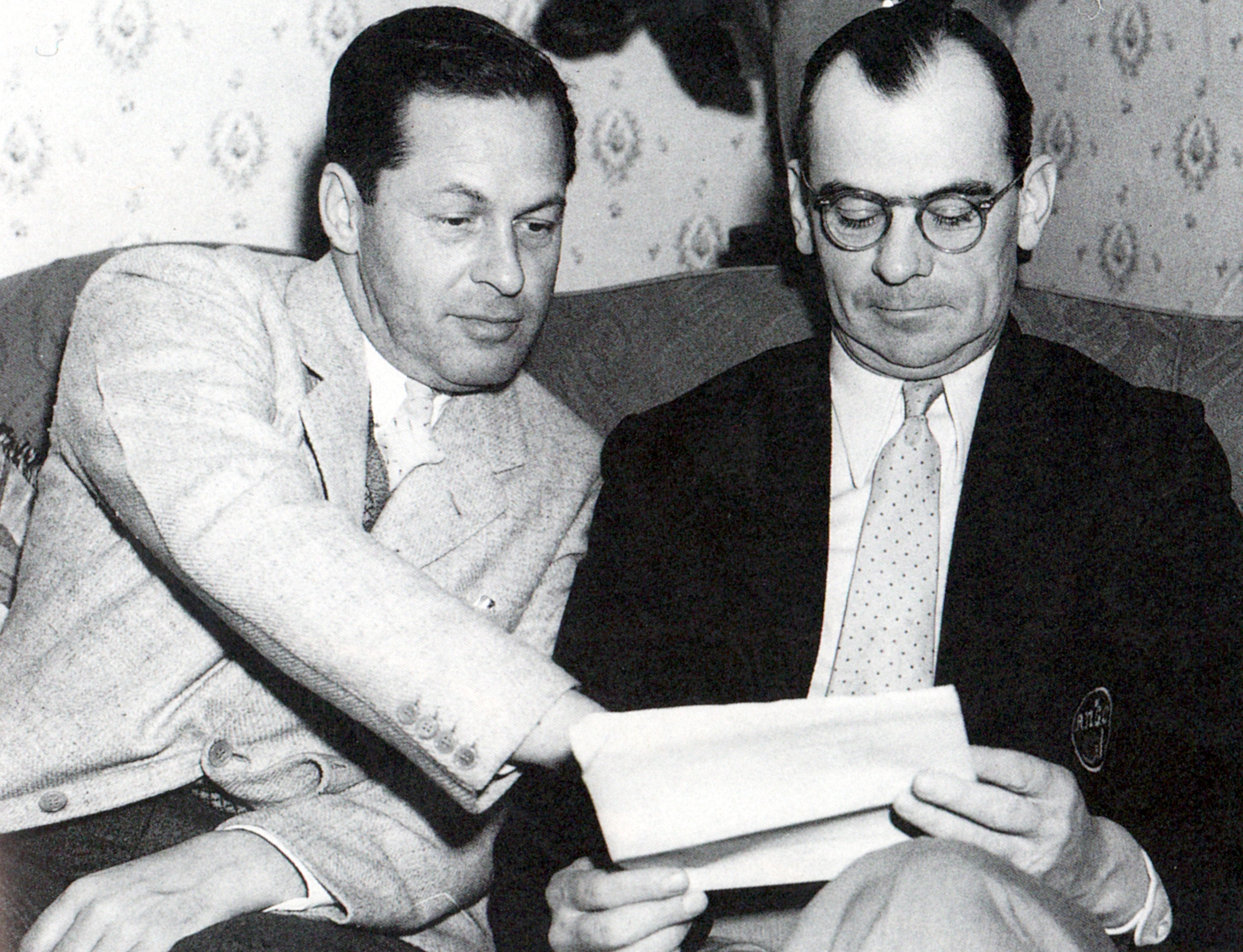
Bobby Jones and Clifford Roberts, late 1930s. Roberts is wearing the original version of the green jacket, with an emblem design that was later replaced.

Bobby Jones and Clifford Roberts, late 1930s. Roberts is wearing the original version of the green jacket, with an emblem design that was later replaced.

One mild day, he called the building superintendent to say that he was freezing and that something must be wrong with the heating system, because a thermometer on a table was reading four degrees lower than a thermometer near the window. The superintendent sent a man to a local hardware store with the thermometer from the table and told him to return with an identical one that read four degrees higher. When the new thermometer was in place, Roberts called the club’s manager to say that the temperature in his room was now perfect and that no further adjustments to the heating system would be required.

Jones and Roberts ANGC

Masters Countdown: Why Isn’t Every Scorecard Like This?

Augusta National’s scorecard is different from every scorecard I’ve ever seen (I think). Can you spot the unique feature?
ANGC Scorecard

It’s the yardages: they’re all in multiples of five. The reason is that Clifford Roberts—the club’s co-founder, and the chairman of the Masters from the beginning until his death, in 1977—thought it was ridiculous to suggest that a golf hole could be measured with more precision than that, especially since the tee markers and hole locations changed from day to day. (Hey, why not give feet and inches, too?) It’s not a big deal—but it’s a glimpse into the mind of the person most responsible for creating the world’s last surviving un-screwed-up major sporting event.
Reader’s Fashion Tip: Insulated Shorts for Winter Golf

IMG_4214

The golf courses within driving distance of my hometown have been closed for so much of this winter that I haven’t had many opportunities to take advantage of Sunday Morning Group’s shorts rule: one extra handicap stroke if you wear shorts after November 1, two extra strokes after December 1. If we do get to play again, I’m going to try some shorts I learned about from Tim Kresse, a reader in Oxford, Ohio. They’re called Alpha Shorts, and they’re filled with Polartec insulation. They’re made by a company called Qor, which is practically giving them away.

Qor Alpha Shorts

The company’s website describes them like this:

“They’re super stretchy, don’t look insulated, and are styled like trousers: structured waist with front zip/button fly closure, slash hand pockets on the side, two back pockets (one with a zipper), and belt loops.”

Kresse himself says:

“I’m an administrator at Miami University, the alma mater of Ben Roethlisberger and the place Robert Frost called ‘the most beautiful campus that ever there was.’ I have to agree that it is quite a pretty campus and a good school. The Qor catalog just showed up, but I have to say that the insulated shorts seemed the perfect thing for the winter golf game. I do wonder, though, would that be cheating or does the open air nature of the leg sufficiently offset any insulation value?”

Tim-Kresse-Memorial-2015

The rules, so far, allow insulated shorts. What they don’t allow is tall socks. Back to Kresse:

“The picture above is of me during a practice round at the Memorial Tournament last year. I bought my daughter (no, really) a tournament flag and got some autographs. Once I realized I had the autograph of the winner of the Memorial, the Masters, the US Open, the (British) Open, and PGA championship, I decided it could stay in my office for a while. She’ll get it one day. I play golf at Hueston Woods State Park Golf Course, just north of town, and Indian Ridge Golf Club, just south of town. Here’s a summer moon over Hueston Woods:”

Summer-Moon-Over-Hueston-Woods

“During the winter, though, golf is mostly in hibernation, with the occasional trip to the driving range or a trip south. I last played at Great Dunes on Jekyll Island, Georgia, just before Thanksgiving. Here’s a picture of the fifth green and sixth tee, which overlook the Atlantic. It’s a nice nine-hole course, perfect for walking:”

Jekyll-Island-5-green-6-tee

“To keep ourselves busy in the winter, we move to indoor sports, including broomball, and I have found that winter golf gloves are great for for broomball. They are just enough to keep hands warm on ice, improve the grip on the broomball stick, and work great as a goalie gloves (the position I usually play).”

I’d never heard of broomball before, but here’s what it looks like. That’s not Kresse in the net. At least, I don’t think it is. (I found the photo online.)

Broomball4

Broomball players don’t wear skates, but they do get to buy broomball shoes, among other things. You can read all about the game here. Back to Kresse:

“I first played broomball at Ohio University (another very attractive campus) in the early 1990s. Games were almost always late at night, when the ice was free, and we played with a deflated volleyball, our own tennis shoes, and cut-down brooms (both ends) for ‘sticks’. Now games are still often played late at night, but there are specific broomballs, sticks, and shoes, which make it easier to get around the ice (I call them clown shoes). I’ve also bought hockey shin guards to protect from sticks and falls. And, thankfully, we play half-ice (half-rink) and not full-ice games.”

Report From the Phoenix Open: Coping With a Ten-Drink Limit

beeronpatio

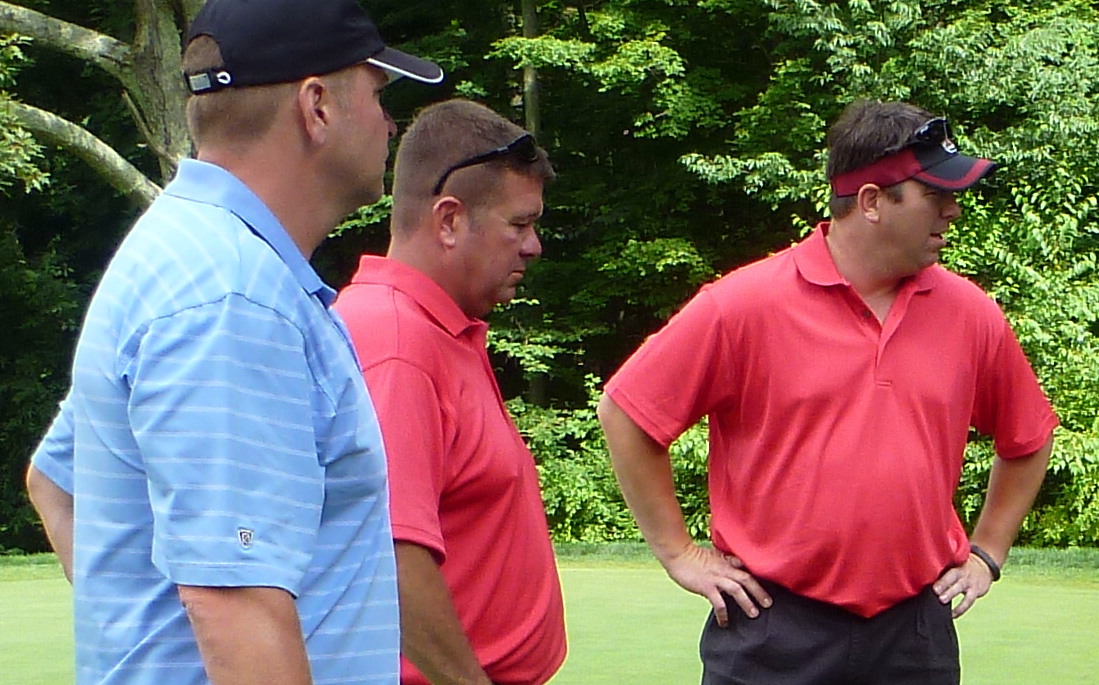
Chic, CJ, Jaws, and Brian—all members or honorary members of the Sunday Morning Group—somehow persuaded the Department of Homeland Security to let them spend four days in Scottsdale without supervision, then paid for the trip by withdrawing money from their wives’ 401ks. Or so I assume. Here are Jaws, CJ, and Chic at the men’s member-guest either last summer or the summer before:

P1140155

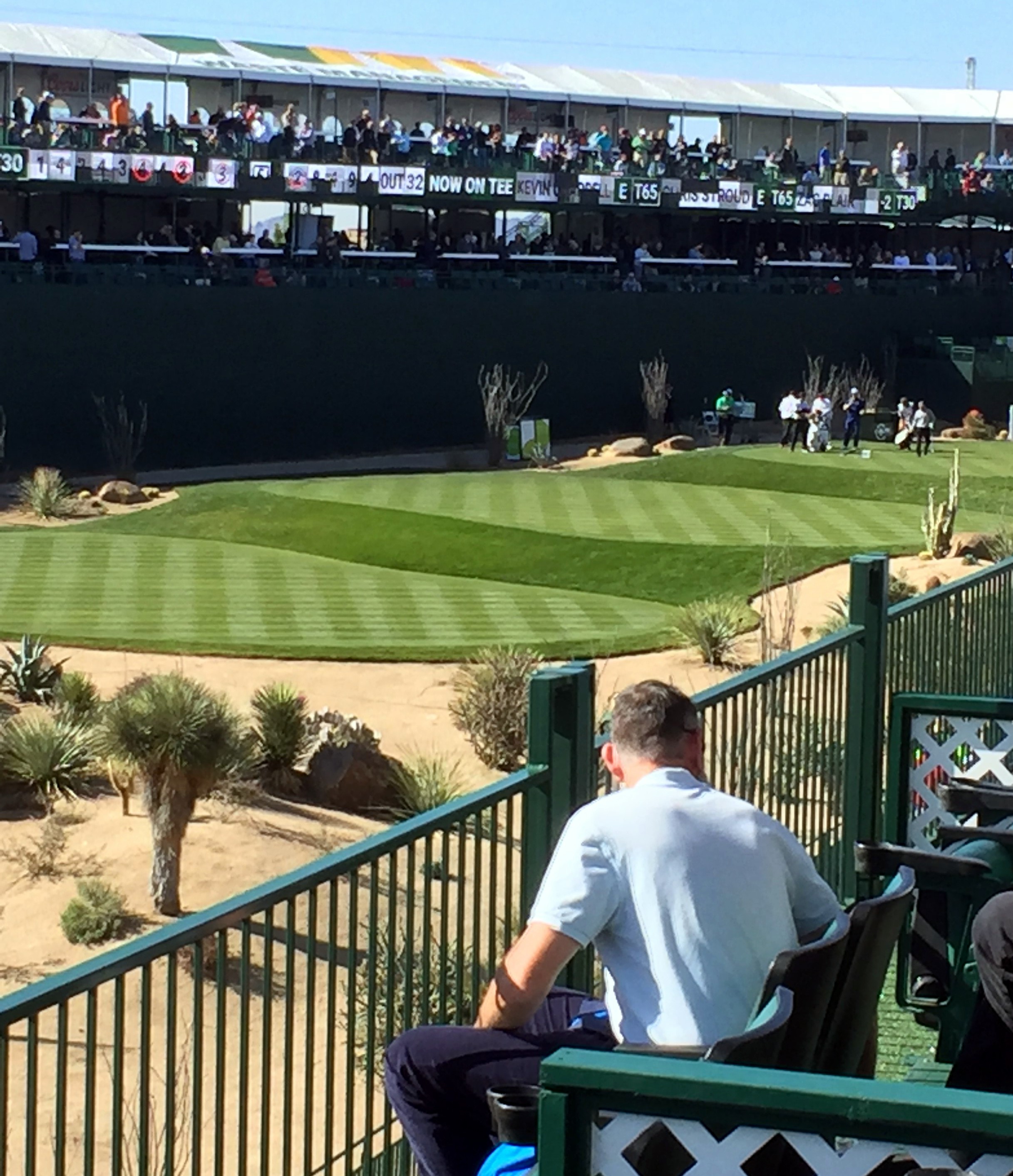
In Scottsdale, they’ve been dividing their time between the Waste Management Phoenix Open and Grayhawk Country Club, a few miles away. Before they left, I swore in Chic as this blog’s official representative in the grandstands on the sixteenth hole. Getting reports from him hasn’t been easy, but here’s one:

“Apparently with the skybox tix u have a 10 drink limit but if u tip the girl enough she doesn’t keep count. So my 10 drinks only counted as 2 in her book.”

All things considered, his photos are remarkably unblurry:

Chic Phoenix 1

Back to Chic:

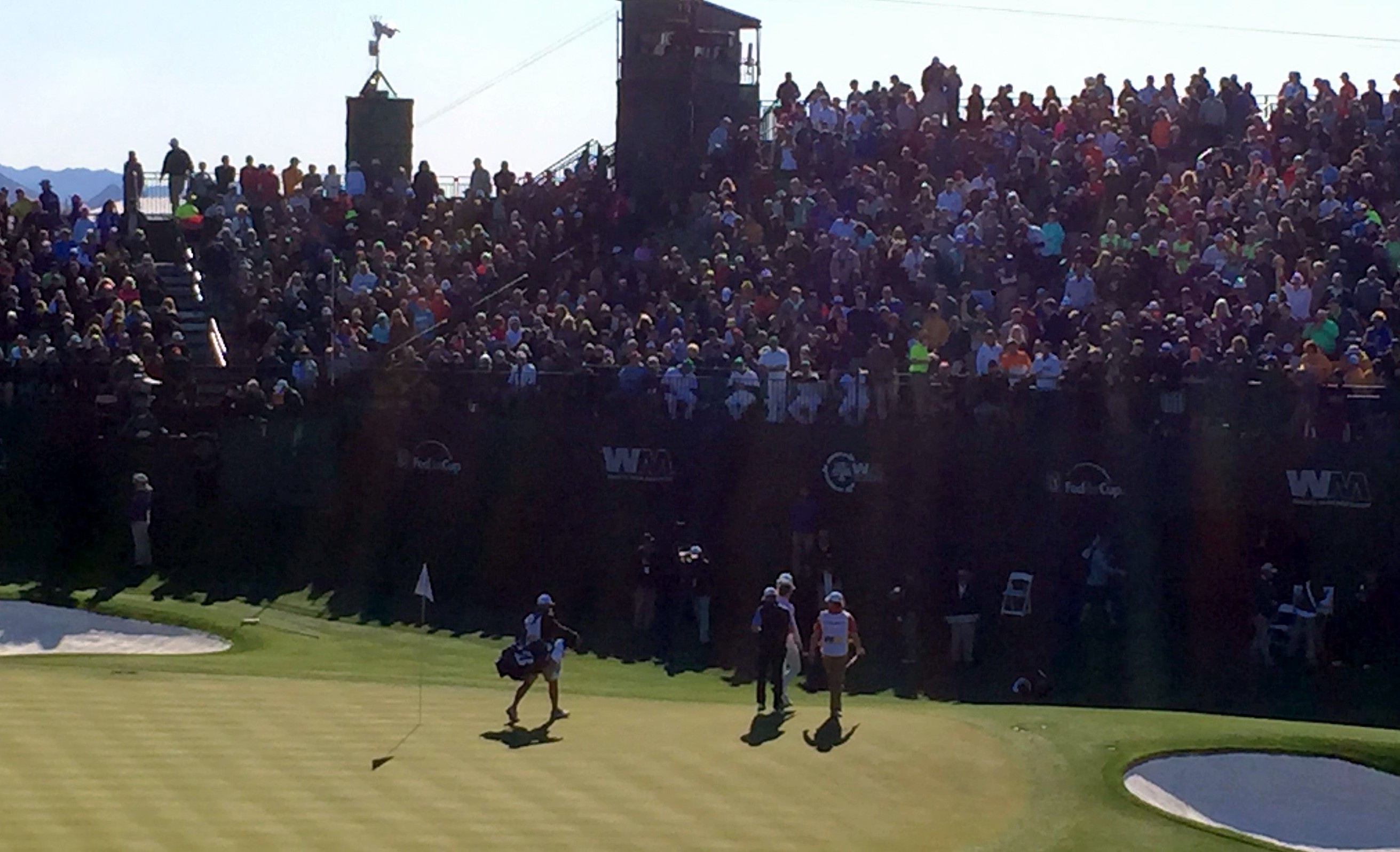
“The bleachers seem to be the place to be. Which was below us not below us just fiscally below us. They had guys dressed in Masters caddies outfits. Bubba thru a lot of stuff to the fans. Saturday is green out day. Everyone to wear green and support the waste management cause. Golf now then golf in the am. Then tourney rest of day.”

Chic Phoenix 2

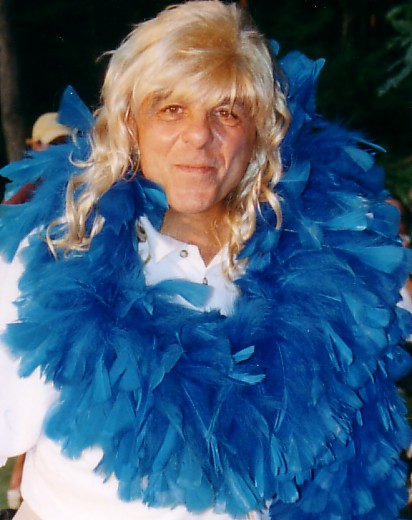
That was yesterday. When they got to the Grayhawk, Chic discovered that he had an old Uncle Frank ball in his bag. Uncle Frank was a beloved SMG member, who died from lung cancer seven or eight years ago. After the cancer had spread to his brain, he was given a marathon radiation treatment, during which his head had to be immobilized in a halo brace, a birdcage-like contraption that was anchored to his shoulders and his skull. When the session ended, 18 hours after it began, he asked the nurses to take him to the children’s oncology ward before removing the brace. A couple of days before, at home, he had made a basketball backboard out of Styrofoam, and now he asked the nurses to attach it to the back of his head. He let the children in the ward shoot free throws with a Nerf ball, three shots for a dollars. “Hey,” he told me later, “I made twenty-three bucks.” Here’s how he dressed for our first-and-almost-last clubhouse sleepover, in 2002:

boa 2

When Uncle Frank died, we had his name printed on lots of golf balls, and divided them up among ourselves. The idea was to lose the balls in interesting places, so that his name would keep popping up for years, as a kind of memorial. I myself have lost them on great courses in three different countries. Back to Chic:

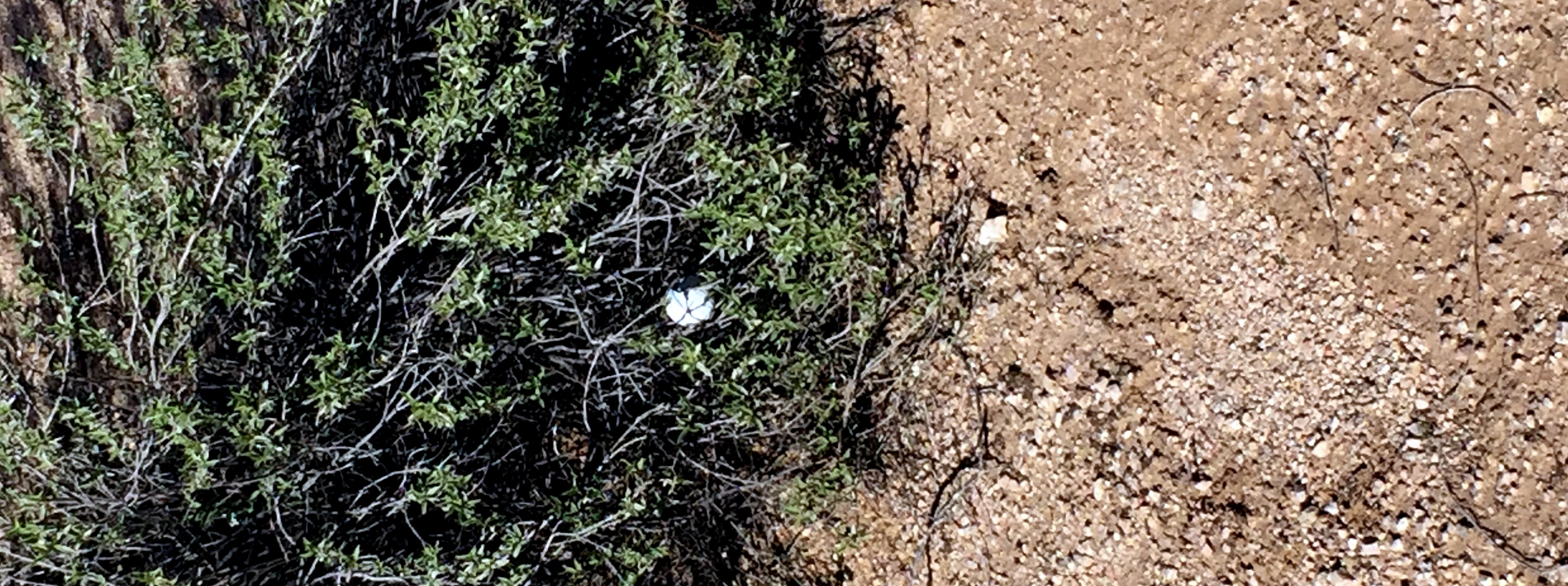
“I thought trying to lose the frank ball in Arizona might be a nice send off. Well the ball lasted 6 holes. I tried to lose it but it hung in there. 1 pic from its adventure:”

Chic Phoenix 3

Incidentally, the thing that Brian is the most famous for, at home, is knowing how to use a beer can to open a beer bottle:

Masters Countdown: An Augusta National Member Who Carried Even More Cash Than Phil Mickelson

tengrand

Dave Shedloski, with help from a squadron of Golf Digest staffers, recently asked a number of tour pros how much cash they carry. The winner was Phil Mickelson, whose wallet, at that moment, contained $8,100. That’s a lot. But one of the founding members of Augusta National routinely carried more. Way more.

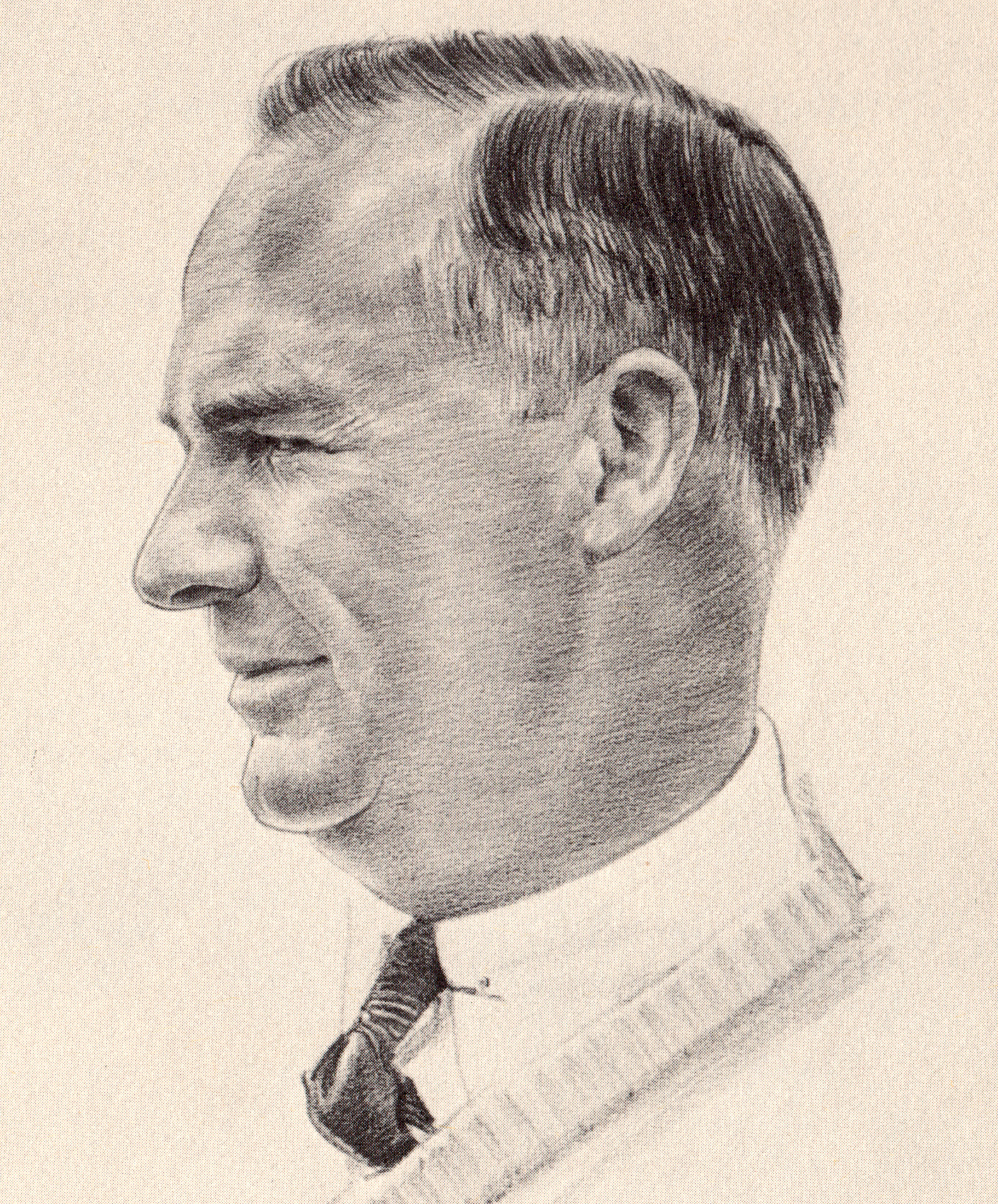
W. Alton “Pete” Jones was the CEO of the oil company that’s known today CITGO. He was a close friend of Clifford Roberts, Bobby Jones, and Dwight Eisenhower (who joined the club in 1948), and he was known for his generosity. He insisted on picking up almost any restaurant or bar check that he had anything to do with, and he financed or helped to finance many improvements at the club.

W. Alton "Pete" Jones

W. Alton “Pete” Jones

Yet he had a number of miserly eccentricities. The first duty of his caddie was to search the grass for usable tees, because he hated to buy new ones. He haggled over handicap strokes—attempting, in Roberts’s words, “to ensure his being a winner on the golf course, no matter how small the stakes.” And he always traveled with heavy hand-cranked metal sharpener, which he used to extend the life of his razor blades. He was determined to get at least 25 shaves from each blade, and he would cheerfully spend 10 or 15 minutes honing an edge on one that was about to expire.

eisenhower2

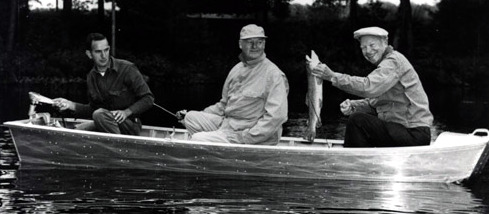
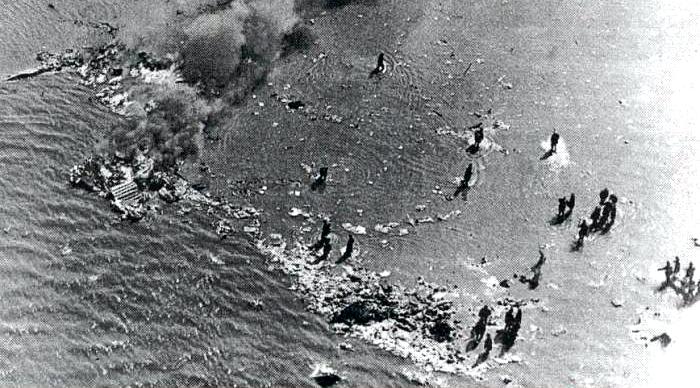
Jones died in a commercial plane crash in 1962, on his way to California for a fishing trip with Eisenhower. (That’s Jones amidships in the photo above, and Eisenhower in the bow.) Also killed in that crash was the mother of Paul McCartney’s future wife Linda Eastman. The accident was fictionalized in the second episode of the second season of Mad Men.

Flight 1planecrash

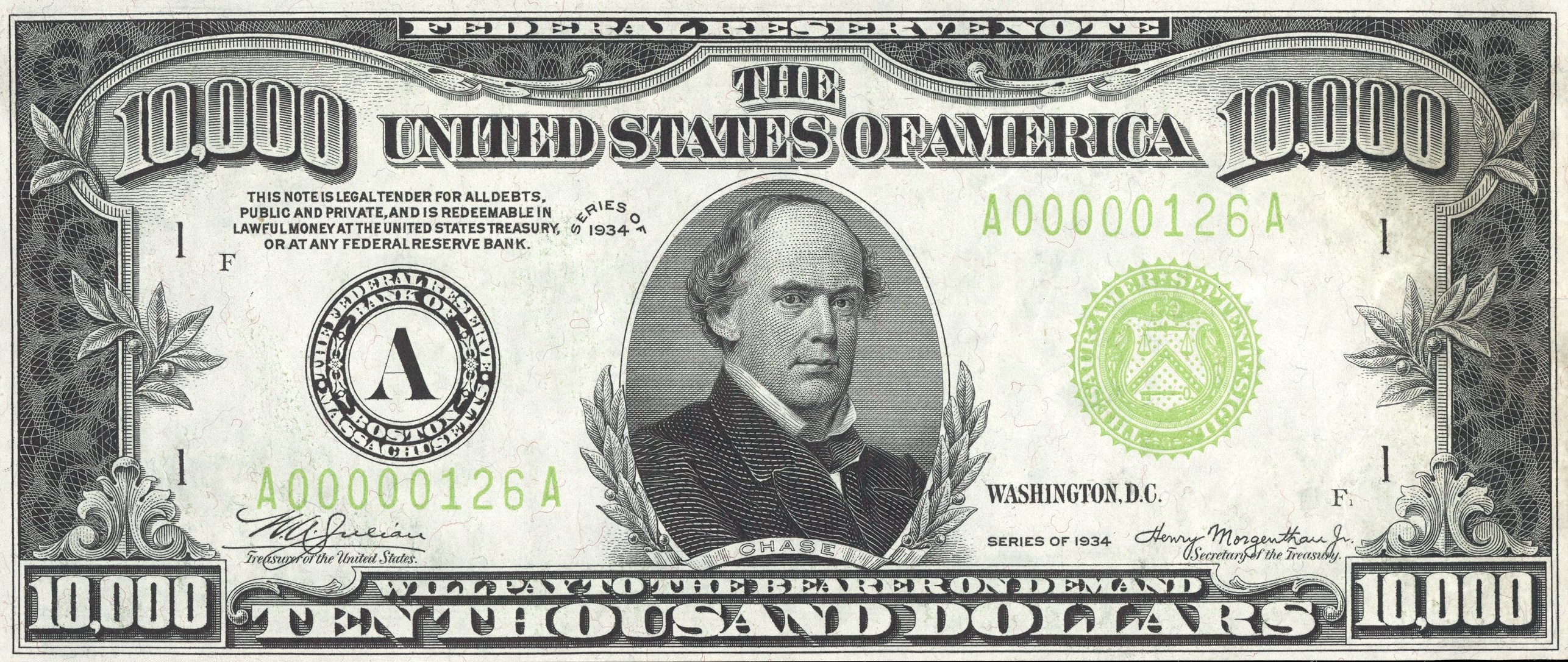
When Jones’s body was identified, he was found to have been carrying roughly $60,000, in cash and traveler’s checks. Some people speculated that he must have been up to no good, and that perhaps he had been on his way to reward Eisenhower for favors to the oil industry. But no one has ever seriously suggested that Eisenhower took bribes, and Jones always carried huge sums—including $10,000 bills, which the government printed until 1946.

Roberts had often urged Jones to leave more of his treasure at home, but Jones, like several early Augusta members—including Roberts—had grown up in poverty, and he liked full pockets. And Roberts had a currency-related eccentricity of his own: he carried only brand-new bills, arranged in his wallet by denomination, and he always made sure to have enough small ones so that no one would be able to give him old bills in change.

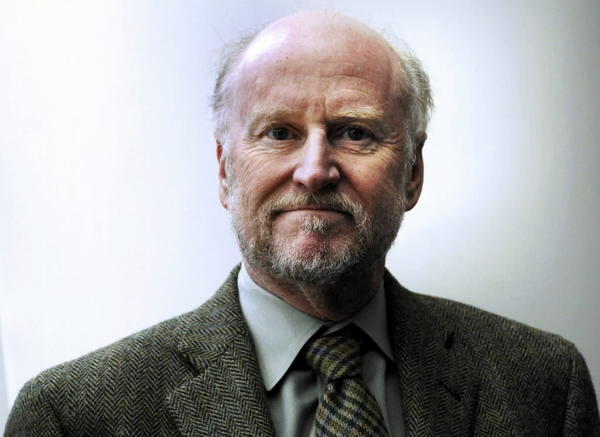
The person I know personally who carries the most cash is Rocco Landesman. I wrote a profile of him in The New Yorker in 1994. At the time, he was mainly a theater producer; he later served as the chairman of the National Endowment for the Arts. We got to talking about money—actually, about betting on horses—and he said, “You should never carry less than $10,000 in cash at any time.”

Rocco Landesman

Rocco Landesman

When I laughed, he said, “No, it’s true.” He reached into his inside jacket pocket and pulled out a bundle of bills held together with a rubber band. “You’ve got to have cash,” he said, “because you never know where you’re going to be. You know, you might meet someone and decide you want to spend the rest of your life in Argentina.” He handed me the money. “I’ve got more over here.” He reached into another pocket, and pulled out another bundle.

I hefted both bundles, and fanned the bills with my thumbs, like playing cards. They were all 100s, and there were perhaps a 150 of them. It was the most $100 bills I had ever held in one hand at one time.

“Walking around with anything less than $10,000 is completely unacceptable,” Landesman went on. “It’s a necessity of life. It gives you freedom. The most important thing in life is a sense of possibility, and you simply can’t have it with less than $10,000 in your pocket.”

OLYMPUS DIGITAL CAMERA

OLYMPUS DIGITAL CAMERA

Reader’s Trip Report: Masters Junior Pass Program

P1170496

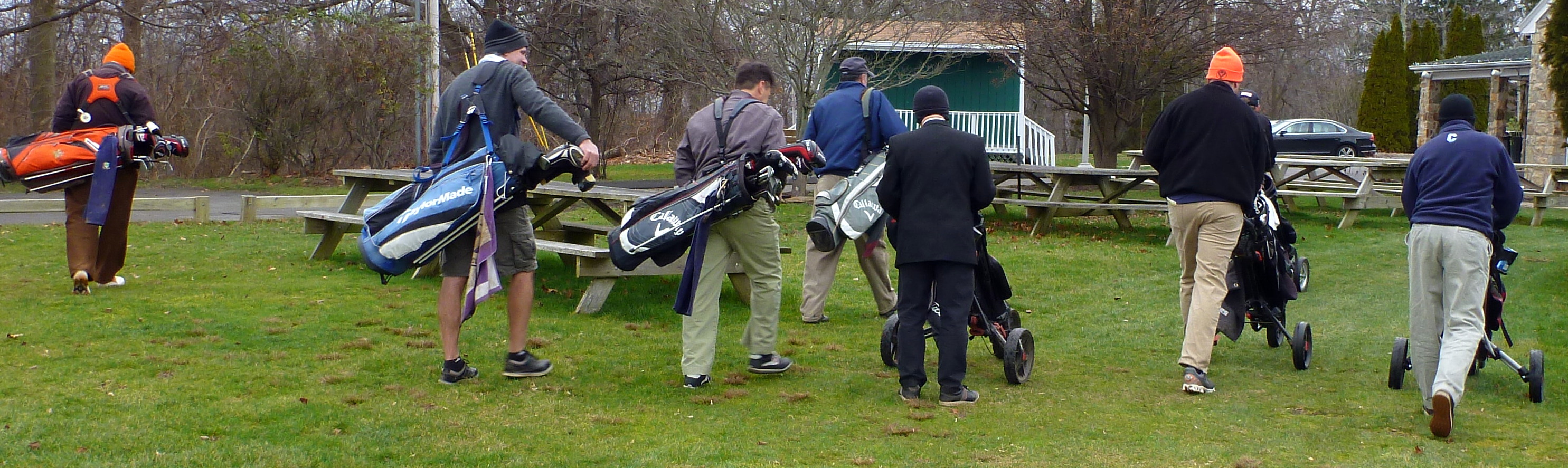
On New Year’s Day, twelve members of the Sunday Morning Group played the Black Course at the Wheel, the best course that’s still open within an hour’s drive of our home club, which shut down the Monday after Thanksgiving. Three of us wore shorts (thereby gaining two extra handicap strokes), and Mike B. wore a tuxedo, which he apparently hadn’t had time to change out of. He kept it on for all eighteen holes, too.

There are many reasons to celebrate January 1. The main one is that it’s the first day of the year during which the next Masters will be held—now just three months away.

P1170508

In 2013, Will Stegall, a reader in San Francisco, took his daughter, Annie, to her first Masters. (She turned nine on practice-round Monday. You can read her trip report here.) Last year, Stegall took Annie’s younger brother, William, who was eight at the time. Both kids were beneficiaries of Augusta National’s Junior Pass Program, which enables the children of existing badge-holders to attend for free. (Restrictions apply.) William had a great time, and not only because he got Tiger’s autograph.

Stegall Masters both-002

Here’s William’s report, as transcribed by his father :

“My experience at the Masters was beyond amazing in all ways. It looked beautiful: the flowers, the course, and the trees. Being able to get autographs because only kids can get them is amazing. I got to see the Big Three (Arnold Palmer, Jack Nicklaus, Gary Player) play in the long drive contest that was extra special. I got a Masters visor. You usually don’t see men more excited about shopping than women. I just got a green visor that said Masters on the front. I went to the spot where Bubba Watson hit his amazing curve shot. Everyone had to put a chair down somewhere on the course to watch but of course we could walk around, the people were so nice they would never take a chair of ours or anyone else’s. The pimento cheese sandwiches were DELICIOUS, they were perfect. My family has been going for years but it was my first time so I was very excited when I finally could go. But I never knew how many people went!”

Stegall Masters

Thanks, William! As it happens, the Sunday Morning Group has a Junior Pass Program, too, and Will, Annie, and William are all invited to join us for our first round of 2017, next New Year’s Day.

P1170512

Tracking Golf History With Google’s Amazing Time Machine

I first used Google Earth in 2004, before it was Google Earth. At the time, it was a subscription service called Keyhole Earth Viewer, and I used it while working on an article for the New Yorker about golf courses in New York City. Then Google bought Keyhole. It renamed Earth Viewer, and improved it, and made it free, and has continued to improve it. One of its coolest features is Historical Imagery, which lets you travel back in time by cycling through earlier images of whatever you’re looking at. For example, here’s what Augusta National looked like last February, from a little over 7,000 feet up:
ANGC 2014-2-27

And here’s what it looked like from the same altitude in November 2002, when the enormous tournament parking lot, to the left of the golf course in the picture above, was still a residential neighborhood (before the club bought all the houses and tore them down):

ANGC 2002-11-30

And here’s what it looked like in February 1993, two months before Bernhard Langer won for the second time, by four strokes over Chip Beck — who, you will recall, laid up on No. 15:

ANGC 1993-2-13

You can drill down, to study specific changes to the course. For example, here’s what the practice area looked like last year:

ANGC Range 2014-2-27

And here’s what it looked in 2009, when the club was building it:

ANGC Range 2009-6-24

And here’s what it looked like in 2002, when it was the (original) tournament parking lot:

ANGC Range 2002-11-30

Historical Imagery is a terrific time waster if you’ve got work or chores to do. Here’s the seventeenth fairway in 2013, when the Eisenhower Tree (which I’ve helpfully labeled) was alive and well:

ANGC Ike 2013-1-21

And here’s what it looked like last year, when the Eisenhower Tree was dead and gone. (The bunkers in the upper-right-hand corner are next to the green on No. 7.)

ANGC Ike 2014-2-27

Why do anything else when you’ve got a toy like this to play with? To learn how Historical Imagery works, go here.

ANGC 2007-6-24

Why Don’t All Tour Pros Follow Mickelson’s Example?

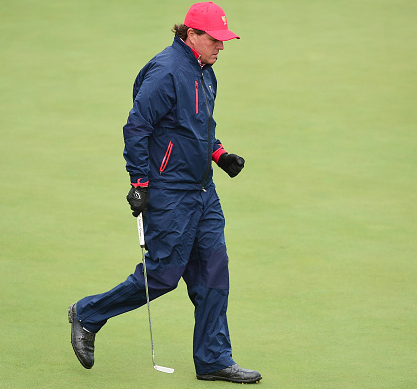
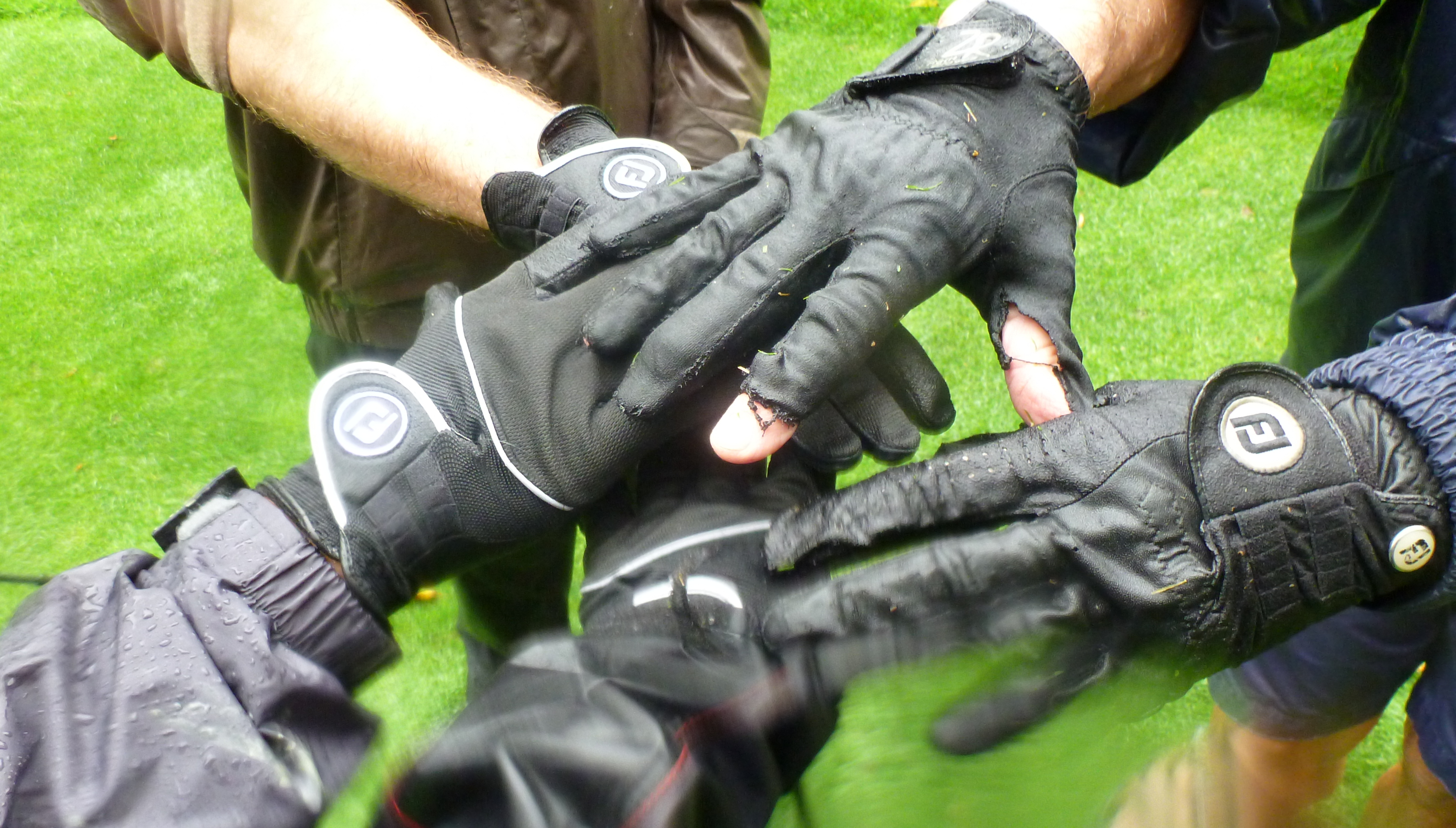
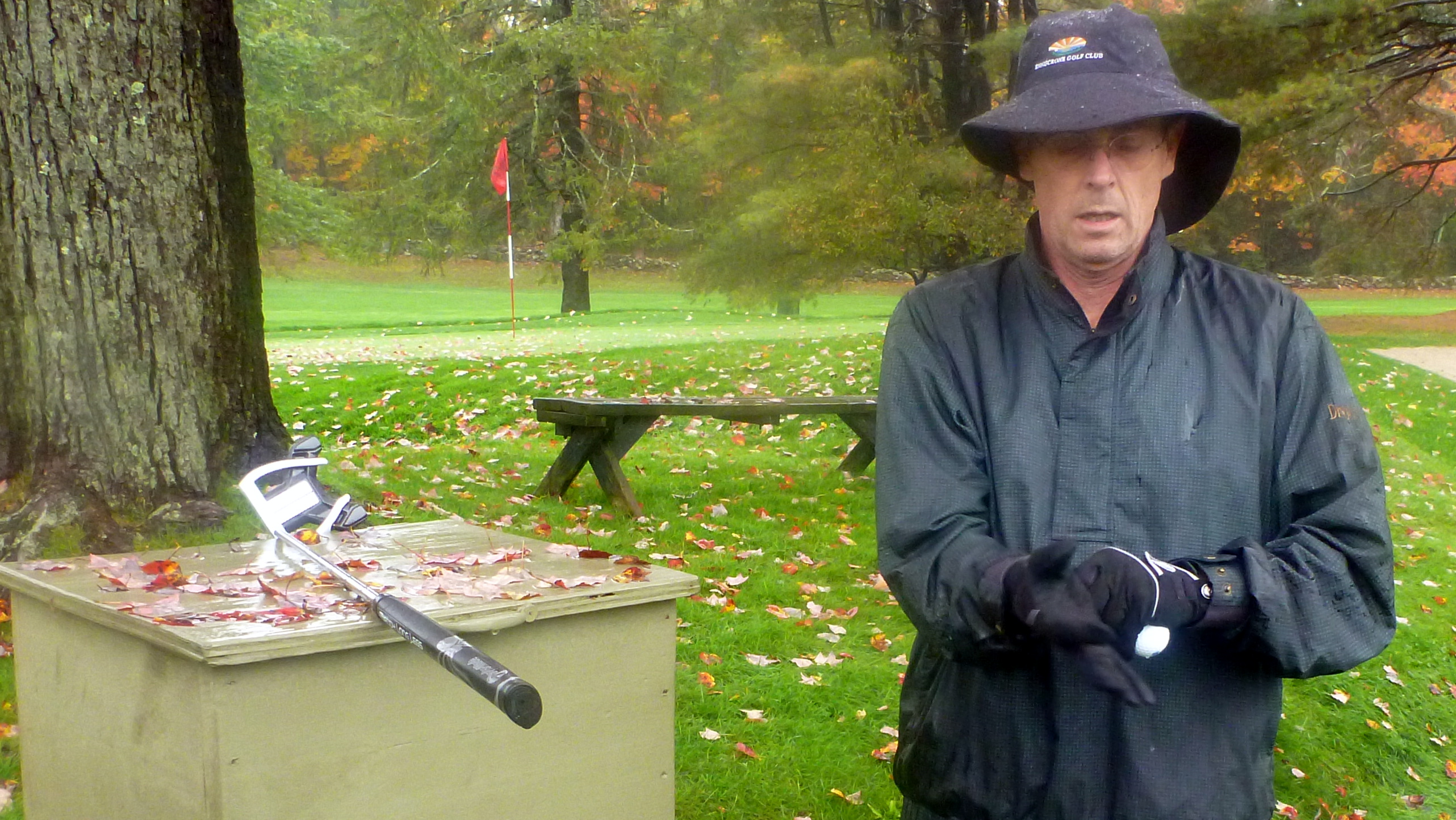
When it started to rain during the Presidents Cup, Phil Mickelson did something he’s done in nasty weather for several years: he switched to rain gloves. In an interview once, he explained why: “they can get wet and my grips can get wet and I’m not constantly trying to stay dry.” Usually, he leaves them on even to putt:

Mickelson-rain-gloves-001

My regular golf buddies and I all use rain gloves, too:

P1090776

They work so well that I don’t understand why so few tour pros have followed Mickelson’s example. Of course, those guys have unlimited access to new gloves, and they have caddies to dry their grips and hold their umbrellas and protect their towels, and even in nice weather they don’t seem to mind fussing around for a couple of minutes before taking a shot. Still, leather turns slimy when it becomes even slightly wet, and a caddie who has to focus on keeping gloves and grips and towels dry doesn’t have time to think about more important matters. The great thing about rain gloves is that, once you’ve put them on, the weather ceases to be an issue, for exactly the reason Mickelson gave. You can just play.

P1090683

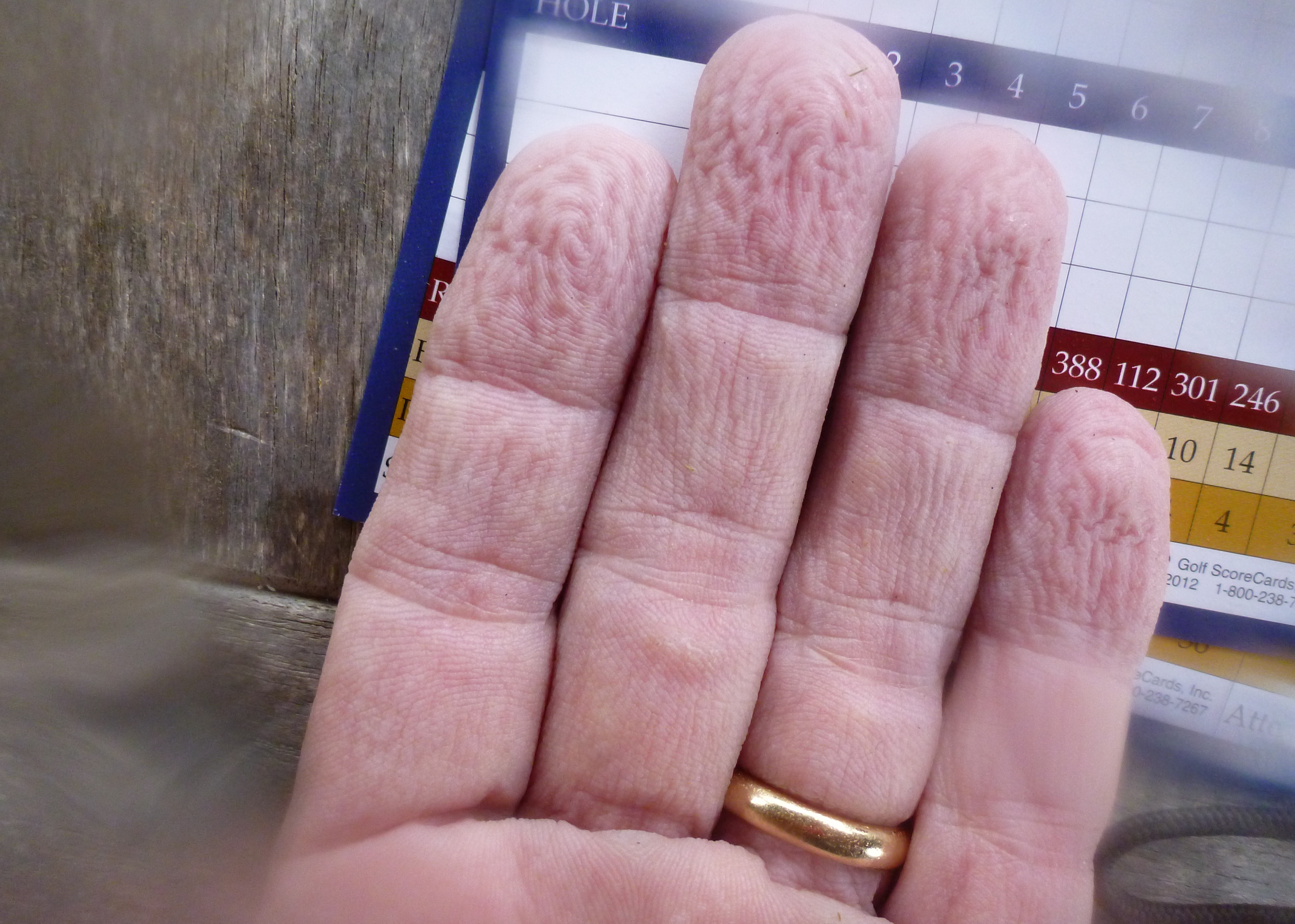
The pros probably worry that wearing rain gloves would affect their “feel,” but, if a player as famously feel-oriented as Mickelson can handle them, so can anyone else. Besides, if you have to squeeze your clubs even slightly harder to compensate for the slickness of your grips, you’ve already abandoned feel. I would bet that most pros have never even tried them. During the Presidents Cup broadcast, Johnny Miller said that one reason Mickelson wears them is to keep his hands dry—but no one who had actually played in rain gloves could possibly think that, because they don’t:

P1090803

Rain gloves don’t keep anything dry. What they do is enable you to hang on to your clubs when your hands and grips are soaking wet—even when the two-foot-wide stream at the bottom of the second fairway looks like this:

P1090696

Why is the Solheim Cup Called the Solheim Cup?

solheim-louise-karsten

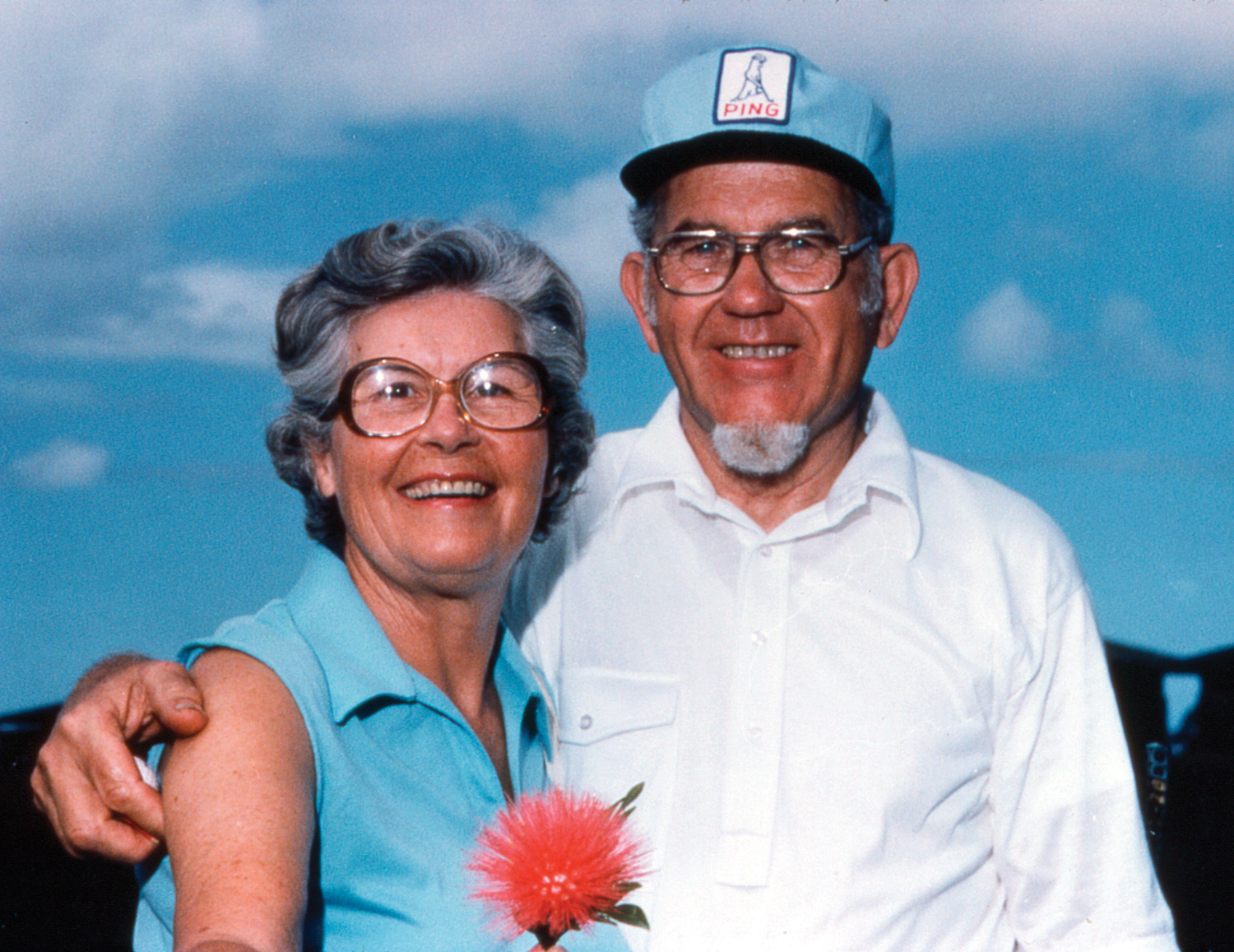
The Solheim Cup was founded by Karsten and Louise Solheim in 1990, to serve a the women’s equivalent to the Ryder Cup. Karsten, who died in 2000, at the age of 88, was the inventor of the modern golf club; Louise, who turned ninety-seven in June, was a major contributor to the success of the family business, the company that manufactures of Ping golf clubs. Both were committed supporters of women’s golf. Here’s a little about them:

Karsten was born in Bergen, Norway, in 1911. When he was two, his family emigrated to Seattle, where his father, a shoemaker, hoped to find the prosperity that had eluded him at home. A short time later, Karsten’s mother, who was twenty-one, died while giving birth to his brother, Ray, and a short time after that his father went to Alaska to look for gold. Karsten and Ray were left behind, in the care of separate foster families. During the next three years, Karsten lived first with a German family, then with a Swedish family. When he was six, his father returned to Seattle, remarried, and reclaimed his sons.

In the early 1990s, I asked Karsten about those years, and he answered vaguely, then changed the subject. Louise told me later that in nearly sixty years of marriage she had heard him discuss his childhood only rarely . “When I think about it, I feel very sad,” she said. “He must have felt really lost. His mother was gone, and his father had left him with a family that didn’t speak Norwegian, which was the only language he understood. When his father remarried and took him back, Karsten hardly knew what language to speak. They didn’t start him in school until he was seven, because he couldn’t speak English, although I think he would have learned better, and faster, if they had put him in school immediately. But he never talks about those days, and he never complains, and he doesn’t seem to have any bad memories.”

After school and on weekends, Karsten worked in his father’s shoe shop. He was unusually small for his age until a growth spurt in late adolescence, and to talk to customers over the counter he had to stand on a wooden box. After high school, he spent a year studying engineering at the University of Washington, paying his tuition with money he had earned with an early-morning paper route. He couldn’t afford to stay. The country was in the depths of the Great Depression, and his father needed him in the shoe shop.

A few years later, at church, he met Louise Crozier. She had been born in Spokane, and her mother had died when she was a month old, and her father had sent her to be raised by an aunt and uncle in Texas. She was precocious, and had learned read before she was four. When she was ten, her father, who taught science and business in a school district outside Seattle, decided he wanted her back. Louise didn’t want to go, but accepted the change stoically. “I remember that when I got on the train, a tear was rolling down my nose, but I held my head up high so that no one would see it.” She and her father boarded with another family for a year, then moved to the country, where he supplemented his teacher’s salary by raising chickens.

Shortly after Karsten and Louise met, they heard a sermon by a visiting evangelist, who was a grandson of the founder of the Salvation Army. The evangelist said that the ideal age for a woman to marry was eighteen, and the ideal age for a man was twenty-five. After the sermon, Karsten asked Louise how old she was. She said she was seventeen. She asked Karsten how old he was. He said he was twenty-four. Neither said anything else, but ten days later Karsten proposed, and six months after that—in June of 1936, just after Louise’s eighteenth birthday—they were married.

They spent their honeymoon in northern Washington. As they were driving home, Karsten’s Model T stopped dead. “I got down under the car, and took the pan off, and realized that the connecting-rod bearing was gone,” he told me. “Well, there was a farmhouse right there, and I asked the farmer if he had any bacon rind. He got me a piece, and I trimmed it a little, and I put that bacon rind where the bearing should have been, and I tightened up the cap, and we drove the forty miles home without any more trouble. Of course, when we got there, the bacon was crisp.”