Reader’s Trip Report: Northeastern Scotland

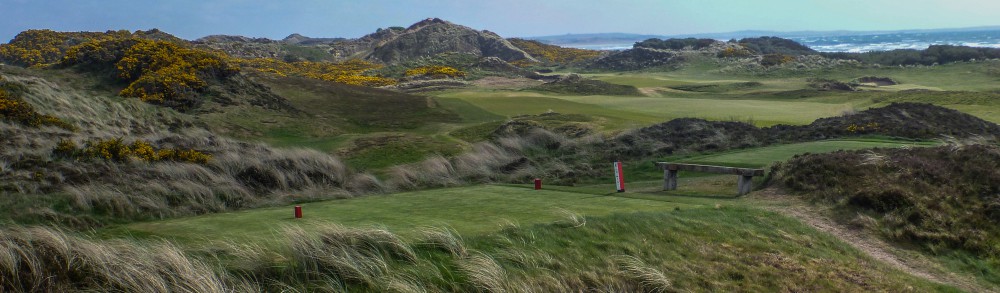
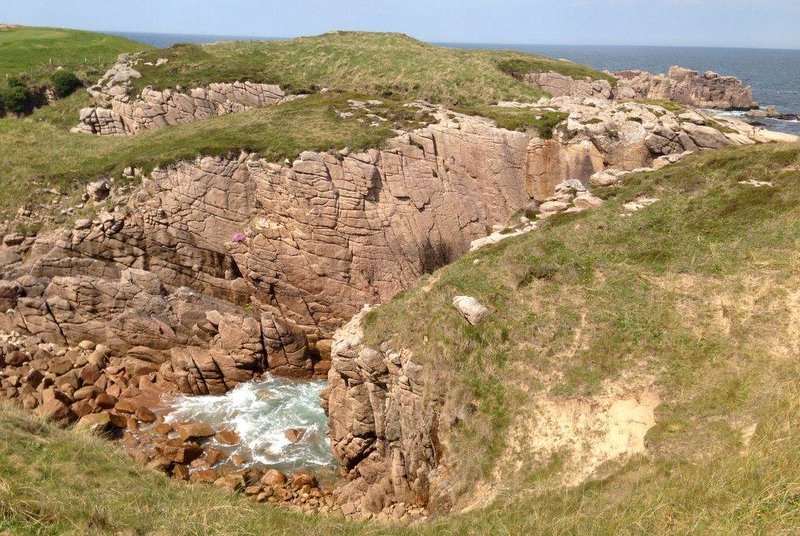
Fraserburgh Golf Club, Scotland, March 13, 2014.

Fraserburgh Golf Club, Scotland, March 13, 2014.

Seth Low, a reader and, not incidentally, a member of the Sunday Morning Group, recently returned from a winter trip to Aberdeen, Scotland. It wasn’t a golf trip, but he hung around for a few extra days and played several courses I like a lot—among them Fraserburgh, shown above. Excerpts from his report:

The non-business portion of my trip started in St. Andrews. I did some local scouting at the Keys Bar, where I ran into Dave, an American expat who has lived in St. Andrews, on and off, for twenty-seven years. He caddies during the golf season and, as far as I could tell, hangs out at the Keys in the off season. 
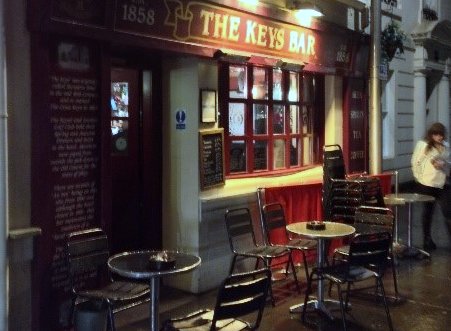
seth low keys bar

The next day, I took a train to Carnoustie, half an hour to the north. Perhaps because of the time of year, or perhaps because of the weather, I went out solo, no one in front of me or behind me. I muscled an ugly 4-iron into the wind, and then had my first go at hitting from a “winter mat.” Apparently, these are standard in Scotland. I am not a good golfer, but I can generally get the ball headed in the right direction. However, I could not master the mat. My reward for a good drive was inevitably a sculled iron.
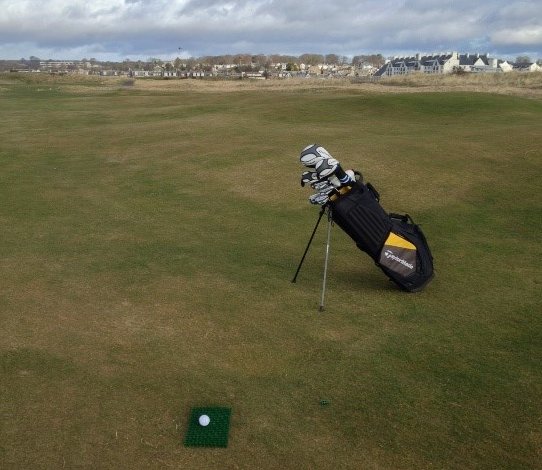
seth low winter mat

I found myself hoping I would miss the fairway, to be spared the mat, and when my ball landed close to the rough I kicked it in. It was interesting to find myself in this alternate golf reality, and I spent a good deal of time wondering what it said about me as a golfer (and as a person) that I was more comfortable playing from what most people think of a bad lie.

Fourth green, Carnoustie. The white stuff on the ground (not the ball) is hail.

Fourth green, Carnoustie. The white stuff on the ground (not the ball) is hail.

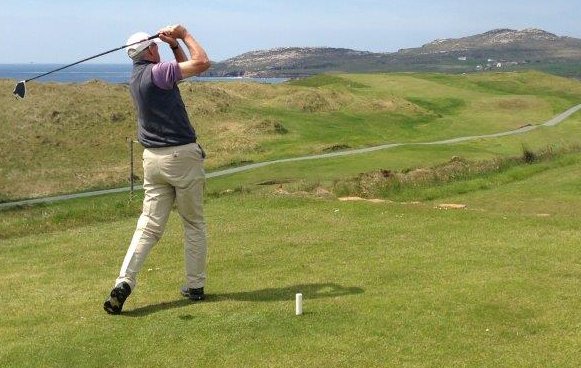
Next, I headed north, to Fraserburgh, and, once again, went out on my own. I was the beneficiary of a new employee, who told me that mats were unnecessary, despite signs saying otherwise. The course wanders through the shoreline dunes and is truly spectacular.

Fraserburgh Golf Club, thirteenth hole.

Fraserburgh Golf Club, thirteenth hole.

To navigate among the dunes, I had to follow the signs carefully, which wasn’t always easy. If wondered if they were in Doric, a dialect spoken by folks in the area, but it turned out that they had just been beaten up by a long and windy winter.
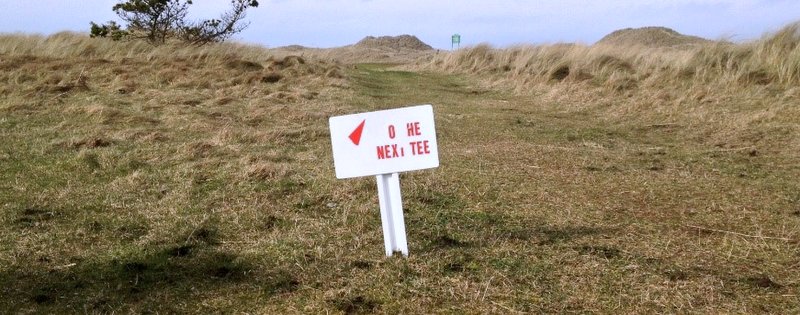
seth low doric sign

On my last day in Scotland, I headed west from Fraserburgh, at the recommendation of this blog, to play Cullen Golf Club. [Editor’s note: No one who asks me for a Scottish golf recommendation will escape being told about Cullen.] The clubhouse was empty, so I wandered around until a member came in and showed me some clubs I could use. I managed to assemble an almost-full set, consisting of a couple of Wilsons, a couple of irons of an unrecognizable brand, and a Fazer Contender 404 driver:
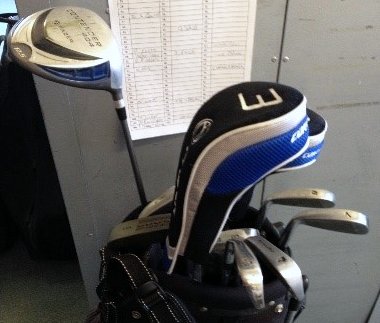
seth low golf bag

Cullen’s fairways weave across each other, and there is a complex set of bells and “yielding” protocols that the locals know. The course is complicated by a right-of-way that allows walkers to get from the ridge above the course to the beach below. All in all, it was a somewhat hectic scene, and I was happy to be joined by Graeme, a local member, who was out for a Sunday round. Like many in the area, he worked on a fishing boat before getting a job in the oil-and-gas industry. Now he is a cook on an oil rig, where he works two weeks on, two weeks off, four weeks on, four weeks off—leaving plenty of time for golf. I came away with what I hope will be a new addition to my golf lexicon: “hitting into the skink.” I am not sure what it means, but I like the way it sounds.
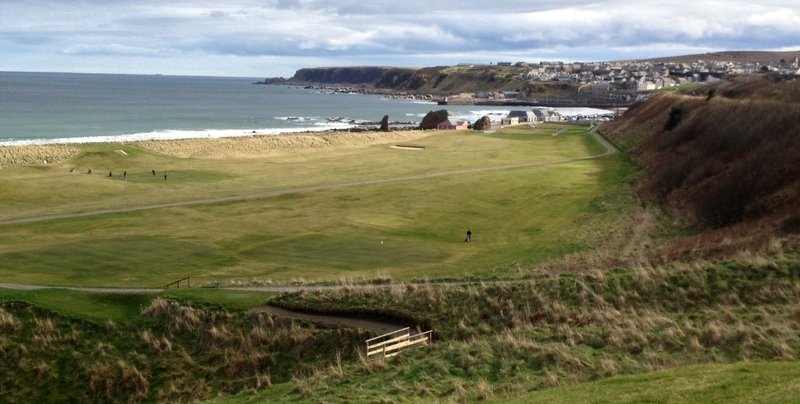
The first hole, second tee, fifteenth green, sixteenth tee, seventeenth green, and eighteenth hole at Cullen.
The first hole, second tee, fifteenth green, sixteenth tee, seventeenth green, and eighteenth hole at Cullen.
Is This the Ideal Lunch for a Golfer?

Barney, making lunch, May, 2012/

Barney, making lunch, May, 2012.

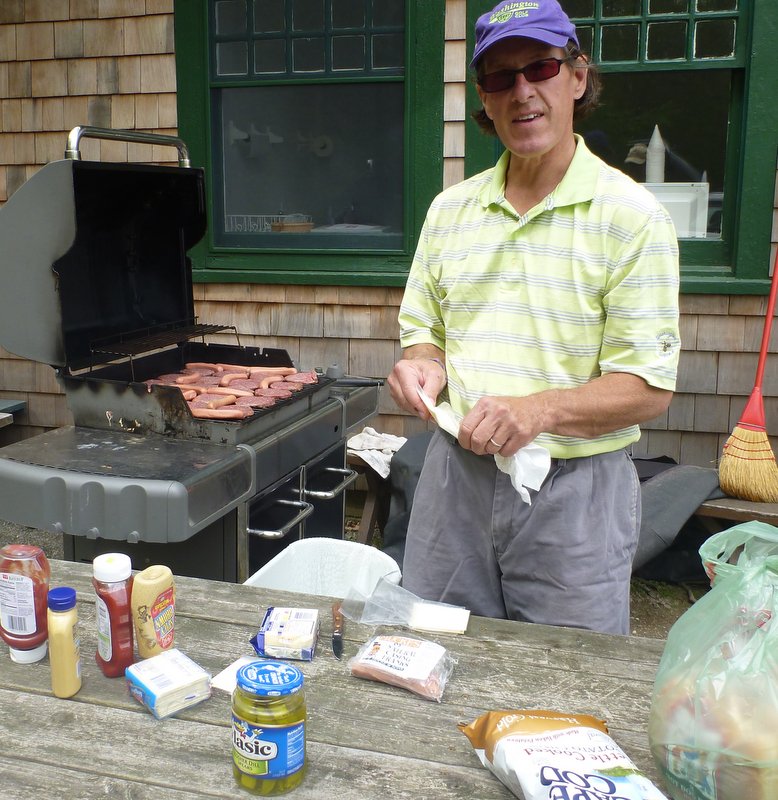
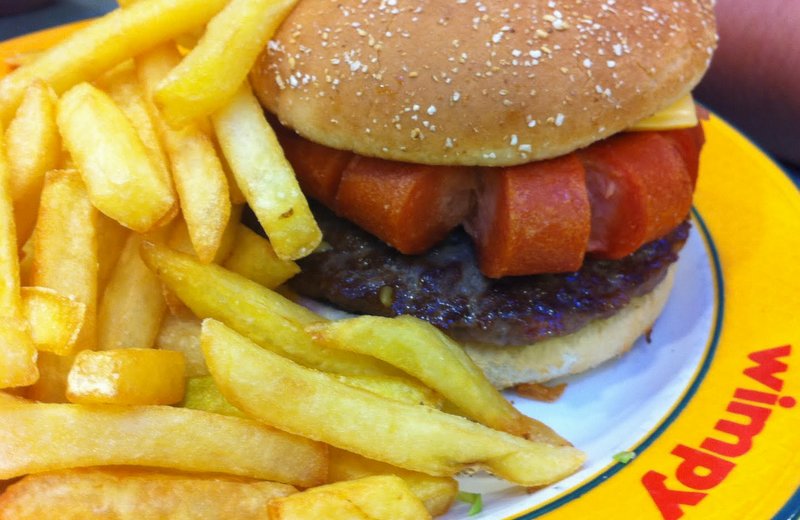
One reason my golf club is the best golf club in the world, as I may have mentioned previously, is that we don’t have a restaurant. Our clubhouse has a kitchen, and there’s a grill in the executive parking lot, outside the men’s room, but members don’t have to pay a food minimum, and we don’t have a clubhouse dining room where our wives don’t like to eat. On Sunday mornings, we take turns bringing cheeseburgers, hot dogs, and chips for everyone, and everyone brings whatever they want to drink, and that’s it. Almost everyone almost always eats both a cheeseburger and a hot dog—and because they do it occurred to me that we could further streamline our lunch operation by combining those two elements, the way they do at Wimpy’s, in England:

wimpy mega burgerI saw that sign in Southport during a golf buddies trip in 2010. The price may have gone up since then, but the concept is strong. Here’s a Mega Burger that hasn’t been dressed up by a food stylist:

Ignore the fries. We don't have those.

Ignore the fries. We don’t have those.

The ideal thing, I guess, would be to get the potato chips in there, too, under the bun. There’s room, because, although the hot-dog part looks like a disk, it’s actually a ring. I assume that someone is working on that.

wimpy and popeyeYou may have wondered why the characters in old Popeye cartoons are always sort of babbling under their breath (assuming you wasted your youth on TV cartoons, as I did). The reason is that the animation was done before the soundtrack was recorded, and the vocal performers had to fill in the gaps with muttering. (Cartoons aren’t made that way nowadays.) Here’s an example:

The Muny Life: The Beav, in Concord, New Hampshire

P1090355-001My Muny Life column in the January Golf Digest was about Beaver Meadow Golf Course, in Concord, New Hampshire—known to regulars as “the Beav.” The course has an unusual policy of keeping groups well away from the first tee until it’s their turn to play—because, the starter told me, “We find that people hit the ball better if no one is watching.”

P1090382

The Beav’s original nine holes were laid out in 1896 by Willie Campbell, a transplanted Scotsman, who had also laid out some of the early holes at The Country Club, in Brookline, Massachusetts. He was The Country Club’s first head professional, and then he held the same job at Myopia Hunt Club and Franklin Park Golf Course, which opened in 1896 and is the second oldest public golf course in the country. (It’s now known as William J. Devine Golf Course, and was one of the subjects of an earlier Muny Life column.)

Frederick Law Olmsted's 1891 plan for Franklin Park, five years before the creation of the golf course.

Frederick Law Olmsted’s 1891 plan for Franklin Park, five years before the creation of the golf course.

Campbell had heart problems. He died in 1900, at the age of thirty-eight, but he played golf till almost the end. According to his obituary in the Boston Evening Transcript: “Last spring, when unable to drive a ball more than seventy-five or a hundred yards, owing to his weakness, Campbell beat the best ball of two leading amateur players at [Franklin Park] simply by his marvelous accuracy in approaching and putting.” (Willie’s wife, Georgina, took over his job at Franklin when he died, thus becoming the first woman golf pro in the United States.) Campbell is memorialized at the Beav with an annual tournament in his honor:

That (Photoshopped) face isn't Campbell's, but I don't know whose it is.

That (Photoshopped) face isn’t Campbell’s, but I don’t know whose it is.

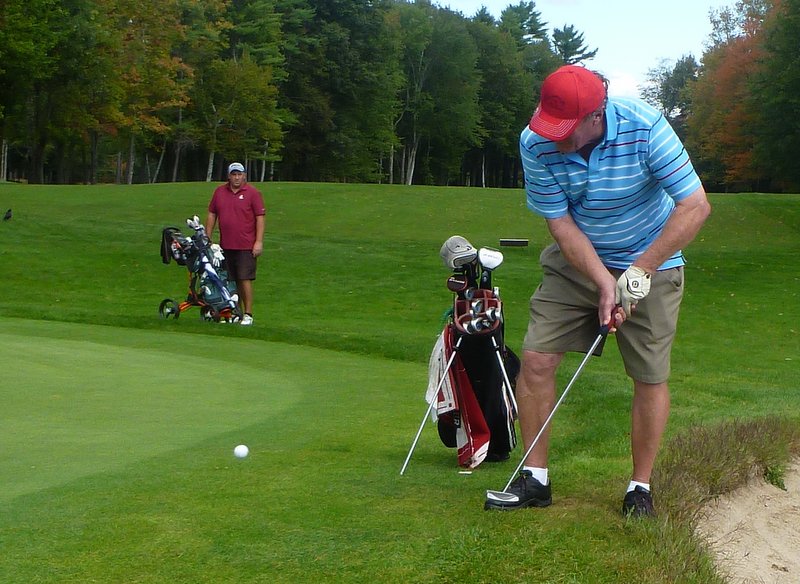
My principal guide to the Beav was Dave Andrews, a retired television news reporter. Dave swings righty but writes and putts lefty, and he was able to use his ambidexterity to his advantage with this tricky shot, from the collar of a bunker:

P1090394-001

Dave is an avid supporter of women’s golf. Beaver Meadow used to host a Symetra Tour event called the Northeast Delta Dental International, and Andrews served twice as the tournament’s (volunteer) caddie master. He and several of his friends also sometimes serve as volunteer caddies at women’s mini-tour events in Florida, where they go to escape New England winters, and at the LPGA’s Q School. That’s Dave and Hannah Yun below, at the 2011 Q School, where he helped Yun earn her 2012 LPGA rookie card.

andrews yun

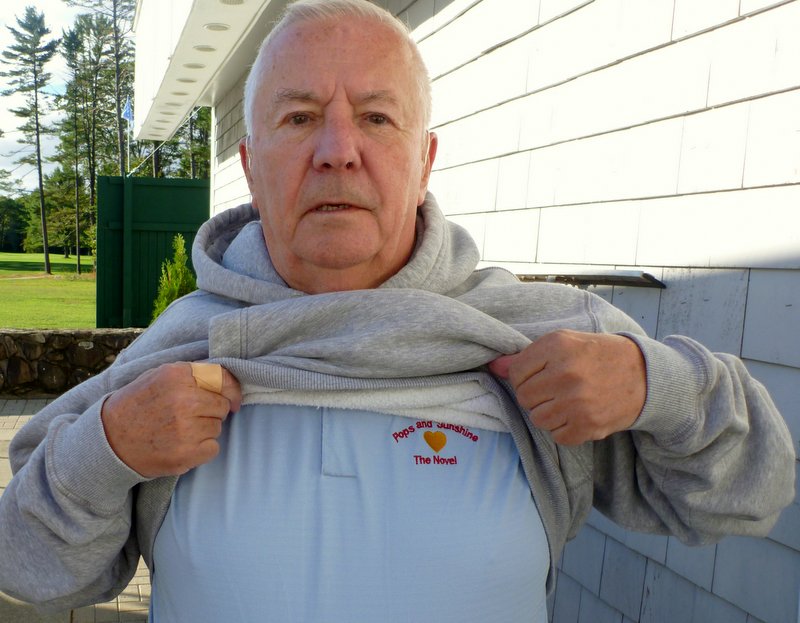
Dave is the author of a novel called Pops and Sunshine, which makes good use of some of his experiences as a caddie and as a regular at Beaver Meadow. The guys who hang around with him have been big supporters not only of women’s golf but also of the book. This is Tinker Foy, who has been a Beav member for more than fifty years:

P1090440-001Tinker’s son, Denny, was Dave’s partner in a tournament that was underway when I arrived. Denny has the rarest and most prized of all golf tans, the sunglasses-stem line:

P1090331Another of Dave’s regular golf buddies is Russ Matthews. Russ sold his company when he was in his forties, and now plays golf a hundred percent of the time, Dave told me. He has been to Scotland a couple of times, and when he isn’t playing golf he’s watching it on TV. He’s part of the group that goes to Florida each winter, but Russ said he wouldn’t want to live there full time, because he likes the change of seasons. “I played hockey when I was a kid,” he said. “When I started, I just had figure skates, and I taped magazines to my legs, as shin guards.” He had a heart attack not long after I visited, but he’s doing fine now. Here he is:

P1090298

Every year, Beaver Meadow plays a two-weekend tournament, called the Beaver Cup, against a club in Phoenix, New York, called Beaver Meadows. There’s a golf club in Virginia that has almost the same name as my golf club, and one of these days the Sunday Morning Group is going to challenge them to something. In the meantime, I hope the guys from the Beav will drop by (after the snow has melted) for a round at our place.

P1090381-001

Which Hacker is the Real Hacker (Real Name)?

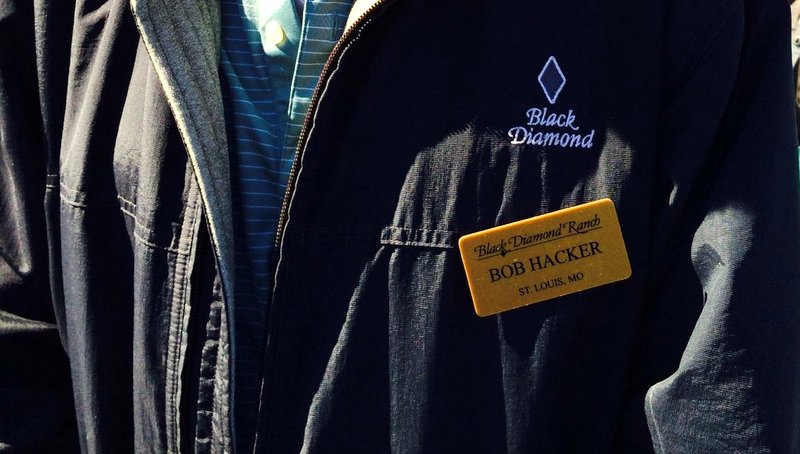
IMG_0398The person I play the most golf with is Bob Hacker, a.k.a. “Hacker (real name),” on the left in the photo above, which was taken last winter at Pelham Bay Golf Course, in the Bronx. (That’s me on the right.) He is also the person primarily responsible for managing the Sunday Morning Group and its finances, and is therefore widely believed to be the chairman of the Committee, the mysterious but all-powerful body that governs everything we do. He is unique—or so I thought until recently, when Tony, who is the person I play the second most golf with and is the co-inventor, with me, of the Hybrid Lifestyle, sent me a photograph of a starter at the Black Diamond Golf Ranch, in Lecanto, Florida, where he had gone to play golf with his Atlanta friends, who are richer, smarter, and better-looking than we are:

IMG950651

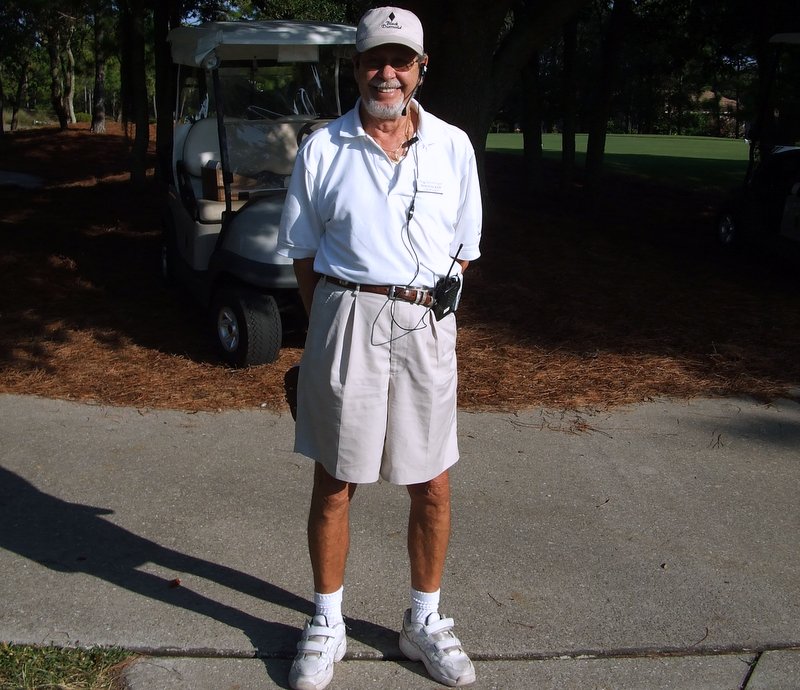
That’s just part of him, obviously. Doug Egly, who is Black Diamond’s general manager, sent me this photo of him in his entirety:

2007 Hacker, Bob

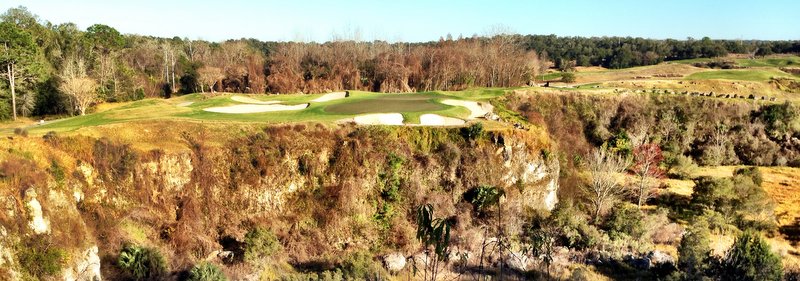
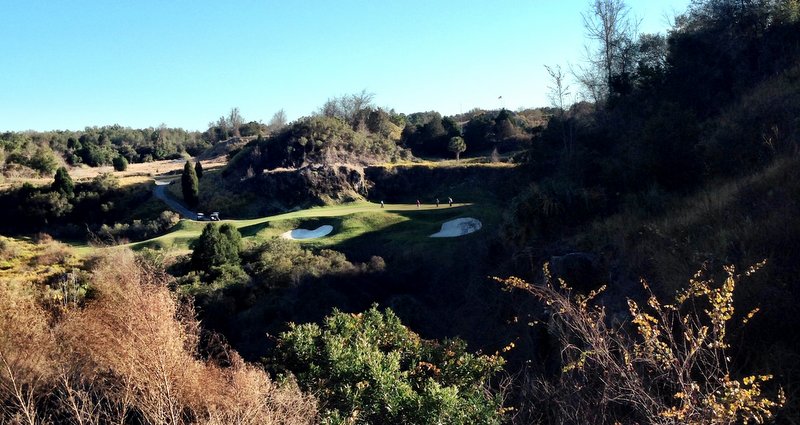
The existence of this second Bob Hacker suggests either that we are living in an episode of the Twilight Zone or that Black Diamond Ranch is a parallel universe of some kind, filled with eerie duplicates of people I know, but with better weather. Photographs of the Quarry Course—one of three on the property, all designed by Tom Fazio—do make it seem otherworldly:

photo 1 photo 3photo 2

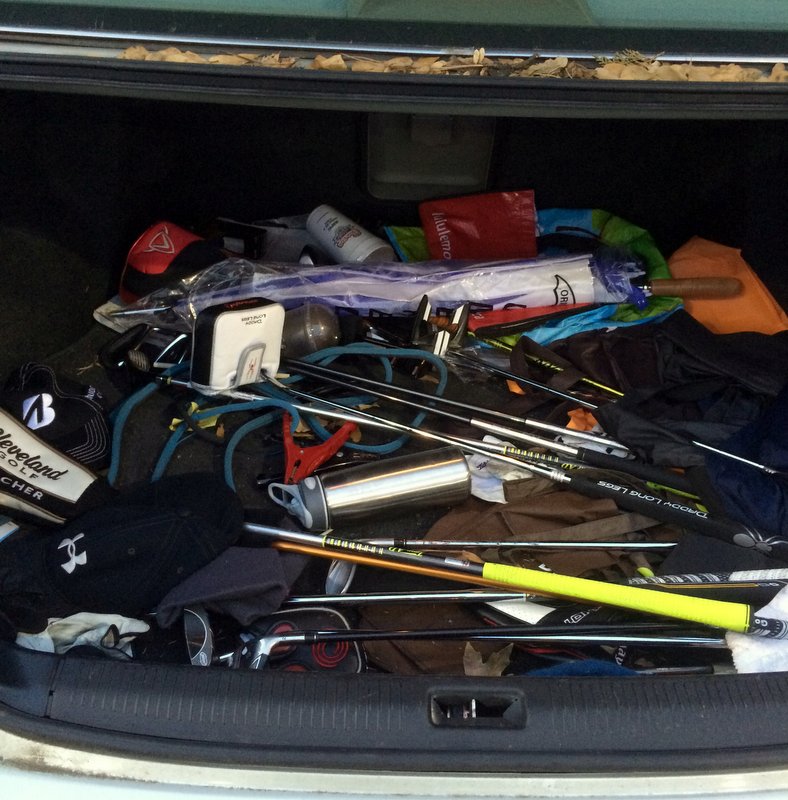
As it happens, the real Hacker and I visited Tony in Atlanta shortly before he went to Florida with those other friends. We played golf at his Atlanta club, about which I’ll probably have something to say at some point, and in the evenings we played the card game setback with Tony’s wife, Teresa, who remained undefeated until we stacked the deck while she was in the kitchen making us something to eat. Anyway, the easiest way to distinguish Tony from his Twilight Zone doppelganger is by checking the trunk of his car, which contains so many golf clubs that he has to keep his golf clubs somewhere else:

photo

World’s Second-Best Golf Club, Part Three: Who’s Who in the Big Dogs

Big Dogs Barney and Riley Tebowing after both birdieing the signature seventh hole on their home course.

Big Dogs Barney and Riley tebowing after both birdieing the signature hole on their home course (No. 7). This is the hole where Jim fell into the lake while trying to chip from the bulkhead.

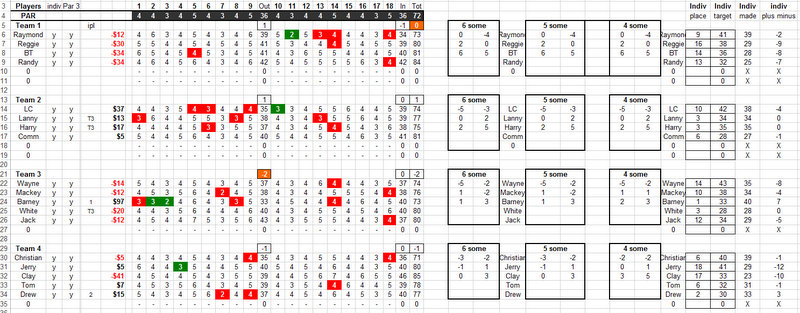
I’ve written a couple of times about the Big Dogs, a regular men’s group at the second-best golf club in the world, in northern Florida. (You can read the previous installments here and here.) The Big Dogs have an attractively complicated regular game, which they call the Dogfight and which they keep track of with both an Excel spreadsheet and a private website. They use their own version of Stableford scoring, and based on it they assign each player what they call a Power Ranking. The player they call the Commandant uses the Power Rankings when making up teams each week. Here’s what one of their spreadsheets looks like:

Fullscreen capture 1232014 91912 AMMike Riley, who introduced me to the Big Dogs, also provided background information on some of the members, along with photos. Here’s Riley:

image

And here are highlights from his report:

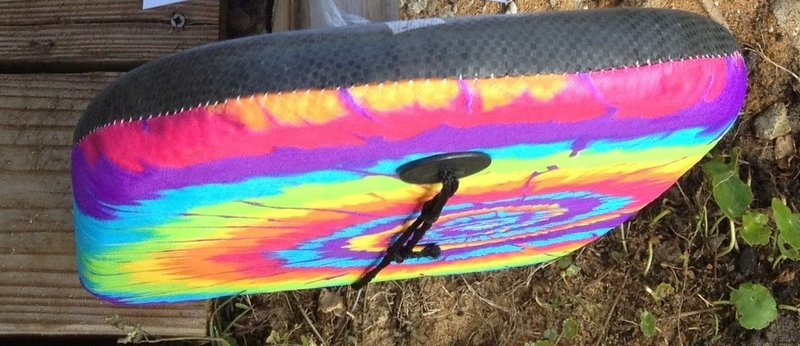
Jim's putterThe putter above belongs to Jim, the player who had to be rescued from the lake. Riley writes: “Jim is an excellent putter. He also has a grill and an ice chest mounted to his cart. He says that when you decide to break a club you should always do it where your other clubs can see it, because that way they’ll be less likely to misbehave. GIT stands for ‘get it there.’ When things are going poorly, Jim says, ‘I don’t know if I’ve had all I can take, but I’ve had all I want.’ He’s a lawyer.” For a couple of weeks after Jim fell into the lake, the Big Dogs hung a life preserver on the bulkhead, in case it happened again:

life preserver

Riley continues: “One of our better players is Brown. During our big invitational one year, he missed short birdie putts on No. 3 and No. 4. After hitting his drive on No. 56, he tied his putter to the back of his cart and let it drag down the cart path for the duration of the hole. We learned that putters do spark when dragged down a concrete cart path. We did not penalize him for changing the characteristics of a club during a round.”

Cart with west virginia bags

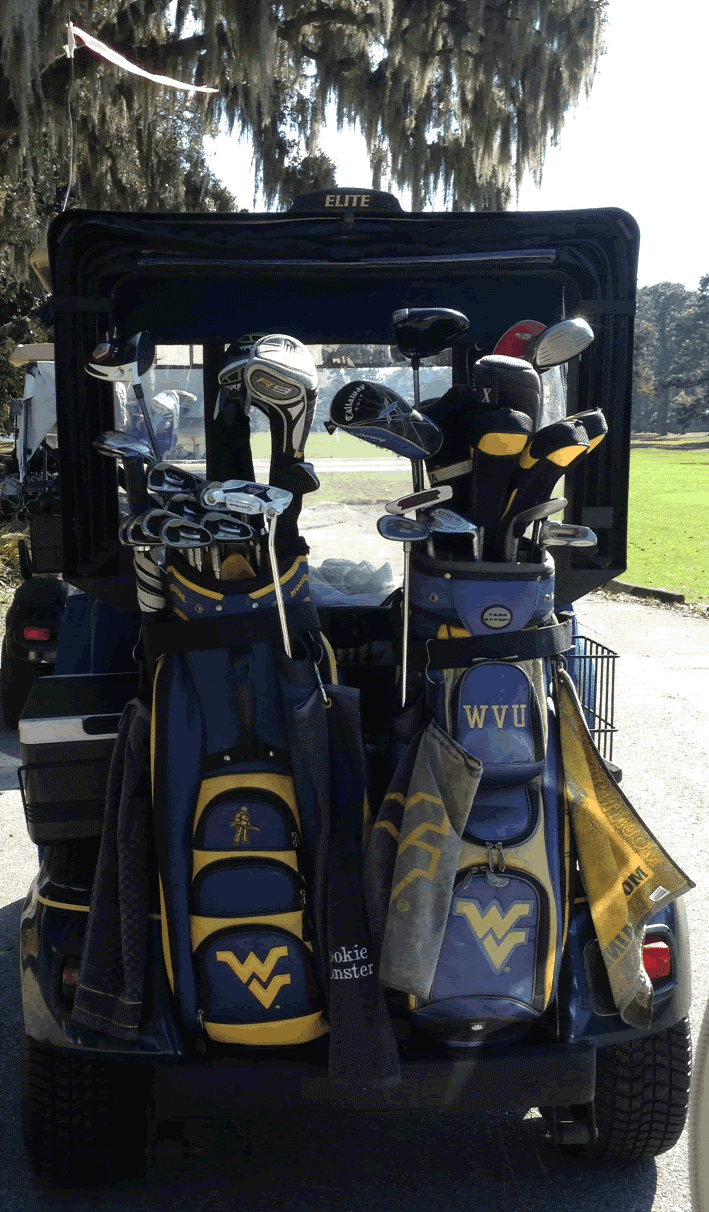
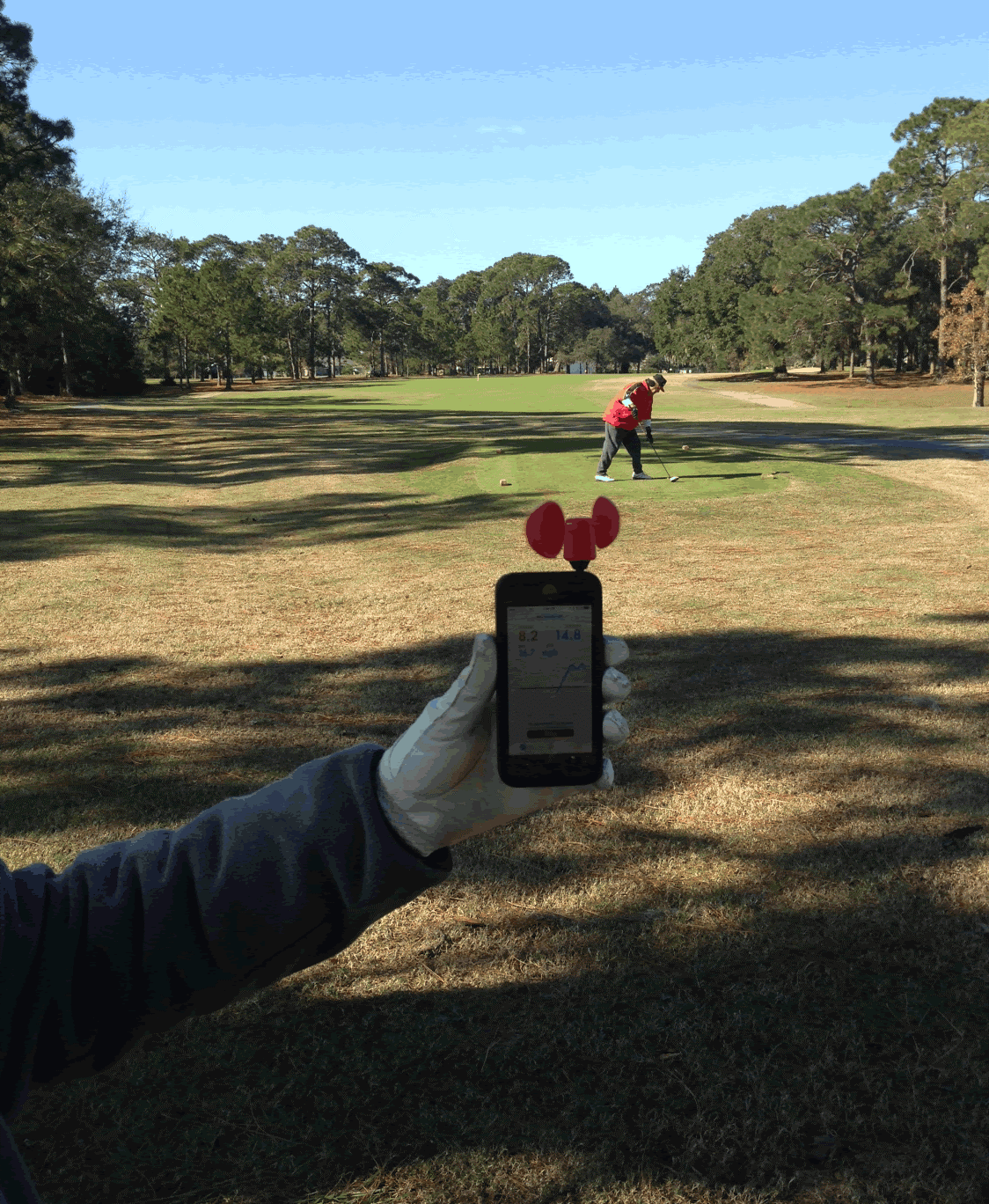
The cart in the photo above belongs to the player known as Cookie Monster. The streamer attached to the roof of the golf cart (upper left) is an illegal anemometer. The player known as III (Three) has a much fancier illegal anemometer, attached to his cellphone (see photo below). And that’s Cookie on the right, getting ready to tee off:

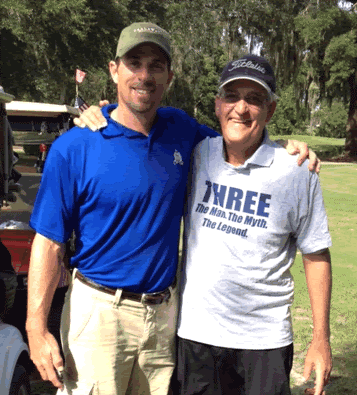
III's wind appRiley adds, “III had personalized golf towels made for ‘everybody who has a nickname.’ [See Cookie’s towel, on his West Virginia golf bag, two photos up.] III also has a tee shirt that he wears into the clubhouse only when he shoots 72 or better.” Here he is, in his tee shirt, with Christian, who was the captain of his team that day:

Christian and III

There used to be a subset of the Big Dogs known as the Bottom Feeders. “They were named after fish that feed off the bottom of the Gulf,” Riley writes. “They were the three, four, or five players who fed themselves off the bottom of the Dogfight. This was back when everybody played the blue tees and breaking 80 was a chore. If you broke 80, you were ‘proof,’ which meant that you pushed all your nassaus against anyone else who broke 80, whether you actually beat them or not. If you were a Bottom Feeder, you had to have a sticker on your cart identifying you as such. The Bottom Feeder game no longer exists.”

bottom feeder

At one point, the Big Dogs were embroiled in a fake lawsuit involving Jim and the Bottom Feeders, but it’s too complicated to go into. The case was resolved, more or less, out of court.

Scratching nassaus

The Dogfight is made up partly of two-man nassaus in which everyone plays everyone else. “Players are allowed to scratch matches that they feel aren’t even,” Riley writes. “Some are more liberal than others in their definition of even. You scratch a match by drawing a line through it on the bet sheet.” The players in the photo above are scratching matches before teeing off. From left to right, they are KB, Drew, Mackey, Clay, and Lanny.
Cookie scratching matches on the bet sheet.

Cookie scratching matches on the bet sheet.

Like all golf groups, the Big Dogs have their own lingo. Some examples, with Riley’s explanations:

“I’m playing Friday.” Rob often says this on Tuesday, then never shows on Friday. When anyone says they’re going to do something and you don’t think they have any intention of actually doing it, you say, “O.K., Rob.”

A “cod lock” is any bet where the outcome is almost certain. “Scratch all my Mackey bets” is something that certain players always say because Mackey scratches all bets that aren’t cod locks.”
“Nobody cares if you suck fast.” This is something I told Barney when I joined the Dogfight. It means that if Barney plays fast no one will mind that he sucks at golf. [Similarly, when I took up golf, my friend Jim told me that my terrible shots wouldn’t matter as long as I kept up with everyone else, because “Nobody ever gave a shit about how anybody else played golf.”]
“My long was good but my wide sucked.” Used for a putt with good speed but a bad line. Can also be reversed.

“I got it.” Means “I’m about to hit.” Usually used to indicate that I am about to hit even though it’s not my turn to play. Jerry does this more than anyone else, especially when things are going bad for his team.

“Make a Hoochie knot.” Building a lie by slamming your club into the ground behind your ball, making it easier to deck a driver on a par 5. Brown is the master of this tactic.

James S. Payne, a professor of special education at Ole Miss, where Riley played on the golf team all four years, explains the origin of the Hoochie Knot in this video:

I’d be very interested in learning about local lingo at other golf clubs, either by email or in the comment section, below. I’m also interested, of course, in regular golf groups that routinely have almost as much fun as the Big Dogs and my own Sunday Morning Group.

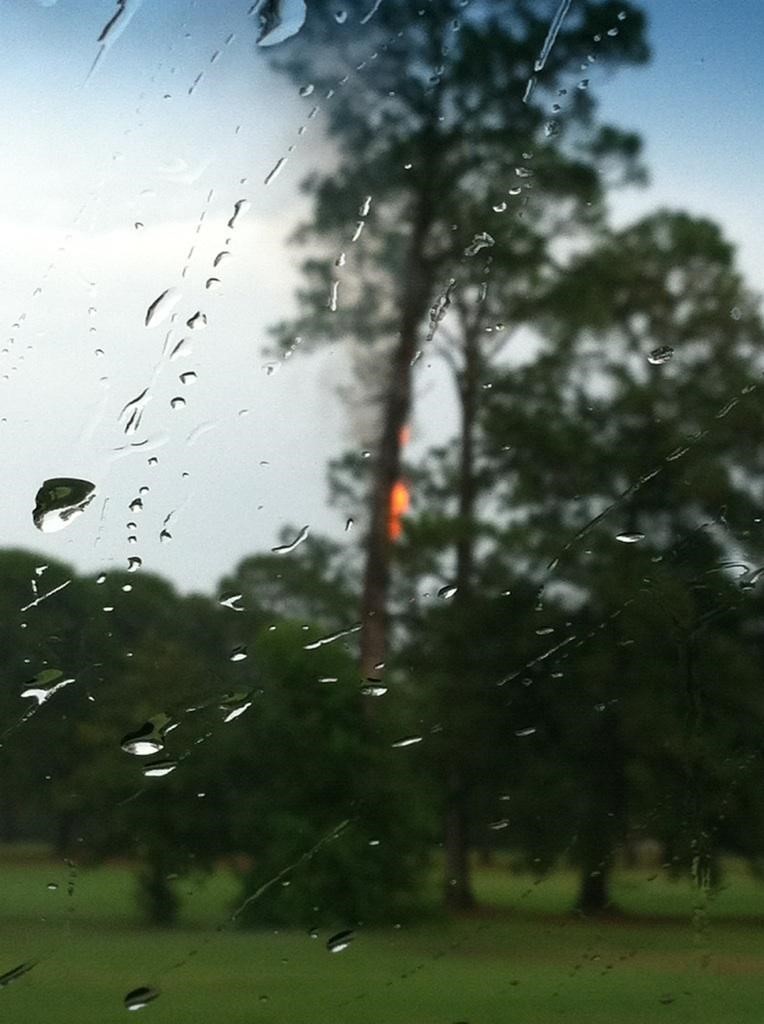
Lightning strike at the world's second-best golf club. All the Big Dogs escaped.

Lightning strike at the world’s second-best golf club. All the Big Dogs escaped.

Reader’s Trip Report: Cruit Island, County Donegal, Ireland

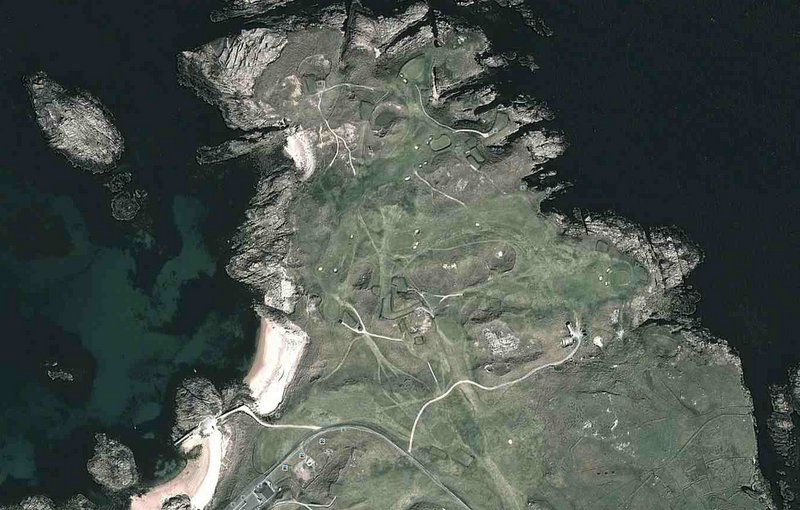
Cruit IslandI’ve taken two golf trips to northwestern Ireland, and I’ve played some of my favorite rounds there, including ones at Carne, Enniscrone, Narin & Portnoo, Portsalon, and Ballyliffin. (You can read about one of those trips here.) Since then, several people have told me I missed a gem: Cruit Island Golf Club, a nine-holer, which lies at the outermost tip of a sparsely populated island that’s connected to the mainland by a causeway. (The drive from Donegal to the golf club is roughly an hour and a half. My rule for estimating driving times on Ireland’s sidewalk-size back roads: think of the kilometers as miles, then multiply by two.)

IMG_2479

Vic Thompson—a reader in southern Illinois and a member of Lake of Egypt Country Club, which I have now moved to No. 1 on my list of the World’s Best-Named Golf Clubs—has played there twice, in 2012 and 2013. Recently, he wrote to urge me to play there, too.

IMG_2490

Excerpts from Thompson’s report:

I first traveled to Ireland in 2001 and played the southwestern courses, Lahinch, Ballybunion, Tralee, Waterville, and Old Head. I returned in 2003 (Scotland & Ireland), 2011 (with my wife just to sight-see), 2012, and 2013. Of all the courses I have played in Ireland, Cruit Island—pronounced Critch Island—was the most fun. It has blind tee shots, tee boxes set on top of large high dunes, and great putting greens. The first tee is high atop a dune, giving the golfer a panoramic view of parts of the course as well as the cliffs and ocean. The sixth hole is a 140-yard par 3 that is all carry over a stunning wave-crashing gorge. The scenery is stunning. The azure waters and rocks surrounding the course are breathtaking.

IMG_2488My first visit was in 2012, on a trip with my golf buddy Bob. We were staying at the Lake House Hotel in Portnoo, and one of our hosts recommended that we drive up and see it. We did, and the course manager—who happened to be a relative of another of our hosts at the hotel—invited us to play nine holes and provided us with an electric cart, all at no cost. He was so proud of the course, which opened in 1986, and the more he talked the more excited he became.

IMG_2476I went back with my daughter, Jenny, in 2013. Jimmy said, “We’ll settle up when you finish,” and after our round he said that fifteen euros should take care of it. I thanked  him, and commented that this was the most fun I had ever had on an Irish course. Cruit Island is out of the way, but I recommend putting it on your itinerary. Heck, the drive alone is worth it. 

IMG_2484I’m sold. Let’s go!

DSC00632

Winter Golf and a Previously Unknown Type of Cheeseburger

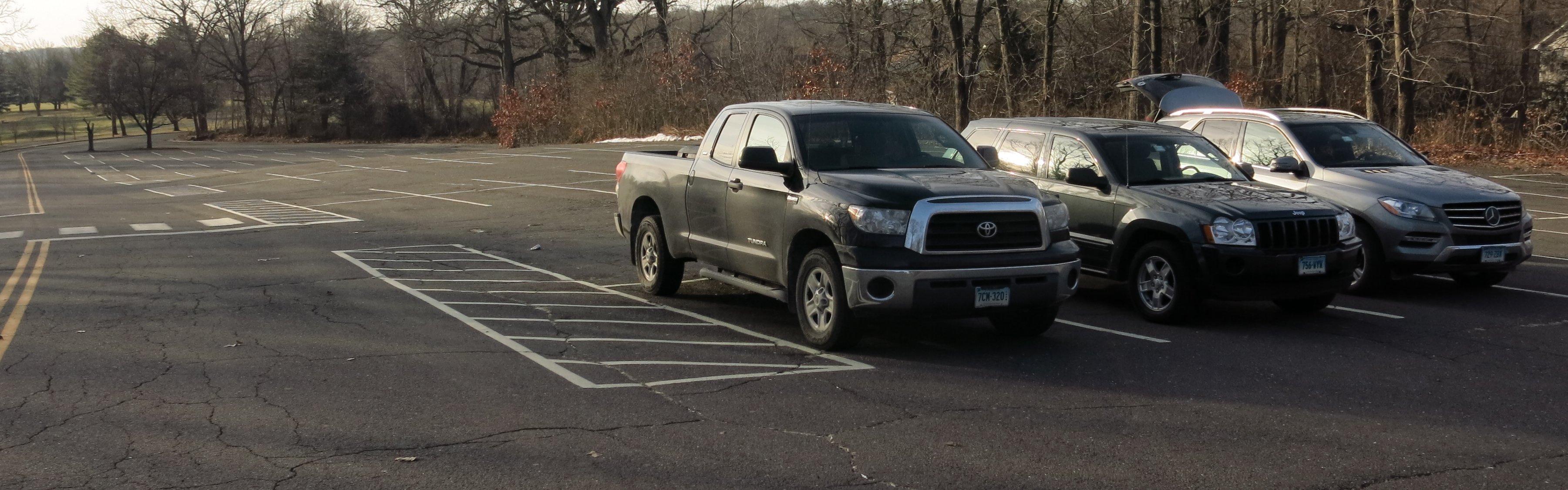
These cars belong to my friends and me. There were no other cars in the parking lot at Tunxis when we got there on Sunday morning.

These cars belong to my friends and me. There were no other cars in the parking lot when we arrived on Sunday morning.

We got what seemed like a foot of rain on Saturday. That was good in one way, because it washed away most of the snow, but it was bad in another, because (apparently) it persuaded the people who make the decisions at Tunxis Plantation Country Club not to open the following morning, even though Hacker (real name) had called the evening before and left a message that we would be there at 9:30, ready to go. I sensed trouble as I approached the clubhouse: of the ten or so greens I could see from the road, only one had a flag, and the parking lot was empty except for cars that belonged to people I knew. Hacker started calling around the state, but the places he tried either weren’t open or weren’t answering the phone. (Suggestion to golf courses that don’t shut down for the entire winter: update your website and outgoing voice-mail message every night with information about the following day.) Finally, he found an open course, and it was just thirty-five minutes farther away. So we caravaned:

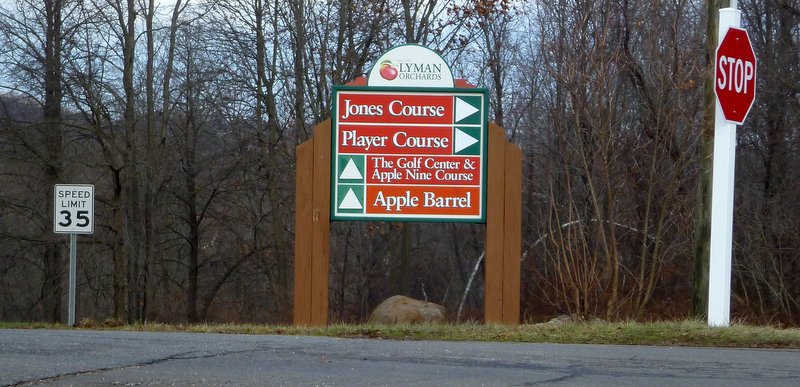
P1110660And then we spent a very enjoyable day at Lyman Orchards, which, like Tunxis, has forty-five holes. One of Lyman’s eighteens was designed by Robert Trent Jones, and the other was designed by Gary Player. The fifth nine—called the Apple Nine—is new, and is (I would guess) for kids and beginners. There’s also a golf school and a driving range.

Lyman Orchards is also an orchard, and there's a big store in which you can buy apples and apple-themed stuff.

Lyman Orchards is an orchard. There are apple trees in the middle of the course, and there’s a big store, called the Apple Barrel, in which you can buy apple-based and apple-themed products. Maybe your wife would like to tag along some Sunday, and spend a few hours shopping for apple butter while you and your friends are playing golf.

We first played Lyman several years ago, and at that time they kept both eighteens open all winter. Now they shut down the Jones course—which is too bad, because the Player course is definitely second best. It’s also a pain to walk, because you always seem to be climbing to the top of a huge hill in order to hit your ball to the bottom of it, and then walking miles to the next tee. Still, golf.

The conditions weren't what you would call perfect, but the course was open. In fact, it was pretty busy.

The conditions were not what you would call perfect, but the course was open. In fact, it was almost somewhat busy.

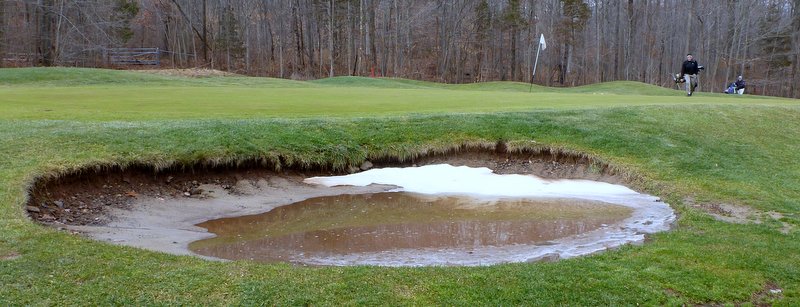
On most of the holes, the flags wouldn’t go back in the cups straight, and on some of the holes they wouldn’t go back at all. The reason was that the little holes at the bottoms of the cups were all either partly or entirely full of sand. I tried to clean one out with a tee and a green-repair tool, but that was a fool’s errand. The greens themselves were squishy on top, and some of them had bare patches, but we kept being surprised at how un-slow they were.

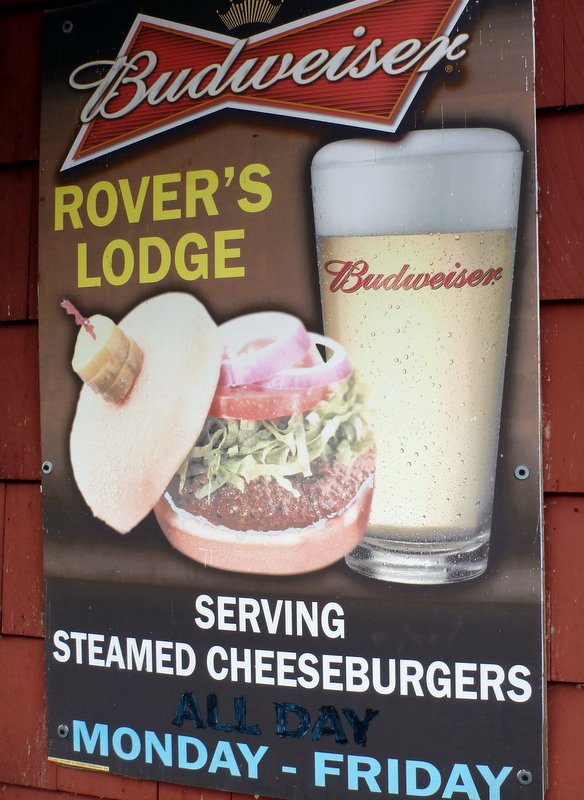
Afterward, we decided to eat lunch at a place we hadn’t tried before, the Rover’s Lodge, on Beseck Lake. The house specialty (according to a big sign facing the road) is “steamed cheeseburgers”:

P1110675A new form of cheeseburger? How could we not? I learned later that the steamed cheeseburger is “a food so truly regional that it is found in only about a dozen restaurants within a 25-mile radius of Middletown, in central Connecticut,” and that it “was invented in the 1920s, when steamed food was thought to be healthier than fried.” (You can read more about steamed cheeseburgers here.)

Steamed cheeseburger.

This is a steamed cheeseburger, from a restaurant called Ted’s.

It turned out that the Rover’s Lodge serves food of any kind only “in season,” and that the season isn’t winter. There were about a dozen guys in the bar when we went in, and they were interested, up to a point, in the fact that we had just played golf. Later, I found two reviews of the Rover’s Lodge on TripAdvisor—one that said it was “very good,” and one that said it was “a dump.” It’s possible that we’ll never know who is right, because we continued up the road to New Guida’s Restaurant, where we’ve eaten before. Let me say this for Guida’s: their cheeseburgers, however they make them, are very good. Ditto their fries and milkshakes.

P1110677

Then we drove home to watch the playoff games.

Guida's. Cash only, please.

Guida’s. Cash only, please.

We Have a Winner; Plus, Good Shoes for Winter Golf

P1110370

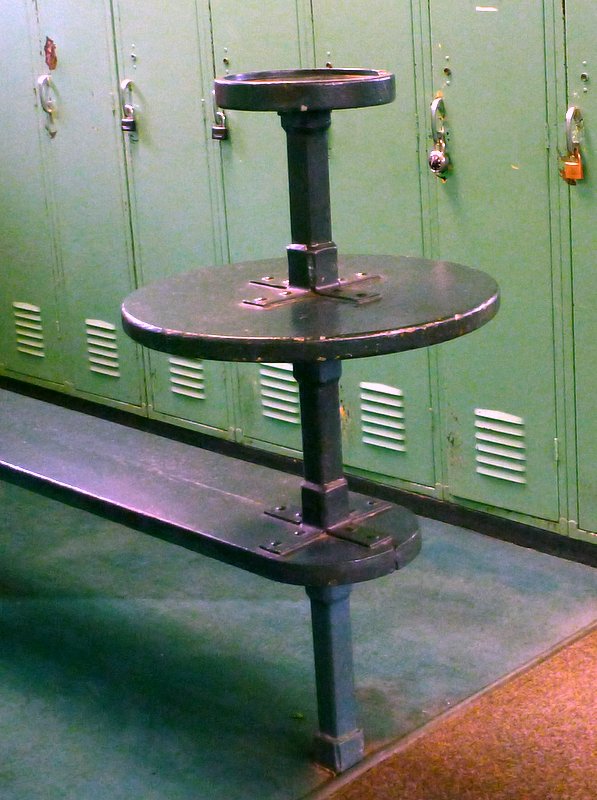
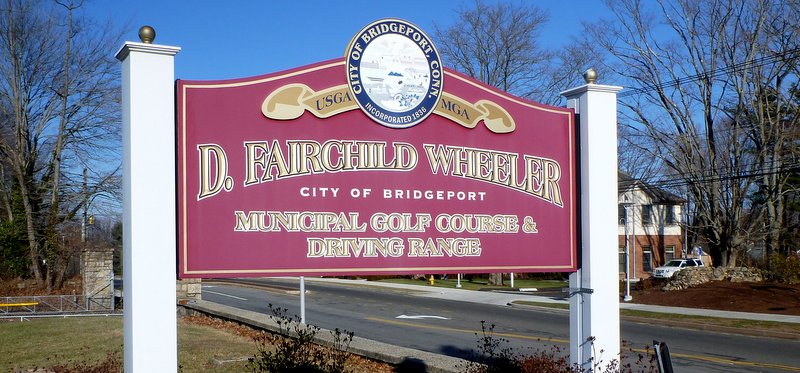
On New Year’s Eve, I challenged readers to identify a golf course and an intriguing locker-room accessory, based on a photo similar to the one above. There were several pretty good guesses regarding the locker-room accessory, but only one (by email) that nailed the golf course, too. That golf course is D. Fairchild Wheeler, known to regulars as the Wheel, a muny owned by the city of Bridgeport, Connecticut (although it’s actually next door, in the town of Fairfield).

P1110513The winner was Dave Malloy, a reader in Trumbull (another neighboring town). He wrote: “That’s the locker room at the Wheel. Red Course is open all year. Black Course is a diamond in the rough. Oh, function. Drinks, baby! Ashtrays, too, at one point, I was told. Always loved that locker room.”

P1110371-001There are other uses, too, as the photo above shows. And according to Stephen P. Roach, the head pro, regulars also treat the things as stand-up card tables—a great idea. I asked Malloy to tell me about himself and his golf. He wrote:

I am an 18-handicap hack who can lose balls impressively deep in the woods, both hooking and slicing. Fifty-two years old. Most of my golf is nine holes late Saturday or Sunday afternoon at Tashua Knolls, in Trumbull. Three kids and a full sports schedule kill golf until late June, then sports start up again in September. Grew up in Stamford playing Hubbard Heights and Sterling Farms. Occasionally enjoy away rounds at Smith-Richardson, Longshore, Oxford Greens. Play Highlands and Pines in Dennis, Massachusetts, on Cape Cod. Took one lesson, and at the end of it the pro gave me a free can of tennis balls. 

As promised, a disappointing prize is on its way to him, Winter Storm Hercules be damned. Meanwhile, my friends and I have played three rounds at the Wheel in the past week, including our final round of 2013 (on New Year’s Eve) and our first round of 2014 (on New Year’s Day).

The Sunday Morning Group visits the Black Course at the Wheel, January 1, 2014.

The Sunday Morning Group plays the Black Course at the Wheel. First tee, January 1, 2014.

When we teed off on New Year’s Day, at 9:30 or so, our cars were still the only ones in the parking lot. Where was everybody else? Home fretting over their New Year’s resolutions, maybe.

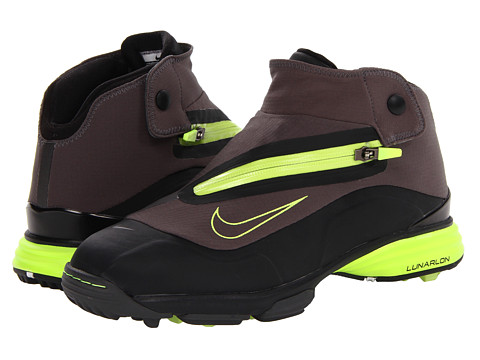
IMG_0027Playing golf in bad weather is easier if you have the right equipment. Remarkably, my friend Hacker (real name) and I both received winter golf shoes for Christmas. How did our wives know? It’s like a short story by O. Henry. My new shoes are Nike Lunar Bandon IIs:

nike bandon

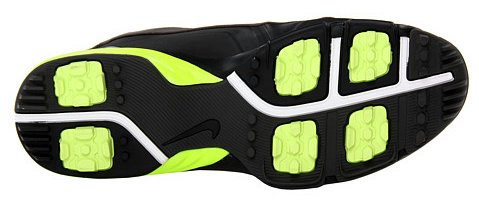
They look a little like ski boots, but my winter golf clothes increasingly look like ski clothes, so I shouldn’t complain. They’re not as slipper-like or as comfortable as my beloved True Linkswear shoes, but they seal up tight, and, so far, I have nothing bad to say about them. I also like to wear them when I walk the dog in the snow.

nike bottom

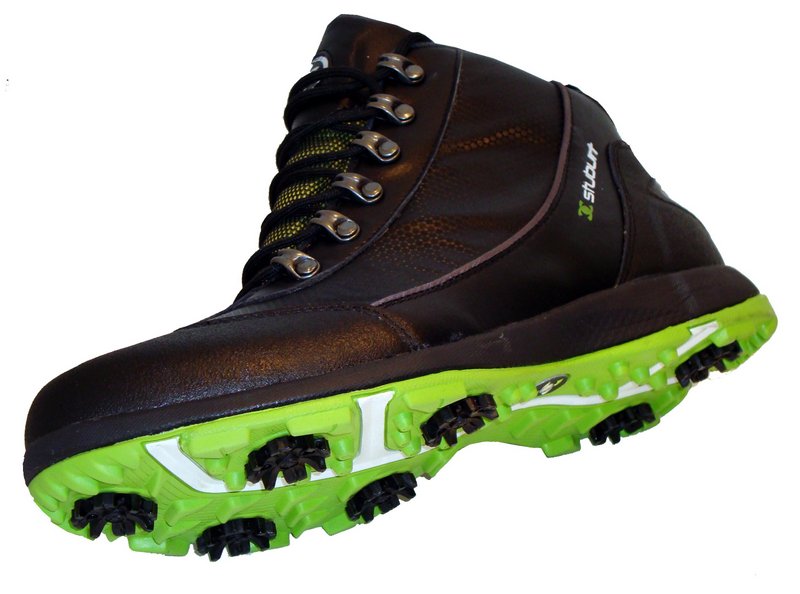
Santa brought Hacker’s new shoes all the way from England. They’re made by a company called Stuburt, and they also look like boots:

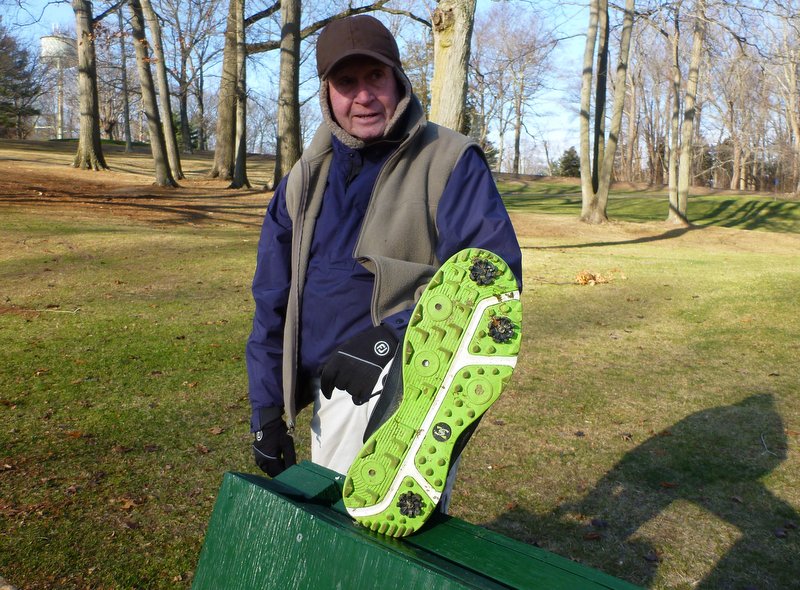
stubur bootHacker loves them, but when he got home on Saturday, the first day he’d worn them, he discovered that seven of the cleats had fallen out while we were playing.

P1110488

Cliff Dews.

Cliff Dews.

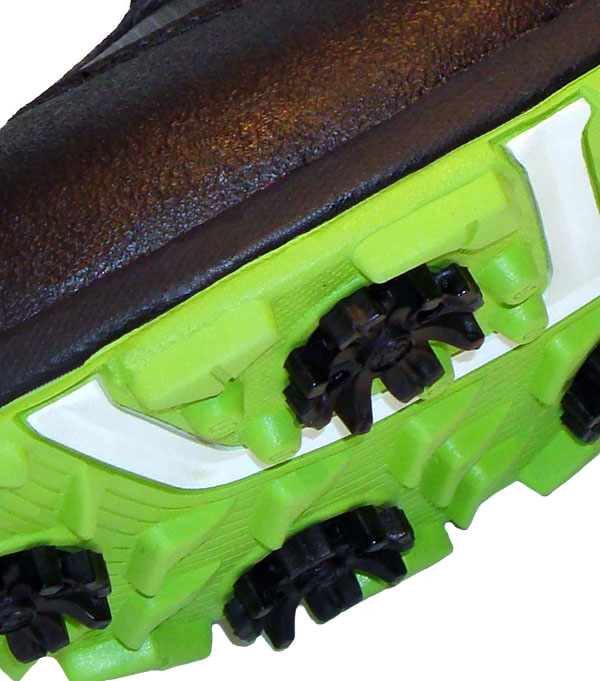
He emailed the company to complain, and, a couple of days later, heard back from Cliff Dews, a representative of the distributor. “From your description,” Dews wrote, “I can only assume that you did not notice the label on the sole unit which explains that the studs are only hand tight during the manufacturing process and that they should be fully tightened before use.” I love England, but the only other country I can think of where they do things this way is Canada. If you’re willing to go to the trouble of printing up labels and sticking them to the soles of shoes, why not spend another ten seconds and screw the things all the way in?

stuburt boot spikesBesides, as Hacker pointed out, there had been no such labels on the bottoms of his shoes or, indeed, anywhere in the box, which had contained just “the shoes and bubble pack.” At any rate, Dews did the decent thing, “despite our instruction label not being actioned,” and promised to send Hacker a new set of studs. And that’s the end of it—or so I hope.

Playing Golf in the Snow

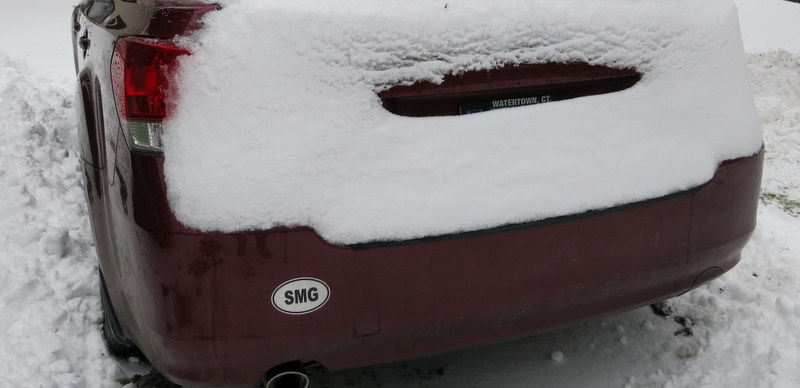
Weather Forecast screenshotThe weather was grim this past weekend, and the Sunday Morning Group didn’t meet. I paid bills, watched golf and football on TV, and thought about my poor, poor clubs, which were entombed in the trunk of my car:

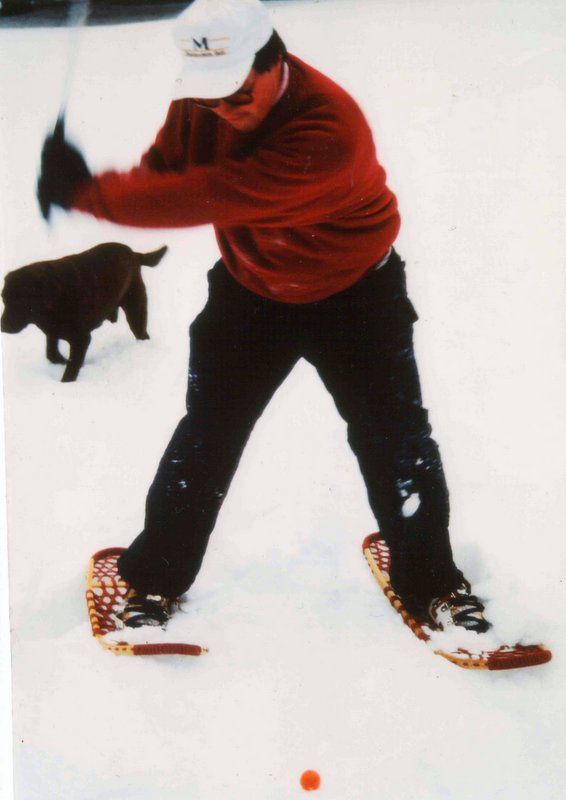
IMG_3483Six or seven of us used to play golf in the snow almost every weekend through the winter. We each carried just one club, usually a 7-iron, and if the snow was deep enough we wore snowshoes. In the photo below, which is from 1996, those dark things sticking up near our feet are the tops of the posts of a split-rail fence that used to stand behind our first tee:

George and I, in snowshoes, with 7-irons.

George and I, in snowshoes, with 7-irons.

Carrying just a single club is good for shot-making: You learn how to hit it long and short, high and low, hooking and slicing. We used orange or pink balls—unless the snow was so deep that color was irrelevant.

George, me, Michael J.

George, me, Michael J.

It was while playing snow golf that I learned the first principle of the golf swing: the key to power is not effort but ease. Facing a hundred-yard shot and having only a 7-iron to hit it with, I swung easy and launched my ball on a gorgeous left-bending arc into the woods beyond the green.

Snow golf 1996

We walked in single file, to keep footprints to a minimum, and aimed for unspoiled patches, so that the holes our balls made when they landed would be easier to find. I learned that the surest way to track a ball is sometimes with your ears. Even in very deep snow, though, we seldom lost more than one or two.

snow golf 2 1996

According to the U.S. Golf Association, snow golf was invented by Rudyard Kipling, who lived in Dummerston, Vermont, for a few years in the late eighteen-hundreds. Kipling used to paint balls red and hit them into tin cans buried in snow in front of his house, which was called Naulhaka.

Kipling's house in Vermont. He used to hit red golf balls down that snow-covered hill.

Kipling’s house in Vermont. He used to hit red golf balls down that snow-covered hill.

Kipling learned about golf from Arthur Conan Doyle, who visited Naulhaka in November, 1894. “I had brought up my golf-clubs and gave him lessons in a field while the New England rustics watched us from afar, wondering what on earth we were at, for golf was unknown in America at that time.” Conan Doyle wrote later. (Golf wasn’t quite unknown; my own club, two states to the south, was already five years old.)

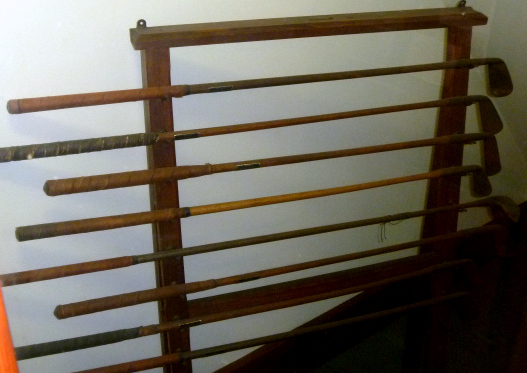
Kipling's clubs and the rack he stored them in, on display at Naulhaka.

Kipling’s clubs and the rack he stored them in, on display at Naulhaka.

I myself haven’t played snow golf since my friends and I discovered that the golf courses in New York City almost never close. But if the weather stays like this through the end of the year I’ll have to take my snowshoes out of storage.

Rudyard Kipling at Naulhaka, where he created both snow golf and The Jungle Book.

Rudyard Kipling at Naulhaka, where he both invented snow golf and wrote The Jungle Book.

45-Hole Golf Complex Stays Open for 5 Golfers

Golf weather, duh.

Golf weather, duh.

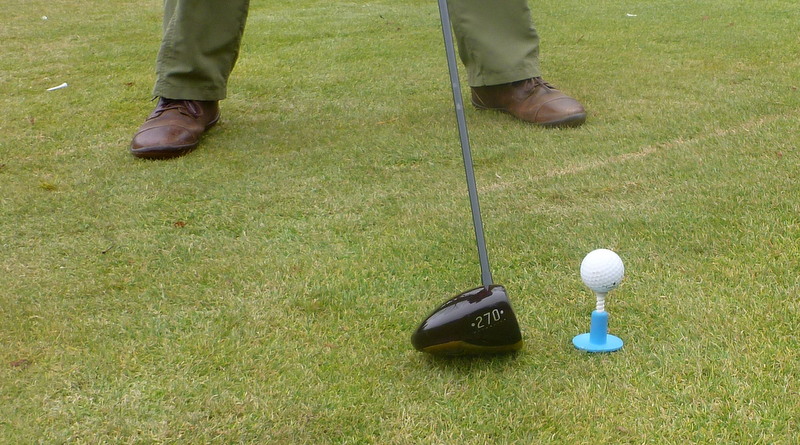
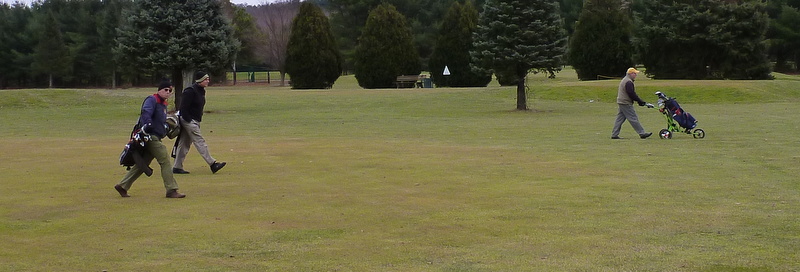
Our home greens are closed, so on Sunday four of us traveled a little over an hour to the east, to Tunxis Plantation Country Club, which has two eighteen-hole courses and one nine-hole course—all very nice, all completely open, carts available (although we didn’t use them), $35 walking. The parking lot was empty when we arrived, at 10:30. We teed off at 10:45 and were the only golfers on the entire property. The temperature was only 30 or 32, but there was no wind and the course was in terrific shape. I had brought some adjustable winter tees, which I picked up at the PGA Golf Merchandise Show in Orlando a few years ago:

P1110267They’re really meant to be used with mats on driving ranges, but they work pretty well on their own when you can’t get a regular tee into the ground. We didn’t need them, though, because the dirt was still semi-unfrozen.

Tim, Gary, Hacker (real name), Tunxis Plantation, December 8, 2013.

Tim, Gary, Hacker (real name), Tunxis Plantation, December 8, 2013.

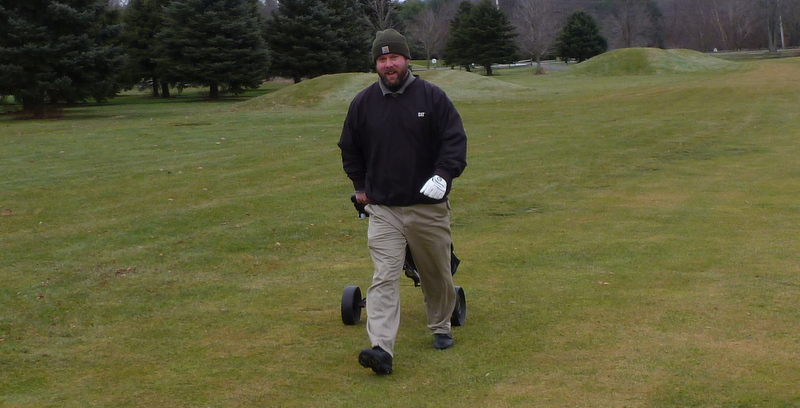
On the eleventh hole, a single golfer caught up to us, and we let him play through (see below). On the previous hole, he had sunk a six-foot putt and made a fist pump, even though he was by himself and didn’t know I was watching. He hit a huge, perfect play-through drive, well past all of our drives, but then he shanked his second shot into the pine trees. That made us all feel better about his big drive.

P1110291Hacker and I were both testing some Clicgear pushcart mitts, which we had bought independently at exactly the same time:

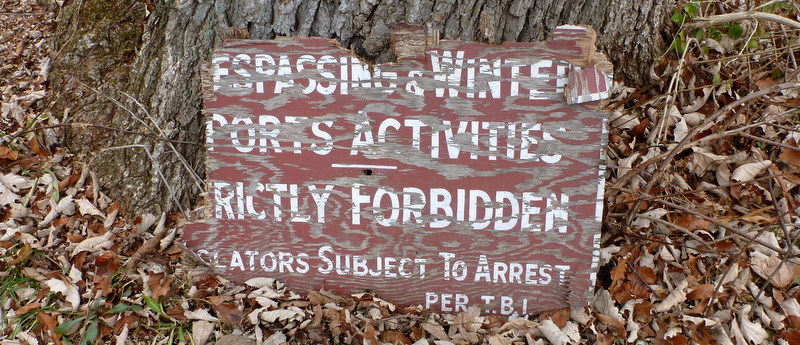
P1110294They have Velcro straps, and they attach (as a single unit) to the handles of your pushcart, so that you can slide your (gloved) hands into them. Getting the thumbs in the right place takes a little work. Each side has a pocket for a chemical hand-warmer, although the pockets are slightly too small for chemical hand-warmers, we found—an odd design flaw. We liked them, though. On the sixteenth hole, Tim noticed this sign leaning against a tree:

Translation: we shoot cross-country skiers.

Translation: we shoot cross-country skiers.

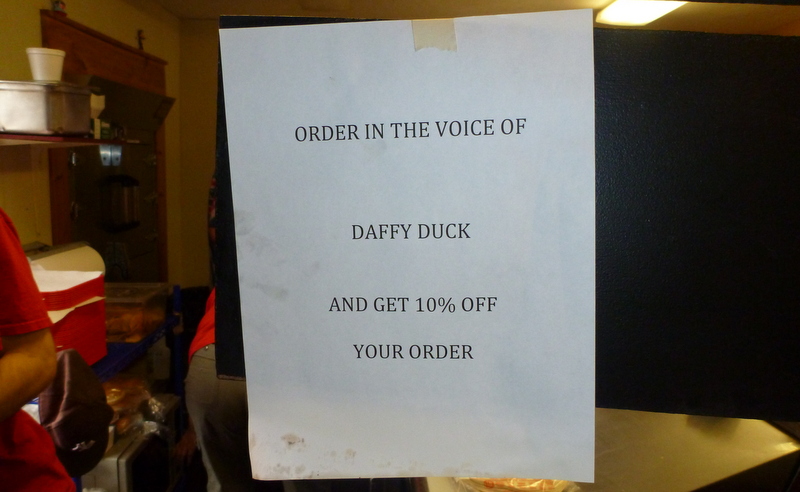
We finished in three hours and had lunch at one of our favorite winter clubhouses, Flaggstead Smokehouse. They were out of brisket, but they still had my favorite: pulled rib meat. They were also offering a discount (see below). Only Hacker tried the voice (unsuccessfully), but they gave us the discount anyway, and when we left I bought a pound of pulled ribs and a big thing of beans, to take home.

P1110301