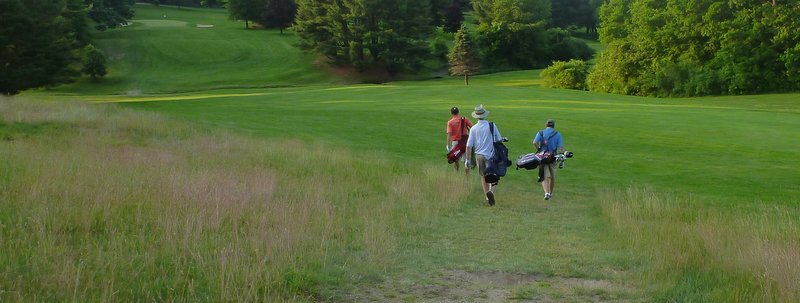
Solstice Marathon: 101 Holes in 15 Hours, All Walking

sixth fairway

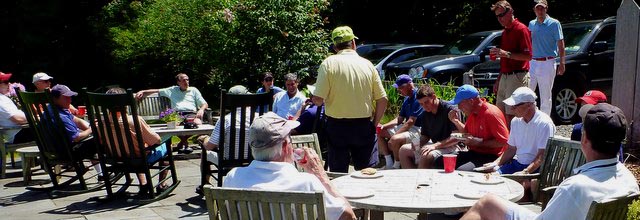
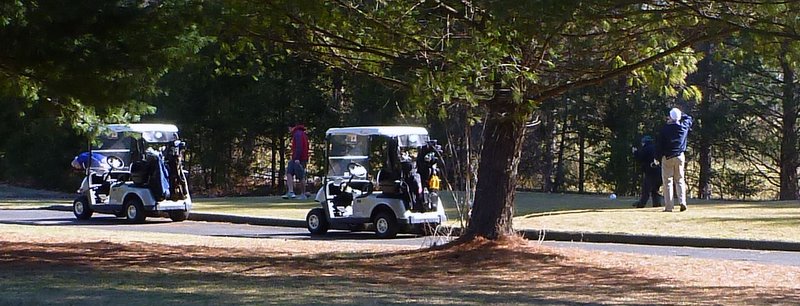
To celebrate the official arrival of summer, my friends and I played golf on Monday from can to can’t—from when you can see until you can’t. Seven of us teed off at 5:00 a.m., when it was just light enough to follow a ball most of the way to the dogleg in the first fairway, and about thirty minutes later we were joined by Peter A., who had just discovered that he didn’t know how to set his alarm clock. He played by himself until he had caught up. Here’s Hacker (real name) getting ready to hit the day’s opening drive:
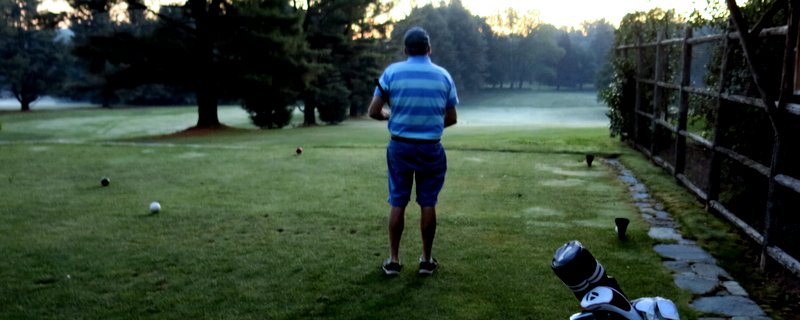
hacker first hole

We had to play around the sprinklers for a while:

sprinklers

Gary, our superintendent, stopped by to see how things were going, and we tried to talk him into joining us:
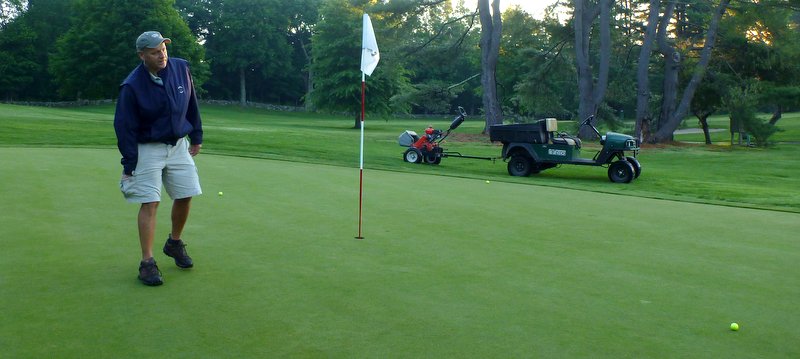
gary sixth

After the first eighteen holes, we drove to the coffee shop on the village green for breakfast. After the next twenty-seven, we made ourselves cheeseburgers and hot dogs on the grill in the parking lot next to the clubhouse. We also stopped occasionally to change socks, shoes, and shirts. I flipped my socks every time we passed the clubhouse, so that they would dry evenly:
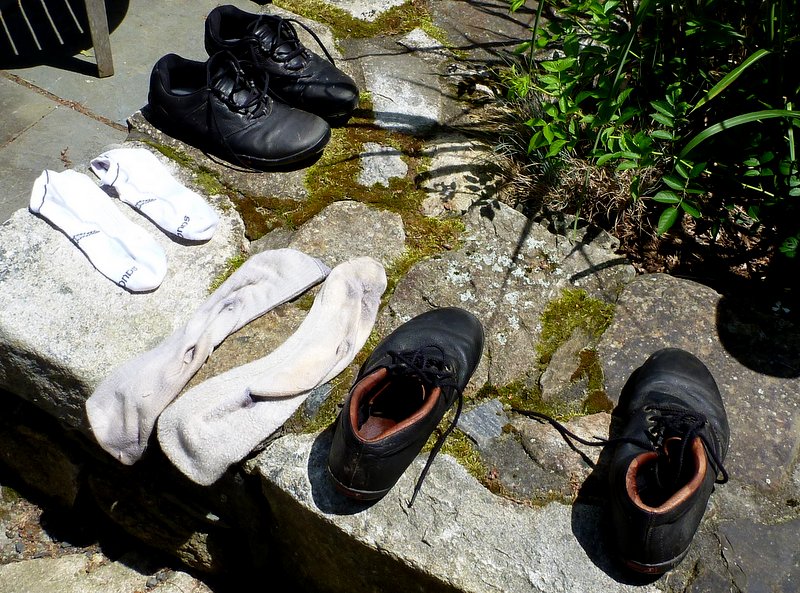
drying socks

The day was hot, humid, and mostly windless. Several guys came and went. Tim played the first eighteen, then went home and worked, then came back and played the last eleven. (He said that the unusual parts of a solstice marathon are the beginning and the end, and that he already knew what it’s like to play in the middle of the day.) Here’s Tim, during the final nine, carrying a golf bag with the logo of the Sunday Morning Group’s unofficial marathon golf-shoe provider:
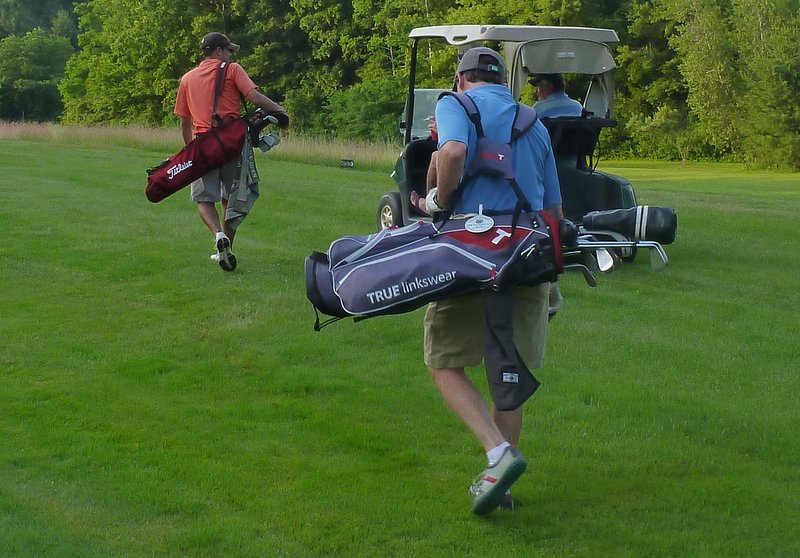
tim bag

We played on foot, and we played fast—my threesome averaged an hour and ten minutes per nine all day long—but I never felt that we were hurrying. The key is that we didn’t fool around: no practice swings, very little ball-marking, no obsessive putt-reading, no brooding about yardages on holes we play all the time, no standing around waiting for someone else to hit. When you play that way, you don’t have time to get in your own way, mentally. And, as is usually the case, everyone played extremely well. My second round was my best of the year so far (72). Addison was 8-under, gross, for the day. Here’s one of Addison’s tee shots on No. 9, a short par 4:
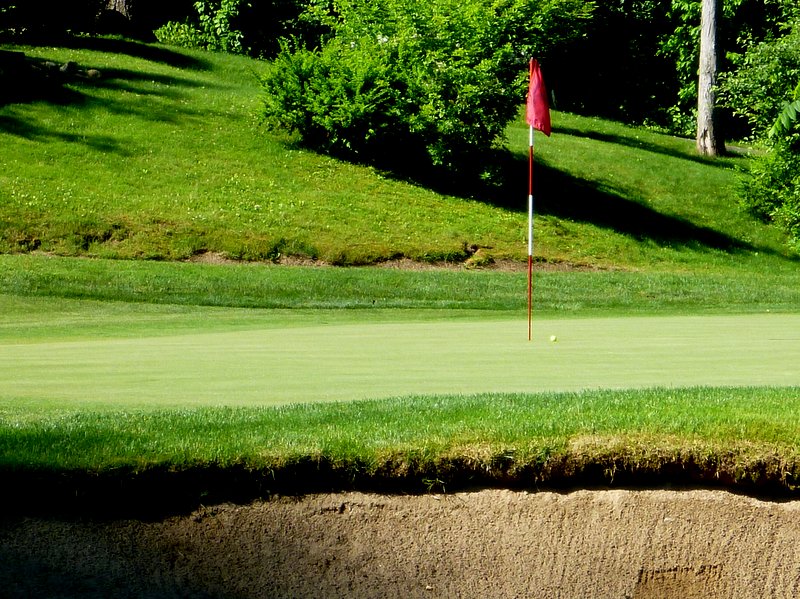
addison eagle

We finished at 8 p.m. Addison, David W., and I managed 101 holes, all walking. (That was roughly sixty-six thousand steps, two hundred and seventy flights of stairs, and thirty-five miles, according to my Fitbit.) Hacker achieved his goal of “walking and carrying my age,” which is about to be seventy. He switched to a cart after seventy-two holes, played nine more riding, and followed us to the end in the staff cart, with Mike A. driving:
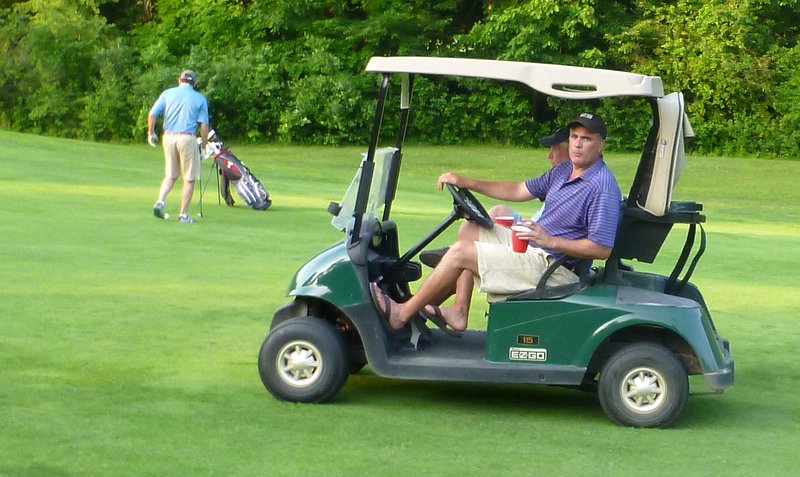
staff cart

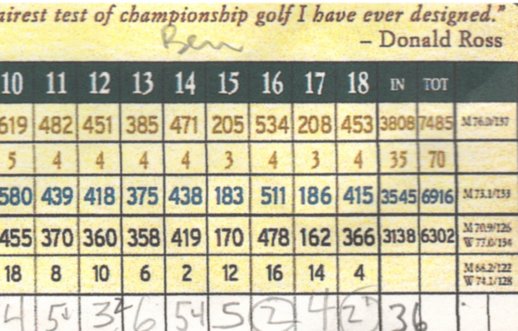
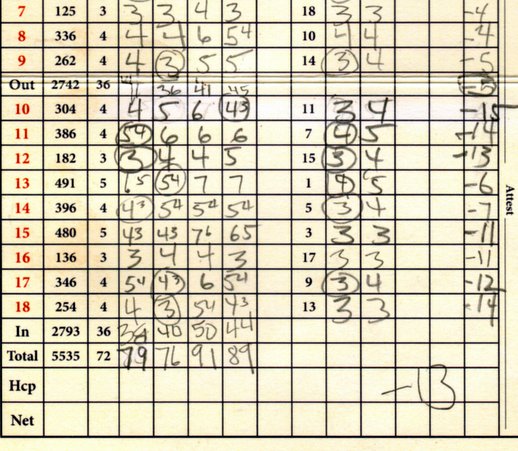
The competition was a ringer tournament, in which a player counted only his best net score on each of the eighteen holes—a format that gave an appropriate advantage to those who played the most holes. David W. was first, at -17; I was second, at -16; and Addison was third, at -15. Here’s my scorecard for the day (the pink spots are Powerade):
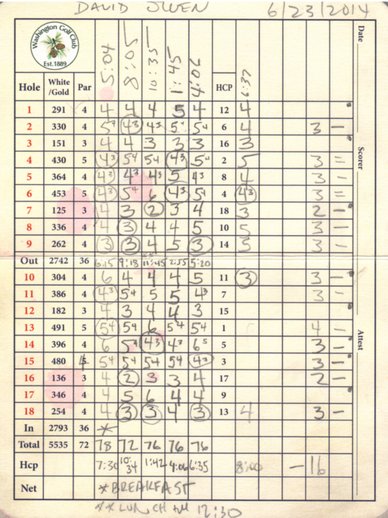
Owen solstice

While we were eating lunch, we got to watch one of the later stages of another golf marathon, featuring our club’s oldest member. His wife had brought him over, and had had a great deal of difficulty getting him from their car to the practice green. She had brought his putter and a Ziploc bag containing about a dozen old balls, which she placed on the green near his feet. Putting the dozen balls took him a long time. When he was finished, I helped her get him back to their car. Then they drove home.

Postscript: Patrick Kroos, a German golfer and blogger whose main current project is persuading non-Swedes to travel to Sweden to play golf, wrote me to tell me about a German tournament called the HundertLochPokal, or HuLoPo, which means “Hundred-Hole Cup.” He wrote:  “One of my golf friends made a nice video of the 2013 edition. Even if you do not understand German, you can see the agony.” You can watch the video here.
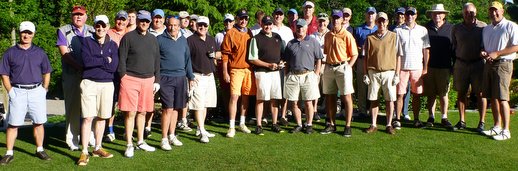
The Ideal Scorecard for a Tensome, Plus a Record Turnout

SMG record

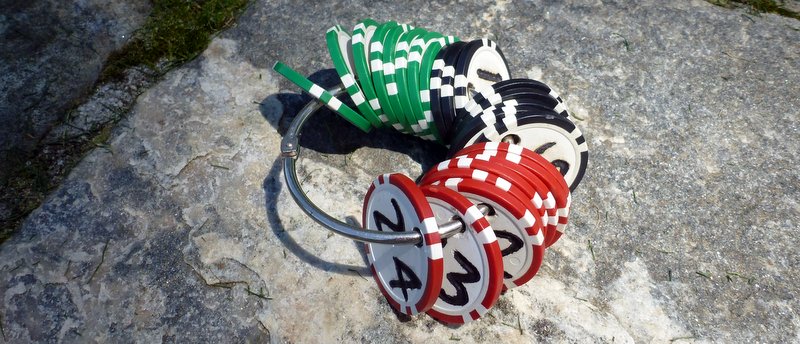
We had thirty guys on Sunday, which was both Father’s Day and the final round of the U.S. Open. Thirty is a record for us, so we took a photo (see above). We chose teams the way we always do, by drawing numbered poker chips from a hat, but we had only twenty-four chips, so we had to fudge things. That evening, at home, Rick made us six more.

P1130295

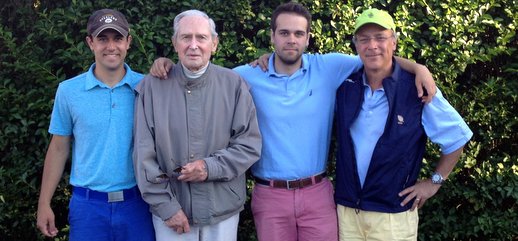
I was on the lookout for guys who hadn’t been able to play because it was Father’s Day—a sore point for mebut according to my informal investigation there was only one: young Dr. Mike, who was said to be absent for reasons related not only to Father’s Day but also to his wife and tennis. Reese and Addison weren’t there, either, but they (along with Addison’s brother, Harris, who works in the golf shop part-time) were in Pittsburgh visiting their father/grandfather, also Reese, who is ninety-two. He can’t play anymore, but he rode in the cart while his son and grandsons played, so no one missed any golf: 

fathersday

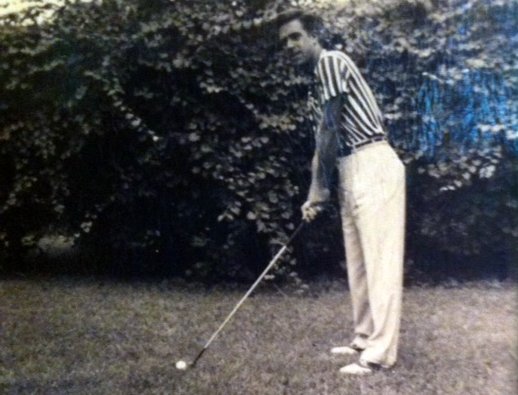
Addison and Harris’s other grandfather is also a golfer. In fact, he was the No. 1 player on the golf team at Wake Forest at a time when the No. 2 player was Arnold Palmer. His name is  Ray, and he still plays. Here’s what he looked like in his prime:

Ray Harris

Because Sunday was the final day of a major, the Sunday Morning Group used the scorecard from the course where the major was being played, Pinehurst, instead of our own. I won a skin on No. 18 because on the Pinehurst card I get a stroke on that hole, and the stroke turned my miracle eagle (approach shot into the hole) into a miracle net hole-in-one.

Pinehurst card

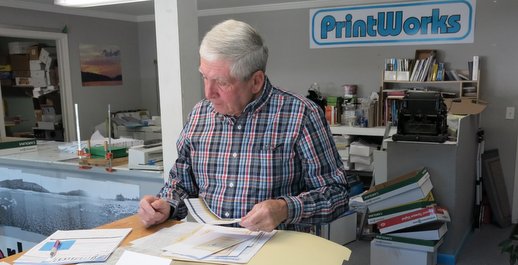
So good for me. (Pinehurst, like a number of clubs, assigns handicap stroke indexes in a dumb way, and I will write about that at some point.) This coming Sunday, we’ll be back to using our very own, brand-new Sunday Morning Group scorecard. It was designed mainly by Hacker (real name). Here he is, studying a proof:

printworks3

Our new card is much smaller than our old card—just 3.25 by 5 inches once it’s folded in half—but it has enough spaces for a tensome, or for a fivesome playing five simultaneous games:

scorecard interior filled

The cards were created for us by PrintWorks, a small graphic-design and printing shop in the next town. This is Doug, who runs the shop with his mother. He cheerfully put up with dozens of picky last-minute design changes:

printworks2

Doug gave us such a good deal on our scorecards that PrintWorks is now the official provider of graphic services to the Sunday Morning Group. Everyone who reads this should be sure to have something printed there this year, to ensure that they’ll still be in business the next time we need scorecards, business cards, letterheads, envelopes, flyers, brochures, posters, postcards, or any of the other stuff they specialize in. (Doug also printed waterproof scorecards for us, for rainy days, and I’ll tell you about those soon.) Our new scorecards have our rules printed right on the back, for easy reference:

Scorecard rules

Incidentally, that record score, at the bottom of the card, is nine over par net. No one in SMG history has ever played worse.

Scorecard name-001

SMG Sunday

Five Rules of Golf That My Friends and I Got Wrong on Our Recent Buddies Trip

rulesofgolf

According to a veteran sportswriter I know, there are three lethally boring topics in golf: junior golf, the rules of golf, and I forget the third. But I think the rules are interesting, in part because they constitute a legal system that attempts to provide a specific remedy for every conceivable situation, leaving essentially no role for “discretion.” And, although I usually believe I know the rules better than the average casual player (which isn’t saying much), I often encounter surprises.

miscrules

On our recent golf trip to Scotland and Ireland, my friends and I got many rules wrong, undoubtedly, but five of our errors, in particular, stand out—and four of them were made by players with single-digit handicaps. First, one of mine:

1. At a golf school I attended in the early 1990s, one of the instructors hit several gorgeous bunker shots after turning his sand wedge backward, but then told us, “Unfortunately, hitting the ball with the back of the club is illegal.” I cited him on the trip as my authority (in a situation I’ve forgotten)—and I was wrong. If hitting the ball with the back of the club was illegal 20 years ago, it’s not illegal now. Decision 14-1/1 says:

A player may play a stroke with any part of the clubhead, provided the ball is fairly struck at (Rule 14-1) and the club conforms with Rule 4-1.

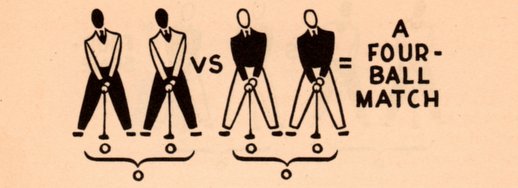
2. There were twelve guys on our trip, divided into two teams of six. Each of our morning rounds was a four-ball match in which a pair from one team played a pair from the other team.

four-ball

On one green, my partner’s ball was farthest from the hole, but I putted first—and made the putt, annoying one of our opponents, who was farther from the hole than I was. He felt that I had illegally pressured him by playing out of turn. But he was wrong. Because my partner was farthest from the hole, either he or I could putt first. Rule 30-3b says:

Balls belonging to the same side may be played in the order the side considers best.

(Because this was match play, if I really had played out of turn an opponent could have required me to replay my shot at the right time. In stroke play, the farthest player is also supposed to play first, but there’s no penalty if someone screws up. For a good explanation of the differences between match play and stroke play, go here.)

3. On another hole, a player accidentally struck his ball with a practice swing, and said there was no penalty because he hadn’t made a stroke. He was right about the stroke but wrong about the penalty. Decision 18-2a/20 says:

Q. A player makes a practice swing and accidentally moves his ball in play with his club. Has he made a stroke?

A. No. He had no intention of moving the ball – see Definition of “Stroke.”  However, he incurs a penalty stroke under Rule 18-2a for moving his ball in play, and the ball must be replaced.

practice

4. On a par 5, one player hit a long second shot into thick rough and couldn’t find it. So he dropped another ball approximately where he figured the first one must have ended up, and played from there. I assumed he was just playing along for fun, but he believed that he was still in the hole, and he explained that he had added a stroke for losing his ball. But he was wrong. His only legal recourse would have been to return as near as possible to the spot where he’d hit his second shot, and play another ball from there, at a penalty of “stroke and distance”—or two shots. And if he lost that ball, too, he’d have to do it again, same deal.
lostball

5. Everybody on the trip knew that there was a penalty for hitting a wrong ball, but no one was sure exactly what it was, especially in four-ball match play. Now we know. Rule 30-3c says:

If a player incurs the loss of hole penalty under Rule 15-3a for making a stroke at a wrong ballhe is disqualified for that hole, but his partner incurs no penalty even if the wrong ball belongs to him. If the wrong ball belongs to another player, its owner must place a ball on the spot from which the wrong ball was first played.

wrong ballI could go on.

Interesting, Golf-friendly Condiment—But There’s a Problem

smg1

We had thirty guys on Sunday, if you count the eight who were playing quarter-final matches in the Governors Cup (I was one of them). Fritz won two skins, out of four. The group decided not to pay out the day’s money-hole money ($44) but to donate it to the beer-keg fund. (That’s an example—and I could name others—of the Sunday Morning Group’s community-mindedness.)

smg2

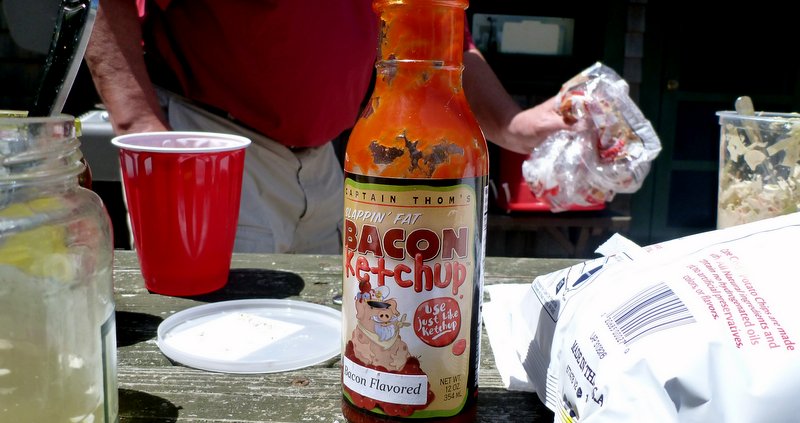
Peter A. brought lunch, and he included a condiment that may become a staple: Captain Thom’s Slappin’ Fat Bacon Ketchup. (The label explains, perhaps helpfully for some: “Use like ketchup.”) I have just two hesitations in recommending it: the company’s website no longer exists, suggesting that Captain Thom has gone out of business; and—surprisingly, for a product of that name—Captain Thom’s Bacon Ketchup contains no bacon.

P1130069

An easy solution to both problems might be for the Sunday Morning Group to make its own bacon ketchup, by frying bacon and adding it to ketchup—a manageable kitchen project even for guys whose wives don’t write cookbooks. And hardly any cleanup!

That's Corey, on the right, conducting a post-bacon putting contest.

That’s Corey, on the right, participating in a post-bacon putting contest.

Meanwhile, our pro, Corey Harris, is trying to qualify for the U.S. Open. He got past the first stage a couple of weeks ago, and is playing in the 36-hole sectional today—along with Lee Janzen, who won the Open in 1993 and 1998 but now has to claw his way in like guys who play most of their golf with the Sunday Morning Group. Which Janzen is welcome to join if things don’t work out for him the way he hopes they will.

bacon-001

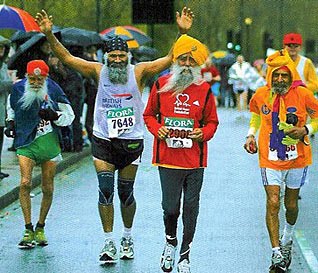
What Marathoners and Golfers Have in Common (Unfortunately)

singh

Nat Ehrlich, a reader in Ann Arbor, Michigan, is a retired university professor whose main academic interests are human-performance psychology and statistics. In 1974, he spent an interesting year as the director of research at the Michigan Center for Forensic Psychiatry. In 2013, he conducted a research study, for Michigan State University, which demonstrated that “we elect our Presidents more on the basis of how they come across as people—most important, how honest they seem—rather than what ideology they espouse.”

Ehrlich took up golf in 1961, and he was the golf coach at the University of Michigan-Flint in 1971 and 1972. He’s a regular at Radrick Farms, the University of Michigan’s golf course and one of Pete Dye’s earliest designs (photo below). “My goal is to shoot my age,” he told me recently. “My best effort so far is age-plus-six: a 74 when I was sixty-eight, and a 78 last year, when I was seventy-two.”)

050310_RADRICK FARMS 1-1 LON

Recently, Ehrlich subjected golf and golfers to some penetrating retired-guy statistical analysis, with interesting results. He told me: “I looked up world-record holders in the 100 meters, the mile, and the marathon, by ten-year age groups, and found very similar curves for increase in time to run each event. Then I plotted a similar curve for golf, and came up with age-ranked par figures.” (See the chart below.) What those numbers in the bottom row mean, essentially, is that as we get older we need to adjust our expectations downward (or upward, depending on how you look at it)—probably true in everything we do.

Ehrlich par chart

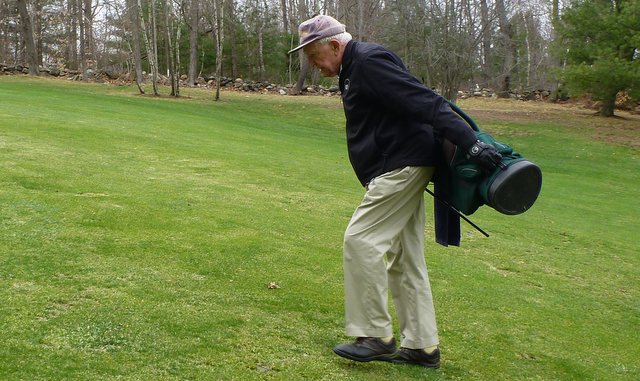
Even though scores rise with age, enjoyment doesn’t have to fall. Slade, who is in his eighties, is one of the oldest members of the Sunday Morning Group, but he still walks and carries his bag:

P1120061

We screw him and other high-handicappers by limiting to fourteen the number of strokes that anyone can receive—and no strokes on par 3s. But he still shows up, and thank goodness for that. The only S.M.G. guys who use carts are guys who really can’t get around our course on foot anymore—unlike these two, who don’t necessarily look old enough to have drivers’ licenses:

youngsters

But they don’t play with us.

Easter Sunday Golf Handicap Bonus

P1120086

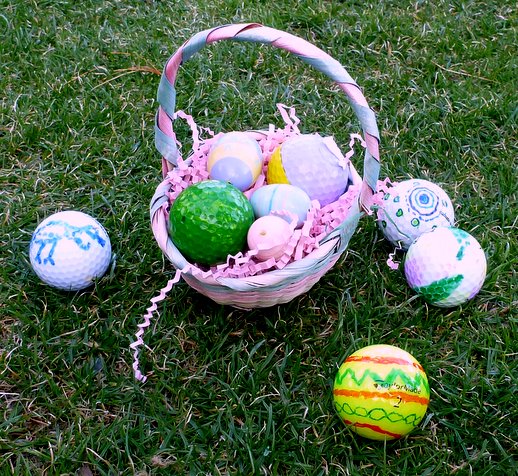
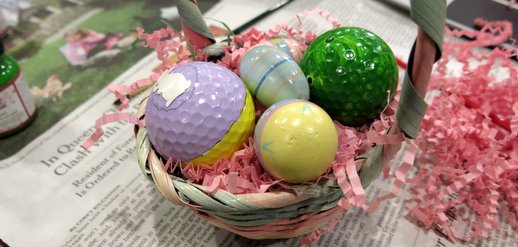
April 20 was an important day for people in the egg and pastel-dye industries. To celebrate, the Sunday Morning Group gave one extra handicap stroke to every player who teed off with an appropriately decorated golf ball. Last-minute scrawls with a Sharpie didn’t count; to qualify, a ball had to be something you wouldn’t be ashamed to show the Easter Bunny.

IMG_1438

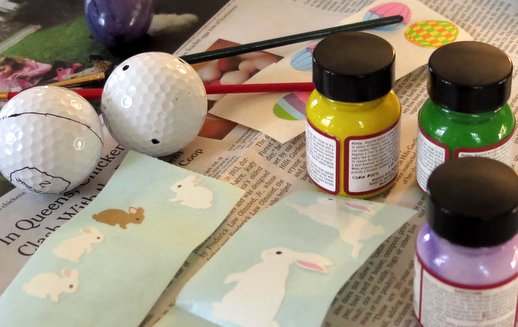
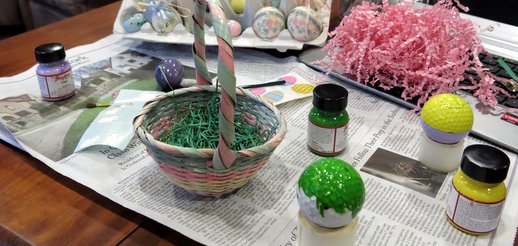
I did my decorating the night before, with something called Angelus Acrylic Leather Paint. It isn’t formulated for golf balls, probably, but it was the only thing I could find in the basement that was in the right colors. The two balls I painted were still tacky in the morning, twelve hours later, and the bunny stickers were coming up at the edges. I think the bunnies cost me some yardage on my opening drive—on our sixth hole, a par 5—but the wet paint helped me on my third shot, from a greenside bunker, because sand got embedded in the paint and kept the ball from rolling off the green. 

IMG_1452

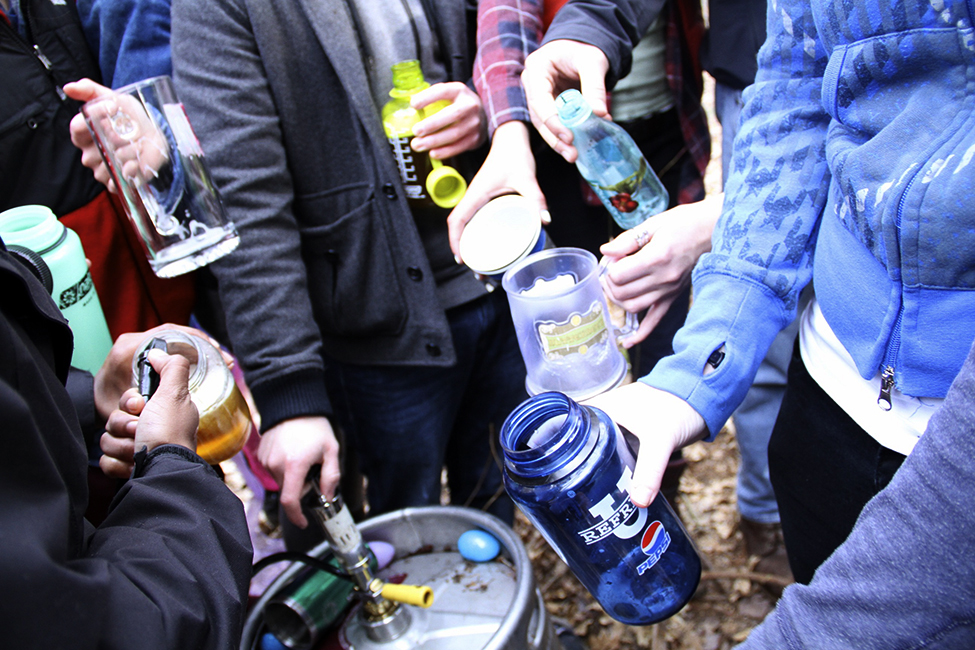
Five guys, out of nine, showed up with decorated balls. Mike A. played with his ball the whole round. Fritz lost his in the woods on the fifth. Ben slept through the golf but came for lunch (without a ball). He said that the college he went to, Hampshire, holds an annual Easter Keg Hunt, and when I got home I found a picture online:
Easter Keg

We may have to try that next year.

IMG_1455

Mean Weather and the Value of a Shank-in-One

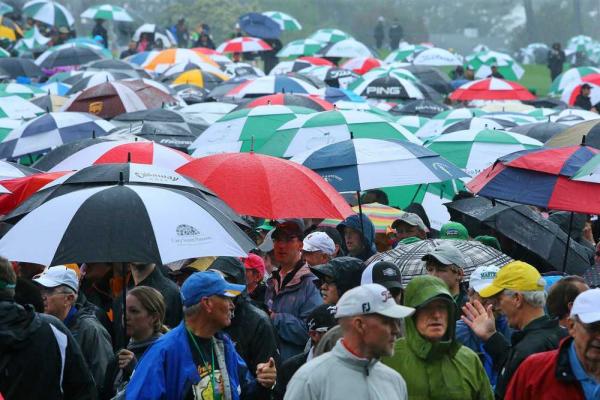
This is what the ninth green looked like on the morning of April 16. Unfair!

This is what the ninth green looked like on the morning of April 16. Unfair!

On the day after Income Tax Day, the weather in the Northeast turned vindictive, and my golf course—which had been back in operation for less than a week—disappeared under two inches of snow and ice. I had to travel that day, so I couldn’t have played anyway, but I still felt bullied. 
IMG_1272

The weather is going to have to win my trust back one day at a time, beginning this afternoon (assuming I can finish a couple of things I’m supposed to be working on). Still, I have less reason to be upset than Mike Reilly, a reader and a member of the World’s Second-Best Golf Club, whose first trip to the Masters, on practice-round Monday, was rained out after two hours. “Their rain-out policy is ‘better luck next year,” he wrote from a motel room in Augusta (the club offered refunds). “I understand why it is that way, but that was a long way to drive to watch eight guys tee off No. 1.”

Masters practice round rain

While the weather was misbehaving, several of my friends conducted an email debate about the Sunday Morning Group’s hole-in-one policy, which Hacker (real name) implemented a couple of years ago. We collect fifteen dollars a man on Sundays, and three of those dollars go into the S.M.G. Slush Fund, with which we pay for things like community service, international relief efforts, and bottle openers. The Slush Fund also underwrites the S.M.G. hole-in-one prize, which is five hundred dollars if the hole-in-one occurs during our regular Sunday game, and two hundred and fifty dollars if it occurs during a sanctioned S.M.G. event on a different day or time. (A sanctioned event is any round of golf that the whole group knows about in advance, including the Monday, Tuesday, Wednesday, Thursday, Friday, and Saturday versions of our regular Sunday game.)

20121118_130803-001

No one has ever won the $500 prize, and only Reese has won the two-hundred-and-fifty-dollar prize (which he spent on drinks for everyone—see photo above). That means that, by now, the hole-in-one prize is probably over-endowed, at least in theory. David W. asked whether a hole-in-one on our ninth hole (a short par 4, which long hitters occasionally reach from the tee) would count. The answer to that one was yes, of course. Then Fritz asked about holing out on No. 2 (a par 4) with your tee shot on No. 7 (a par 3). The second green is slightly closer to the seventh tee than the seventh green is, although the shot is probably tougher, because there are pine trees in the way. Addison said he thought the shot ought to count as long as it was a genuine shank. In other words, you can’t just aim for it. Further study.

P1070560

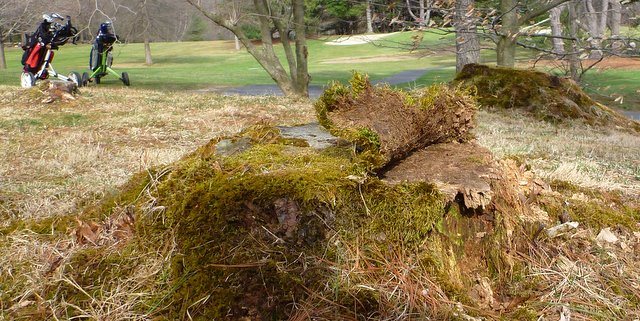
Meanwhile, the wind on Monday was so strong that it peeled the moss right off a stump:

P1120052

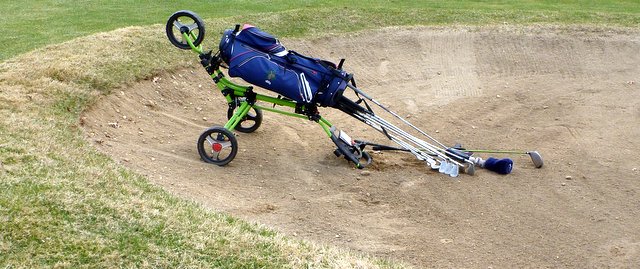
It also sent Hacker’s pushcart rolling into a bunker and tipped it over. (Maybe there should be a prize for that, too.)

P1120058

Some Shots You Won’t See This Week at the Masters

Kevin, Tunxis Plantation, Sunday, April 6, 2014. That's Hacker (real name) in the red jacket, studying our receipts. You'll hear more about the foursome in the background on the left in a little while.

Kevin, Tunxis Plantation, Sunday, April 6, 2014. That’s Hacker (real name) in the red jacket, on the right, studying our receipts. In a little while, you’ll hear more about the foursome in the background on the left.

We had nine guys at Tunxis Plantation Country Club on Sunday, and we played a game that we invented eight or nine years ago, called Sons, Fathers, and Grandfathers. Nobody was actually related to anybody else (except Barney and Stanley, sort of). We just went by age: the three youngest guys versus the three guys in the middle versus the three oldest guys. We originally got the idea because Nick (who’s in his mid-seventies) often tells waitresses and beer-cart girls that Gene (who’s about eighty) is his father.

I’m four months older than Tim, so I ended up on the Fathers, with Hacker and Barney, and Tim ended up on the Sons, with Kevin and Doug. We must have been goofing around, or something, because the starter let the four guys on the left in the photo at the top of this post sneak out ahead of us. They were the kind of guys who walk fifty yards from their cart to have a look at their ball, then walk back to their cart to get a club, then hit a shank. We ended up doing a lot of waiting:

P1120006-001

Two of the guys in the slow foursome were especially slow: the one on the far left and the one on the far right in the photo below:

The guys on the right seem to be looking far into the distance, but this tee shot actually traveled about a hundred feet.

The guys on the right seem to be looking far into the distance, but this tee shot was actually very short–too short to be measured in yards.

On one hole, the drive of the guy in the red jacket and shorts stopped safely in front of a water hazard, which was thirty or forty yards in front of the tee. He drove up to check it out:

P1110976

A little later, the same guy hit the shot of the day. You kind of had to be there, but the guys on the right in the photo below are laughing hysterically because the guy in the shorts and the red jacket has just hit his tee shot maybe eight yards, into one of the gold tee markers. The guy on the far left, who is partly hidden by the first cart, is bending over to examine pieces of the shattered marker:

P1110981If the guy in the red jacket and shorts was actually trying to hit the marker, his aim was above average. I don’t know whether that’s his tee. Could be. If so: again, well done.

P1110985We finished eventually, and the winners, as usual, were the Grandfathers, who had complained so much on the first tee that we let them play from the senior tees and have handicap strokes on par 3s. Never again. But everything sort of worked out, because the two oldest Grandfathers either forgot to come to lunch or got lost on the way, so they couldn’t win any skins. Anyway, the good news is that our own course is going to open on Friday, and that means that on Sunday morning we’ll be drinking beer on our very own patio and making lunch on our very own grill.

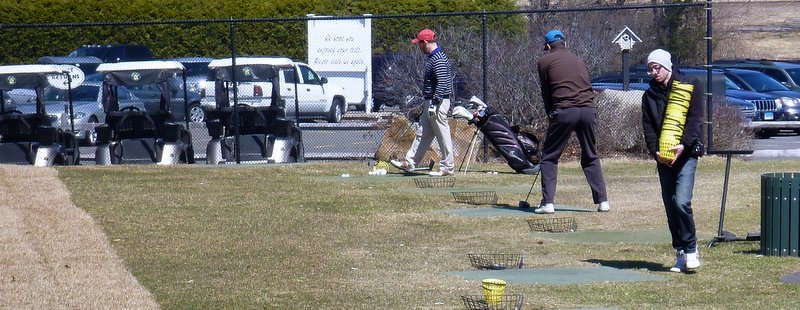
The driving range at Tunxis. You should never watch strangers hit practice balls, especially when there are still little piles of snow on the ground.

The driving range at Tunxis. You should never watch strangers hit practice balls, especially in early spring.

Why You Should Wash Your Rainsuit, and Maybe Even Iron It

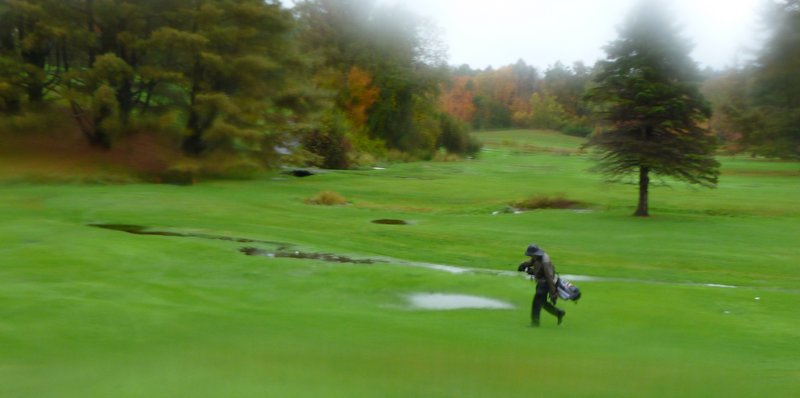
Barney and his raingear, on the day we played anyway. October 6, 2013.

Barney and his raingear, on the day we played anyway. October 6, 2013.

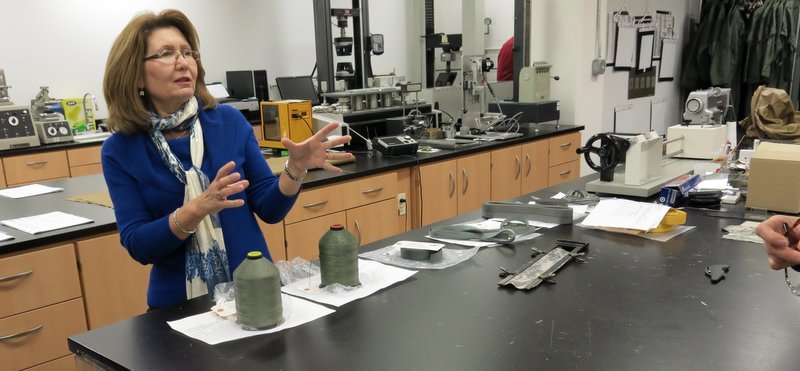
I have an article about high-tech golf clothing in the April Golf Digest. While I was working on it, I spent most of two days at the Natick Soldier System Center, in suburban Boston, where the Army creates and tests just about all the gear that’s used by members of all branches of the armed forces. The head of the base’s public relations department told me, “If soldiers wear it, eat it, sleep under it, or have it dropped on them, it’s researched and developed here.”

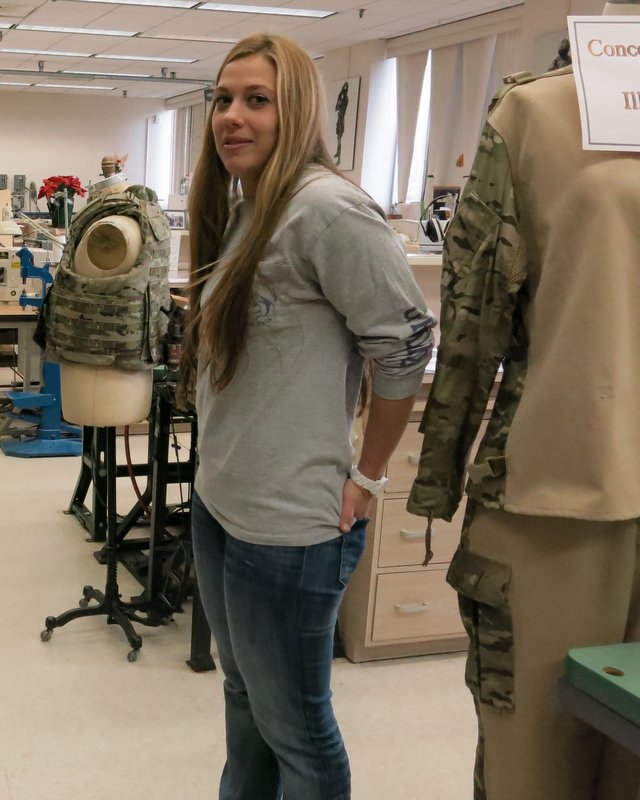
Annette LaFleur, the team leader of Natick's Design, Pattern and Prototype Team, next to a prototype sniper uniform (which the Army ended up not using).

Annette LaFleur, the team leader of Natick’s Design, Pattern and Prototype Team. That’s some body armor on the left and a prototype sniper uniform on the right.

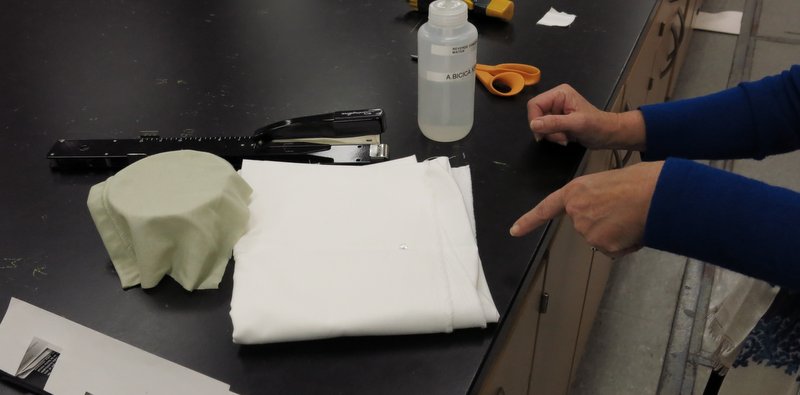
Among the most useful things I learned at Natick is that you should never, ever use fabric softener or dryer sheets on any synthetic sports clothing, including your rainsuit, and that you should wash your rainsuit periodically, and probably also run it through the dryer at low heat or iron it with a warm iron. The reason is that almost all rainsuits have an outer layer that’s treated at the factory with what’s known as a durable water-repellent (D.W.R.) finish. This isn’t what makes your rain jacket waterproof—that’s the function of an inner membrane, made of Gore-Tex or some comparable material—but the D.W.R. finish contributes to the jacket’s breathability and overall comfort, by causing water on the outer surface to immediately bead up and slide off. Gentle washing makes the D.W.R. finish work better, and gentle heat (whether from the dryer or a warm iron) can revive a finish that’s wearing out.

Luisa DeMorais, the leader of the Army's textile materials evaluation team and a D.W.R. expert.

Luisa DeMorais, the leader of the Army’s textile materials evaluation team and a D.W.R. expert.

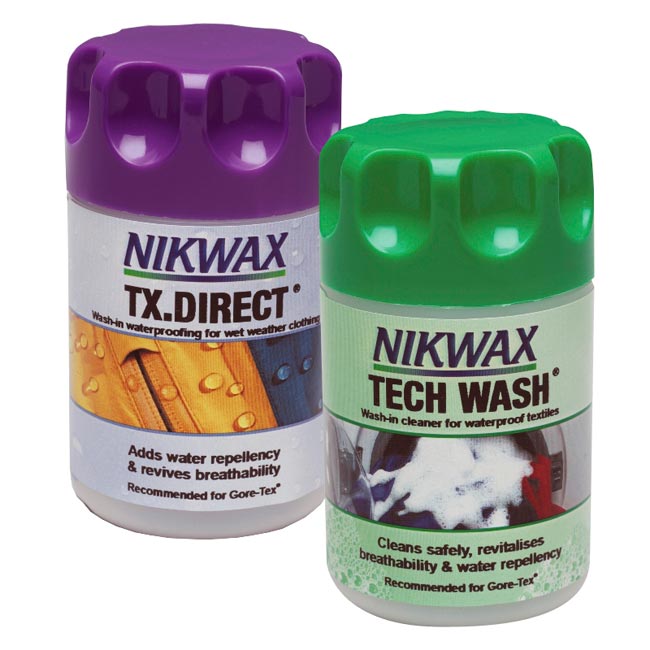
As soon as I got home from Natick, I washed all my rain gear with Nikwax Tech Wash, which is formulated for waterproof, breathable fabrics, and then I beefed up their D.W.R. finishes with Nikwax TX.Direct, which is a D.W.R. finish that you apply in your washing machine. You can order both (and lots of other stuff) from R.E.I., among other places.

nikwax

At Natick, I also learned that you should never, ever use fabric softener or dryer sheets on a rainsuit or any other synthetic sports apparel. Fabric softeners can smother fabric treatments, such as the ones that promote wicking, and they can ruin raingear, which can also be harmed by detergent residue (a reason to use modest amounts or a product like Tech Wash, and to follow the instructions on the care label).

IMG_3431At some point, I’ll have more to say about my visit to Natick—which was the coolest field trip ever. Right now, though, I’ve got to run off to Denmark for a few days.

P1090781

Golf on the Vernal Equinox

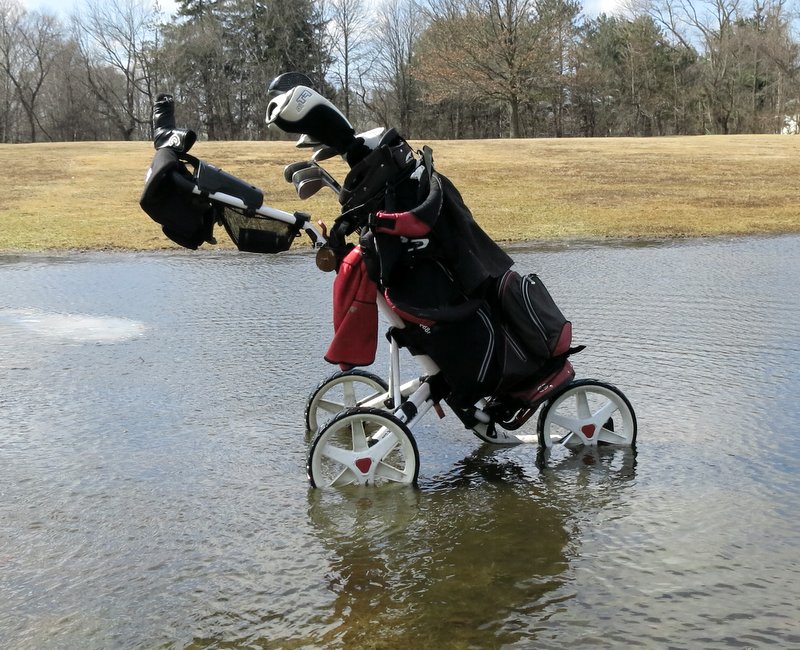
My pushcart at D. Fairchild Wheeler Golf Course, New Year's Eve, 2013.

My pushcart at D. Fairchild Wheeler Golf Course, New Year’s Eve, 2013.

My friends and I celebrated the first day of spring the same way we celebrated the last day of 2013 and the first day of 2014: by playing a round at D. Fairchild Wheeler Golf Course, a muny about an hour from where we live. As you can see by comparing the photo above with the photo below, playing conditions had improved dramatically in just eleven weeks:

My pushcart at D. Fairchild Wheeler Golf Course, March 20, 2014.

My pushcart at D. Fairchild Wheeler Golf Course, March 20, 2014.

There were still a few lingering signs of winter, including a large patch of non-liquid casual water along the left side of the ninth fairway:

Pro's advice: aim right.

Pro’s advice: aim right.

Overall, though, the course was in decent shape. The gates were closed when we arrived, a little before nine, but the parking lot had begun to fill by time we finished, and the temperature had climbed to the mid-forties.

P1110473

The past few months have been truly horrible around here, golf-wise. It’s been so cold that a small herd of local Lyme-disease vectors began spending the night in my backyard:

IMG_1128

But in the past few days things have finally started to turn. Last Sunday, Hacker (real name), Doug, Mike A., and Tim played at Pelham Bay Golf Course, in the Bronx—the only open course within a hundred miles of where we live:

Hacker Pelham 2

Mike A. attempting a rare steeplechase bunker shot. Degree of difficulty: 10.

Mike A. attempting a rare steeplechase bunker shot. Degree of difficulty: 10.

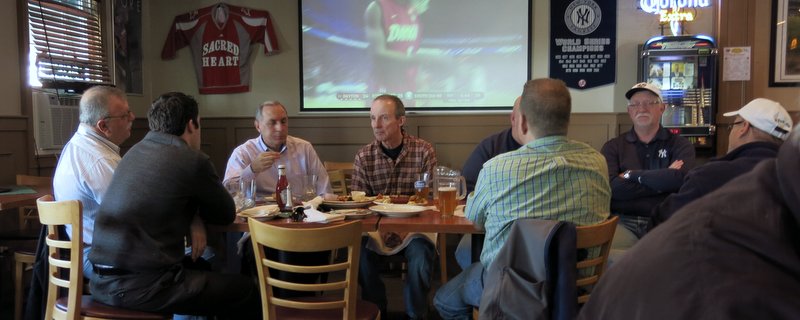
I couldn’t join them, because I had a work deadline I couldn’t put off, but I did take time out for lunch with nine other members of the Sunday Morning Group. There are six artificial knees in the photo below, if you count all three of Frank’s (one of his had to be redone):

IMG_1162-004On the equinox, we ate at Fairchild Wheeler, of course—along with these guys, who hadn’t played golf but, apparently, were unable to stay away:

IMG_1200

That’s March Madness on the big screen behind them. If we hadn’t needed to get home for our naps, we could have hung around all day.

P1110441