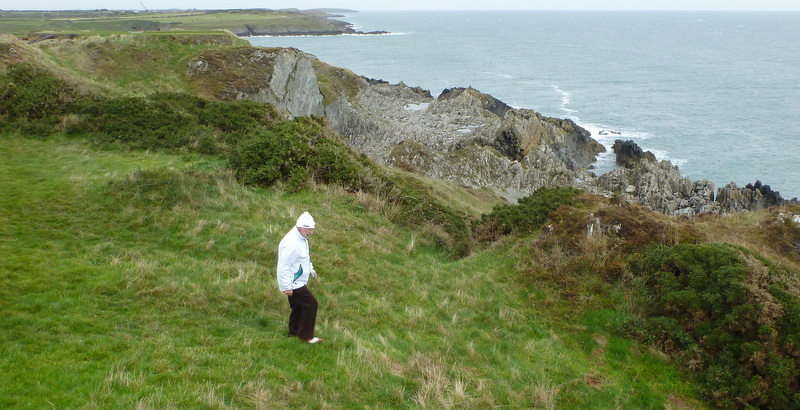
Adam Heyes is right. The golf course shown in the two photos in my previous post is Ardglass Golf Club, in County Down, Northern Ireland. In the photo above, Ian Duff, a longtime member, is looking for my ball to the left of the green on the second hole, a par 3 that plays over a chasm. The photo below shows a less perilous part of the same course.
The course I played yesterday may not be easy for even Adam to identify. Here’s the second green:
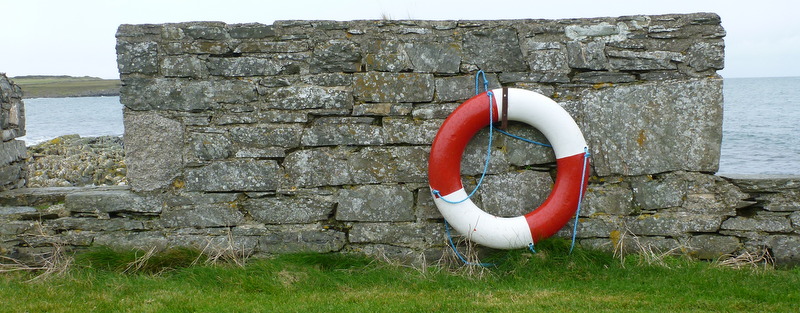
And here’s something I saw on my way home:
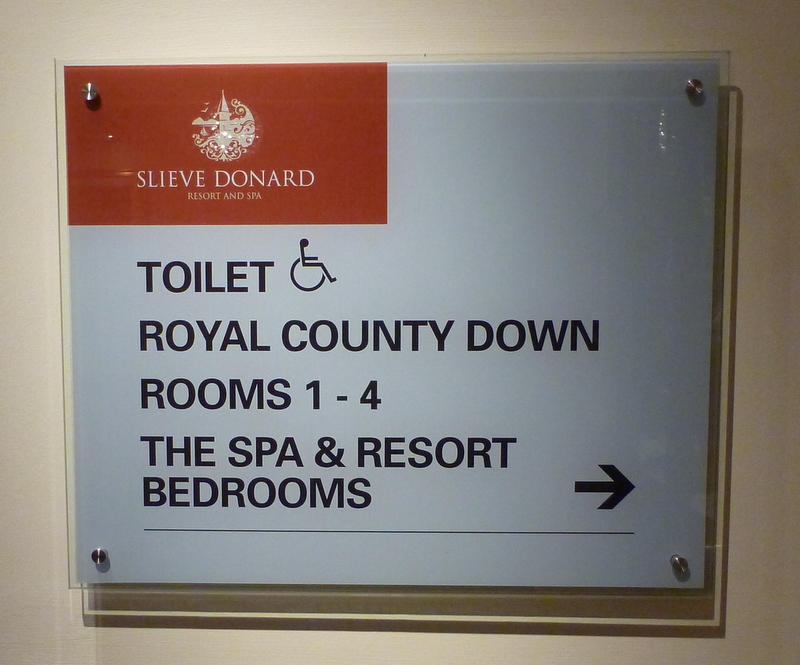
Today, I’m going back to the course I played the first day I was here. You can get to it by following signs in the lobby of my hotel:
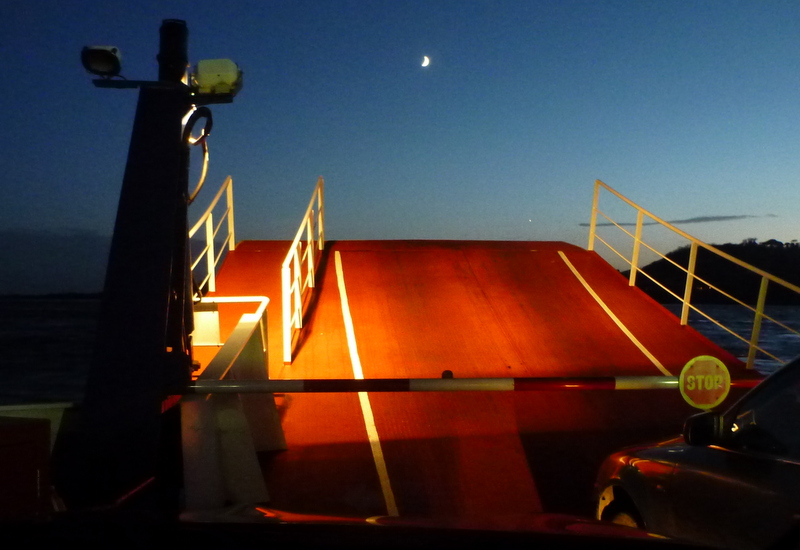
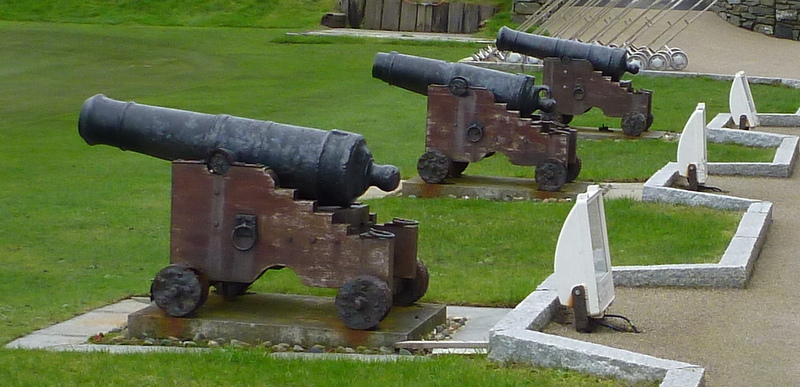
I took the photo above on Wednesday, on the first hole of the golf course I played that day. Anybody recognize it? Here’s another clue. The weaponry in the photo below sits in front of the clubhouse and is aimed toward the first green.
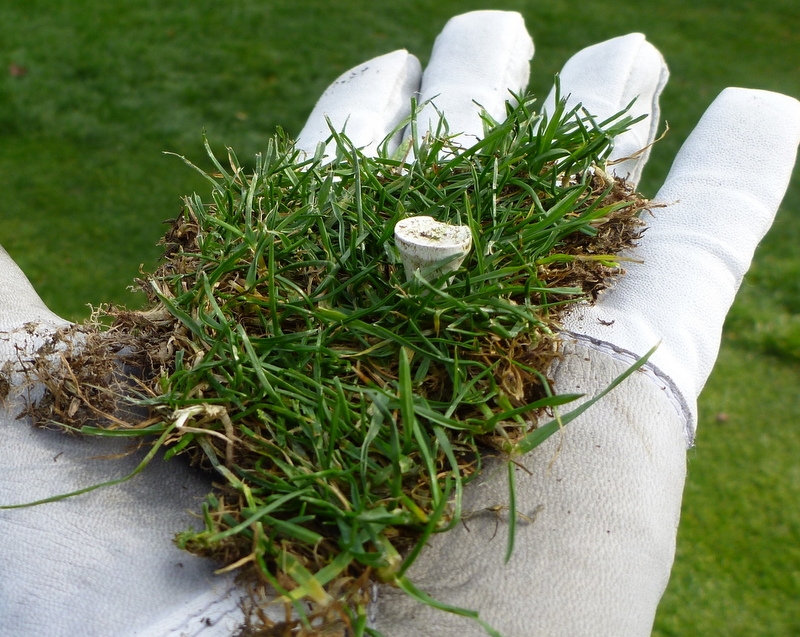
The seventh hole on my home course is a 125-yard par 3. I hit 9-iron the other day, and I took a divot that was just about perfect—uniform depth, playing-card size and shape—except that it began a couple of inches behind the ball and extended a couple of inches beyond it. In addition, my tee peg (a half-length stub I’d found nearby) remained upright near the center of it, untouched. Even so, my ball finished just twenty yards short of the green, meaning that I’d hit what was essentially a 90-yard explosion shot. And they say the long bunker shot is the toughest shot in golf.
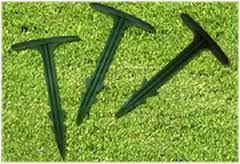
If I hadn’t sent my divot to the Divot Museum, I could have used the tee stub to refasten it to the golf course. Believe it or not, a company called McDivot makes biodegradable anchors that do exactly that. Here’s what they look like:
I saw a bowl of McDivots on the counter in the golf shop at Royal Portrush Golf Club a few years ago, and one of the assistants told me that using them prevents wind, rain, mowers, and crows from flipping replaced divots out of their holes. (The same company also makes an industrial-size version, called GreenStakes, which can be used to hold down entire fairways.) I took a McDivot home as a souvenir, and displayed it on my desk for several years. At some point, though, I must have thrown it out, because I just spent almost an hour unsuccessfully searching for it in my office. So the photo above, which is from the McDivot website, will have to do.
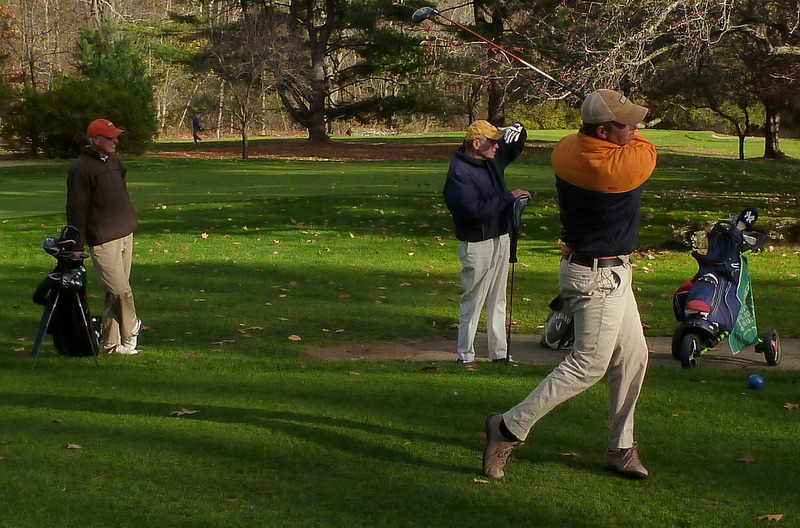
Anyway, divots aside, it was a nice day for golf, as you can see here:
Play in weather so miserable (lightning excluded) that yours is the only group left on the course. Old golf joke: An obsessed golfer heads to the club in pouring rain for his regular Saturday-morning game. The storm turns out to be too intense even for him, so he returns home, takes off his wet clothes, and slides back into bed next to his wife. “The weather’s horrible,” he whispers, and she says, “And can you believe it? My idiot husband is out there playing golf.”
Gairloch, Scotland, May, 2007.
He should have stayed at the club. Golf was invented in a country where bad weather is almost the only kind, so to take the game’s full measure you have to play it occasionally when all the sensible people are indoors watching Sports Center. There’s something sublime about putting through casual water or over pea-size hail, especially if you have the course to yourself.
This is an aerial view of Tony’s and my match today. We’re somewhere near the center of that big green-and-orange thing.
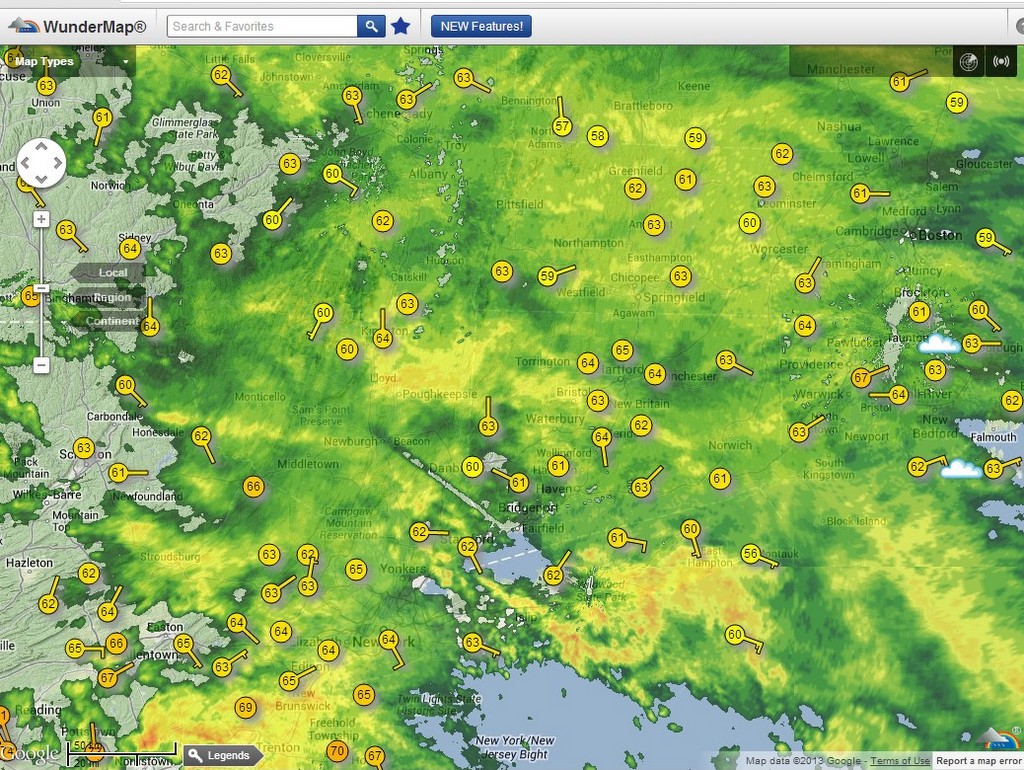
Tony and I happily played anotherA statewide tournament that I was supposed to play in tomorrow has been postponed because the rain that was falling when Tony and I played is expected to continue through the night. I was actually looking forward to slogging around all morning, then loading my soaking-wet golf bag into my travel case, racing a hundred miles to Newark Liberty International Airport without a shower, and taking a night flight to Kansas City to play golf on a Golf Digest assignment and visit my mother. In fact, my only chance to finish the tournament above the middle of the field was probably to go off in a downpour, since I actually like playing when the people I’m competing with don’t.
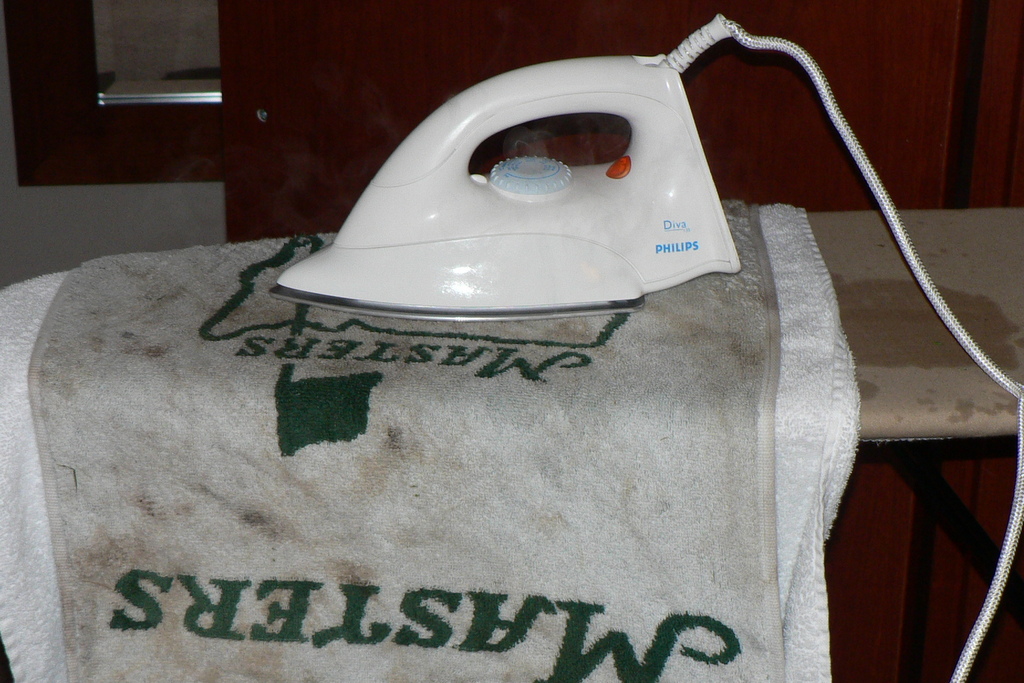
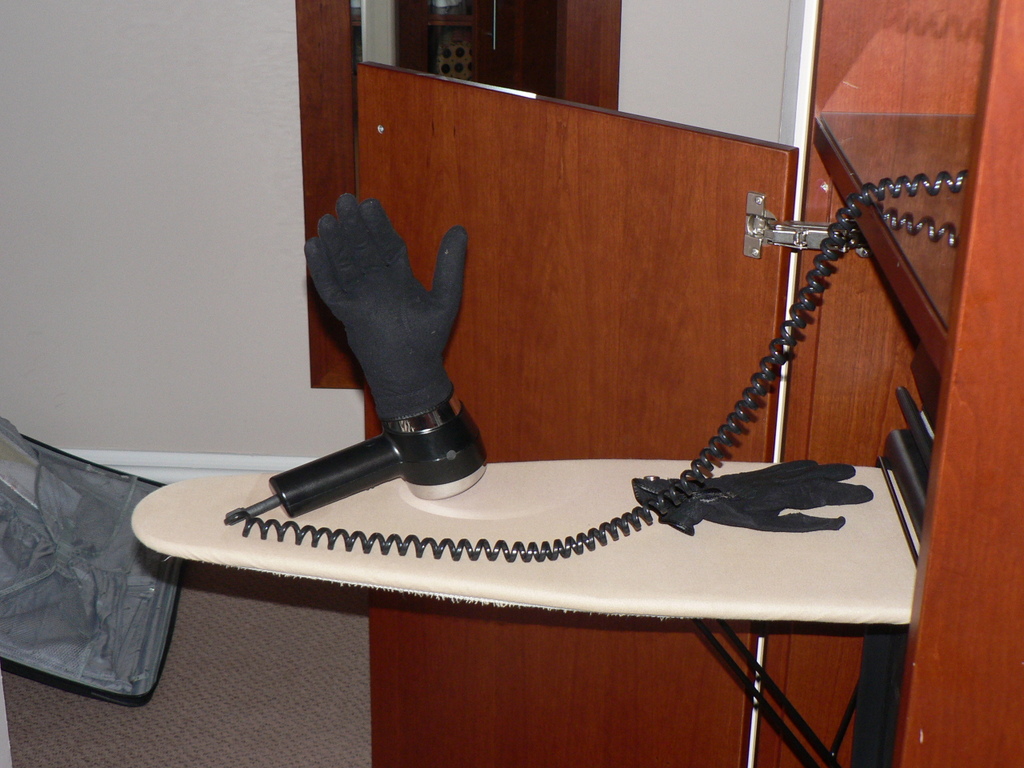
In 2006, I took back-to-back golf trips to Dubai and Ireland. During the Ireland portion of that two-climate packing adventure, I learned how to dry wet golf stuff with a hotel-room iron and hairdryer (after first blotting up the worst of the water by rolling up everything in bath towels and stomping):
Doing this produced tremendous clouds of steam. Getting the towel half dry took forever.
Before using the hairdryer, I tried drying my rain pants in my room’s heated trouser press. That didn’t work.
Rain gloves don’t need to be dry, but if you have the equipment why not?
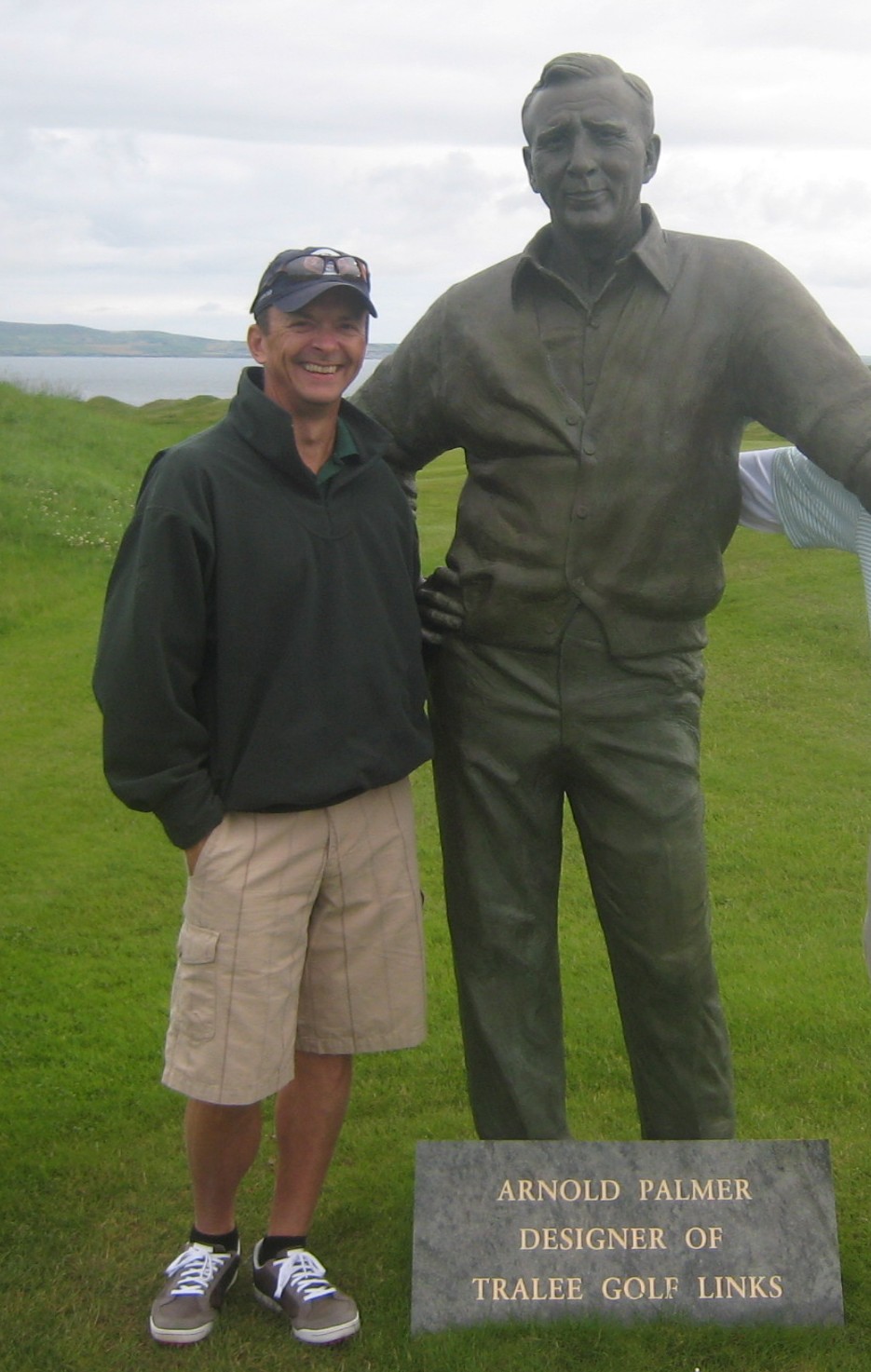
The hotel was in Killarney, and the golf course where I got so wet was Tralee—which is seldom ranked among the very best courses in Ireland but is plenty nice enough and is almost certainly the best course that Arnold Palmer ever designed. (It opened in 1985.) As we approached the middle of the (terrific) second nine, the wind reached the velocity necessary to propel liquid water through the fabric of my previously reliable Sunderland of Scotland rainsuit, and I stopped trying to clean my glasses between shots. It wasn’t just the worst weather I’d ever played golf in; it was the worst weather I’d ever been outside in. Nevertheless, my three companions and I all enjoyed ourselves immensely, and we played far better than you might think—perhaps because over-swinging and over-thinking are impossible when remaining upright requires most of your concentration. (I don’t know what our caddies thought.)
Recently, I heard from a reader who has also been to Tralee: Dana McQueen, who lives in Purcellville, Virginia, and is exactly the same age I am (fifty-eight). Here he is at Tralee last summer:
Dana McQueen and some other guy, Tralee, Ireland, July, 2012.
And here’s McQueen’s golf bag:
The first thing I notice about McQueen’s golf clubs is that he keeps them much cleaner than I keep mine.
“Pretty standard stuff, overall,” he told me in an email. “Sometimes the 60-degree wedge comes out of the lineup, especially on courses with thick rough around the greens. I really haven’t gotten comfortable with the ATV bounce concept yet.” McQueen is a retired C.I.A. officer. He now works as a systems engineer for Stratos Solutions, and he also works for Britannia Golf, which puts together custom golf tours, mostly to Scotland and Ireland. He took up golf as a teenager.
“I started playing,” he wrote, “when I realized that my baseball career was going to come to a screeching halt, at about the same time that I got my driver’s license—trouble with the curve was reality, not a future movie title. I had a great mentor, and within three or four months I was shooting in the low eighties. As you might expect, dreams of grandeur invaded my thoughts. These lasted until I discovered that there were other golf courses on the planet, and that most of them were much more difficult than the little muny up in northern Ohio where I began my golf journey. Since that time, golf has been a series of peaks (nearly qualifying for the U.S. Amateur in the late nineteen-eighties) and valleys (being soundly trounced by an eighth grader in the club championship semifinals). Now I look forward to the weekly game with the Saturday morning group and the occasional trip to Scotland or Ireland. My favorite course (so far) is Royal Dornoch. Unfortunately, a sliver of beach on the North Sea is not exactly what my wife has in mind as a retirement spot.”
McQueen plays most of his golf at Stoneleigh Golf & Country Club, in Round Hill, Virginia. The course was designed by Lisa Maki, one of the very few women course architects in the history of the game. Anybody know if she’s still around?
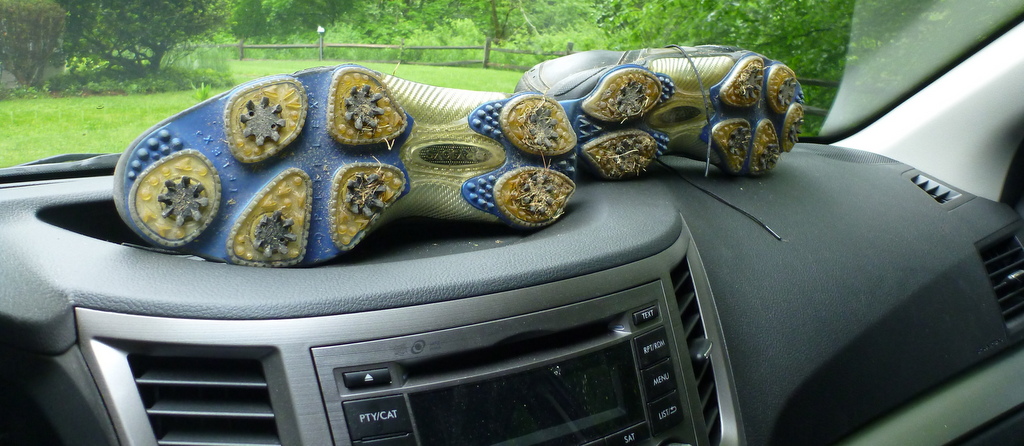
I have received a number of What’s In My Bag contributions. I’ll run them all eventually. In the meantime, send me yours. And here’s a bonus photo, showing how to dry wet golf shoes with the defroster of a rental car:
I’ve taken quite a few golf trips to Scotland, Ireland, and England during the past twenty years—including my recent one to England’s “Golf Coast,” in Lancashire (see above)—and I’ve figured out a few things. Here are some of them:
1. The cure for jet lag is golf. You take the overnight nonstop from Newark, arrive bleary-eyed in Glasgow at 8:00 in the morning, drag your clubs past the bomb-sniffing dogs in customs, stumble into a men’s room designated “loo of the year,” change a tall stack of American dollars into a short stack of British pounds, drive fifty-five miles through Robert Burns country while trying to remember to admire the sheep-dotted hillsides, reach Turnberry in a daze—and tee it up on the Ailsa course, where Tom Watson and Jack Nicklaus fought their legendary Duel in the Sun, at the British Open in 1977. You haven’t slept since what seems like the day before yesterday, but your tee shot somehow finds the fairway, and a little mental arithmetic reveals that your colleagues back home are arriving, just now, at their desks. Suddenly, you feel happier than you’ve felt since the birth of your first child, or since the time you and your brother nearly won your flight in the member guest. (Not to worry: The cure for excessive cheerfulness is also golf.)
2. Alternatively, take a flight that arrives at night. I did this once on a non-golf reporting trip to London. I left New York mid-morning, arrived at Heathrow in the dark, took a taxi to my hotel, and immediately went to bed, at roughly 11:00 p.m., local time. I forced my brain to ignore the fact that even two-year-olds were still awake at home, and I slept all night and woke up refreshed, at a normal hour. If you travel all day instead of all night, you sacrifice a full day of potential golf, but you do less violence to your body clock—a possibly worthwhile trade-off for traveling golfers who aren’t as young as they used to be.
3. No matter when you travel, don’t go to sleep (after you’ve arrived) until it’s dark—not even a wee nap. My wife is incapable of doing this. In her view, a nice hotel room in Paris is the ideal place to spend several days recovering from the ordeal of traveling to France. Be strong! Go straight from the airport to a golf course and play thirty-six holes instead!
4. Beware of weekends. The toughest day of the week on which to get visitor tee times is usually Saturday; the second toughest is Sunday. If you plan a week-long trip that involves leaving for the British Isles on a Friday night and returning two Sundays later—something my friends and I have done several times—you’ll miss just five days of work but your golf itinerary will include the maximum number of nuisance days. And the problem will be compounded if your week also includes a “bank holiday” Monday—the equivalent of a three-day-weekend Monday at home. The solution is to miss a little more work. And you can check the bank-holiday schedule online, through the magic of Google. (On my recent trip, I left on Sunday night, arriving early Monday morning, and returned home the following Tuesday.)
5. Look into poor man’s business class. On my flight home, I paid United $99 for an “Economy Plus” seat, in an exit row. It had so much leg room that I could fully extend my legs without touching the seat in front of mine, and when I went to pee the guy sitting between me and the aisle didn’t have to get up and barely had to move his legs. I took a window seat so that I could lean against it to sleep and, as I had hoped, the middle seat stayed empty, because no one had been willing to pay extra to sit in it. I had so much room that I was able to comfortably type up all my notes from the trip—like getting a free day! And I could plug in my laptop, in an outlet under the seat, when the battery got low!
You won’t need one of these if you travel to the British Isles to play golf. Royal Lytham & St. Annes, England, May 13, 2013.
I’m in northwestern England playing golf this week. I didn’t bring an umbrella, and I’m glad I didn’t, even though there’s rain in the forecast for every day from now until the end of time. The trash can on the second tee on almost any links course in England, Scotland, and Ireland often looks like the trash can in the photo above, because American golfers typically come to the British Isles prepared for the rain but not for the wind. One hole is usually enough to destroy almost any umbrella. And carrying a “wind-proof” model isn’t the solution, because if your umbrella can’t be turned inside out it will carry you to sea, assuming you’re strong enough to hang on. Here’s why:
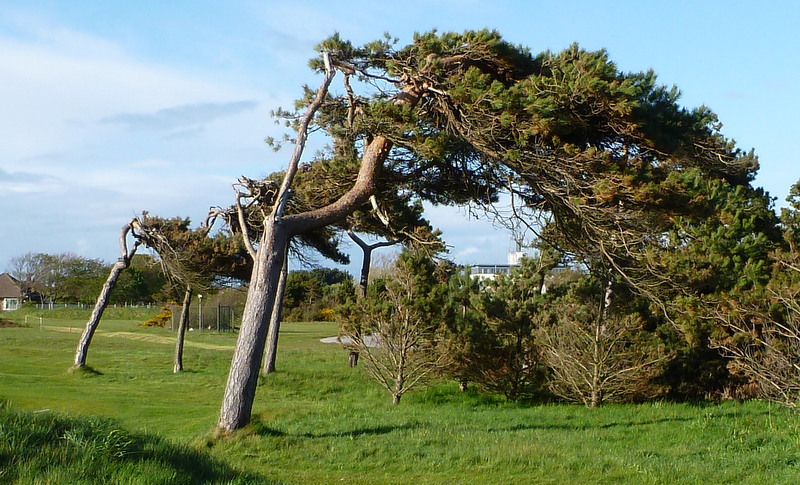
Wind-sculpted trees, thirteenth hole, Royal Lytham & St. Annes.
The wind was blowing hard yesterday, but the trees in the photo above look that way on calm days, too. Even scrubby little bushes get squashed in the direction of the prevailing wind. (I first wrote about the terrific golf courses of northwestern England almost twenty years ago. The opening sentence of my article was “You don’t need a weatherman to know which way the wind blows at Royal Lytham & St. Annes.” A Golf Digest copy editor, who apparently had never heard of Bob Dylan, changed “weatherman” to “weather report”—and that’s the way it ran.)
Not carrying an umbrella will lighten your luggage by a couple of pounds, and it will spare you a lot of annoying housekeeping while you play. And you won’t miss it at all, if you have a rain suit, a rain hat, and a pair of rain gloves. The rain gloves are especially important, because if you have a pair of those you won’t need to even think about trying to keep your grips dry. In fact, if you have rain gloves you almost don’t need to carry a towel. And after my first trip to Scotland, in the early nineties, I stopped carrying an umbrella at home, too. Way too much trouble!
Quite a while ago, Tom Reynolds, a reader in Atlanta, asked me to suggest a packing list for a golf trip to Ireland. I said I would, then forgot all about it, and recently he asked again. So here it is.
This packing list is the result of two and a half decades of thoughtful experimentation. In making it, I’ve assumed that no spouse or health-department official will be in your group, and that you will buy at least one souvenir golf shirt, one souvenir golf sweater, and one souvenir golf hat while you’re abroad. I’ve also assumed that you are not planning to do anything rash, like meeting a client or going to a play. My strong preference with rain pants (which are also useful as wind pants) is to wear them as pants, if possible, rather than over pants. If the weather is nippy, I wear them over long johns.
The reason for minimalist packing is not to avoid airline luggage charges; the reason is to reduce the tonnage of the gear you have to lug from place to place, and to make the most efficient use of the storage space in whatever vehicle you’re traveling in. Packing light also leaves space for all the overpriced golf stuff that you are almost certainly going to buy and lug home.
Because linksland weather is highly unpredictable but within a relatively narrow range—I’ve played in shirtsleeves in Northern Ireland in November and been hailed on in Scotland in June—my list doesn’t change a whole lot from month to month. Think in terms of layers, and be prepared to allow time for wet items to dry out—especially shoes. Mike B. took his plug-in ski-boot driers on our most recent trip to Ireland. He never needed them, because our shoes never really got wet, but taking them wasn’t a terrible idea. On a golf trip to eastern Ireland twenty years ago, I took two rainsuits and needed them both.
It’s possible to pack more than this, of course. It’s also possible to pack less. My friend Tony gets by with just his rain pants and one pair of chef pants, and some people believe that he never changes his shirt. A few years ago, Golf Digest sent me to play all fourteen courses where the British Open has ever been held, and I realized toward the end of the trip, which lasted two weeks, that although I’d brought two pairs of pants I could have gotten by with one. The great thing about microfiber is that you can launder it with a hotel wash cloth, even if you’ve gotten chocolate on it. I recommend black.
Tony in chef pants, North Berwick, Scotland, May, 2008.
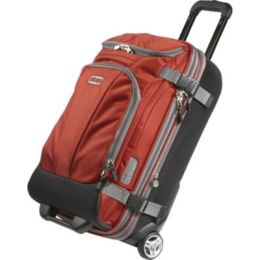
On my first golf trip to the British Isles, twenty years ago, I took a full-size suitcase. Now I take just a carry-on bag: a Mother Lode TLS Mini 21-inch rolling duffel, by eBags, which is currently selling for $190, shipping included (see photo at the top of this post). This is my favorite suitcase ever, even for non-golf trips. No matter what kind of suitcase you use, I recommend buying a selection of eBags Packing Cubes, which are soft, box-shaped modules that simplify intra-suitcase organization and make it easy to use your golf bag’s travel case for overflow packing.
Here’s what I take:
In the carry-on bag:
1 pair dark polyester microfiber pants (and a second pair worn on the plane—and I recommend black for both, because they never look dirty and you can remove stains, even chocolate, with a hotel wash cloth)
1 golf shirt (and a second one worn on the plane—and in cooler months I would make one or both of these shirts long-sleeved)
1 sweater (worn or packed, depending on the weather
1 pair of Under Armour-type long johns
1 long-sleeve Under Armour-type undershirt or turtleneck
1 tee shirt (to sleep in and serve in a pinch as an extra layer)
1 pair of “house pants”—fleece pants or nylon hiking pants or something similar (for lounging around, and for emergency duty under rain pants if the weather turns really foul, and for wearing on the trip home)
1 pair of shorts, maybe (something I’d never thought about before 2016, when sunburn was a bigger threat than rain in western Ireland)
Lots of cotton handkerchiefs (my new favorite golf accessory, useful for nose-wiping during wet, cold, windy, or allergen-dense rounds)
As many pairs of underpants and (wool) socks as I can cram into the remaining space
In the golf bag or golf-bag travel case (along with my golf clubs):
2 pairs of waterproof golf shoes
1 rain suit (the jacket of which, in combination with an undershirt, shirt, sweater, vest, etc., should be plenty of cold-weather protection, even for winter)
2 regular golf gloves and 2 pairs of rain gloves
1 Seattle Sombrero (or other truly good rain hat)
1 regular golf hat
1 knit cap
1 super-lightweight down vest, in its little stuff sack (weighs nothing, and is easy to cram into a golf bag; mine is by Uniqlo and is a recent addition to my packing)
As many golf balls as you think you’re going to need, because they’re cheaper here (a reasonable number is two balls a round; a couple of guys lost more, but some lost almost none)
A full box of Band-Aid or Compeed “blister cushions.” You won’t need them if you’re careful about the golf shoes you take, but if you have them in your bag you’ll be a hero to someone on your trip
Toiletry-type crap (if you put your toiletry kit in your checked bag you won’t need to worry about decanting your gels and liquids into tiny bottles and setting them aside in a Ziploc bag)
Other stuff:
1 or 2 twenty-four-inch bungee cords, for strapping your golf bag onto a pushcart (known abroad as a trolley), to keep the bag from falling off when you drag it into the dunes
1 water bottle (because on-course water isn’t common outside the United States; you can fill your bottle each day in your hotel room or in a golf-club locker room)
1 UK-and-Ireland-type plug adapter. Household current is 230 volts, but all your electronics will run on that with just the plug adapter—no need for a voltage converter. If all you’re going to need to charge is your phone, you can probably find a 110-volt shaver outlet (for an American-type plug) in the bathroom of your hotel room
1 mini-power strip (if, like me, you have a lot of stuff to plug in—mine’s made by Belkin—because no hotel room on earth has enough outlets, especially in other countries)
1 sleep mask (for creating darkness where there is none)
Earplugs (doubly useful if the locals are holding a Dallas-themed “Oil Barons’ Ball” in the main dining room—as happened to me in England a few years ago)
Travel clothes:
If you are going straight from the plane to a golf course—and that’s what you should be planning to do, in my opinion—you should wear golf clothes on the plane. For the trip home, it’s nice to have clean stuff. In my case, I flew home in a bought shirt, a bought sweater, and a pair of lightweight nylon pants that I hadn’t worn during golf.
If your golf shoes have nubs on the soles instead of spikes, you probably don’t need any other shoes—although you may be required to strip down to your socks in some parts of some golf clubs. On a recent trip to Ireland, I took a pair of “après-golf” shoes—which were actually just non-waterproof golf shoes—but wore them only a couple of times, because my two pairs of “working” golf shoes were just as comfortable and never really got wet. Tim brought two pairs of golf shoes plus a pair of Merrell Jungle Mocs, which he wore on the plane, on the bus, and when we weren’t playing golf—an idea I intend to steal next time
If you prefer to receive your packing instructions in video form, you can do so here:
For many years, I’ve accessorized my rain paints with farmer-type suspenders, my first pair of which I ordered from the Vermont Country Store. (I now use a different kind, which you can order here.) Suspenders eliminate the main problem of rain paints, which is that they creep down every time you put wet hands into the pockets. I also own, and sometimes use, a pair of Velcro bicycle clips, which are handy if the legs of your rain pants are so long they drag on the ground, as many are.
Vermont Country Store suspenders with rain pants, Scotland, 2004.
On a golf trip to England in 2010, my friends and I had to take sports coats so that we could eat dinner in the clubhouse at Royal Lytham & St. Annes. Hacker (real name) took a crummy old one, intending to abandon it there—a plan I foiled by spotting it in a closet on the day we left and returning it to him at the airport. But the concept is brilliant: clothes you can wear to extinction, then leave behind.
My bedroom in the Dormy House at Royal Lytham & St. Annes, May, 2010. My sports coat is in that pile somewhere.
On our trip to Scotland and Ireland in 2014, Peter A. brought many pairs of super-cheap socks, and threw away each pair after a single use. This seemed smart in the abstract, but he ended up being the only person on the trip who got blisters. For this most recent trip, he brought more expensive throwaway socks (roughly a dollar a pair versus roughly fifteen cents) and didn’t have a problem. My personal preference is to pack the best wool socks I feel I can afford, and lots of them.
I’ve always thought it was crazy to take shorts on a golf trip to the U.K. or Ireland, because indigenous golfers hardly ever wear them and some golf clubs have semi-ridiculous rules about them—like Hillside, in England, which allows shorts only if they’re worn with knee-height socks. (Dress codes abroad are kind of unpredictable. In 2016, the starter at Lahinch asked Matt to roll down the cuffs of his pants, which he had turned up maybe an inch, but let a local kid tee off in surfer shorts and an untucked tee shirt.)
It’s possible to pack more than this, of course. It’s also possible to pack less. On a non-golf trip to Europe a few years ago, my wife surprised me by packing lighter than I did. You don’t need to plan a lot of different “looks.”
For the first time since March, nobody wore shorts on Sunday. From left to right: Doug, Tim, Gary, Mike A., Hacker (real name).
Turnout was low last Sunday. The weather was cold and windy—so much so that everyone wore long pants, even though the Sunday Morning Group gives an extra handicap stroke to anyone who wears shorts after November 1 (and two extra strokes after December 1). Also, probably, some guys were still recovering from overexposure to their in-laws during Thanksgiving week.
Because of the weather, I wore two hats plus a thing I got in Norway back in September. (I was there on a New Yorker assignment unrelated to golf.) I don’t know what the thing is called, but here’s what it looks like:
This is the thing I got in Norway.
It’s a fabric tube. You can wear it around your neck or around your ears or around your whole head, and you can also use it as a do-rag-like hat. The person who gave it to me—a guide in a national park—wore hers just around her ears, like this:
A guide in a Norwegian national park.
Last Sunday, I wore mine like that for a while, and then I wore it just around my neck, and then, when the wind picked up, I wore it like this:
I realize that this looks ridiculous, but it was very warm, and it kept my Enniscrone Golf Club stocking cap from popping off the top of my head.
Is the Norwegian thing a snood? I can’t say, because I don’t really know what a snood is, and the dictionary and Google aren’t entirely helpful. Many years ago, a woman on a street in Cambridge, Massachusetts, asked my wife’s grandmother, “Where do you buy your snoods?” and my wife’s grandmother didn’t know how to answer because, even way back then, she didn’t really know what a snood was. (It turned out that the woman was referring to her headband, which my wife’s grandmother had bought at Woolworth’s.) Anyway, I now keep my Norwegian thing in my golf bag, in the same pocket as my winter gloves. It weighs almost nothing, but in cold weather it’s an emergency head heater.
My luck-of-the-draw playing partners at Tarbat Golf Club, a ten-hole course in Portmahomack, Scotland, across Dornoch Firth from Royal Dornoch Golf Club. I don’t remember their names, but they lived nearby and worked in the oil industry. They were playing in a tournament but had no expectation of winning anything and so didn’t mind having me along. May, 2007.
Life, I discovered recently, is much shorter than it seemed to be when I was fifteen years old and waiting to get my driver’s license. I’m going to turn sixty in a little over two years, and not long ago I realized with distress that I scarcely have enough time left to paint the rest of my shutters, much less to qualify for the senior tour. And what about that twenty pounds I was going to lose?
Fortunately, I’ve already managed to accomplish more than I ever thought I would. In a club tournament a few years ago, I five-putted from six feet, turning a merely bad round into one that I’ll be able to boast about to my grandchildren. I also once spent part of a family vacation writing an apology letter to the entire membership of my golf club, after (allegedly) behaving like a man half my age.
Now that I really am my age, I intend to devote the dwindling remainder of my time on earth to telling other people what to do. Here is the first of ten important things that I think every serious golfer ought to try to accomplish before it’s too late:
1. Explore golf from the singles line. Like most golfers, I play most of my rounds with people I know already—guys I tend to think of as my best friends, even though I’m not sure where some of them work or whether they have kids. However, I’ve played more than a few of my favorite rounds with total strangers after showing up at an unfamiliar course by myself or with less than a full foursome. At various times over the years, on golf courses on four continents, I’ve fortuitously been paired with: a French real estate developer who had a weekend house in Morocco, a guy who owned and operated a souvlaki pushcart in Manhattan, the man who served as the Senate’s chief counsel during the Iran-Contra hearings, a retired Korean wigmaker, three guys who were playing hooky from their jobs on the assembly line at Boeing, a future chairman of the Securities and Exchange Commission, a teacher who had recently started a golf program at an inner-city high school, a retired cotton broker who had once been a colleague of Paul McCartney’s father, and an unemployed carpenter who looked like George Carlin and told me that the key to golf is to “swing easy as hard as you can.” How many other relatively ordinary activities throw you together with people like that for an afternoon?
To be continued.
The ninth/eighteenth at Tarbat. This is one of my favorite golf holes anywhere: a short par-four that plays either around, over, alongside, or into a cemetery, depending on the shape and length of your tee shot.

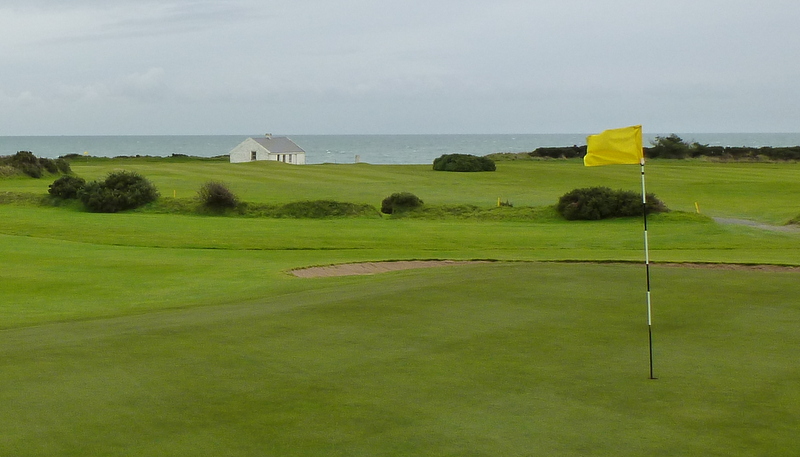 The course I played yesterday may not be easy for even Adam to identify. Here’s the second green: