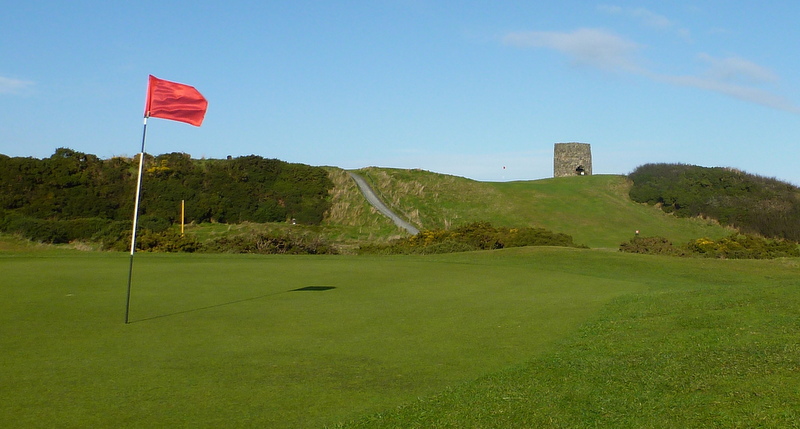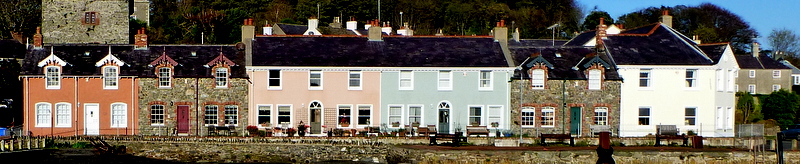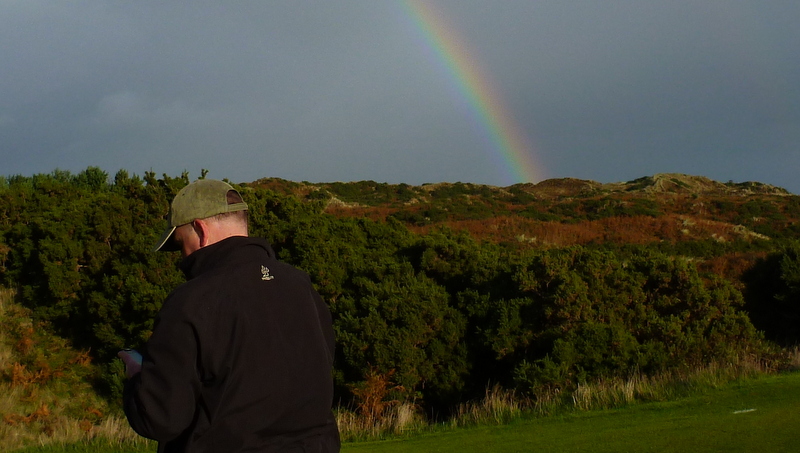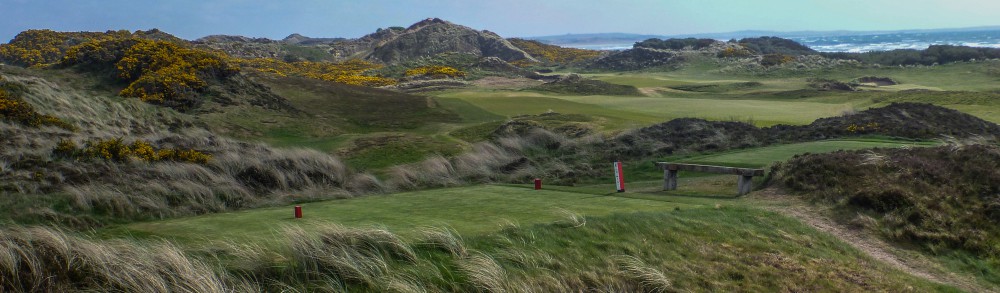

County Louth Golf Club is an Irish links course near the intersection of the Boyne River and the Irish Sea, about 35 miles north of Dublin. It’s often referred to by the name of the nearest village, Baltray, which is sort of a suburb of the ancient port of Drogheda — a city whose name is easier to pronounce correctly if you have a mild case of bronchitis. Drogheda was founded by Vikings more than a thousand years ago. In medieval times, it was surrounded by a wall, a few substantial parts of which remain. And if you visit St. Peter’s Church, on West Street, you can see the preserved head of St. Oliver Plunkett, an Irish clergyman, who was drawn, hanged, and quartered in England in the late seventeenth century:

Doctors may boast of their skill pharmaceutical,Measure out drugs in a grave sort of way,If you want health to pervade every cuticle,Go and play golf on the Links at Baltray.Tuberculosis is cured in two doses there,All the wild ills of the flesh fade away;Double pneumonia, asthma, insomnia,Weep for their sins on the Links at Baltray.

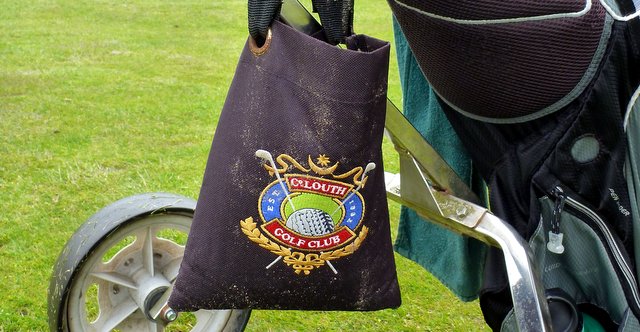
I asked an old guy in the golf shop what had happened to my beloved old moon-and-star logo, and he said there had never been any such thing. That made me worry that I was losing my mind, because I remembered my old shirt quite clearly. Luckily, in the locker room a little later, I asked an even older guy, and he said yes, now that I mentioned it, the club had once had another logo, like the one I described. And, sure enough, when our tee time finally came, I saw an image like the one I remembered engraved in a block of stone near the entrance to the course (which the old guy in the golf shop had apparently never noticed):
And after our round, in the bar, I saw another version:

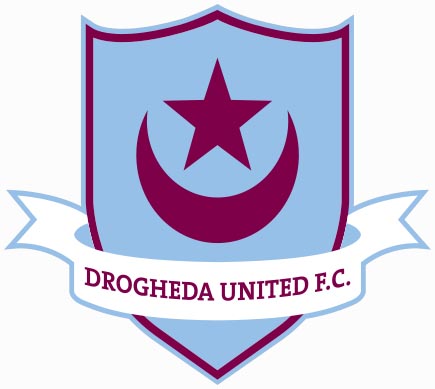
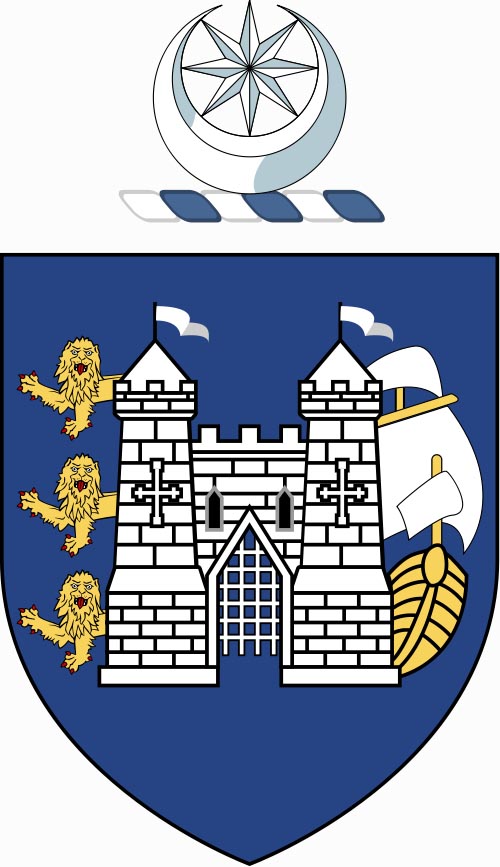
And the city of Drogheda itself has a moon-and-star image at the top of its official crest:
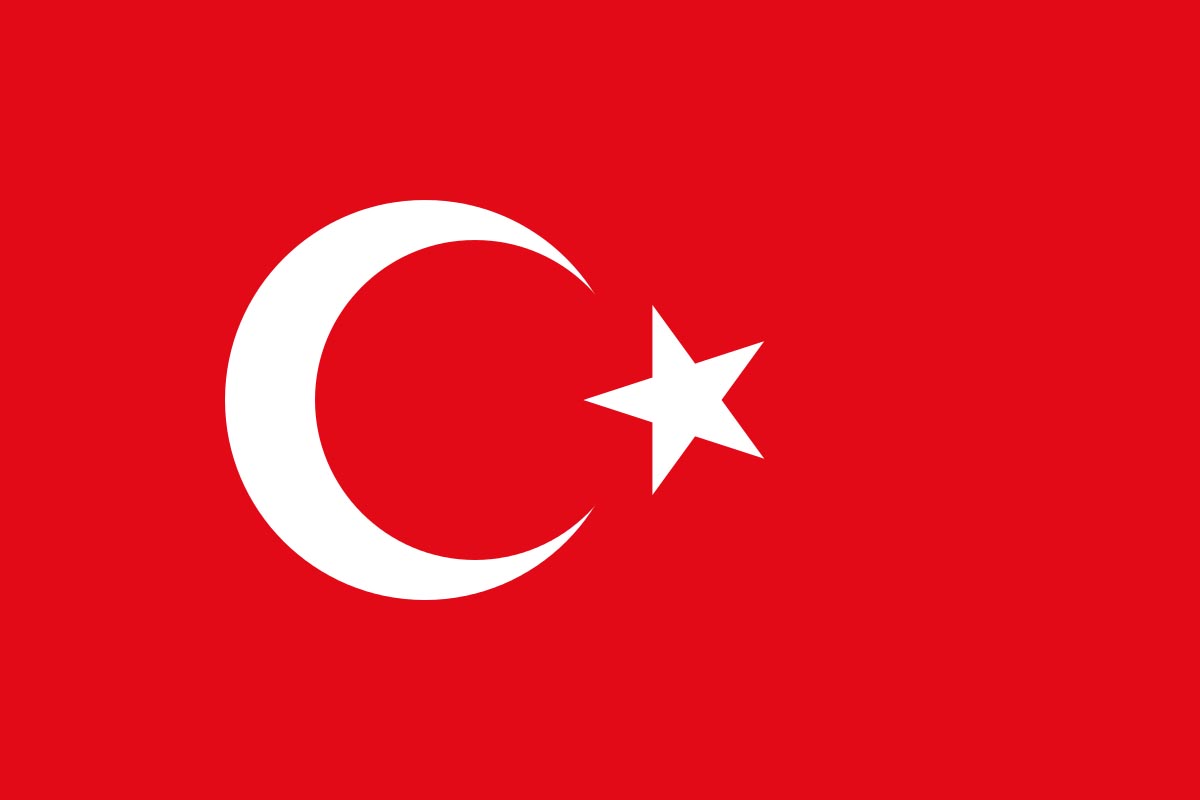
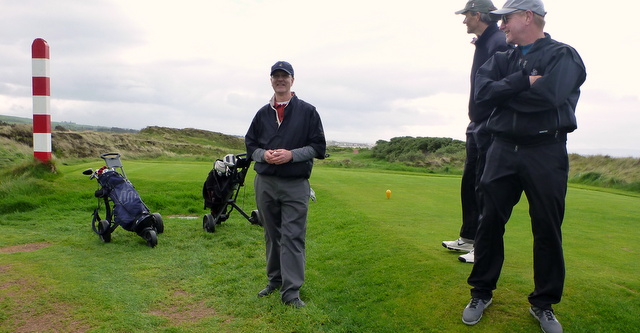
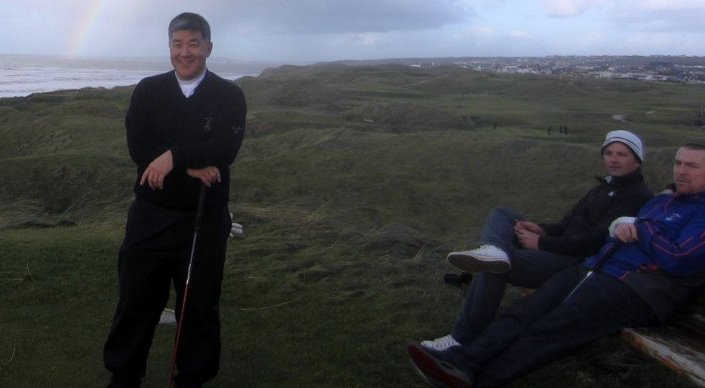
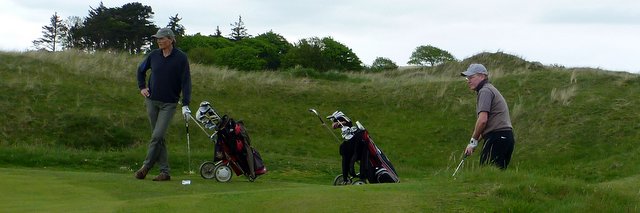
One explanation I’ve read is that during the Irish Potato Famine, in the eighteenth century, a sultan of the Ottoman Empire (Turkey’s predecessor) sent an emergency shipment of food and money to Ireland, by way of the port of Drogheda, and the city, as an expression of thanks, incorporated the empire’s symbol into its own. The only problem with that explanation is that Drogheda had been using the same image for five or six centuries prior to the famine. A more plausible explanation (probably) is that the image was brought to Drogheda during the Crusades by an Irishman who had spotted it in the land of the infidels and, like me, thought it looked cool. Anyway, wherever it came from, I want it back, in shirt form. The vest Tim is wearing in the photo below isn’t enough:

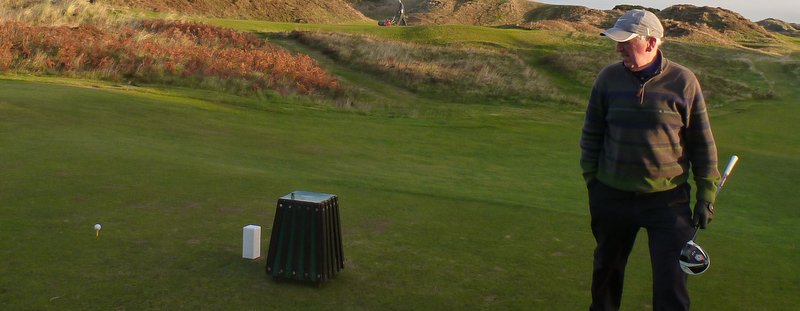
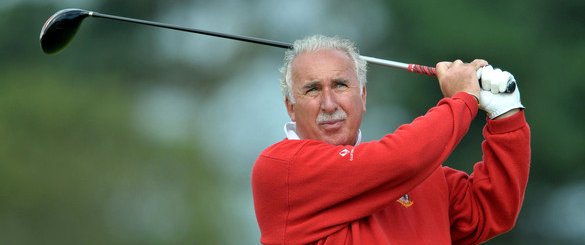
Incidentally, during our trip there was a certain amount of cigarette-smoking by guys who don’t usually smoke. When Peter A.’s wife, Denise, saw the photo below, which was taken at Baltray, she thought it showed him “drinking from a juice box.”