Reader’s Trip Report: 19-Year-Old Son in the U.S. Amateur

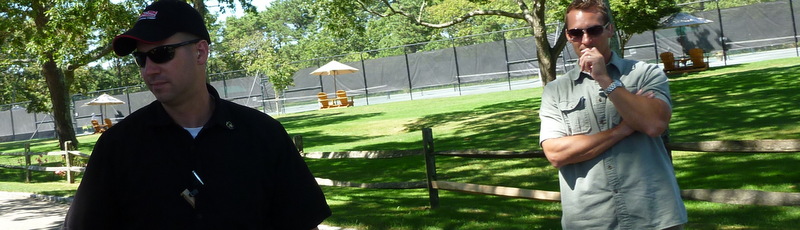
Francis Ouimet's childhood home, across from the seventeenth hole at The Country Club. All photos by Bob McIver.

Francis Ouimet’s childhood home, across from the seventeenth green at the Country Club. All photos by Bob McIver.

Bob McIver, a reader and an executive of a small air-services company in Montana, attended the recent U.S. Amateur, in Boston. He went because his son, Brandon, who plays for the University of Oregon, was a competitor. Brandon had qualified by shooting 65-70 at Old Works Golf Club, Anaconda, Montana, the month before. (The 65 was a course record.)  Bob McIver writes:

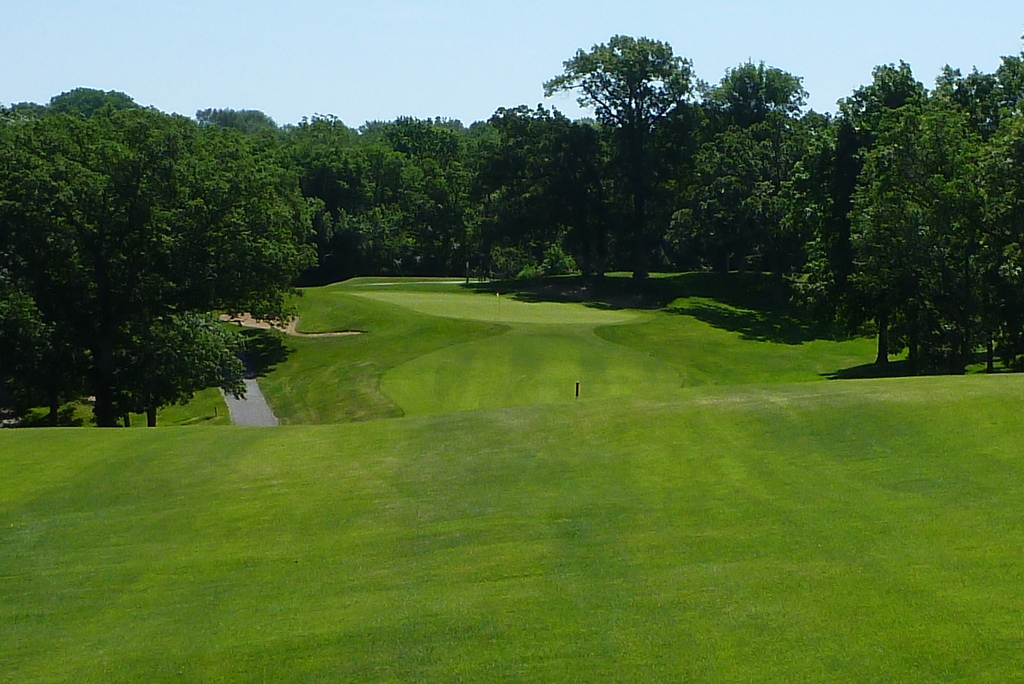
The event was held at the Country Club, in Brookline, and Charles River Country Club, in Newton. The differences in their setup was stark. Charles River is a Donald Ross course, built in 1921. The fairways were wide, sometimes fifty or sixty yards; the greens were very large, with big undulations; and the greenside bunkers were nicely trimmed. One volunteer, a member, told me it was playing the way it does for members: rough not too long, greens about 11 on the Stimpmeter, fairways as wide as they normally are.

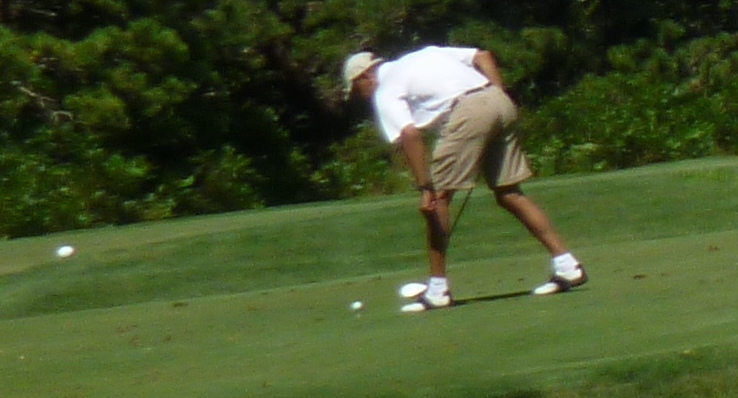
Brandon McIver, Charles River Country Club, No. 17/

Brandon McIver, Charles River Country Club, No. 17.

By contrast, the Country Club was unruly: fairways about thirty yards wide; first cut of rough just two yards wide; primary rough very thick and very lush. Brown, knee-high grass came into play around the greenside bunkers and some fairways. The greens were tiny, perhaps only a third the size of those at Charles River. They didn’t have much undulation, but many were steeply pitched from back to front or side to side. The back quarter of No. 18 could’t accept a hole location, because of the slope. An employee told me that many members had quit playing several weeks back because the U.S.G.A. setup was just too tough.
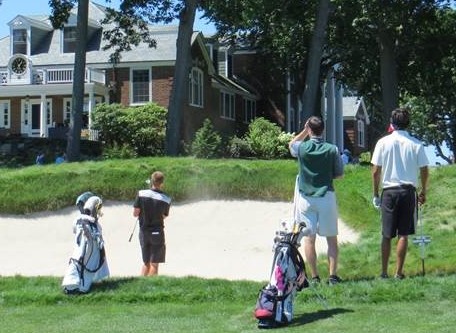
Greenside bunker, No. 18, The Country Club. That's Brandon in the sand.

Greenside bunker, No. 18, the Country Club. That’s Brandon in the sand.

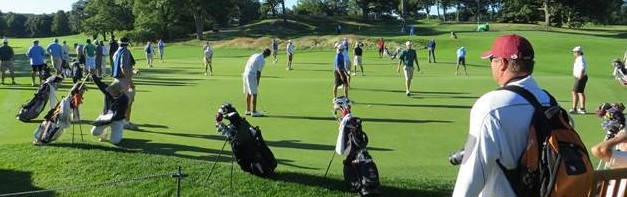
The event itself resembled a very large college tournament: lots of young bucks running around with college-logo golf bags and very nice golf swings.
US am

Perhaps most impressive were the the Country Club’s facilities. I counted fifteen separate buildings in an aerial photo, including a clubhouse, horse stables (U.S.G.A. headquarters of the event), swimming pool, warming house for ice-skating, skeet-shooting facility (the range is over the first fairway, and is presumably used only when the course is closed), golf shop, men’s locker room, a museum building, and several others. It looked more like a compound than a country club.

Second green, The Country Club.

Second green, The Country Club.

Brandon shot 71-78, and missed match play by five shots. “After that, he decided it wasn’t so fun anymore,” his father told me, “so I sucked up some airline travel penalties and we came home early.” Next year!

Video: Myrtle Beach Golfer Hits Self With Own Ball

Jim Coleman (left), showing a friend the video below, George Wright Golf Course, Boston, May, 2013.

Jim Coleman (left), showing a friend the video below, in the grillroom at George Wright Golf Course, Boston, June, 2013.

Back in June, I played a round at George Wright Golf Course, a muny, in the Hyde Park section of Boston. Among the people I played with was Jim Coleman, a caterer, at left in the photo above. Coleman runs the clubhouse grillroom, and after our round we had a terrific lunch, during which showed us a video, on his phone, of a friend hitting himself with his own golf ball during a trip to Myrtle Beach:

Coleman also showed us a video of the same guy taking an unusually large divot with a fairway wood:

Coleman has transformed the grillroom, and made it a popular hangout. He had the brilliant idea of turning several tabletops into scoreboards for the complicated golf games played by George Wright’s regular leagues. They’re thick slabs of slate with grid lines painted on them, and you can write on them with chalk:

IMG_1602-001

“K of C” (at the top of the grid on the tabletop above) stands for “Knights of Columbus.” George Wright also has a Polish League, although most of the guys in it nowadays aren’t Polish. (“They were running out,” one member told me.) Everybody in the grillroom is a Bruins fan, though.

IMG_1613The banner in the photo above, which is displayed next to an Irish flag, looks a lot like the ones that hang from the ceiling at the Boston Garden. Coleman acquired some time ago, under circumstances he didn’t fully describe. “I kind of swindled it out of a guy,” he said.

IMG_1606George Wright Golf Course, incidentally, was named after a star player for the Boston Red Stockings—who, among numerous other accomplishments, batted first in the first National League game, on April 22, 1876.

IMG_1612

The Muny Life: Swope Memorial, Kansas City

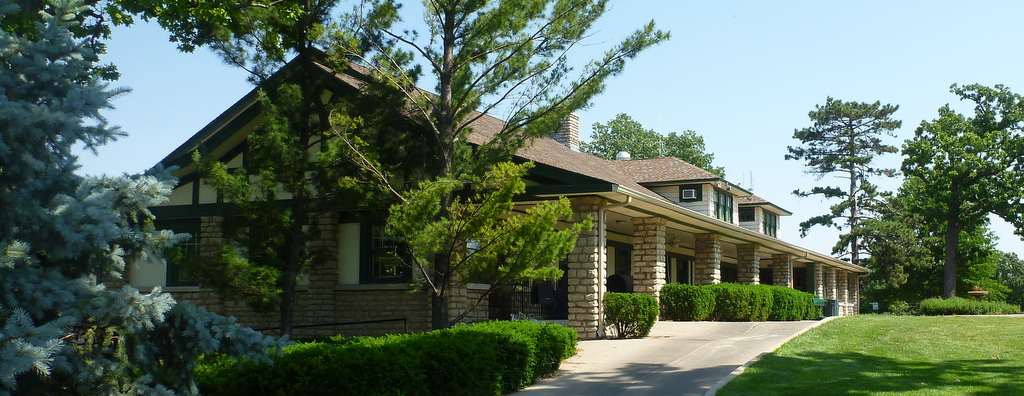
Clubhouse, Swope Memorial, Kansas City, June, 2013.

Clubhouse, Swope Memorial Golf Course, Kansas City, June, 2013.

My Muny Life column in the current issue of Golf Digest is about Swope Memorial Golf Course, in Kansas City. The course and the huge urban park that contains it were named for Thomas H. Swope, who gave the city thirteen hundred hilly, wooded acres in 1896. (Five hundred more acres were added later.) Swope died in 1909, and many people suspected that he had been poisoned by Dr. Benjamin Hyde, who attended him in his final illness and was the husband of one of his heirs, a niece. Swope’s body was disinterred and checked for strychnine, and Hyde was tried for murder but not convicted. In 1918, Swope was reburied, about a hundred and fifty yards from the tenth tee, under a monument that overlooks downtown.

IMG_1750Among the people I played with was James Armstrong, at right in the photo above. He spent thirty-eight years in the shipping department at Hallmark Cards, a job that was good for his game, because his shift was late. He’s one of the best putters I’ve ever seen, including on TV—his nickname at Swope is Drano—so I was surprised when he said, toward the end of our round, “This year is going to be my last.” I asked him how he could even think of giving up golf when he was still playing so well, and he said, “No, this is the last. Starting next year, twice a week is going to be it for me.” I asked him whether he really considered playing twice a week to be quitting. He thought about that for a moment, then said, “Sometimes I might squeeze in three.”

Drano, sinking a long one.

Drano, sinking a long one.

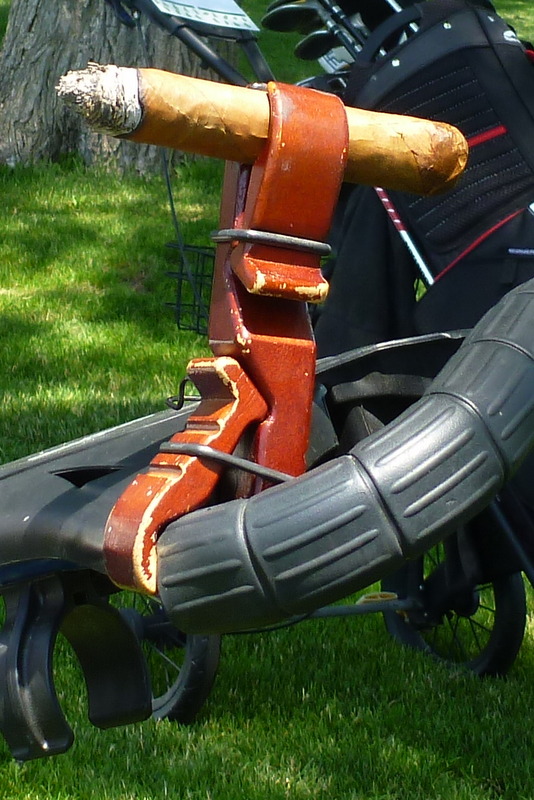
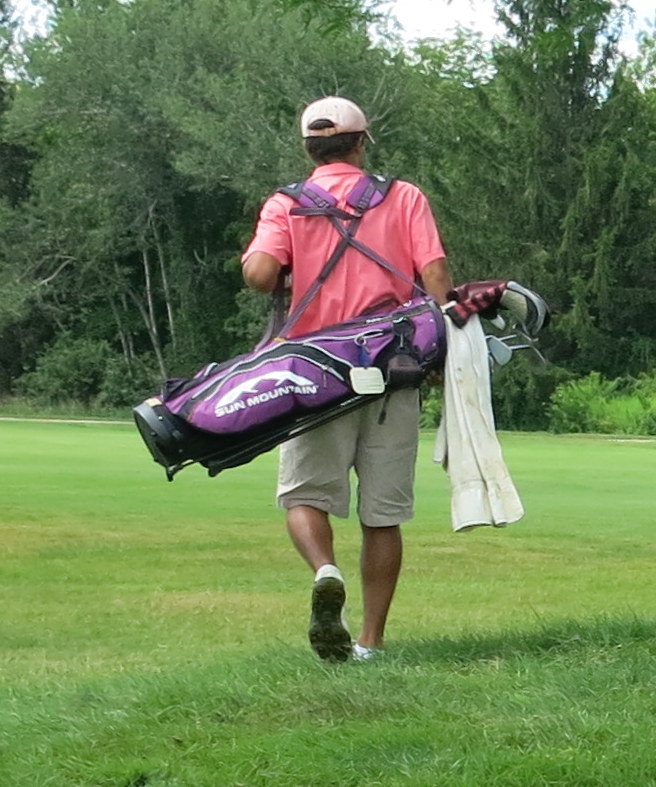
Like me, Armstrong believes in customizing his gear. Here’s his pushcart, a Sun Mountain Speed Cart, which began as a castoff from another player:

Note the improved cupholder and pencil caddie.

Note the bespoke cupholder and pencil caddie, which he made from an old headcover.

Armstrong has added distance off the tee by giving his driver an improved paint job:

P1070243Two days later, I played with Joe Cutrera, a Vietnam veteran, who owns a liquor-and-grocery store not far from the golf course. The store is in a high-crime area, he told me, but he hasn’t been robbed since 1984.

Joe Cutrera, Swope Memorial.

Joe Cutrera, Swope Memorial.

Cutrera’s job, like Armstrong’s old one, leaves plenty of time for golf, since he doesn’t need to be in his store all the time. He had customized his pushcart, too:

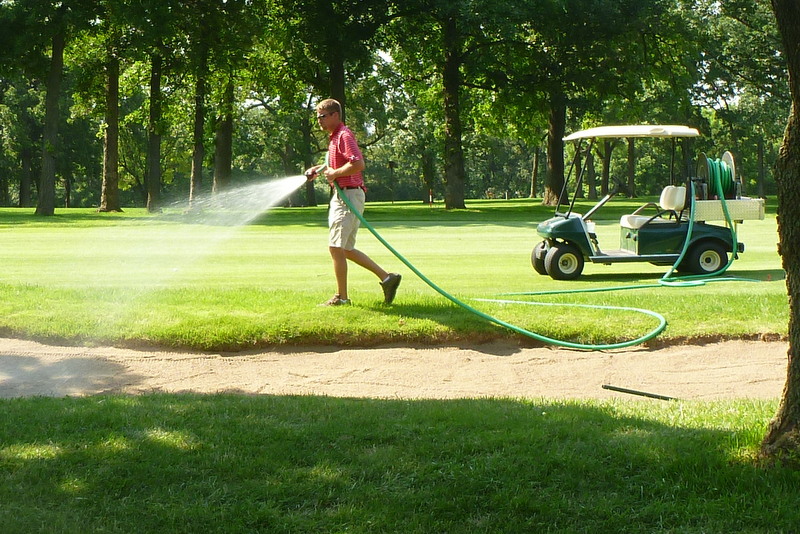
P1070354Swope Memorial was redesigned by A. W. Tillinghast in 1934. The city thoroughly refurbished it in nineteen-nineties, and when I visited it was in extraordinary condition. On one hole, an assistant superintendent was watering a new bunker, to de-fluff the sand. Do they do that at your club?

P1070234

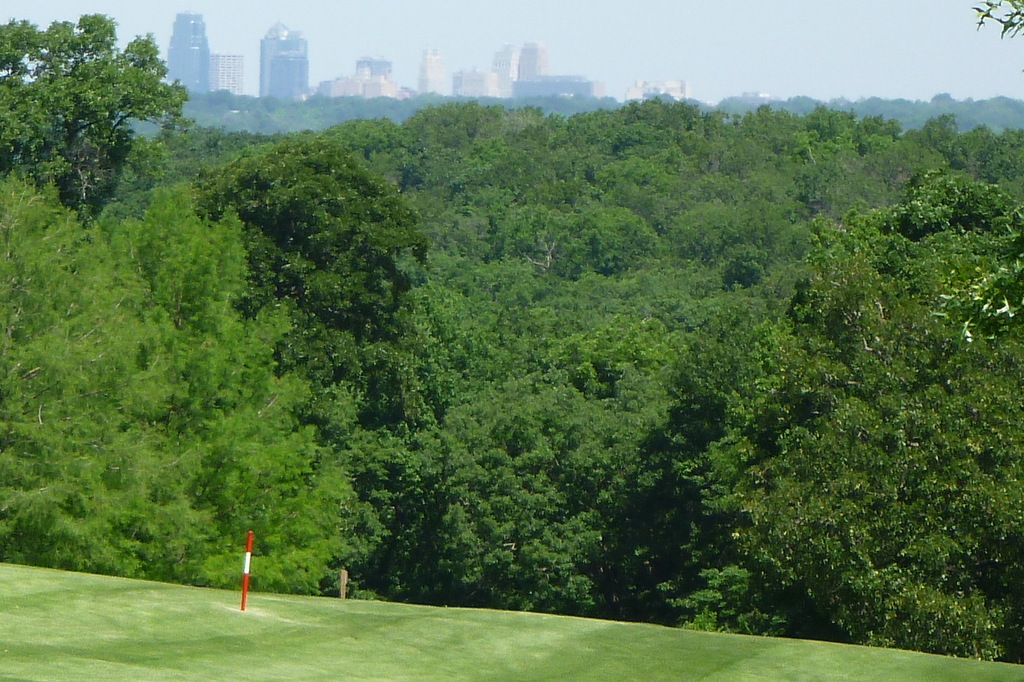
Swope’s fairways are zoysia, just like the fairways at the Kansas City Country Club, another Tillinghast project, and the whole property is beautiful and beautifully maintained—as you can see from the photos below.

P1070319

P1070287

P1070337

P1070313

P1070276

IMG_1827

Report From the 2013 Men’s Member-Guest, Part One

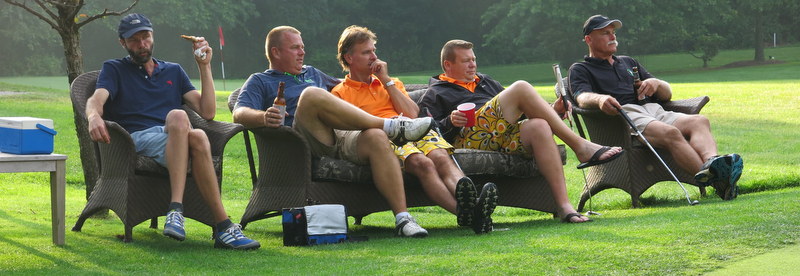
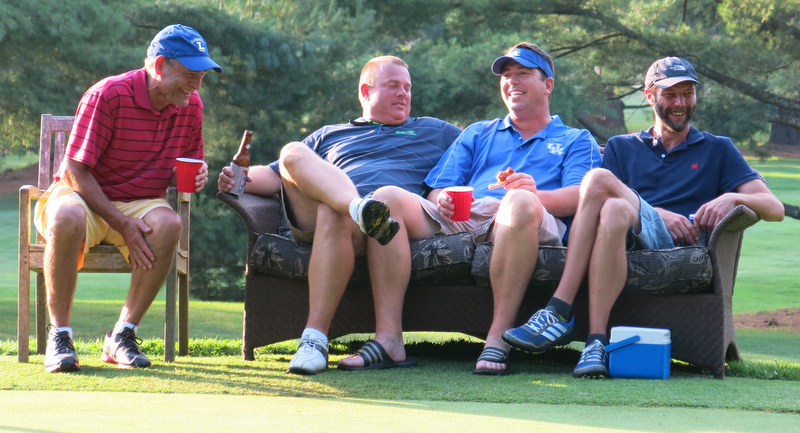
Peter P, Rob G., Fritz, Klinger, Chic, ringside at the putting contest.

Peter P, Rob G., Fritz, Klinger, Scribby, ringside at the putting contest.

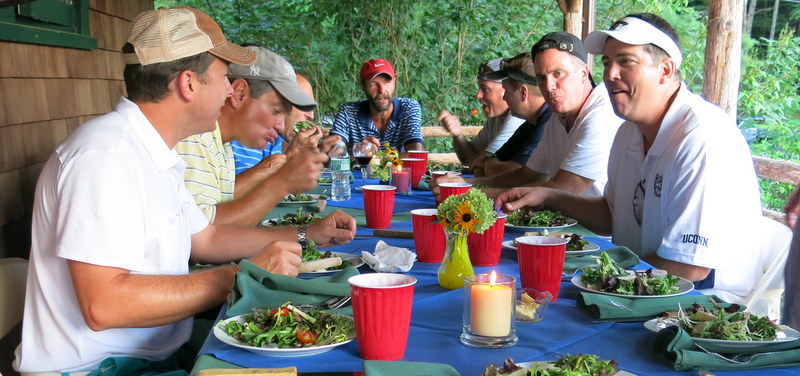
The men’s member-guest was the first weekend in August. Among the many highlights was the putting contest, for which qualifying began on Friday afternoon and concluded late Saturday morning, with a break for steaks on the clubhouse porch:

These guys are pretending to eat salad.

These guys are pretending to eat salad. Their steaks are still on the grill.

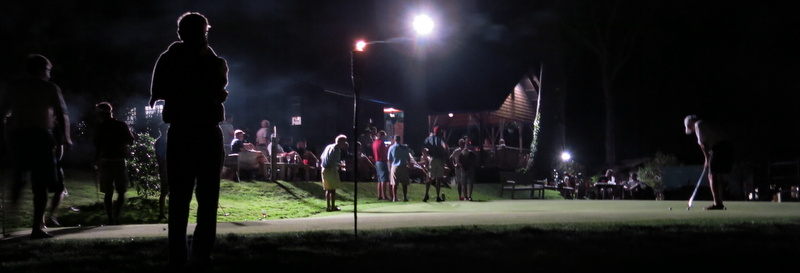
Some of the most stirring action took place after dark on Friday night, under lights provided by C.J. A qualifying round was two times around a four-hole course. Each each hole was a par-2.

IMG_2371

The green had been triple-cut and rolled, and all the holes were within a few feet of the fringe. If you putted a ball off the green, you had to pay a penalty stroke to move it back. The format was best-ball. In two days of trying, no pair went around in better than two under par.

IMG_2376

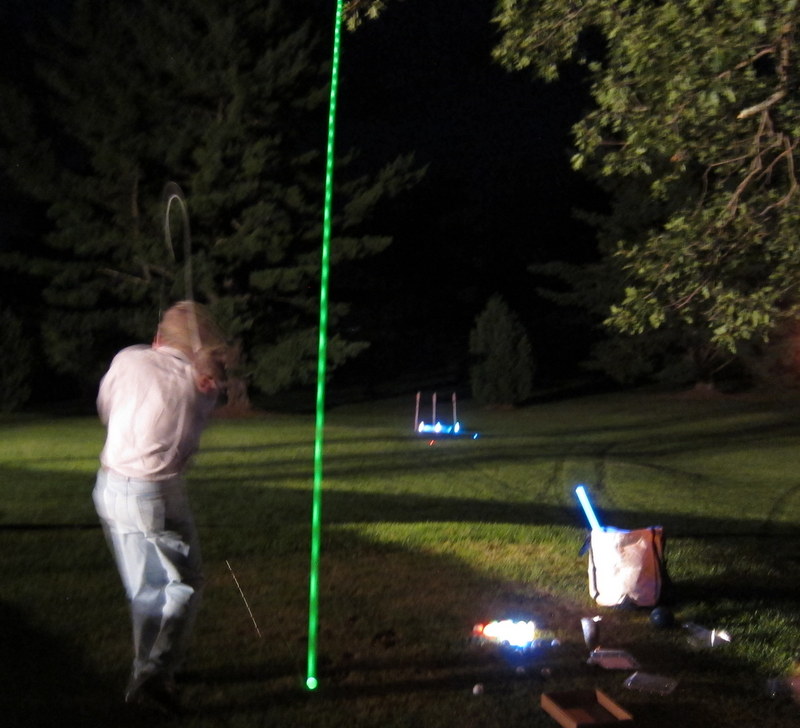
We also had an after-dark pitching contest, using Night Flyer balls. The target was a small kiddie swimming pool, which my wife bought for our dog but our dog, so far, doesn’t like. The kids in the golf shop had filled it with water and glow sticks, and they had marked it with Tiki Torches and flashing LED things that looked like tent stakes. You got three tries for five dollars, and if you made a ball stay in the pool from forty-five yards away you won half the pot. Doing that was harder than it sounds, because only one person managed to do it: Tim. But even the misses looked cool, and in some pictures my brother took they look like those tracking shots on TV.

IMG_2352

Night Flyer balls look like regular balls, but they light up when you clack them together or hit them with a club.

IMG_0170

Putting-contest tickets were ten dollars each. You paid for them at the cashier’s desk, which was also the pari-mutuel betting window for the regular golf matches. Michael U. handled the bets, using a computer program called Backnine Bookie. The program kept a running tally of the odds for every pair in the tournament. You could bet on yourself, and on other teams in any flight except your own flight—a rule we imposed to eliminate any temptation to tank matches. Michael used our handicap-card printer to print a ticket for each bet.

P1080058

To be continued.

Joe, Rob G., Chic, Peter P.

Joe, Rob G., Chic, Peter P.

Let’s Take a Closer Look at Larry David’s Golf Warm-Up Routine

P1080271 On the day the Secret Service searched my golf bag—at Farm Neck Golf Club, on Martha’s Vineyard—I also watched Larry David warming up on the driving range. The photo above (you will recall) shows the first part of his routine. And here’s the second part: P1080267 Several readers have asked how these warm-up components are connected. With graceful swoops? With tiny hops? With deep knee bends? Showing is easier than describing, and, I’m happy to say, I shot some video. Here’s what it looks like fully assembled:

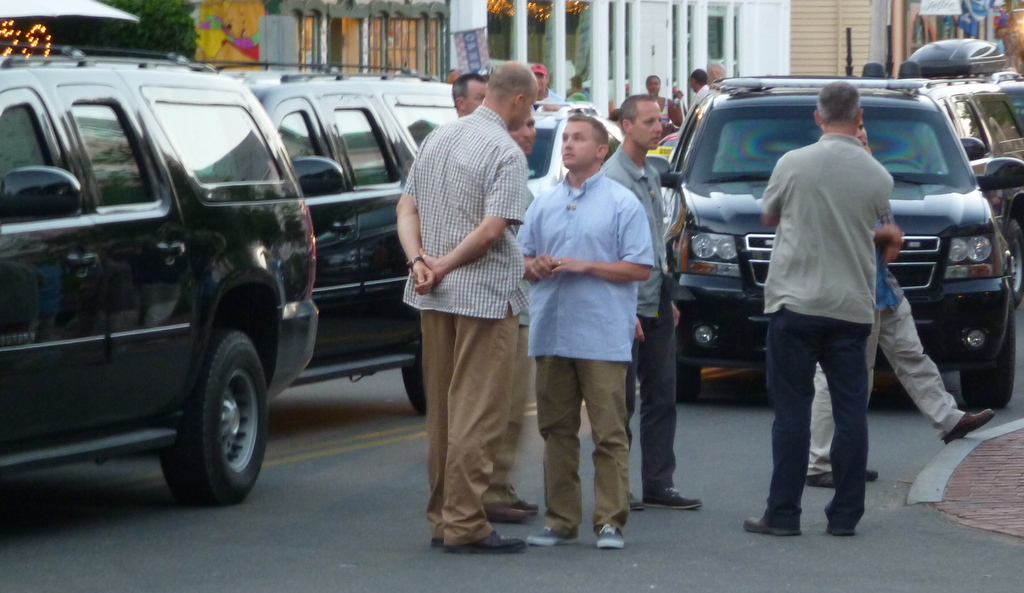
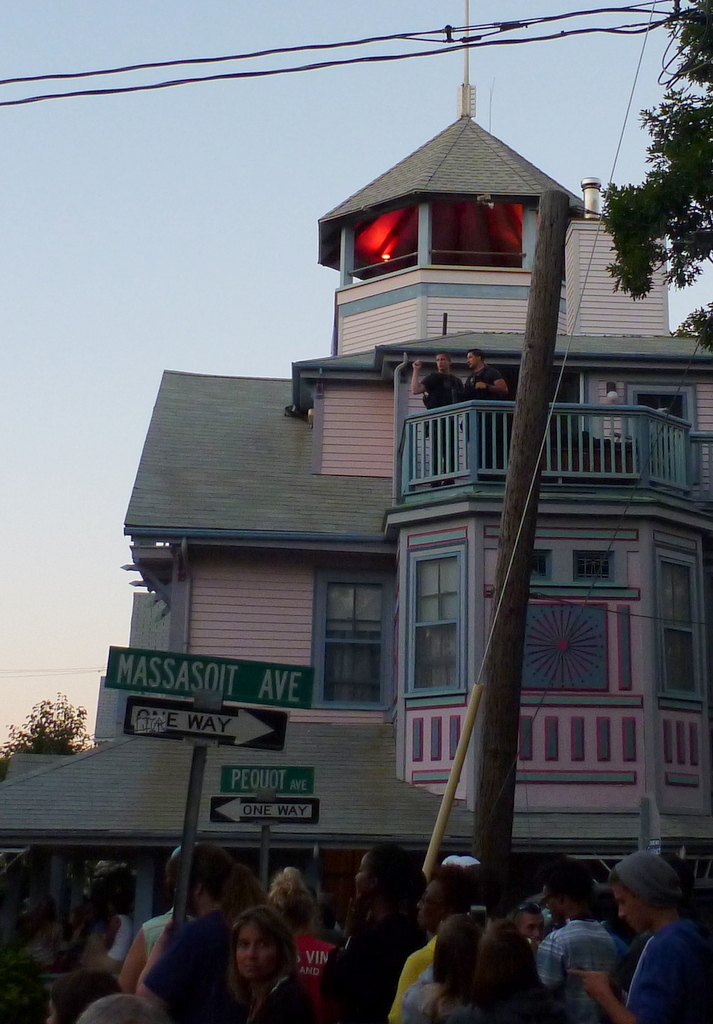
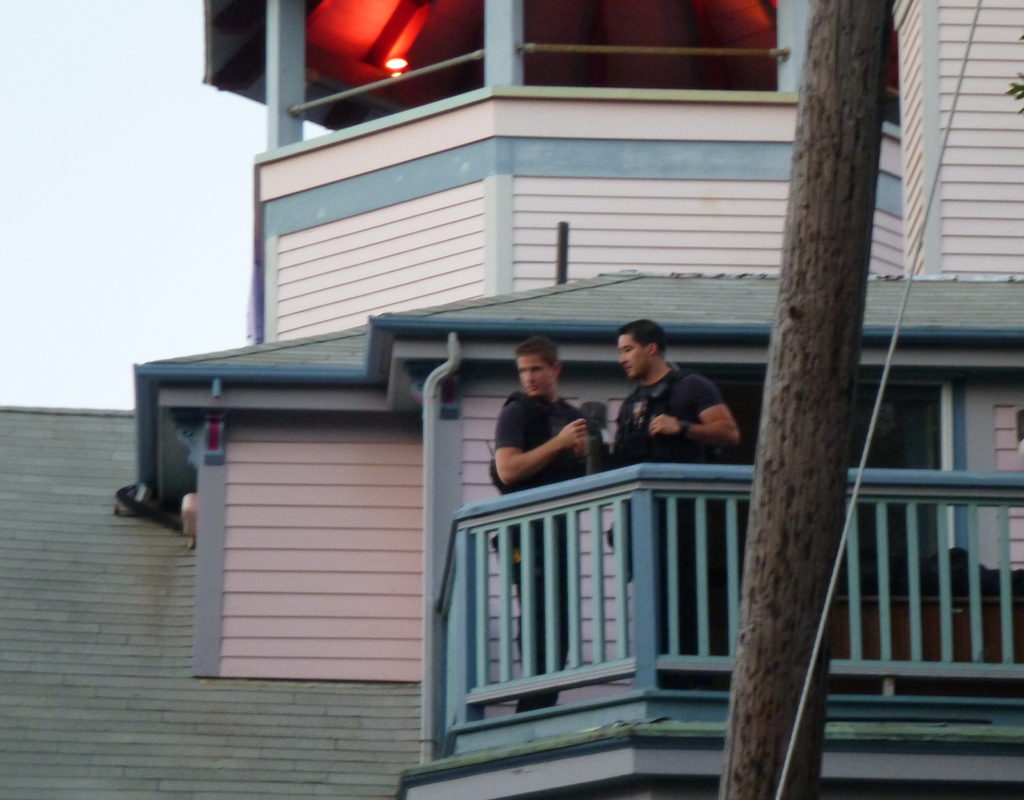
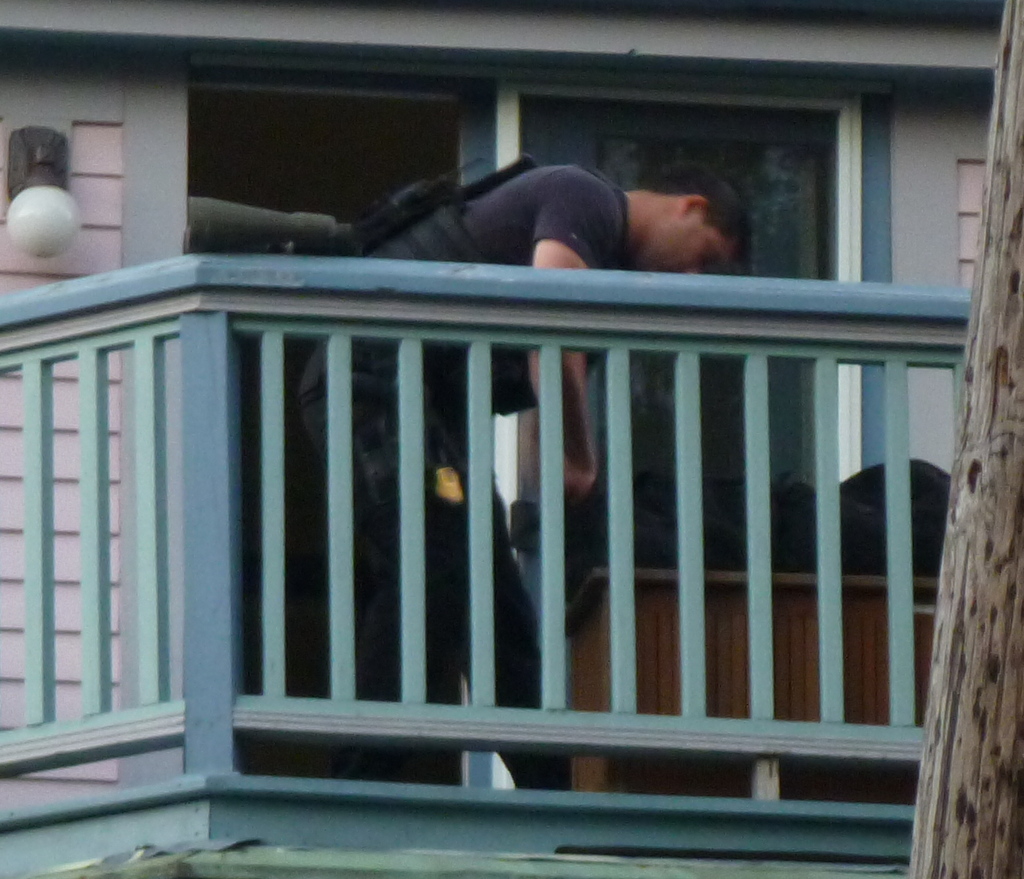
I also took some more pictures of the Secret Service, because my wife, our daughter, her husband, and I ran into the President’s entourage again, that night in Oak Bluffs, where we had also gone to dinner. I recognized some of the guys from the golf course. The ones on the balcony (across the street from the Sweet Life Cafe, where the adult Obamas were eating) were unzipping their “golf bag.” The guys with the untucked shirts are Secret Service agents.

P1080434
P1080441
P1080442
P1080425

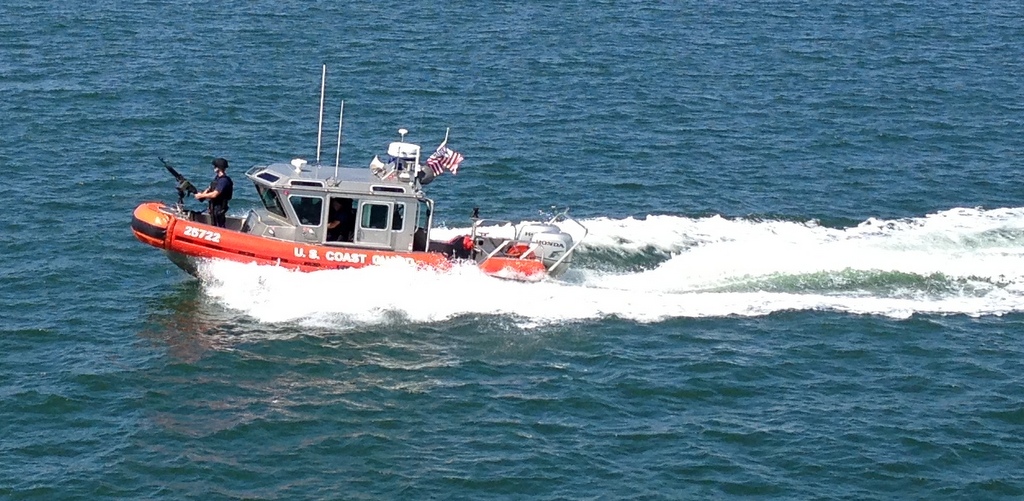
This morning, Tim-o and his daughters came over from Wood’s Hole. Their ferry was escorted by two Coast Guard boats with machine guns mounted at the bow. Every time a non-Coast Guard boat came within a couple of hundred yards of the ferry, Tim-o said, one of the Coast Guard boats would zoom ahead to shoo it away.

coast guard

Golf on Martha’s Vineyard With the President of the United States

Making the turn, Farm Neck Golf Club, Oak Bluffs, Massachusetts, August 11, 2013.

Making the turn, Farm Neck Golf Club, Oak Bluffs, Massachusetts, August 11, 2013. The thing the guy in the blue shirt is holding isn’t an attache case.

I knew the President was about to arrive on Martha’s Vineyard because my cell-phone reception suddenly went from no bars to three. The Obamas are staying about two miles down the road from where my wife and I are staying, and because their house is close to the road all traffic is being diverted around it. That has made the road much quieter than it usually is—a second benefit. And this afternoon Alan, Leslie, Wendy, and I played golf nine holes ahead of him, at Farm Neck Golf Club, in Oak Bluffs.

Leslie, twelfth hole, Farm Neck.

Leslie, twelfth hole, Farm Neck.

We finished just before the President made the turn, and we stood near the cart path leading to the tenth tee, hoping to see him. While we waited, a Secret Service guy searched my golf bag, had a look at the stuff in my pockets, and waved a metal-detecting wand over my back.

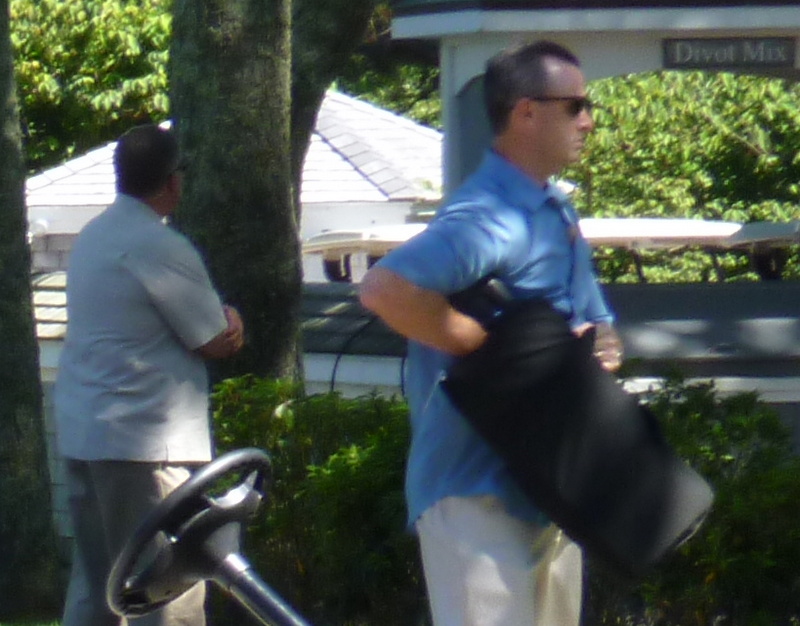
Two Secret Service guys.

Two Secret Service guys keeping a close eye on the divot mix.

There were also lots of guys wearing bulletproof stuff and driving around in golf carts. The things strapped to the back of their carts were not golf bags, presumably.

P1080331

I could see lots of Secret Service guys, and one of them told me that there were lots more I hadn’t noticed: on boats, in kayaks, on paddle boards, in the woods. The ones I could see were wearing sunglasses, ear pieces, microphones, and little star pins near their shirt collars, like miniature badges. Their eyes were constantly moving.

P1080361

They also had a bomb-sniffing dog, and they checked absolutely everything—including a wooden trash barrel that looked like the sort of place where Wile E. Coyote might try to hide from the Roadrunner.

Note the coyote-height eye hole in the trash barrel.

Note the coyote-height eye hole in the trash barrel.

The President was playing from the blue tees—just as I had done!

P1080408

Just before he teed off, a couple of Secret Service guys in a huge black SUV pulled up right in front of me. Luckily, the windows lined up pretty well:

P1080414

President Obama wasn’t the only famous person on the golf course. We also saw my close personal friend Larry David, on the practice range. His warm-up routine has two parts. Here’s the first:

P1080267

And here’s the second:

P1080271And here’s a last look at Farm Neck (the fifteenth, a par-3):

P1080314

And also at the President:

P1080391


Beef Box: Golf Pants With Hateful Mini-Pocket-in-Pocket

IMG_2657

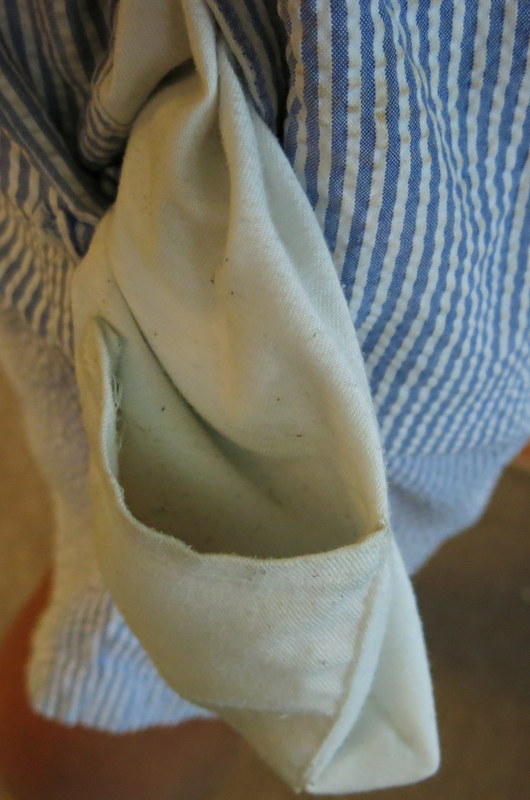
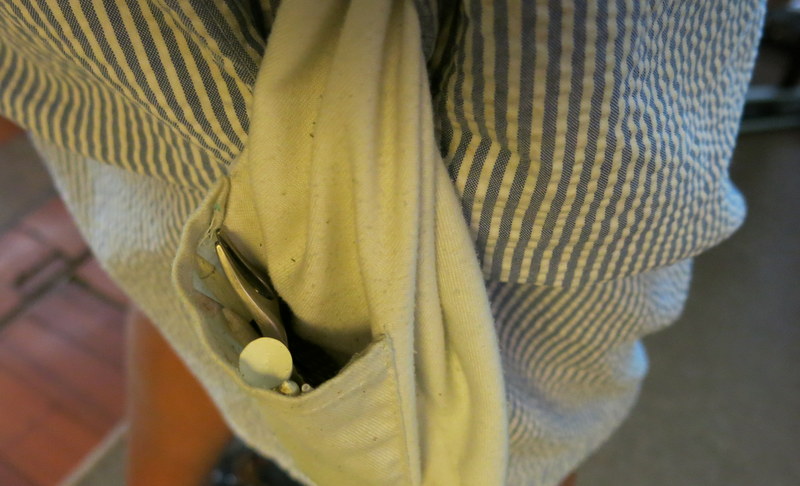
The tiny pocket inside the right-hand front pocket of some of the pants you own is for your pocket watch—which, you may have noticed, you stopped carrying in 1895. So why is the tiny pocket still there? Its only function, as far as I can see, is to become hopelessly clogged with change, tees, ball markers, golf pencils, and green-repair tools—which are especially insidious because if one of them gets in sideways you can’t extract it without undressing.

IMG_2660

Clothing manufacturers don’t even sew tags in the collars of golf shirts anymore. Why do they splurge on pockets that serve no purpose?

Hopelessly impacted "watch" pocket.

Hopelessly golf-impacted “watch” pocket.

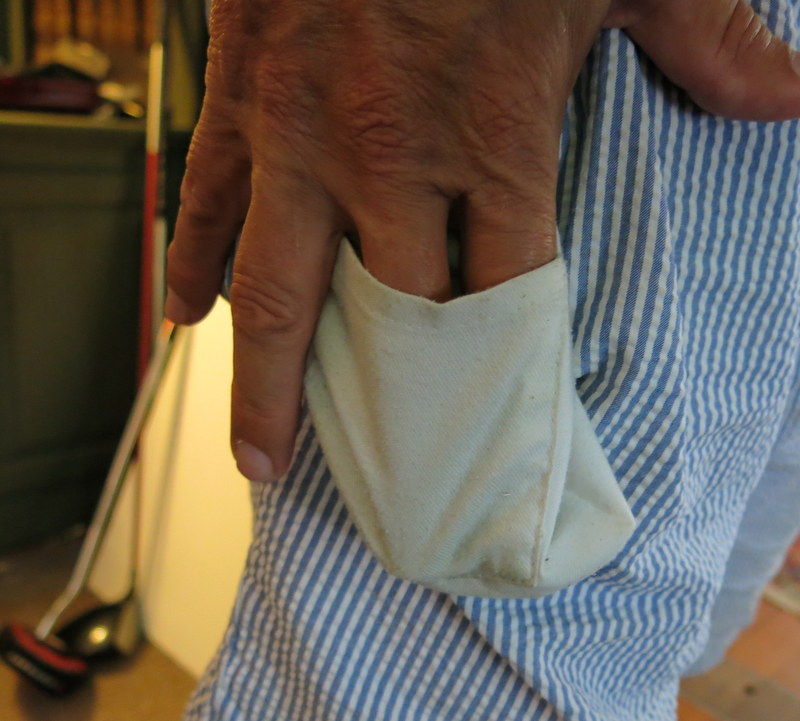
I own two pairs of golf pants that are even more annoying. Both pairs have a “scorecard pocket,” which is just inside the right-hand rear pocket and is almost exactly the same size. One pair also has an extra pocket in front, just inside the regular pocket, so that (supposedly) you can keep your keys and other non-golf stuff isolated from your tees and other golf stuff. The idea sounds sort of clever, but all it does is create frustration and confusion where none existed, because when you have two pockets in one place you have a fifty-fifty chance of sticking your hand in the wrong one.

Hand in wrong pocket (a simulation).

Hand in wrong pocket (a reenactment).

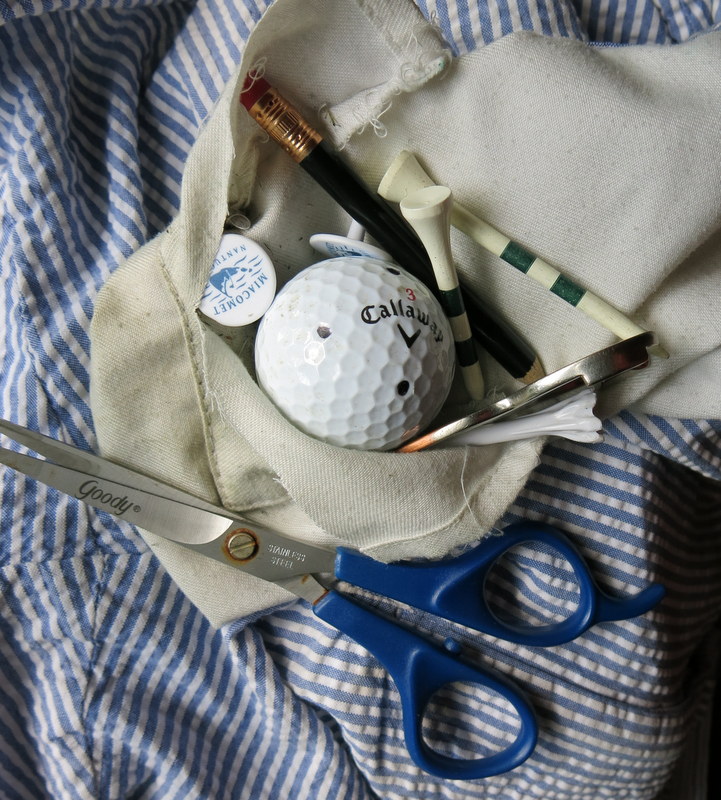
The only solution, other than buying pants with normal pockets, is to perform a partial pocketectomy:

Surgical implement, resected  "watch" pocket.

Problem solved: surgical implement, resected “watch” pocket.

This is the Best Golf Towel, and I’m Not Kidding

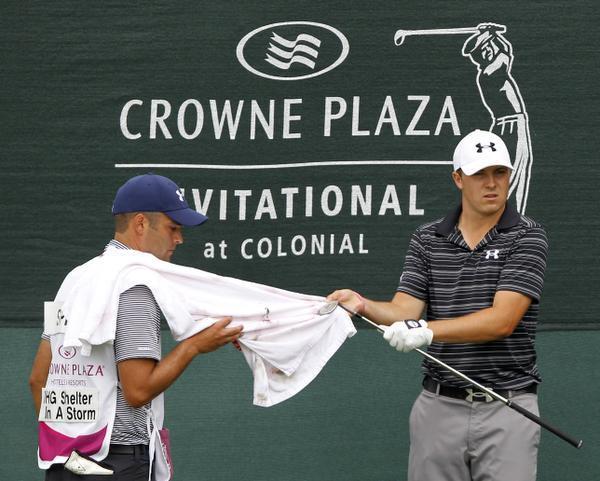
Caddie, towel, J.J. Henry, May, 2013.

Caddie, towel, Jordan Spieth, May, 2013.

Ten or fifteen years ago, I noticed that good golfers (or their caddies) often carry a bath-size white towel, which they drape over the top of their bag (or their neck), and carry onto the green with their putter. Conversely, bad golfers often carry a small, neatly folded, souvenir-type golf towel tucked into their belt. I didn’t want to look like a bad golfer, so I snuck a white bath towel out of our linen closet and draped it over the top of my bag. Every three or four holes, someone in another group would holler, “Hey, did one of you drop a towel?” After a couple of rounds, I gave up, and went back to using a normal, souvenir-type golf towel, although I clipped it to my bag rather than tucking it into my belt.

Addison, 2013 Connecticut Open, Torrington Country Club.

Addison, 2013 Connecticut Open, Torrington Country Club.

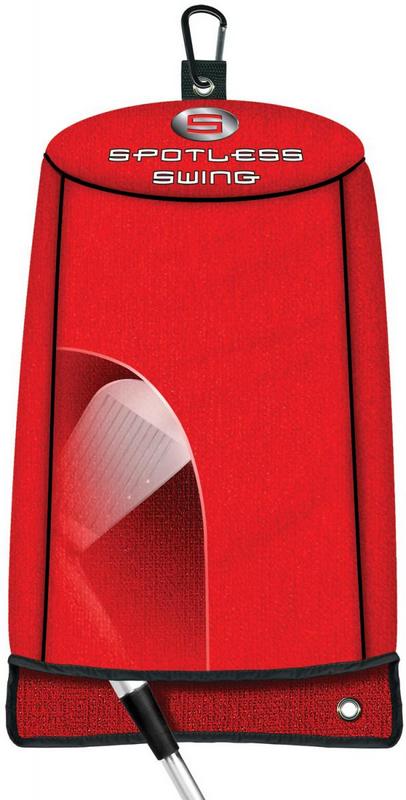
At the P.G.A. Golf Merchandise Show a couple of years ago, I met some guys from Colorado who sell a golf towel called Spotless Swing. I talked them into giving me one, and I like it so much that, recently, I talked them into giving me another. Both of them are now attached to my bag, one red and one black, and because I have two I don’t have to waste a lot groping around when I feel like cleaning my clubs—which, to be perfectly honest, isn’t as often as it should be.

SS_HP ad 8_5X11 R10

A Spotless Swing towel has two features I like a lot. The first is that it’s constructed sort of like a fez. You stuck a clubhead inside it to clean it or dry it, and that protects your hand from whatever you’re trying to remove. The second is that part of the inside is made of a coarse plastic material, which is almost as good as a wire brush at getting crud out of your grooves.
Spotless Swing golf towel

Don’t tuck it into your belt, though. It comes with a little carabiner, which you can use to clip it to your bag.

Reese and Vi (Addison's parents, with supplemental towels), Denise, Hacker (real name) in Addison's gallery at the 2013 Connecticut Open.

Reese and Vi (Addison’s parents, with supplemental towels), Denise, Hacker (real name), in Addison’s gallery at the 2013 Connecticut Open.