Which Hacker is the Real Hacker (Real Name)?

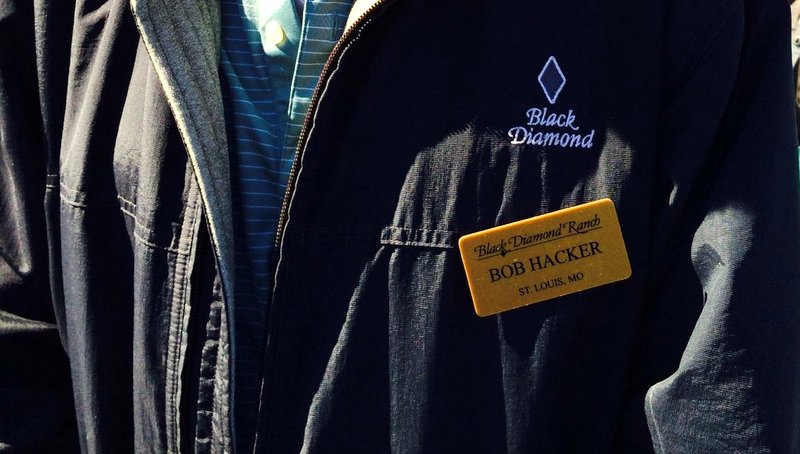
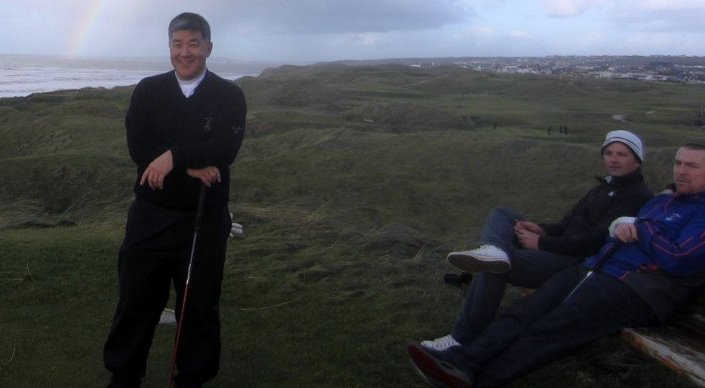
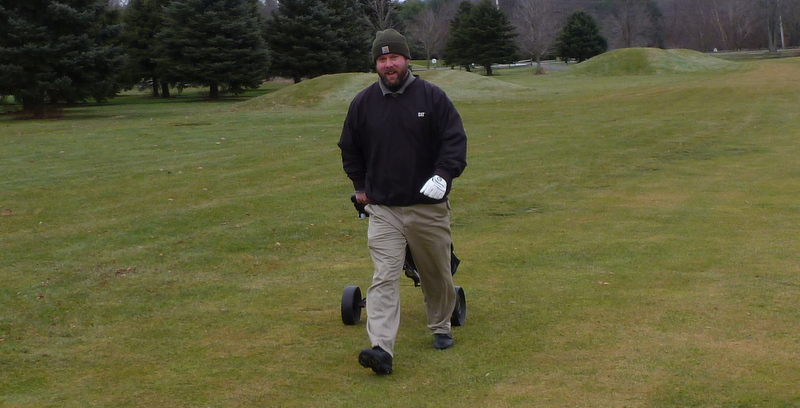
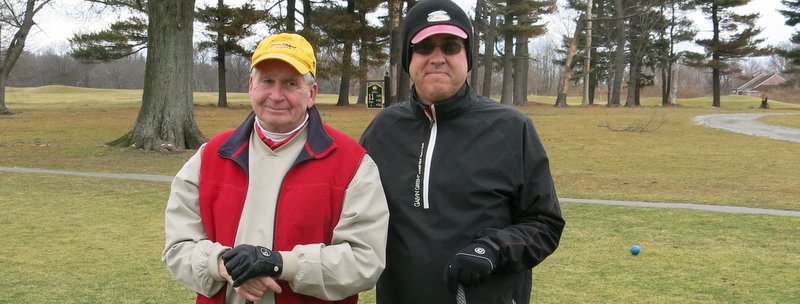
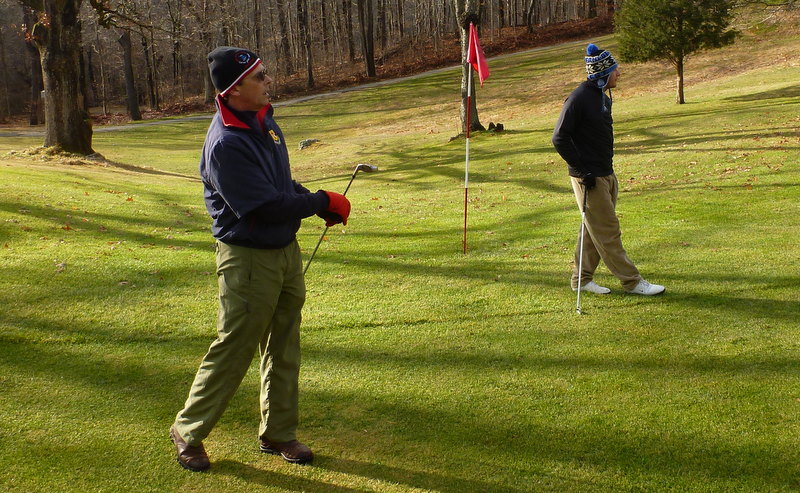
IMG_0398The person I play the most golf with is Bob Hacker, a.k.a. “Hacker (real name),” on the left in the photo above, which was taken last winter at Pelham Bay Golf Course, in the Bronx. (That’s me on the right.) He is also the person primarily responsible for managing the Sunday Morning Group and its finances, and is therefore widely believed to be the chairman of the Committee, the mysterious but all-powerful body that governs everything we do. He is unique—or so I thought until recently, when Tony, who is the person I play the second most golf with and is the co-inventor, with me, of the Hybrid Lifestyle, sent me a photograph of a starter at the Black Diamond Golf Ranch, in Lecanto, Florida, where he had gone to play golf with his Atlanta friends, who are richer, smarter, and better-looking than we are:

IMG950651

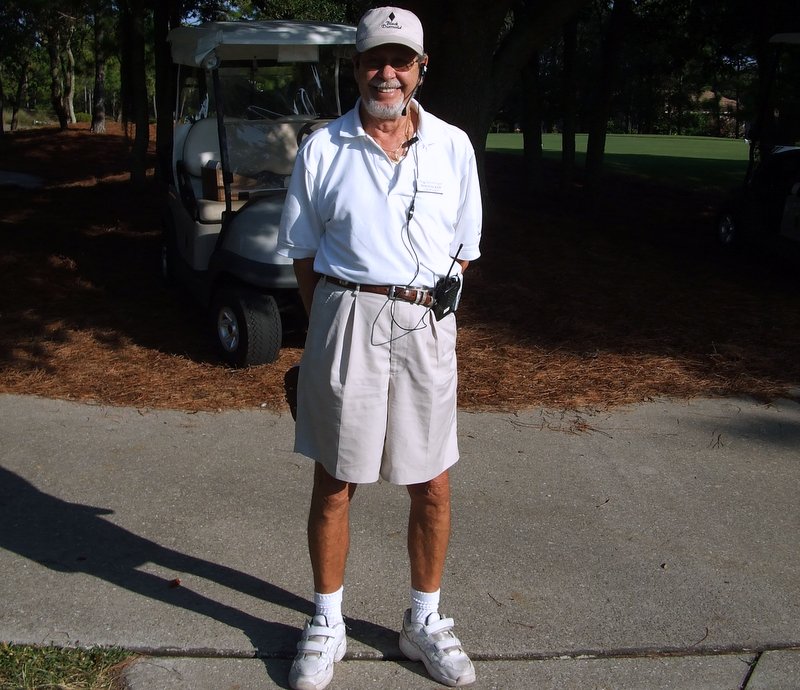
That’s just part of him, obviously. Doug Egly, who is Black Diamond’s general manager, sent me this photo of him in his entirety:

2007 Hacker, Bob

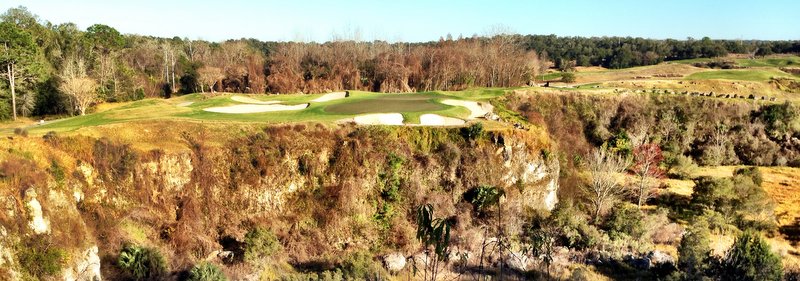
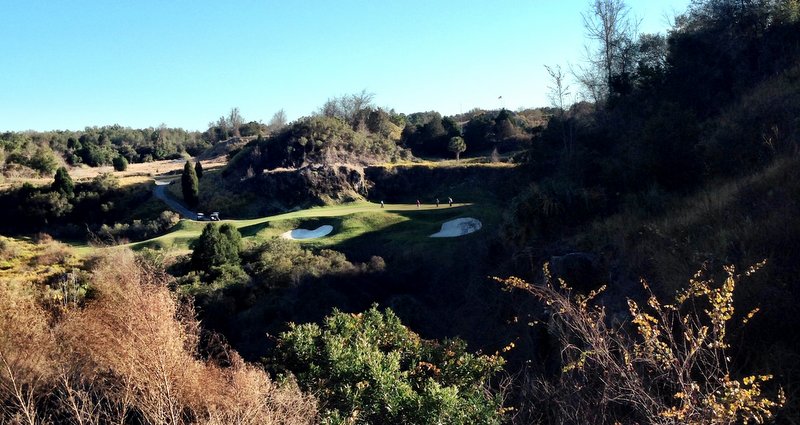
The existence of this second Bob Hacker suggests either that we are living in an episode of the Twilight Zone or that Black Diamond Ranch is a parallel universe of some kind, filled with eerie duplicates of people I know, but with better weather. Photographs of the Quarry Course—one of three on the property, all designed by Tom Fazio—do make it seem otherworldly:

photo 1 photo 3photo 2

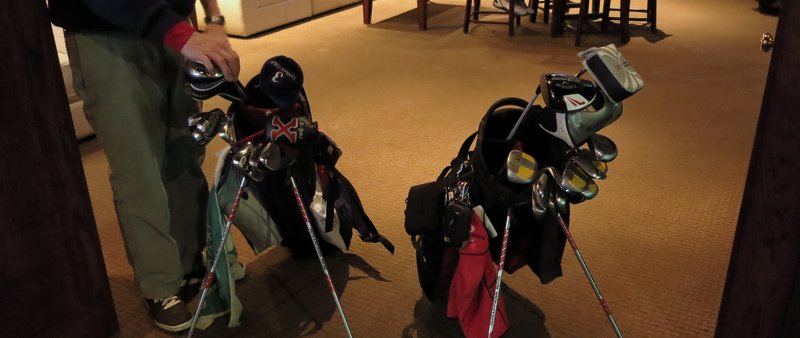
As it happens, the real Hacker and I visited Tony in Atlanta shortly before he went to Florida with those other friends. We played golf at his Atlanta club, about which I’ll probably have something to say at some point, and in the evenings we played the card game setback with Tony’s wife, Teresa, who remained undefeated until we stacked the deck while she was in the kitchen making us something to eat. Anyway, the easiest way to distinguish Tony from his Twilight Zone doppelganger is by checking the trunk of his car, which contains so many golf clubs that he has to keep his golf clubs somewhere else:

photo

Winter Golf and a Previously Unknown Type of Cheeseburger

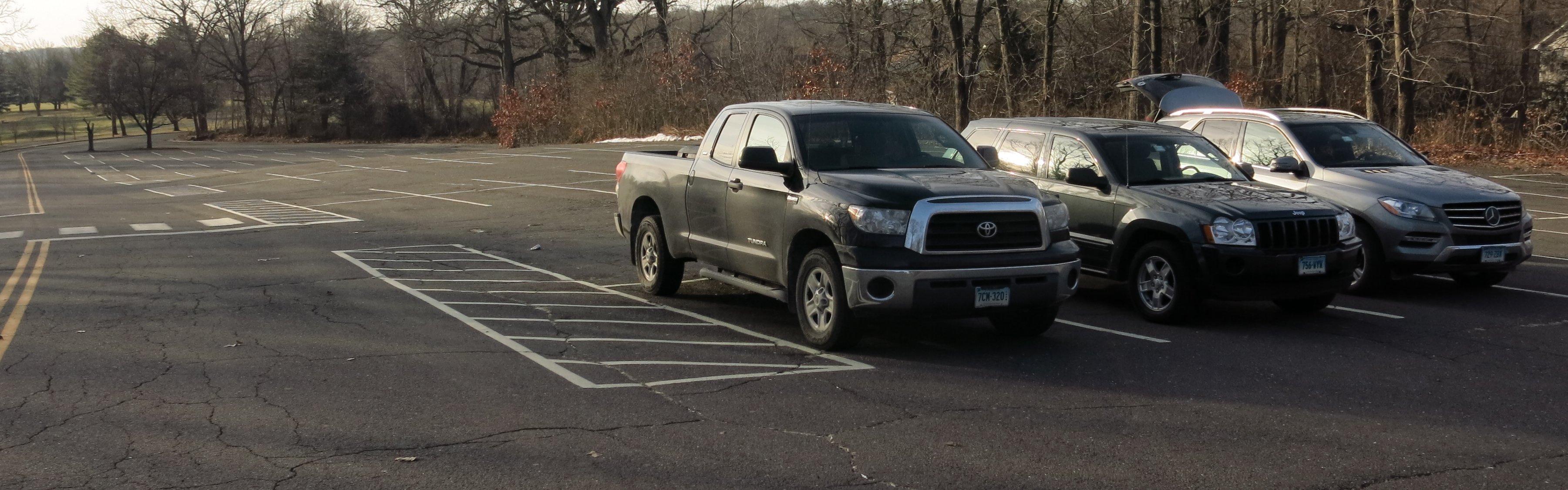
These cars belong to my friends and me. There were no other cars in the parking lot at Tunxis when we got there on Sunday morning.

These cars belong to my friends and me. There were no other cars in the parking lot when we arrived on Sunday morning.

We got what seemed like a foot of rain on Saturday. That was good in one way, because it washed away most of the snow, but it was bad in another, because (apparently) it persuaded the people who make the decisions at Tunxis Plantation Country Club not to open the following morning, even though Hacker (real name) had called the evening before and left a message that we would be there at 9:30, ready to go. I sensed trouble as I approached the clubhouse: of the ten or so greens I could see from the road, only one had a flag, and the parking lot was empty except for cars that belonged to people I knew. Hacker started calling around the state, but the places he tried either weren’t open or weren’t answering the phone. (Suggestion to golf courses that don’t shut down for the entire winter: update your website and outgoing voice-mail message every night with information about the following day.) Finally, he found an open course, and it was just thirty-five minutes farther away. So we caravaned:

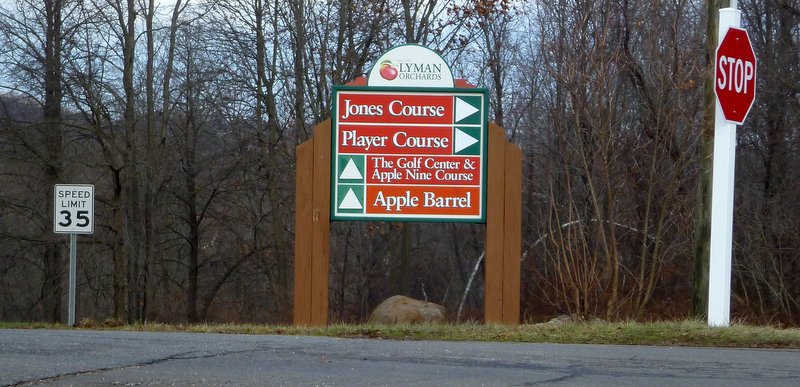
P1110660And then we spent a very enjoyable day at Lyman Orchards, which, like Tunxis, has forty-five holes. One of Lyman’s eighteens was designed by Robert Trent Jones, and the other was designed by Gary Player. The fifth nine—called the Apple Nine—is new, and is (I would guess) for kids and beginners. There’s also a golf school and a driving range.

Lyman Orchards is also an orchard, and there's a big store in which you can buy apples and apple-themed stuff.

Lyman Orchards is an orchard. There are apple trees in the middle of the course, and there’s a big store, called the Apple Barrel, in which you can buy apple-based and apple-themed products. Maybe your wife would like to tag along some Sunday, and spend a few hours shopping for apple butter while you and your friends are playing golf.

We first played Lyman several years ago, and at that time they kept both eighteens open all winter. Now they shut down the Jones course—which is too bad, because the Player course is definitely second best. It’s also a pain to walk, because you always seem to be climbing to the top of a huge hill in order to hit your ball to the bottom of it, and then walking miles to the next tee. Still, golf.

The conditions weren't what you would call perfect, but the course was open. In fact, it was pretty busy.

The conditions were not what you would call perfect, but the course was open. In fact, it was almost somewhat busy.

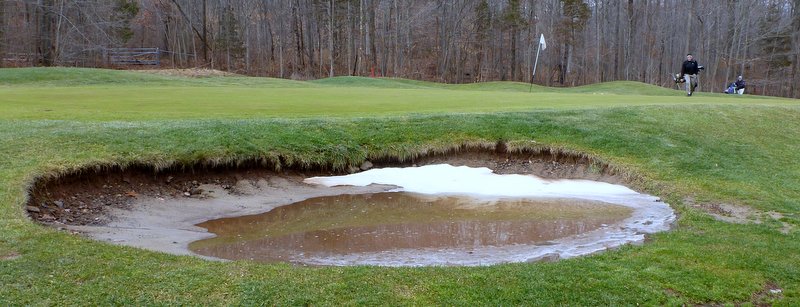
On most of the holes, the flags wouldn’t go back in the cups straight, and on some of the holes they wouldn’t go back at all. The reason was that the little holes at the bottoms of the cups were all either partly or entirely full of sand. I tried to clean one out with a tee and a green-repair tool, but that was a fool’s errand. The greens themselves were squishy on top, and some of them had bare patches, but we kept being surprised at how un-slow they were.

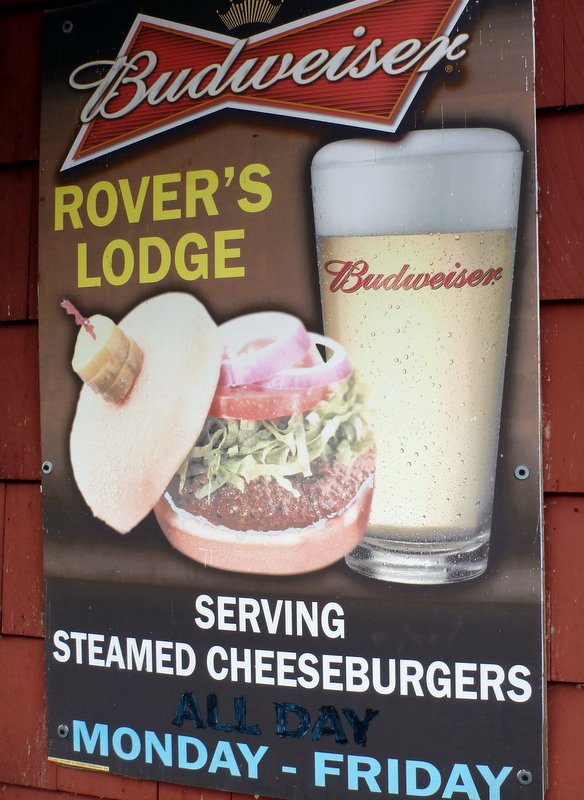
Afterward, we decided to eat lunch at a place we hadn’t tried before, the Rover’s Lodge, on Beseck Lake. The house specialty (according to a big sign facing the road) is “steamed cheeseburgers”:

P1110675A new form of cheeseburger? How could we not? I learned later that the steamed cheeseburger is “a food so truly regional that it is found in only about a dozen restaurants within a 25-mile radius of Middletown, in central Connecticut,” and that it “was invented in the 1920s, when steamed food was thought to be healthier than fried.” (You can read more about steamed cheeseburgers here.)

Steamed cheeseburger.

This is a steamed cheeseburger, from a restaurant called Ted’s.

It turned out that the Rover’s Lodge serves food of any kind only “in season,” and that the season isn’t winter. There were about a dozen guys in the bar when we went in, and they were interested, up to a point, in the fact that we had just played golf. Later, I found two reviews of the Rover’s Lodge on TripAdvisor—one that said it was “very good,” and one that said it was “a dump.” It’s possible that we’ll never know who is right, because we continued up the road to New Guida’s Restaurant, where we’ve eaten before. Let me say this for Guida’s: their cheeseburgers, however they make them, are very good. Ditto their fries and milkshakes.

P1110677

Then we drove home to watch the playoff games.

Guida's. Cash only, please.

Guida’s. Cash only, please.

Winter Fallback: Golf on the Simulators at Maggie McFly’s

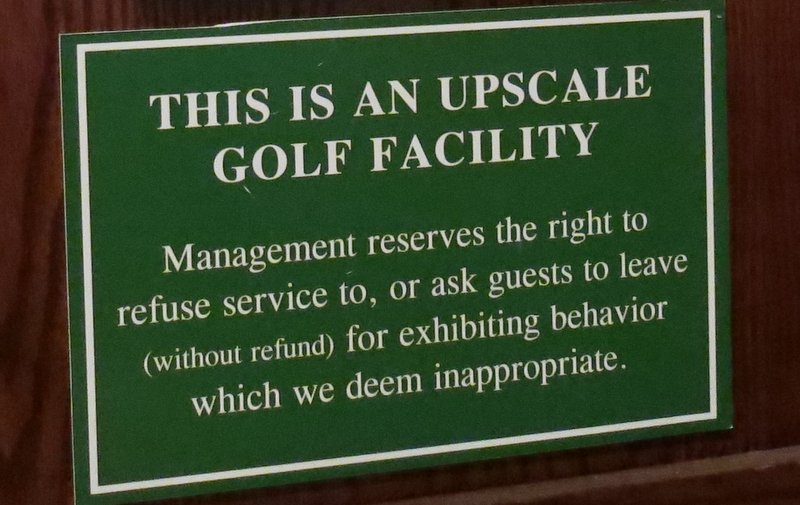
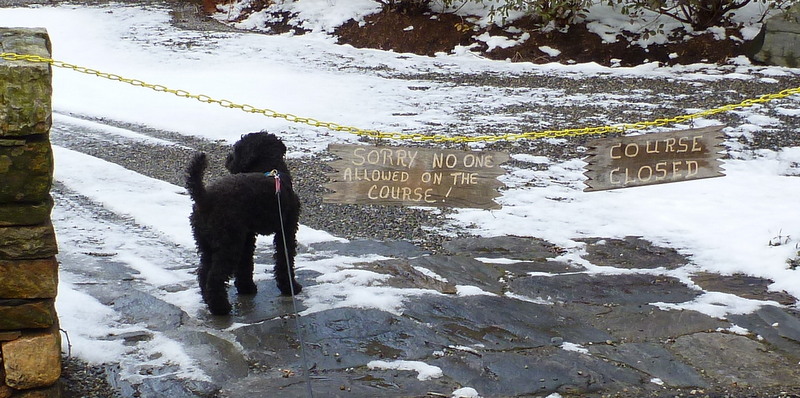
Translation: No peeing in the potted plants.

Translation: No peeing in the potted plants.

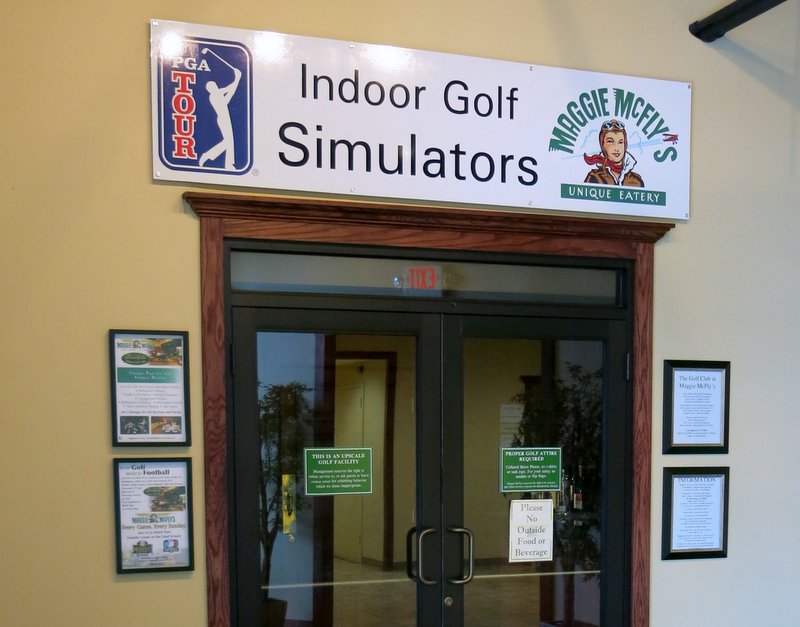
We were all set to play golf last Friday, but when I got up at 5:00 to iron my golf towel I noticed that my car was covered with snow. WTF! It turned out that the entire state was paralyzed, golf-wise, so Hacker (real name), Rick, and I ended up playing eighteen holes at Harbour Town Golf Links, in Hilton Head, South Carolina, on one of the three golf simulators at the Maggie McFly’s in Brookfield, Connecticut.

IMG_0221

I’ve written about these simulators before. They were made by a company called aboutGolf, which also makes the simulator you’ve seen on the Golf Channel. The simulators at Maggie’s are beginning to show their age—pretend-golf technology doesn’t stand still!—but they’re awesome nonetheless, and they do a remarkably good job of making you think you’re really playing golf.

The little marble things on the green move, to show you slope and speed.

The little marble things on the green move, to show you slope and speed.

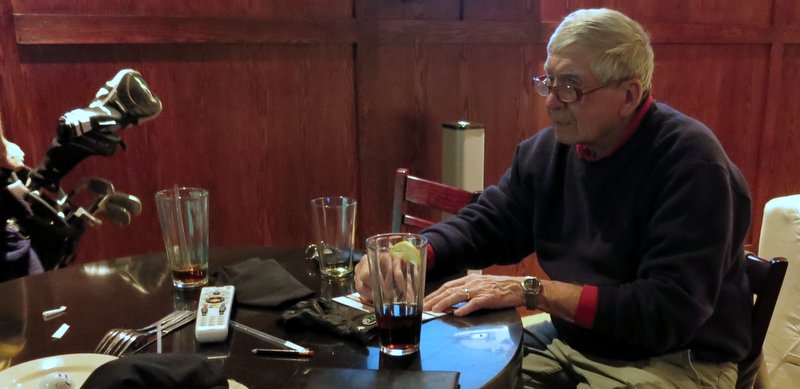
And, of course, between shots, you can eat cheeseburgers, drink beer, and watch TV. Here’s Hacker working on his taxes while Rick struggles to extricate himself from a simulated swamp:

IMG_0215

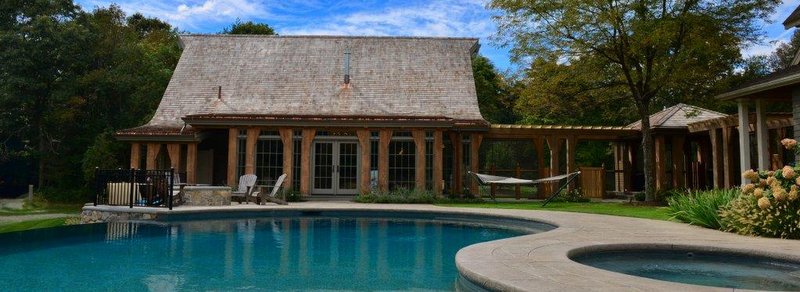
We sometimes talk about buying a simulator of our own—or, rather, we sometimes talk about tricking our golf club into buying a simulator and installing it in the basement of the club hall, for our personal use. If we were rich, we would instead do what a guy in Massachusetts did not long ago. He built a pool house next to the pool next to his house and put a golf simulator in it. Here’s the pool house:

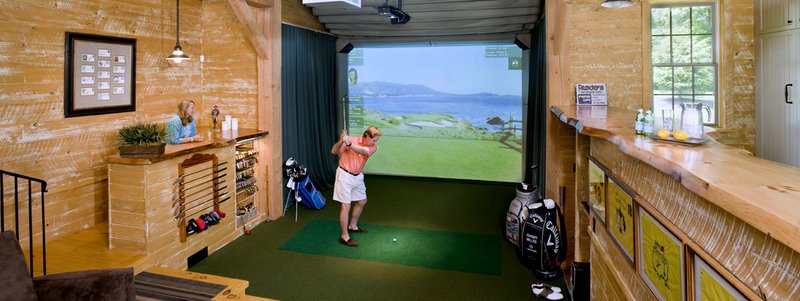
westfield02And here’s what’s inside, including the guy:

low rez_130531_3As you can see, he’s got a bunch of other golf stuff, too, and he either doesn’t carry his own bag or is extraordinarily strong. The architecture firm that designed everything is Meyer & Meyer, in Boston. A publicist for the firm told me, “The plan revolves around the HD Golf simulator, with spectator seating on three sides. The homeowners entertain often and it was critical that the traffic flow and seating accommodate large parties. A see-through gas fireplace allows continuous views for those seated at the dining room table. Large windows face the pool deck and fire pit. Amenities include an artfully designed kitchen, first-floor guest room, en-suite bathroom, upper-loft guest room, and laundry facilities.” O.K.!

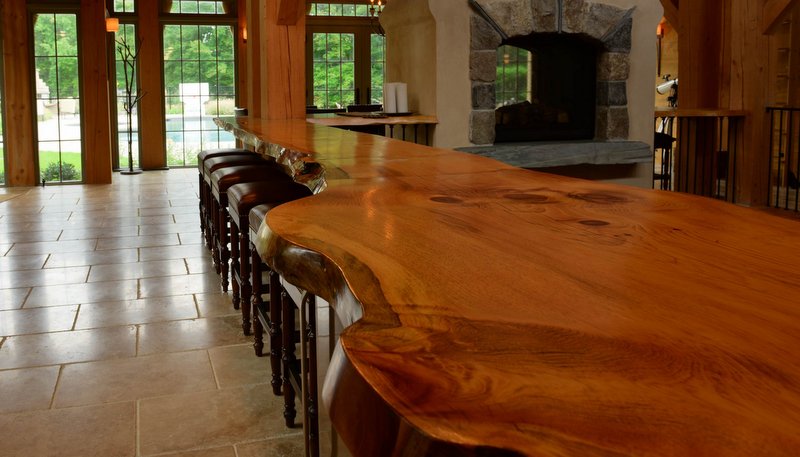
low rez_130531_2The owners have three teen-age sons, all talented golfers. Here’s the counter in the spectator area—which appears to have been fashioned from a single something. Put a coaster under your beer bottle, please:

DSC_2848The next time Maggie McFly’s does an upgrade, I suggest something along these lines. Or, at least, how about some new mats, balls, and tee holders? Still, even though there’s no swimming pool, playing at Maggie’s beats staying home on days when the weather is completely out of hand.

IMG_02191

Reader’s Trip Report: Ballybunion on New Year’s Eve Eve

Seventh hole, Old Course, Ballybunion Golf Club, Ireland.

Seventh hole, Old Course, Ballybunion, Ireland.

American golfers often speak of the Old Course at Ballybunion as though it were the only golf course in Ireland, so when I first visited, in 2006, I was predisposed to be underwhelmed. After actually playing it, though, I realized that it belongs right where it’s always listed, with Royal County Down and Royal Portrush and, therefore, with the greatest golf courses not only in Ireland but also in the world. At least half the holes would stand as the best hole on any number of very good courses. I could have played Ballybunion until immigration officials (or my wife) came to drag me away.

Dan Tani, seventeenth tee, Ballybunion, December 30, 2013.

Dan Tani, seventeenth tee, Ballybunion, December 30, 2013. That’s Jeremy and Anthony on the bench. (Dara took the photo.) Rainbows are officially disallowed in golf-course photos published on this website, but every once in a while one slips past the censors.

Dan Tani, an American reader (photo above), joined Ballybunion as an overseas member in 1998, when the cost was next to nothing. Two years later, he married a woman from Cork, and so now is obliged to visit twice a year. (He proposed at the stroke of the millennium, after playing Ballybunion in the afternoon and rehearsing his lines on the drive home.) Ever since, he’s made a point of playing at least one round very late in the year. This past December, he played on New Year’s Eve Eve—December 30, 2013—with three Irish guys whose fourth had exceeded the legal limit on showing up late.

Seventeenth tee, Ballybunion, December 30, 2013.

Seventeenth tee, Ballybunion, December 30, 2013.

Highlights from Tani’s trip report:

Golf in Ireland in December can be wet and cold, but it can also be surprisingly mild. I’ve played in short sleeves and in full winter rain gear. This year, it was cool—about forty degrees, but dry, clear, and sunny—and the wind was only about ten miles an hour. I joined Anthony, a local publican, hotelier, and landscaping-company owner; Dara, a former assistant pro at Ballybunion, now an accountant in Dublin; and Jeremy, a greenkeeper currently working on a new course in Finland. They were old friends from years ago, getting together over the holidays. Dara is from Newcastle, Northern Ireland, and he grew up as a member of Royal County Down. He had a beaten-up golf bag with the R.C.D. logo on it.

Dara, seventh tee, Ballybunion, December 30, 2013.

Dara and his R.C.D. golf bag, seventh tee, Ballybunion, December 30, 2013.

One thing I have noticed when I play Ballybunion is that I am always the oddly dressed golfer on the course. If I  wear beaten-up clothing with various golf clubs’ logos, I end up playing with three guys in full Ballybunion gear: jackets, hats, etc. This time, I wore my Ballybunion sweater, and, of course, the other guys were dressed like they’d just rolled out of bed: tattered pullover sweatshirts, Converse sneakers, jeans. I envied them and wished I could be cool enough to shoot even par in sneakers and pub wear, too. 

Eighteenth tee, Old Course, Ballybunion, Ireland, December 30, 2013.

Eighteenth tee, Old Course, Ballybunion, Ireland, December 30, 2013. That’s the seventeenth green in the foreground. The eighteenth fairway is at the far right, receding into the distance, toward the clubhouse.

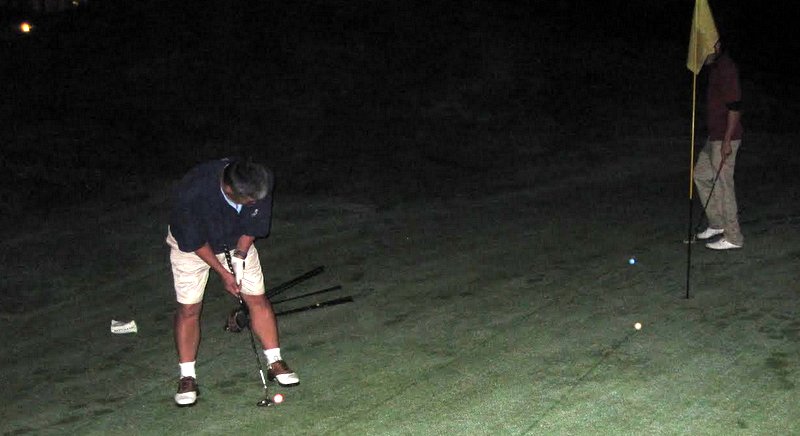
After the round, we went to the clubhouse for a lunch of “toasted specials,” which are the real national dish of Ireland. We finished at three. I had about ninety minutes of sunlight left, so I went out on the Cashen Course [which was designed by Robert Trent Jones, Sr., in 1984]. I played the first seven holes, teed off on the eighth (a six-hundred-yard par 5), then picked up my ball and went to the fifteenth tee and played in from there: eleven bonus holes. I saw only an occasional golfer, on a distant hole. My only regret is that I didn’t have any light-up balls, as I did in 2010. That year, after thirty-six holes and a full dinner in the clubhouse, we went out again, at eleven p.m.:

IMG_0260
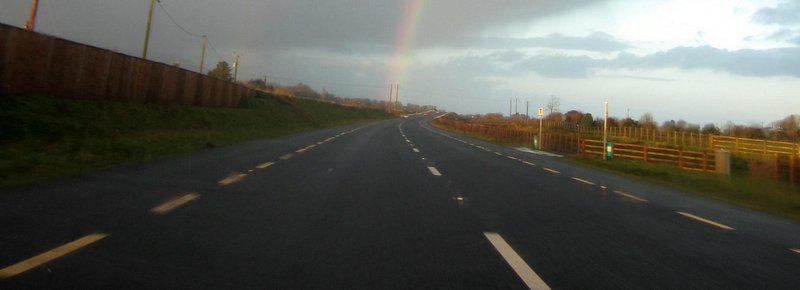
Tani indirectly makes a point that I myself have made before: rather than going to Myrtle Beach for winter golf, why not go to Scotland or Ireland? The weather is often worse in Myrtle Beach. Anyway, here’s one more rainbow shot, as long as we’ve broken the rule. Tani took this one from his car on the way to the course.

2013-12-30_04.51.38_1670

We Have a Winner; Plus, Good Shoes for Winter Golf

P1110370

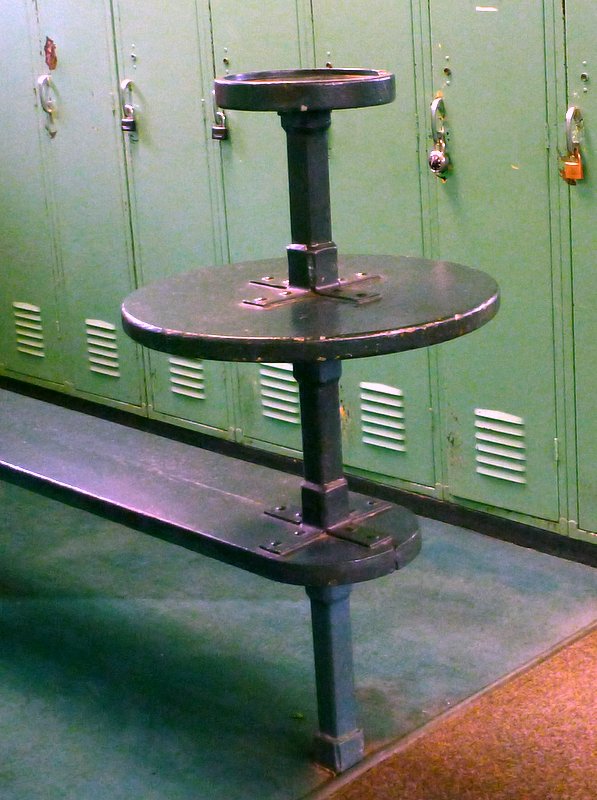
On New Year’s Eve, I challenged readers to identify a golf course and an intriguing locker-room accessory, based on a photo similar to the one above. There were several pretty good guesses regarding the locker-room accessory, but only one (by email) that nailed the golf course, too. That golf course is D. Fairchild Wheeler, known to regulars as the Wheel, a muny owned by the city of Bridgeport, Connecticut (although it’s actually next door, in the town of Fairfield).
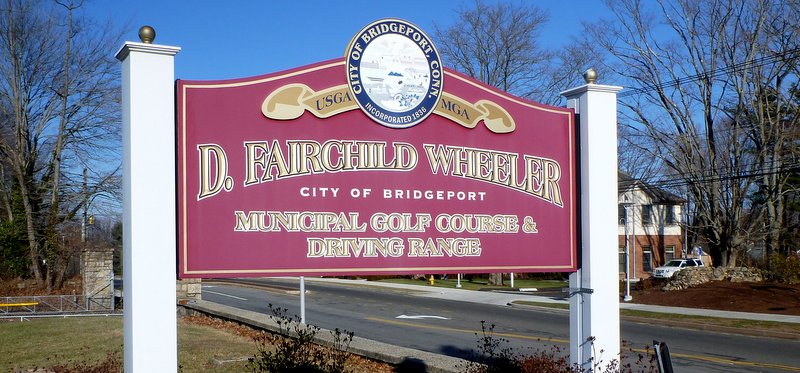
P1110513The winner was Dave Malloy, a reader in Trumbull (another neighboring town). He wrote: “That’s the locker room at the Wheel. Red Course is open all year. Black Course is a diamond in the rough. Oh, function. Drinks, baby! Ashtrays, too, at one point, I was told. Always loved that locker room.”

P1110371-001There are other uses, too, as the photo above shows. And according to Stephen P. Roach, the head pro, regulars also treat the things as stand-up card tables—a great idea. I asked Malloy to tell me about himself and his golf. He wrote:

I am an 18-handicap hack who can lose balls impressively deep in the woods, both hooking and slicing. Fifty-two years old. Most of my golf is nine holes late Saturday or Sunday afternoon at Tashua Knolls, in Trumbull. Three kids and a full sports schedule kill golf until late June, then sports start up again in September. Grew up in Stamford playing Hubbard Heights and Sterling Farms. Occasionally enjoy away rounds at Smith-Richardson, Longshore, Oxford Greens. Play Highlands and Pines in Dennis, Massachusetts, on Cape Cod. Took one lesson, and at the end of it the pro gave me a free can of tennis balls. 

As promised, a disappointing prize is on its way to him, Winter Storm Hercules be damned. Meanwhile, my friends and I have played three rounds at the Wheel in the past week, including our final round of 2013 (on New Year’s Eve) and our first round of 2014 (on New Year’s Day).

The Sunday Morning Group visits the Black Course at the Wheel, January 1, 2014.

The Sunday Morning Group plays the Black Course at the Wheel. First tee, January 1, 2014.

When we teed off on New Year’s Day, at 9:30 or so, our cars were still the only ones in the parking lot. Where was everybody else? Home fretting over their New Year’s resolutions, maybe.
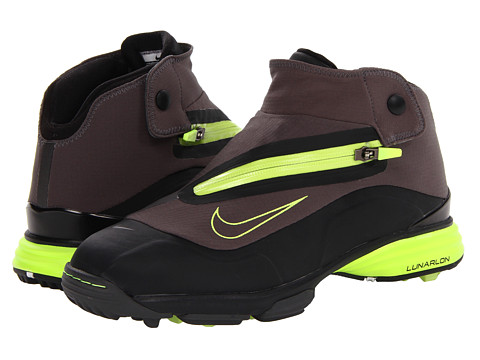
IMG_0027Playing golf in bad weather is easier if you have the right equipment. Remarkably, my friend Hacker (real name) and I both received winter golf shoes for Christmas. How did our wives know? It’s like a short story by O. Henry. My new shoes are Nike Lunar Bandon IIs:
nike bandon

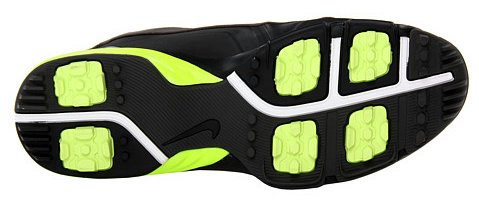
They look a little like ski boots, but my winter golf clothes increasingly look like ski clothes, so I shouldn’t complain. They’re not as slipper-like or as comfortable as my beloved True Linkswear shoes, but they seal up tight, and, so far, I have nothing bad to say about them. I also like to wear them when I walk the dog in the snow.
nike bottom

Santa brought Hacker’s new shoes all the way from England. They’re made by a company called Stuburt, and they also look like boots:
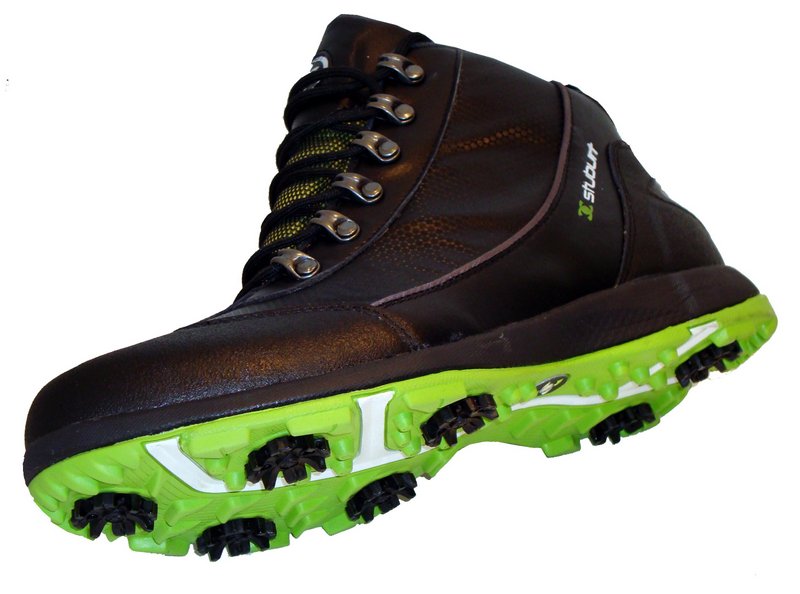
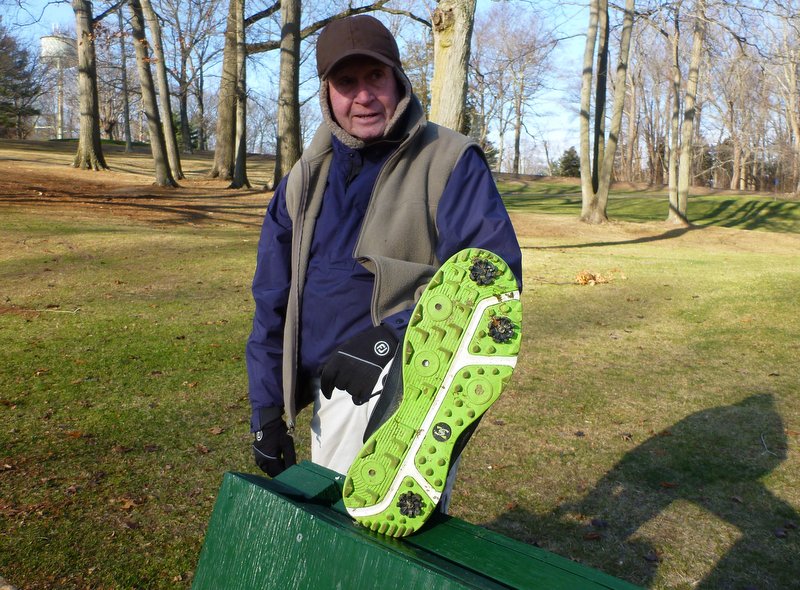
stubur bootHacker loves them, but when he got home on Saturday, the first day he’d worn them, he discovered that seven of the cleats had fallen out while we were playing.

P1110488

Cliff Dews.

Cliff Dews.

He emailed the company to complain, and, a couple of days later, heard back from Cliff Dews, a representative of the distributor. “From your description,” Dews wrote, “I can only assume that you did not notice the label on the sole unit which explains that the studs are only hand tight during the manufacturing process and that they should be fully tightened before use.” I love England, but the only other country I can think of where they do things this way is Canada. If you’re willing to go to the trouble of printing up labels and sticking them to the soles of shoes, why not spend another ten seconds and screw the things all the way in?
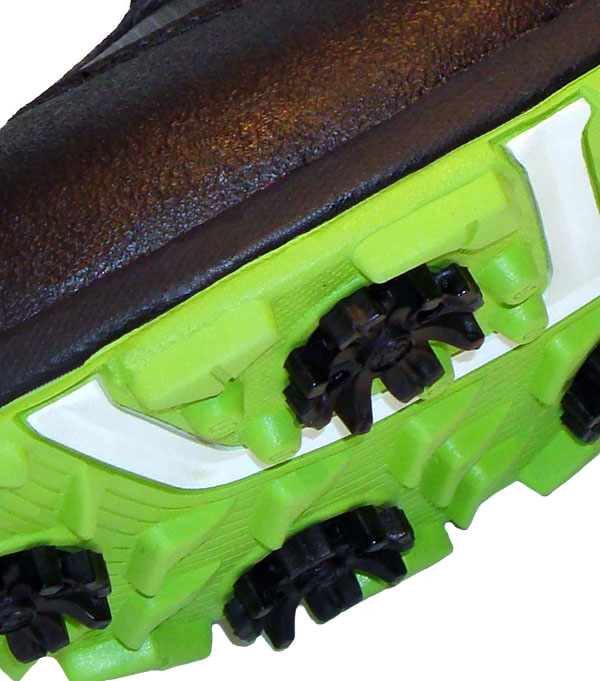
stuburt boot spikesBesides, as Hacker pointed out, there had been no such labels on the bottoms of his shoes or, indeed, anywhere in the box, which had contained just “the shoes and bubble pack.” At any rate, Dews did the decent thing, “despite our instruction label not being actioned,” and promised to send Hacker a new set of studs. And that’s the end of it—or so I hope.

Playing Golf in the Snow

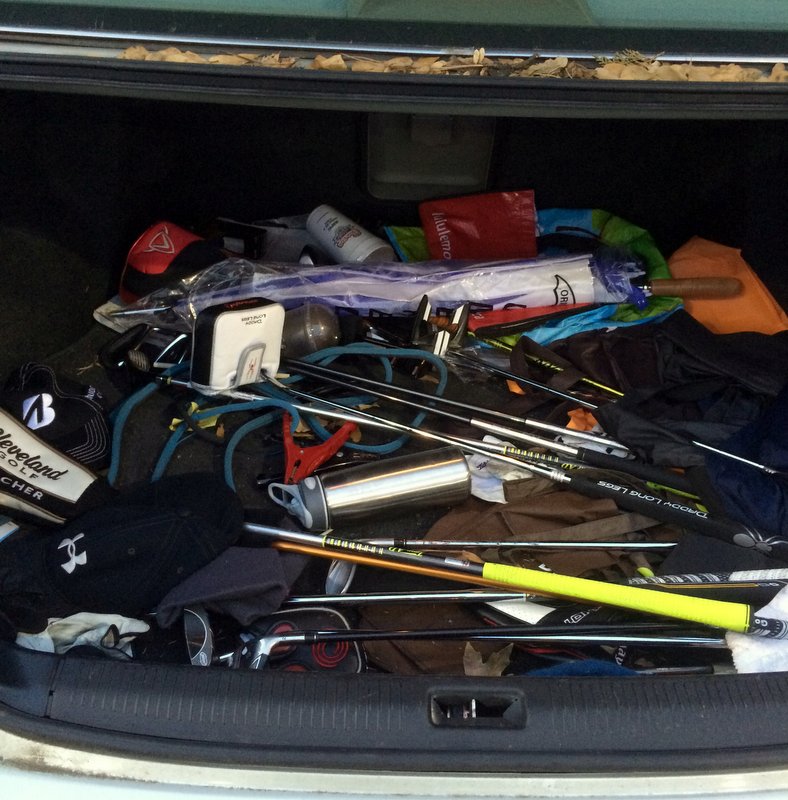
Weather Forecast screenshotThe weather was grim this past weekend, and the Sunday Morning Group didn’t meet. I paid bills, watched golf and football on TV, and thought about my poor, poor clubs, which were entombed in the trunk of my car:

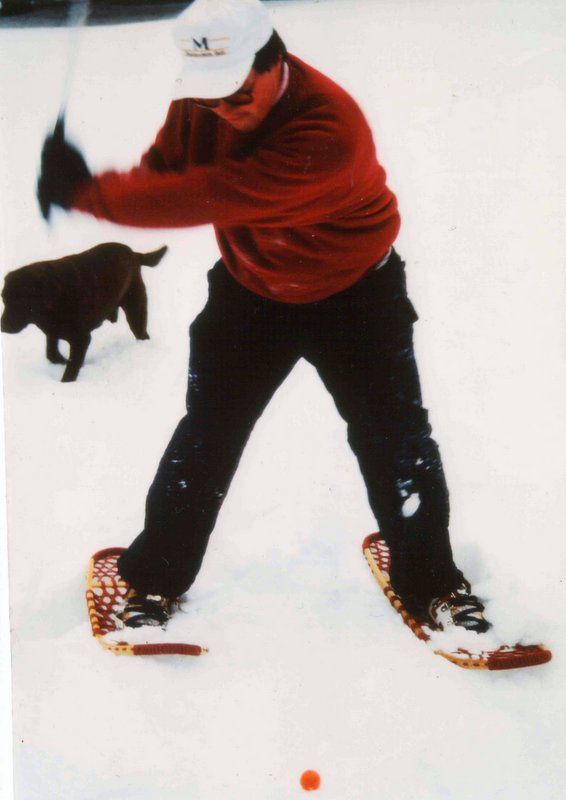
IMG_3483Six or seven of us used to play golf in the snow almost every weekend through the winter. We each carried just one club, usually a 7-iron, and if the snow was deep enough we wore snowshoes. In the photo below, which is from 1996, those dark things sticking up near our feet are the tops of the posts of a split-rail fence that used to stand behind our first tee:

George and I, in snowshoes, with 7-irons.

George and I, in snowshoes, with 7-irons.

Carrying just a single club is good for shot-making: You learn how to hit it long and short, high and low, hooking and slicing. We used orange or pink balls—unless the snow was so deep that color was irrelevant.
George, me, Michael J.

George, me, Michael J.

It was while playing snow golf that I learned the first principle of the golf swing: the key to power is not effort but ease. Facing a hundred-yard shot and having only a 7-iron to hit it with, I swung easy and launched my ball on a gorgeous left-bending arc into the woods beyond the green.

Snow golf 1996

We walked in single file, to keep footprints to a minimum, and aimed for unspoiled patches, so that the holes our balls made when they landed would be easier to find. I learned that the surest way to track a ball is sometimes with your ears. Even in very deep snow, though, we seldom lost more than one or two.

snow golf 2 1996

According to the U.S. Golf Association, snow golf was invented by Rudyard Kipling, who lived in Dummerston, Vermont, for a few years in the late eighteen-hundreds. Kipling used to paint balls red and hit them into tin cans buried in snow in front of his house, which was called Naulhaka.

Kipling's house in Vermont. He used to hit red golf balls down that snow-covered hill.

Kipling’s house in Vermont. He used to hit red golf balls down that snow-covered hill.

Kipling learned about golf from Arthur Conan Doyle, who visited Naulhaka in November, 1894. “I had brought up my golf-clubs and gave him lessons in a field while the New England rustics watched us from afar, wondering what on earth we were at, for golf was unknown in America at that time.” Conan Doyle wrote later. (Golf wasn’t quite unknown; my own club, two states to the south, was already five years old.)

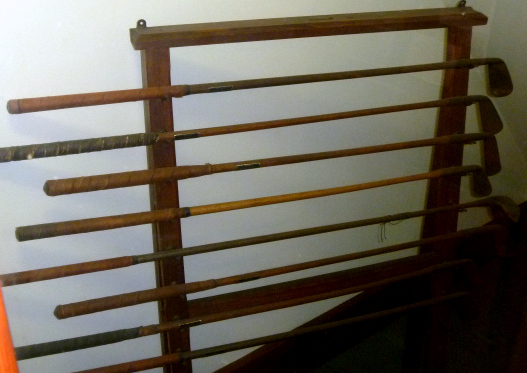
Kipling's clubs and the rack he stored them in, on display at Naulhaka.

Kipling’s clubs and the rack he stored them in, on display at Naulhaka.

I myself haven’t played snow golf since my friends and I discovered that the golf courses in New York City almost never close. But if the weather stays like this through the end of the year I’ll have to take my snowshoes out of storage.

Rudyard Kipling at Naulhaka, where he created both snow golf and The Jungle Book.

Rudyard Kipling at Naulhaka, where he both invented snow golf and wrote The Jungle Book.

World’s Second-Best Golf Club, Part One: The Big Dogs and their Dogfights

Jim, a Big Dog. Mike Riley writes: "Jim is the only person I have ever seen fall down after a practice swing. In his defense, it was his first practice swing of the day and it occurred after a night at a Mississippi casino." The photo was taken (by Riley) last Christmas Eve. Jim's pants were dragging on the wet ground, so he fixed them."

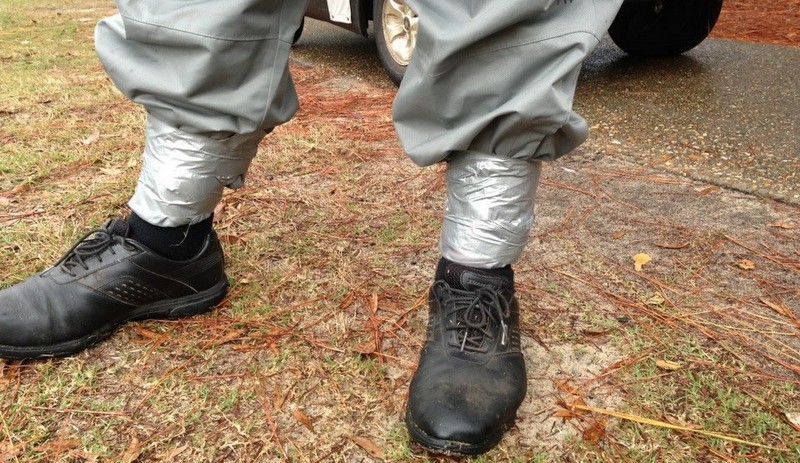
Mike Riley writes: “Jim is the only person I have ever seen fall down after a practice swing. In his defense, it was his first practice swing of the day and it occurred after a night at a Mississippi casino.” This photo, of Jim’s lower legs and feet, was taken (by Riley) last Christmas Eve. Jim’s pants had been dragging on the wet ground, so he fixed them. “Southerners use duck tape to fix anything,” Riley told me.

The world’s best golf club, I think we can all agree, is mine. Recently—thanks to Mike Riley, a reader—I’ve learned quite a bit about the second best, which is in northwestern Florida and has a course that was designed in the nineteen-twenties by Donald Ross. Riley belongs to a fifty-year-old club-within-the-club known as the Big Dogs, after their standard game, the Big Dogfight. “We play Wednesdays, Fridays, Saturdays, and Sundays, plus holidays,” Riley said. “The number of players varies between twelve and thirty. Fridays and Sundays have larger crowds since college football isn’t competing for attention.”

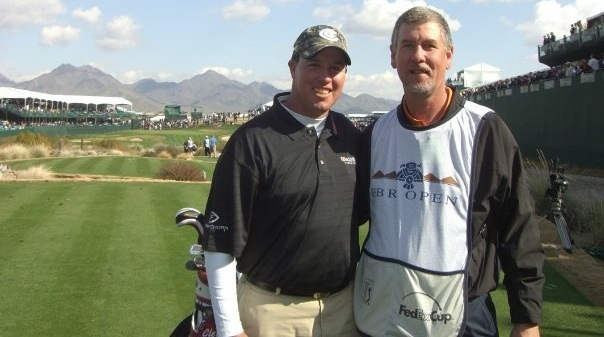
Mike Riley (right) and the tour pro Boo Weekley, an old friend of his. Riley caddied for Weekley during the pro-am of the FBR Open, in Phoenix, a few years ago.

Riley (right) and the tour pro Boo Weekley, an old friend of his. Riley caddied for Weekley during the pro-am of the FBR Open, in Phoenix, a few years ago.

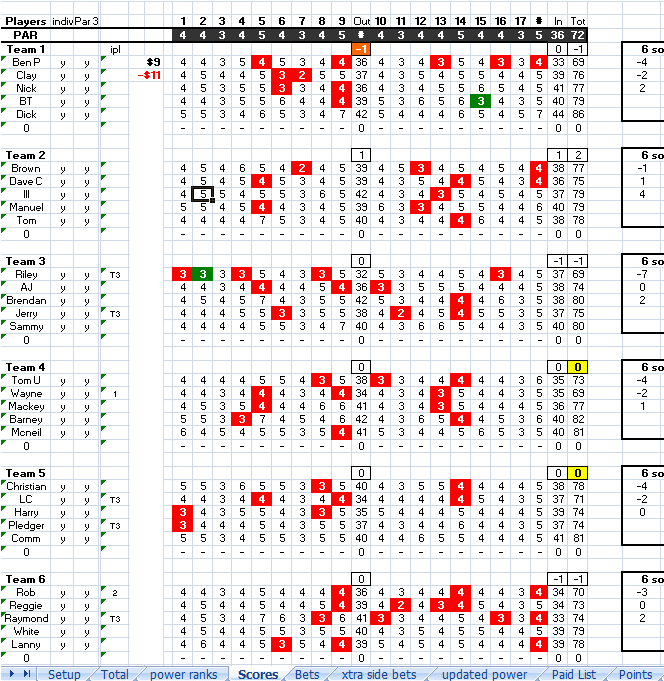
The format of the Big Dogs’ Dogfights is almost too complicated to explain, but here goes: “The team game is a one-dollar nassau in which every team plays every other team (best one, two, and three balls), with individual skins and rabbits,” Riley told me. “There is also an individual points game based on a formula we created that is somewhat akin to what might happen if you played U.S.G.A. handicaps with Stableford scoring. There are also two-dollar best-ball nassaus in which each two-man-team combination plays every other two-man-team combination. For example, Team No. 1’s captain and ‘2-man’ (the best and second best player on Team No. 1) will play best-ball nassaus against every other team’s captain and 2-man.” Here’s what part of one of their score sheets looks like (Riley is the captain of Team No. 3):

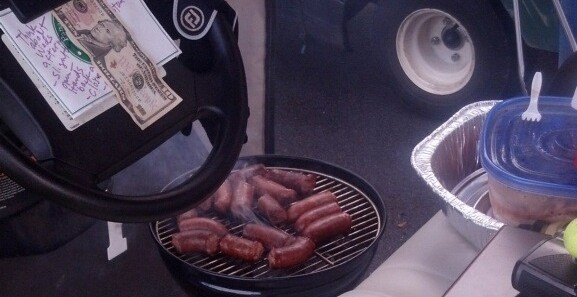
Score spreadsheetThe Big Dogs play in four-, five-, and six-man teams, depending on how many show up. A member known as the Commandant makes the assignments, with help from the club’s pro. “Everyone has their own cart, and everyone rides solo, so they get around pretty fast,” Riley said. “Most carts have portable heaters and are equipped with enclosures for the rare cold days in Florida. The fastest cart belongs to Clay; it has an estimated top speed of 35 m.p.h. Some have XM radio. Almost all have ice chests. One (Jim’s) has a grill.”

Jim's cart. Note grill, cooler, heater, and enclosure. The concrete disk under the grill is a safety measure.

Jim’s cart. Note grill, cooler, heater, and enclosure. The concrete septic-tank cover under the grill is a safety device.

Anybody need a brat?

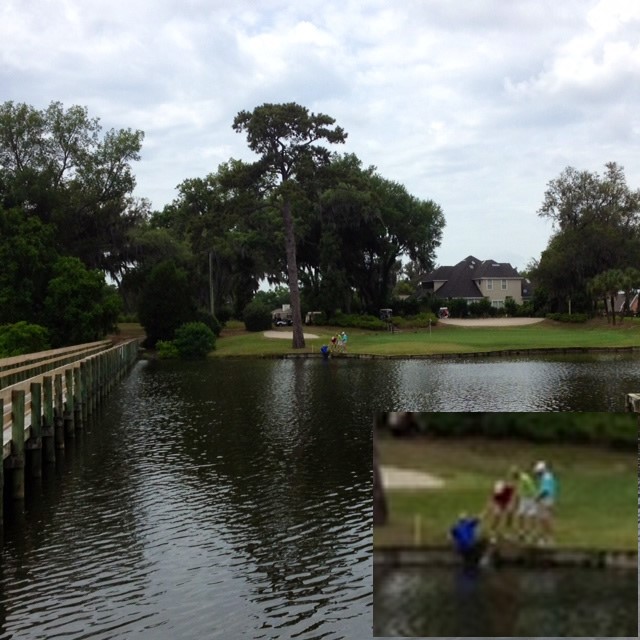
Brats in cart-001One day, Jim fell into the lake on the seventh hole while trying to hit a pitch shot from the bulkhead. “The board he was standing on broke,” Riley said. “He toweled off and finished his round. He smelled like brackish water for the next two hours. Here’s a picture of us pulling him out of the water.”

Jim in pondTo be continued.

45-Hole Golf Complex Stays Open for 5 Golfers

Golf weather, duh.

Golf weather, duh.

Our home greens are closed, so on Sunday four of us traveled a little over an hour to the east, to Tunxis Plantation Country Club, which has two eighteen-hole courses and one nine-hole course—all very nice, all completely open, carts available (although we didn’t use them), $35 walking. The parking lot was empty when we arrived, at 10:30. We teed off at 10:45 and were the only golfers on the entire property. The temperature was only 30 or 32, but there was no wind and the course was in terrific shape. I had brought some adjustable winter tees, which I picked up at the PGA Golf Merchandise Show in Orlando a few years ago:

P1110267They’re really meant to be used with mats on driving ranges, but they work pretty well on their own when you can’t get a regular tee into the ground. We didn’t need them, though, because the dirt was still semi-unfrozen.

Tim, Gary, Hacker (real name), Tunxis Plantation, December 8, 2013.

Tim, Gary, Hacker (real name), Tunxis Plantation, December 8, 2013.

On the eleventh hole, a single golfer caught up to us, and we let him play through (see below). On the previous hole, he had sunk a six-foot putt and made a fist pump, even though he was by himself and didn’t know I was watching. He hit a huge, perfect play-through drive, well past all of our drives, but then he shanked his second shot into the pine trees. That made us all feel better about his big drive.

P1110291Hacker and I were both testing some Clicgear pushcart mitts, which we had bought independently at exactly the same time:

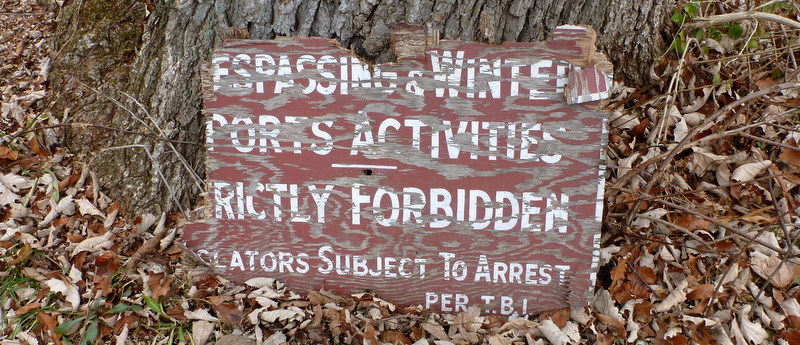
P1110294They have Velcro straps, and they attach (as a single unit) to the handles of your pushcart, so that you can slide your (gloved) hands into them. Getting the thumbs in the right place takes a little work. Each side has a pocket for a chemical hand-warmer, although the pockets are slightly too small for chemical hand-warmers, we found—an odd design flaw. We liked them, though. On the sixteenth hole, Tim noticed this sign leaning against a tree:

Translation: we shoot cross-country skiers.

Translation: we shoot cross-country skiers.

We finished in three hours and had lunch at one of our favorite winter clubhouses, Flaggstead Smokehouse. They were out of brisket, but they still had my favorite: pulled rib meat. They were also offering a discount (see below). Only Hacker tried the voice (unsuccessfully), but they gave us the discount anyway, and when we left I bought a pound of pulled ribs and a big thing of beans, to take home.

P1110301

Bonus Day, Then Tragedy: Our Greens Are Closed for the Winter

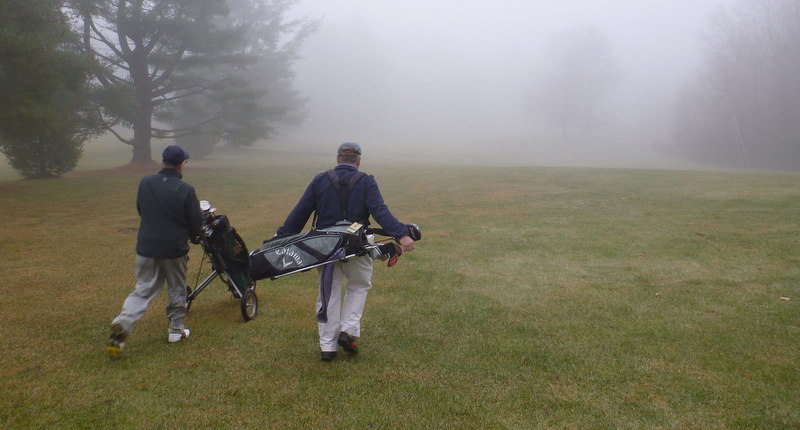
P1110218On Thursday afternoon, Bob G., Peter A., Paul, and I played a bonus round in fog that gradually got worse. We saw Jack, Mike J., and Mrs. Mike on the seventh hole (see photo below), but other than that we had the course to ourselves.
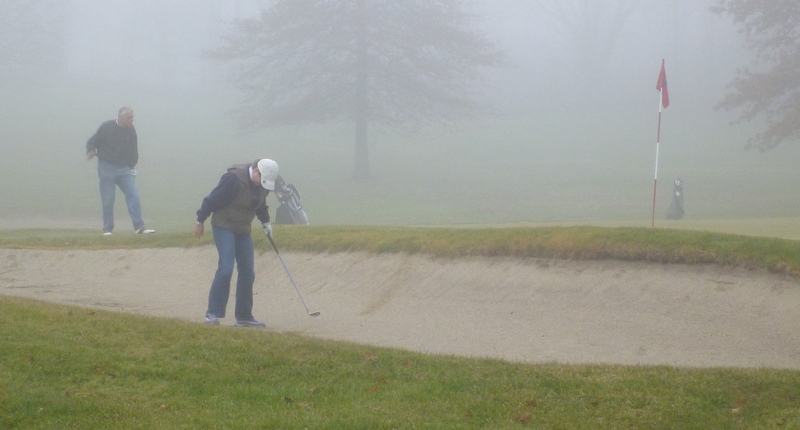

Mrs. Mike practically holed this bunker shot.

Mrs. Mike almost holed this bunker shot. The air in Beijing looked almost exactly like this when I was there.

While we played, some guys with heavy construction equipment were working in front of the clubhouse. The widow of a member had wanted to do something nice for the club, which her husband loved, so she hired an architect to redesign the entire main parking area, which was a mess, and then paid for the construction, tree work, landscaping, and so on. Needless to say, she will be receiving a complete set of Sunday Morning Group branded merchandise for her personal use.

The new parking area, under construction.

The new parking area, under construction.

Gary, our superintendent, told us he was going to pull the flags after our regular game on Sunday, but then we got “wintry mix” on Friday night and he had to close the greens first thing Saturday morning. Tim, Austin, and I played on Saturday anyway, using the temps. We played cross-country, making up the holes as we went along. We each carried just one club. Because Tim had played nine holes by himself, in the rain, on Friday, he gets solo credit for the last official round of 2013.

Tim & Austin, playing from the No. 6 temp to the No. 4 temp, Saturday, December 7.

Tim & Austin, playing from the No. 6 temp to the No. 4 temp, Saturday, December 7.

December 7, in addition to being the first day of the 2013 post-season season and the seventy-second anniversary of the Japanese attack on Pearl Harbor, was my dog’s fourth birthday. Happy birthday, Henry.

Henry

Dressing for Golf in Cold Weather

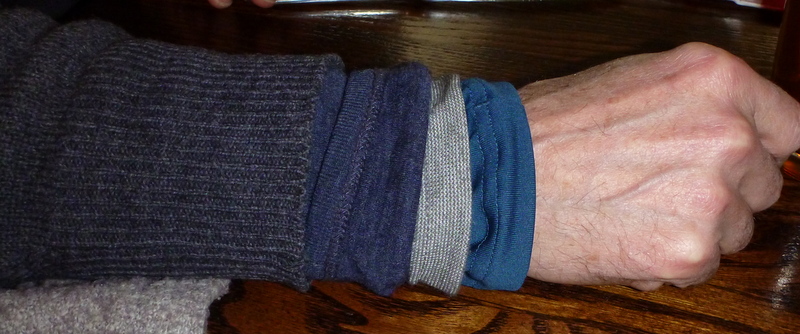
P1100899-001I’m working on a Golf Digest story about dressing for cold-weather golf. Tim, Hacker (real name), and I did some research on Sunday (see photo above). The temperature (21 degrees) equaled the wind speed (21 miles per hour), yielding a windchill factor of -459.67. Among the keys to staying warm was layering. Here are the five layers that Tim wore above his waist:

P1100905

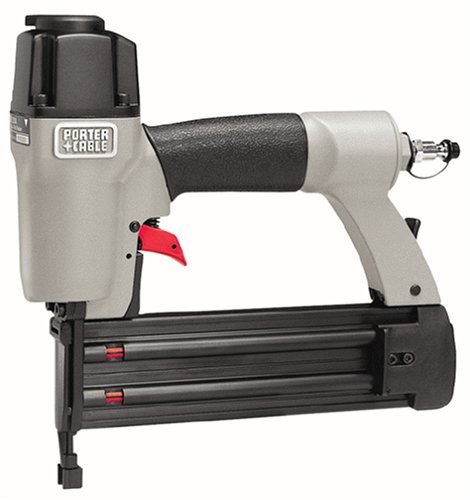
There were so many leaves blowing across the greens that trying to clear the line of a putt was usually pointless. Tim said he wished that Edwin Watts or Golfsmith or someone would sell a Tee Gun, like a nail gun, for driving tees into frozen ground:

Tee Gun (artist's conception).

Porter + Cable tee gun (artist’s conception).

Here’s Tim struggling to get a tee in the ground on the eighteenth hole (note the howling of the wind):

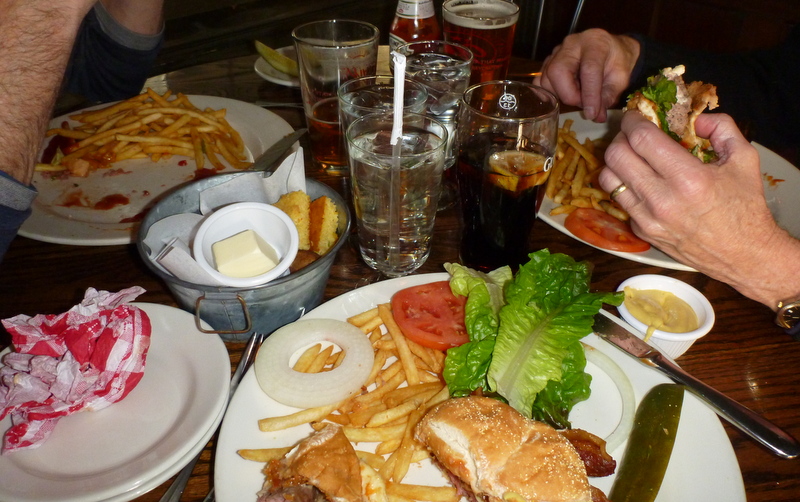
Afterwards, we warmed up over cheeseburgers at one of our several winter clubhouses, the G.W. Tavern:

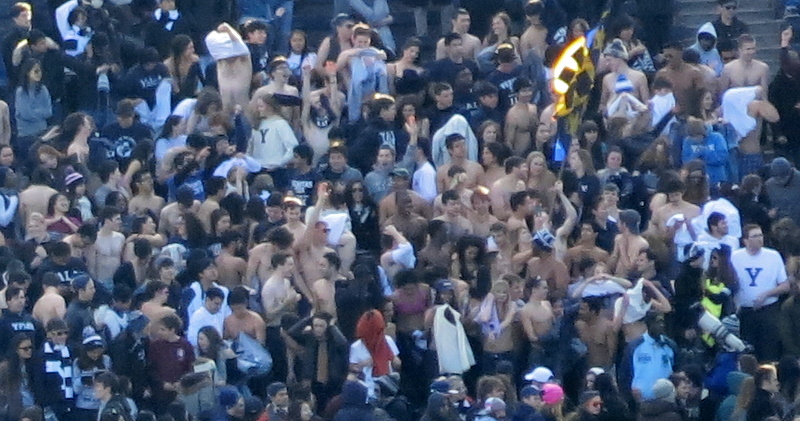
P1100910-001The day before, I’d done some preliminary cold-weather research in New Haven, at the Harvard-Yale football game. It has become traditional, apparently, for residents of Yale’s Saybrook College to take off their shirts for a little while toward the end of the game—a ritual known as the Saybrook Strip. As in most of the schemes that men cook up for getting women to take off their clothes, virtually all of the clothes that were taken off were taken off by men:

IMG_3357-001

My father was a Saybrook man. As far as I know, this ritual did not exist in his day. He and I did have a Game-related ritual of our own, however. We had a standing five-dollar bet, which the loser paid off in ways that did the winner no good. In 1983, when Harvard won, 16-7, he paid me with a check embedded in a block of Lucite:

IMG_3366

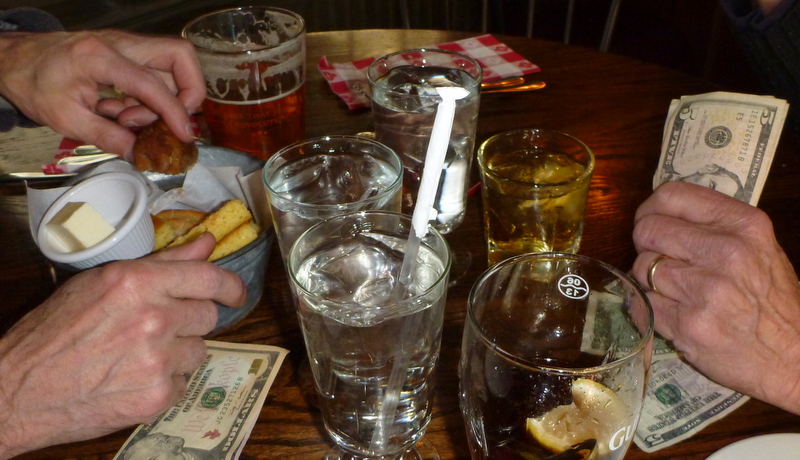
If the Sunday Morning Group used the same payment method, I wouldn’t have been the big loser this past weekend. None of the cash you see in the photo below is moving toward me:

P1100908

Nevertheless, it was a perfect day for golf, and you can never be sure how many of those we have left.

P1100891