New Golf Game: 10-Ball, 20-Ball, 30-Ball, 40-Ball

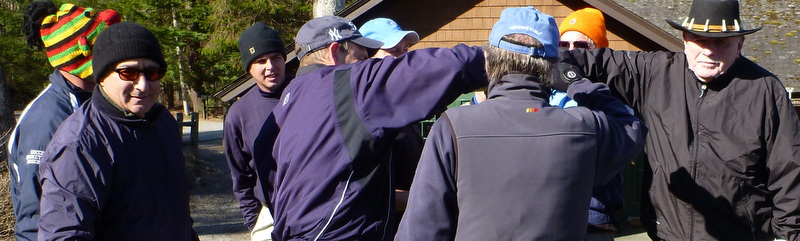
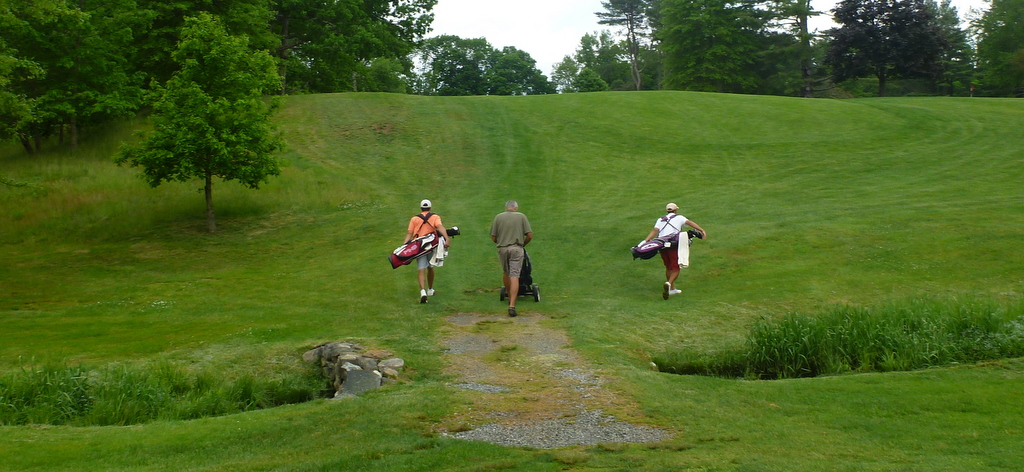
Kevin, Tony, Addison, 20-Ball World Championship, sixth hole, June 3, 2013.

Kevin, Tony, Addison, 20-Ball World Championship, sixth hole, June 3, 2013.

When Tony returned from Atlanta, where he and his wife hide every winter, he brought us a good new golf game, which he learned from his friends down there. Here’s how it works: Let’s say you have four guys, playing two against two. Each pair counts just twenty of the thirty-six hole scores they collectively make during the round, and the winning pair is the one with the lower twenty-score total. After finishing a hole, each pair has to decide, before teeing off on the next hole, whether to count one, both, or neither of the scores they just made. The effect is similar to that of Stableford scoring, since disasters can usually be ignored.

Let’s say that you make a net birdie the first hole, while your partner makes a net double-bogey. You presumably want to forget all about the double-bogey, so you announce (before hitting your tee shots on No. 2) that you’re going to count only the birdie.That makes you one under par after one hole, and leaves you with nineteen scores still to tally before the end of the round. Let’s also say that your opponents, on that first hole, both make net pars. They have to decide whether to count one or both—or to ignore them in order to leave plenty of room for birdies and eagles later on. The truly tough decisions come toward the end of the round, as opportunities dwindle. You don’t want to arrive on seventeenth tee knowing that, no matter what, you and your partner will have to count all four of your scores on the final two holes.

The game can be played with any number of players, in any combination. If you have four-man teams, each team counts forty scores; if you are playing as individuals, each player counts ten. If you have a threesome versus a foursome, the threesome counts thirty balls, then divides by three, while the foursome counts forty balls, then divides by four.

My friends and I reckon all hole scores only in relation to par, so that a five on a par 5 is the same as a three on a par 3. But you could make the game both more interesting and more complicated by counting absolute scores instead.

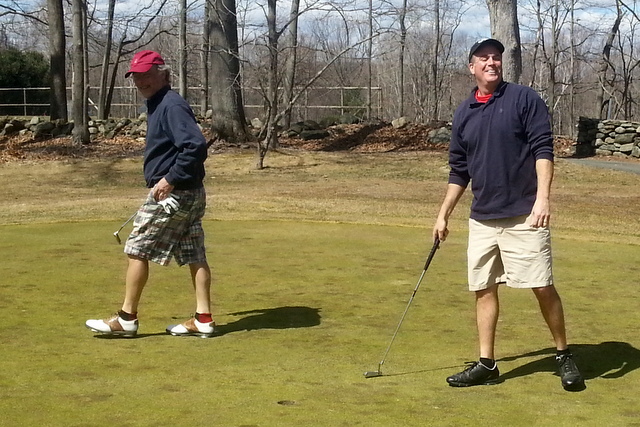
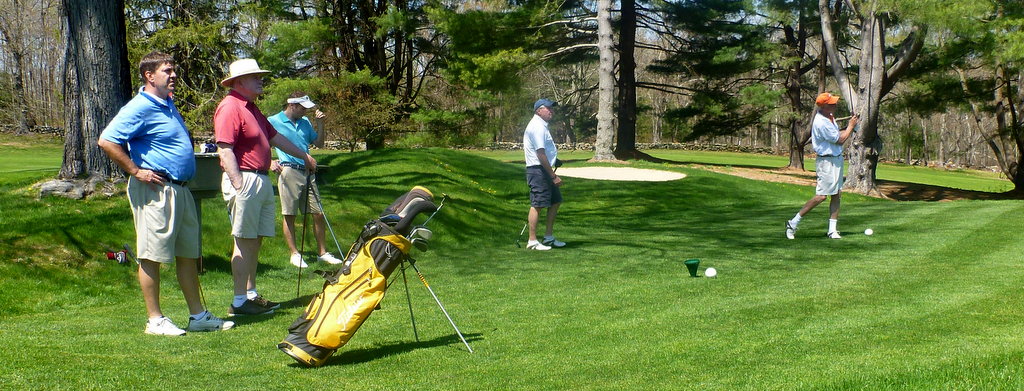
Kevin and Addison preparing to hit their 3-woods farther than Tony and I can hit our drivers.

Kevin and Addison preparing to hit their 3-woods much, much farther than Tony and I can hit our drivers.
Reader’s Report: Pace of Play

My friends and I played as a sixsome on Thursday afternoon. We played in three and a half hours and kept ahead of the high-school matches behind us. We played T-Bone, and my team came back on the final six holes to halve the match and win two presses.

My friends and I played as a sixsome on Thursday afternoon. We played eighteen holes in three and a half hours, and kept ahead of  a cluster of high-school matches behind us. The game was T-Bone, and on the final six holes–during which all six balls counted–my team came back from far behind to halve the match and win two presses. We won four dollars apiece. 

I’ll get back to anatomizing my golf bag in a couple of days—I still haven’t told you what’s in the pockets—but I want to share an email I received from Kent Manning, a reader in North Carolina. He describes himself as “an ugly eighteen-handicap, trending upward due to the onset of chipping yips (or ‘chomits,’ as a buddy calls them—chipping vomits).” His personal credo, he says, is “If I can see the fringe, it’s putt-able.” His email:

A few things have led me to this letter:

1) having gone to Scotland in the last year—where they REALLY encourage a  three-and-a-half-hour round, and you get the stink eye if you’re slowing things down;

2) having read your Two-Hour Eighteen™ missives;

3) having read about the Golf Digest Time for Nine campaign;

 4) the constant drumbeats about slow play;

Why is it everyone THINKS they play fast when they really don’t? I’ve gotten so seized up on playing fast that the least dawdling by my playing partners drives me batty. When you play in some of your fivesomes at your blistering paces—how have you gotten everyone to buy into the idea of such fast play?

It’s funny—our club is always struggling to get members. I went so far as suggesting to our Manager that the club institute a 3:45 time limit on rounds and then aggressively market that fact. In a world in which you are trying to differentiate yourself in the marketplace—if I found a course that I KNEW I would get my round done in less than four hours it would be a win/win for everyone.

Do we just take every swing too seriously? When we played Crail Balcomie, in Scotland, it was awesome to watch all the local folks (including senior men and women) pulling their trolleys. They would just hustle up to their ball, yank out a club, hit, watch for about three seconds, stuff their club back into the bag, and get gone. That would be great to see hereThanks for letting me vent.

Pace of play ought to be a burning issue for every golfer, because the slower golf gets the more golfers will quit, and the more golfers quit the more expensive and annoying the game will become. And if it’s the speedy players who give up and go away we’ll be left with nothing but slowpokes. I personally don’t think nine-hole rounds are the answer, since a two-and-a-half-hour nine is every bit as aggravating as a five-hour eighteen. Time’s a-wastin’!

Kent Manning and his regular, non-slowpoke foursome. Kent is the guy holding his club upside down--"kind of a microcosm of my game, actually."

Kent Manning and his regular, non-slowpoke foursome. Kent is the guy holding his club upside down–“kind of a microcosm of my game, actually.” This photo proves, incidentally, that middle-aged golf buddies are 100 percent interchangeable.

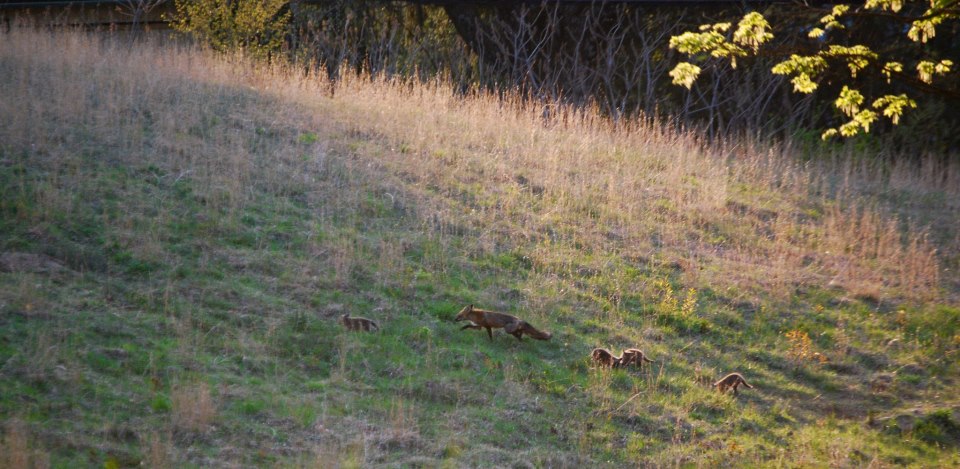
Bonus photo, from Reese’s yard:

foxes

New Golf Game: Tony! Toni! Toné! (a.k.a. T-Bone)

Tony and D.O., Royal Aberdeen Golf Club, Scotland, May, 2008.

Tony and D.O., Royal Aberdeen Golf Club, Scotland, May, 2008.

Tony, who is a member of my Sunday Morning Group, lives in Atlanta for almost half the year. His golf buddies there are smarter, richer, and better-looking than his S.M.G. friends, and they hit the ball farther and have better short games. I’ve met several of them, though, and they’re not as bad as that makes them sound. They haven’t invented as many golf games as we have, but they do occasionally come up with something interesting, including a best-ball game that Tony told us about recently (by email, since he’s still down there). We played it Saturday, and decided to name it after him.

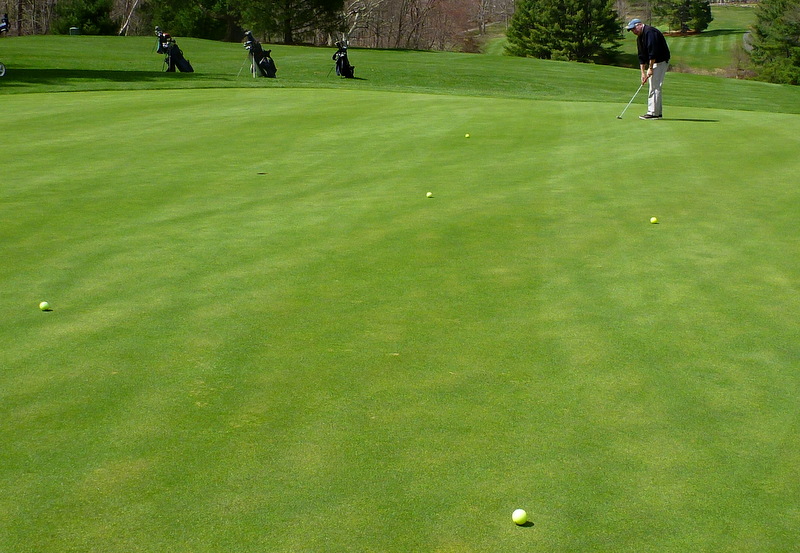
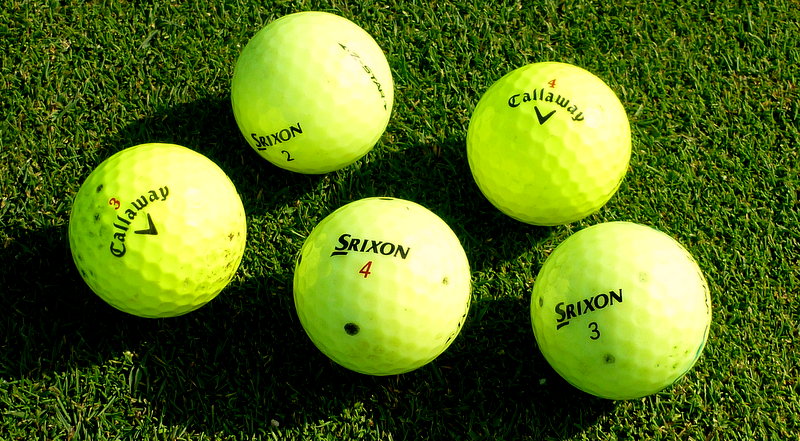
To play T-Bone (as we call both him and it), you need a group that’s evenly divisible into threesomes, foursomes, or fivesomes. Each group counts one best ball on the first six holes, two on the second, and three on the third. On Saturday, we had ten guys. We were going to pick two teams randomly, by pulling balls out of my hat, but once the balls were in the hat I noticed that there were five white ones and five yellow ones, so we just went by color. I was on the yellow team, and if you know anything about yellow balls you know that, technically, we had an overwhelming advantage. Somehow, though, we lost by six shots.

Five yellow balls plus Hacker (real name), eighth green.

Five yellow balls plus Hacker (real name), eighth green.

Even when you have five guys on your team, counting three balls puts serious pressure on slicers, hookers, shankers, yippers, dubbers, flubbers, and choppers—in other words, on pretty much everyone. In an earlier test round, on Thursday, we tried T-Bone with two threesomes, and the trailing group came very close to making up a ten-shot deficit on the final six holes. There was quite a lot of pressure, too, because by that point we were all playing together, as a sixsome, on account of being stuck behind a slow group.

P1050715

On Sunday, we played what might be thought of as modified T-Bone. We had eighteen guys, so we divided into six threesomes. The Committee realized that counting all three balls for the final third of the round would be too brutal and time-consuming, especially early in the season, so we decided to count two best balls on the first seventeen holes and all three on the eighteenth, which was also the Money Hole. That was brutal enough.

On Sundays, we pick teams by drawing numbered poker chips instead of balls—like this:

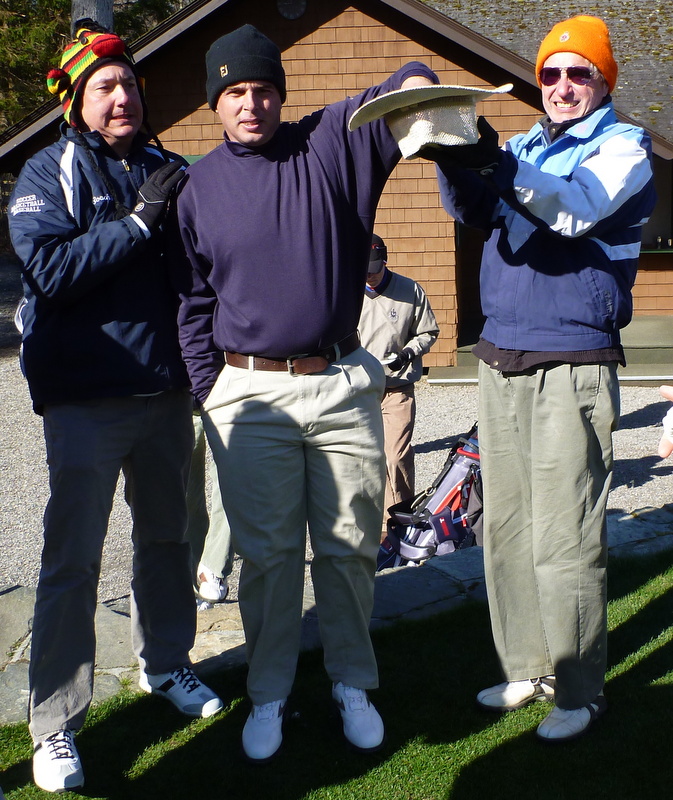
P1050736The guy in the middle is Corey, our pro. We’ve decided to call him a plus-2. Everybody gets excited when Corey plays, because we feel like we’re getting extra shots, but the advantage is an illusion because Corey, unlike the rest of us, can reliably play to his handicap, even when we have the kind of cold, windy weather that made Tony buy a place in Atlanta, as we did on Sunday.

It was a good day, though, as always. My team came in not-last, and Schoonie (whose hat Corey has his hand in in the photo above) brought lunch (although he forgot cheese for the cheeseburgers).

P1050739

When we tried T-Bone for the first time, on Thursday, we shared the course with a nine-hole high-school tri-match. One of the teams was the boys’ varsity team from a boarding school in our town. The No. 2 player on that team is a girl (see photo below). She doesn’t hit the ball as far as Corey or Tony’s Atlanta friends, but she does hit it farther than any of us. They won, of course.

P1050427

Opening Weekend: A Full Golf Report

20130308_070841-002

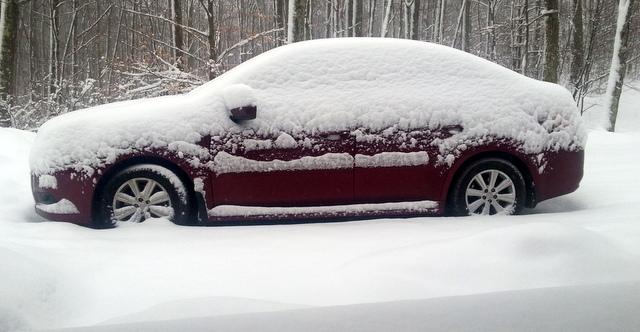
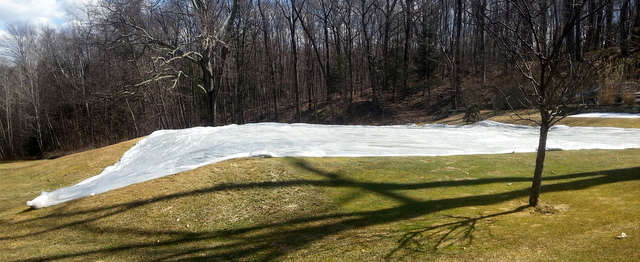
We had a snowstorm during the night three weeks ago, and you can see the result in the photo above. A few days later, my wife and I took our dog for a walk at the golf course. We got stuck in the Executive Parking Lot, which is back behind the clubhouse, between the Dumpster and the propane grill. Our retired superintendent, who still lives next door, helped me dig out, and as I rocked my car back and forth I figured I wouldn’t be playing golf until at least May. But Gary, our current superintendent, opened the course this past weekend, so everything is normal again. The only part of the course that was still out of play was the practice green:

20130330_114628

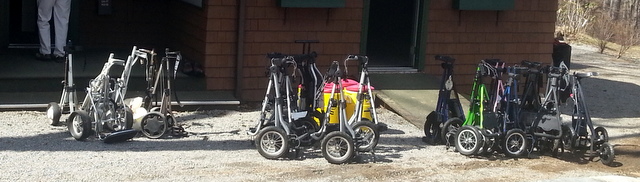
When I arrived, Nick, who is about to graduate from high school, was in the bag room performing pushcart triage. In the photo below, the pushcarts on the left are headed to the dump, the ones on the right are still fully functional, and the ones in the middle will be kept for parts:

20130330_114646Quite a few of the guys wore shorts—apparently in the belief that our Shorts Rule (one extra handicap stroke if you wear them after November 1; two if you wear them after December 1) still applies once the new season has begun. It does not. 

Reese and Mike A, fourth green, no extra strokes.

Reese and Mike A, fourth green, no extra strokes.

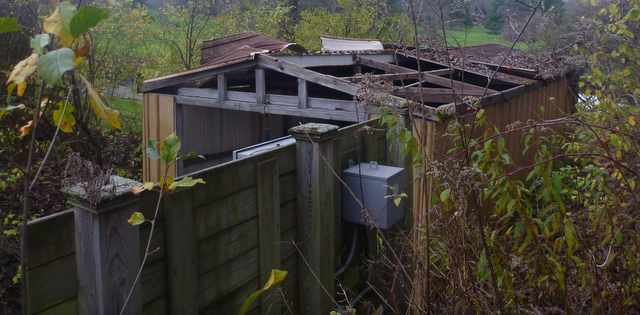
We inspected the new pump house, which Frank built over the winter. Here’s what it looked like before:

Pump house: before Frank.

Pump house: before Frank.

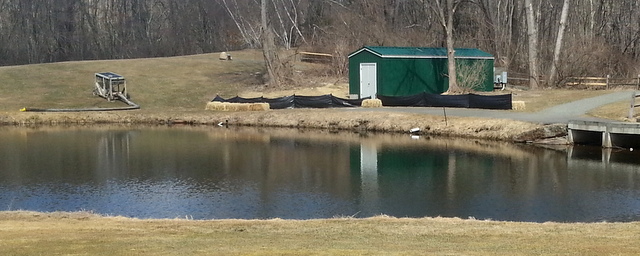
And here’s what it looks like now:

Pump house: after Frank.

Pump house: after Frank.

Unfortunately, Frank is taking a leave of absence this year. He’s having both knees replaced—something he has needed for a long time. A few years ago, during a storm, he helped me install an emergency patch on a hole in my roof, using a technique that he called “redundant half measures.” It worked great, but I had to do most of the kneeling.

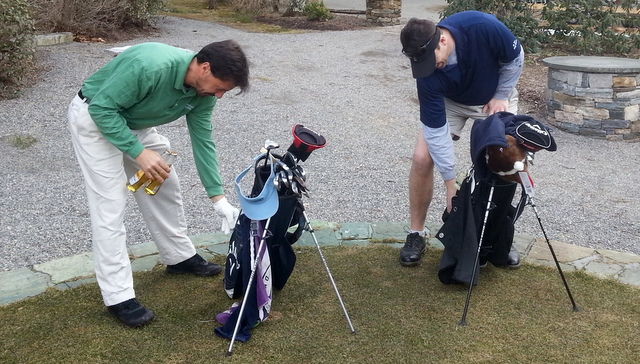
When we finished playing, Mike G. and Chic were getting ready to tee off. Here they are, loading provisions into their golf bags:

20130330_151837

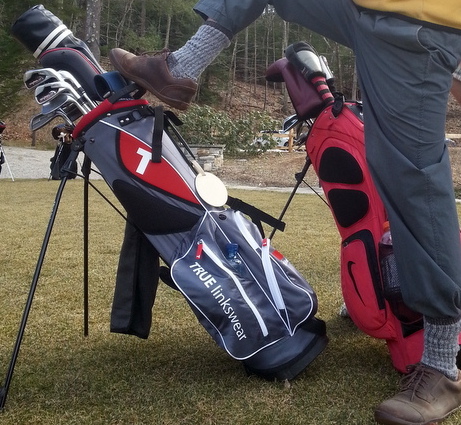
Addison had some new golf pants, which he got because he plays for the University of Hartford. The only other significant off-season acquisition I noticed was Tim’s golf bag, which is made by the same company that makes our favorite shoes:

20130330_151431

And the next day, I played again, with Addison and Reese. We had the place pretty much to ourselves:

P1050419

Reese and I played Addison in a series of close-out matches, with all our strokes. We won both World and Solar System, but Addison, with a par on the eighteenth, took Universe. Luckily, we have a full season to get it back.

Bowling as Wintertime Golf Methadone

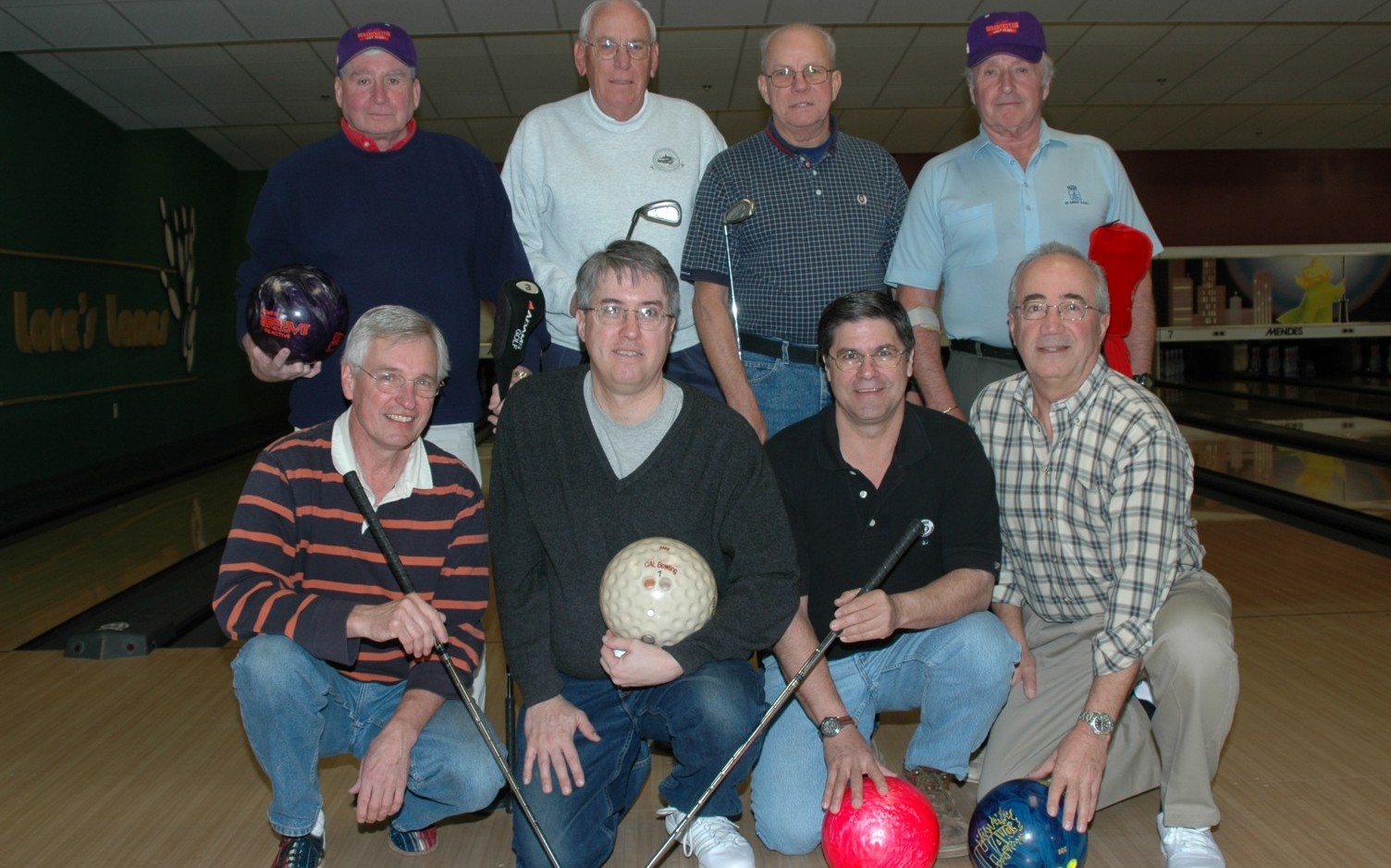
SMG BowlingEight years ago, my regular golf buddies and I decided that, instead of moping around all winter, as usual, we would go bowling. Eight guys showed up the first Sunday. Ferris, it turned out, had bowled in high school, and Billy had been a member of a hippie team in college. Nick and Gene already owned their own balls and shoes. Ray brought his old ball but couldn’t use it because his fingers no longer fit into the holes.

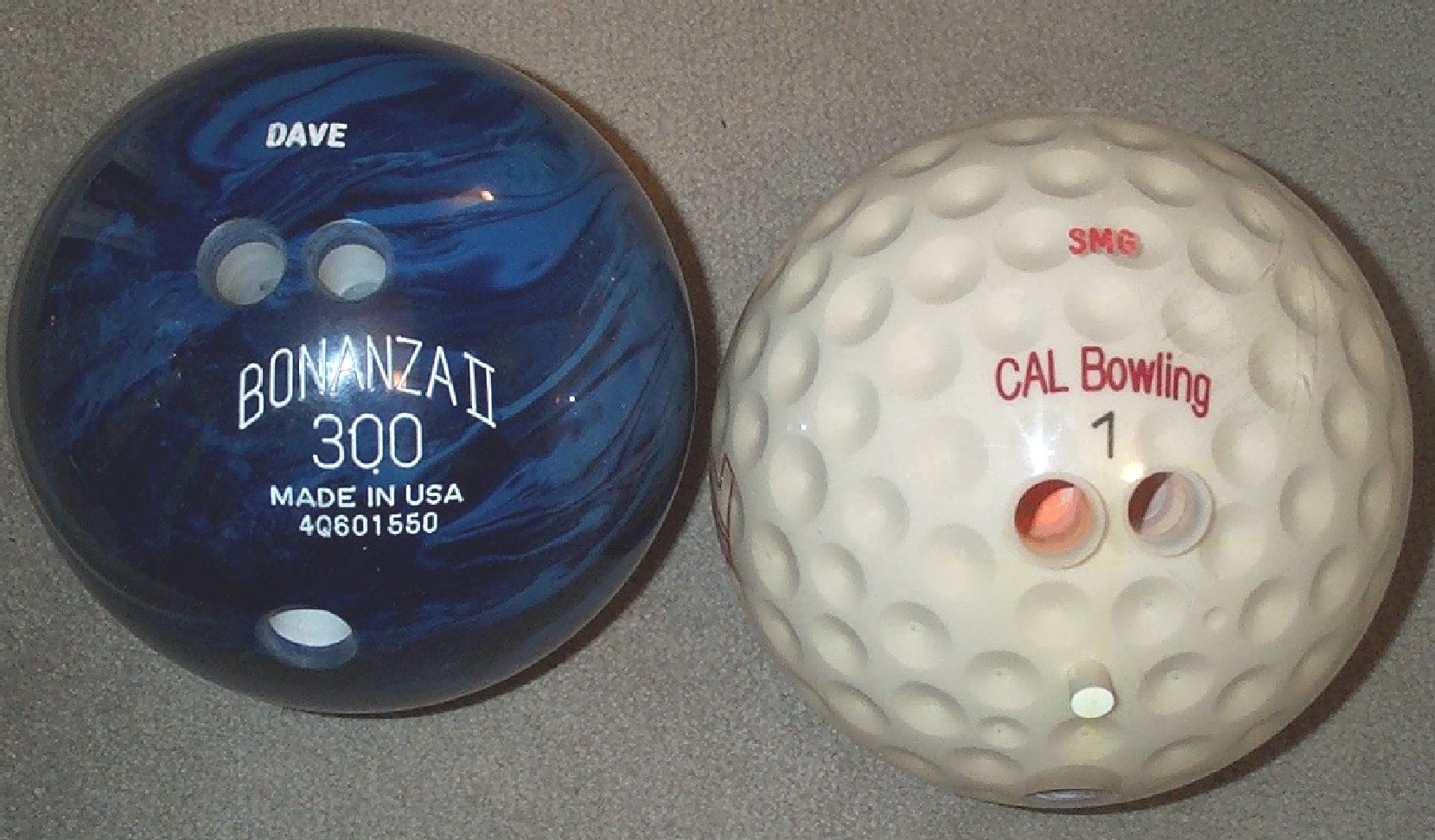
As soon as I got home, I went online and ordered bowling shoes, a bowling instruction book, and a bowling ball that looks like a giant golf ball. Two weeks later, I bought a second ball (with more spin) and a two-ball bag, to which I attached my golf-club bag tag. I had my name engraved on one of the balls, and “SMG” (for Sunday Morning Group) engraved on the other.

bowling ball

Taking up bowling was like discovering a previously unsuspected continent of things that you can buy. (Did you know that good bowling shoes have different right and left soles—one to grip and one to slide?) We transferred over all our regular junk, including skins, negative skins, nassaus, presses, and the money hole. We bowled in golf clothes and golf hats. We referred to frames as holes and to games as rounds. We used golf towels to wipe lane oil from our balls. I even managed to preserve most of my swing flaws: I came over the top in bowling, too.

I created an Excel spreadsheet that automatically updated everybody’s average and handicap whenever I entered new scores. In one of our earliest outings, after shooting a depressingly characteristic 82, I had six consecutive strikes, a spare, another strike, and two nines, for 226. Hacker (real name) said, “Aren’t you kind of sad that you’ve already shot the best round you’ll ever shoot?”

A bowling alley is one of the few sporting venues where a golfer can feel almost like an athlete. There were so many smokers at one of the ones we went to that even the parking lot smelled like cigarettes. Most of the regulars, who gave us dirty looks when we collapsed in hysterics over somebody’s double gutter ball, had very low centers of gravity—they were shaped like bowling pins—and their bowling bags had  wheels on them. The specialty at the snack counter was panzarotti, which is made by combining all the things your doctor tells you never to eat and deep-frying them.

Bowling is fun, but it’s just golf methadone. We bowled for two winters, but then winters around here started seeming more like late fall or early spring. We found several open golf courses within an hour or two of where we live, and they made us forget all about our fancy bowling shoes. This winter, though, we’ve had a couple of big snowstorms, including a huge one this past weekend. We’re probably not going to see grass around here again for a while, even if it doesn’t snow this coming weekend, the way it’s supposed to. So who knows?

smb reminder

Golf Game for Super Bowl Sunday

Doug, Gary, Mike A., Goodwin Park Golf Course, Hartford, Connecticut, Super Sunday, February 5, 2012.

Doug, Gary, Mike A., Goodwin Park Golf Course, Hartford, Connecticut, Super Sunday, February 5, 2012.

On Super Sunday XLVI, last year, my golf buddies and I successfully predicted the outcome of that night’s football game by playing a golf match on the municipal course at Goodwin Park, in Hartford. The course was ideally situated for our match, because it’s pretty close to halfway between New York and Boston. And the park was designed, in the early nineteen hundreds, by the sons of Frederick Law Olmsted. Olmsted Sr. designed Central Park, in Manhattan, but lived in a suburb of Boston. (His sons’ firm, which by then was called Olmsted Bros., also created the original landscaping and real-estate plan for Augusta National Golf Club.)

P1010326

Goodwin Park is somewhat flat and featureless, and—despite the enticing photograph on its website—there are no snow-capped mountains in the distance. But the areas around the greens were interesting, and playing cost less than a buck a hole. Also, we saw an aquatic mammal swimming across the pond you see in the lower right-hand cover of the photo above. Here’s the mammal:

Probably just a muskrat--rather than a beaver, as we originally hoped.

Probably just a muskrat–rather than a beaver, as we originally hoped.

After the round, Hacker (real name) spoke the phrase “bacon cheeseburger” into the voice-search thing on his smartphone, and we ended up at a sports bar called Damon’s Tavern, which is the greatest sports bar we’ve ever been to because it has flat-screen TVs mounted above the urinals in the men’s room.

damons

If we had thought to bring sleeping bags, we could have taken our naps at Damon’s, and hung on to our table for the football game that night. Instead, we drove home and slept in our own beds until just before kickoff. The game was slightly anticlimactic, however, because we already knew that the Giants were going to win.


New Year’s Day Golf in New York City

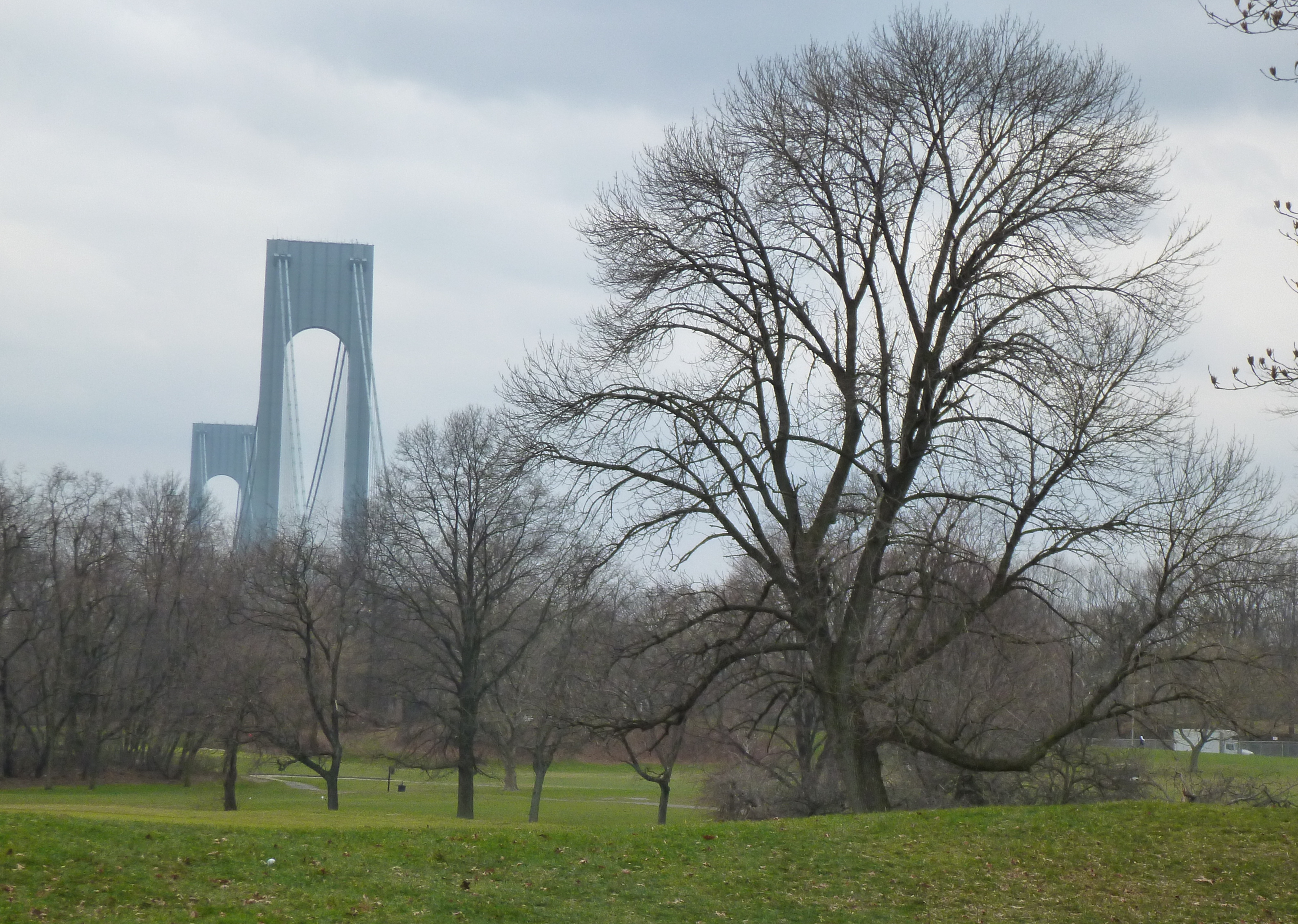
Dyker Beach Golf Course, Brooklyn, New York, January 1, 2013. That's the Verrazano-Narrows Bridge in the background. There are good municipal golf courses on the other end of it, too (in Staten Island).

Dyker Beach Golf Course, Brooklyn, New York, January 1, 2013. That’s the Verrazano-Narrows Bridge in the background. There are good municipal golf courses on the other end of it, too (in Staten Island).

For the past six years, my friends and I have played golf on either New Year’s Day or New Year’s Eve—usually in New York City, which seldom gets much snow. On January 1, 2008, we played at Dyker Beach Golf Course, in Brooklyn. In 2009, we had to drive a couple of hours south of the city, to Galloway, New Jersey, to find a course where we could play on grass. One year, we played in the Bronx, on one of the two courses in Pelham Bay Park. In 2012, for the first time, we were able to play on our home course, which didn’t close for the season until the following day.

Bay Course, Seaview Inn, Galloway, New Jersey, January 1, 2009.

Hacker (real name), Bay Course, Seaview Hotel & Golf Club, Galloway, New Jersey, January 1, 2009.

This year, our home course had closed on Christmas Eve Eve and Pelham Bay still had snow, so we returned to Dyker Beach. Other Gene drove us, in his wife’s car, which has millions of cool features that he doesn’t know how to use. The three guys who sat in the back seat didn’t bother to remove the dog seat cover, which was quilted and was actually sort of comfortable. We saw snow on the way down:

Interstate 84, near the Connecticut-New York border.

Rt. 7, in Connecticut, on our way to I-84.

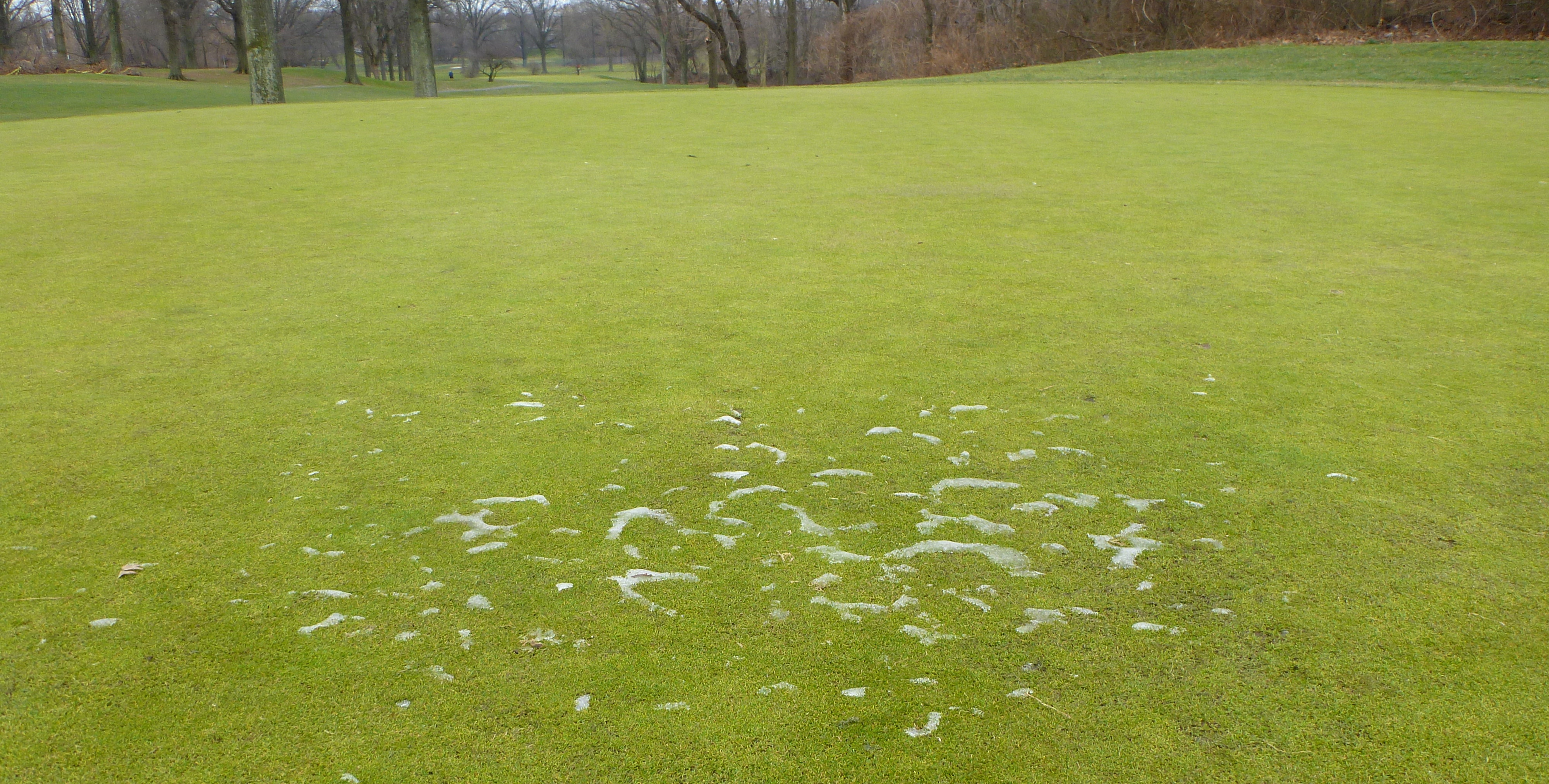
We made great time because everyone else in the tri-state area either was still passed out or was trying to treat their hangover. And there was no snow at Dyker, except for this patch, on one of the greens:

P1050060

The guy in the golf shop let us play as a fivesome—or, at any rate, he didn’t guess that we were planning to play as a fivesome and therefore didn’t specifically tell us not to. We saw some leftover damage from Hurricane Sandy, but it didn’t affect play:

P1050018

Overall, the course was in terrific shape. Some of the grass was bright green and obviously still growing, and the greens were fast and unfrozen.

Dyker's ninth fairway rounds quite close  to Seventh Avenue in Bay Ridge--a good reason not to park on that block.

Dyker’s ninth fairway runs parallel, and quite close, to Seventh Avenue in Bay Ridge–a good reason not to park on that block. In fact, you probably shouldn’t walk on that sidewalk, or drive on that street.

Even though there were five of us, we kept pace with the single playing one hole ahead of us and stayed ahead of the single playing one hole behind us (in a cart). We finished in just under three hours.

Eighth Green. That's Poly Prep Country Day School in the background.

Seventh Green. That’s Poly Prep Country Day School in the background.

Gene P., the night before, had warned us in an email that the forecast was for temperatures in the low teens, and he suggested that we consider rescheduling. But he must have been looking at the forecast for Alaska, because the temperature in Brooklyn never got below about 40.

Sixteenth green. We might be interested in buying one of those houses across the street, and using it as a winter clubhouse.

Sixteenth green. We might be interested in buying one of those houses, across the street, and using it as our winter clubhouse.

We played Double Skins, with an added feature that I suddenly thought of on the third hole: Ball Marker Stymies—in which the old Stymie Rule is applied to ball markers rather than balls. That means that if somebody’s ball marker is in your line on a green you have to putt over it or around it. (And you can’t mark your ball with a hockey puck. Each marker—we decided—must be poker-chip-size or smaller.)
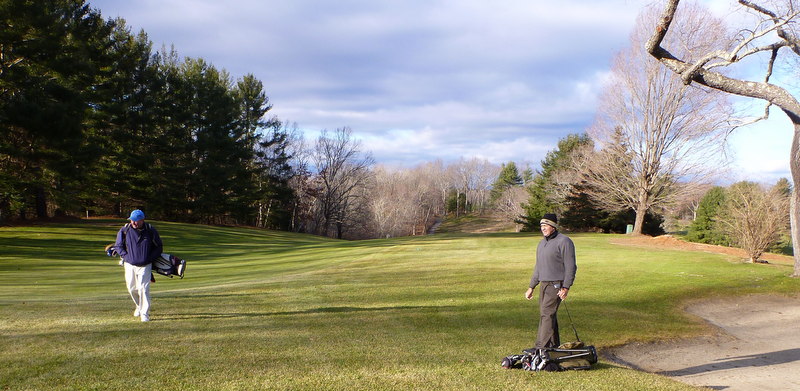
Stymied.

Stymied, on a breaking putt.

After golf, we had lunch at Pipin’s Pub, in Bay Ridge, the home of the famous Pipin Burger (bacon cheeseburger with American cheese). The fries at Pipin’s Pub need work, but we have nothing bad to say about the Pipin Burger. Our waiter took this photograph, despite making it clear that he believed he had better things to do:

Pipin's Pub, January 1, 2013.

Pipin’s Pub, January 1, 2013.

On New Year’s Day 2008, we had lunch at Pipin’s Pub, too—and at the same table. Here’s proof:

Pipin's Pub, January 1, 2008.

Pipin’s Pub, January 1, 2008.

Happy New Year, and so forth.

Fritz, Dyker Beach, January 1, 2008.

Fritz, Dyker Beach, January 1, 2008.

New Golf Game: Double Skins

P1040879

Austin had to leave after nine holes, so we needed a five-man game for the second nine. Hacker (real name) invented one on the spot: Double Skins, in which there can be as many as two skins on each hole. The easiest way to explain is with examples:

If, on any hole, two players tie for the low net score and everyone else does worse, those two players each win a skin. (If Players A and B make a net 3 and everyone else has a net 4 or worse, then Players A and B win one skin each.)

If, on any hole, one player makes the lowest net score and one player makes the second lowest net score and everyone else does worse, the two low players each win one skin. (This time, Player A has a net 3 and Player B has a net 4 and everyone else has a net 5 or worse, and,once again, Players A and B win one skin each.)

If, on any hole, one player makes the lowest net score and two or more players tie for the second lowest net score, only the player with the lowest net score wins a skin, because the maximum number of skins available on any hole is two.

If, on any hole, three players tie with the lowest net score, no one wins a skin.

P1040874

Got it? One excellent feature of Double Skins is that it keeps more players interested longer. For example, on No. 12, a par-three, we all hit crummy tee shots, and then only Rick managed to chip close. He made a gimme par, which was good for a skin—but all the other balls still mattered, because a second skin was also at stake, potentially. And, as it happened, I made what turned out to be the only bogey, because everyone else was overly aggressive in trying to match Rick’s 3 and ended up three-putting . So I got a skin, too—through the back door, as it were.

P1040873

We played one-dollar-per-skin, no carryovers and no Gillens, with the proviso that if anyone ended up owing more than five dollars the skin value would be cut until he owed less. Result: Gary got four skins, and the rest of us each got two, so the four losers each gave Gary two dollars.

P1040871

A December Golf Story

Jim in December, 2007, fifteen years after the rounds described below. Split Rock Golf Course, Pelham Bay Park, Bronx, New York.

Jim in December, 2007, fifteen years after the rounds described below. The green in the photo is the eighteenth at Split Rock Golf Course, Pelham Bay Park, Bronx, New York.

On the first day of December twenty years ago, my friend Jim and I played our final round of the season. The temperature was in the low fifties, but heavy clouds were moving in from the north. The rain was supposed to begin that afternoon, and it was supposed to turn to sleet the following day, and the temperature was supposed to drop below freezing and stay there. It was the last real golf day we would have on our home course for months.

We had the place to ourselves, and we both played well. I hit almost every fairway, and Jim sank two chips. After eighteen holes we were even. The temperature was dropping, but the rain hadn’t come yet, so we decided to go around again. I was one down after eight, but I birdied the last hole and pulled back to level. The wind was picking up. We decided to stop there.

I felt sad that the golf year was over, but not terribly sad. My swing felt solid, and I figured it would keep till spring. We stood on the first tee for quite a while, just looking at the course. “A good finish to a good season,” Jim said, and I agreed. I was reluctant to leave, so I dug a few old balls out of my bag, and we hit them into the woods. We cleaned our stuff out of the bag room. I found an old hat of mine in the lost-and-found box. Then Jim and I shook hands, and we went home.

The rain came down so hard that night it woke me. A couple of hours later, my son, who was three, woke me again. He had had a bad dream. As I got him a drink of water and put him back to bed, I noticed that the rain had stopped. There was still no rain at six, when the kids and I got up for good. We had breakfast, and I read them some books. As I did, I kept glancing at the window. The sky was dark gray, and the clouds were churning. The temperature was in the low forties, but there was no rain and no frost. At nine, I called Jim.

Ten minutes later, we were back on the first tee. “The first round of the new season,” Jim said. And we teed off.

Jim took this picture of me a a month or two later, after our course really had closed. I'll have something to say about snow golf at some point. All I'll say now is that I own a pair of snow shoes that I've never used for anything but golf.

Jim took this picture of me a month or two after the rounds described above. I’ll write something about snow golf at some point. All I’ll say now is that I own a pair of snowshoes that I’ve never used for anything but golf.

Why Golfers Should Watch the Radar, Not the Forecast

Smallest Sunday Morning Group on record, Sunday, December 16, 2012.

Smallest Sunday Morning Group on record, Sunday, December 16, 2012.

We had a good group and decent weather this past Saturday, but the forecast for Sunday was horrible—rain, snow, “ice pellets”—so Hacker (real name) decided the prudent thing would be to cancel the regular meeting of the Sunday Morning Group (because of “upcoming weather”) and concentrate on planning our second annual S.M.G. Christmas party and Global Warming Invitational.

When I woke up on Sunday morning, however, there was no precipitation of any kind, either in my yard or on my Wundermap (the most important piece of golf equipment after the 34-degree hybrid). Just to be sure, I checked Raindar, on my smartphone. Yup: nothing. I then sent an emergency email, to which I received just one response, from Mike A. (Hacker had recklessly committed to taking his grandchildren to Cabela’s.) Mike and I met at the course at 10:00.

There was a tiny bit of icy precipitation of some kind, which accumulated in trace amounts on the wheels of my pushcart:

Slight icy build-up, after eighteen holes.

Slight icy build-up, after eighteen holes.

But the weather was actually decent, and there was no one else on the course, and we finished in a little over two hours. We played our regular Sunday game (net best ball, stroke play, plus skins), but with one-man teams (of which we had two). I was a stroke ahead after nine holes, but Mike annihilated me on the back and finished with a total of 8 over par—the best score ever recorded by a one-man team. We split the skins (with five each) and tied the Money Hole (No. 2, because there were two of us), so he ended up winning five dollars. Here’s our scorecard, which I kept in Sharpie on a torn-apart Titleist box:

Scorecard 12-16-12

The moral of this story is: make no irrevocable golf decision based on a forecast alone.,