
Winter Update: Wearing Shorts, Trimming Trees, Rebuilding the Pump House, and Using Air Horns to Improve Pace of Play

20121214_135605Nobody wore shorts on Friday (see above), so nobody got extra handicap strokes. But Doug wore shorts on Saturday (see below) and therefore got two.

20121215_105641

He also wore his daughter’s hat and brought three swing aids. His team still lost, though.

During our round on Friday, some tree guys were trimming and cabling the two huge oaks in front of the clubhouse:

20121214_135830

During our round on Saturday, some construction guys were laying a concrete-block foundation for our new pump house, next to the pond on the fourth hole. (See photo below.) We played that hole from the women’s tees, because when we play from the men’s tees bad drives that miss the pond often hit the pump house.
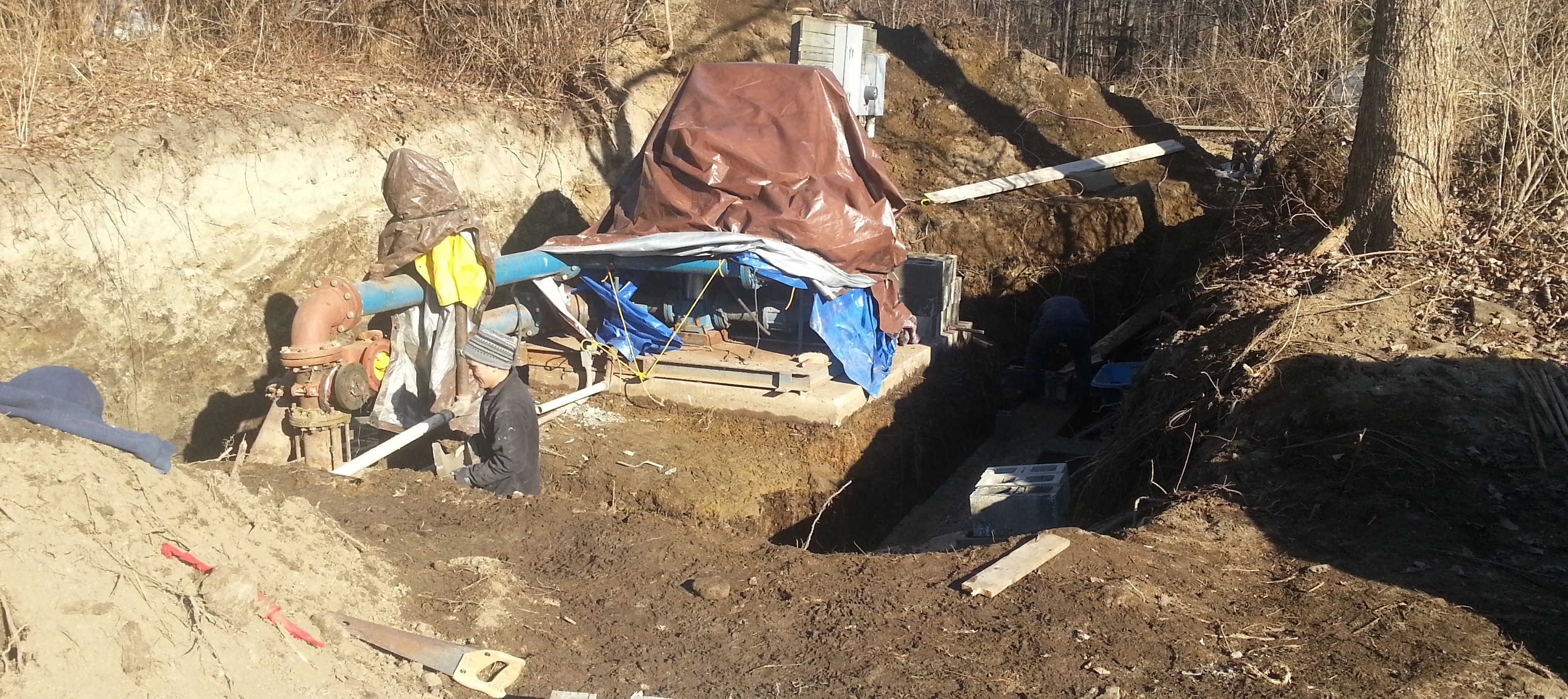
20121215_125611

Friday’s round took more than four hours—an inexcusable pace, we agreed, even though we were playing as a sevensome. One reason we were slow is that one of the guys was a newcomer, and he still does things the rest of us stopped doing years ago, such as taking practice swings and not hitting or putting unless it’s his turn. But we’ll break him.

On Saturday, we played as two foursomes and finished in less than three hours. During that round, Tim, who was in my group, thought of a way to incorporate speed into our regular game, by allowing teams that finish early to replay holes until the slowest team has putted out on its final hole. Here’s how it would work: We would shot-gun all the groups, so that nobody had a head start, and each group would carry one of these:
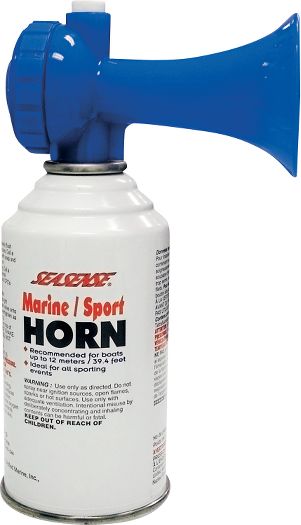
air horn

When your group finished its regulation round, you would blast your air horn to let the other groups know that you were now playing bonus holes and potentially improving your score. And you would get to keep playing bonus holes until the final group’s horn had sounded. Further study.

Normal Golf Guy Sort of Replicates Famous Road Hole Shot

Mike A. trying to bounce his ball off the boundary wall beyond the first green.

Just six of us showed up this morning. Nobody else was on the course, so we played as a single group. The game was our regular Sunday-morning stuff,  and because we were a sixsome we also played 3-2-1.

Mike A. overshot the first green, and his ball ended up so close to the stone wall that he had to try the shot Miguel Angel Jimenez hit during the 2010 British Open, on the Road Hole at the Old Course at St. Andrews:

Mike, unlike Jimenez, didn’t get his ball onto the green, but he did end up with a better score. (Jimenez made triple-bogey.) I’ve tried Mike’s shot, both successfully and unsuccessfully. It works best if your ball is in front of a stone with a flat side facing the flag.

Even though there were six of us, we got around in a little over three hours. There are several keys to playing quickly in a large group. One is never taking a practice swing. Another is hitting shots when you’re ready, rather than waiting till it’s your turn. Another, on tees, is always having a player “on deck,” in addition to the one actually teeing off, like this:

Gary (left, teeing off) and Mike A. (right, on deck), fifth hole.


A Hole-in-One Fund That Doesn’t Defraud Golfers

Chic paying his fifteen-dollar entry fee to Hacker before teeing off on Sunday morning. No twenties, please. Chic’s shorts (after November 1) earned him one extra handicap stroke.

The Sunday Morning Group has a five-hundred-dollar hole-in-one prize. The money comes from our regular Sunday-morning entry fee, which is fifteen dollars. (Five goes into a pool for the winning team, five goes to skins, two goes into a pot that’s shared by everyone who matches the morning’s best net score on the so-called Money Hole, which is announced before we tee off, and three goes into the S.M.G. slush fund, which pays for things like the hole-in-one prize.)  The last person to make a hole-in-one during one of our Sunday games was Reese, but he did it before we had a hole-in-one prize so he got nothing. Last week, though, Hacker (real name) decided that the slush fund had become so huge that Reese ought to get something anyway, so he gave him two hundred and fifty dollars. Reese used the money to buy liquor and other stuff for a bar at lunch:

Reese’s hole-in-one bar is on the left. That’s Howard on the right, tending the grill.

Lunch itself was provided by Howard. Our town’s grocery store had shut down its hamburger-patty-pressing machine for the winter (for some reason), so Howard had to buy ground beef in bulk and shape our cheeseburgers with his own hands—very possibly the first time that’s ever happened. He also brought two kinds of fancy mustard (but no regular mustard).

The fact that Hacker paid out a hole-in-one prize that, technically speaking, no one had earned distinguishes him from much of the rest of the golf world—which, apparently, is always thinking of reasons not to pay up. You can read about several such cases on the website GolfDisputeResolution.com, which covers “the intersection of golf and law” and was created by Rob Harris, a Connecticut lawyer. Harris writes about an especially interesting hole-in-one dispute here.

This is what Harris has to say about his own golf: “At the age of 11, on a very hot day, I lost the 9 hole junior boys championship at Tuscarora Country Club on the second hole of sudden death; I proceeded to throw up at the post-event lunch.” Hey, Harris—come join us on Sunday. You’ll fit right in.

These two were curled up in the Dumpster during lunch on Sunday. Gary, our superintendent, says they come and go.

Why Can’t Certain Golfers Put the Flag Back Straight?

Second green. The ball is Doug’s. The flag is as it was left by the group ahead of ours.

Six of us played behind a couple of senior members today, and on three consecutive holes we found the flag as in the photo above. Is this an age-related thing? An old-guy insertion problem?

And speaking of that: I can never remember which HDTV channels are which, so I usually just flip around until I see golfers. Once, while I was doing that, I came to a commercial for erectile-dysfunction medicine (naked middle-aged couples lounging in bathtubs), and thought, “This must be the golf tournament”—and it was. Another usually accurate indicator: commercials for enlarged-prostate medicine (clothed middle-aged guys running to the bathroom).

Today, we started with five guys, so we played Perfect Skins. Then Peter P. arrived—he’d had trouble breaking through his Invisible Fence—so at the turn we switched to 3-2-1, which is a game we made up for sixsomes. Here’s how it works: you divide into two three-man teams, by pulling balls from a hat. Then you play regular best-ball, except that if the best ball is a tie you break the tie with the second-best ball, and if that ball’s a tie, too, you break it with the third. Your team gets three points if you win a hole on the first ball, two if you win on the second, and one if you win on the third, and if all three balls push no one gets anything.

This is really just the six-man version of a very good four-man game called Second Ball Decides. So if they don’t allow sixsomes on your course, or you don’t have five friends, you can play that. And if both balls tie in that game you can award the hole to the side that sank the longest putt—gimmes not included.

Peter P., Doug, Mike A., Fritz.


My Close Personal Friend (a Different) Tom Watson

Nick and Hacker (real name), Dyker Beach Golf Course, Brooklyn New York, 2006. That’s the Verrazano-Narrows Bridge in the background.

As soon as our home course closes for the season, my friends and I pack up our clubs, say goodbye to our wives and children, and head south for a while, to a place where golf can be played on real grass even in the middle of the winter. Which is to say, we go to the Bronx.

Many people don’t realize that there is a golf course inside the New York City limits, but there are more than a dozen, and almost all of them are public courses that are open year-round. Our favorites are probably Pelham Bay and Split Rock, in the Bronx, and Dyker Beach, in Brooklyn, but there are others and, because there’s no such thing as a bad golf course, we sometimes play them, too. (You can read more about winter golf in New York here and here.)

The drive south takes us down I-684 and the Hutchinson River Parkway and past still more golf courses, most of which don’t stay open all winter. One of those is Saxon Woods, which is one of six public courses owned by Westchester County, New York. Saxon Woods is so close to Winged Foot and Quaker Ridge that some people figure A. W. Tillinghast must have designed at least part of it, too. The evidence for that isn’t strong, to say the least, but as we drive by I look at it longingly (which is how I look at all golf courses).

Not long ago, I received an email from Tom Watson, a Saxon Woods regular, who wanted me to know about a game he had invented. Here he is:

Tom Watson (real name) playing in a charity outing at Westchester Country Club, Rye, New York, 2012.

Tom wrote:

“I simply keep my best score for each hole for the entire season, and add them up for a season’s best net total. So it allows a 19-handicapper to post a ‘score’ that’s closer to the pros than to guys who put their shoes on in the parking lot. And it gives you some real rooting interest as the season wanes. I was sitting on 68 last week when I stepped up to one of the only two holes I haven’t parred all year. A good drive, a yanked three-wood, a big flop shot over a bunker, and an easy three-footer later, I was writing down par and dropping my Season’s Best to 67. It’s a number I’m not usually acquainted with—and it made the round. I didn’t quite go all Ian Poulter on the green, but there was a discreet fist pump involved. It’s the only golf game I know of where your score always goes down over time!”

Tom’s invention is actually a re-invention. A cumulative score like the one he compiled is called a ringer score, and there are lots of clubs and leagues and groups that run season-long ringer competitions. (One of them is Wethersfield Country Club, in Connecticut, where Rick and I played in a state senior four-ball tournament this year.) Ringer scores are also fun to use as a side bet on golf trips, over multiple courses. Ray, Tony, and I did that during ten rounds on three courses at Bandon Dunes, not quite six years ago. I’m pretty sure I won, although I don’t recall collecting any money.

Golf Carts: Fairway or Rough?

The winning team, by a record margin: Chic, Gary, and Doug. Second hole, November 4, 2012.

Beginning November 1, the Sunday Morning Group gives an extra handicap stroke to anyone who wears shorts. Chic and Doug both did this morning—and Doug didn’t wear a hat, and after a few holes he took off his jacket—even though it was 35 degrees when we started. We had three threesomes, and we played two best balls, net, off the low handicap, which was four. Chic and Doug ended up on the same team, along with Gary, our superintendent, but the extra strokes were meaningless because they shot 12 under, which was 16 shots better than the second-place team (mine). That’s a record, as far as anyone can remember. Incidentally, the Sunday Morning Group’s record worst round is 9 over par, net, on one best ball; it was set on October 22, 2001, by Frank D., Rick, and me.

November 1 is also the day the golf shop closes for the year, and that means no golf carts from now till spring. (The carts are stored for the winter in a building behind the ninth green which somehow survived Hurricane Sandy—see the photo below.) The course always looks great once the carts have been put away, because there aren’t tire tracks running everywhere.

Thinking about that made me think about an unresolved controversy at many clubs, including mine: do golf carts do more damage on fairways or in the rough? Gnarly old rough seems “stronger” than manicured fairways, but cart tracks are usually harder to see in short grass than in long. I’ve played courses where players were told to keep their carts off the fairways, and I’ve played others where they were told to keep them out of the rough.

Several years ago, I asked Stacy Bonos, an agronomist in the Turfgrass Breeding Project at Rutgers University, who was right. She hesitated, but when I pressed her she said that, all in all, carts probably probably did less damage to fairways than to rough.

No more carts till spring.

Hurricane Sandy Golf

On Sunday, two three-man teams tied at -10, so we held a playoff: wrong-handed overhand throw over the fence between the first tee and the putting green, closest to the pin. This was supposed to present a “perfect storm” of difficulty, but Corey (our new pro) and Nick (who works in the golf shop and plays three sports at a local high school) can throw better lefty than most of the rest of us can throw righty, and since the two of them were on the same team it wasn’t close. That’s Corey, throwing, in the photo above. At the far right is Stanley, nervously practicing.

While the burgers were grilling, Hacker (real name) suggested that we play golf during the hurricane “to monitor the storm and protect the course.” We’re going to try that on whichever day the weather seems worst, assuming that trees haven’t fallen across our driveways. Someone said that we might as well play naked, because if we didn’t the hundred-mile-an-hour winds would “blow our clothes off.”

This hurricane has made everyone think about the storm we had exactly a year ago, when we lost power for a week and I had to fly to Chicago to take a shower. Here’s what things looked like then:

And here’s what the golf course looked like a week later, when I got back from Chicago:

No one thought we’d play again that year, but, thanks to Gary and his crew, we were open again as soon as the snow had melted, and we stayed open through New Year’s Day—a record by almost a month.

Playing Golf for Unbelievable Stakes

This is what Shep’s golf swing looks like, in case you’re wondering why Tony and I didn’t win the qualifier.

On Wednesday afternoon, Tony and I played Shep and Ben, straight up, for the championship of the world. They’re way better than we are, but we thought their relative unfamiliarity with our course would give us an advantage. It didn’t. They closed us out on the sixteenth hole, so we introduced an important Sunday Morning Group concept: the Qualifying Tournament. The sixteen holes we’d just finished, Tony explained, had been a qualifier for the day’s real action, a two-hole match for the championship of the universe. The top two pairs from the qualifier—them and us, coincidentally—advanced to the final, and because the two of them had (technically) finished ahead of the two of us we let them tee off first.

Not everyone likes the Qualifying Tournament concept, but rules are rules. And, as it happened, I birdied the seventeenth, putting Tony and me one-up in the main event. “We press you for the fourth dimension,” Shep said. I birdied the eighteenth, too—but so did they. That made Tony and me the undisputed champions of the universe, but it halved the press and, therefore, left the space-time continuum intact.

Can anyone identify the course in the photo above? We played there a couple of weeks ago, thanks to some shrewd favor-trading by Shep, and to get to it we took a boat (see below). Correct answerers, if any, will qualify for the next round.

How to Conduct a Golf Playoff

That’s Stanley preparing to hit a lob shot over the patio from the bed of Nick’s pickup truck during a playoff in 2007.

The Sunday Morning Group’s games sometimes end in ties. Matching cards would be boring, and playing extra holes would force everyone to walk too far from the beer coolers, so we almost always hold playoffs on or around the practice green.

We don’t have just one format. On various occasions over the years, we have required playoff contestants to: putt balls from the top of a beer can while standing on one leg on the seat of a chair on the patio; throw balls onto the roof of the clubhouse so that they roll down the porch roof, down the porch steps, across the patio, and down a short, steep grassy slope and onto the practice green; chip through the split-rail fence that separates the patio from the parking lot; pitch from the pinnacle of a four-foot-tall pile of dirt in the middle of the first tee, which was being rebuilt; throw balls wrong-handed (overhand only) onto the practice green from the edge of the first fairway; and hit lob shots from the plastic liner in the bed of Nick’s pickup truck, which he had backed up to the fence.

Hacker (real name) improving his lie in the bed of Nick’s pickup truck.

In all our playoffs, we use the stymie rule, which the rest of the golf world abandoned in 1953: your ball stays where it stops, even if it’s blocking someone else’s putt, pitch, or throw. When we have large groups, we sometimes save time by making everyone putt, pitch, or throw at the same time, toward a single hole. Once, in pouring rain, we held a playoff inside the clubhouse, with a long putt that had to run from the (linoleum) floor of the kitchen all the way across the (carpeted) floor of the living room. The target was a beer bottle.

Last weekend, the playoff was a throw to the practice green from the window above the urinal in the men’s bathroom. (The men’s bathroom was designed by Reese, who is an architect and a 12-handicap. The window is ideally situated: directly overlooking the grill on which we cook our cheeseburgers.) The throw from the urinal is tough, because the ball has to miss the recycling barrels and clear a fairly tall fence. Barney went first and almost holed out; nobody else came close. (In almost any playoff format, the person who goes first has a huge advantage, for unknown reasons.)

Rick holding the bathroom window for Chic during last Sunday’s playoff.

Doug holding the window for Les, who is (arguably cheating by) standing in the urinal.

Sometimes, a playoff seems like so much fun that we open it to the whole group—including caddies, if there happen to be any. Other members, getting ready to tee off on the first hole, invariably scowl when they see us standing in a long row with our backs to the practice green, holding a beer in one hand and weighing a ball in the other, getting ready to throw the ball over a shoulder at one of the holes and quietly dreading the moment when, finally, it will be time to go home.

Good Golf Game: Mrs. Murphy

Is this Mrs. Murphy? (Result No. 4 from Google Image search.)

Many years ago, while on vacation with my family in Florida, I managed to qualify for my wife’s stringent Golf Release program. I’d done four days of hard time at two beaches, a nature preserve, a G-rated movie, and a seashell museum, and as a reward I was granted eighteen holes of unsupervised play on the golf course at the resort where we were staying. (That we were staying at a resort with a golf course was proof that this was a minimum-security vacation, but I’d nonetheless had to earn my round.) The starter grouped me with two dentists from Ohio. They were supposed to be playing with friends from home, but the missing pair had been apprehended the night before during an ill-considered alcohol-related escape attempt and were now being held in solitary.

There were just three of us, and the dentists’ handicaps were of uncertain provenance. So how could we gamble? Fortunately, my father had taught me the perfect game for just this situation. It’s called Mrs. Murphy.

In my dad’s game, you turn a threesome into a foursome by adding an imaginary fourth player, named Mrs. Murphy. She’s a kindly old Irish grandmother, who wears a big hat and a long skirt, and she can’t hit the ball more than a hundred and thirty yards, but she still manages to shoot par on every hole. Either that, or she’s a recently divorced former exotic dancer who took up the game just a couple of years ago and is kind of shaky on long putts but still manages to shoot par on every hole. Your choice.

Each of the three non-imaginary players gets Mrs. Murphy as a partner in one six-hole best-ball match against the other two, who play as a team, and everybody plays off Mrs. Murphy’s handicap, which is zero. The key to doing well is to take advantage of her rock-steady play during the six holes when she’s your partner, by aggressively gunning for net birdies, since she’s already covered par. Your opponents, meanwhile, have to play carefully enough to match Mrs. Murphy while looking for reasonable opportunities to score. Sandbagging questions are moot, and wide handicap spreads don’t matter, since everybody gets everybody else as a partner for six holes.

Mrs. Murphy is a good game for three people, no matter where you are or who you’re playing with, and competing against par is a useful teaching aid under any circumstances. In fact, Hacker (real name), Peter A., and I played Mrs. Murphy on Wednesday afternoon. Because there was rain in the forecast (see previous post), the four of us had the place pretty much to ourselves.

Is this Mrs. Murphy? (Result No. 9 from Google Image search.)