How to Watch the Masters on TV

This diagram is from the program of the first Masters, in 1934. It shows what were then the first and second holes, and are now the tenth and eleventh. Both holes have changed dramatically since then, but the elevations give you the basic idea.

This diagram is from the program of the first Masters, in 1934. It shows what were then the first and second holes, and are now the tenth and eleventh. Both holes have changed dramatically since then, but the elevations in the drawings give you the basic idea.

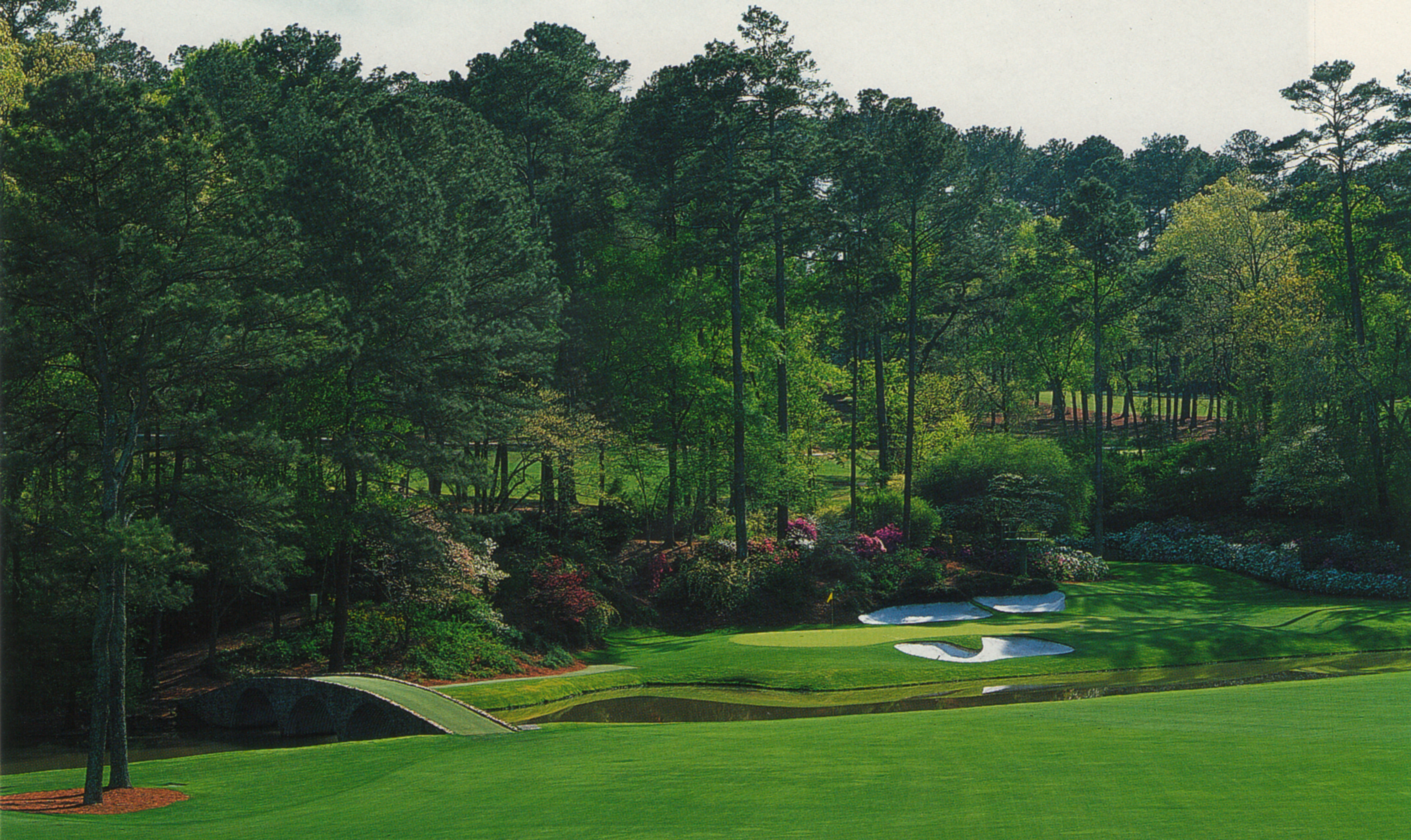
Every golfer should make every effort to get to Augusta National during Masters Week at least once. Television doesn’t do justice to the topography of the course. The drop in elevation from the tenth tee to the eleventh green is more than a hundred and fifty feet—fifteen stories. Once you’ve studied the place in person your brain can supply the missing third dimension when you watch on a flat screen at home.

That’s what I’m doing this year. I love being on the grounds during the tournament, but I don’t feel deprived when I watch from home. The Masters is the last unscrewed-up major event in sports, and the CBS broadcast is sublime. And if you stay home you can play golf with the gang while you wait for the show to begin.

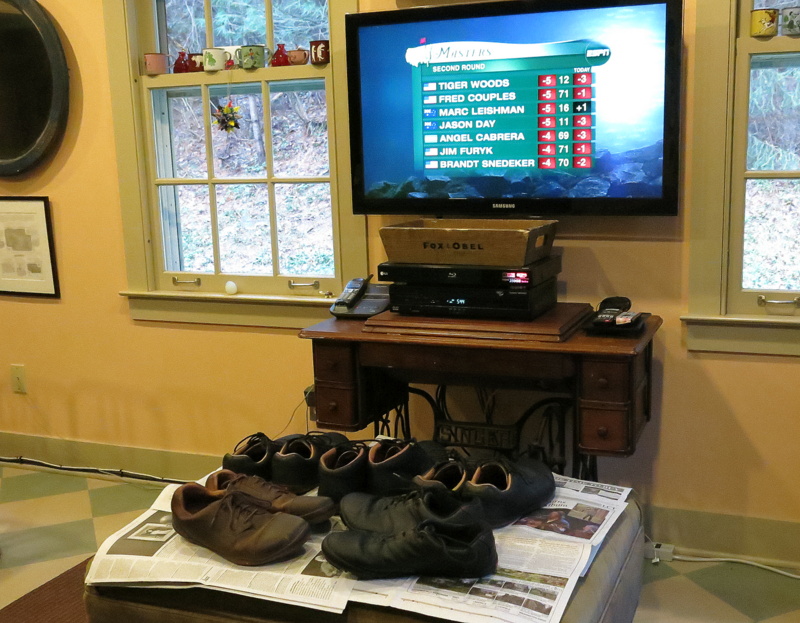
The only challenge is to find something productive to do with your hands while you watch. On Friday afternoon, as Tiger was climbing the leader board, I polished all my golf shoes. Then I polished them again—an afternoon well spent.

IMG_0965

Tomorrow afternoon (after paintball with some friends from high school and college) I’m going to clean the grooves of my clubs.

[Just as I was posting this, Tiger made that extraordinary third shot on the fifteenth hole—the one that hit the flagstick and spun back into the water. That shot was unlucky but it was not, as David Feherty claimed, “unfair.” Nor was Tiger “cheated” by it (Feherty again). The flagstick was stationery, and it was in place when he lined up his shot. Golfers capable of hitting inch-wide targets from eighty yards away may need to aim a few inches to the right or left, but they’re not entitled to feel ripped off. And, Feherty notwithstanding, I would bet that Tiger doesn’t.]

New Year’s Day for Golfers

ANGC No 12

The modern golf season never ends, but it does begin. When the first contestant tees off at Augusta National Golf Club on Thursday morning during Masters week, golfers all over the world reset their internal clocks. The first page in a golfer’s calendar is April.

For the world’s best players, the Masters divides one season’s aspirations from another’s. A tour victory means recognition, money, autograph requests, endorsements, exemptions—and an invitation to Augusta. As the first full week of April draws near, winless players juggle their schedules to maximize their chances, and television commentators count down the tournaments remaining. When the Masters begins, every competitor has a theoretical chance of matching Bobby Jones’s unduplicated feat of winning all four major tournaments in one year; when the Masters ends, the Grand Slam field has shrunk to one.

For tournament spectators, the Masters is an annual reunion where the passage of time is measured not in years but in the names of champions. The principal viewing areas have the settled feel of old neighborhoods; the course is as familiar as a friend’s backyard. In countless gatherings beneath the pine trees, acquaintances are renewed and records are brought up to date: deaths, marriages, children, grandchildren, new houses, old jobs. The dogwood blossoms are compared with the dogwood blossoms of previous years. A rebuilt green is examined and approved. Two veterans discuss the careers of Jack Nicklaus and Arnold Palmer—and then Jack Nicklaus and Arnold Palmer walk by. A guest once said, “I rode here in the front seat and will be in the back seat going out so I can stay as long as I can.”

For distant golf fans, the first glimpse of Amen Corner on TV is proof that winter is gone. Northerners who haven’t swung a club since Halloween scrounge an old ball from the garage and roll a few wobbly putts across the family-room carpet during commercials. A swirling gray New England sky stops looking like a vestige of December and begins to seem like a harbinger of spring. The hours crawl from Saturday evening till Sunday afternoon. Meetings and social engagements are ignored or rescheduled; no avid golfer was ever married on Masters weekend. In 1987, two fans from Olympia Fields, Illinois, named their new daughter Tori Augusta National.

For sportswriters, the Masters is the plum assignment of the year. It is the first trip entered in a reporter’s appointment book, and it is written in ink. Journalists take the Masters personally. Herbert Warren Wind, The New Yorker’s incomparable golf correspondent for many years, once stopped another reporter upon arriving in Augusta’s airport and anxiously inquired about the state of the greens: “Are they firm?” Senior golf writers postpone hip replacements and cataract operations until just after the tournament, giving themselves a full fifty weeks to recover.

For non-golfers, the Masters is the one tournament of the year that compels attention. Over breakfast on Sunday morning, a golfer’s non-playing spouse may suddenly offer an informed observation about the chances of Woods, Mickelson, or McIlroy—the result of an hour’s seduction by the sports page or the TV. The beauty of the setting makes one’s love for golf comprehensible to the game’s antagonists. For four days, the national flower is the azalea.

Gary Player once said, “The Masters is the only tournament I ever knew where you choke when you drive through the front gate.”  The trip down Magnolia Lane may be the most dreamed-about entrance in sports. Although the Masters is not ancient as golf goes, no contest runs deeper in the imaginations of participants. Sam Snead once told me, “If you asked golfers what tournament they would rather win over all the others, I think every one of them to a man would say the Masters.”

ANGC clubhouse

Masters Countdown: Cattle, Turkeys, and Prisoners of War

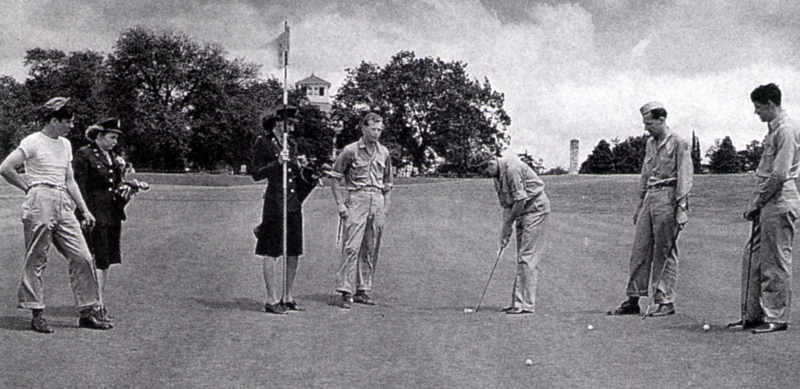
Soldiers from Camp Gordon, with WAC caddies, putting at Augusta National in 1942, before the club closed for the duration. You can see the clubhouse in the background.

Soldiers from Camp Gordon, with WAC caddies, putting at Augusta National in 1942, before the club closed for the duration. You can see the clubhouse in the background.

On Tuesday, I swapped spring weather in Connecticut for summer weather in Florida by flying to Orlando to talk about the history of Augusta National and the Masters on Morning Drive, on the Golf Channel. Among the many topics we covered was the club’s struggle to remain solvent through the Great Depression and the Second World War. Clifford Roberts, who co-founded the club and the tournament with Bobby Jones, said later that if he and Jones had known at the outset how long the Depression was going to last they wouldn’t have had the nerve to proceed. The Masters field actually shrank steadily during the early years—from seventy-two players in 1934 to forty-six in 1939—and then, just as the club’s fortune’s seemed to be turning, the country went to war.

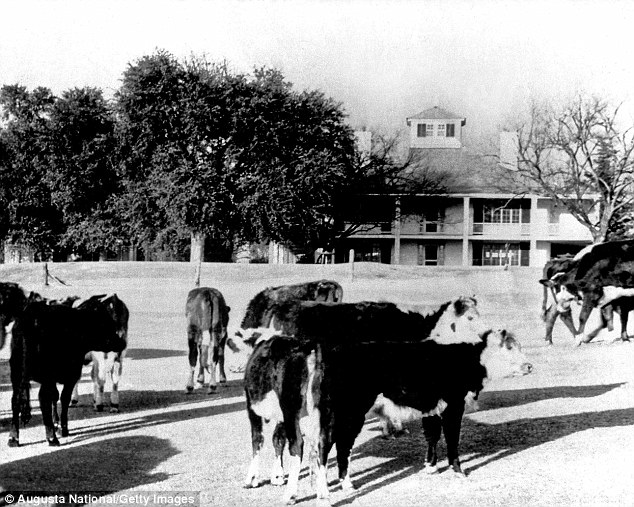
Augusta National closed for the duration after the tournament In 1942, and Jones suggested to Roberts that the club might both contribute to the war effort and improve its financial situation by raising cattle on the golf course.The idea was that the cattle would keep the Bermuda grass under control while fattening themselves to the point where they could be sold at a profit. One of the club’s members had a son who knew about livestock, and he determined that the club had enough grass to support two hundred or two hundred and fifty head. Roberts suggested that the club might also want to try raising turkeys, geese, fish, “and what-not.”
ANGC cattle

Towards the end of 1943, Roberts reported to the members that the club’s agricultural efforts were going well. The cattle herd numbered about two hundred, and the plan was to purchase another two hundred as soon as the original animals could be sold. “The Club also purchased 1,423 day-old turkeys and was successful in raising 1,004 of them,” Roberts wrote. “These turkeys will soon be ready for market but over 100 are to be retained for Christmas distribution to our members—one to each member.” (These Christmas presents were popular.  A member who had received one wrote to Roberts, “It was a peach all right and doubly welcome in these days of tight rationing.”) The club also harvested pecans from its own trees. It donated half the crop, through the wife of the sportswriter Grantland Rice, a founding member, to an Army canteen, and it sold the other half in ten-pound bags to members. There was talk of growing corn and peanuts in a field that is now the practice range, but that idea was abandoned as unlikely to succeed.
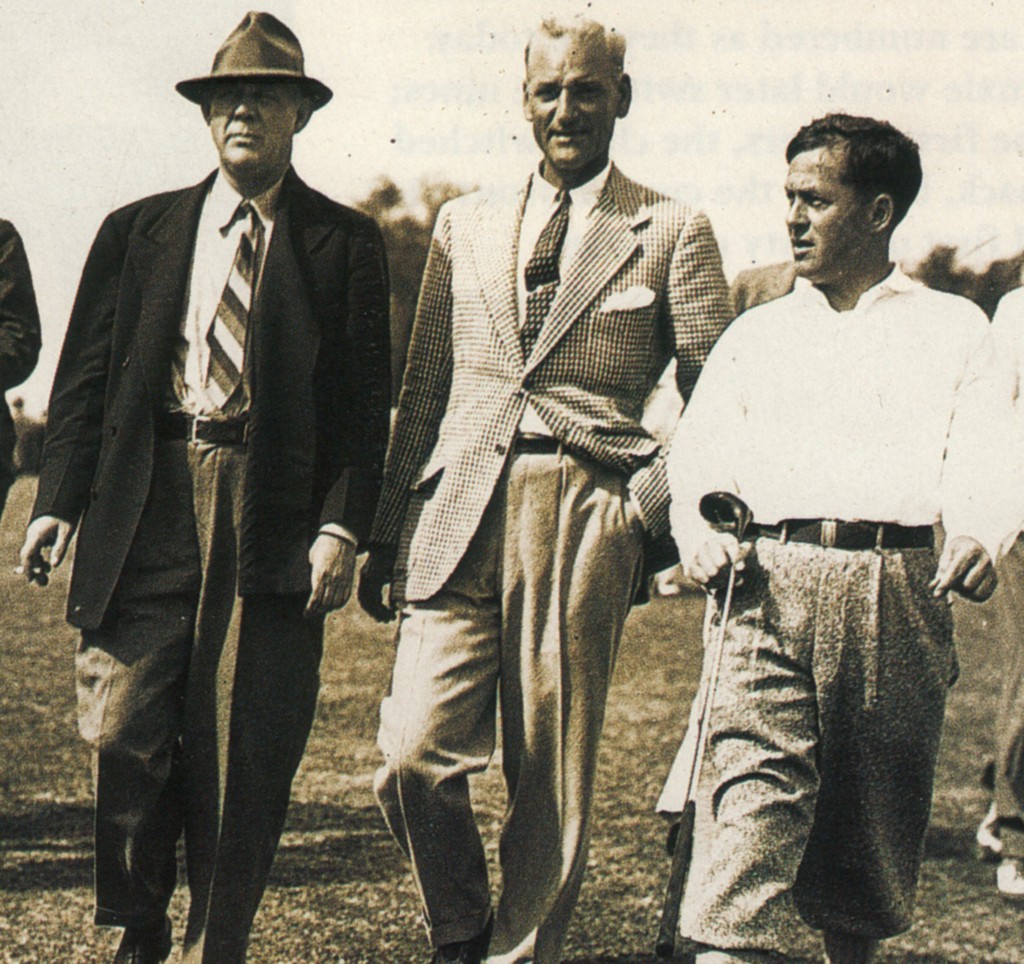
That's Grantland Rice on the left and Bobby Jones on the right, during an early Masters. I don't know who is in the middle.

That’s Grantland Rice on the left and Bobby Jones on the right, during an early Masters. I don’t know who is in the middle.

Despite Roberts’s enthusiasm, the livestock experiment was a failure. A price ceiling had been imposed on  turkeys but not on feed, and the market for beef was hurt by a sudden cattle glut resulting from drought conditions in the West. By the fall of 1944, the club had lost about $5,000 on the beef operation, not including the cost of damage to the course and its plantings. (The damage had been caused by what Roberts described as “the voracious appetite of the cattle.”) The loss was partly offset by a profit on the turkeys. But Roberts concluded, in a letter to the members, that “we have a better chance as a golf club rather than as live-stock feeders.”

Returning the course to playing condition began in late 1944, when the end of the war had begun to seem imminent. Military use of local hotels was slackening, and Roberts had calculated that the cost of restoring the course would no longer be significantly greater than the cost of maintaining it as it was. He announced that the club would reopen on December 23, 1944, and that the course would be ready for play sometime later.

Much of the restoration work on the course was done during a six-month period by forty-two German prisoners of war, who were being detained at Camp Gordon, in Augusta, and were available for hire as day laborers by local businesses. The prisoners had been part of an engineering crew in Rommel’s Afrika Korps. They had been surprised, upon arriving in America, to find that New York was still standing, because they had been told by Nazi propagandists that German bombers had leveled the city. The club arranged for transportation to pick them up at Camp Gordon each morning and return them at the end of the day. A local member, who used to bring them fruit and visit with them while they worked, told me that the army had sent them out “mostly just to give them something to do.”

This POW camp was in Williamston, North Carolina, not Augusta, Georgia, but it was similar to the one at Camp Gordon.

This POW camp was in Williamston, North Carolina, not Augusta, Georgia, but it was similar to the one at Camp Gordon.

In Africa, the German soldiers had built bridges for Rommel’s tanks. At Augusta National, they built a similar bridge over Rae’s Creek near the thirteenth tee. It was a truss bridge made of wood, and it was marked by a wooden sign on which the soldiers carved an inscription. The bridge, which is visible in a few old photographs, either washed away in a flood in the early fifties or was taken down in 1958 to make way for a stone bridge dedicated to Byron Nelson. The Ben Hogan Bridge, which crosses Rae’s Creek near the twelfth green, was built and dedicated at the same time.

The photographer Frank Christian, in his book Augusta National & The Masters, recalls spending summer afternoons on the course during this period, when he was a young boy. “[M]y older brother, Toni, and I would gather our playmates and walk the few blocks from our house to the inviting shores of Rae’s Creek, where we had discovered the ideal swimming hole in front of the twelfth green,” Christian writes. “We would take rocks and dam the creek to create several deep holes within the pond, just perfect for running jumps taken from the high side of the creek. . . . After swimming, a great part of our fun was to throw cow biscuits at one another and chase the cows up and down the fairways.” Fred Bennett, who would later become a caddie and then the club’s caddie master, also came to Rae’s Creek to swim and fish. “I remember those cows very well,” he told me in the late nineteen-nineties. “And when the war was over you could tell they’d been there, because all over the fairways there were circles of bright green grass about a foot across.”

Wounded soldiers watching the Masters from litters placed beside the eighteenth green in 1947. The club gave them free tickets and preferred seating.
Wounded soldiers watching the Masters from litters placed beside the eighteenth green in 1947. The club gave them free tickets and preferred seating.
A Golfer’s Bucket List: No. 3

newswing_4

Devote a month or two to becoming somewhat more competent at the part of your game you hate the most. All golfers have shots that give them the heebie-jeebies. I know players whose preferred club for sand shots is a rake, and others who are so terrified of chipping that they sometimes putt from the rough. Few of us will ever master a real golf swing, but most of us would enjoy our favorite pastime more if we could reduce the anxiety caused by our weakest weakness. For yippers, the flaw may lie too deep for therapy. For almost everyone else, though, the worst problems can be moderated with professional intervention. In some cases, the answer might even be to invest in modern equipment. I’ve known several old guys who lived to play golf but insisted, out of sheer cussedness, on continuing to use the rusting, groove-less, stiff-shafted blades they loved in their prime. I once saw my club’s oldest member, a wealthy nonagenarian, inspecting an ultra-forgiving senior-shafted driver in the golf shop but deciding, after lengthy equivocation, not to upgrade from the ancient sledgehammer in his bag. I asked him (good-naturedly), “What are you waiting for, Doug—the grave?”

Slade chip front

Masters Countdown: The Origin of Magnolia Lane

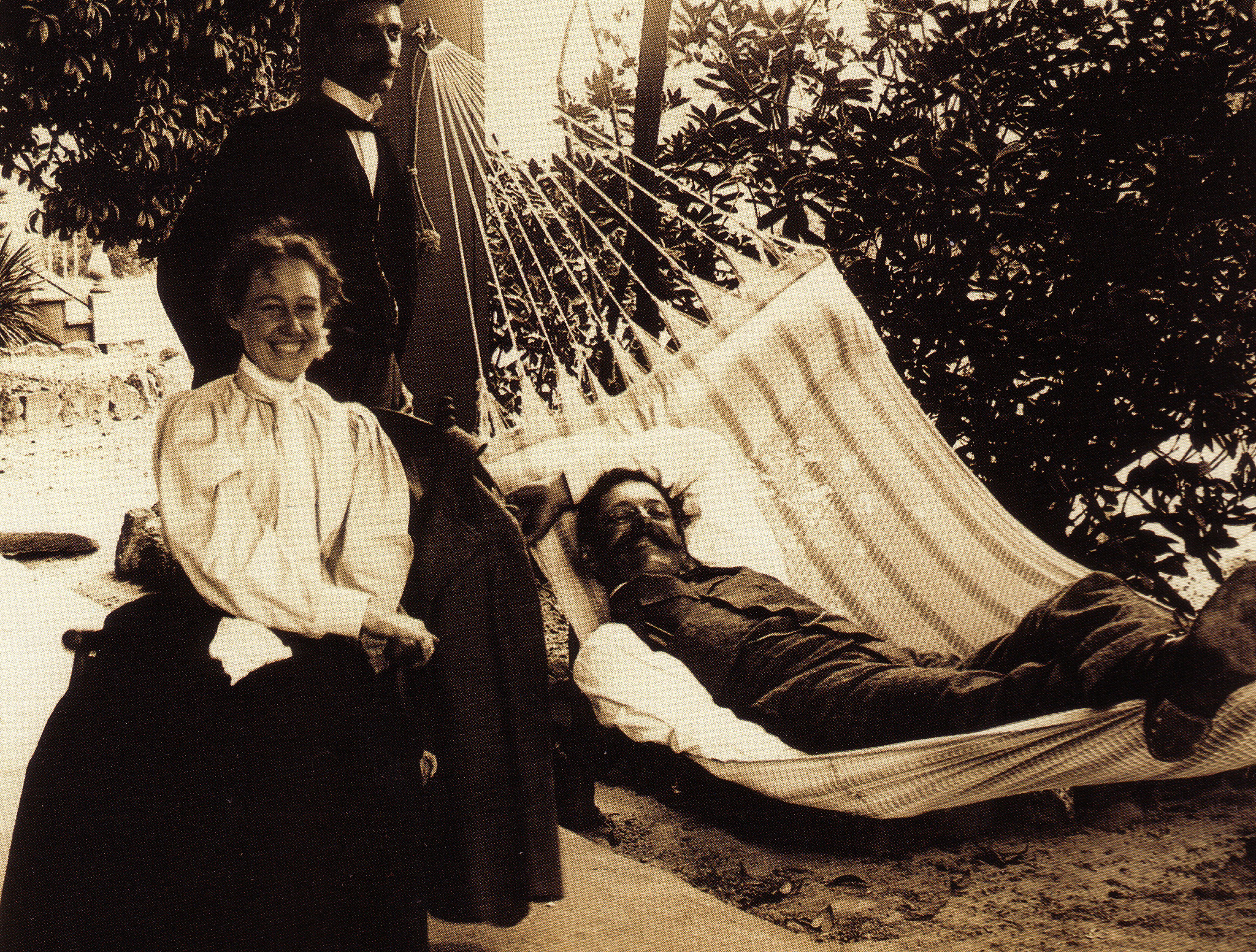
Members of the Berckmans family on the veranda of what is now the Augusta National clubhouse, late 1800s.

Members of the Berckmans family on the veranda of what is now the Augusta National clubhouse, late 1800s.

Shortly before the outbreak of the Civil War, a horticulturist and landscape architect named Prosper Julius Alphonse Berckmans planted a double row of magnolia trees leading into a piece of property that he and his father, a Belgian nobleman, had bought on the outskirts of Augusta. He grew the trees from seeds. The two rows were two hundred fifty yards long, and between them ran a bumpy dirt road that the Berckmans family used as a driveway.

Magnolia Lane, at Washington Road, 1900.

Prosper Berckmans’s double row of magnolias, at Washington Road, 1900.

In the late 1990s, Lawrence Bennett—who was the son of Augusta National’s director of outside personnel and a part-time employee of the club as well as a high-school history teacher—told me that his grandmother, whose own grandmother had been a slave, remembered noticing the magnolias just after the turn of the century, when her family came to town in a covered wagon once a month to buy supplies. By 1931, when Clifford Roberts and Bobby Jones, the club’s co-founders, first visited the property, the magnolias were good-size trees and the driveway was known locally as Magnolia Avenue. Because the branches were long and close to the ground, two cars could not pass side by side between the rows, and Roberts and Jones briefly considered placing the club’s main entrance well to the left.

The magnolia trees are on the right side of this  photograph, which was taken around the time of the first tournament. The road that Roberts and Jones considered using as the club's driveway is at the lower left.

The magnolia trees are on the right side of this photograph, which was taken around the time of the first tournament. Roberts and Jones considered using the dirt road that slants across the lower left as the club’s driveway, because they worried that two cars wouldn’t be able to pass each other in the narrow opening between the rows of trees.

Roberts loved the magnolias and worried about them, as he did about most of the trees on the club’s property. If a loblolly pine on the golf course died, he wanted to know why it had died, and he wanted the tree removed immediately in case the thing that had killed it was catching. He didn’t like deciduous trees, because in his view fallen leaves were a species of litter; he thinned oaks and maples in favor of half a dozen varieties of pine. He read scholarly articles about tree care and consulted forestry professors. When a contractor who was building a new tee ignored his warning to keep construction machinery away from some old trees that he was especially fond of, he ordered the contractor to leave the grounds.

One night in the nineteen-sixties, Roberts and his wife had dinner in New York with another Augusta National member and his wife. They got to talking about the plantings on the club’s property. The member asked how old the Magnolia Lane magnolias were. Roberts said they were a little more than a hundred years old, and that with proper care they ought to live another hundred or hundred and fifty years. The member’s wife said, “Well, that certainly ought to be long enough.”

Roberts turned on her the same fierce stare with which he pinned neglectful committee members to the backs of their chairs. “No,” he said, after what to the wife seemed like the better part of the life span of a magnolia, “that is not long enough.”

Fruitlands Catalogue

Opening Weekend: A Full Golf Report

20130308_070841-002

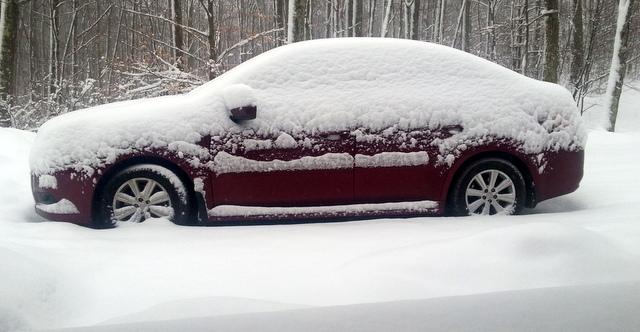
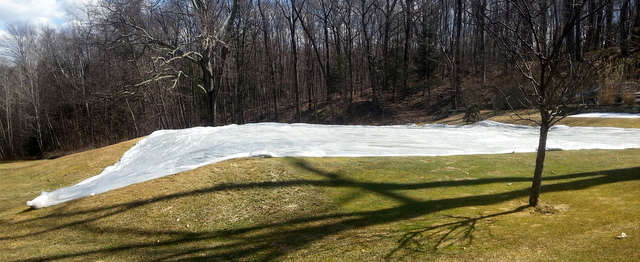
We had a snowstorm during the night three weeks ago, and you can see the result in the photo above. A few days later, my wife and I took our dog for a walk at the golf course. We got stuck in the Executive Parking Lot, which is back behind the clubhouse, between the Dumpster and the propane grill. Our retired superintendent, who still lives next door, helped me dig out, and as I rocked my car back and forth I figured I wouldn’t be playing golf until at least May. But Gary, our current superintendent, opened the course this past weekend, so everything is normal again. The only part of the course that was still out of play was the practice green:

20130330_114628

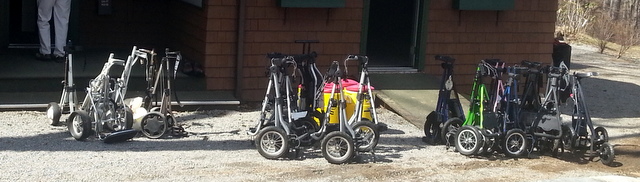
When I arrived, Nick, who is about to graduate from high school, was in the bag room performing pushcart triage. In the photo below, the pushcarts on the left are headed to the dump, the ones on the right are still fully functional, and the ones in the middle will be kept for parts:

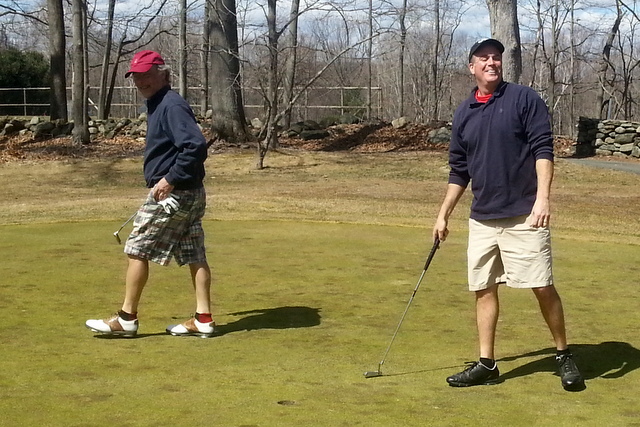
20130330_114646Quite a few of the guys wore shorts—apparently in the belief that our Shorts Rule (one extra handicap stroke if you wear them after November 1; two if you wear them after December 1) still applies once the new season has begun. It does not. 

Reese and Mike A, fourth green, no extra strokes.

Reese and Mike A, fourth green, no extra strokes.

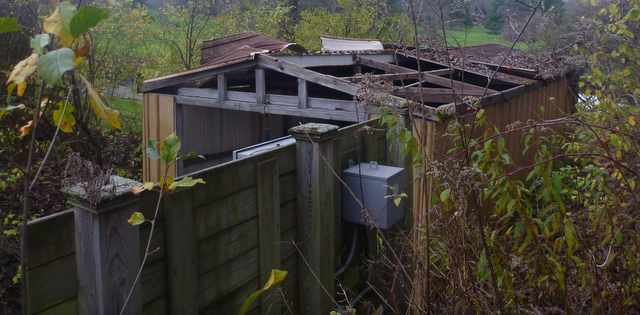
We inspected the new pump house, which Frank built over the winter. Here’s what it looked like before:

Pump house: before Frank.

Pump house: before Frank.

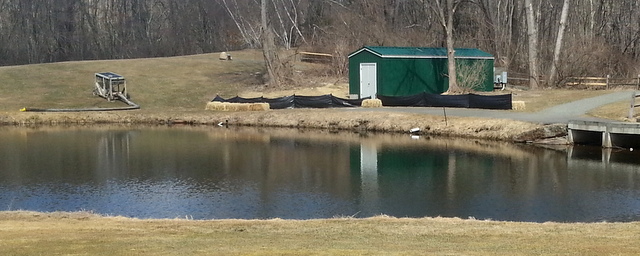
And here’s what it looks like now:

Pump house: after Frank.

Pump house: after Frank.

Unfortunately, Frank is taking a leave of absence this year. He’s having both knees replaced—something he has needed for a long time. A few years ago, during a storm, he helped me install an emergency patch on a hole in my roof, using a technique that he called “redundant half measures.” It worked great, but I had to do most of the kneeling.

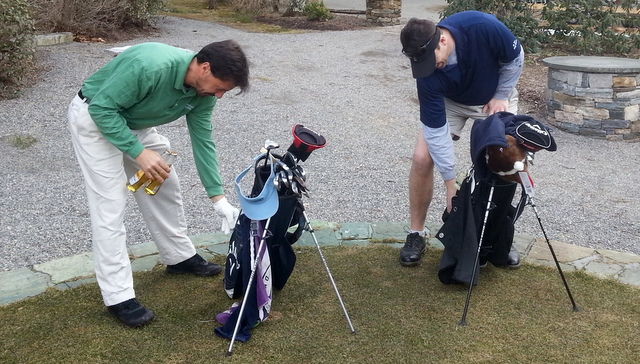
When we finished playing, Mike G. and Chic were getting ready to tee off. Here they are, loading provisions into their golf bags:

20130330_151837

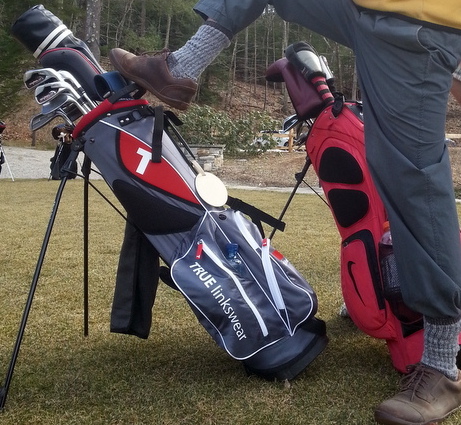
Addison had some new golf pants, which he got because he plays for the University of Hartford. The only other significant off-season acquisition I noticed was Tim’s golf bag, which is made by the same company that makes our favorite shoes:

20130330_151431

And the next day, I played again, with Addison and Reese. We had the place pretty much to ourselves:

P1050419

Reese and I played Addison in a series of close-out matches, with all our strokes. We won both World and Solar System, but Addison, with a par on the eighteenth, took Universe. Luckily, we have a full season to get it back.

On Going to Golf School

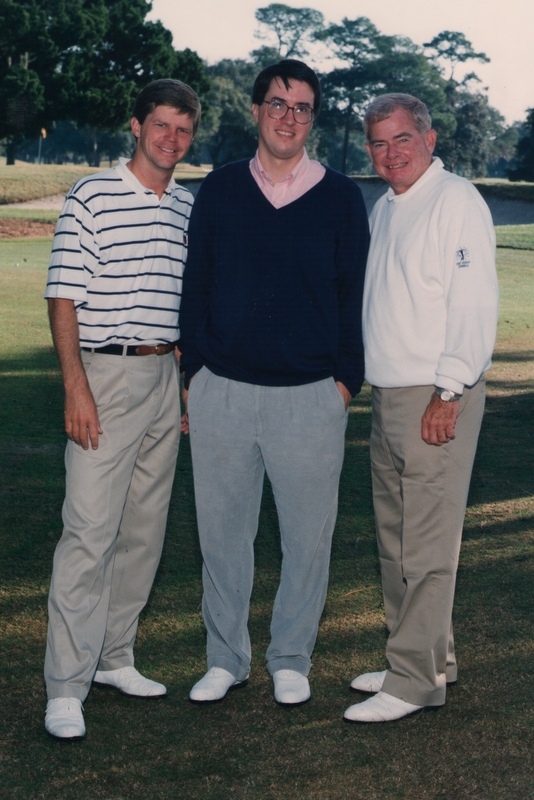
The teachers at the first golf school I attended, at Sea Island in 1991, were Scott Davenport, on the left, and Jack Lumpkin, on the right. I didn't own any golf shirts yet, and those pants are corduroys.

The teachers at the first golf school I attended, at Sea Island in 1991, were Scott Davenport, on the left, and Jack Lumpkin, on the right. I didn’t own any golf shirts yet, and those pants are corduroys. Also: huge glasses.

I started playing golf in 1991, when I was thirty-six. A couple of months later, as I sat in my office pretending to work, I found myself gazing dreamily at an advertisement in the back pages of a golf magazine. The advertisement was for a golf school. I realized immediately that what I needed more than anything was to place myself in the hands of highly skilled teachers, who would transform me from a bumbling chopper into a champion. I bought a paperback book called The Guide to Golf Schools & Camps, and spent several days thumbing through it. It listed schools for children, women, left-handers, families, old people, high handicappers, low handicappers, people with disabilities, people interested in working only on their short game, and others. The schools were in places like Florida, California, Hawaii, Mexico, Jamaica, the Bahamas, Spain, the Canary Islands, the Dominican Republic, and Kansas.

In the end, the listing I found the most appealing was for Golf Digest Schools, a sister company to the magazine. (At that time, I had no connection to Golf Digest; I later became a contributing editor.) After several days of happy deliberation, I settled on a mid-November session at the Sea Island Golf Club, in Georgia, which had a teaching facility with a high-tech video studio, an enormous driving range with target greens and fairways, covered hitting stalls, and a staff of experienced teachers. I sent in my deposit and made airplane reservations.

When I told my friends that I was going to golf school, some raised their eyebrows, some expressed envy, and some became apocalyptic. “I knew a guy who went to golf school,” a friend told me. “When he came back, his handicap was ten strokes higher, and it took him six months to get his game back to where it had been before.” I heard warnings often enough to make me worry slightly. But I figured that my game was already so lousy that the downside risk was fairly low.

During the weeks before my departure, the mail brought several packages from Golf Digest. One contained special scorecards that I was supposed to fill out and send in for computer analysis. (I eagerly did.) Another warned me not to wear bifocals during my lessons. (I might not be able to tell which ball I was supposed to hit.) Another contained a list of the names, occupations, addresses, and handicaps of my eleven fellow students. (My handicap at the time, twenty-four, placed me roughly in the middle of the class.) Another contained a questionnaire concerning my goals as a golfer. (I said I wanted to become “consistent.”) I packed my suitcase two days early. I scrubbed the heads of my golf clubs with steel wool and dishwashing detergent, and I cleaned the grooves with toothpicks. I filled the ball pocket of my golf bag with balls that cost twice as much as the kind I usually played with. The night before I left, I lay awake for hours, waiting for my alarm to go off. I felt as excited as if I were fifteen years old and on my way to screwing school.

I was thinking about all that this afternoon, because my home course opens tomorrow, and I’m as excited as if I were thirty-six years old and on my way to Sea Island. I’ve taken twenty strokes off my handicap during the twenty-two years since that first session, and, although I fully intend to start adding those strokes back, beginning tomorrow, I’m not expecting to sleep much tonight.

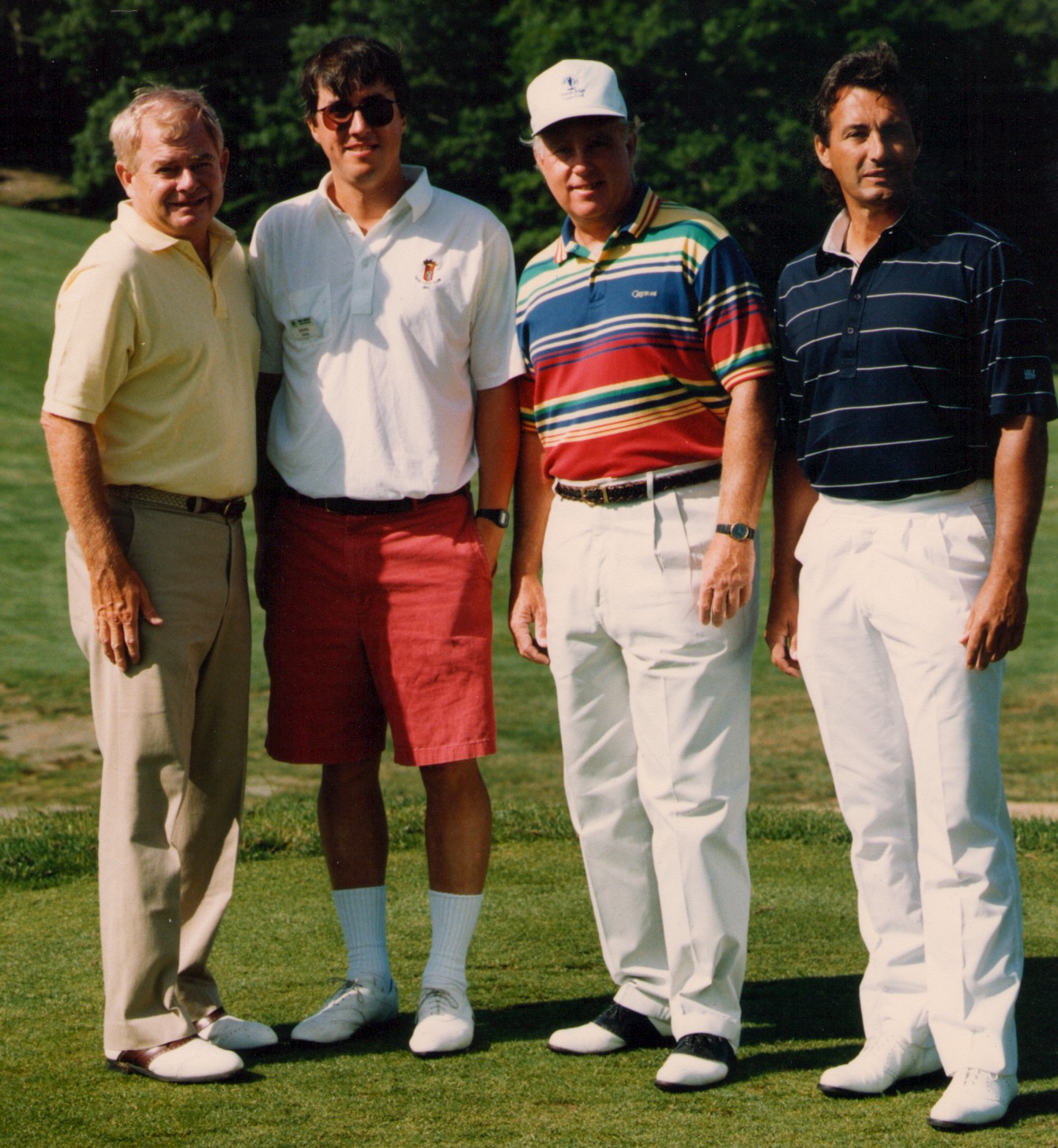
This photo is actually from my second trip to a Golf Digest golf school, this one on Cape Cod during the summer of 1992. The man on the left is Jack Lumpkin, who was the head teacher at both sessions. Check out my sunglasses and tautly pulled-up socks! Partial credit for non-pleated shorts, however.

This photo is from my second trip to a Golf Digest golf school, on Cape Cod during the summer of 1992. The man on the left is Jack Lumpkin, who was also the head teacher at Sea Island. Check out my super-sized sunglasses and tautly pulled-up socks! Partial credit for non-pleated shorts, however. And by then I owned a golf shirt, which I had bought on my first golf trip to Scotland, a couple of months before.

Masters Countdown: The First “Green Coats”

green jacket

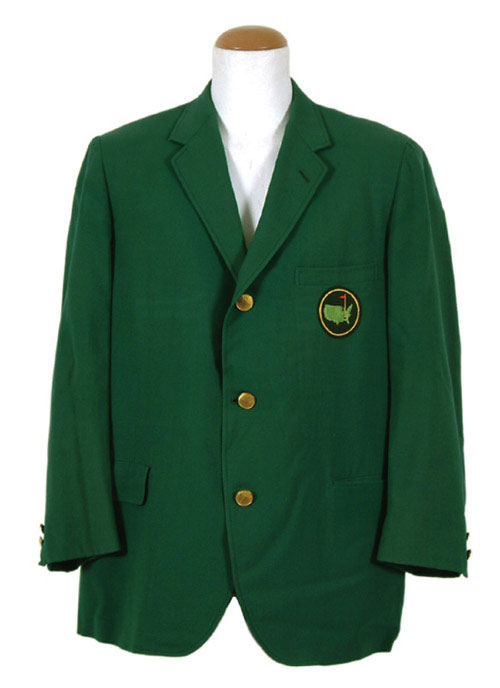
Green jackets were first worn at Augusta National in 1937, but they weren’t popular. “The members were not enthusiastic at first about wearing a conspicuous Kelly-green garment,” Clifford Roberts, the club’s co-founder and chairman, wrote in 1976. “Besides, the original coats were made of material that was too heavy, so that the wearer became uncomfortably warm.”

A few years later, the club offered an improved version, and on January 13, 1941, Helen Harris, who managed the club’s office, wrote a letter to the members informing them that “the Club’s Tailor is prepared to make the official Green Coats bearing the club’s Emblem for $18.50 and if you should wish to order one, please have your own tailor fill in the measurements on the enclosed blank and return it to me.”

The club had recently done some much-needed remodeling in the clubhouse, which had been a wreck when the club and tournament began. “With the improved Club facilities,” Harris continued, “most all our Members will likely spend more time here and these green coats come in handy for lounging. They are also quite serviceable during the Master’s [sic] Tournament as they make it unnecessary to wear a badge. Moreover, they identify the wearer as a member and thus give our gallery patrons a reliable means of securing information.”

The first Masters winner to be given a green jacket was Sam Snead, in 1949. A decade earlier, the club had photographed the first five winners in green jackets, but those had been borrowed from members—in a couple of cases, from members who had significantly different dimensions. The club keeps a selection of sizes on hand, and if a player who hasn’t won before is in contention the golf shop makes a few phone calls, to get an idea of likely measurements.

Horton Smith, Byron Nelson, Gene Sarazen, Henry Picard, and Ralph Guldahl, 1939. You can order a nice print of this swell photo from the Masters website.

Horton Smith, Byron Nelson, Gene Sarazen, Henry Picard, and Ralph Guldahl, 1939. You can order a nice print of this swell photo from the Masters website. No green jacket, though.

Golf Periscope Update

Periscope woman 3-17-2013

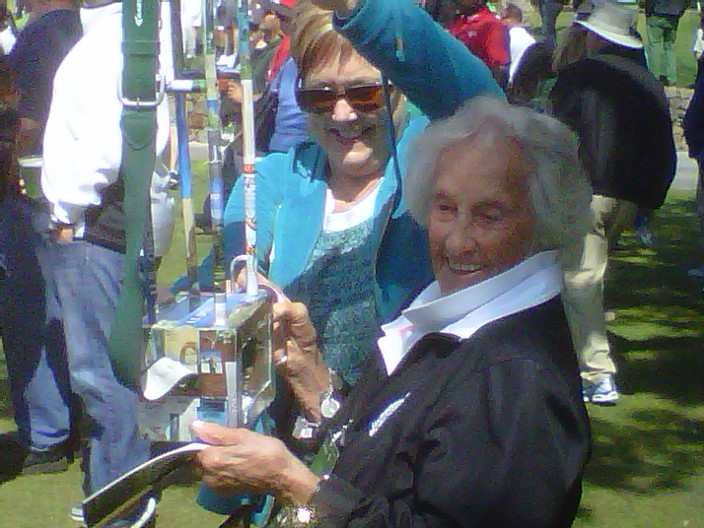
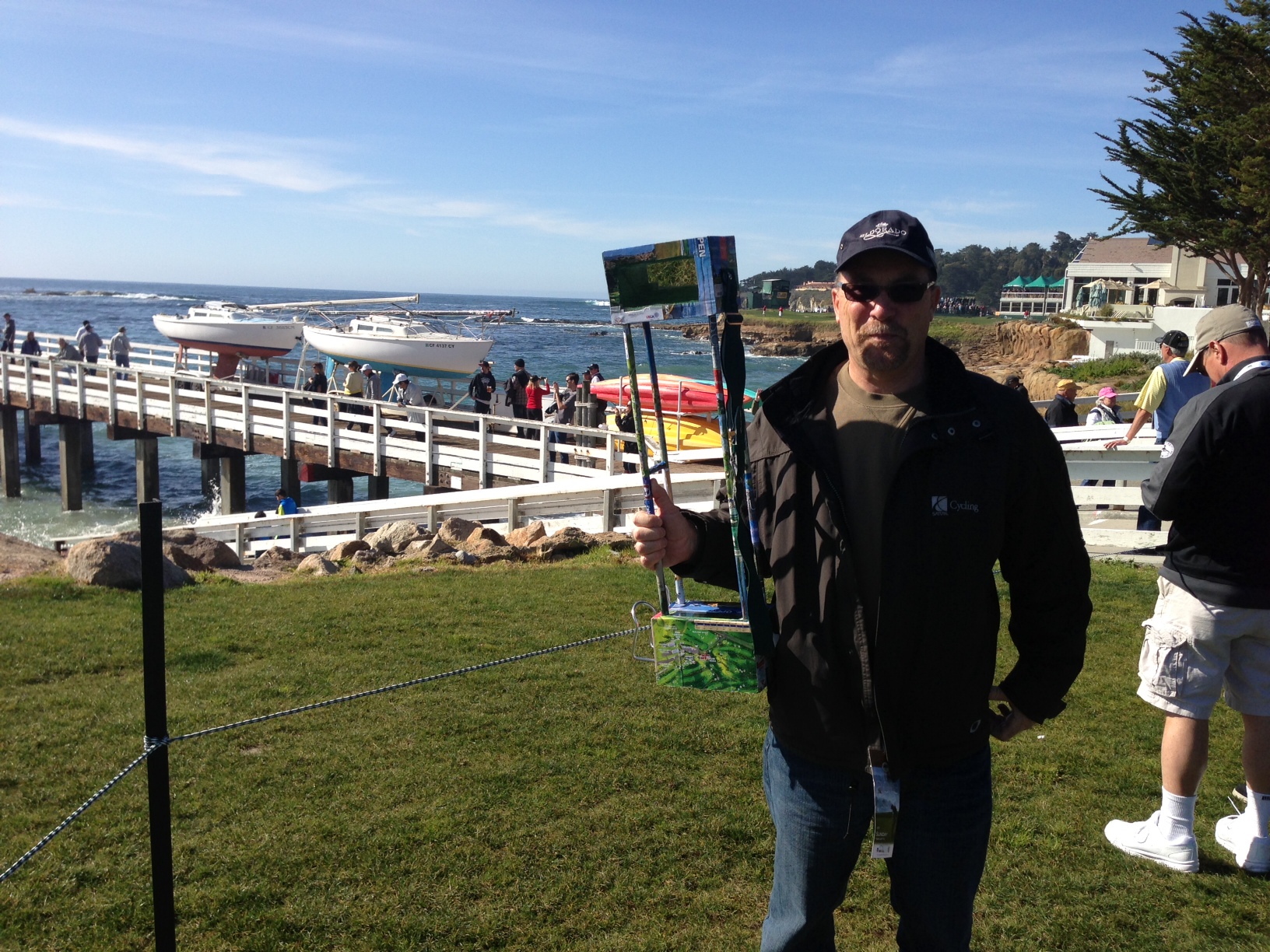
Steve Davis, whom I met at Tiger Woods’s World Challenge back in December, has been tweaking and field-testing his golf periscope, which is considered by some to be the most important golf-related invention of the current century—and not only because it has a shoulder strap and a beer holder. Last weekend, he took it to the Toshiba Classic, in Newport Beach, California, an event on the Champions Tour. “I was following the final group Sunday,” he told me in an email. “There was this little old lady who couldn’t see anything. She understood right away how the periscope worked. The smile that produced was priceless. It was my feel-good moment of the day—and we were only at the first green.”

Steve Davis and his periscope at the Farmers Insurance Open, Torrey Pines Golf Course, La Jolla, California, where, he reports, "Tiger was Tiger of old."

Steve Davis and his periscope at the Farmers Insurance Open, at Torrey Pines Golf Course, in La Jolla, California–where, he reports, “Tiger was Tiger of old.”

Davis apparently spends all his time either working on his periscope or trying it out at golf tournaments. He watched Tiger win at Torrey Pines in January (photo above). And last month he attended the AT&T Pebble Beach National Pro-Am, which Brandt Snedeker won. In another email, Davis sounded almost disappointed that there weren’t more people standing between him and the action. “The big surprise was how small the crowd at Pebble was,” he wrote. “We could stand alongside the green on almost every hole. It got crowded only around the end, at 16, 17, and 18.” The photo below was taken at the AT&T, and it shows him holding a modified version of the device I tried at the World Challenge. The differences may not be obvious to a layman, but they are significant. “I have a new system and have been having problems with it,” Davis confided, “so I’m having trouble trusting it.”

AT&T ProAm Pebble Beach 2013

Davis also took his periscope to the Northern Trust Open, at Riviera, last month. “What can I say with a two-playoff-hole victory for Merrick’s first tour win?” The guy on the right in the photo below, which was taken at Riviera, looks to me like he was contemplating a smash-and-grab, but apparently he was just eyeing Davis’s beer.

2013 Northern Trust Play Off

More periscope news as it develops.

The Metaphysics of Ball Retrievers

retriever

There is a point of no return in a golfer’s life, and an older friend passed it. I knew he had, because I saw the evidence in his bag. It was right between his three-wood and his umbrella.

It was a ball retriever.

My friend used to play pretty well. He never won the club championship, but in his prime he was one of the guys a champion had to beat. In a nassau, you wanted him for a partner. In a scramble, you wanted him on your team. He would go for the green in two on a par-five, and he would sink a putt that mattered. He was, locally, a player.

Then his game began to turn. His draw faded. His fade sliced. He stopped signing up for tournaments. The putts that he gave (and therefore showed that he hoped to be given) crept into the leather, and then beyond the leather. Gradually, his focus as a golfer shifted from the hole to the pond.

Golfers who carry ball retrievers are gatherers, not hunters. They’ve given up the chase. They’ve climbed as far up the hill as they can climb, and now the paths lead only down. They’ve stopped tinkering with their grip. They don’t practice in the sand. Their dreams are no longer of conquest, but only of salvage.

Golfers who carry ball retrievers don’t walk down the center of the fairway anymore. They go the long way, through the tall grass, because that’s where the lost drives hide. They stir the weeds with nine-irons as they pass. When they step on something round, they freeze. Instead of searching the treetops for a change in the wind, the way they used to, they let their eyes drift lower: there are balls in the woods. If no one is pressing them from behind, they leave their bag and walk along the creek. By the end of the morning, their pockets are bulging. They will never buy another sleeve.

I used to know a man who still played a little but was just as happy not to. On Friday afternoons, I would see him in the marsh to the right of the first fairway. There’s a shallow, silt-choked pond back there. He wore rubber boots that came up to his knees. Most of the balls he found were dark and heavy, but he didn’t throw many back.

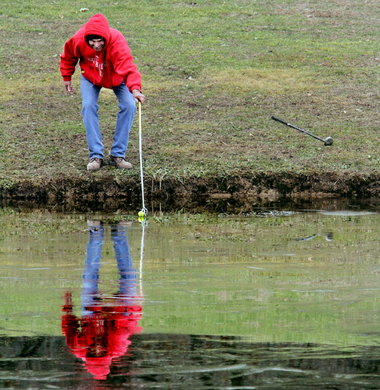
His hoard of balls, which he kept in the trunk of his car, was sure to outlast him. But he wasn’t thinking about that. Suddenly, he glimpsed something pale in a spot too deep for wading. He extended his ball retriever and threaded it through the cattails. He braced his boots in the muck and reached as far as he dared into the darkness at the bottom of the pond.