Masters Countdown: The 1967 Television Strike

U.S. Walker Cup team, 1957. Charles Coe, the captain, is squatting in the center. Billy Joe Patton, in glasses, is standing behind him.

U.S. Walker Cup team, 1957. Charles Coe, the captain, is squatting in the center. Billy Joe Patton is fifth from the left.

The American Federation of Television and Radio Artists declared its first national strike on March 29, 1967. That meant that CBS’s usual golf commentators, who were members of that union, could not participate in that year’s Masters broadcast, the following week. Clifford Roberts, Augusta National’s chairman, conducted auditions among the club’s membership, and settled on two distinguished amateur players, Charles Coe and Billy Joe Patton, to fill two of the vacant spots. Coe had won the U.S. Amateur twice and had been the runner-up to Jack Nicklaus in 1959, and in the 1961 Masters he had finished tied for second with Palmer. Patton had led the Masters after two rounds in 1954, then ended up in third place behind Snead and Hogan. Both men had played the course for years—Coe with a handicap that varied between plus-6 and plus-7.

Coe and Patton did creditable jobs as commentators, and their minimalist dialogue confirmed Roberts’s belief that less is more in golf broadcasting. CBS was pleased as well, and William MacPhail, who was the network’s director of sports, passed along a sampling of the large volume of complimentary mail the network had received. One viewer wrote, “[T]he quiet, sincere comments of your members, which were entirely adequate, were a refreshing change from the glib, and sometimes overly talkative, ‘pros’ we usually hear.” Another wrote, “What an absolute pleasure it was to watch a player, under severe pressure, walk up to a putt in silence—the silence any gallery always accords a player, but which the announcers feel impelled to fill with chatter. In this case, one truly felt present, with a real sense of actual participation.” The broadcast turned out so well, in fact, that CBS executives credited it with breaking the strike, which ended the day after the tournament.

Not much silence nowadays. Worth trying?

My Close Personal Friend Moe Norman

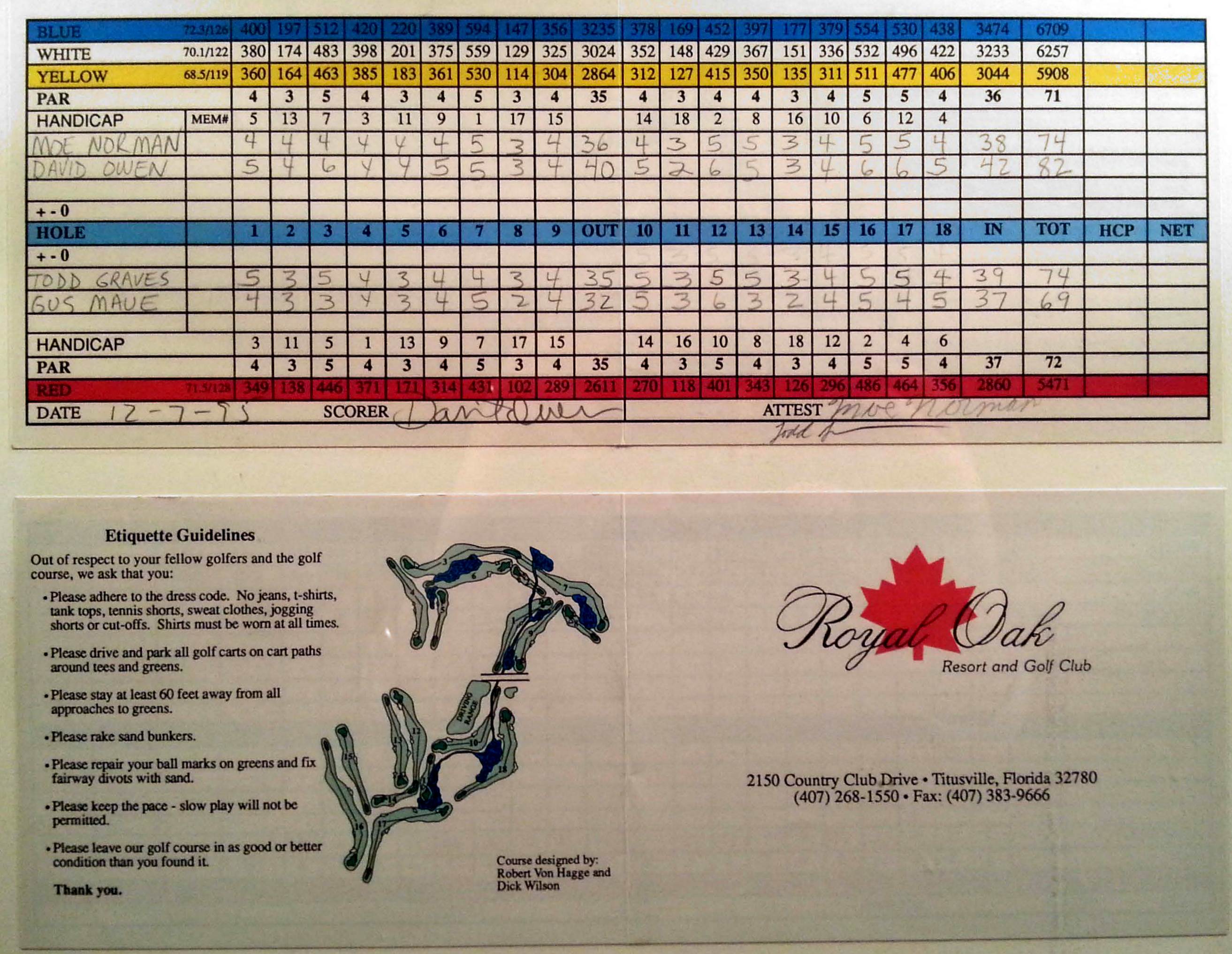
Moe Norman Scorecard

Many golfers nowadays look blank when you mention Moe Norman, who died in 2004, but to those who were lucky enough to see him play he was a legend. Lee Trevino ranked him with Ben Hogan and Byron Nelson as one of the greatest ball-strikers of all time. Paul Azinger first saw him hit balls on a driving range in Florida in 1980, when Azinger was in college. “He started ripping these drivers right off the ground at the 250-yard marker,” Azinger told Tim O’Connor, a Canadian sportswriter, “and he never hit one more than 10 yards to either side of it, and he hit at least 50.” In 2005, Tiger Woods told Jaime Diaz, now the editor of Golf World, that Norman and Hogan were the only two golfers in history who had “owned” their swing, and that one day he hoped to own his, too.
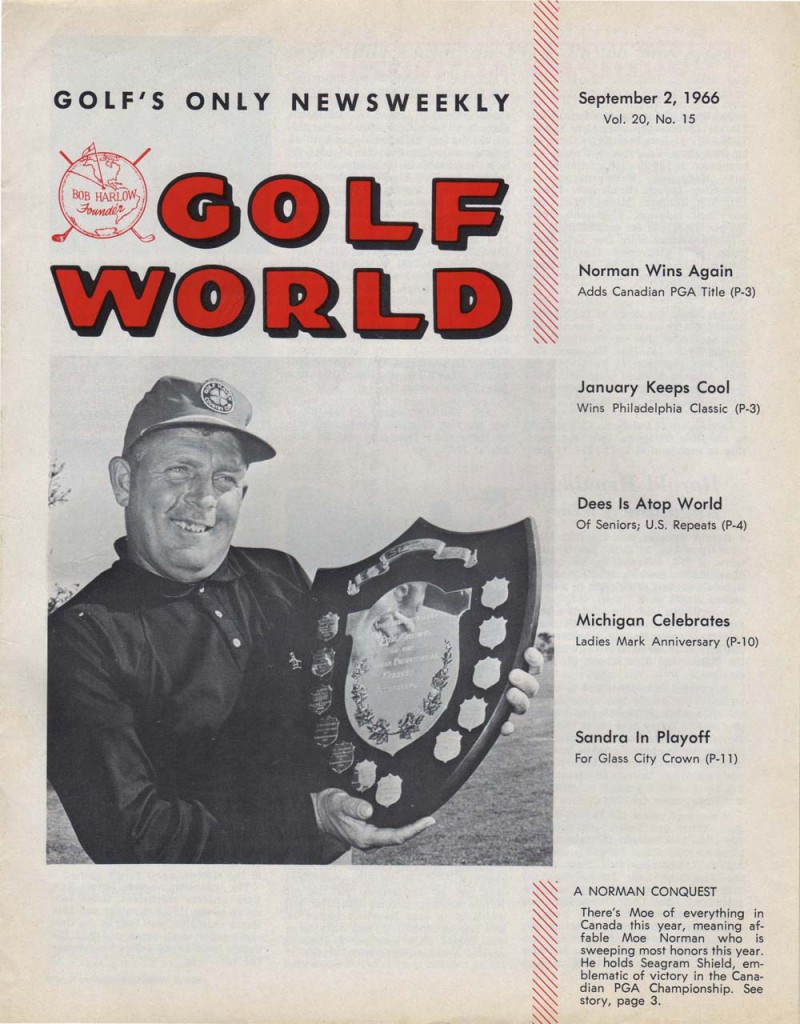
Moe Norman Golf World 9-2-66

Despite such accolades, Norman spent much of his forty-year competitive career in obscurity and poverty. He played almost exclusively in Canada, where he was born, and made only a brief attempt, in 1959, to play on the American tour. He sometimes carried his own bag in tournaments, because he couldn’t afford a caddie, and he sometimes slept in bunkers on the courses where he competed. He often hitchhiked to and from tournaments, and he had to juggle his competitive schedule with a succession of dreary factory jobs, including one stitching rubber boots. He spent the winter before the 1956 Masters, to which he had been invited as the reigning Canadian Amateur champion, setting pins in a bowling alley for a few cents a line. For years, he supported himself partly by selling the prizes he won in amateur tournaments, and as his confidence increased he sometimes sold the prizes before the tournaments began. (According to friends, on at least five occasions he intentionally finished second because he hadn’t been able to find a taker for the first-place prize and had been forced to sell the second.) In the late nineteen-eighties, he was so broke that only the last-minute intervention of friends prevented a bank from repossessing his car.

Moe Norman, 1950s.

Moe Norman, 1950s.

I watched Norman hit golf balls on a practice tee at Foxwood Country Club, in Kitchener, Ontario, his hometown, in the fall of 1995, when he was sixty-six. He warmed up with a pitching wedge, although “warming up” doesn’t really describe any part of his routine: the first shot was perfect, the second was identical to the first, the third was identical to the second. Then he switched to his four-iron. His swing—to all appearances, an effortless half-swing—was the same as it had been with the wedge. “How far you hitting those?” a spectator asked. “One-eighty,” Norman said. The shots were within a couple degrees of dead straight, despite a stiff cross wind, unless he announced ahead of time that he was going to hit a draw or a fade. The divots were identical, and surreally shallow.)
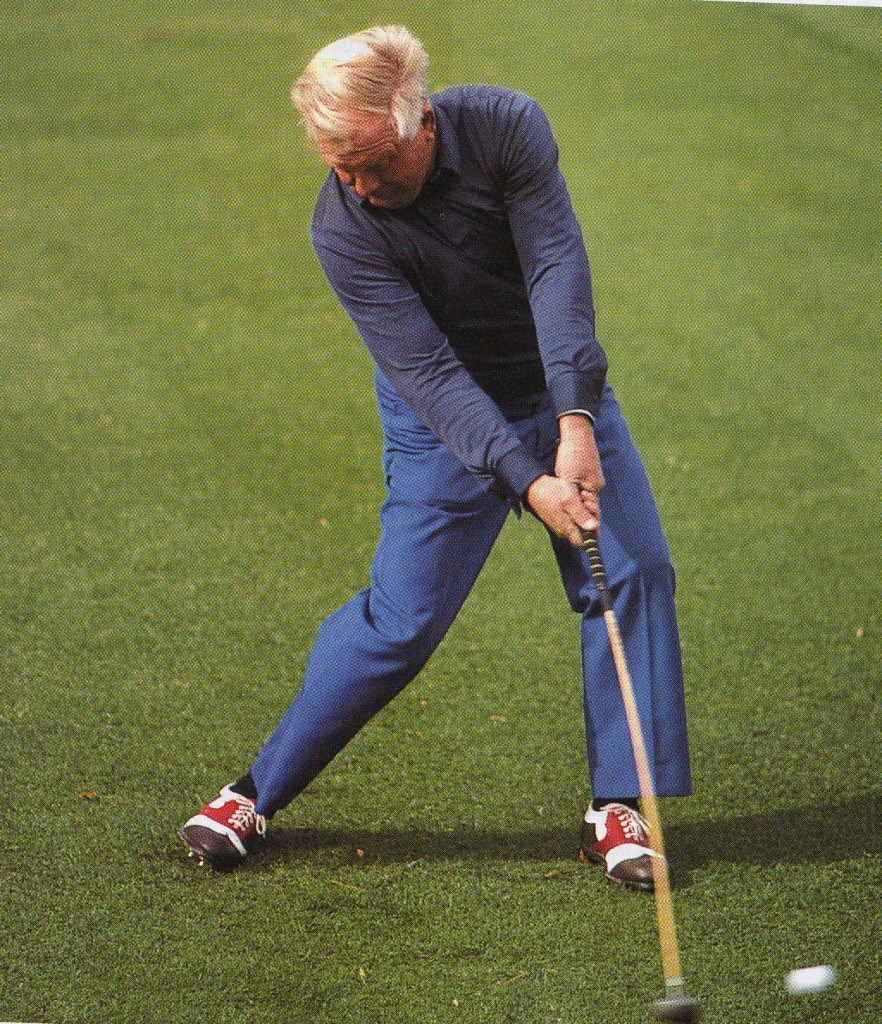
Moe Norman, 1990s.

Moe Norman, 1990s.

He switched to his driver. If you had looked only at his arms and hands, you wouldn’t have known he wasn’t still swinging his wedge. He would watch each ball in the air a moment, then bend over and place another on the tee—and I mean place it. The tee never moved. “I hit balls, not tees,” he said. On a driving range once, he hit 131 drives in a row from the same tee without having to straighten it. In tournaments, he sometimes entertained galleries by hitting a drive from the mouth of the Coke bottle from which he had just been drinking.
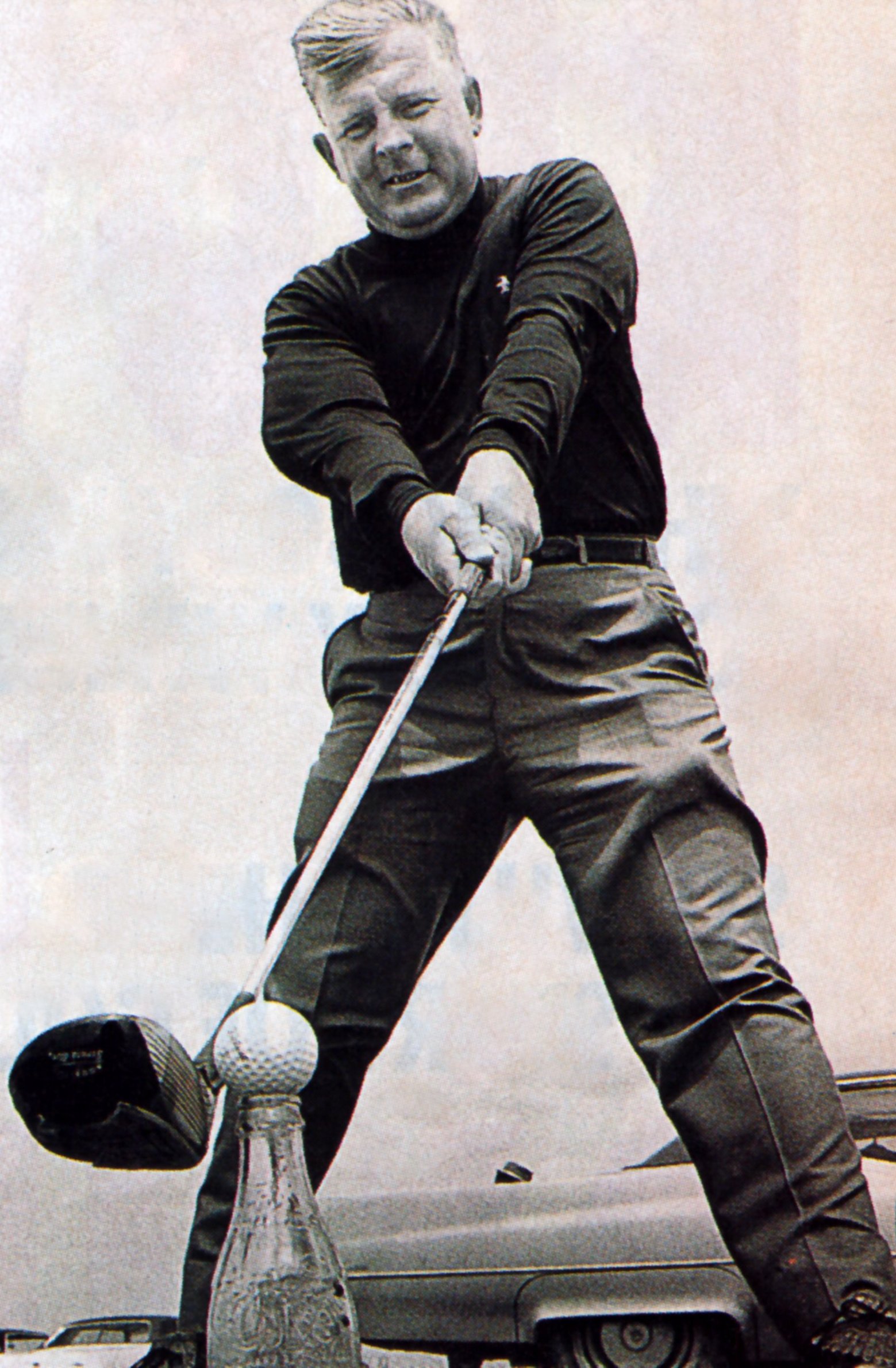
Moe Coke Bottle.bmp

In December, 1995, I got to play a round with Norman and his friends Gus Maue and Todd Graves (who calls himself Little Moe and teaches Norman’s highly unorthodox swing) at Royal Oak Resort and Golf Club, in Titusville, Florida. Royal Oak may no longer be a going concern—its website has been shut down for lack of payment—but in 1995 it was a favorite winter hangout of the Canadian P.G.A. The first hole was a 400-yard par 4, dogleg to the right. Maue, Graves, and I hit tee shots up the middle, and then Norman hit his over a row of trees to the right, toward a lake that ran the length of the hole. I thought, Hmmm—this is one of the greatest ball-strikers of all time? But it turned out that Norman always played the hole that way. There was a strip of grass, maybe ten yards wide, between the trees and the water, and from there he had an easy 9-iron to the green, while those of us in the fairway needed four-irons or five-irons.

Norman won his first tournament in 1949. “I didn’t know anything then,” he told me that day. “I didn’t even have a full set of clubs. Only had a driver, three-wood, three-iron, five-iron, seven-iron, nine-iron, and a putter. Didn’t even have a wedge. But one day everything fell into place and I shot a sixty-seven—four under.”

I said I was amazed he had played with so few clubs.

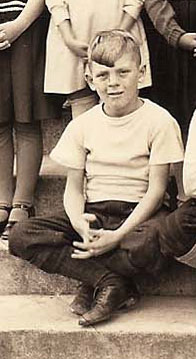
“Oh, I couldn’t afford them. Heck, when I was a kid you were lucky to have one club. And if you had a club your friends were always saying, Hey, can I use yours? Can I use yours? If someone had a driver we would hand it around—three of four guys playing together. If somebody had a nice putter, we all took turns putting with it. Goodness, back in Moe Norman youngthose days, there wasn’t a golf shoe in the foursome. And if the grass was wet your right foot would do a whirlwind, like a twist. But back then golf wasn’t a sport. It was just an exercise game. In fact, I was called a sissy by my father and my brothers, right at dinner. They would make big ears at me and call me a sissy. ‘Come on, play a man’s game,’ my father used to say. ‘Play baseball, or hockey—do like your brothers.’ I said, ‘No, Dad, I’m too light.’ I was a little skinny kid then, not over a hundred and thirty pounds, and I couldn’t play any other sport and be good at it, so I kept playing golf. But I had to hide my clubs under the front porch. My father was fat and I was real skinny, so I could dig a hole that he couldn’t get his head through but I could get my body through, and if I would push my clubs in far enough he couldn’t reach them.”
I wrote about Moe Norman in Golf Digest in 1995, and you can read that story here. The date in the opening anecdote is wrong, since Porky Oliver died in 1961. But other than that. . . .
 

Masters Countdown: Bobby Jones in Color

Bobby Jones in Color

The photograph above was taken in 1947, during the next to last Masters that Bobby Jones competed in. His badge identifies him as Player No. 1. The photographer was apparently experimenting with an early color film. The negatives were discovered in an envelope in an old file cabinet at Augusta National almost fifty years later, around the time I began researching my book The Making of the Masters. No prints are known to have been made before that time.

There is a great deal of confusion about Jones and his status as a player. Augusta National, in tournament publications, lists him as an amateur, but by the rules of the U.S.G.A he became a professional in 1930, when Warner Bros. hired him to make instructional films, and when, a little later, he began designing and promoting golf clubs for A.G. Spalding & Bros.

Jones retired from competition not because he had no worlds left to conquer; he retired because he abhorred the idea of being labeled a professional. In a letter to Clifford Roberts many years later, he described the typical pro as “an uneducated club servant”—a prejudice that dated to the early days of his competitive career, when only amateurs were accorded the honorific Mr., professionals weren’t allowed inside clubhouses, and tournament organizers distinguished between “gentlemen” and “players.”

“So long as I played as an amateur, there could be no question of subterfuge or concealment,” he wrote in 1960—a statement that clearly shows what he thought of playing golf for money. Roberts secured Jones’s participation in the first Masters, in 1934, by cleverly dodging the issue: in the tournament’s program listings and pairing sheets, he made no distinction between amateurs and professionals.

But the distinction was invariably noted elsewhere. The Associated Press and all other news organizations, in their coverage of the tournaments Jones competed in, listed him with the pros. Even O.B. Keeler, who had built his sportswriting career by celebrating Jones’s amateur accomplishments, took it for granted that Jones was now a professional. And so did Augusta National, officially.That’s why Charles Yates, not Jones, was honored as the low amateur in the first Masters, even though Yates’s score was three strokes worse than Jones’s.

Would Jones have played in the Masters if the club had been compelled to label him explicitly as a professional? Roberts said in later years that he suspected he probably would have, in order to help the club. But Roberts was uncertain enough that he never raised the matter with him, either then or later.

In Golf is My Game, Jones wrote that to give up his amateur status would have been “like giving up part of myself.” But, in fact, he gave it up in 1930. And he had a powerful incentive for doing so. His golf-related income in 1933, when the first tournament was being planned, was over $100,000; in contrast, Paul Runyan, who won nine events that year and was the tour’s leading money-winner, had gross tournament earnings of less than $6,500.

Augusta National, Video Games, and “Hard Luck” Tony Sheehan

Eighth green, Augusta National, 1930. Photo by Tony Sheehan.

Eighth green, Augusta National, 1930s. Photo by Tony Sheehan.

My Golf Digest colleague Ron Whitten and I recently spent a couple of days in Orlando with the video-game designers at Electronic Arts, the creators of Tiger Woods PGA TOUR. The game’s next edition will include a recreation of the Augusta National course as it was in 1934, the year of the first Masters, and Ron and I had been asked to help the game’s “environment modelers” make the virtual course as historically accurate as possible. We offered suggestions about everything from green contours to mowing patterns to the size and placement of individual trees—an experience we’ll both be writing about for the April issue of Golf Digest.

Among the many historical resources the game’s designers consulted were photographs of the course taken in the 1930s by Tony Sheehan, who was Augusta National’s unofficial official photographer. (The picture at the top of this post, which also appears in my book The Making of the Masters, is one of his.) Sheehan’s nickname was “Hard Luck.” Clifford Roberts, the club’s co-founder and first chairman, wrote about Sheehan in his book, The Story of Augusta National Golf Club, which was published in 1976:

Tony was an oddball in appearance and dress, and he made comments at times that were just as unusual and unexpected. Neither he nor his battered old camera looked to be qualified to make even a passport photo, but he was a remarkably capable photographer . . . .

Many of us experience accidents as we go through life, but I doubt that any man endured bad luck so often and so continuously for so many years as Tony Sheehan. Every time an epidemic of any kind came to town, Tony was the first to catch it.

Tony tripped over something and broke one or more bones so often that it almost appeared to be a habit. On one occasion, while he was waving to friends, his car plowed into a large stone marker on Walton Way in Augusta, which cost him a number of teeth but gave him some distinctive battle scars on his face. . . .

Tony survived a half-dozen major operations, plus numerous patching-up jobs. His one lucky day was when he was married to the nurse, Eva Smith, who had looked after him in the hospital so many times that she felt lonesome between his visits.

Tony finally got himself into really serious trouble—his car was hit by a train. Over a year’s period the hospital lost track of the number of jobs that had to be done on Tony. Finally, the great day arrived when he could leave. His wife picked him up in her car and headed for home. When they arrived at the railroad track, the same one where Tony was wrecked, he asked her to stop the car. He then walked ahead and looked in both directions to make sure no train was approaching. As he was about to signal her that all was clear, her foot slipped off the clutch and she knocked Tony down. Whereupon she picked him up and took him back to the hospital for another stay.

Believe it or not, our friend Tony Sheehan lived to be eighty years of age, and died in 1974 of natural causes.

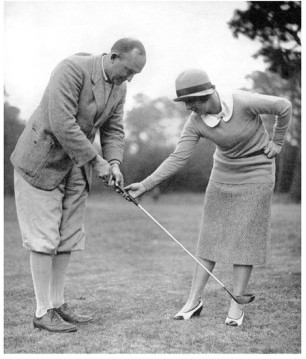
In 1931,Sheehan took this photograph of Ty Cobb receiving a golf lesson from Glenna Collett Vare, who won the U.S. Women's Amateur six times. Cobb was from Augusta, and this photograph was taken there--possibly at Augusta National.

In 1931,”Hard Luck” Tony Sheehan took this photograph of Ty Cobb receiving a golf lesson from Glenna Collett Vare, who won the U.S. Women’s Amateur six times. Cobb was from Augusta, and this photograph was taken there–possibly at Augusta National, although more likely at Augusta Country Club, next door, where Cobb was a member.

Roberts himself knew something about hard luck. He grew up poor in a succession of small towns, accidentally burned down his family’s house when he was sixteen, lost his mother to suicide when he was nineteen, earned a modest fortune and then lost it in the stock-market crash of 1929, and presided over Augusta National’s bankruptcy in 1935, a few months after the second Masters. Like Tony Sheehan, though, he persevered, and because he did we have the Masters—now just over three months away.

Does Practicing Making Golfers Worse?

Rory McIlroy during the final round of the 2011 Masters, on a day when he spent plenty of time at the driving range before teeing off.

Rory McIlroy during the final round of the 2011 Masters, on a day when he spent plenty of time at the driving range before teeing off.

I haven’t hit a ball on my club’s driving range in two years, and during that time I’ve played the best, most consistent golf I’ve ever played. I’m not sure that’s a coincidence. In fact, I’ve often wondered whether hitting range balls didn’t make me worse. My first few shots on the practice tee would inevitably include my best shot of the day. Then, as I worked my way through my bag, my swing would deteriorate until I was shanking my wedges, fatting my irons, and slapping weak leakers with my woods. And then I’d go play. One day, I decided to skip the warm-up.

I also stopped using the practice green, and almost immediately I became a better putter. One possible explanation: when I tee off now, I’m the only guy in the group who hasn’t missed a putt that day. I’ll watch other guys on the practice green, to get a feel for the speed, but I won’t stand there lipping six-footers.

The explanation is probably just that I’m a bad practicer. In the old days, when my swing would turn sour I would attempt a frantic intervention, by churning through two or three buckets in the hope that at some point quantity would metamorphose into quality. All I was really doing was cranking my tempo into the red zone and filling my head with negative thoughts. I was also rehearsing, and therefore ingraining, whatever problem had sent me to the range.

But even for players who practice well, hitting range balls before teeing off may be overrated—as Rory McIlroy demonstrated on the final day of the Ryder Cup this year, when he nearly missed his tee time for his singles match with Keegan Bradley. He didn’t have time to go to the range before teeing off, yet he birdied four of the first nine holes and beat Bradley two-and-one.

Rory McIlroy at the 2012 Ryder Cup, after not going to the driving range  before teeing off.

Rory McIlroy at the 2012 Ryder Cup, after defeating Keegan Bradley two-and-one in their singles match, on a day when he didn’t go to the driving range before teeing off.

Five Holiday Gift Ideas for Golfers

It’s never too early to start shopping for the golfer in your family. These gift ideas are from the pages of Golf Digest in the late 1950s and early 1960s:

This item is from 1957, when golf, cocktail-drinking, and home refrigeration were all ascendant in the United States. U.S. Royal was a trade name of the United States Rubber Company, which renamed itself Uniroyal in 1961. It no longer makes golf balls, although it may still make ice trays.

The reflective metallic golf hat, also from 1957, is an idea that never caught on, for unknown reasons. The hat was probably most useful in match play, since by standing in the right place and tilting your head you could temporarily blind your opponent. The logo notwithstanding, I don’t think anyone ever wore one in the Masters.

Wehrmacht surplus? Somebody must have bought a load of these, because they were advertised all over, and not just in golf publications. This ad is from 1960. Hats like this are still available, although they’re of interest mainly to Third Reich fetishists.

Also from 1960. Golf ball repair is a concept that doesn’t really exist anymore.

This ad is from 1958, but versions of it ran for several years. The price is per week, not per night, and it includes room, golf, meals, tips, and just about everything else. (Dove hunting may have been extra.) Today, you’d pay almost as much at Pinehurst for a dozen Pro V1s.

Don’t see anything you want? More gift ideas soon.

Halloween at Augusta National

Former Secretary of State George Schultz explaining golf to the mayor of San Francisco in 2005. (Photo by Luke Thomas.)

Condoleezza Rice isn’t the only former U.S. Secretary of State who belongs to Augusta National Golf Club: George Schultz, who ran Ronald Reagan’s State Department, is a member as well. In 1983, Schultz brought his boss and Donald Regan, the White House chief of staff, to the club as guests, and in addition to playing golf they discussed the U.S. invasion of Grenada, which began three days later, on October 25.

During that visit, a forty-five-year-old Augusta resident named Charles R. Harris rammed his pickup truck through a locked gate, took hostages at gunpoint in the golf shop, and demanded an audience with Reagan, who was playing the sixteenth hole. Secret Service agents surrounded the shop, and sharpshooters set up on the putting green. (One of them told a club member that the scope on his rifle was so precise that he would be able to hit a half-dollar coin on the first green, more than four hundred and fifty yards away.)

Harris eventually released all his hostages except David Spencer, the co-professional. Harris kept a pistol to Spencer’s head, and he threatened to shoot off Spencer’s fingers one at a time if Reagan wasn’t brought to see him. To prove that he was serious, he fired a bullet through a window in the front of the shop. (Today, a piece of the window frame with a bullet hole in it hangs on Spencer’s living-room wall.) Spencer was held at gunpoint for two tense hours (not twenty-one, as some Web accounts say). He managed to escape during a moment of confusion when food was sent in for Harris.

“Dave ran out the door and saw Mr. Johnson, the club’s barber, and myself standing there,” Dr. Stephen W. Brown, a member, told me in 1996, “and he more or less collapsed in our arms. I took Dave up to the clubhouse and sat with him awhile, and I told him that his wife knew he was out and all right. He said he wanted to cry. I said, ‘Well, go ahead. Nobody’s here but the two of us.’ He quickly wiped his eyes and turned to me and said, ‘Dr. Brown, I was just as nervous as if I was standing over a three-foot putt and Mr. Roberts told me I had to make it.” That’s Clifford Roberts, of course—the club’s legendary co-founder and longtime chairman.

One October evening fifteen years later—after Schultz had played a round with Nicholas Brady, who served as Secretary of the Treasury under Reagan and the first George Bush and is also a member—Schultz gave  everyone in the dining room a handmade Halloween favor: a small orange-and-black gift bag containing an orange golf ball on which he had used a black marker to draw a smiling jack-o’-lantern face. I got one because I was there working on my book The Making of the Masters. (See photo below.)

Orange and black, not coincidentally, are the colors of Schultz’s alma mater, Princeton University—which he also honored by having a tiger tattooed on his rear end.

Top-Flite jack-o’-lantern, hand-painted by my close personal friend George Schultz. (Collection of the author.)

Horton Smith, Titanic Thompson, Bobby Jones, Alfred Bourne, and Me

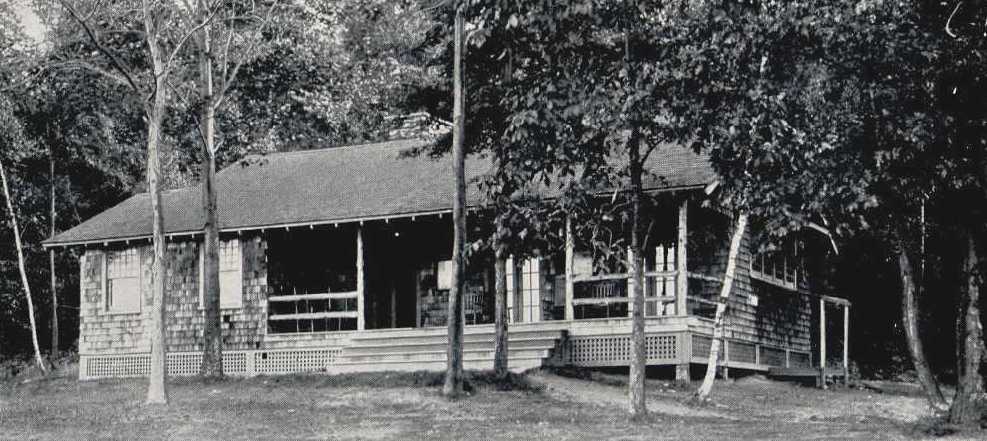
My golf club’s clubhouse as Horton Smith and Titanic Thompson knew it. It looks about the same today, although the trees and the porch have grown.

Horton Smith won the first Masters, in 1934, and he won again in 1936. Two and a half years after that, he got married in the little Connecticut town where I live, ninety miles north of New York City. The bride was Barbara Bourne, whose parents owned a 40-room weekend house here. The legendary golf hustler Titanic Thompson attended the wedding and, during a golf outing at our nine-hole club, gave a ten-dollar tip to his caddie, a local kid who, once he’d become an old man, sometimes played golf with me. (The regular rate in 1938 was 35 cents a loop, 60 cents for two bags.)

Barbara Bourne and Horton Smith (far left), along with lots of Bournes.

Barbara’s late grandfather, Frederick Gilbert Bourne, known as “Commodore,” had been a president of the Singer Sewing Machine Company. He owned a 110-room summer place on Long Island, a 28-room castle on the St. Lawrence Seaway, in the Thousand Islands, and the entire first floor of the Dakota apartment building, in New York.

Horton Smith’s late grandfather-in-law, “Commodore” Frederick Gilbert Bourne, 1851-1919.

Barbara’s father was Alfred Severin Bourne, who, in addition to being the 1934 men’s champion of my club, was a founding member of Augusta National. He served on the five-man Organization Committee, and was a vice-president until his death. Without him, the first Masters might never have been held.

Barbara Bourne and her father, Alfred Severin Bourne, in the late 1920s or early 1930s.

The Bournes spent winters in Augusta, which was popular as a resort destination partly because it was just about as far south as a New Yorker could travel overnight by train and still play golf on arrival. Alfred belonged to Augusta Country Club, and his playing partners there occasionally included Bobby Jones.

Kenneth Bourne (son of Alfred) and Bobby Jones, probably at Augusta Country Club.

In 1931, as Jones and Clifford Roberts were trying to get Augusta National going, next door, Bourne wrote them a check for $25,000—a quarter of the sum that Roberts figured they’d need to build their course. Bourne apologized that he couldn’t be more generous, and told them that if they’d come to him before the Crash he’d have underwritten the entire project. (Bourne missed the first three days of the first Masters because he was competing in—and winning—an amateur event in Aiken, South Carolina, twenty miles from Augusta.)

Alfred Bourne (center) and various playthings, Thousand Islands, 1930s.

Alfred Bourne died in 1956. His weekend house in my town is now the main building of a boarding school; not surprisingly, it’s called Bourne Hall. Each year for the past six or seven, the school and my club have held a tournament, called the Bourne Cup, in which eight or ten of the school’s alumni (some of whom are also members of my club) are almost always soundly defeated by eight or ten members of my club (some of whom are also alumni of the school).

Bourne cap, from Bourne Cup.

This year, the school’s team included a member of the class of 1951, named Dave. He told me that when he was a boy he spent several summers caddying at the club, and often caddied for Alfred Bourne. He said he once asked Bourne if it would be all right for him to use a fielder’s mitt to shag Bourne’s practice balls. (Dave loved baseball but lacked opportunities to hone his technique.) Bourne said that would be fine, and they made a game of it. Bourne was a generous tipper, Dave told me (although he squandered most of his  earnings, a nickel at a time, in the club’s Coke machine).

My club’s caddie corps in 1925, sitting on the front steps of the clubhouse. Note the neckties on the ten year olds. The gloomy-looking (and tie-less) grownup at right is the head pro. The wee lad in knee socks, two seats to his left, is his eventual successor.

A senior member of my club, whose name is Dick, also caddied for Bourne. He told me that he would warm up by hitting exactly thirty practice balls, which Dick would scoop up in a leather bag while keeping an eye out for players teeing off on the sixth hole. (The club’s driving range in those days was just the right side of the sixth fairway.) After counting the thirtieth shot, Dick would run back to Bourne, who would play the first hole, chip to the eight green, play the ninth hole, make the same circuit again, and go home.

Dick, who used to caddie for Alfred Bourne,at our town invitational tournament, October, 2008.

The day before this year’s Bourne Cup, I had the immense good fortune to play a round at Garden City Golf Club, also known as Garden City Men’s, where the U.S. Open was held in 1902. Before we teed off, I wandered around the clubhouse (where jackets are mandatory but shirts are not), and gazed at all the cool stuff. And among many other extremely interesting things I learned that the winner of the Garden City club championship in 1921 was Alfred Severin Bourne. I forgot to take a picture of the plaque with his name on it, but I remembered, later, to take a picture of a similar plaque, back home:

Early champions at my club: two Bournes and several missing years.

Want to Buy a Building Lot at Augusta National?

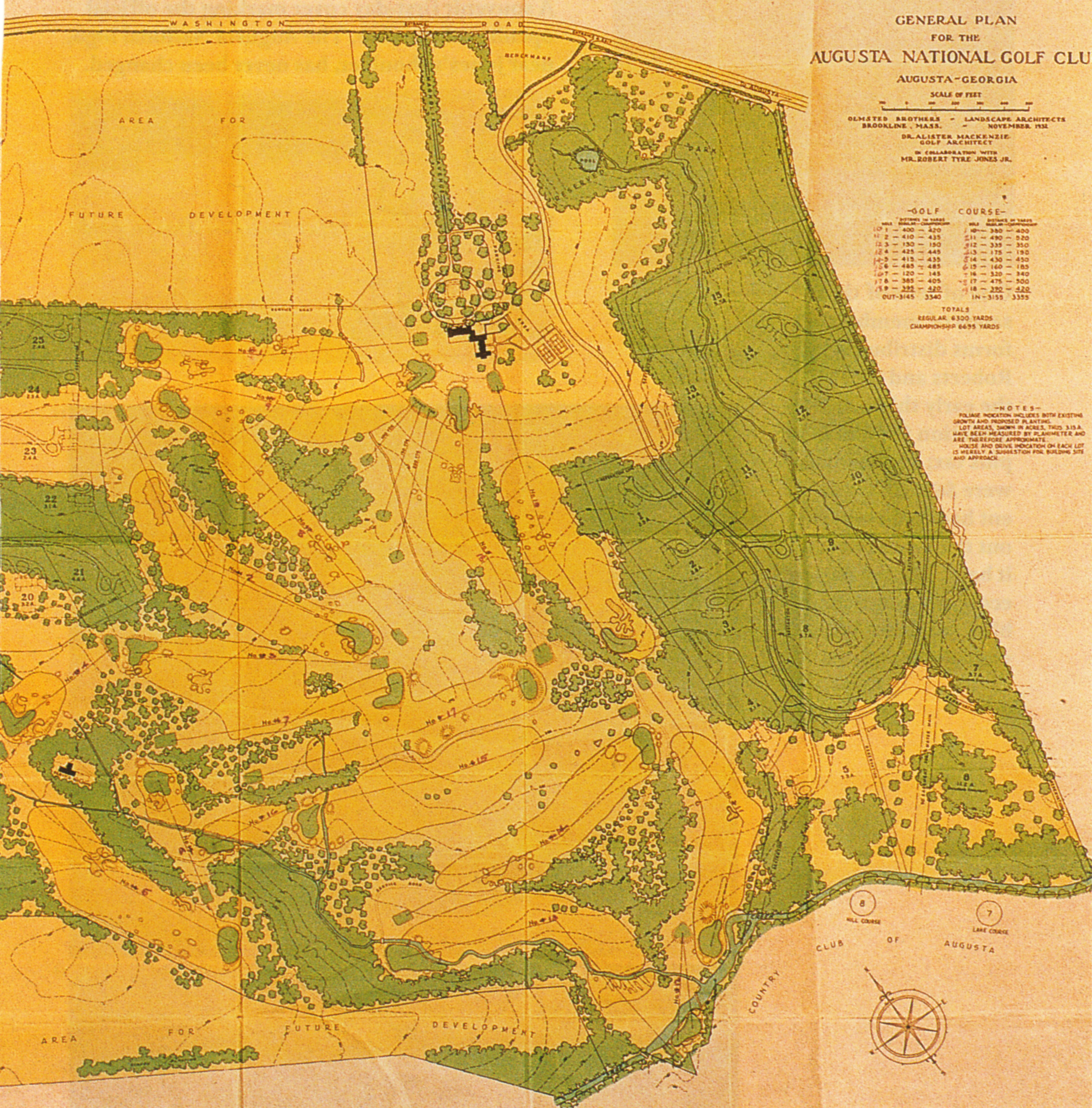
Olmsted Brothers' 1932 Augusta National real-estate development plan. If your eyes are good enough, note the tennis courts and the brand-new clubhouse—none of which were built. Also note the small practice area, between the ninth and eighteenth holes.

Augusta National Golf Club suffered severe financial problems during its first two decades, which coincided with the Great Depression and the Second World War. Its lenders actually foreclosed in 1935, just eight months after Gene Sarazen had seemingly secured the future of both the club and the Masters by hitting “the shot heard round the world.” (I explore those difficulties at some length in The Making of the Masters.)

One of the club’s best hopes for raising money in the early years was to sell building lots overlooking the course. Roughly a third of the club’s property was reserved for that purpose, and the lots were delineated and numbered on several early maps, including the plan reproduced above. For the most part, the lots occupied areas west of the second fairway and east of the tenth and eleventh. (Note to Laurentius: The spot where Rory McIlroy’s yanked tee shot on the tenth hole ended up during the final round of the 2011 Masters was near the edge of Lot No. 1.)

The club’s development plan, which was created by the landscape architecture firm Olmsted Brothers, called for two dozen building sites, and additional acreage was reserved for more. Most of the lots were between three and five acres; the largest, No. 6, was twelve acres. The club actively tried to sell those lots or others for more than twenty years. Boundary lines were cleared, access roads were built, lots were numbered with signs that faced the roads, and a major, continuing effort was made to stir up sales—all without success. In the early 1930s, W. Montgomery Harison, an early member, bought three adjoining lots just beyond the first green, but he was the only taker. He built a huge brick mansion, which stood until 1977, and the elder of his two sons built a much smaller house next door. (Harison’s younger son, Phil, was the tournament’s official starter for more than sixty years. He died 2008, at the age of 82. His own son is a member now.)

W. Montgomery Harison's house overlooking Augusta National's first green, during the Masters in 1941. (The photographer was standing near the ninth green and looking up the first fairway.) The house was torn down in 1977.

After the war, the club briefly considered leasing or renting the remaining lots, at annual charges ranging from $250 to $500 a year. When no enthusiasm for that idea was evident, the club gave up on the original subdivision and for four or five years pursued a more modest development plan in a different location. This new subdivision—which was to be called De Soto Trail—was situated just east of the area now occupied by the par 3 course. It consisted of twenty-four lots, most of them about a half-acre, and was targeted not at club members but at local middle-income families. To avoid the expense of building an access road and installing utilities, the club in 1949 offered the entire parcel to Augusta real-estate agents. There were no bids. The club then tried without success to sell the lots individually. Late in 1952, a developer offered $18,000 for fifteen acres. Roberts viewed that figure as too low, and the club eventually abandoned the entire idea.

Today, golf fans and even club members are almost always amazed to learn that Augusta National, in more than twenty years of conscientious effort, could turn up only one buyer interested in building a house near what today may be most fabled golf course in the world. If the same lots were offered for sale today, the bids would undoubtedly be astronomical. The failure of the real-estate projects underscores the immensity of the challenge that Clifford Roberts and Bobby Jones, Augusta National’s founders, faced in nearly every area of the club’s operation. As late as the early 1950s, Roberts couldn’t get local real-estate developers to return his calls.

It was only in the mid-1950s—when the tournament was securely established, and both the club and the country were on better financial footing—that Roberts began to view all development ideas as a mistake. A local club member named Julian Roberts (no relation) eventually bought Harison’s property and later sold it back to the club. One of Clifford Roberts’s last acts before taking his life, in 1977, was to walk to the first tee with the help of a waiter so that he could look up the fairway and assure himself that the house had been torn down.


Is Tiger Too Old?

Hogan before he was Hogan: Byron Nelson and Ben Hogan at the 1942 Masters, the last before the war. Note the grip on Hogan's driver. Also, of course, the cigarette.

People who think Tiger Woods is too old to dominate golf again should consider the career of Ben Hogan. At the time of the Masters in 1948, the year he turned 36—the age Woods is now—eight of his nine majors and a third of his tour victories still lay ahead of him, as did the automobile accident that nearly ended his life.