Back-roads Scotland: Grantown-on-Spey

P1020893

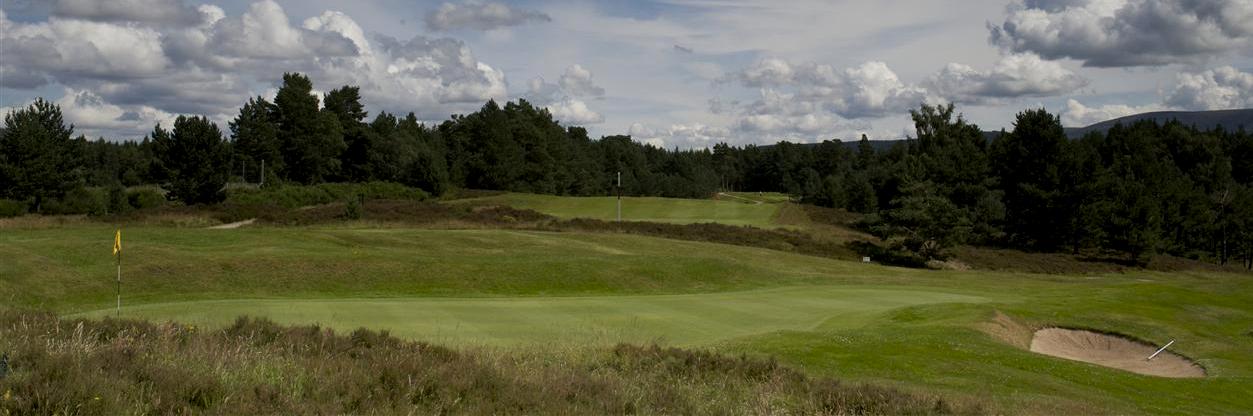
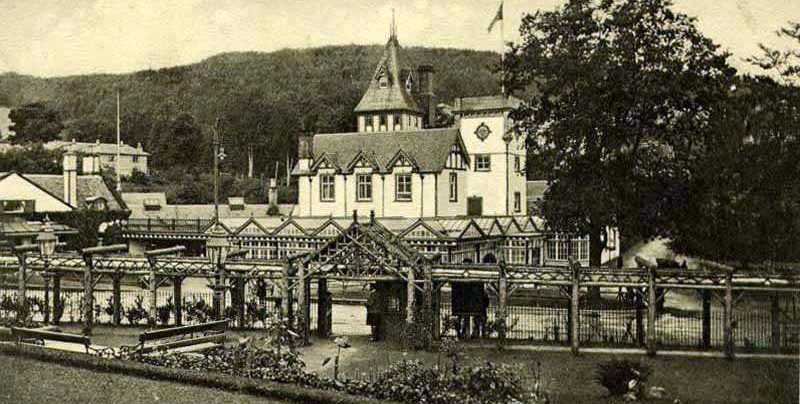
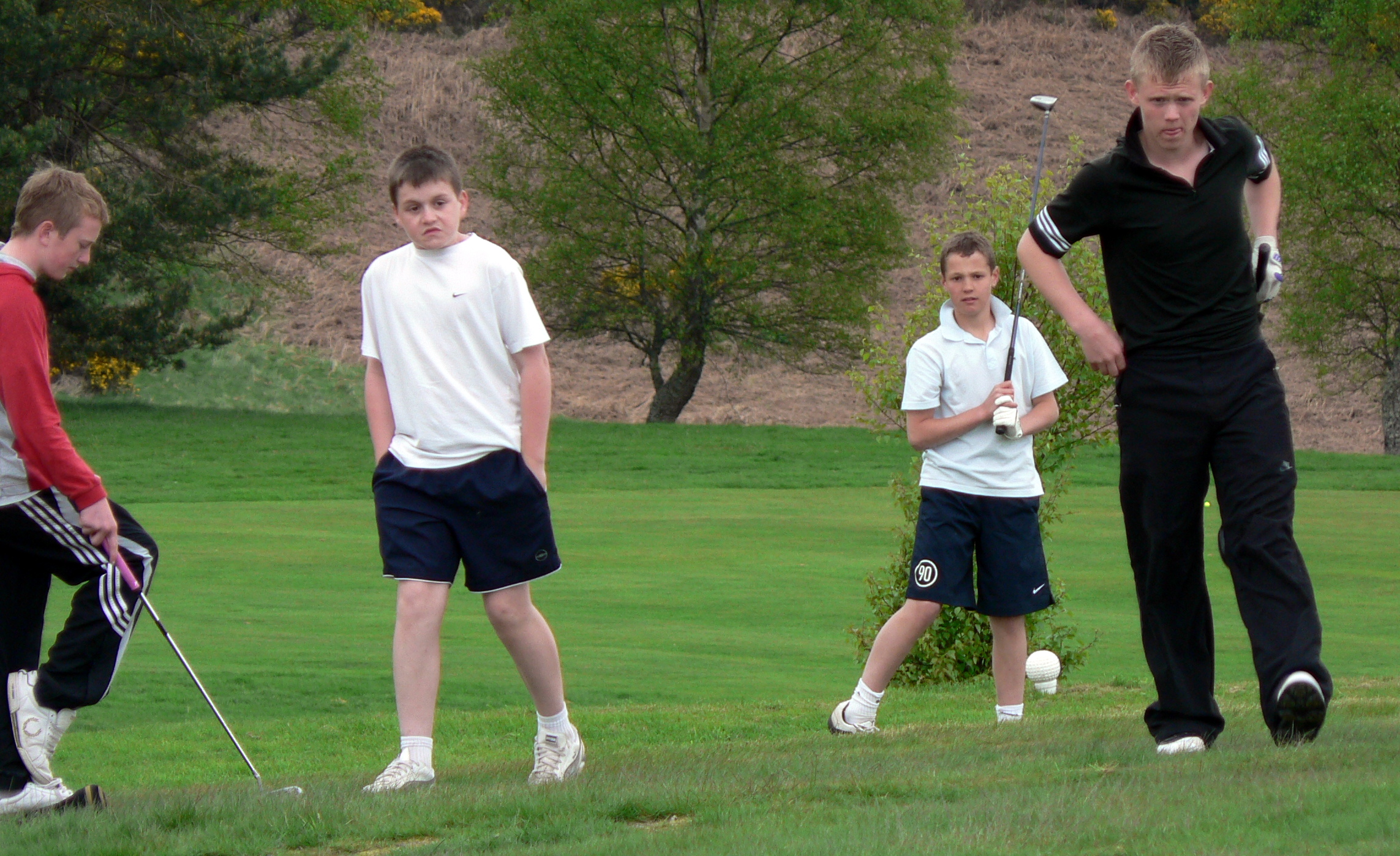
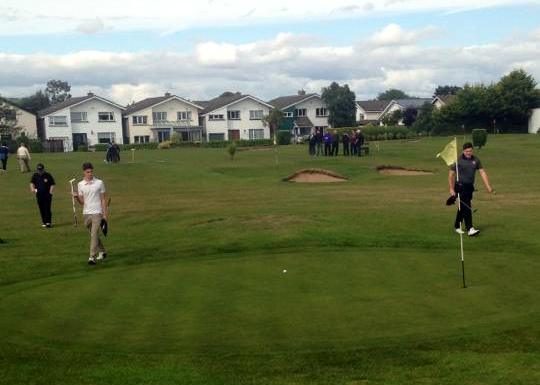
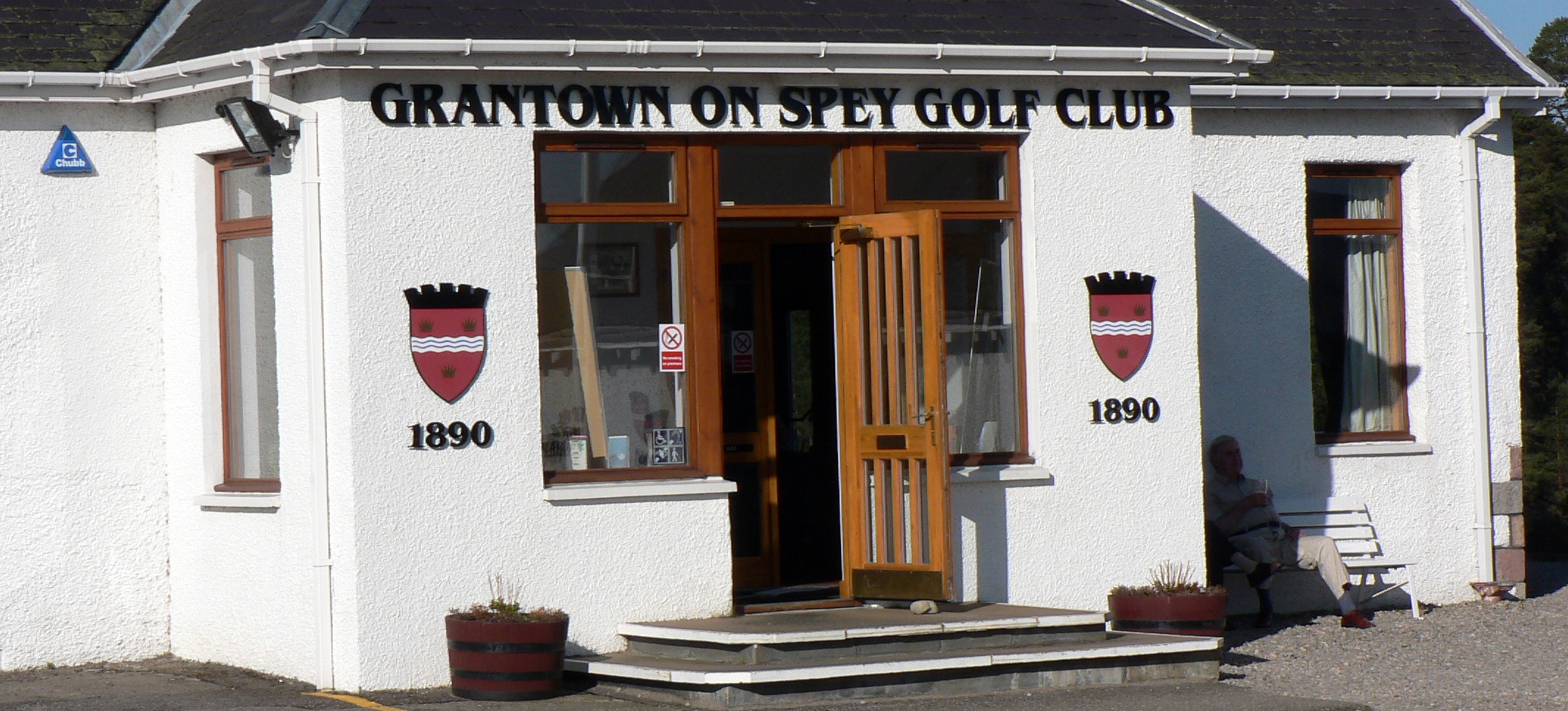
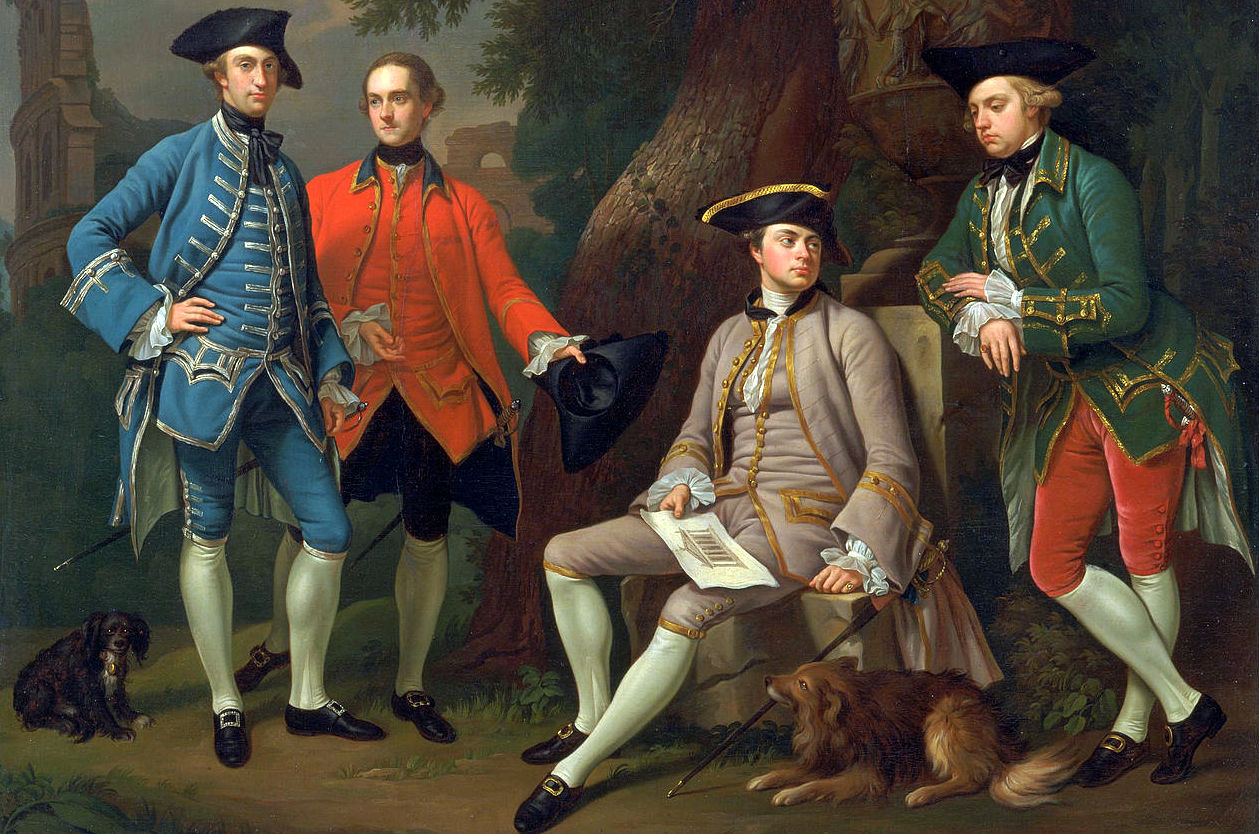
Grantown-on-Spey is a small town on the Spey River, near the northern edge of Cairngorms National Park, in Scottish whiskey country. It was the birthplace of Bobby Cruikshank, a Scottish golf pro whose principal claim to fame is that he lost to Gene Sarazen in a semi-final match in the P.G.A. Championship twice, in 1922 and 1923. The town was founded in 1765 and was named after a local rich guy, James Grant, who is at the far left in the foursome below. I don’t know why the golf clubs these guys are holding don’t have heads:
jamesgrant

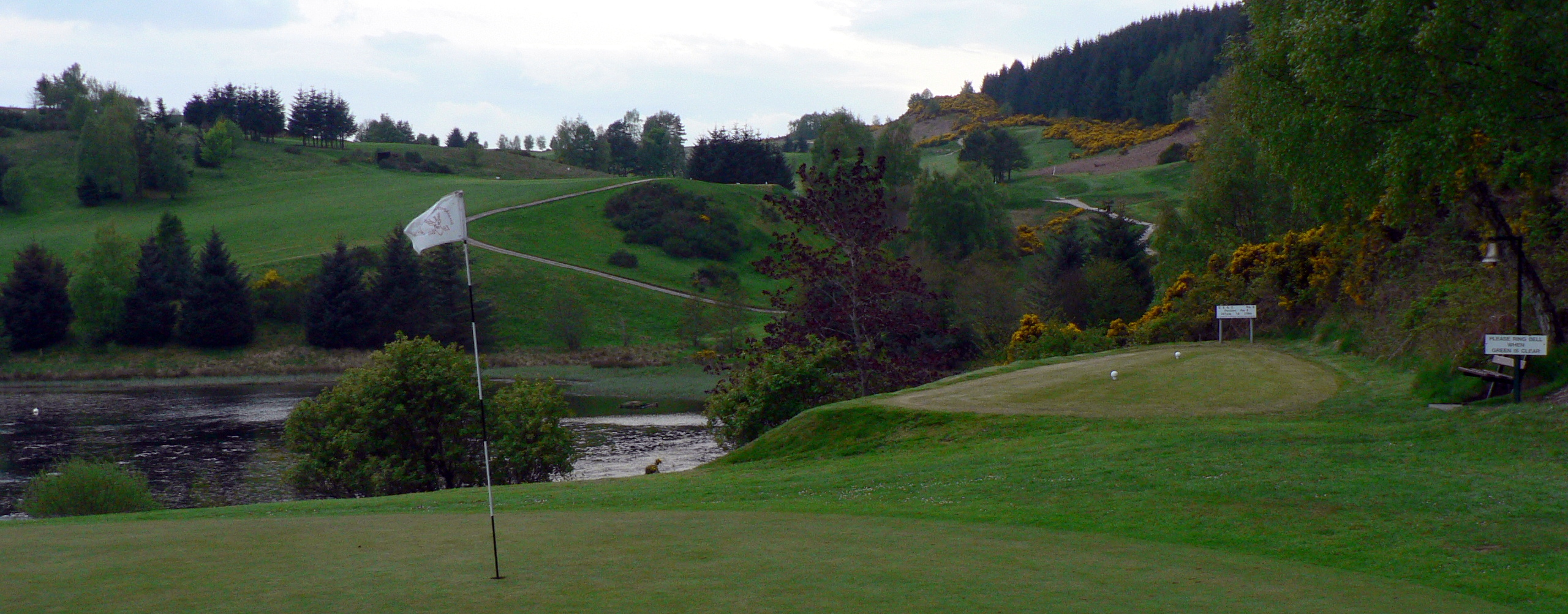
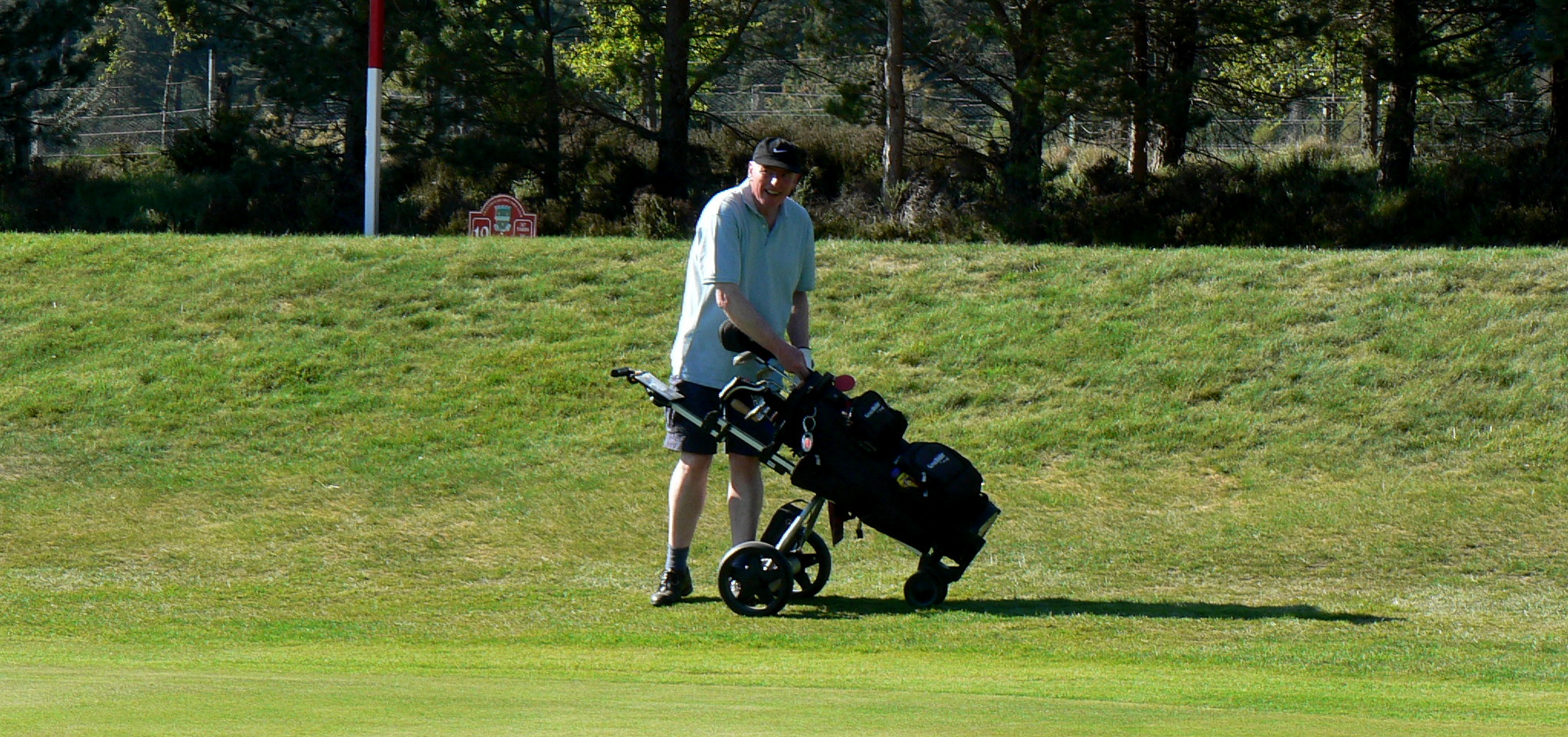
The local course isn’t one I would plan a trip around, but I did enjoy playing it. It was designed by Willie Park and James Braid in 1890, during the second Scottish golf boom, which accompanied the rise of the railroads. (The first American golf boom took place at the same time. In those days, just about the only thing you needed to be a golf-course architect in the United States was a Scottish accent.)
P1020882

There’s a practice area in a field next to the course. A member with a tube of shag balls was working on his short game.

P1020879

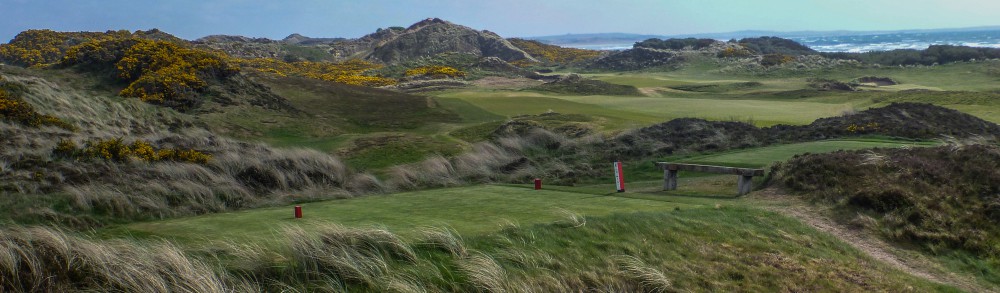
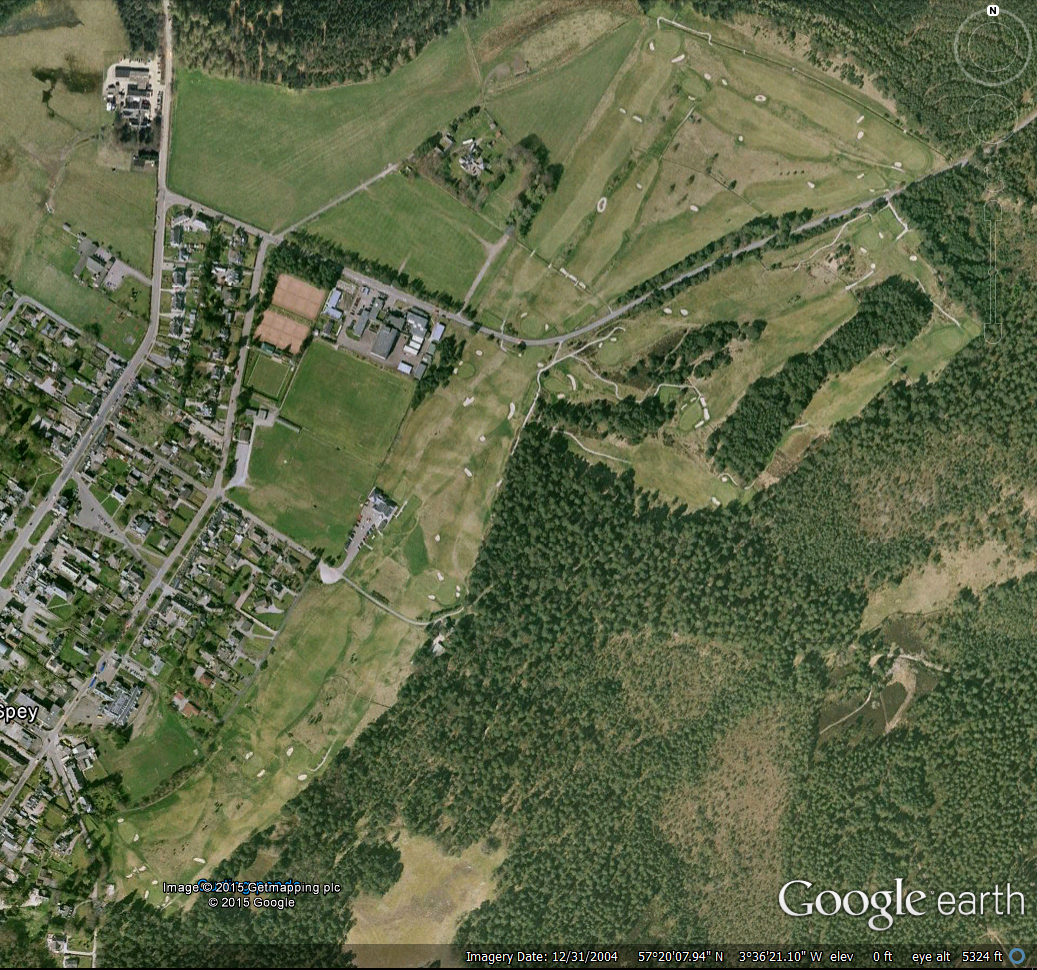
Ladies’ Night was about to begin, but the pro said I could tee off ahead of the crowd. A member of another club had told me that Grantown is really three distinct six-hole golf courses—and he was right. The first six holes are flat; Nos. 2-5 work around the corners of a big triangular field, at upper right in the aerial shot below. They were more fun to play than you might think.
grantowngoogle

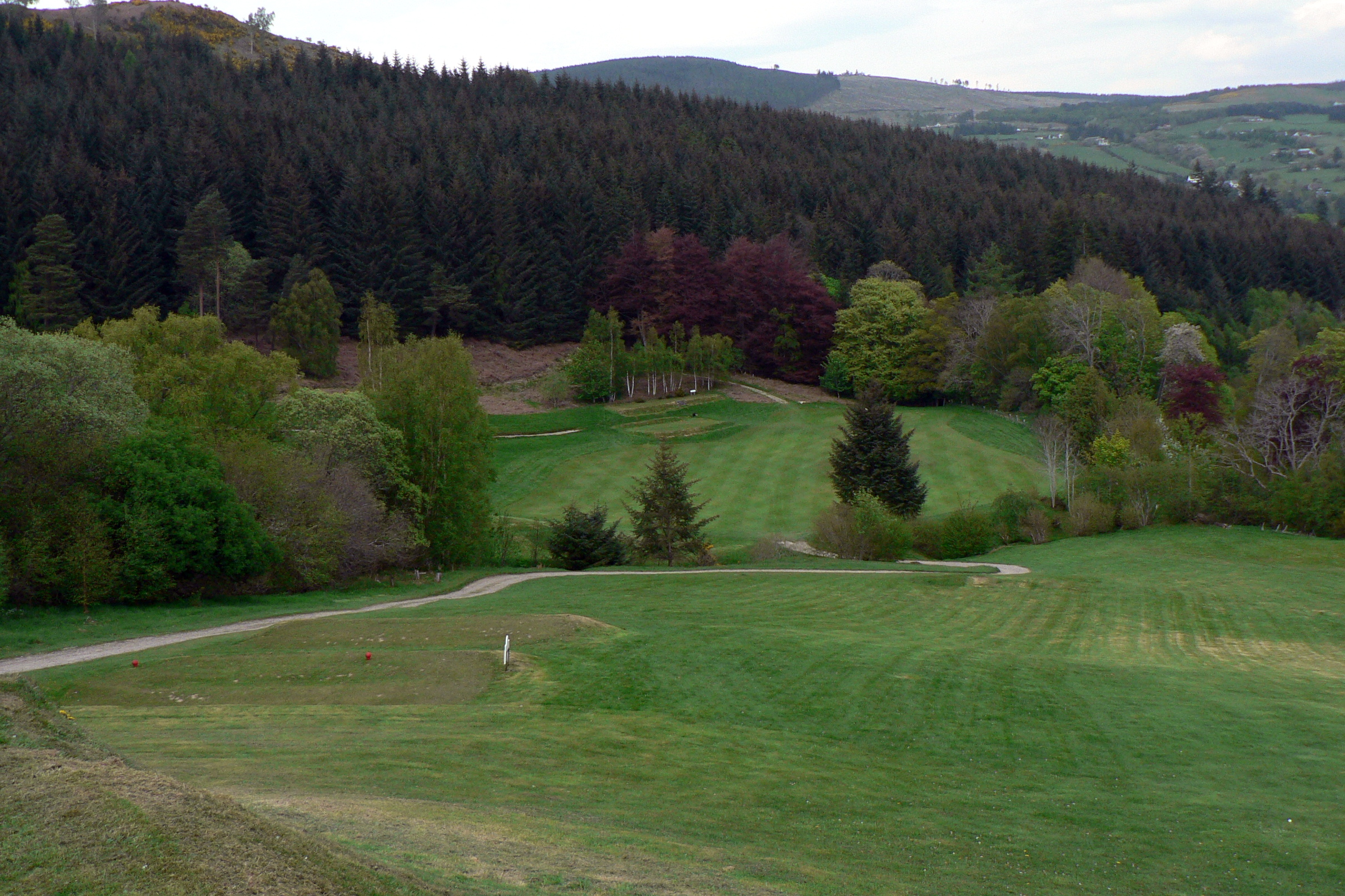
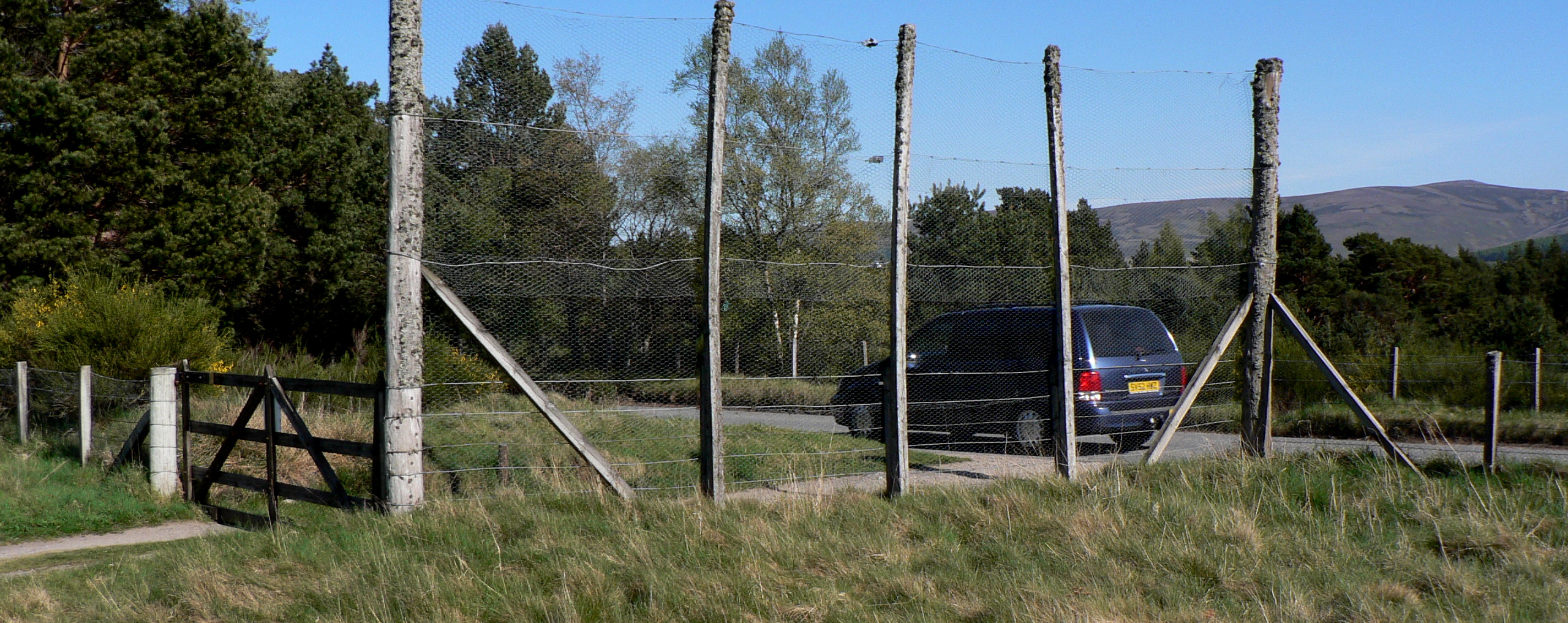
To get to the second six holes, I went through a gate and across a road, into much more dramatic terrain.
P1020877

I liked those six holes the best.

grantownspeyhole-001

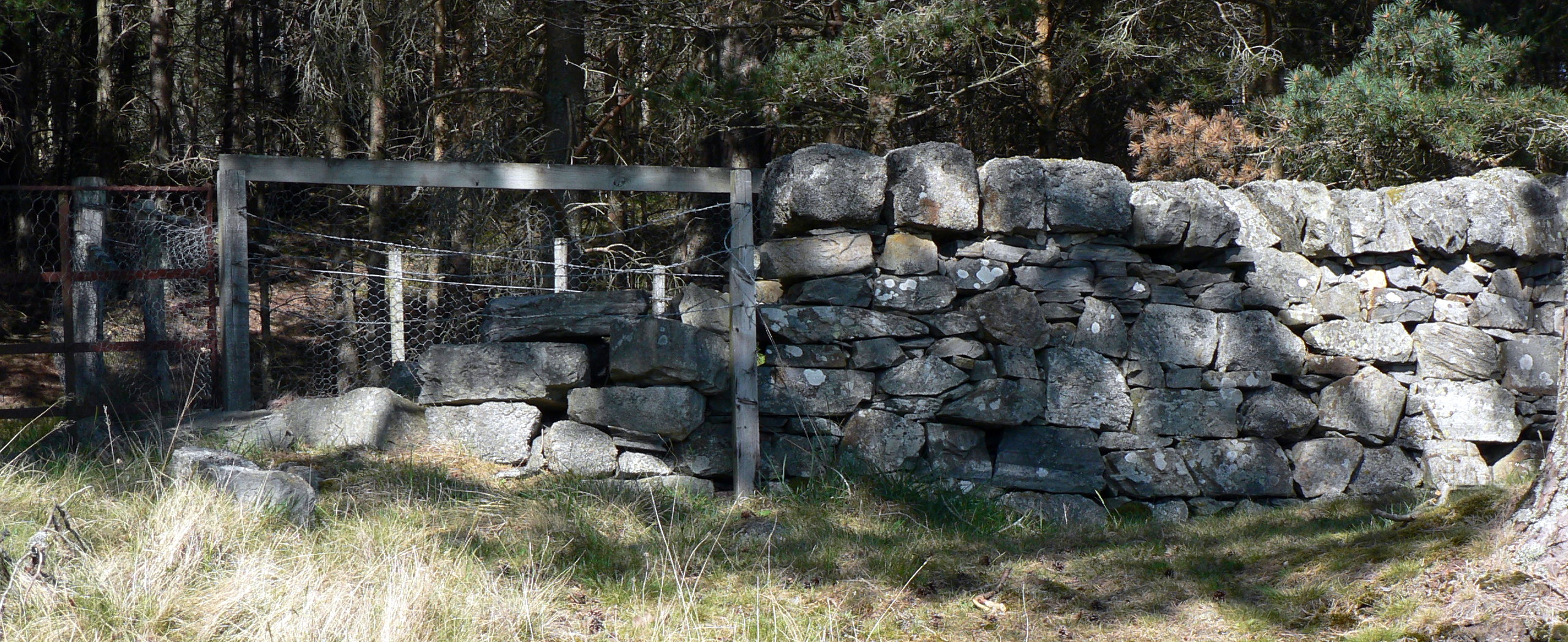
The final six holes are quirky, and are squeezed into a sort of open valley bordered by two schools. I surprised myself, after my round, when I realized that I could mentally walk through all 18 holes, something I’m usually terrible at unless I’ve played a course four or five times.
P1020876

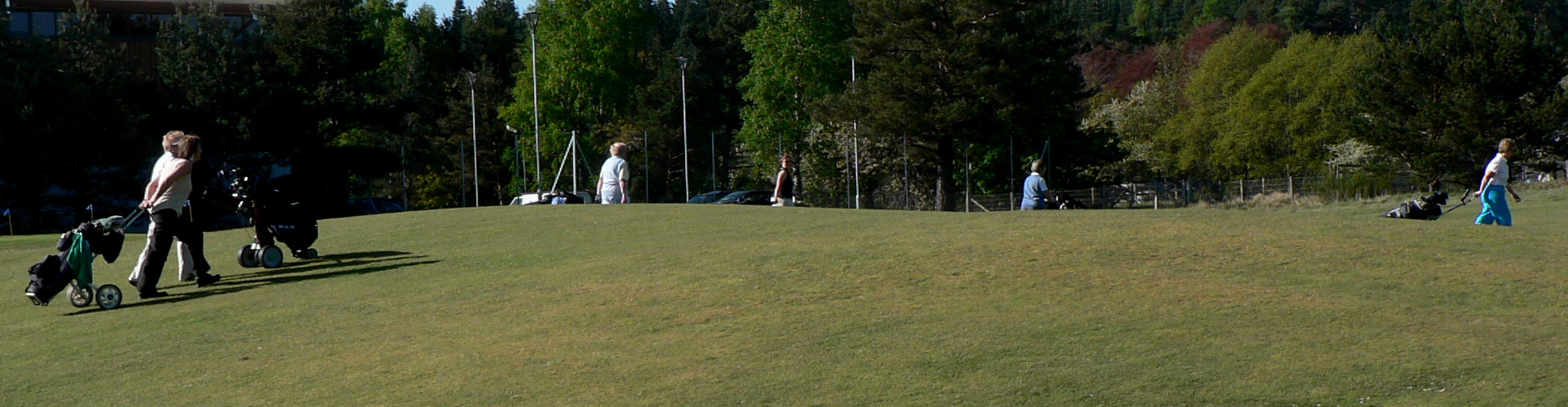
As I finished, I saw the last of the women’s groups heading out—the grans of Grantown. There were several foursomes, and then the last group was a sixsome:
P1020892

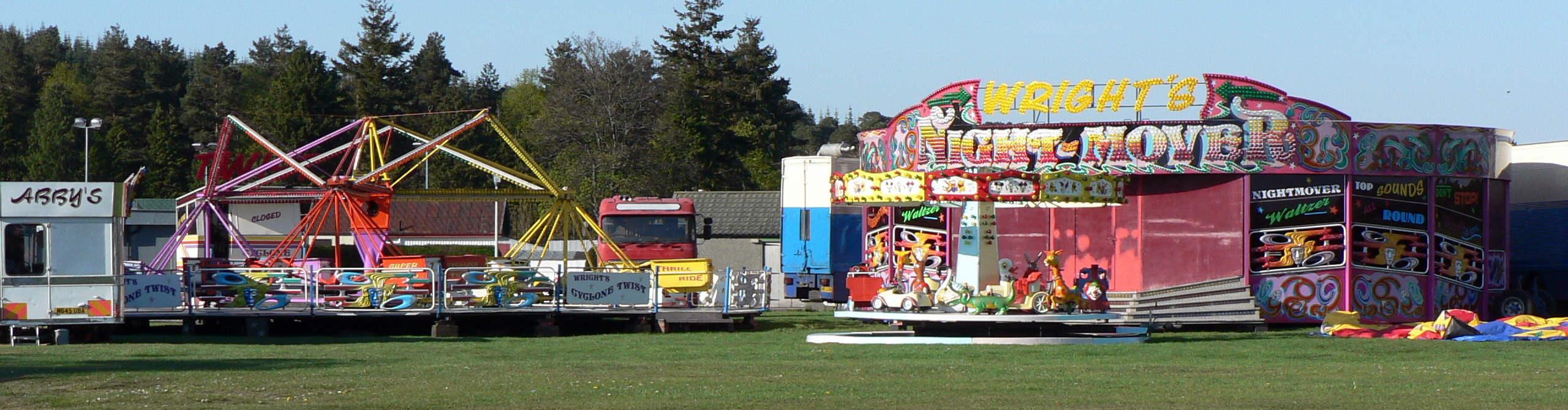
Two guys were drinking beer on a bench in front of the golf shop when I finished. A carnival had been set up in a field next door, but I didn’t stick around for that.
P1020894

Reader’s Trip Report: Tarandowah Golfers Club

tarandowah-golfers-club-1035962-1607522-regular

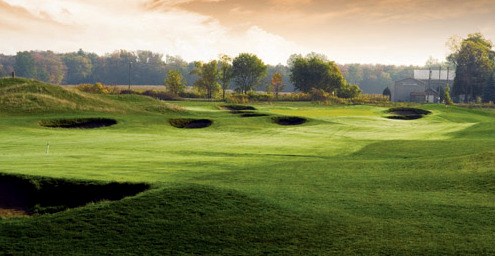
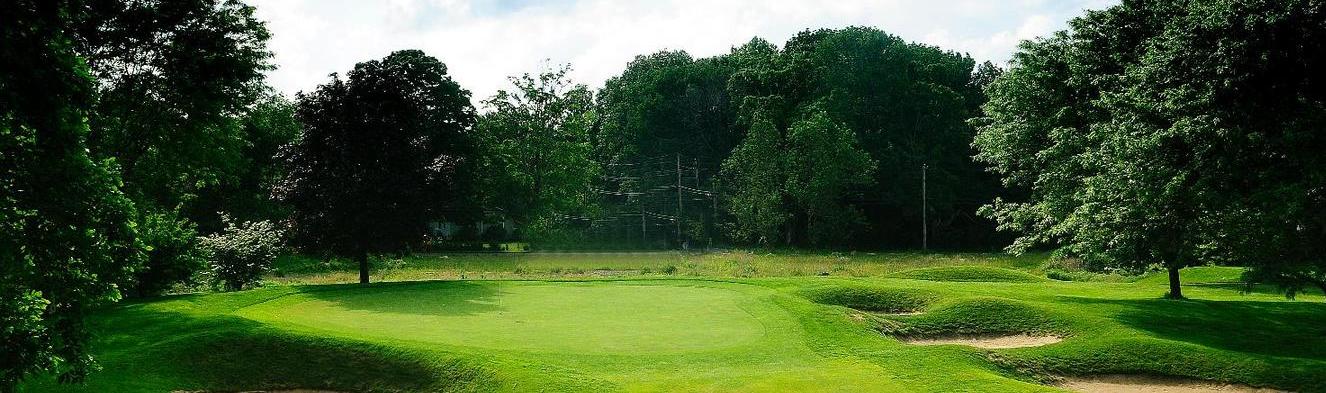
When my friends and I look for places to play during the winter, we usually go south—to Bridgeport, Brooklyn, or the Bronx—but maybe we should go north instead. John Wilson, a reader in Canada, wrote recently to say he had just played a round at Tarandowah Golfers Club, in Springfield, Ontario, a few miles north of the northern shore of Lake Erie, about halfway between Buffalo and Detroit. Pictures of the course made me want to jump in my car.

tarandowah

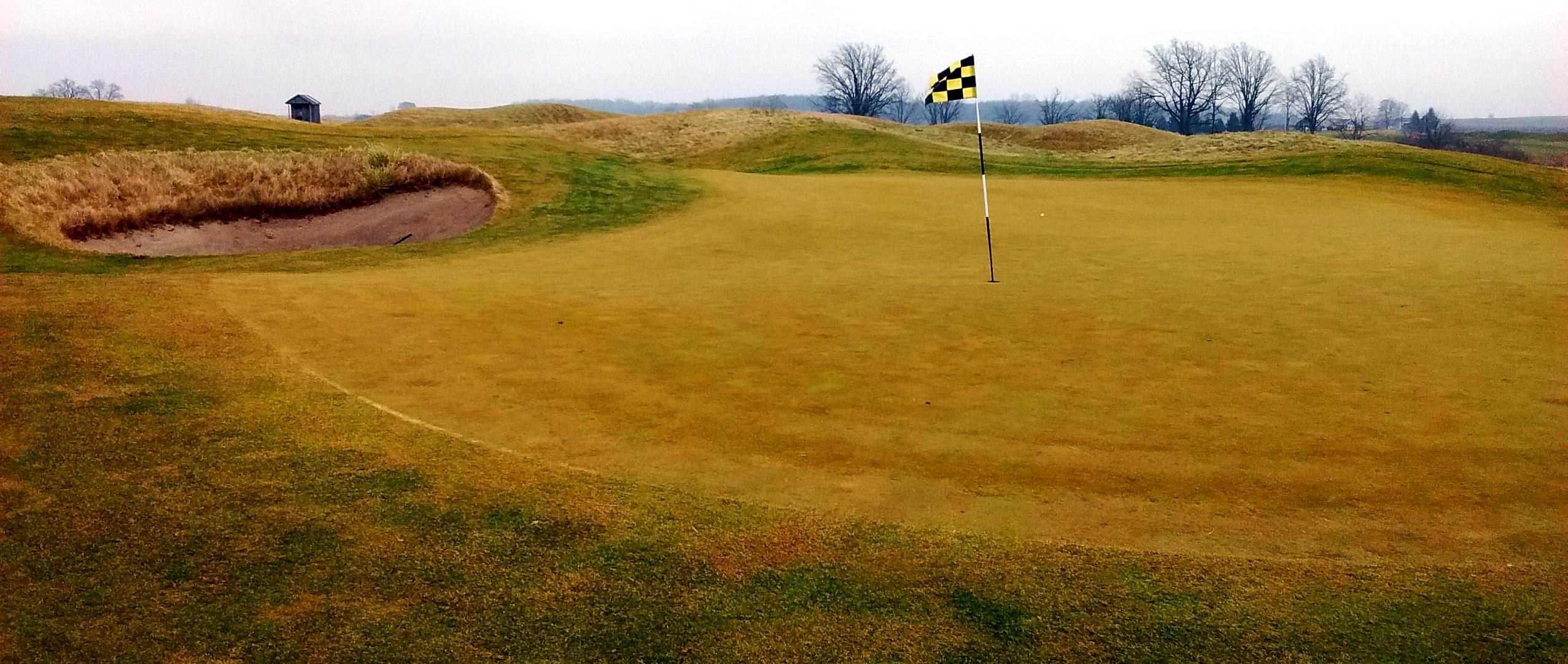
Tarandowah was designed by Martin Hawtree, who has done big projects at Lahinch, Portmarnock, Formby, Royal Liverpool, and Royal Birkdale — all among my favorite courses in the world. He also designed Trump International in Aberdeen, Scotland, and has done a major renovation and redesign at Trump International in Doonbeg, Ireland. His firm, Hawtree Ltd., was founded more than a century ago by his grandfather Fred; it’s the oldest continuously operating golf-architecture firm in the world. (All three generations of Hawtrees have worked on Royal Birkdale.) Tarandowah is very much in the spirit of all those great old links courses. Here’s a photo Wilson took during his recent round:

IMG_20151210_103615840

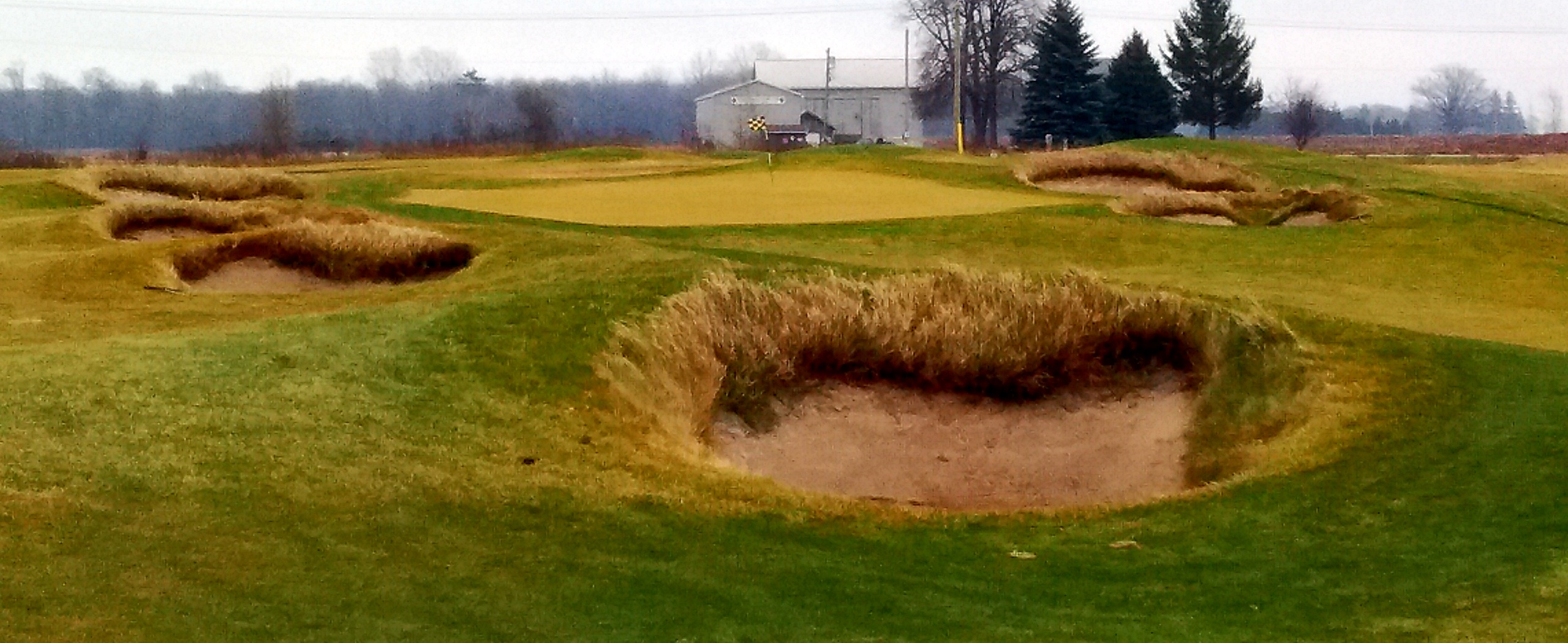
And here’s another:

IMG_20151210_111733042

His report:

“I work on the greens crew at St. Thomas Golf & Country Club, in Union, about half an hour away. It closes every year after the third weekend in November, so it has been shut down for a while. Tarandowah is one of several public courses in this area that stay open as long as the weather permits. I played with a St. Thomas member I see every day when I am working but rarely get to make a game with. We played in three hours (walking) at a cost of $25 per person — not bad for a Hawtree design.”

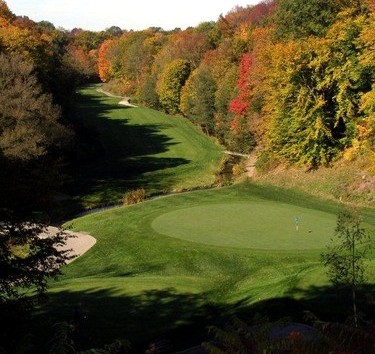
St. Thomas, which was founded in 1899, has a heck of a course, too. Here’s the third hole, on which nearly every shot has a decent chance of ending up in that creek:

stthomasthird

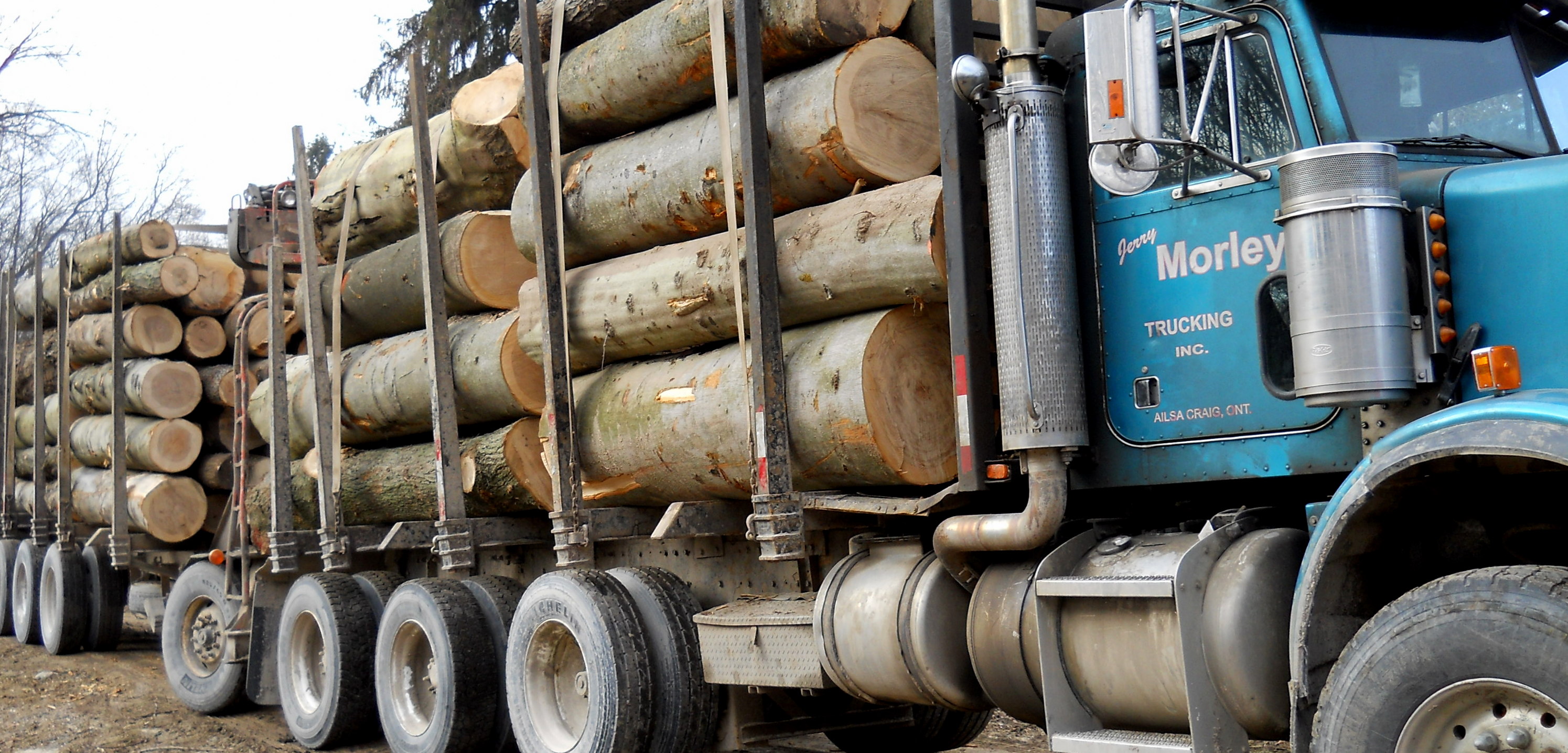
During the past three winters, St. Thomas has undertaken a major tree-thinning project — something many old golf courses need to do. “Joe Vargas, from Michigan State University, and David Oatis, from the U.S.G.A., were the primary consultants on the project,” Wilson told me, “and my superintendent, Wade Beaudoin, wrote an article about it.” (You can read Beaudoin’s article here.) So far, more than a thousand trees have come down. Here are some of them:

stthomastreeremoval2012

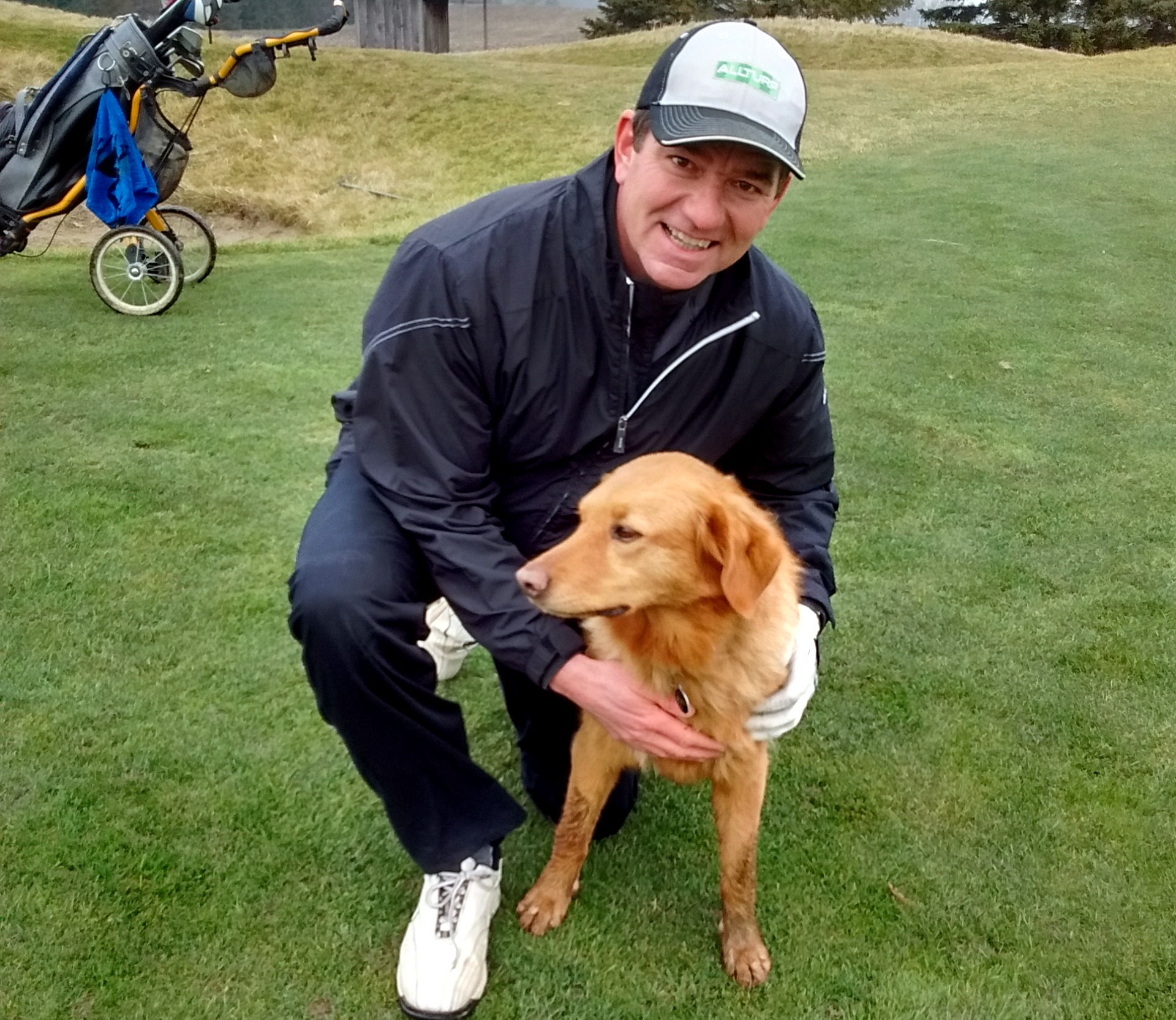
During a round at Tarandowah a little over a year ago, Wilson noticed that a sorry-looking dog was following his foursome. “I assumed she was a stray, because she was covered in burrs and thick mud,” he told me. “My friends thought I was crazy to rescue a dog during a round of golf, but I took her home and cleaned her up. Later, I learned that she belonged to a farm near the golf course. I shed a few tears when I dropped her off with her rightful owners. During my round last week, she came running across the fields, and my smile was a mile wide. Her name is Gracey.”

IMG_20151210_102248295_HDR

“The forecast for next week calls for temperatures in the mid-forties,” he continued, “so there’s still more time for December golf in Ontario. On Tuesday, though, I’m heading to L.A. for a family visit. I already have a tee time for Rancho Park, which I haven’t played yet. Hopefully, the round will be less than five hours.”

Well, good luck with that one. Maybe less than six.

004

The Muny Life: Country Club of Woodbridge

IMG_0164

In my part of the country at this time of the year, avid golfers become migratory. Some fly hundreds of miles south and don’t return until spring, but most of us circle the ground closer to home, like Canada geese searching for open water. We study the sky and the Web and the Weather Channel, and when we hear rumors of snow-free fairways we hit the phones. Over the past decade or so, my friends and I have assembled an extensive portfolio of all-season golf courses, in three states. This past Sunday, we added a new one: Country Club of Woodbridge, about forty-five minutes southeast of our home course (which closed for the winter on the Monday after Thanksgiving).

woodbridge green

Woodbridge used to be a private club; the town bought it in the aftermath of the mortgage crisis, and Billy Casper Golf manages it. The course was designed in 1938 by Orrin E. Smith, who worked with Donald Ross on a couple of projects and designed or redesigned 20 courses in our state, including the course of our No. 2 Enemy Club, which we like a lot. The selectmen of the town of Woodbridge are thinking about turning part of the course into condominiums for oldish people, or something, but I hope they don’t, because we want to go back—maybe on New Year’s Day, when (the starter told us) they usually have a good crowd.

IMG_0144

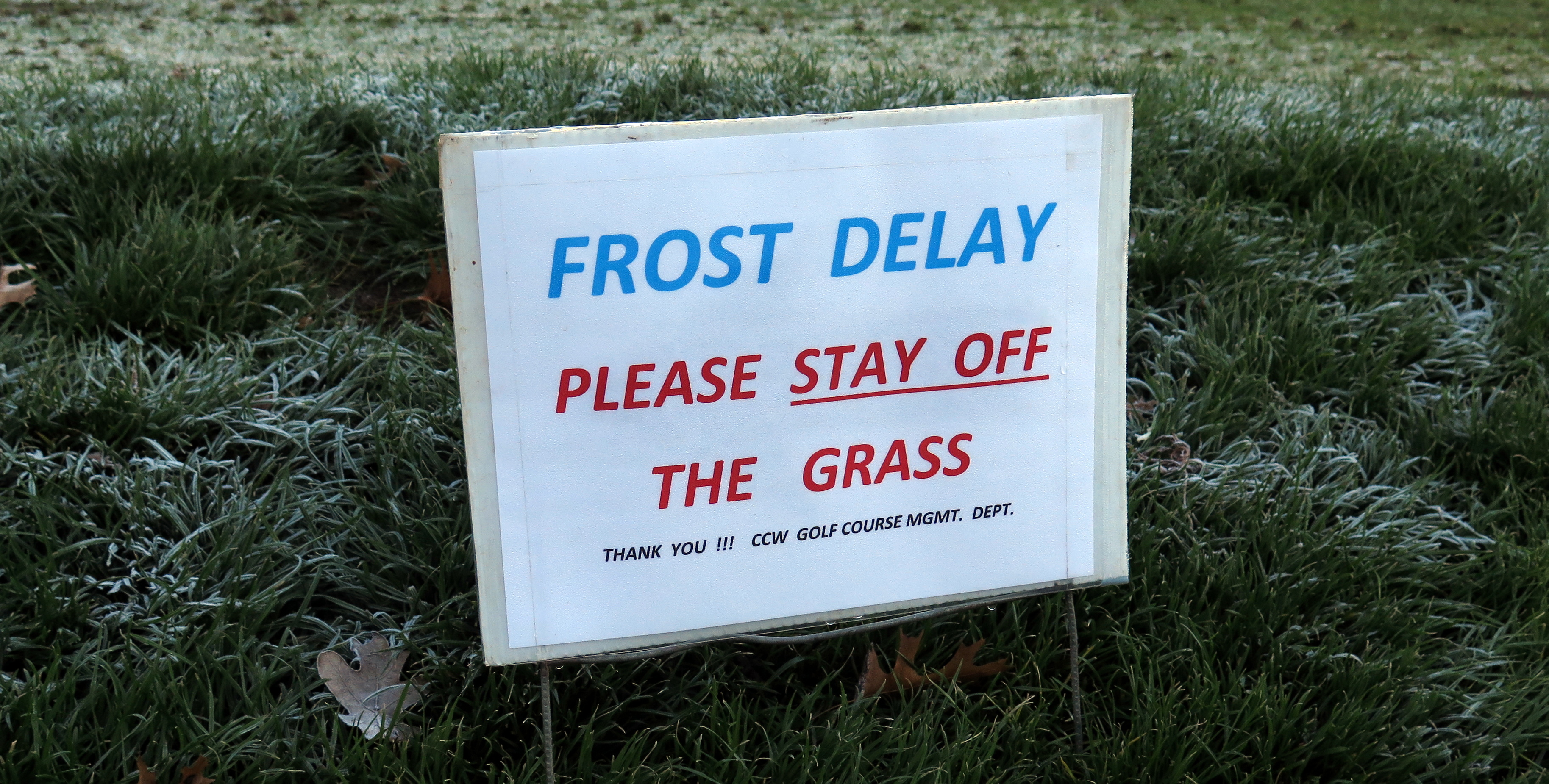
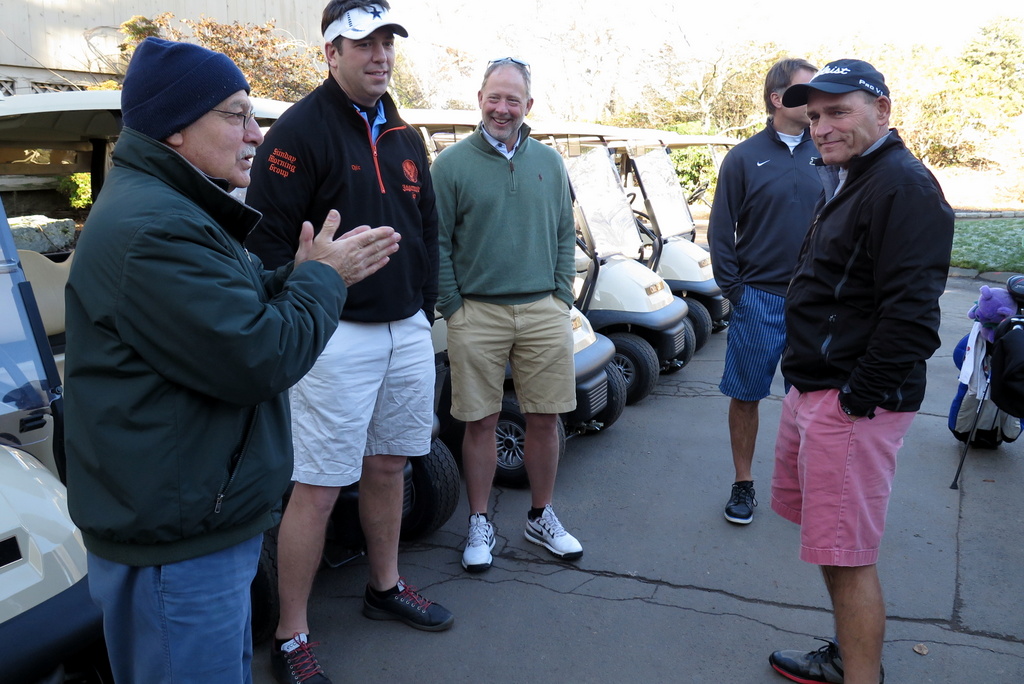
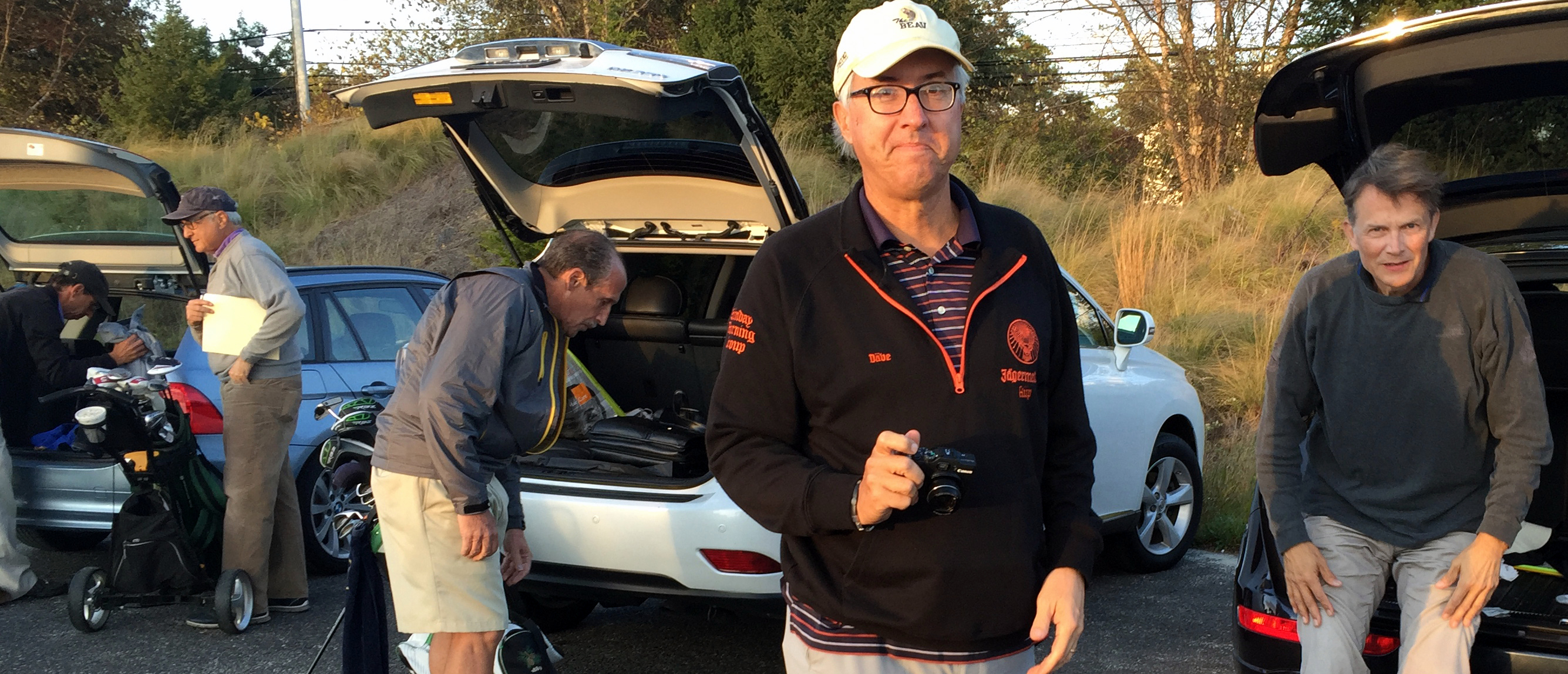
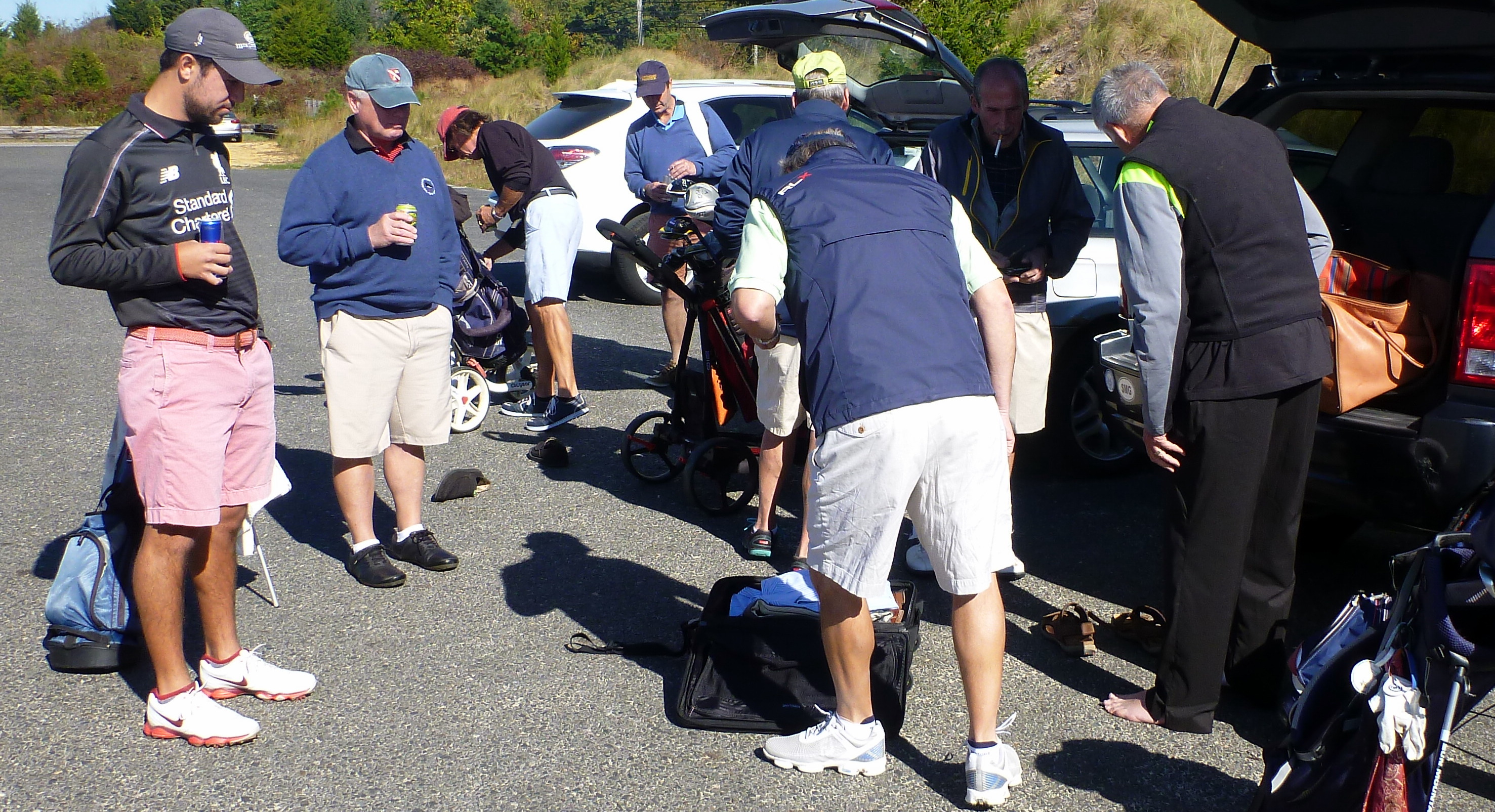
There was a frost delay, but that was OK because it gave us a chance to get caught up. Several of our guys were easy to spot in the crowd outside the golf shop, because after December 1 the Sunday Morning Group gives two extra handicap strokes to anyone who wears shorts. You would think that wearing shorts in sub-freezing weather would be unpleasant, but in fact your legs adapt fairly quickly, by becoming permanently numb:

IMG_0147-001

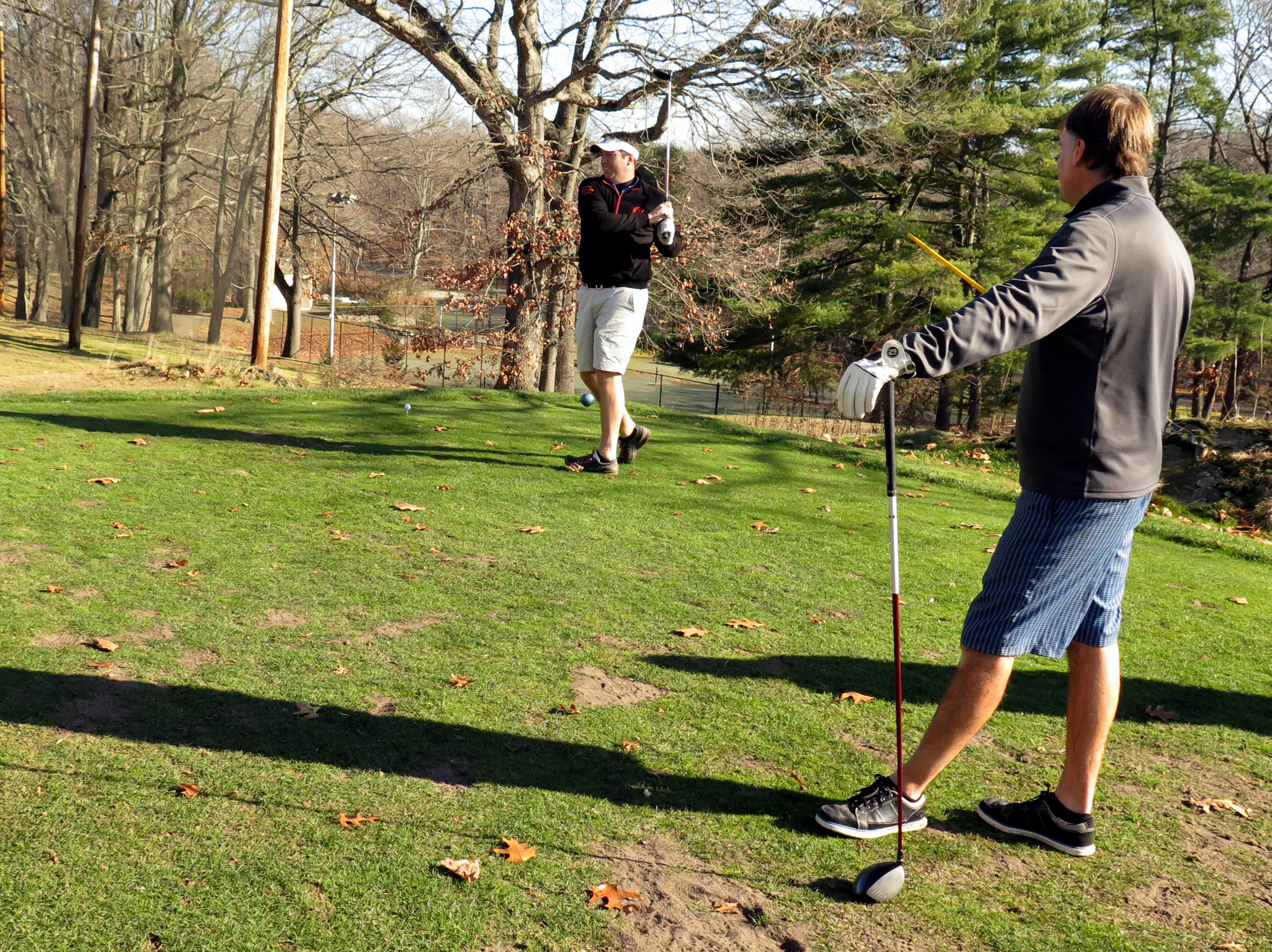
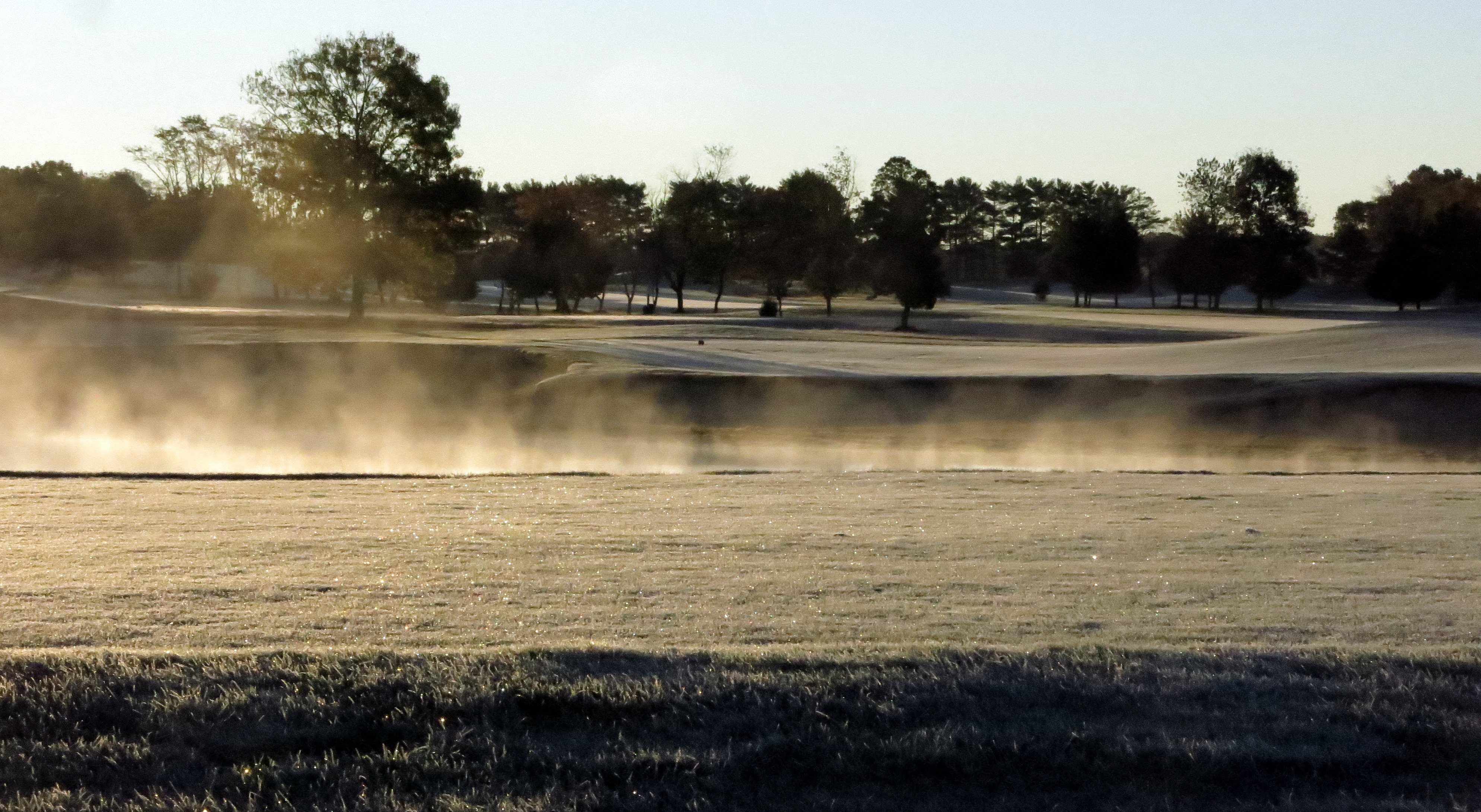
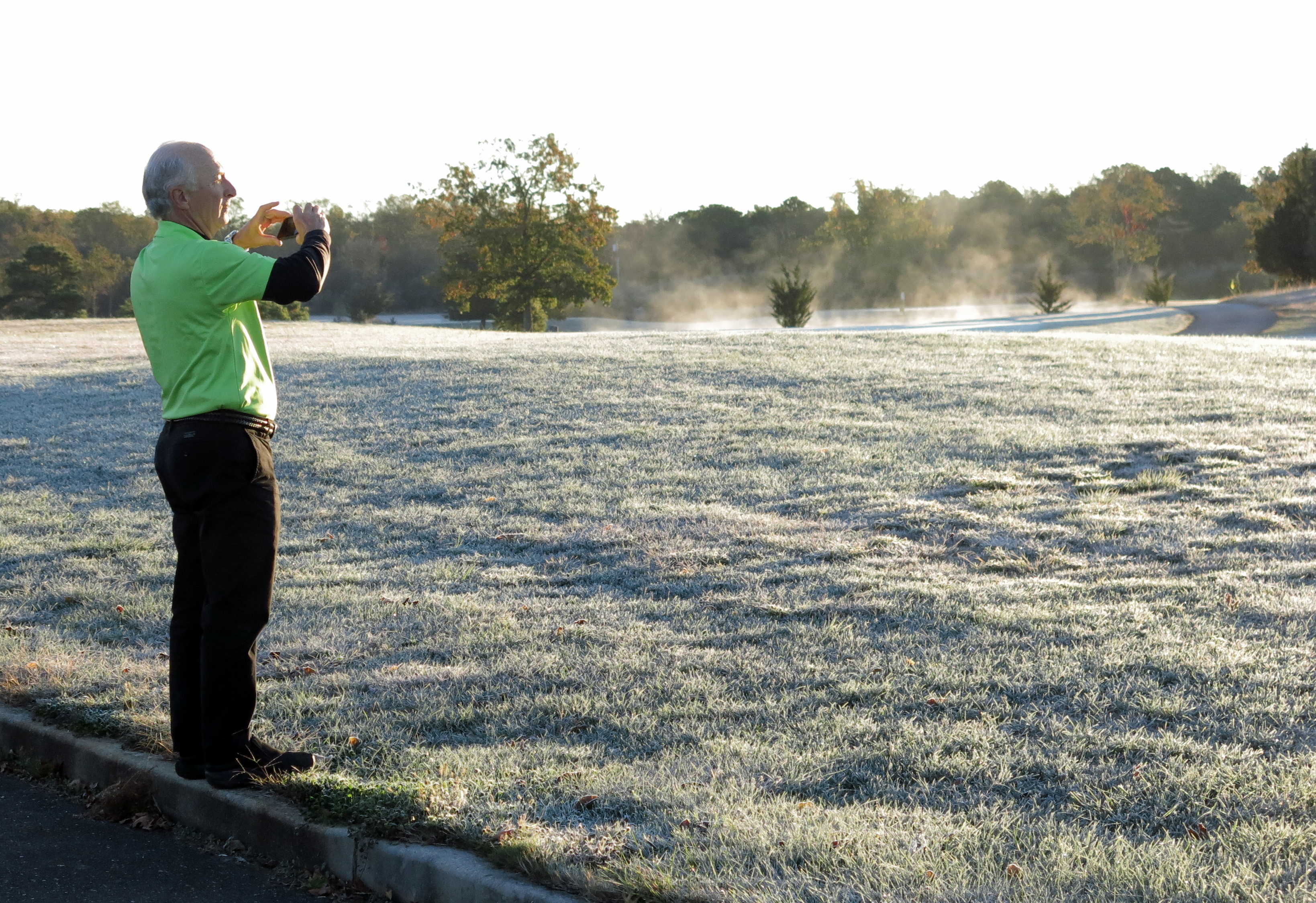
The frost delay didn’t last all that long, and when it was over the starter shotgunned everyone. We had twelve guys, and all three of our groups started on the first hole. By then, the sun had made the day seem sort of hot. We played two best balls, All Balls Count on the money hole (No. 12), and skins.

IMG_0166

On the third tee, we met a member of the town’s golf committee. He wasn’t playing, but had driven out to say hello. He told us that Woodbridge is unusual in that the property was once owned by Roger Sherman, the only person to sign all four of the principal founding documents of the United States: the Declaration of Independence, the Articles of Association, the Articles of Confederation, and the Constitution. Here’s a picture of Sherman dressed in an eighteenth-century golf outfit:

Roger_Sherman_1721-1793_by_Ralph_Earl.jpeg

The layout is Woodbridge is a little tricky, but it’s easy to navigate if you remember (as the starter told us) that when you leave a green your next tee is almost never the one you come to first. Near one tee, we saw a golf-ball vending machine installed by an entrepreneurial neighbor:

P1170332

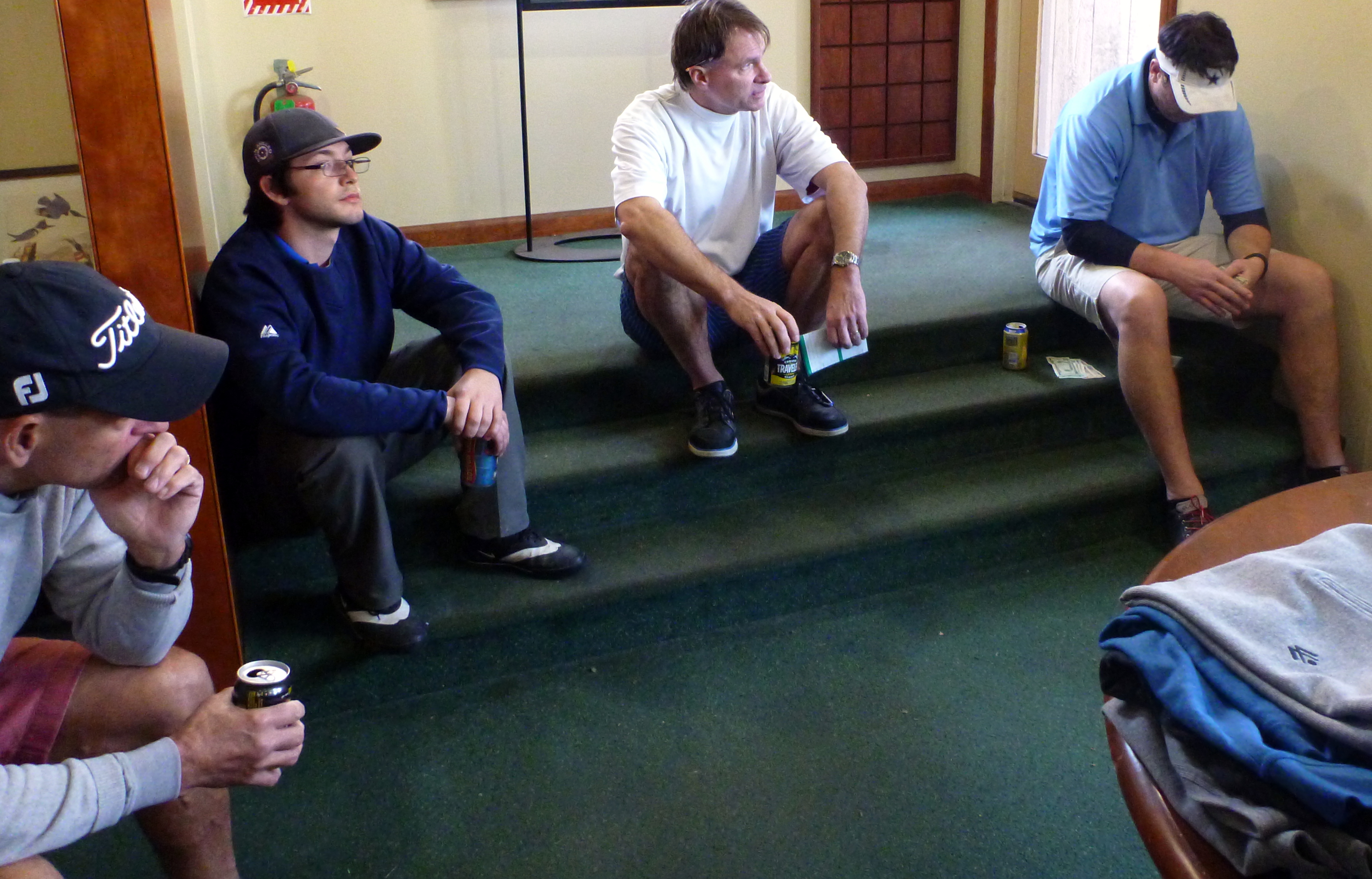
Afterward, we drank beer and went over our scorecards in the golf shop. My team came in last, but I won two skins and split the money hole with Chic and Todd. That puts me closer to the top than to the bottom of the standings for the Jagermeister Kup, our all-winter competition.

P1170337

We had a great day—as I had known we would because the night before I had a dream about golf. In the dream, I discovered that Nancy Reagan is much younger and more interested in me than people have generally thought. She also loves golf, although she told me that when her husband was in the White House she kept her interest to herself. She drives a Cadillac convertible—Seville-type, not Escalade—and in the parking lot of the golf club where I ran into her I saw that there were two golf bags in the backseat, hers and Hedy Lamarr’s. Both sets of clubs were in “mint vintage” condition, and the woods had simple muted-pastel headcovers. Nancy said she wanted to give me Hedy Lamarr’s clubs, and maybe her own as well, along with some sort of golf journal she had kept for years. The journal was written in dream writing, so I couldn’t quite make out what was in it, but I was pleased because I knew that I would eventually get at least a couple of Golf Digest columns out of it. Nancy is totally not the calculating, vindictive ice queen that people have always made her out to be. I don’t think our relationship was “going anywhere,” but I’ll never know because right about then I woke up to take a whiz. When I described all this to a friend later, he said that Hedy Lamarr’s days of appearing in people’s dreams were probably just about over. He’s definitely right about that; in fact, I think that even my dream was probably a bit of a stretch.

country_club_of_woodbridge_logo

Back-roads Scotland: Strathpeffer Spa

strathpeffer spa pump house

The village of Strathpeffer is roughly forty-five minutes northwest of Inverness, in the Scottish Highlands. It’s been a popular vacation destination since the Victorian era, when it was celebrated for its sulfur springs. It’s sort of on the route to Brora and and Royal Dornoch. If you’re headed that way on a golf trip and feel like playing an unusual course that none of your friends will have heard of, you should stop at the Strathpeffer Spa Golf Club. The course is barely 5,000 yards long, but it isn’t a pushover, and the scenery is spectacular, and Willie Park, Jr., and Old Tom Morris contributed to the design:P1030258

The first hole, a 330-yard par 4, plays down a vertiginous hill, and if you make a smooth swing, as you almost can’t help doing at that altitude, you can drive the green. According to the club, the tee shot has the longest drop of any hole on any course in Scotland:

P1030256

The second hole, a 250-yard par 4, plays straight up a different hill, and it’s followed by four consecutive par 3s.

P1030271

Here’s how severe the elevation changes are: The eighteenth hole is roughly the same length as the first, and the drop from tee to green is almost as long, and the eighteenth green is at almost exactly the same elevation as the first tee—yet the eighteenth tee isn’t the high point on the course.

P1030277

I followed a junior match, in which the competitors’ caddies—of whom there were five—were frequently unable to agree on which of them was supposed to be carrying what:

P1030282

The club, which was founded in 1888, has many active, involved members, and because of the topography most of them are as fit as Sherpas. Fifteen years ago, they renovated their clubhouse themselves:

strathpeffer clubhouse

I didn’t spend the night in the village, but I now wish I had—another reason to go back.P1030268

Tracking Golf History With Google’s Amazing Time Machine

I first used Google Earth in 2004, before it was Google Earth. At the time, it was a subscription service called Keyhole Earth Viewer, and I used it while working on an article for the New Yorker about golf courses in New York City. Then Google bought Keyhole. It renamed Earth Viewer, and improved it, and made it free, and has continued to improve it. One of its coolest features is Historical Imagery, which lets you travel back in time by cycling through earlier images of whatever you’re looking at. For example, here’s what Augusta National looked like last February, from a little over 7,000 feet up:
ANGC 2014-2-27

And here’s what it looked like from the same altitude in November 2002, when the enormous tournament parking lot, to the left of the golf course in the picture above, was still a residential neighborhood (before the club bought all the houses and tore them down):

ANGC 2002-11-30

And here’s what it looked like in February 1993, two months before Bernhard Langer won for the second time, by four strokes over Chip Beck — who, you will recall, laid up on No. 15:

ANGC 1993-2-13

You can drill down, to study specific changes to the course. For example, here’s what the practice area looked like last year:

ANGC Range 2014-2-27

And here’s what it looked in 2009, when the club was building it:

ANGC Range 2009-6-24

And here’s what it looked like in 2002, when it was the (original) tournament parking lot:

ANGC Range 2002-11-30

Historical Imagery is a terrific time waster if you’ve got work or chores to do. Here’s the seventeenth fairway in 2013, when the Eisenhower Tree (which I’ve helpfully labeled) was alive and well:

ANGC Ike 2013-1-21

And here’s what it looked like last year, when the Eisenhower Tree was dead and gone. (The bunkers in the upper-right-hand corner are next to the green on No. 7.)

ANGC Ike 2014-2-27

Why do anything else when you’ve got a toy like this to play with? To learn how Historical Imagery works, go here.

ANGC 2007-6-24

All the Way Inside the Ropes With Annika, Chi-Chi, and the Black Knight

Gary Player Invitational - Pro-AmA couple of weeks ago, three friends attended the Gary Player Invitational, a two-day charity event, at GlenArbor Golf Club, in Bedford Hills, New York. The course was designed by Player, and it’s awesome:

GlenArborView

The field for the event was awesome, too:

PARTICIPANT GROUP SHOT 2015

It included Player, Chi-Chi Rodriguez, Annika Sorenstam, Tom Lehman, Retief Goosen, Natalie Gulbis, Ian Woosnam, Jason Dufner, Mark O’Meara, many others.

Gary-Player-GlenArbor

Bob G.—an honorary member of the Sunday Morning Group, who also happens to be a member of GlenArbor—sent me these notes:

Way better than any golf tournament. No ropes, could walk anywhere. Players were relaxed and easy to engage. Although there was some press around, they weren’t in the way. It wasn’t like a big media event, so there was no pressure on the pros to be ‘on.’ Just us and these great golfers hanging out. A bit like having Derek Jeter and Mariano Rivera over to play a little baseball in your backyard.


Chi-Chi, who is 79, looks 65. On the fairway of No. 16, he comes up and says, ‘Hi, I’m Chi-Chi. Things are so bad in Puerto Rico that the Mafia had to lay off three judges.’

Bedford-20151012-00606

Annika Sorenstam hits a nice draw with about a 250-yard carry. Ian Woosnam looked grumpy. Mark O’Meara told Grant Gregory, who founded the club, that the greens were faster and better than the ones at Augusta during the Masters.

Lehman drinks beer; Goosen drinks wine. I had a drink with Rich Beem. Nice guy, but called me ‘Sir.’

Hacker (real name) was there, too. He followed Player and Sorenstam for several holes, and walked right along with them in the fairway. There were only about 40 people in the entire tournament gallery, so he was able to get plenty close:

20151012_124237

Peter A. was also there. “It was better than the last U.S. Open I attended, at Torrey Pines,” he told me. “And all the LPGA players are smokin’ hot.”

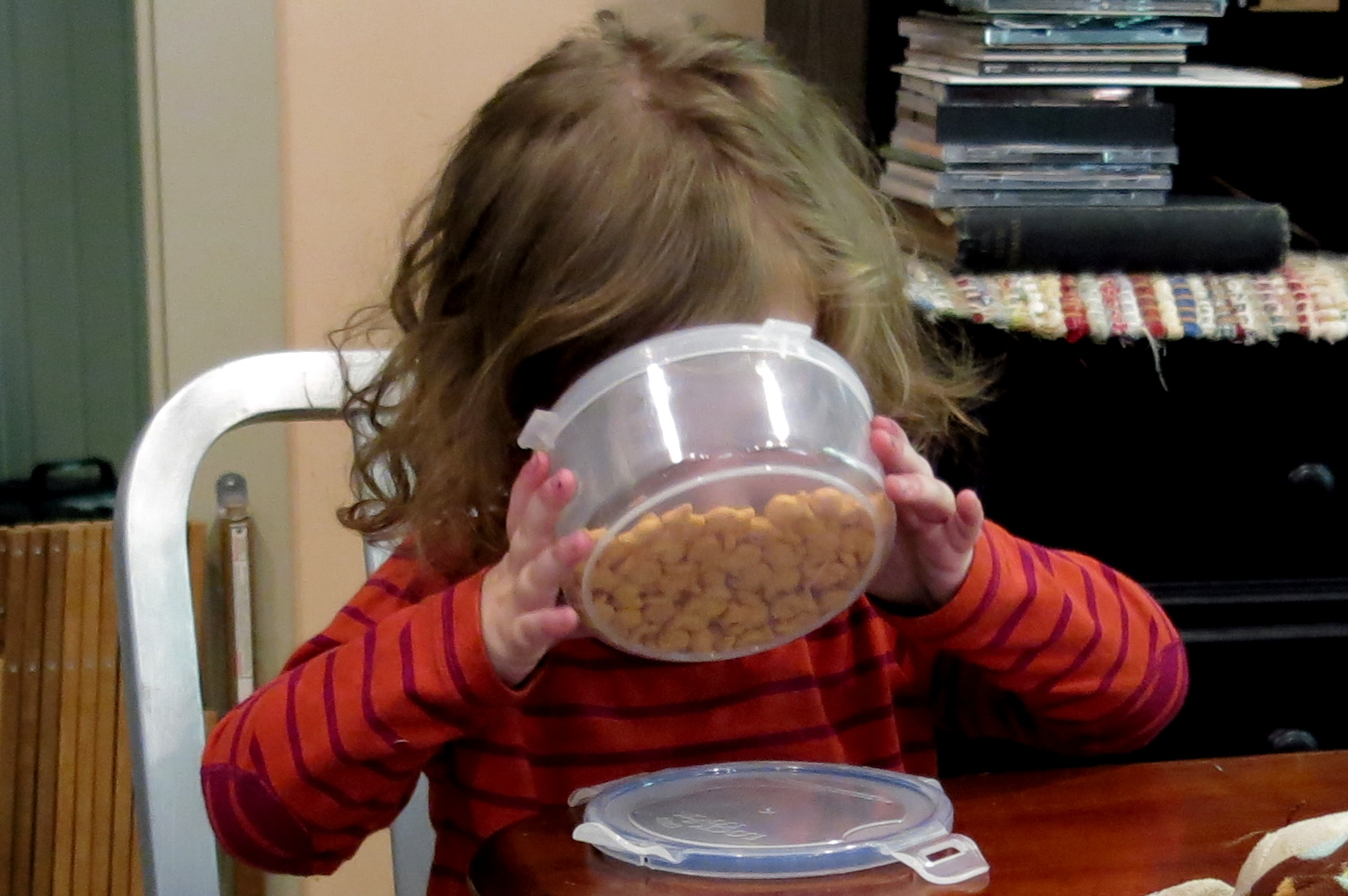
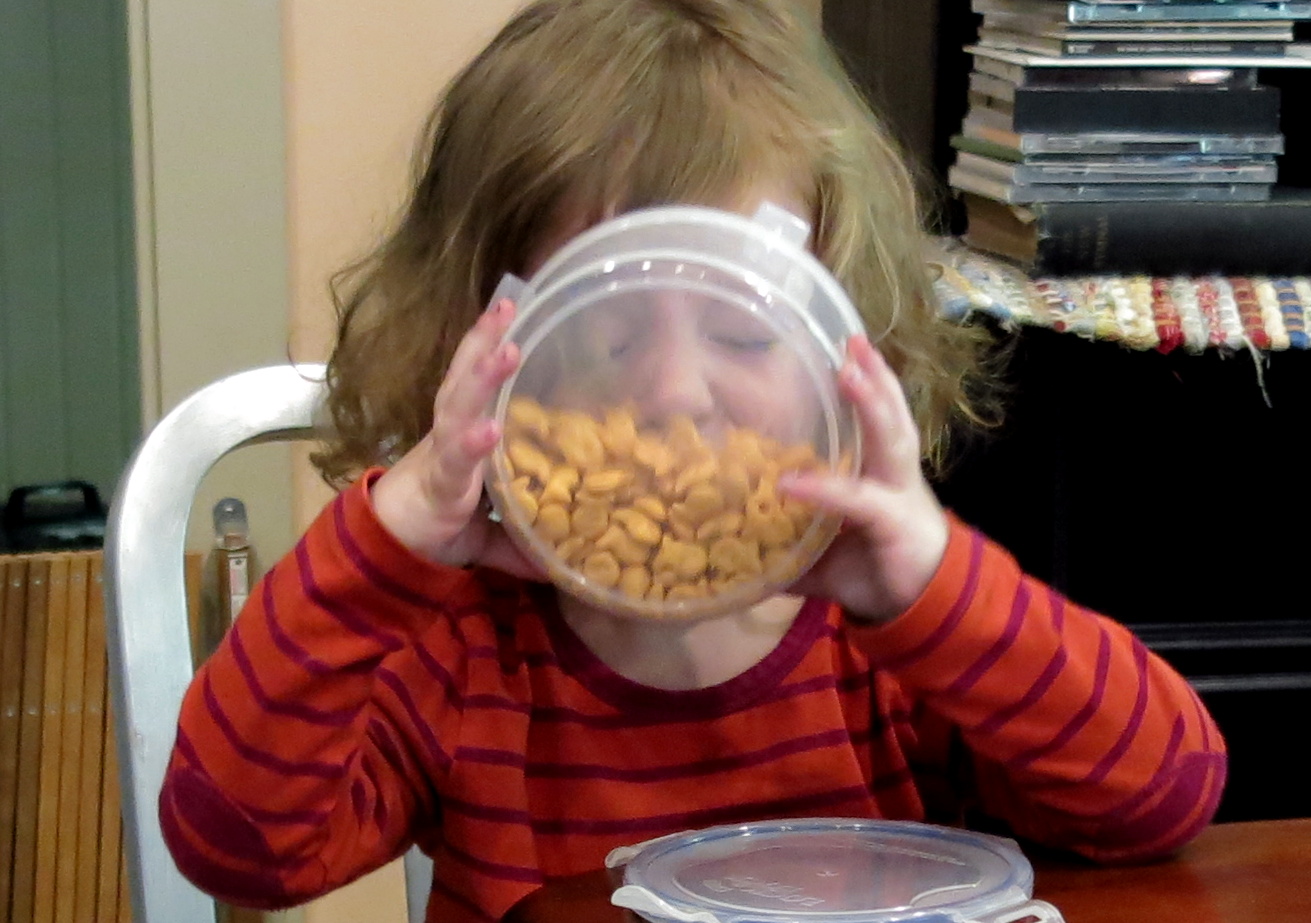
I couldn’t join them, because my daughter and her family were visiting, and I was busy teaching my granddaughter, who is about to turn two, how to eat goldfish crackers the way the guys in the Sunday Morning Group eat potato chips:

IMG_1127

IMG_1130

IMG_1131

A Perfect Autumn Buddies Trip

David

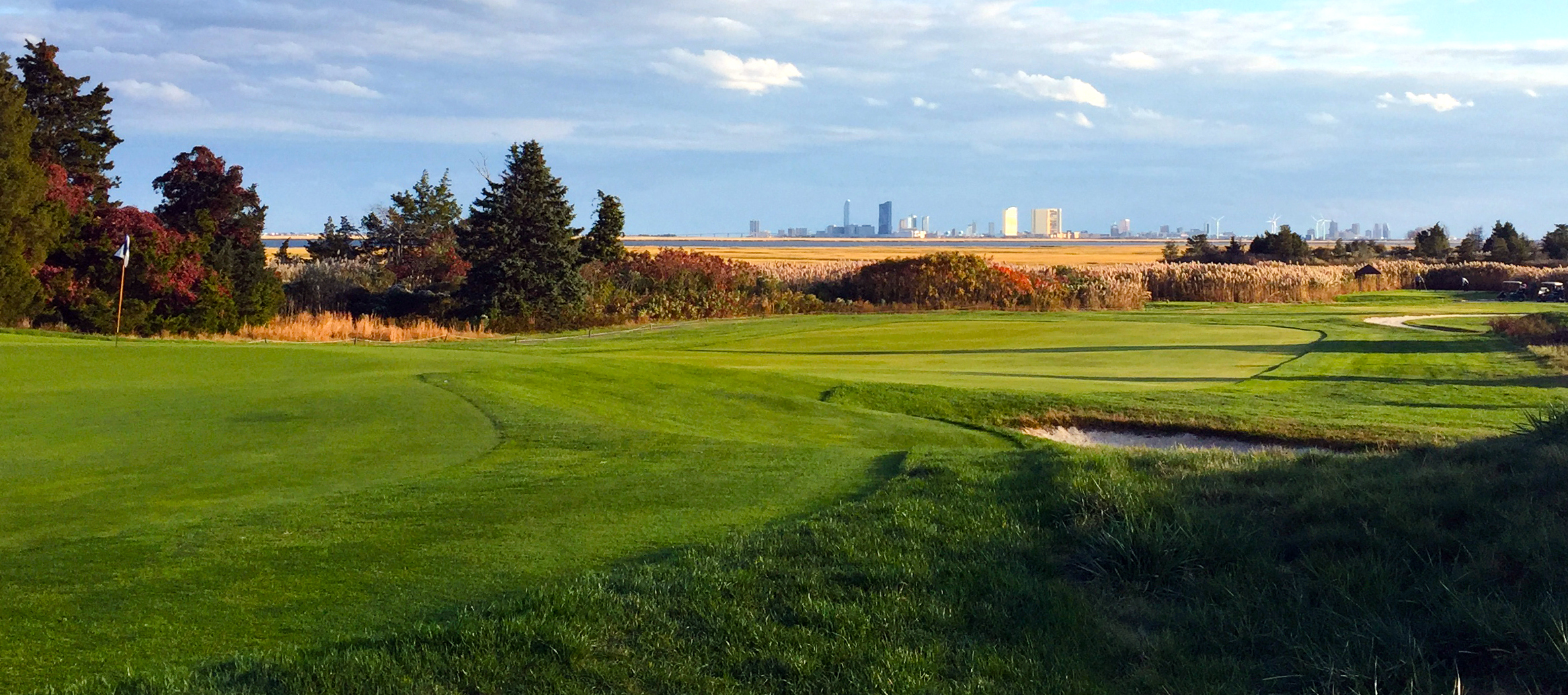
Every October, the Sunday Morning Group celebrates the approach of the winter golf season by taking a long-weekend golf-only buddies trip to Atlantic City, a little over four hours south of where we live.

view2

This year was Trip No. 16. We had 20 golfers, two of whom must have been in the men’s room when the bag-drop guy took this photo:

IMG_1321

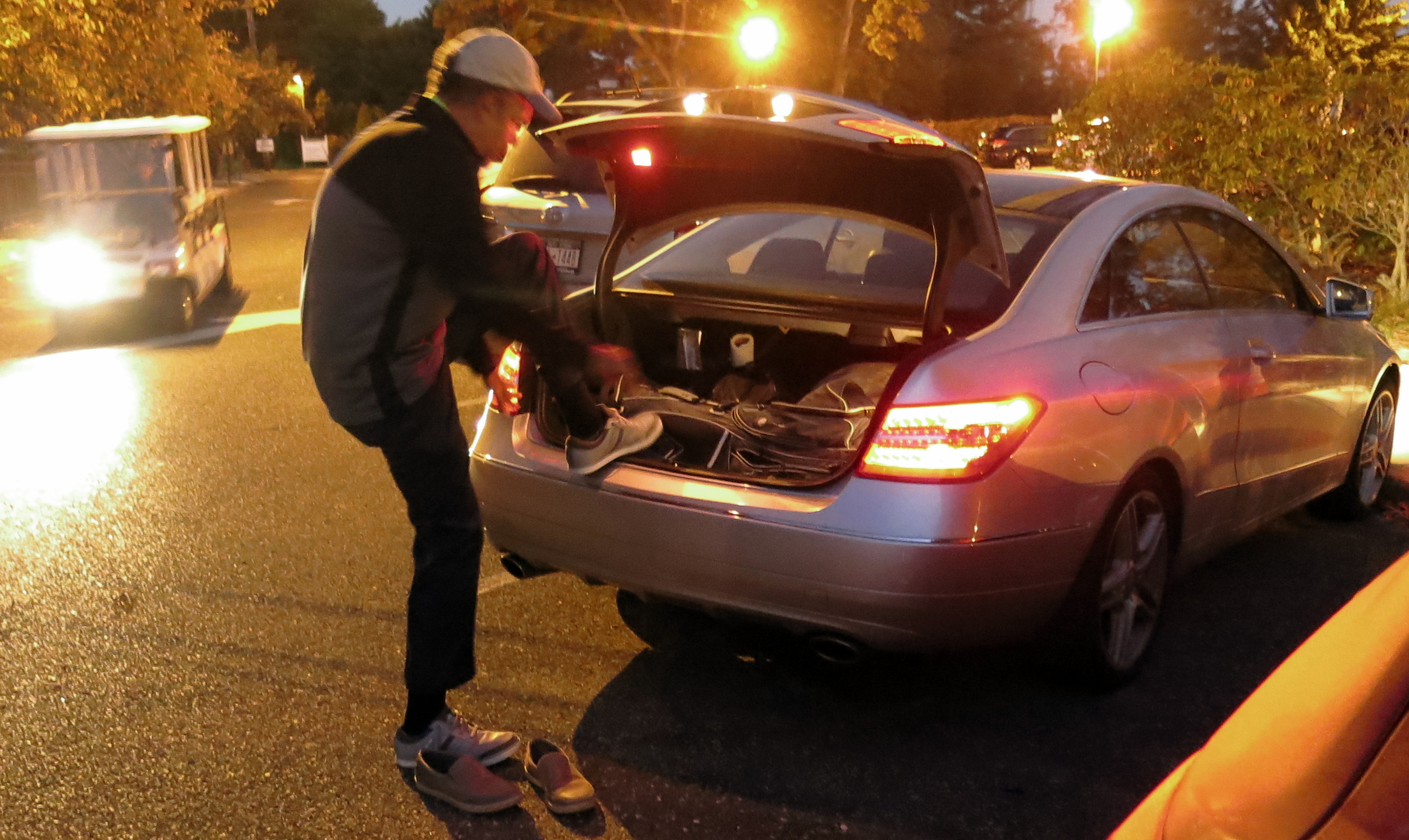
As always on these trips, we did more waiting than we usually have to do at home. But the waiting was actually part of the fun—including waiting for the sun to come up at Seaview:

IMG_1241-001

Waiting for J.P. to arrive at Twisted Dune:

P1160920

Waiting for the frost to burn off at Renault Vineyards:

IMG_1273

IMG_1287

IMG_1310

Waiting for Hacker (real name) and me to finish entering the day’s hole scores in the awesome do-everything spreadsheet that Tim created for the trip:

more numbers

Waiting for the slowpokes in the group ahead of us to get the hell out of the way on the Bay Course at Seaview:

P1160950

Waiting for the guys in our own last group to finish at Twisted Dune:

IMG_1172

Waiting for our pizzas to be delivered to the lobby of the Sonesta in Somers Point:

IMG_1232

Waiting for Tony to realize he was never going to catch the 50-dollar bill that Gary, our terrific superintendent, kept dropping between his open fingers:

Waiting for Reese, on the way home, to attempt a rare cross-lane lit-cigarette hand-off, to Paul, at speed on the Garden State Parkway:

IMG_1353

Waiting to find out which of our favorite meals our wives had spent all weekend preparing to celebrate our return:

IMG_1364

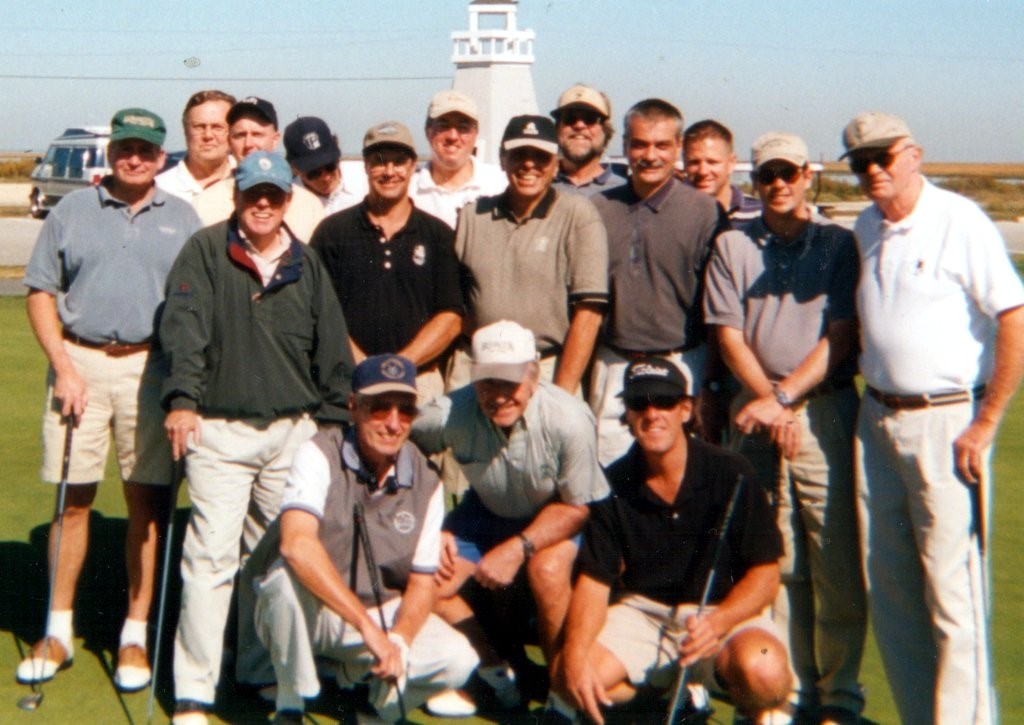
And, in effect, waiting for the thing that no one likes to think about, much less talk about. We all look a lot older than we did during our first A.C. trip, 16 years ago:

AC2000

The Ideal City for Golf?

us air force bases (2)

If you’re thinking about moving to maximize your year-round access to golf, you could do worse than to study a map of the nation’s air bases. The reason isn’t that pilots play more golf than other people; the reason is that the Air Force tends to locate its facilities in places that are relatively free of the kinds of weather that keep flyers on the ground—which happen to be the kinds of weather that keep golfers indoors. By that metric, the most golf-friendly micro-climate in the United States may be in and around San Antonio, Texas, where thousands of new airmen and airwomen are trained each year. At least, that’s the theory of Scott Anderson, a fortyish information-technology consultant, whose wife is a major in the Air Force Reserve. She spent five months in Afghanistan, and, during her deployment, their Skype conversations were sometimes broken off by explosions. “I hate this role reversal,” he told me. “She’d be under attack somewhere, and I’d be home, hand-washing the dog bed.”

anderson et al

That’s Anderson in the middle in the photo above. He told me that he took up golf because he figured it would be a good way to meet people, especially while following his wife through her military career. I met him and two of his friends—Dustin New, on the left, and Evan Zickgraf, on the right—on the first tee at Brackenridge Park Golf Course, a few minutes from downtown San Antonio and roughly midway between Lackland and Randolph Air Force bases.

P1100919

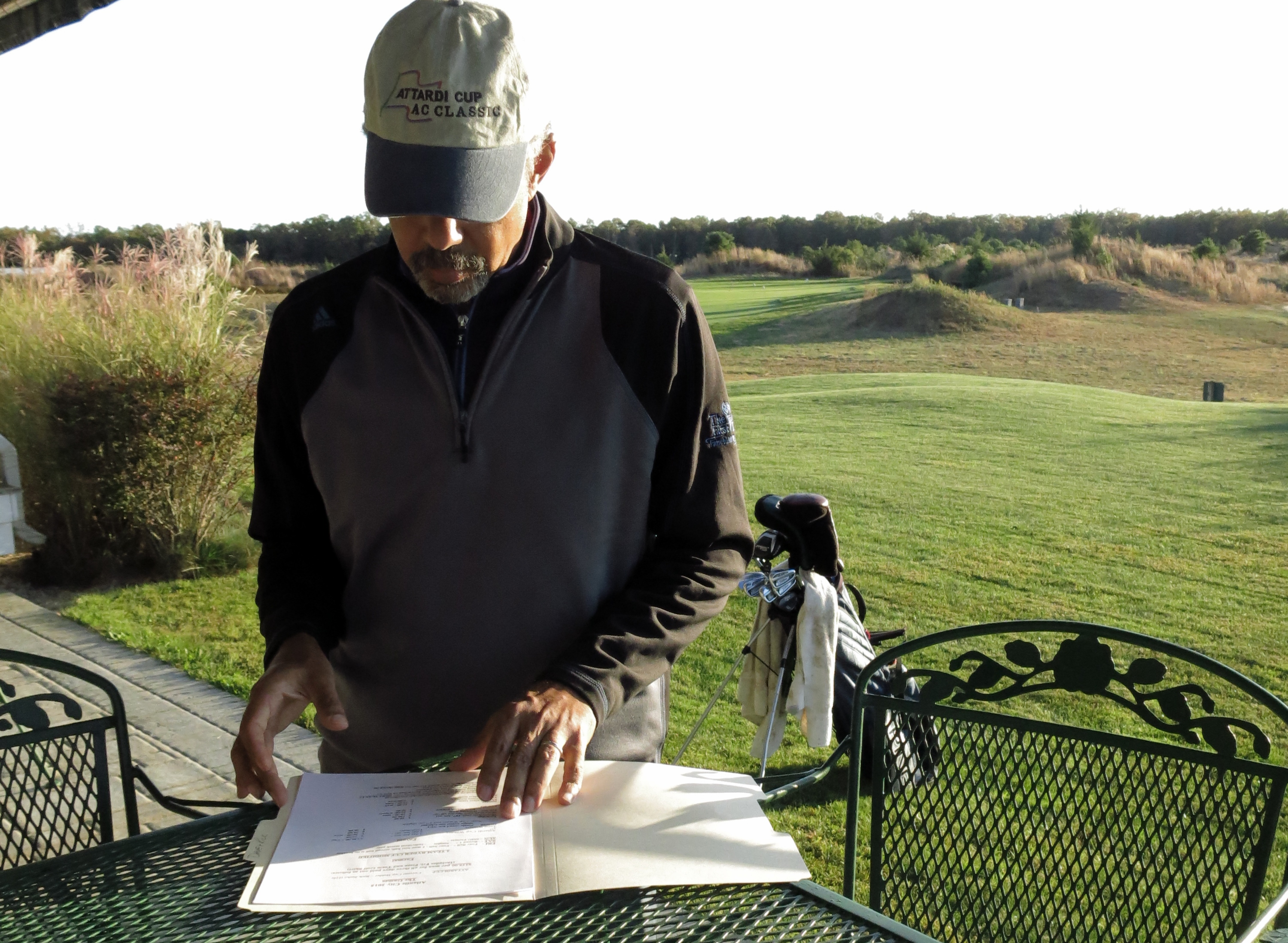
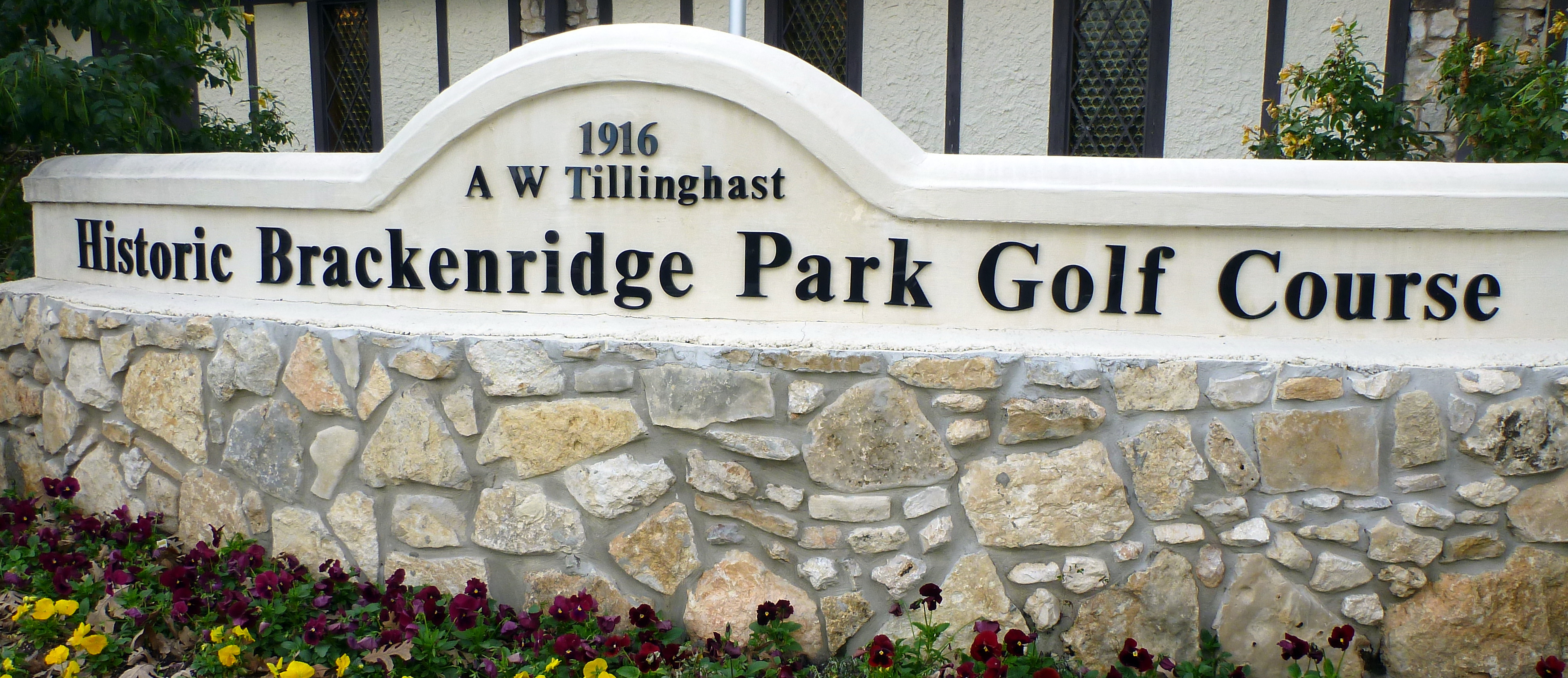
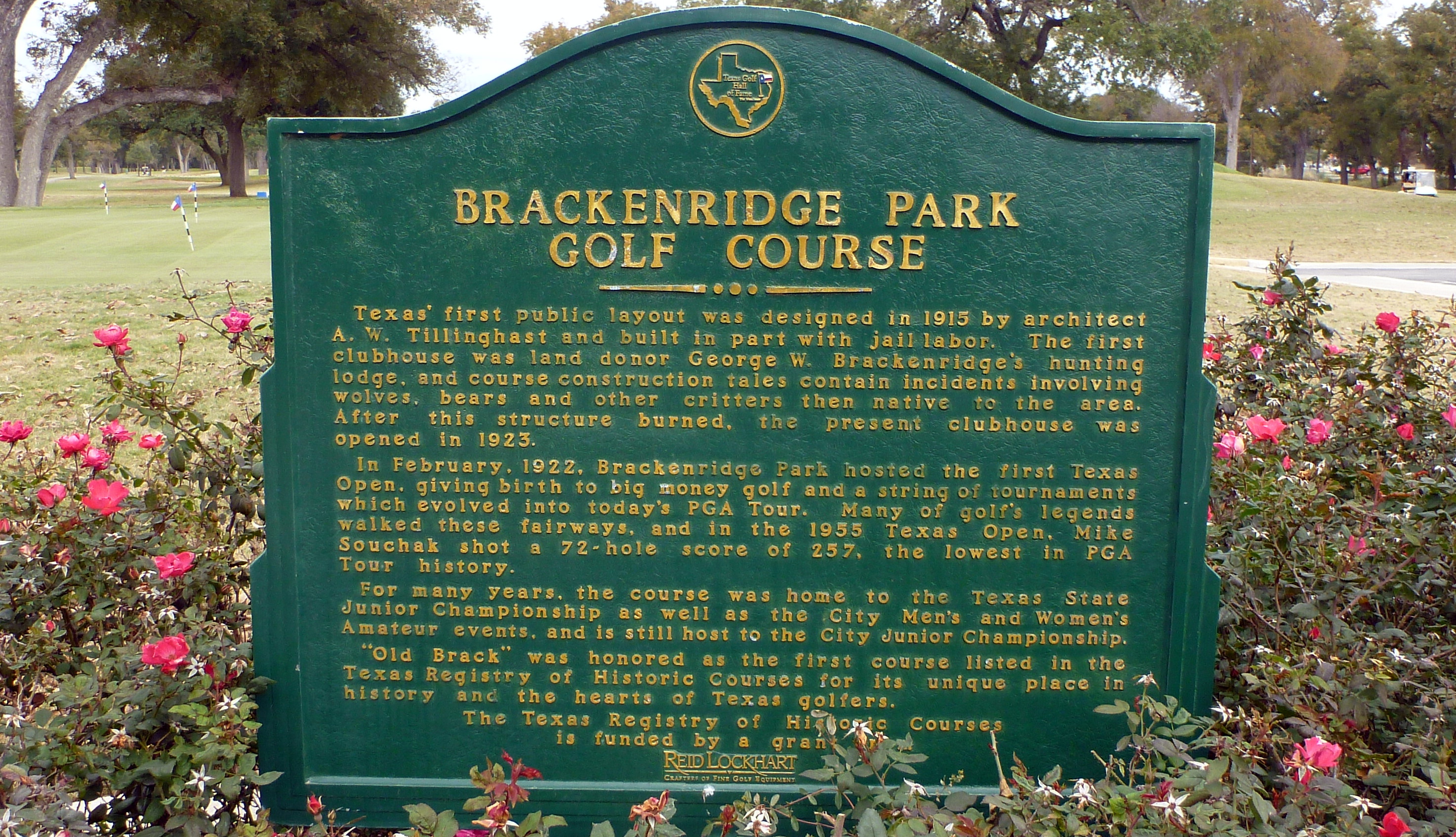
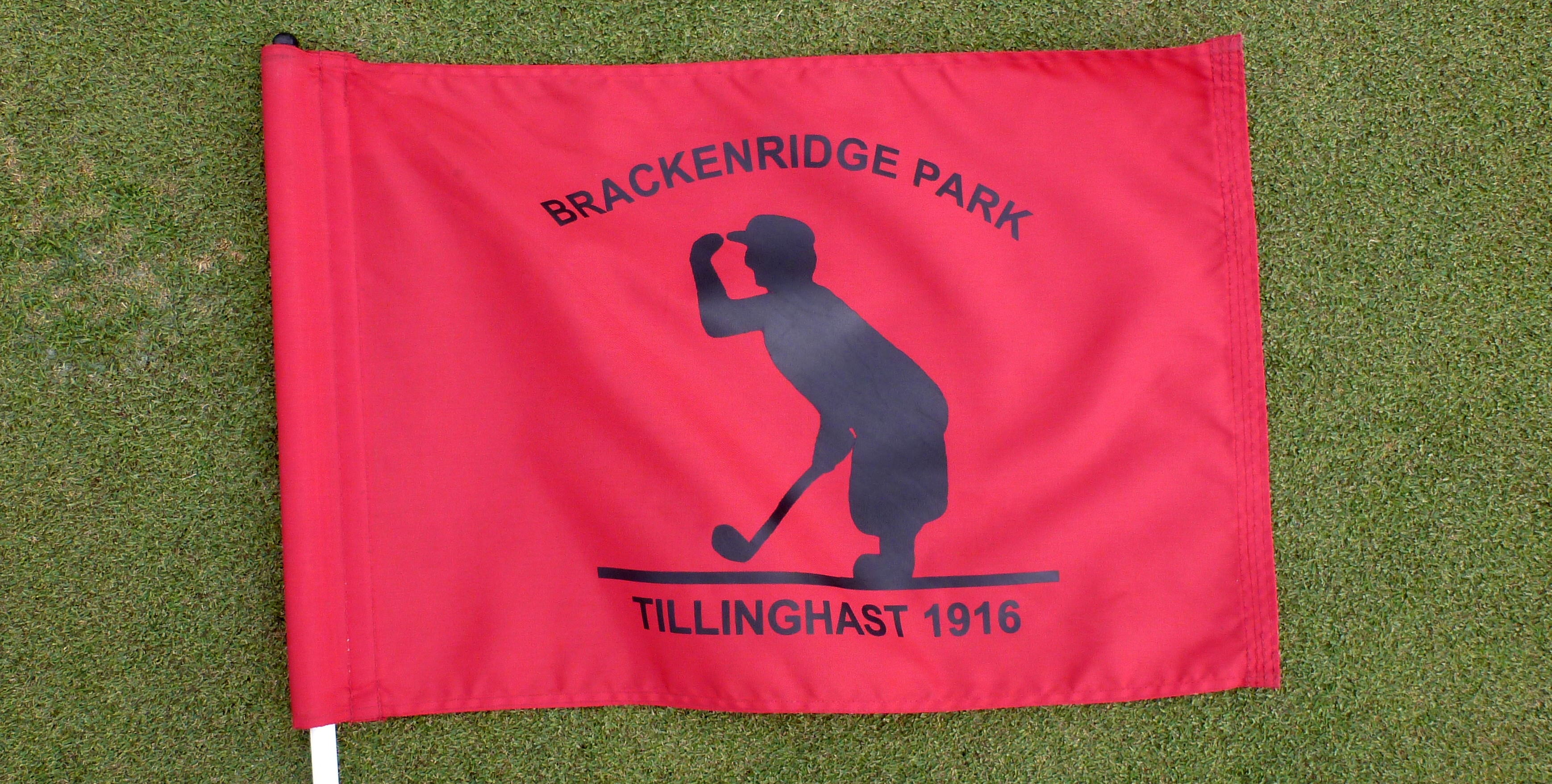
Old Brack—as regulars refer to it—opened in 1916 and was the first municipal course in Texas. It was designed by A. W. Tillinghast and built partly with convict labor, and for many years it was the home of the Texas Open. The clubhouse was built in 1923, after the original clubhouse burned down; it does extra duty as the Texas Golf Hall of Fame & Museum.P1110062On the thirteenth hole, Anderson, New, Zickgraf, and I were joined by Stephen Escobedo, an assistant pro, whom I’d met the day before.

P1110029

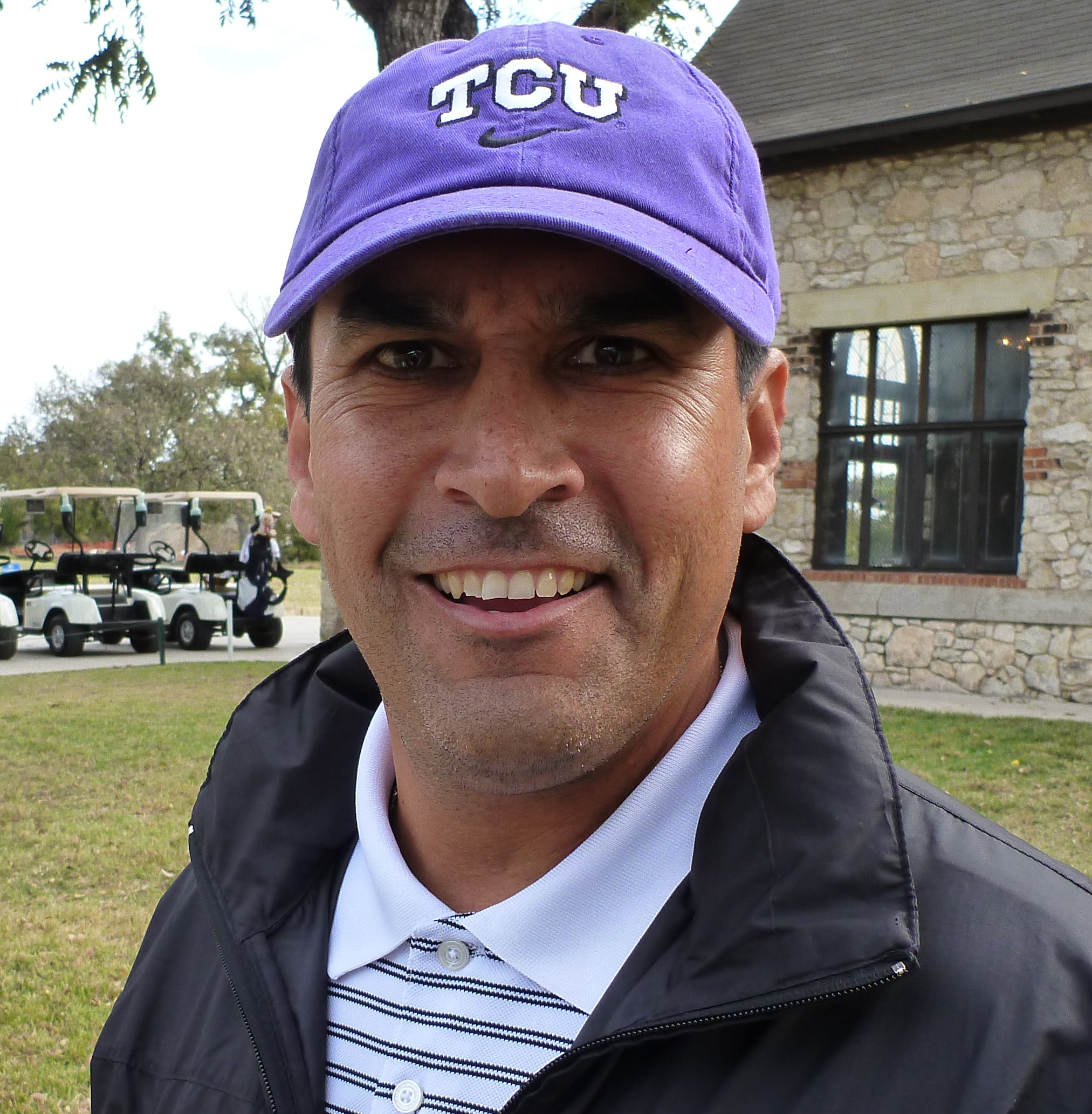
His father, Marshall, caddied on what’s now the Champions Tour, and when Stephen was three or four Marshall took a photograph of him on the Old Brack practice green, pretending to smoke a corncob pipe. Stephen played baseball in college. He took up golf in a serious way during a five-year stint in the Marine Corps, and he liked the game so much that he decided to build his post-military existence around it. Today, in addition to giving lessons and working in the golf shop, he coaches the golf team at a local middle school.

P1110123

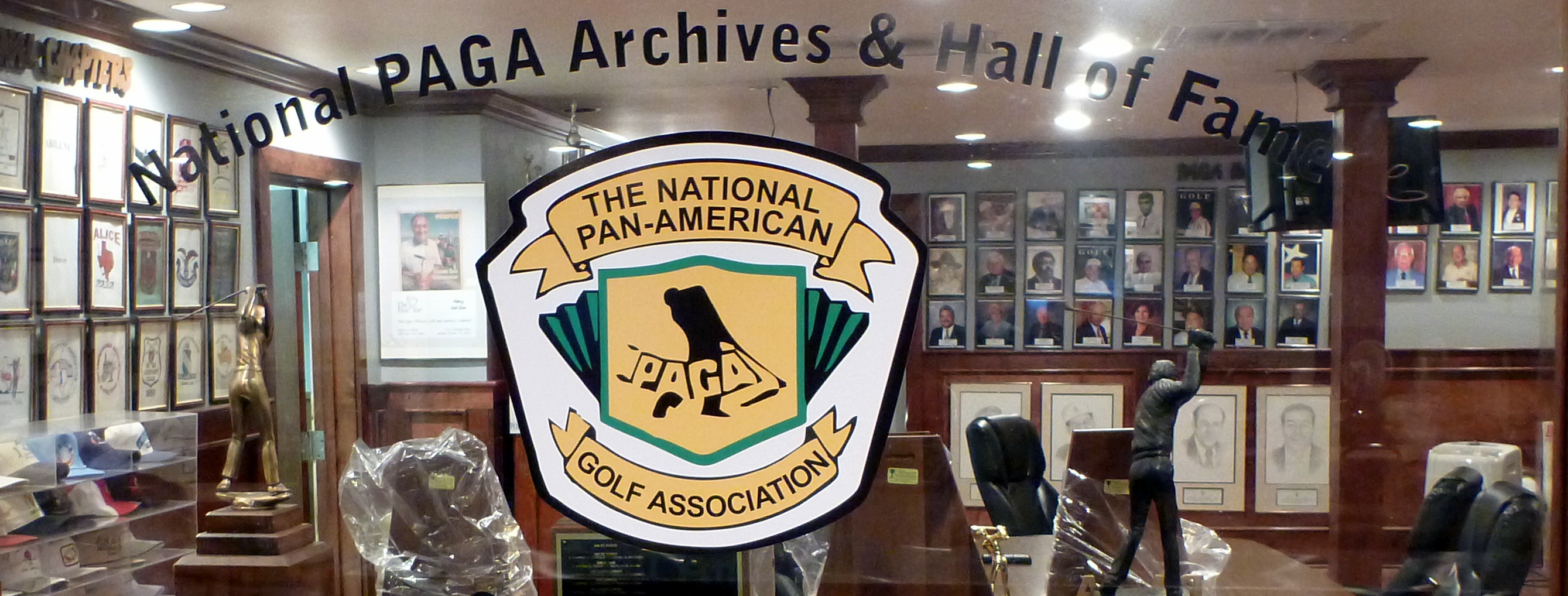
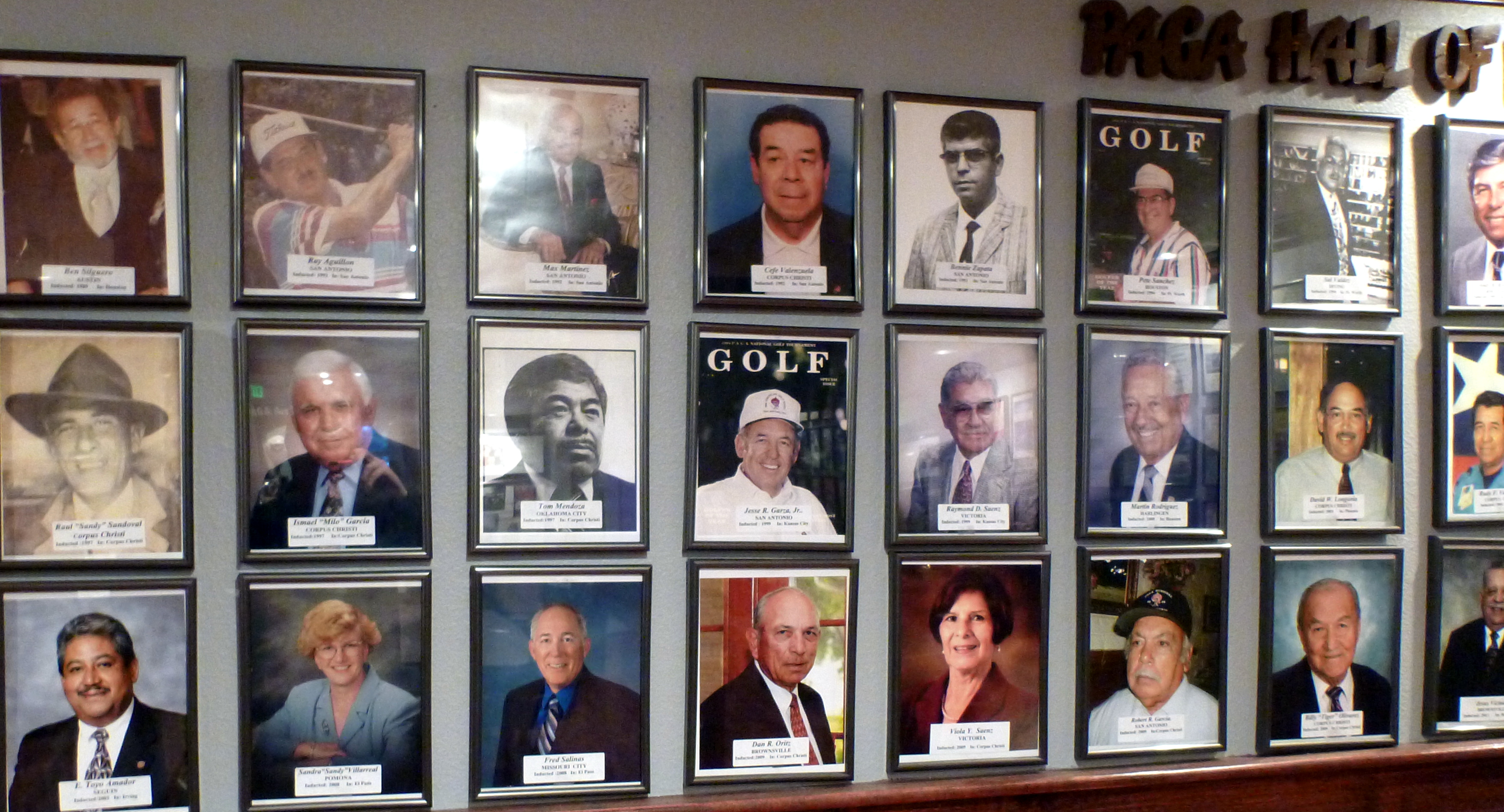
Stephen and Marshall are both members of the Pan-American Golf Association, a predominantly Latino group that was founded in San Antonio in 1947 and now has 44 chapters in nine states. The organization’s national archives and hall of fame are next door to the golf course, in a building that also serves as both a clubhouse and a public bar.

P1110118

Marshall and a large group of his golf buddies were there having a post-round beer when I stopped by, late on Saturday afternoon. They play most of their rounds at Old Brack, although they occasionally take field trips. “There’s a course they sometimes play that’s 30 miles away from here,” Stephen told me. “But even when they travel they always come back to their own clubhouse to do the scorecards.”

20131130_101139-001

P1110119

P1110047

P1110103

P1110018

P1100992

P1110131

P1110004

P1100989

Golfer Takes Photo of Hole-in-one

jeoholeinone2

Don S., a member of my brother’s golf club and, therefore, an honorary-member-once-removed of the Sunday Morning Group, sent me several photographs of a hole-in-one made recently by my brother, John. I asked John about it, and he said, “It was my second lifetime hole-in-one and my second on that hole. The first time—about 15 years ago—I hit an 8-iron. This time, it was a 5-iron.” Here it is from a different angle:

jeoholeinone

I guess that mere photography doesn’t do it justice, but the pictures brought to mind a memorable shot of my own: a gorgeous 7-iron, drawing slightly, that hit the flagstick on the fly on the third hole at my own club roughly 20 years ago. From the tee, my friends and I could see that the ball had wedged itself between the stick and the front of the cup. I didn’t hoot or jump up and down. I walked to the green at my normal pace, wearing an expression of placid nonchalance which said, “This is how I play golf.”

When we reached the green, we realized that my ball wasn’t actually in the hole but was merely perched on its front edge. There was a deep ball-shaped dent in the turf just above the back of the cup, and the dent, the flagstick and the ball were aligned perfectly — a physical impossibility, you would think. Had the ball dematerialized briefly after bouncing off the rim, then passed, undeflected, through the stick? I had to write 2 on the scorecard, but I’ve always thought of it as a 1. The next day, I played again and used my thumb to press my dent, which was still visible, more deeply into the rim. “My ball did that,” I said to the people I was playing with. “It should have been a hole-in-one.”

Golf, a famously unfair game, never seems more unfair than when it narrowly withholds the only laurel that non-golfers are impressed by. Unlucky bounces off trees or sprinkler heads don’t bother me; I accept them as the rub of the green. But that almost-ace still rankles. A couple of years later, I made an official hole-in-one—in a tournament, no less—and got my name added to a plaque in the golf shop. But when I see the plaque I can’t help thinking, “I ought to be on there twice.”

Almost as bad as just missing a hole-in-one is making one and not receiving credit for it. On a trip to Ireland in 2001, five friends and I played a round at the Portmarnock Pitch and Putt Club, a micro-scale links course not far from the full-size Portmarnock Golf Club.

portmarnockpnp

In Irish pitch and putt, the maximum hole length is seventy meters—about seventy-seven yards. One of my friends, looking over the compact layout from behind the first tee, asked the club’s captain how often players made holes-in-one, and he said, “Not as often as you’d think.” Ten minutes later, though, we heard a shout on the far side of the course: an ace. Ten minutes after that, I made one myself, on a fifty-meter hole. “I guess I owe everybody a beer,” I said expansively. One of my friends gave me a look. “It wasn’t even sixty yards,” he said.

In Florida once, I almost had my second, third, or fourth hole-in-one, depending on how you count them. I hit what may be the best-looking 6-iron I’ve ever hit, into a strong wind off the ocean, and my ball landed softly and rolled toward the hole at the speed of a confident putt. It stopped six inches away. “Unlucky,” one of my friends said. “That was almost a great shot.”

If the ball had gone in, we’d have celebrated; if it had ended up two feet farther from the hole, outside of almost-a-hole-in-one range, my friends would have toasted my brilliant shot-making, since even hitting the green in that wind was an accomplishment. As it was, though, none of us could think of anything except the thing that hadn’t happened.

Of course, I can’t actually claim responsibility for any of my shots, good or bad, lucky or unlucky. Like most golfers, I don’t so much aim at the flag as try to bracket the green with my margin of error. Even my single uncontested ace deserves as asterisk: “Player had no idea what he was doing.” Still, there’s something about a hole-in-one. Did I mention that my name is on the plaque?

Late Update: At a mixed event at my club the last weekend in September, I won a hat for hitting my tee shot on the seventh hole to an inch—another near miss:

P1160834

Reader’s Trip Report: Midnight at the Grave of Old Tom Morris

Open-Cohens-Sachses

In July, Adam Sachs and Mark Cohen, readers in Kansas City, celebrated their sons’ bar mitzvahs by taking them to Scotland to watch the British Open and play golf at Cruden Bay, Kingsbarns and Luffness. Here are the boys, both thirteen years old, at the Old Course at St. Andrews—Elliott Cohen on the left, Phinney Sachs on the right:

Open-Elliott-Phinney

And here are Mark and Adam, setting an example:

Open-Cohen-Sachs

They saw Tom Watson, who during his heyday was known in Kansas City as the Fourth Franchise, and the boys learned that the Scots know nothing about making pizza:

Open-pizza

Adam writes:

“Because the Old Course is close to everything in St. Andrews, we couldn’t help running into players, caddies, journalists and golf-industry hangers-on. The boys got John Daly’s autograph, twice. On Tuesday, at Kingsbarns, which is one of the most enjoyable courses I’ve ever played, we were held up by the French pro Victor Dubuisson, who was two groups ahead of us. He ended up missing the cut, so maybe he should have been practicing on the Old Course instead. Tom Lehman’s sons were between us and him, and we all spent a lot of time standing around. On Friday night, I saw Darren Clarke, who also missed the cut. He was leaning against a wall outside a bar, smoking a cigarette and drinking a beer, and when I called to the boys to come back and meet ‘a real Ryder Cup hero’ he chatted with us and signed their golf flags.

IMG_8647

“On Saturday night, we ran into Jim Nantz, who was in St. Andrews as a spectator only (the U.S. broadcast was on ESPN).

Open-Nantz-street

“At midnight, we joined him and a group of his friends for a misty walk to the graves of Old and Young Tom Morris. The cemetery gate was locked, so Phinney and Elliott had to help Nantz, Mark, me, and all the other old guys get over the fence.

Open-Graveyard

Afterward, we went to the bar at the Dunvegan Hotel, around the corner from the 18th green. On the way, Phinney asked Nantz if he would record a voice-mail message for his cell phone. He did:

Nantz told Phinney that Phil Mickelson had asked him to do the same thing, and that Mickelson reciprocated by recording one for him.”

Open-Elliott-Nantz-Phinney

The Cohens and Sachses went back to the cemetery during the daytime, when the gate was unlocked. There was lots of death in the Morris family:

Open-Morris-grave

Among the trip’s many other highlights was golf at Cruden Bay. That’s where Adam took this photo of Phinney and Elliott:

Cruden-Bay-Phinney-Elliott

Cruden Bay is one of my favorite courses, too. I ate dinner in the clubhouse there after a late-afternoon round a few years ago, and I heard the waitress ask someone at the table behind me, “Would you like pineapple with it, or a fried egg?” I didn’t dare turn around to see what “it” was. But, like all four Cohens and Sachses, I love the course!

cruden-bay-green