Winter Golf and a Previously Unknown Type of Cheeseburger

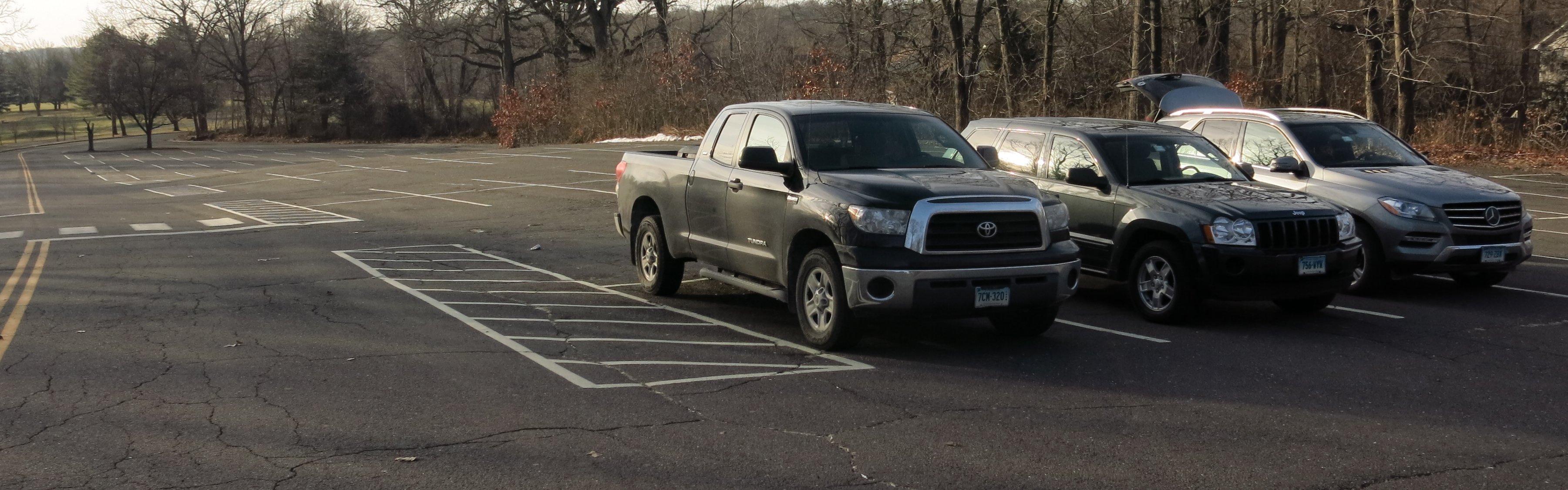
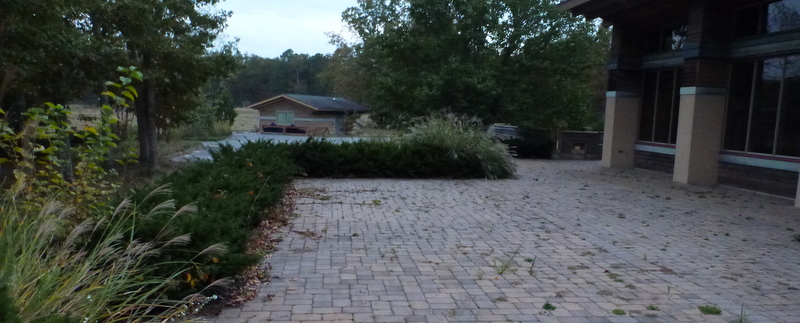
These cars belong to my friends and me. There were no other cars in the parking lot at Tunxis when we got there on Sunday morning.

These cars belong to my friends and me. There were no other cars in the parking lot when we arrived on Sunday morning.

We got what seemed like a foot of rain on Saturday. That was good in one way, because it washed away most of the snow, but it was bad in another, because (apparently) it persuaded the people who make the decisions at Tunxis Plantation Country Club not to open the following morning, even though Hacker (real name) had called the evening before and left a message that we would be there at 9:30, ready to go. I sensed trouble as I approached the clubhouse: of the ten or so greens I could see from the road, only one had a flag, and the parking lot was empty except for cars that belonged to people I knew. Hacker started calling around the state, but the places he tried either weren’t open or weren’t answering the phone. (Suggestion to golf courses that don’t shut down for the entire winter: update your website and outgoing voice-mail message every night with information about the following day.) Finally, he found an open course, and it was just thirty-five minutes farther away. So we caravaned:
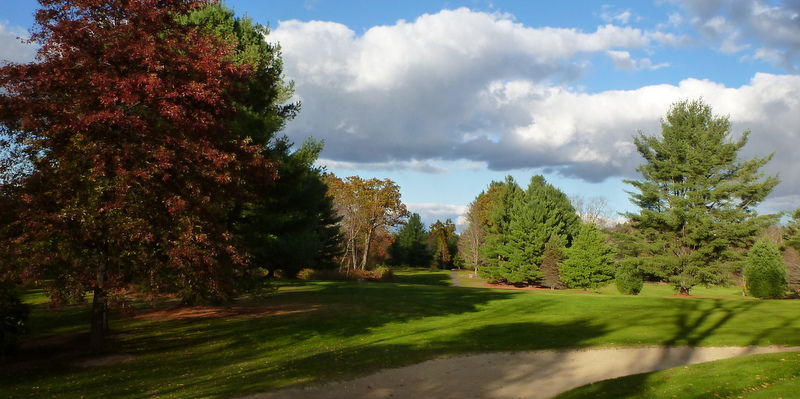
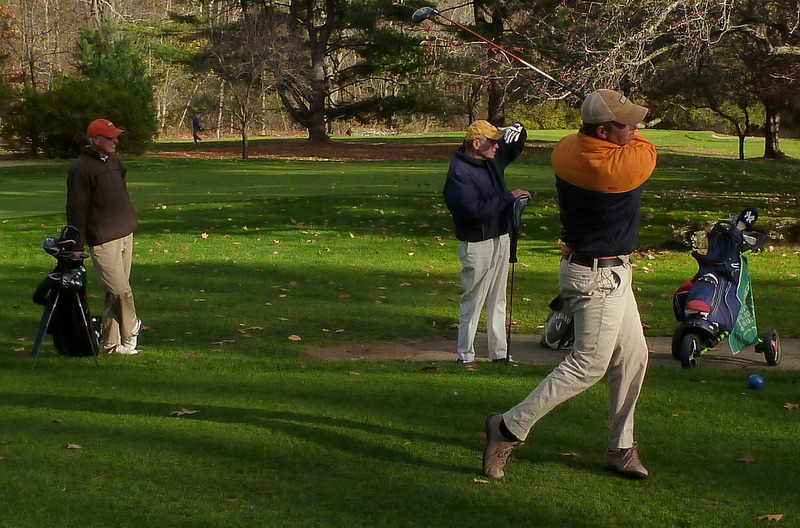
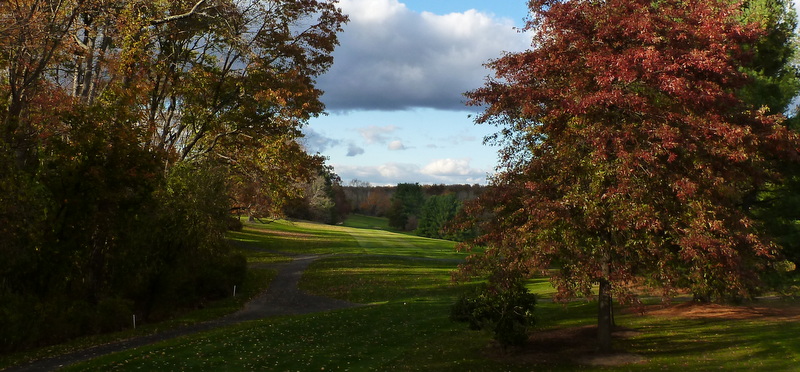
P1110660And then we spent a very enjoyable day at Lyman Orchards, which, like Tunxis, has forty-five holes. One of Lyman’s eighteens was designed by Robert Trent Jones, and the other was designed by Gary Player. The fifth nine—called the Apple Nine—is new, and is (I would guess) for kids and beginners. There’s also a golf school and a driving range.
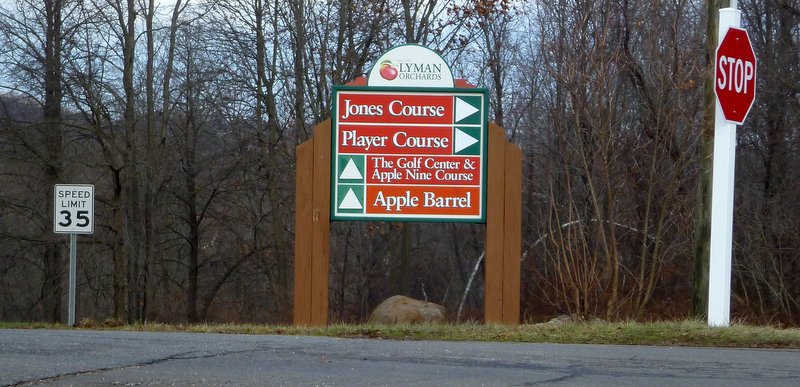
Lyman Orchards is also an orchard, and there's a big store in which you can buy apples and apple-themed stuff.

Lyman Orchards is an orchard. There are apple trees in the middle of the course, and there’s a big store, called the Apple Barrel, in which you can buy apple-based and apple-themed products. Maybe your wife would like to tag along some Sunday, and spend a few hours shopping for apple butter while you and your friends are playing golf.

We first played Lyman several years ago, and at that time they kept both eighteens open all winter. Now they shut down the Jones course—which is too bad, because the Player course is definitely second best. It’s also a pain to walk, because you always seem to be climbing to the top of a huge hill in order to hit your ball to the bottom of it, and then walking miles to the next tee. Still, golf.
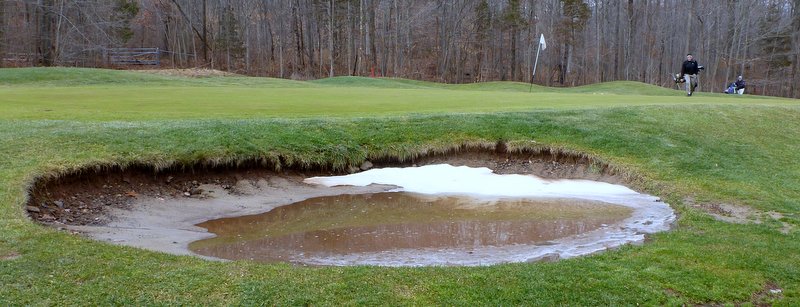
The conditions weren't what you would call perfect, but the course was open. In fact, it was pretty busy.

The conditions were not what you would call perfect, but the course was open. In fact, it was almost somewhat busy.

On most of the holes, the flags wouldn’t go back in the cups straight, and on some of the holes they wouldn’t go back at all. The reason was that the little holes at the bottoms of the cups were all either partly or entirely full of sand. I tried to clean one out with a tee and a green-repair tool, but that was a fool’s errand. The greens themselves were squishy on top, and some of them had bare patches, but we kept being surprised at how un-slow they were.

Afterward, we decided to eat lunch at a place we hadn’t tried before, the Rover’s Lodge, on Beseck Lake. The house specialty (according to a big sign facing the road) is “steamed cheeseburgers”:
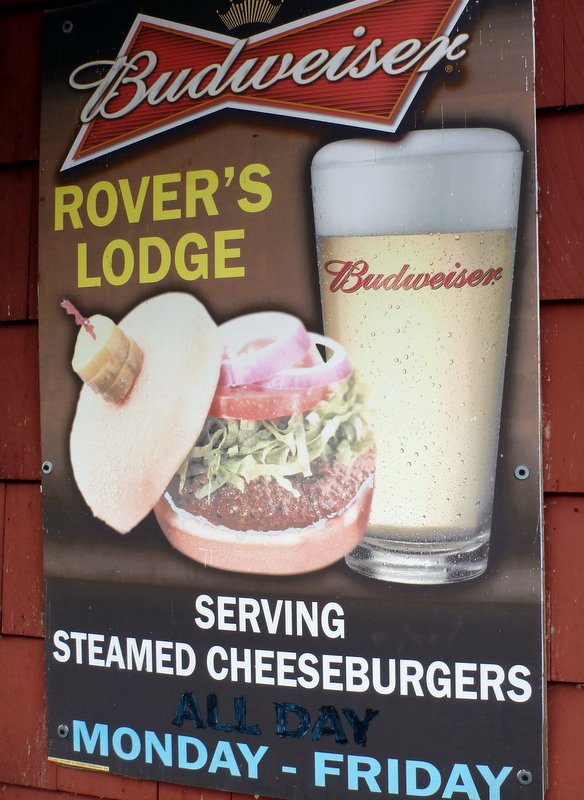
P1110675A new form of cheeseburger? How could we not? I learned later that the steamed cheeseburger is “a food so truly regional that it is found in only about a dozen restaurants within a 25-mile radius of Middletown, in central Connecticut,” and that it “was invented in the 1920s, when steamed food was thought to be healthier than fried.” (You can read more about steamed cheeseburgers here.)

Steamed cheeseburger.

This is a steamed cheeseburger, from a restaurant called Ted’s.

It turned out that the Rover’s Lodge serves food of any kind only “in season,” and that the season isn’t winter. There were about a dozen guys in the bar when we went in, and they were interested, up to a point, in the fact that we had just played golf. Later, I found two reviews of the Rover’s Lodge on TripAdvisor—one that said it was “very good,” and one that said it was “a dump.” It’s possible that we’ll never know who is right, because we continued up the road to New Guida’s Restaurant, where we’ve eaten before. Let me say this for Guida’s: their cheeseburgers, however they make them, are very good. Ditto their fries and milkshakes.

P1110677

Then we drove home to watch the playoff games.

Guida's. Cash only, please.

Guida’s. Cash only, please.

Reader’s Trip Report: Ballybunion on New Year’s Eve Eve

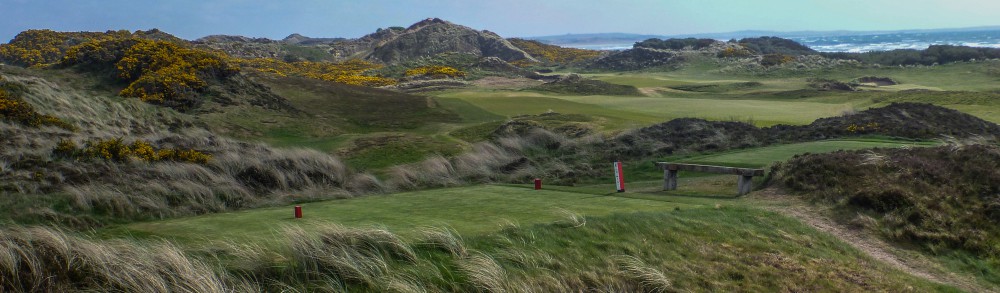
Seventh hole, Old Course, Ballybunion Golf Club, Ireland.

Seventh hole, Old Course, Ballybunion, Ireland.

American golfers often speak of the Old Course at Ballybunion as though it were the only golf course in Ireland, so when I first visited, in 2006, I was predisposed to be underwhelmed. After actually playing it, though, I realized that it belongs right where it’s always listed, with Royal County Down and Royal Portrush and, therefore, with the greatest golf courses not only in Ireland but also in the world. At least half the holes would stand as the best hole on any number of very good courses. I could have played Ballybunion until immigration officials (or my wife) came to drag me away.

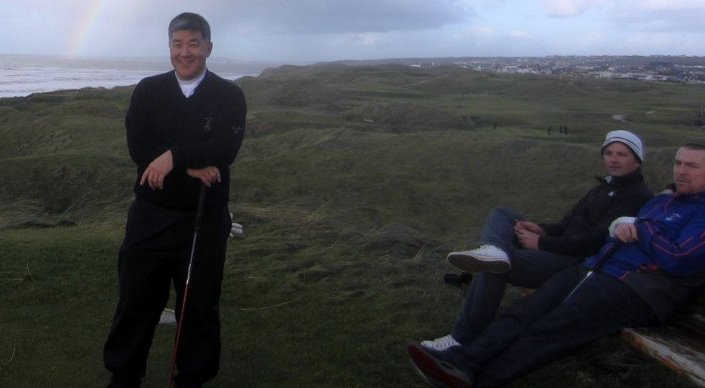
Dan Tani, seventeenth tee, Ballybunion, December 30, 2013.

Dan Tani, seventeenth tee, Ballybunion, December 30, 2013. That’s Jeremy and Anthony on the bench. (Dara took the photo.) Rainbows are officially disallowed in golf-course photos published on this website, but every once in a while one slips past the censors.

Dan Tani, an American reader (photo above), joined Ballybunion as an overseas member in 1998, when the cost was next to nothing. Two years later, he married a woman from Cork, and so now is obliged to visit twice a year. (He proposed at the stroke of the millennium, after playing Ballybunion in the afternoon and rehearsing his lines on the drive home.) Ever since, he’s made a point of playing at least one round very late in the year. This past December, he played on New Year’s Eve Eve—December 30, 2013—with three Irish guys whose fourth had exceeded the legal limit on showing up late.

Seventeenth tee, Ballybunion, December 30, 2013.

Seventeenth tee, Ballybunion, December 30, 2013.

Highlights from Tani’s trip report:

Golf in Ireland in December can be wet and cold, but it can also be surprisingly mild. I’ve played in short sleeves and in full winter rain gear. This year, it was cool—about forty degrees, but dry, clear, and sunny—and the wind was only about ten miles an hour. I joined Anthony, a local publican, hotelier, and landscaping-company owner; Dara, a former assistant pro at Ballybunion, now an accountant in Dublin; and Jeremy, a greenkeeper currently working on a new course in Finland. They were old friends from years ago, getting together over the holidays. Dara is from Newcastle, Northern Ireland, and he grew up as a member of Royal County Down. He had a beaten-up golf bag with the R.C.D. logo on it.

Dara, seventh tee, Ballybunion, December 30, 2013.

Dara and his R.C.D. golf bag, seventh tee, Ballybunion, December 30, 2013.

One thing I have noticed when I play Ballybunion is that I am always the oddly dressed golfer on the course. If I  wear beaten-up clothing with various golf clubs’ logos, I end up playing with three guys in full Ballybunion gear: jackets, hats, etc. This time, I wore my Ballybunion sweater, and, of course, the other guys were dressed like they’d just rolled out of bed: tattered pullover sweatshirts, Converse sneakers, jeans. I envied them and wished I could be cool enough to shoot even par in sneakers and pub wear, too. 
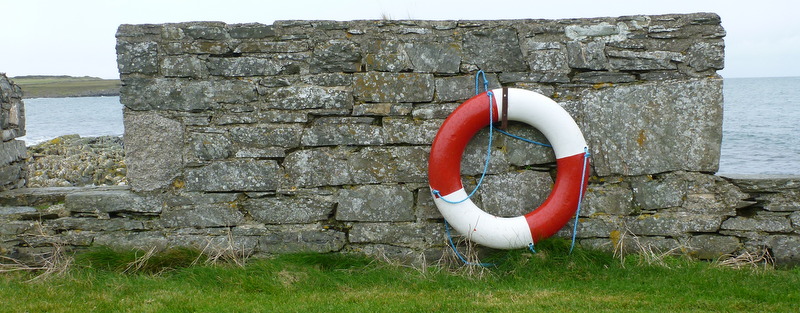
Eighteenth tee, Old Course, Ballybunion, Ireland, December 30, 2013.

Eighteenth tee, Old Course, Ballybunion, Ireland, December 30, 2013. That’s the seventeenth green in the foreground. The eighteenth fairway is at the far right, receding into the distance, toward the clubhouse.
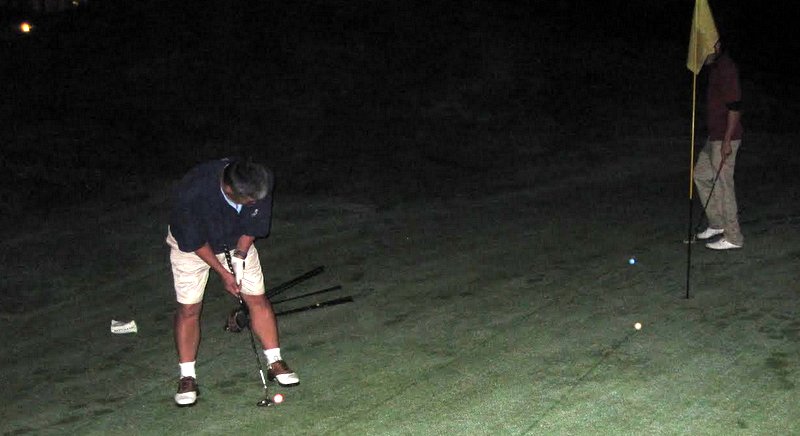
After the round, we went to the clubhouse for a lunch of “toasted specials,” which are the real national dish of Ireland. We finished at three. I had about ninety minutes of sunlight left, so I went out on the Cashen Course [which was designed by Robert Trent Jones, Sr., in 1984]. I played the first seven holes, teed off on the eighth (a six-hundred-yard par 5), then picked up my ball and went to the fifteenth tee and played in from there: eleven bonus holes. I saw only an occasional golfer, on a distant hole. My only regret is that I didn’t have any light-up balls, as I did in 2010. That year, after thirty-six holes and a full dinner in the clubhouse, we went out again, at eleven p.m.:
IMG_0260
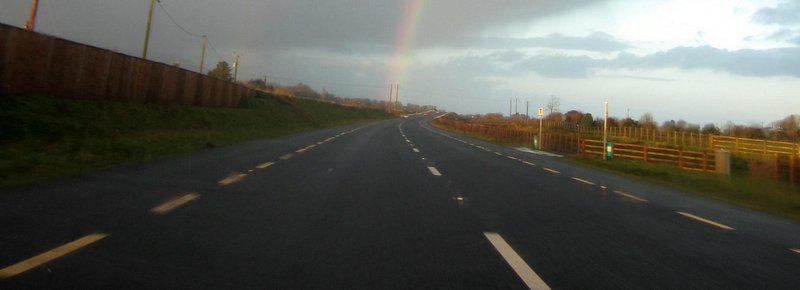
Tani indirectly makes a point that I myself have made before: rather than going to Myrtle Beach for winter golf, why not go to Scotland or Ireland? The weather is often worse in Myrtle Beach. Anyway, here’s one more rainbow shot, as long as we’ve broken the rule. Tani took this one from his car on the way to the course.

2013-12-30_04.51.38_1670

We Have a Winner; Plus, Good Shoes for Winter Golf

P1110370

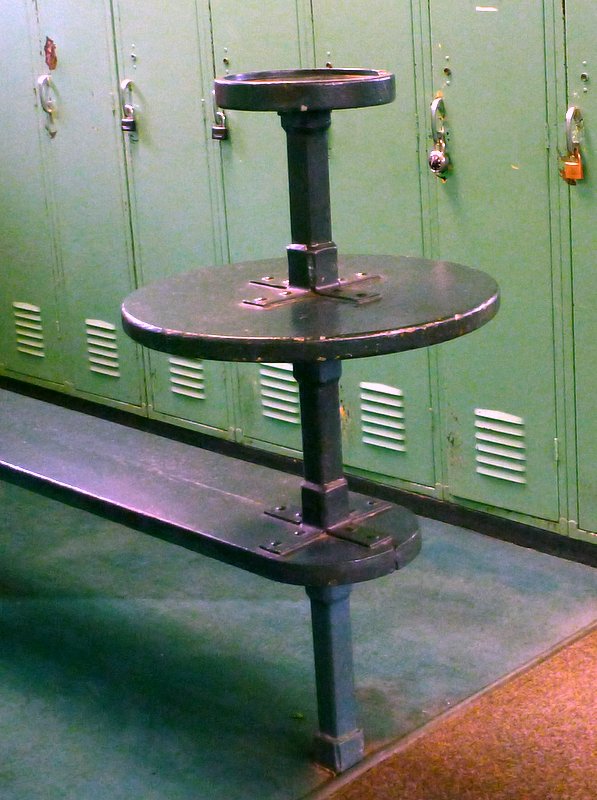
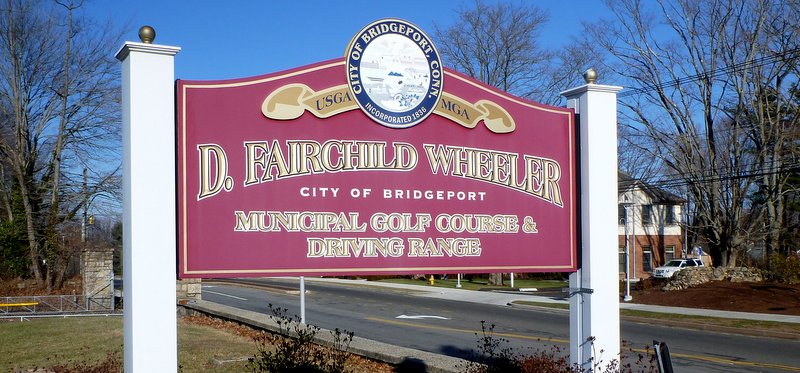
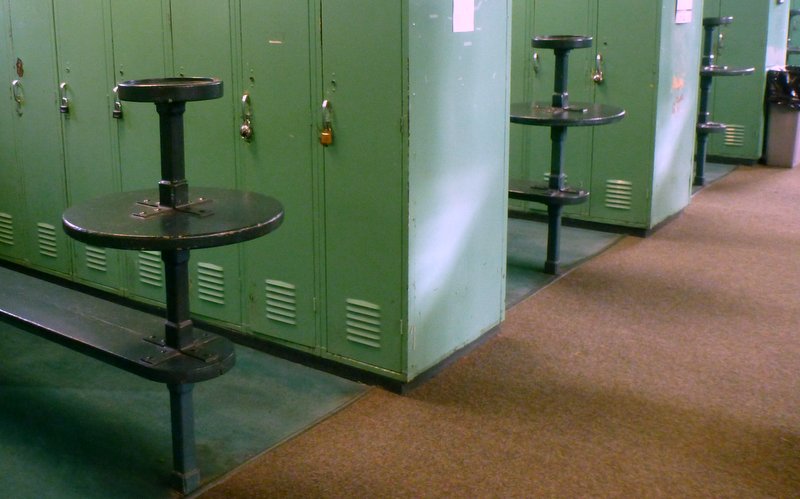
On New Year’s Eve, I challenged readers to identify a golf course and an intriguing locker-room accessory, based on a photo similar to the one above. There were several pretty good guesses regarding the locker-room accessory, but only one (by email) that nailed the golf course, too. That golf course is D. Fairchild Wheeler, known to regulars as the Wheel, a muny owned by the city of Bridgeport, Connecticut (although it’s actually next door, in the town of Fairfield).

P1110513The winner was Dave Malloy, a reader in Trumbull (another neighboring town). He wrote: “That’s the locker room at the Wheel. Red Course is open all year. Black Course is a diamond in the rough. Oh, function. Drinks, baby! Ashtrays, too, at one point, I was told. Always loved that locker room.”

P1110371-001There are other uses, too, as the photo above shows. And according to Stephen P. Roach, the head pro, regulars also treat the things as stand-up card tables—a great idea. I asked Malloy to tell me about himself and his golf. He wrote:

I am an 18-handicap hack who can lose balls impressively deep in the woods, both hooking and slicing. Fifty-two years old. Most of my golf is nine holes late Saturday or Sunday afternoon at Tashua Knolls, in Trumbull. Three kids and a full sports schedule kill golf until late June, then sports start up again in September. Grew up in Stamford playing Hubbard Heights and Sterling Farms. Occasionally enjoy away rounds at Smith-Richardson, Longshore, Oxford Greens. Play Highlands and Pines in Dennis, Massachusetts, on Cape Cod. Took one lesson, and at the end of it the pro gave me a free can of tennis balls. 

As promised, a disappointing prize is on its way to him, Winter Storm Hercules be damned. Meanwhile, my friends and I have played three rounds at the Wheel in the past week, including our final round of 2013 (on New Year’s Eve) and our first round of 2014 (on New Year’s Day).

The Sunday Morning Group visits the Black Course at the Wheel, January 1, 2014.

The Sunday Morning Group plays the Black Course at the Wheel. First tee, January 1, 2014.

When we teed off on New Year’s Day, at 9:30 or so, our cars were still the only ones in the parking lot. Where was everybody else? Home fretting over their New Year’s resolutions, maybe.

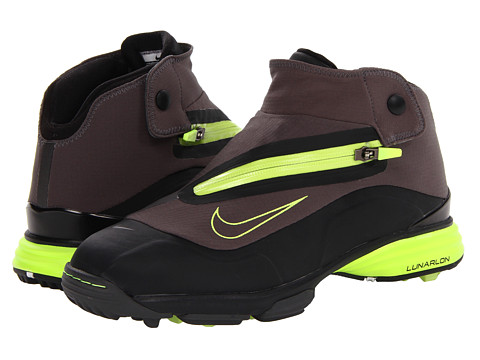
IMG_0027Playing golf in bad weather is easier if you have the right equipment. Remarkably, my friend Hacker (real name) and I both received winter golf shoes for Christmas. How did our wives know? It’s like a short story by O. Henry. My new shoes are Nike Lunar Bandon IIs:

nike bandon

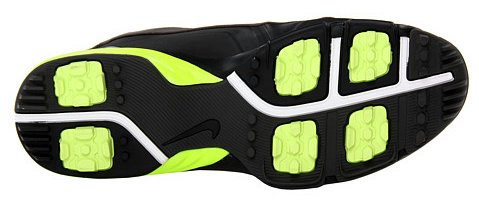
They look a little like ski boots, but my winter golf clothes increasingly look like ski clothes, so I shouldn’t complain. They’re not as slipper-like or as comfortable as my beloved True Linkswear shoes, but they seal up tight, and, so far, I have nothing bad to say about them. I also like to wear them when I walk the dog in the snow.

nike bottom

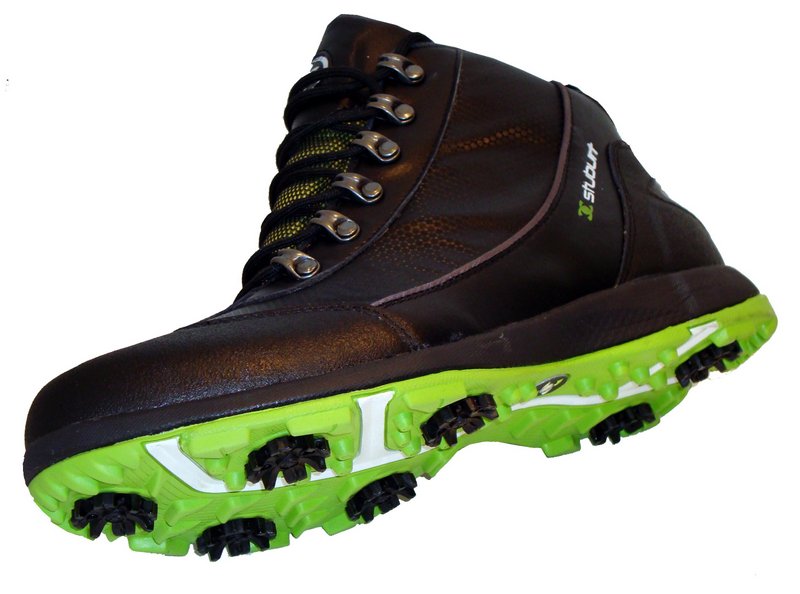
Santa brought Hacker’s new shoes all the way from England. They’re made by a company called Stuburt, and they also look like boots:

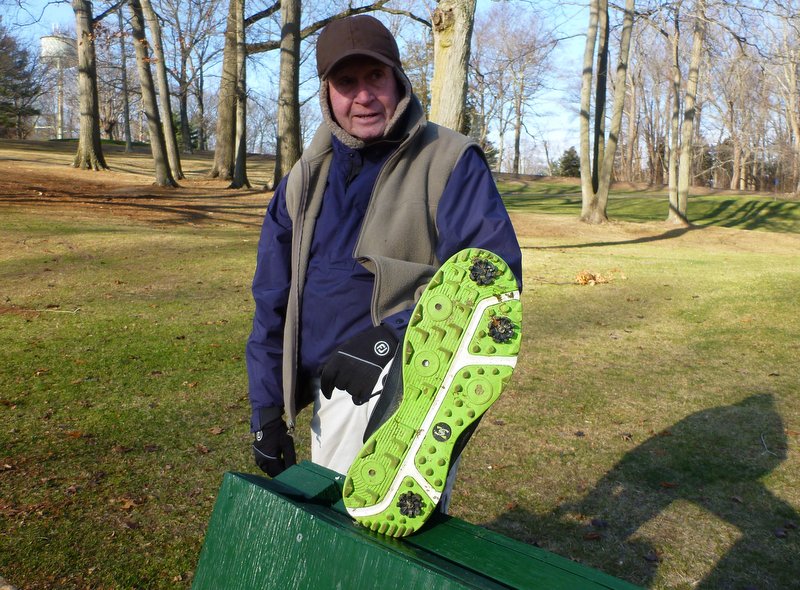
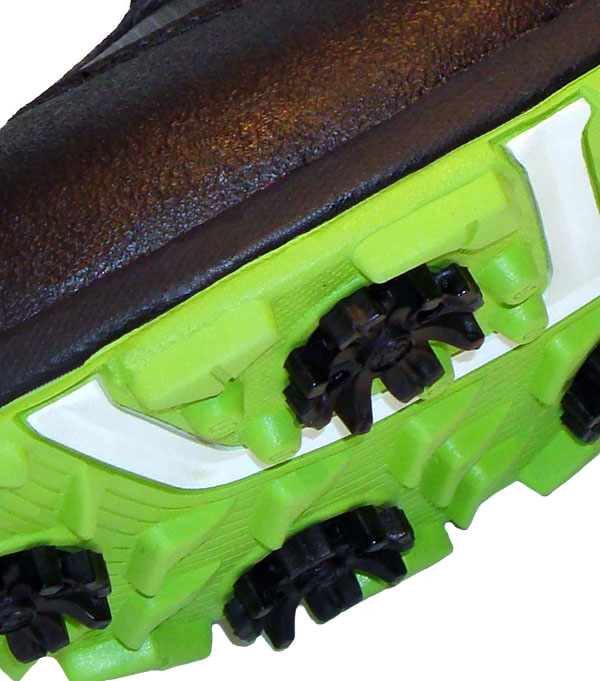
stubur bootHacker loves them, but when he got home on Saturday, the first day he’d worn them, he discovered that seven of the cleats had fallen out while we were playing.

P1110488

Cliff Dews.

Cliff Dews.

He emailed the company to complain, and, a couple of days later, heard back from Cliff Dews, a representative of the distributor. “From your description,” Dews wrote, “I can only assume that you did not notice the label on the sole unit which explains that the studs are only hand tight during the manufacturing process and that they should be fully tightened before use.” I love England, but the only other country I can think of where they do things this way is Canada. If you’re willing to go to the trouble of printing up labels and sticking them to the soles of shoes, why not spend another ten seconds and screw the things all the way in?

stuburt boot spikesBesides, as Hacker pointed out, there had been no such labels on the bottoms of his shoes or, indeed, anywhere in the box, which had contained just “the shoes and bubble pack.” At any rate, Dews did the decent thing, “despite our instruction label not being actioned,” and promised to send Hacker a new set of studs. And that’s the end of it—or so I hope.

Remarkable Golf Swing: The Bruen Loop

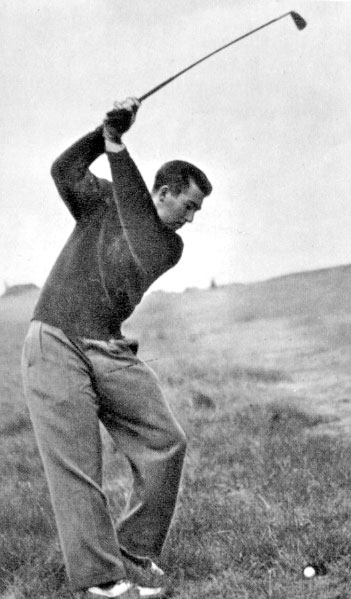
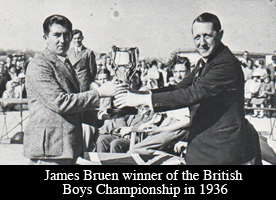
bruen loopWhen I was in Northern Ireland recently, I saw a photograph of a golfer I knew nothing about: Jimmy Bruen, shown above, who was born in Belfast in 1920 and held the course record at Royal County Down for twenty-nine years. He won the British Boys’ Championship, at Royal Birkdale, when he was sixteen.

This, remarkably, is what sixteen-year-olds looked like in the olden days.

This, remarkably, is what sixteen-year-olds looked like in the olden days.

He played in the Walker Cup two years later, and was credited by his teammates with inspiring Britain and Ireland’s first-ever victory over the United States (and their last until 1971). He had qualified for the team by shooting 71-71-68-72 on the Old Course at St. Andrews, a feat that caused Henry Cotton, who had won the Open in 1934 and 1937, to write: “Fancy a 17-year-old doing 282 in four rounds on the Old Lady of St. Andrews. I know what a stern course it is, long, difficult and tricky, but here was a mere boy playing it with a wise head and a technique which left everyone gasping.”

That technique—which came to be known as the Bruen Loop—was highly unconventional, as you can see in the photo at the top of this post and in the video below. The British golf writer Pat Ward-Thomas described it this way:

He drew the club back outside the line of flight and turned his wrists inward, to such an extent that at the top of the swing the clubhead would be pointing in the direction of the teebox. It was then whipped, no other word describes the action, inside and down into the hitting area with a terrible force. There was therefore in his swing a fantastic loop, defying all the canons of orthodoxy, which claims that the back and downswing should, as near as possible, follow the same arc. There must have been a foot or more between Bruen’s arcs of swing.

Henry Cotton, Open Championship, 1937.

Henry Cotton, Open Championship, 1937.

Bruen routinely drove the ball over three hundred yards, and he had a deadly short game. (He won the British Boys’ by chipping in for eagle on the twenty-seventh hole of the final, making him eleven up with nine holes to play.) He lit up Irish golf before the war, and he won the first post-war British Amateur, in 1946. (He was the first Irishman ever to win it.) Cotton called him “the best golfer—professional or amateur—in the world.” He was widely favored to win the 1946 Open, but withdrew because, he said, his business left him insufficient time to practice. (He was an insurance broker.) He severely injured his wrist while working in his garden in 1947, and, following surgery that was only semi-successful, virtually stopped playing competitive golf. His last Walker Cup was 1951. He died in 1972, at the age of fifty-one.

Ward-Thomas wrote: “Bruen was the most fascinating golfer I have ever seen or probably will ever see. There was no limit to what he might have achieved had not the War come and had he so desired.” George F. Crosbie published a biography in 1999. The Golfing Union of Ireland established the Jimmy Bruen Shield in his memory in 1978.

Bruen Shield

Reader’s Trip Report: Mackinac Island, Michigan

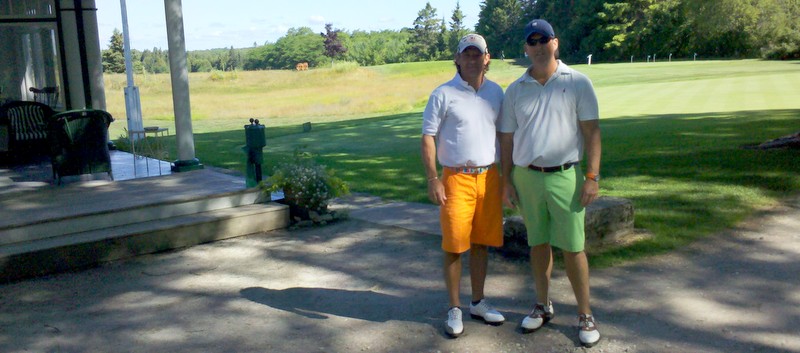
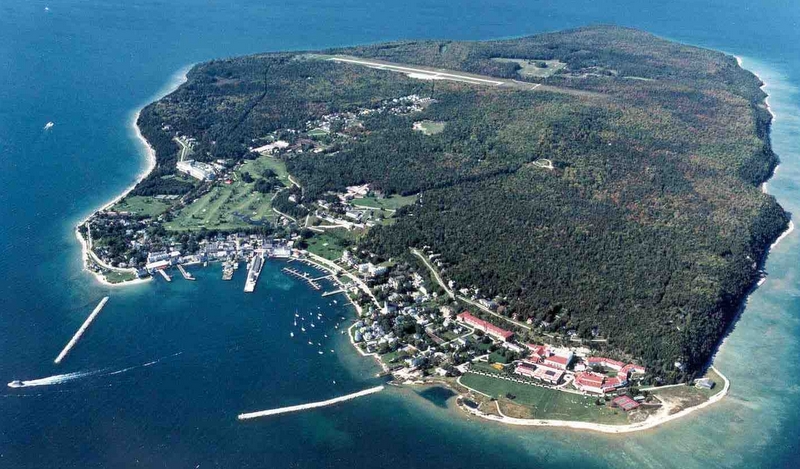
IMG_20130804_104132Jim Doherty, a reader in Chicago, wrote to me toward the end of the summer about a family vacation he had taken to Mackinac Island, Michigan—which is in Lake Huron all the way up next to Canada. (Mackinac, incidentally, is pronounced Mackinaw.) Jim is one of the guys in the photo above; the other is his brother-in-law, Mike. Because male golfers are essentially interchangeable, it doesn’t matter which is which. Here’s what the island looks like from the air.

Mackinac

Jim wrote:

Mackinac Island doesn’t allow any motorized vehicles. You ferry over with bikes, and there are horses and carriages that you can use to get around as well. The island had some military importance way back in 1812 and is now a beautiful spot to visit. There are a lot of fudge shops, for some reason. Anyway, even though our wives had chosen this non-golf-hotspot for our vacation, Mike and I brought our sticks on the theory that at some point our families would be equally sick of us (seven-hour drive) and be happy to see us exit to a golf course for a while.

Mackinac has two courses. One belongs to the Grand Hotel, where Jim, Mike, and their families were staying. It’s made up of two non-contiguous nines, called the Jewel and the Woods, and golfers are transported from one to the other by horse-drawn carriage. According to the hotel’s website, “The leisurely 15-minute ride includes parts of the island unseen by many visitors.” That sounds mildly interesting, but I think Jim and Mike were right to skip it. Jim wrote, “I try to avoid non-golf resorts that have a course. I find that they are usually full of very slow, non-regular golfers who are just trying to kill time, theirs and mine.” (The hotel and its golf course are visible in the photo above, in the lower part of the island.)

Instead, Jim and Mike played a nine-hole course called Wawashkamo Golf Club, which you can see, sort of, in the clearing in the woods near the runway at the top of the photo of the island. Here’s what the club’s front gate looks like:

Wawashkamo

Jim continued:

Remember, there are no motorized vehicles, so we rode our bikes, with our bags on our backs, up to the course. The inclines early in the ride were steep enough that we needed to walk the bikes, but it was worth it. Wawashkamo is a gem. No irrigation in the fairways or rough. Fescue-lined holes. Tiny hand-mowed greens in great shape, and tees that are literally about twenty square feet. I guarantee that the area rug under your dining-room table is bigger.

IMG_20130804_101313

Wawashkamo was laid out in 1898 by a Scotsman (from Carnoustie!) named Alex Smith. The club’s first pro was Frank Dufina, a Chippewa Indian, who played in the 1911 Western Open. He was fourteen years old when he went to work at Wawashkamo, and eighty-four when he retired, in 1968. Among the course’s unique features is its third green:

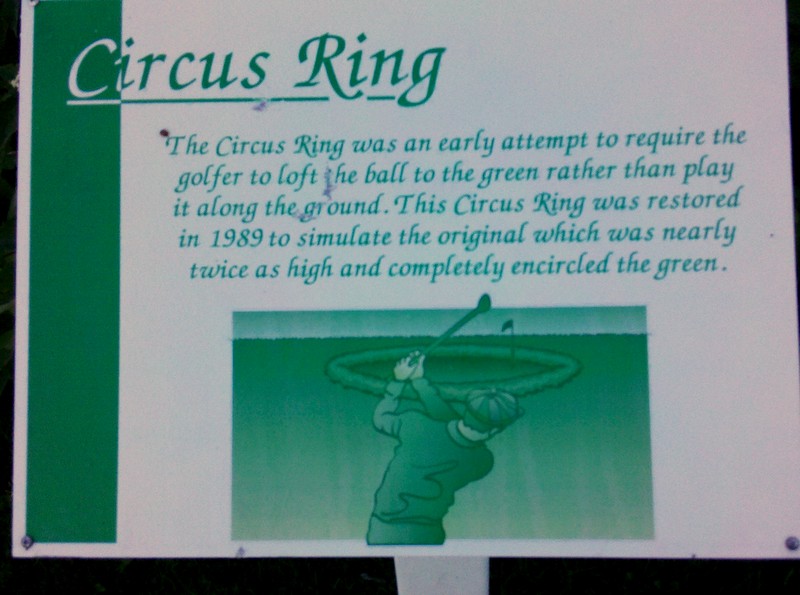
IMG_20130804_092803The putting surface (as you can see in the photo above) is surrounded by a thick fescue collar, which is called a Circus Ring. Its purpose is explained in the sign in the photo below:

IMG_20130804_092752

Jim continued:

Wawashkamo has two sets of tees, which change the length and angle of the holes a bit. It’s an easy walk: ninety minutes, max, for nine holes, then back on the bikes for the downhill ride to our families. The club’s pro, Chuck Olson, invited us to leave our clubs overnight and return to play the next morning, to ease our bike ride. We got the idea, from talking to him and a member, that the club’s budget is nil.

Here’s the clubhouse:

IMG_20130804_084705

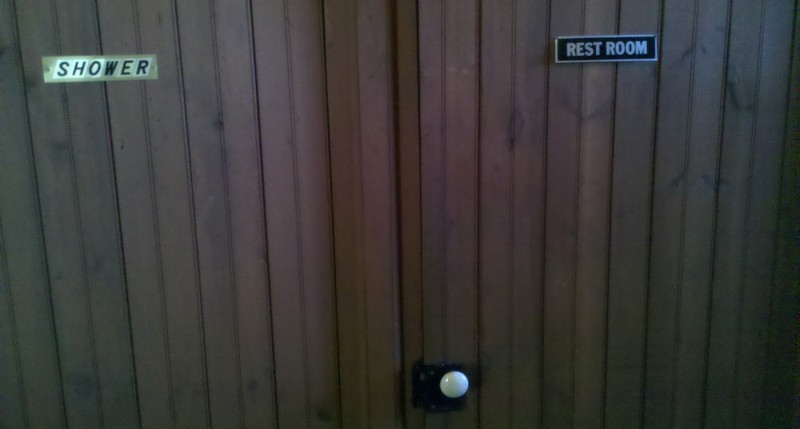
And here are two of the amenities, which are available to visitors as well as to members:

IMG_20130804_104341Wawashkamo is closed for the season (I’m pretty sure, based on the website), but it will be open again in early May. Fifty dollars for eighteen holes, walking. Let’s go!

New Golf Challenge: Name That Other Course

P1100323-001

Adam Heyes is right. The golf course shown in the two photos in my previous post is Ardglass Golf Club, in County Down, Northern Ireland. In the photo above, Ian Duff, a longtime member, is looking for my ball to the left of the green on the second hole, a par 3 that plays over a chasm. The photo below shows a less perilous part of the same course.

P1100342The course I played yesterday may not be easy for even Adam to identify. Here’s the second green:

P1100452

And here’s something I saw on my way home:

P1100505

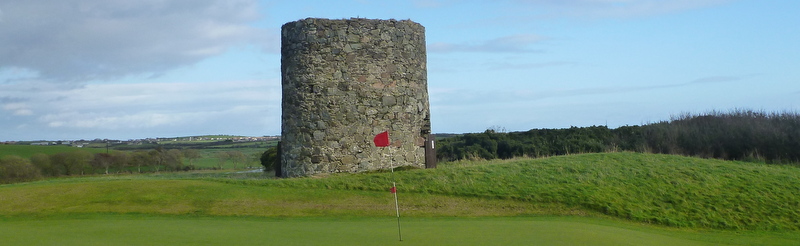
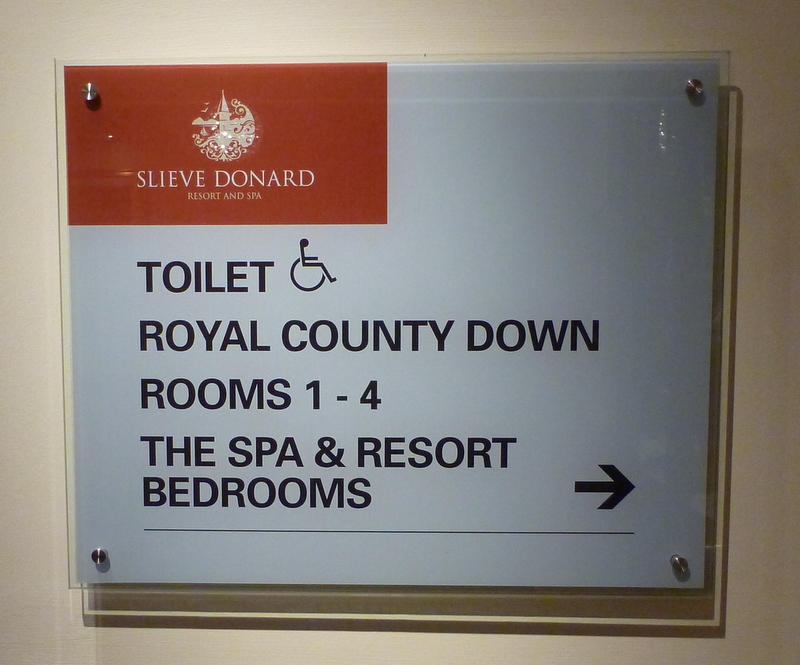
Today, I’m going back to the course I played the first day I was here. You can get to it by following signs in the lobby of my hotel:

P1100400


My Latest Contribution to the Divot Museum

P1100167

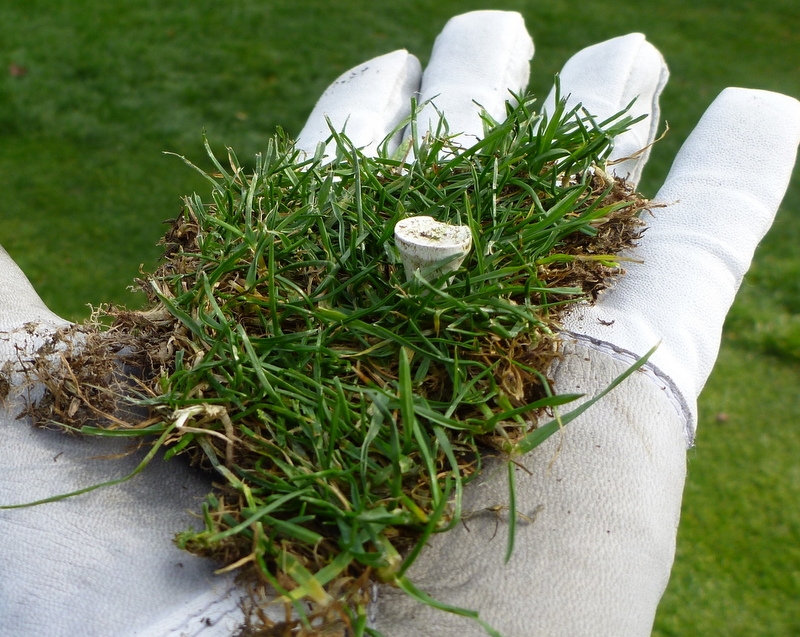
The seventh hole on my home course is a 125-yard par 3. I hit 9-iron the other day, and I took a divot that was just about perfect—uniform depth, playing-card size and shape—except that it began a couple of inches behind the ball and extended a couple of inches beyond it. In addition, my tee peg (a half-length stub I’d found nearby) remained upright near the center of it, untouched. Even so, my ball finished just twenty yards short of the green, meaning that I’d hit what was essentially a 90-yard explosion shot. And they say the long bunker shot is the toughest shot in golf.

If I hadn’t sent my divot to the Divot Museum, I could have used the tee stub to refasten it to the golf course. Believe it or not, a company called McDivot makes biodegradable anchors that do exactly that. Here’s what they look like:

mcdivot

I saw a bowl of McDivots on the counter in the golf shop at Royal Portrush Golf Club a few years ago, and one of the assistants told me that using them prevents wind, rain, mowers, and crows from flipping replaced divots out of their holes. (The same company also makes an industrial-size version, called GreenStakes, which can be used to hold down entire fairways.) I took a McDivot home as a souvenir, and displayed it on my desk for several years. At some point, though, I must have thrown it out, because I just spent almost an hour unsuccessfully searching for it in my office. So the photo above, which is from the McDivot website, will have to do.

Anyway, divots aside, it was a nice day for golf, as you can see here:

P1100162

P1100155

P1100161

A Ghost Course in Southern New Jersey

The Great Trial, Blue Heron Pines East, October, 2003.

The Great Trial, Blue Heron Pines East, October, 2003.

On the morning of the second day of the Sunday Morning Group’s fourth annual autumn golf trip to Atlantic City, in 2003, Hacker (real name) gave everyone printed driving directions to Blue Heron Pines East, the course we were scheduled to play that day, but then drove himself and Harry, his navigator, to a course called Harbor Pines, which we weren’t playing until the next day and which was twenty-five minutes from Blue Heron. We had to shuffle the tee times while we waited for them to realize they’d screwed up. Then, after the round, we held a trial in the clubhouse—there were several lawyers on the trip—and sentenced the two of them to buy everybody’s lunch. Harry never fully understood why he was being forced to pay for so many bacon cheeseburgers, but everyone else, including Hacker, thought the whole thing was pretty funny.

That's Hacker in the middle and Harry on the right. Harry claimed later that he'd been represented by incompetent counsel.

The reading of the charges. That’s Hacker in the middle and Harry on the right. Harry claimed later that he’d been represented by incompetent counsel.

Blue Heron Pines East, which was designed by Steve Smyers, was one of our favorite golf courses, but in 2007 a real-estate developer bought it, and announced a plan to build an enormous condominium complex right on top of most of the holes. A year later, the global economic implosion helped to kill the condominium project, but the golf course remained closed and was allowed to revert to New Jersey. Earlier this month, during this year’s S.M.G. trip, Hacker and I drove over to have a look at the ruins, after playing a round at what used to be called Blue Heron Pines West. (It was designed by our close personal friend Stephen Kay and is still doing business, as Ron Jaworski’s Blue Heron Pines). Here’s what used to be the sign at the entrance of the East course:

P1100102And here’s the old driving range and part of the old parking lot:

P1100084

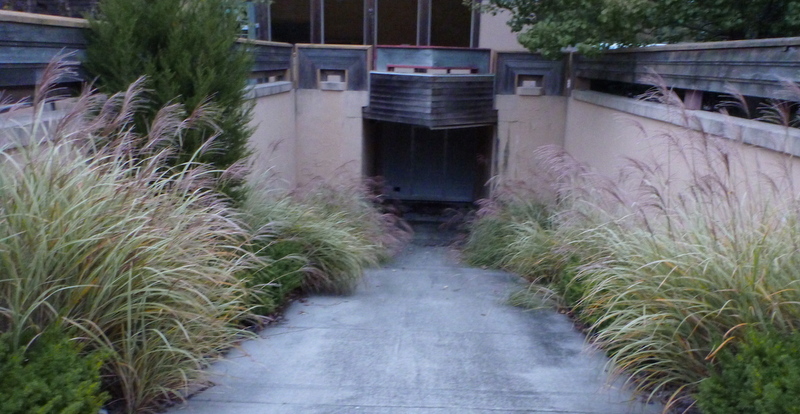
And here’s the ramp leading down into what used to be the cart barn:

P1100099

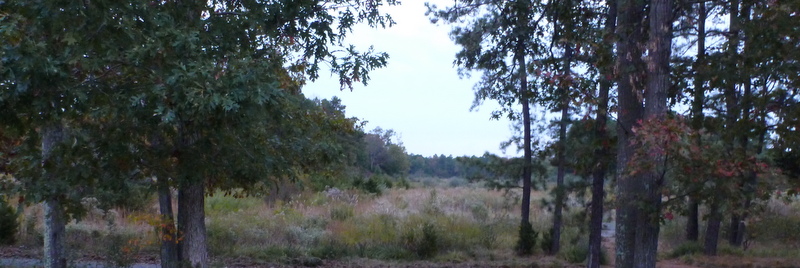
And here, through the opening in the trees, is what was once the fairway of the first hole, a really nice short, uphill par 4. The green was on the rise in front of that bank of trees in the distance:

P1100096

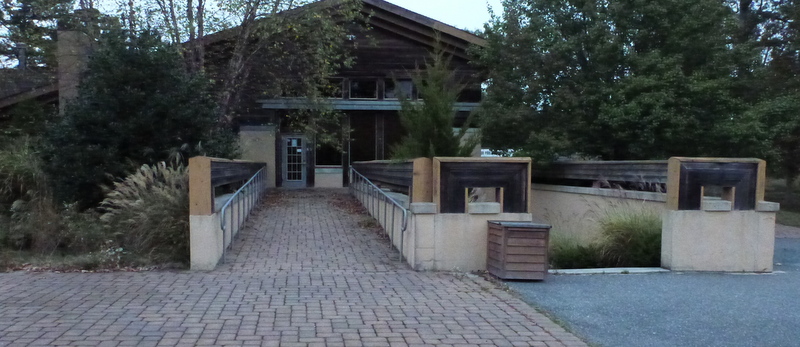
And here’s the patio outside the clubhouse. We held the trial on the other side of those double doors, in what was then the grillroom:

P1100087

And here’s another view of the clubhouse, and of what used to be the entrance of the golf shop:

P1100082

We learned during this year’s trip that the property has a new owner, who just received approval for a new condominium plan. That means, I guess, that people aren’t suddenly going to come to their senses and give us back our golf course. We like the surviving course a lot, but it would be nice to have both. And if the condominiums really do get built we won’t even be able to explore the remains.

P1100098

A few years ago, for The New Yorker, I wrote about another ghost course, on an island in the Outer Hebrides, in northwestern Scotland. You can read about that lost golf course here.