The Day I T-Boned the Mercedes of the President of Pine Valley

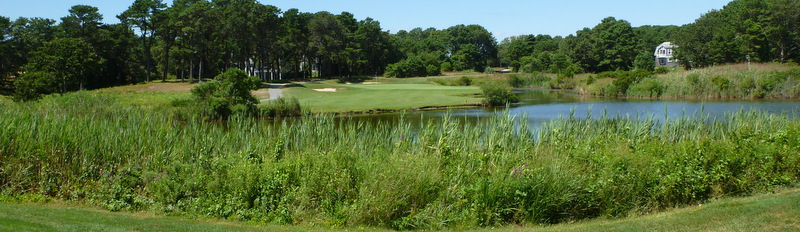
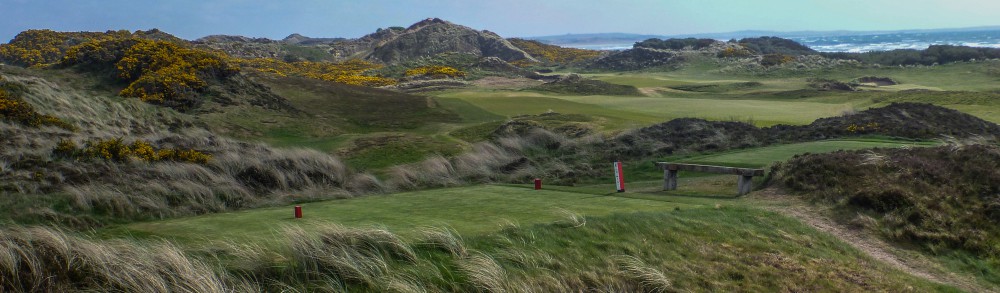
Ernie Ransome, No. 18 tee, Pine Valley Golf Club.

Ernie Ransome, eighteenth hole, Pine Valley Golf Club.

Ernie Ransome, shown above, was the president of Pine Valley Golf Club from 1977 until 1988, and Pine Valley, as you surely know, is one of the two or three best golf courses in the world. Ransome died this year, and Jerry Tarde, the editor-in-chief of Golf Digest, wrote an essay in which he described Ransome, affectionately, as the club’s “all-powerful dictator.” He recalled that Ransome “presided over annual meetings that took no more than six minutes as, for example, the club treasurer would report, ‘I have not seen the financials, but I’m told income exceeds expenditures.’ At which point, Ransome would interrupt, ‘All in favor of the budget submitted by the treasurer, say, ‘Aye.’ All opposed, say, ‘I resign.'” Clifford Roberts, the legendarily gruff co-founder of Augusta National, would have approved. When Roberts, at a meeting of the club’s governors, asked Charles Yates, the board’s secretary, whether he had the minutes, Yates asked, “Do you mean last year’s, this year’s, or next year’s?”.

Clifford Roberts, the archetype of the golf-club benevolent dictator.

Clifford Roberts, the original golf-club benevolent dictator.

I’ve been lucky, over the years, to play quite a few rounds at Pine Valley. One day in 2001, while I was visiting as the guest of a man who, at the time, was also a member of my nine-hole home club, I set out in my car for the club’s driving range, to hit a few balls before our group teed off. At the little intersection nearest the clubhouse, I nosed out a few feet past the stop sign and, when I did, crashed into a Mercedes, which was coming down the hill from the right. Luckily, I recognized the driver as Ransome, and apologized profusely, even though I wasn’t certain the crash had been my fault. A maintenance cart with a trailer attached to it was parked across the intersection, and Ransome, in order to avoid it, had been driving on the wrong side of the road. He had also been driving quite fast. At any rate, he said that he was late for a doctor’s appointment, and asked me to let Lenny Ward, the club’s caddie master, know what had happened. I did, and when I met with Ransome that afternoon I told him to simply send me the repair bill. And that’s what he did.
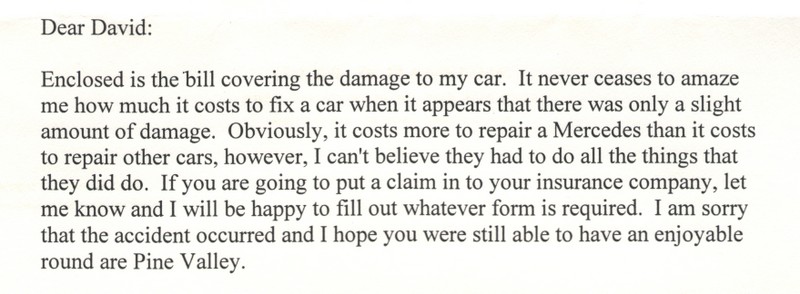
Ransome Letter

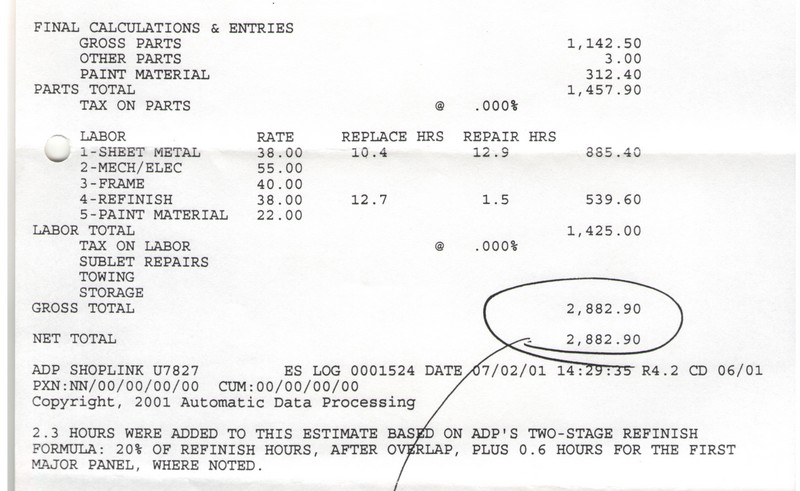
The bodywork had been done at a dealership in Delaware owned by Buddy Marucci, a Pine Valley member and Tiger Woods’s opponent in the extraordinary final match of the 1995 U.S. Amateur.
marucci bill

I happily paid the bill, and I didn’t make an insurance claim, because I didn’t want an adjuster to take a position that might upset Ransome and, as a consequence, make life unpleasant for the member who had been my host. I decided to think of the $2,889.20 as a retroactive surcharge for all the rounds I had played at Pine Valley over the years, and when I divided it by that number it didn’t seem onerous.

Owen letter

Here’s another Ransome story from Jerry Tarde’s tribute:

One day as Ransome was approaching his ball on 11, a golfer hit a particularly bad drive off 16 and, reacting viscerally, winged his club into the sandy waste in front of the tee. Ransome, with hands on hips, did what might be described as a slow burn in the fairway, which caught the eye of the angry golfer still standing on the tee. “We. . .don’t. . .throw. . .clubs. . .at Pine Valley,” Ransome finally boomed.

“I’m the member in this group,” yelled back the angry golfer. “Who the [expletive] are you?!”

To which, Ransome immediately replied: “Not anymore you aren’t.” Then, to the caddies: “Boys, take the bags in.”

You see, that’s what I wanted to avoid.
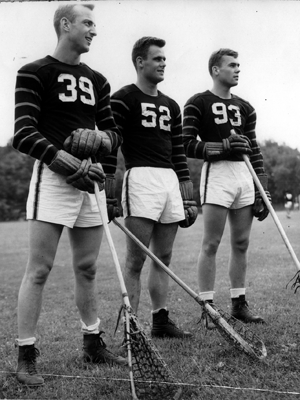
Ransome played lacrosse at Princeton. That's him in the center in 1946.

Ransome played lacrosse at Princeton. That’s him, in the center, in 1946.

My Father, a.k.a. Johnny Persimmon Seed

Persimmon tree planted by my father, eleventh hole, Kansas City Country Club, September 28, 2013.

Persimmon tree planted long ago by my father. Eleventh hole, Kansas City Country Club, September 28, 2013.

Many years ago, my father planted two persimmon trees, a male and a female, in the rough on the eleventh hole at the Kansas City Country Club, where he was a member. Persimmon is the wood that the best wooden woods were made from, and he felt that every golf club ought to pay tribute. (Persimmon is as hard as ebony. It’s still used for pool cues and archery bows, among other useful implements.) Our behind-our-house neighbors had a huge persimmon tree, which dropped plum-size fruits into their yard and ours. My friends and I used to collect the squishiest ones and throw them at each other—another important application. My father never extended his persimmon-planting program beyond the eleventh hole at the Kansas City Country Club, but the idea was a good one and someone ought to take it up again—maybe me.

american persimmon

I was in Kansas City for my fortieth high-school reunion, and I played golf at K.C.C.C. with my classmates Dick, Hinkley, and Pajamas. They’re still in the witness protection program because of stuff we did when we were teenagers, so I can’t show you a photo, but you can read a little bit about them here. I also played a round at Indian Hills Country Club, which, like K.C.C.C. and Swope Memorial, was designed by A. W. Tillinghast. The guys I played with at Indian Hills are much younger than I am, so I can show their faces:

Adam, me, Scott, Ricardo, Indian Hills Country Club, September 26, 2013.

Adam, me, Scott, Ricardo, Indian Hills Country Club, September 26, 2013.

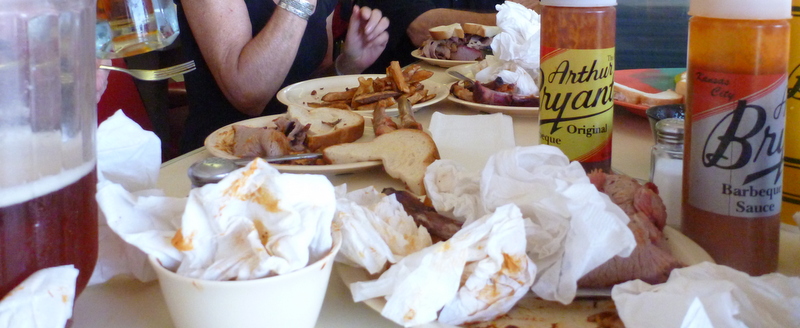
While I was in town, I also made mandatory stops at Winstead’s and Arthur Bryant’s. Bryant’s is the world’s best barbecue place. The health department shut it down for a few days recently, because of a misunderstanding concerning cockroaches, or something. The sandwiches are so big that they give you extra bread, which you can also use as supplemental napkins.

P1090531

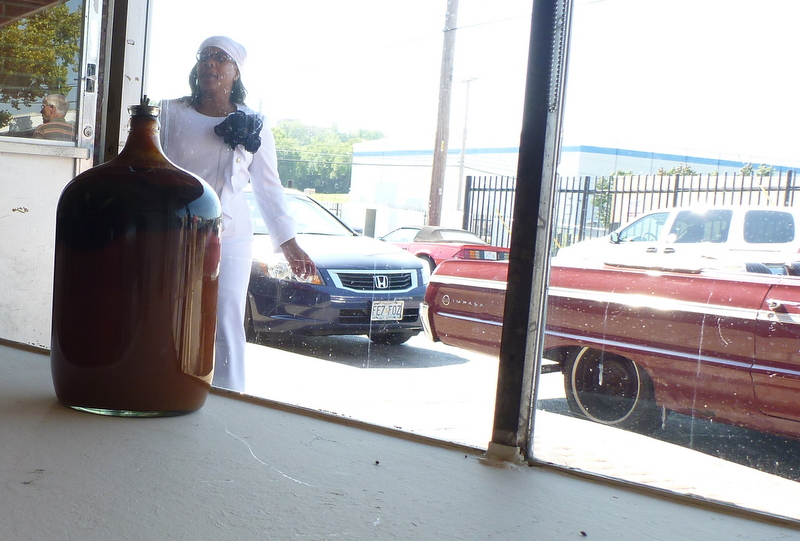
Bryant’s barbecue sauce, if you aren’t familiar with it, is unlike any you’ve ever tasted. New batches are aged in the restaurant’s front window, and the jug in the photo below may have been there when I was in high school. The dark liquid near the top is of unknown composition.

P1090533

I keep a case of Bryant’s sauce in my sauce cellar, in my basement, along with a case from Gates & Sons, which is Bryant’s main competitor. The two sauces are so different that you don’t have to choose one or the other. You can enjoy them both, or you can do what my wife and I often do, which is to mix them together. In any configuration, they are so much better than other so-called barbecue sauces that it’s almost ridiculous.

ABBBQ

The Muny Life: The Wrath of Cobbs Creek

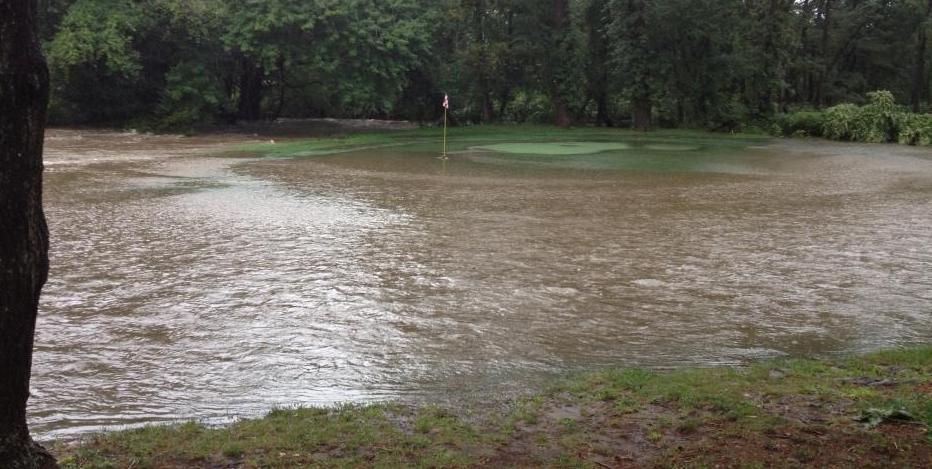
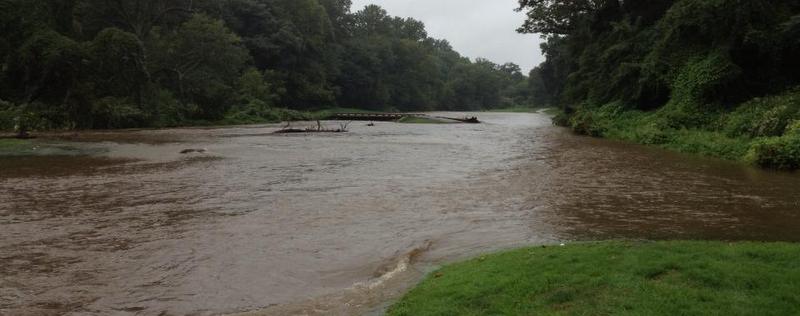
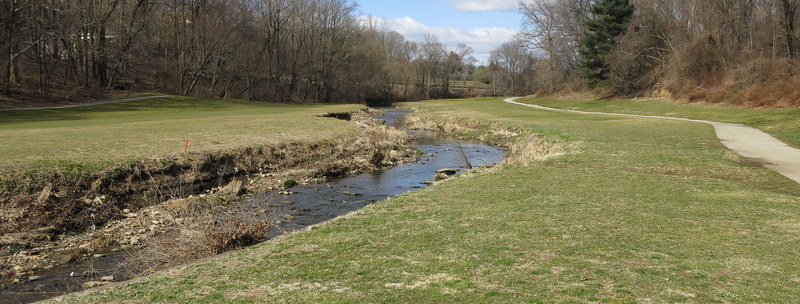
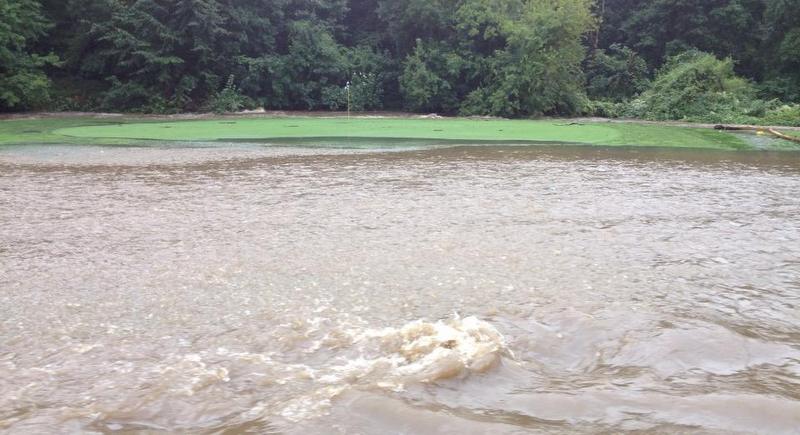
Cobbs Creek 7I wrote about Cobbs Creek Golf Club, in western Philadelphia, in the June issue of Golf Digest. The main course—which regulars call the Crick—was named after its most diabolical hazard, which also runs along the eastern edge of Merion Golf Club, a few miles away. The Crick’s creek has always been both an asset and a liability. Hugh Wilson, who also designed Merion, brilliantly incorporated it into his routing, and Charles Barkley once got so angry at it—on the third hole, a short par 4—that he threw his clubs into the water, then stormed back to the golf shop and bought another set. But when the creek floods, as it did on Labor Day, it can carry away entire greens. Most of the photos in this post were sent to me by Paul Cornely, the head of the regular men’s group, which is called the Cobbs Creek Publinks Golf Club. Cornely and I played back in March, when the water was better behaved.

Cobbs Creek 5-001

Cornely writes:

The rain started at 10:45, and in an hour the course and nearby area got four-plus inches. We had twenty-five guys, and the last group was on the eighteenth green when the rain started. It was coming down so hard that we had to stay in the clubhouse. These pictures were taken between about 11:45 and 12:15.

In normal weather, this is a golf hole with a creek running down the center of the fairway.

In normal weather, this is a golf hole with a creek running down the center of the fairway, as you can see in the photo below.

Here’s what the hole in the photo above looked like back in March:

IMG_0461-001

The next photo, below, was taken near the clubhouse during the rainstorm. The river you see at the bottom of the hill had been the first fairway until an hour or two before. As bad as things look in these pictures, though, they were worse in 2006, when an August flood swept away the third and fourth greens.

Cobbs Creek 1-001

In recent years, a group of Crick aficionados led by Chris Lange,a local businessman, has developed a plan to deal with the flooding problem, which also affects a neighboring facility owned by the city’s transit authority. The group also wants to repair many years’ worth of erosion damage and restore Wilson’s routing, which was modified in 1950, when most of the original thirteenth fairway was appropriated for a missile base. (Today, it’s a driving range.)

Here's the driving range next door. During the early years of the Cold War, it was a missile base.

Here’s the driving range next door, four months before the flood. During the early years of the Cold War, it was a missile base.

The 1950 reconfiguration, by George Fazio, was cleverly done, since it preserved all eighteen of the Crick’s original greens. But no one believes the current course is as good as the one that Wilson designed, and the architects Gil Hanse and Jim Wagner, whose office is nearby, have created a restoration plan. The Golf Association of Philadelphia has endorsed the project, most of which will be financed privately, and has agreed to move its headquarters to the course if the city approves it. Maybe the Labor Day Flood will move things along.

Cobbs Creek 3-001

Reader’s Trip Report: 19-Year-Old Son in the U.S. Amateur

Francis Ouimet's childhood home, across from the seventeenth hole at The Country Club. All photos by Bob McIver.

Francis Ouimet’s childhood home, across from the seventeenth green at the Country Club. All photos by Bob McIver.

Bob McIver, a reader and an executive of a small air-services company in Montana, attended the recent U.S. Amateur, in Boston. He went because his son, Brandon, who plays for the University of Oregon, was a competitor. Brandon had qualified by shooting 65-70 at Old Works Golf Club, Anaconda, Montana, the month before. (The 65 was a course record.)  Bob McIver writes:

The event was held at the Country Club, in Brookline, and Charles River Country Club, in Newton. The differences in their setup was stark. Charles River is a Donald Ross course, built in 1921. The fairways were wide, sometimes fifty or sixty yards; the greens were very large, with big undulations; and the greenside bunkers were nicely trimmed. One volunteer, a member, told me it was playing the way it does for members: rough not too long, greens about 11 on the Stimpmeter, fairways as wide as they normally are.

Brandon McIver, Charles River Country Club, No. 17/

Brandon McIver, Charles River Country Club, No. 17.

By contrast, the Country Club was unruly: fairways about thirty yards wide; first cut of rough just two yards wide; primary rough very thick and very lush. Brown, knee-high grass came into play around the greenside bunkers and some fairways. The greens were tiny, perhaps only a third the size of those at Charles River. They didn’t have much undulation, but many were steeply pitched from back to front or side to side. The back quarter of No. 18 could’t accept a hole location, because of the slope. An employee told me that many members had quit playing several weeks back because the U.S.G.A. setup was just too tough.

Greenside bunker, No. 18, The Country Club. That's Brandon in the sand.

Greenside bunker, No. 18, the Country Club. That’s Brandon in the sand.

The event itself resembled a very large college tournament: lots of young bucks running around with college-logo golf bags and very nice golf swings.

US am

Perhaps most impressive were the the Country Club’s facilities. I counted fifteen separate buildings in an aerial photo, including a clubhouse, horse stables (U.S.G.A. headquarters of the event), swimming pool, warming house for ice-skating, skeet-shooting facility (the range is over the first fairway, and is presumably used only when the course is closed), golf shop, men’s locker room, a museum building, and several others. It looked more like a compound than a country club.

Second green, The Country Club.

Second green, The Country Club.

Brandon shot 71-78, and missed match play by five shots. “After that, he decided it wasn’t so fun anymore,” his father told me, “so I sucked up some airline travel penalties and we came home early.” Next year!

Video: Myrtle Beach Golfer Hits Self With Own Ball

Jim Coleman (left), showing a friend the video below, George Wright Golf Course, Boston, May, 2013.

Jim Coleman (left), showing a friend the video below, in the grillroom at George Wright Golf Course, Boston, June, 2013.

Back in June, I played a round at George Wright Golf Course, a muny, in the Hyde Park section of Boston. Among the people I played with was Jim Coleman, a caterer, at left in the photo above. Coleman runs the clubhouse grillroom, and after our round we had a terrific lunch, during which showed us a video, on his phone, of a friend hitting himself with his own golf ball during a trip to Myrtle Beach:

Coleman also showed us a video of the same guy taking an unusually large divot with a fairway wood:

Coleman has transformed the grillroom, and made it a popular hangout. He had the brilliant idea of turning several tabletops into scoreboards for the complicated golf games played by George Wright’s regular leagues. They’re thick slabs of slate with grid lines painted on them, and you can write on them with chalk:

IMG_1602-001

“K of C” (at the top of the grid on the tabletop above) stands for “Knights of Columbus.” George Wright also has a Polish League, although most of the guys in it nowadays aren’t Polish. (“They were running out,” one member told me.) Everybody in the grillroom is a Bruins fan, though.

IMG_1613The banner in the photo above, which is displayed next to an Irish flag, looks a lot like the ones that hang from the ceiling at the Boston Garden. Coleman acquired some time ago, under circumstances he didn’t fully describe. “I kind of swindled it out of a guy,” he said.

IMG_1606George Wright Golf Course, incidentally, was named after a star player for the Boston Red Stockings—who, among numerous other accomplishments, batted first in the first National League game, on April 22, 1876.

IMG_1612

The Muny Life: Swope Memorial, Kansas City

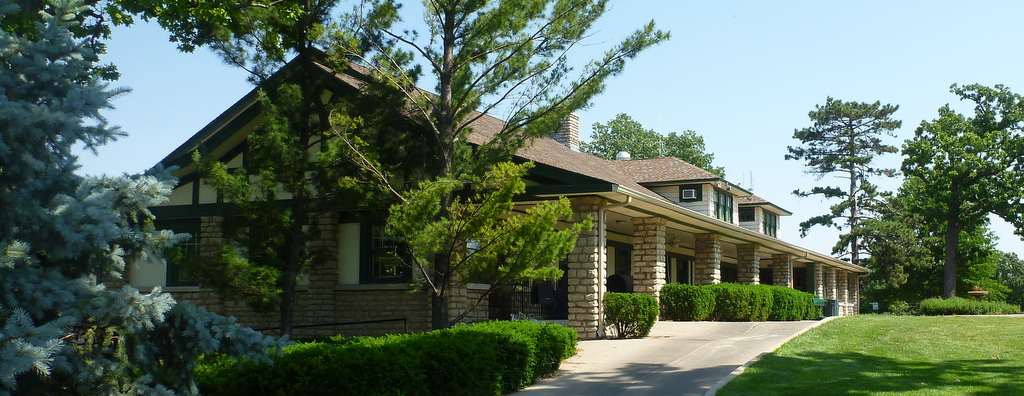
Clubhouse, Swope Memorial, Kansas City, June, 2013.

Clubhouse, Swope Memorial Golf Course, Kansas City, June, 2013.

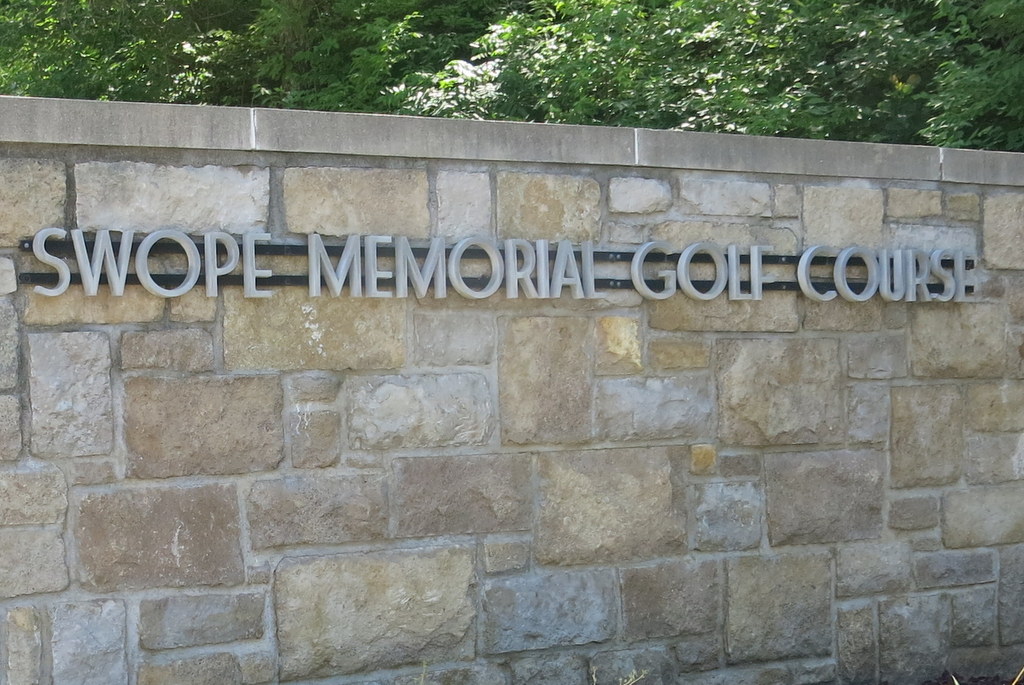
My Muny Life column in the current issue of Golf Digest is about Swope Memorial Golf Course, in Kansas City. The course and the huge urban park that contains it were named for Thomas H. Swope, who gave the city thirteen hundred hilly, wooded acres in 1896. (Five hundred more acres were added later.) Swope died in 1909, and many people suspected that he had been poisoned by Dr. Benjamin Hyde, who attended him in his final illness and was the husband of one of his heirs, a niece. Swope’s body was disinterred and checked for strychnine, and Hyde was tried for murder but not convicted. In 1918, Swope was reburied, about a hundred and fifty yards from the tenth tee, under a monument that overlooks downtown.

IMG_1750Among the people I played with was James Armstrong, at right in the photo above. He spent thirty-eight years in the shipping department at Hallmark Cards, a job that was good for his game, because his shift was late. He’s one of the best putters I’ve ever seen, including on TV—his nickname at Swope is Drano—so I was surprised when he said, toward the end of our round, “This year is going to be my last.” I asked him how he could even think of giving up golf when he was still playing so well, and he said, “No, this is the last. Starting next year, twice a week is going to be it for me.” I asked him whether he really considered playing twice a week to be quitting. He thought about that for a moment, then said, “Sometimes I might squeeze in three.”

Drano, sinking a long one.

Drano, sinking a long one.

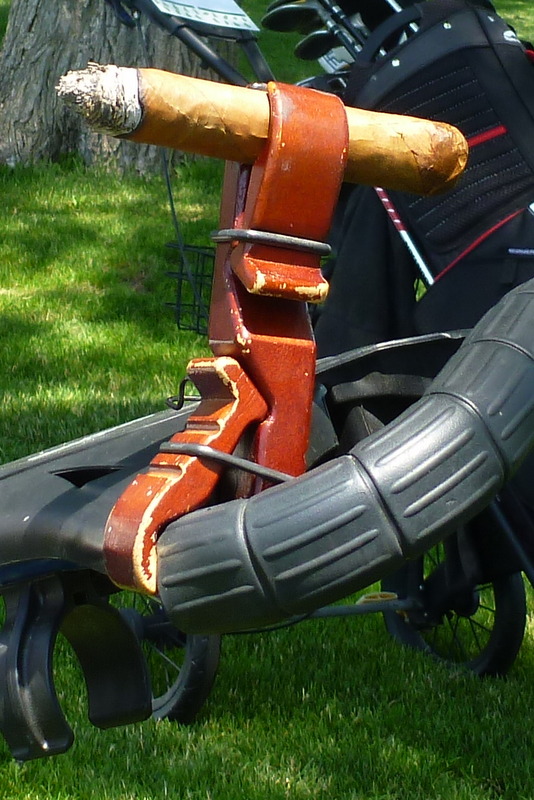
Like me, Armstrong believes in customizing his gear. Here’s his pushcart, a Sun Mountain Speed Cart, which began as a castoff from another player:

Note the improved cupholder and pencil caddie.

Note the bespoke cupholder and pencil caddie, which he made from an old headcover.

Armstrong has added distance off the tee by giving his driver an improved paint job:

P1070243Two days later, I played with Joe Cutrera, a Vietnam veteran, who owns a liquor-and-grocery store not far from the golf course. The store is in a high-crime area, he told me, but he hasn’t been robbed since 1984.

Joe Cutrera, Swope Memorial.

Joe Cutrera, Swope Memorial.

Cutrera’s job, like Armstrong’s old one, leaves plenty of time for golf, since he doesn’t need to be in his store all the time. He had customized his pushcart, too:

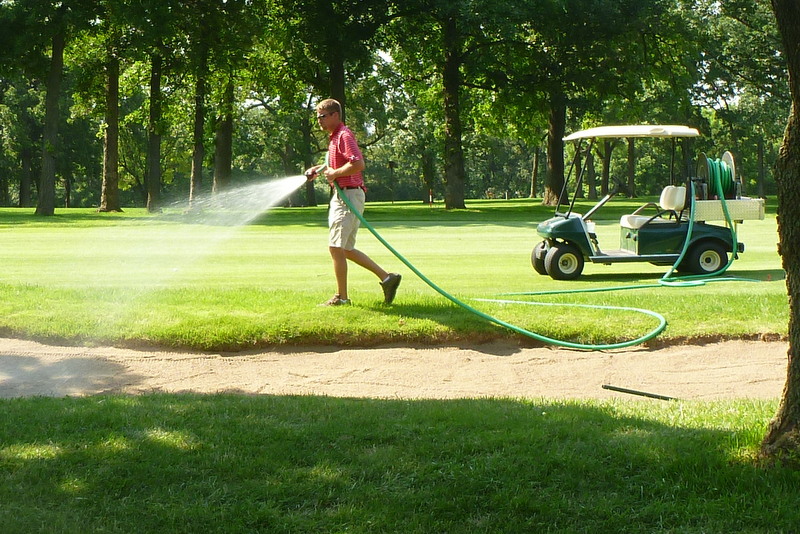
P1070354Swope Memorial was redesigned by A. W. Tillinghast in 1934. The city thoroughly refurbished it in nineteen-nineties, and when I visited it was in extraordinary condition. On one hole, an assistant superintendent was watering a new bunker, to de-fluff the sand. Do they do that at your club?

P1070234

Swope’s fairways are zoysia, just like the fairways at the Kansas City Country Club, another Tillinghast project, and the whole property is beautiful and beautifully maintained—as you can see from the photos below.

P1070319

P1070287

P1070337

P1070313

P1070276

IMG_1827

Let’s Take a Closer Look at Larry David’s Golf Warm-Up Routine

P1080271 On the day the Secret Service searched my golf bag—at Farm Neck Golf Club, on Martha’s Vineyard—I also watched Larry David warming up on the driving range. The photo above (you will recall) shows the first part of his routine. And here’s the second part: P1080267 Several readers have asked how these warm-up components are connected. With graceful swoops? With tiny hops? With deep knee bends? Showing is easier than describing, and, I’m happy to say, I shot some video. Here’s what it looks like fully assembled:

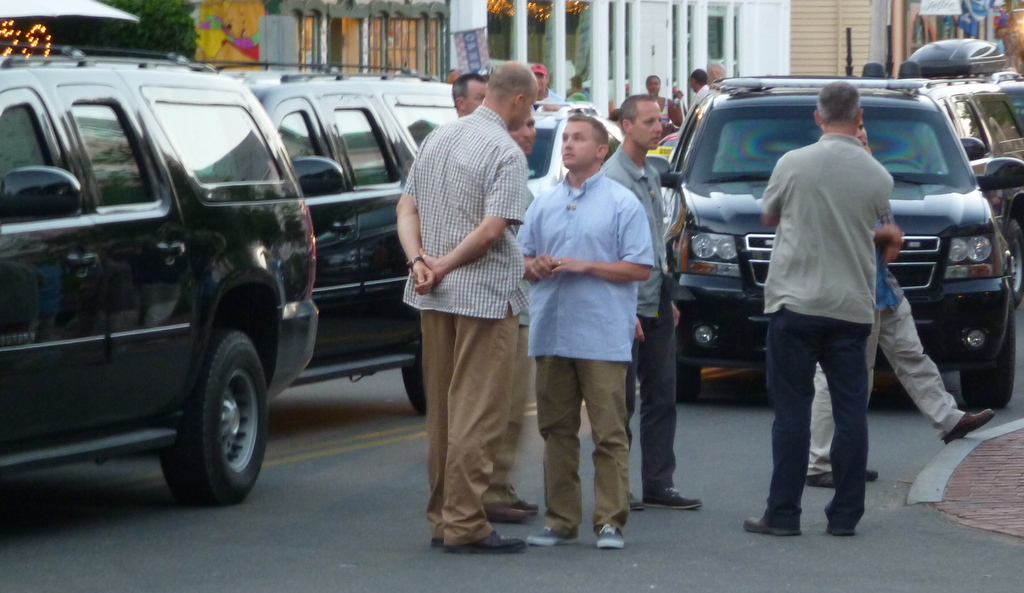
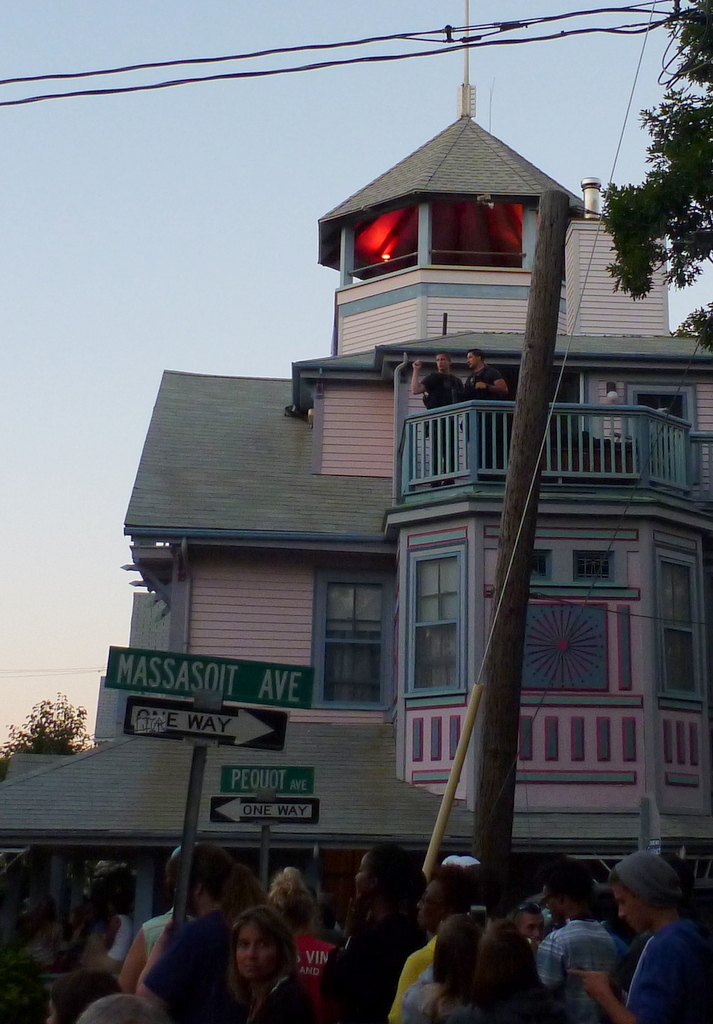
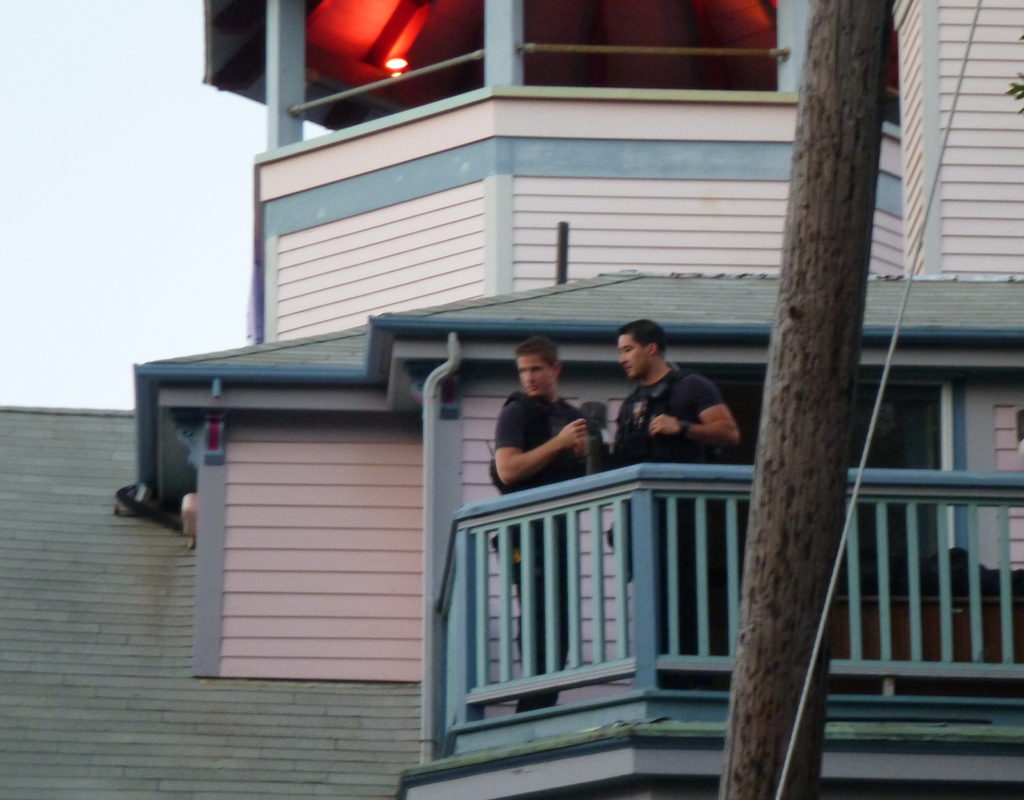
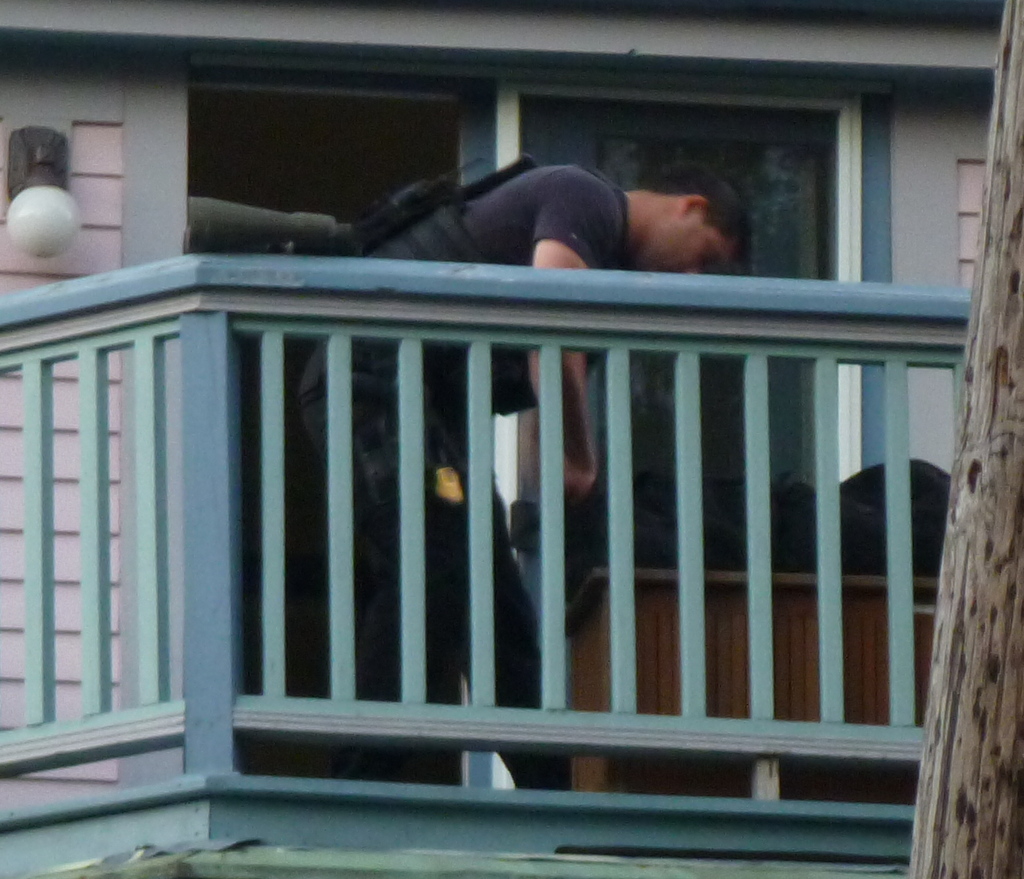
I also took some more pictures of the Secret Service, because my wife, our daughter, her husband, and I ran into the President’s entourage again, that night in Oak Bluffs, where we had also gone to dinner. I recognized some of the guys from the golf course. The ones on the balcony (across the street from the Sweet Life Cafe, where the adult Obamas were eating) were unzipping their “golf bag.” The guys with the untucked shirts are Secret Service agents.

P1080434
P1080441
P1080442
P1080425

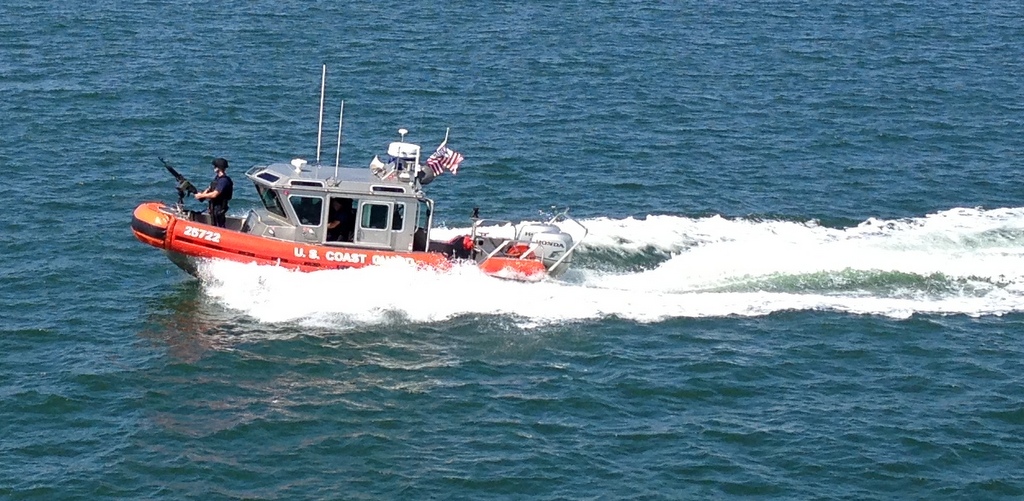
This morning, Tim-o and his daughters came over from Wood’s Hole. Their ferry was escorted by two Coast Guard boats with machine guns mounted at the bow. Every time a non-Coast Guard boat came within a couple of hundred yards of the ferry, Tim-o said, one of the Coast Guard boats would zoom ahead to shoo it away.

coast guard

Golf on Martha’s Vineyard With the President of the United States

Making the turn, Farm Neck Golf Club, Oak Bluffs, Massachusetts, August 11, 2013.

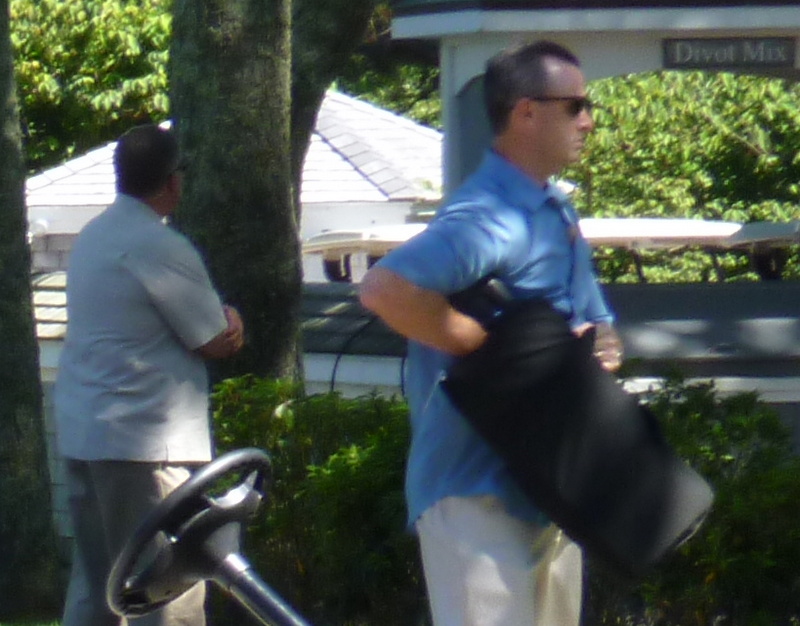
Making the turn, Farm Neck Golf Club, Oak Bluffs, Massachusetts, August 11, 2013. The thing the guy in the blue shirt is holding isn’t an attache case.

I knew the President was about to arrive on Martha’s Vineyard because my cell-phone reception suddenly went from no bars to three. The Obamas are staying about two miles down the road from where my wife and I are staying, and because their house is close to the road all traffic is being diverted around it. That has made the road much quieter than it usually is—a second benefit. And this afternoon Alan, Leslie, Wendy, and I played golf nine holes ahead of him, at Farm Neck Golf Club, in Oak Bluffs.

Leslie, twelfth hole, Farm Neck.

Leslie, twelfth hole, Farm Neck.

We finished just before the President made the turn, and we stood near the cart path leading to the tenth tee, hoping to see him. While we waited, a Secret Service guy searched my golf bag, had a look at the stuff in my pockets, and waved a metal-detecting wand over my back.

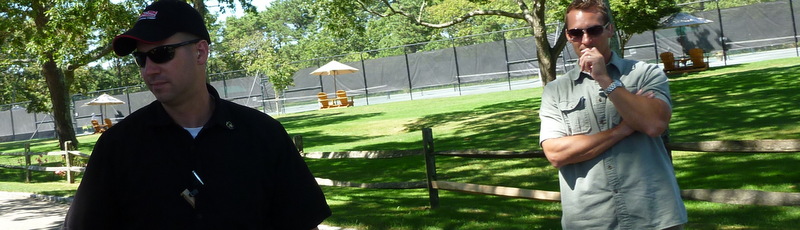
Two Secret Service guys.

Two Secret Service guys keeping a close eye on the divot mix.

There were also lots of guys wearing bulletproof stuff and driving around in golf carts. The things strapped to the back of their carts were not golf bags, presumably.

P1080331

I could see lots of Secret Service guys, and one of them told me that there were lots more I hadn’t noticed: on boats, in kayaks, on paddle boards, in the woods. The ones I could see were wearing sunglasses, ear pieces, microphones, and little star pins near their shirt collars, like miniature badges. Their eyes were constantly moving.

P1080361

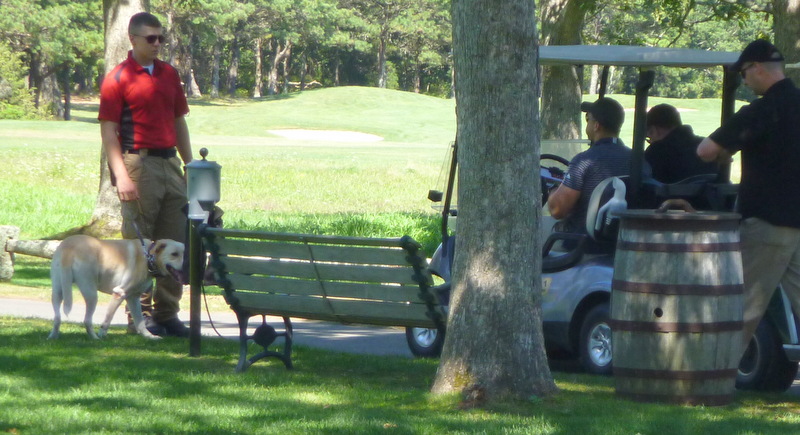
They also had a bomb-sniffing dog, and they checked absolutely everything—including a wooden trash barrel that looked like the sort of place where Wile E. Coyote might try to hide from the Roadrunner.

Note the coyote-height eye hole in the trash barrel.

Note the coyote-height eye hole in the trash barrel.

The President was playing from the blue tees—just as I had done!

P1080408

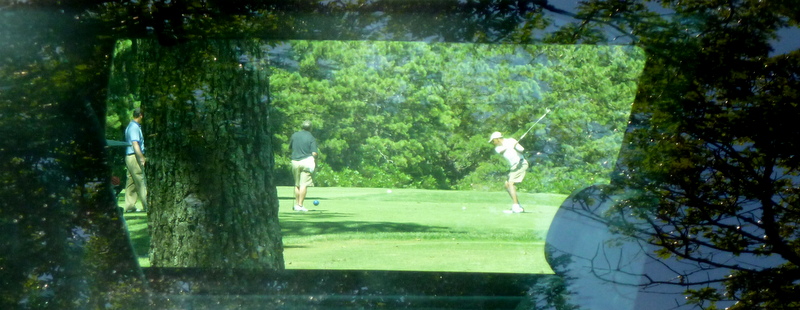
Just before he teed off, a couple of Secret Service guys in a huge black SUV pulled up right in front of me. Luckily, the windows lined up pretty well:

P1080414

President Obama wasn’t the only famous person on the golf course. We also saw my close personal friend Larry David, on the practice range. His warm-up routine has two parts. Here’s the first:

P1080267

And here’s the second:

P1080271And here’s a last look at Farm Neck (the fifteenth, a par-3):

P1080314

And also at the President:

P1080391


Possible World Record for Ground Under Repair, and the Attack of the Red-winged Blackbird

Bob G., ground under repair, Glen Arbor Golf Club, Bedford Hills, New York, June, 2013.

Bob G., ground under repair, Glen Arbor Golf Club, Bedford Hills, New York, June, 2013.

Bob G., an honorary member of the Sunday Morning Group, treated my brother and me to a day of golf not long ago, and during our round we encountered what may be the world’s largest G.U.R. Part of one fairway had begun behaving in a puzzling manner, so the course maintenance crew decided to see what was down there. Here’s some of what they found:

P1070410

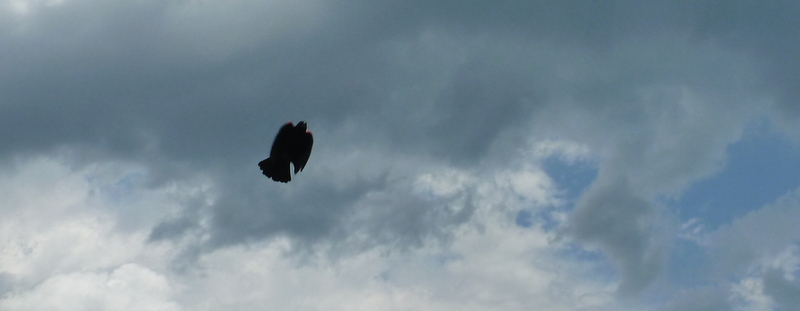
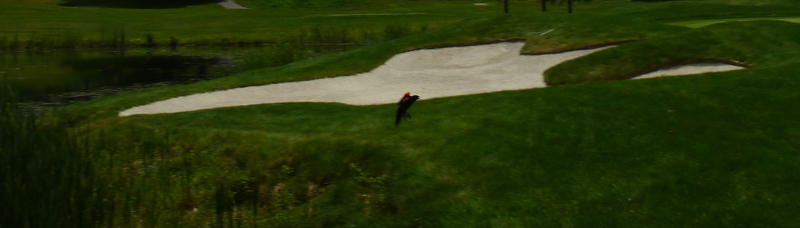
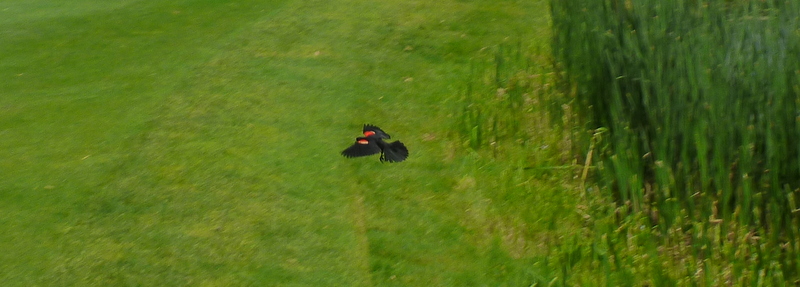
Later in the round, a red-winged blackbird let me know I’d gotten too close to its nest. It flew in circles around my head and yelled at me until I got to the green.

P1070416

P1070418

P1070417

P1070419

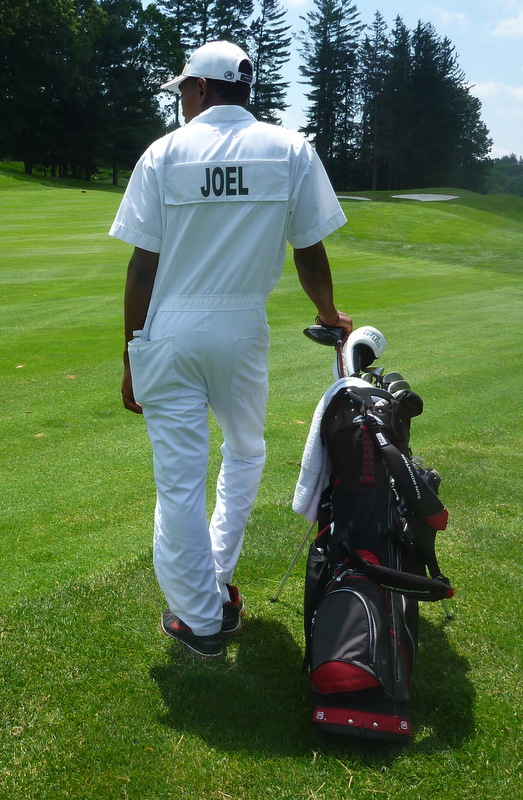
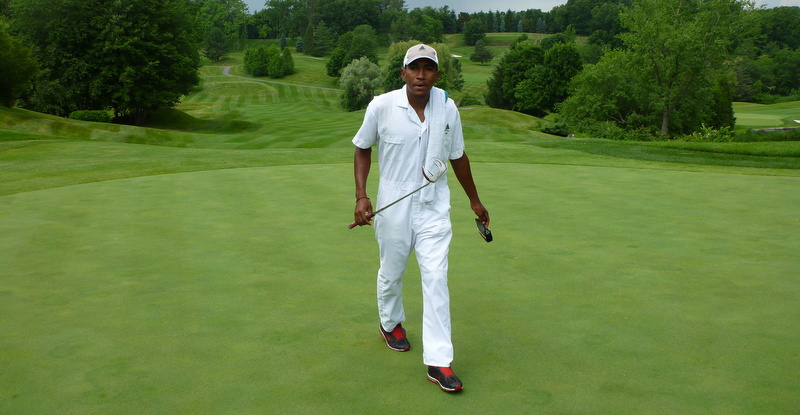
We had two terrific caddies that day. They wore white coveralls with their name on the back. It would solve a big problem for me if, from now on, everyone would wear their name on their back. Maybe wear it on their front, too:

Think how much easier remembering names would be if everyone would just do this.

Think how much easier remembering names would be if everyone dressed like this.

It started raining just as we were putting out on the eighteenth green, and almost immediately the lightning siren blew. That means we didn’t waste a single minute of the day.

Joel, on the eighteenth green. (See? I remembered his name.) You can sort of see the thunderstorm in the distance.

Joel, on the eighteenth green. (See? I remembered his name.) You can see some thunderstorm sky in the distance.

Field Test: Dealing With Sweaty Hands, Plus Playing Golf at Yale

Art-type shot of Shep, Josh, and Tony on the eighteenth tee at Yale, plus a padlocked water pump, July 23, 2013.

Art-type shot of Shep, Josh, and Tony on the eighteenth tee at Yale, plus a padlocked water pump, July 23, 2013.

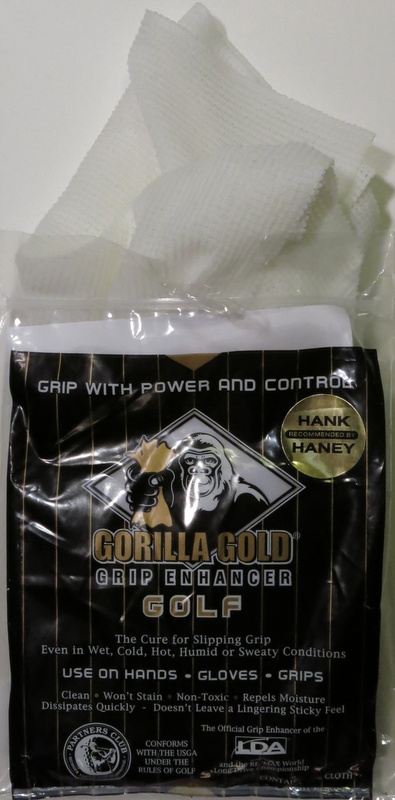
Not long ago, I wrote about using rain gloves as sweat gloves—a good thing, I said, because in hot, humid weather leather gloves become slimy and disgusting, while rain gloves continue to work even if they’re soaked with perspiration. A reader suggested trying Gorilla Gold Grip Enhancer, which is endorsed by Tiger Woods’s ex-coach Hank Haney. And, because I do what I’m told, I bought some.

On Tuesday, Tony, Shep, Josh, and I played Yale University’s terrific golf course, which was designed by C. B. MacDonald and Seth Raynor. (Incidentally, if you want to use the GHIN website to enter your score from Yale, you have to look under “T,” for “The Course at Yale.” How dumb is that?) The day was extremely humid, and after a couple of holes I decided to try Gorilla Gold. Here’s what it looks like:

IMG_2180

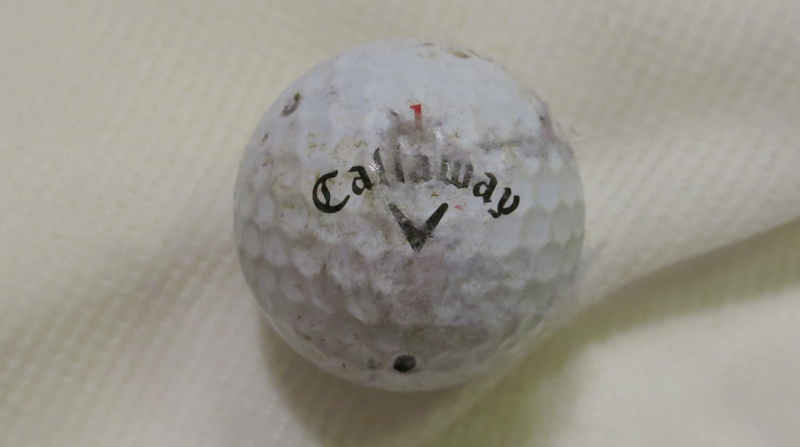
The package contains a sticky cloth, which you wipe on your hands, your glove, your grips, whatever. And it works as advertised, I would say, because it’s extremely sticky, and everything it touches becomes extremely sticky, too, even if it’s also wet. But after about five minutes I was cursing, because once you’ve got the sticky stuff on your hands you also get it on your ball, and that turns your ball into a magnet for dirt and pocket lint. And that, in addition to being a nuisance, almost certainly costs you distance, by altering the ball’s aerodynamics—like coating an airplane’s wings with ice.

Golf ball coated with Gorilla  Gold and pocket crud.

Golf ball coated with Gorilla Gold and pocket crud.

Long, repeated scrubbing in a ball washer did not remove all the sticky stuff: the next afternoon, the same ball was still picking up dirt from putting greens. And when I tried to use a towel to wipe the sticky stuff off the grip of my driver, the grip became covered with towel fuzz, which I’m still trying to remove. In fact, all the clubs I touched with sticky hands now feel like they need to be re-gripped, because the sticky stuff stops feeling sticky and starts feeling slick as soon as it’s coated with dirt or lint or towel fuzz. So I won’t be a repeat customer.

Tony and Shep at Yale.

Tony and Shep at Yale.

Shep, who doesn’t like rain gloves, has another anti-wet technique: he saves all his old leather golf gloves in a Ziploc bag, and on rainy or humid days he works his way through the bag, swapping wet gloves for dry. All the wet gloves go into another Ziploc bag, and by the time he needs them again they’ve magically refreshed themselves.