Golf Problem Solved: Cool Sunglasses for People Who Wear Glasses

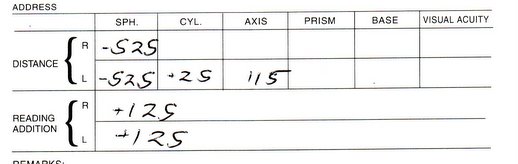
Golf_Prebuilt_BannerAt the PGA Golf Merchandise Show a few years ago, I stopped at the booths of several glasses manufacturers and asked about golf sunglasses for guys who have serious trouble finding their glasses if they’re not wearing their glasses, as I do. The responses were depressing. One woman showed me a pair that looked less like the wraparounds you see on tour players than like something you might wear while welding. Here’s my prescription: dlo glasses prescription The stronger a prescription, the harder it is to make it work without distortion in a lens that has a pronounced curve, she said, and her suggested solution was to switch to contacts and wear non-prescription sunglasses over those. I gave up, and bought a pair of distance-only glasses in my regular frames but with gray lenses. When my daughter, who was in her mid-twenties, saw them, she said, “No!”
[I have a picture of this, but I’m not going to show it to you.]

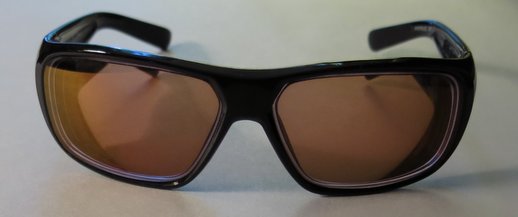
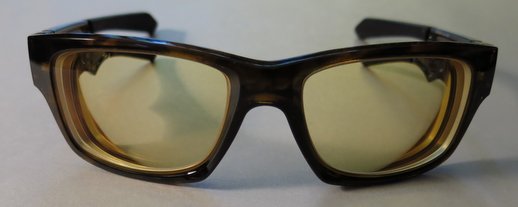
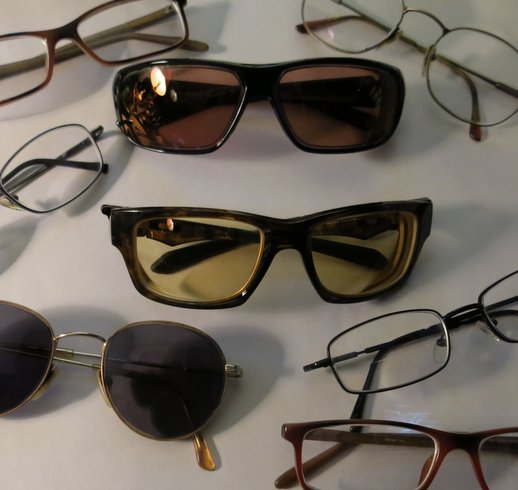
All that was before I talked with Rob Tavakoli, who is a licensed optician and a marketing guy at SportRX, which sells specialized glasses for all kinds of athletic activities. Takavoli is like a golf nut but about glasses; he told me that he’s been obsessed with sunglasses since he was seventeen, or slightly less than half his life, and that when he was twelve he fudged an eye test so that his ophthalmologist would write him a prescription he didn’t need. takivoli Two of Tavakoli’s specialties are sports-specific glasses and sports-specific glasses for people with strong prescriptions, like me. (SportRX employs a technician who specializes in high corrections—a rarity for companies that sell sports glasses, because getting everything right can be complicated and time-consuming.) Thanks to Tavakoli, I now have two pairs, one by Nike and one by Oakley. Both have lenses that are meant for golf—especially for ball-tracking and green-reading—and both are “photochromic,” which means that they lighten and darken in response to changes in ambient sunlight levels. The Nike glasses, whose frames are called Mercurial 6.0, have lenses with a rose copper tint, which becomes quite dark in bright sunlight: nikemercurial The Oakley glasses, whose frames are called Jupiter Squared, have lenses with a lighter, amber-brown tint, and are meant especially for times when sunlight levels are low: early morning, late afternoon, and in the rain—although they darken considerably in bright conditions. (Gray lenses are not good for golf, but they’re good for fishing.)  oakleyjupiter There are other possible frame choices for people like me, and there are many, many additional choices for people whose prescriptions are less daunting. I now consider both my pairs to be part of my golf equipment, and I keep them in my golf bag in hard cases with zippers: zerouv case An unexpected benefit of using both pairs of glasses is that they provide much better protection from the wind than my old sunglasses did, so that on that on blustery days I no longer seem to me crying over my terrible shots. I was grateful for that during my recent buddies trip to Scotland and Ireland, where the wind blows almost all the time, and it’s also a useful feature here at home, where, at the moment, clouds of pollen explode from the pine trees every time someone shanks one into the boughs. And an unexpected benefit of the darker lenses is that match-play opponents have no idea I’m giving them the evil eye while they’re trying to putt. Here I am in my Nike glasses on a sunny day at Machrihanish last month: machrihanishdloIf you have a current prescription, you can order glasses optimized for particular activities directly from the SportRX website, with telephone or online help if you need it. (The website has a helpful “Search by RX” utility, which identifies frames that will work with your prescription—although if your prescription is high enough you will need to call.) One thing you have to do before ordering glasses with corrective lenses is to measure your “pupillary distance,” or the space from eye to eye, but that’s easy to do if you have a ruler, a mirror, and a camera or phone: IMG_1249-001 My personal glasses collection is extensive: progressives, bifocals, reading glasses, computer glasses, backup distance glasses, ancient sunglasses just for driving—plus my two new pairs of golf glasses, which are my favorites and which I would wear all the time if I thought I could get away with it.  collection

Two Useful Sleep-Related Accessories for Golf Trips

P1120362

My wife can fall asleep in a room in which all the lights are turned on and sunlight is streaming onto her face, while I can be awakened from a deep sleep by the message light on my cell phone. My friend Tony is similarly afflicted. His wife, in sympathy, bought an LED headlamp, so that she could read in bed without bothering him, but every time she turns to gaze lovingly at his sleeping form she zaps him in the eyes and wakes him up.
Hotel rooms can be a huge problem, even when I’m traveling without my wife. During a golf trip to San Antonio last year, I had to use a Kleenex box and two wash cloths to disable the electric eye on the light switch in the bathroom, which blasted me with daylight-level illumination when I got up in the night to take a whiz:
bathroomelectriceye
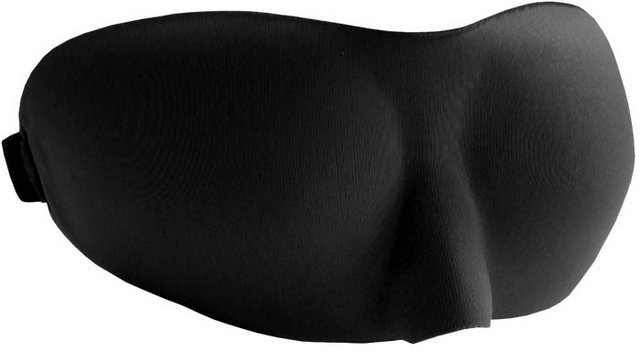
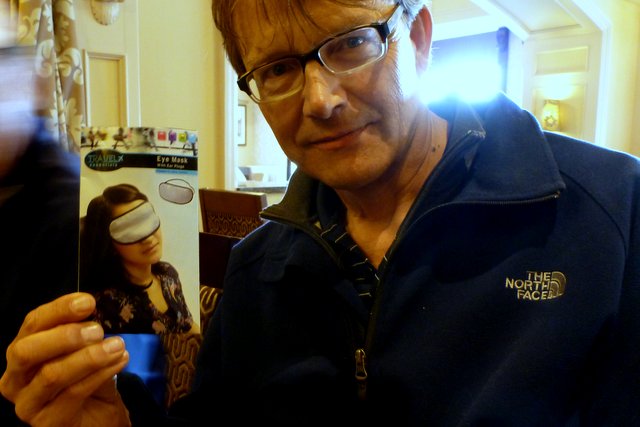
Because it’s hard to knock out all the potentially annoying light sources in a hotel room, I now travel with a sleep mask. I’ve tried several, and the one I like the best is made by Dream Essentials. It comes with a pair of ear plugs and what the company’s website describes as “a complimentary drawstring carry pouch,” and it makes me look like the Human Fly:
dreamessentials
It’s especially useful during summertime golf trips to Britain and Ireland, because at that time of year at that latitude the sun never quite goes all the way down. I like it so much that I now use it at home, too.
A sleep mask to avoid, unless you have a hat size of about 5 or enjoy feeling that your eyes are being squeezed flat by an elastic band, is this one, from Samsonite, even though it also comes with ear plugs:
samsonitemask
During my recent buddies trip to Scotland and Ireland, I spoke so convincingly about the benefits of wearing a sleep mask that J.P. went out immediately and bought one at a drugstore up the street from our hotel in Campbeltown, near Machrihanish. He now swears by it, too.
jproyalhotel

Golf Logo Explained: County Louth Golf Club, Baltray, Ireland

Baltray Logo

County Louth Golf Club is an Irish links course near the intersection of the Boyne River and the Irish Sea, about 35 miles north of Dublin. It’s often referred to by the name of the nearest village, Baltray, which is sort of a suburb of the ancient port of Drogheda — a city whose name is easier to pronounce correctly if you have a mild case of bronchitis. Drogheda was founded by Vikings more than a thousand years ago. In medieval times, it was surrounded by a wall, a few substantial parts of which remain. And if you visit St. Peter’s Church, on West Street, you can see the preserved head of St. Oliver Plunkett, an Irish clergyman, who was drawn, hanged, and quartered in England in the late seventeenth century:

Plunkett head

In 1908, when Plunkett had been dead for 227 years and County Louth Golf Club was 16 years old, a local man named Col. McWeeney wrote the following tribute:
Doctors may boast of their skill pharmaceutical,
Measure out drugs in a grave sort of way,
If you want health to pervade every cuticle,
Go and play golf on the Links at Baltray.
Tuberculosis is cured in two doses there,
All the wild ills of the flesh fade away;
Double pneumonia, asthma, insomnia,
Weep for their sins on the Links at Baltray.
 
There’s a good deal more than that (including “Burn all your bandages, rise to health’s pinnacle/Crutches are golf sticks in play at Baltray”). Based on my own experience, I would say that the medical advice in the poem is sound. Here are J.P. and David M. taking the cure at Baltray during our trip to Scotland and Ireland earlier this month:
jpndmBaltray
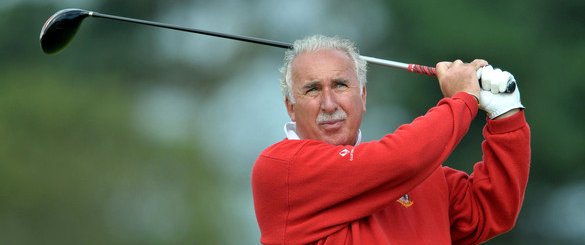
The head pro at Baltray is Paddy McGuirk, who was in the golf shop when we checked in. This is what he looks like:
paddymcg
He had some success in professional tournaments in the 1970s, when he looked like this:

paddymcg1973

I took my first golf trip to Ireland in 1992, on assignment for Golf Digest. One day, I gave a lift to an elderly man, who had approached me in the parking lot of the Royal Dublin Golf Club and asked me if I could drop him in the city. He said his name was Michael Dorgan. I asked him how long he’d been a member of Royal Dublin, and he said:
I am a caddie. I have worked on a hundred and fifty-seven golf courses—eighty-three in Ireland, seventy-one in England, and three in Scotland. As I lie in bed at night, I recite their names. I used to carry between twelve and fourteen bags a week, in season; I now carry two, because I won’t work for less than I am worth. I preferred caddying in England, because the pay is better there, but my wife missed her family in Dublin and wanted to return. I couldn’t cook, so I had to come along. I was born in Cork. I have caddied for ten Ryder Cup players, some before, some after, none during. I caddied for Paddy McGuirk when he won the Carroll’s International, in 1973. He insisted on carrying a ridiculous selection of clubs. He carried a 1-wood, a 2-wood, and a 5-wood. He couldn’t hit the 2-wood, and he didn’t need the 5-wood because he also carried a 2-iron. He hit his driver from the fairway sixteen times in that tournament. He would grip it down, cut the hell out of it, and pray.
McGuirk’s professional competitive career was cut short by the yips. (That’s the Carroll’s International trophy he’s holding in the photo above.)
During my visit in 1992, County Louth was celebrating its hundredth anniversary, and to mark that occasion the club had created a centenary logo, which you can see at the top of this post. I believe that that logo was a variation on one the club had been using for a long time, but there used to be another logo, which consisted of just a crescent moon, a star, a pair of crossed golf clubs, a (small) golf ball, and the name of the club. In 1992, I bought a shirt with that other logo on it, and for years and years it was my favorite golf shirt. Eventually, I must have worn it to tatters and thrown it away, because it’s no longer in my closet.
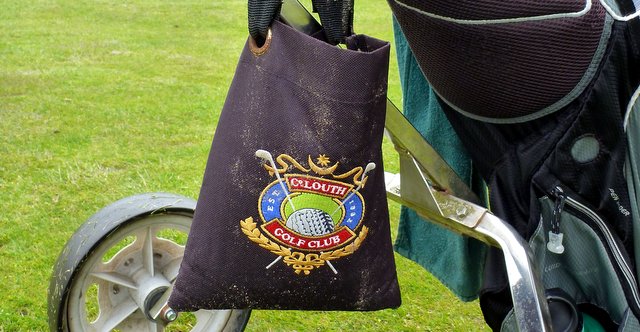
When I packed my suitcase for my this year’s trip, I left plenty of room for new Baltray-themed merchandise, including several replacement shirts exactly like my old one. But when I got to the club, I couldn’t find a shirt or a hat or anything else in the golf shop with the logo I remembered. All I saw was stuff with logos like the one on the divot-mix bag in the photo below. As you can see, there’s a tiny crescent-moon-and-star incorporated into the ribbony part at the top (as there also is in the centenary logo) but it’s so small that it’s easy to overlook:
dibotmixbag

I asked an old guy in the golf shop what had happened to my beloved old moon-and-star logo, and he said there had never been any such thing. That made me worry that I was losing my mind, because I remembered my old shirt quite clearly. Luckily, in the locker room a little later, I asked an even older guy, and he said yes, now that I mentioned it, the club had once had another logo, like the one I described. And, sure enough, when our tee time finally came, I saw an image like the one I remembered engraved in a block of stone near the entrance to the course (which the old guy in the golf shop had apparently never noticed):
stone marker

And after our round, in the bar, I saw another version:

baltray bar

That’s almost exactly what the logo on my old shirt was like! I want another shirt just like it! Please bring it back!
While I wait for the club to comply with my wishes, I can tell you that the Drogheda United Football Club has a logo very similar to the one I remember:
Drogheda United corrected

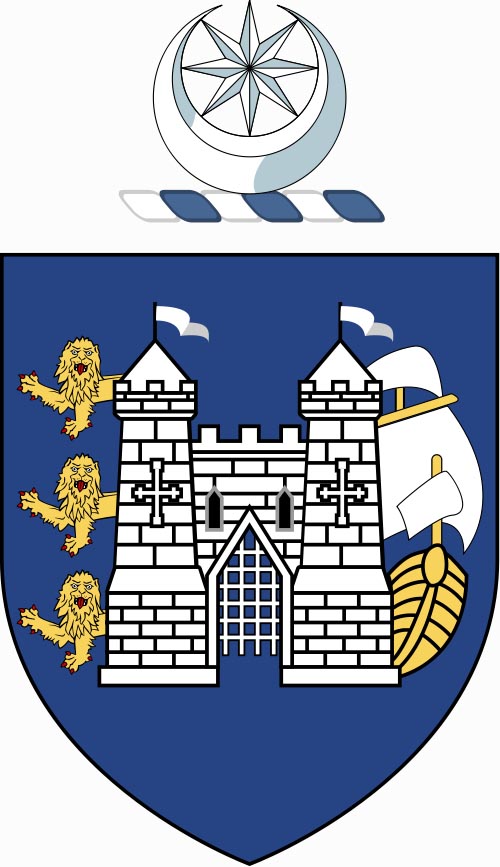
And the city of Drogheda itself has a moon-and-star image at the top of its official crest:

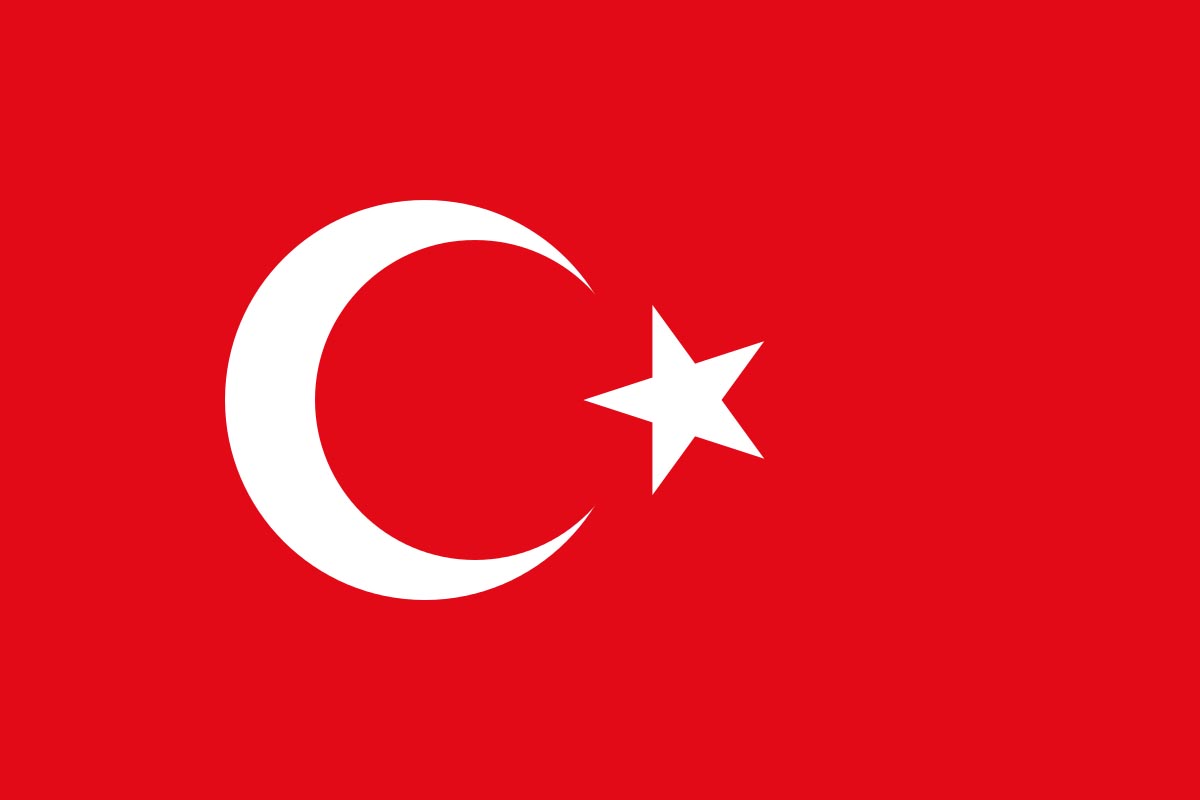
Drogheda crestBy now, you may be wondering where the moon-and-star image originated, and how it came to be associated with a golf club, a football club, a city, and a shirt that used to be one of my favorite articles of clothing. Well, as you’ve probably noticed, it bears a strong resemblance to the flag of Turkey:

flag of turkey

One explanation I’ve read is that during the Irish Potato Famine, in the eighteenth century, a sultan of the Ottoman Empire (Turkey’s predecessor) sent an emergency shipment of food and money to Ireland, by way of the port of Drogheda, and the city, as an expression of thanks, incorporated the empire’s symbol into its own. The only problem with that explanation is that Drogheda had been using the same image for five or six centuries prior to the famine. A more plausible explanation (probably) is that the image was brought to Drogheda during the Crusades by an Irishman who had spotted it in the land of the infidels and, like me, thought it looked cool. Anyway, wherever it came from, I want it back, in shirt form. The vest Tim is wearing in the photo below isn’t enough:

P1120747-001

Incidentally, during our trip there was a certain amount of cigarette-smoking by guys who don’t usually smoke. When Peter A.’s wife, Denise, saw the photo below, which was taken at Baltray, she thought it showed him “drinking from a juice box.”

P1120749

Scientists, Psychologists, and the Mayo Clinic Take on the Yips

SAM report

I had an article in the May 26 New Yorker about the yips. The term  was coined around the middle of the last century by the Scottish golfer Tommy Armour, a sufferer, who defined it as “a brain spasm that impairs the short game.” (Stephen Potter, in his book Golfmanship, published in 1968, quoted Armour and added, “‘Impairs’ is a euphemism.”) Yipping typically involves an involuntary twitch of a golfer’s hands, wrists, or forearms. The late British golf writer and television commentator Henry Longhurst once said that he didn’t have the yips but was a “carrier.”

Henry Longhurst, cocktail in hand.

Henry Longhurst. In the olden days, some forms of the yips were called “whiskey fingers.”

During the BBC’s broadcast of the final round of the 1970 British Open, at St. Andrews, he agonized vicariously when Doug Sanders left himself a three-foot putt on the final hole to win the tournament. “Oh, Lord,” Longhurst said on the air. “Well, that’s not one that I would like to have.” Sanders hesitated over his ball for what seemed like minutes; noticed something on the ground and bent to remove it (“Oh, Lord,” Longhurst said again); froze once more; and shoved the ball to the right of the hole. “Missed it!” Longhurst said as the ball went past. “Yes, a certainty. That’s the side you’re bound to miss it.” In the video below, skip to 21:23 to hear Longhurst’s full commentary and watch the gruesome outcome:

Among the people I interviewed but didn’t quote is Dick Hyland, who is the head professional at the Country Club at DC Ranch, in North Scottsdale, Arizona, and a longtime yips sufferer. Before I went to see him, he wrote down some of his thoughts about his own experience with the yips on a yellow legal pad, and gave me the sheet (clicking on the image below will enlarge it to a more legible size):

dickhyland

Another person I talked to is Debbie Crews, a sports psychologist and a consultant to the women’s golf team at Arizona State. She has participated in three studies of the yips sponsored by the Mayo Clinic, and she’s about to participate in a fourth. Even for golfers who don’t have the yips, Crews is a good person to know. Here’s one thing I learned from her: most of us would putt better if we had someone tend the flag even on medium-length putts, because our brains are better at judging the distance to targets that protrude above the ground.

debbiecrews

Traveling to Golf by Air, Land, and Sea

machrihanish

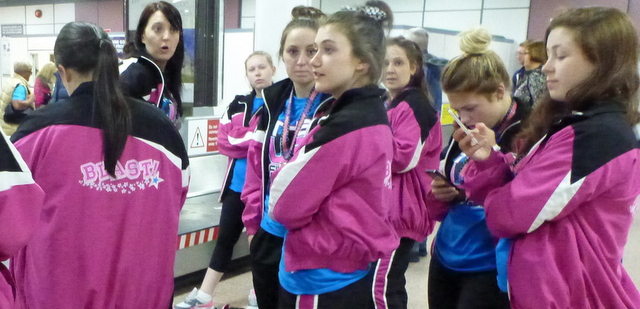
I don’t like to fly on the same plane with soccer teams, Cub Scout dens, Shriner lodges, or similar groups, because it’s too easy to imagine the headline the following day: “Plane Carrying All Members of Small Order of Spanish Nuns Goes Down in North Atlantic.” So I felt more than slightly anxious when, a few minutes before our scheduled departure, two dozen members of a Scottish cheerleading team, who had had to run to make their connection, boarded our plane. I learned later that the team was from the Blast Cheer & Dance Academy, in Glasgow, and that they had just won an international title of some kind at a big competition in Virginia Beach, Virginia. 

blast

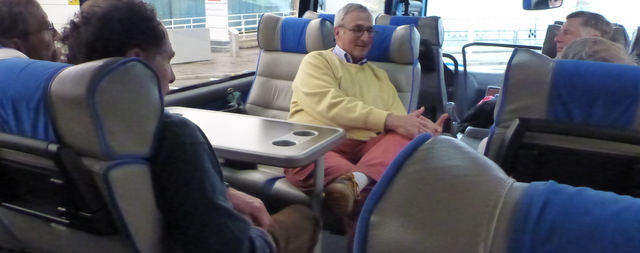
Miraculously, the flight went smoothly, and on Saturday morning at 7:30 eleven friends and I landed in Scotland, ready to play golf. We were met at the airport by a bus from Celtic Golf, which planned our trip.

on the bus

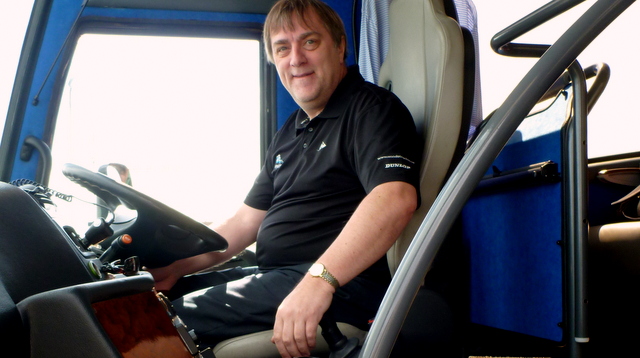
Our bus driver’s name was Dave, and that’s also the name of a quarter of the people on our trip. The only kind of people we have more of is lawyers. When the lawyers reply-all to golf-trip emails, the boilerplate disclaimers at the bottom pile up like litter against a parking-lot fence.

Dave

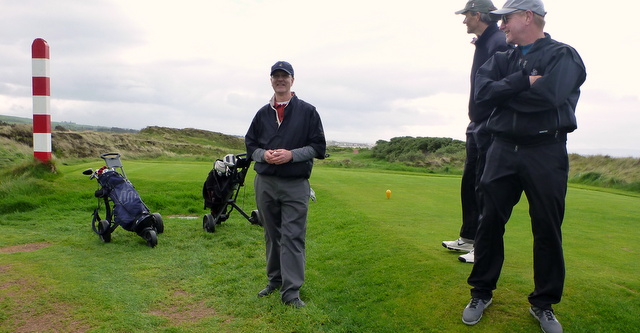
That first day, straight from the airport, we played two rounds, one at Western Gailes and one at Dundonald, which is next door. Everybody loved Western Gailes and was basically OK with Dundonald, which is owned by the people who own Loch Lomond. The picture below is from Western Gailes, and two of the people in it are named Dave.

western gailes

Dave the driver had told us to be ready to roll at 10:30 the next morning. I didn’t see Peter A. as we were loading our stuff onto the bus, so at 10:35 I called his room from the front desk of our hotel. He picked up after about twelve rings, and said, Yeah, yeah, I’m on my way—and five minutes later we left. That afternoon, he told me that he had actually been asleep when the phone rang, and that he had set a personal record for getting dressed, packing a suitcase, and vacating a hotel room.

bus

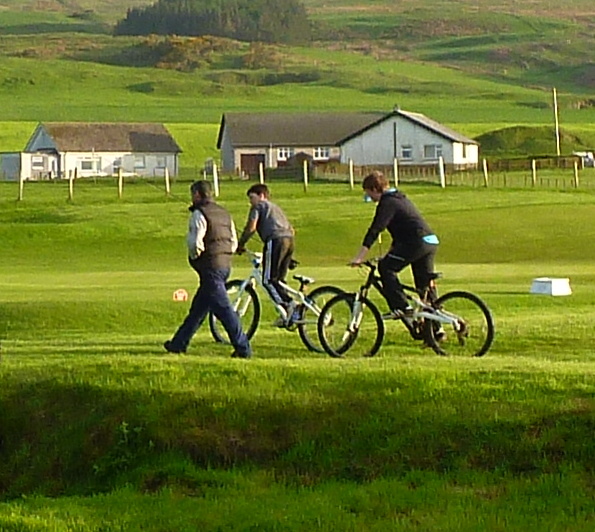
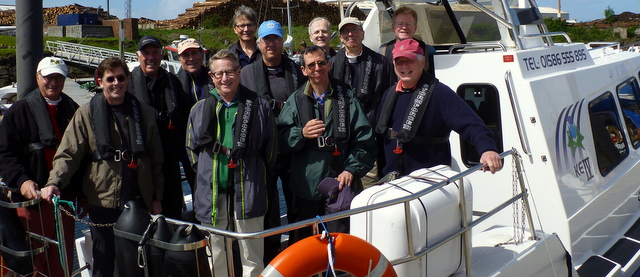
That morning, the bus took us not to a golf course but to Troon Harbor, where we boarded a chartered twelve-passenger motorboat, owned by a company called Kintyre Express. The boat took us to Campbeltown, the home of Machrihanish Golf Club, on the Kintyre Peninsula. 

P1120258

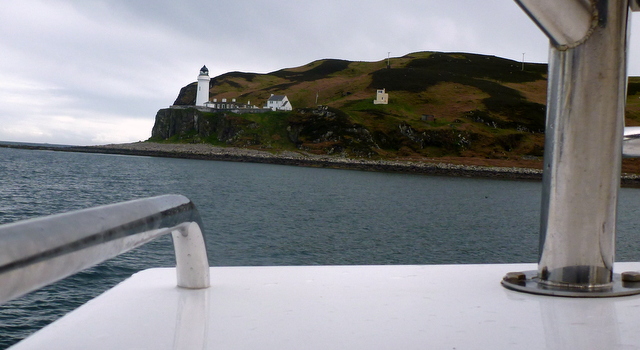
Machrihanish is hard to get to by car; going by boat knocks a couple of hours off the trip. Nice scenery, too.

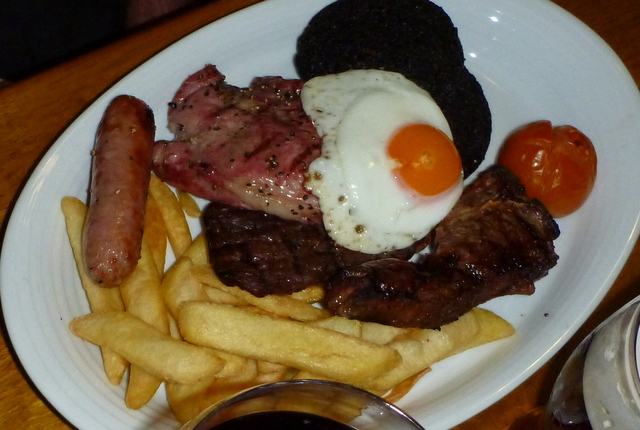
lighthouseMachrihanish has been on my golf dream list for a long time. I’ll have more to say about it later. After three days there, we had to get back on our boat, and move on to our next destination, so that we could play more golf, but somewhere else. I’ll have more to say about that soon, too. In the meantime, here’s what Tony and David M. had for dinner our first night in Campbeltown:

mixed grill

Reader’s Trip Report: Pinehurst, North Carolina

photo 1

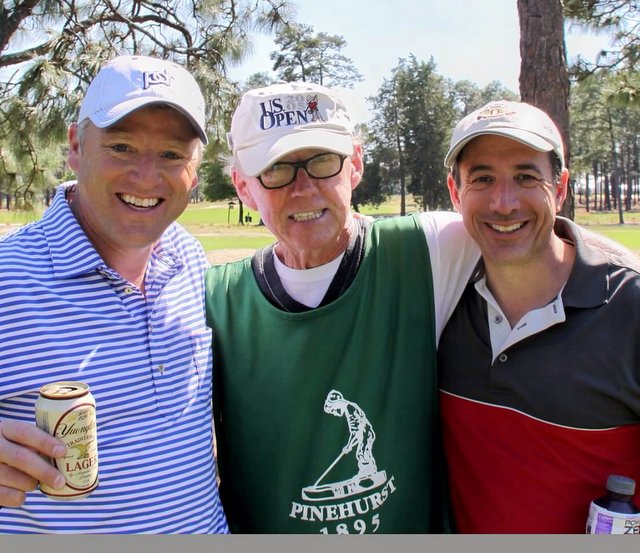
This year’s U.S. Open and the U.S. Women’s Open will be held at Pinehurst during consecutive weeks, beginning on June 12 (for the men) and June 19 (for the women). The U.S.G.A. has never tried that before, although my club has done it successfully with the men’s and women’s member-guests. Adam Sachs, a reader in Kansas City, recently traveled to Pinehurst with three friends to check things out.

Sachs 9

Sachs is the guy in the middle in the photo above. The guy on the left is Steve Swartzman, and the guy on the right is Chip Fleischer, whose fiftieth birthday was their excuse for taking the trip. They all went to high school together. We haven’t met Glenn Jordan, the fourth member of the group, yet, but you get the idea.

Pinehurst flag

From Sachs’s report:
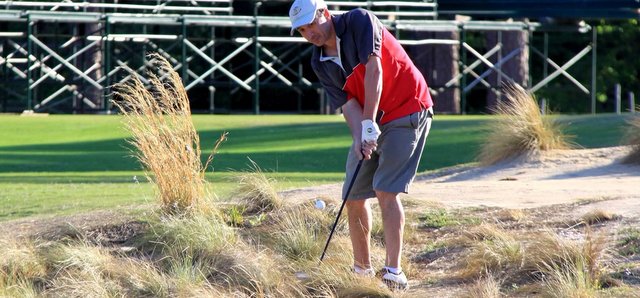
Ben Crenshaw and Bill Coore happily brought Pinehurst No. 2 back to its sandy Donald Ross roots in 2011. As for its altogether vexing, convex-shaped greens, our caddies Eddie Mac and Jamie liked to say, “Mr. Ross likes you to visit, but he doesn’t want you to stay too long.” The restored waste areas now define the course as much as the greens. We had top-notch caddies, a sun-drenched afternoon, and nary a gust of wind, so scoring conditions were ripe. I’d like to tell you we all managed to stay in the nineties. But I can’t.

No 2

Pinehurst No. 2 is definitely bucket-list material, but from now on my destination courses in the area will be Pine Needles and Mid Pines, just five miles down the road. Pine Needles has hosted three U.S. Women’s Opens in the past twenty years, yet the clubhouse personnel were low-key and friendly; the practice area was conveniently close to the first tee; and the golf course was full of rolling hills and (of course) pine needles. Our hands-down favorite course of the trip was Mid Pines: 

mid pines

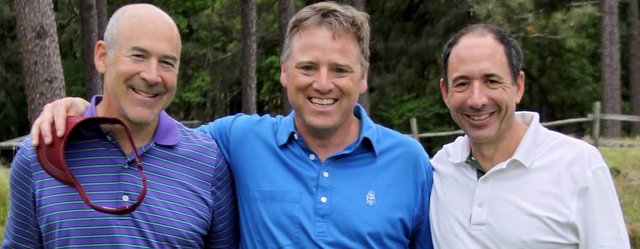
I myself haven’t been to Pinehurst in about ten years, and I want to go back. And here, finally, in the photo below, is Jordan, the fourth man. He’s standing with Swartzman, even though the guy he went to college with is Fleischer. Jordan is a sportswriter for the Portland (Maine) Press-Herald.

chip (1)

Sachs also forwarded me an email from Swartzman, whose post-trip reflections support my theory that men get to know each other mainly through parallel play:
As I told Adam in the car (to Adam’s relief, driven by someone other than me) on the way home, I’m not sure what I’ll say when Evelina asks me what we talked about all weekend.  She’ll want to know what everyone’s doing and how old their kids are, and she’ll ask about everyone’s health, summer plans, sex lives, etc. Of course, we didn’t talk about any of that. Should I tell her about Chip and Adam almost choking at the thought that a waitress had farted after delivering our food (when in fact it was me)? Or about how serious everyone was about taking home a large glass boot? The great thing about gatherings like this is how little we talk about our lives, our cares and concerns, or the future.
I couldn’t agree more. They’ll be plenty of time for all that other crap in the grave. Meanwhile, check out these urinals:

urinals midpines

What Marathoners and Golfers Have in Common (Unfortunately)

singh

Nat Ehrlich, a reader in Ann Arbor, Michigan, is a retired university professor whose main academic interests are human-performance psychology and statistics. In 1974, he spent an interesting year as the director of research at the Michigan Center for Forensic Psychiatry. In 2013, he conducted a research study, for Michigan State University, which demonstrated that “we elect our Presidents more on the basis of how they come across as people—most important, how honest they seem—rather than what ideology they espouse.”

Ehrlich took up golf in 1961, and he was the golf coach at the University of Michigan-Flint in 1971 and 1972. He’s a regular at Radrick Farms, the University of Michigan’s golf course and one of Pete Dye’s earliest designs (photo below). “My goal is to shoot my age,” he told me recently. “My best effort so far is age-plus-six: a 74 when I was sixty-eight, and a 78 last year, when I was seventy-two.”)

050310_RADRICK FARMS 1-1 LON

Recently, Ehrlich subjected golf and golfers to some penetrating retired-guy statistical analysis, with interesting results. He told me: “I looked up world-record holders in the 100 meters, the mile, and the marathon, by ten-year age groups, and found very similar curves for increase in time to run each event. Then I plotted a similar curve for golf, and came up with age-ranked par figures.” (See the chart below.) What those numbers in the bottom row mean, essentially, is that as we get older we need to adjust our expectations downward (or upward, depending on how you look at it)—probably true in everything we do.

Ehrlich par chart

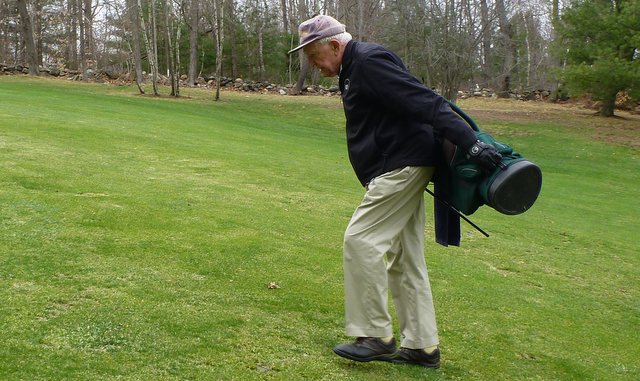
Even though scores rise with age, enjoyment doesn’t have to fall. Slade, who is in his eighties, is one of the oldest members of the Sunday Morning Group, but he still walks and carries his bag:

P1120061

We screw him and other high-handicappers by limiting to fourteen the number of strokes that anyone can receive—and no strokes on par 3s. But he still shows up, and thank goodness for that. The only S.M.G. guys who use carts are guys who really can’t get around our course on foot anymore—unlike these two, who don’t necessarily look old enough to have drivers’ licenses:

youngsters

But they don’t play with us.

Some Shots You Won’t See This Week at the Masters

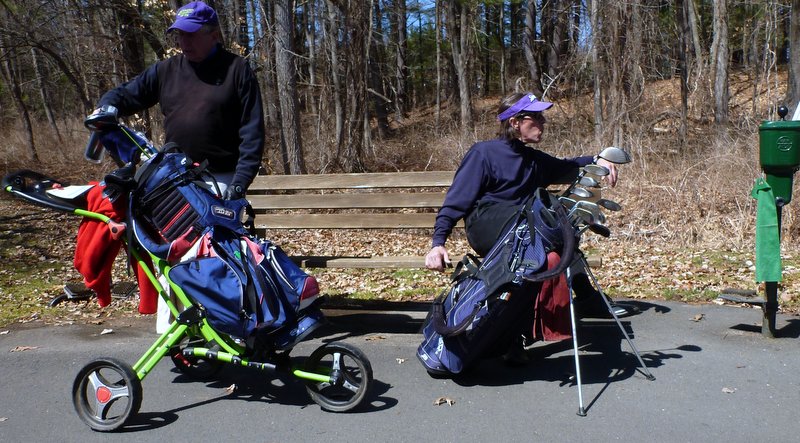
Kevin, Tunxis Plantation, Sunday, April 6, 2014. That's Hacker (real name) in the red jacket, studying our receipts. You'll hear more about the foursome in the background on the left in a little while.

Kevin, Tunxis Plantation, Sunday, April 6, 2014. That’s Hacker (real name) in the red jacket, on the right, studying our receipts. In a little while, you’ll hear more about the foursome in the background on the left.

We had nine guys at Tunxis Plantation Country Club on Sunday, and we played a game that we invented eight or nine years ago, called Sons, Fathers, and Grandfathers. Nobody was actually related to anybody else (except Barney and Stanley, sort of). We just went by age: the three youngest guys versus the three guys in the middle versus the three oldest guys. We originally got the idea because Nick (who’s in his mid-seventies) often tells waitresses and beer-cart girls that Gene (who’s about eighty) is his father.

I’m four months older than Tim, so I ended up on the Fathers, with Hacker and Barney, and Tim ended up on the Sons, with Kevin and Doug. We must have been goofing around, or something, because the starter let the four guys on the left in the photo at the top of this post sneak out ahead of us. They were the kind of guys who walk fifty yards from their cart to have a look at their ball, then walk back to their cart to get a club, then hit a shank. We ended up doing a lot of waiting:

P1120006-001

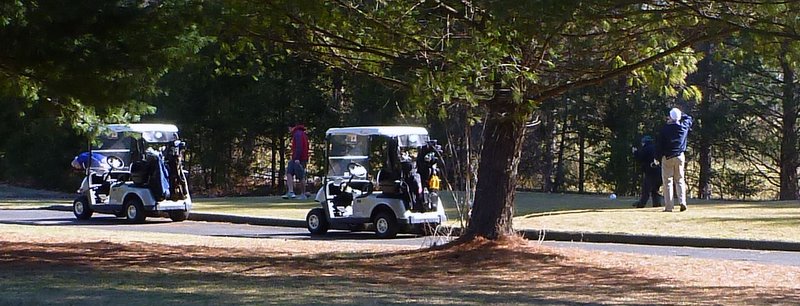
Two of the guys in the slow foursome were especially slow: the one on the far left and the one on the far right in the photo below:

The guys on the right seem to be looking far into the distance, but this tee shot actually traveled about a hundred feet.

The guys on the right seem to be looking far into the distance, but this tee shot was actually very short–too short to be measured in yards.

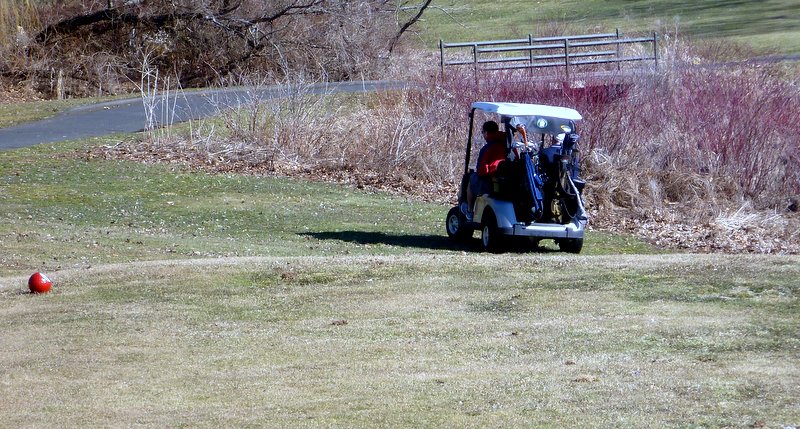
On one hole, the drive of the guy in the red jacket and shorts stopped safely in front of a water hazard, which was thirty or forty yards in front of the tee. He drove up to check it out:

P1110976

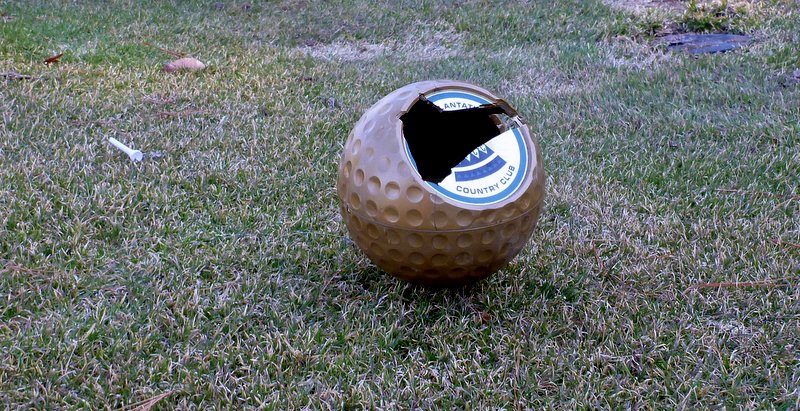
A little later, the same guy hit the shot of the day. You kind of had to be there, but the guys on the right in the photo below are laughing hysterically because the guy in the shorts and the red jacket has just hit his tee shot maybe eight yards, into one of the gold tee markers. The guy on the far left, who is partly hidden by the first cart, is bending over to examine pieces of the shattered marker:

P1110981If the guy in the red jacket and shorts was actually trying to hit the marker, his aim was above average. I don’t know whether that’s his tee. Could be. If so: again, well done.

P1110985We finished eventually, and the winners, as usual, were the Grandfathers, who had complained so much on the first tee that we let them play from the senior tees and have handicap strokes on par 3s. Never again. But everything sort of worked out, because the two oldest Grandfathers either forgot to come to lunch or got lost on the way, so they couldn’t win any skins. Anyway, the good news is that our own course is going to open on Friday, and that means that on Sunday morning we’ll be drinking beer on our very own patio and making lunch on our very own grill.

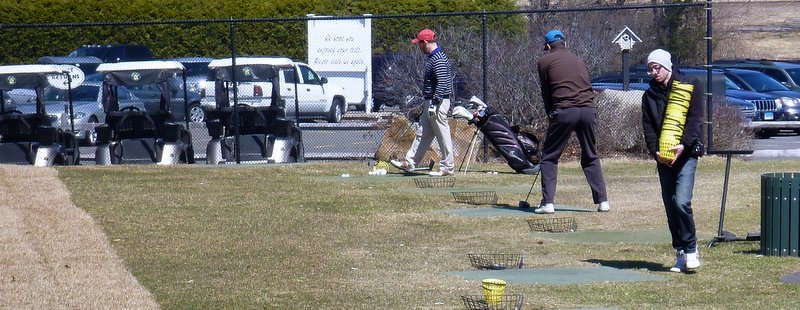
The driving range at Tunxis. You should never watch strangers hit practice balls, especially when there are still little piles of snow on the ground.

The driving range at Tunxis. You should never watch strangers hit practice balls, especially in early spring.

Masters Countdown (Updated): The Hardest Hole to Build at Augusta National

ANGC 12-001

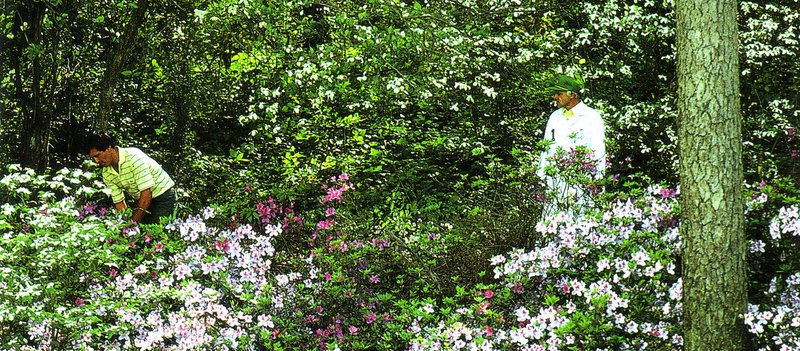
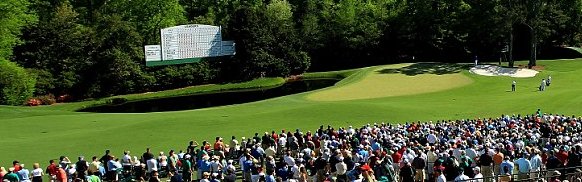
Augusta National’s twelfth hole is just 155 yards long, for both club members and Masters competitors. Nevertheless, Jack Nicklaus once called it “the toughest tournament hole in golf,” and Lloyd Mangrum said it was “the meanest little par 3 in the world.” During the first two rounds of the Masters in 1980, Tom Weiskopf played it in twenty strokes—fourteen over par. In the photo below, Seve Ballesteros is stuck in the flowers above the green, after pulling his tee shot long and left:

Seve 12-001

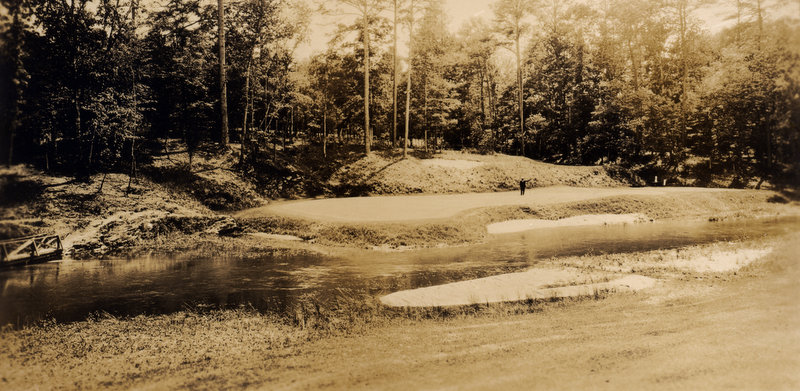
The twelfth was the hardest hole on the course to build. When an engineer saw that the plans called for a bunker in front of the green, he thought that the drawing must be in error, because the slope was so steep. The green was created by covering an exposed rock ledge with five thousand cubic yards of earth, which had been excavated on the opposite side of the creek. During that process, two tractors and eight mules became stuck in the mire and had to be pulled out with long ropes drawn by all the other tractors.

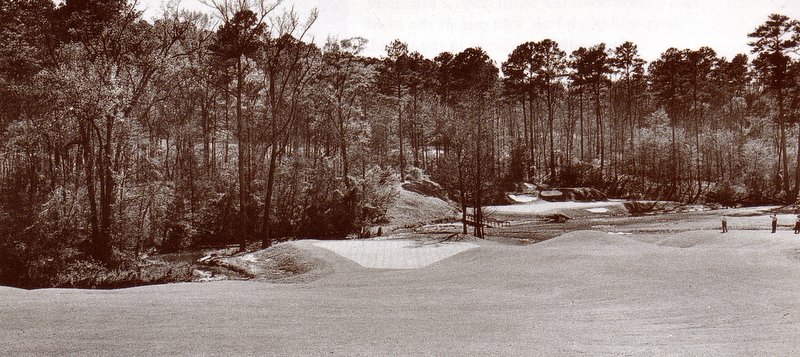
The twelfth green in 1935, the year of the second Masters.

The twelfth green in 1935, the year of the second Masters.

The twelfth green has always been shallow and treacherous; in the early years it was even more so. The right side of the green, where the hole is usually cut for the final round of the Masters, was enlarged in 1951 because, Bobby Jones explained, the hole had been “possibly a little too exacting.” (The front right corner of the green had settled toward the creek, exacerbating the problem.) “I think we should build this up so as to provide the maximum level putting surface,” Clifford Roberts, the club’s co-founder and chairman, explained in a letter at the time. “To do it right, logs should be used the same as when we extended the front of the left side of the green. While we are about it, we might provide another yard or two of depth. When the pin is on the right the hole is too damn tricky for fair tournament play especially since that area is subject to gusty winds. Also, we can never eliminate the bad feature of the damp bank back of the green in which a ball will bury. A good shot that is only a shade too short or too strong means a 2 stroke penalty—not one. Now that #11 is exacting such a surprising toll [because of the new pond] I wouldn’t mind easing up a trifle on the boys at #12 green.”

Got dirt?

Got dirt?

The creek in front of the twelfth green was a factor in a match played by Roberts, Ed Dudley (the club’s pro), Jerome Franklin (a local member) and Dwight Eisenhower shortly after Eisenhower had been elected president. Eisenhower’s tee shot landed short of the green, and his ball ended up on a sand bar next to the water. “You can play that ball off the sand bar,” Roberts said as they walked to the green. Eisenhower climbed down the bank to his ball and sank past his knees in what turned out to be quicksand. Two Secret Service agents jumped in after him and pulled him out by the arms. The match was delayed while the president went back to his cottage to change clothes. When he returned, he told Roberts that he would never again take his advice on any matter concerning golf.

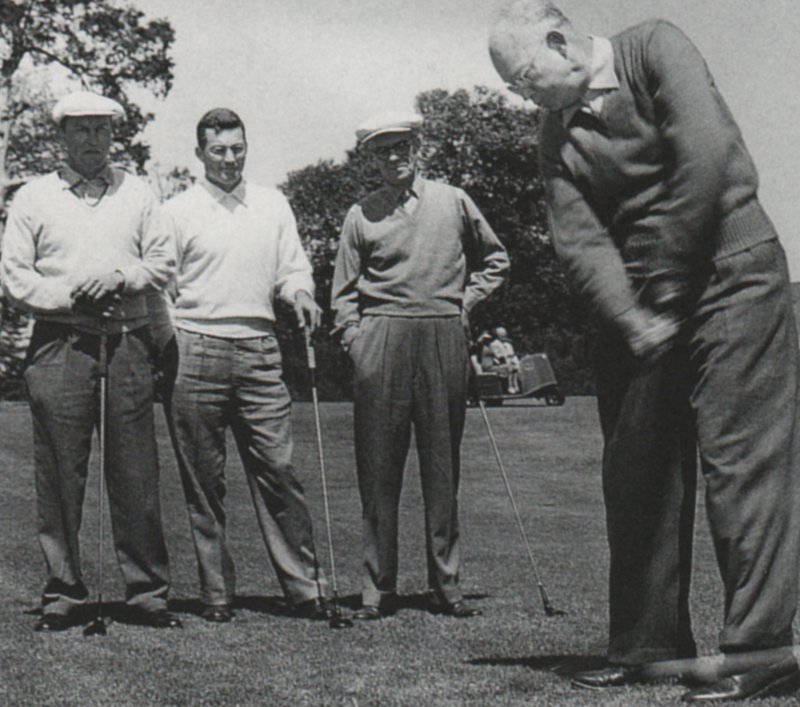
That's Eisenhower swinging, and Bill Zimmerman, Billy Joe Patton and Roberts looking on. Nobody seems impressed by the President's swing.

That’s Eisenhower swinging, and Bill Zimmerman, Billy Joe Patton and Roberts looking on. Nobody seems impressed by the President’s swing.

Masters Countdown: Bobby Jones’s Father, the Great Flood, and the Eleventh Hole

Eleventh green, twelfth tee, twelfth green, Augusta National, early 1930s.

Eleventh green, twelfth tee, twelfth green, Augusta National, early 1930s.

The Masters tee on the eleventh hole was originally positioned above and to the right of the tenth green, not far from the seventeenth green. The hole ran downhill and played considerably shorter than its measured distance, which was a little over four hundred yards. In fact, until about a decade ago the green was at least theoretically drivable from the members’ tee, which was on the old line, although the shot was blind and called for a powerful fade.

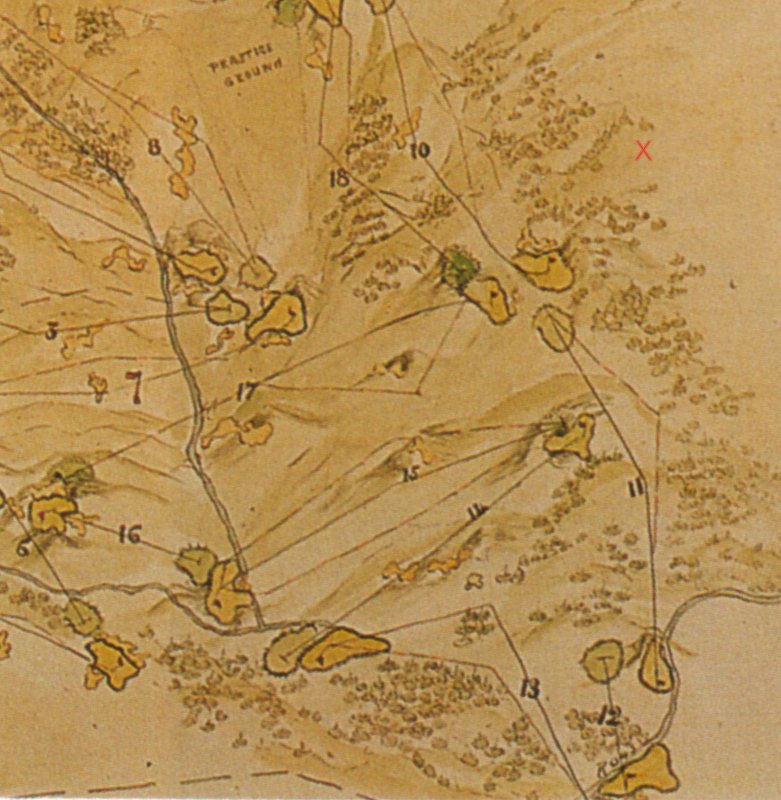
Alister MacKenzie's original routing, showing the location of the eleventh tee, between the seventeenth green and the old tenth green. The modern tee is somewhere back near the red X in the upper right hand corner of the image.

Alister MacKenzie’s original routing, showing the location of the eleventh tee, between the seventeenth green and the old tenth green. The modern tee is somewhere back near the red X in the upper right hand corner of the image.

The hole was first changed in 1950, when the club built a new tournament tee, below and to the left of the tenth green. The change was suggested by Clifford Roberts, the club’s chairman and co-founder, and endorsed by Bobby Jones. The change was made both to lengthen the hole and to eliminate a gallery bottleneck between the tenth green and the eleventh tee. “Under the new arrangement,” Jones wrote at the time, “the spectators will have ample room on the high ground to the right of the fairway to observe play, all the way from tee to green, without going on to the fairway at all. It will be substantially the same arrangement as is provided at number 13, where everyone can get a clear view of all shots played without following the contestants down the fairway.” The Masters tee is even farther back today, and the fairway has been reshaped. The hole measures a little more that five hundred yards for the tournament, and when you stand on the tee it looks like a thousand.

Eleventh green, 1930s.

Eleventh green, 1930s. No pond yet.

The eleventh hole’s most conspicuous feature is the pond to the left of the green. Roberts, in his book about the club, which was published in 1976, wrote that the pond had been his idea; Byron Nelson told me in 1998 that it had been his own. “There was already water behind the green,” he said, “because Rae’s Creek ran back there. But not many people went over the green. So I told Cliff that I thought he ought to dam up the creek and let the water make a pond to the left of the green.” (Nelson’s memory that the creek passed only behind the green wasn’t not quite correct. The water also looped near the front left, almost as close to the green as the pond is today—as you can see in the photos above.) The dam was built in 1951.

There's that pond. Look out.

There’s that pond. Look out.

In mid-October 1990, Augusta got more than a foot of rain in just thirty-six hours. Rae’s Creek flooded, and took the eleventh green and much of the rest of Amen Corner with it:

amen corner flood 1990Hord Hardin, the club’s chairman at the time, said they were lucky the flood hadn’t occurred right before the Masters. “We probably would have had to play four sixteen-hole rounds,” he said. The green was rebuilt using data from a 1982 survey, and the bunker and the pond were recreated from photographs. The hole was back in play not just for the Masters but for the Thanksgiving member party, six weeks later.

The Colonel, Bobby Jones's father.

The Colonel, Bobby Jones’s father.

In the early years, there was a small pot bunker in the center of the fairway at roughly the distance of a reasonable drive, invisible from the tee. The bunker was Jones’s idea. He wanted the course to have a hazard that could be avoided only with good luck or local knowledge—the sort of seemingly arbitrary booby trap that is plentiful on the Old Course at St. Andrews. Jones’s father, Colonel Bob Jones (photo above), drove into it during his first round on the course, in 1932, and when he found his ball in the sand he shouted, “What goddamned fool put a goddamned bunker right in the goddamned center of the goddamned fairway?” or words to that effect. His son, who was playing with him (along with Roberts), had to answer, “I did.” The bunker was eventually filled in, though not till many years later.