What’s In My Bag: Bruno Corbeil

No Baby Driver here. In fact, no driver at all.

No Baby Driver here. In fact, no driver at all.

Bruno Corbeil, a reader in Montreal, writes:

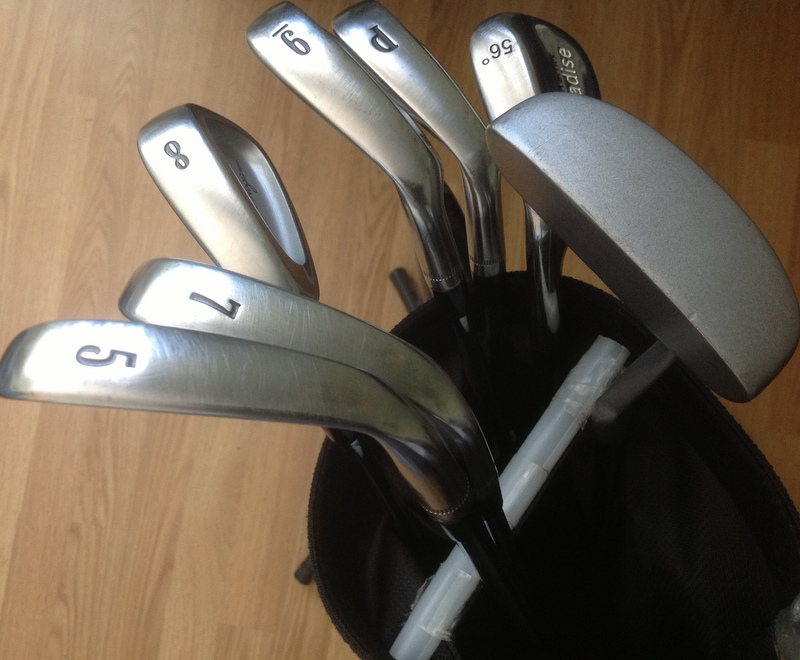
As I play mostly par-3 courses, with my kids, I carry a light Sunday bag with about seven clubs in it. I do it mostly because I don’t need a whole set, and also because I have grown to like carrying my bag.  I also hate playing the same course over and over again, so I have built a schedule that lets me play about six different ones in rotation, over the course of a season. This means that, depending on which course I’m playing, I need to decide which clubs I’ll bench for the week. I do have a whole set of irons (Ben Hogan BH-5), from pitching wedge through 3-iron. The sand wedge and my putter are both from Paradise. However, when I’m playing a small par-3 course, my usual set is S-5 and putter. Depending on the length of some holes and the weather, I’ll swap the 5-iron for a 4-iron or a 6-iron.  If I’m playing a course without bunkers, I might bench the sand wedge. I have tried some hybrid clubs but being more of an iron player than a wood player. My workhorse on regular-length courses has always been the 3-iron. Maybe a hybrid with a steel shaft might be a more pleasurable experience.

ATTDMLI2

Seven is a very reasonable number of clubs. My friend Tony once won our club championship with exactly that many, and Francis Ouimet won the 1913 U.S. Open, at The Country Club, in Brookline, Massachusetts, with just three more—and all of Ouimet’s had hickory shafts. In 1913, there was no rule limiting the number of clubs a player could carry, so Ouimet could have used twenty or thirty, as some players in those days did. Maybe he lightened his bag out of consideration for his caddie, Eddie Lowery, who was just ten years old.

Francis Ouimet (with horseshoe) and Eddie Lowery (with towel and seven-club golf bag), The Country Club, September 20, 1913.

Francis Ouimet (to the left of the horseshoe) and Eddie Lowery (with towel and seven-club golf bag), The Country Club, September 20, 1913.

Corbeil continues:

This summer, we went on a car tour of western Canada, and I took the opportunity to play golf in all the western provinces (Manitoba, Saskatchewan, Alberta and British Columbia).  Par-3 seemed the right choice as it didn’t not require much time to play, and would allow me to play with the kids and play after driving some 400 miles and still have somewhat of a game. That little Sunday bag—or those little Sunday bags, as the whole family has them—didn’t take up too much space in the car, and allowed us, if we chose wisely, to have our essential clubs to play the Par 3 golf courses.

Here’s a picture of Corbeil and his family on a par-3 course in Calgary:

100_1529

On a November weekend quite a few years ago, the Sunday Morning Group imposed a five-club limit on the day’s competition, as a novelty. I chose my putter, sand wedge, 8-iron, 6-iron, and 3-wood—a fairly typical line-up, it turned out. (This was before I’d become an almost total convert to hybrids.) Surprisingly, I shot about what I usually shoot, and so did everyone else. In fact, the score of the winning team that morning was two shots better than the score of the winning team the week before, when we had observed no limit on hand luggage more stringent than the U.S.G.A.’s. Still more unsettling, our course superintendent played along for a few holes with just an antique adjustable club, which he had set to 6-iron, and he would have won two skins if we hadn’t ungraciously disqualified him after the fact.

The day’s results lent a meditative air to the beer-swilling after the round. “Maybe we ought to play with five clubs all the time,” someone said—and the comment, unlike most post-round comments, was considered thoughtfully. Someone else pointed out that the scores during our club’s annual two-club tournament, which had been held a few weeks before, had been indistinguishable from regular scores—except for guy who had managed to post a new personal best.

Maybe the number of clubs we carry is less important than the selection. Five clubs may truly be all I need—as long as none of the five is the elusive Unhittable Club of the Day (U.C.D.), which moves unpredictably around my golf bag and was recently, for no known reason, my brand-new 60-degree wedge.

My Friends and I Like to Play With Glowing Balls

Young Nick, first tee, 9:45 p.m., July 5, 2013.

Young Nick, first tee, 9:45 p.m., July 5, 2013.

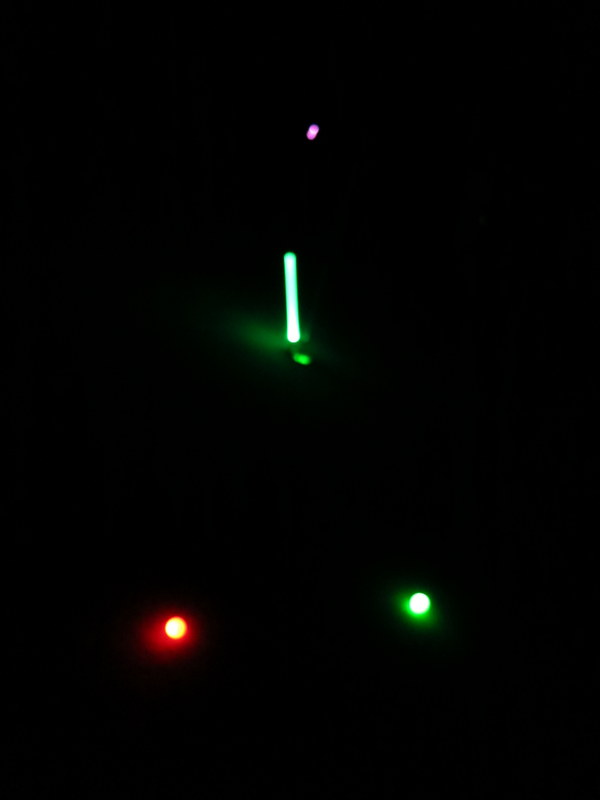
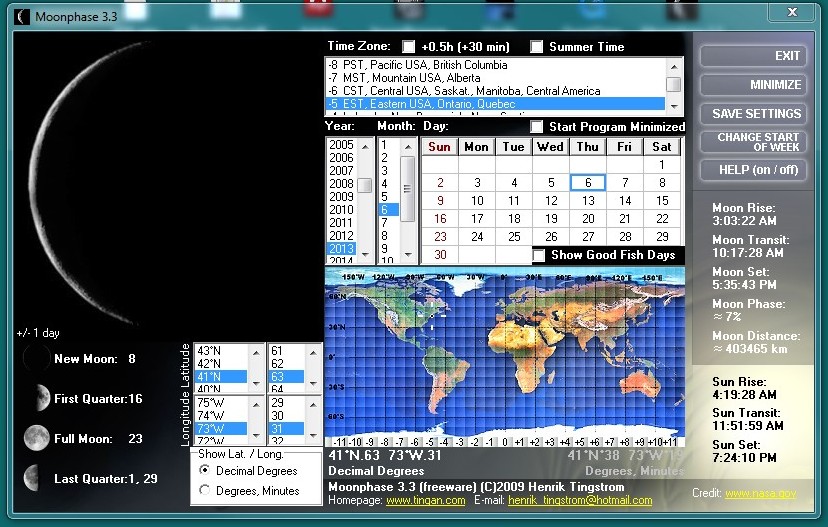
All golfers brood obsessively about the weather; my friends and I also track the phases of the moon. The reason is that we like to play at night, with glowing balls, and glowing balls look best against a truly black sky. The ideal time to play is an hour or two after sunset during a new moon, but other times of the month work, too, as long as the moon either hasn’t risen yet or has already gone down. I now monitor all that with a free program called Moonphase 3.3.

Moonphase

On Friday night, we met on the clubhouse porch at 7:00, for pizza from The Upper Crust, the official provisioner of the Sunday Morning Group.

Austin, John.

Austin, John, pizza, clubhouse porch.

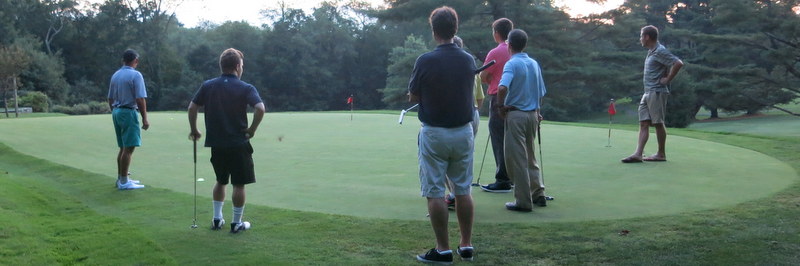
Then we played Putting for Dollars on the practice green while we waited for the sun to go away.

In all our putting contests, we use the stymie rule, which the rest of the golf world abandoned in the 1950s.  Closest to the pin wins, double points if the ball goes in. Luke (second from left) was the only competitor to actually sink a putt.

In all our putting contests, we use the stymie rule, which the rest of the golf world abandoned in the 1950s. Closest to the pin wins, double points if the ball goes in. Luke (second from left) was the only competitor to actually sink a putt.

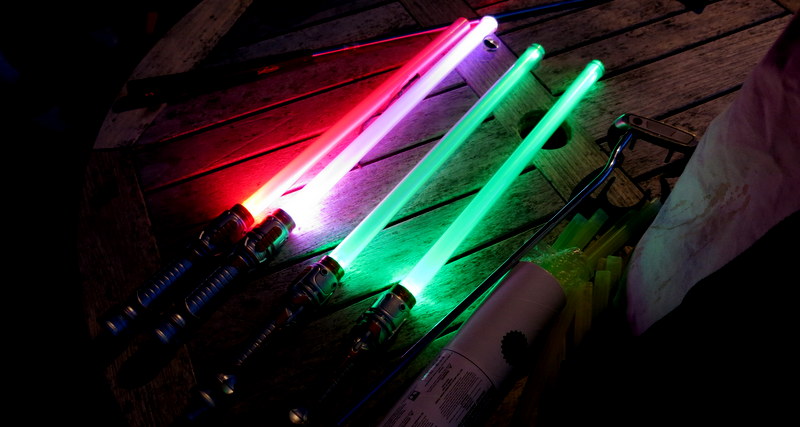
When the sky finally began to seem sort of promising, we turned on our flashing light sabers, to let them warm up.

IMG_2127

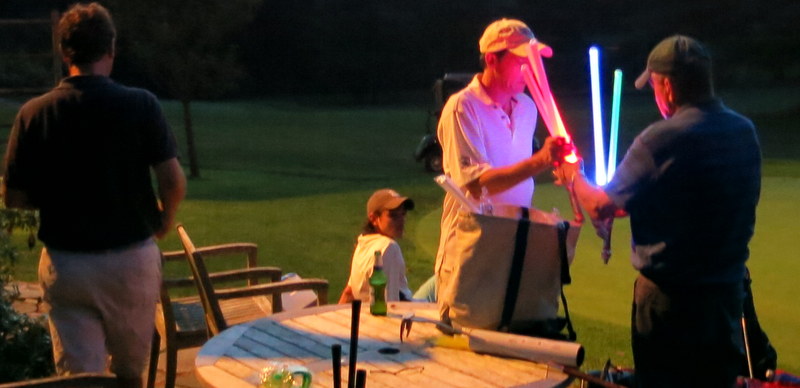
Then Hacker (real name) and Tim went out in a golf cart to place light sabers in the cups on the first second, seventh, eighth, and ninth greens, so that we’d be able to tell where the holes were. They also put glowing green rings in the bottoms of the cups.

Paul, Middle Nick, Tim, Hacker.

Paul, Middle Nick, Tim, Hacker.

Night golf has been a feature at my club for more than twenty years. For most of those years, we used translucent balls with glow-stick inserts. They were fun to play with, but they didn’t behave like real balls, and they didn’t fly anywhere near as far, and the glow sticks were sometimes hard to cram all the way in. Last year, we switched to Night Flyer balls ($70 a dozen, in six colors, at nightflyer.com). They’re self-illuminating—each one contains its own LED and battery, which isn’t replaceable but lasts for many rounds—and when they’re not lit up they’re visually indistinguishable from regular balls. You switch on the LED by hitting the ball or rapping it against anything hard, and it stays lit as long as you hit it again within eight or ten minutes, which is plenty of time to find it, even in the woods.

IMG_2152-002

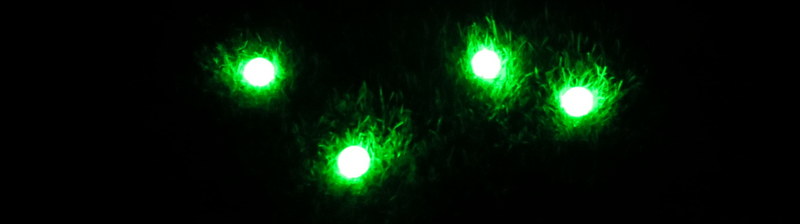
We had eleven guys. We played a scramble—each team with its own color—and we all played together. Hacker drove the beer cart. We teed up every shot, including chips, because divots are just about impossible to find at night. Here’s what the second green looked like when everyone was ready to putt:

IMG_2148-002

The red balls look the coolest, both in the air and on the ground.

IMG_2159

Austin made a brief video of someone missing a putt on the eighth green. Paul’s team had already clinched the title by then, so the miss didn’t matter.

Last year, I spoke with Pat Chapman, who is Night Flyer’s sales and marketing manager. She lives in New Hampshire but she grew up in New York, and when people give her a hard time she asks them, “Do you really want to mess with a girl from Brooklyn?” Largely as a result of her steady evangelism, night golf has rapidly grown in popularity all over the world. (“Not so much in France,” she said, “but France is France. What can I say?”) Scandinavians have been particularly enthusiastic, she added—perhaps because they spend so much of the year in the dark. She has organized full-scale night-golf events in many countries—for corporate outings, bachelor parties, wedding receptions, and other golf-appropriate occasions—and Night Flyer sells an almost comically extensive line of glowing accessories, including hole inserts, hazard stakes, tee-box markers, and black-stemmed margarita glasses. (That’s where we got the light sabers.)

What’s In My Bag: I Bought New Wedges!

Now retired: the 52- and 60-degree wedges I bought in 2005.

Now retired: the 52- and 60-degree wedges I bought in 2005. The grass and dirt you see in the grooves on the 52 were an integral part of the clubface.

Last week, as several friends and I approached the midpoint of a thirty-six-hole day, Kevin looked in my golf bag and said, “You really ought to get new wedges.” Because I do anything that people in their twenties tell me to do, I went into the golf shop between rounds and came out with two Cleveland 588-RTXs, their heads and grips still wrapped in plastic. I liked them so much that, two days later, I bought a third, and made room for it in my bag by moving my 3-hybrid into the trunk of my car. And Corey, our pro, said I really ought to replace my wedges every couple of years, so I’ve now added “BUY BUY BUY” to July 1 in my calendar in every odd-numbered year between now and the end of time.

I’m still getting used to my new clubs. The ball checks up more than it did with the old ones, even from light rough, so I’ve had to make some adjustments—although worrying about excessive backspin, for a golfer like me, is like worrying about having too many interesting things to say to Jennifer Anniston. Most of the time, I don’t even bother to clean my grooves, never mind using them to terrorize my opponents.

My new wedges. I bought the 52, 56, and 60.

My new wedges. I bought the 52, 56, and 60.

The pros sometimes cause trouble for themselves by spinning their shots too much, but it’s hard for an average player to think of that as a problem. If every approach I hit came zipping back into a bunker, I’d feel as proud as if I’d taught myself to breathe underwater. Anybody can accidentally hit the ball close to the hole; the awesome thing is to look like you’ve got an inside line on the laws of physics. I myself manage it occasionally—usually from a bunker, or on a day when the greens are soft, or when I’ve swayed so far forward during my downswing that I’ve unexpectedly hit my ball before hitting the ground—and it’s always a thrill.

Even in its truly malignant forms, ball rotation can be exciting. I once played a round with a guy who had a two-fairway slice. His wife was riding in the cart with him, and she’d never seen him play before, and when he hit an unusually spectacular banana she gasped, “How do you make the ball curve like that?” A slice is just backspin lying on its side, so we should treat it the way the guy’s wife did: with respect.

I can think of only one thing that would make me happier than routinely making balls shift into reverse. Some winter, I want the Sunday Morning Group to hire a couple of high-school kids to meet with us every weekend, in the club hall, and teach us double dutch jump rope. We’ll work and work and practice and practice, and then, at the big cocktail party in the spring, we’ll suddenly break into our routine—a dozen overweight middle-aged men doing snappers and caterpillars and buck splits and scissor jumps. We’ll blow everybody away. Here’s what we’ll look like (age-adjusted):

What’s In My Bag, Part Three: Let’s Have a Look Inside Those Pockets

Will, Brent, D.O., Ben, Liberty National Golf Course, Jersey City, New Jersey, May 5, 2013.

Famous building, Will, Brent, D.O., Ben, famous statue. Fourteenth tee, Liberty National Golf Course, Jersey City, New Jersey, May 5, 2013.

On Sunday, I had the tremendous good fortune to be invited to join a twelve-man outing at Liberty National Golf Course, in Jersey City, New Jersey, directly across the Hudson River from lower Manhattan. I employed a labor-saving technique I’ve often used during visits to other rich-guy golf clubs: I wore my sorriest-looking pair of shoes, knowing that the locker-room guy would fully resuscitate them while we were playing. During a multi-day trip Pine Valley ten or fifteen years ago, I took three sorry-looking pairs of shoes and left them outside my door sequentially. I went home feeling like a new man.

Cool clubhouse.

Cool clubhouse–and that statue again.

Liberty National was designed by Tom Kite and Bob Cupp, and it was built, in 2006, on a desolate industrial site. (I’ve seen a variety of cost estimates, all of which have nine digits.) The Barclays—which used to be known as the Westchester Classic, and then as the Buick Classic—was held there in 2009, and it will be held there again in August. Tour players grumbled about the course the first time. Since then, Kite and Cupp have made many changes, and either the changes have been effective or I don’t know what I’m talking about, because I liked the course a lot. And the clubhouse is the only starkly modernistical one I’ve ever been in that I fully approve of.

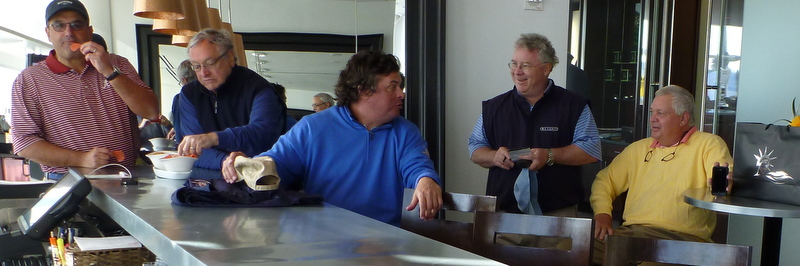
The bar, post-round.

The bar, post-round.

Partway through our round, I apologized to my caddie for having forgotten to remove a couple of nonessential items from my golf bag. (I’ve gotten a little lazy about on-course housekeeping in recent years, because at home I now almost always use a pushcart.) The bag can’t have been too bad, though, because I still occasionally carry it myself. Here is some of what was in it:

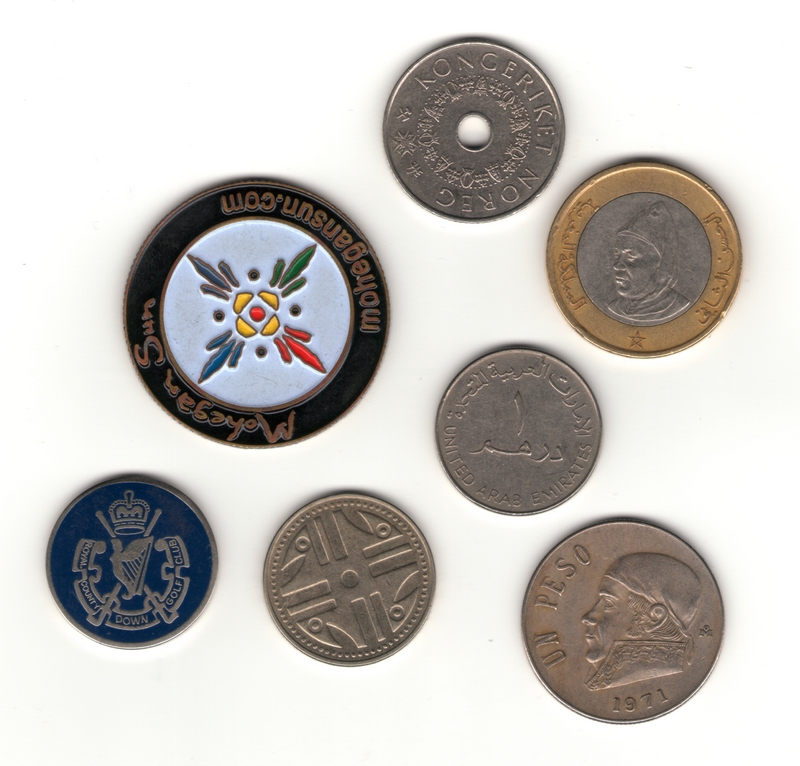
Ball markers

The photo above shows my selection of lucky ball markers for that day. Clockwise from lower left: a souvenir marker from Royal County Down, a necessity because of the sublimity, transcendence, immanence, etc., of that course; a souvenir marker from a casino in Connecticut, useful because it has four colored pointy things, any one of which can be aimed at the hole; a Norwegian coin with an actual hole in the middle of it; a Moroccan coin featuring King Hassan II, who loved golf, wore golf gloves on both hands, and was accompanied during golf rounds by a servant whose only job was to use a pair of silver tongs to hold the king’s cigarette while swung; a one-something coin from Dubai, which I often use when I absolutely have to one-putt; a big old Mexican coin with some guy on it; a Colombian coin featuring what appear to me to be balls, holes, and “aiming chutes.”

When I wrote about (a slightly different selection of) lucky ball markers, last year, I said that when I used a coin with a guy’s head on it I aimed the top the head at the hole. Michael Clark, a reader, wrote to say that, on the final day of a three-day-tournament at his club, he had discovered a better way. “The eyes of the coin had to be looking at the hole,” he wrote. “When the eyes lined up to the hole the putts were dropping! Also, it had to be the same coin. So, if the coin has eyes, line them up!” Since then, I have field-tested Clark’s method, and adopted it.

Morefar green repair tool

The photo above is of what is probably the luckiest green-repair tool I’ve ever owned. I got it at a super-secretive golf club called Morefar Back O’ Beyond, which straddles the border between Danbury, Connecticut, and Brewster, New York.

The course on the left is Morefar. The course on the right is Richter Park, which is owned by the city of Danbury, Connecticut, and is one of the best munys in the country.

The course on the left is Morefar. The course on the right is Richter Park, which is owned by the city of Danbury, Connecticut, and is one of the best munys in the country.

Morefar

Morefar used to be owned by the disgraced insurance company A.I.G. I played there a dozen years ago as the guest of one of the club’s handful of local members. Only a tiny number of golfers are allowed out each day, and the only other group on the course on the day we were there was that of the Sultan of Brunei, who teed off before we did. He and his retinue were almost comically slow, but, it turns out, you don’t play through the Sultan of Brunei. On an airplane recently, I saw a guy (in first class) who had a Morefar attaché case in his lap. I gave him the secret sign of brotherhood (by showing him my green-repair tool) as I walked past him on my way to the back of the plane, but he cut me dead.

coppertone

The item above is roll-on sunscreen, which I use as “lip balm.” The tube is at least half again as big as a ChapStick tube, and the stuff is waterproof. It’s especially handy in cold weather and in wind. I don’t carry ordinary sunscreen in my golf bag because I don’t believe in applying sunscreen in situ. I once told someone that if I ever ran for President my platform would have just three planks. I don’t recall what the first two were, but the third was that everyone would have to put on their sunscreen at home, before they went to the golf course, the swimming pool, or wherever. Sunscreen is much easier to apply when you aren’t wearing clothes, and it works better if it’s had some time to soak in. When I see young parents at the beach trying to squirt sunscreen onto squirming, uncooperative children, I think: “An hour ago, your children were naked and not covered with sand; why didn’t you think of doing this then? When I’m the President, we’ll have no more of this nonsense.”

Several readers have sent me descriptions of what’s in their own bag. As promised, I will soon create a new section and post several of them permanently. If you’d like to add your own bag to the pile, send an email to myusualgame@gmail.com. Include a golf-related description of yourself and at least one or two photos of your golf stuff.

(Read Part One and Part Two.)

What's In My Bag?

What’s In My Bag?

What’s In My Bag, Part Two: Why Two Drivers?

drivers

Ben Hogan, before teeing off at Riviera Country Club, was asked why he wasn’t carrying a 4-iron. “Because there are no 4-iron shots on this course,” he said.

Or maybe he didn’t say that. With sports anecdotes you can never be sure. Apocryphal or not, though, the point was a good one. No two golf courses are alike, so each one makes unique demands not only on golfers but also on golfers’ equipment. When Hogan benched his 4-iron at Riviera, assuming he really did, he made room in his bag for a club that he believed would be more useful on that particular course. Based on my own experience at Riviera, I would guess that the replacement was a sledge hammer, to be used for extracting wayward drives from the dense kikuyu rough.

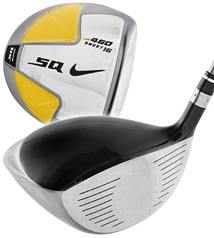
I  often tinker, Hogan-style, with my club selection, in an effort to tailor my equipment to my surroundings and my shifting abilities. My home course is short and tight, and, therefore, it usually rewards finesse more than raw power. When I play at home, I carry a putter, three wedges (60°, 52°, 46°), two hybrid irons (9, 8), six old-man hybrids (34°, 30°, 25°, 23°, 18°, 17°), and two drivers (a 10.5-degree Ping K15 and a 16-degree Nike Sumo Sweet 16—both antiques). All shafts are stiff.

Nike Sumo Sweet 16.

Nike Sumo Sweet 16.

The 17-degree hybrid and the 18-degree hybrid are both made by Nike and are both called 2-hybrids—but they’re different models, and the 18-degree one actually goes farther, although I find it harder to hit. (As I mentioned in my previous post, I think of it as a fairway wood.) It and the 16-degree driver probably seem redundant, or almost redundant, but they’re not. My longer 2-hybrid is at least theoretically easy to hit off the ground, but its head is so small that, when my ball is sitting on a tee, it gives me the heebie-jeebies, especially in the heat of competition. My course has a several short, narrow par-4s on which it might be the perfect choice for tee shots if it didn’t have a head that appeared to have been designed to slide between the bottom of a teed ball and the ground. For those tee shots, I hit my 16-degree driver, which I call Baby Driver. It goes about the same distance as the hybrid—200 yards, plus or minus ten percent—but has a head the size of a battleship. (I also have a 13-degree Mama Driver, currently in Time Out.)

During the first, stroke-play round of the men's member-guest last year, Tony, Tony's son Tim, and I carried nine drivers between us. That's my bag on the left, Tony's on the right.

During the first, stroke-play round of the men’s member-guest last year, Tony, Tony’s son Tim, and I carried nine drivers between us. That’s my bag on the left, Tony’s on the right.

When I first bought Baby Driver, five or six years ago, I used it only on short par-4s and tight par-5s. But it’s so easy to hit that, since then, I’ve found more and more uses for it. Last year, Rick and I played in a senior tournament run by our state golf association. The course had five par-3s, all of which were fairly long. I hit Baby Driver on all five of them, and in two rounds it and I were cumulatively two over par on those ten holes. In Northern Ireland last year, I hit Baby Driver on a downhill 134-yard par-3 and was the only player in our group to put a ball on the green. And sometimes I hit it off the ground.

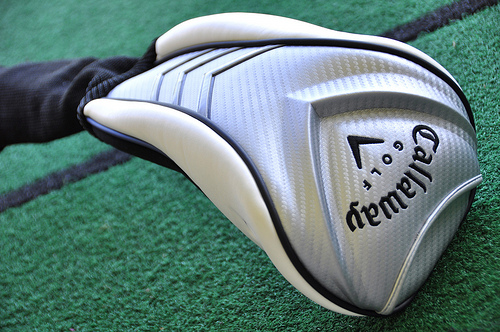
I'll address headcovers at surprising length later, but I can tell you now that I have just two of them: one for my putter, because if I don't use it the putter's saber teeth lock onto the shafts of my other clubs; and one for Baby Driver which I got from the lost-and-found box in the golf shop. Appropriately, I guess, it's for a women's driver, and it has a vaguely obstetric-seeming pouch on top. I use it to keep my two drivers from clanking annoyingly as I walk.

I’ll address head covers at surprising length later, but I can tell you now that I have just two of them: one for my putter, because if I don’t use it the putter’s saber teeth lock onto the shafts of my other clubs and are hard to pry loose; and one for Baby Driver (see photo). The Baby Driver one I got  from the lost-and-found box in the golf shop. Appropriately, I guess, it’s from a women’s driver, and it has a vaguely obstetric-seeming pouch on top. I use it only because without it my two drivers would clank annoyingly as I walked.

If at least two readers will send me descriptions (with one or more photos) of their own equipment, I will create a permanent What’s In My Bag department, and publish them there, along with any future contributions. Send all that stuff to myusualgame@gmail.com.

To be continued. (Read Part One.)

What's In My Bag?

What’s In My Bag.

What’s In My Bag, Part One: Where are the Irons?

wimbI’ve been asked by many readers—well, actually, by just one reader, but he asked twice—to publish a poor man’s version of my favorite regular feature in Golf Digest. I’ve been somewhat hesitant to do so, for who-asked-you reasons, but I also know that most golfers enjoy snooping in other golfers’ bags, and my own assortment may be peculiar enough to be of interest. So why not?  Furthermore, if at least two readers will send me descriptions (with one or more photos) of their own equipment, I will create a permanent What’s In My Bag department, and publish them there, along with any future contributions. Send all that stuff to myusualgame@gmail.com.

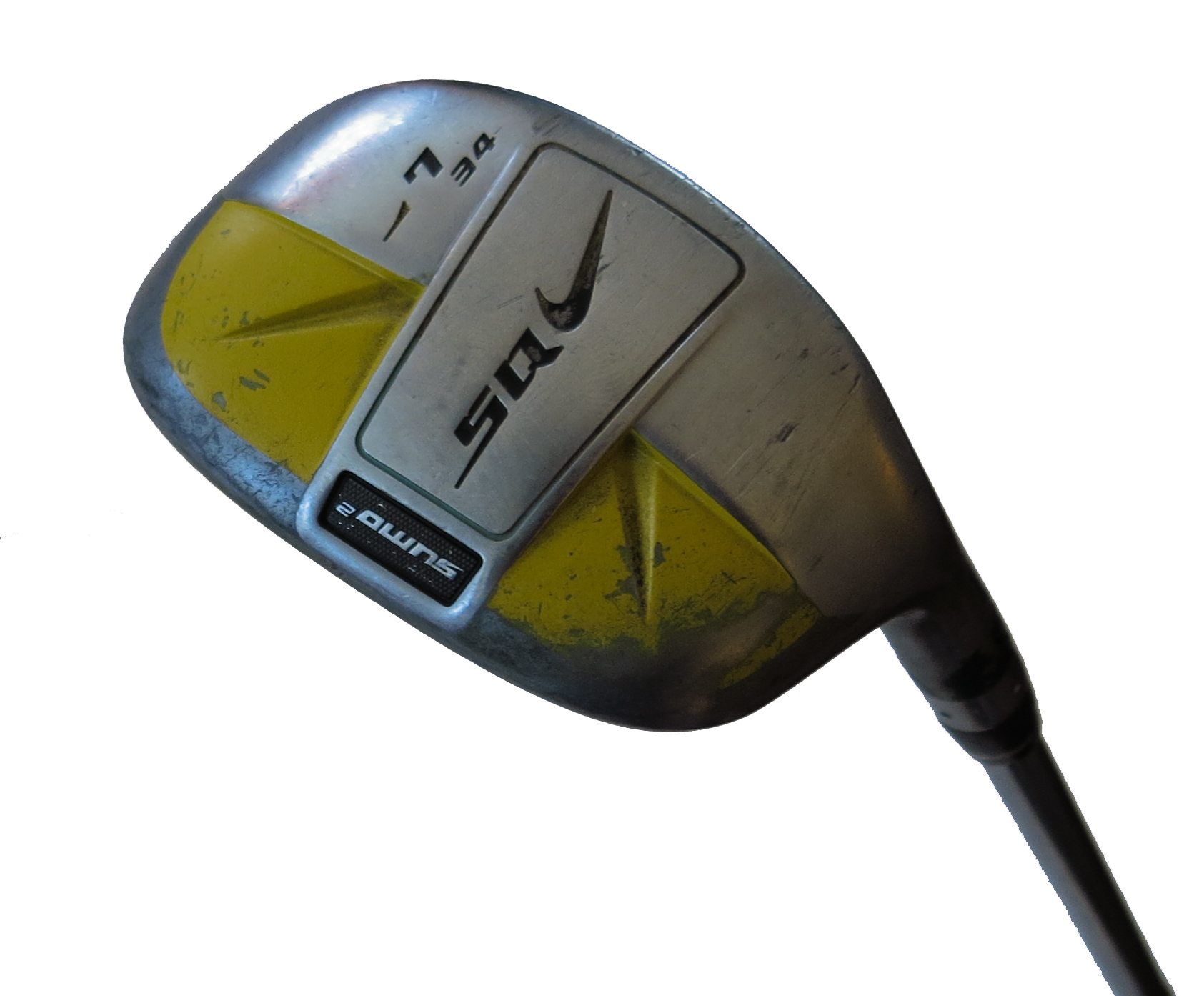
The first thing you will notice, if you have read this far, is that my bag doesn’t contain any conventional irons. My friend Tony and I now lead what we call the Hybrid Lifestyle. It consists of playing as much golf as possible while other people are at work, and not using normal equipment. It was Tony who introduced me, six or seven years ago, to what we both now think of as a magic golf club: a 34-degree 7-hybrid, made by Nike, which a single-digit friend of his had urged him to try. As Tony promised, I hit it longer, higher, straighter, and more consistently well than my 7-iron, which I’d had custom-fitted in Arizona a couple of years before, and as soon as I got home I ordered one just like Tony’s. Not long after that, Tony and I played a round with a visiting friend of his, and we used our magic clubs on a 150-yard par-3. We both hit high draws to within six feet of the hole, and the friend said, “Gee, you guys could play on the L.P.G.A. Tour.” He meant to be devastating, but I’ve adopted his remark as a swing thought.

This is the magic golf club. Nike not only doesn't make it now, but also, according to Nike, never made it the past. (Tony Dabbs told me the company had never made a 34-degree hybrid.) Tony and I know better.

This is the magic golf club. Nike not only doesn’t sell it now, but also, according to Nike, never sold it the past. (A Nike rep told me the company had never made a 34-degree hybrid.) My friend Tony and I know better.

Almost everyone now agrees that low-numbered hybrids are easier to hit than the corresponding long irons. That’s true even for pros, who stopped carrying 1-irons years ago, and now often don’t carry 2-irons or 3-irons, either. But Tony’s and my experience has convinced me that the hybrid advantage extends deep into the bag, and that hardly anybody carries enough. I would bet that’s true even of many tour players, but it’s definitely true of golfers who aren’t paid to play. Today, Tony’s longest iron is a 9. Mine—now that I’ve supplemented my six Nike hybrids with two Cleveland HB3 “hybrid irons”—is a pitching wedge. As a result, I’m convinced, we’re both now playing our best golf ever.
(I’m not sure I like the HB3s; they make a weird noise when you hit them, causing even pure shots to sound like chunks. But I like being able to say I don’t have any irons. Tony calls his 9-iron his 1-iron, because it’s his one iron—get it?)

The great Karsten Solheim.

The great Karsten Solheim.

Almost twenty years ago, I got to spend time with Karsten Solheim, the founder of Ping, who invented the modern, perimeter-weighted golf club. Solheim told me that hitting a ball with an old-fashioned club, in which the weight of the head was uniformly distributed along the blade, was “like hitting a tennis ball with a Ping-Pong paddle.” A similar principle applies to hybrids. Tony Dabbs, a Nike product line manager, told me, “With a hybrid you’ve got a lower and deeper center of gravity, so it gets your launch angle up—more than what an iron can possibly do. A hybrid is essentially a mini-fairway wood, or a small driver.” The weighting and the shape of the head also make a hybrid easier to hit well out of the rough, since the club is less likely to twist. Dabbs told me that the advantage is greatest for slower swing speeds, but I think stronger players gain, too, and that that benefit compounds over time because once you begin hitting decent shots with a comfortable swing you’re less likely to lash at the ball from over the top with any of your clubs.

Tragically, from my point of view, Nike no longer makes SQ Sumo2 hybrids, which I prefer to all subsequent models. (I do carry a second 2-hybrid, a Nike VR S model that Nike also doesn’t make anymore. It goes farther than my other Nike 2-hybrid, although I find it harder to hit well. I think of it as a fairway wood, which it resembles.) And Nike no longer makes even a 6 hybrid. (Dabbs told me there’s “a point of diminishing returns” as lofts get higher. Hmph.) If you’re a seller—right hand, steel, stiff—please speak up.

To be continued. (I’m going to stretch this out for quite a while. Next, I’ll explain why I’ve got two drivers.)

How to Watch the Masters on TV

This diagram is from the program of the first Masters, in 1934. It shows what were then the first and second holes, and are now the tenth and eleventh. Both holes have changed dramatically since then, but the elevations give you the basic idea.

This diagram is from the program of the first Masters, in 1934. It shows what were then the first and second holes, and are now the tenth and eleventh. Both holes have changed dramatically since then, but the elevations in the drawings give you the basic idea.

Every golfer should make every effort to get to Augusta National during Masters Week at least once. Television doesn’t do justice to the topography of the course. The drop in elevation from the tenth tee to the eleventh green is more than a hundred and fifty feet—fifteen stories. Once you’ve studied the place in person your brain can supply the missing third dimension when you watch on a flat screen at home.

That’s what I’m doing this year. I love being on the grounds during the tournament, but I don’t feel deprived when I watch from home. The Masters is the last unscrewed-up major event in sports, and the CBS broadcast is sublime. And if you stay home you can play golf with the gang while you wait for the show to begin.

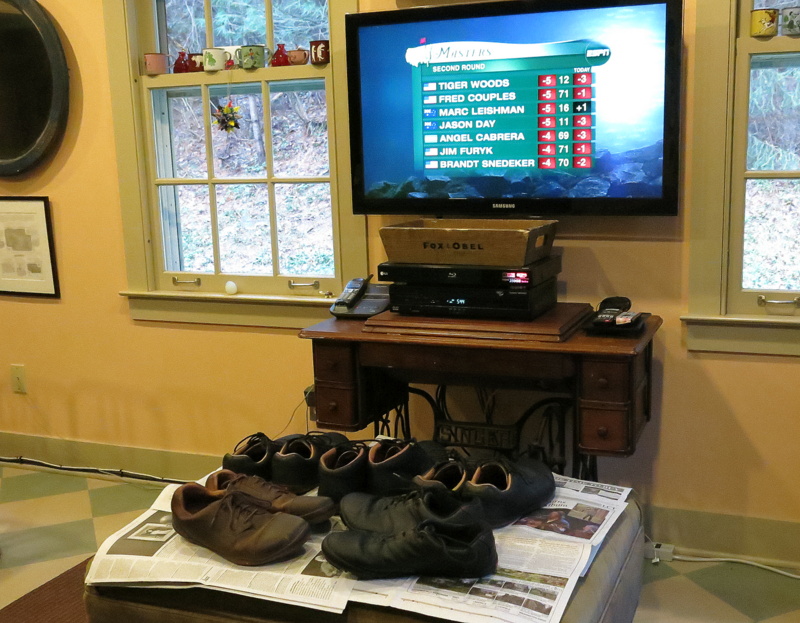
The only challenge is to find something productive to do with your hands while you watch. On Friday afternoon, as Tiger was climbing the leader board, I polished all my golf shoes. Then I polished them again—an afternoon well spent.

IMG_0965

Tomorrow afternoon (after paintball with some friends from high school and college) I’m going to clean the grooves of my clubs.

[Just as I was posting this, Tiger made that extraordinary third shot on the fifteenth hole—the one that hit the flagstick and spun back into the water. That shot was unlucky but it was not, as David Feherty claimed, “unfair.” Nor was Tiger “cheated” by it (Feherty again). The flagstick was stationery, and it was in place when he lined up his shot. Golfers capable of hitting inch-wide targets from eighty yards away may need to aim a few inches to the right or left, but they’re not entitled to feel ripped off. And, Feherty notwithstanding, I would bet that Tiger doesn’t.]

The Metaphysics of Ball Retrievers

retriever

There is a point of no return in a golfer’s life, and an older friend passed it. I knew he had, because I saw the evidence in his bag. It was right between his three-wood and his umbrella.

It was a ball retriever.

My friend used to play pretty well. He never won the club championship, but in his prime he was one of the guys a champion had to beat. In a nassau, you wanted him for a partner. In a scramble, you wanted him on your team. He would go for the green in two on a par-five, and he would sink a putt that mattered. He was, locally, a player.

Then his game began to turn. His draw faded. His fade sliced. He stopped signing up for tournaments. The putts that he gave (and therefore showed that he hoped to be given) crept into the leather, and then beyond the leather. Gradually, his focus as a golfer shifted from the hole to the pond.

Golfers who carry ball retrievers are gatherers, not hunters. They’ve given up the chase. They’ve climbed as far up the hill as they can climb, and now the paths lead only down. They’ve stopped tinkering with their grip. They don’t practice in the sand. Their dreams are no longer of conquest, but only of salvage.

Golfers who carry ball retrievers don’t walk down the center of the fairway anymore. They go the long way, through the tall grass, because that’s where the lost drives hide. They stir the weeds with nine-irons as they pass. When they step on something round, they freeze. Instead of searching the treetops for a change in the wind, the way they used to, they let their eyes drift lower: there are balls in the woods. If no one is pressing them from behind, they leave their bag and walk along the creek. By the end of the morning, their pockets are bulging. They will never buy another sleeve.

I used to know a man who still played a little but was just as happy not to. On Friday afternoons, I would see him in the marsh to the right of the first fairway. There’s a shallow, silt-choked pond back there. He wore rubber boots that came up to his knees. Most of the balls he found were dark and heavy, but he didn’t throw many back.

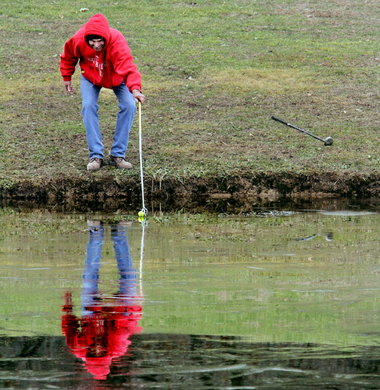
His hoard of balls, which he kept in the trunk of his car, was sure to outlast him. But he wasn’t thinking about that. Suddenly, he glimpsed something pale in a spot too deep for wading. He extended his ball retriever and threaded it through the cattails. He braced his boots in the muck and reached as far as he dared into the darkness at the bottom of the pond.

Earliest Known Photo of My Father Playing Golf: 1927

My father trying golf in 1927, with a corner of my grandmother's rose garden in the background.

My father trying golf in 1927, with a corner of my grandmother’s rose garden in the background.

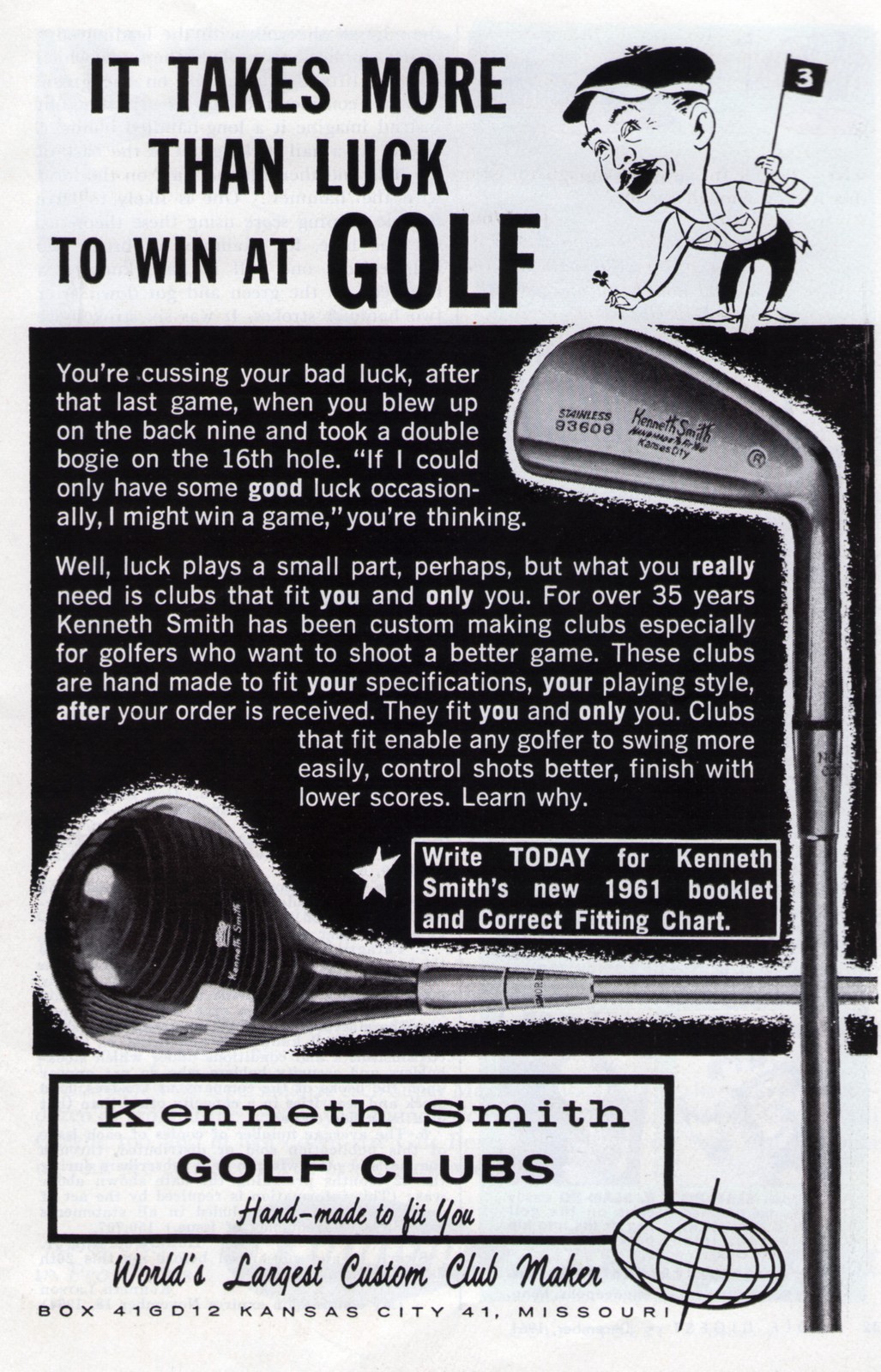
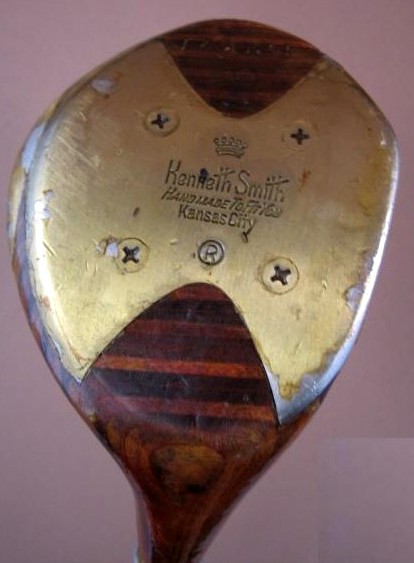
He was two, and his grip was close to the one he used as an adult. I took up golf in my mid-thirties, and when my brother watched me hit a weak slice with a five-iron, shortly after I’d started playing, he said, “You’re already the second best golfer in the family.” The clubs in the photo belonged to my grandfather, who was a decent player. They were custom-made by Kenneth Smith, who was also from Kansas City and hadn’t been making golf clubs for very long. Among the other golfers who played with Kenneth Smiths, eventually, were Bob Hope, Sammy Davis, Jr., Mickey Mantle, Lyndon Johnson, Dwight Eisenhower, and the King of Morocco. I played golf a little when I was twelve and thirteen, and the driver I carried (which I hated) was a cut-down Kenneth Smith.

Here’s a Kenneth Smith advertisement from the December 1961 issue of Golf Digest:

GD Kenneth Smith 12-61

My father underwent major surgery when he was in his seventies, a few years before he died. The operation lasted for six hours, and he ended up with sixty-one staples in his abdomen. When he finally began to come around, a couple of days later, the doctors had to put restraints on his arms to keep him from inadvertently ripping out various tubes and catheters and monitoring devices. He was on a ventilator for a while, too. It was a rough time for him, and an even rougher one for my mom, who, after all, was conscious through it all. She was at his side when he opened his eyes. The first thing he said, in a voice that was weak but filled with hope, was “Am I at the country club?”—exactly what I would have asked in the same situation.

Kenneth Smith

Bowling as Wintertime Golf Methadone

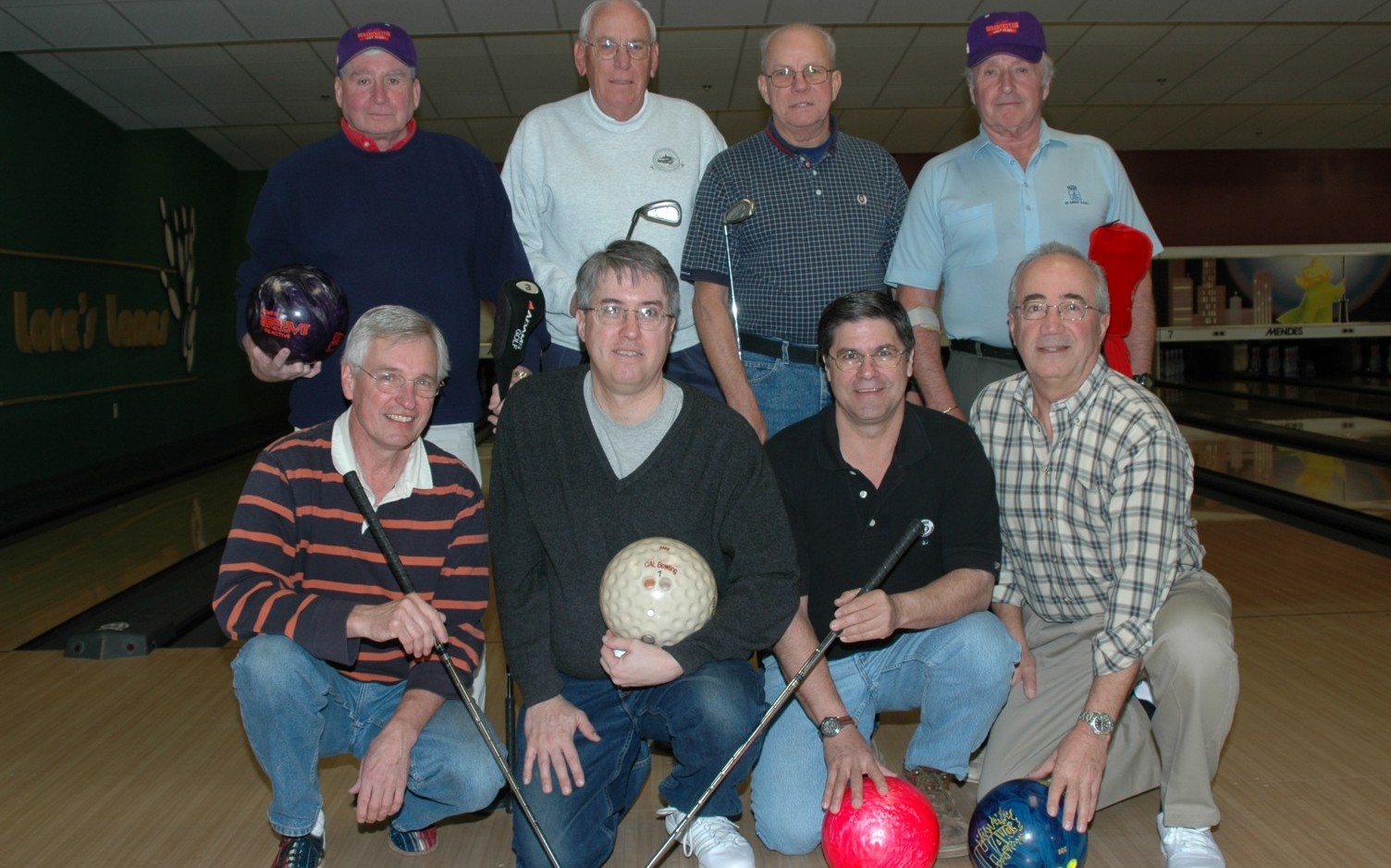
SMG BowlingEight years ago, my regular golf buddies and I decided that, instead of moping around all winter, as usual, we would go bowling. Eight guys showed up the first Sunday. Ferris, it turned out, had bowled in high school, and Billy had been a member of a hippie team in college. Nick and Gene already owned their own balls and shoes. Ray brought his old ball but couldn’t use it because his fingers no longer fit into the holes.

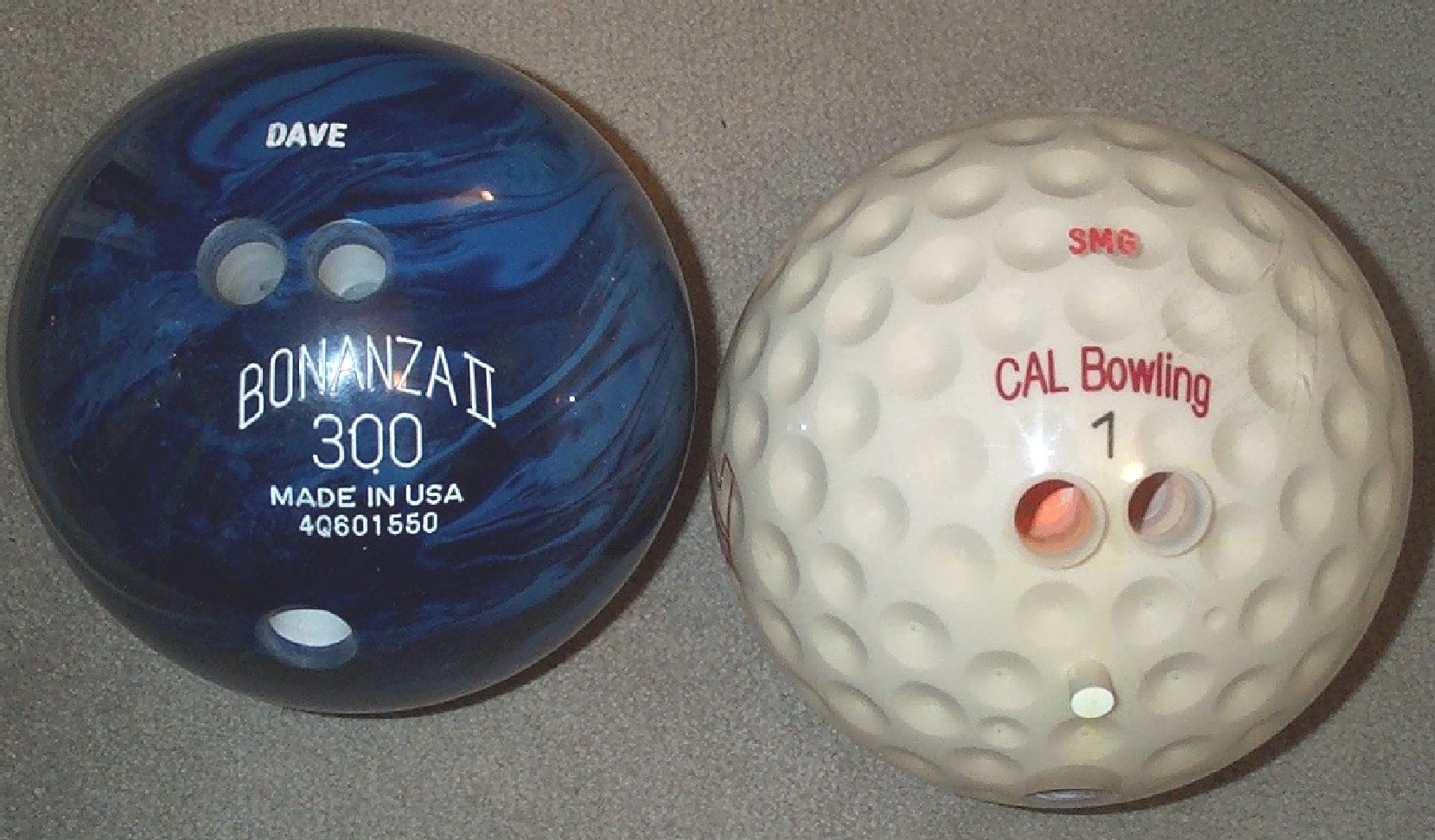
As soon as I got home, I went online and ordered bowling shoes, a bowling instruction book, and a bowling ball that looks like a giant golf ball. Two weeks later, I bought a second ball (with more spin) and a two-ball bag, to which I attached my golf-club bag tag. I had my name engraved on one of the balls, and “SMG” (for Sunday Morning Group) engraved on the other.

bowling ball

Taking up bowling was like discovering a previously unsuspected continent of things that you can buy. (Did you know that good bowling shoes have different right and left soles—one to grip and one to slide?) We transferred over all our regular junk, including skins, negative skins, nassaus, presses, and the money hole. We bowled in golf clothes and golf hats. We referred to frames as holes and to games as rounds. We used golf towels to wipe lane oil from our balls. I even managed to preserve most of my swing flaws: I came over the top in bowling, too.

I created an Excel spreadsheet that automatically updated everybody’s average and handicap whenever I entered new scores. In one of our earliest outings, after shooting a depressingly characteristic 82, I had six consecutive strikes, a spare, another strike, and two nines, for 226. Hacker (real name) said, “Aren’t you kind of sad that you’ve already shot the best round you’ll ever shoot?”

A bowling alley is one of the few sporting venues where a golfer can feel almost like an athlete. There were so many smokers at one of the ones we went to that even the parking lot smelled like cigarettes. Most of the regulars, who gave us dirty looks when we collapsed in hysterics over somebody’s double gutter ball, had very low centers of gravity—they were shaped like bowling pins—and their bowling bags had  wheels on them. The specialty at the snack counter was panzarotti, which is made by combining all the things your doctor tells you never to eat and deep-frying them.

Bowling is fun, but it’s just golf methadone. We bowled for two winters, but then winters around here started seeming more like late fall or early spring. We found several open golf courses within an hour or two of where we live, and they made us forget all about our fancy bowling shoes. This winter, though, we’ve had a couple of big snowstorms, including a huge one this past weekend. We’re probably not going to see grass around here again for a while, even if it doesn’t snow this coming weekend, the way it’s supposed to. So who knows?

smb reminder