Donald Trump Goes to Ireland

doonbeg-001

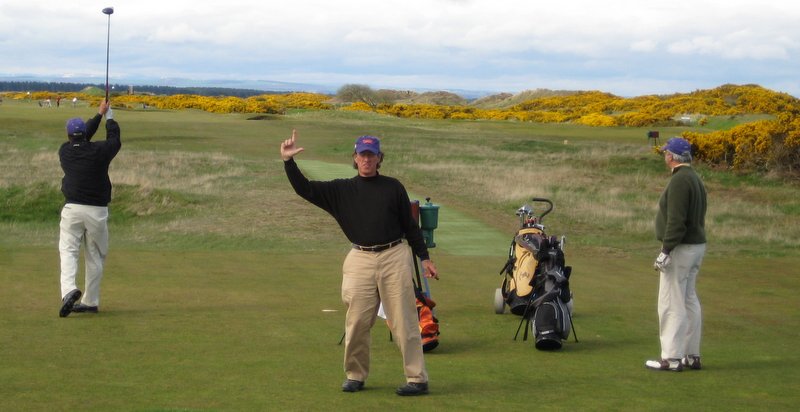
In 2006, I traveled to Ireland with three other Golf Digest editors, and among the courses we played was Doonbeg, about an hour and a half down the coast from Lahinch. (A useful rule of thumb, when estimating travel times on older Irish roads, is to think of the kilometers as miles, and multiply by two.) In the magazine I wrote that, after playing the course twice, I wanted to take back nearly every unkind thought I’d ever had about Greg Norman, who designed it. Several of the holes, I said, were permanently memorable, including the teensy but murderous fourteenth, a par 3, which has a green scarcely large enough to contain a foursome (shown above).

doonbeg lodge

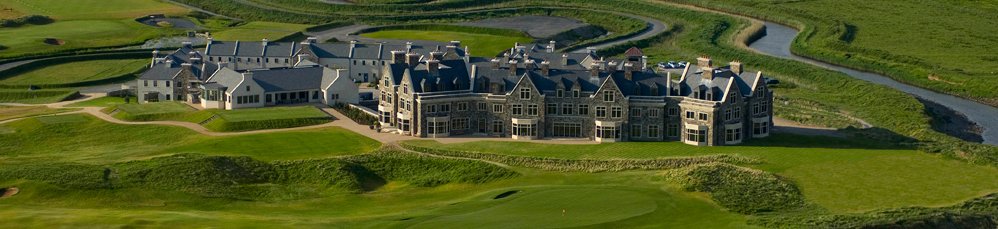
The only part of Doonbeg I didn’t care for was the club itself, which, in contrast to the course, seemed distinctly overdetermined. Doonbeg was created, in 2002, by Kiawah Development Partners, of Kiawah Island, South Carolina, and there was a powerful American-style screw-you quality to many of the amenities, both inside the huge gray-stone clubhouse (where golf balls in 2006 were selling for a hundred dollars a dozen) and on the grounds beyond the course, where the walls bordering the endless private drive had been draped with sod that appeared to have been cut on Savile Row. Well, reality finally caught up with the owners, and the property went into receivership in January. Last month, the whole thing sold, for about twenty million dollars, to my close personal friend Donald Trump, who subsequently sent a letter to Doonbeg’s (mostly non-Irish) members and apartment owners. Here’s the first part of his letter:

Trump letter

A downside with Trump is that he names or renames everything after himself. But the rest of us can continue to call the course Doonbeg, and I think the members and the Irish and golfers in general ought to be pleased, because, as Trump demonstrated at Doral last week, when he buys a struggling golf property he doesn’t fool around. No matter what you think about him, he has been extremely successful—and shrewd!—at cleaning up golf messes made by other people. So good for him.

Some of the en-suite luxuries in my room at Mar-a-Lago, where I spent one night in 2012.

Some of the en-suite luxuries in my room at Mar-a-Lago, where I spent one night in 2012.

Mardi Gras Report: Golf Solves a Beer Problem

Mardi Gras beer-001

Matt Manco, a reader in New Orleans, writes:

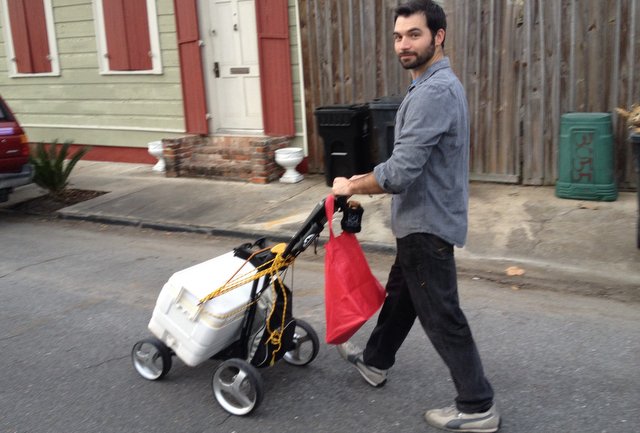
Second only to bathroom proximity, the main concern of Mardi Gras planning is how to get drinks to the parade. This year, our answer was my Sun Mountain Micro-Cart (thanks for the recommendation), which has been taking up space in my office while I recover from a herniated disc. With no golf in my near future and a long haul with a heavy cooler coming up, I started working on a harness system to take some stress off the cart and keep the beer in the cooler.

Beer cart co-inventor Spencer, with test load. Note the innovative use of the golf-bag stabilizer arms as a super-secure articulated cup holder. Also note that the cart is still furnished with golf tees, just in case.

A friend of Manco’s, with a test load. Note the innovative use of the golf-bag stabilizer arms as a super-secure articulated cup holder. Also note that the cart is still furnished with golf tees, just in case.

This cooler (Go Tigers!) was the best fit of the options on hand. A few small bungee cords on each side and twenty-five feet of sturdy rope kept the cooler from sliding, slowing us down, or—worse—falling off the cart and shaking our beer. We were surprised that the Micro-Cart maintained most of its agility, despite the extra weight and the altered center of gravity. Turning took a little planning, and pushing it on cracked sidewalks was out of the question. The lack of maneuverability wouldn’t matter as much in a well-paved city, but New Orleans, being the unsettled swamp it is, will never have smooth roads.

Manco and his invention, Mardi Gras 2014.

Manco and his invention. The red bag is for recyclables.

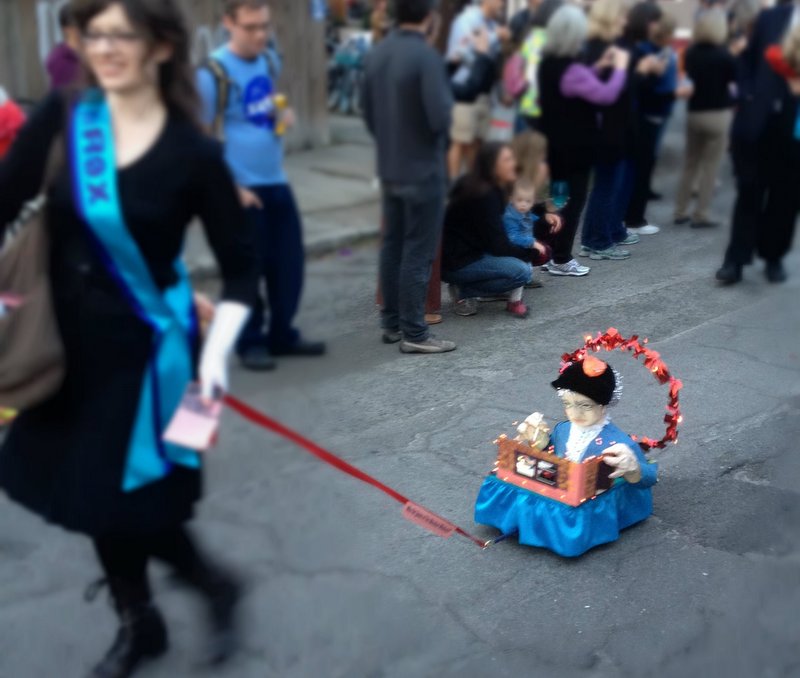
Manco is a fan of a Mardi Gras parade organized by TitRex, a so-called “micro-krewe,” which, he writes, features “shoe-box-size designs that are meant to imitate, elevate, and irritate the creators of the much larger floats, which are pulled by tractors.” You can read more about TitRex here.

manco mardi gras 1Manco continues:

Enough ice melted during the parade to allow us to lighten our load and free up the movement of the cart on the walk home, making two-wheel turns an option again. We saw several people pulling beer in red wagons, but none of those had cup holders, umbrella holders, koozie pockets, or handbrakes, so we’ll keep the Micro-Cart in action for another year.

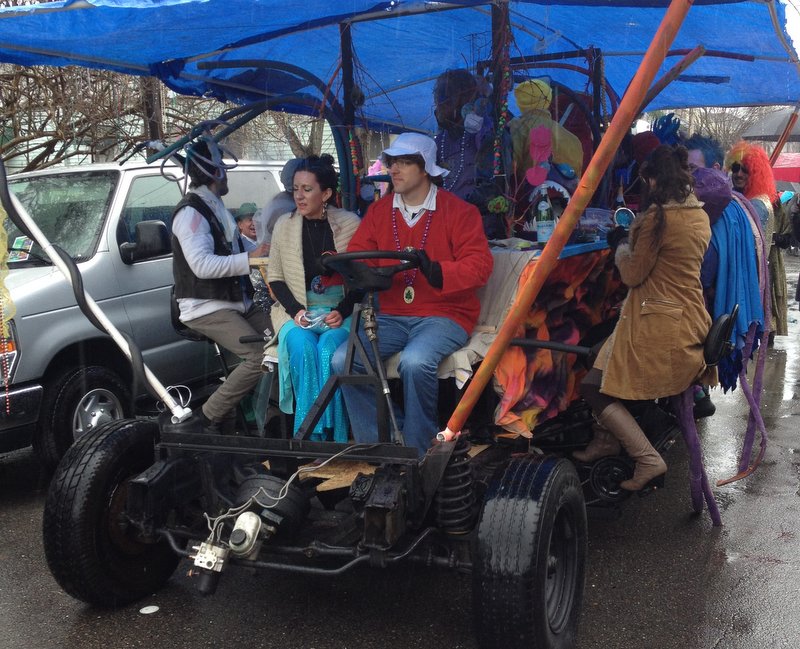
This float is pedal-powered, by what appear to be long-tailed galley slaves. There may be a golf application.

This float is pedal-powered, by what appear to be long-tailed galley slaves. There may be a golf application, though probably not at this size.

Mardi Gras celebrants who were less inventive than Manco and his friends didn’t necessarily have to watch the parade sober. Here’s an industrial-grade version of the Micro-Cart beer trolley, operated by a street vendor and scowled at by a group of sign-bearing non-golfers:

Beer vendor, mardi grasNow, back to waiting for winter to end.

Is This the Ideal Lunch for a Golfer?

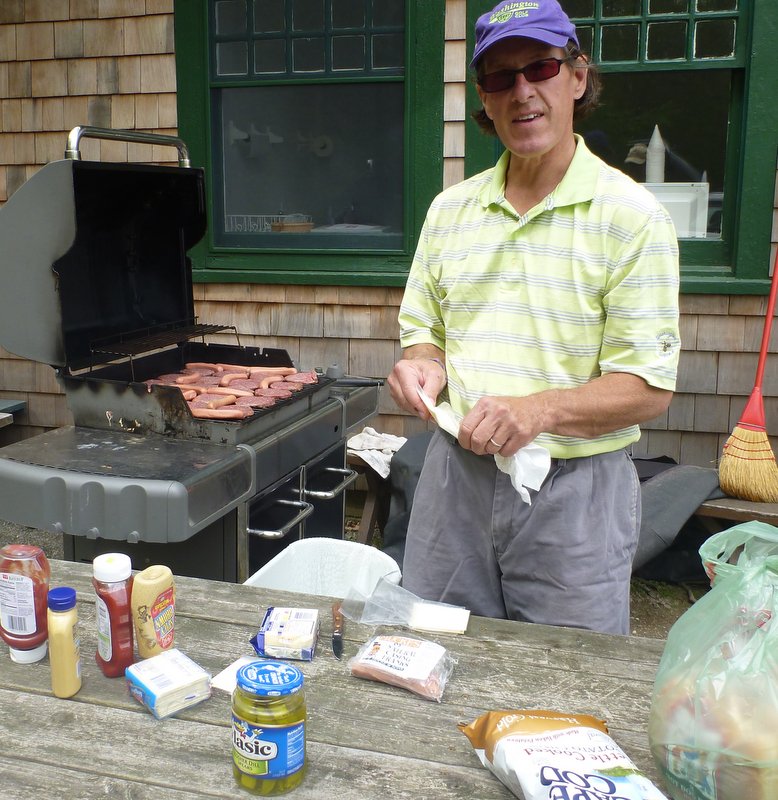
Barney, making lunch, May, 2012/

Barney, making lunch, May, 2012.

One reason my golf club is the best golf club in the world, as I may have mentioned previously, is that we don’t have a restaurant. Our clubhouse has a kitchen, and there’s a grill in the executive parking lot, outside the men’s room, but members don’t have to pay a food minimum, and we don’t have a clubhouse dining room where our wives don’t like to eat. On Sunday mornings, we take turns bringing cheeseburgers, hot dogs, and chips for everyone, and everyone brings whatever they want to drink, and that’s it. Almost everyone almost always eats both a cheeseburger and a hot dog—and because they do it occurred to me that we could further streamline our lunch operation by combining those two elements, the way they do at Wimpy’s, in England:

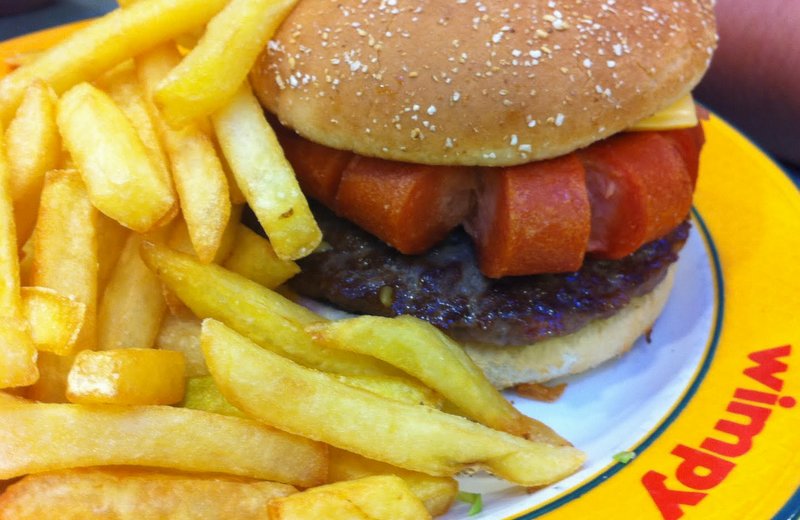
wimpy mega burgerI saw that sign in Southport during a golf buddies trip in 2010. The price may have gone up since then, but the concept is strong. Here’s a Mega Burger that hasn’t been dressed up by a food stylist:

Ignore the fries. We don't have those.

Ignore the fries. We don’t have those.

The ideal thing, I guess, would be to get the potato chips in there, too, under the bun. There’s room, because, although the hot-dog part looks like a disk, it’s actually a ring. I assume that someone is working on that.

wimpy and popeyeYou may have wondered why the characters in old Popeye cartoons are always sort of babbling under their breath (assuming you wasted your youth on TV cartoons, as I did). The reason is that the animation was done before the soundtrack was recorded, and the vocal performers had to fill in the gaps with muttering. (Cartoons aren’t made that way nowadays.) Here’s an example:

Masters Countdown: The Plan to Demolish Augusta National’s Clubhouse

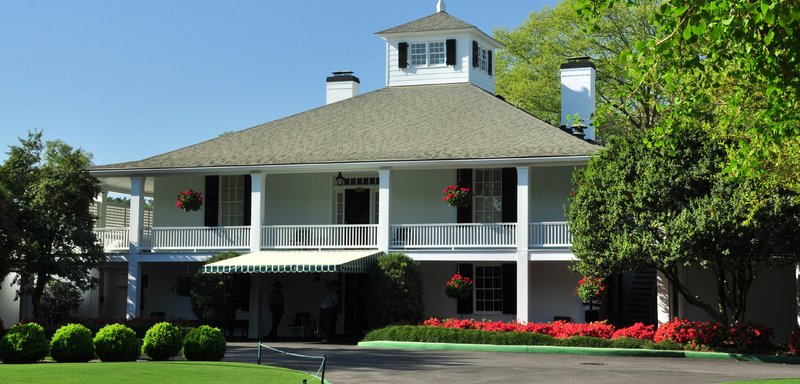
ANGC clubhouseThe original plans for Augusta National Golf Club called for two eighteen-hole golf courses—a Championship Course and a Ladies Course—plus tennis courts, outdoor squash courts, an eighteen-hole pitch-and-putt course, a bridle path, a couple of dozen houses for members, and, possibly, an on-site hotel. In addition, $100,000 was to be spent on a clubhouse—which was needed because the existing manor house, which had been built in 1857 by a horticulturalist and nurseryman named Dennis Redmond, was going to be torn down.

Redmond manor house, 1800s.Redmond was, in addition to a planter, an architectural historian and an editor of an agricultural publication called The Southern Cultivator.  His house had eighteen-inch-thick walls made of concrete, a material that before that time had not been used in residential construction in the south; Redmond called it “artificial rock.”

Redmond’s house, post-Redmond, in the 1800s. Redmond was, in addition to a nurseryman, an architectural historian and an editor of an agricultural publication called The Southern Cultivator. His house had eighteen-inch-thick walls made of concrete, a material that before that time had not been used in residential construction in the south; Redmond called it “artificial rock.”

It seems unimaginable today, but demolishing the old manor house wouldn’t have been a reckless act. Although the building looks imposing in photographs, it’s quite small. Much of its apparent bulk comes from its porches, which are nine-and-a-half feet deep and run all the way around on both floors, and from large wings added later on each side. In 1931, the building had fourteen rooms, but most were cramped and dark, and there was no kitchen, no electricity, and no plumbing. The ground floor had been referred to by the builder as a “basement,” and it looked like one. A consulting engineer, after making an inspection, concluded that most members “would probably be better satisfied in a modern building with all modern conveniences.” Few disagreed.

ANGC clubhouse old-001

Clifford Roberts and Bobby Jones, the club’s co-founders, hired Willis Irvin, a local architect, to draw plans for a new clubhouse. A detailed rendering of his design appeared in the Augusta Chronicle in 1931:

The clubhouse that was never built, designed by Willis Irvin, a prominent Augusta Architect. I apologize for the appalling quality of the image, which is a scan of a photocopy of a microfilm print of a newspaper photograph of a drawing.

This is the Augusta National clubhouse that was never built. It was designed by Willis Irvin, who died in 1950. I apologize for the appalling quality of the image, which is a scan of a photocopy of a microfilm print of a newspaper reproduction of an architectural drawing.

The building was to have two large wings, an exterior of white-painted brick, a slate roof, several impressive chimneys, and a vast neoclassical portico supported by four tall columns. The most striking feature was to be an enormous men’s locker room containing four hundred lockers, some double and some single. According to the Chronicle, Jones had been involved in the planning, and the locker room was going to incorporate “the best features of the clubs he has visited.” There were to be nooks and corners in which golfers could gather before, after, and between rounds to play cards, drink gin, eat lunch, watch the action on the course through large bay windows, and converse. A separate wing was to contain similar facilities for women.
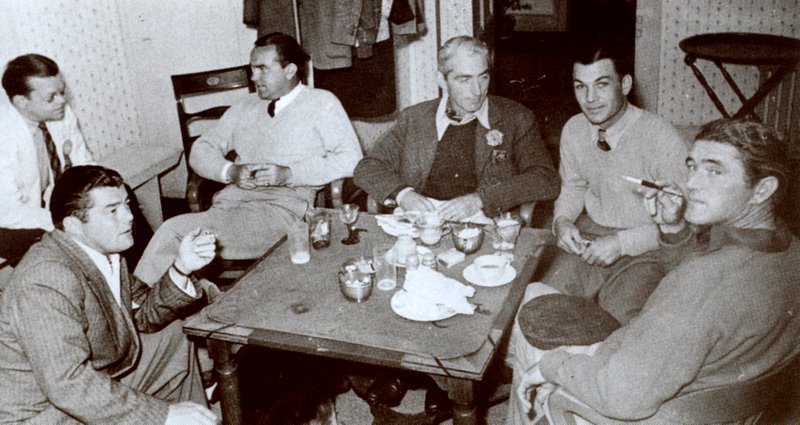
Early Masters competitors did more between-rounds drinking and smoking than they tend to do nowadays. Clockwise from the lower left, these people are: Lawson Little, Charlie Bartlett (the golf editor of the Chicago Tribune, after whom the press lounge in the media building at Augusta National was named), Billy Burke, Tommy Armour, Ben Hogan, and Olin Dutra.

Masters competitors did more between-rounds drinking and smoking in the early years than they do nowadays. This photo is from the second tournament, in 1935, when the clubhouse was still a dank mess. Clockwise from lower left: Lawson Little, Charlie Bartlett (the golf editor of the Chicago Tribune, after whom the press lounge in Augusta National’s media building was later named), Billy Burke, Tommy Armour, Ben Hogan, and Olin Dutra.

You can’t see much detail in the poorly reproduced newspaper image higher up in this post, but several of the private houses that Willis Irvin designed were similar to what he had in mind for Augusta National. (According to the South Carolina State Historic Preservation Office, he specialized in “elegant rural estates,” often “built for wealthy northern clients” who wanted winter residences in the South.) The Irvin house in the photo below, called White Hall, is in Aiken, South Carolina. It was built in 1928, and in many ways it’s a scaled-down version of what he proposed for Augusta National:
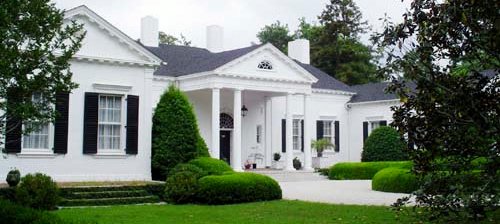
S1081770202302-001

Here’s another similar Irvin house, from Hartsville, South Carolina, built about 1931:
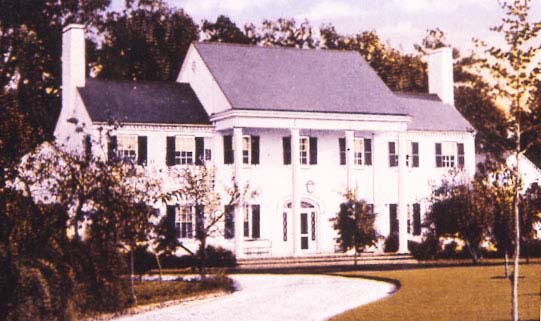
CokerAnd here’s the back of Irvin’s own house, in Aiken, which was built in 1855 but which he enlarged in 1930, by adding the wings. (He liked wings.)

Irvin House

Not everyone was eager to tear down the old manor house. Harry M. Atkinson, of Atlanta, who was part of Augusta National’s tiny group of early members, wrote to Roberts in 1931 to say that he and his wife loved the building and believed it should be renovated rather than razed. “We both were greatly impressed with the avenue of magnolias leading up to the old Berckmans residence and the planting around the house,” he wrote. (Prosper Berckmans, a Belgian horticulturalist and landscape architect, had bought the property from Redmond in 1858 and turned it into Fruitlands Nurseries, which by 1931 had been out of business for a little more than a decade.) “We think that all of that, including the house, ought to be preserved carefully,” Atkinson continued. “It can be made a perfect gem, using the old house for a club house. You could not reproduce what is there for any amount of money.”

ANGC old

Atkinson also said that he felt “a great many golf clubs” had been ruined by the construction of “club houses that are too elaborate and too luxurious”—an observation that may be even more apt today than it was then. In response to Atkinson, Roberts wrote that that the house would be hard to save but that, for financial reasons, nothing was likely to be done in a hurry. Still, early master plans for the Augusta National property included a “Site for Club House”:
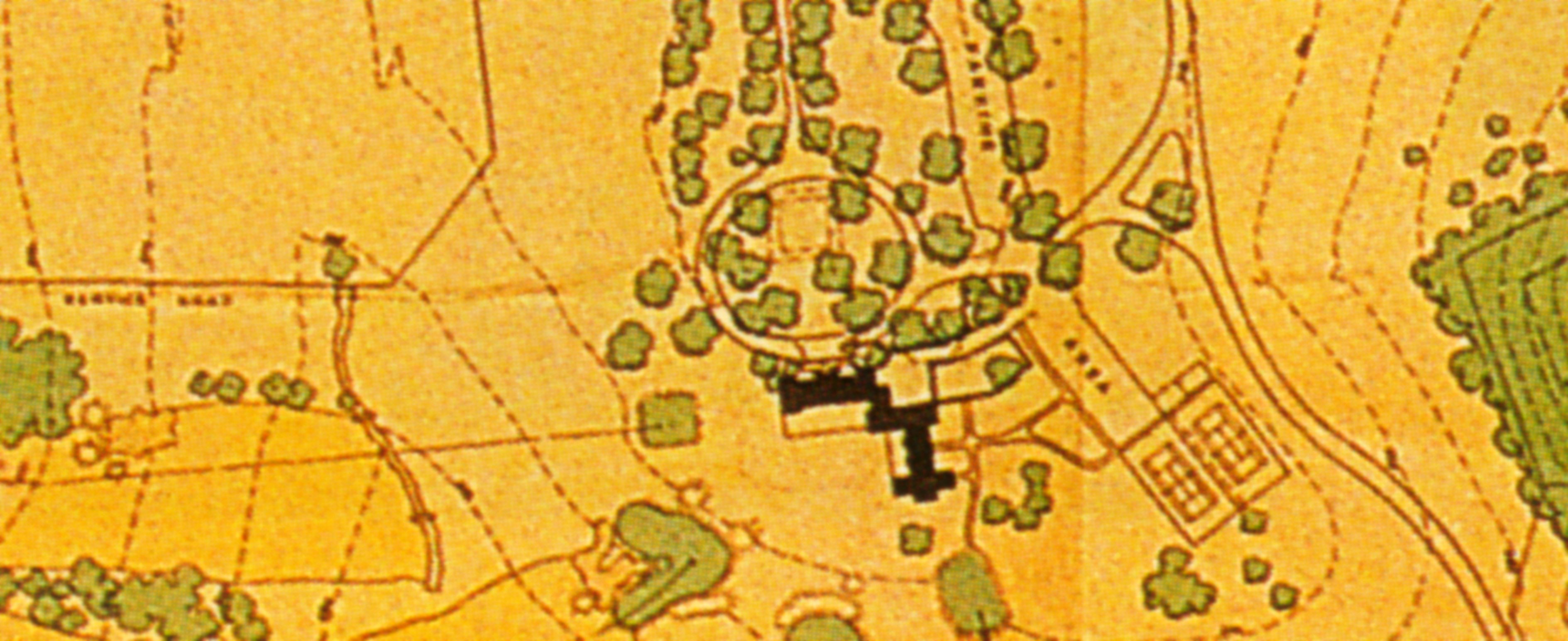
plan showing clubhouse site

The image above is a detail from a subdivision plan prepared by Olmsted Bros. in 1932. The footprint of Irvin’s proposed clubhouse is shown in black. Just above it is the driveway circle, which still exists, and the near end of Magnolia Lane; to the left is the first tee; at roughly eight o’clock (shaped like upside-down rabbit ears) is the ninth green; directly below the clubhouse is the tenth tee; to the right are the proposed tennis courts. Here’s some of the same area as it actually appeared a couple of years later, in a photograph taken from an airplane:
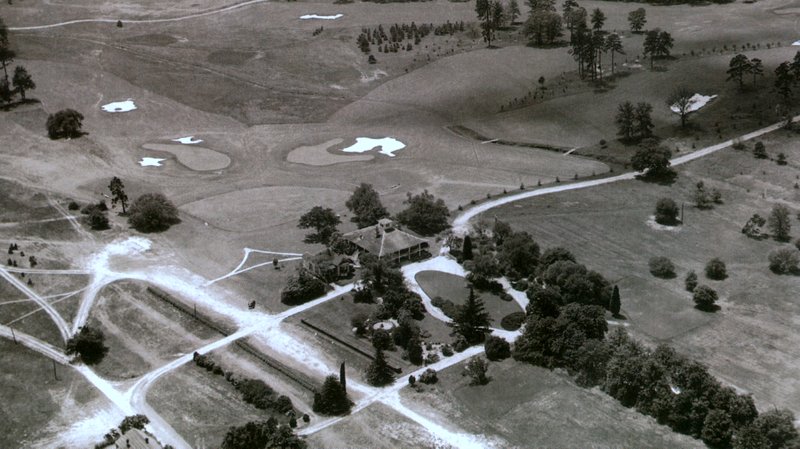
aerial view ANGC 1934

The demolition plan would have proceeded if the club had had the money to carry it out. But Roberts and Jones were unable to sign up more than a handful of members, and therefore had to make do with their crumbling old manor house (and no tennis). Thank goodness.
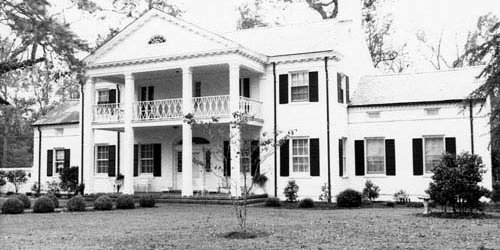
Another of Irvin's designs--this one from Hartsville.

Another house designed by Irvin, also in Hartsville. This one was built in 1934, the year of the first Masters.


angc postcard

Reader’s Trip Report: Golf Simulators in Seoul, South Korea

Golfzon simulator locations near Cory Olson's office, in Seoul's Gangnam District.

Golfzon simulator locations within a five-minute walk of Cory Olson’s office, in Seoul’s Gangnam District.

Cory Olson, a reader in Seoul, South Korea, writes:

While I don’t have any data, I’m fairly confident that South Korea has the most golf simulators in the world. That’s understandable in a golf-crazed country where the average course outing costs over three hundred dollars (green fees plus cart plus caddie, not to mention golf-club membership fees). Simulators are ubiquitous all over the country, but especially around office buildings, where there is at least one 스크린골프 (screen golf) on every block.

Vision

There are several systems out there, but by far the most popular is made by a company called Golfzon, which is now on its third-generation simulator, called Vision (see image above). Instead of taking measurements only at the ball, this one features two overhead super-high-speed cameras to get more accurate data. (Might all be in my head, but other simulators never seem to read my sweeping, almost divot-less wing correctly—but on Vision I play much better.) Also, the system has a swing-plate with hydraulics, to adjust the lie. (I always turn it off. Just nice, flat lies for me, thank you.) There are also mats that simulate fairway, rough, and sand (somewhat). [And there’s some pretty good simulated English on the Golfzon website: “Each trees, bushes, hills, club houses and rocks are delicately represented so that golfers can feel the atmosphere of renowned golf courses without ever visiting them.”]

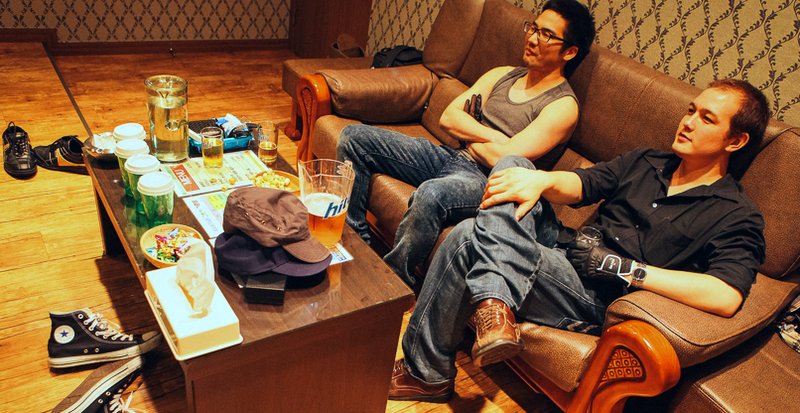
The cost for a round varies greatly, depending on location and time of day, but is typically between fifteen and twenty-five dollars. The busiest, most expensive times are weekday nights, because screen golf is one of the most popular forms of corporate entertainment. (South Korea is very big on required after-work socialization with colleagues.) After a first round of Korean barbecue and drinks, beers and screen golf is a common second round.
golfzon men

I’ve heard of, but never personally experienced, “helper players,” who can be called in to the room: young ladies with picture-perfect swings and amazingly short skirts. Seems like an all-right idea, except that they out-drive you on every hole.
That's not a helper, exactly.

That’s not a helper, exactly. It’s Uee, a South Korean actress and rapper (in a group called After School), who plays a golf-obsessed young girl in a popular television series.

Screen golf is so popular in Korea that it has its own professional tour. Most of the players are pros who teach on Golfzon simulators, or they work for a major company that sponsors them, but some are able to earn a decent living playing screen golf full time. [You can watch a video about the Korean simulator tour here. It’s in Korean, but you can probably figure out most of what they’re talking about. The video features several stars, plus simulated versions of real golf courses.]

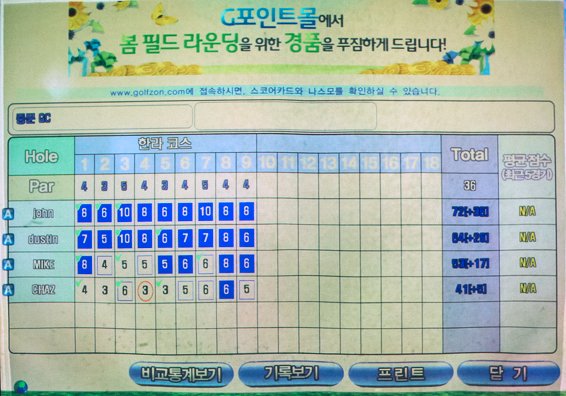
The only real issue I have with screen golf is the greens. I’m by no means a lights-out putter, but putting is typically not a weakness. When I play on the simulators, however, all my “feel” is replaced by a very mechanical (and mathematical) approach, based on how far above or below the hole I am on the color-coded green, and the speed of the animated break lines.

golfzonIn a couple of weeks, Olson and some of his expat friends and hoping to hold an all-night Golfzon tournament. If they pull it off, maybe he’ll send an update.

Cold-Weather Golf Innovation From South Carolina

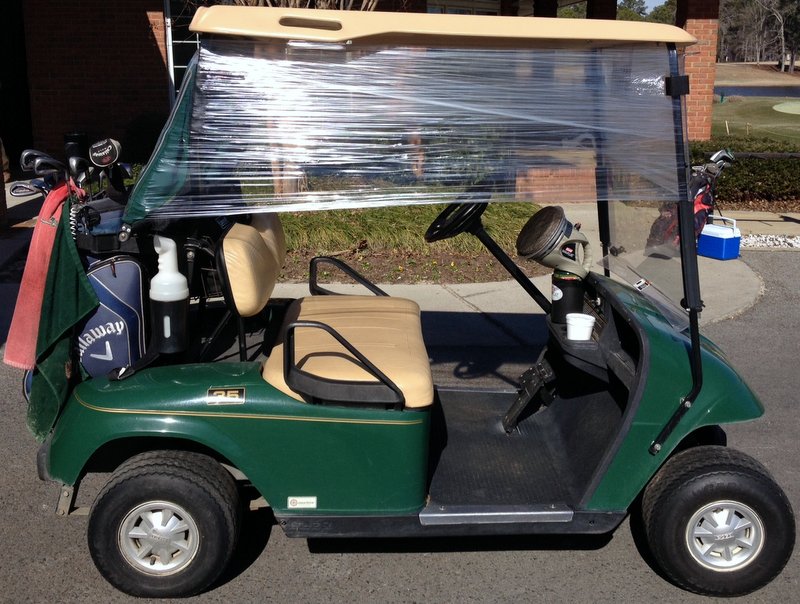
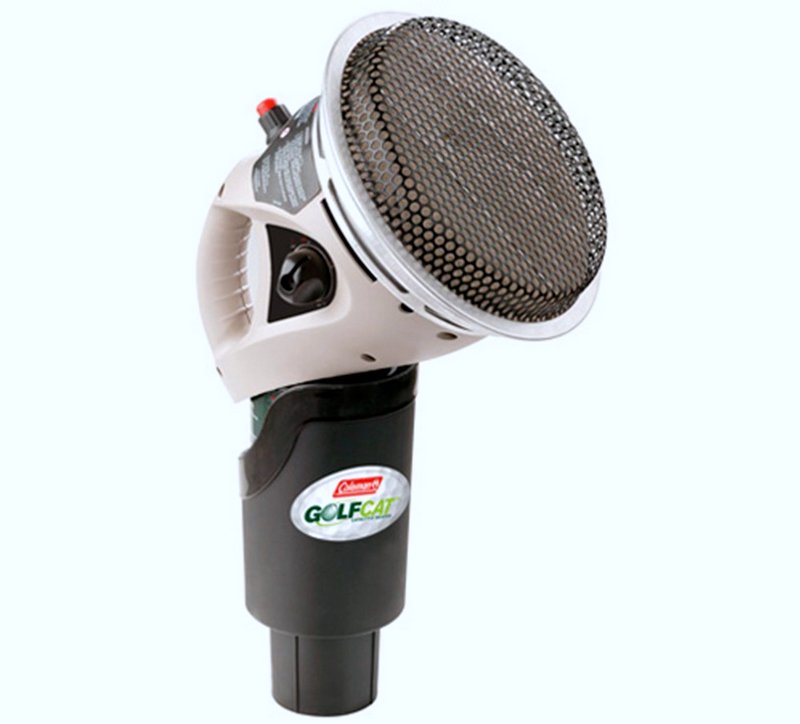
imageThe best way to stay warm while playing golf in cold weather, in my humble IMHO, is to walk. But some courses don’t allow walking, and some golfers can’t carry a beer cooler for eighteen holes. Golfers who do use carts know that riding makes winter seem even colder than the thermometer says it is—an effect known to meteorologists as “cart chill”—because sitting on your butt doesn’t generate warmth, and zipping around in an open vehicle increases heat loss by convection. Randy Yonce, a reader in Johnston, South Carolina, has devised a two-part solution. The first part is a Coleman GolfCat Catalytic Heater, shown in operation in the photo above. It runs on propane and fits into a cup holder, cutting the in-cart beer count by just one:

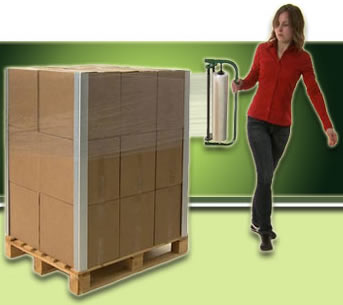
golfcatThe second part is probably easiest to pull off if someone in your regular group works in a warehouse. Yonce explains: “I despise cart covers because it is so aggravating to keep zipping the doors up and down after every stop. I’ve found that you can use a roll of clear pallet wrapping to help hold heat. Wrap a couple of rounds around the cart and the warm air gets trapped in the upper part. Also, ducking under the wrap is easy.”

wrapping palletNot even pallet wrap would help here in Connecticut. We’ve had so much snow that I’ve been forced to alternate between actually working and watching Olympic curling on TV. I’ve also been killing time on the Web, where I discovered the ideal conveyance for golf buddies trips:

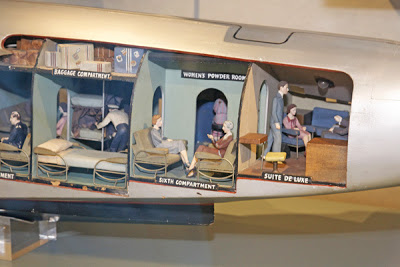
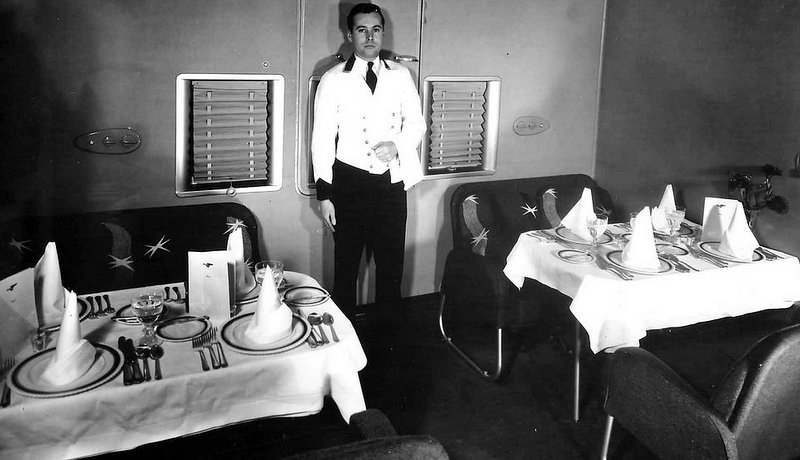
314That’s a Boeing 314, which was manufactured between 1938 and 1941. It wasn’t very fast, but it could make it across either ocean, and Pan American Airways had a dozen of them. All those passenger compartments made it easy to separate bickering foursomes, and there was plenty of room for golf bags, and if the course you were playing wasn’t too far from the airport you didn’t necessarily need a hotel:

314 interior

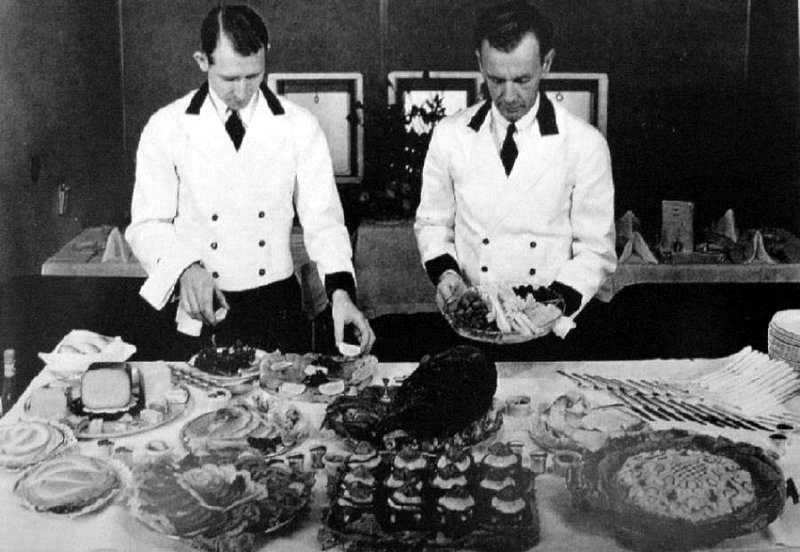
Why don’t rich guys buy planes like that, instead of miniature jets? Now it’s time for dinner, en route to Hawaii (let’s say):

dinner 1 boeing

And now dessert:

dinner boeing 314

Getting there is half the fun. And now, here we are, disembarking for an early tee time on a snow-free golf course on an island paradise:

boeing 314

(If you like that picture, you can order a nice big print, here, from the guy who painted it.)

Masters Countdown: Tenth Hole

ANGC early routing

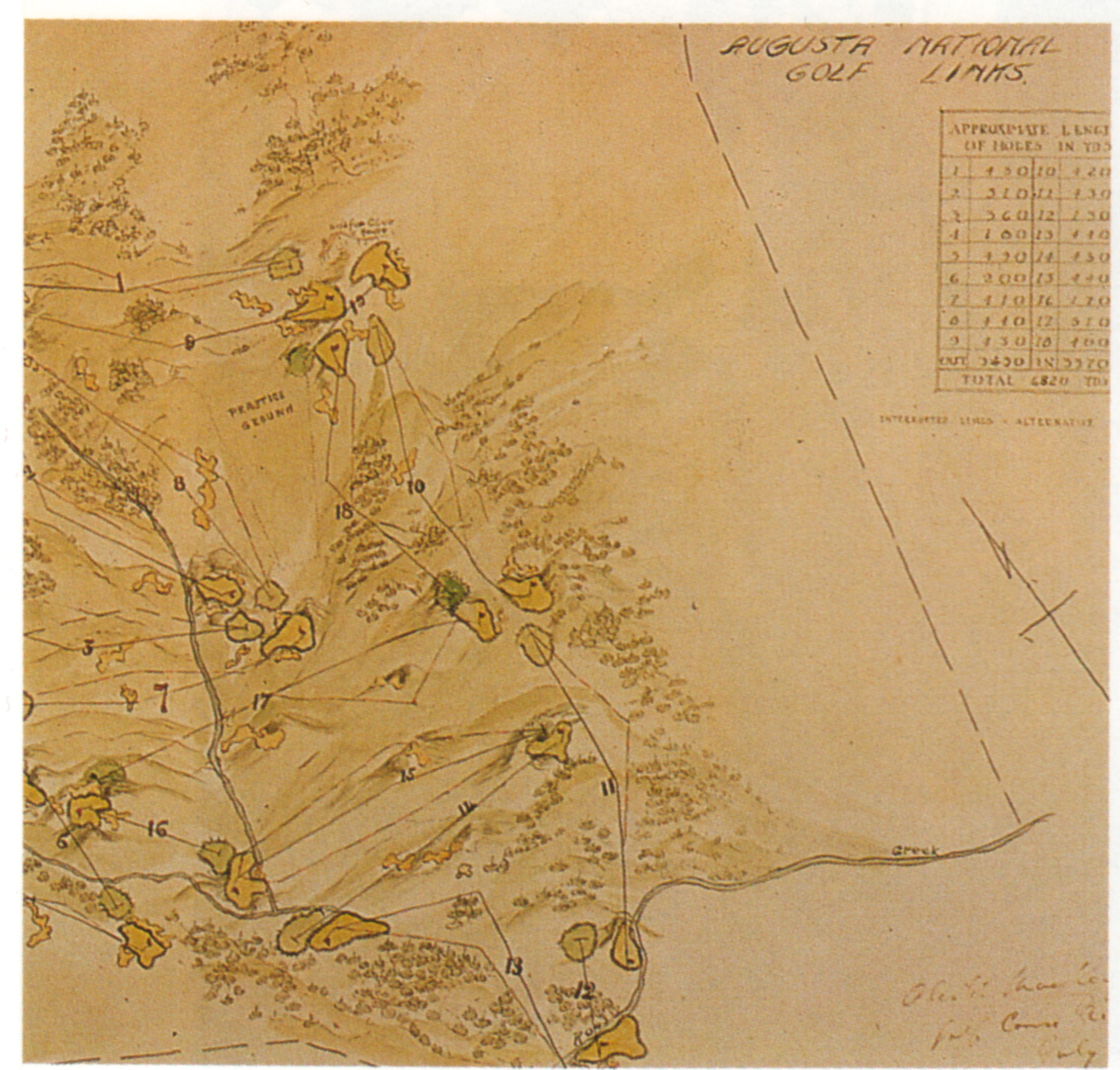
In Alister MacKenzie’s original conception of the golf course at Augusta National (shown above), the holes were numbered as they are today. MacKenzie’s thinking changed in 1931, before construction began, and he switched the nines, so that the current first hole became the tenth. Several writers have attributed the change to Bobby Jones, who contributed to the design, but contemporary documents make it clear that the idea was MacKenzie’s. His intention was probably to provide a better view of the finishing green to members who might be lounging near the big picture windows in the locker room of the planned new clubhouse, which Jones and Clifford Roberts, the club’s co-founders, intended to build as soon as they’d raised enough money to tear down the old plantation house. (Luckily, they never did. I’ll tell that story soon.)

ANGC tenth green

The club switched the nines again in 1934, between the first tournament and the second. This time, the reason was that the shady area near the current twelfth green, which lay at the lowest elevation on the property, was the last part of the course to thaw on frosty mornings. By playing the other nine first, golfers could tee off earlier. The new arrangement also made for more stirring Masters finishes, a fact that was recognized at the time.

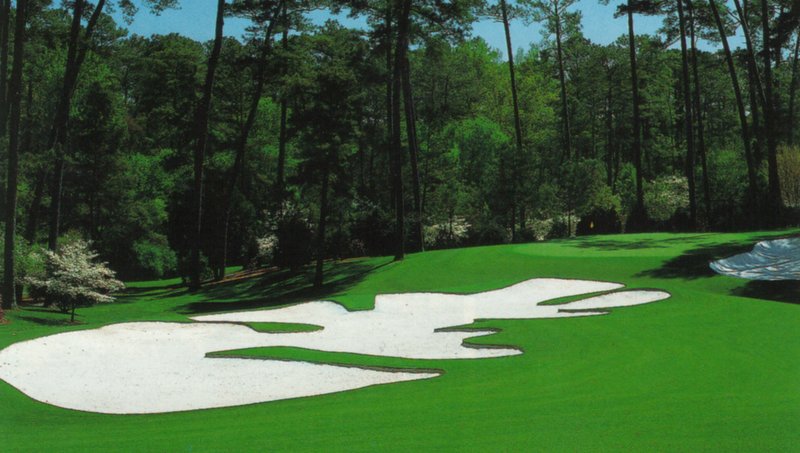
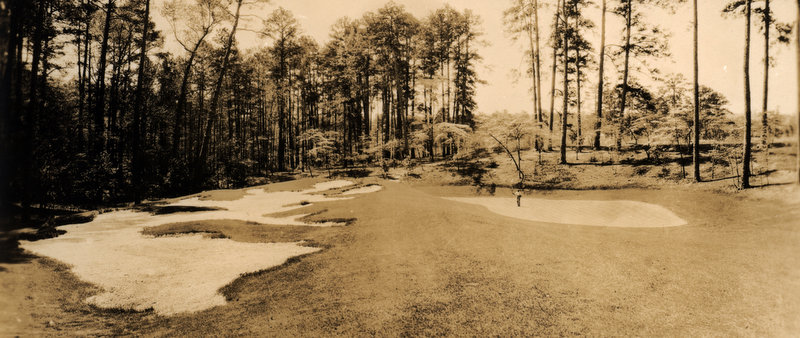
Tenth hole, Augusta National. Looking back up the hill, toward the tee.

Tenth hole, Augusta National. Looking back up the hill, toward the tee.

It’s easy to understand why MacKenzie thought of the current tenth as a good starting hole. The view from the tee is one of the most enticing in golf—the sort that can coax a smooth swing from a hurried player who hasn’t had time to loosen up. The drop in elevation to the ideal landing area is more than a hundred feet—enough to make a thinly struck drive seem solidly launched. The fairway runs down and to the left and out of sight, through a bending corridor of pine trees. The slope rewards any player who can work the ball from right to left, yet there is room on the right for those who can’t. Golfers leave the tee feeling that they are descending into a different world—an appropriate emotion for players entering the most celebrated second nine in golf.

Early members playing the tenth hole.

Early Augusta members playing the tenth. In MacKenzie’s first drawing of the hole, there was a big fairway bunker not too far from the foreground of this photo. (See the plan at the top of this post.) When this hole became the opening hole, though, he removed the bunker, because he didn’t think a golfer should have to clear a large hazard with his first shot of the day. But when the ordering of the holes changed again the fairway bunker wasn’t put back.

The tenth hole was originally much shorter than it is today. (MacKenzie, in a note in the program for the first tournament, in 1934, called the hole “comparatively easy.”) Until 1937, the green was situated well in front of and below where it is today, in a damp hollow to the right of the sprawling fairway bunker. That bunker seems anomalous to modern players, because even well-struck drives don’t reach it and even poorly struck approach shots usually miss it. But in the early years the bunker (which at that time was really more of a waste area) guarded the left flank of a punchbowl green:

The original tenth green, on the right. The current green is well beyond it and to the left.

The original tenth green, on the right. The modern green is on the rise well beyond it and to the left.

Moving the green was the idea of Perry Maxwell, who one year later also redesigned the seventh hole. Maxwell pointed out that moving the tenth green to higher ground would not only solve a drainage problem but also markedly strengthen the hole. The change turned a breathtaking but mediocre short hole into one of the greatest par 4s in the world.

A Ghost Course in Central Florida, and a Golf Trip to the Twilight Zone

The former Winter Springs Golf Course, Winter Springs, Florida.

Part of the former Winter Springs Golf Club, Winter Springs, Florida. The cart barn, clubhouse, and parking lot are near the bottom of the image, just right of center.

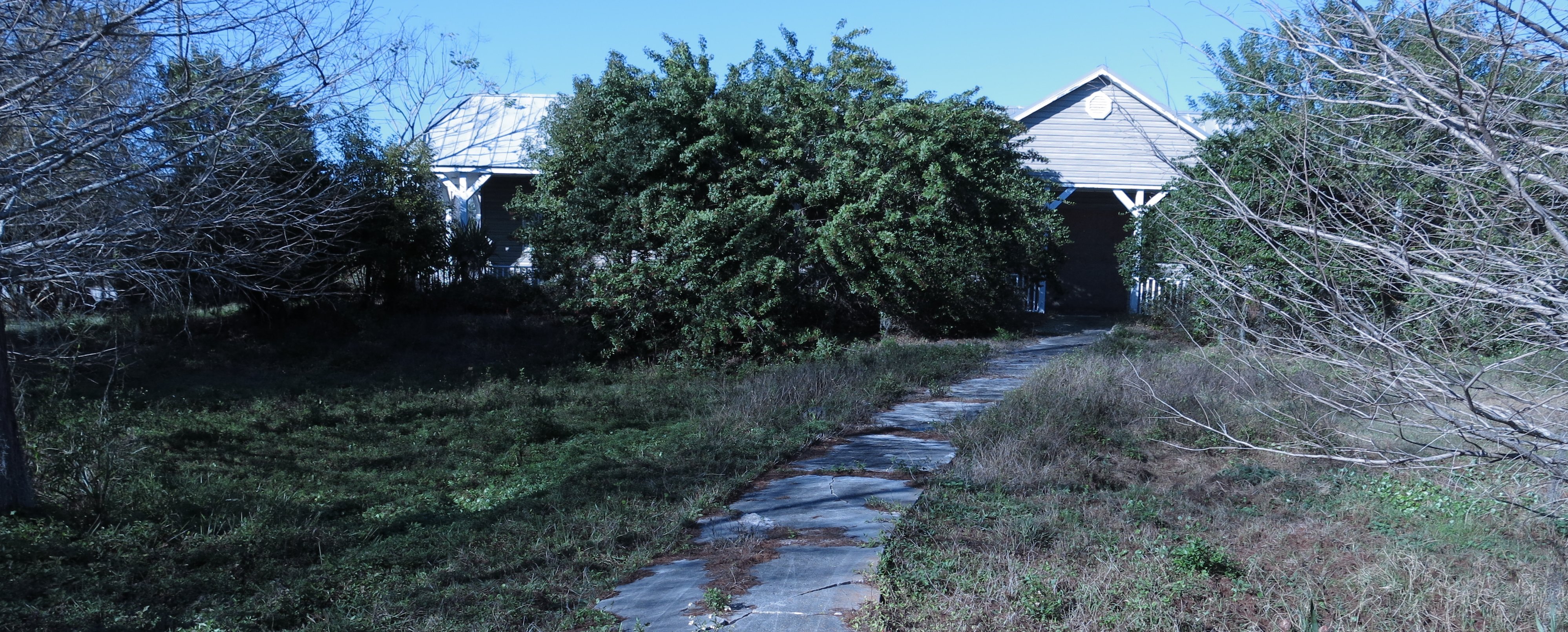
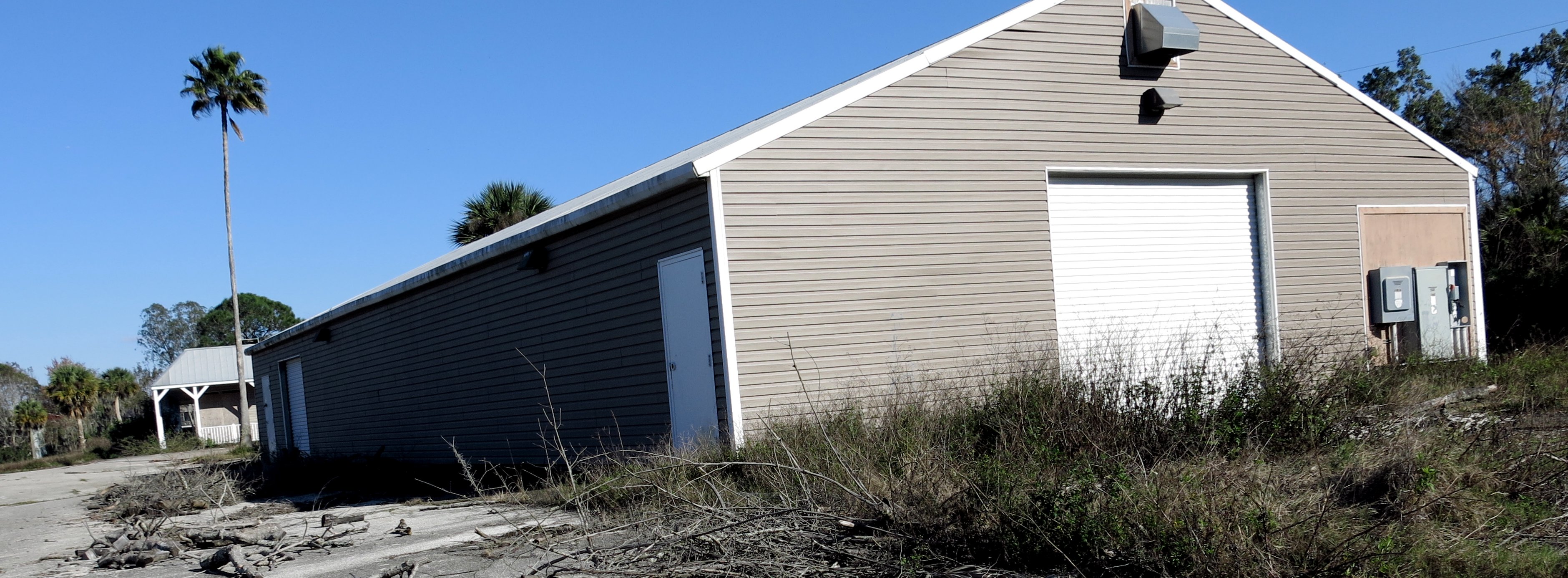
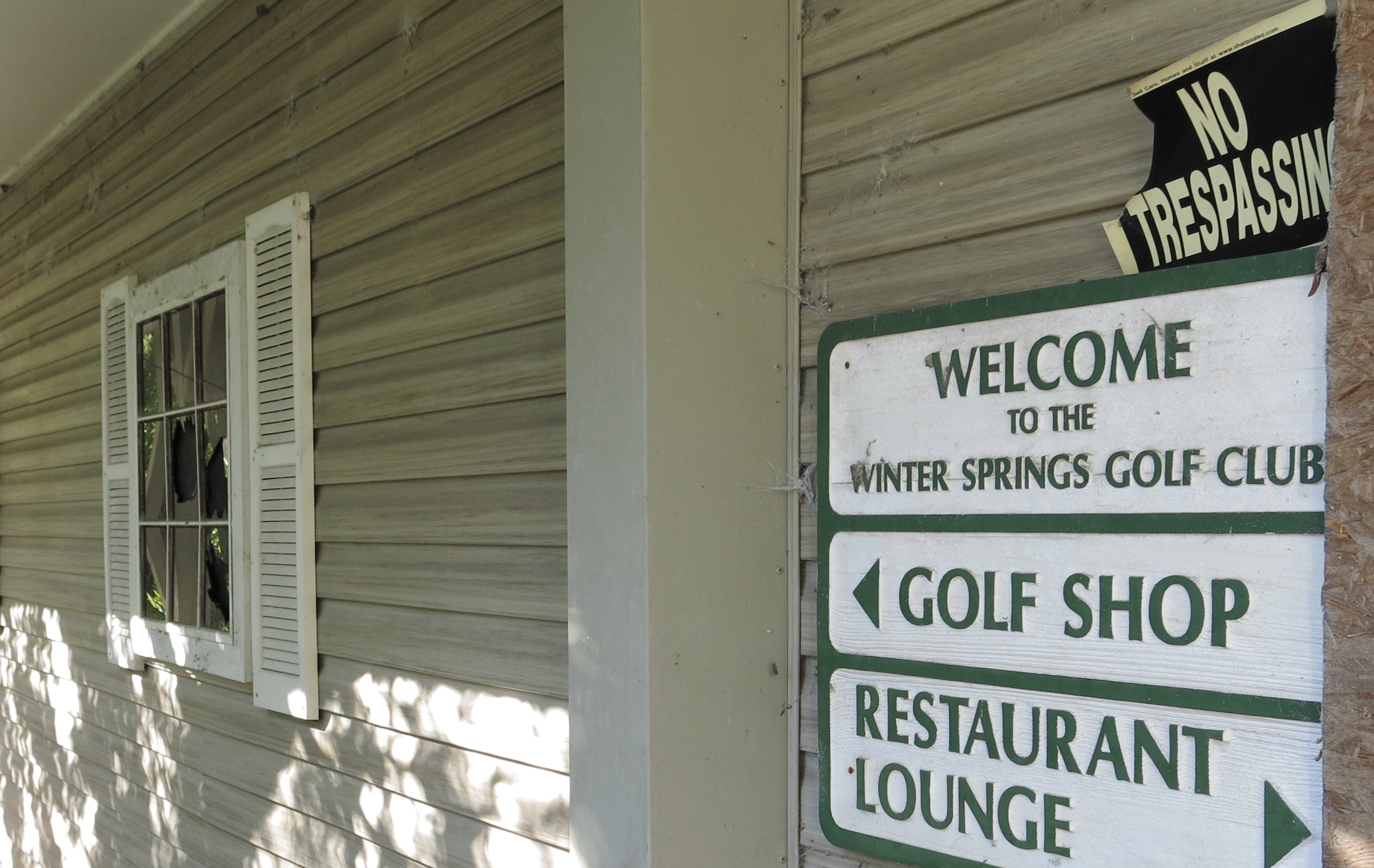
A common experience for Florida golfers in recent years: trying to make a tee time at a golf course they’ve heard good things about, and discovering that the phone has been disconnected and the Web domain is for sale. An example is Winter Springs Golf Club, which went belly-up in 2006. I was in the Orlando area last weekend, on a Golf Digest assignment, and decided to have a look. Here’s the clubhouse, as it appears from the main parking lot:

IMG_0810Apparently, someone bought the course with the idea of building houses on it, and only then discovered that a deed restriction made that impossible. (Due diligence!) Now it sits.

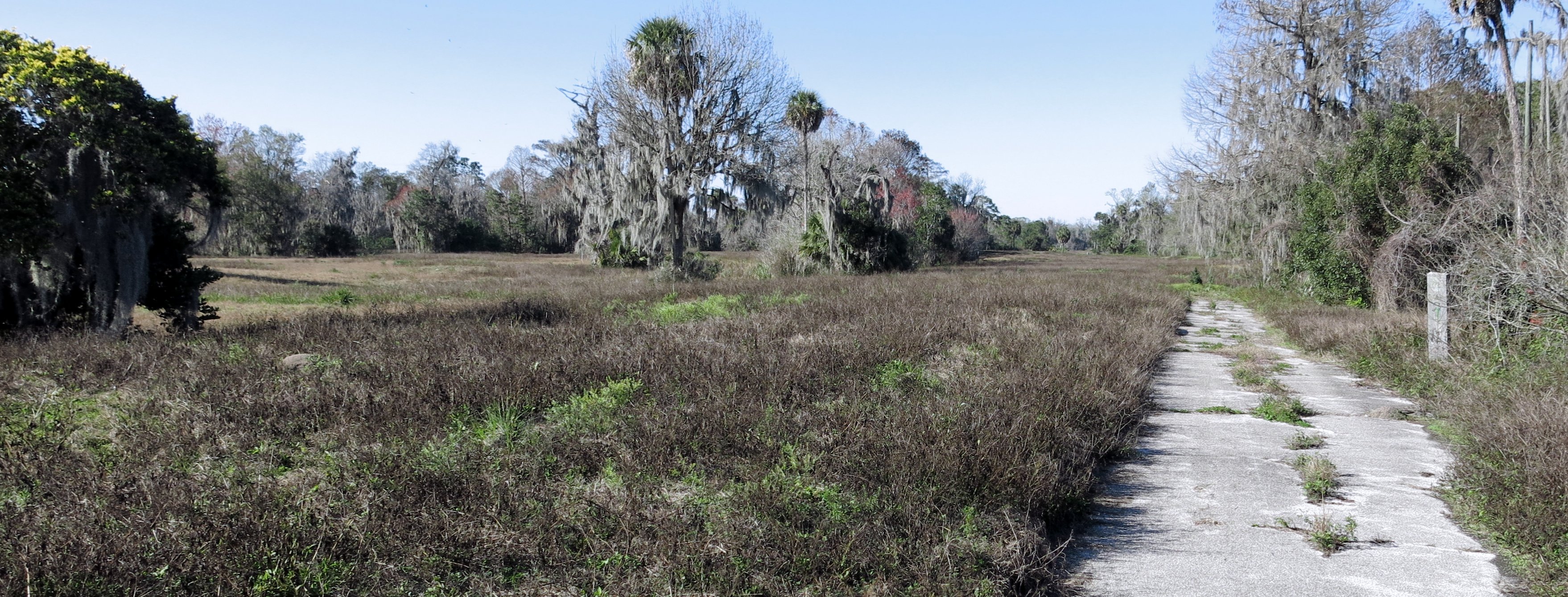
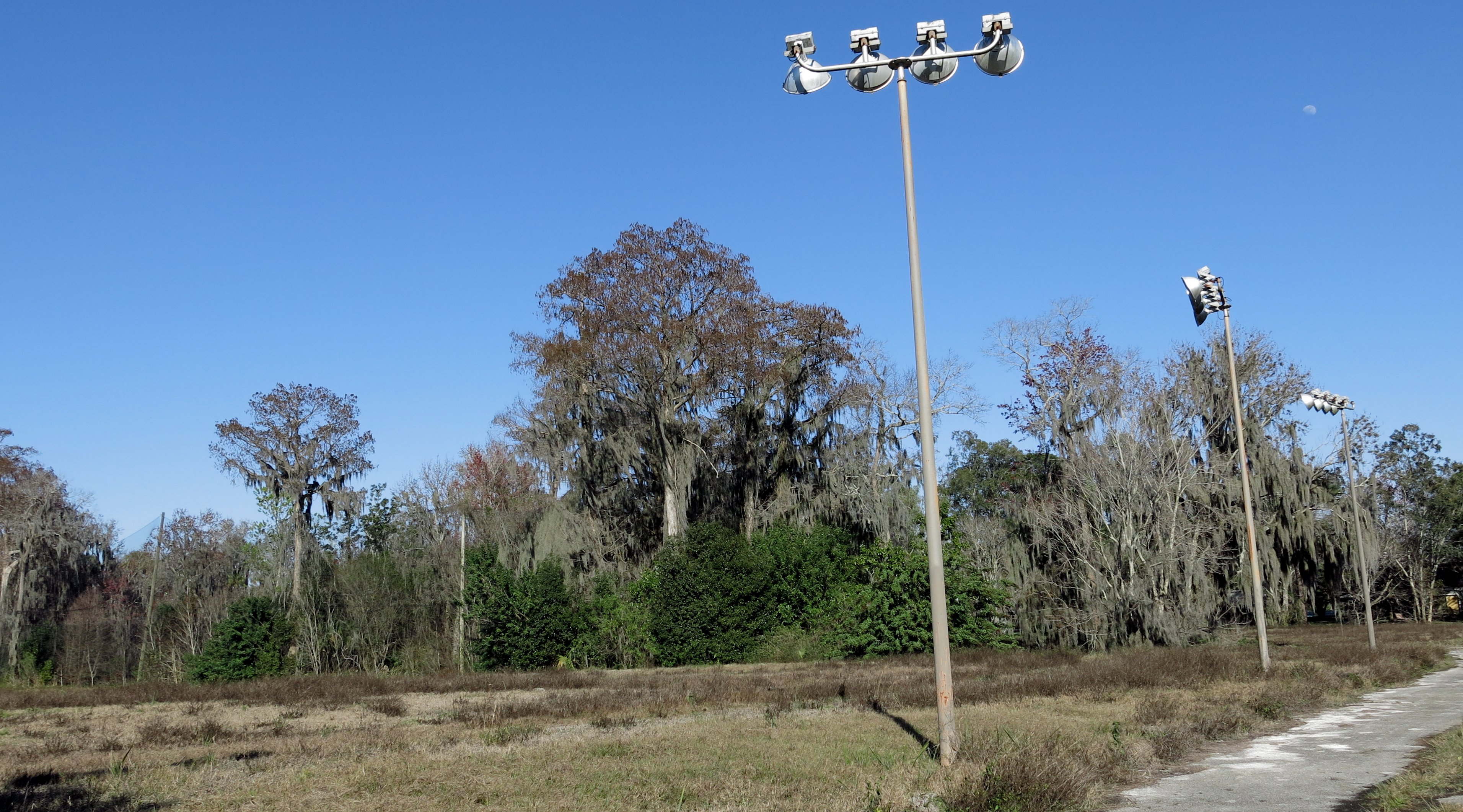
IMG_0817The old club had a lighted driving range. Here’s what it looks like now:

IMG_0837While I was snooping around, a policeman noticed my car and drove in to see what I was doing. He called in my driver’s license number, to make sure I wasn’t wanted for something. Then we chatted about golf for a while, and he asked me whether another ten or fifteen minutes of trespassing would be enough. I thanked him, and he suggested that I stay out of the clubhouse.

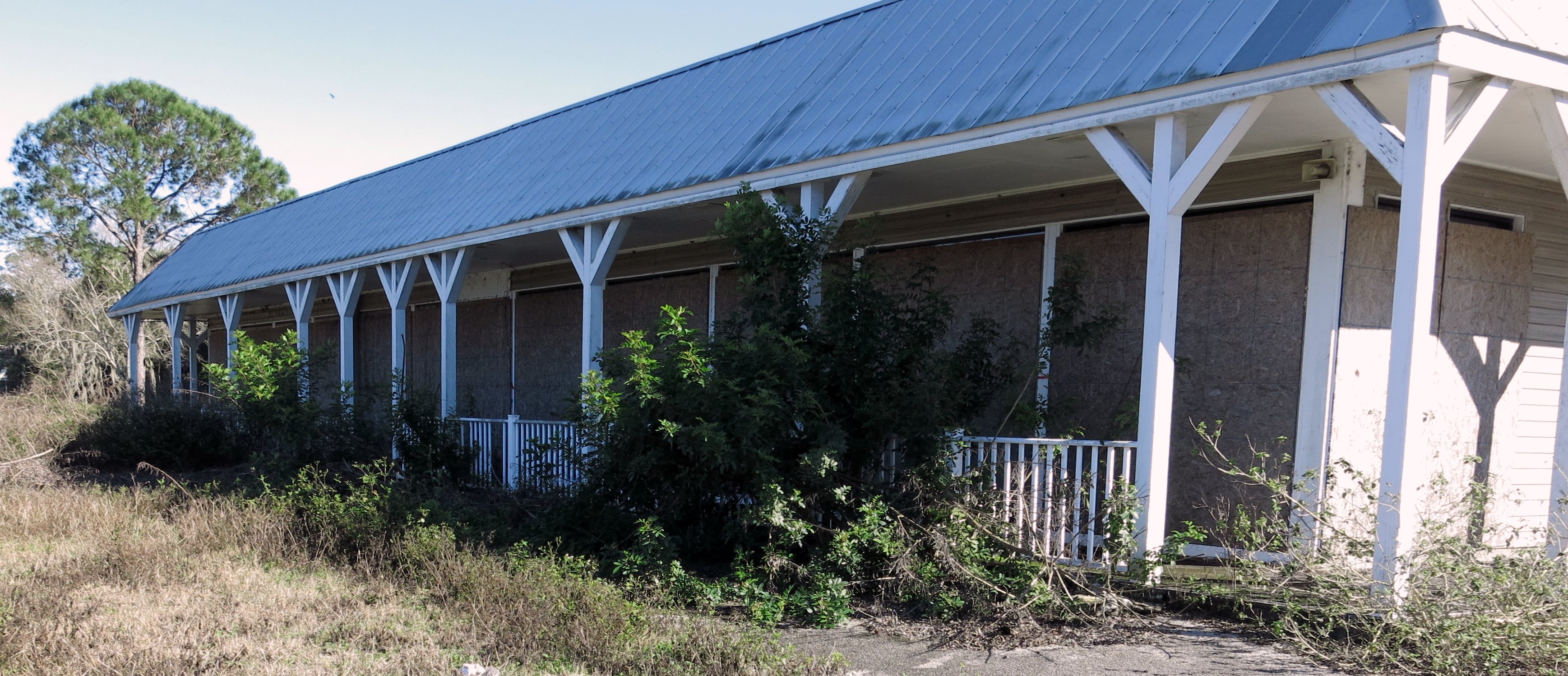
Here's the back of the clubhouse. Those particle-board sheets cover the windows of what used to be the grill room and the golf shop.

Here’s the back of the clubhouse. Those particle-board sheets cover the windows of what used to be the restaurant and the golf shop.

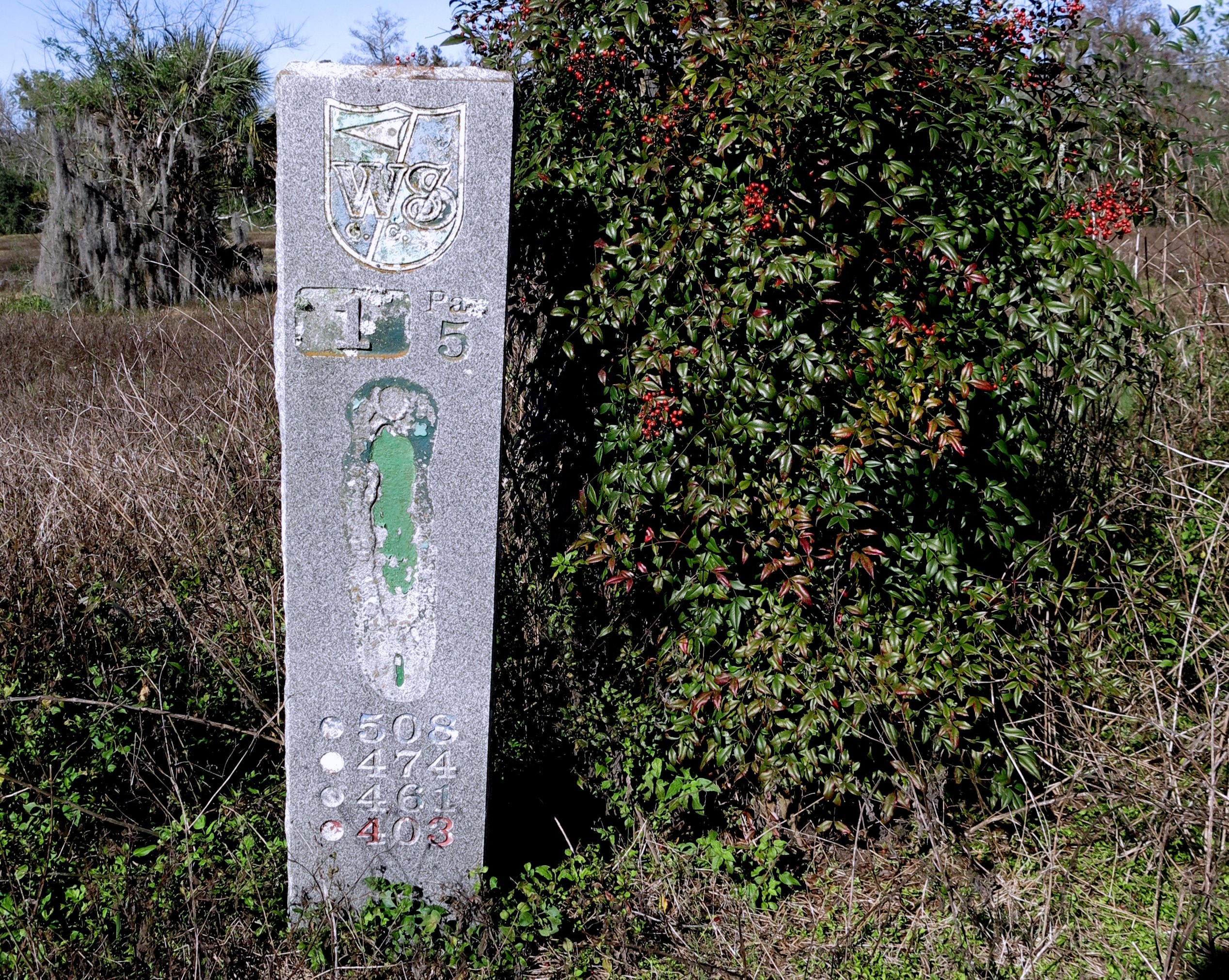
It doesn’t take long for a golf hole to turn into something that isn’t recognizable as a golf hole. Here’s the first tee, the first fairway, and what’s left of the first-hole cart path:IMG_0822 That hole was a straightaway par 5. According to the sign, there were four tee positions:IMG_0827

Florida probably still has too many golf courses. Even so, it’s sad to see the ruins of a place where you know at least a few of the regulars felt more at home than they did at home.

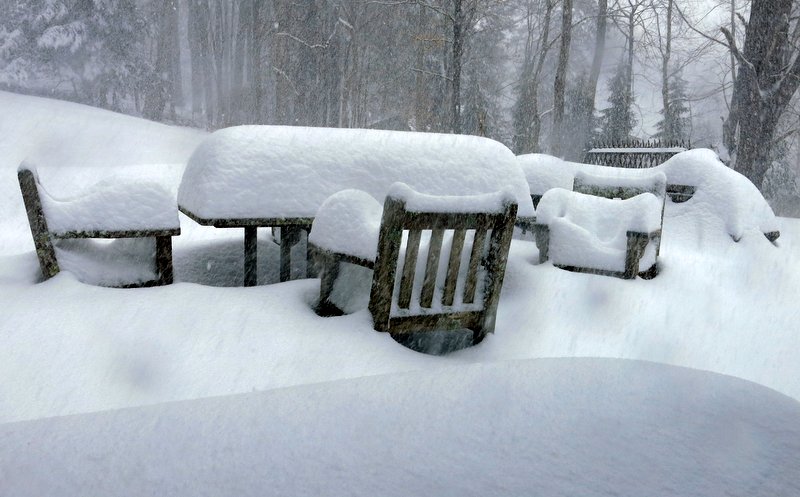
IMG_0843Meanwhile, here in Connecticut, the golf courses might as well be in receivership. This is what my back yard looked like on Thursday afternoon, when the storm was still only getting started:

IMG_0882

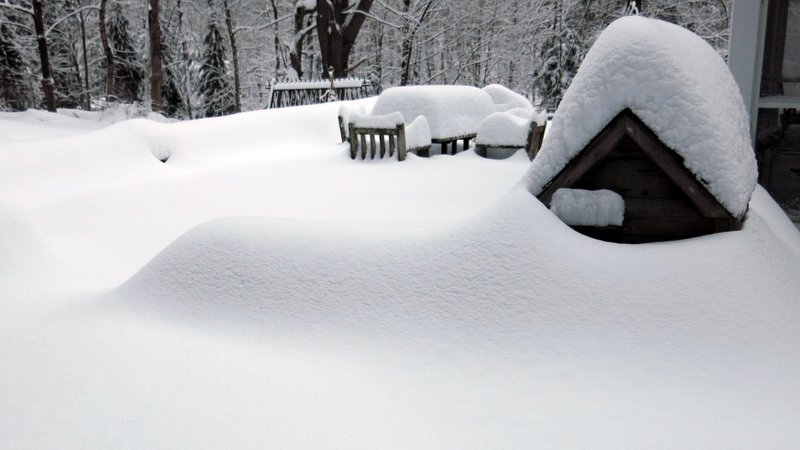
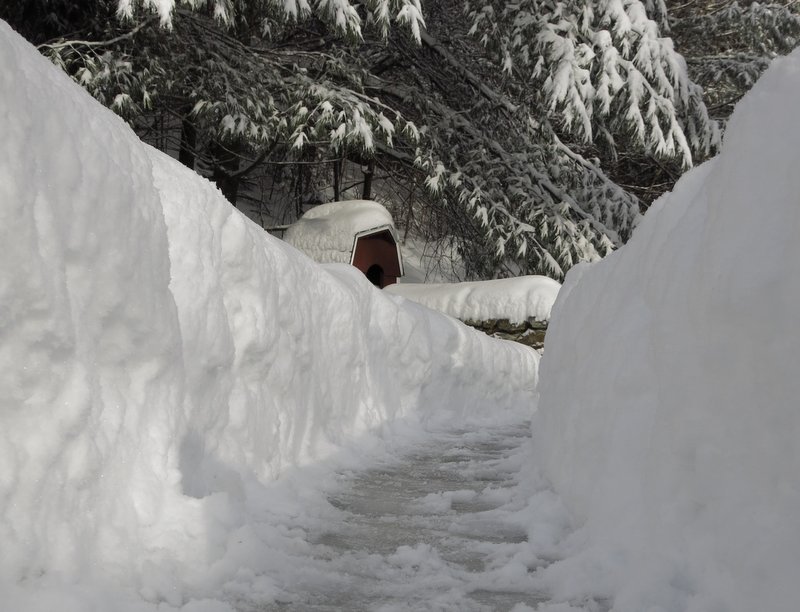
And here’s how things looked on Friday morning. (The doghouse on the right, which is on top of a wall, belonged to one of the three cats that lived in our yard for many years.)

IMG_0901

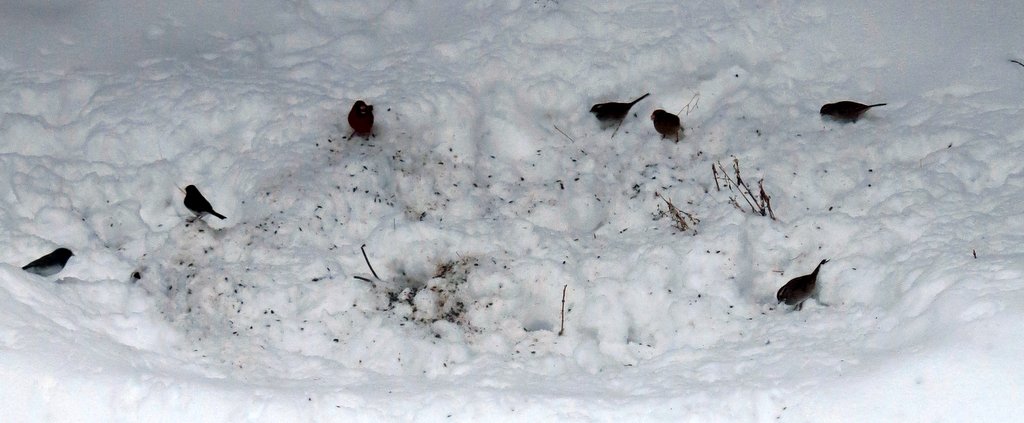
My wife and I have been throwing birdseed into the snow, and attracting mainly juncos and cardinals. When the seed runs low, the birds send an emissary to the back door to complain. When I got up this morning, there were junco footprints on the doormat:

IMG_0891

I tossed out a double load, and a few minutes later the birds were back:

IMG_0906

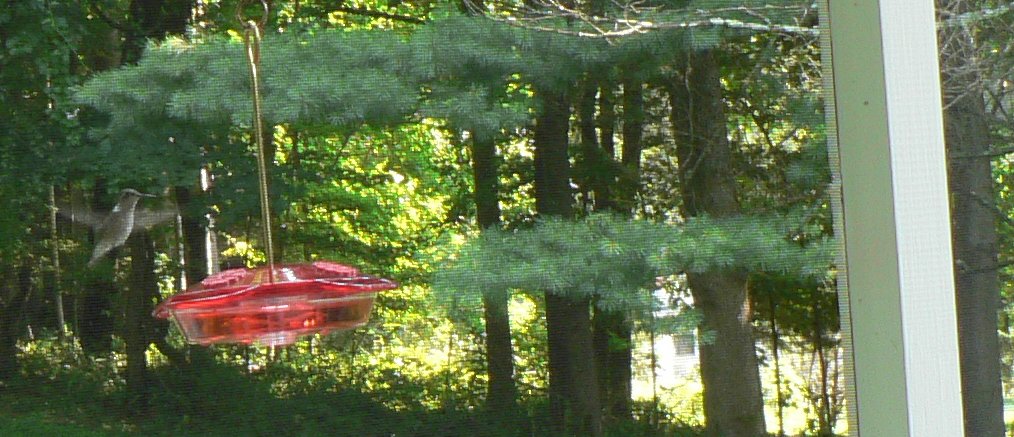
Birds really do this, incidentally. During the summer, when our hummingbird feeder runs out, a hummingbird will fly up to the window closest to the computer in my wife’s office, on the second floor, and hover there until she notices.

Same back yard, with hummingbird, in better times.

Same back yard, with hummingbird, in better times.

The wife of one of my golf buddies told me that when the feeder runs out at her house a hummingbird will fly, in sequence, to windows in the rooms where she can usually be found during the day: kitchen, bedroom, laundry room. After I’d fed the birds, I re-shoveled the path to the back door:

IMG_0912

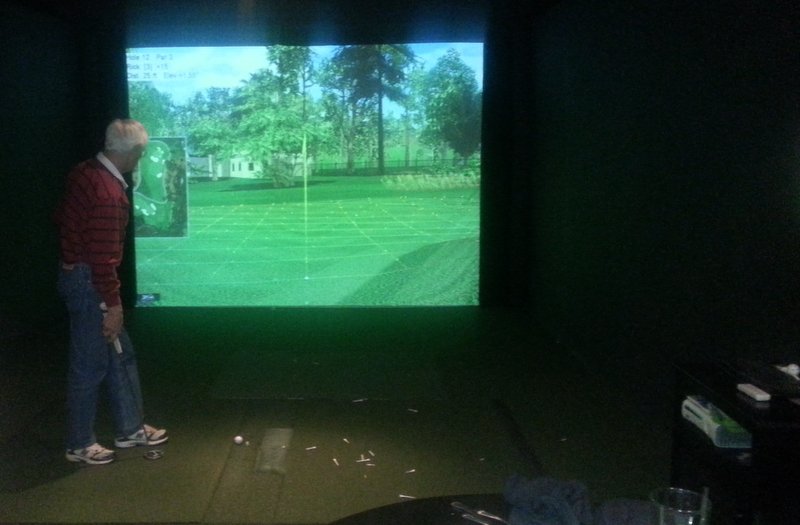
Last week, my friends and I had no choice but to return to the simulators at Maggie McFly’s—which, I’m sorry to report, are showing their age. Our round lasted at least a half-hour longer than it should have, because the sensors had trouble picking up the balls. Still, it was golf. And, because Ferris had never played on a simulator before, we picked Pebble Beach. Here’s Rick, lining up a putt on the twelfth:

20140207_165317-001Spookily, the golf tournament on TV, which we watched between shots, was also at Pebble Beach, and there were quite a few occasions when the hole we were playing was exactly the same hole they were showing on TV—in this case, the thirteenth:

20140207_165321-001It was pretty darned eerie.

A Golfer’s Dream House, at a Very Deep Discount

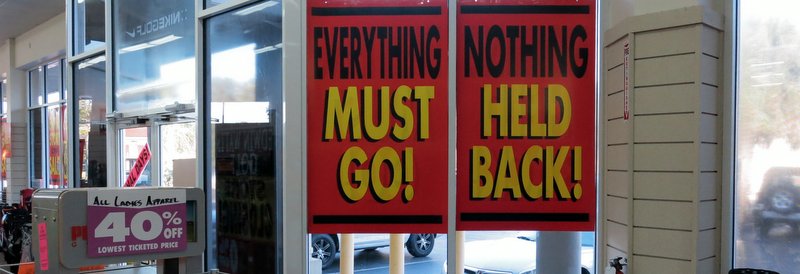
IMG_0861Edwin Watts Golf Shops filed for bankruptcy last year, and the company was later bought by Worldwide Golf Enterprises, which operates a number of similar chains, among them Golf Mart and Golfers’ Warehouse. Worldwide will keep the Edwin Watts brand, but it’s closing a number of the old stores outright. I saw one of those in Orlando over the weekend. (I was in the area on a Golf Digest assignment.) Most of the decent golf stuff had sold already—there weren’t many gloves left between ladies’ extra-small and men’s extra large, for example—but some of the other merchandise was intriguing.

IMG_0848-001

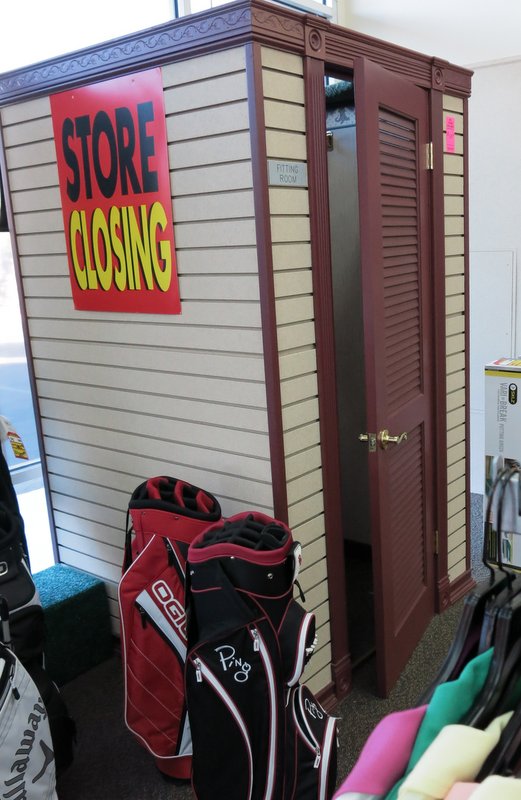
They were selling almost everything, including waste baskets and coffee makers, and I realized that a lot of the stuff would look good in my house. For example, the fitting room ($1,200) contained a bench and a full-length mirror, and would make a cool personal locker room. It was quite spacious inside, yet it wasn’t so huge that it would overwhelm, say, the piano in our living room:

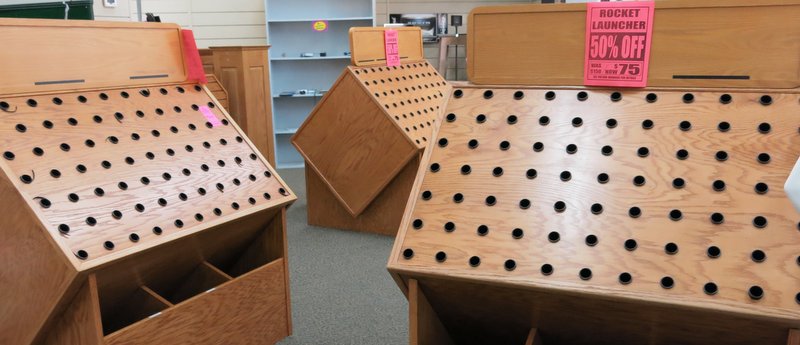
IMG_0863I store my old golf clubs in old golf bags in my attic and garage, but if I had a couple of these display units ($125 each) I could keep them out in the open, where people would be able to see them:

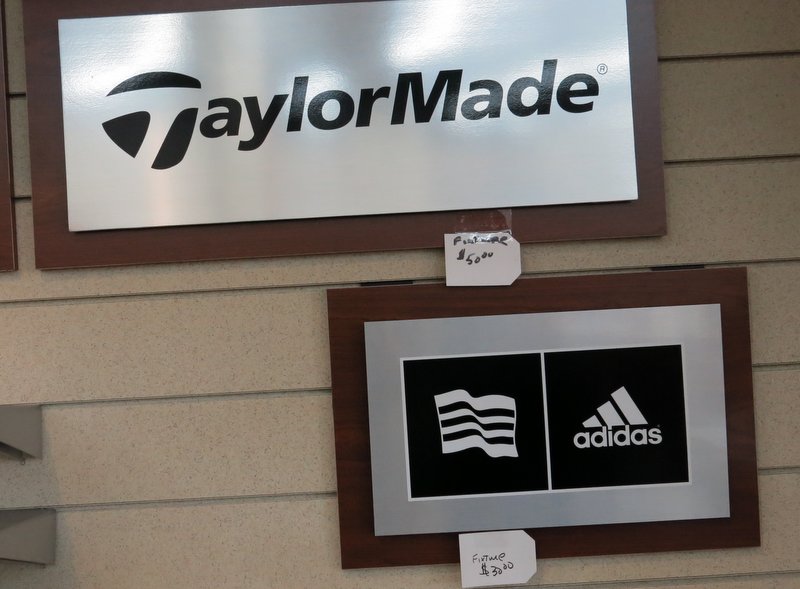
IMG_0859For the walls, there were many choices, at a range of price points. For example, art:

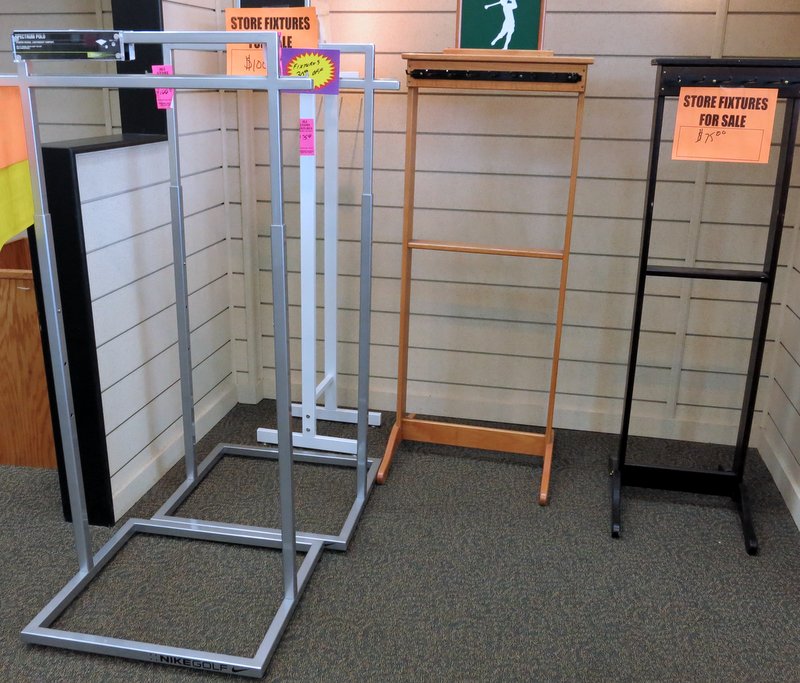
IMG_0854Plus more utilitarian stuff—although I don’t mean to suggest that “useful” necessarily means “unattractive”:

IMG_0855Anyway, my problem was that I was flying home the next day, and I was already pushing the limit on carry-on luggage. I was tempted, though. Don’t you think your golf shirts would look cooler hanging on these?

IMG_0846

Gaining Spousal Approval for Golf Trips, Plus the Night My Wife Ate Dogfood on the Tonight Show

That's my wife in the net. Some son-of-a-bitch is about to fire a puck at her.

That’s my wife in the net (wearing the Grateful Dead jersey). Some son-of-a-bitch is about to fire a puck at her!

The wife of one of my regular golf buddies not only encourages him to take golf trips but actually makes his plane reservations and packs his bags. Quite obviously, she’s having an extramarital affair and wants him out of the way—so his golf trips are win-win at their house. For the rest of us, though, the issue of spouse-free golf travel is usually more contentious.

My pals and I at Hillside Golf Club, Southport, England, May, 2010.

My pals and I at Hillside Golf Club, Southport, England, May, 2010. Hacker (real name) is third from the left.

My kids are grown now, so I can no longer be accused of doing them permanent emotional harm by abandoning them for a week in order to play golf in another country with my friends. But my golf trips nevertheless retain some of their old power to engender domestic resentment. The best approach, I’ve discovered, is direct negotiation, which is both more productive and less emotionally taxing than the simmering psycho-battles that husbands and wives usually engage in. If my buddies and I are hoping to take a spouse-free trip to Myrtle Beach, for example, I might say to my wife, “Honey, this trip is extremely important to me—what’ll you take for it?” (Before trying this yourself, have an attorney vet the wording.)

Same guys, more or less--this time at the Old Course in St. Andrews, Scotland. May, 2008.

Same guys, more or less–this time at the Old Course in St. Andrews, Scotland. May, 2008.

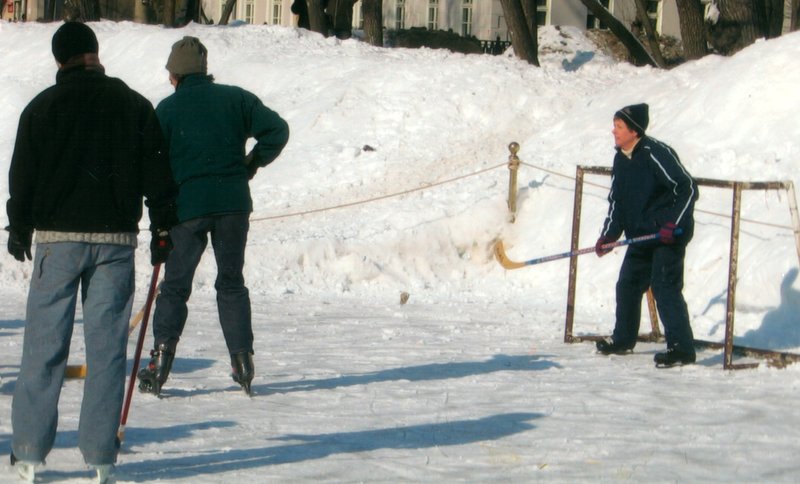
The best thing that ever happened to me, golf-trip-wise, occurred when my wife, at the age of almost-forty, took up ice hockey. She now goes on buddies trips of her own—to goalie school in Vermont, to an international tournament in Montreal—and she and I have achieved a sort of unspoken sports-travel parity. A few years ago, she visited her brother, who was living in Russia. She took her skates, and one afternoon she joined a pickup game on a frozen pond in central Moscow.

Moscow, March, 2006.

Moscow, March, 2006.

That, in my opinion, turned a family visit into a hockey trip, and therefore entitled me to spend a compensatory week in Ireland with my pals. (Before trying this yourself, have an attorney, etc.)

black widows

Speaking of my wife, Jay Leno’s retirement from the Tonight Show this past week reminded me that the first guest on the Tonight Show on June 1, 1989—when Leno was subbing for Johnny Carson, three years before Carson retired—was my wife. She was on by herself for two entire segments, and for the first of those segments she got to sit in The Chair and chat with Leno. Here’s the first segment:

And here’s the second: