Interesting, Golf-friendly Condiment—But There’s a Problem

smg1

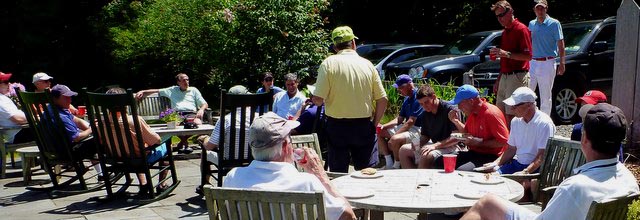
We had thirty guys on Sunday, if you count the eight who were playing quarter-final matches in the Governors Cup (I was one of them). Fritz won two skins, out of four. The group decided not to pay out the day’s money-hole money ($44) but to donate it to the beer-keg fund. (That’s an example—and I could name others—of the Sunday Morning Group’s community-mindedness.)

smg2

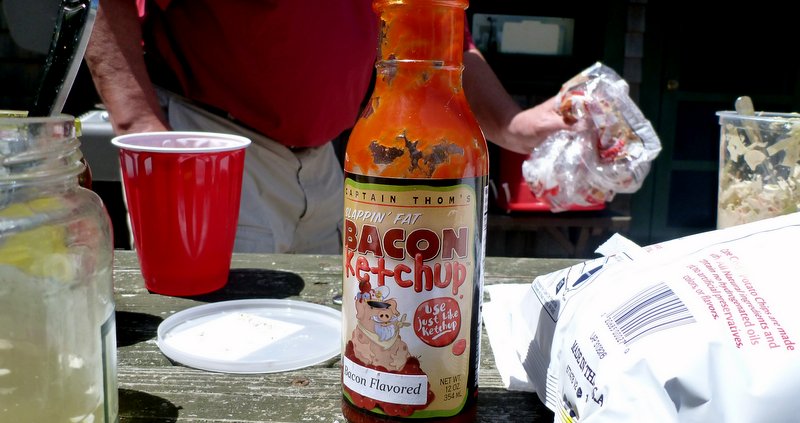
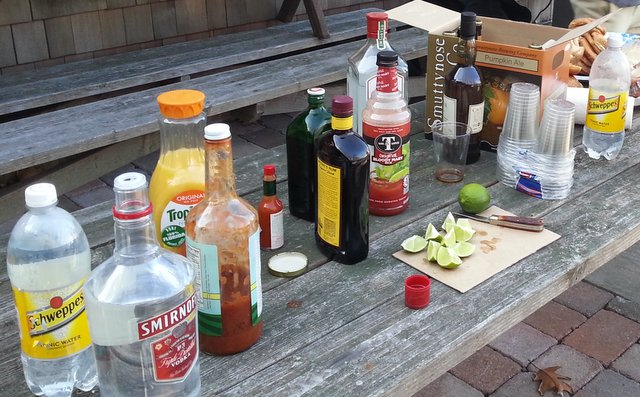
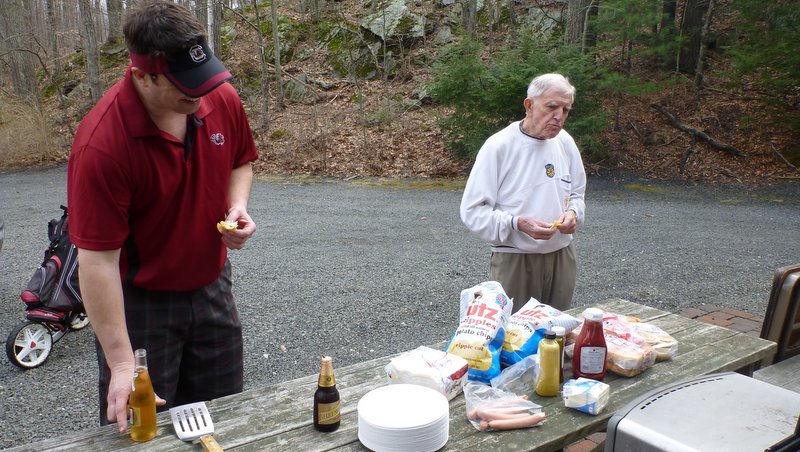
Peter A. brought lunch, and he included a condiment that may become a staple: Captain Thom’s Slappin’ Fat Bacon Ketchup. (The label explains, perhaps helpfully for some: “Use like ketchup.”) I have just two hesitations in recommending it: the company’s website no longer exists, suggesting that Captain Thom has gone out of business; and—surprisingly, for a product of that name—Captain Thom’s Bacon Ketchup contains no bacon.

P1130069

An easy solution to both problems might be for the Sunday Morning Group to make its own bacon ketchup, by frying bacon and adding it to ketchup—a manageable kitchen project even for guys whose wives don’t write cookbooks. And hardly any cleanup!

That's Corey, on the right, conducting a post-bacon putting contest.

That’s Corey, on the right, participating in a post-bacon putting contest.

Meanwhile, our pro, Corey Harris, is trying to qualify for the U.S. Open. He got past the first stage a couple of weeks ago, and is playing in the 36-hole sectional today—along with Lee Janzen, who won the Open in 1993 and 1998 but now has to claw his way in like guys who play most of their golf with the Sunday Morning Group. Which Janzen is welcome to join if things don’t work out for him the way he hopes they will.

bacon-001

Scientists, Psychologists, and the Mayo Clinic Take on the Yips

SAM report

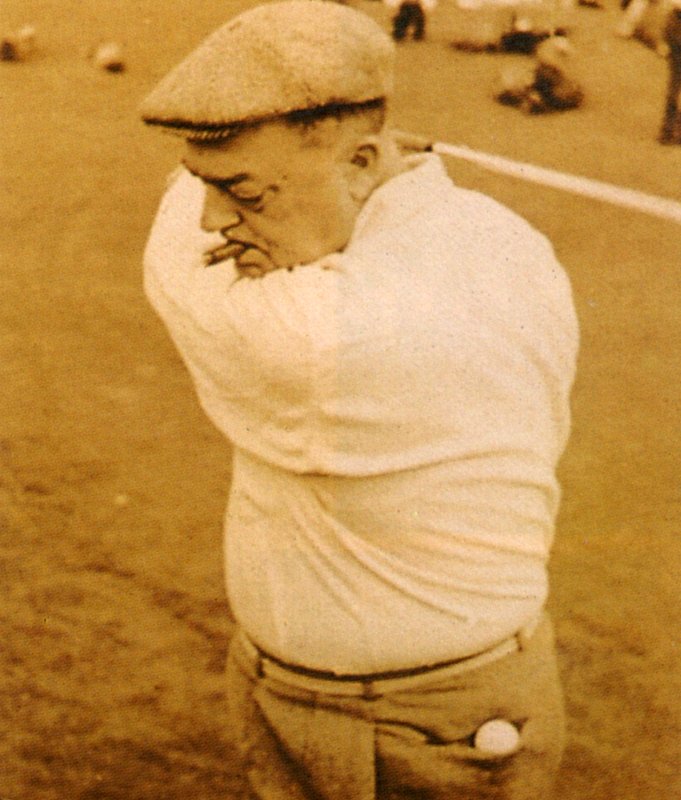
I had an article in the May 26 New Yorker about the yips. The term  was coined around the middle of the last century by the Scottish golfer Tommy Armour, a sufferer, who defined it as “a brain spasm that impairs the short game.” (Stephen Potter, in his book Golfmanship, published in 1968, quoted Armour and added, “‘Impairs’ is a euphemism.”) Yipping typically involves an involuntary twitch of a golfer’s hands, wrists, or forearms. The late British golf writer and television commentator Henry Longhurst once said that he didn’t have the yips but was a “carrier.”

Henry Longhurst, cocktail in hand.

Henry Longhurst. In the olden days, some forms of the yips were called “whiskey fingers.”

During the BBC’s broadcast of the final round of the 1970 British Open, at St. Andrews, he agonized vicariously when Doug Sanders left himself a three-foot putt on the final hole to win the tournament. “Oh, Lord,” Longhurst said on the air. “Well, that’s not one that I would like to have.” Sanders hesitated over his ball for what seemed like minutes; noticed something on the ground and bent to remove it (“Oh, Lord,” Longhurst said again); froze once more; and shoved the ball to the right of the hole. “Missed it!” Longhurst said as the ball went past. “Yes, a certainty. That’s the side you’re bound to miss it.” In the video below, skip to 21:23 to hear Longhurst’s full commentary and watch the gruesome outcome:

Among the people I interviewed but didn’t quote is Dick Hyland, who is the head professional at the Country Club at DC Ranch, in North Scottsdale, Arizona, and a longtime yips sufferer. Before I went to see him, he wrote down some of his thoughts about his own experience with the yips on a yellow legal pad, and gave me the sheet (clicking on the image below will enlarge it to a more legible size):

dickhyland

Another person I talked to is Debbie Crews, a sports psychologist and a consultant to the women’s golf team at Arizona State. She has participated in three studies of the yips sponsored by the Mayo Clinic, and she’s about to participate in a fourth. Even for golfers who don’t have the yips, Crews is a good person to know. Here’s one thing I learned from her: most of us would putt better if we had someone tend the flag even on medium-length putts, because our brains are better at judging the distance to targets that protrude above the ground.

debbiecrews

Reader’s Trip Report: Pinehurst, North Carolina

photo 1

This year’s U.S. Open and the U.S. Women’s Open will be held at Pinehurst during consecutive weeks, beginning on June 12 (for the men) and June 19 (for the women). The U.S.G.A. has never tried that before, although my club has done it successfully with the men’s and women’s member-guests. Adam Sachs, a reader in Kansas City, recently traveled to Pinehurst with three friends to check things out.

Sachs 9

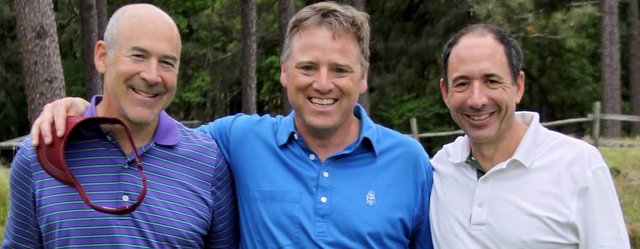
Sachs is the guy in the middle in the photo above. The guy on the left is Steve Swartzman, and the guy on the right is Chip Fleischer, whose fiftieth birthday was their excuse for taking the trip. They all went to high school together. We haven’t met Glenn Jordan, the fourth member of the group, yet, but you get the idea.

Pinehurst flag

From Sachs’s report:
Ben Crenshaw and Bill Coore happily brought Pinehurst No. 2 back to its sandy Donald Ross roots in 2011. As for its altogether vexing, convex-shaped greens, our caddies Eddie Mac and Jamie liked to say, “Mr. Ross likes you to visit, but he doesn’t want you to stay too long.” The restored waste areas now define the course as much as the greens. We had top-notch caddies, a sun-drenched afternoon, and nary a gust of wind, so scoring conditions were ripe. I’d like to tell you we all managed to stay in the nineties. But I can’t.

No 2

Pinehurst No. 2 is definitely bucket-list material, but from now on my destination courses in the area will be Pine Needles and Mid Pines, just five miles down the road. Pine Needles has hosted three U.S. Women’s Opens in the past twenty years, yet the clubhouse personnel were low-key and friendly; the practice area was conveniently close to the first tee; and the golf course was full of rolling hills and (of course) pine needles. Our hands-down favorite course of the trip was Mid Pines: 

mid pines

I myself haven’t been to Pinehurst in about ten years, and I want to go back. And here, finally, in the photo below, is Jordan, the fourth man. He’s standing with Swartzman, even though the guy he went to college with is Fleischer. Jordan is a sportswriter for the Portland (Maine) Press-Herald.

chip (1)

Sachs also forwarded me an email from Swartzman, whose post-trip reflections support my theory that men get to know each other mainly through parallel play:
As I told Adam in the car (to Adam’s relief, driven by someone other than me) on the way home, I’m not sure what I’ll say when Evelina asks me what we talked about all weekend.  She’ll want to know what everyone’s doing and how old their kids are, and she’ll ask about everyone’s health, summer plans, sex lives, etc. Of course, we didn’t talk about any of that. Should I tell her about Chip and Adam almost choking at the thought that a waitress had farted after delivering our food (when in fact it was me)? Or about how serious everyone was about taking home a large glass boot? The great thing about gatherings like this is how little we talk about our lives, our cares and concerns, or the future.
I couldn’t agree more. They’ll be plenty of time for all that other crap in the grave. Meanwhile, check out these urinals:

urinals midpines

Three Air-Travel Stories Tangentially Related to Golf

New Yorker Owen

I had an article in last week’s New Yorker about fancy airplane seats.  Here’s something about air travel I’ll bet you didn’t know: the rule of thumb for in-flight entertainment systems is “$1,000 an inch”—meaning that the small screen in the back of each economy seat can cost an airline $10,000, plus a few thousand for its handheld controller.

Jetblue directv

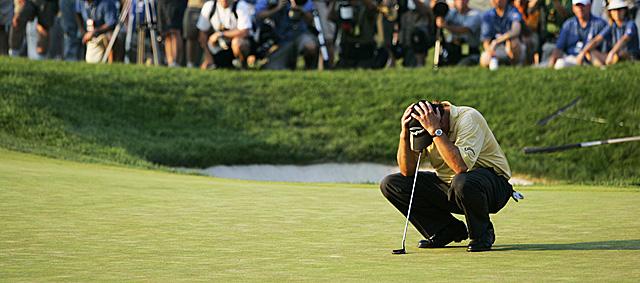
On June 18, 2006, I flew to Las Vegas on JetBlue with my wife and our two kids, and the flight was great because I got to watch almost the entire final round of the U.S. Open, at Winged Foot, on the screen in the back of the seat in front of me. The broadcast broke up as we were landing. Phil Mickelson had just hit a terrible drive into trouble on the left on the final hole, but he had a one-stroke lead and was about to win his third major in a row—good for him! I thought nothing more about it until the next morning, when I turned on ESPN. They were talking about Geoff Ogilvy and his victory at the U.S. Open, and at first I thought that the tournament I’d watched on the plane must have been a recording of the Open from some other year. Eventually, though, I learned what had happened.

Mickelson winged foot

Two weeks ago, I traveled to Calgary to give a talk (not about golf), and as a result I didn’t get to watch any of the first three rounds of the Masters, even on the plane. I went out to dinner with some of the people who had sponsored the conference I spoke at, and the husband of one of them, a lawyer, told a story about an airplane trip he took in the late 1960s, when he was about twenty.

Here’s the story: This lawyer fellow (whom I’ll refer to as Fellow) goes with a friend of his to the Toronto airport, where Friend (ditto) is catching a cheap charter flight to London. There’s construction going on at the airport, and the gate area is a mess, and everyone is sort of milling around. Fellow stands with the other non-passengers, waiting to wave farewell, but at some point Friend says, “Come on—let’s see how far you can get.” Fellow says, “No, no, I’ll get in trouble.” They go back and forth like that, but Friend eventually talks him into it, and, when the passengers are taken onto the tarmac to board a shuttle to take them to the plane, Fellow goes with them.

On the shuttle, Fellow says, “I don’t have anything!” and Friend says, “Here, take this,” and gives him his ticket envelope (while keeping the ticket). When Fellow gets to the plane, he sort of waves the envelope at the stewardess in the doorway and says “22C,” and boards the plane. He has no ticket and no passport and no luggage, and he’s wearing shorts. He sits down in 22C, and Friend slips into one of the restrooms and closes but does not lock the door.

The stewardesses count the passengers. The plane takes off. There are one or two empty seats on the plane, and Friend comes out of the bathroom and sits down. The plane lands at Gatwick, and all the passengers get off. There is enough confusion at the airport that Fellow is able to slip through customs, perhaps aided by the fact that he is maybe the only person in England who is wearing shorts. He calls his mother, back in Canada, and asks her to mail him his passport and some money. She sends him $100. He figures he’ll get a job of some kind, but mostly he just hangs out in pubs with Friend.

After about a month, Fellow gets some part-time work helping a guy who handles travel for University of Toronto students studying in England. One day, the guy hands him the unused return portion of a round-trip ticket that belonged to some student, and says, “Here. You owe me.” (This was in the era when half a round-trip ticket was often cheaper than a one-way ticket, and airlines didn’t penalize you for using it.)

The ticket has someone else’s name on it, but Fellow successfully uses it, along with his actual passport, to fly back to Toronto. When he lands, has just 50 cents—enough to take a bus only partway to the city, so he figures he’ll go as far as he can and then walk. While he’s waiting for the bus, he looks down and sees two bus tickets lying on the ground. He goes to the place he worked before he went to England, to get his last paycheck, which he had never collected. While he’s doing that, the boss comes out asks him what he’s doing, and re-hires him, and he goes to work the next day.

Mean Weather and the Value of a Shank-in-One

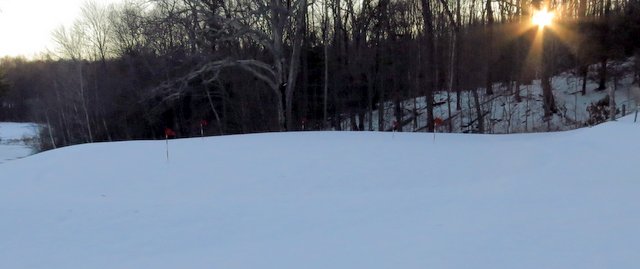
This is what the ninth green looked like on the morning of April 16. Unfair!

This is what the ninth green looked like on the morning of April 16. Unfair!

On the day after Income Tax Day, the weather in the Northeast turned vindictive, and my golf course—which had been back in operation for less than a week—disappeared under two inches of snow and ice. I had to travel that day, so I couldn’t have played anyway, but I still felt bullied. 

IMG_1272

The weather is going to have to win my trust back one day at a time, beginning this afternoon (assuming I can finish a couple of things I’m supposed to be working on). Still, I have less reason to be upset than Mike Reilly, a reader and a member of the World’s Second-Best Golf Club, whose first trip to the Masters, on practice-round Monday, was rained out after two hours. “Their rain-out policy is ‘better luck next year,” he wrote from a motel room in Augusta (the club offered refunds). “I understand why it is that way, but that was a long way to drive to watch eight guys tee off No. 1.”

Masters practice round rain

While the weather was misbehaving, several of my friends conducted an email debate about the Sunday Morning Group’s hole-in-one policy, which Hacker (real name) implemented a couple of years ago. We collect fifteen dollars a man on Sundays, and three of those dollars go into the S.M.G. Slush Fund, with which we pay for things like community service, international relief efforts, and bottle openers. The Slush Fund also underwrites the S.M.G. hole-in-one prize, which is five hundred dollars if the hole-in-one occurs during our regular Sunday game, and two hundred and fifty dollars if it occurs during a sanctioned S.M.G. event on a different day or time. (A sanctioned event is any round of golf that the whole group knows about in advance, including the Monday, Tuesday, Wednesday, Thursday, Friday, and Saturday versions of our regular Sunday game.)

20121118_130803-001

No one has ever won the $500 prize, and only Reese has won the two-hundred-and-fifty-dollar prize (which he spent on drinks for everyone—see photo above). That means that, by now, the hole-in-one prize is probably over-endowed, at least in theory. David W. asked whether a hole-in-one on our ninth hole (a short par 4, which long hitters occasionally reach from the tee) would count. The answer to that one was yes, of course. Then Fritz asked about holing out on No. 2 (a par 4) with your tee shot on No. 7 (a par 3). The second green is slightly closer to the seventh tee than the seventh green is, although the shot is probably tougher, because there are pine trees in the way. Addison said he thought the shot ought to count as long as it was a genuine shank. In other words, you can’t just aim for it. Further study.

P1070560

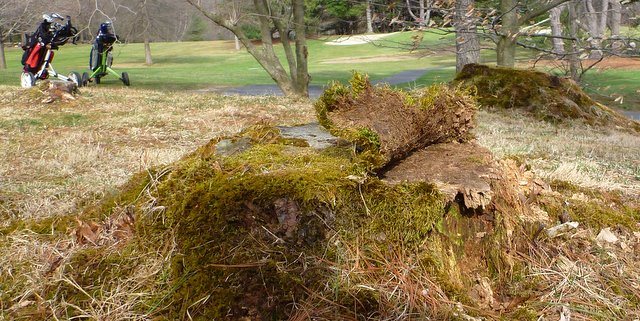
Meanwhile, the wind on Monday was so strong that it peeled the moss right off a stump:

P1120052

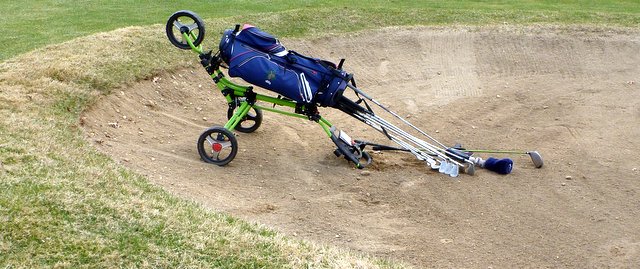
It also sent Hacker’s pushcart rolling into a bunker and tipped it over. (Maybe there should be a prize for that, too.)

P1120058

How I Won the Masters, and So Forth

My club's equivalent of the Eisenhower Tree, on our seventeenth hole. We cut it down last year.

My club’s equivalent of the Eisenhower Tree, on our seventeenth hole. We cut it down last year.

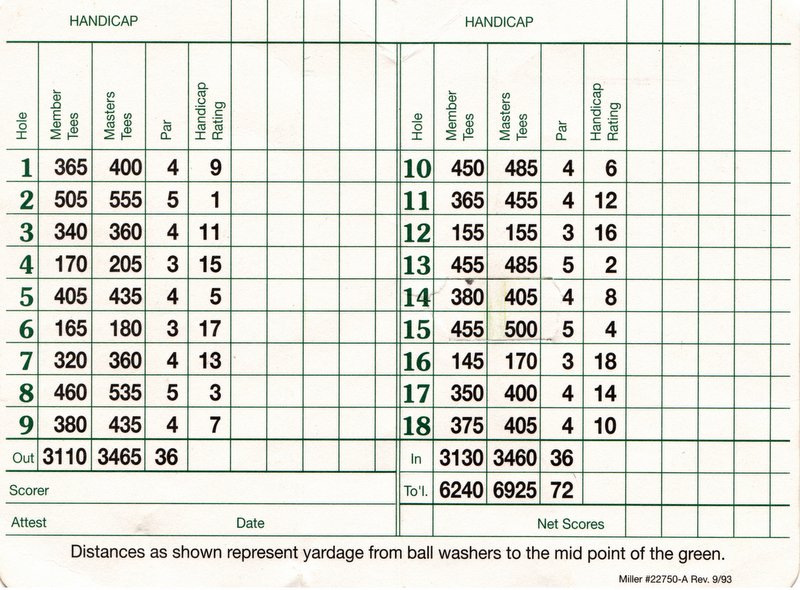
On Sundays during the majors, my friends and I pay homage to the big boys by using scorecards from the course where the major is being played. Usually, Hacker (real name) finds the card online and prints copies, but he couldn’t find an Augusta card with handicap ratings on it. Luckily, I had some old Augusta cards from the nineteen-nineties, when I was working on my book about the club and the Masters, so I scanned one and printed enough for the Sunday Morning Group.

Nineteen-nineties scorecard from Augusta National, used by the S Sunday Morning Group on Masters Sunday, April 13, 2014.

Nineteen-nineties scorecard from Augusta National, used by the Sunday Morning Group on Masters Sunday, April 13, 2014. Check out those last-century tournament yardages.

In 1996, I told Jackson Stephens, who was Augusta’s chairman at the time, that I thought the club ought to print a silhouette chart of the members’ jets on the back of the scorecard, so that a golfer on the course could identify whichever Gulfstream or Falcon or Challenger was passing overhead, on its way to Bush Field, and which friend, therefore, might be available for a second round, in the afternoon.

planes silhouette

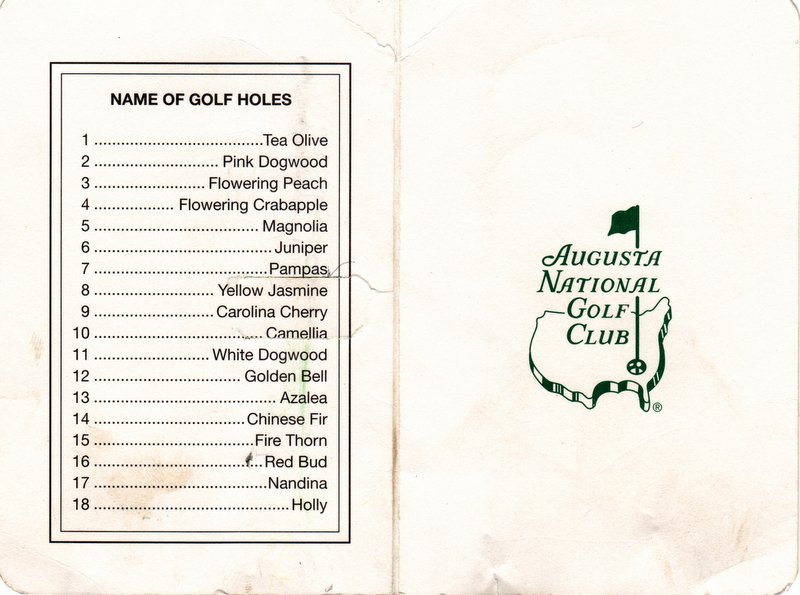
Stephens didn’t take my suggestion, for unknown reasons, and continued to list the names of the holes instead:

ANGC 2

Even so, the Augusta scorecard has some interesting features. One (you will notice) is that all the yardages are given in multiples of five. That’s because Clifford Roberts, the club’s co-founder and first chairman, thought it was ridiculous to claim more precision, given the daily variation in hole and tee locations. Another interesting feature is that the handicap ratings are based on yardage, not on what TV commentators refer to as “difficulty.” I agree strongly—and if you want to have an argument about that I’m ready. One more thing to notice is how much shorter the course was from the Masters tees throughout the nineties. The eighteenth, for example, was 405 yards; today, it’s 465.

Chic (our chairman) and Slade (victorious) at lunch.

Chic (our chairman) and Slade (co-victorious) at lunch.

Anyway, Masters Sunday was the first 2014 home-course meeting of the Sunday Morning Group. Because we never give strokes on par 3s, no one got a stroke on the fourth hole, which is a par 5 on our course but a par 3 at Augusta and therefore a par 3 for us on Masters Sunday. That caused mental problems for some of the guys, who couldn’t help thinking of a 5 on that hole as a round-destroying double-bogey. My group (Mike A., Rick, Slade, and me) had no trouble with that, for some reason—maybe because we weren’t paying attention. Anyway, we won, by a stroke, at 12 under par, no problem. Hacker brought lunch. The kegerator was full. The water was back on in the clubhouse. The course was in great shape, after our worst winter in a decade. And the sun came out while we were sitting on the patio afterward.

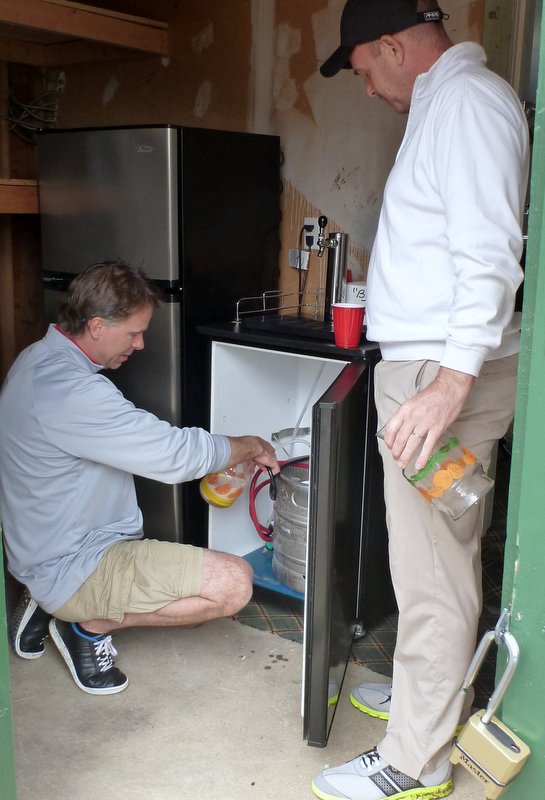
From left to right: Fritz, kegerator, Corey (our pro), and the new padlock, installed by order of the Board of Governors.

From left to right: Fritz, beer fridge, kegerator, improvised pitcher, Corey (our pro), and the new padlock, installed by order of the Board of Governors.

Masters Countdown (Updated): The Hardest Hole to Build at Augusta National

ANGC 12-001

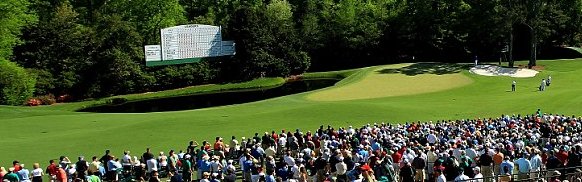
Augusta National’s twelfth hole is just 155 yards long, for both club members and Masters competitors. Nevertheless, Jack Nicklaus once called it “the toughest tournament hole in golf,” and Lloyd Mangrum said it was “the meanest little par 3 in the world.” During the first two rounds of the Masters in 1980, Tom Weiskopf played it in twenty strokes—fourteen over par. In the photo below, Seve Ballesteros is stuck in the flowers above the green, after pulling his tee shot long and left:

Seve 12-001

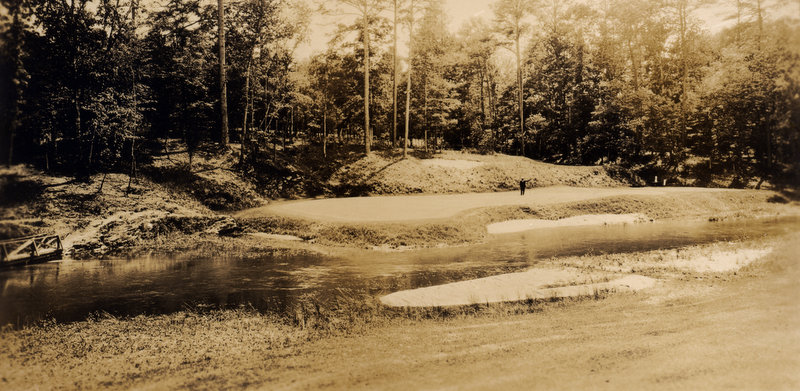
The twelfth was the hardest hole on the course to build. When an engineer saw that the plans called for a bunker in front of the green, he thought that the drawing must be in error, because the slope was so steep. The green was created by covering an exposed rock ledge with five thousand cubic yards of earth, which had been excavated on the opposite side of the creek. During that process, two tractors and eight mules became stuck in the mire and had to be pulled out with long ropes drawn by all the other tractors.

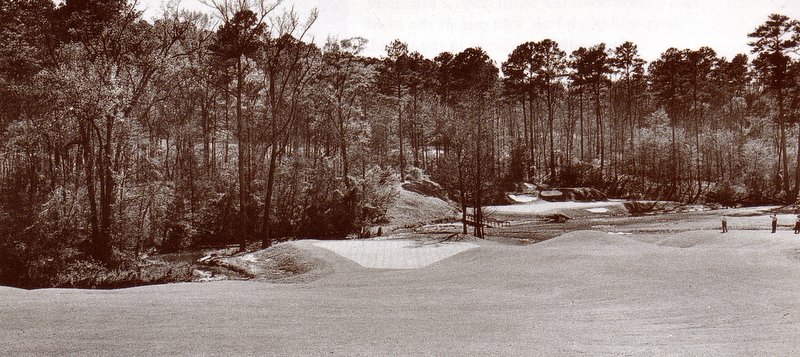
The twelfth green in 1935, the year of the second Masters.

The twelfth green in 1935, the year of the second Masters.

The twelfth green has always been shallow and treacherous; in the early years it was even more so. The right side of the green, where the hole is usually cut for the final round of the Masters, was enlarged in 1951 because, Bobby Jones explained, the hole had been “possibly a little too exacting.” (The front right corner of the green had settled toward the creek, exacerbating the problem.) “I think we should build this up so as to provide the maximum level putting surface,” Clifford Roberts, the club’s co-founder and chairman, explained in a letter at the time. “To do it right, logs should be used the same as when we extended the front of the left side of the green. While we are about it, we might provide another yard or two of depth. When the pin is on the right the hole is too damn tricky for fair tournament play especially since that area is subject to gusty winds. Also, we can never eliminate the bad feature of the damp bank back of the green in which a ball will bury. A good shot that is only a shade too short or too strong means a 2 stroke penalty—not one. Now that #11 is exacting such a surprising toll [because of the new pond] I wouldn’t mind easing up a trifle on the boys at #12 green.”

Got dirt?

Got dirt?

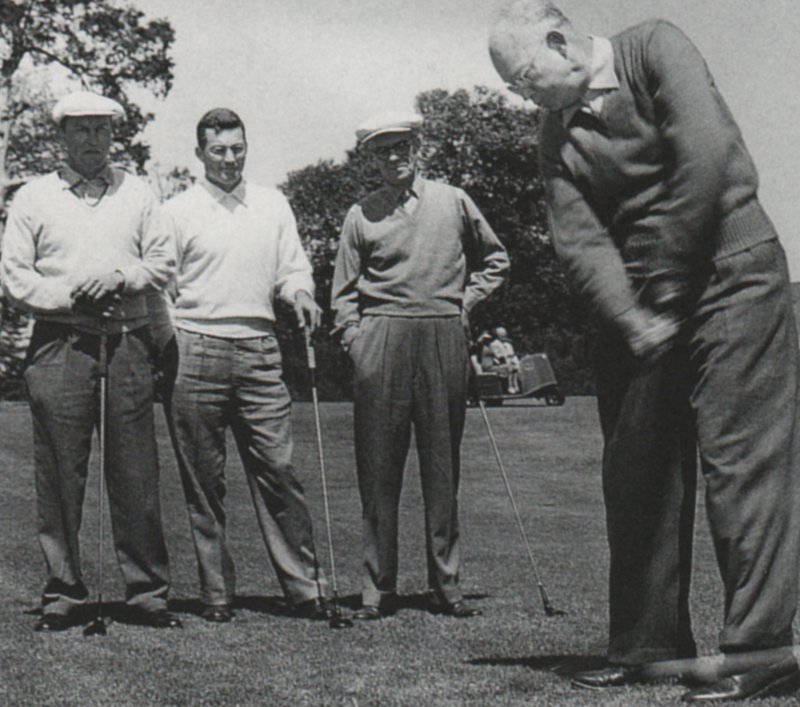
The creek in front of the twelfth green was a factor in a match played by Roberts, Ed Dudley (the club’s pro), Jerome Franklin (a local member) and Dwight Eisenhower shortly after Eisenhower had been elected president. Eisenhower’s tee shot landed short of the green, and his ball ended up on a sand bar next to the water. “You can play that ball off the sand bar,” Roberts said as they walked to the green. Eisenhower climbed down the bank to his ball and sank past his knees in what turned out to be quicksand. Two Secret Service agents jumped in after him and pulled him out by the arms. The match was delayed while the president went back to his cottage to change clothes. When he returned, he told Roberts that he would never again take his advice on any matter concerning golf.

That's Eisenhower swinging, and Bill Zimmerman, Billy Joe Patton and Roberts looking on. Nobody seems impressed by the President's swing.

That’s Eisenhower swinging, and Bill Zimmerman, Billy Joe Patton and Roberts looking on. Nobody seems impressed by the President’s swing.

Masters Countdown: Bobby Jones’s Father, the Great Flood, and the Eleventh Hole

Eleventh green, twelfth tee, twelfth green, Augusta National, early 1930s.

Eleventh green, twelfth tee, twelfth green, Augusta National, early 1930s.

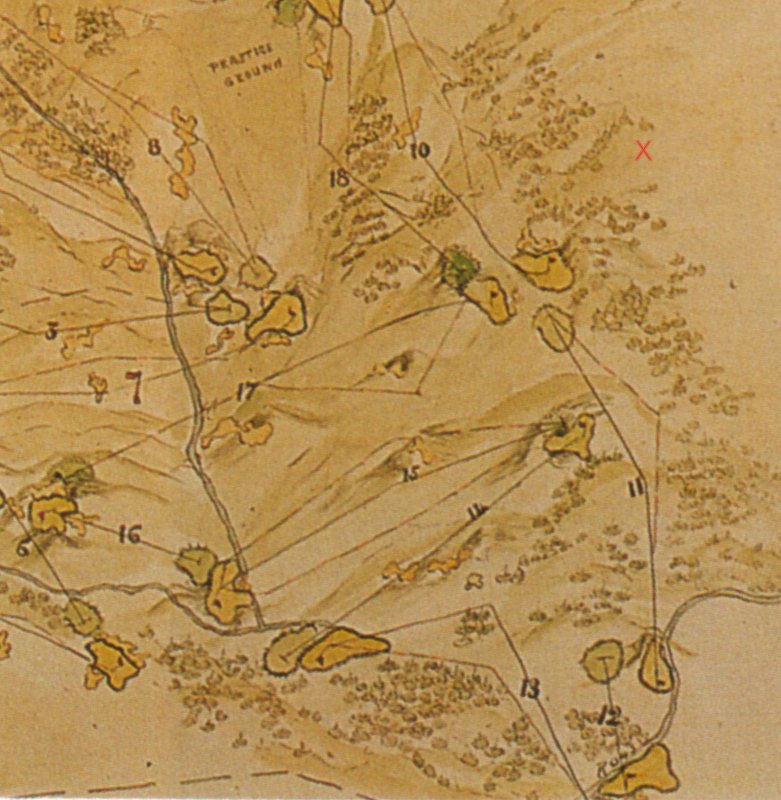
The Masters tee on the eleventh hole was originally positioned above and to the right of the tenth green, not far from the seventeenth green. The hole ran downhill and played considerably shorter than its measured distance, which was a little over four hundred yards. In fact, until about a decade ago the green was at least theoretically drivable from the members’ tee, which was on the old line, although the shot was blind and called for a powerful fade.

Alister MacKenzie's original routing, showing the location of the eleventh tee, between the seventeenth green and the old tenth green. The modern tee is somewhere back near the red X in the upper right hand corner of the image.

Alister MacKenzie’s original routing, showing the location of the eleventh tee, between the seventeenth green and the old tenth green. The modern tee is somewhere back near the red X in the upper right hand corner of the image.

The hole was first changed in 1950, when the club built a new tournament tee, below and to the left of the tenth green. The change was suggested by Clifford Roberts, the club’s chairman and co-founder, and endorsed by Bobby Jones. The change was made both to lengthen the hole and to eliminate a gallery bottleneck between the tenth green and the eleventh tee. “Under the new arrangement,” Jones wrote at the time, “the spectators will have ample room on the high ground to the right of the fairway to observe play, all the way from tee to green, without going on to the fairway at all. It will be substantially the same arrangement as is provided at number 13, where everyone can get a clear view of all shots played without following the contestants down the fairway.” The Masters tee is even farther back today, and the fairway has been reshaped. The hole measures a little more that five hundred yards for the tournament, and when you stand on the tee it looks like a thousand.

Eleventh green, 1930s.

Eleventh green, 1930s. No pond yet.

The eleventh hole’s most conspicuous feature is the pond to the left of the green. Roberts, in his book about the club, which was published in 1976, wrote that the pond had been his idea; Byron Nelson told me in 1998 that it had been his own. “There was already water behind the green,” he said, “because Rae’s Creek ran back there. But not many people went over the green. So I told Cliff that I thought he ought to dam up the creek and let the water make a pond to the left of the green.” (Nelson’s memory that the creek passed only behind the green wasn’t not quite correct. The water also looped near the front left, almost as close to the green as the pond is today—as you can see in the photos above.) The dam was built in 1951.

There's that pond. Look out.

There’s that pond. Look out.

In mid-October 1990, Augusta got more than a foot of rain in just thirty-six hours. Rae’s Creek flooded, and took the eleventh green and much of the rest of Amen Corner with it:

amen corner flood 1990Hord Hardin, the club’s chairman at the time, said they were lucky the flood hadn’t occurred right before the Masters. “We probably would have had to play four sixteen-hole rounds,” he said. The green was rebuilt using data from a 1982 survey, and the bunker and the pond were recreated from photographs. The hole was back in play not just for the Masters but for the Thanksgiving member party, six weeks later.

The Colonel, Bobby Jones's father.

The Colonel, Bobby Jones’s father.

In the early years, there was a small pot bunker in the center of the fairway at roughly the distance of a reasonable drive, invisible from the tee. The bunker was Jones’s idea. He wanted the course to have a hazard that could be avoided only with good luck or local knowledge—the sort of seemingly arbitrary booby trap that is plentiful on the Old Course at St. Andrews. Jones’s father, Colonel Bob Jones (photo above), drove into it during his first round on the course, in 1932, and when he found his ball in the sand he shouted, “What goddamned fool put a goddamned bunker right in the goddamned center of the goddamned fairway?” or words to that effect. His son, who was playing with him (along with Roberts), had to answer, “I did.” The bunker was eventually filled in, though not till many years later.

Masters Countdown: The Plan to Demolish Augusta National’s Clubhouse

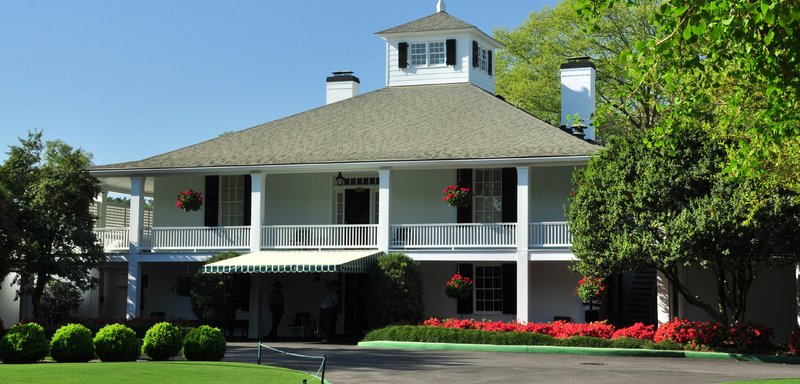
ANGC clubhouseThe original plans for Augusta National Golf Club called for two eighteen-hole golf courses—a Championship Course and a Ladies Course—plus tennis courts, outdoor squash courts, an eighteen-hole pitch-and-putt course, a bridle path, a couple of dozen houses for members, and, possibly, an on-site hotel. In addition, $100,000 was to be spent on a clubhouse—which was needed because the existing manor house, which had been built in 1857 by a horticulturalist and nurseryman named Dennis Redmond, was going to be torn down.

Redmond manor house, 1800s.Redmond was, in addition to a planter, an architectural historian and an editor of an agricultural publication called The Southern Cultivator.  His house had eighteen-inch-thick walls made of concrete, a material that before that time had not been used in residential construction in the south; Redmond called it “artificial rock.”

Redmond’s house, post-Redmond, in the 1800s. Redmond was, in addition to a nurseryman, an architectural historian and an editor of an agricultural publication called The Southern Cultivator. His house had eighteen-inch-thick walls made of concrete, a material that before that time had not been used in residential construction in the south; Redmond called it “artificial rock.”

It seems unimaginable today, but demolishing the old manor house wouldn’t have been a reckless act. Although the building looks imposing in photographs, it’s quite small. Much of its apparent bulk comes from its porches, which are nine-and-a-half feet deep and run all the way around on both floors, and from large wings added later on each side. In 1931, the building had fourteen rooms, but most were cramped and dark, and there was no kitchen, no electricity, and no plumbing. The ground floor had been referred to by the builder as a “basement,” and it looked like one. A consulting engineer, after making an inspection, concluded that most members “would probably be better satisfied in a modern building with all modern conveniences.” Few disagreed.

ANGC clubhouse old-001

Clifford Roberts and Bobby Jones, the club’s co-founders, hired Willis Irvin, a local architect, to draw plans for a new clubhouse. A detailed rendering of his design appeared in the Augusta Chronicle in 1931:

The clubhouse that was never built, designed by Willis Irvin, a prominent Augusta Architect. I apologize for the appalling quality of the image, which is a scan of a photocopy of a microfilm print of a newspaper photograph of a drawing.

This is the Augusta National clubhouse that was never built. It was designed by Willis Irvin, who died in 1950. I apologize for the appalling quality of the image, which is a scan of a photocopy of a microfilm print of a newspaper reproduction of an architectural drawing.

The building was to have two large wings, an exterior of white-painted brick, a slate roof, several impressive chimneys, and a vast neoclassical portico supported by four tall columns. The most striking feature was to be an enormous men’s locker room containing four hundred lockers, some double and some single. According to the Chronicle, Jones had been involved in the planning, and the locker room was going to incorporate “the best features of the clubs he has visited.” There were to be nooks and corners in which golfers could gather before, after, and between rounds to play cards, drink gin, eat lunch, watch the action on the course through large bay windows, and converse. A separate wing was to contain similar facilities for women.
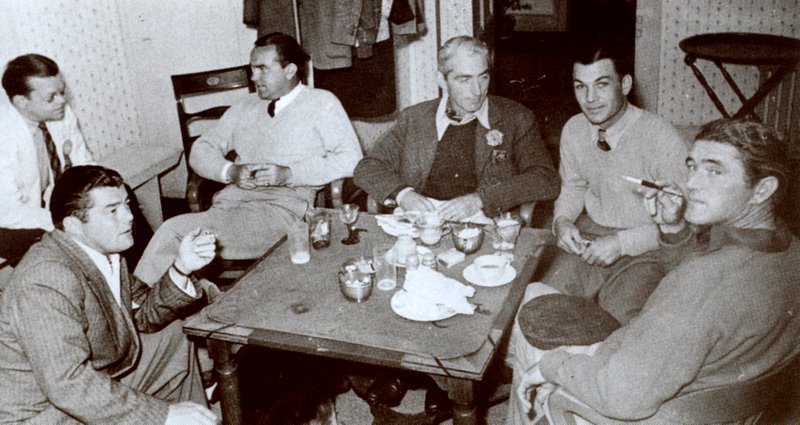
Early Masters competitors did more between-rounds drinking and smoking than they tend to do nowadays. Clockwise from the lower left, these people are: Lawson Little, Charlie Bartlett (the golf editor of the Chicago Tribune, after whom the press lounge in the media building at Augusta National was named), Billy Burke, Tommy Armour, Ben Hogan, and Olin Dutra.

Masters competitors did more between-rounds drinking and smoking in the early years than they do nowadays. This photo is from the second tournament, in 1935, when the clubhouse was still a dank mess. Clockwise from lower left: Lawson Little, Charlie Bartlett (the golf editor of the Chicago Tribune, after whom the press lounge in Augusta National’s media building was later named), Billy Burke, Tommy Armour, Ben Hogan, and Olin Dutra.

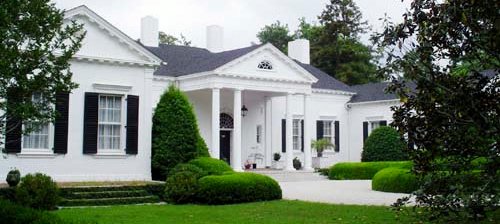
You can’t see much detail in the poorly reproduced newspaper image higher up in this post, but several of the private houses that Willis Irvin designed were similar to what he had in mind for Augusta National. (According to the South Carolina State Historic Preservation Office, he specialized in “elegant rural estates,” often “built for wealthy northern clients” who wanted winter residences in the South.) The Irvin house in the photo below, called White Hall, is in Aiken, South Carolina. It was built in 1928, and in many ways it’s a scaled-down version of what he proposed for Augusta National:
S1081770202302-001

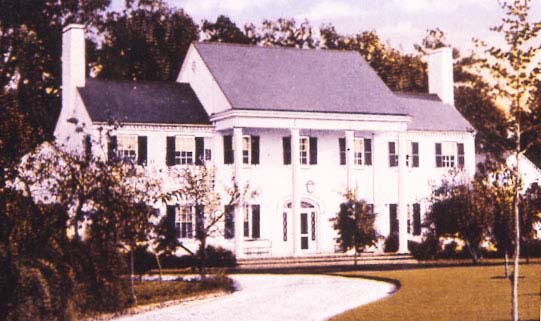
Here’s another similar Irvin house, from Hartsville, South Carolina, built about 1931:
CokerAnd here’s the back of Irvin’s own house, in Aiken, which was built in 1855 but which he enlarged in 1930, by adding the wings. (He liked wings.)

Irvin House

Not everyone was eager to tear down the old manor house. Harry M. Atkinson, of Atlanta, who was part of Augusta National’s tiny group of early members, wrote to Roberts in 1931 to say that he and his wife loved the building and believed it should be renovated rather than razed. “We both were greatly impressed with the avenue of magnolias leading up to the old Berckmans residence and the planting around the house,” he wrote. (Prosper Berckmans, a Belgian horticulturalist and landscape architect, had bought the property from Redmond in 1858 and turned it into Fruitlands Nurseries, which by 1931 had been out of business for a little more than a decade.) “We think that all of that, including the house, ought to be preserved carefully,” Atkinson continued. “It can be made a perfect gem, using the old house for a club house. You could not reproduce what is there for any amount of money.”

ANGC old

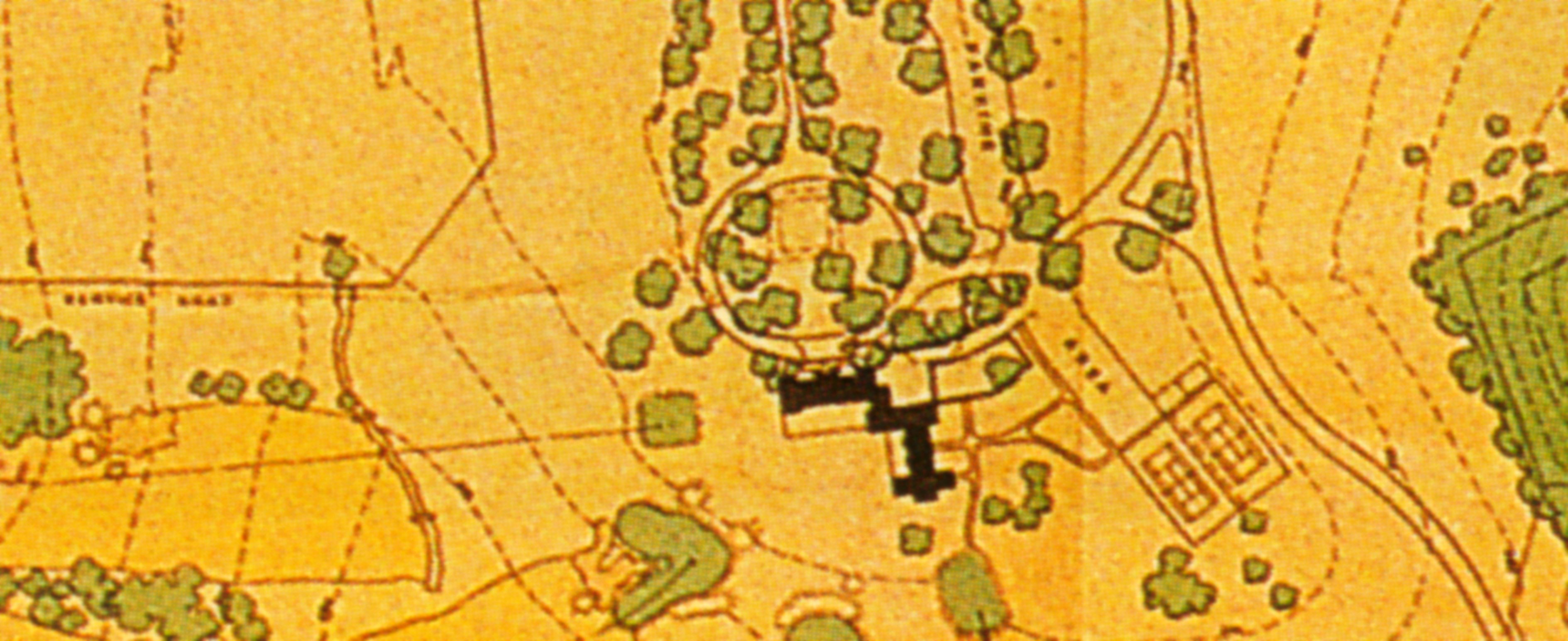
Atkinson also said that he felt “a great many golf clubs” had been ruined by the construction of “club houses that are too elaborate and too luxurious”—an observation that may be even more apt today than it was then. In response to Atkinson, Roberts wrote that that the house would be hard to save but that, for financial reasons, nothing was likely to be done in a hurry. Still, early master plans for the Augusta National property included a “Site for Club House”:
plan showing clubhouse site

The image above is a detail from a subdivision plan prepared by Olmsted Bros. in 1932. The footprint of Irvin’s proposed clubhouse is shown in black. Just above it is the driveway circle, which still exists, and the near end of Magnolia Lane; to the left is the first tee; at roughly eight o’clock (shaped like upside-down rabbit ears) is the ninth green; directly below the clubhouse is the tenth tee; to the right are the proposed tennis courts. Here’s some of the same area as it actually appeared a couple of years later, in a photograph taken from an airplane:
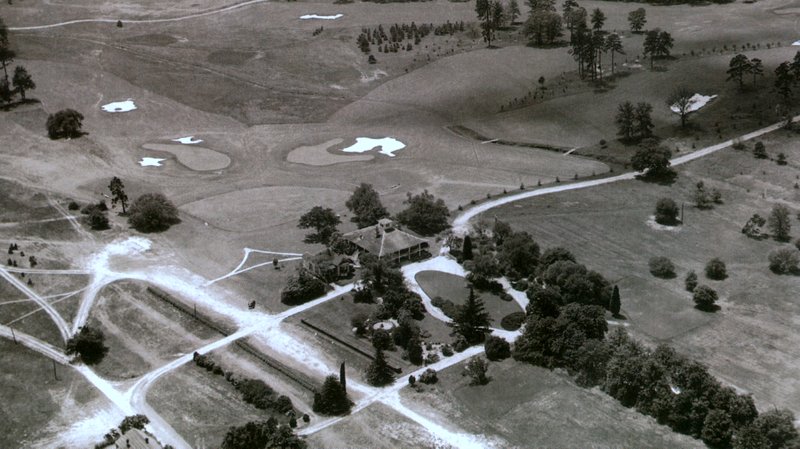
aerial view ANGC 1934

The demolition plan would have proceeded if the club had had the money to carry it out. But Roberts and Jones were unable to sign up more than a handful of members, and therefore had to make do with their crumbling old manor house (and no tennis). Thank goodness.
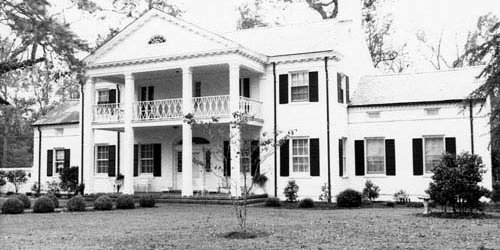
Another of Irvin's designs--this one from Hartsville.

Another house designed by Irvin, also in Hartsville. This one was built in 1934, the year of the first Masters.


angc postcard

Reader’s Trip Report: Golf Simulators in Seoul, South Korea

Golfzon simulator locations near Cory Olson's office, in Seoul's Gangnam District.

Golfzon simulator locations within a five-minute walk of Cory Olson’s office, in Seoul’s Gangnam District.

Cory Olson, a reader in Seoul, South Korea, writes:

While I don’t have any data, I’m fairly confident that South Korea has the most golf simulators in the world. That’s understandable in a golf-crazed country where the average course outing costs over three hundred dollars (green fees plus cart plus caddie, not to mention golf-club membership fees). Simulators are ubiquitous all over the country, but especially around office buildings, where there is at least one 스크린골프 (screen golf) on every block.

Vision

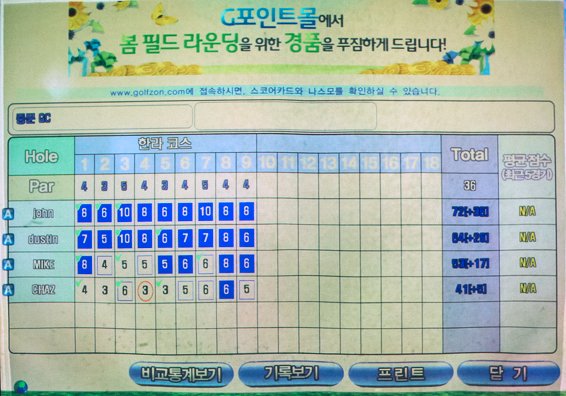
There are several systems out there, but by far the most popular is made by a company called Golfzon, which is now on its third-generation simulator, called Vision (see image above). Instead of taking measurements only at the ball, this one features two overhead super-high-speed cameras to get more accurate data. (Might all be in my head, but other simulators never seem to read my sweeping, almost divot-less wing correctly—but on Vision I play much better.) Also, the system has a swing-plate with hydraulics, to adjust the lie. (I always turn it off. Just nice, flat lies for me, thank you.) There are also mats that simulate fairway, rough, and sand (somewhat). [And there’s some pretty good simulated English on the Golfzon website: “Each trees, bushes, hills, club houses and rocks are delicately represented so that golfers can feel the atmosphere of renowned golf courses without ever visiting them.”]

The cost for a round varies greatly, depending on location and time of day, but is typically between fifteen and twenty-five dollars. The busiest, most expensive times are weekday nights, because screen golf is one of the most popular forms of corporate entertainment. (South Korea is very big on required after-work socialization with colleagues.) After a first round of Korean barbecue and drinks, beers and screen golf is a common second round.
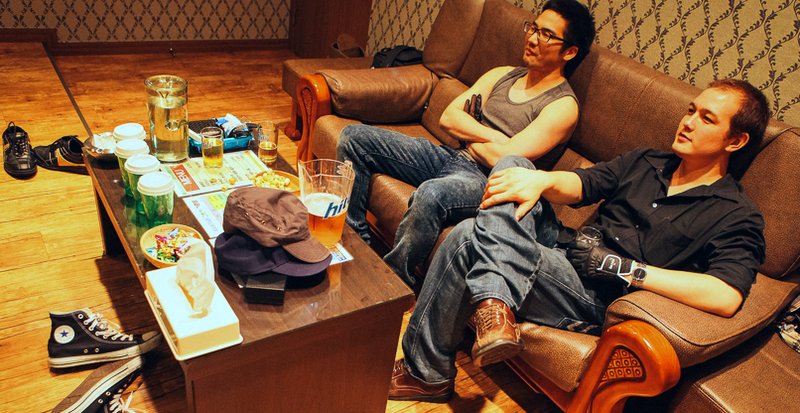
golfzon men

I’ve heard of, but never personally experienced, “helper players,” who can be called in to the room: young ladies with picture-perfect swings and amazingly short skirts. Seems like an all-right idea, except that they out-drive you on every hole.
That's not a helper, exactly.

That’s not a helper, exactly. It’s Uee, a South Korean actress and rapper (in a group called After School), who plays a golf-obsessed young girl in a popular television series.

Screen golf is so popular in Korea that it has its own professional tour. Most of the players are pros who teach on Golfzon simulators, or they work for a major company that sponsors them, but some are able to earn a decent living playing screen golf full time. [You can watch a video about the Korean simulator tour here. It’s in Korean, but you can probably figure out most of what they’re talking about. The video features several stars, plus simulated versions of real golf courses.]

The only real issue I have with screen golf is the greens. I’m by no means a lights-out putter, but putting is typically not a weakness. When I play on the simulators, however, all my “feel” is replaced by a very mechanical (and mathematical) approach, based on how far above or below the hole I am on the color-coded green, and the speed of the animated break lines.

golfzonIn a couple of weeks, Olson and some of his expat friends and hoping to hold an all-night Golfzon tournament. If they pull it off, maybe he’ll send an update.