Open Countdown: Troon, Foursomes, Kümmel, and the Queen

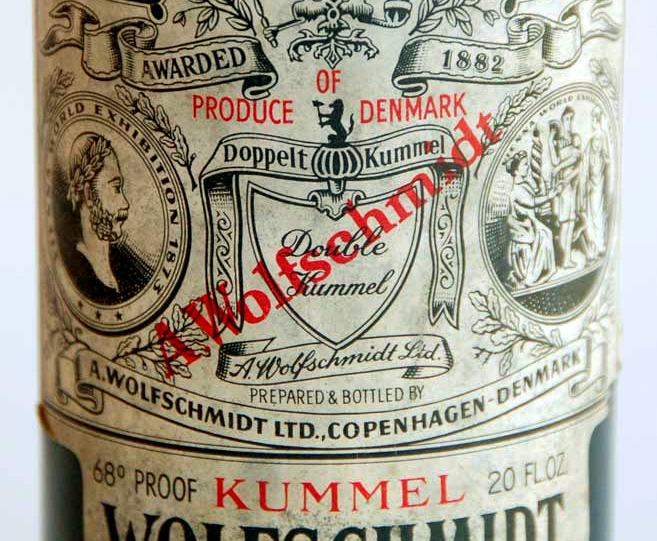
Foursomes is a game in which two golfers take turns playing the same ball. In the United States, it’s usually called Scotch foursomes or alternate shot, and it’s often a prelude to divorce. (The great British golf correspondent Henry Longhurst once recounted, with disapproval, an old joke about a male golfer who was “alternately playing and kicking his ball” because he was “practicing for the mixed foursomes.”) Foursomes moves fast, and hitting just half the shots ensures that someone in the group always has a hand free to hold the kümmel, a clear, anise-and-fennel-flavored alcoholic beverage, which is sometimes called the golfer’s liqueur:

kummel

Kümmel is a popular drink at Troon. Every year, its members play a cross-country foursomes match with members of Prestwick, which is right next door. Half the field starts on the first tee at Prestwick, and half starts on the first tee at Troon. Everyone plays to the eighteenth green on the other course, breaks for lunch, and then plays all the way back. Two Troon members I played a non-foursomes round with in 2009 told me that, usually, a team scores better if it starts at Prestwick, because a typical Prestwick lunch includes so much alcohol that golfers who make the turn there sometimes have trouble finding their way home.

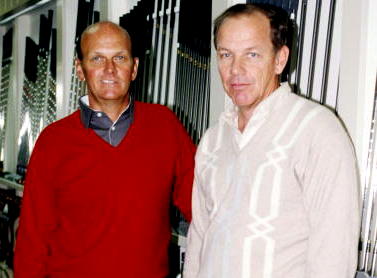
  (Photo by David Cannon/Getty Images)

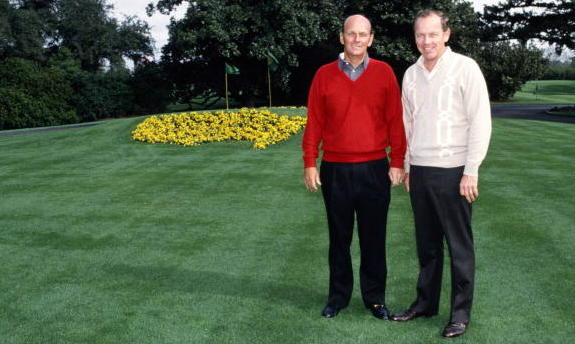
(Photo by David Cannon/Getty Images)

Competitors who start at Prestwick get to eat lunch in the dining room at Troon. Hanging on the wall at one end is a portrait of one of the club’s founders:

troon dining room founder.jpg

Hanging on the wall at the other end is a portrait of the Queen:

troon dining room queen.jpg

A member told me that pictures of the Queen are always supposed to be hung so that her eyes are higher than the eyes of any person in any other picture in the same room. Doing that at Troon would have meant pushing her almost all the way up to the ceiling. So they didn’t.

Back-Roads Scotland: Tarbat Golf Club

P1030235

Last week, Alex Noren, of Sweden, won the Scottish Open at Castle Stuart Golf Links, in Inverness. About an hour farther to the north is Tarbat Golf Club, in the microscopic village of Portmahomack. I played a round there in 2007, and, although I wouldn’t suggest planning a trip around it, if you happen to be in the area you could do worse than to stop by.

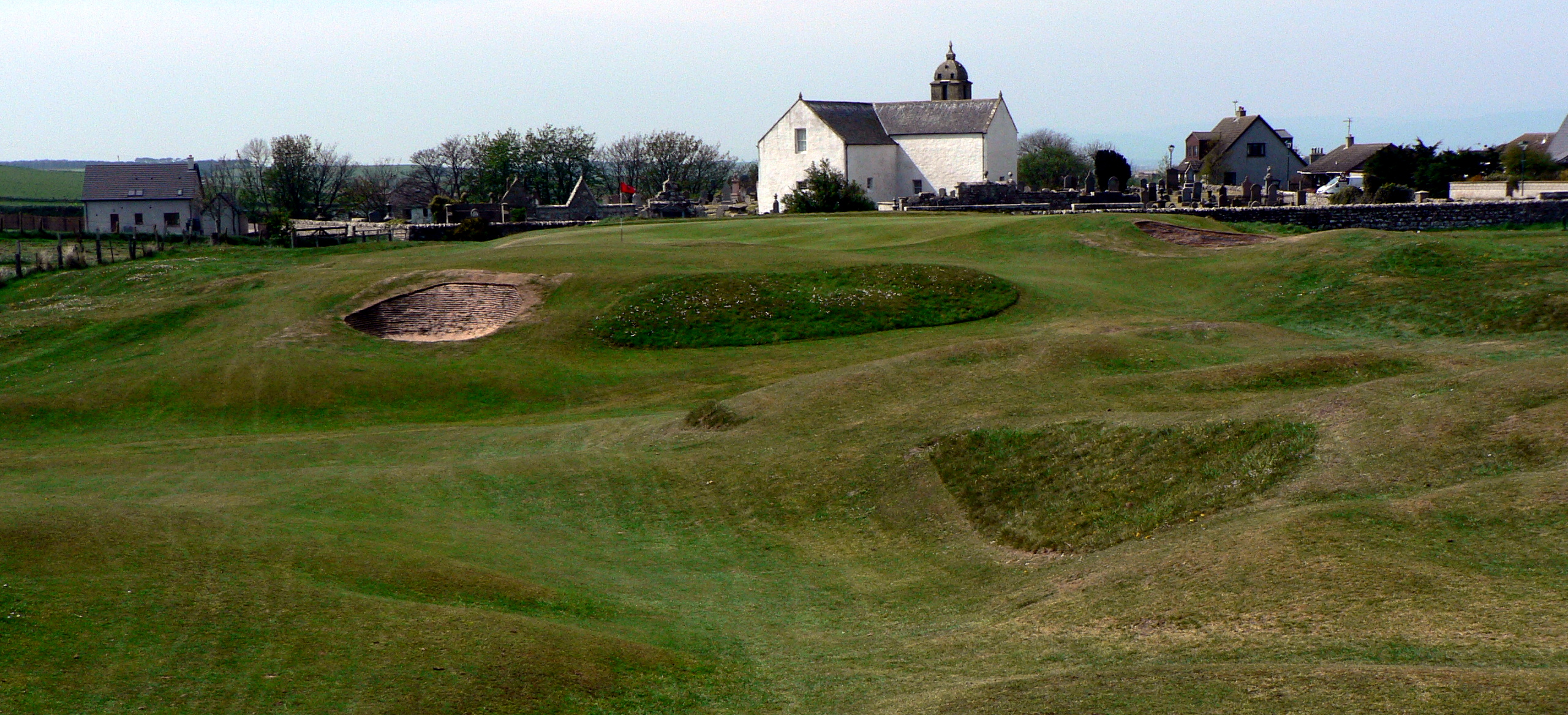
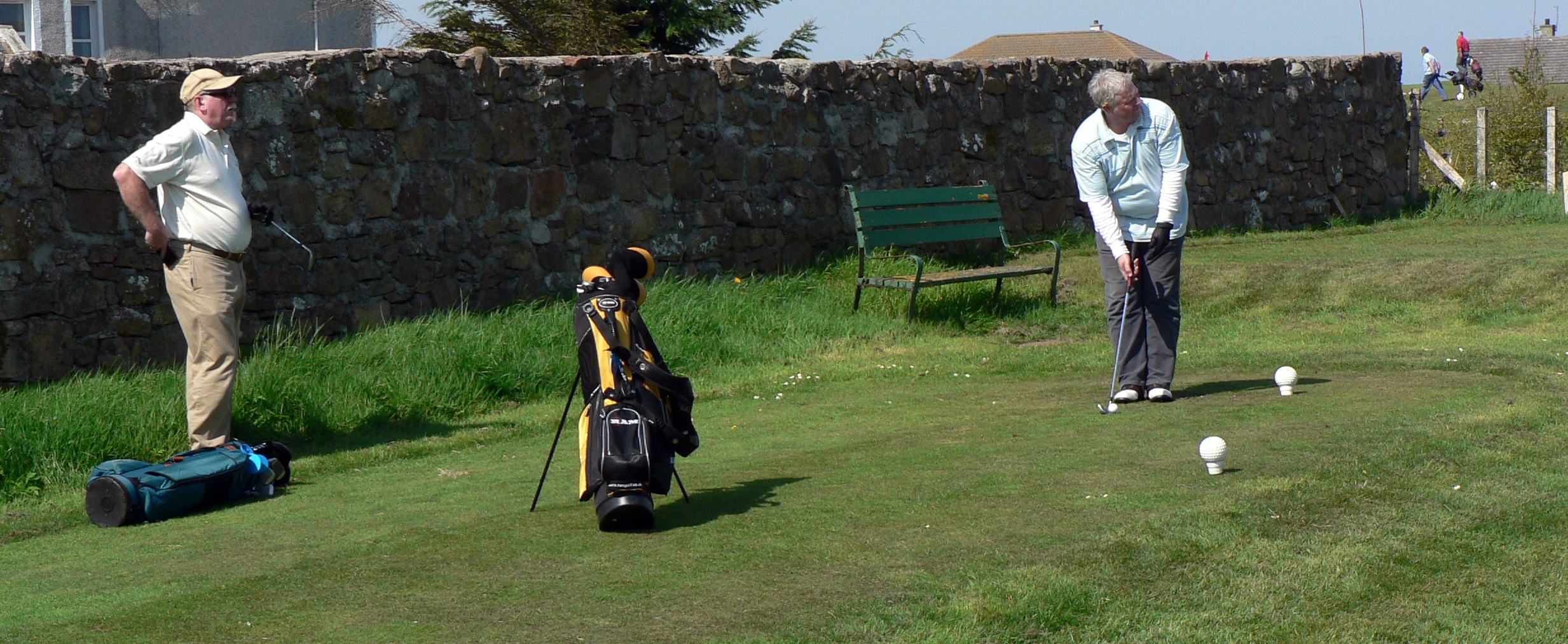
Tarbat is a links course on a sandy promontory on the southern side of Dornoch Firth, and on a clear day you can look across the water to Dornoch itself. The course has 10 holes, which are listed on the club’s website as 1-9 and 14. To make an 18-hole round, you play all the holes twice, from different tees the second time around—except the fifth, a 125-yard par 3, for which you substitute an entirely different hole, a 155-yard par 3—the fourteenth. I played with two middle-aged members, both of whom lived nearby and worked in the oil industry.

P1030229

They were competing in a club tournament but had no expectation of winning any prizes and so didn’t mind having me along. My favorite hole—in fact, one of my favorite holes of the trip—was the ninth/eighteenth, a short par 4 that plays either around, over, alongside, or into a cemetery, depending on the shape and length of your tee shot.

P1030237.JPG

P1030234.JPG

P1030239.JPG

P1030248.JPG

The Case for All-male Golf Clubs

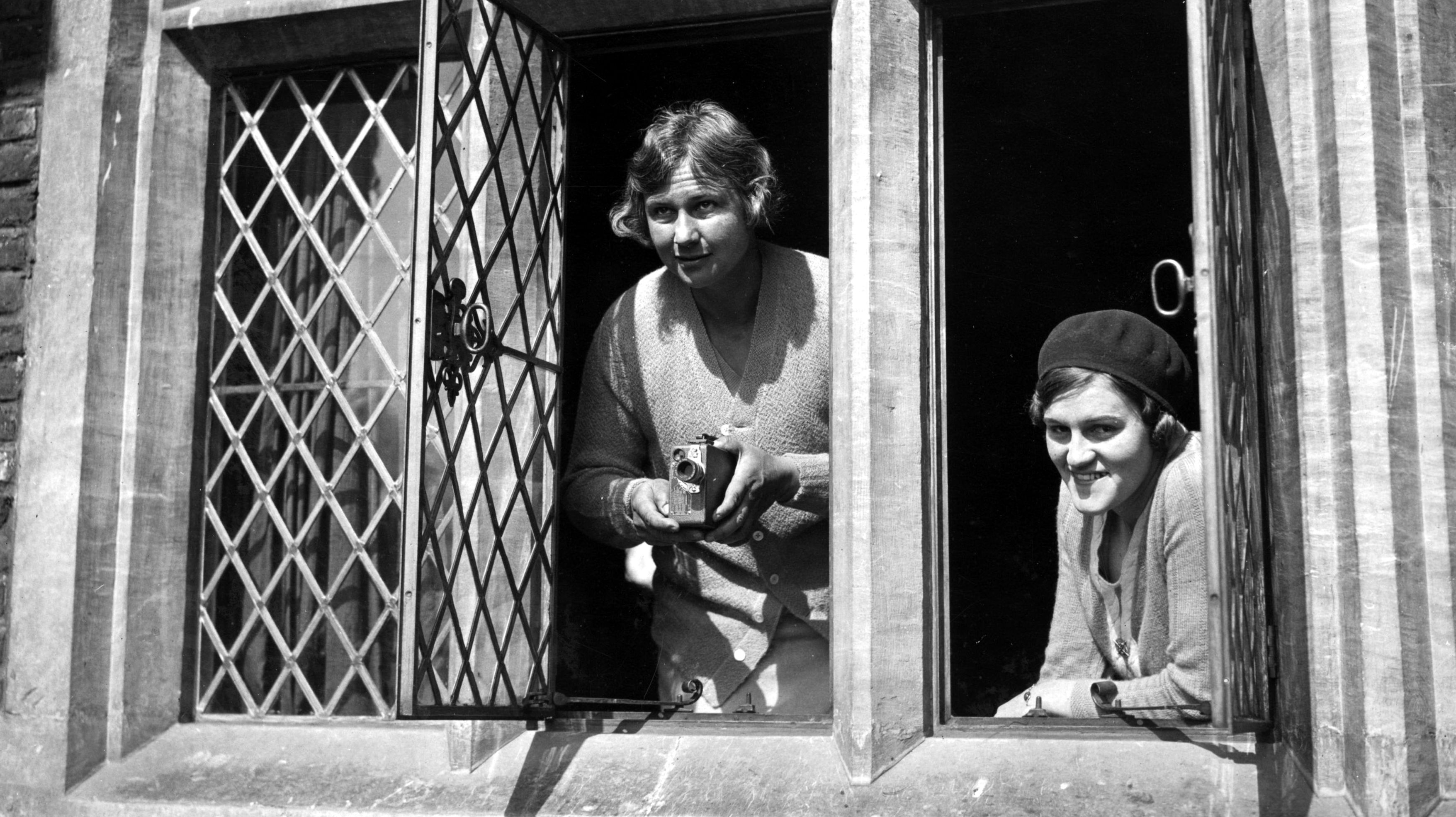
Marion Hollins, the captain of the first American Curtis Cup team and the founder of Women's National Golf & Tennis Club. (Photo by Puttnam/Topical Press Agency/Hulton Archive/Getty Images)

Marion Hollins, the captain of the first American Curtis Cup team and the founder of Women’s National Golf & Tennis Club. (Photo by Puttnam/Topical Press Agency/Hulton Archive/Getty Images)

The men-only membership policy of the Royal & Ancient Golf Club of St. Andrews was scandalous and indefensible, since the R & A is the main worldwide governing body for all of golf. But the men-only membership policy of Muirfield is not, since the tournament it will no longer be allowed to host, the British Open, is also men-only. Why shouldn’t a sports event whose participants are all of one sex be held at a sports club whose members are also all of that sex?

I wrote about this issue in Golf Digest thirteen years ago, when the controversy involved Augusta National and the Masters. The bitterest argument then was that the absence of women from the membership of any golf club is, ipso facto, the sexual equivalent of racism. At that time, the Rev. Jesse Jackson described men-only membership as “gender apartheid,” and said, “The gender bigotry is as offensive as racial bigotry or religious bigotry.” Others made essentially the same claim: that operating a social club whose membership includes no women is morally indistinguishable from operating a social club (or a society) that excludes blacks or Jews.

Yet Jackson’s accusation depended on a false analogy, and on his own (willful) muddling of the possible reasons for making distinctions between human beings. Racism is a belief in nonexistent racial differences, especially ones that imply the inferiority of one race in comparison with another. Sexism is more complicated, because genuine, non-prejudicial differences between men and women really do exist. (Maintaining separate restrooms for whites and blacks is morally repugnant; maintaining separate restrooms for males and females is not—and the current debate about restroom access for transgender people underscores that truth, since the one thing both sides agree about is that the differences are monumentally important.) Indeed, one of the transforming accomplishments of American feminism has been to foster a broader appreciation of the meaningful ways in which men and women are not the same. Women who prefer to be treated by female physicians, or to join women-only health clubs, or to be represented by female divorce attorneys aren’t guilty of “gender apartheid”; their preferences merely reflect the fact that they, like men, have needs and emotions and desires that are not sex blind.

If you aren’t tired of this issue already, you can read my entire argument here.

Marion Hollins and Maureen Orcutt, 1932.(Photo by J. Gaiger/Topical Press Agency/Getty Images)

Marion Hollins and Maureen Orcutt, in England for the first Curtis Cup, 1932. (Photo by J. Gaiger/Topical Press Agency/Getty Images)

The Trump Files: “Do You Girls Want to be Supermodels When You Grow Up?”

blogs-the-loop-150730-trump-518.jpg

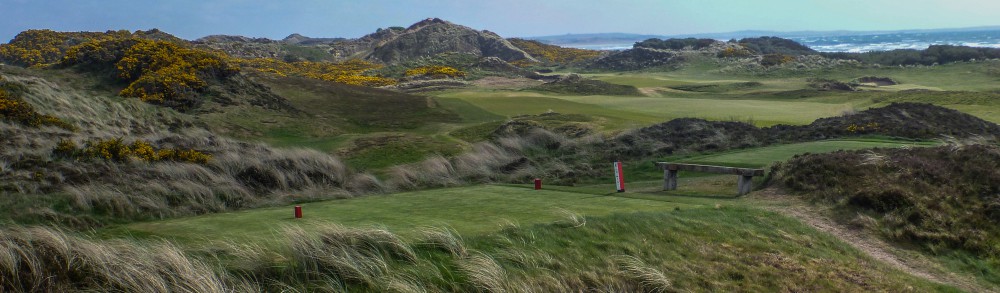
Eleven friends and I just returned from a golf trip to Ireland. Something you have to be ready for when you travel outside the United States is hearing what people in other countries think about whatever the United States has been up to lately—and this year the main thing the United States has been up to is Donald Trump. He’s not easy to talk about with foreigners, because people who haven’t had much exposure to him tend to view him as a standard-issue American greed-driven mega-mogul—Michael Douglas in “Wall Street”—rather than seeing him the way most of his countrymen do, as the only conceivable member of whatever category he actually belongs in.
P1010618-001

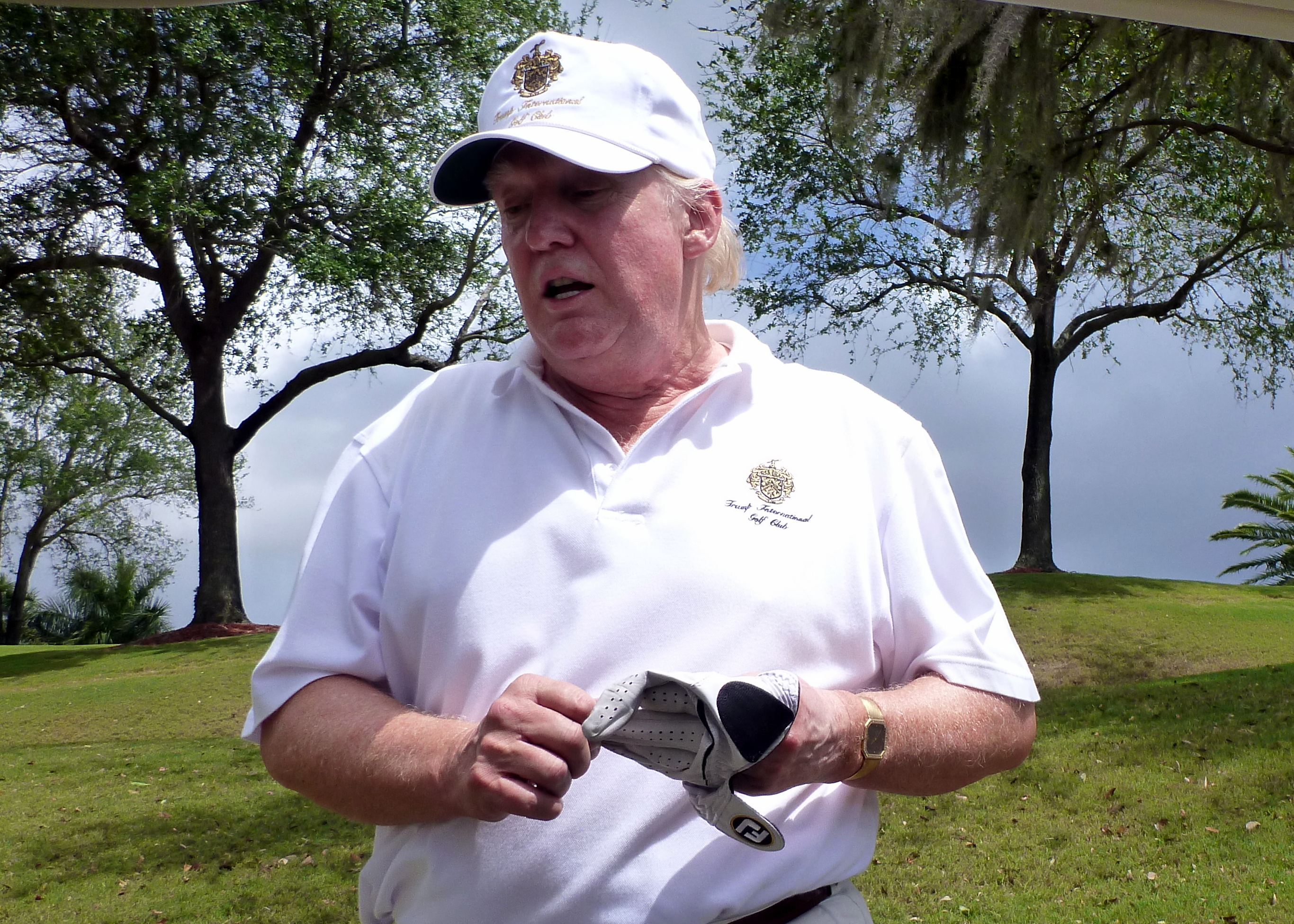
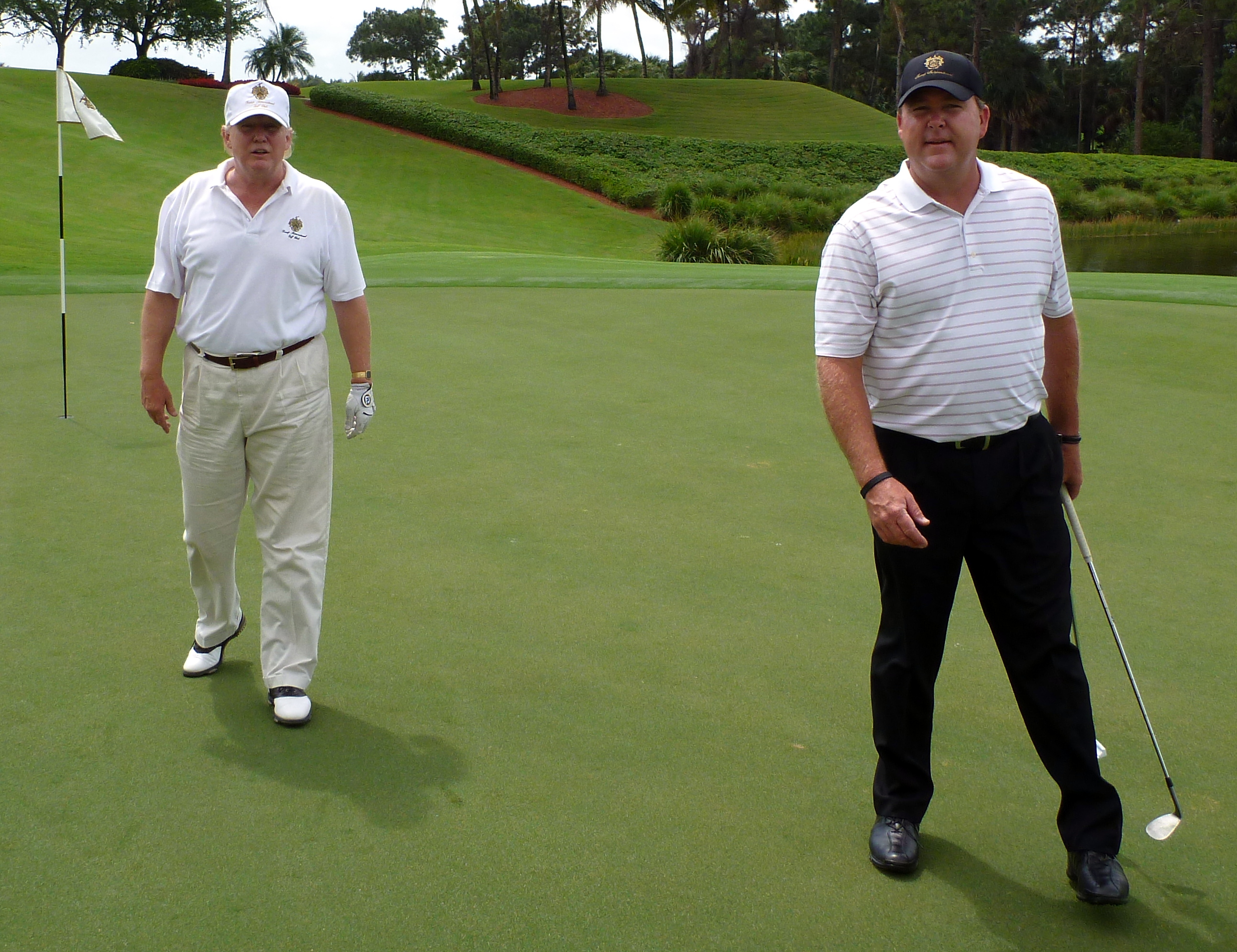
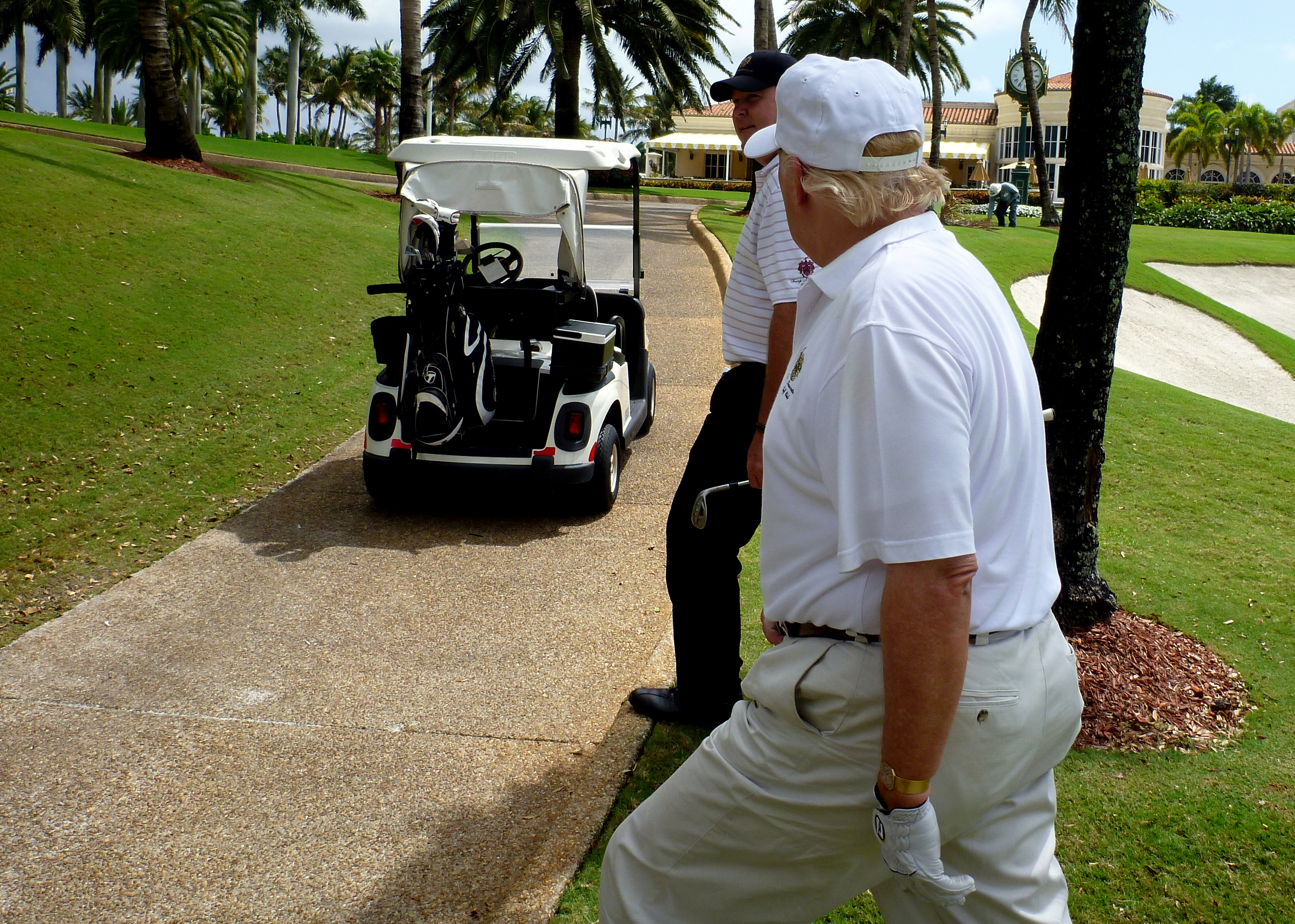
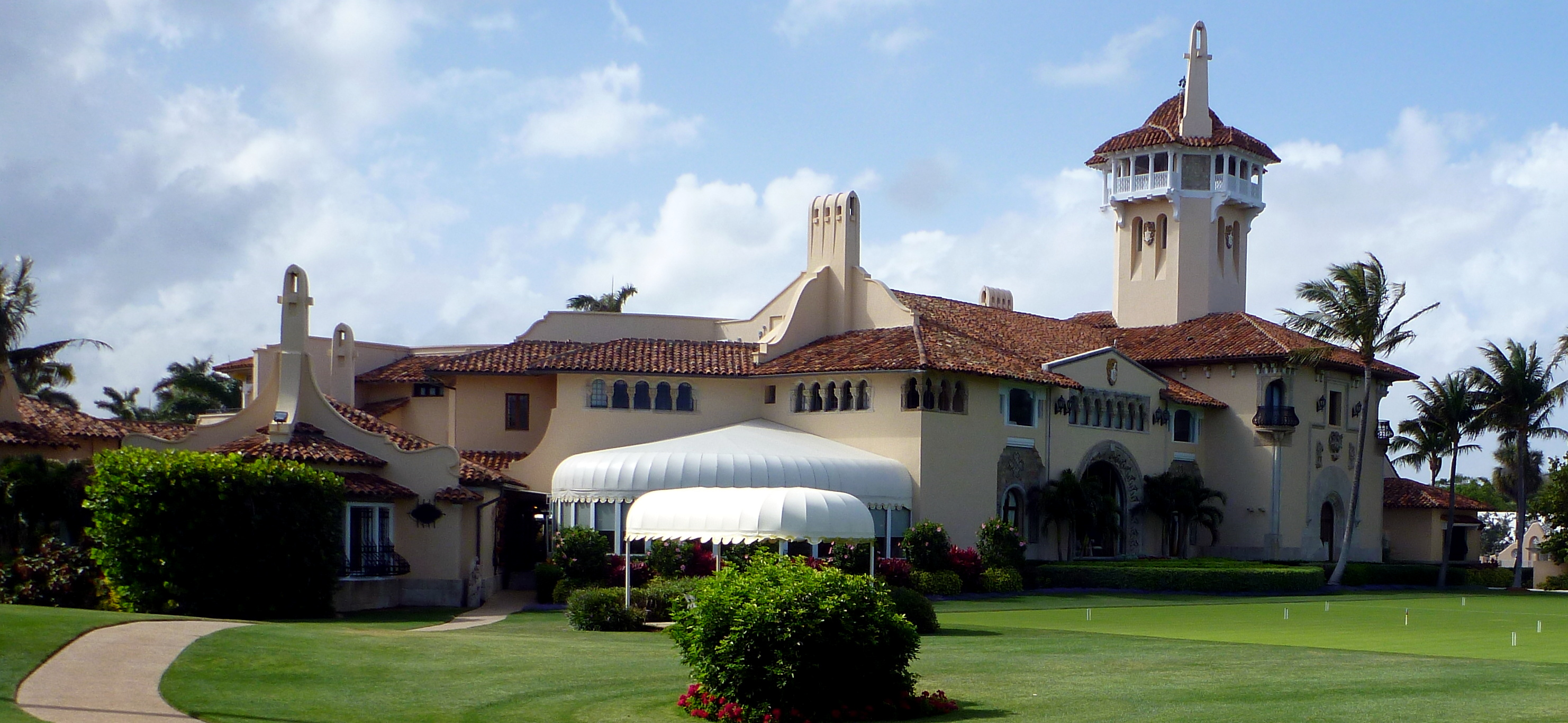
I met Trump four years ago, while working on an article about him and his golf courses for Golf Digest. Our first encounter was at Trump International Golf Club in West Palm Beach. (Trump’s courses, like his buildings, are easy to alphabetize.) When I pulled up at the club’s bag drop, a parking attendant, who was dressed in white trousers, a white shirt and a white cap, stepped briskly toward my rental car. I popped my trunk, palmed a five-dollar bill, opened the car door and then—with a possibly audible gasp—realized that the guy I’d taken for an attendant was actually Trump himself, who had come out to the curb to greet me. I (slipped the fiver back into my pocket and) enthusiastically shook his hand.

trumpowen

In the clubhouse, Trump introduced me to various distinguished members and guests, including the the former tennis star John Lloyd; the CEOs of AT&T, NASDAQ, Macy’s and several other corporations; and the head coach of the New England Patriots, Bill Belichick, and his girlfriend, Linda Holliday. Trump seemed genuinely excited to see all these people—and even more excited to see that I was seeing all these people, right there in his own club. False modesty, much less actual modesty, is not among Trump’s vices. “We have the big people here, in terms of membership,” he said. “Everybody who’s anybody in Palm Beach is a member here. So, anyway. . . .” He invited Belichick and Holliday to come for dinner that night at the Mar-a-Lago Club, which he also owns, then told a waitress that he wanted the golf club to pick up their lunch check. He was being genuinely gracious and welcoming, but you could also see how extraordinarily eager he was to be liked, and to be seen being liked.

Raymond Floyd, who was leading an outing of business executives, walked toward our table.

“The great Ray Floyd,” Trump said.

“Hi, Donald. Don’t get up.”

“You look beautiful.”

“I keep fooling them. That’s what I say. I’m following your lead.”

“I love this guy,” Trump said. “This guy—the greatest chipper. He’s going to teach me how to chip someday. Have a good time, Ray.”

Floyd walked away, and Trump said to me: “He’s a member. We have the best members here. Everybody. He’s a wonderful guy, Ray, actually. And one great competitor. He was the oldest guy ever to win the Open. Remember, at Shinnecock? He was the oldest guy ever to win the Open. Great guy.”

Floyd walked by again. Trump asked him, “How old were you when you won the U.S. Open. Forty-six?”

“Forty-six? No, forty-four.”

“Is that the record?”

“No, Irwin surpassed me by a few months.”

“Oh, I didn’t know that. Ah, you’re something, Ray. How’s your wife doing?” (Floyd’s wife, Maria, was being treated for bladder cancer. She died six months later.)

“She’s doing great. She’s cancer-free.”

“Give her my regards,” Trump said. Then, to me: “His wife had a little problem, to put it mildly, but I’m hearing good things.”

“We go every three months,” Floyd said. “We go back in the first of next month.”

“That’s great. She’s a fantastic woman. She kept him under check, which is not easy, OK? I knew him before and after.”

“Changed the lifestyle.”

“She did a good job. Ivanka tells me Christina’s doing good.”

“I think she’s using Ivanka’s baby nurse.”

“Well, Ivanka has good taste, so follow Ivanka. Have a good time, Ray. Enjoy it.”

Floyd went out to join his corporate clients, and Trump, beaming, said, “So, I do it for fun. It’s become a very successful business, because of the level of quality. When other clubs are empty, everybody wants to join here. And by ‘here’ I mean all of my clubs. Every one of them works, and works really well.” We talked quite a bit about his course in Aberdeen, Scotland, which was just about to open. “Look, I get a kick,” he said. “I know Bandon Dunes. The biggest dune there is like one tenth the size of our smallest dune. It’s a toy. And they get such great reviews. Every one of my courses is, like, amazing.”
P1010615

Either you find Trump’s manner repellent or—because his need is so palpable that his fawning seems guileless—you can decide to give him a break and be impressed by whatever it is that he wants you to be impressed by. “Palm Beach is the richest place anywhere on the planet, in terms of, you know, wealth,” he said at one point. “And yet it takes me four minutes to get to my course from Mar-a-Lago. That’s called location. The course was designed by Jim Fazio [Tom’s brother], and it’s considered the best one in Florida, but even if it were terrible it would be a big success, because of where it is.” And so forth.

The easiest thing to do is to nod, even if you aren’t quite sure what you’re nodding about. At one point, Trump pointed to some nice-looking trees on the golf course and said, “Those trees cost $25,000 apiece—but of course I got them for less”—a sort of double-reverse brag, since he wanted me to be impressed by both how expensive the trees were and how little they had cost. Similarly, when we were talking about the golf courses he owns, he said, “I don’t believe in building them now, because I can buy them for 10 cents on the dollar—so why should I build them? Although the prices are going way up. There was an article recently. Because of me, people are starting to say, Wow, what a good investment.” Golf courses are cheap—but because of Trump they’re also expensive. It’s a fine line.

After lunch, in the locker room, Trump introduced me to a man he called “the richest guy in Germany.” To be a member of one of his clubs, you have to have a high tolerance for that sort of thing: other people’s wealth is one of his main topics, when his main topic isn’t his own wealth. And, apparently, there are quite a few people who do have a high tolerance for it. (The face of “the richest guy in Germany” lit up when Trump called him that; a woman he introduced to me, on the driving range, as “a very rich lady” didn’t seem bothered at all.)
P1010616

We ran into the crooner Vic Damone, who was getting ready to play golf. Trump knew that Damone’s wife had had a stroke not long before, and, by way of conversation, he said that he would gladly “be a character witness” for Damone in any legal action her children might take to prevent him from receiving any of her estate—his version of brotherly compassion. I told Damone that I was sorry about his wife’s illness. He seemed shaken, but said that she was a little better. He said that he had been staying up with her at night and sleeping in the afternoon, and that recently he had begun playing a little golf late in the day, as a break. Trump told me later that Damone and his wife had met at Mar-a-Lago, where she was staying and he was singing—and added (for the second time) that she was worth $900 million.
P1010622

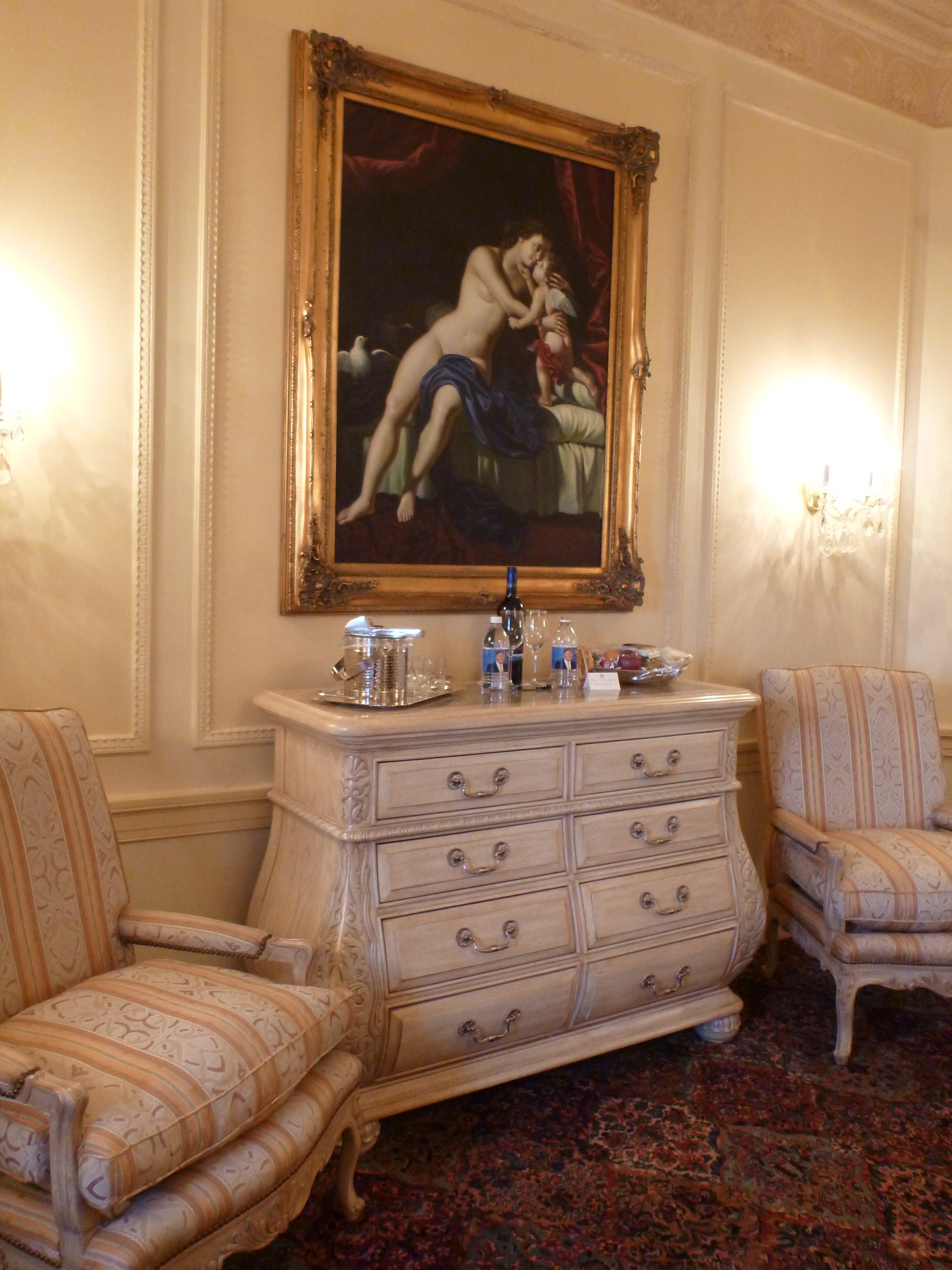
That night, Trump put me up at Mar-a-Lago, in a room called the Adam Suite, whose next resident, the woman at the front desk told me, was going to be Bill Clinton. An hour or so after I checked in, the phone rang—and it was Trump, calling to make sure I was still having a good time. (The night before, he’d called my home, in Connecticut, to make sure I was really coming down. I was already in Florida, so he chatted with my wife, and invited her to come, too.)
P1010623

We met for dinner at 8. It was seafood-buffet night at Mar-a-Lago, and Trump ate roughly a lobster and a half’s worth of shelled lobster claws and split lobster tails, then went back and for big plate of sweet-and-sour shrimp on rice. As we were standing near the buffet line, one of the Nederlanders, of the Nederlander Organization, greeted Trump warmly, and said something like, “Donald, you’ve done a great job, and you’ve done it all by yourself, independent of your father’s accomplishments”—something so on-the-mark, in terms of Trump’s clear yearning for affirmation and reassurance, that I thought Trump might be embarrassed. But he beamed. And back at the table, speaking of Nederlander, he told me, “Off the record, he says my golf course is the best one in Florida.” (By “off the record” Trump means roughly the opposite of what other people mean by it. At lunch, he had told me about some trees he had gotten in trouble for cutting down, on a golf course he owns near Washington, D.C. “You probably heard about that,” he said. “It’s the only place on the Potomac River without trees. Off the record, I took down the trees and made the front page of the Washington Post four days in a row.”)

While we were having dessert, two giggly little girls from New Jersey, whose parents were part of a group from Trump’s golf club in Bedminster—“one of the richest places in the country”—came over to our table and asked Trump to dance. He said that he would dance with them in Bedminster. Then he asked them if they wanted to be supermodels when they grew up. (They said yes). Then he asked them to kiss him. (And they did.)

P1010624

The Man Who Invented the Yardage Book

Deane Beman won the U.S. Amateur twice and the British Amateur once, and between 1969 and 1973 he won four times on the PGA Tour.

UNITED STATES - SEPTEMBER 13: Golf: US Amateur Open, Closeup of Deane Beman victorious with trophy at Wakonda Club, Des Moines, IA 9/13/1963 (Photo by Lee Balterman/Sports Illustrated/Getty Images) (SetNumber: X17644)

Beman and the trophy for the 1963 U.S. Amateur. Photo by Lee Balterman/Sports Illustrated/Getty Images)

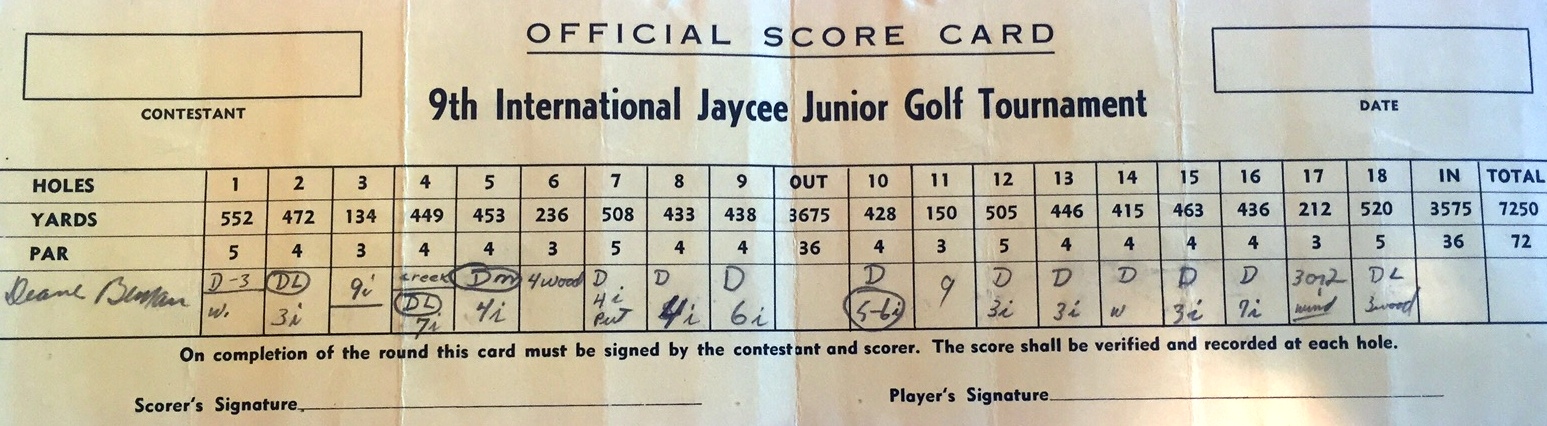
He became the tour’s commissioner in 1974, and he built the Stadium Course at TPC Sawgrass—where the Players Championship, the fifth major, will be held next month, and which you can read about in my column in the current issue of Golf Digest—and he is largely responsible for transforming the tour into a robust modern enterprise. He was also the first player to methodically measure and record key yardages on the golf courses he played, beginning in 1954, when he was still a junior:

IMG_1372

Beman’s homemade yardage guide for the 1954 U. S. Jaycee Junior Tournament, which was held on the golf course of the University of New Mexico.

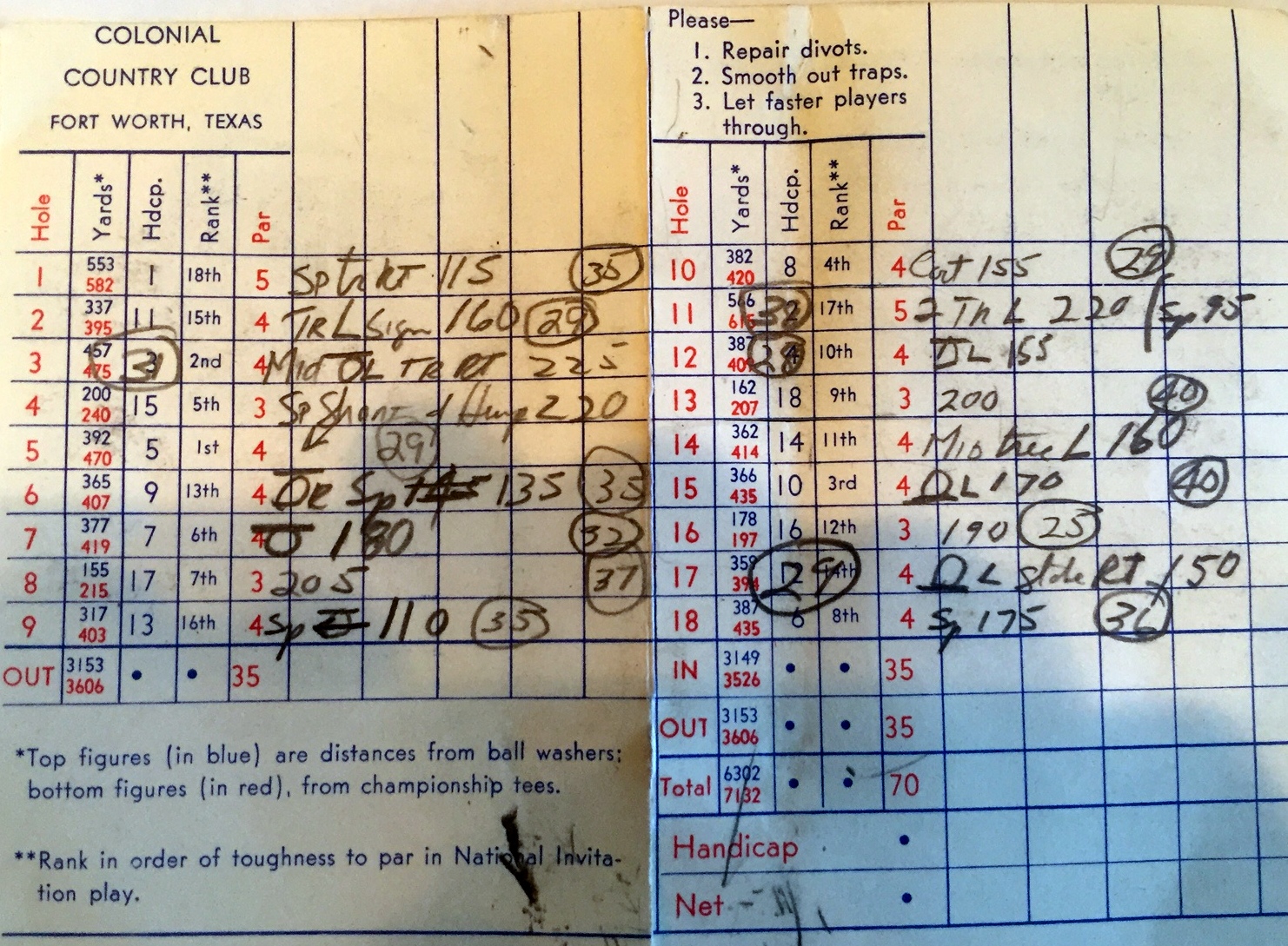
“I’d pace off the golf course during a practice round, and make notes on a scorecard,” he told me recently. “It was quite unsophisticated, but pretty effective. Doing that was a little more difficult back then, because golf courses had single-row irrigation, so there weren’t as many sprinkler heads as you have today. I used trees and bunkers and things like that. A championship course usually had bunkering in the landing areas, and I could use either the front or the back of a bunker as my mark to the front of the green. And then I’d measure the green.”

Beman's front-nine notes from the 1958 U. S. Open, at Southern Hills. The circled numbers are green depths.

Beman’s front-nine notes from the 1958 U. S. Open, at Southern Hills. The circled numbers are green depths.

“I played a lot of golf with Jack Nicklaus when we were amateurs, and he would laugh when I pulled out my card,” Beman continued. “But then he got married to the idea. The first time Jack copied what I did was at Pebble Beach, for the 1961 U. S. Amateur.” Nicklaus himself said later, “I was playing a practice round with Deane in 1961 and he said, ‘Why don’t you try it one time, just walk off the golf course?'” He did, and blew away Dudley Wysong in the final. “After that,” Beman continued, “I don’t think Jack ever played a round without having the ability to really, really know the length of any shot he was facing.”

Beman's notes from Colonial, in 1960.

Beman’s notes from Colonial, in 1960.

“Now, I will say this,” Beman went on. “I was not a popular guy with caddies, because I required them to go walk the golf course before every round, and pace off every pin position. I had my yardages to the front of the green, and I knew how deep the green was, so I would give my caddie a pad on which I had marked the dimensions. I wanted to know how deep the pin was that day, and he would pace that off. Nobody had any pin sheets in those days—but I did.”

Beman's notes for the 1959 Masters.

Beman’s notes for the 1959 Masters.

Nowadays, tour players and their caddies carry extraordinarily sophisticated yardage books, which contain not just distances but also topographical details, and even lousy golfers can determine the length of just about any shot within a few feet, if they own a laser rangefinder. But players at all levels were skeptical at first, and Beman’s idea didn’t really catch on until the 1970s. Arnold Palmer, among many others, though it was dumb. Ha!

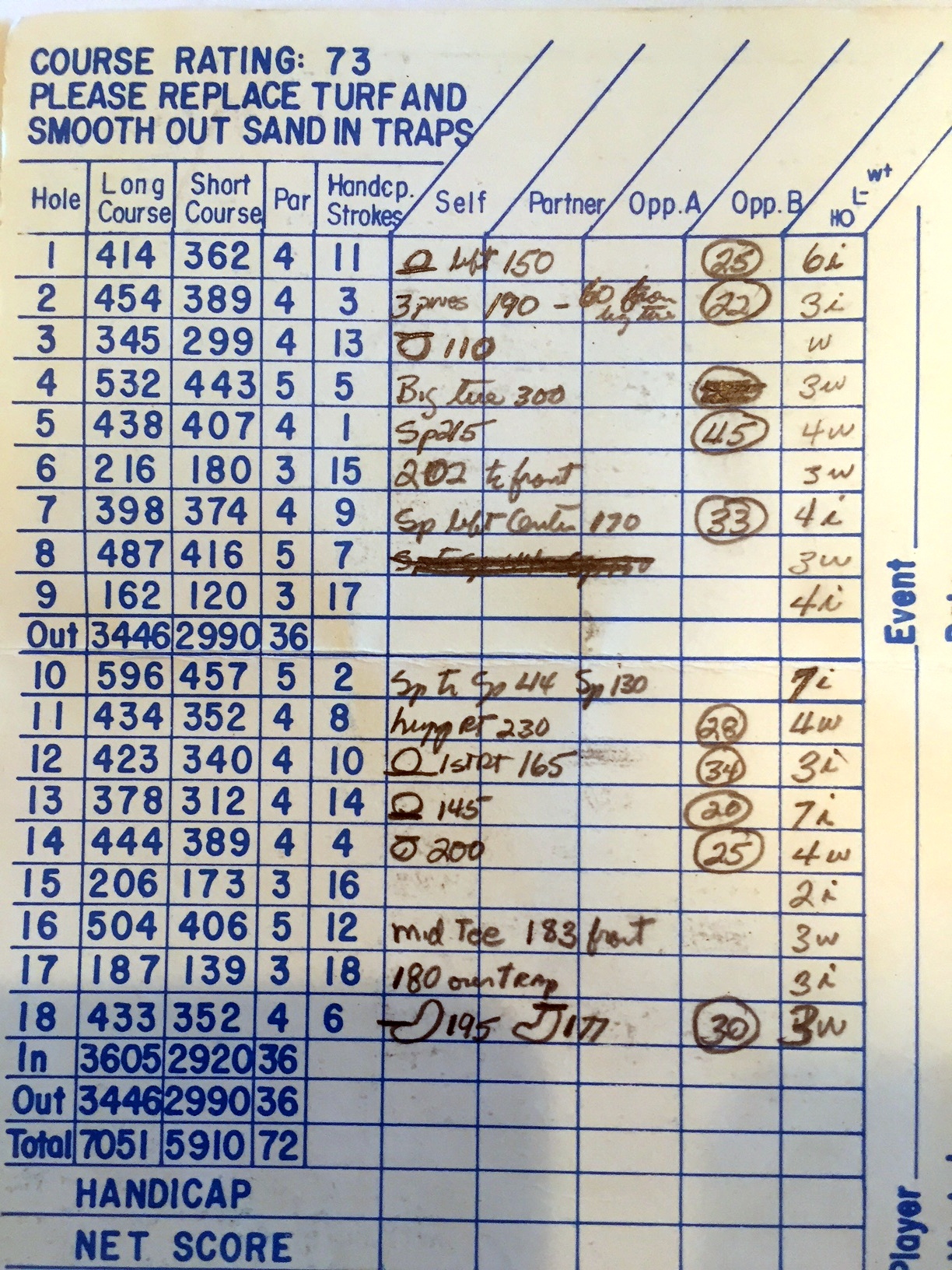
Beman's notes for Pinehurst No. 2.

Beman’s notes for Pinehurst No. 2.

“My notes became much more sophisticated once I turned professional,” Beman said. He saved those scorecards, too — but the ones in the photos above show how it all began.

IMG_1379

Masters Countdown: Great Moments in the History of Slow Play

Ed Furgol, 1957 Masters. (Photo by John G. Zimmerman /Sports Illustrated/Getty Images)

Ed Furgol, 1957 Masters. (Photo by John G. Zimmerman /Sports Illustrated/Getty Images)

Not all that long ago, Masters competitors, playing in twosomes, were expected to finish 18 holes in about three hours, even during the tournament’s final round. After the 1956 Masters, a competitor wrote to Clifford Roberts, the club’s co-founder and chairman, to complain that, after playing the first nine in an hour and a half, he had been told by an official to hurry up. You can read more at this blog’s official home, on the Golf Digest website. And if you “subscribe” to myusualgame.com, by filling in your email address in the blank on the right side of this page, you’ll be notified every time I post something new. And, if you’re willing to wait a month or so, you can find complete versions of all my old posts on this site, too, by paging down until you reach them.

Doug Ford and Clifford Roberts, 1957 Masters. (Photo by Augusta National/Getty Images)

Doug Ford and Clifford Roberts, 1957 Masters. (Photo by Augusta National/Getty Images)

Masters Countdown: Clifford Roberts and the Range Balls

spaldingdot

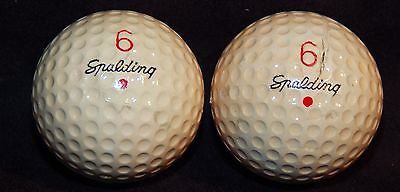
Clifford Roberts was the co-founder, with Bobby Jones, of Augusta National Golf Club, and he served as its chairman from the club’s founding until his death, in 1977. For many years, the only golf balls Roberts used were Spalding Dots, which had balata covers and were used by many tour pros. The golf shop would order six dozen before each season—all with Roberts’s name printed on them—and he would send his caddie to the shop whenever he needed a new sleeve. The first balls with Surlyn covers were introduced in the mid-nineteen-sixties, and at some point Roberts played a round with a member who was using one of them. “They’re longer than the old balls,” the member said, “and you can’t cut them.”

Augusta National/Getty Images

Augusta National/Getty Images

Roberts told his caddie to go back to the shop and return immediately with one of the club’s two head pros. “These balls I’ve got are no goddamned good,” he said when the pro had hurried over to see what was the matter. Roberts switched to the new balls, and liked them — a change that left the golf shop with six dozen Spalding Dots that had CLIFFORD ROBERTS printed on them. “There was nothing else to do with them,” Bob Kletcke, one of the pros, told me years later, “so I put them in my shag bag.” A short time later, Roberts borrowed Kletcke’s shag balls to practice with. (He always said that using striped range balls made him dizzy.) “Well, I’ll be goddamned,” he said as he teed one up. “These balls have my name on them.” And he loaded them all into his golf bag.

Arnold Palmer And Chairman Clifford Roberts (Photo by Augusta National/Getty Images)
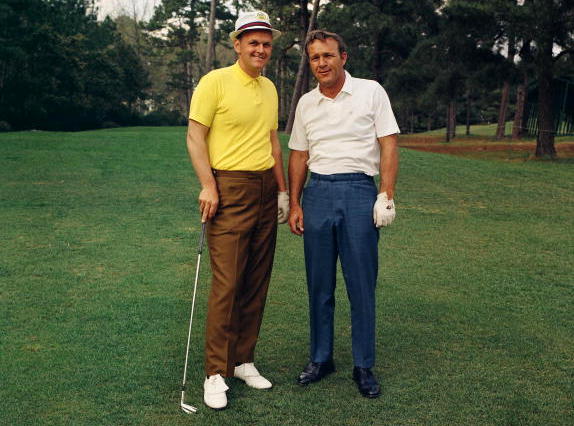
Arnold Palmer And Chairman Clifford Roberts (Photo by Augusta National/Getty Images)

Masters Week Weather: WTF!

IMG_1415

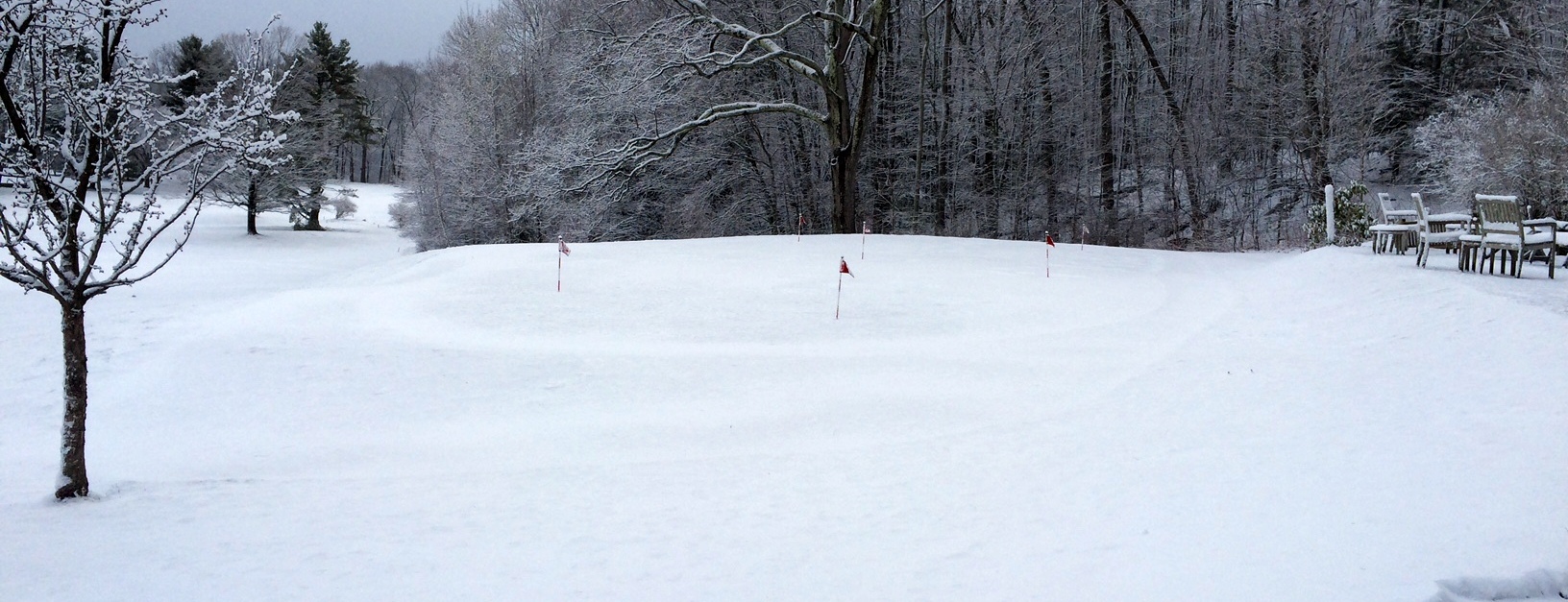
Oh, relax—I didn’t take that photo in Augusta. I took it here in Connecticut, where we just finished the mildest winter since the dinosaurs went extinct. (The nearest muny was closed for all of eight weeks; my home course re-opened earlier than it ever has before.) But then, early Sunday morning, the world looked like this:

image1

We called off Sunday Morning Group, and I hung around the house and “did chores.” Around lunchtime, though, Addison pointed out, by email, that most of the snow was gone from his yard, so he, Tim D., Mike A., and I met on the first tee at 3:00. It was cold, and the wind was blowing hard, but we had the course to ourselves:

P1170777

Here’s what the bulletin-board thing near the clubhouse looked like when we finished, a bit less than three hours later:

P1170789

And here’s what we looked like:

This isn't an art shot. The image is crooked because I had to prop the camera on the head of my driver.

This isn’t an art shot. The image is crooked because I had to prop the camera on the head of my driver.

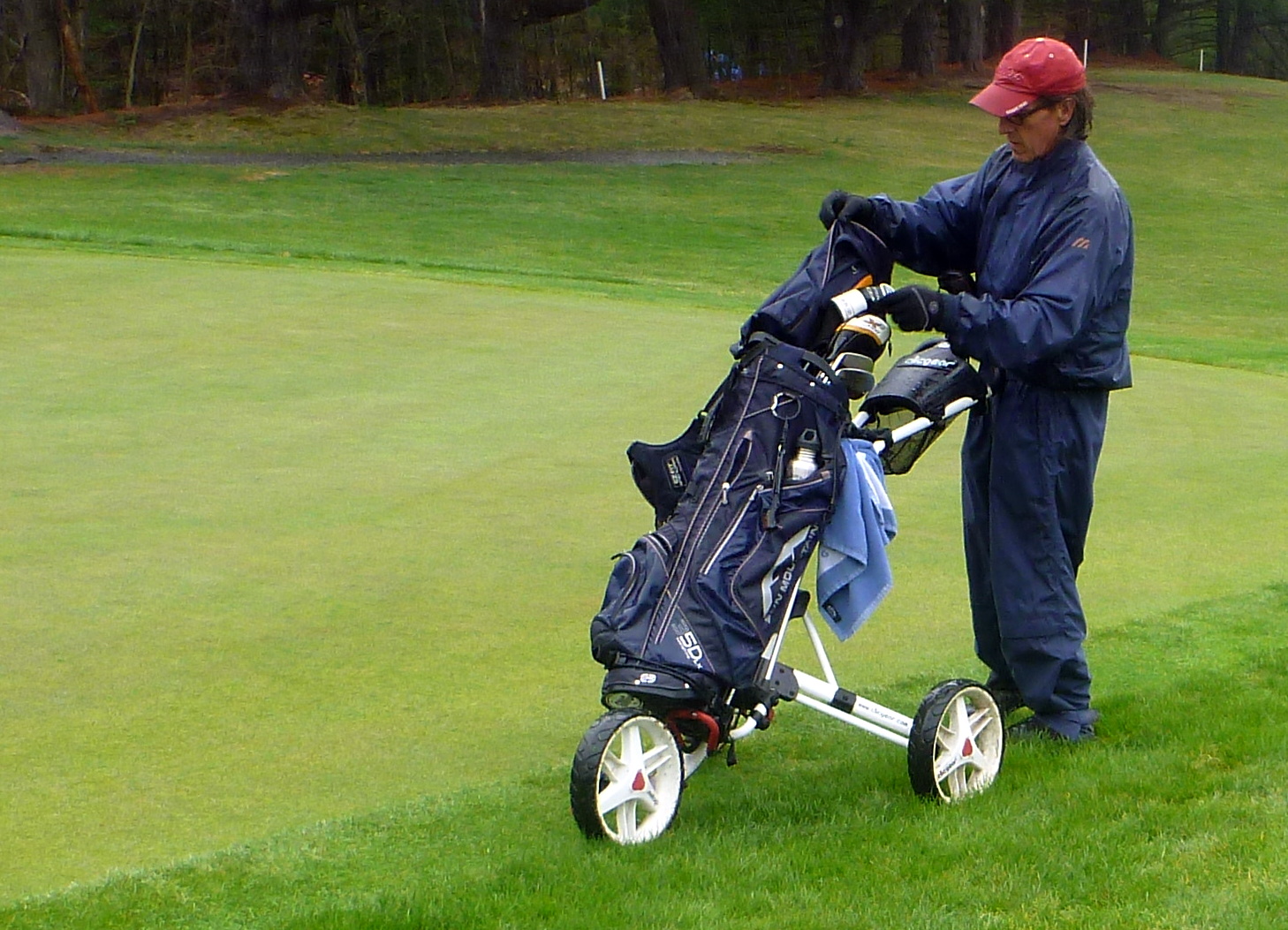
We’ve had several opportunities recently to make our storm gear seem like a good investment. Here’s Barney on Saturday, when we played in rain:

P1170768

And, because only three guys showed up on both Friday and Saturday, we invented a new three-man game: three six-hole matches, in each of which one of us played against the better ball of the other two. The bet was two dollars per man per match, with automatic presses. It was fun, and the money came out virtually even, but we won’t be able to try it again for a while, because more snow fell overnight—and it’s still falling right now. I’m doing laundry!

IMG_1394

Masters Countdown: Why Does Augusta National Have Two Head Pros?

Augusta National has two head professionals, Tony Sessa and J.J. Weaver. They started as assistants under the club’s previous co-professionals, Bob Kletcke and David Spencer, and they moved up when Kletcke and Spencer retired. But how did Augusta National end up with two head professionals in the first place?

J.J. Weaver and Christine Wang, who won the girls' 12-13 division of a regional round of the Drive, Chip and Putt in 2013. (Bob Levey/Getty Images)

J.J. Weaver and Christine Wang, who won the girls’ 12-13 division of a regional round of the Drive, Chip and Putt in 2013. (Bob Levey/Getty Images)

The club’s original pro was Ed Dudley, who was Bobby Jones’s first choice for the job. (His second and third choices were Macdonald Smith and Willie MacFarlane.) Jones explained his criteria to Clifford Roberts, the club’s co-founder and chairman, before the two of them approached Dudley: “First of all I want a gentleman. Next, I feel we should select a pro who likes to teach. And, finally, I believe we want someone who is a good player.”

Robert P. Jones (Bobby's father), Jerry Franklin (an important early member), Clifford Roberts, Bobby Jones, and Ed Dudley, the club's first pro, 1931. (Augusta National/Getty Images)

Col. Robert P. Jones (Bobby’s father), Jerry Franklin (an important early member), Clifford Roberts, Bobby Jones, and Ed Dudley, the club’s first pro, 1931, three years before the first Masters. (Augusta National/Getty Images)

A fourth requirement was that the new pro be willing to work without a salary, since there was no money to pay him. Dudley at first had to get by on what he could earn from lessons and his minimally stocked golf shop—a tough proposition, considering how few golfers played the course in the early years.

Augusta National/Getty Images Clifford Roberts and Ed Dudley, 1940s.

Augusta National/Getty Images
Clifford Roberts and Ed Dudley, 1940s.

Beginning in 1934, he supplemented his income with earnings from his souvenir tent at the Masters and from the tournament itself, which he played in fourteen times. He finished in the top ten seven times during the first eight tournaments, and he came close to winning in 1937, when he finished third, behind Byron Nelson and Ralph Guldahl.

Augusta National/Getty Images Dudley's "golf shop" at the 1940 Masters. That's Lloyd Mangrum on the right.

Augusta National/Getty Images
Dudley’s “golf shop” at the 1940 Masters. That’s Lloyd Mangrum on the right.

Dudley retired from Augusta National in 1957 and was succeeded by his assistant, Gene Stout, who had also been his assistant at the Broadmoor, in Colorado Springs, where the two men worked during the summers, when Augusta National was closed.

Augusta National/Getty Images Gene Stout showing off samples of his tournament merchandise at the 1962 Masters.

Augusta National/Getty Images
Gene Stout showing off samples of his tournament merchandise at the 1962 Masters.

Stout was replaced in August, 1966, by his assistant, Robert Kletcke.

Augusta National/Getty Images Bob Kletcke and Arnold Palmer in the ninth fairway, in the 1960s.

Augusta National/Getty Images
Bob Kletcke and Arnold Palmer in the ninth fairway, in the 1960s.

And that same year Kletcke hired David Spencer to serve as his own assistant.

In the spring of 1967, at the end of Kletcke’s first season as the club’s head pro, he and Spencer were called to a meeting with Roberts. They were both nervous, because they figured they must have done something to displease their boss. When they arrived, though, they found Roberts in a good mood, and he told them they had done a good job. He said, furthermore, that he and the other members were tired of getting to know and like the club’s assistant professionals, only to have them move on to other jobs after just a few years. He said that he would like for both Kletcke and Spencer to remain at the club, and that if they continued to do a good job they could stay for as long as they liked.

“But I don’t want Bob eating steak and Dave eating hamburger,” Roberts went on. He said that he had arrived at a solution, which was for the club to have two head professionals, or co-professionals. He had had the club’s general manager draw up a partnership agreement, and he said that if they would sign it the jobs would be theirs. He said he realized that such an arrangement could lead to tensions, and that he did not want the two men to think of themselves as rivals. As a result, he said, if a situation ever arose in which he felt compelled to fire one of them, he would fire them both.

Augusta National/Getty Images Bob Kletcke and David Spencer.

Augusta National/Getty Images
Bob Kletcke and David Spencer.

Kletcke and Spencer were surprised by Roberts’ offer, and they asked if they could take the proposed agreement back to the golf shop to talk it over. On their way past the clubhouse, Spencer said, “Gee, Bob, I don’t know about this.” He had planned to stay at Augusta National for a few years, as was customary for assistants, then seek a head professional’s position at another club, probably in the Midwest.

“I don’t know either,” Kletcke said. “I’m not sure it’s a good idea.” Kletcke had been thinking he would like to try to play on tour. (He later did so briefly, with Roberts’ encouragement and with financial backing from several Augusta members.) Neither man was enthusiastic about sharing a job. They weren’t sure they would be compatible partners, and they weren’t excited by the thought that a misstep by either one of them, in Roberts’ eyes, could put both of them out of work. They talked about the proposal for some time, and came to the conclusion that it didn’t make sense for them. It had been considerate of Roberts to make the offer, but the arrangement was clearly unworkable. The only matter to be decided was which of them would tell Roberts.

“I’ve been here longer,” Kletcke said. “Why don’t you go back and tell him?”

“You know him better than I do,” Spencer said. “I think you ought to go.”

There was a long silence. Each man imagined knocking on Roberts’ door and explaining that neither of them liked his plan. They looked at the ground.

“Maybe we could both go.”

There was another long silence.

At last, Spencer held out his hand and said, “Well, how do you do, partner?” And the two men worked together, at adjacent desks, for the next four decades. If either of them had had the nerve to return to Roberts’ room after their meeting in 1967, both almost certainly would have left Augusta to do something else.

Bob Kletcke and David Spencer. (Augusta National/Getty Images)

Bob Kletcke and David Spencer. (Augusta National/Getty Images)

Masters Countdown: Why did Gene Sarazen Skip the First Masters?

1935Sarazen

Gene Sarazen hit “the shot heard round the world”—his epochal double-eagle on Augusta’s fifteenth hole—in 1935, during the final round of the second Augusta National Invitation Tournament (as the Masters was officially known until 1939). He hadn’t played the year before. Why?

Sarazen swing

Sarazen himself often said, years later, that he skipped the first Masters because the invitation came from Clifford Roberts, the club’s co-founder and chairman, “and what the hell do I want to play in a tournament sponsored by a Wall Street broker?”—as he told me in a telephone interview in 1997. He also said that he threw out the first invitation because it had a Wall Street return address, and he figured it must be some kind of financial promotion.

Funny stories—but they aren’t true. His invitation came not from Roberts but from Alfred Bourne, who was the club’s vice president and principal financial backer, and Sarazen responded in February with a nice letter in which he told Bourne that he was “very glad to accept.” He backed out shortly before the tournament, though, because he realized that he had a conflicting commitment with Joe Kirkwood, an Australian professional and trick-shot expert (who had also been invited).

Sarazen and Kirkwood worked during the winter for the Miami Biltmore Hotel. Kirkwood had once proposed to Sarazen that they travel abroad together, and Sarazen had suggested South America. Kirkwood, unbeknownst to Sarazen, had scheduled their departure for late March, a week before the tournament, and their plans could not be changed. Sarazen, at the time, deeply regretted missing the first Masters. He said that a caddie in Fiji (on a different trip, presumably) told him, “We no hear of Mister Sarazen in Fiji, but we hear of Mister Jones.” He made certain that he would be available for the second Masters—which he won, in a playoff with Craig Wood.

The Masters wasn't officially called the Masters until 1939, but many players, sportswriters, and others used that name (which Jones considered presumptuous) from the beginning.

The Masters wasn’t officially called the Masters until 1939, but many players, sportswriters, and others used that name (which Jones considered presumptuous) from the beginning.