
Three Air-Travel Stories Tangentially Related to Golf

New Yorker Owen

I had an article in last week’s New Yorker about fancy airplane seats.  Here’s something about air travel I’ll bet you didn’t know: the rule of thumb for in-flight entertainment systems is “$1,000 an inch”—meaning that the small screen in the back of each economy seat can cost an airline $10,000, plus a few thousand for its handheld controller.

Jetblue directv

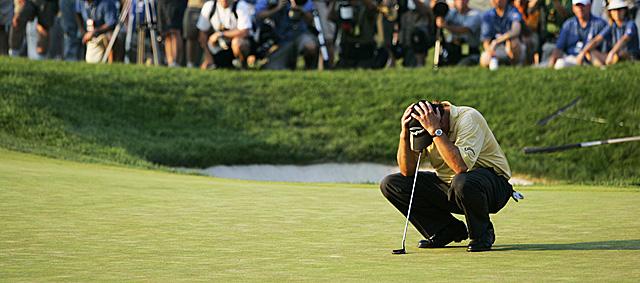
On June 18, 2006, I flew to Las Vegas on JetBlue with my wife and our two kids, and the flight was great because I got to watch almost the entire final round of the U.S. Open, at Winged Foot, on the screen in the back of the seat in front of me. The broadcast broke up as we were landing. Phil Mickelson had just hit a terrible drive into trouble on the left on the final hole, but he had a one-stroke lead and was about to win his third major in a row—good for him! I thought nothing more about it until the next morning, when I turned on ESPN. They were talking about Geoff Ogilvy and his victory at the U.S. Open, and at first I thought that the tournament I’d watched on the plane must have been a recording of the Open from some other year. Eventually, though, I learned what had happened.
Mickelson winged foot

Two weeks ago, I traveled to Calgary to give a talk (not about golf), and as a result I didn’t get to watch any of the first three rounds of the Masters, even on the plane. I went out to dinner with some of the people who had sponsored the conference I spoke at, and the husband of one of them, a lawyer, told a story about an airplane trip he took in the late 1960s, when he was about twenty.

Here’s the story: This lawyer fellow (whom I’ll refer to as Fellow) goes with a friend of his to the Toronto airport, where Friend (ditto) is catching a cheap charter flight to London. There’s construction going on at the airport, and the gate area is a mess, and everyone is sort of milling around. Fellow stands with the other non-passengers, waiting to wave farewell, but at some point Friend says, “Come on—let’s see how far you can get.” Fellow says, “No, no, I’ll get in trouble.” They go back and forth like that, but Friend eventually talks him into it, and, when the passengers are taken onto the tarmac to board a shuttle to take them to the plane, Fellow goes with them.

On the shuttle, Fellow says, “I don’t have anything!” and Friend says, “Here, take this,” and gives him his ticket envelope (while keeping the ticket). When Fellow gets to the plane, he sort of waves the envelope at the stewardess in the doorway and says “22C,” and boards the plane. He has no ticket and no passport and no luggage, and he’s wearing shorts. He sits down in 22C, and Friend slips into one of the restrooms and closes but does not lock the door.

The stewardesses count the passengers. The plane takes off. There are one or two empty seats on the plane, and Friend comes out of the bathroom and sits down. The plane lands at Gatwick, and all the passengers get off. There is enough confusion at the airport that Fellow is able to slip through customs, perhaps aided by the fact that he is maybe the only person in England who is wearing shorts. He calls his mother, back in Canada, and asks her to mail him his passport and some money. She sends him $100. He figures he’ll get a job of some kind, but mostly he just hangs out in pubs with Friend.

After about a month, Fellow gets some part-time work helping a guy who handles travel for University of Toronto students studying in England. One day, the guy hands him the unused return portion of a round-trip ticket that belonged to some student, and says, “Here. You owe me.” (This was in the era when half a round-trip ticket was often cheaper than a one-way ticket, and airlines didn’t penalize you for using it.)

The ticket has someone else’s name on it, but Fellow successfully uses it, along with his actual passport, to fly back to Toronto. When he lands, has just 50 cents—enough to take a bus only partway to the city, so he figures he’ll go as far as he can and then walk. While he’s waiting for the bus, he looks down and sees two bus tickets lying on the ground. He goes to the place he worked before he went to England, to get his last paycheck, which he had never collected. While he’s doing that, the boss comes out asks him what he’s doing, and re-hires him, and he goes to work the next day.

Mean Weather and the Value of a Shank-in-One

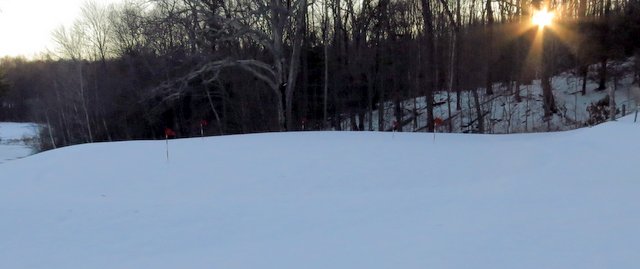
This is what the ninth green looked like on the morning of April 16. Unfair!

This is what the ninth green looked like on the morning of April 16. Unfair!

On the day after Income Tax Day, the weather in the Northeast turned vindictive, and my golf course—which had been back in operation for less than a week—disappeared under two inches of snow and ice. I had to travel that day, so I couldn’t have played anyway, but I still felt bullied. 

IMG_1272

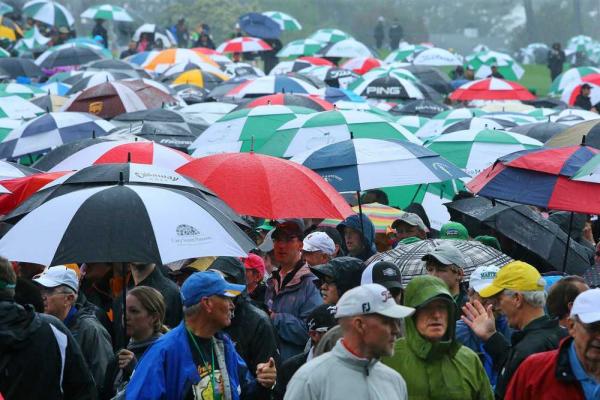
The weather is going to have to win my trust back one day at a time, beginning this afternoon (assuming I can finish a couple of things I’m supposed to be working on). Still, I have less reason to be upset than Mike Reilly, a reader and a member of the World’s Second-Best Golf Club, whose first trip to the Masters, on practice-round Monday, was rained out after two hours. “Their rain-out policy is ‘better luck next year,” he wrote from a motel room in Augusta (the club offered refunds). “I understand why it is that way, but that was a long way to drive to watch eight guys tee off No. 1.”

Masters practice round rain

While the weather was misbehaving, several of my friends conducted an email debate about the Sunday Morning Group’s hole-in-one policy, which Hacker (real name) implemented a couple of years ago. We collect fifteen dollars a man on Sundays, and three of those dollars go into the S.M.G. Slush Fund, with which we pay for things like community service, international relief efforts, and bottle openers. The Slush Fund also underwrites the S.M.G. hole-in-one prize, which is five hundred dollars if the hole-in-one occurs during our regular Sunday game, and two hundred and fifty dollars if it occurs during a sanctioned S.M.G. event on a different day or time. (A sanctioned event is any round of golf that the whole group knows about in advance, including the Monday, Tuesday, Wednesday, Thursday, Friday, and Saturday versions of our regular Sunday game.)

20121118_130803-001

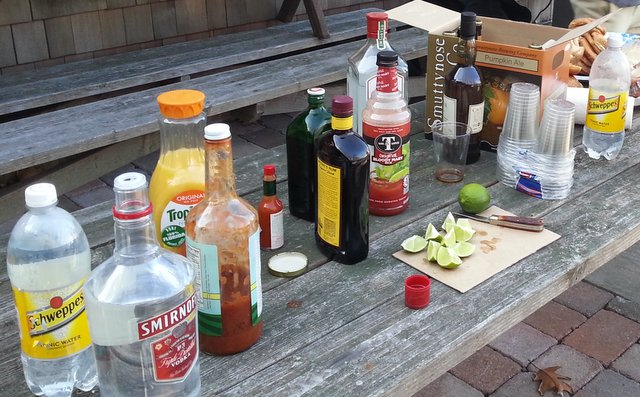
No one has ever won the $500 prize, and only Reese has won the two-hundred-and-fifty-dollar prize (which he spent on drinks for everyone—see photo above). That means that, by now, the hole-in-one prize is probably over-endowed, at least in theory. David W. asked whether a hole-in-one on our ninth hole (a short par 4, which long hitters occasionally reach from the tee) would count. The answer to that one was yes, of course. Then Fritz asked about holing out on No. 2 (a par 4) with your tee shot on No. 7 (a par 3). The second green is slightly closer to the seventh tee than the seventh green is, although the shot is probably tougher, because there are pine trees in the way. Addison said he thought the shot ought to count as long as it was a genuine shank. In other words, you can’t just aim for it. Further study.

P1070560

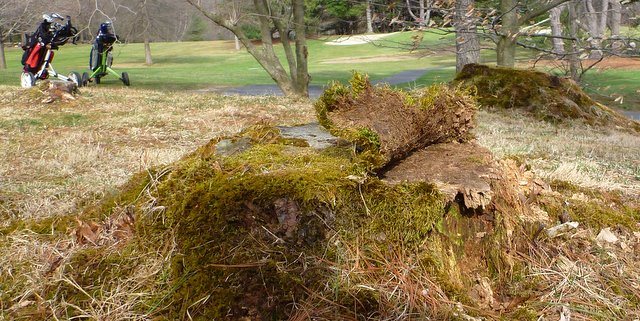
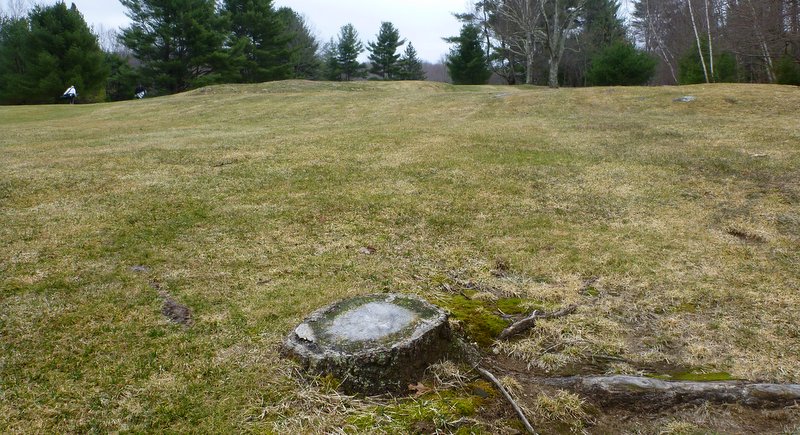
Meanwhile, the wind on Monday was so strong that it peeled the moss right off a stump:

P1120052

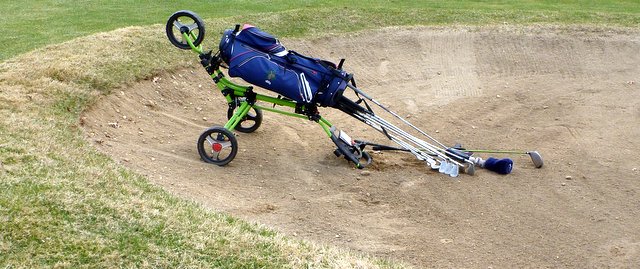
It also sent Hacker’s pushcart rolling into a bunker and tipped it over. (Maybe there should be a prize for that, too.)

P1120058

How I Won the Masters, and So Forth

My club's equivalent of the Eisenhower Tree, on our seventeenth hole. We cut it down last year.

My club’s equivalent of the Eisenhower Tree, on our seventeenth hole. We cut it down last year.

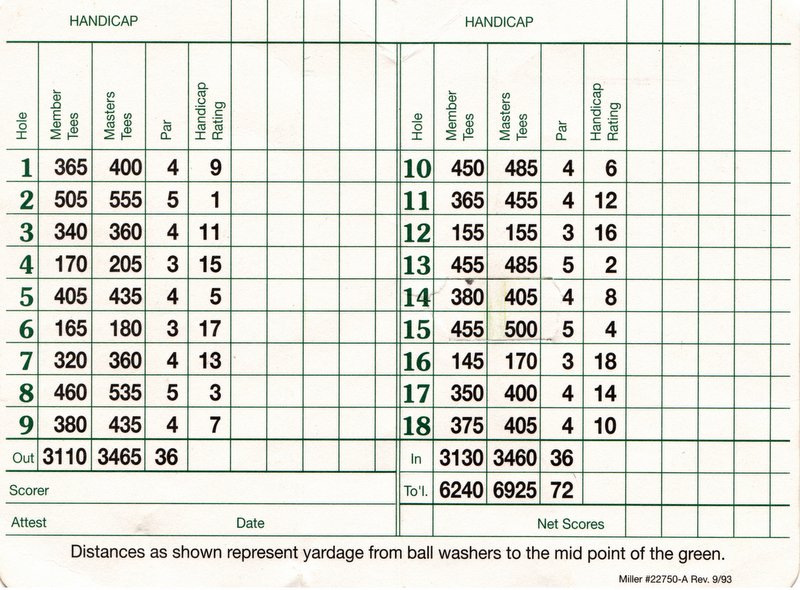
On Sundays during the majors, my friends and I pay homage to the big boys by using scorecards from the course where the major is being played. Usually, Hacker (real name) finds the card online and prints copies, but he couldn’t find an Augusta card with handicap ratings on it. Luckily, I had some old Augusta cards from the nineteen-nineties, when I was working on my book about the club and the Masters, so I scanned one and printed enough for the Sunday Morning Group.

Nineteen-nineties scorecard from Augusta National, used by the S Sunday Morning Group on Masters Sunday, April 13, 2014.

Nineteen-nineties scorecard from Augusta National, used by the Sunday Morning Group on Masters Sunday, April 13, 2014. Check out those last-century tournament yardages.

In 1996, I told Jackson Stephens, who was Augusta’s chairman at the time, that I thought the club ought to print a silhouette chart of the members’ jets on the back of the scorecard, so that a golfer on the course could identify whichever Gulfstream or Falcon or Challenger was passing overhead, on its way to Bush Field, and which friend, therefore, might be available for a second round, in the afternoon.

planes silhouette

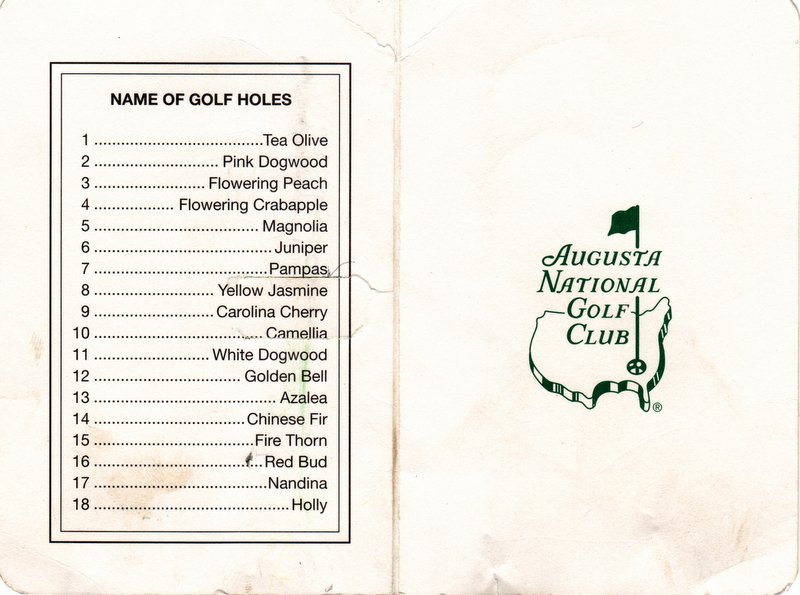
Stephens didn’t take my suggestion, for unknown reasons, and continued to list the names of the holes instead:

ANGC 2

Even so, the Augusta scorecard has some interesting features. One (you will notice) is that all the yardages are given in multiples of five. That’s because Clifford Roberts, the club’s co-founder and first chairman, thought it was ridiculous to claim more precision, given the daily variation in hole and tee locations. Another interesting feature is that the handicap ratings are based on yardage, not on what TV commentators refer to as “difficulty.” I agree strongly—and if you want to have an argument about that I’m ready. One more thing to notice is how much shorter the course was from the Masters tees throughout the nineties. The eighteenth, for example, was 405 yards; today, it’s 465.

Chic (our chairman) and Slade (victorious) at lunch.

Chic (our chairman) and Slade (co-victorious) at lunch.

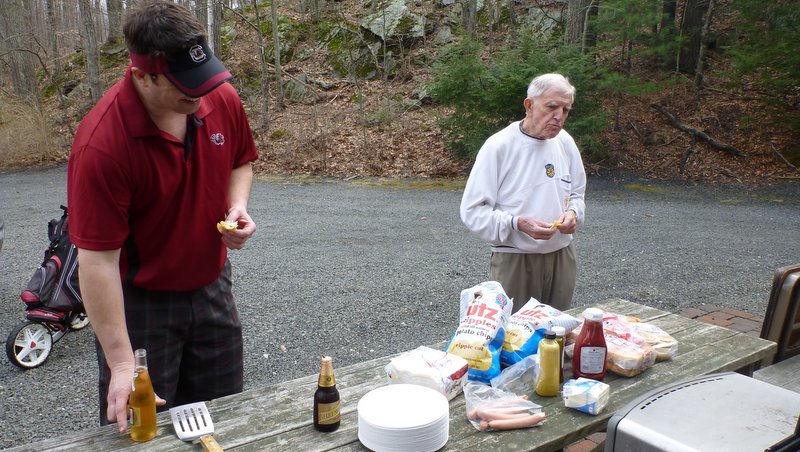
Anyway, Masters Sunday was the first 2014 home-course meeting of the Sunday Morning Group. Because we never give strokes on par 3s, no one got a stroke on the fourth hole, which is a par 5 on our course but a par 3 at Augusta and therefore a par 3 for us on Masters Sunday. That caused mental problems for some of the guys, who couldn’t help thinking of a 5 on that hole as a round-destroying double-bogey. My group (Mike A., Rick, Slade, and me) had no trouble with that, for some reason—maybe because we weren’t paying attention. Anyway, we won, by a stroke, at 12 under par, no problem. Hacker brought lunch. The kegerator was full. The water was back on in the clubhouse. The course was in great shape, after our worst winter in a decade. And the sun came out while we were sitting on the patio afterward.

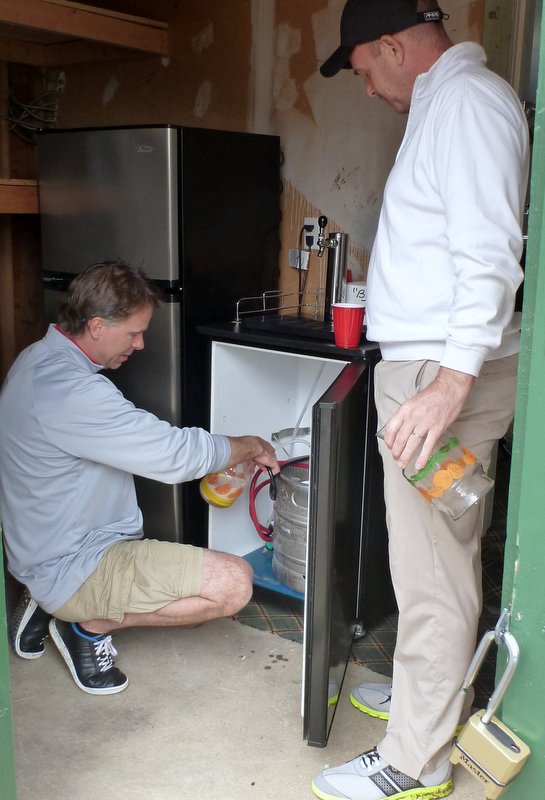
From left to right: Fritz, kegerator, Corey (our pro), and the new padlock, installed by order of the Board of Governors.

From left to right: Fritz, beer fridge, kegerator, improvised pitcher, Corey (our pro), and the new padlock, installed by order of the Board of Governors.

Masters Countdown (Updated): The Hardest Hole to Build at Augusta National

ANGC 12-001

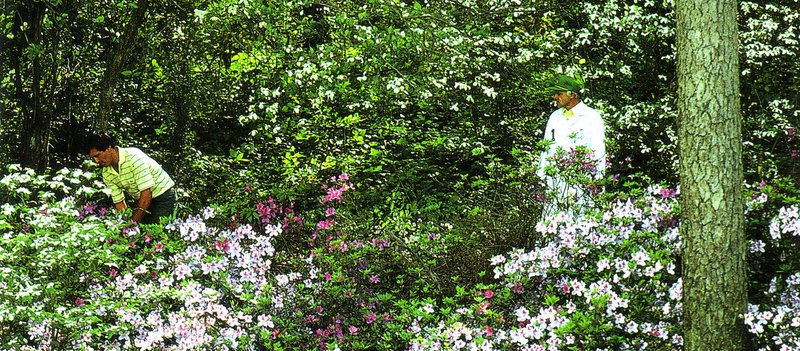
Augusta National’s twelfth hole is just 155 yards long, for both club members and Masters competitors. Nevertheless, Jack Nicklaus once called it “the toughest tournament hole in golf,” and Lloyd Mangrum said it was “the meanest little par 3 in the world.” During the first two rounds of the Masters in 1980, Tom Weiskopf played it in twenty strokes—fourteen over par. In the photo below, Seve Ballesteros is stuck in the flowers above the green, after pulling his tee shot long and left:

Seve 12-001

The twelfth was the hardest hole on the course to build. When an engineer saw that the plans called for a bunker in front of the green, he thought that the drawing must be in error, because the slope was so steep. The green was created by covering an exposed rock ledge with five thousand cubic yards of earth, which had been excavated on the opposite side of the creek. During that process, two tractors and eight mules became stuck in the mire and had to be pulled out with long ropes drawn by all the other tractors.

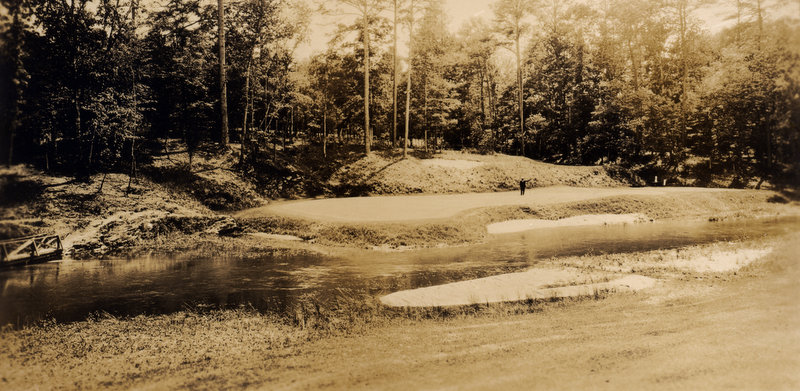
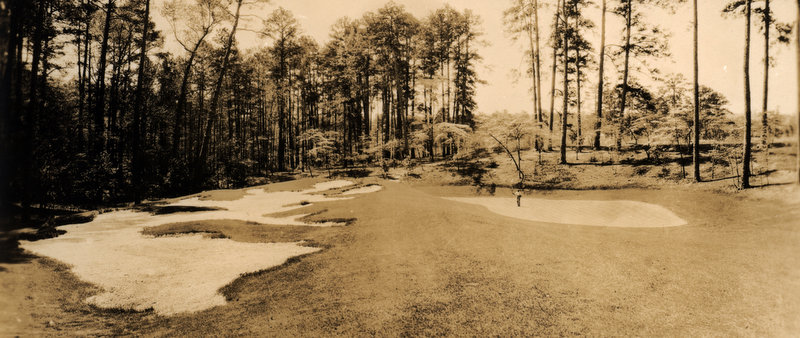
The twelfth green in 1935, the year of the second Masters.

The twelfth green in 1935, the year of the second Masters.

The twelfth green has always been shallow and treacherous; in the early years it was even more so. The right side of the green, where the hole is usually cut for the final round of the Masters, was enlarged in 1951 because, Bobby Jones explained, the hole had been “possibly a little too exacting.” (The front right corner of the green had settled toward the creek, exacerbating the problem.) “I think we should build this up so as to provide the maximum level putting surface,” Clifford Roberts, the club’s co-founder and chairman, explained in a letter at the time. “To do it right, logs should be used the same as when we extended the front of the left side of the green. While we are about it, we might provide another yard or two of depth. When the pin is on the right the hole is too damn tricky for fair tournament play especially since that area is subject to gusty winds. Also, we can never eliminate the bad feature of the damp bank back of the green in which a ball will bury. A good shot that is only a shade too short or too strong means a 2 stroke penalty—not one. Now that #11 is exacting such a surprising toll [because of the new pond] I wouldn’t mind easing up a trifle on the boys at #12 green.”

Got dirt?

Got dirt?

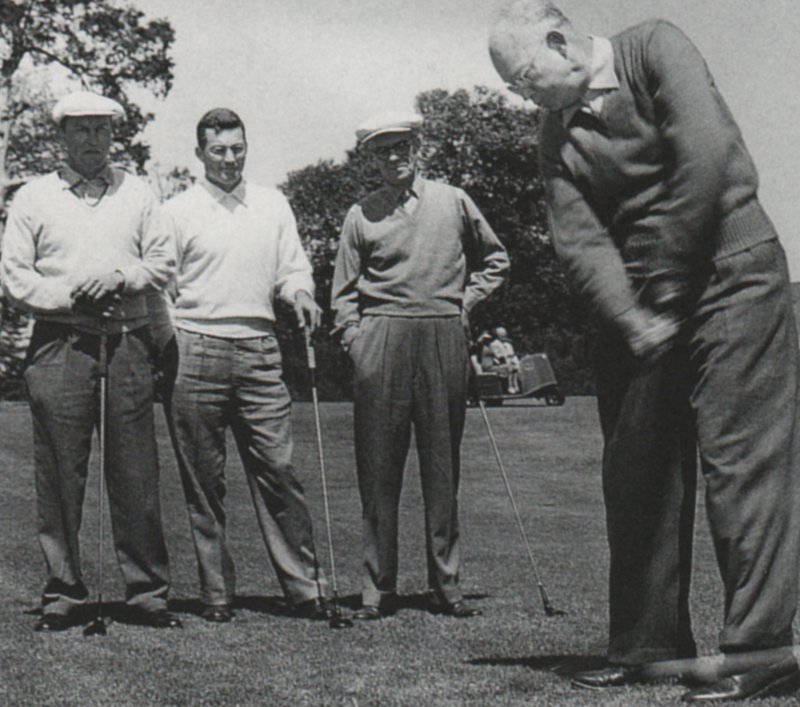
The creek in front of the twelfth green was a factor in a match played by Roberts, Ed Dudley (the club’s pro), Jerome Franklin (a local member) and Dwight Eisenhower shortly after Eisenhower had been elected president. Eisenhower’s tee shot landed short of the green, and his ball ended up on a sand bar next to the water. “You can play that ball off the sand bar,” Roberts said as they walked to the green. Eisenhower climbed down the bank to his ball and sank past his knees in what turned out to be quicksand. Two Secret Service agents jumped in after him and pulled him out by the arms. The match was delayed while the president went back to his cottage to change clothes. When he returned, he told Roberts that he would never again take his advice on any matter concerning golf.

That's Eisenhower swinging, and Bill Zimmerman, Billy Joe Patton and Roberts looking on. Nobody seems impressed by the President's swing.

That’s Eisenhower swinging, and Bill Zimmerman, Billy Joe Patton and Roberts looking on. Nobody seems impressed by the President’s swing.

Masters Countdown: Bobby Jones’s Father, the Great Flood, and the Eleventh Hole

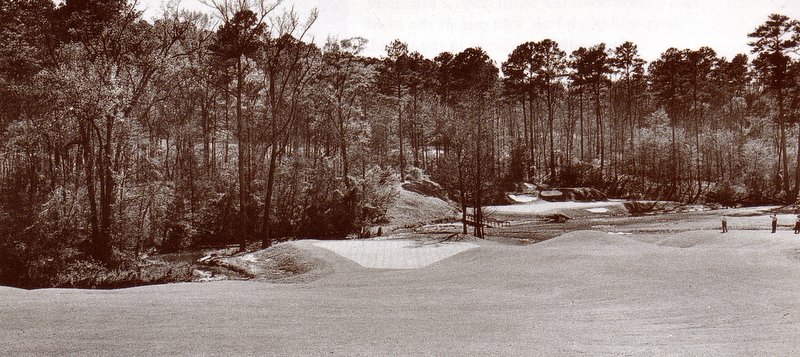
Eleventh green, twelfth tee, twelfth green, Augusta National, early 1930s.

Eleventh green, twelfth tee, twelfth green, Augusta National, early 1930s.

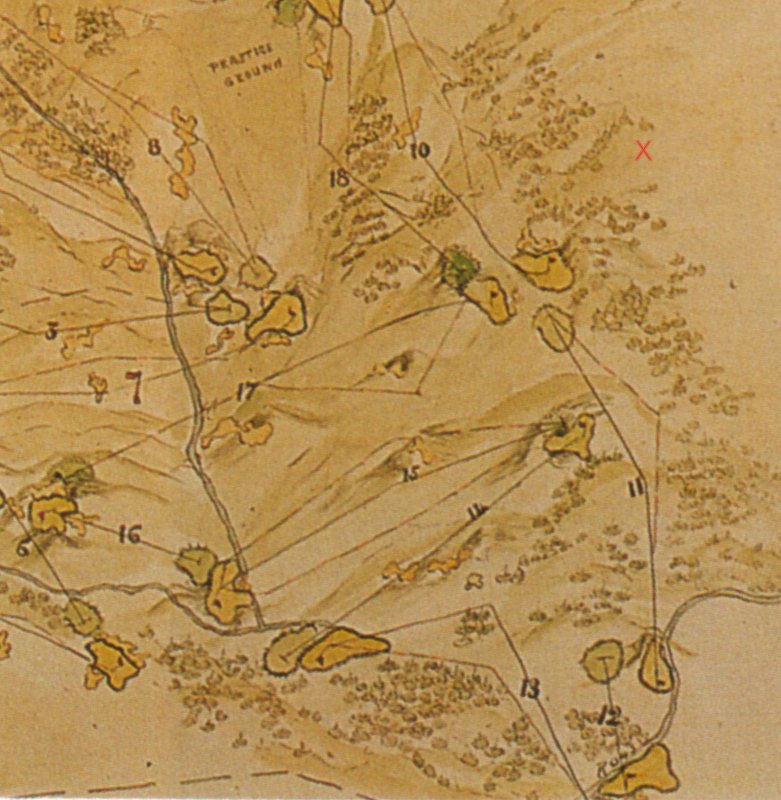
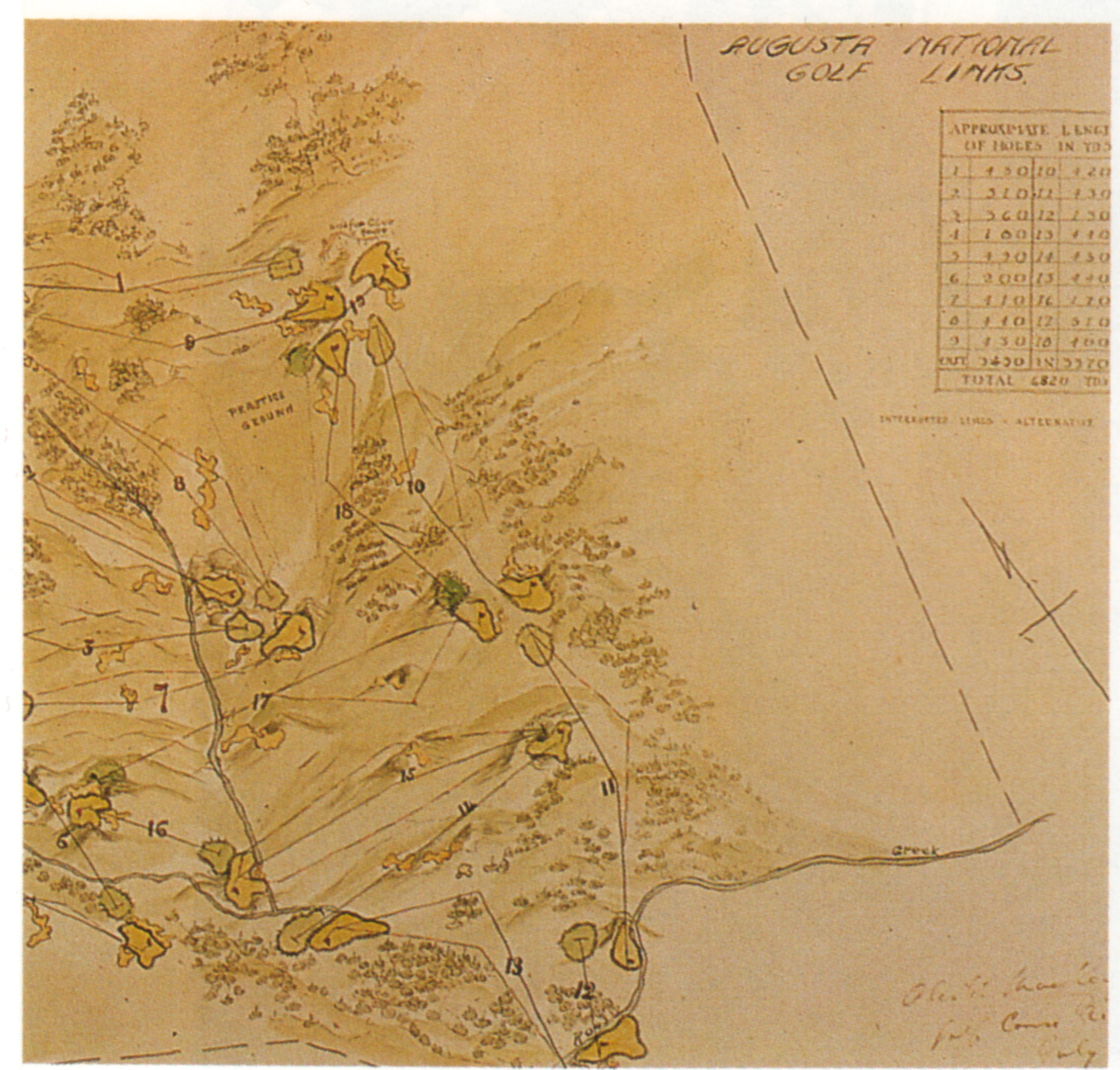
The Masters tee on the eleventh hole was originally positioned above and to the right of the tenth green, not far from the seventeenth green. The hole ran downhill and played considerably shorter than its measured distance, which was a little over four hundred yards. In fact, until about a decade ago the green was at least theoretically drivable from the members’ tee, which was on the old line, although the shot was blind and called for a powerful fade.

Alister MacKenzie's original routing, showing the location of the eleventh tee, between the seventeenth green and the old tenth green. The modern tee is somewhere back near the red X in the upper right hand corner of the image.

Alister MacKenzie’s original routing, showing the location of the eleventh tee, between the seventeenth green and the old tenth green. The modern tee is somewhere back near the red X in the upper right hand corner of the image.

The hole was first changed in 1950, when the club built a new tournament tee, below and to the left of the tenth green. The change was suggested by Clifford Roberts, the club’s chairman and co-founder, and endorsed by Bobby Jones. The change was made both to lengthen the hole and to eliminate a gallery bottleneck between the tenth green and the eleventh tee. “Under the new arrangement,” Jones wrote at the time, “the spectators will have ample room on the high ground to the right of the fairway to observe play, all the way from tee to green, without going on to the fairway at all. It will be substantially the same arrangement as is provided at number 13, where everyone can get a clear view of all shots played without following the contestants down the fairway.” The Masters tee is even farther back today, and the fairway has been reshaped. The hole measures a little more that five hundred yards for the tournament, and when you stand on the tee it looks like a thousand.

Eleventh green, 1930s.

Eleventh green, 1930s. No pond yet.

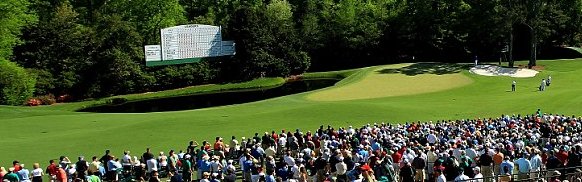
The eleventh hole’s most conspicuous feature is the pond to the left of the green. Roberts, in his book about the club, which was published in 1976, wrote that the pond had been his idea; Byron Nelson told me in 1998 that it had been his own. “There was already water behind the green,” he said, “because Rae’s Creek ran back there. But not many people went over the green. So I told Cliff that I thought he ought to dam up the creek and let the water make a pond to the left of the green.” (Nelson’s memory that the creek passed only behind the green wasn’t not quite correct. The water also looped near the front left, almost as close to the green as the pond is today—as you can see in the photos above.) The dam was built in 1951.

There's that pond. Look out.

There’s that pond. Look out.

In mid-October 1990, Augusta got more than a foot of rain in just thirty-six hours. Rae’s Creek flooded, and took the eleventh green and much of the rest of Amen Corner with it:

amen corner flood 1990Hord Hardin, the club’s chairman at the time, said they were lucky the flood hadn’t occurred right before the Masters. “We probably would have had to play four sixteen-hole rounds,” he said. The green was rebuilt using data from a 1982 survey, and the bunker and the pond were recreated from photographs. The hole was back in play not just for the Masters but for the Thanksgiving member party, six weeks later.

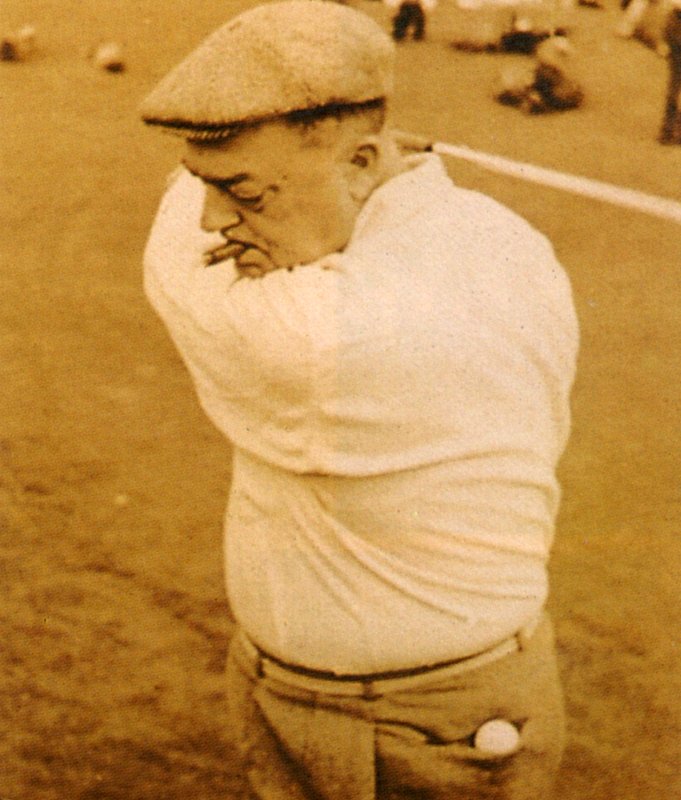
The Colonel, Bobby Jones's father.

The Colonel, Bobby Jones’s father.

In the early years, there was a small pot bunker in the center of the fairway at roughly the distance of a reasonable drive, invisible from the tee. The bunker was Jones’s idea. He wanted the course to have a hazard that could be avoided only with good luck or local knowledge—the sort of seemingly arbitrary booby trap that is plentiful on the Old Course at St. Andrews. Jones’s father, Colonel Bob Jones (photo above), drove into it during his first round on the course, in 1932, and when he found his ball in the sand he shouted, “What goddamned fool put a goddamned bunker right in the goddamned center of the goddamned fairway?” or words to that effect. His son, who was playing with him (along with Roberts), had to answer, “I did.” The bunker was eventually filled in, though not till many years later.

Masters Countdown: The Plan to Demolish Augusta National’s Clubhouse

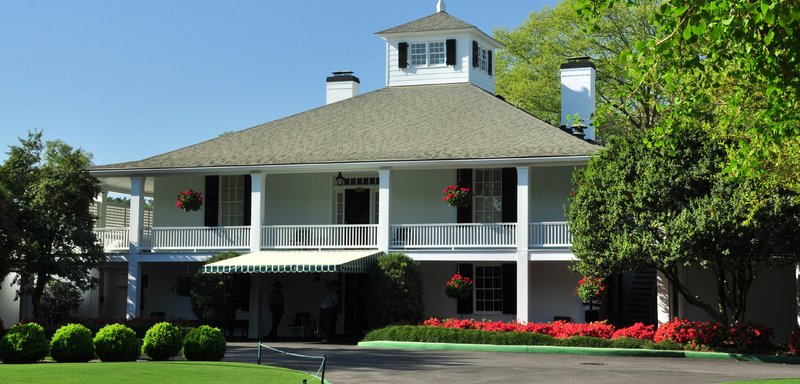
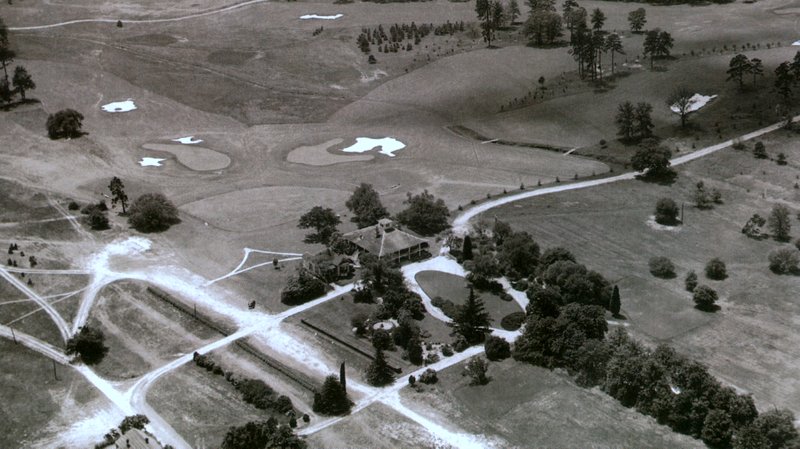
ANGC clubhouseThe original plans for Augusta National Golf Club called for two eighteen-hole golf courses—a Championship Course and a Ladies Course—plus tennis courts, outdoor squash courts, an eighteen-hole pitch-and-putt course, a bridle path, a couple of dozen houses for members, and, possibly, an on-site hotel. In addition, $100,000 was to be spent on a clubhouse—which was needed because the existing manor house, which had been built in 1857 by a horticulturalist and nurseryman named Dennis Redmond, was going to be torn down.

Redmond manor house, 1800s.Redmond was, in addition to a planter, an architectural historian and an editor of an agricultural publication called The Southern Cultivator.  His house had eighteen-inch-thick walls made of concrete, a material that before that time had not been used in residential construction in the south; Redmond called it “artificial rock.”

Redmond’s house, post-Redmond, in the 1800s. Redmond was, in addition to a nurseryman, an architectural historian and an editor of an agricultural publication called The Southern Cultivator. His house had eighteen-inch-thick walls made of concrete, a material that before that time had not been used in residential construction in the south; Redmond called it “artificial rock.”

It seems unimaginable today, but demolishing the old manor house wouldn’t have been a reckless act. Although the building looks imposing in photographs, it’s quite small. Much of its apparent bulk comes from its porches, which are nine-and-a-half feet deep and run all the way around on both floors, and from large wings added later on each side. In 1931, the building had fourteen rooms, but most were cramped and dark, and there was no kitchen, no electricity, and no plumbing. The ground floor had been referred to by the builder as a “basement,” and it looked like one. A consulting engineer, after making an inspection, concluded that most members “would probably be better satisfied in a modern building with all modern conveniences.” Few disagreed.

ANGC clubhouse old-001

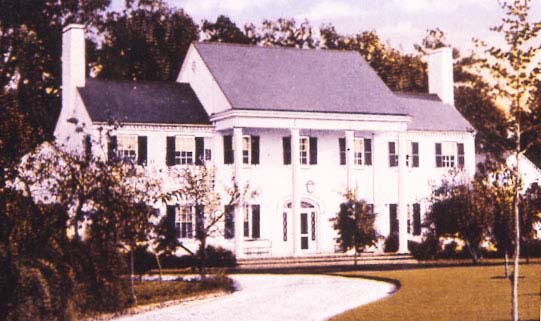
Clifford Roberts and Bobby Jones, the club’s co-founders, hired Willis Irvin, a local architect, to draw plans for a new clubhouse. A detailed rendering of his design appeared in the Augusta Chronicle in 1931:

The clubhouse that was never built, designed by Willis Irvin, a prominent Augusta Architect. I apologize for the appalling quality of the image, which is a scan of a photocopy of a microfilm print of a newspaper photograph of a drawing.

This is the Augusta National clubhouse that was never built. It was designed by Willis Irvin, who died in 1950. I apologize for the appalling quality of the image, which is a scan of a photocopy of a microfilm print of a newspaper reproduction of an architectural drawing.

The building was to have two large wings, an exterior of white-painted brick, a slate roof, several impressive chimneys, and a vast neoclassical portico supported by four tall columns. The most striking feature was to be an enormous men’s locker room containing four hundred lockers, some double and some single. According to the Chronicle, Jones had been involved in the planning, and the locker room was going to incorporate “the best features of the clubs he has visited.” There were to be nooks and corners in which golfers could gather before, after, and between rounds to play cards, drink gin, eat lunch, watch the action on the course through large bay windows, and converse. A separate wing was to contain similar facilities for women.

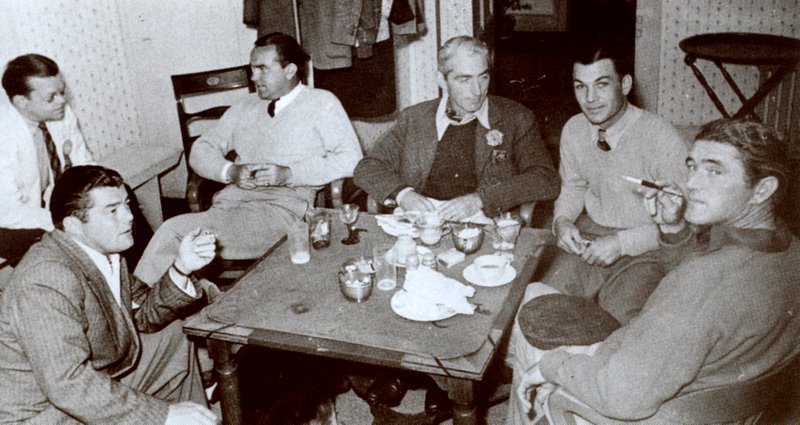
Early Masters competitors did more between-rounds drinking and smoking than they tend to do nowadays. Clockwise from the lower left, these people are: Lawson Little, Charlie Bartlett (the golf editor of the Chicago Tribune, after whom the press lounge in the media building at Augusta National was named), Billy Burke, Tommy Armour, Ben Hogan, and Olin Dutra.

Masters competitors did more between-rounds drinking and smoking in the early years than they do nowadays. This photo is from the second tournament, in 1935, when the clubhouse was still a dank mess. Clockwise from lower left: Lawson Little, Charlie Bartlett (the golf editor of the Chicago Tribune, after whom the press lounge in Augusta National’s media building was later named), Billy Burke, Tommy Armour, Ben Hogan, and Olin Dutra.

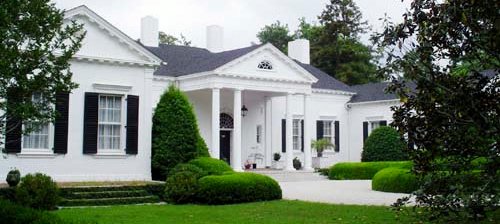
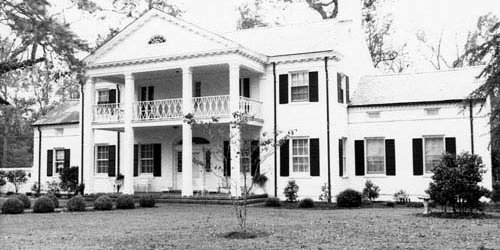
You can’t see much detail in the poorly reproduced newspaper image higher up in this post, but several of the private houses that Willis Irvin designed were similar to what he had in mind for Augusta National. (According to the South Carolina State Historic Preservation Office, he specialized in “elegant rural estates,” often “built for wealthy northern clients” who wanted winter residences in the South.) The Irvin house in the photo below, called White Hall, is in Aiken, South Carolina. It was built in 1928, and in many ways it’s a scaled-down version of what he proposed for Augusta National:

S1081770202302-001

Here’s another similar Irvin house, from Hartsville, South Carolina, built about 1931:

CokerAnd here’s the back of Irvin’s own house, in Aiken, which was built in 1855 but which he enlarged in 1930, by adding the wings. (He liked wings.)

Irvin House

Not everyone was eager to tear down the old manor house. Harry M. Atkinson, of Atlanta, who was part of Augusta National’s tiny group of early members, wrote to Roberts in 1931 to say that he and his wife loved the building and believed it should be renovated rather than razed. “We both were greatly impressed with the avenue of magnolias leading up to the old Berckmans residence and the planting around the house,” he wrote. (Prosper Berckmans, a Belgian horticulturalist and landscape architect, had bought the property from Redmond in 1858 and turned it into Fruitlands Nurseries, which by 1931 had been out of business for a little more than a decade.) “We think that all of that, including the house, ought to be preserved carefully,” Atkinson continued. “It can be made a perfect gem, using the old house for a club house. You could not reproduce what is there for any amount of money.”

ANGC old

Atkinson also said that he felt “a great many golf clubs” had been ruined by the construction of “club houses that are too elaborate and too luxurious”—an observation that may be even more apt today than it was then. In response to Atkinson, Roberts wrote that that the house would be hard to save but that, for financial reasons, nothing was likely to be done in a hurry. Still, early master plans for the Augusta National property included a “Site for Club House”:

plan showing clubhouse site

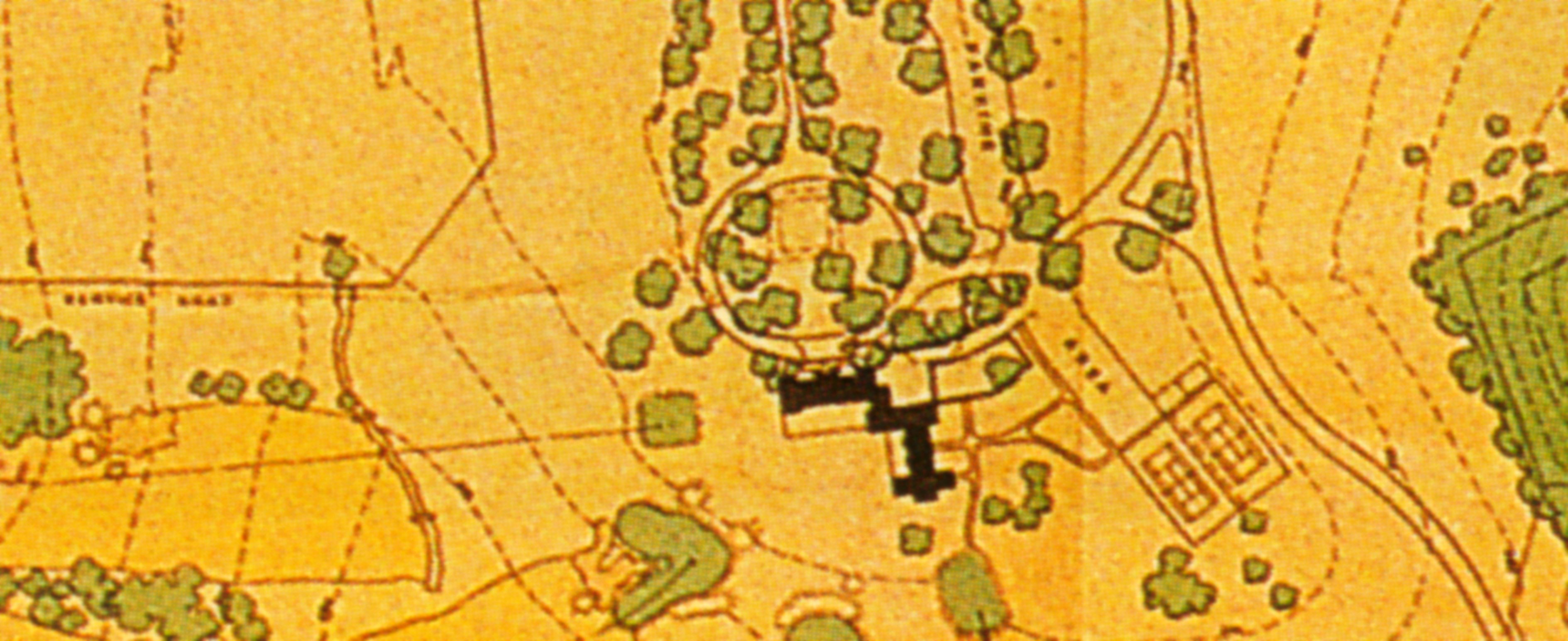
The image above is a detail from a subdivision plan prepared by Olmsted Bros. in 1932. The footprint of Irvin’s proposed clubhouse is shown in black. Just above it is the driveway circle, which still exists, and the near end of Magnolia Lane; to the left is the first tee; at roughly eight o’clock (shaped like upside-down rabbit ears) is the ninth green; directly below the clubhouse is the tenth tee; to the right are the proposed tennis courts. Here’s some of the same area as it actually appeared a couple of years later, in a photograph taken from an airplane:

aerial view ANGC 1934

The demolition plan would have proceeded if the club had had the money to carry it out. But Roberts and Jones were unable to sign up more than a handful of members, and therefore had to make do with their crumbling old manor house (and no tennis). Thank goodness.

Another of Irvin's designs--this one from Hartsville.

Another house designed by Irvin, also in Hartsville. This one was built in 1934, the year of the first Masters.

angc postcard

Masters Countdown: Tenth Hole

ANGC early routing

In Alister MacKenzie’s original conception of the golf course at Augusta National (shown above), the holes were numbered as they are today. MacKenzie’s thinking changed in 1931, before construction began, and he switched the nines, so that the current first hole became the tenth. Several writers have attributed the change to Bobby Jones, who contributed to the design, but contemporary documents make it clear that the idea was MacKenzie’s. His intention was probably to provide a better view of the finishing green to members who might be lounging near the big picture windows in the locker room of the planned new clubhouse, which Jones and Clifford Roberts, the club’s co-founders, intended to build as soon as they’d raised enough money to tear down the old plantation house. (Luckily, they never did. I’ll tell that story soon.)

ANGC tenth green

The club switched the nines again in 1934, between the first tournament and the second. This time, the reason was that the shady area near the current twelfth green, which lay at the lowest elevation on the property, was the last part of the course to thaw on frosty mornings. By playing the other nine first, golfers could tee off earlier. The new arrangement also made for more stirring Masters finishes, a fact that was recognized at the time.

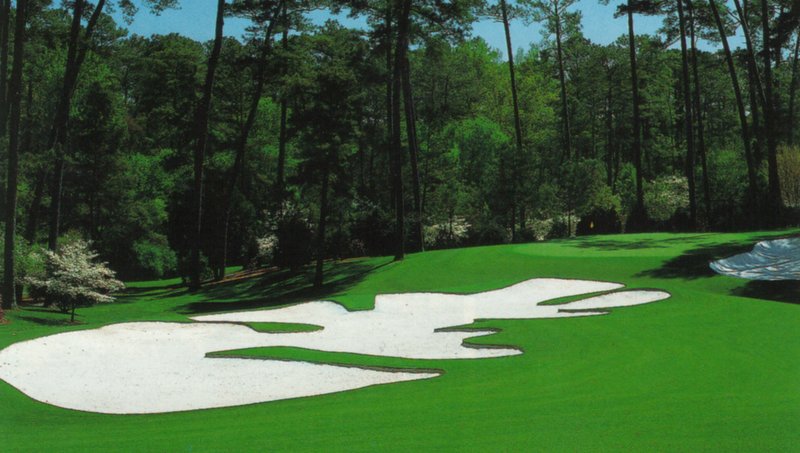
Tenth hole, Augusta National. Looking back up the hill, toward the tee.

Tenth hole, Augusta National. Looking back up the hill, toward the tee.

It’s easy to understand why MacKenzie thought of the current tenth as a good starting hole. The view from the tee is one of the most enticing in golf—the sort that can coax a smooth swing from a hurried player who hasn’t had time to loosen up. The drop in elevation to the ideal landing area is more than a hundred feet—enough to make a thinly struck drive seem solidly launched. The fairway runs down and to the left and out of sight, through a bending corridor of pine trees. The slope rewards any player who can work the ball from right to left, yet there is room on the right for those who can’t. Golfers leave the tee feeling that they are descending into a different world—an appropriate emotion for players entering the most celebrated second nine in golf.

Early members playing the tenth hole.

Early Augusta members playing the tenth. In MacKenzie’s first drawing of the hole, there was a big fairway bunker not too far from the foreground of this photo. (See the plan at the top of this post.) When this hole became the opening hole, though, he removed the bunker, because he didn’t think a golfer should have to clear a large hazard with his first shot of the day. But when the ordering of the holes changed again the fairway bunker wasn’t put back.
The tenth hole was originally much shorter than it is today. (MacKenzie, in a note in the program for the first tournament, in 1934, called the hole “comparatively easy.”) Until 1937, the green was situated well in front of and below where it is today, in a damp hollow to the right of the sprawling fairway bunker. That bunker seems anomalous to modern players, because even well-struck drives don’t reach it and even poorly struck approach shots usually miss it. But in the early years the bunker (which at that time was really more of a waste area) guarded the left flank of a punchbowl green:
The original tenth green, on the right. The current green is well beyond it and to the left.

The original tenth green, on the right. The modern green is on the rise well beyond it and to the left.

Moving the green was the idea of Perry Maxwell, who one year later also redesigned the seventh hole. Maxwell pointed out that moving the tenth green to higher ground would not only solve a drainage problem but also markedly strengthen the hole. The change turned a breathtaking but mediocre short hole into one of the greatest par 4s in the world.

Reader’s Trip Report: Merion (as a Spectator) and a New Game

Moe Dweck (left).

Moe Dweck (left).

Moe Dweck, a reader in Maryland, who (like me) writes a golf blog and (also like me) probably has a real job of some kind, wrote recently to describe his experience at the U.S. Open, which he attended with friends:

A bunch of guys traveled up to Merion on the Friday of the Open for some spectating and a cheese-steak. (By the way, the cheese-steak at Mama’s Pizzeria in Bala Cynwyd is off the charts. Went classic: white cheese, green peppers, and grilled onions. It is the Philly bread that makes these unbelievable.) The course looked the same to me as it did twenty years ago, but with much narrower landing areas. I think the U.S.G.A. overdid that aspect of the set-up more than slightly. But, overall, the presentation of the course was just awesome to witness in person.

(Parenthetically, let me add that I agree with Dweck about the severity of the set-up, and that I don’t share the U.S.G.A.’s crippling anxiety about birdies. Bubba Watson’s recovery from the pine trees on the first playoff hole in the 2012 Masters would be at or near the top of almost any golfer’s list of the coolest meaningful shots in majors in recent years, but nothing like it would be possible in an Open, because if Watson had missed an Open fairway by the same margin he would have been up to his knees in fescue.) Back to Dweck:

The truth is that the course stood up to the challenge, like it did in 1971 and 1981, because of the greens. One of the writers in Golf World pointed out that it is not the undulations of the greens at Merion that make it tough but the tilts. Could not agree more. On the short eighth, it was nearly impossible to get a ball to stay close, even with a sand-iron in the hands of a pro. Nothing more needs to be said about tilt than the lean on No. 5. I hope the U.S.G.A. continues to present the men’s and women’s Opens on classic old courses like these. Taking the driver out of the hands of a pro is not a federal crime, so I am not sure what all the whining is about. 

Back in April, Dweck wrote to describe a game that he and his regular golf buddies had played on their home course during Masters weekend—a game they called Virtual Pro-Schmo. What they did was take the best Masters rounds from the previous day and treat the guys who shot them as virtual partners in their own game. They transposed each Master’s competitor’s hole scores, in relation to par, onto a scorecard from their own course, then put all the cards into a hat and picked. If a schmo’s virtual pro partner had birdied Augusta’s first hole the day before, for example, then the only way the schmo could improve their best ball on the first hole would be to make an eagle; if the virtual pro had made a bogey, then the schmo had work to do. My friends and I meant to try Dweck’s game during the U.S. Open, but we forgot. We’re going to try to remember during the British.

Actually, we might use another format Dweck told me about, which he and his friends used during the Open. “We called it Beat the Pro,” Dweck said. “Thirty-two guys participated. Each one picked a pro-opponent scorecard from a hat. (We used eight guys’ scores, in relation to par, from the Thursday round at Merion.)  We gave our guys 110 percent of their handicap, and they played a quasi-skins format, in which they got three points for every hole on which they beat their pro and one point for every hole they pushed. Winners were the guys who had the most points against the field. I got to knock around Luke Donald. The guys who drew Sergio had to deal with an eagle on No. 2 (which is a par-3 on our course, so they needed a hole-in-one to push) and a quad on No. 15 (a par-5 for us, so a net nine or better scored points there.) Lots of fun.”

My friends and I are going to try this, too, sometime, if we remember. Here’s a picture of Dweck and some of his friends:

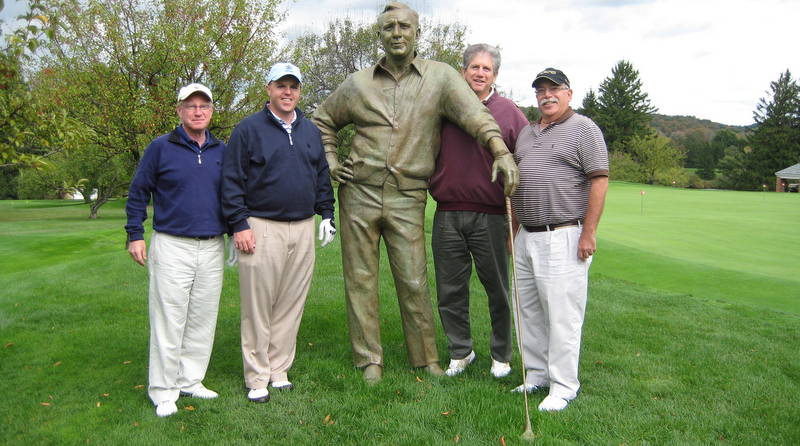
Alan Levine, Josh Tremblay, some guy, Rusty Minkoff, and Moe Dweck at some point in the past, during a buddies trip to Laurel Valley Golf Club, Ligonier, Pennsylvania.

Alan Levine, Josh Tremblay, some guy, Rusty Minkoff, and Moe Dweck, during a buddies trip to Laurel Valley Golf Club, Ligonier, Pennsylvania.

Ed Heimann Has a Better Short Game Than You Do

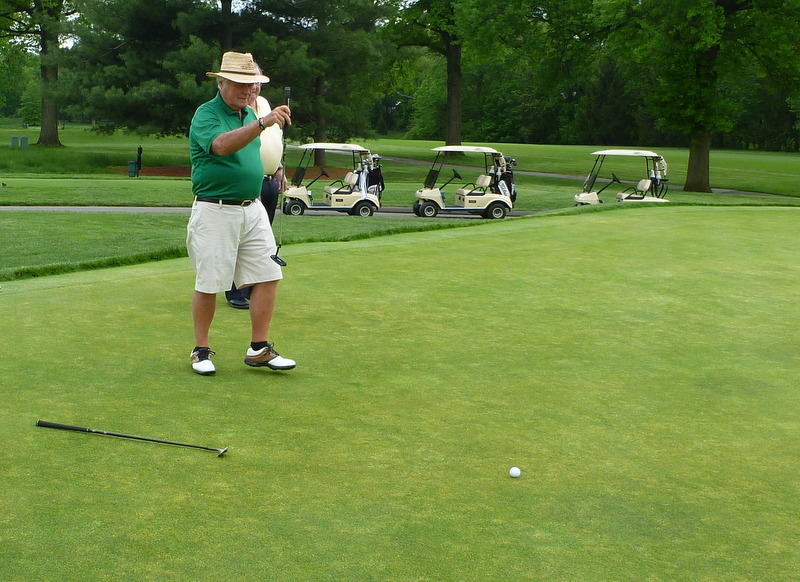
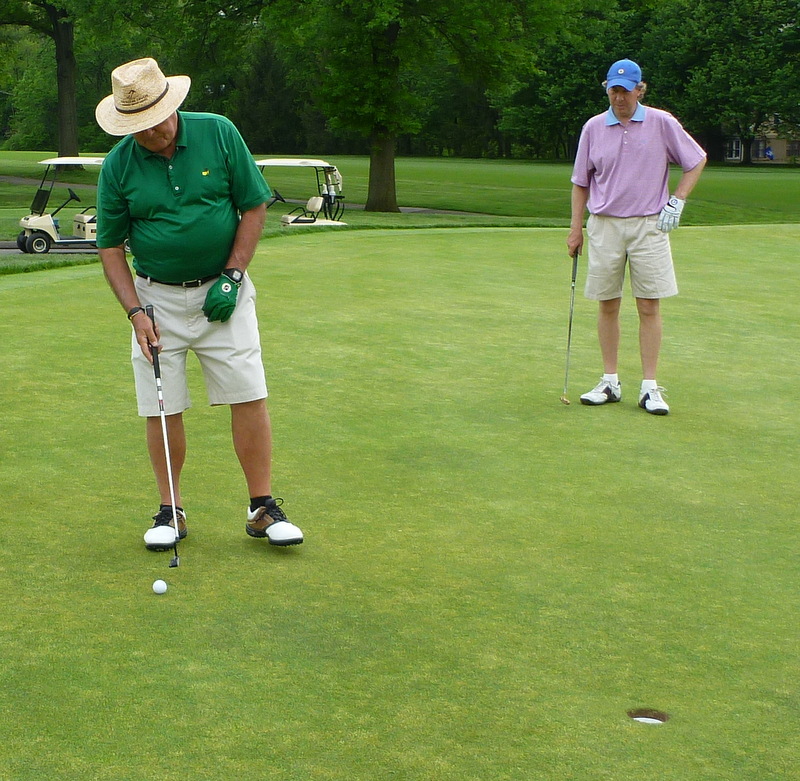
Ed Heimann, Hyde Park Golf and Country Club, Cincinnati, Ohio, May 9, 2013.

Ed Heimann, Hyde Park Golf & Country Club, Cincinnati, Ohio, May 9, 2013.

A couple of weeks ago, I had the tremendous good fortune to play a round of golf (and give an evening talk and slide show) at Hyde Park Golf & Country Club, in Cincinnati. The club’s original course, which had nine holes, was laid out by Tom Bendelow in 1909, and the current course, which has eighteen holes, all of them terrific, was designed by Donald Ross a little over a decade later.

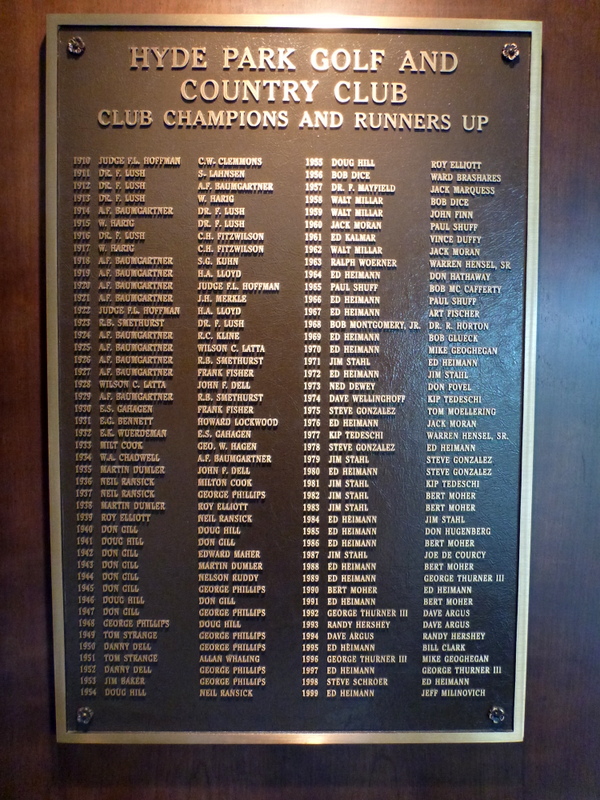
Among the members I played with was Ed Heimann, who has won Hyde Park’s club championship twenty-one times, in six different decades. His first win was in 1964, when he was twenty-six; his most recent was in 2010, when he was seventy-two. And he’s been the runner-up half a dozen times, during years when (I guess) he was struggling with his game.

Ed Heimann has won the Hyde Park club championship so often that his victories won't all fit on one plaque.

Ed Heimann has won the Hyde Park club championship so often that his victories spill over onto a second plaque.

His most recent victories. Still room for more.

His most recent victories. Still room for more.

Heimann isn’t very long off the tee anymore, but from inside a hundred yards he routinely gets the ball closer to the hole than many good players do from the fringe—a skill that’s especially devastating in match play, since guys who out-drive him by a hundred yards don’t expect to have to putt first. My advice to other golfers is to emulate everything Heimann does, including plumb-bobbing and wearing a green glove. And if you ever find yourself in a match with him you might as well just give him ten-footers.

Ed Heimann and Ian Wilt.

Ed Heimann and Ian Wilt. “That’s good, Ed.”

Heimann has a more interesting job than you do, too: he is the chairman of Hamilton Tailoring Company, in Avondale, which was founded the same year Hyde Park was. Hamilton has made clothing for customers as different as Perry Como and John Daly, and since 1967 it has been the exclusive manufacturer of the three-button, single-breasted sports coats worn by Augusta National members and Masters winners. (The exact shade of green: Pantone 342.) Heimann established his Augusta relationship by employing the same kind of creativity and determination that he has used to pick apart opponents in club matches for the past half-century. So watch it.

Reader’s Trip Report: Annie Stegall’s First Masters

Annie Stegall and Will Stegall, Masters 2013.

Annie Stegall and Will Stegall, Masters 2013.

Will Stegall attended the Masters for the first time in 1993, when he was a teenager. “My grandfather would always give me a crumpled old copy of a Herbert Warren Wind article from The New Yorker to read as we drove from Birmingham to Augusta,” he told me in an email back in March. “I remember sitting on No. 16, about hole-high, on Sunday in 1996. Raymond Floyd’s ball landed on the front of the green, rolled up the ridge to the right, back down, and into the cup. The ball must have rolled for forty-plus feet and the whole crowd knew what was coming from the time it landed. It was the first time I had ever witnessed a hole-in-one and it almost inspired me to start wearing pants with just one back pocket.”

This year, Stegall, who now lives in San Francisco, took his daughter, Annie, who turned nine on practice-round Monday. At my request, Annie took notes during the tournament. She had a highly favorable impression of the Georgia Peach Ice Cream Sandwiches, which are new, and which she managed to try before the sportswriters in the Press Building had eaten all of them. More from her report:

This year was the seventy-seventh Masters. My great-grandfather got tickets a long time ago and always loved it. Once my grandfather was old enough, he started going and has now gone to fifty of them, my dad has gone to twenty, and this year was my first.

My dad and I flew from San Francisco to Atlanta on Friday, April 12, and drove to my aunt’s house in Augusta. I didn’t sleep very well because of the time change, but when it was finally morning we were so excited that we got up early. We had to get to the course to put our chairs on the left side of the eighteenth green. When I got out of the car in the parking lot, the first thing I said was, “It smells really good.”
Before I tell you about golf, I am going to tell you about the Augusta National golf course. First of all, let me tell you how green it was! It was so perfect that at first I thought the grass was fake. The grandstands were green, the concessions stands were green, the trash picker-uppers’ uniforms and their pokey things were green, along with the sandwich wrappers and even the beer cups.

And now to the main thing: the golfers. They could hit the ball so high and so long I couldn’t believe my eyes. I loved that you could be so close and nobody would tell you to step back. It was awesome watching an eighth grader beat Bubba Watson and other Masters winners. Angel Cabrera rolled me one of his balls and the forecaddie of the 16th hole gave me Tiger Woods’s tee. I also got an autograph from Brandt Snedeker.

My dad and I kept a notebook of bets on who would win, who would have the lowest round each day, and who would hit the closest on each hole. I crushed my dad. He predicted Brandt Snedeker would win but I said Snedeker would have a bad round at the end and Adam Scott would win. I was right!

Among Annie Stegall’s favorite Masters features was the absolute ban on cell phones, because it kept her father focused on the tournament and on her, rather than on his work. And her father didn’t feel deprived. “The Masters is a far more social event than some folks might expect,” he told me afterward. “And coordinating to meet up with buddies without the aid of cell phones is as much a throwback as the hand-operated leader boards. Pick a spot like the sixteenth tee, as Annie and I did on Sunday, and you end up chatting with strangers. Many of them have been sitting in that spot for decades and have great stories about miraculous or horrible shots through the years. I have some favorite Masters (several from the nineties, 2007, 2010) but they always have more to do with the people I’m with and less to do with the outcome of the tournament. It’s probably my favorite week of the year.”

On Saturday, Annie was picked by the Augusta Chronicle as the Junior Patron of the Day, so she got her picture in the newspaper, too (see below). Next year, I’m going get her press credentials, then turn everything over to her.

Annie Stegall, MyUsualGame special correspondent and Augusta Chronicle Junior Patron of the Day, April 13, 2013.

Annie Stegall: MyUsualGame.com special correspondent and Augusta Chronicle Junior Patron of the Day, Augusta, Georgia, April 13, 2013.