What’s In My Bag: Jack Chesnutt

Royal Birkdale, May 19, 2013.

Royal Birkdale, May 19, 2013.

Today, I played Royal Birkdale with Paul Jones, a young member and a terrific golfer, whose swing finish you see here:
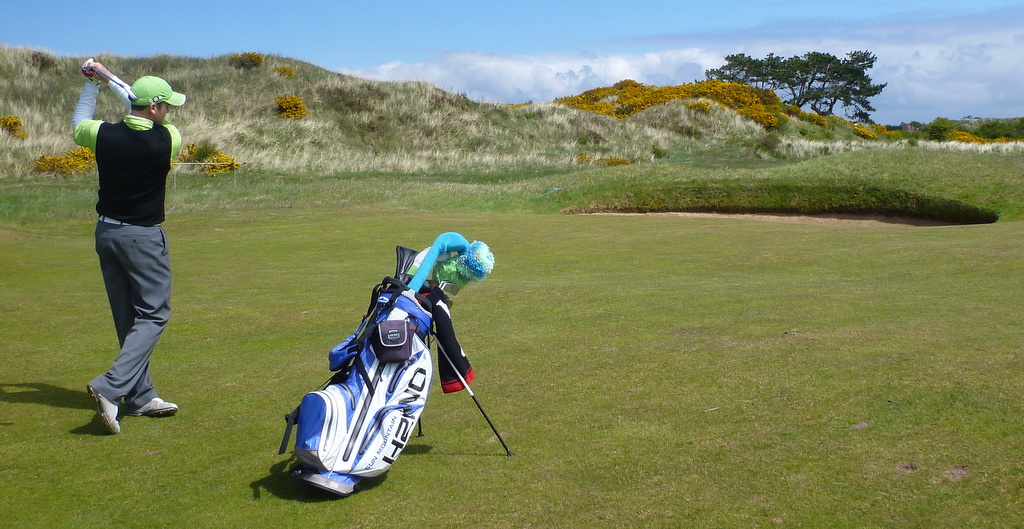
P1060461Before we teed off, I bought my wife a sweater in the golf shop and decided not to buy myself an enameled ball marker. Then, during our round, I found an enameled ball marker that was even nicer than the one I had decided not to buy. The exact same thing (except for the part about my wife) happened to me a year ago, at Cruden Bay, in Scotland. The ball marker I found there turned out to be one of the luckiest I’ve ever owned, for about a month. Fingers crossed!

And that brings me to Jack Chesnutt, a reader in Colorado, who recently wrote:

I found the ball markers below (along with one from a course in Ireland I have since lost) on a fairway at Pacific Dunes in 2008. They did not seem to have been dropped accidentally from someone’s pocket. They were arranged in a small triangle with a well-worn repair tool in the middle. The last act of a frustrated golfer after watching one more drive arc toward the rocks and surf? Or maybe a little memorial to a departed golfing buddy? The view from that point in the fairway was wonderful.
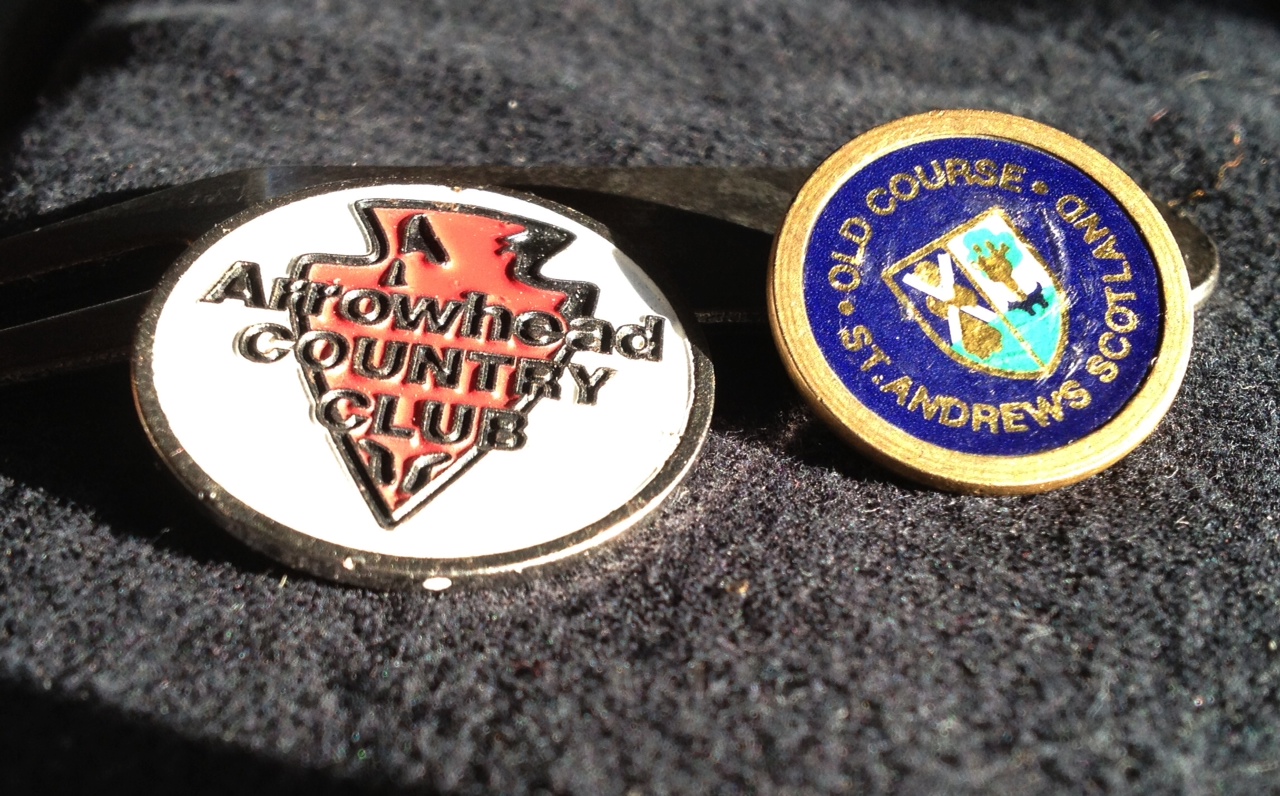
photoAs I do with all the markers I keep in my golf bag, I rotate the Arrowhead marker in and out of my game. The first three-putt sends it into time-out. But I never use the Old Course marker. I don’t want to lose it. Maybe I will find the owner or his/her son/daughter someday.

Before claiming that these are yours, be prepared to reveal some telling piece of information that only you and Chesnutt could possibly know. Meanwhile, here’s what Chesnutt has to say about his own game:

I caddied for my dad back in the early sixties, but a huge banana slice and indifferent putting convinced me that tennis was more my game. When I turned fifty, my brother-in-law the pilot-golfer (what else do they have to do when they are not driving a 737?)  persuaded me to play a round. I shot 99. I was hooked. My wife (hey, it was her brother who got me into this) made fun of my golf habit. “Why would any human being need more than ONE pair of golf shoes?” Luckily for me, she took up golf, became a 9-handicap, and soon bought her third pair of golf shoes. The trip to Bandon was our first big golf vacation together. The first round, at Pacific Dunes, was memorable not only for the stunning setting but also for finding the ball markers. It was so windy that my stand-bag blew over—twice. I’m now sixty-two years old, and my index is 4.5, and I keep about ten ball markers and three repair tools in the rotation. The repair tools don’t seem to have the same cosmic effect on my putting as the markers. I’m also up to four pair of golf shoes. 

I’ll put up more What’s In My Bag items as soon as I’m back in the States. I’ve got several in the hopper, but there’s room for more. Keep ’em coming—and include at least one photo and a golf-oriented description of yourself.

This Should be the Patron Bird of Golf

Eurasian Skylark, Wallasey Golf Club, England, May 14, 2013.

Eurasian Skylark, Wallasey Golf Club, England, May 14, 2013.

If you’ve ever played links golf in the British Isles, you’ve seen and heard Eurasian skylarks, which nest in tall grass and sing while hovering above the ground, often in strong winds, sometimes for as long as an hour.

At Wallasey Golf Club (virtually next door to Royal Liverpool) I got closer to a skylark than I ever have before:

P1060153

The U.K.’s skylark population has fallen by something like ninety percent in the past thirty years, primarily as a result of changes in British agricultural practices which I don’t completely understand. One environment in which they continue to thrive is linksland, and their singing has provided the soundtrack for many of my favorite golf rounds during the past twenty years.

Wallasey Golf Club. Music provided by skylarks.

Wallasey Golf Club. Background music provided by skylarks.

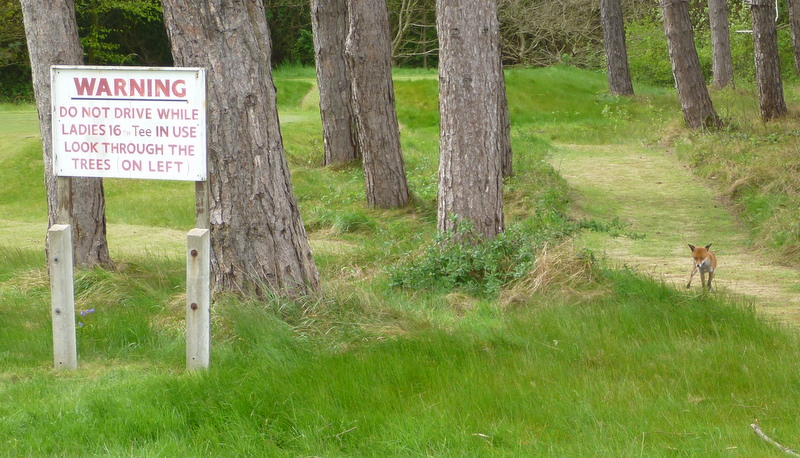
At Formby Golf Club, yesterday, I didn’t see any skylarks, but I did see this, near the seventeenth tee:

P1060330

She was hunting for mice, and when she spotted one in the rough she jumped:

P1060336

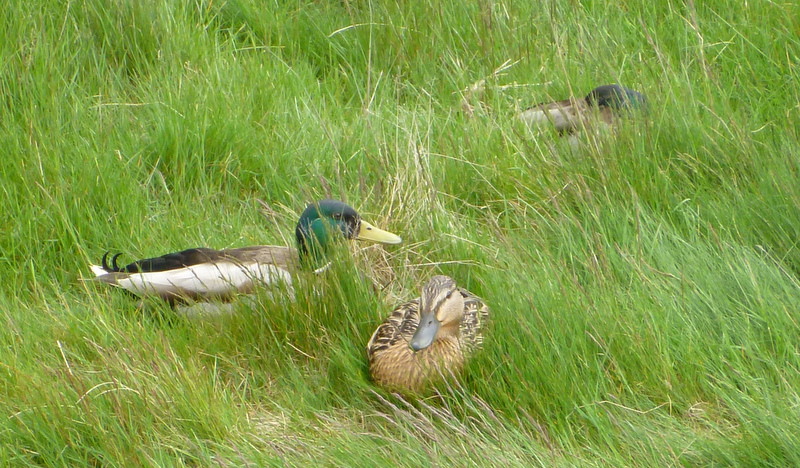
I also saw these—which, for some reason, were sitting in the grass. (Maybe they were trying to hatch golf balls.)

P1060297

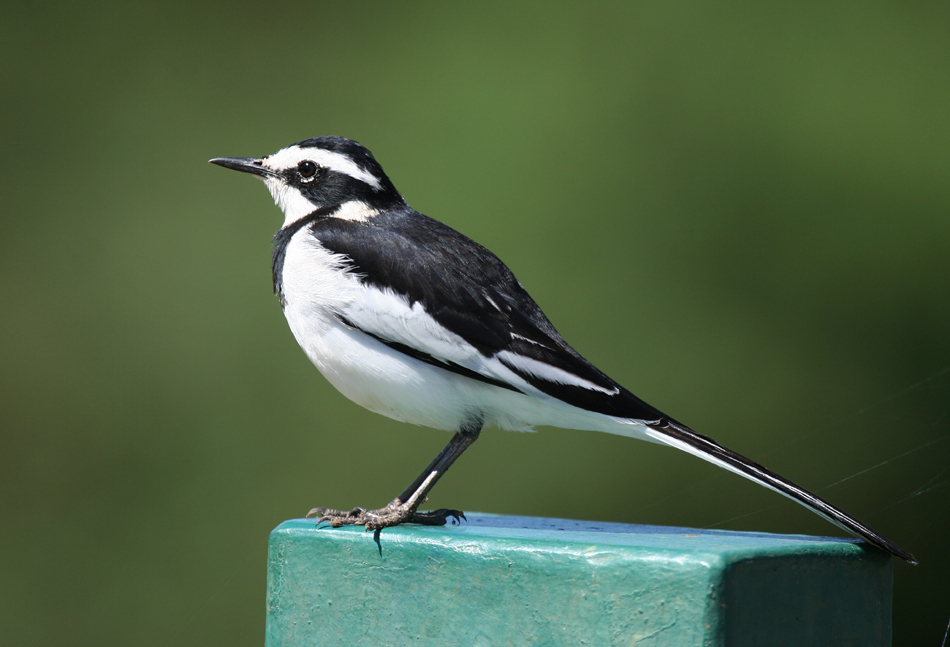
And I saw lots of these, especially on the practice green:

wagtailThat bird is called a wagtail, because—duh—it wags its tail.


Never, Ever Take One of These on a Golf Trip to the British Isles

You won't need one of these if you travel to the British Isles to play golf. Royal Lytham & St. Annes, England, May 13, 2013.

You won’t need one of these if you travel to the British Isles to play golf. Royal Lytham & St. Annes, England, May 13, 2013.

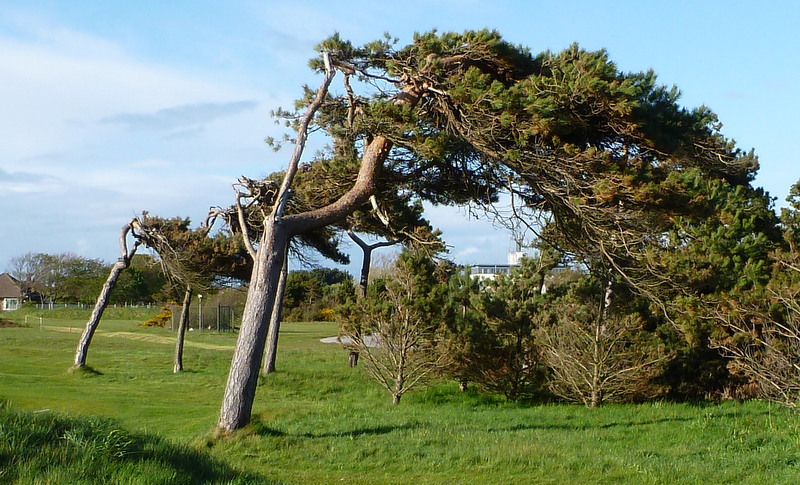
I’m in northwestern England playing golf this week. I didn’t bring an umbrella, and I’m glad I didn’t, even though there’s rain in the forecast for every day from now until the end of time. The trash can on the second tee on almost any links course in England, Scotland, and Ireland often looks like the trash can in the photo above, because American golfers typically come to the British Isles prepared for the rain but not for the wind. One hole is usually enough to destroy almost any umbrella. And carrying a “wind-proof” model isn’t the solution, because if your umbrella can’t be turned inside out it will carry you to sea, assuming you’re strong enough to hang on. Here’s why:

Wind-sculpted trees, thirteenth hole, Royal Lytham & St. Annes.

Wind-sculpted trees, thirteenth hole, Royal Lytham & St. Annes.

The wind was blowing hard yesterday, but the trees in the photo above look that way on calm days, too. Even scrubby little bushes get squashed in the direction of the prevailing wind. (I first wrote about the terrific golf courses of northwestern England almost twenty years ago. The opening sentence of my article was “You don’t need a weatherman to know which way the wind blows at Royal Lytham & St. Annes.” A Golf Digest copy editor, who apparently had never heard of Bob Dylan, changed “weatherman” to “weather report”—and that’s the way it ran.)

P1060129

Not carrying an umbrella will lighten your luggage by a couple of pounds, and it will spare you a lot of annoying housekeeping while you play. And you won’t miss it at all, if you have a rain suit, a rain hat, and a pair of rain gloves. The rain gloves are especially important, because if you have a pair of those you won’t need to even think about trying to keep your grips dry. In fact, if you have rain gloves you almost don’t need to carry a towel. And after my first trip to Scotland, in the early nineties, I stopped carrying an umbrella at home, too. Way too much trouble!

The Other Island Green at the TPC at Sawgrass

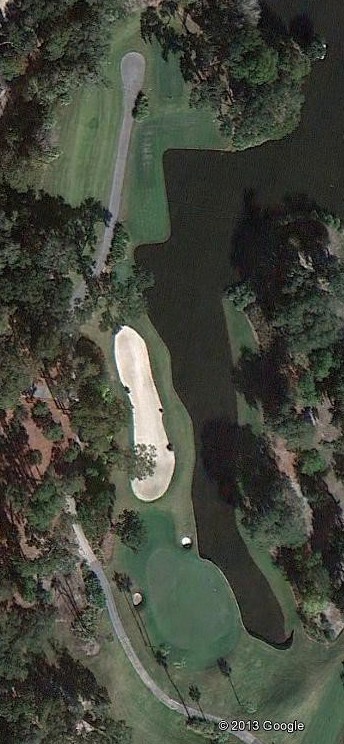
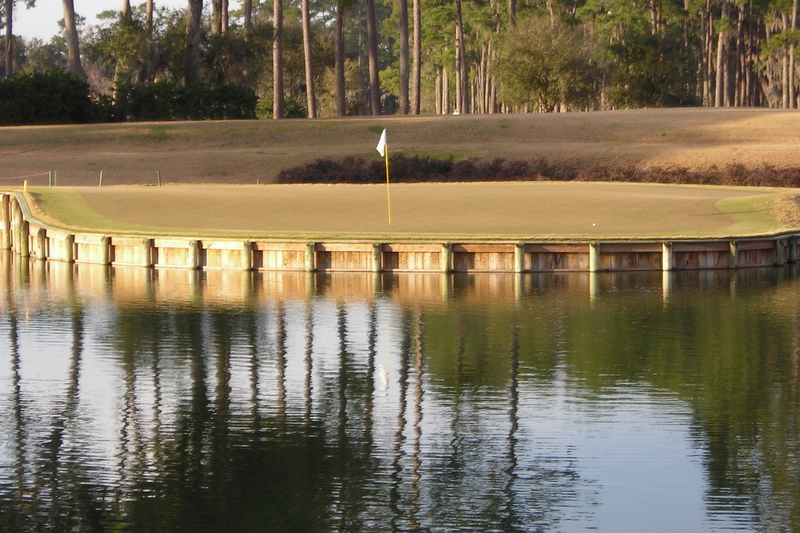
The seventeenth hole at the TPC at Sawgrass is deservedly famous, but the thirteenth, which is also a par-3, can be almost as intimidating, since from the farthest tournament tee it’s more than 180 yards long, and, to a right-handed player who draws the ball, its green might as well be an island.

TPC 13

I had a demoralizing encounter with the thirteenth twenty years ago, during a tournament on the Partners Tour, a short-lived (and almost certainly money-losing) program that the PGA Tour briefly offered to ordinary golfers. For $1,275, I got one practice round (on the Stadium Course), three tournament rounds (one on the Stadium Course, one on the adjacent Valley Course, and one at Jacksonville Country Club), unlimited extra golf on the Stadium and Valley courses, four nights at the Marriott at Sawgrass, three breakfasts, three lunches, two dinners, and a money clip made of goldium. I also got a locker with my name on it. It was next to the locker of Deane Beman, who at the time was the commissioner of the PGA Tour. I didn’t see Beman, but I did get a pretty good look at his shoe trees and a pair of his socks.

During the first round of the tournament, I was briskly confident as I stepped up to the thirteenth tee. We were playing from the blue tees, from which the hole measures about 150 yards. (The same tees were used during the second round of the Players Championship this year.) The day before, during my practice round, I had chipped in from the fringe for a birdie, and I had birdied the following hole as well, and (because golf is an easy game) I had parred the hole after that. Now, waggling my 8-iron and visualizing a soaring draw, I glanced one last time at the flag, and half-shanked my ball into the trees on the right.

No 13

“I’d better hit a provisional,” I said, without feeling particularly concerned. I teed up another ball, and, with a swing grooved through long and patient repetition, half-shanked it into the same stand of trees.

“I see the second ball,” someone shouted. Five minutes of crawling through dense undergrowth failed to turn up the first. I crouched in a bush to survey my prospects. To put my second ball on the green, I calculated, I would need to hit a crisp thirty-yard smother-hooked 4-iron through a window-size gap in the branches, applying enough backspin to keep the ball from skidding into low earth orbit. I declared the ball unplayable and returned to the tee. Taking a deep breath, I swung again. My third ball found the water on the left.

Sawgrass 13th

An eerie hush fell over my playing partners. I felt my consciousness rise slowly out of my body and gaze down, with ineffable pity, at my golf hat. I dropped a fourth ball, at the front of the teeing area, and with my pitching wedge yanked it safely onto the far left corner of the green, perhaps fifty feet from the pin. Three putts later, I had my ten.

From that point forward, my memories of my round are indistinct. I had been playing pretty well before my disaster, but I ended up with a 102, including double- or triple-bogeys on all the remaining holes except the celebrated seventeenth, on which I had a seven. (First ball into the water over the green; second ball into deep rough next to a piling at the rear of the green after bouncing hard and high off a piling at the front; chunky chip; three putts.) As I watched an official inscribe my score on the big board near the clubhouse, I wondered whether I ought not to give up golf altogether, for the good of the game.

Because I had played so poorly in the first round, I was demoted to the old-guy flight for the second round, which we played at the TPC’s Valley Course. The Valley Course, which is right next to the Stadium Course, is very different—it was designed by Pete Dye and Bobby Weed—but it’s still a good, challenging course. (The N.A.I.A. championship had been played there two days earlier.) I was grouped with an old guy from Texas named John, an old guy from South Carolina named Glen, and a regular guy from Florida named Gerry. Like me, Gerry had had a terrible round the day before. (He was a seven-handicap, but had shot 95.) I started out quadruple-bogey, double-bogey, double-bogey—a string of trouble that began when I decided to hit a big tee shot in front of Holly, a nice woman from the Tour office who was sitting at a table by the first tee. This triple disaster was doubly annoying, because the evening before I had parred all three holes in a quick nine-hole practice round with a fellow competitor and a photographer from Golf Digest.

Fourteenth hole, Valley Course.

Fourteenth hole, Valley Course.

One thing that makes me nervous on a golf course is wondering when disaster is going to strike. Once disaster has actually struck, I feel a sense of relief: now I know. Finding myself eight over par after three holes, I gave up hope, settled down, and began to make pars. I eased up on my swing, and my shots became longer and straighter. I no longer cared so much about my putts, and they began to drop. I even made a couple of birdies. Part of the credit belongs to my playing partners. John (whose golf shirt had a picture of an oil derrick on it) and Glen made flattering noises every time Gerry or I hit a ball more than 150 yards. Under their benevolent, calming gaze on one hole, I unwound a mighty two-wood—my fraidy-cat driver at that time—and hit what turned out to be the longest drive of the day. My prize was an attaché case with a PGA Tour emblem on it. I was thrilled to receive it—the long-drive winner in a previous tournament had been the mother of the Tour player Robert Gamez—although I later threw it away.

A Golfer’s Bucket List: No. 4 (T.P.C. Edition)

TPC at Sawgrass, February 9, 2009.

TPC at Sawgrass, February 9, 2009.

Play the Stadium Course at the TPC at Sawgrass. Hacking your way around a memorable course that you can watch the pros play on TV is both exciting and instructive, and the Stadium Course is the most engaging regular tour venue that mere civilians can play for a somewhat reasonable price. Bay Hill, Cog Hill, Doral, Harbour Town, and Torrey Pines are also possibilities. So is Pebble Beach, although eighteen holes there, including the obligatory add-ons, may cost more than the annual dues at your home club, and your round will seem to last for several days, and the greens will disappoint you, and the people in the group in front of yours will turn out to have taken up golf the day before yesterday. The Stadium Course is fun to play, and when you later watch The Players Championship—the fifth major!—on TV you will recognize more than just the last two holes. Playing a tour course will help you appreciate how the pros make their living, and the next time Tiger or Rory or Rickie dumps one in the water on seventeen you can tell your buddies, “Hey, I’ve done that.”

Seventeenth green, TPC at Sawgrass.

Seventeenth green, TPC at Sawgrass.

What’s In My Bag, Part Three: Let’s Have a Look Inside Those Pockets

Will, Brent, D.O., Ben, Liberty National Golf Course, Jersey City, New Jersey, May 5, 2013.

Famous building, Will, Brent, D.O., Ben, famous statue. Fourteenth tee, Liberty National Golf Course, Jersey City, New Jersey, May 5, 2013.

On Sunday, I had the tremendous good fortune to be invited to join a twelve-man outing at Liberty National Golf Course, in Jersey City, New Jersey, directly across the Hudson River from lower Manhattan. I employed a labor-saving technique I’ve often used during visits to other rich-guy golf clubs: I wore my sorriest-looking pair of shoes, knowing that the locker-room guy would fully resuscitate them while we were playing. During a multi-day trip Pine Valley ten or fifteen years ago, I took three sorry-looking pairs of shoes and left them outside my door sequentially. I went home feeling like a new man.

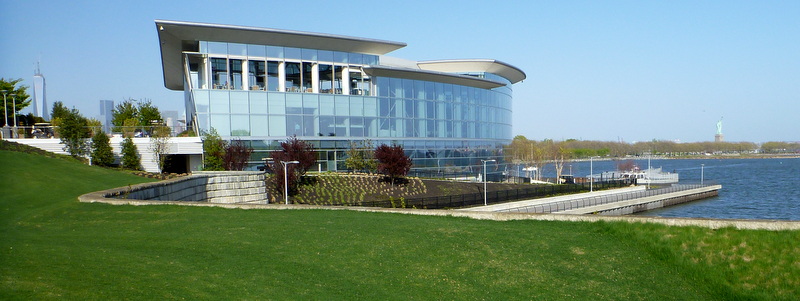
Cool clubhouse.

Cool clubhouse–and that statue again.

Liberty National was designed by Tom Kite and Bob Cupp, and it was built, in 2006, on a desolate industrial site. (I’ve seen a variety of cost estimates, all of which have nine digits.) The Barclays—which used to be known as the Westchester Classic, and then as the Buick Classic—was held there in 2009, and it will be held there again in August. Tour players grumbled about the course the first time. Since then, Kite and Cupp have made many changes, and either the changes have been effective or I don’t know what I’m talking about, because I liked the course a lot. And the clubhouse is the only starkly modernistical one I’ve ever been in that I fully approve of.

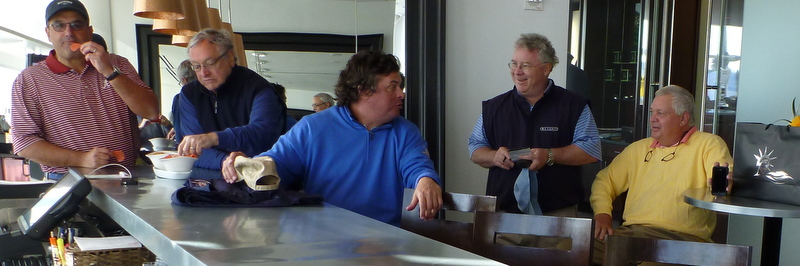
The bar, post-round.

The bar, post-round.

Partway through our round, I apologized to my caddie for having forgotten to remove a couple of nonessential items from my golf bag. (I’ve gotten a little lazy about on-course housekeeping in recent years, because at home I now almost always use a pushcart.) The bag can’t have been too bad, though, because I still occasionally carry it myself. Here is some of what was in it:

Ball markers

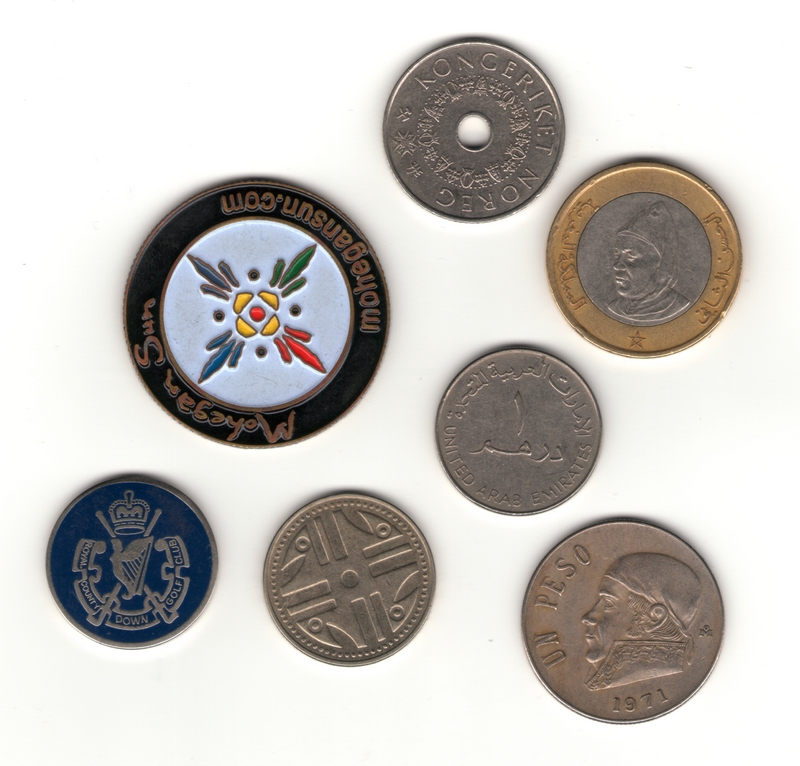
The photo above shows my selection of lucky ball markers for that day. Clockwise from lower left: a souvenir marker from Royal County Down, a necessity because of the sublimity, transcendence, immanence, etc., of that course; a souvenir marker from a casino in Connecticut, useful because it has four colored pointy things, any one of which can be aimed at the hole; a Norwegian coin with an actual hole in the middle of it; a Moroccan coin featuring King Hassan II, who loved golf, wore golf gloves on both hands, and was accompanied during golf rounds by a servant whose only job was to use a pair of silver tongs to hold the king’s cigarette while swung; a one-something coin from Dubai, which I often use when I absolutely have to one-putt; a big old Mexican coin with some guy on it; a Colombian coin featuring what appear to me to be balls, holes, and “aiming chutes.”

When I wrote about (a slightly different selection of) lucky ball markers, last year, I said that when I used a coin with a guy’s head on it I aimed the top the head at the hole. Michael Clark, a reader, wrote to say that, on the final day of a three-day-tournament at his club, he had discovered a better way. “The eyes of the coin had to be looking at the hole,” he wrote. “When the eyes lined up to the hole the putts were dropping! Also, it had to be the same coin. So, if the coin has eyes, line them up!” Since then, I have field-tested Clark’s method, and adopted it.

Morefar green repair tool

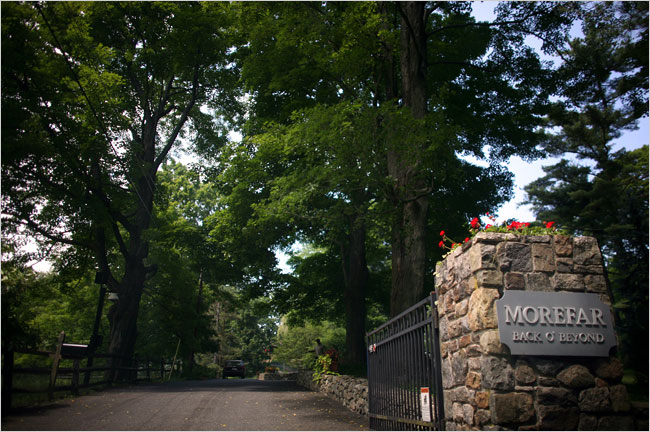
The photo above is of what is probably the luckiest green-repair tool I’ve ever owned. I got it at a super-secretive golf club called Morefar Back O’ Beyond, which straddles the border between Danbury, Connecticut, and Brewster, New York.

The course on the left is Morefar. The course on the right is Richter Park, which is owned by the city of Danbury, Connecticut, and is one of the best munys in the country.

The course on the left is Morefar. The course on the right is Richter Park, which is owned by the city of Danbury, Connecticut, and is one of the best munys in the country.

Morefar

Morefar used to be owned by the disgraced insurance company A.I.G. I played there a dozen years ago as the guest of one of the club’s handful of local members. Only a tiny number of golfers are allowed out each day, and the only other group on the course on the day we were there was that of the Sultan of Brunei, who teed off before we did. He and his retinue were almost comically slow, but, it turns out, you don’t play through the Sultan of Brunei. On an airplane recently, I saw a guy (in first class) who had a Morefar attaché case in his lap. I gave him the secret sign of brotherhood (by showing him my green-repair tool) as I walked past him on my way to the back of the plane, but he cut me dead.

coppertone

The item above is roll-on sunscreen, which I use as “lip balm.” The tube is at least half again as big as a ChapStick tube, and the stuff is waterproof. It’s especially handy in cold weather and in wind. I don’t carry ordinary sunscreen in my golf bag because I don’t believe in applying sunscreen in situ. I once told someone that if I ever ran for President my platform would have just three planks. I don’t recall what the first two were, but the third was that everyone would have to put on their sunscreen at home, before they went to the golf course, the swimming pool, or wherever. Sunscreen is much easier to apply when you aren’t wearing clothes, and it works better if it’s had some time to soak in. When I see young parents at the beach trying to squirt sunscreen onto squirming, uncooperative children, I think: “An hour ago, your children were naked and not covered with sand; why didn’t you think of doing this then? When I’m the President, we’ll have no more of this nonsense.”

Several readers have sent me descriptions of what’s in their own bag. As promised, I will soon create a new section and post several of them permanently. If you’d like to add your own bag to the pile, send an email to myusualgame@gmail.com. Include a golf-related description of yourself and at least one or two photos of your golf stuff.

(Read Part One and Part Two.)

What's In My Bag?

What’s In My Bag?

What’s In My Bag, Part Two: Why Two Drivers?

drivers

Ben Hogan, before teeing off at Riviera Country Club, was asked why he wasn’t carrying a 4-iron. “Because there are no 4-iron shots on this course,” he said.

Or maybe he didn’t say that. With sports anecdotes you can never be sure. Apocryphal or not, though, the point was a good one. No two golf courses are alike, so each one makes unique demands not only on golfers but also on golfers’ equipment. When Hogan benched his 4-iron at Riviera, assuming he really did, he made room in his bag for a club that he believed would be more useful on that particular course. Based on my own experience at Riviera, I would guess that the replacement was a sledge hammer, to be used for extracting wayward drives from the dense kikuyu rough.

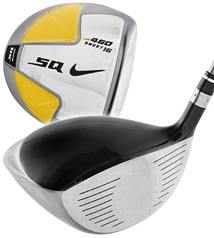
I  often tinker, Hogan-style, with my club selection, in an effort to tailor my equipment to my surroundings and my shifting abilities. My home course is short and tight, and, therefore, it usually rewards finesse more than raw power. When I play at home, I carry a putter, three wedges (60°, 52°, 46°), two hybrid irons (9, 8), six old-man hybrids (34°, 30°, 25°, 23°, 18°, 17°), and two drivers (a 10.5-degree Ping K15 and a 16-degree Nike Sumo Sweet 16—both antiques). All shafts are stiff.

Nike Sumo Sweet 16.

Nike Sumo Sweet 16.

The 17-degree hybrid and the 18-degree hybrid are both made by Nike and are both called 2-hybrids—but they’re different models, and the 18-degree one actually goes farther, although I find it harder to hit. (As I mentioned in my previous post, I think of it as a fairway wood.) It and the 16-degree driver probably seem redundant, or almost redundant, but they’re not. My longer 2-hybrid is at least theoretically easy to hit off the ground, but its head is so small that, when my ball is sitting on a tee, it gives me the heebie-jeebies, especially in the heat of competition. My course has a several short, narrow par-4s on which it might be the perfect choice for tee shots if it didn’t have a head that appeared to have been designed to slide between the bottom of a teed ball and the ground. For those tee shots, I hit my 16-degree driver, which I call Baby Driver. It goes about the same distance as the hybrid—200 yards, plus or minus ten percent—but has a head the size of a battleship. (I also have a 13-degree Mama Driver, currently in Time Out.)

During the first, stroke-play round of the men's member-guest last year, Tony, Tony's son Tim, and I carried nine drivers between us. That's my bag on the left, Tony's on the right.

During the first, stroke-play round of the men’s member-guest last year, Tony, Tony’s son Tim, and I carried nine drivers between us. That’s my bag on the left, Tony’s on the right.

When I first bought Baby Driver, five or six years ago, I used it only on short par-4s and tight par-5s. But it’s so easy to hit that, since then, I’ve found more and more uses for it. Last year, Rick and I played in a senior tournament run by our state golf association. The course had five par-3s, all of which were fairly long. I hit Baby Driver on all five of them, and in two rounds it and I were cumulatively two over par on those ten holes. In Northern Ireland last year, I hit Baby Driver on a downhill 134-yard par-3 and was the only player in our group to put a ball on the green. And sometimes I hit it off the ground.

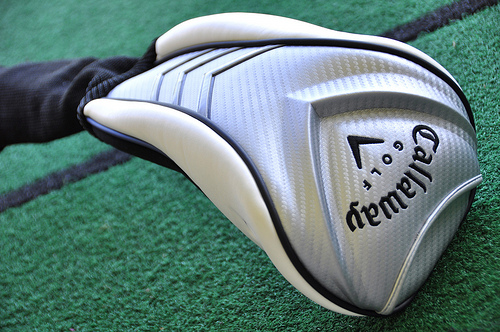
I'll address headcovers at surprising length later, but I can tell you now that I have just two of them: one for my putter, because if I don't use it the putter's saber teeth lock onto the shafts of my other clubs; and one for Baby Driver which I got from the lost-and-found box in the golf shop. Appropriately, I guess, it's for a women's driver, and it has a vaguely obstetric-seeming pouch on top. I use it to keep my two drivers from clanking annoyingly as I walk.

I’ll address head covers at surprising length later, but I can tell you now that I have just two of them: one for my putter, because if I don’t use it the putter’s saber teeth lock onto the shafts of my other clubs and are hard to pry loose; and one for Baby Driver (see photo). The Baby Driver one I got  from the lost-and-found box in the golf shop. Appropriately, I guess, it’s from a women’s driver, and it has a vaguely obstetric-seeming pouch on top. I use it only because without it my two drivers would clank annoyingly as I walked.

If at least two readers will send me descriptions (with one or more photos) of their own equipment, I will create a permanent What’s In My Bag department, and publish them there, along with any future contributions. Send all that stuff to myusualgame@gmail.com.

To be continued. (Read Part One.)

What's In My Bag?

What’s In My Bag.

Reader’s Trip Report: Annie Stegall’s First Masters

Annie Stegall and Will Stegall, Masters 2013.

Annie Stegall and Will Stegall, Masters 2013.

Will Stegall attended the Masters for the first time in 1993, when he was a teenager. “My grandfather would always give me a crumpled old copy of a Herbert Warren Wind article from The New Yorker to read as we drove from Birmingham to Augusta,” he told me in an email back in March. “I remember sitting on No. 16, about hole-high, on Sunday in 1996. Raymond Floyd’s ball landed on the front of the green, rolled up the ridge to the right, back down, and into the cup. The ball must have rolled for forty-plus feet and the whole crowd knew what was coming from the time it landed. It was the first time I had ever witnessed a hole-in-one and it almost inspired me to start wearing pants with just one back pocket.”

This year, Stegall, who now lives in San Francisco, took his daughter, Annie, who turned nine on practice-round Monday. At my request, Annie took notes during the tournament. She had a highly favorable impression of the Georgia Peach Ice Cream Sandwiches, which are new, and which she managed to try before the sportswriters in the Press Building had eaten all of them. More from her report:

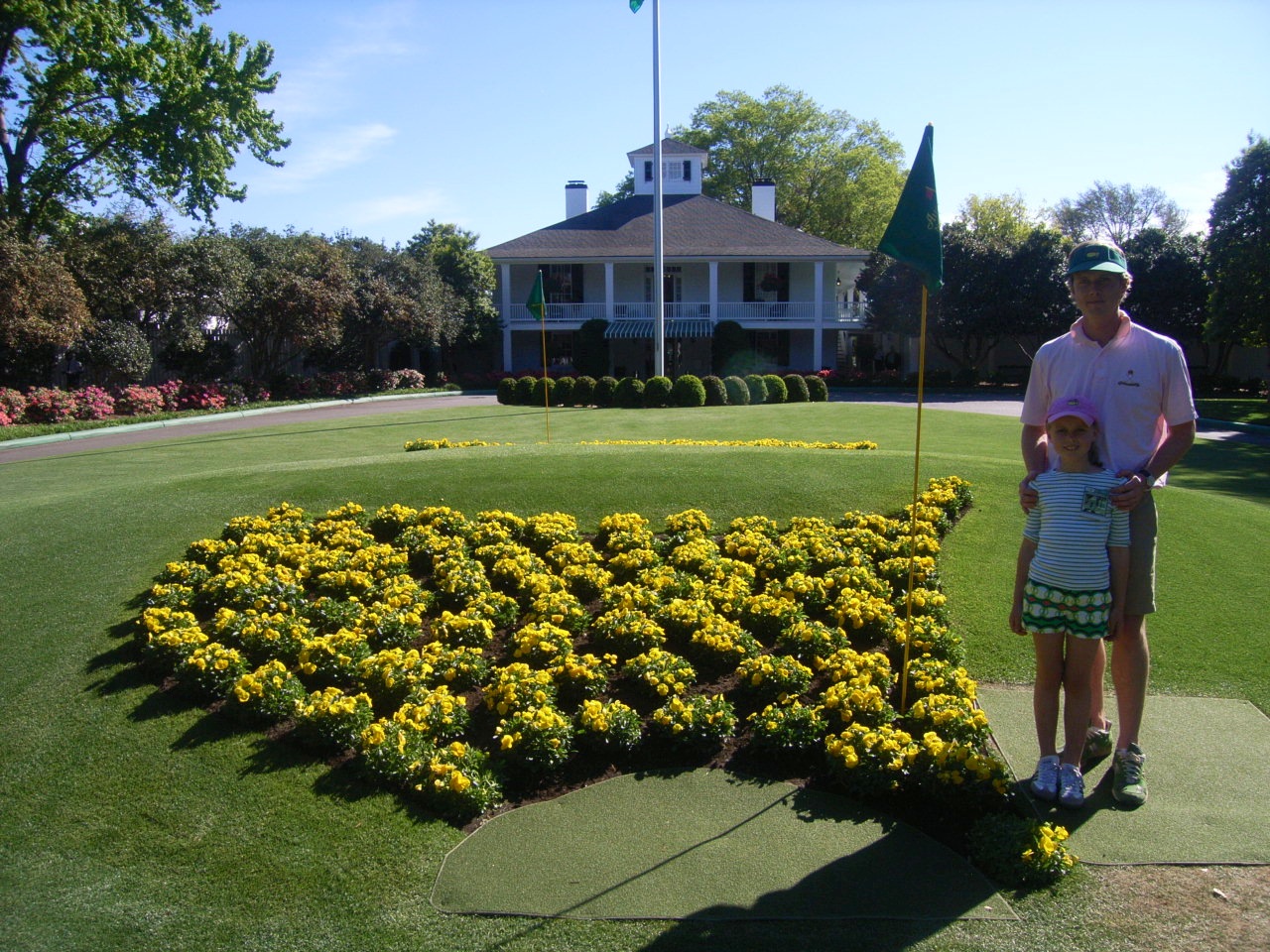
This year was the seventy-seventh Masters. My great-grandfather got tickets a long time ago and always loved it. Once my grandfather was old enough, he started going and has now gone to fifty of them, my dad has gone to twenty, and this year was my first.

My dad and I flew from San Francisco to Atlanta on Friday, April 12, and drove to my aunt’s house in Augusta. I didn’t sleep very well because of the time change, but when it was finally morning we were so excited that we got up early. We had to get to the course to put our chairs on the left side of the eighteenth green. When I got out of the car in the parking lot, the first thing I said was, “It smells really good.”

Before I tell you about golf, I am going to tell you about the Augusta National golf course. First of all, let me tell you how green it was! It was so perfect that at first I thought the grass was fake. The grandstands were green, the concessions stands were green, the trash picker-uppers’ uniforms and their pokey things were green, along with the sandwich wrappers and even the beer cups.

And now to the main thing: the golfers. They could hit the ball so high and so long I couldn’t believe my eyes. I loved that you could be so close and nobody would tell you to step back. It was awesome watching an eighth grader beat Bubba Watson and other Masters winners. Angel Cabrera rolled me one of his balls and the forecaddie of the 16th hole gave me Tiger Woods’s tee. I also got an autograph from Brandt Snedeker.

My dad and I kept a notebook of bets on who would win, who would have the lowest round each day, and who would hit the closest on each hole. I crushed my dad. He predicted Brandt Snedeker would win but I said Snedeker would have a bad round at the end and Adam Scott would win. I was right!

Among Annie Stegall’s favorite Masters features was the absolute ban on cell phones, because it kept her father focused on the tournament and on her, rather than on his work. And her father didn’t feel deprived. “The Masters is a far more social event than some folks might expect,” he told me afterward. “And coordinating to meet up with buddies without the aid of cell phones is as much a throwback as the hand-operated leader boards. Pick a spot like the sixteenth tee, as Annie and I did on Sunday, and you end up chatting with strangers. Many of them have been sitting in that spot for decades and have great stories about miraculous or horrible shots through the years. I have some favorite Masters (several from the nineties, 2007, 2010) but they always have more to do with the people I’m with and less to do with the outcome of the tournament. It’s probably my favorite week of the year.”

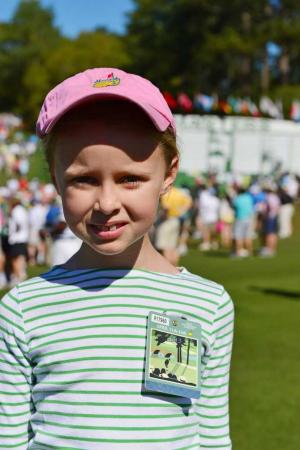
On Saturday, Annie was picked by the Augusta Chronicle as the Junior Patron of the Day, so she got her picture in the newspaper, too (see below). Next year, I’m going get her press credentials, then turn everything over to her.

Annie Stegall, MyUsualGame special correspondent and Augusta Chronicle Junior Patron of the Day, April 13, 2013.

Annie Stegall: MyUsualGame.com special correspondent and Augusta Chronicle Junior Patron of the Day, Augusta, Georgia, April 13, 2013.

Bobby Jones’s Father Makes a Masters Rules Decision

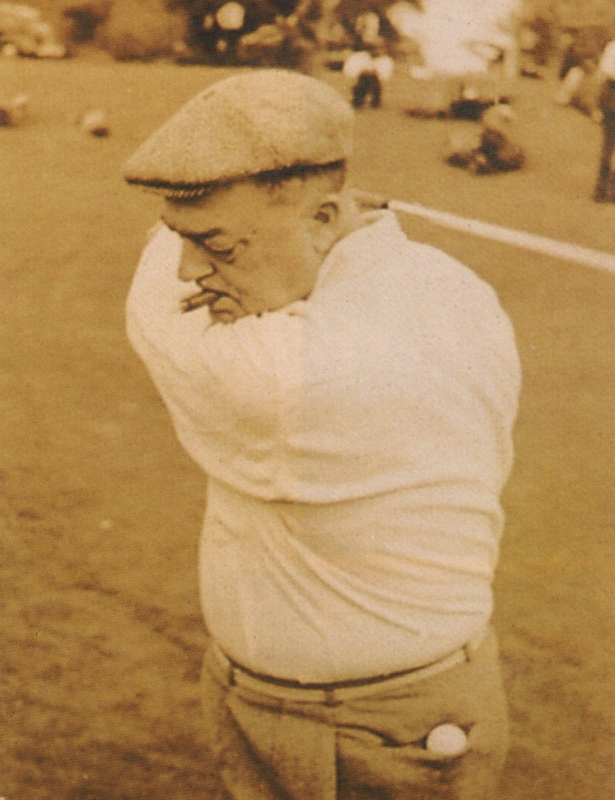
The Colonel.

The Colonel.

In the early years of the Masters, the club sometimes had trouble finding knowledgeable volunteers to serve as rules officials. “On one occasion,” Clifford Roberts, the club’s co-founder, wrote in 1970 in a letter to Lincoln Werden of the New York Times, “the shortage was such that we appealed to Bob Jones for suggestions as to whom we might enlist. Bob said that we might in a pinch request his dad.” Jones’s father, who was known as the Colonel, was accordingly posted to the twelfth hole on the final day of the tournament. There had been a great deal of rain during the night, and the course was very wet. One player hit a poor shot that landed in a soggy area near the creek. The player spotted the Colonel, called him over, and asked whether he was entitled to relief from casual water. The Colonel asked him where he stood in relation to par. “Eighteen over,” the player said. The Colonel demanded, “Then what in the goddamn hell difference does it make? Tee the thing up on a peg for all I give a hoot!” [The word “hoot” may not be historically accurate.]

In the early years, a small pot bunker was originally positioned in the center of the eleventh fairway at roughly the distance of a reasonable drive. The bunker, which could not be seen from the tee, was Bobby Jones’s idea. He had wanted the course to have a hazard that could be avoided only with good luck or local knowledge—the sort of seemingly arbitrary booby trap that is plentiful on the Old Course. The Colonel drove into the hidden hazard during his first round on the course, in 1932. When he found his ball in the sand, he shouted, “What goddamned fool put a goddamned bunker right in the goddamned center of the goddamned fairway?” or words to that effect. His son, who was playing with him (along with Roberts), had to answer, “I did.” The bunker was eventually filled in.

The Colonel was one of the club’s most colorful personages. Roberts, in his book about the club, wrote, “When I first knew the Colonel, he could play to a handicap of about eight. When he played worse than that it was the fault of the ball, the way some green had been mowed, a divot hole, an unraked bunker, or some bad luck demon. On such days he was prone to express his feelings with swearwords; not just the usual kind of swearing, but original, lengthy, and complex imprecations that were classics. Numbers of people who were regular companions felt disappointed when the Colonel played well, as they always looked forward to a prolonged blast of cussing that they had never previously heard.” On a trip to Philadelphia for the 1934 U. S. Open, Roberts and Bobby Jones lost track of the Colonel in the hotel where they were staying. After a lengthy search, they found him in the ballroom. Roberts wrote, “The Colonel, baton in hand, was directing the orchestra, and at the same time singing the words for the music that he was conducting.” The Colonel died in 1956.

Masters Countdown: The First “Green Coats”

green jacket

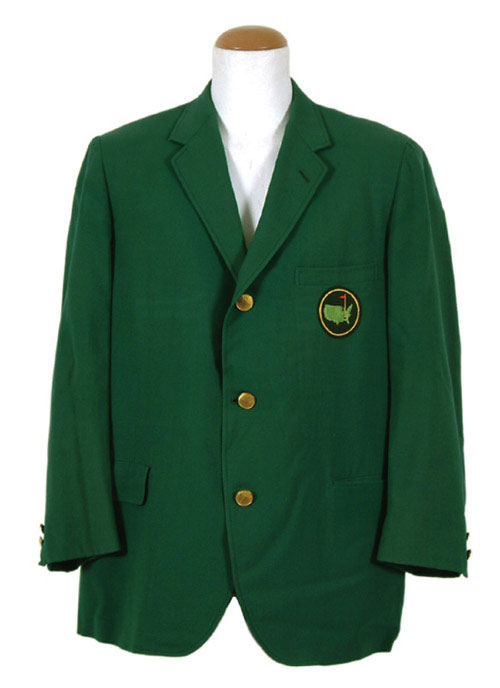
Green jackets were first worn at Augusta National in 1937, but they weren’t popular. “The members were not enthusiastic at first about wearing a conspicuous Kelly-green garment,” Clifford Roberts, the club’s co-founder and chairman, wrote in 1976. “Besides, the original coats were made of material that was too heavy, so that the wearer became uncomfortably warm.”

A few years later, the club offered an improved version, and on January 13, 1941, Helen Harris, who managed the club’s office, wrote a letter to the members informing them that “the Club’s Tailor is prepared to make the official Green Coats bearing the club’s Emblem for $18.50 and if you should wish to order one, please have your own tailor fill in the measurements on the enclosed blank and return it to me.”

The club had recently done some much-needed remodeling in the clubhouse, which had been a wreck when the club and tournament began. “With the improved Club facilities,” Harris continued, “most all our Members will likely spend more time here and these green coats come in handy for lounging. They are also quite serviceable during the Master’s [sic] Tournament as they make it unnecessary to wear a badge. Moreover, they identify the wearer as a member and thus give our gallery patrons a reliable means of securing information.”

The first Masters winner to be given a green jacket was Sam Snead, in 1949. A decade earlier, the club had photographed the first five winners in green jackets, but those had been borrowed from members—in a couple of cases, from members who had significantly different dimensions. The club keeps a selection of sizes on hand, and if a player who hasn’t won before is in contention the golf shop makes a few phone calls, to get an idea of likely measurements.

Horton Smith, Byron Nelson, Gene Sarazen, Henry Picard, and Ralph Guldahl, 1939. You can order a nice print of this swell photo from the Masters website.

Horton Smith, Byron Nelson, Gene Sarazen, Henry Picard, and Ralph Guldahl, 1939. You can order a nice print of this swell photo from the Masters website. No green jacket, though.