Surprising Golf Accessory: “Grandpa, is that a cloth Kleenex?”

One of my wife’s nieces visited us for Easter, and I reminded her that when she was 11 she saw her grandfather using a handkerchief and asked, with astonishment, “Is that a cloth Kleenex?” A couple of years ago, I myself became a cloth-Kleenex-user, especially while playing golf, and especially during allergy season—which for me is pretty much every season. As a result, I’ve stopped blowing my nose on my golf towel and wiping it on my rain gloves, among other behavior upgrades

handkerchief

Recently, I found some inexpensive cotton handkerchiefs that I really like. They’re called Umo Lorenzo (of all things), and on Amazon you can buy them for twelve dollars a dozen, including shipping. I try to remember to put at least one in my pocket before I leave for the golf course, and I keep a few more in my golf bag, in case I forget. The other day, I accidentally dropped one near a green, and Tim picked it up, very carefully, by pinching just the tiniest end of one corner, and gave it back to me.

umo

The handkerchiefs in my golf bag I keep in a small food-storage container made by a company called Lock & Lock. I learned about Lock & Lock containers a few years ago from a guy I used to play bridge with, and my wife and I now have two or three dozen, in many sizes. They’re so watertight and airtight that geocachers use them to geocache stuff in. (If anyone ever accuses you of playing a dumb game, tell them about geocaching.) I keep three handkerchiefs in an eleven-ounce one; two range-finder batteries, two camera batteries, and a glasses screwdriver in a six-ounce one; and some Band-Aids, a jar of Advil, a tiny thing of Purell, and a microfiber glasses-cleaning cloth in another 6-ounce one. The containers are heavier than Zip-Lock bags, but not a lot heavier—the smaller ones weigh just 2.3 ounces each, empty—and they last forever.

boxes

Last Year’s Golf Water: Is It Safe to Drink?

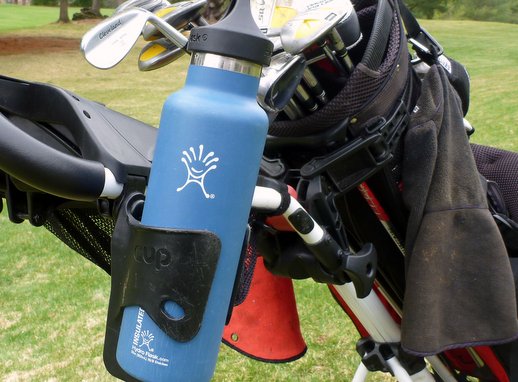
Mounting created BloggifLast summer, I played in a tournament called the Danbury Amateur, along with several other guys from my club. We got two rounds at Richter Park, a semi-free lunch each day, and a really nice insulated water bottle, which I used for the rest of the golf season. 

P1120069

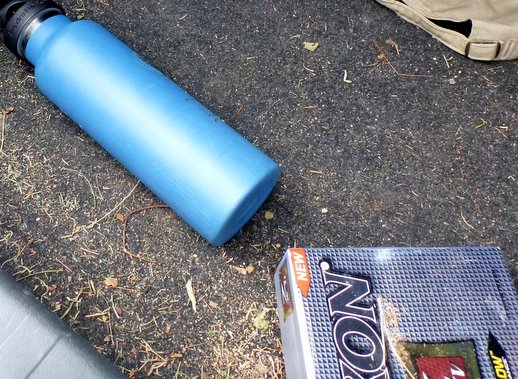
I forgot about the water bottle during the winter, though, and for several months it rolled around in the trunk of my car, along with a golf-ball box containing six or seven loose golf balls. The water bottle and the ball box made quite a racket when I cornered hard, etc., but as soon as I had parked my car in my garage they stopped rolling around and I forgot about them.

P1120073

This spring, I put my golf clubs back in the trunk, and brought the water bottle inside my house, to refill it. When I opened it, I noticed that there was a little bit of water still in it, from last year, and suddenly I wondered whether anything bad would happen to me if I drank the leftover golf water instead of pouring it out.

Was this a dumb idea? I don’t know. Check back in a few days and see if I’m still here.

Why You Should Wash Your Rainsuit, and Maybe Even Iron It

Barney and his raingear, on the day we played anyway. October 6, 2013.

Barney and his raingear, on the day we played anyway. October 6, 2013.

I have an article about high-tech golf clothing in the April Golf Digest. While I was working on it, I spent most of two days at the Natick Soldier System Center, in suburban Boston, where the Army creates and tests just about all the gear that’s used by members of all branches of the armed forces. The head of the base’s public relations department told me, “If soldiers wear it, eat it, sleep under it, or have it dropped on them, it’s researched and developed here.”

Annette LaFleur, the team leader of Natick's Design, Pattern and Prototype Team, next to a prototype sniper uniform (which the Army ended up not using).

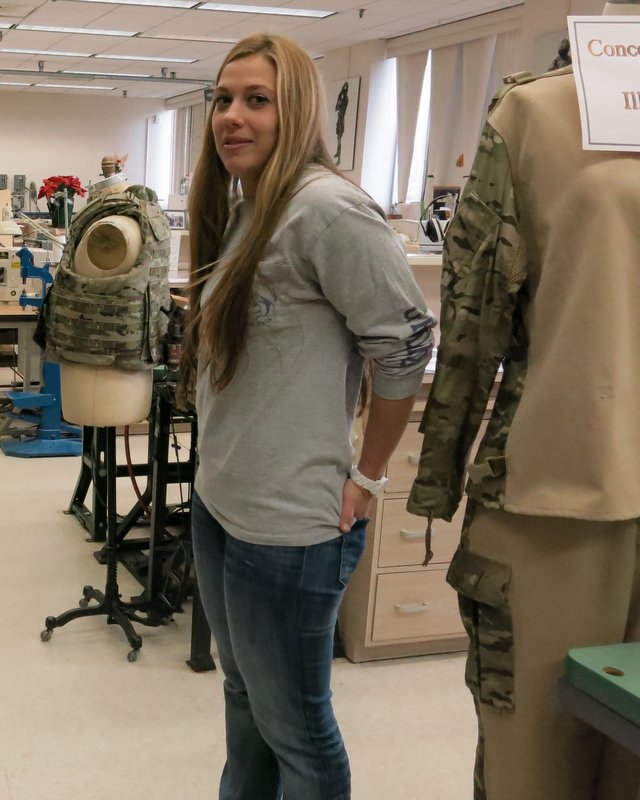
Annette LaFleur, the team leader of Natick’s Design, Pattern and Prototype Team. That’s some body armor on the left and a prototype sniper uniform on the right.

Among the most useful things I learned at Natick is that you should never, ever use fabric softener or dryer sheets on any synthetic sports clothing, including your rainsuit, and that you should wash your rainsuit periodically, and probably also run it through the dryer at low heat or iron it with a warm iron. The reason is that almost all rainsuits have an outer layer that’s treated at the factory with what’s known as a durable water-repellent (D.W.R.) finish. This isn’t what makes your rain jacket waterproof—that’s the function of an inner membrane, made of Gore-Tex or some comparable material—but the D.W.R. finish contributes to the jacket’s breathability and overall comfort, by causing water on the outer surface to immediately bead up and slide off. Gentle washing makes the D.W.R. finish work better, and gentle heat (whether from the dryer or a warm iron) can revive a finish that’s wearing out.

Luisa DeMorais, the leader of the Army's textile materials evaluation team and a D.W.R. expert.

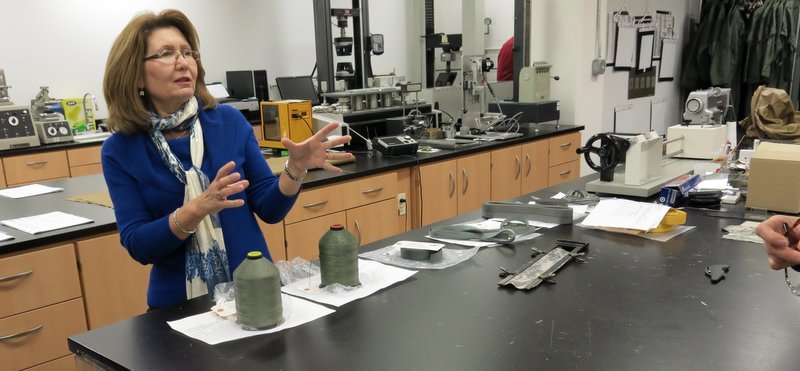
Luisa DeMorais, the leader of the Army’s textile materials evaluation team and a D.W.R. expert.

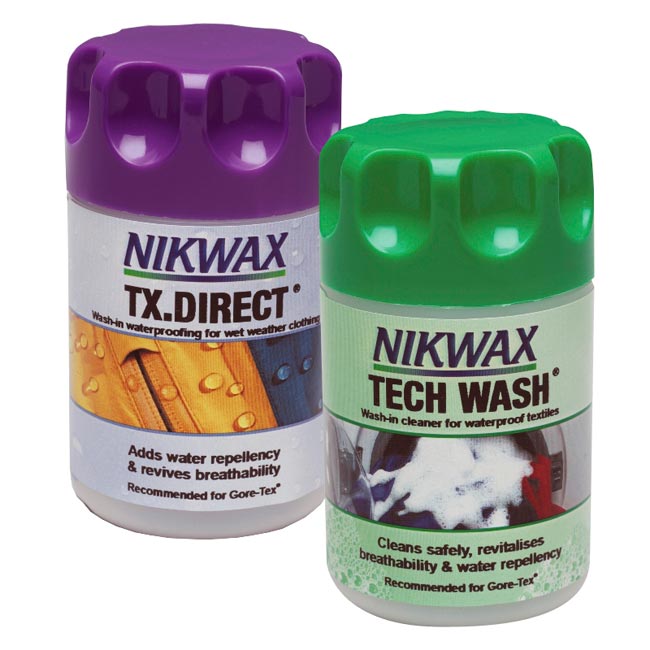
As soon as I got home from Natick, I washed all my rain gear with Nikwax Tech Wash, which is formulated for waterproof, breathable fabrics, and then I beefed up their D.W.R. finishes with Nikwax TX.Direct, which is a D.W.R. finish that you apply in your washing machine. You can order both (and lots of other stuff) from R.E.I., among other places.

nikwax

At Natick, I also learned that you should never, ever use fabric softener or dryer sheets on a rainsuit or any other synthetic sports apparel. Fabric softeners can smother fabric treatments, such as the ones that promote wicking, and they can ruin raingear, which can also be harmed by detergent residue (a reason to use modest amounts or a product like Tech Wash, and to follow the instructions on the care label).

IMG_3431At some point, I’ll have more to say about my visit to Natick—which was the coolest field trip ever. Right now, though, I’ve got to run off to Denmark for a few days.

P1090781

Mardi Gras Report: Golf Solves a Beer Problem

Mardi Gras beer-001

Matt Manco, a reader in New Orleans, writes:

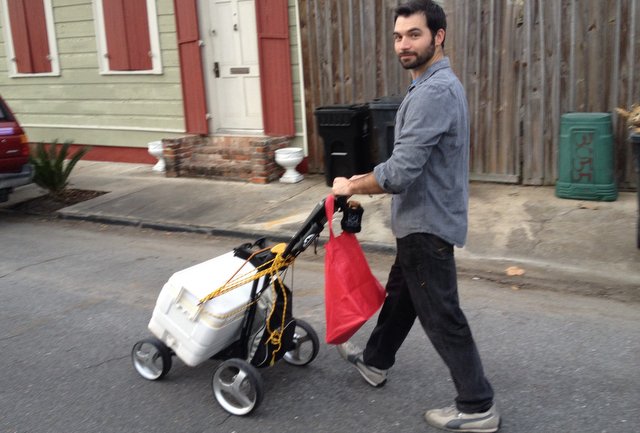
Second only to bathroom proximity, the main concern of Mardi Gras planning is how to get drinks to the parade. This year, our answer was my Sun Mountain Micro-Cart (thanks for the recommendation), which has been taking up space in my office while I recover from a herniated disc. With no golf in my near future and a long haul with a heavy cooler coming up, I started working on a harness system to take some stress off the cart and keep the beer in the cooler.

Beer cart co-inventor Spencer, with test load. Note the innovative use of the golf-bag stabilizer arms as a super-secure articulated cup holder. Also note that the cart is still furnished with golf tees, just in case.

A friend of Manco’s, with a test load. Note the innovative use of the golf-bag stabilizer arms as a super-secure articulated cup holder. Also note that the cart is still furnished with golf tees, just in case.

This cooler (Go Tigers!) was the best fit of the options on hand. A few small bungee cords on each side and twenty-five feet of sturdy rope kept the cooler from sliding, slowing us down, or—worse—falling off the cart and shaking our beer. We were surprised that the Micro-Cart maintained most of its agility, despite the extra weight and the altered center of gravity. Turning took a little planning, and pushing it on cracked sidewalks was out of the question. The lack of maneuverability wouldn’t matter as much in a well-paved city, but New Orleans, being the unsettled swamp it is, will never have smooth roads.

Manco and his invention, Mardi Gras 2014.

Manco and his invention. The red bag is for recyclables.

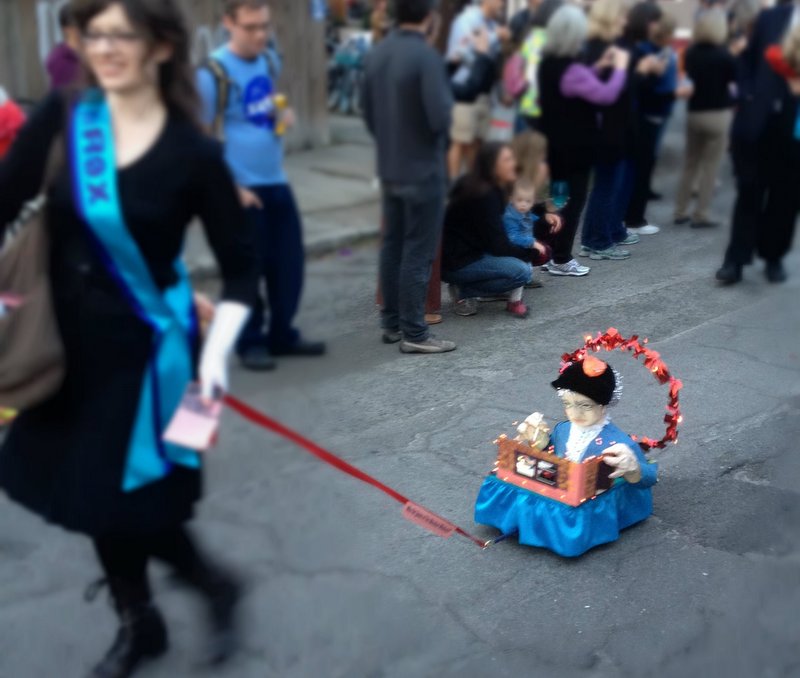
Manco is a fan of a Mardi Gras parade organized by TitRex, a so-called “micro-krewe,” which, he writes, features “shoe-box-size designs that are meant to imitate, elevate, and irritate the creators of the much larger floats, which are pulled by tractors.” You can read more about TitRex here.

manco mardi gras 1Manco continues:

Enough ice melted during the parade to allow us to lighten our load and free up the movement of the cart on the walk home, making two-wheel turns an option again. We saw several people pulling beer in red wagons, but none of those had cup holders, umbrella holders, koozie pockets, or handbrakes, so we’ll keep the Micro-Cart in action for another year.

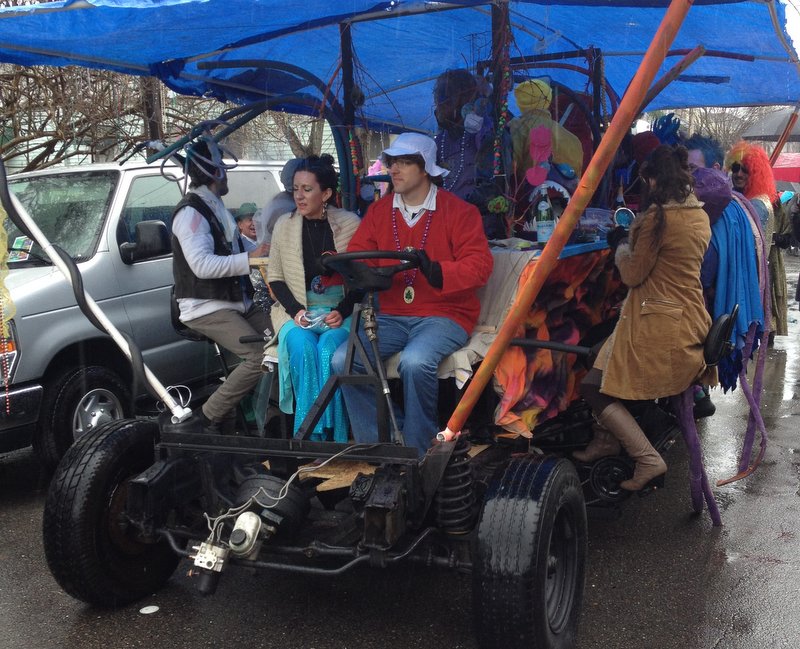
This float is pedal-powered, by what appear to be long-tailed galley slaves. There may be a golf application.

This float is pedal-powered, by what appear to be long-tailed galley slaves. There may be a golf application, though probably not at this size.

Mardi Gras celebrants who were less inventive than Manco and his friends didn’t necessarily have to watch the parade sober. Here’s an industrial-grade version of the Micro-Cart beer trolley, operated by a street vendor and scowled at by a group of sign-bearing non-golfers:

Beer vendor, mardi grasNow, back to waiting for winter to end.

Reader’s Trip Report: Golf Simulators in Seoul, South Korea

Golfzon simulator locations near Cory Olson's office, in Seoul's Gangnam District.

Golfzon simulator locations within a five-minute walk of Cory Olson’s office, in Seoul’s Gangnam District.

Cory Olson, a reader in Seoul, South Korea, writes:

While I don’t have any data, I’m fairly confident that South Korea has the most golf simulators in the world. That’s understandable in a golf-crazed country where the average course outing costs over three hundred dollars (green fees plus cart plus caddie, not to mention golf-club membership fees). Simulators are ubiquitous all over the country, but especially around office buildings, where there is at least one 스크린골프 (screen golf) on every block.

Vision

There are several systems out there, but by far the most popular is made by a company called Golfzon, which is now on its third-generation simulator, called Vision (see image above). Instead of taking measurements only at the ball, this one features two overhead super-high-speed cameras to get more accurate data. (Might all be in my head, but other simulators never seem to read my sweeping, almost divot-less wing correctly—but on Vision I play much better.) Also, the system has a swing-plate with hydraulics, to adjust the lie. (I always turn it off. Just nice, flat lies for me, thank you.) There are also mats that simulate fairway, rough, and sand (somewhat). [And there’s some pretty good simulated English on the Golfzon website: “Each trees, bushes, hills, club houses and rocks are delicately represented so that golfers can feel the atmosphere of renowned golf courses without ever visiting them.”]

The cost for a round varies greatly, depending on location and time of day, but is typically between fifteen and twenty-five dollars. The busiest, most expensive times are weekday nights, because screen golf is one of the most popular forms of corporate entertainment. (South Korea is very big on required after-work socialization with colleagues.) After a first round of Korean barbecue and drinks, beers and screen golf is a common second round.

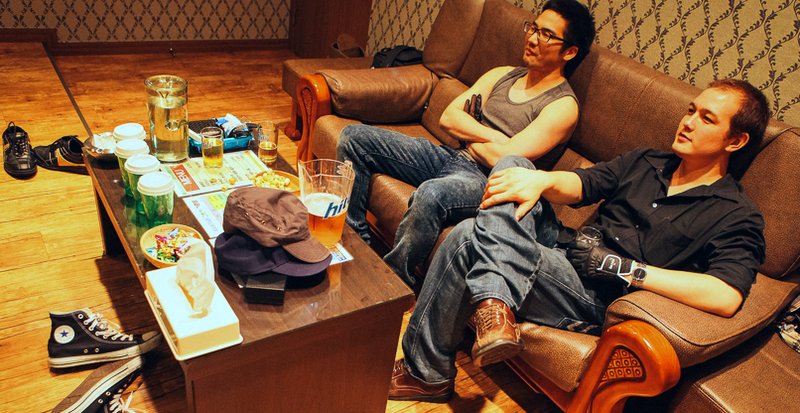
golfzon men

I’ve heard of, but never personally experienced, “helper players,” who can be called in to the room: young ladies with picture-perfect swings and amazingly short skirts. Seems like an all-right idea, except that they out-drive you on every hole.

That's not a helper, exactly.

That’s not a helper, exactly. It’s Uee, a South Korean actress and rapper (in a group called After School), who plays a golf-obsessed young girl in a popular television series.

Screen golf is so popular in Korea that it has its own professional tour. Most of the players are pros who teach on Golfzon simulators, or they work for a major company that sponsors them, but some are able to earn a decent living playing screen golf full time. [You can watch a video about the Korean simulator tour here. It’s in Korean, but you can probably figure out most of what they’re talking about. The video features several stars, plus simulated versions of real golf courses.]

The only real issue I have with screen golf is the greens. I’m by no means a lights-out putter, but putting is typically not a weakness. When I play on the simulators, however, all my “feel” is replaced by a very mechanical (and mathematical) approach, based on how far above or below the hole I am on the color-coded green, and the speed of the animated break lines.

golfzonIn a couple of weeks, Olson and some of his expat friends and hoping to hold an all-night Golfzon tournament. If they pull it off, maybe he’ll send an update.

Cold-Weather Golf Innovation From South Carolina

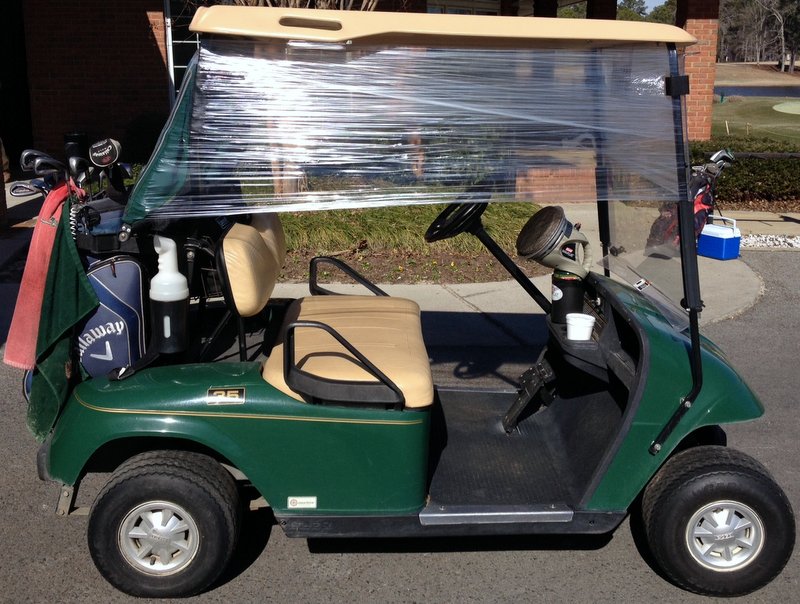
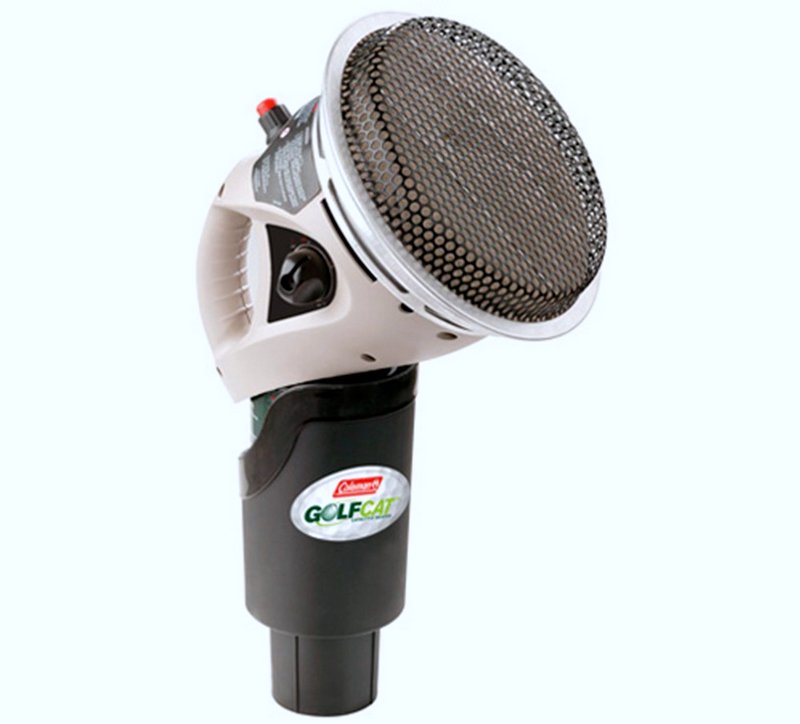
imageThe best way to stay warm while playing golf in cold weather, in my humble IMHO, is to walk. But some courses don’t allow walking, and some golfers can’t carry a beer cooler for eighteen holes. Golfers who do use carts know that riding makes winter seem even colder than the thermometer says it is—an effect known to meteorologists as “cart chill”—because sitting on your butt doesn’t generate warmth, and zipping around in an open vehicle increases heat loss by convection. Randy Yonce, a reader in Johnston, South Carolina, has devised a two-part solution. The first part is a Coleman GolfCat Catalytic Heater, shown in operation in the photo above. It runs on propane and fits into a cup holder, cutting the in-cart beer count by just one:

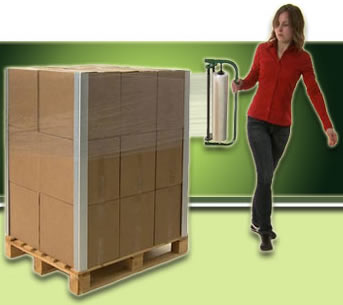
golfcatThe second part is probably easiest to pull off if someone in your regular group works in a warehouse. Yonce explains: “I despise cart covers because it is so aggravating to keep zipping the doors up and down after every stop. I’ve found that you can use a roll of clear pallet wrapping to help hold heat. Wrap a couple of rounds around the cart and the warm air gets trapped in the upper part. Also, ducking under the wrap is easy.”

wrapping palletNot even pallet wrap would help here in Connecticut. We’ve had so much snow that I’ve been forced to alternate between actually working and watching Olympic curling on TV. I’ve also been killing time on the Web, where I discovered the ideal conveyance for golf buddies trips:

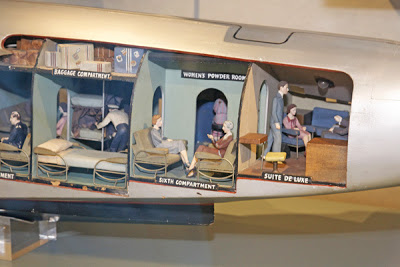
314That’s a Boeing 314, which was manufactured between 1938 and 1941. It wasn’t very fast, but it could make it across either ocean, and Pan American Airways had a dozen of them. All those passenger compartments made it easy to separate bickering foursomes, and there was plenty of room for golf bags, and if the course you were playing wasn’t too far from the airport you didn’t necessarily need a hotel:

314 interior

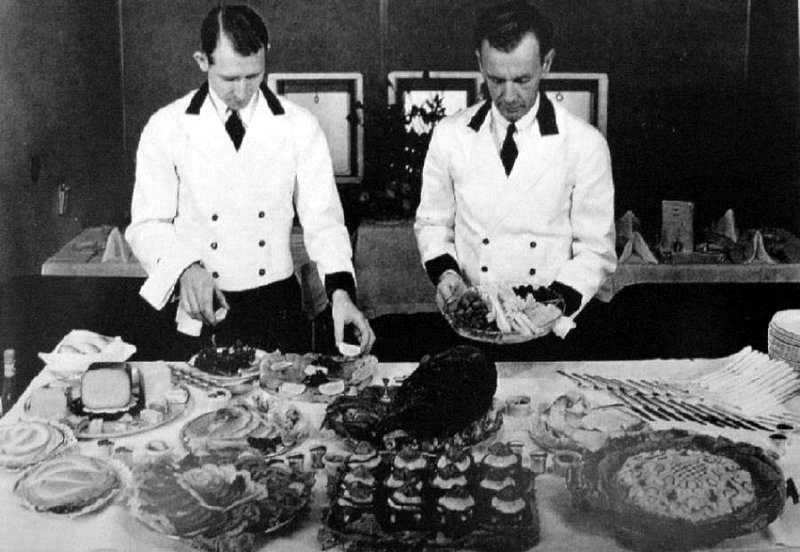
Why don’t rich guys buy planes like that, instead of miniature jets? Now it’s time for dinner, en route to Hawaii (let’s say):

dinner 1 boeing

And now dessert:

dinner boeing 314

Getting there is half the fun. And now, here we are, disembarking for an early tee time on a snow-free golf course on an island paradise:

boeing 314

(If you like that picture, you can order a nice big print, here, from the guy who painted it.)

A Golfer’s Dream House, at a Very Deep Discount

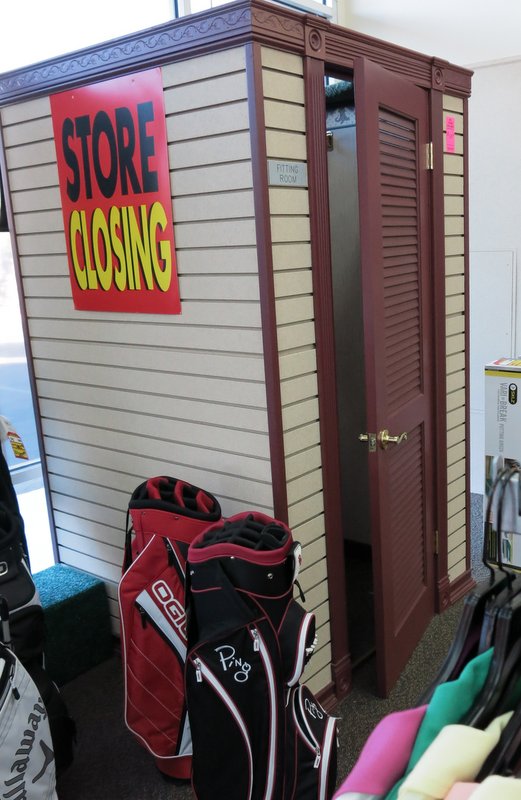
IMG_0861Edwin Watts Golf Shops filed for bankruptcy last year, and the company was later bought by Worldwide Golf Enterprises, which operates a number of similar chains, among them Golf Mart and Golfers’ Warehouse. Worldwide will keep the Edwin Watts brand, but it’s closing a number of the old stores outright. I saw one of those in Orlando over the weekend. (I was in the area on a Golf Digest assignment.) Most of the decent golf stuff had sold already—there weren’t many gloves left between ladies’ extra-small and men’s extra large, for example—but some of the other merchandise was intriguing.

IMG_0848-001

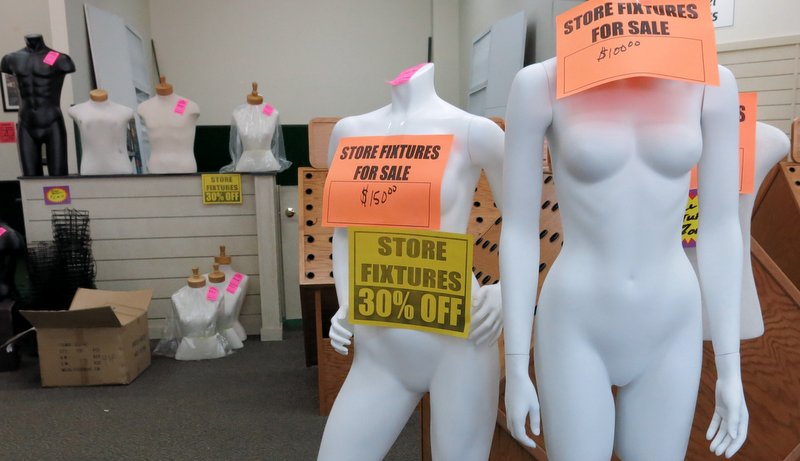
They were selling almost everything, including waste baskets and coffee makers, and I realized that a lot of the stuff would look good in my house. For example, the fitting room ($1,200) contained a bench and a full-length mirror, and would make a cool personal locker room. It was quite spacious inside, yet it wasn’t so huge that it would overwhelm, say, the piano in our living room:

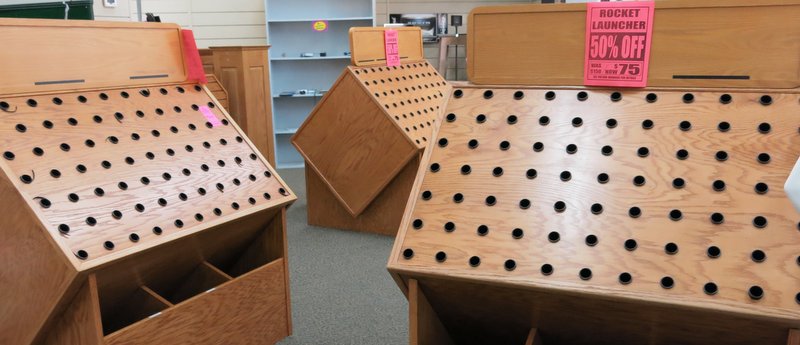
IMG_0863I store my old golf clubs in old golf bags in my attic and garage, but if I had a couple of these display units ($125 each) I could keep them out in the open, where people would be able to see them:

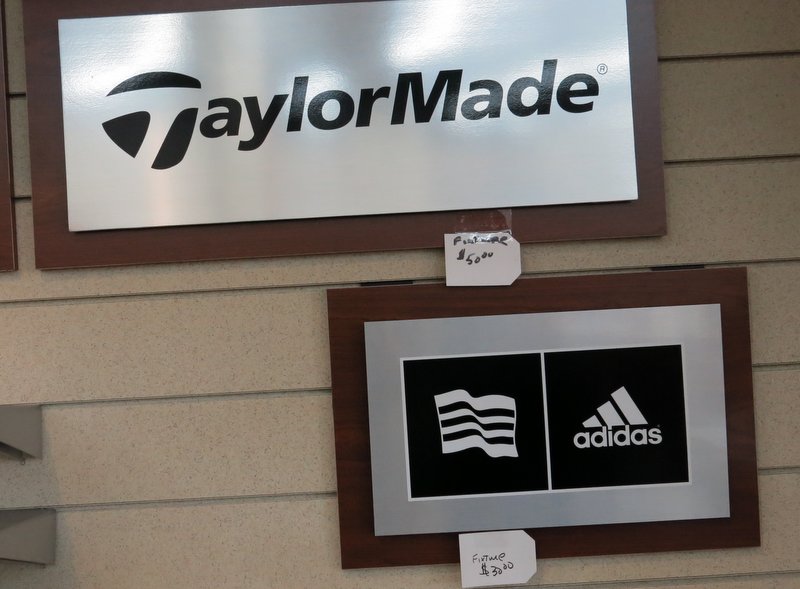
IMG_0859For the walls, there were many choices, at a range of price points. For example, art:

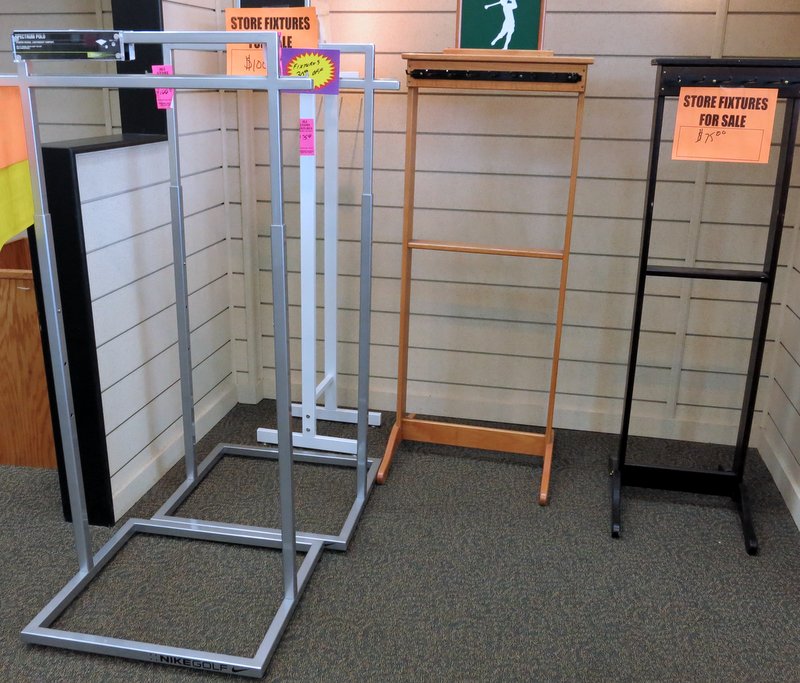
IMG_0854Plus more utilitarian stuff—although I don’t mean to suggest that “useful” necessarily means “unattractive”:

IMG_0855Anyway, my problem was that I was flying home the next day, and I was already pushing the limit on carry-on luggage. I was tempted, though. Don’t you think your golf shirts would look cooler hanging on these?

IMG_0846

In Memory of Alex Shear, the Man Who Had Everything

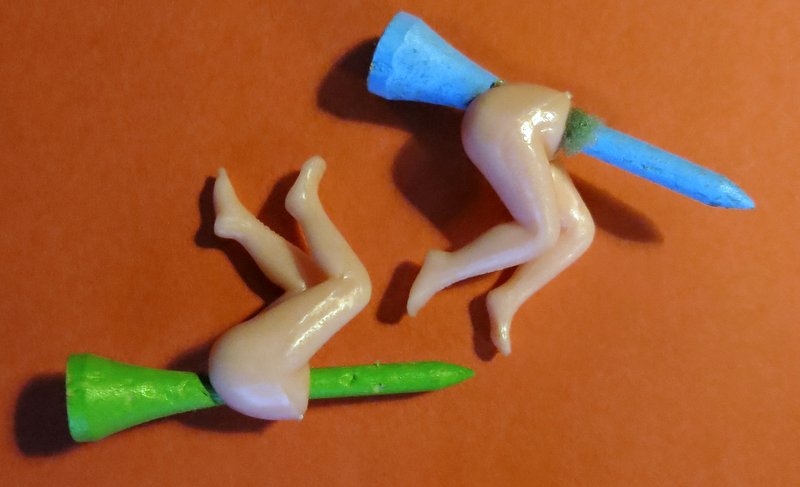
IMG_0520I own a certain quantity of oddball golf crap, including the sexy tees in the photo above. I probably owe my interest in such things, to the extent that I have one, to Alex Shear, who died recently after being hit by a tour bus on Broadway, in New York City. (His obituary ran in the New York Times on Sunday.) I met Shear by accident in 1992, and wrote about him in The New Yorker twice, once that year and once in 1999. Here’s one of the items mentioned in the 1999 story, to give you some sense of what at least one of his many collections was like:

3 Mile Island Shear

Shear wasn’t a golfer so there isn’t a golf connection, but he did once give me a golf-shoe-shaped tea-cup hanger, which he had bought at a yard sale somewhere and thought I might kick out of. (I just spent almost an hour looking for it, but couldn’t turn it up. I’ll add a photo if I find it.) He was one of the most fascinating people I’ve ever spent time with, on or off a golf course—although he was also, as you will see if you follow the link above, uniquely exasperating.

Alex Shear


You Need This Cold-Weather Golf Accessory

buff

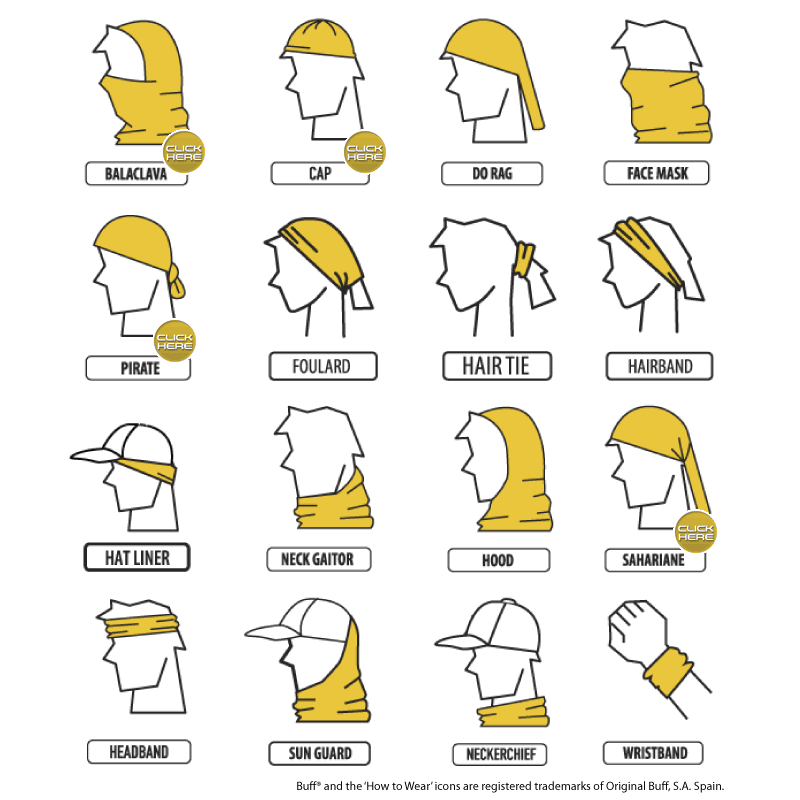
In 1991, a Spanish textile manufacturer named Joan Rojas was riding his motorcycle in Catalonia. The weather was cold, and riding made it colder, so he pulled a pair of underpants over his head, to warm his neck. A year later, he introduced an apparel item he called the Buff, a seamless tube of microfiber, which could be worn not just as a neck-warmer but in numerous other ways (though not as underpants):

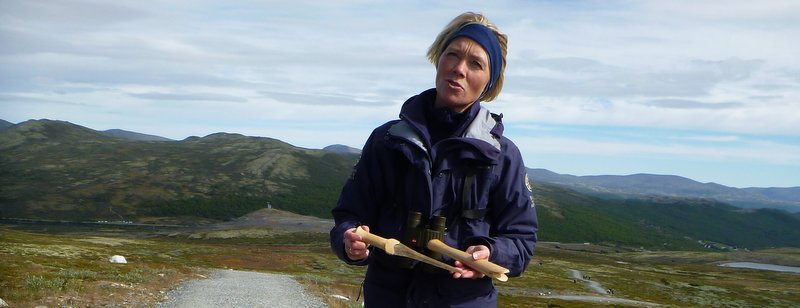
HowToWear-clicksThe notion that you lose ninety percent of your body heat through your head is wrong, and, if you want proof, take off all your clothes except your hat and stand outside in the snow. But, if your head is the only part of you that isn’t fully covered, escaping heat has nowhere else to go, and on cold days you can dramatically improve your comfort level by plugging gaps above your shoulders. I got my first Buff on a trip to Norway in 2012, when a guide in a national park gave me one:

P1030598

She was wearing hers just as a headband and ear protector, but I used mine to cover pretty much my whole head, and since then I’ve worn it many times while playing golf in bad weather, usually as a supplement to other headgear:

This was a very cold day. Hacker (real name) looks cold because he's wearing just his Yankees knit cap, but I'm wearing a skier's balaclava; a regular golf cap; a Duluth Trading Company eara band with

This was a very cold day at our golf club. Hacker (real name) looks chilly because he’s wearing just his Yankees watch cap, but I’m toasty because I’m wearing a skier’s balaclava; a regular golf cap; a Duluth Trading Company ear-band-with-slit-for-golf-cap-bill (no longer sold, alas, although they do have one without a slit); and my Norwegian Buff. The Buff, in addition to covering a few critical bare spots, helped to keep everything else in position.

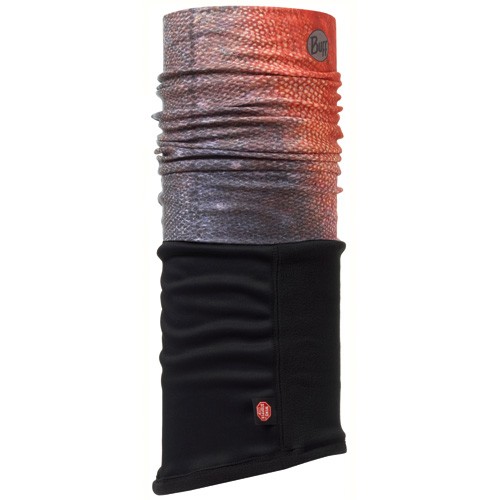
Recently, I bought a fancier Buff, called the Cyclone. One half is made of microfiber, and the other half is made of fleece and Gore-Tex, and you can wear it in even more ways than the original Buff:

cyclone-buff

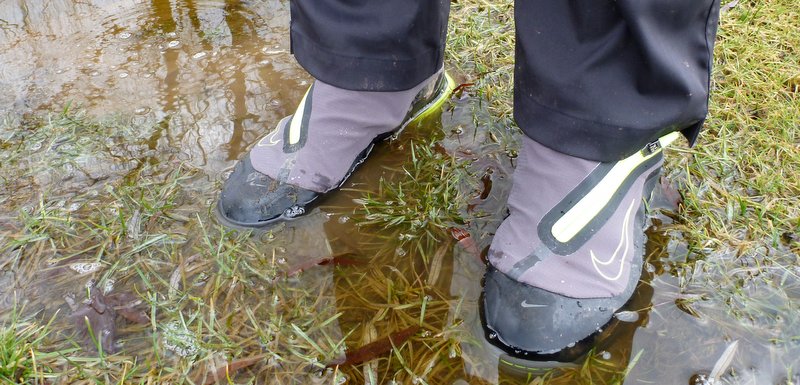
I now keep my Norwegian one (which weighs almost nothing) in my golf bag all the time, and add the Cyclone when the weather stinks, as it does at the moment. I needed the Norwegian one occasionally last Sunday, after we had driven halfway across the state in our determined search for a place to play. On that day, wet was usually more of an issue than cold, and I’m happy to report that my Nike Lunar Bandon II winter golf boots worked flawlessly:

P1110674


We Have a Winner; Plus, Good Shoes for Winter Golf

P1110370

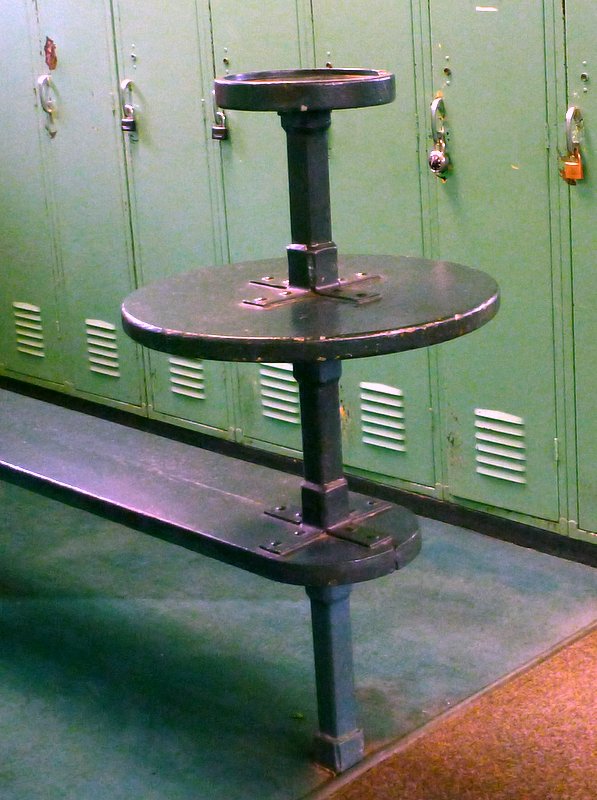
On New Year’s Eve, I challenged readers to identify a golf course and an intriguing locker-room accessory, based on a photo similar to the one above. There were several pretty good guesses regarding the locker-room accessory, but only one (by email) that nailed the golf course, too. That golf course is D. Fairchild Wheeler, known to regulars as the Wheel, a muny owned by the city of Bridgeport, Connecticut (although it’s actually next door, in the town of Fairfield).

P1110513The winner was Dave Malloy, a reader in Trumbull (another neighboring town). He wrote: “That’s the locker room at the Wheel. Red Course is open all year. Black Course is a diamond in the rough. Oh, function. Drinks, baby! Ashtrays, too, at one point, I was told. Always loved that locker room.”

P1110371-001There are other uses, too, as the photo above shows. And according to Stephen P. Roach, the head pro, regulars also treat the things as stand-up card tables—a great idea. I asked Malloy to tell me about himself and his golf. He wrote:

I am an 18-handicap hack who can lose balls impressively deep in the woods, both hooking and slicing. Fifty-two years old. Most of my golf is nine holes late Saturday or Sunday afternoon at Tashua Knolls, in Trumbull. Three kids and a full sports schedule kill golf until late June, then sports start up again in September. Grew up in Stamford playing Hubbard Heights and Sterling Farms. Occasionally enjoy away rounds at Smith-Richardson, Longshore, Oxford Greens. Play Highlands and Pines in Dennis, Massachusetts, on Cape Cod. Took one lesson, and at the end of it the pro gave me a free can of tennis balls. 

As promised, a disappointing prize is on its way to him, Winter Storm Hercules be damned. Meanwhile, my friends and I have played three rounds at the Wheel in the past week, including our final round of 2013 (on New Year’s Eve) and our first round of 2014 (on New Year’s Day).

The Sunday Morning Group visits the Black Course at the Wheel, January 1, 2014.

The Sunday Morning Group plays the Black Course at the Wheel. First tee, January 1, 2014.

When we teed off on New Year’s Day, at 9:30 or so, our cars were still the only ones in the parking lot. Where was everybody else? Home fretting over their New Year’s resolutions, maybe.

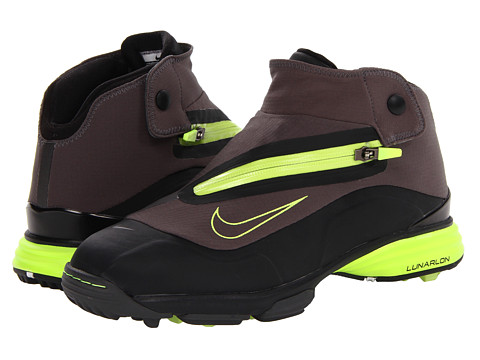
IMG_0027Playing golf in bad weather is easier if you have the right equipment. Remarkably, my friend Hacker (real name) and I both received winter golf shoes for Christmas. How did our wives know? It’s like a short story by O. Henry. My new shoes are Nike Lunar Bandon IIs:
nike bandon

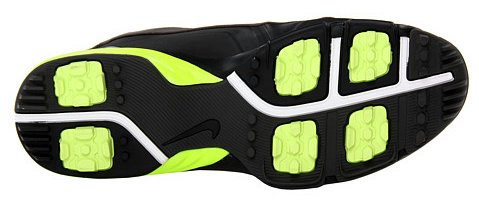
They look a little like ski boots, but my winter golf clothes increasingly look like ski clothes, so I shouldn’t complain. They’re not as slipper-like or as comfortable as my beloved True Linkswear shoes, but they seal up tight, and, so far, I have nothing bad to say about them. I also like to wear them when I walk the dog in the snow.
nike bottom

Santa brought Hacker’s new shoes all the way from England. They’re made by a company called Stuburt, and they also look like boots:
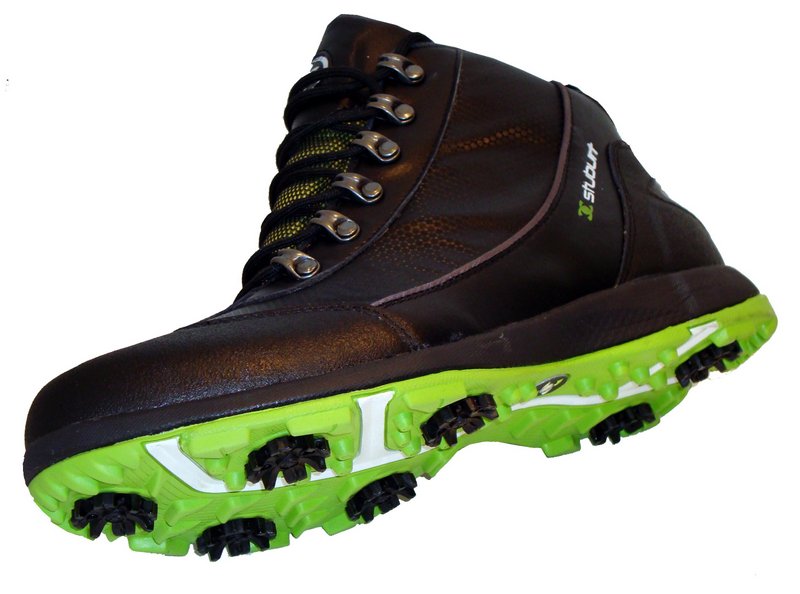
stubur bootHacker loves them, but when he got home on Saturday, the first day he’d worn them, he discovered that seven of the cleats had fallen out while we were playing.
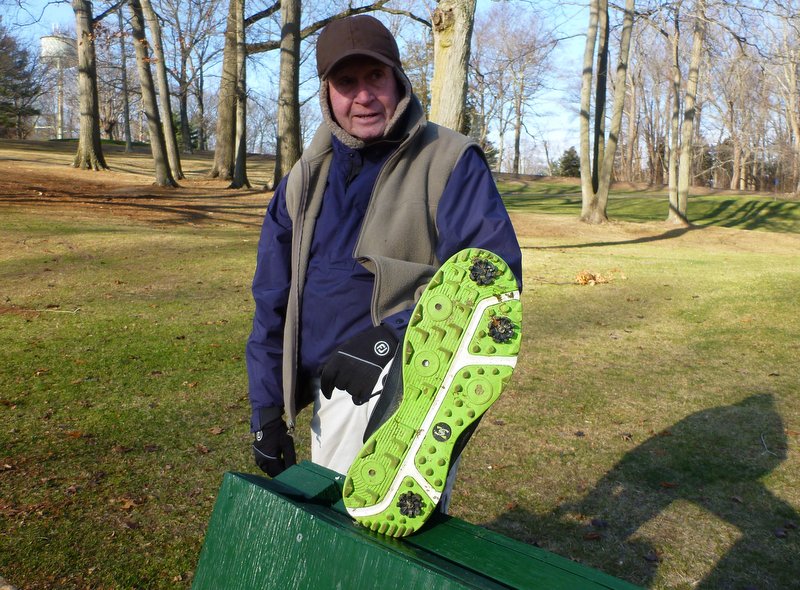

P1110488

Cliff Dews.

Cliff Dews.

He emailed the company to complain, and, a couple of days later, heard back from Cliff Dews, a representative of the distributor. “From your description,” Dews wrote, “I can only assume that you did not notice the label on the sole unit which explains that the studs are only hand tight during the manufacturing process and that they should be fully tightened before use.” I love England, but the only other country I can think of where they do things this way is Canada. If you’re willing to go to the trouble of printing up labels and sticking them to the soles of shoes, why not spend another ten seconds and screw the things all the way in?
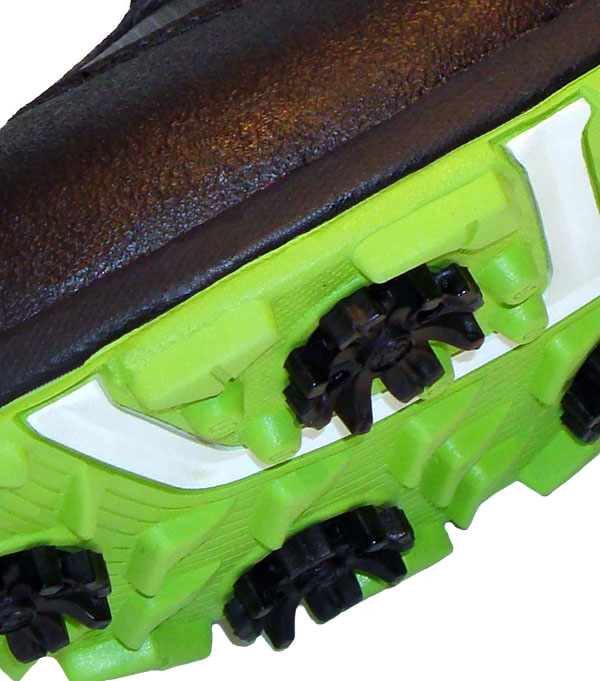
stuburt boot spikesBesides, as Hacker pointed out, there had been no such labels on the bottoms of his shoes or, indeed, anywhere in the box, which had contained just “the shoes and bubble pack.” At any rate, Dews did the decent thing, “despite our instruction label not being actioned,” and promised to send Hacker a new set of studs. And that’s the end of it—or so I hope.