18 Good Things About Golf: No. 2

2. Golf is founded on honesty. It’s the only professional sport in which players are expected to—and often actually do—call penalties on themselves. A football running back would be considered negligent if he didn’t try to steal a few extra inches by nudging the ball forward after being tackled. No baseball player has ever told an umpire, “I’m afraid I missed the bag when I slid into second.” A golfer, in contrast, is expected to penalize himself if, for example, his ball moves a fraction of an inch when he accidentally nudges a twig leaning against it while searching for it deep in the woods.

Nevertheless, there’s probably more routine cheating in golf than in any other sport. There’s an old joke about the golfer who is so accustomed to fudging his score that, when he one day makes a hole-in-one, he marks it on his card as a zero. Most amateurs play the game according to absurdly generous rules of their own devising—taking “a drop” for a ball hit out of bounds; pressing the head of their club into the turf behind their ball to clear a path for their swing; ignoring double hits, whiffs, and unputted putts. There have been well-known professionals with reputations for not calling penalties on themselves, and even for improving their lie they thought no one was looking. Still, intentions count for something, and golf intends to be a game of honor.

Pimp My Ride

A year and a half ago, I bought a Sun Mountain Micro-Cart–a compact four-wheel push cart. It has made a big difference to my back, shoulders, and knees, and it folds up so small that I can easily stow it in my car or take it with me when my friends and I drive around the Northeast looking for golf courses that aren’t closed for the winter. My Micro-Cart worked very well right out of the box, but during the past eighteen months I’ve made certain modifications. A few were necessitated by my apparently unbreakable habit of letting my Micro-Cart go at the tops of hills–to find out, for example, whether it will roll all the way across a bridge at the bottom. Sometimes it makes it across; sometimes it doesn’t. (On one run, I accidentally broke off one of the two arms that hold the bag on the cart. My workaround: use the bag’s umbrella loop to secure the bag to the remaining arm.) I also used epoxy glue to reattach the little metal plate that the magnetic score-card holder sticks to. (The plate had popped off in a crash.)

Most of my modifications, though, have been improvements to the original design. For example, the Micro-Cart has a useful plastic-lidded waterproof storage compartment near the handle. However, the lid wouldn’t close over my Bushnell PinSeeker 1500 laser rangefinder, which is somewhat bulky. (The lid is angled, and the narrow end hit the fat bottom of the rangefinder.) My solution was to use some of my son’s old Lego bricks to create a shim, which lifts the rangefinder into the deeper part of the compartment. I also used Lego bricks (and epoxy glue) to create a rim at the edge of the smaller, upper compartment, where I like to keep pencils. The Lego rim keeps pencils from sneaking into the lower compartment and hiding behind my rangefinder:

An especially useful modification was invented by my friend Tony, who also owns a Micro-Cart. He attached the cylindrical umbrella holder to the handle and then covered it with a putter head cover that he’d selected from our club’s extensive lost-and-found collection. This turned his umbrella holder into a sort of padded pommel horn–very useful for one-handed cart-pushing and occasional stunt steering. I’ve done the same. (The umbrella holder is problematic for in-motion umbrella-holding, unless you’re well under six feet tall. But in my opinion umbrellas are more trouble than they’re worth anyway.)

Sun Mountain has introduced a new version of the Micro-Cart, for 2012. After another crash or two, I’ll be ready to upgrade. And I’ll save my current cart for parts.

Winter Golf Gloves

To play golf comfortably in cold weather, you need good gloves, on both hands. I own about  a hundred pairs of FootJoy RainGrip gloves, which I keep in the way-back of my station wagon. (I stick their Velcro closures to the sides of the luggage compartment, which I think of as my locker room.) RainGrips work well during the winter, too, and on really cold days I wear two pairs, one on top of the other. FootJoy makes actual cold-weather gloves–called WinterSof–and several of my friends use those. Both kinds double as nose-wipers, and when they start to look shiny you can throw them into the washing machine.

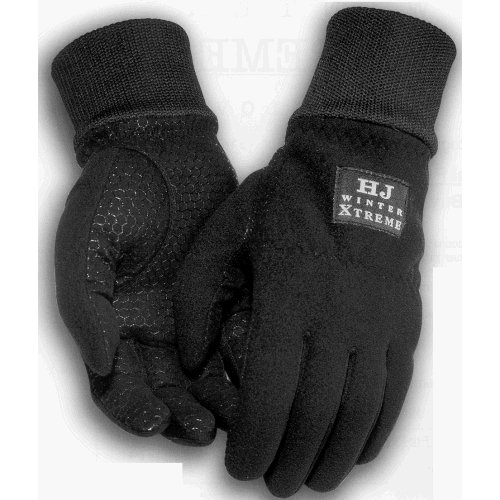
At the PGA Golf Merchandise Show, in January, I tried some winter gloves I liked a lot. They’re called HJ Winter Xtreme, from a 40-year-old Korean company called HJ Glove. They look sort of bulky in photographs, but they fit snugly, and the palms and fingers are covered with a honeycomb pattern of grippy silicone, making them seem like something a wide receiver might wear. And they have extra-long cuffs, which you can tuck way up into the sleeves of your jacket.

City Island

Connecticut is supposed to get snow later today, so on Sunday my friends and I will probably have to go back to New York City to play golf on grass. Among our possible destinations are the two golf courses in the upper left-hand corner of the image above, from Google Earth. That’s Split Rock Golf Course on the left and Pelham Bay Golf Course on the right. (Split Rock, as you can see, has more trees and narrower fairways.) The two courses are divided by a Metro North commuter rail line, and to get from the clubhouse to Split Rock you have to walk under a rusty old train trestle–shown in the photo below, which was taken the first time we played in the Bronx, six or seven years ago.

Gene, D.O., Nick, Split Rock G.C.

When we play in the Bronx, we sometimes have lunch on City Island, which is in the lower right-hand corner of the Google Earth image at the top of this post. To get there from the golf courses, you cross City Island Bridge, the first version of which was built in 1873. City Island looks like the unacknowledged illegitimate child of Nantucket and Hunts Point Avenue. A Connecticut shipbuilder named Orrin Fordham invented oyster farming there, in the eighteen-thirties. Later, the local economy was dominated by boat-building and sail-making.(Five victorious America’s Cup yachts were built on the island.) Today, City Island contains what is almost certainly New York’s densest concentration of yacht clubs (six of them) and seafood restaurants (Johnny’s Reef, Tony’s Pier, Sammy’s Fish Box, and Sammy’s Shrimp Box, among many others), yet the restaurants’ parking lots tend to be enclosed by tall, barbed-wired-topped chain-link fences, like the exercise yards of medium-security prisons, and knowledgeable seafood-loving locals often order lamb chops or steaks.

At the bottom of Fordham Street, on the east side of the island, is a tiny ferry that runs between City Island and Hart Island, a half mile to the east. Hart Island served as a prisoner-of-war camp toward the end of the Civil War and currently contains a vast city-owned cemetery, a potter’s field, which is used for the interment of stillborn infants, unclaimed and indigent people of all ages, and amputated limbs. The deceased—among them the novelist Dawn Powell, who died penniless, in 1965—are buried in long trenches, in stacked pine boxes. The burials are conducted by prisoners from Rikers Island, who travel to and from the ferry landing in blue-and-white buses operated by the Department of Correction. That’s the landing in the photo below. Hacker (real name) and I saw it one Sunday, when we decided to splurge on a post-round, mid-afternoon feast at the Lobster Box.


18 Good Things About Golf: No. 1

My wife used to view my infatuation with golf as the moral equivalent of a love for vivisection or human trafficking. (“I didn’t marry a golfer,” she sneered at one point.) She eventually came around, thanks to John Updike and her own sudden interest in ice hockey, a game she started playing when she turned forty. (When she went to goalie camp, as a beginner, she was placed in a group of 6-11-year-olds and spent a lot of time helping them lace up their skates and go to the bathroom.) Now, she often borrows my Bob Rotella books, which she says help her on the ice, and we sometimes watch golf or hockey on TV together. This past weekend, during the W.G.C.-Accenture Match Play Championship, she recognized Rory McIlroy from behind, by his walk. Similarly, I now almost understand what “offside” means in hockey.

Not every golfer has a spouse who’s as highly evolved as mine. Such golfers might find it useful to make a list of the game’s positive features, for consultation during arguments like the ones that used to take place in my house. Here’s the first:

1. Golf is just a game. Games don’t do anything to solve the world’s problems, but they don’t do very much to make most of them worse, either. That is more than can be said about a lot of the things that a lot of people spend a lot of their time doing.


Signs of Early Spring


Split Rock Golf Course, Bronx, New York, February 27, 2012

The Links at Union Vale was open today, but the manager said there was still snow on the second nine, so Hacker (real name) and I drove to the Bronx and played Split Rock. Hacker paid nineteen dollars and change (senior rate) and I paid thirty-eight. It was 55 degrees and sunny, and the grass was growing. The course-maintenance crew was back at work. They weren’t mowing, but they were blowing sweet-gum seed pods off the cart paths and changing the hole locations. The first time my friends and I played Split Rock this year, back in January, the fairways and greens were frozen hard and we couldn’t get the flags out of some of the cups. But this morning the guy with the hole-cutter didn’t even have to lean hard to get it into the ground. By the time Hacker and I were ready to drive back to Connecticut–after cheeseburgers in the Pelham clubhouse–the course and the parking lot were full.

Sometimes, when we’re traveling with a big group and trying to save time, the first foursome to finish will order lunch for everyone. “Sixteen bacon cheeseburgers, medium, American, fries.” Or, if there’s a vegetarian playing that day, maybe hold the bacon on one of them.


Dreaming About Golf

In most of my dreams about golf, I am playing an ordinary round on my local course. Those dreams remind me of one I had in which I played a full game of solitaire, patiently flipping card after card, then shuffled the deck and began to play again. When I told my friend Jim about my golf dreams, I said, “You’d think that I could at least dream about playing someplace exotic, like St. Andrews or Pebble Beach.” Jim said, “Yeah. After all, it’s free.”

I’ve had a few golf dreams that seemed surreally anxiety-ridden in the standard dreamlike way. In one, I was getting ready to tee off on a 193-yard par-three on a fancy country-club course that I knew nothing about. The first player to hit used a nine-iron. His ball cut low between two big maple trees, threaded its way through a partly opened wrought-iron gate in a high stone wall, and landed pin-high on a green the size of a mattress. There were some cars parked near the green, and, in fact, the green sometimes seemed to be situated in an empty parking space on a crowded city street. It was now my turn to hit, and I felt embarrassed that I was going to have to use a three-iron after the first player, whom I didn’t seem to know, had used a nine. I had a great deal of trouble finding a place to tee my ball, because half a dozen golfers were sitting in large armchairs arranged haphazardly on the tee. They were laughing and talking loudly, and paying no attention to me. As I moved anxiously among them, I was also somehow crawling near the green, and I found several balls hidden in some thick rough. I seemed to know that one of these balls belonged to the first player, and I believed that by studying it closely I would learn something that might help me with my own shot. I was having trouble concentrating, because I was worried about something the first player had done before teeing off. He had teed his ball three club lengths behind the tee markers, a distance he had measured with his club, and while I crawled among the big chairs I tried to decide whether I should inform him that the rules of golf permit teeing the ball no more than two club lengths behind the tee markers. I was worried that my concern about his violation of the rules would affect my ability to hit my own shot. My struggle seemed to go on for a very long time.  Before I got around to hitting my ball, I woke up.

Snoring Golfers

Marpac Sound Screen

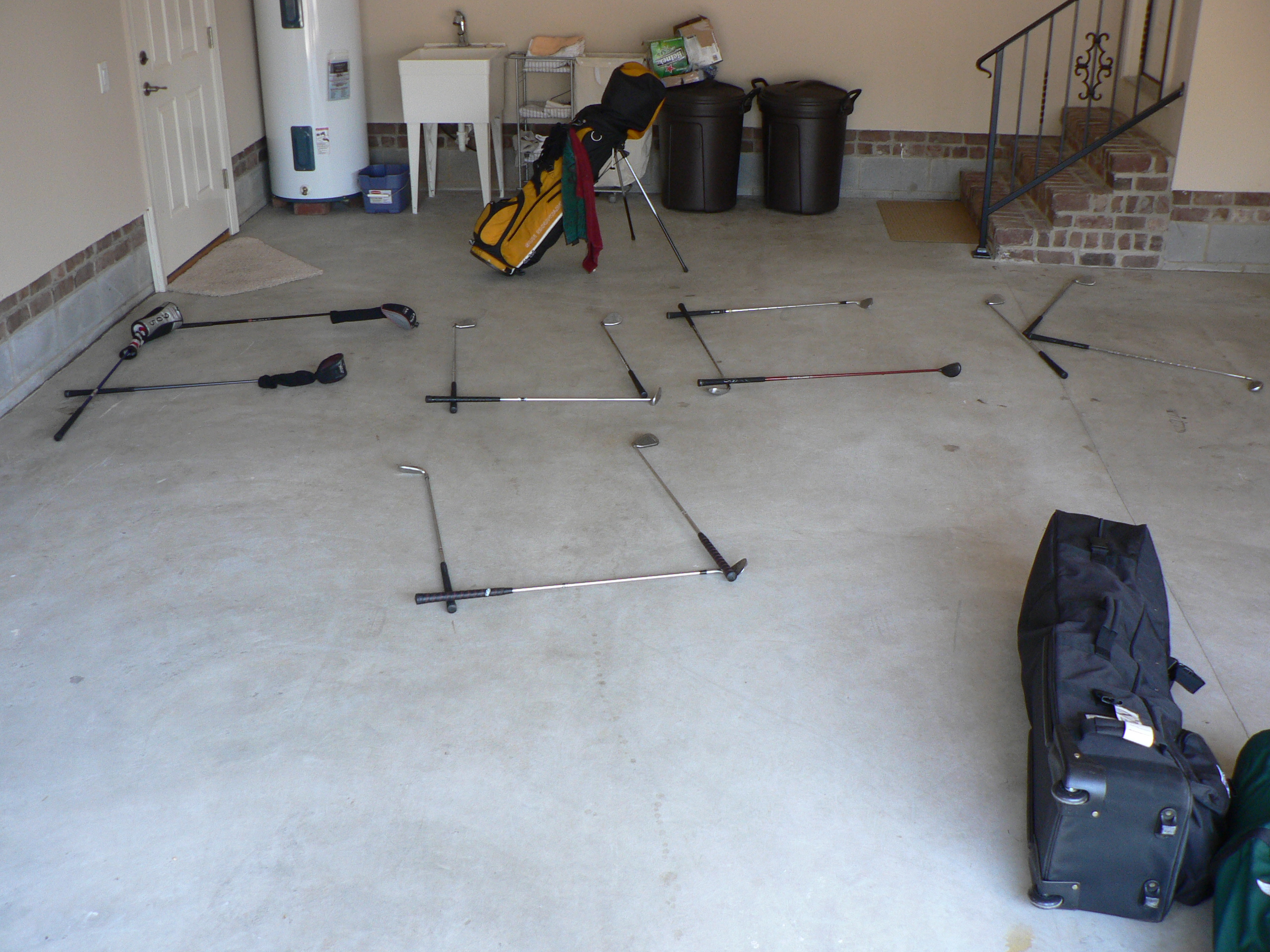
Nighttime noise is an issue when you travel with grown men.  On a ski trip when my kids were in high school, I shared a room with two other fiftyish dads and spent much of the night trying to decide which was more annoying, the chainsaw-like snoring or the innumerable brief trips to the bathroom. When my friends and I travel for golf, we try to pair the snorers and coughers with the heaviest sleepers, and make sure that the guy with the anti-apnea machine shares a room with someone who likes white noise. I myself employ two snoring-related sleep aids: gumdrop-size silicone ear plugs and a vaguely wishbone-shaped appliance called a Nozovent, which sprongs my nostrils wide open.  (One night, while my wife and I were getting ready for bed at home, I groggily inserted my earplugs into my nose instead of my ears—as the first one went in, I thought, Whoa, time to buy some fresh ones—then realized what I had done and laughed so hard I nearly suffocated.) On a golf trip to Pinehurst in 2006, I shared a room with two friends. One was a world-class snorer, but the noise he made, though extraordinarily loud, was so steady that it was easy to sleep through. What woke me was a fart (same guy)—like exploding a paper bag. My entire body rose about six inches from my mattress, and it took me a while to get back to sleep. At the bottom of this post is a picture from that trip.

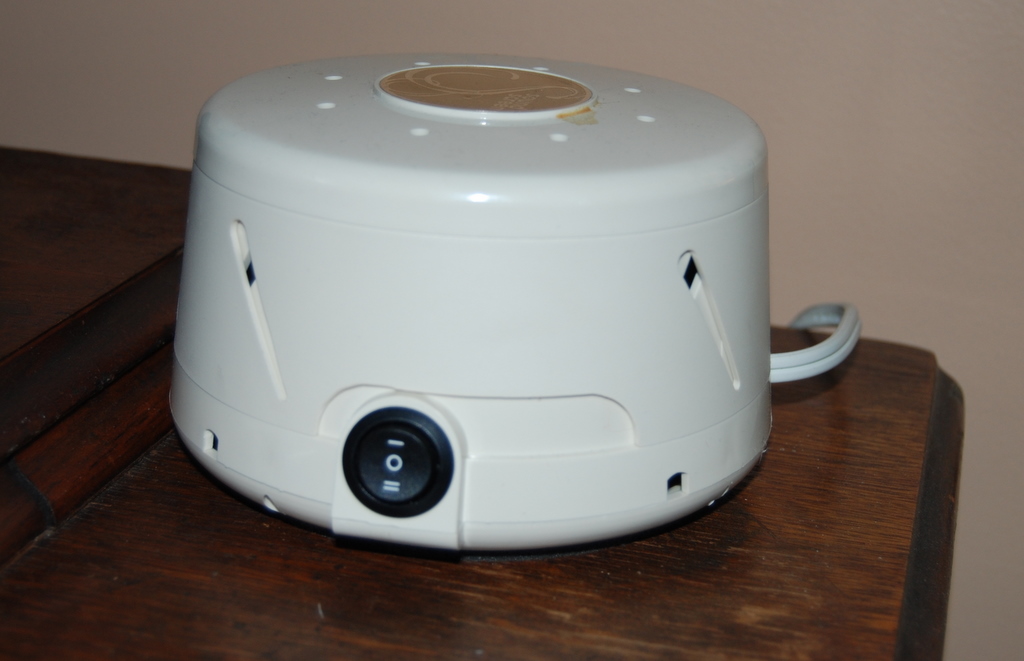
After the death of my father, whose snoring was audible throughout our house, my mother gave me his old white-noise machine, a Marpac Sound Screen. My wife and I keep it in the kitchen—for our dog, Henry, who barks in the middle of the night if he hears raccoons knocking over the cat-food dishes on our back step. Half a dozen friends and I are taking a golf trip to Ireland in April. We’ve all decided to splurge on single rooms, but if we hadn’t I’d take the Marpac with me.

Pinehurst golf trip 2006–with Fairbairn’s greeting for new arrivals.


Clearview Park Golf Course

Clearview

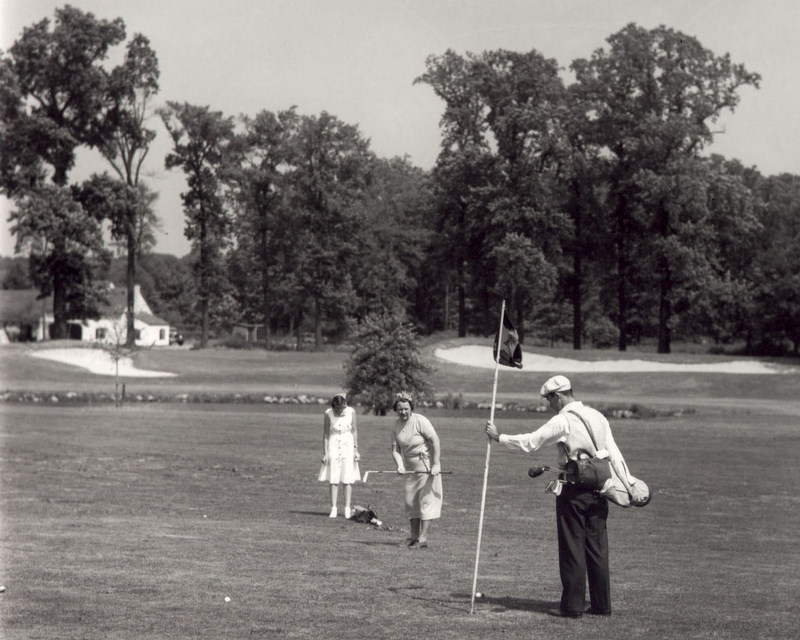
On a warm winter afternoon in 2005, Hacker (real name) and I met at Clearview Park Golf Course, in Queens, for my second round of the day. (I’d played that morning at Van Cortlandt Park, in the Bronx.) The temperature was close to fifty degrees, and the course was packed, mostly with Koreans, who are probably the second most golf-addled ethnic group in New York, after the Irish. The starter, who was also Korean, paired Hacker and me with two Korean men. One of them turned out to be the retired owner of a Manhattan wig shop. He told me that his clientele had included many famous actresses, among them Nancy Sinatra and Ann-Margret, but that actresses are undesirable wig customers because they don’t like to pay. The best customers, he said, are strippers, who favor huge blond wigs and don’t care what anything costs. We finished our round just as a very orange sun was setting beyond Manhattan, and we watched endless ribbons of white and red car lights unspooling across the Throgs Neck Bridge, which looms over the northern end of the course. Six days later, it snowed again. The photos above and below were taken at Clearview in the thirties or forties.

Clearview