Two Golf-oriented Breakthroughs in Dining

20150917_180500

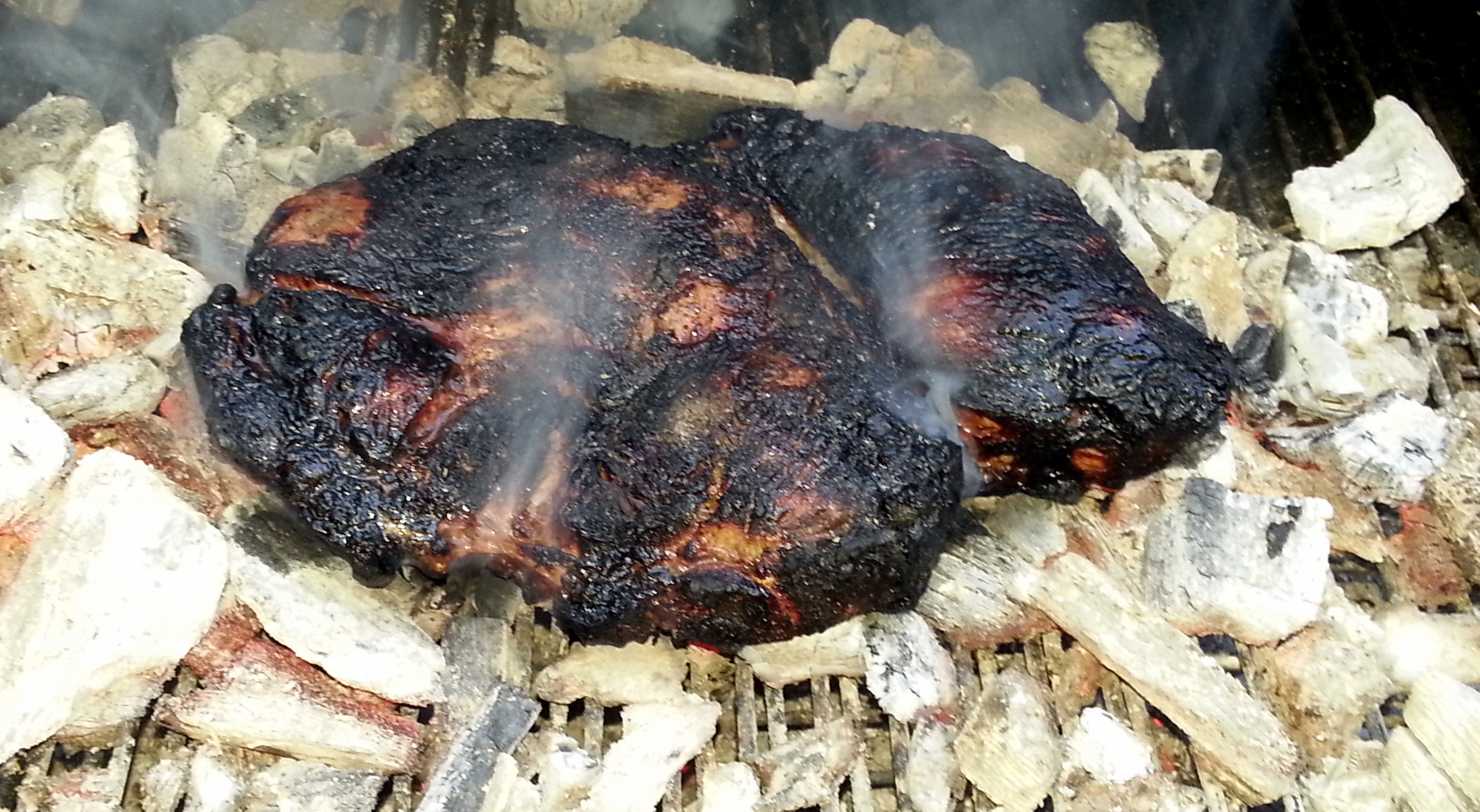
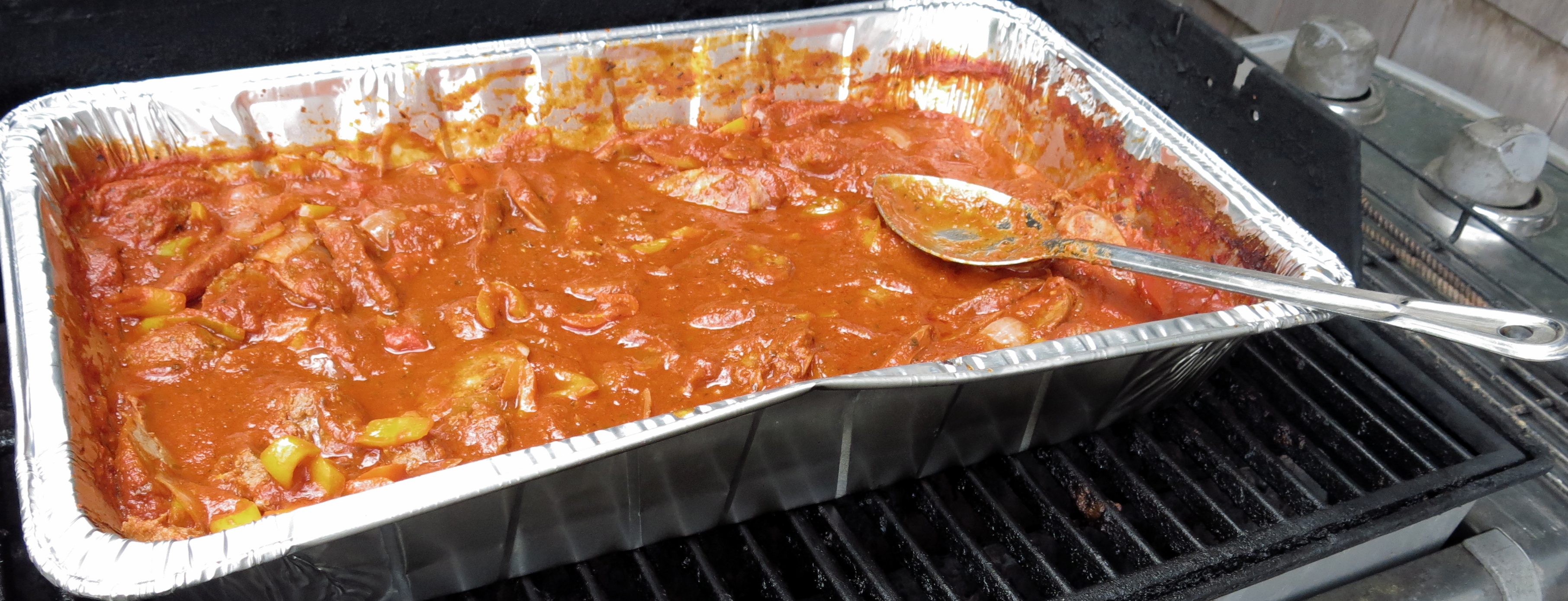
Back in June, an article in the New York Times described a radical-sounding method of charcoal-grilling meat: grill the meat not on the grill but directly on the coals. This sounds insane—the temperature of the coals can reach 1,000 degrees—but, having tried it, I can swear to you that you should never grill meat any other way. I conducted my experiment with the old ladies I play bridge with, not my golf buddies, but the technique has a very definite golf application, because grilled meat is a fundamental element of any golf-based lifestyle. The meat I grilled was nothing special—just great big hunk of sirloin from ShopRite—but the result was life-changing.The photo above shows what the steak looked like just before we took it off the grill.

I used a non-smoking approximation of my father’s old steak-timing method : a cigarette a side. Hardwood charcoal, of course. Ash is not a problem. No, even fatty meats don’t burst into flames. And don’t talk to me about propane.

Now, dessert. A couple of weeks ago, my wife and I took her brother and his teenage daughter to a country fair in a town not far from ours. I was pleased to see that the winning paintings in the art competition were of famous people who are famous partly for having, or having had, a serious interest in golf.

20150905_192948

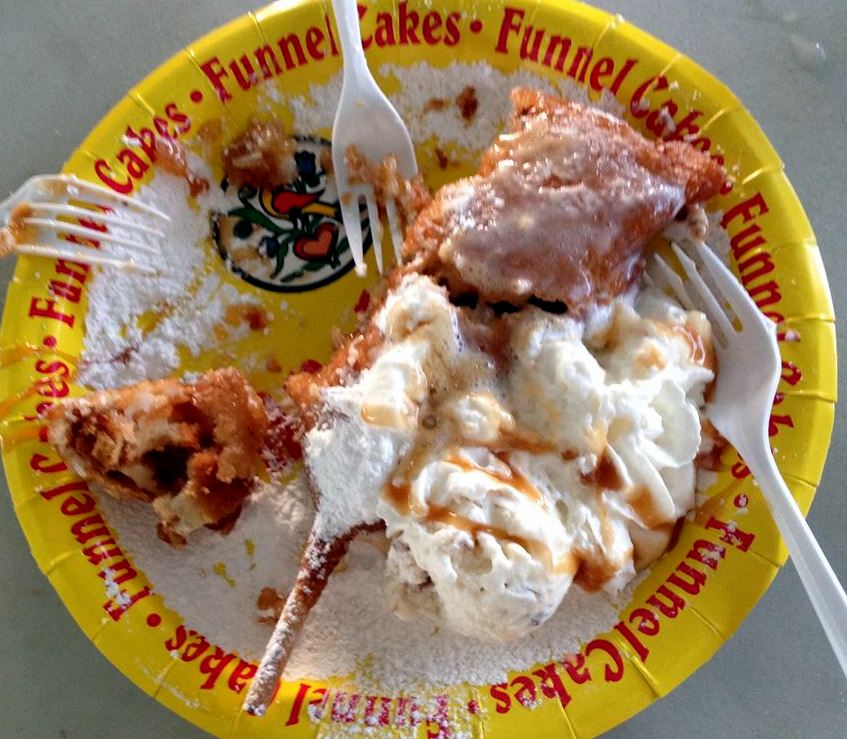
We didn’t go to the fair to look at art, though; we went to the fair to eat. And the most golftastic thing we ate was dessert: a slice of pecan pie which had been dipped in batter and deep-fried, then covered with whipped cream, ice cream, caramel sauce, and powdered sugar. And it was on a stick, so, at least in theory, you could carry it with you on the course.

deep-fried-pecan-pie

P1160813

Golfer Takes Photo of Hole-in-one

jeoholeinone2

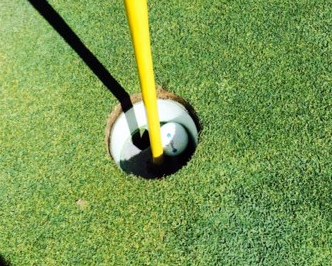
Don S., a member of my brother’s golf club and, therefore, an honorary-member-once-removed of the Sunday Morning Group, sent me several photographs of a hole-in-one made recently by my brother, John. I asked John about it, and he said, “It was my second lifetime hole-in-one and my second on that hole. The first time—about 15 years ago—I hit an 8-iron. This time, it was a 5-iron.” Here it is from a different angle:
jeoholeinone

I guess that mere photography doesn’t do it justice, but the pictures brought to mind a memorable shot of my own: a gorgeous 7-iron, drawing slightly, that hit the flagstick on the fly on the third hole at my own club roughly 20 years ago. From the tee, my friends and I could see that the ball had wedged itself between the stick and the front of the cup. I didn’t hoot or jump up and down. I walked to the green at my normal pace, wearing an expression of placid nonchalance which said, “This is how I play golf.”

When we reached the green, we realized that my ball wasn’t actually in the hole but was merely perched on its front edge. There was a deep ball-shaped dent in the turf just above the back of the cup, and the dent, the flagstick and the ball were aligned perfectly — a physical impossibility, you would think. Had the ball dematerialized briefly after bouncing off the rim, then passed, undeflected, through the stick? I had to write 2 on the scorecard, but I’ve always thought of it as a 1. The next day, I played again and used my thumb to press my dent, which was still visible, more deeply into the rim. “My ball did that,” I said to the people I was playing with. “It should have been a hole-in-one.”

Golf, a famously unfair game, never seems more unfair than when it narrowly withholds the only laurel that non-golfers are impressed by. Unlucky bounces off trees or sprinkler heads don’t bother me; I accept them as the rub of the green. But that almost-ace still rankles. A couple of years later, I made an official hole-in-one—in a tournament, no less—and got my name added to a plaque in the golf shop. But when I see the plaque I can’t help thinking, “I ought to be on there twice.”

Almost as bad as just missing a hole-in-one is making one and not receiving credit for it. On a trip to Ireland in 2001, five friends and I played a round at the Portmarnock Pitch and Putt Club, a micro-scale links course not far from the full-size Portmarnock Golf Club.

portmarnockpnp

In Irish pitch and putt, the maximum hole length is seventy meters—about seventy-seven yards. One of my friends, looking over the compact layout from behind the first tee, asked the club’s captain how often players made holes-in-one, and he said, “Not as often as you’d think.” Ten minutes later, though, we heard a shout on the far side of the course: an ace. Ten minutes after that, I made one myself, on a fifty-meter hole. “I guess I owe everybody a beer,” I said expansively. One of my friends gave me a look. “It wasn’t even sixty yards,” he said.

In Florida once, I almost had my second, third, or fourth hole-in-one, depending on how you count them. I hit what may be the best-looking 6-iron I’ve ever hit, into a strong wind off the ocean, and my ball landed softly and rolled toward the hole at the speed of a confident putt. It stopped six inches away. “Unlucky,” one of my friends said. “That was almost a great shot.”

If the ball had gone in, we’d have celebrated; if it had ended up two feet farther from the hole, outside of almost-a-hole-in-one range, my friends would have toasted my brilliant shot-making, since even hitting the green in that wind was an accomplishment. As it was, though, none of us could think of anything except the thing that hadn’t happened.

Of course, I can’t actually claim responsibility for any of my shots, good or bad, lucky or unlucky. Like most golfers, I don’t so much aim at the flag as try to bracket the green with my margin of error. Even my single uncontested ace deserves as asterisk: “Player had no idea what he was doing.” Still, there’s something about a hole-in-one. Did I mention that my name is on the plaque?

Late Update: At a mixed event at my club the last weekend in September, I won a hat for hitting my tee shot on the seventh hole to an inch—another near miss:


P1160834

New Pushcart Turns Reluctant Rider Back Into Walker

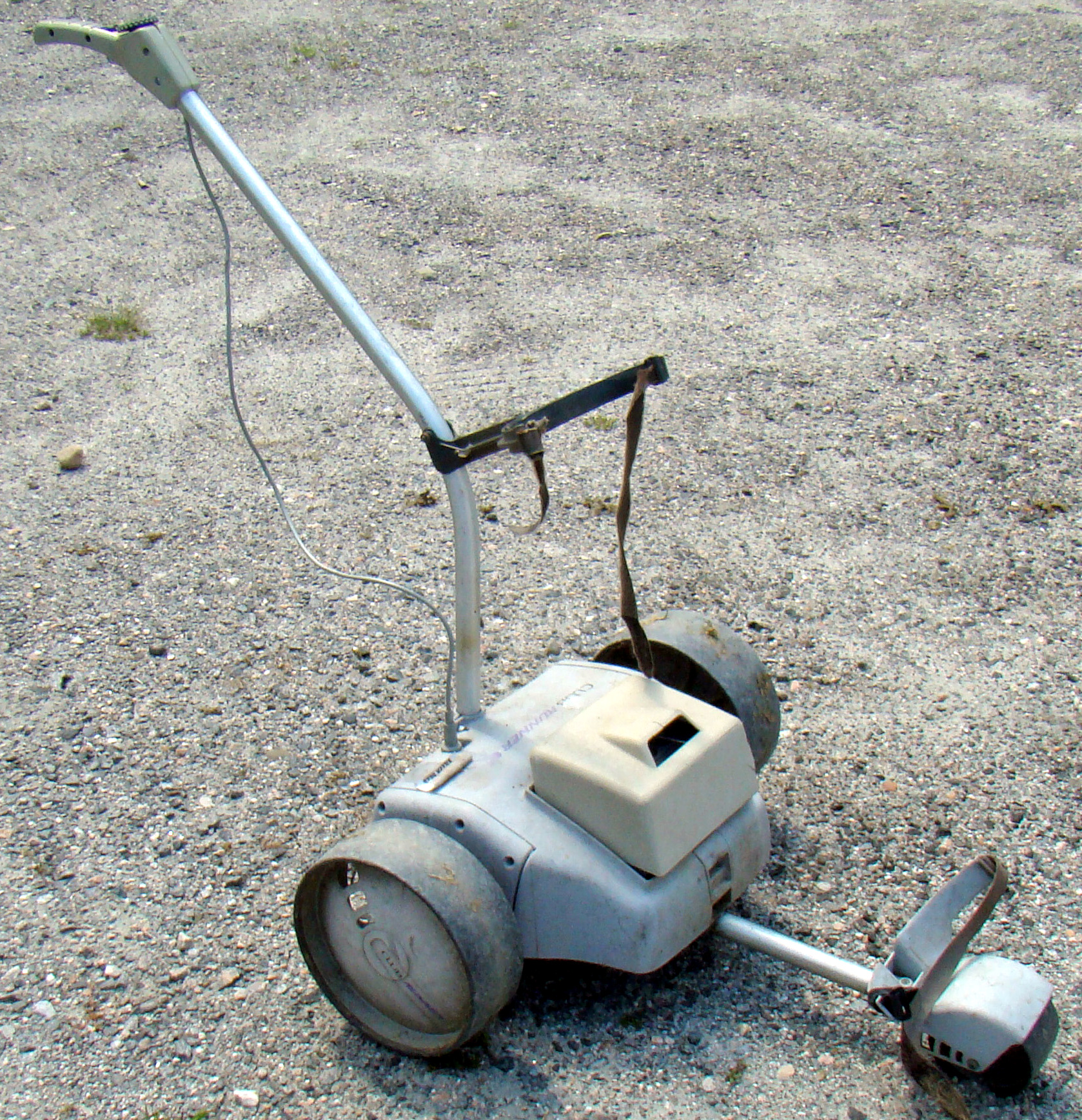
P1160675Almost everybody in the Sunday Morning Group walks. Some of the guys—like Slade, who’s in his eighties—prefer to carry their bag, but a growing number use pushcarts. Until recently, Stanley—who is 77 and, by this point, consists almost entirely of replacement parts—used an electric-powered pushcart called a Club Runner.

Club Runner 1

Stanley paid fifty dollars for it at a silent auction twenty years ago, when it was already an antique. He replaced the battery once, but replacing it again would have cost double what he paid for the whole thing, so he decided to retire it. The Club Runner originally belonged to a member of our club named Art, a local farmer, who died in 2003. Recently, Stanley told me:

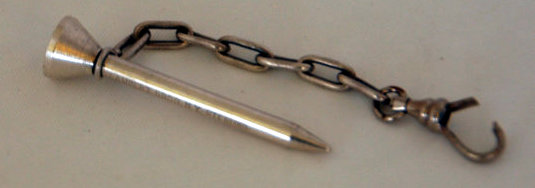
“Art used to play with a few other 20-handicap guys. They were pretty social, but they didn’t spend much on golf. The pro in those days sold tees, so finding one on the course was a rarity. Nelson, one of Art’s friends, played with a weighted metal tee with a chain attached, so he wouldn’t lose it. I remember reading about a golfer spearing himself in the back of the neck with one of those, but, luckily, Nelson never injured himself for anyone else.”

tee-and-chain

Art wore the same pair of golf shoes for what must have been almost the entire second half of his golf career. By the time I joined the club, the spikes were just shiny metal disks, and they were so slippery that Art had to walk carefully on the clubhouse porch. His old Club Runner is now for sale on Craigslist (for fifty dollars), if you’re interested.

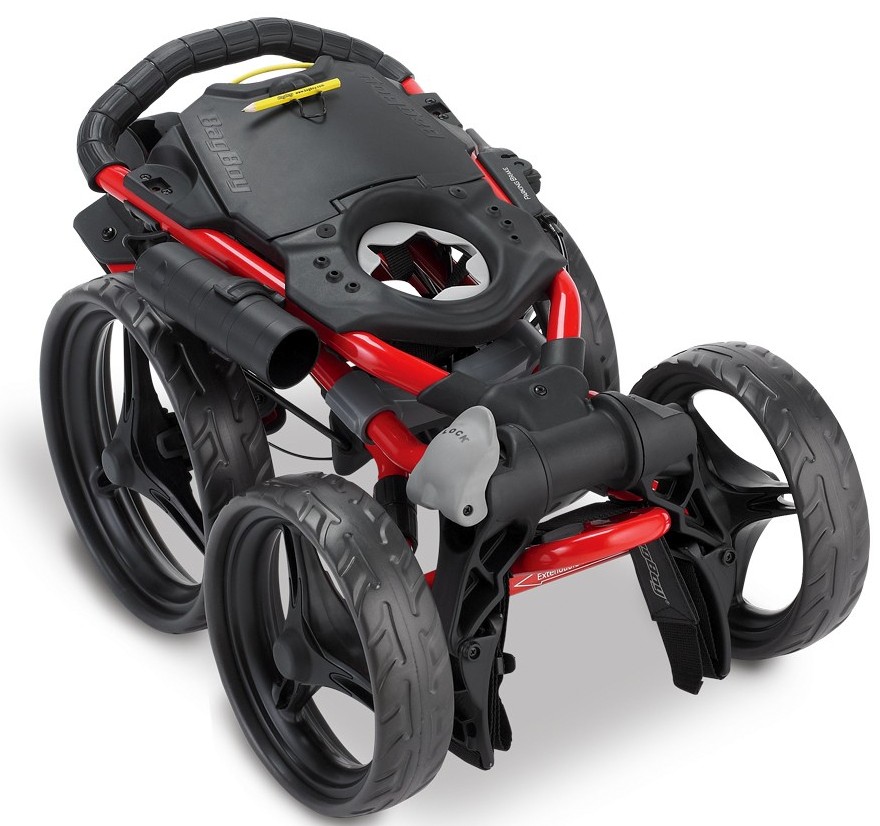
Stanley had to ride briefly, both just before and just after his most recent knee replacement, but he’s back to walking now, and with an unpowered pushcart, a BagBoy Quad Plus:

P1160568

P1160576

Bag-Boy-Quad-Plus-Folded

Here’s Stanley’s review:

“The BagBoy is easy to open and close, and my bag rides without shifting. I like the hand brake better than foot-operated ones. I have yet to try the umbrella holder but it does appear it will keep club grips dry. I find the BagBoy much easier to handle going downhill that anything else I’ve used, and while pushing it up one of the four big hills on our course I realized that part of my weight was resting on the cart and saving me some effort. I like it a lot, and I believe that it will allow me to continue walking for the foreseeable future. I especially like the ease of folding and unfolding. And when it’s folded it’s very compact—certainly more so than the Clicgear.”

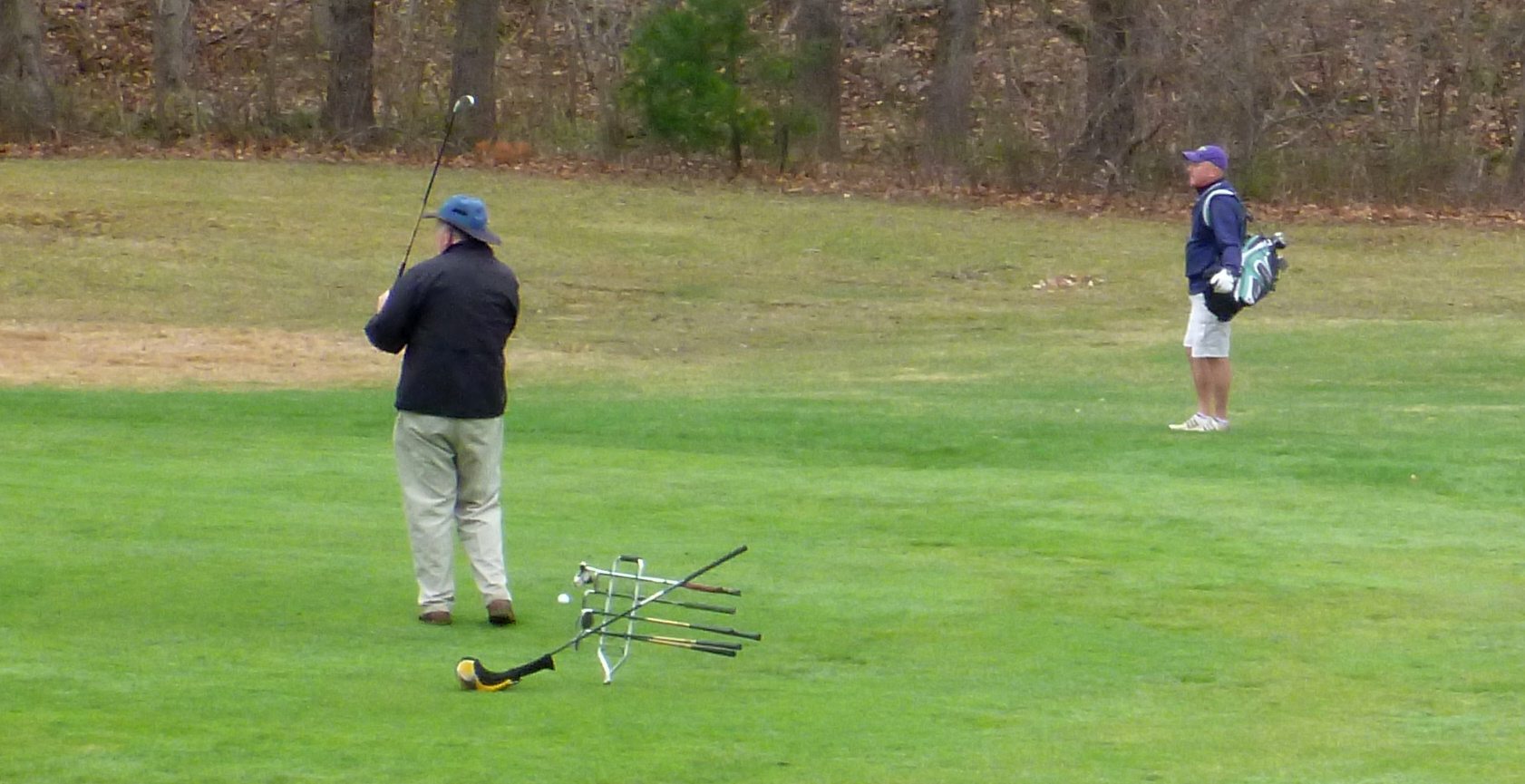
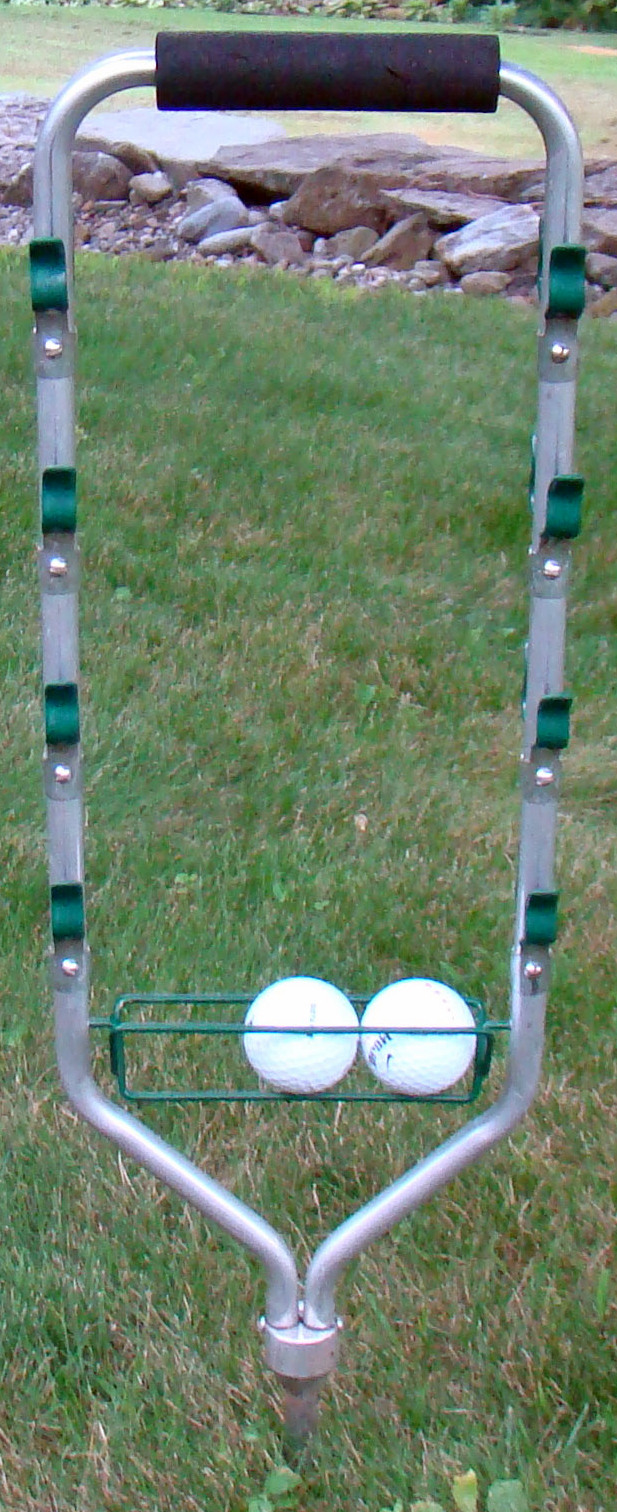
Stanley is probably the Sunday Morning Group’s principal innovator when it comes to golf-club transport. During rounds very early and very late in the season, he has often used an aluminum club carrier, which has a spear-like metal point that enables it to stand up by itself:

P1010644

Stanley told me:

“Some people used those in the nineteen-sixties. It holds eight clubs, and when I started playing I had a seven-club set of Wilson Sam Sneads, which I think I bought at Caldor. The problem with the club carrier is that the aluminum clips which hold the clubs are riveted on and are prone to break. I wrote to the manufacturer, who told me they no longer made the carriers, but when I explained my problem they sent me a jiffy bag of clips, gratis. I drilled out the rivets and replaced them with stainless-steel bolts, and they haven’t broken since.”

Club Carrier

Weird Blight Causes Leaves on Golf-course Trees to Change Color

P1160695

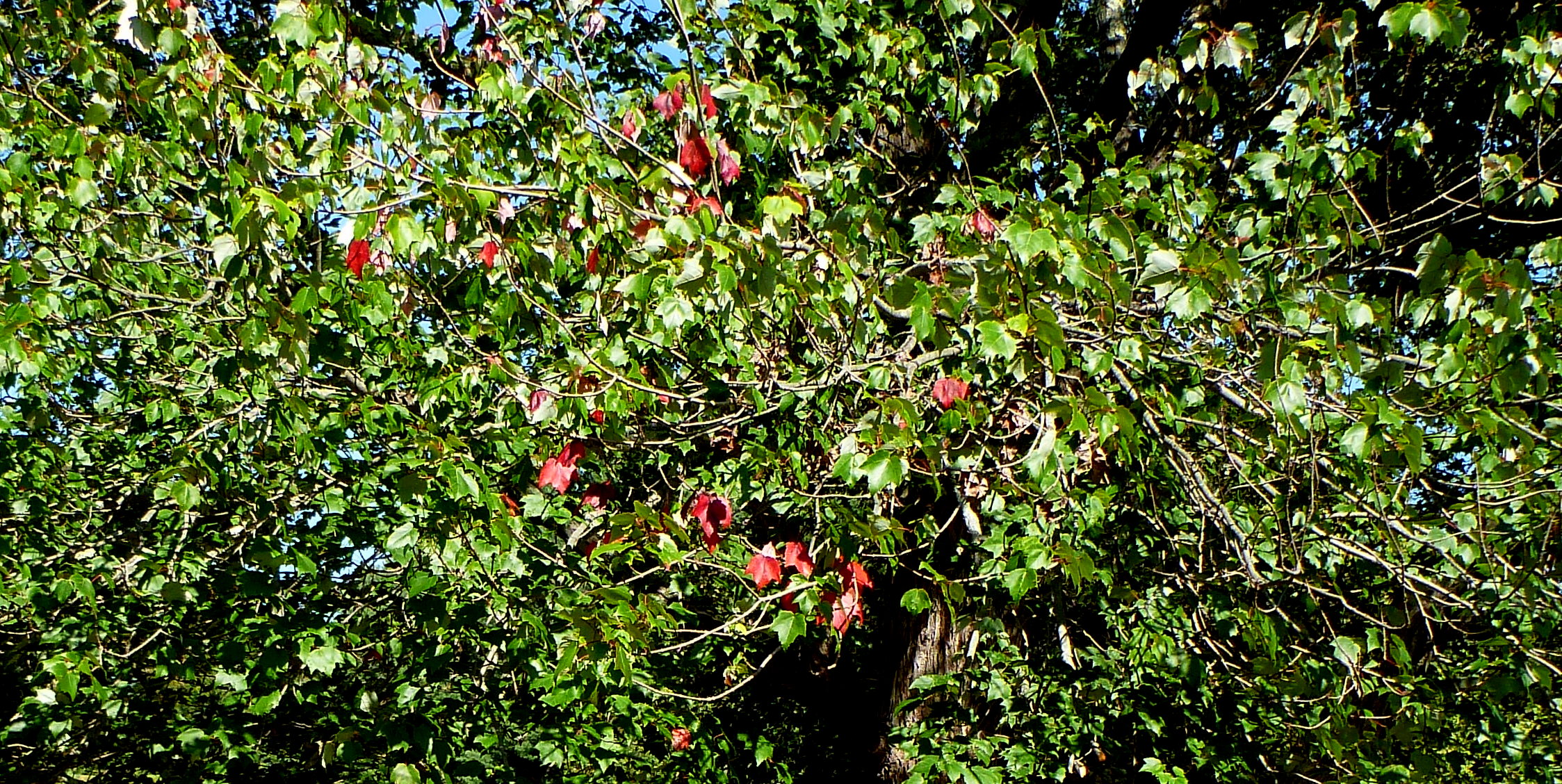
Something creepy is happening to the trees on my golf course. Leaves that were completely green just a couple of weeks ago are different colors now, including bright red.
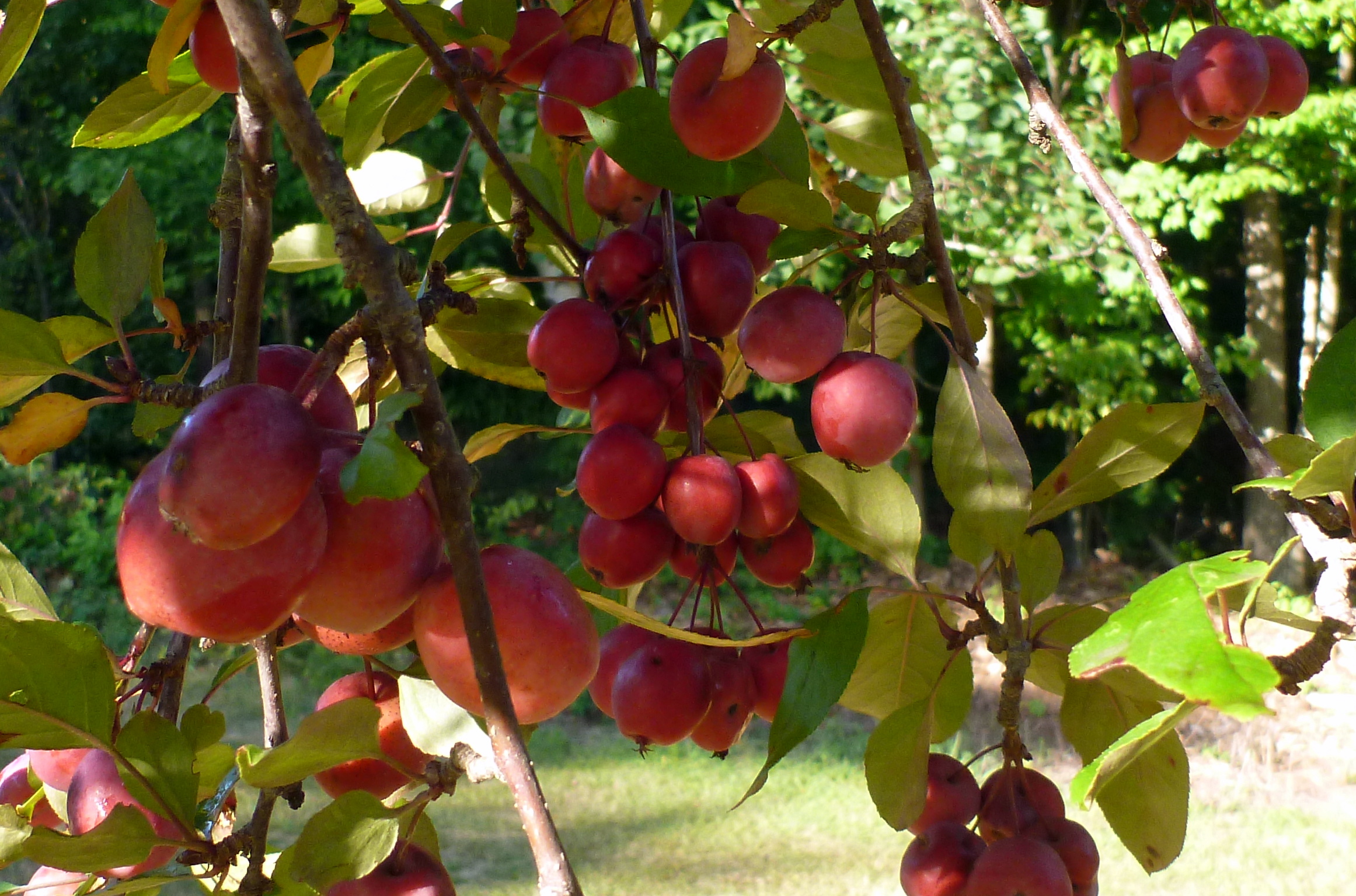
Other trees on the course have developed strange bulbous growths—none of which were there when the season began:

P1160720

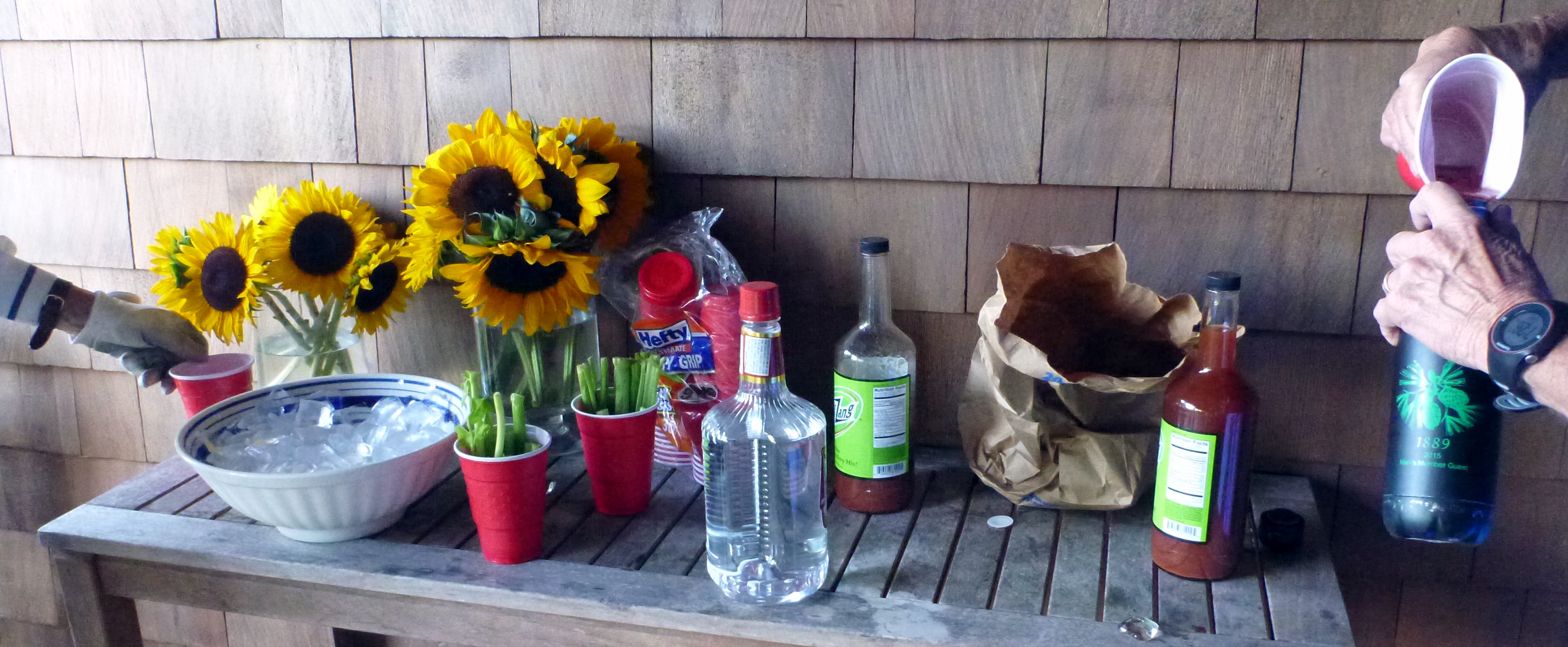
Even eerier, people kept referring to last Monday as “Labor Day”—which used to come at the end of the summer, not in the middle, like now. The Sunday Morning Group has been coping by supplementing our kegerators with an all-day Bloody Mary buffet, on the clubhouse porch:

P1160701

The Bloody Marys haven’t made the leaves green again, but for some of the guys they seem to help. I’ll let you know if I figure out what’s going on.

My Super-compact New Pushcart

P1160599

So many members of the Sunday Morning Group showed up recently that we had to use almost all our numbered poker chips when we picked teams. A possible explanation for the crowd is that it was Crappy Chinese Wristwatch Day. Hacker (real name) has discovered that you can buy crappy Chinese wristwatches online for $3 each, including shipping from China and “customs,” and he can’t stop ordering them so he has begun giving them away as supplemental prizes to the guys who win our regular Sunday game. Mike A., so far, has won three.

P1160604

I didn’t win a watch on Sunday, but I was able to show off my tattoo:

smg-tattoo

To be perfectly honest, it’s a fake tattoo. But don’t you think that, if we hired a real tattoo artist to come to the men’s member-guest next year, pretty many guys would decide to get a real SMG tattoo, as long as it was free and they were drunk?

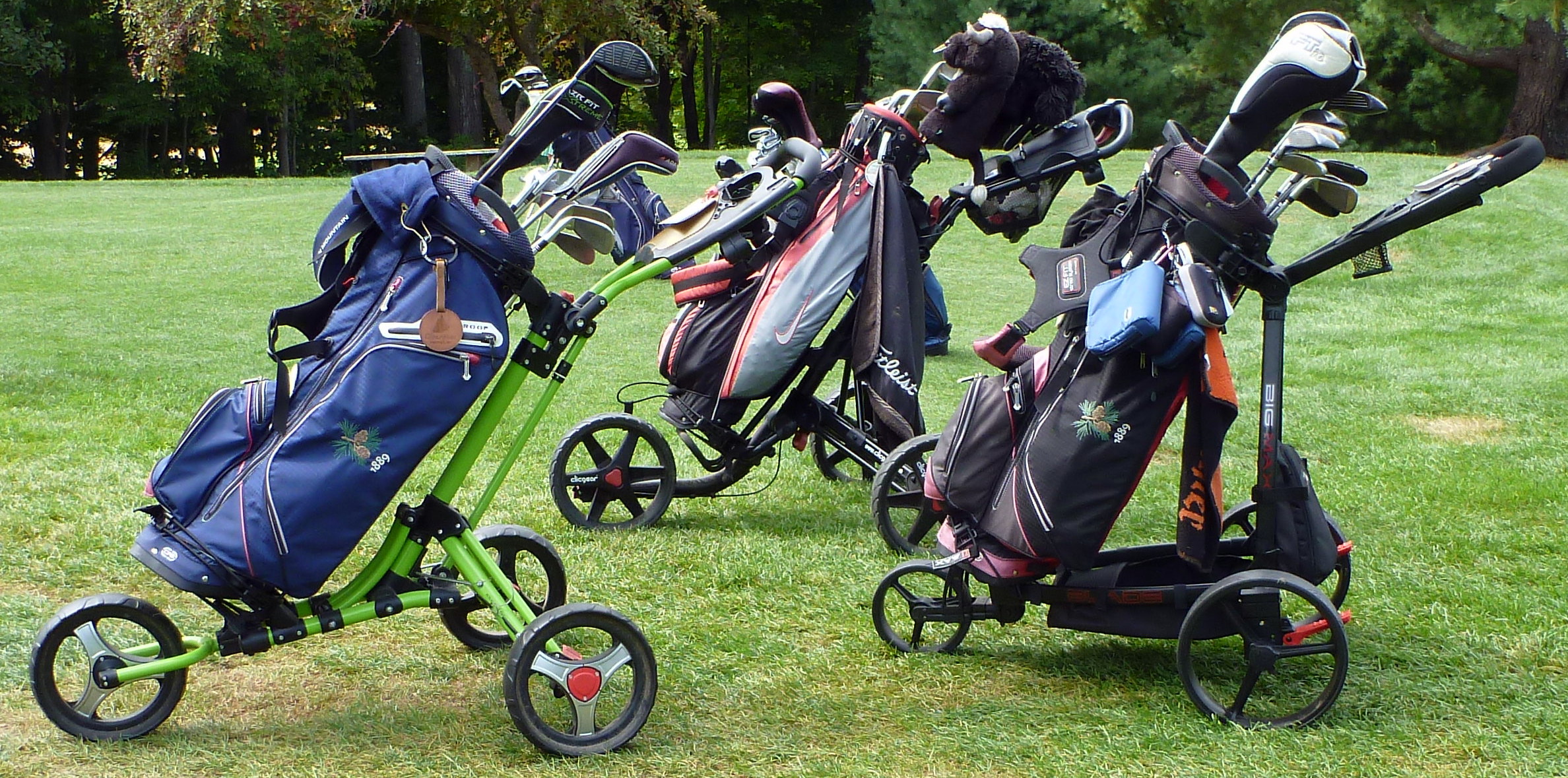
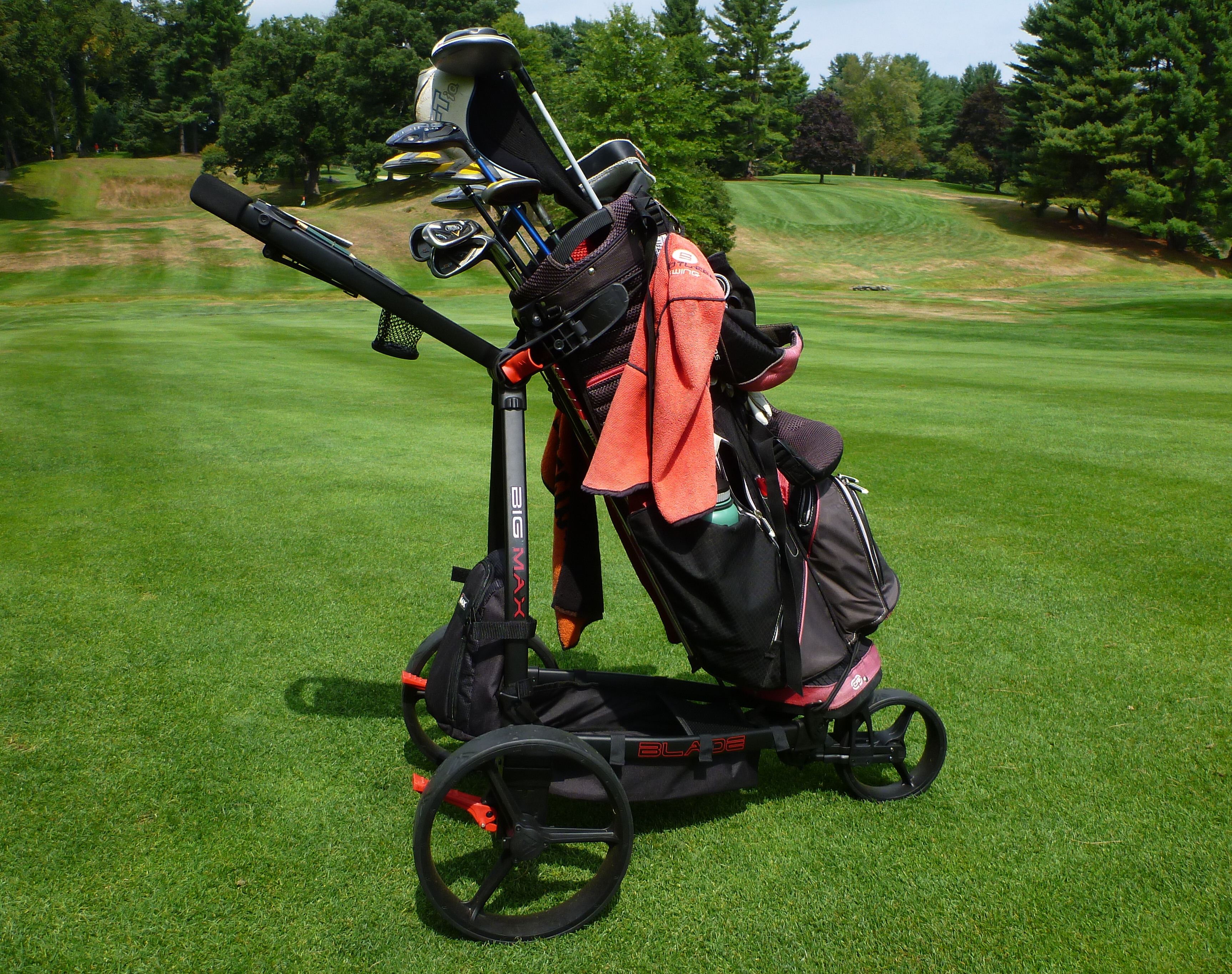
Crappy Chinese Wristwatch Day was also the first day I used my new pushcart, a Big Max Blade+.

P1160670

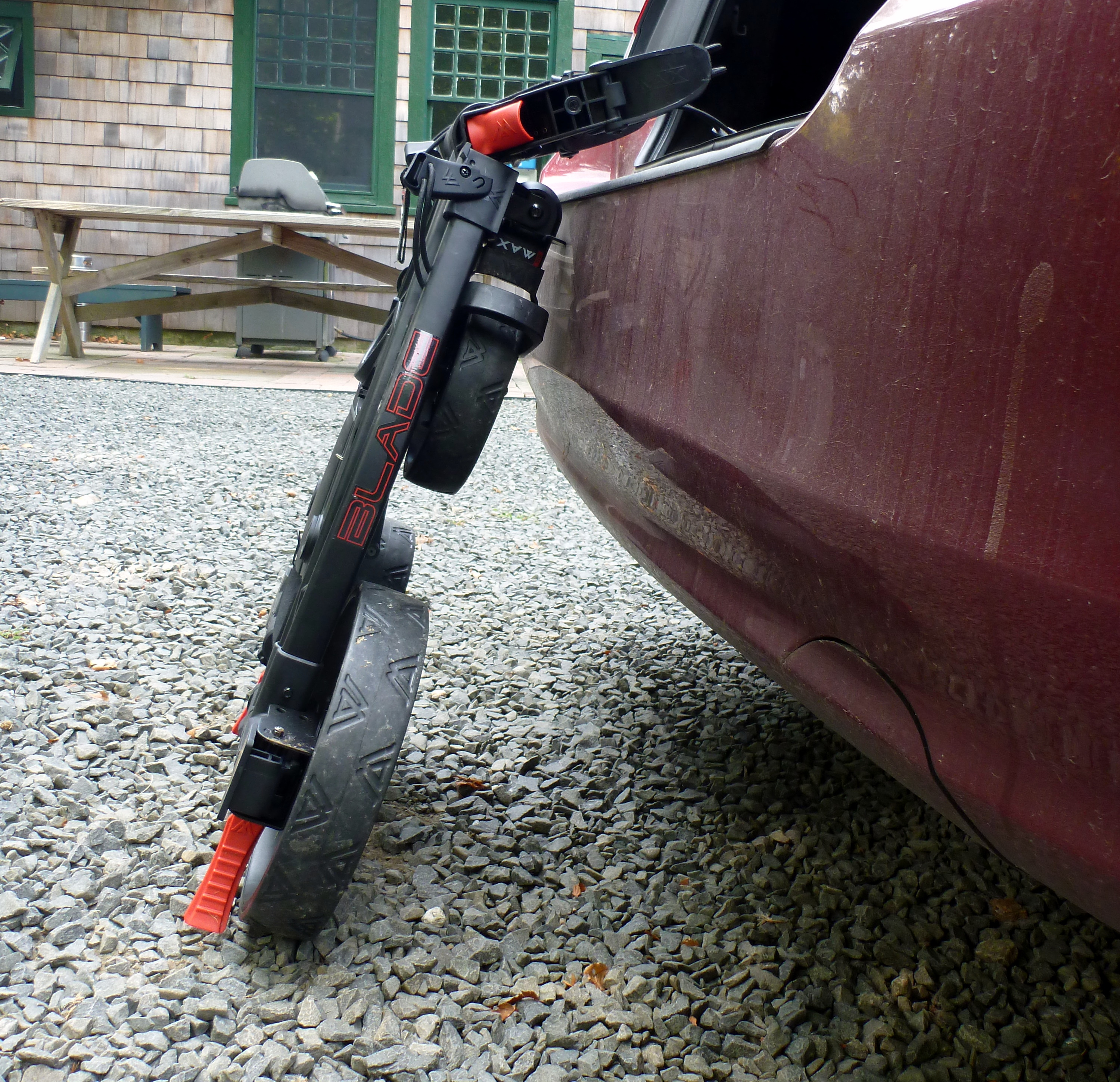
You can tell the company is European, because they call it a trolley instead of a pushcart. The Blade+ has various awesome features, of which the awesomest is that it folds down to virtually the size of a briefcase.

P1160663

I also have a Clicgear pushcart, and I love it, too. But getting both it and my golf bag into the trunk of my car requires careful arranging and doesn’t leave much room for my other golf stuff, which I therefore have to cram into the backseat and which causes me to think I should have bought a station wagon or possibly a panel truck instead of a sedan. But I was able to fit my Blade+ into my trunk on top of my Clicgear pushcart and my golf bag. Sliding it in was like sliding a piece of bread into a toaster.

P1160575

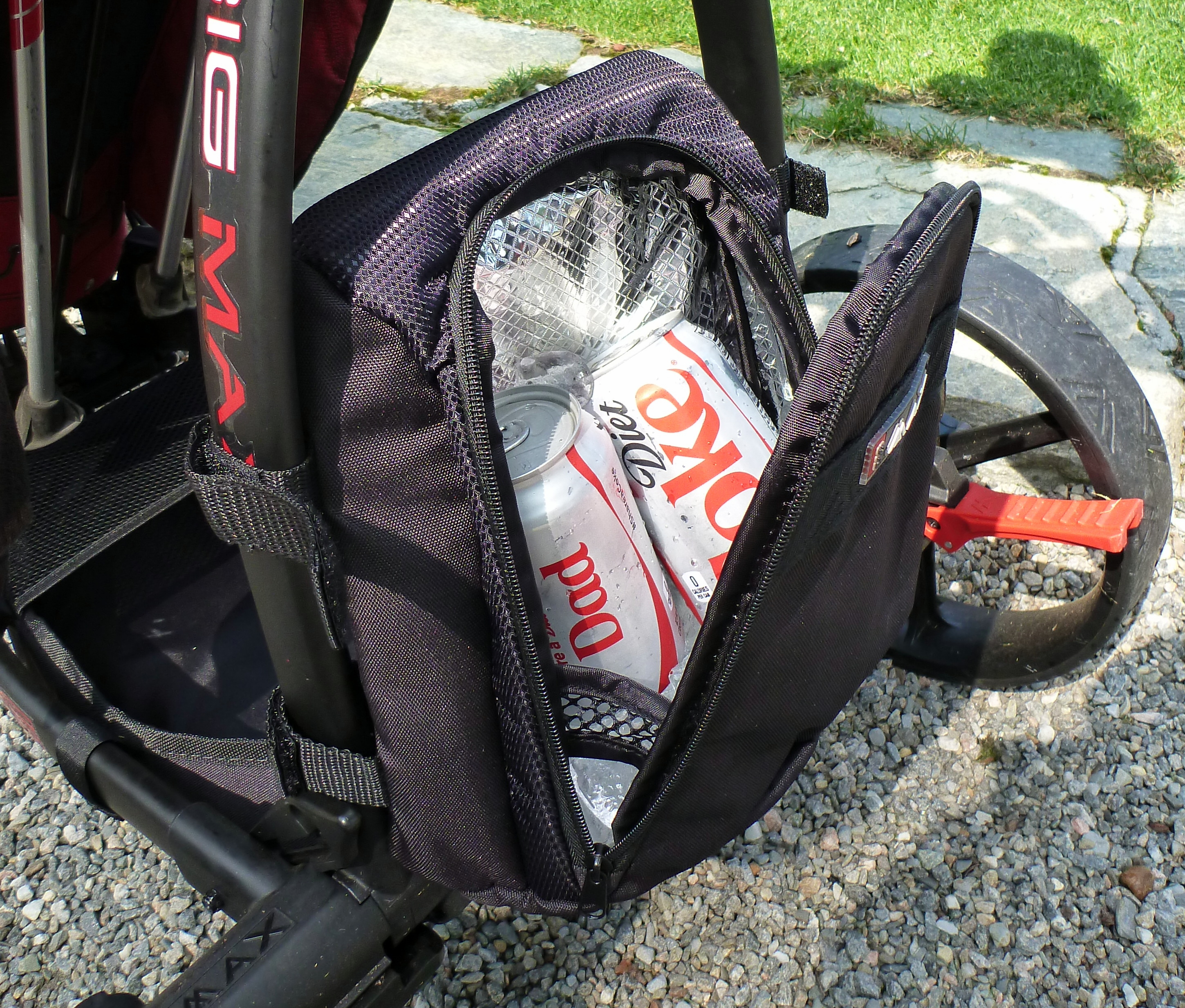
I’ve also got some excellent Big Max accessories, including a strap-on cooler bag:

P1160667

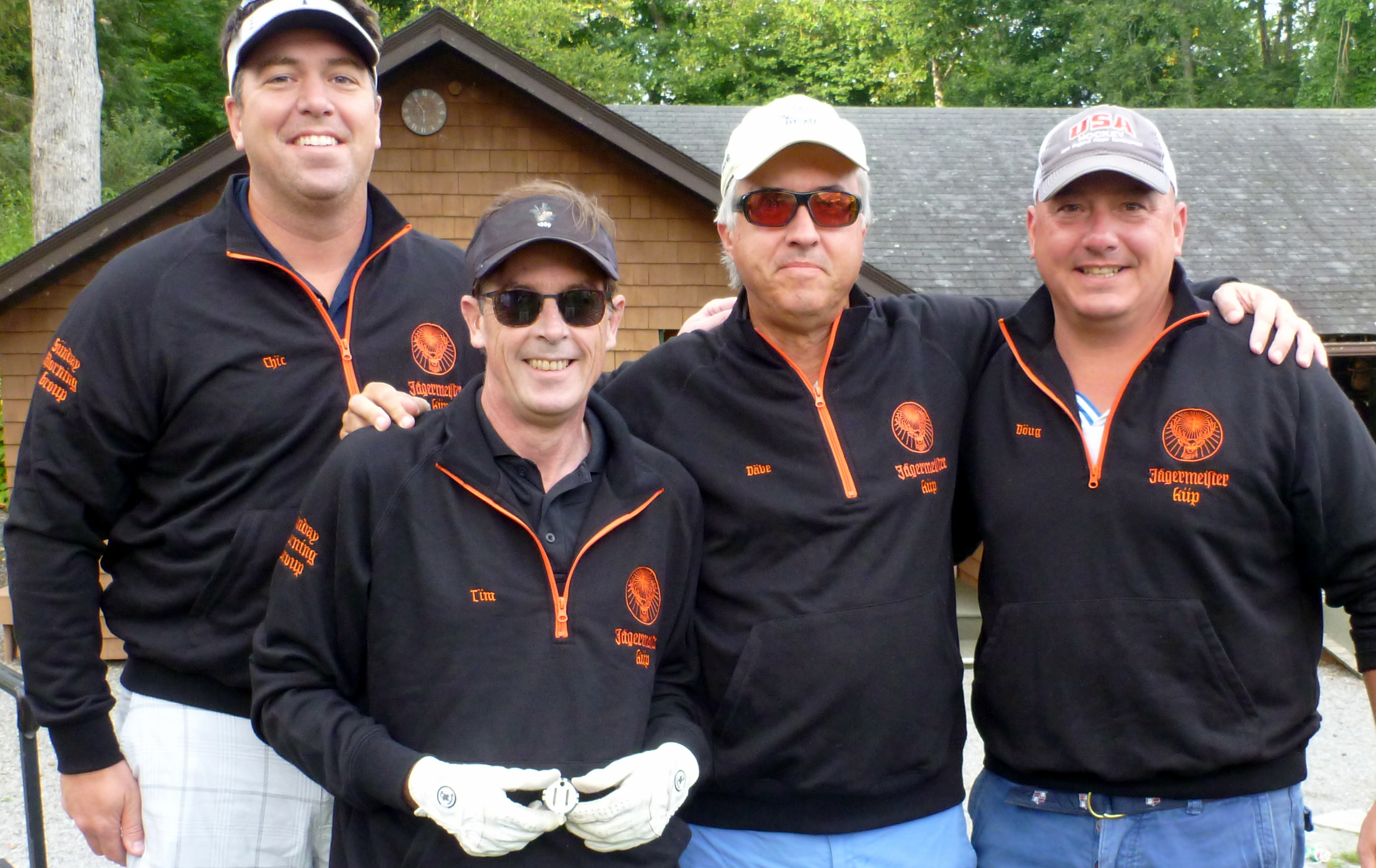
It drips a little, so if you use your pushcart inside your house you shouldn’t fill the cooler bag with ice, the way I do on the golf course. I’ve also got a Big Max storage basket, which straps onto the bottom part of the pushcart, between the wheels. It’s a good place to stash your custom-embroidered Jagermeister sweatshirt and the putter headcover you’re always losing.

P1160726

More about pushcarts soon.

P1160711

Golf, Physics, and Shaft Length

John M. Friedman

John M. Friedman

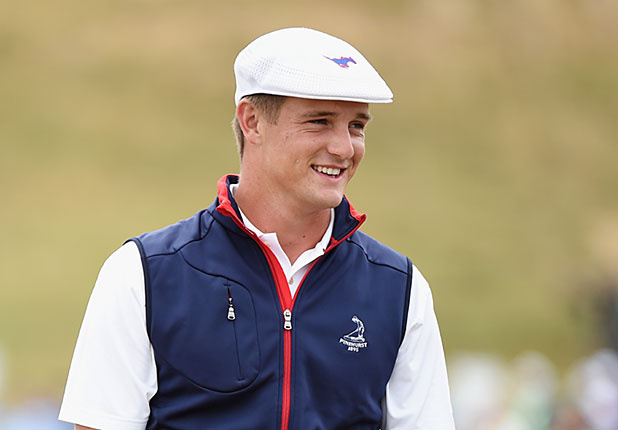
I was sorry that my old bridge buddy John Friedman—who died a few years ago, in his sixties, from idiopathic pulmonary fibrosis—wasn’t around to see this year’s U.S. Amateur. Like Bryson Dechambeau, the champion, he had majored in physics (at Princeton) and believed that the shafts of golf irons ought to all be the same length. (You can read about DeChambeau’s clubs in this post by Mike Stachura.)
dechambeau-vest

John could be challenging bridge partner. He had trouble remembering bidding conventions, so we allowed him to respond to one of them by holding up fingers. And he wasn’t a very good golfer. But he was a firm believer in his shaft-length idea, which I enabled him to test, finally, by finding him an old set of Tommy Armour E.Q.L. irons on eBay. (Those clubs, which were sold briefly in the late 1980s and early 1990s, had shafts that were all 6-iron length.) I think I can say with confidence that he didn’t play any worse with them than he had with his previous set.

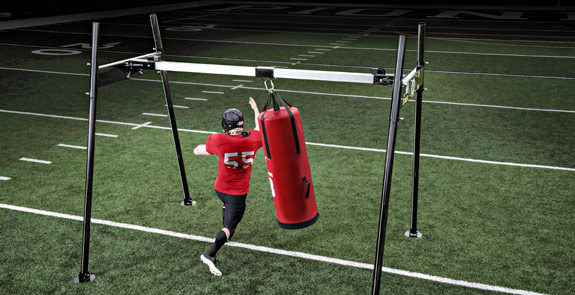
blocking-dummy

John wasn’t much of an athlete, but he played football in high school, and he applied his knowledge of physics there as well. His school’s practice field had an enormous cylindrical blocking dummy hanging from a bar, and according to legend only one lineman in the history of the school had ever succeeded in hitting it hard enough to spin it over the top. John wasn’t a big guy, but he understood force. He studied the dummy after school one evening, and decided that the reason no one else had replicated that feat was that they were hitting the dummy too low. At practice the next day, he laid his shoulder as close to the top as he could, and, to the astonishment of his coaches and teammates, sent it over the bar

Reader’s Trip Report: Midnight at the Grave of Old Tom Morris

Open-Cohens-Sachses

In July, Adam Sachs and Mark Cohen, readers in Kansas City, celebrated their sons’ bar mitzvahs by taking them to Scotland to watch the British Open and play golf at Cruden Bay, Kingsbarns and Luffness. Here are the boys, both thirteen years old, at the Old Course at St. Andrews—Elliott Cohen on the left, Phinney Sachs on the right:

Open-Elliott-Phinney

And here are Mark and Adam, setting an example:

Open-Cohen-Sachs

They saw Tom Watson, who during his heyday was known in Kansas City as the Fourth Franchise, and the boys learned that the Scots know nothing about making pizza:

Open-pizza

Adam writes:

“Because the Old Course is close to everything in St. Andrews, we couldn’t help running into players, caddies, journalists and golf-industry hangers-on. The boys got John Daly’s autograph, twice. On Tuesday, at Kingsbarns, which is one of the most enjoyable courses I’ve ever played, we were held up by the French pro Victor Dubuisson, who was two groups ahead of us. He ended up missing the cut, so maybe he should have been practicing on the Old Course instead. Tom Lehman’s sons were between us and him, and we all spent a lot of time standing around. On Friday night, I saw Darren Clarke, who also missed the cut. He was leaning against a wall outside a bar, smoking a cigarette and drinking a beer, and when I called to the boys to come back and meet ‘a real Ryder Cup hero’ he chatted with us and signed their golf flags.

IMG_8647

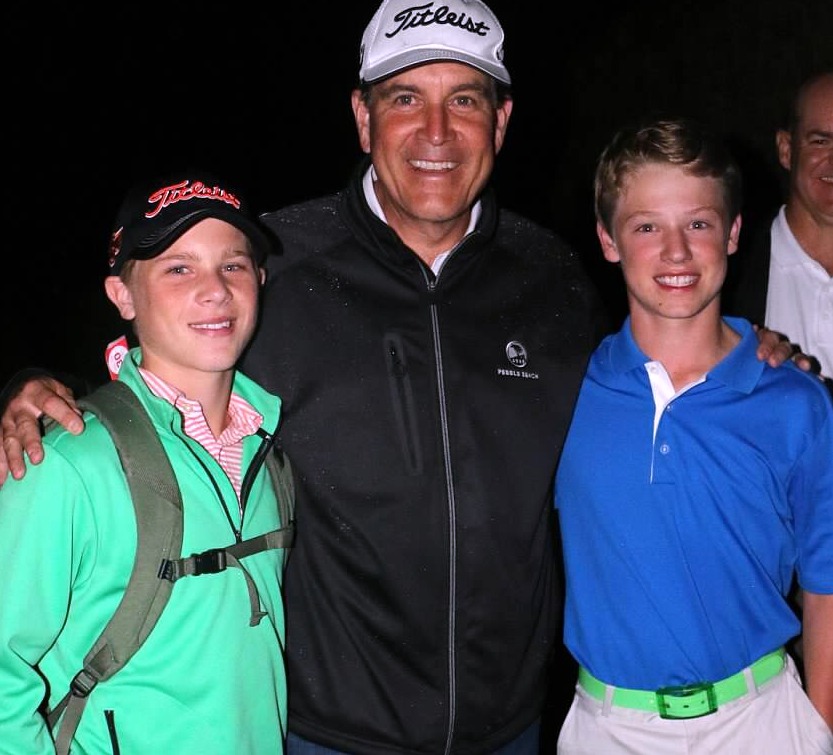
“On Saturday night, we ran into Jim Nantz, who was in St. Andrews as a spectator only (the U.S. broadcast was on ESPN).

Open-Nantz-street

“At midnight, we joined him and a group of his friends for a misty walk to the graves of Old and Young Tom Morris. The cemetery gate was locked, so Phinney and Elliott had to help Nantz, Mark, me, and all the other old guys get over the fence.

Open-Graveyard

Afterward, we went to the bar at the Dunvegan Hotel, around the corner from the 18th green. On the way, Phinney asked Nantz if he would record a voice-mail message for his cell phone. He did:

Nantz told Phinney that Phil Mickelson had asked him to do the same thing, and that Mickelson reciprocated by recording one for him.”

Open-Elliott-Nantz-Phinney

The Cohens and Sachses went back to the cemetery during the daytime, when the gate was unlocked. There was lots of death in the Morris family:

Open-Morris-grave

Among the trip’s many other highlights was golf at Cruden Bay. That’s where Adam took this photo of Phinney and Elliott:

Cruden-Bay-Phinney-Elliott

Cruden Bay is one of my favorite courses, too. I ate dinner in the clubhouse there after a late-afternoon round a few years ago, and I heard the waitress ask someone at the table behind me, “Would you like pineapple with it, or a fried egg?” I didn’t dare turn around to see what “it” was. But, like all four Cohens and Sachses, I love the course!

cruden-bay-green

We Test-drive the Golf Swing Shirt

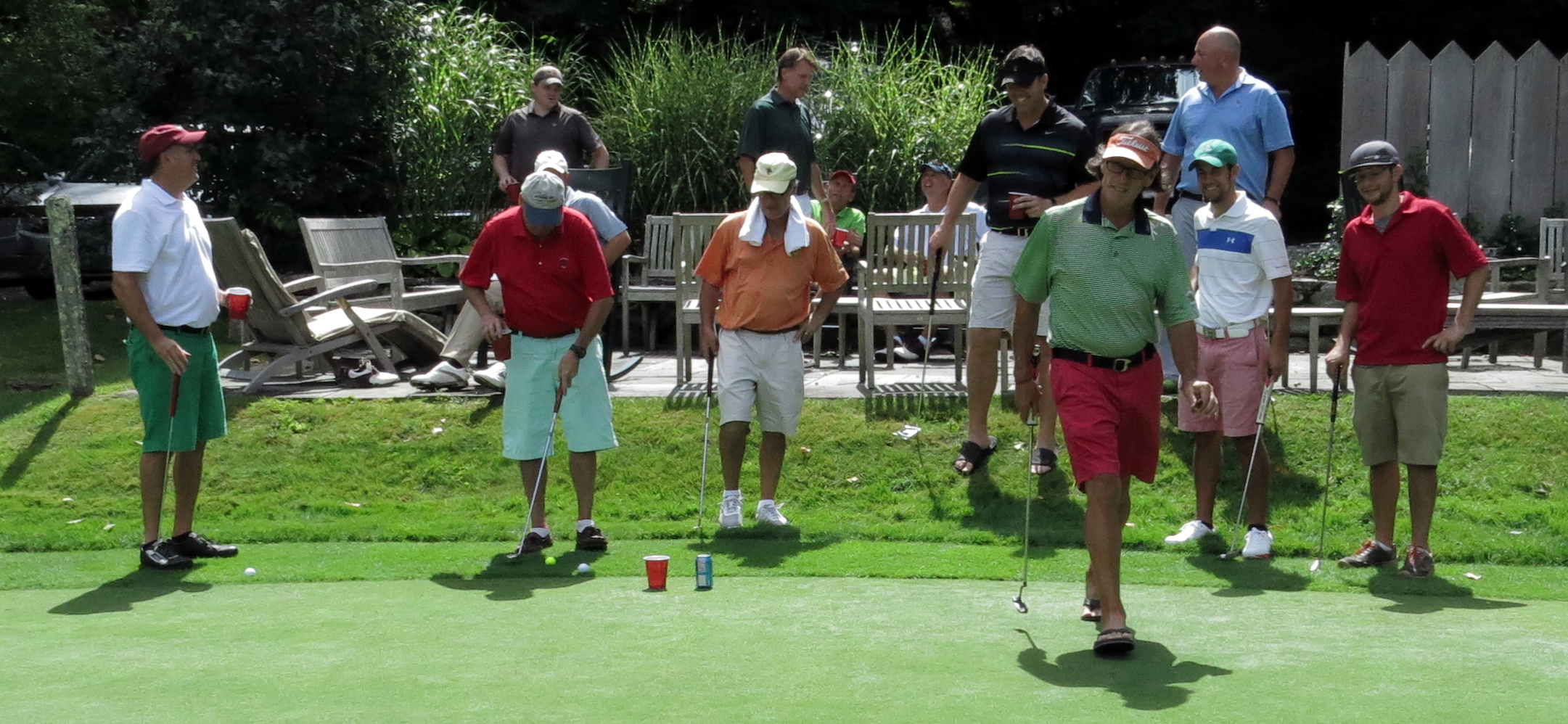
Sunday was a big day for the Sunday Morning Group. First, it was Tony’s turn to bring lunch, and he broke tradition by serving sausages and meatballs (on rolls) instead of cheeseburgers and hotdogs:

tony-lunch

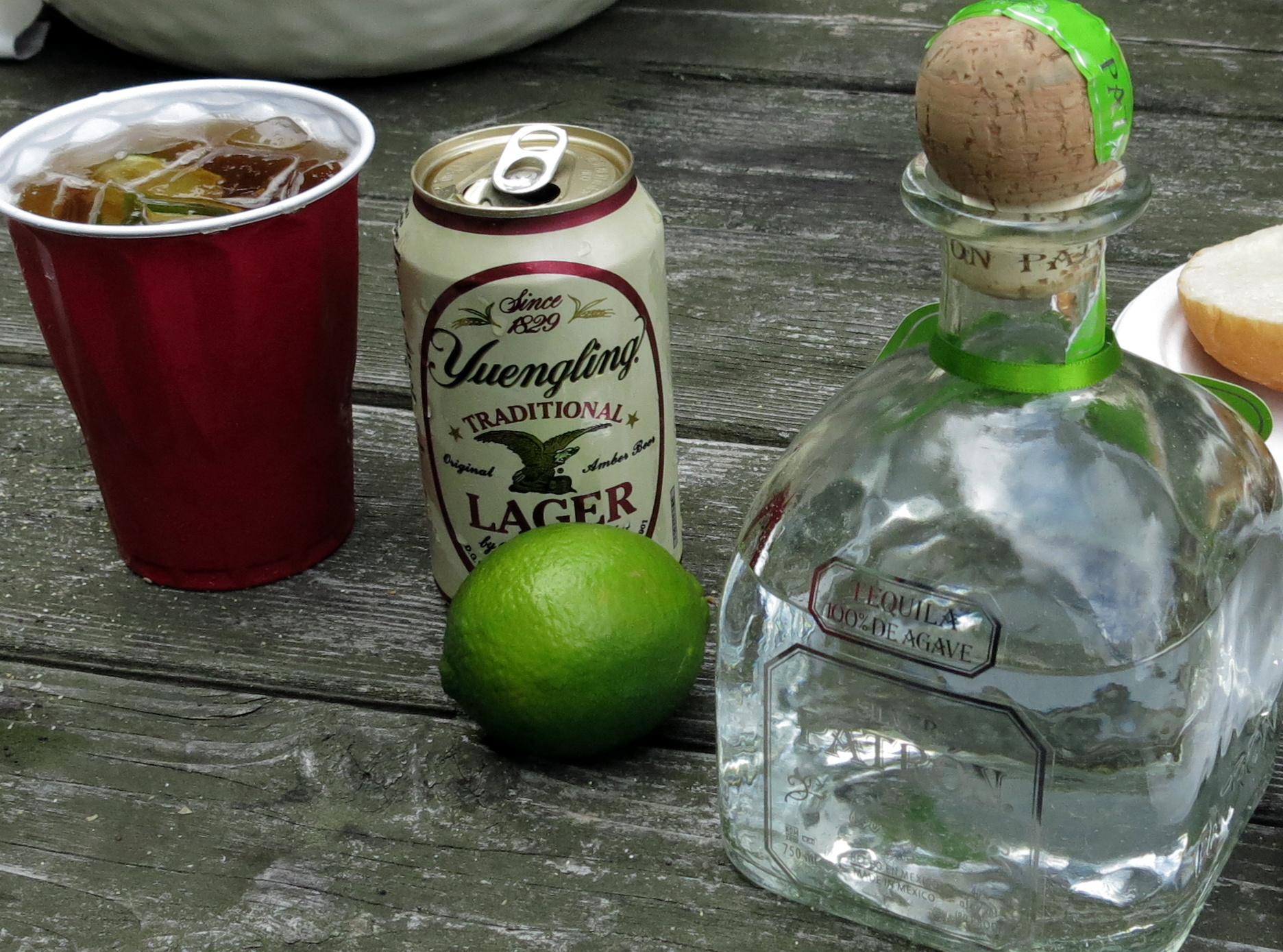
Second, Barney introduced a new beverage, to be known henceforth as the S.M.G. It consists of a can of Yuengling, a shot of Patron Silver tequila, and a wedge of lime, with an optional dash of beer salt:

SMG-ingredients

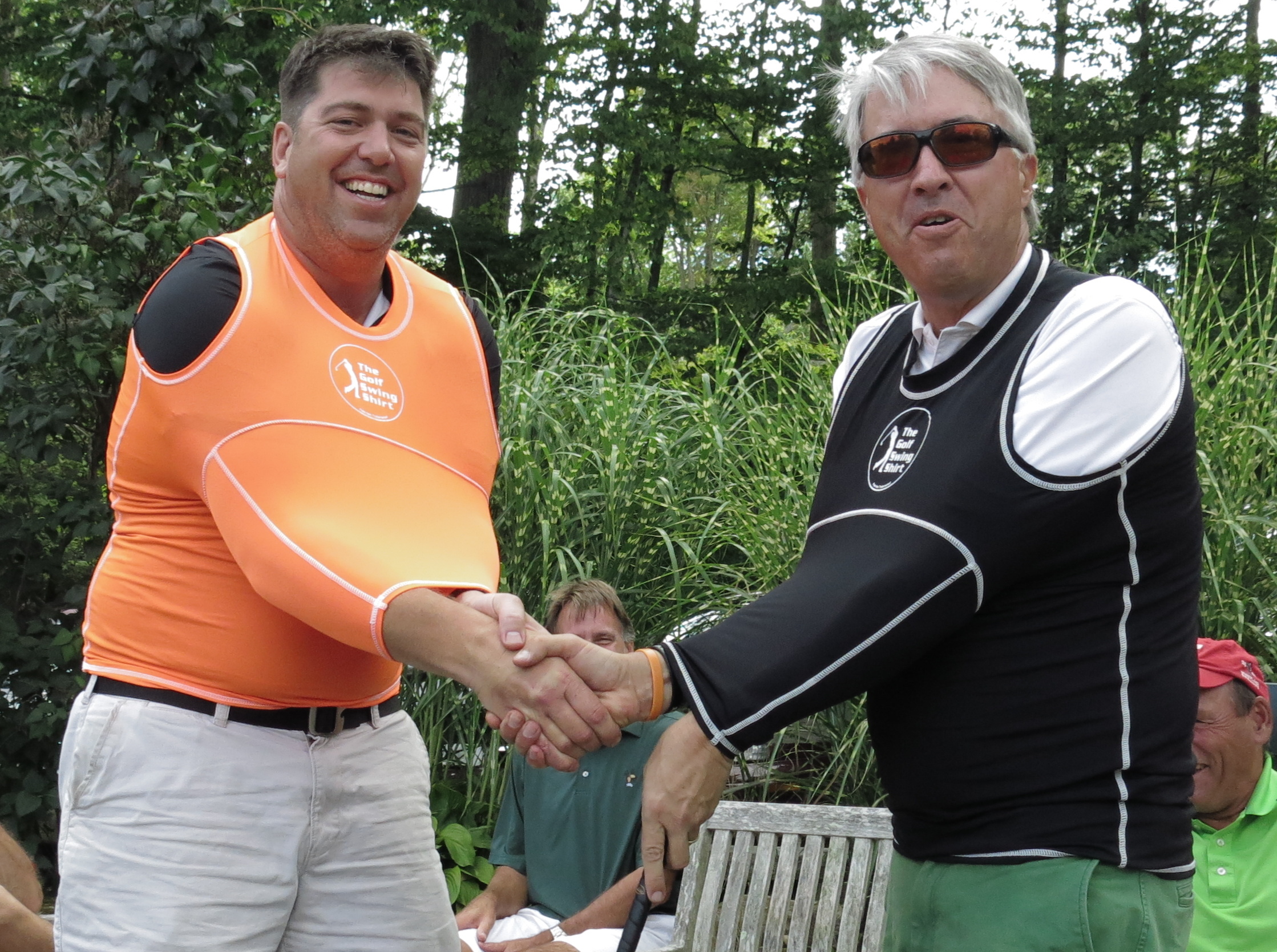
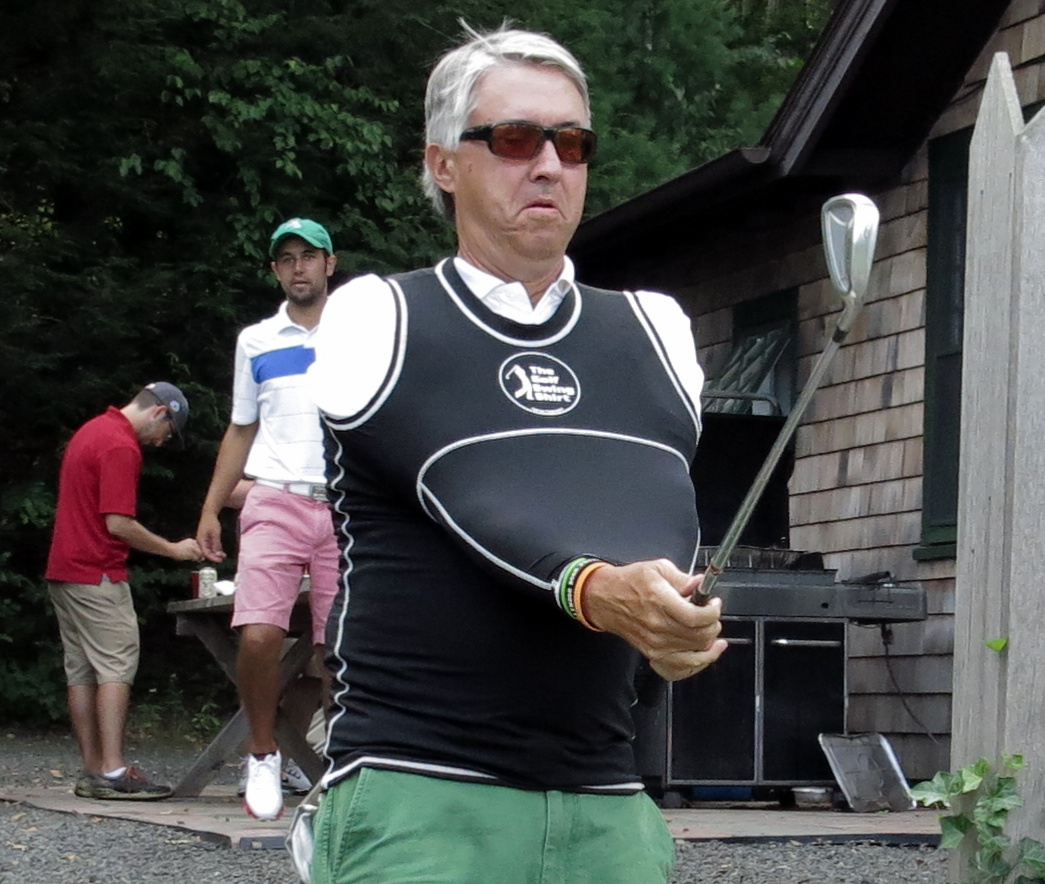
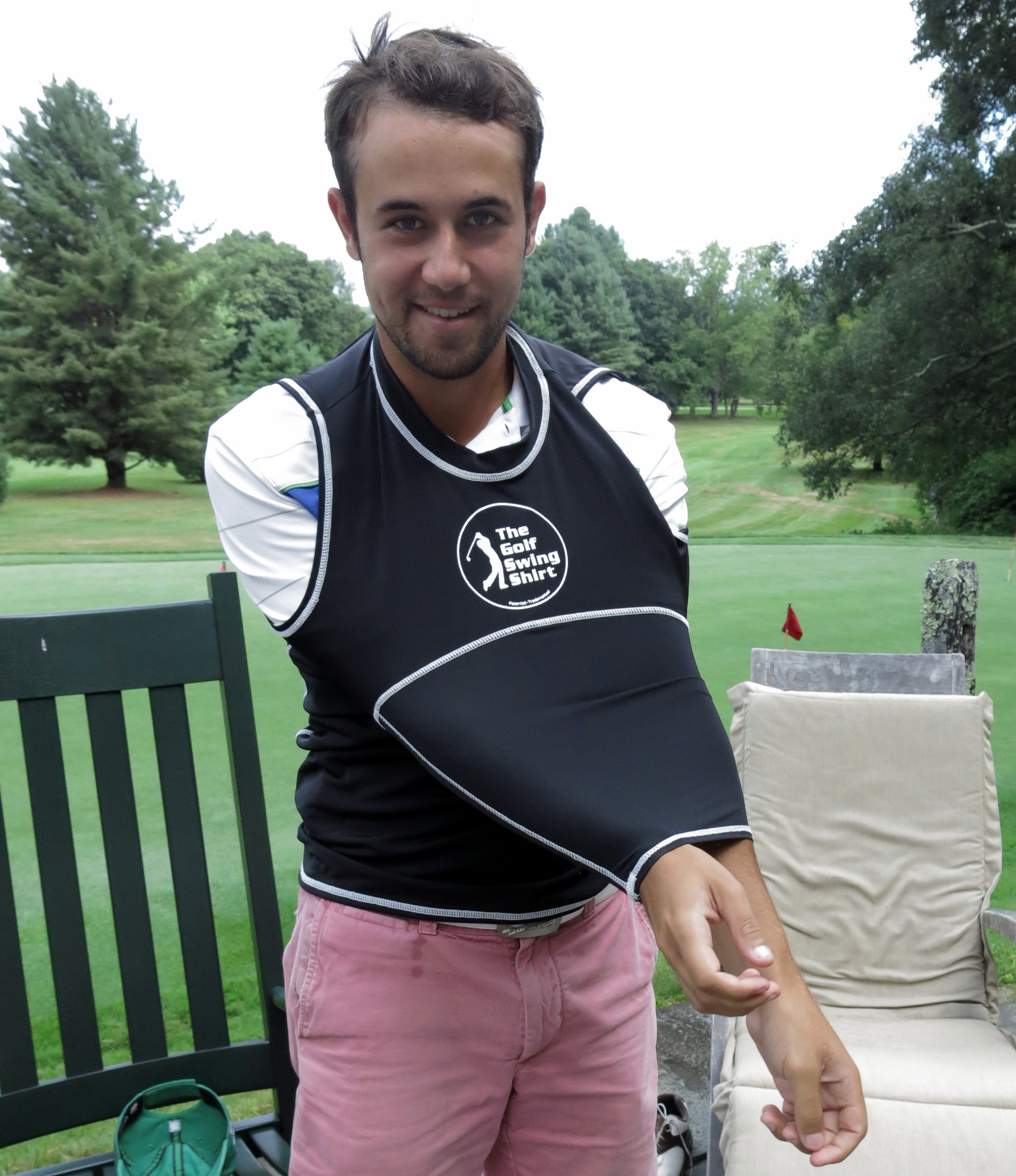
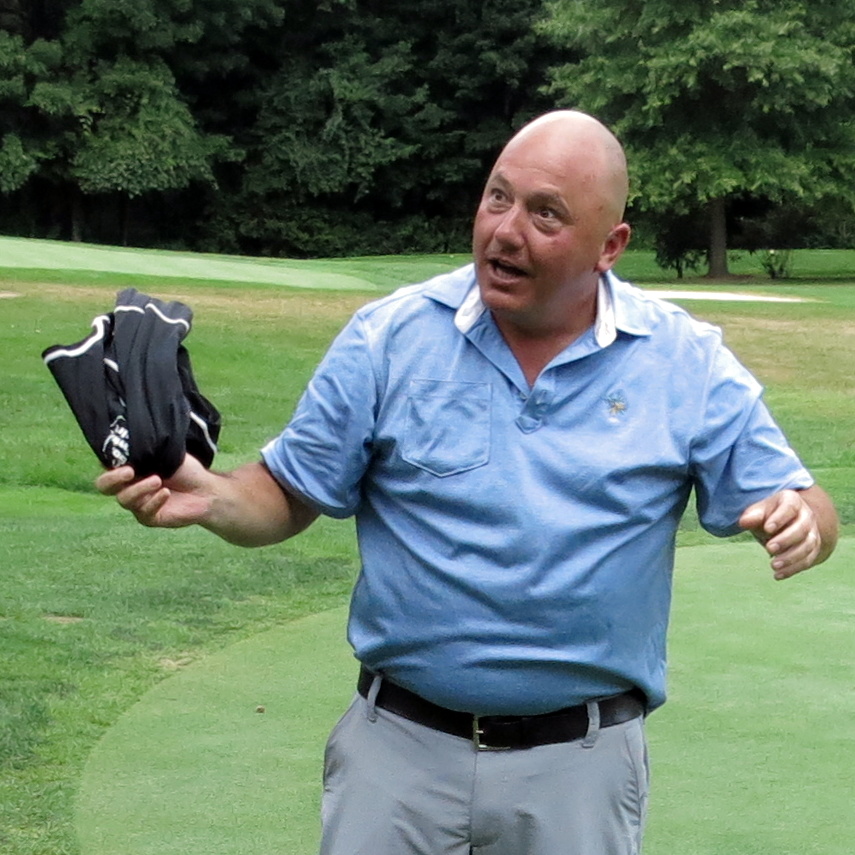
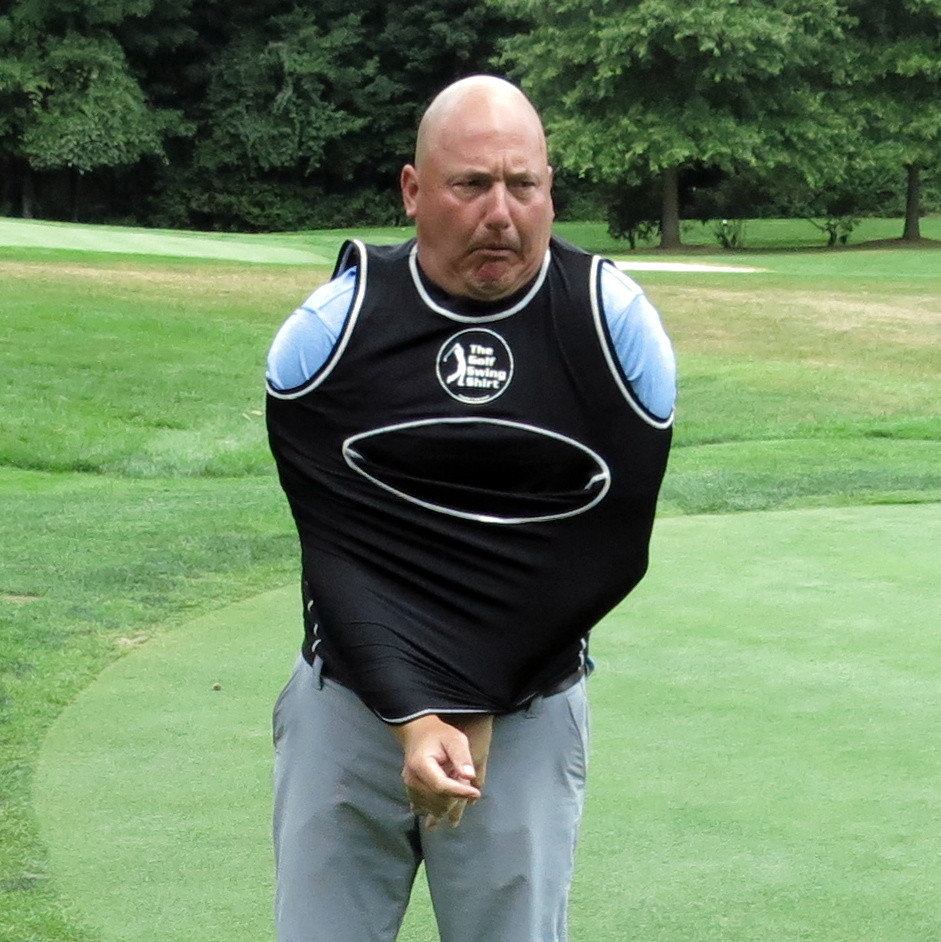
Third, we did some preliminary work on our first infomercial. It’s for a training aid called the Golf Swing Shirt, which Padraig Harrington and Jimmy Ballard have both described as the greatest swing trainer ever invented. The manufacturer sent us some to try, and we gave them a good workout:
Chic-Dave-Swing-Shirt

The purpose of the Swing Shirt is to teach you to stay “connected” as you swing—and it really works. When I tried it in my yard, with a pitching wedge, I hit the ball with such unaccustomed connectedness that I almost took out my wife’s car.

DLO-swing-shirt

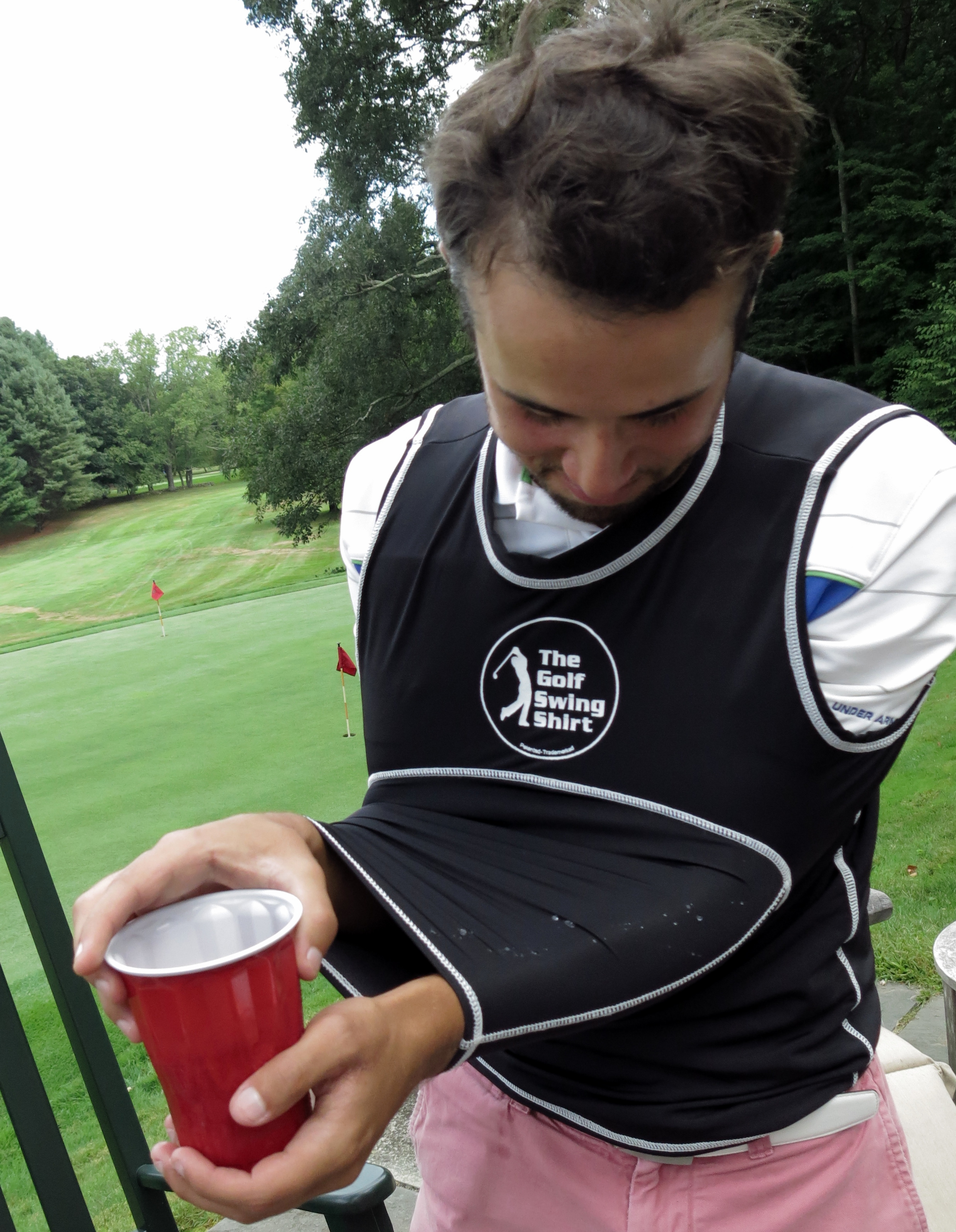
One cool thing about the Swing Shirt is that, while you’re wearing it, you can still hold, and spill, an S.M.G.—as Addison is demonstrating here:

Addison-Swing-Shirt

Addison, incidentally, has had a big year. He competed (with Todd) in the first U.S. Amateur Four-Ball Championship, at the Olympic Club; broke our course record (with a 62); became the first person in the century-plus history of our club to make a hole-in-one on our ninth hole, a par 4; and, almost as an afterthought, won our club championship. We’re terrifically proud of him, because we found him in the woods when he was a baby and raised him ourselves. All he needs now is a job.

Addison-Swing-Shirt-Arms

The star of our Swing Shirt infomercial is Dougie. We picked him because he’s a teacher and, not surprisingly, is good at explaining things.

IMG_0803-002

doug-swing-shirt

Plus, the camera loves him:


Actually, we’re still editing the footage. Here’s some more:

We should have a polished version ready in a few weeks, months, or years. Watch for it on the Golf Channel. Meanwhile, how about that putting contest?

IMG_0817


Golf’s Big Three: Beer, Golf, Beer

beer-mike-jar

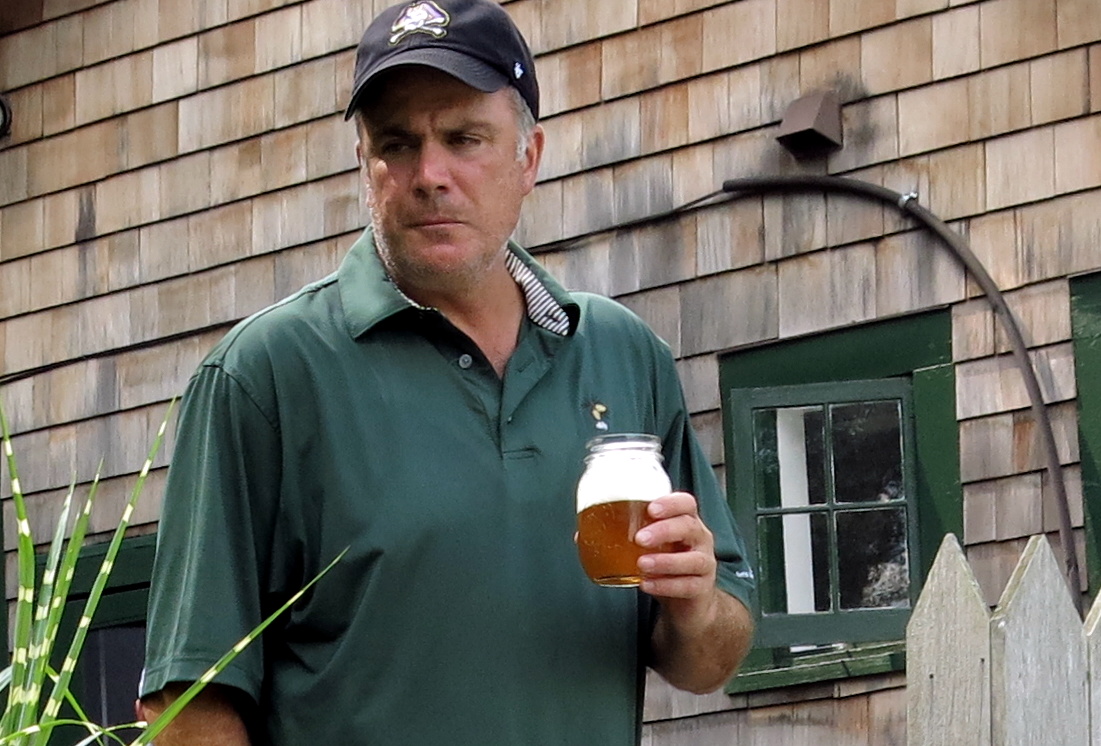
I haven’t had a drink more than ten years, but I’m nevertheless one of the world’s leading experts on the effect of alcohol on the golf swing.I’m the originator of the Beer Draw Hypothesis—the difference between a slice and a draw is a certain number of beers—and the author of a lengthy article on the topic which was published in either a distinguished scientific journal (I’m pretty sure) or Golf Digest. I also happen to be a member of the Sunday Morning Group, an all-male golf-club-within-a-golf-club, which contributed to my early research and has made many significant additions to it in the years since I left the field. Among our resident experts are Mike A., in the photo above, and Klinger and Fritz, at this year’s member-guest, in the photo below:

beer-klinger-fritz

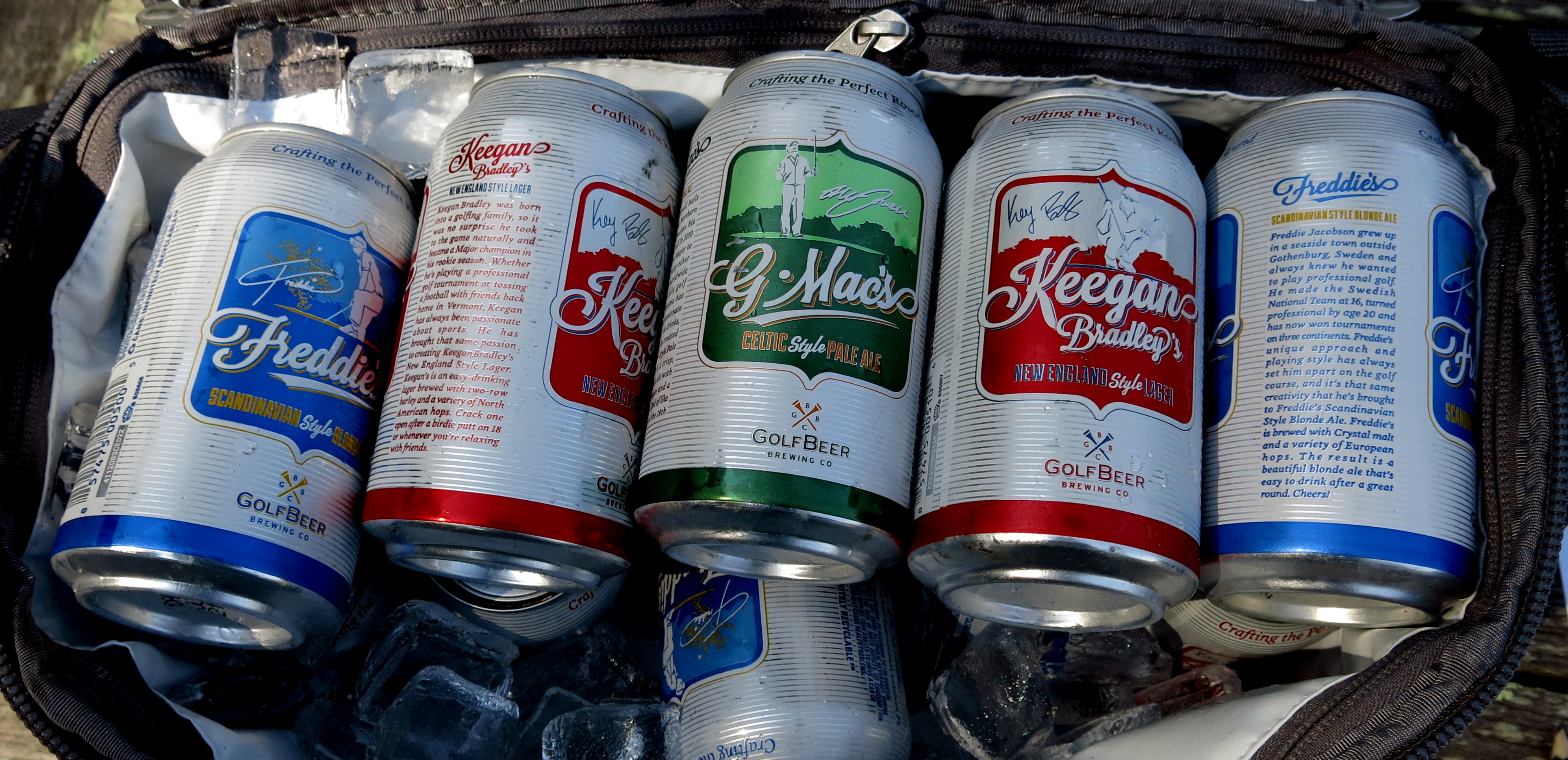
Recently, the Sunday Morning Group had an opportunity to review the products of GolfBeer Brewing Company, which was founded by a threesome of well-known tour players: Keegan Bradley, Freddie Jacobson, and Graeme McDowell. Their slogan is “Crafting the Perfect Round.”

golf-beer-cooler

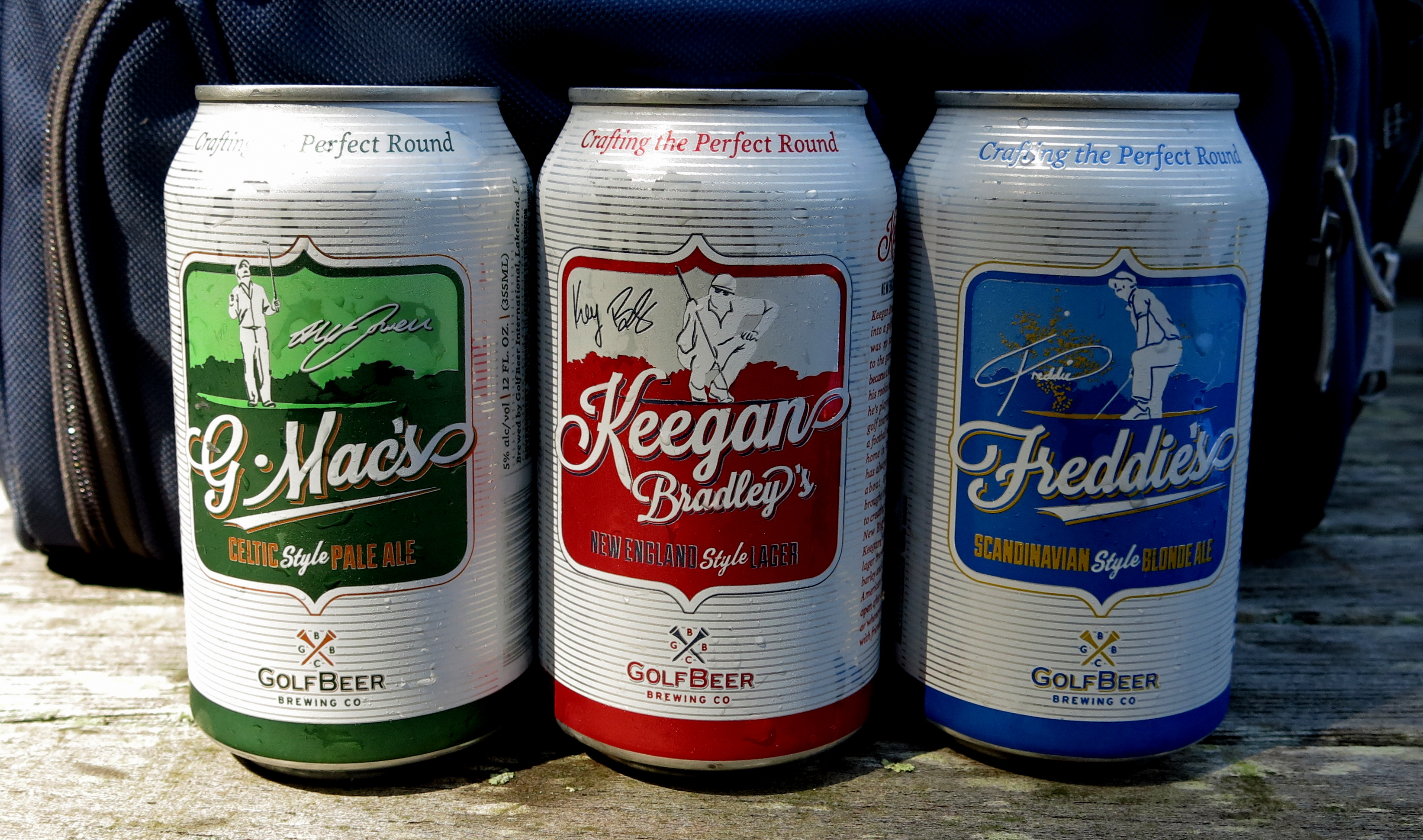
GolfBeer sells three products, tailored to the inborn taste preferences of the founders: a “Scandinavian style” blonde ale called Freddie’s (Jacobson is from Sweden); a “Celtic style” pale ale called G-Mac’s (McDowell is from Northern Ireland); and a “New England style” lager called Keegan Bradley’s (would this be an appropriate place to ask Bradley to abandon his bird-looking-for-a-worm pre-shot routine?).

beer-hacker-reese

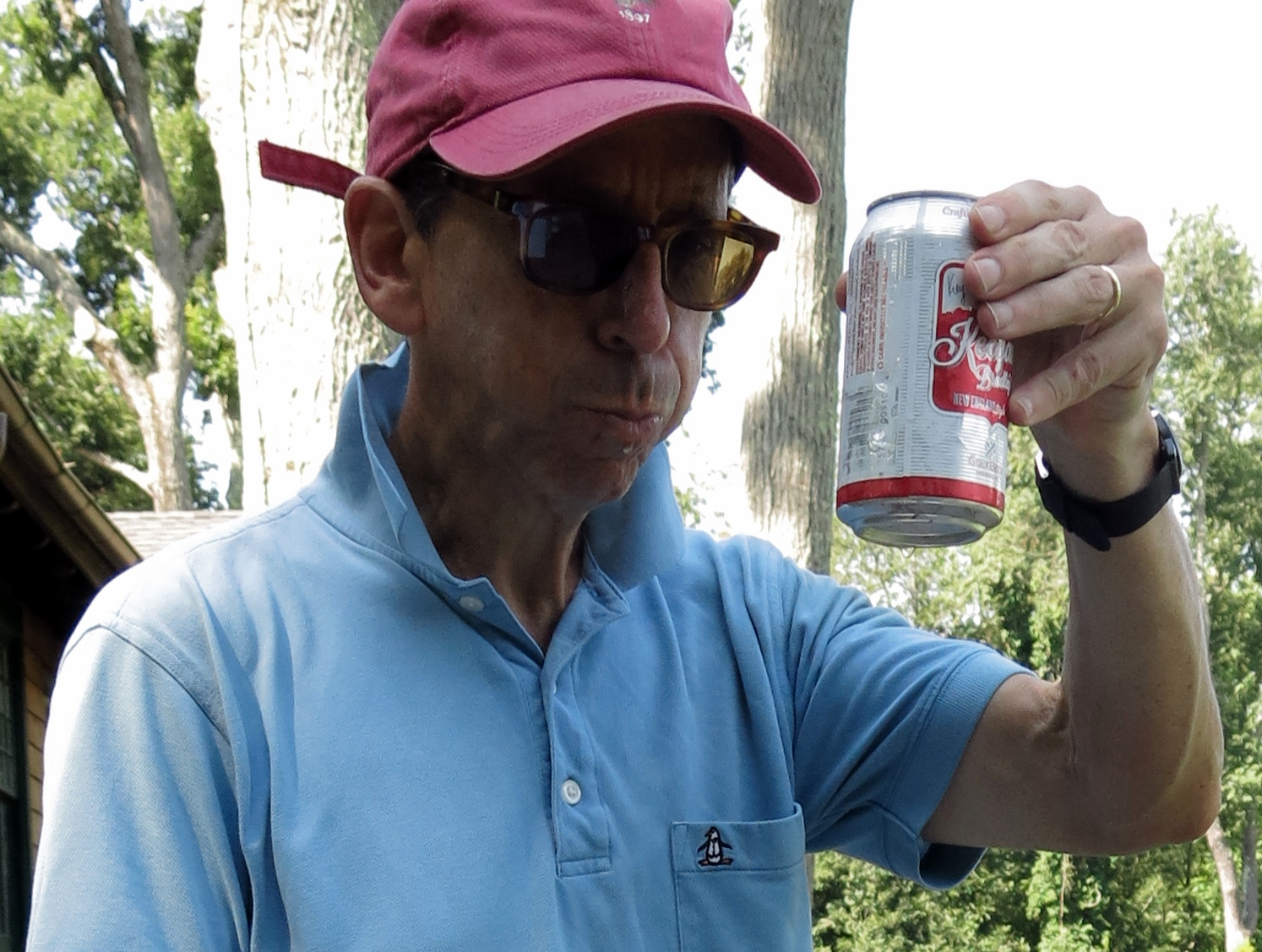
After golf on a recent Sunday, the boys tried all three. The verdict: big thumbs-up all around, (although Howard wasn’t fond of Keegan Bradley’s).

beer-howard-bradley

Sad to say, GolfBeer isn’t available in our area yet. We had to import our samples from Florida, where the company is based, and to be on the safe side we had them shipped as “salad dressing.” But we hope to be able to buy it here soon—ideally, in bulk, so that we can load it into our clubhouse kegerators.

beer-fritz

golf-beer-trio

The Other Royal & Ancient Golf Club — This One in the United States

chappyscreenshot

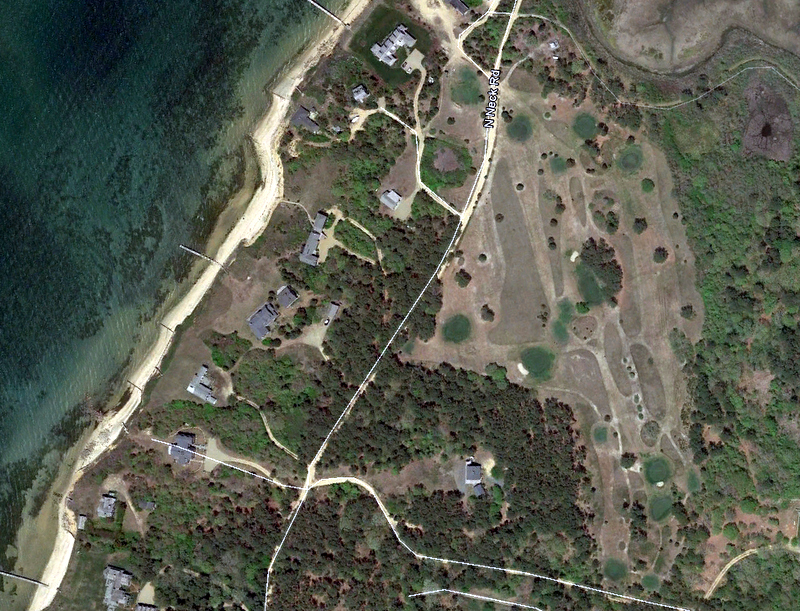
My family and I spend time on Martha’s Vineyard every summer, and, like the President, I usually manage to sneak away a couple of times to play golf. This year, I played a course I’d never heard of, despite the fact that it’s been around, in one form or another, for almost a hundred and thirty years. It’s called the Royal & Ancient Chappaquiddick Links.

chappylogosquare

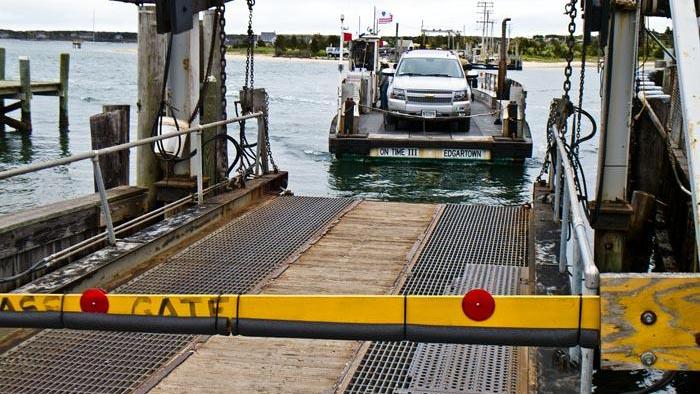
To get to it, you first have to take the tiny car ferry from Edgartown to Chappaquiddick Island:

chappyferry

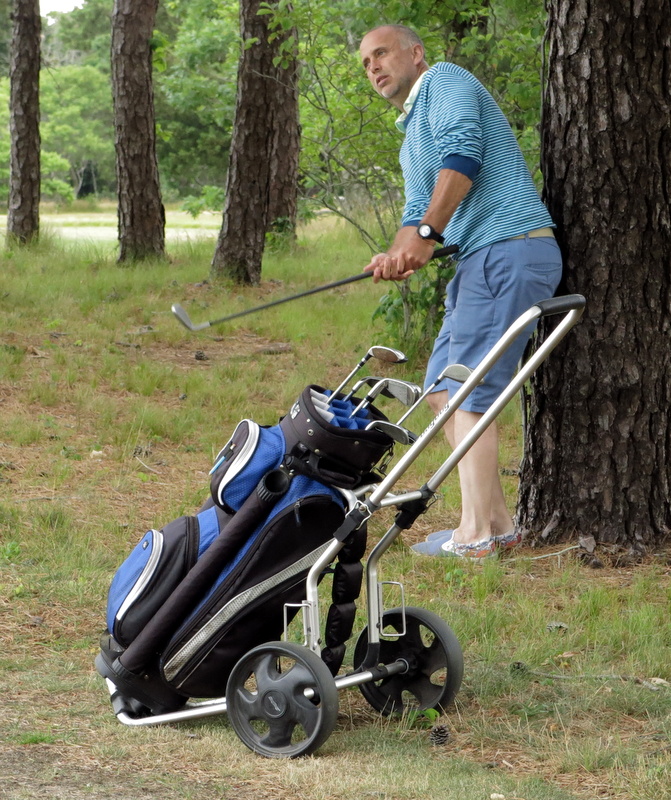
Then, for ten minutes or so, you have to do whatever your GPS tells you to do. I made the trip with my friends Luke Morgan and David Peek. Our fourth was Brad Woodger, the manager and superintendent, whose great-grandfather Frank Marshall created (and named) the course in 1887. Marshall got the idea while hiking on Scottish and Irish linksland during a backpacking trip to Europe. Here’s Woodger during our round:

bradwoodger

He told me:

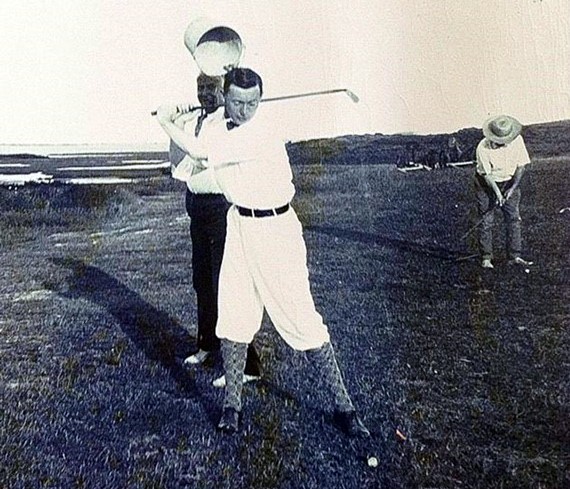
My great-grandfather eventually became a dentist for the Boston Opera, but before settling into his career he visited Chappy every summer to fish and sail and muck about. He and friends and family laid out 24 holes on the island’s North Neck, and by 1905 the course was functional and frequented by a large cast of Boston area characters.

ChappyOldSwing

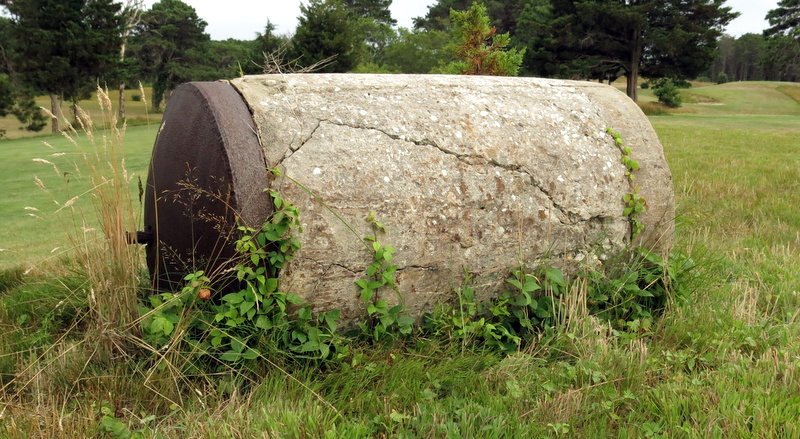
Sheep grazed everywhere, and the Links required little maintenance until the sheep decided to graze the greens, too. For a brief period, Frank changed the putting surfaces to sand, but the sand turned out to be harder to maintain than native fescue. Here’s an old concrete green roller from the early years:

greenroller

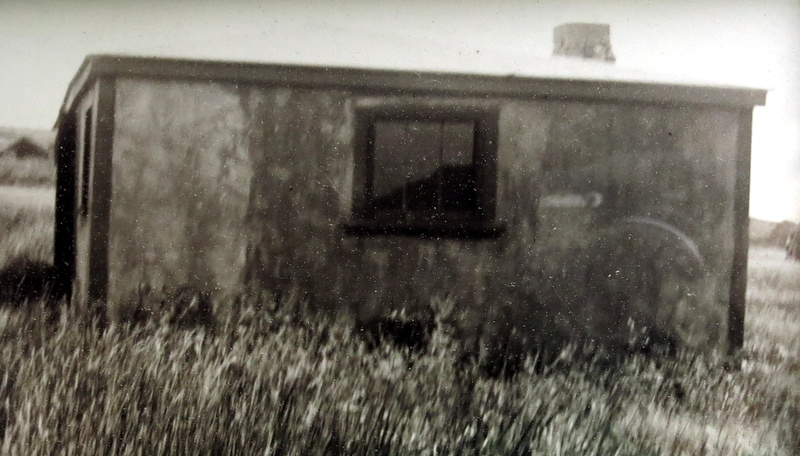
“In 1910, Frank added a tennis court, a clubhouse, and a Tea Barn. The Tea Barn was eventually expanded to serve as a year-round home for Frank’s daughter Mary. The clubhouse became storage for my clothes. Here’s the original clubhouse:

oldchappyclubhouse

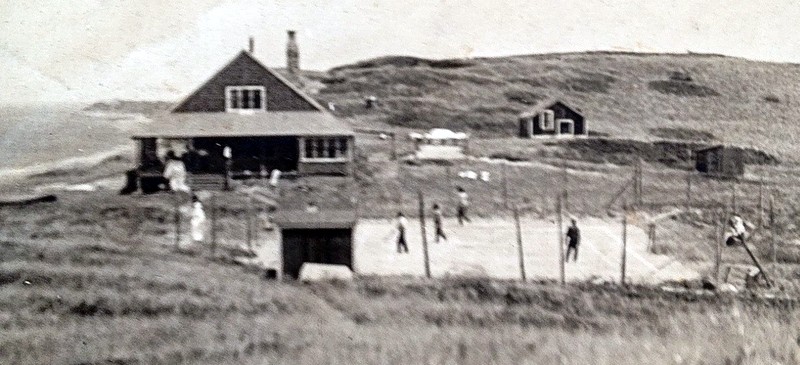
“And here’s the tennis court:

ChappyOld

“The Links went dormant during the Depression and the Second World War, and they became overgrown with Chappy’s newest residents: scrub oak and pitch pine. Frank’s son and his wife reclaimed seven holes in the mid-1950s. In 1986, the least likely or qualified (but most available) candidate, me, took over. In 2008, along with the financial support of George Bennett, and the partnership of Kim Bennett and her father Bob (no relation to George), we renovated and expanded the course to nine holes.”

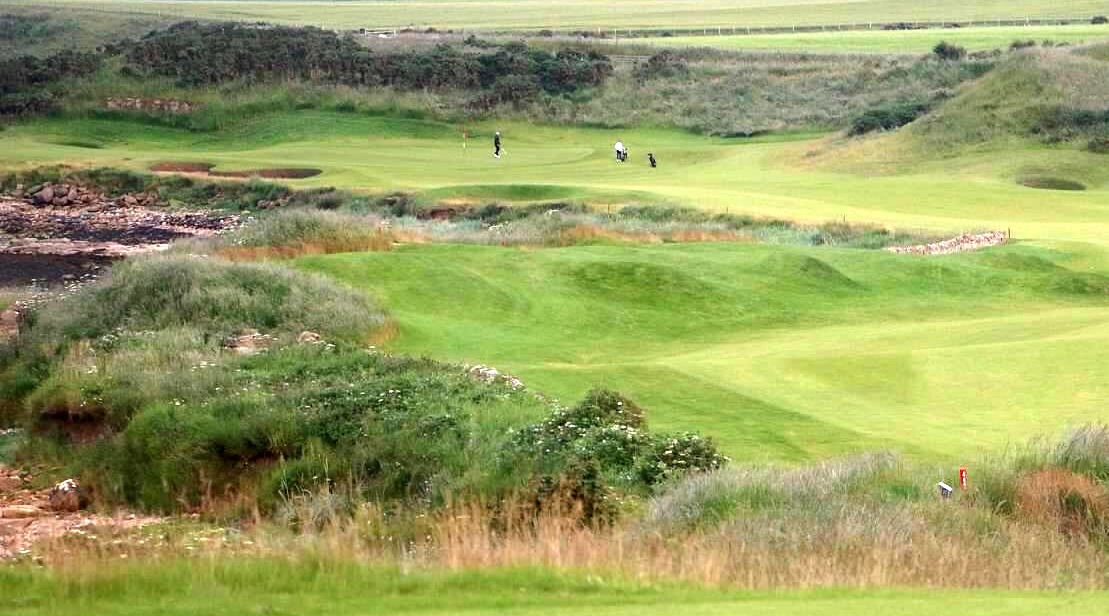
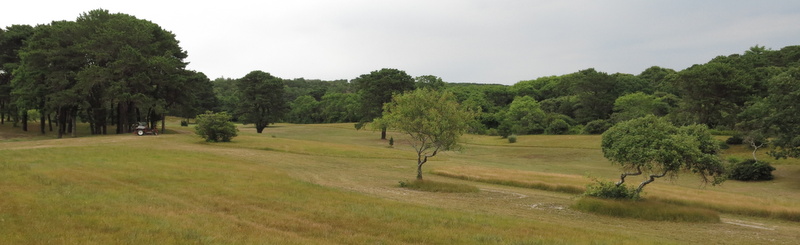
The course is just 1,325 yards long, but don’t let that fool you, because it’s a gas to play. Here’s what it looks like on the ground:

chappyranda

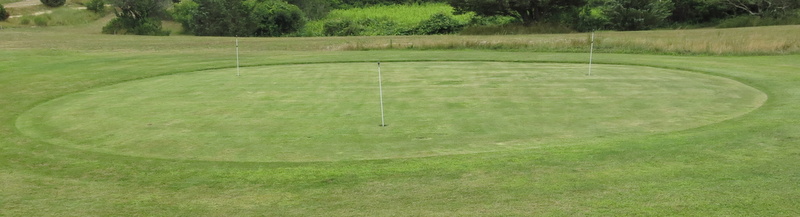
And here’s the practice green:

chappyRAgreen

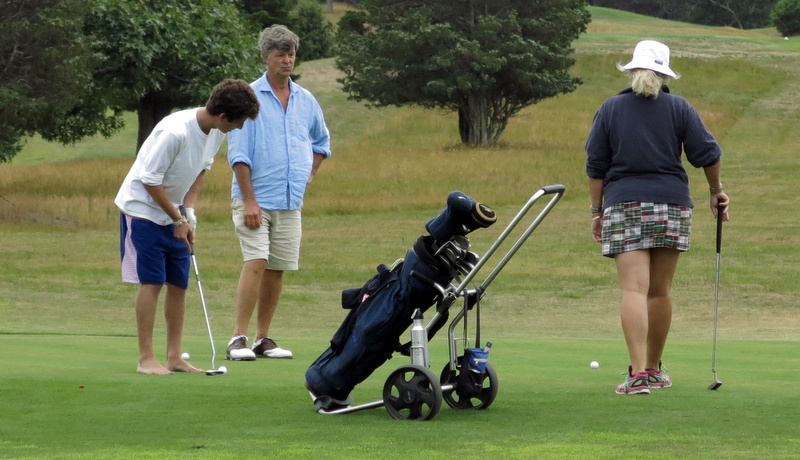
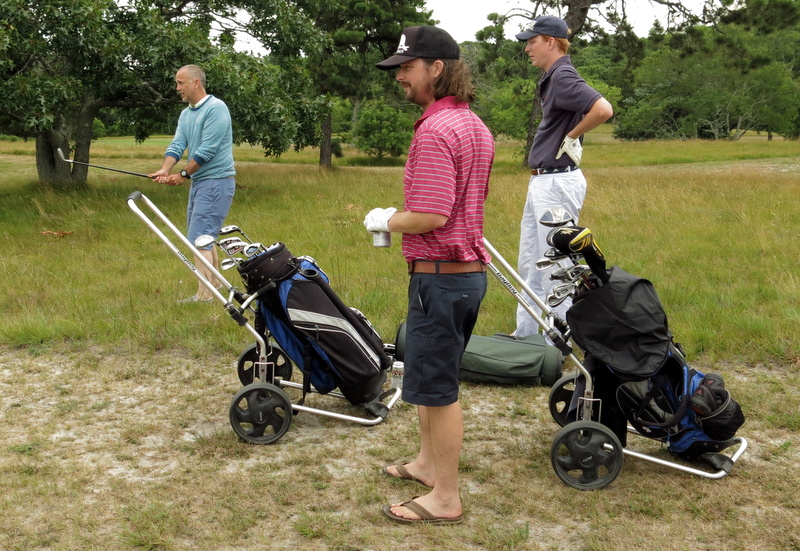
The most famous people ever to have played the R & A, Woodger told us, are probably the father and son of the musician John Cougar Mellencamp. They weren’t there on the day we visited, but these people were:

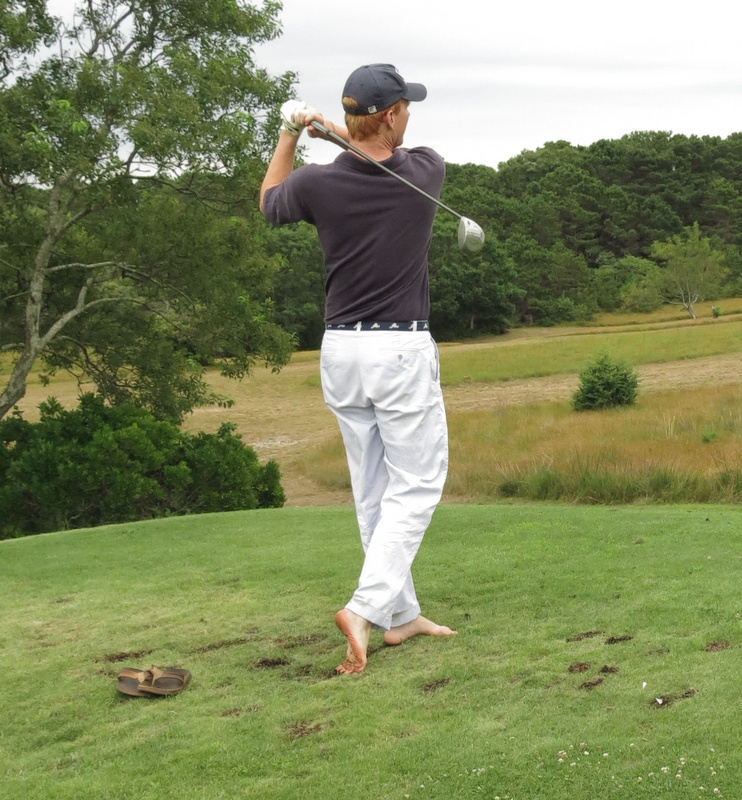
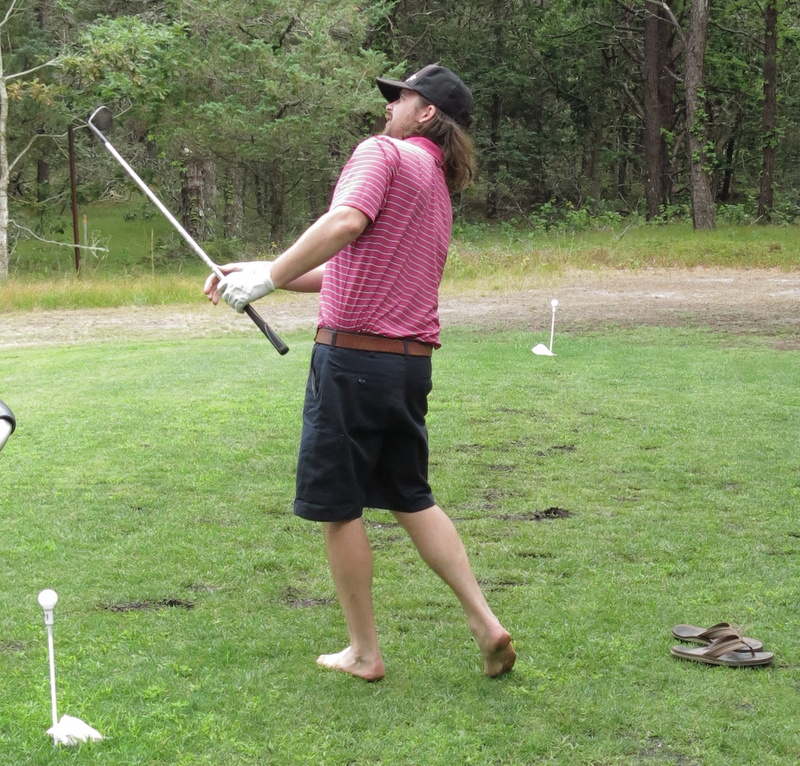
otherplayers

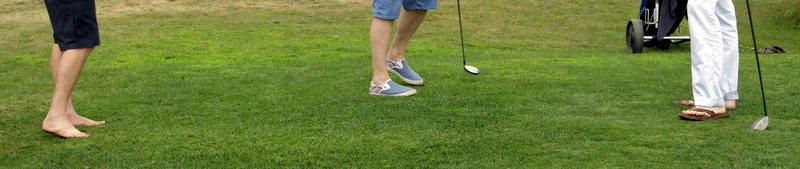
They had roughly the same idea about appropriate footwear that we did:

golfshoeselection

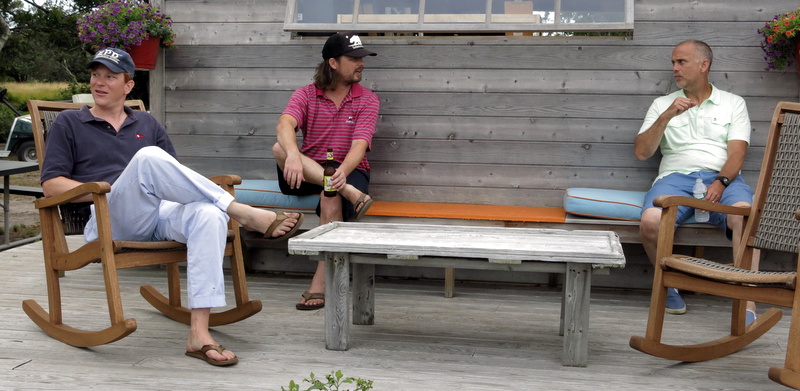
After our round, we had a beer and a Diet Coke on the back porch of the current clubhouse. If Luke and David seem eerily familiar to you, it could be because you are one of the vanishingly small number of people who, in 2013, watched the the short-lived ABC Family reality-TV show The Vineyard, in which they appeared as extras. That’s Luke on the left and David in the middle:

beerclubhouseThe beer and Diet Coke, along with a few snacks, were kept in a small refrigerator inside the clubhouse. Hanging above the refrigerator was a list of frequently asked questions about it:

beerfaq

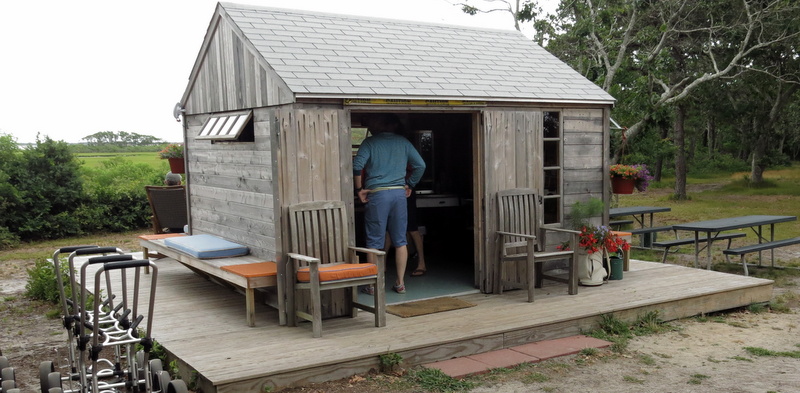
A memorable day. Here’s the front of the clubhouse. Only so many people can stand inside it at one time. If you have sharp eyes and aren’t reading this on your phone, you may be able to make out the fridge, through the door. It’s over on the right:

clubhousefront

And here are some other photos:

ontheteechappy

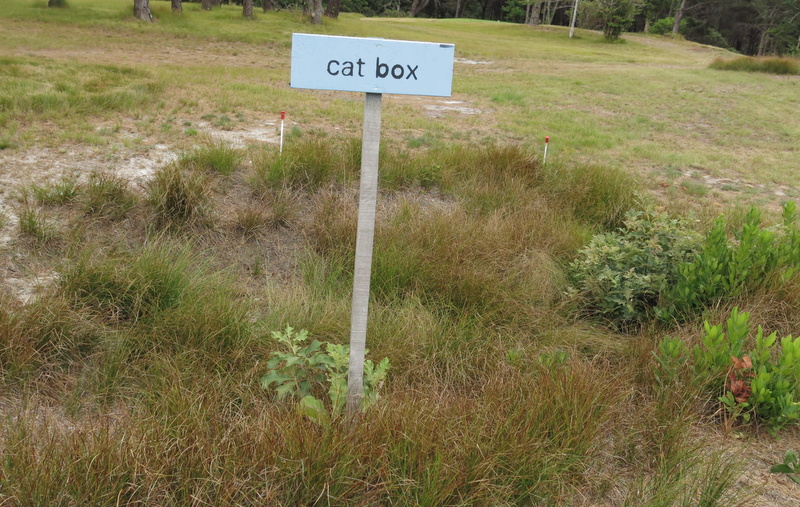
catboxbhappy

Those little poles on the tee box in the photo above are lights for night golf.

lukemorgan

davidpeek

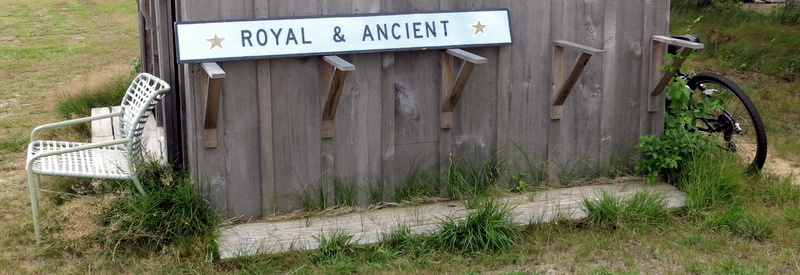
randasign

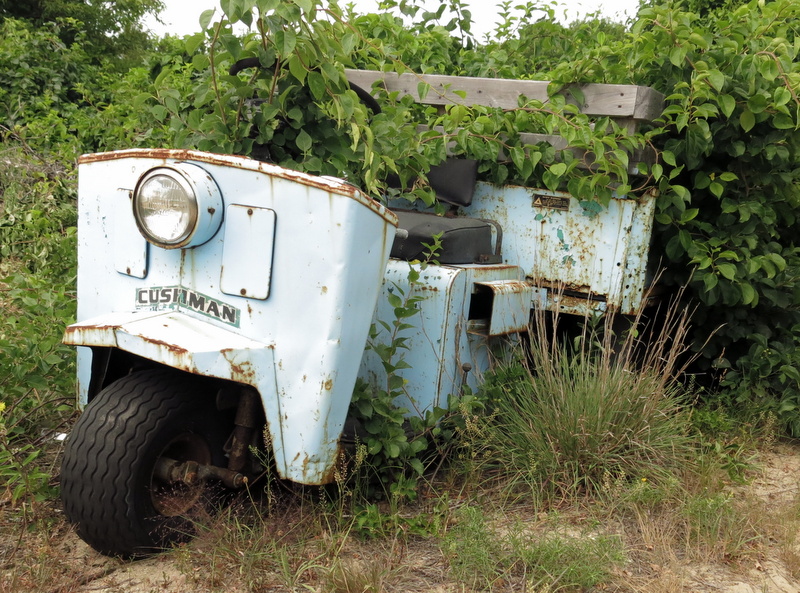
I’m not sure what this is, or was:

abandonedthing