Best New Shoes, Plus Good News for Sober Golfers

True Linkswear, the golf-shoe company for which I am an unpaid shill, recently sent me what must be my tenth or twelfth pair, called True Motion:
truemotion

They are now not only my favorite golf shoes but also just about the only shoes I ever wear—although if I had to go to a funeral or a wedding I’d wear an older (and, sadly, recently discontinued) model, my black-and-dark-gray True Lyt Drys:

dloshoe

This latest pair was accompanied by a moral quandary: a $50 gift card, which I was instructed, by the company’s publicists, to spend on “some range buckets or a round of 9 on us.” Somehow, accepting a free pair of golf shoes from a golf-shoe company didn’t strike me as an ethical problem but accepting a (less valuable) gift card did. So I decided to square things up with my conscience by donating the value of the gift card to a golf-related charitable organization. The one I picked is SoberGolf:

sobergolf

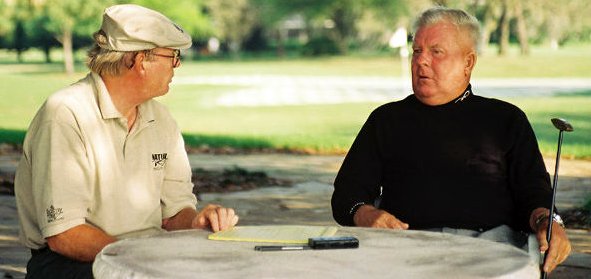
I learned about SoberGolf from Peter Fox, who was a founding executive producer at ESPN and the producer of Golf Digest’s video Moe Norman & Natural Golf (see photo at the bottom of this post). He told me, “This May 21 will mark 28 years since my last drink, enabling me over time to shoot my age, become the senior club champion at Hillandale Golf Course (in Durham, North Carolina), and create SoberGolf, a manifestation of the realization that for some of us golf is a place where our sobriety is enhanced.” Here he is with the trophy he received for winning that club championship:

Peter Fox Senior Club Champ Hillandale Golf Club (2)

And here’s more of Peter’s story:

There’s little doubt in my mind that golf helped me get sober. There’s no doubt golf helps me stay sober. My hands used to tremble on the first tee and when I faced short putts. The quivers would stop with three or four fingers of fermented potatoes. I read and researched all I could find on the yips—the dreaded affliction that shortened the careers of Hogan and Miller. I watched Watson overcome them and determined that I could, too. Then I saw the tremors spread to marking my scorecard and golf ball. 

The awakening came early one Saturday morning on the fifth tee at my club during a pretty healthy money match. I bent to tee my ball, fumbled it, chased it, lost my balance, and body-surfed over the grass embankment.

That incident ignited another search—this time a soul search. It took a while, but I came to know and believe I am powerless over alcohol.  And by that time my off-course life was in a shambles. As I write this, nearing the end of my third decade of sobriety, I am grateful to golf for triggering an arduous yet rewarding trek toward sanity. And I am grateful to golf for introducing me to my wife, the only significant woman in my life to never have seen me drink.
7576110-R1-026-012

There’s much more on the website—including a mailing list that circulates information about alcohol-free golf trips and other events. And if you want to contact Peter directly you can do that by emailing peter@sobergolf.org.
Golf in Morocco: Silver Tongs for the King’s Cigarette

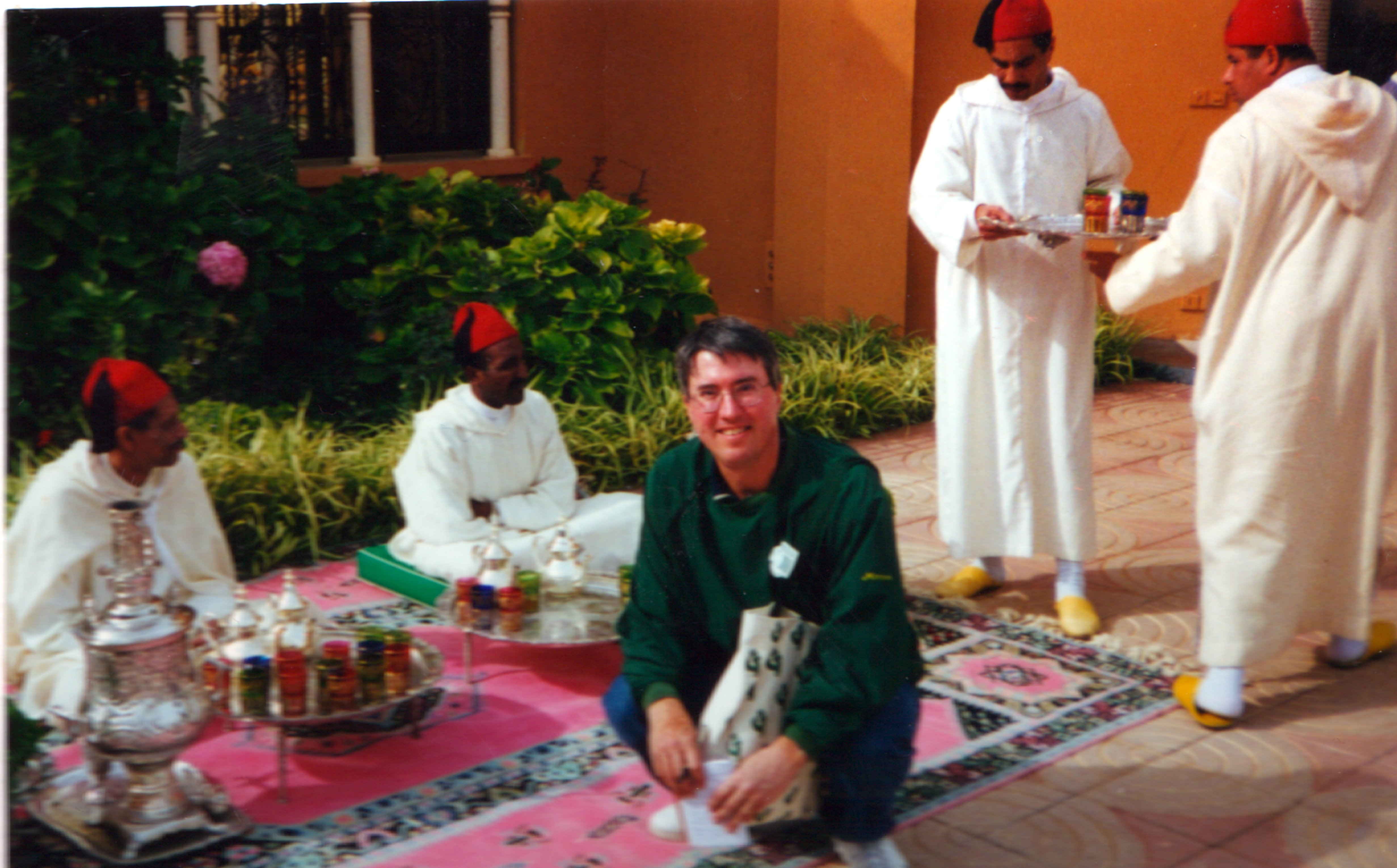
This past week, the European Tour was in Morocco, for the Hassan II Trophy. I attended that tournament in 2000, and I liked Morocco so much that, a few months later, I went back, with my wife and our two children. The Trophy didn’t become an official tour event until 2010, and when I was there it was played on a different course, but the broadcast of this year’s event brought back a lot of happy memories. Here I am having tea at the royal stables, in Bouznika:

dlomoroccotea2000

The tournament is named for (and was founded by) King Hassan II, who ruled Morocco from 1961 until his death, in 1999—the year before I visited. Hassan was a passionate golfer. He employed a squadron of caddies (one of whom was responsible for gripping the royal cigarette with a pair of silver tongs while the King swung his club), and shot mediocre scores that easily could have been worse (because kings are not obligated to play from bad lies or extricate themselves from bunkers). Hassan viewed golf not merely as a palliative to the tedium of absolute power but also as a potential bridge between his country and the United States—then, as now, the world’s most enticing source of exportable prosperity.

HasasanIIgolf-001

Hassan took up golf during the presidency of Dwight Eisenhower, whose widely chronicled enthusiasm had imbued the game with sort of hokey Free World allure—as did the contemporaneous rise of Arnold Palmer, who was golf’s first television star, and, a little later, the emergence of Jack Nicklaus, who turned pro the year of Hassan’s coronation.

morocco-lgflag (1)

The King was not a natural player, however, and by the mid-1960s he was looking for an American instructor to help him bring his scores out of the triple digits. He settled on Claude Harmon, who had won the Masters in 1948 and was the head pro at Winged Foot. Harmon made numerous visits to Morocco in the late sixties and early seventies, in return for which the King gave him, among other things, jeweled daggers, rugs, swords, a cigar box stuffed with cash and a Lincoln Continental Mark III. Harmon eventually moved his family to Rabat. In the early seventies, his eldest son, Butch—later the teacher of Tiger Woods—served as the head pro at Royal Dar es Salaam Golf Club, where the Trophy was held in 2000.

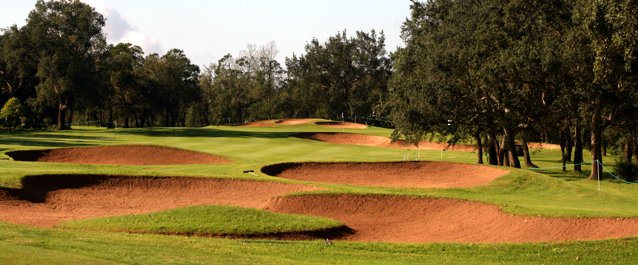
Dar-Es-Salaam-Rabat

During the tournament’s formative years, Hassan II had concerns unrelated to golf. In 1971, his forty-second birthday party was crashed by more than a thousand rebellious soldiers; they killed nearly a hundred guests before the King, who had hidden in a bathroom during the worst of the shooting, effected a change of heart in one of the revolt’s commanders by looking him in the eye and reciting the first verse of the Koran. (The rebel knelt and kissed his sovereign’s hand.) The following year, the King’s plane was attacked in the air by four F-5 fighters from his own Air Force. One of the plane’s engines was destroyed, but it managed to land in Rabat—where the rebels continued to strafe it until the King grabbed his plane’s radio and shouted, “Stop firing! The tyrant is dead!” Both incidents were followed by the inevitable bureaucratic shufflings and summary executions. Then the King went back to working on his game.

To be continued.

reaganhassan


Making Awesome Golf Stuff Even Awesomer

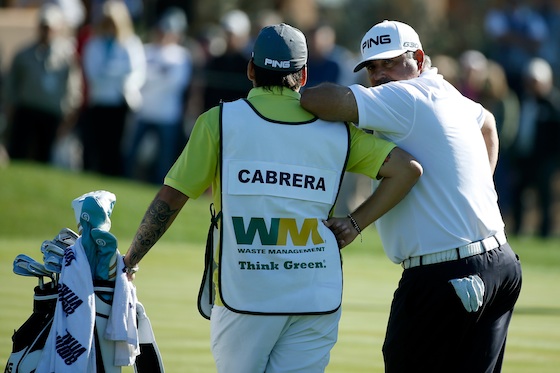
Waste Management Phoenix Open - Final Round

A group of professional caddies is suing the PGA Tour for requiring them to wear bibs bearing the logos of companies that pay fees to the tour but not to the caddies—and I hope they win, because it’s true, as one sportswriter said, that the tour is forcing the caddies to serve as “unpaid human billboards.” It’s a good thing they didn’t ask me to represent them in their lawsuit, though, because my own first reaction would have been “Wow! Free caddie bibs!” My friends and I not only happily wear logo-covered golf stuff that nobody pays us to wear; we even spend money of our own to add additional logos to our already-logo-covered stuff, the better to emulate Jim “5-Hour Energy-and-Web.com-plus-SunGard-Financial-among-many-other-companies” Furyk and his fellow tour members. You can read more at this blog’s official home, on the Golf Digest website. And if you “subscribe” to myusualgame.com, by filling in your email address in the blank on the right side of this page, you’ll be notified every time I post something new. And, if you’re willing to wait a month or so, you can find complete versions of all my old posts on this site, too, by paging down until you reach them.

IMG7602001

Nine Holes With a Mysterious Stranger, Plus Losing on Purpose

Dayton Olson was a talented amateur who turned pro in 1965. He played in one PGA Tour event and one Champions Tour event—the 1983 U.S. Senior Open, at Hazeltine—and made the cut in both. He also won the 1963 Manitoba Open, a PGA Tour Canada tournament now known as the Players Cup. He owned driving ranges in Minnesota, and died in 2011.

daytonolson

Recently, his son Mike, a reader in Oregon (and a talented amateur himself, with a lifetime low handicap of plus-2) wrote with some reminiscences:

Winning the Manitoba Open got my dad a ten-year exemption. We lived in Minnetonka, and every summer we would go up to Winnipeg for a little vacation, and my dad would play in the tournament. When I was old enough, I would caddie for him, and he would let me bring my clubs. I played with him during a practice round before one of the Opens, and at about five in the evening, when we were on the tenth tee, this guy comes walking around some shrubs and asks if he can join us. I thought he was a nut, or an old hacker, but he and my dad knew each other, and my dad whispered, “Just watch him.” He teed his ball on a golf pencil, and I was thinking I don’t want to play with this clown—but then he striped it 260 down the middle. He played very fast, and would often talk while he was swinging, but he kept hitting near-perfect shots. It was intimidating for me—but he was very friendly, and when I would hit one of my few good shots he would say, “There ya go, kid—good one.” He seemed like he was just fooling around, and he took zero time, especially for putts, which he didn’t even line up, but he still shot about two-under for nine holes.

Moesmiling The stranger was the Canadian golf legend Moe Norman (photo above), who, among numerous other accomplishments, had won the Manitoba Open three years in a row, in 1965-67. Olson saw him again at the same tournament in 1971, when he was fifteen:

I caddied for my dad, and he did well in the tournament, and when he was finished we left his bag by the practice green and he went into the clubhouse. Moe was leading, so I stayed. He ended up in a tie, and 60 or 70 of us went out to watch the playoff. On the second hole, Moe has about a 40-footer for birdie, and he lags it up, like, two inches from the hole, and the other player, a young guy from Florida, says “Pick it up” —and Moe scoops up the ball with his putter. As they’re walking to the next tee, some tournament officials come running up, and they’re telling Moe he can’t pick up his ball like that, because this is stroke play, not match play. And Moe can’t believe it. He says, “He gave me the putt—are you guys deaf?” And then, “Well, this sure is a bunch of crap. I’m never coming back here. Winnipeg is a bush town anyway.” And he starts walking off the course.

The other player was John Elliott, Jr., then in his early twenties. He had served in the Army in Vietnam, and had won the Bronze Star. He was married to Sandra Post, a Canadian pro, who won eight times on the LPGA Tour, including the 1968 LPGA Championship. (The marriage didn’t last.) Today, Elliott is a teaching pro in Florida and an occasional Golf Digest contributor.

April 07-Your Game, : How to Hit Practice Shots

Elliott told the tournament officials that he was responsible for Norman’s violation, and that he didn’t want to win because of a mistake that he had caused. The gallery and the tournament sponsor got involved, too, and, in the end, the officials decided to let the playoff continue. Back to Olson:

They ran after Moe, and begged him to come back. You could tell he was really angry, and that he didn’t want to keep playing. But eventually he did. They let him replace his ball and tap it in. When they got to the eighteenth green, Elliott almost made a fifteen-footer for birdie, and made par. And Moe—who had hit one of the most beautiful 7-irons I’ve ever seen—had maybe an eight-footer for birdie. He doesn’t even look at it, but hits it way too hard, like six feet past the hole, and then he hits the next putt almost without stopping, and misses that one, too. And it was obvious to me that he had missed on purpose. He shook Elliott’s hand and walked straight into the parking lot. The whole thing was strange, but also kind of humorous, because to me Moe seemed funny when he was mad.
Elliott won $1,500, Norman $1,125. (One stroke back: John Mahaffey.) A week later, at the Alberta Open, Norman and Elliott tied for the lead and played together again, in the final round. That time, Norman birdied four consecutive holes on the final nine and won by three.

moefairway

Olson and his dad spent a lot of time together on golf courses, and they won a father-son tournament conducted by the Oregon Golf Association when his dad was a super-senior. Olson continued:

I have won four club championships and my lowest score ever on a par-72 course is 65, but I have never been and never will be one tenth as good as my dad was. He was just an outstanding player. The only rotten thing is that he had horrible arthritis in his fingers, wrists, and hands. And he didn’t have it just when he was old; it started when he was in his forties. He still managed to play good, though. I caddied for him all the time—Carson Herron, the father of Tim Herron, was a member of his regular foursome—and he never ceased to amaze me.

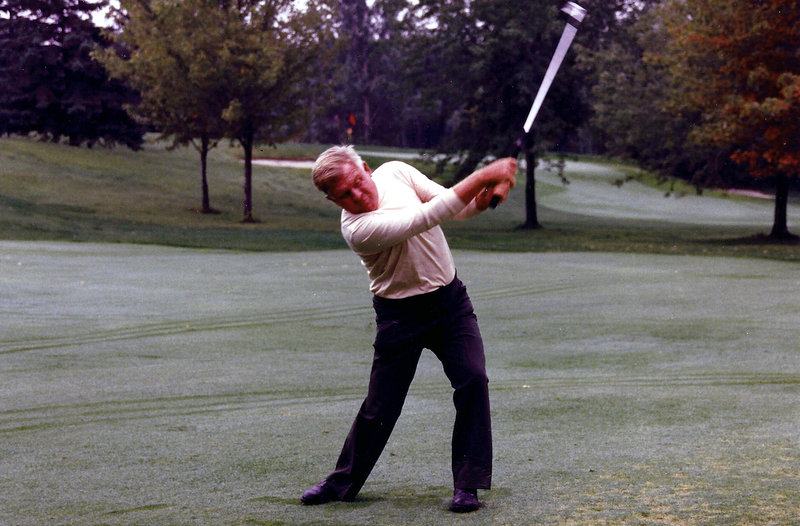
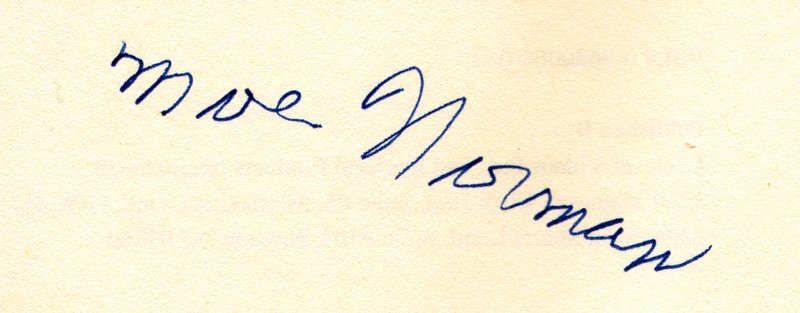
Here are a few photos, from 1987, of Norman swinging, courtesy of Tim O’Connor and Todd “Little Moe” Graves, who have just published The Single Plane Golf Swing: Play Better Golf the Moe Norman Way. (The autograph at the bottom is from my copy of an earlier book of O’Connor’s, a biography of Norman called The Feeling of Greatness.) Graves teaches Norman’s swing at his own school, the Graves Golf Academy. I’ve played several rounds with him, and I once played a round with both him and Norman, and I wish I could strike the ball one tenth as well as either of them. Make that one hundredth.

MoeOakdale87a

MoeOakdale87b

MoeOakdale87c

MoeNormanAutograph

Amy Alcott, Walter Keller, Dean Martin, and Riviera

amyalcott

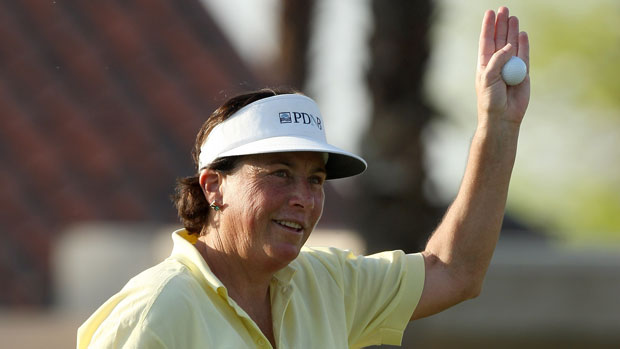
On Saturday, Jim Nantz interviewed the great Amy Alcott—who won twenty-nine LPGA Tour events, beginning in 1975, when she was nineteen—during the CBS broadcast of the Northern Trust Open (nee the Los Angeles Open), at Riviera. In 1995, on assignment at Riviera for Golf Digest, I met Walter Keller, who had been Alcott’s teacher. He told me that he first saw her on the practice tee at Riviera when she was a young girl. “I fell in love with the kid right there,” he said. “She hit a beautiful shot, and I said, ‘Hit another.’ She did. ‘Hit another.’ She did. I turned to her mother and said, ‘You are a blessed woman.’” Keller arranged for Alcott to become a member of the club—and here he is a little later, with Alcott and Tony Sills (another student of his) and a significant collection of junior trophies:

alcottkellersillstrophies.jpg

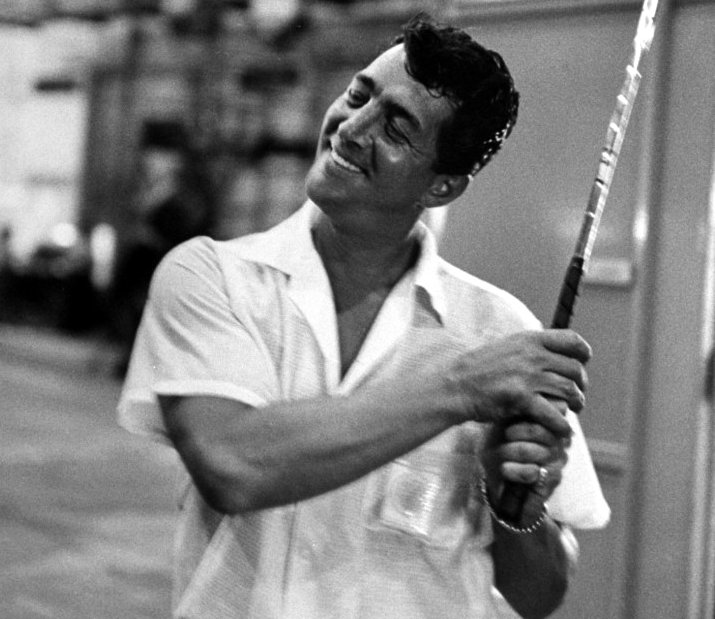
Keller, who died in 2003, at the age of ninety-five, said that Alcott had a difficult relationship with her father but that club members looked out for her. “She had twenty fathers here,” he said. “Dean Martin would see her on the driving range, swing by in his cart, and say, ‘Hey, Amy, let’s play nine holes.” One of many, many reasons to love Riviera.

Dinoandluckies

Golf Among the Zebras: Reader’s Report from Kenya

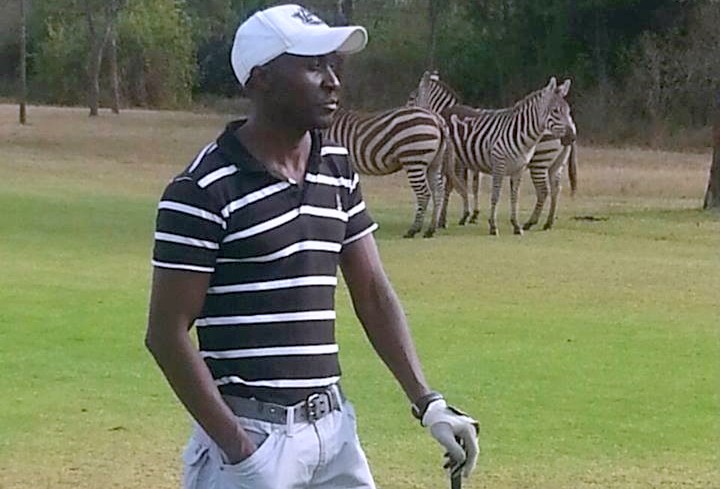
Jeff Mwangi is a reader in Nairobi, and, starting today, he is the official East Africa correspondent of this blog. He took up golf two years ago, at the age of 40. That’s him in the photo below, at the Great Rift Valley Lodge and Golf Resort, in Naivasha:
jeffandzebras

He wrote to me recently to ask about golf simulators, for which he believes there is a large potential  market in East Africa: “I am looking for commercial ones to install in a shopping mall, and also in some of the golf clubs, for range training,” he said. I told him I would try to help put him in touch with some manufacturers. Do you hear that, manufacturers? I’ve got a couple of other ideas, too. In the meantime, I asked him to tell me a little about golf in Kenya, and about himself. From his report:

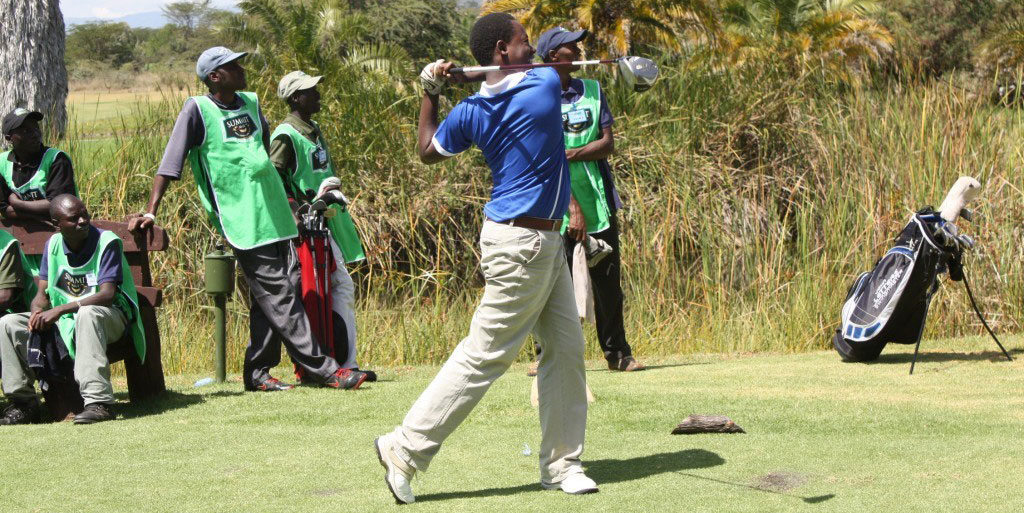
Golf in Kenya used to be reserved for old men (rich geezers), but times have changed. Tiger Woods has been an inspiration to many young Kenyans — who, incidentally, think that golf is an easy game. I thought so, too. I bought a second-hand kit, because kits are quite expensive here. I struggled on the the range, but a little training by the range-handlers gave me the confidence to try nine holes. I took countless strokes in my first game, but I managed to finish. I kept going, and for a while I played three times a week. But that was not sustainable, because it took up business time. Still, I did upgrade my kit, from a pro shop in South Africa.

jeffandclubsps

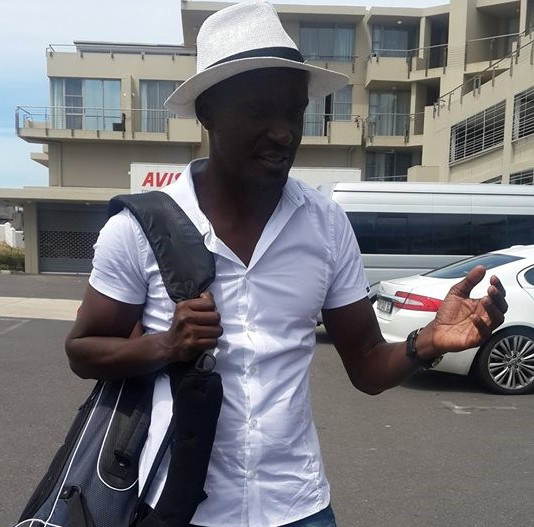
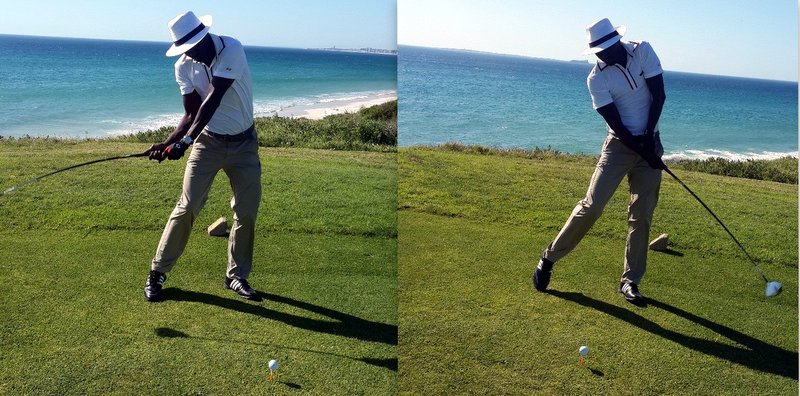
Now I play golf for leisure, and I am working on reducing my handicap. (Don’t ask me what it is.) I have won several prizes, including one called PIGA MINGI (which is Kiswahili for “hitting too many strokes”). I wish I had started at an early age — and that is what I want for my children, who have started playing, too. The two photos below were taken at Milnerton Golf Course, in Cape Town, South Africa, which has the best views on the planet. The sound of the Atlantic must have made me miss the ball, but I guess I am still learning the swing.

Desktop

Golf in Kenya can be challenging, and animals have the right of way. But the trends that will shape the future of golf are the same trends that are shaping the future of the planet: urbanization, the spread of digital technology, and resource and sustainability pressures. The middle class in Kenya are now looking at golf as leisure, and I am looking for a reliable supplier of golf simulators who wants to help encourage a golf explosion in Eastern Africa. Golfers here want a place where they will not be required to abide by an archaic, denim-phobic dress code, to speak in whispers in the clubhouse, or to be snubbed by the committee. They want to play fun golf on simulators that work! 

jeffpalaceofthelostcity

Mwangi took the photo above at Lost City Golf Course, designed by Gary Player, at the Palace of the Lost City, in South Africa. “I drove there for miles,” he told me, “but I was turned away because it was invitation-only. So the only thing I could do was take a photo of the beautiful course from the clubhouse and cool down with a few pints.” Mwangi is still working on his game, and, if he keeps at it, maybe he’ll qualify for Kenya’s team in the East Africa Challenge Golf Tournament, which was held at Rift Valley in 2013 and at Entebbe Golf Club, in Uganda, in 2014. Kenya’s team won both times — its eleventh and twelfth victories since the tournament began, in 1999.

eastafricagolf2013

Tour Players are Great Big Babyish Crybabies (About Cameras)

P1140711-001

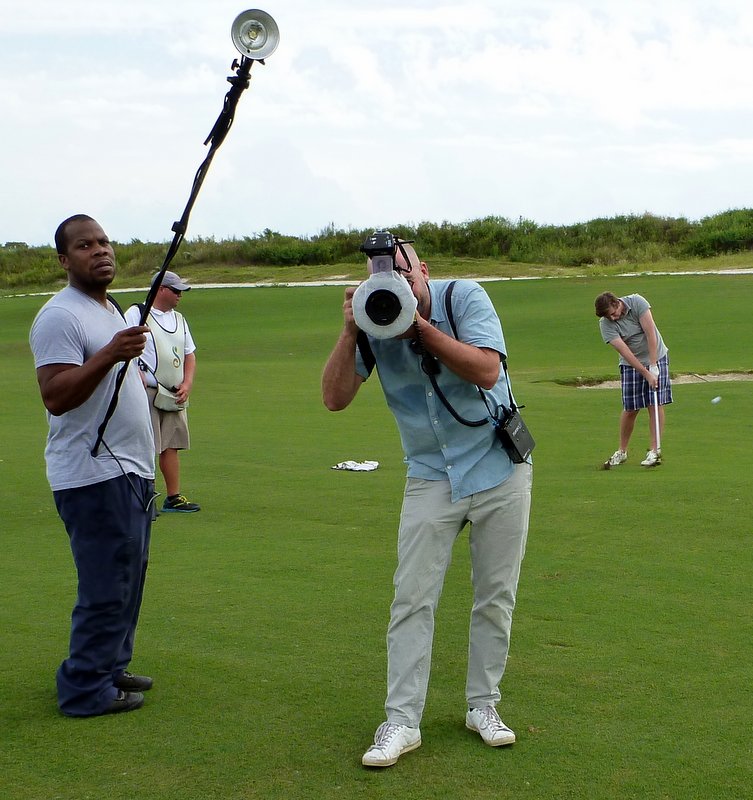
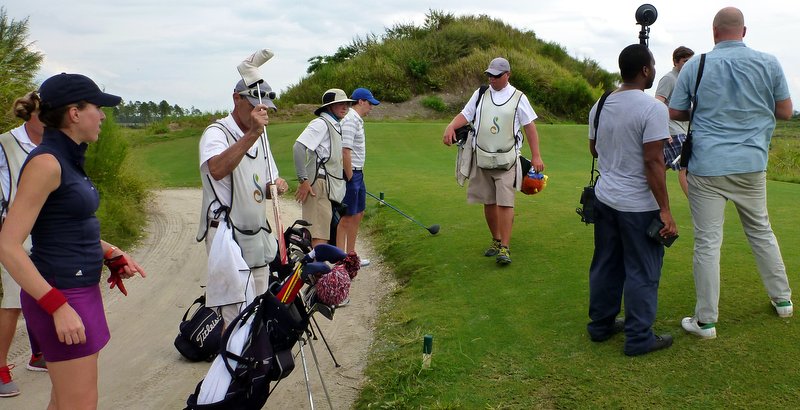
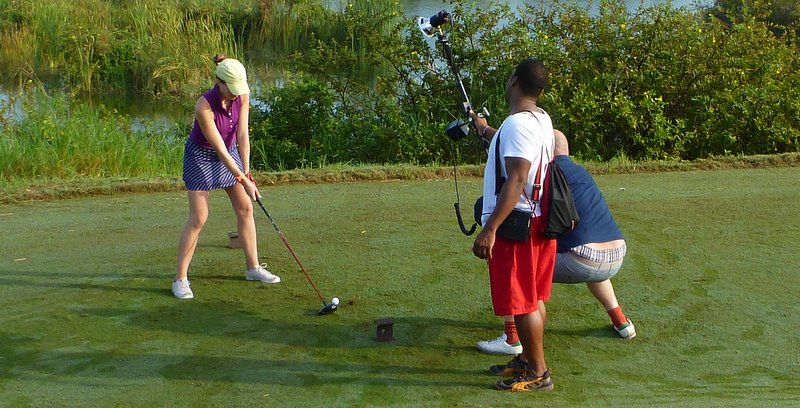
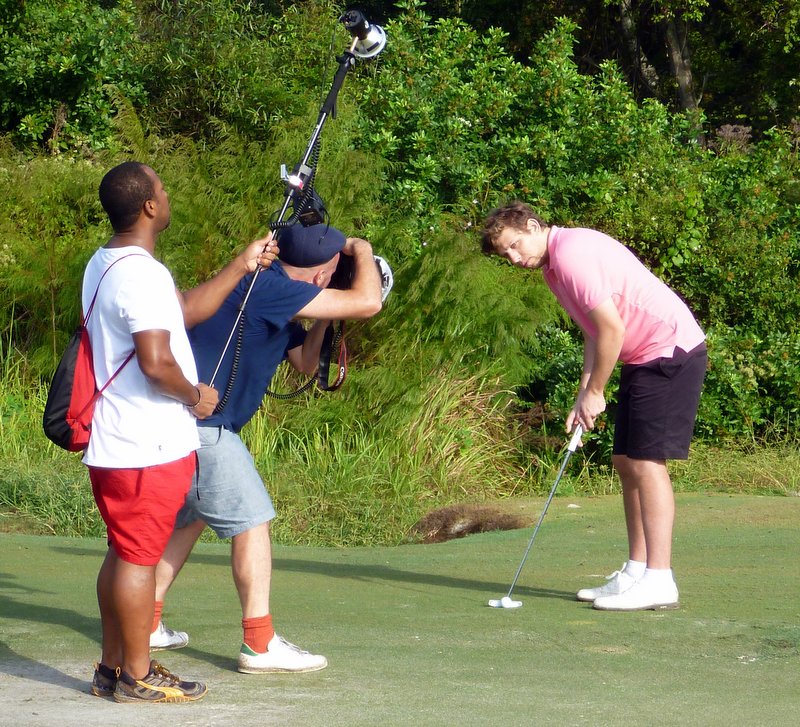
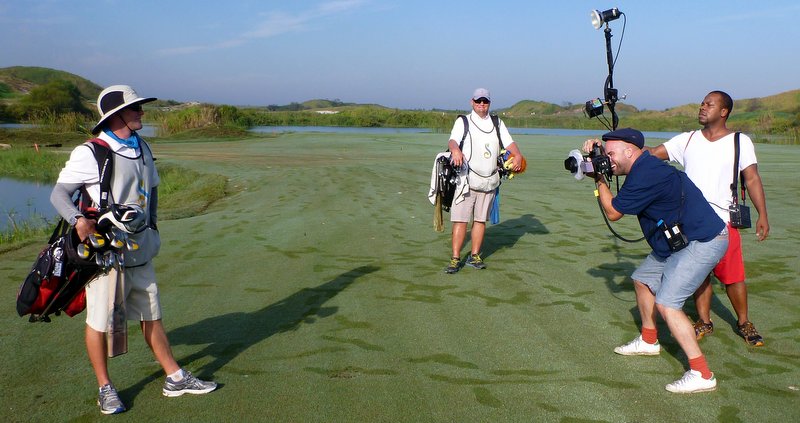
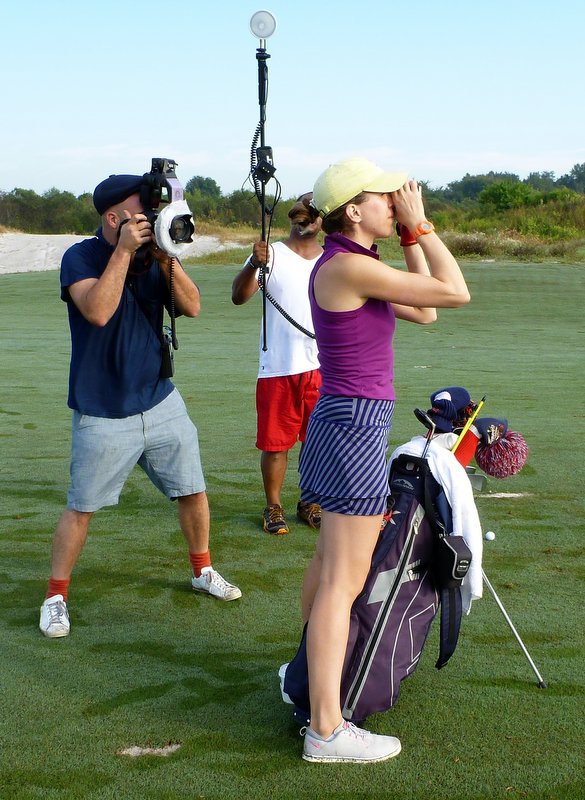
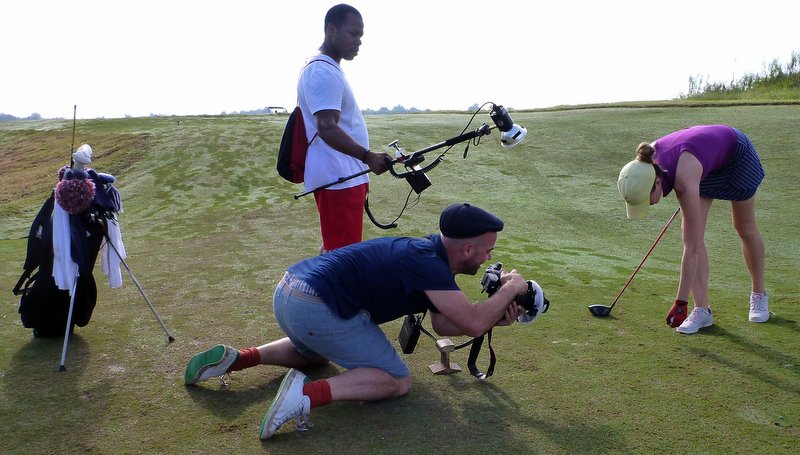
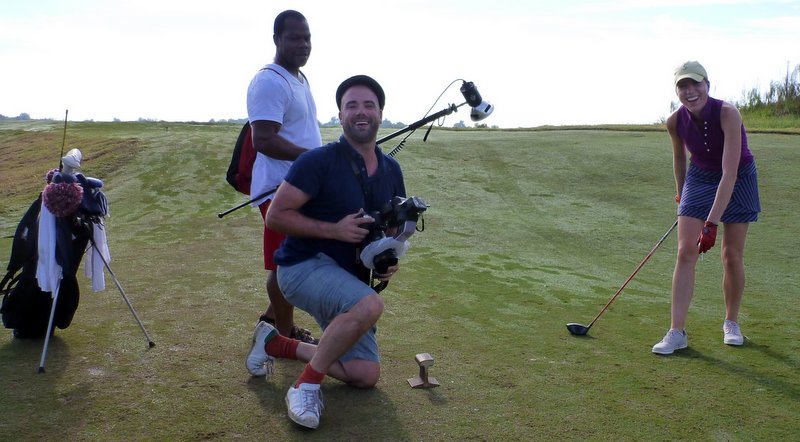
The pros get upset if a camera on another fairway clicks during their backswing. What babies! During a recent Golf Digest assignment in Florida (at Streamsong Resort—see “Buddy This!”, in the January issue), three other editors and I played six rounds in four days while a photographer and his assistant clicked away, sometimes within inches of our faces. And it wasn’t a problem! In fact, I think it helped.

P1140703-001

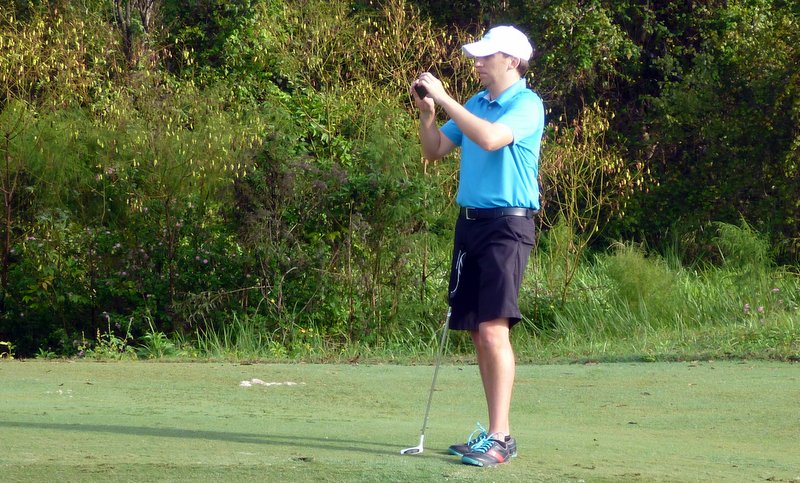
Most of the guys I play with at home swing better when the rest of us are talking, or even when they themselves are talking. Being distracted keeps you from focusing on the proven impossibility of the thing you’re trying to do. Anyway, here are some photos from our Streamsong trip. If Luke Kerr-Dineen, Ashley Mayo, Alex Myers and I can handle the clicks, why can’t Colin Montgomerie?
Ashley teeing off:

ahsleyteeshot

Luke putting:

Lukeputting

Caddies, too:

caddiepicture

No detail was overlooked:

rangefinderphotog

Not even this:

ahsleyteeing

We even took a few pictures of our own (this is Alex):

alexphoto

And nobody threw a fit!

ashleylaughing

Two Ryder Cup Shots You Didn’t See on TV

You didn’t see them because they happened in a different Ryder Cup, the one the Sunday Morning Group held while the American tour stars were getting whupped in Scotland.

upthecreek
Twenty-four guys signed up in advance, and Corey, our terrific pro, divided us into two teams, one red and one blue. The youngest guy in the field didn’t show, apparently because he had met someone interesting in a bar the night before. Corey took his place, after persuading his mother, our club’s immediate past president, to watch the golf shop for him. (The guy who didn’t show made a big mistake, in my opinion. The time to establish golf in a romantic relationship is at the beginning, before the non-playing party has had time to develop a case.)
smgrydercolors
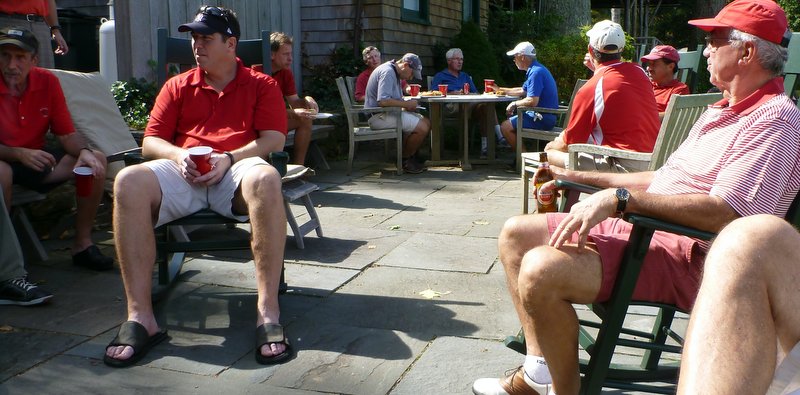
And after everyone had finished we had our usual lunch of cheeseburgers, hot dogs, and beer, on the patio near the practice green:
smgryderlunch
Before I get to the two shots that weren’t shown on TV, I’d like to make two general observations about the other Ryder Cup:
1. What is the source of Ryder Cup Europe’s pathological golf-course selections? In the sixties and seventies, the trans-Atlantic side of the contest was held exclusively on Open courses: Royal Lytham & St. Annes, Royal Birkdale, and Muirfield—an over-reliance on England, granted, but otherwise impeccable. Since then, the thinking has apparently been that crummy venues deserve international exposure, too. The worst is the Belfry, also in England, which has hosted the matches four times—more than any other course in history. The Belfry has just two good holes, the ninth and the eighteenth, and most matches don’t reach the eighteenth. This year’s course, at Gleneagles, was in the works when I first played golf in Scotland, in the early 1990s. At that time, the Scots had seemingly decided that the way to attract American golfers to Scotland was to hire Jack Nicklaus to build something that would remind them of Florida, cart paths included. Somebody, please, wake up the people in charge. The PGA Centenary Course, as Nicklaus’s creation is now known, isn’t even the best course at Gleneagles.
furykryder
2. There’s been lots of angry speculation about the reasons for this year’s American defeat, but no one, so far as I know, has hit on the real explanation: the extraordinarily annoying pre-shot routines of Jim Furyk and Keegan Bradley. In TV broadcasts of regular tour events, producers have become adept at keeping the cameras away from those two until they’re almost ready to make a real stroke. During the Ryder Cup, though, so little actual golf is under way at any moment that they had no choice but to make us watch full sequences—all the tics and twirls and feints and bird peeks and pocket scrunches and everything else. True, we were spared Furyk’s 5-Hour Energy wardrobe, and thank goodness for that. But the other stuff was increasingly infuriating, and by Saturday afternoon (I’m guessing) so many U.S. TV watchers were mentally rooting against Furyk and Bradley that the cosmic tide irretrievably turned. Those two golfers, between them, won two points and lost four; turn those Ls to Ws, and it’s a blowout the other way.
Now, back to the other Ryder Cup. The two shots you haven’t seen were both hit by Doug, who was my partner. In each case, he went on to triple- or even quadruple-bogey the hole. But that was OK because I had him covered.

The Day I T-Boned the Mercedes of the President of Pine Valley

Ernie Ransome, No. 18 tee, Pine Valley Golf Club.

Ernie Ransome, eighteenth hole, Pine Valley Golf Club.

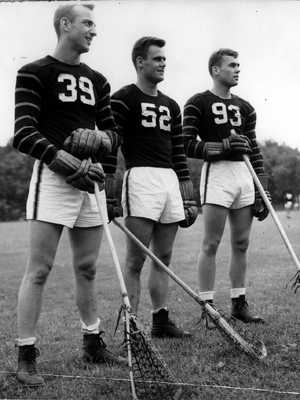
Ernie Ransome, shown above, was the president of Pine Valley Golf Club from 1977 until 1988, and Pine Valley, as you surely know, is one of the two or three best golf courses in the world. Ransome died this year, and Jerry Tarde, the editor-in-chief of Golf Digest, wrote an essay in which he described Ransome, affectionately, as the club’s “all-powerful dictator.” He recalled that Ransome “presided over annual meetings that took no more than six minutes as, for example, the club treasurer would report, ‘I have not seen the financials, but I’m told income exceeds expenditures.’ At which point, Ransome would interrupt, ‘All in favor of the budget submitted by the treasurer, say, ‘Aye.’ All opposed, say, ‘I resign.'” Clifford Roberts, the legendarily gruff co-founder of Augusta National, would have approved. When Roberts, at a meeting of the club’s governors, asked Charles Yates, the board’s secretary, whether he had the minutes, Yates asked, “Do you mean last year’s, this year’s, or next year’s?”.

Clifford Roberts, the archetype of the golf-club benevolent dictator.

Clifford Roberts, the original golf-club benevolent dictator.

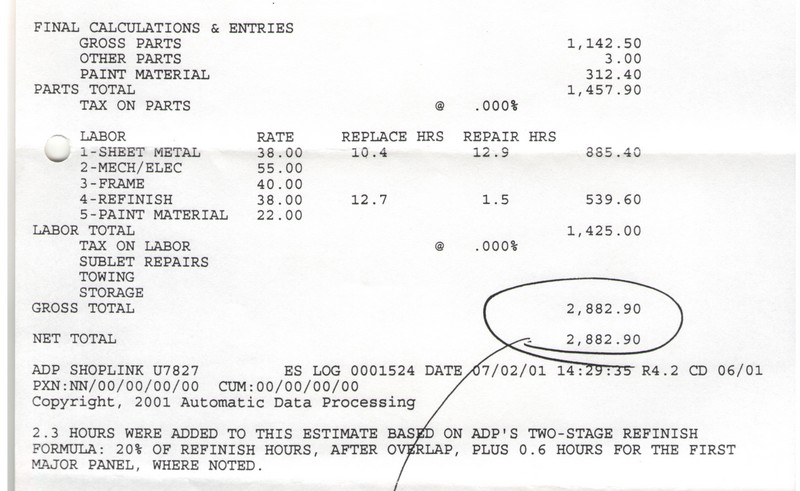
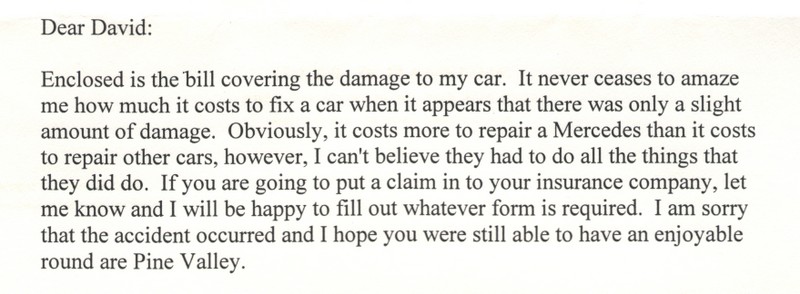
I’ve been lucky, over the years, to play quite a few rounds at Pine Valley. One day in 2001, while I was visiting as the guest of a man who, at the time, was also a member of my nine-hole home club, I set out in my car for the club’s driving range, to hit a few balls before our group teed off. At the little intersection nearest the clubhouse, I nosed out a few feet past the stop sign and, when I did, crashed into a Mercedes, which was coming down the hill from the right. Luckily, I recognized the driver as Ransome, and apologized profusely, even though I wasn’t certain the crash had been my fault. A maintenance cart with a trailer attached to it was parked across the intersection, and Ransome, in order to avoid it, had been driving on the wrong side of the road. He had also been driving quite fast. At any rate, he said that he was late for a doctor’s appointment, and asked me to let Lenny Ward, the club’s caddie master, know what had happened. I did, and when I met with Ransome that afternoon I told him to simply send me the repair bill. And that’s what he did.

Ransome Letter

The bodywork had been done at a dealership in Delaware owned by Buddy Marucci, a Pine Valley member and Tiger Woods’s opponent in the extraordinary final match of the 1995 U.S. Amateur.

marucci bill

I happily paid the bill, and I didn’t make an insurance claim, because I didn’t want an adjuster to take a position that might upset Ransome and, as a consequence, make life unpleasant for the member who had been my host. I decided to think of the $2,889.20 as a retroactive surcharge for all the rounds I had played at Pine Valley over the years, and when I divided it by that number it didn’t seem onerous.

Owen letter

Here’s another Ransome story from Jerry Tarde’s tribute:

One day as Ransome was approaching his ball on 11, a golfer hit a particularly bad drive off 16 and, reacting viscerally, winged his club into the sandy waste in front of the tee. Ransome, with hands on hips, did what might be described as a slow burn in the fairway, which caught the eye of the angry golfer still standing on the tee. “We. . .don’t. . .throw. . .clubs. . .at Pine Valley,” Ransome finally boomed.

“I’m the member in this group,” yelled back the angry golfer. “Who the [expletive] are you?!”

To which, Ransome immediately replied: “Not anymore you aren’t.” Then, to the caddies: “Boys, take the bags in.”

You see, that’s what I wanted to avoid.

Ransome played lacrosse at Princeton. That's him in the center in 1946.

Ransome played lacrosse at Princeton. That’s him, in the center, in 1946.

Phil Mickelson’s Open Victory and the Difficulty of Mentally Influencing the Outcome of Recorded Sporting Events

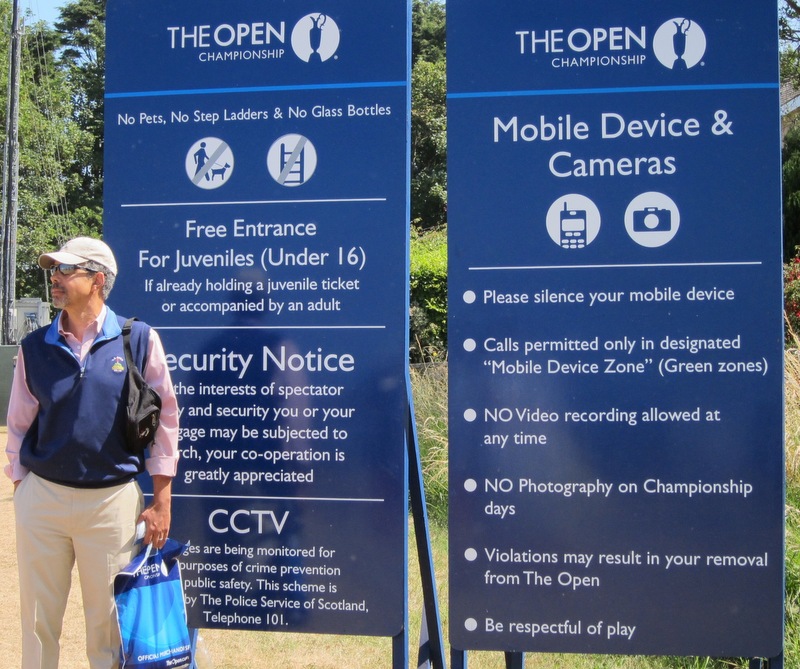
Rick Hunt, a reader, was at the Open both days this weekend. He took this photo on Saturday

Rick Hunt, a reader, was at the Open both days this weekend. He took this photo on Saturday

In 2006, my wife and our two children and I flew from New York to Las Vegas so that we could rent an R.V. and spend ten days visiting the remarkable national parks in southern Utah and northern Arizona, after first taking a guided tour of the greatest man-made object in the universe, the Hoover Dam.

Me, standing in awe before one of the many fascinating dioramas in the visitors' center at the Hoover Dam, June, 2006.

Me, standing in awe before one of the many fascinating dioramas in the visitors’ center at the Hoover Dam, June, 2006.

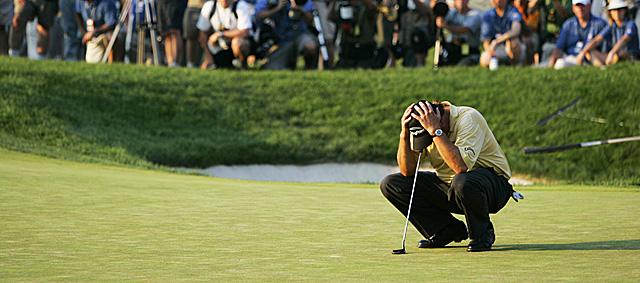
Our flight coincided almost exactly with the final round of the 2006 U.S. Open, and because I am a good father I grumbled very little about having to spend the afternoon traveling with my loved ones rather than lying on the couch at home and staring at the TV. My saintly attitude was rewarded during the flight: there were video screens in the backs of the seats on our plane, and I got to watch the tournament anyway. In fact, the broadcast lasted almost exactly as long as the flight. The picture broke up as we were touching down at McCarran International Airport, in Vegas, but by then the tournament was all but over. Phil Mickelson had just pushed his tee shot on the final hole into the corporate tents to the left of the eighteenth fairway, but he had the thing sewn up, and, besides, the guy’s a magician. Good show, Phil!

The next morning, in my wife’s and my room at the Bellagio (or wherever), I turned on the TV to watch Open highlights. Weirdly, the guys on Golf Central weren’t talking about Mickelson; they were talking about Geoff Ogilvy, whom I scarcely remembered having noticed during my life, much less during the broadcast the day before. Suddenly, I worried that what I had watched on the plane had been not a live program but a videotape of some historical triumph of Mickelson’s. It took me five minutes of careful Golf Channel viewing to figure out what had happened.

Mickelson winged foot

Naturally, I blamed myself for Mickelson’s last-hole double-bogey, since I was mentally rooting for him toward the end of the tournament, and the in-flight broadcast cut out at the moment when he needed me most. And this week I blame myself for his victory, at Muirfield, because I wanted Tiger Woods to win but was unable to mentally undermine his opponents: instead of watching the golf tournament on TV, I was (selfishly) playing in a golf tournament of my own.

Rick Hunt, at the Open. If I'd been there myself, I might have had better luck influencing the outcome.

Rick Hunt, at the Open. If I’d been there myself, I might have had better luck at influencing the outcome.

Influencing the outcome of televised sporting events is harder than many people believe, because a technique that brings victory today may have the opposite effect tomorrow. Mumbling obscenities, swaying hypnotically, and making hula-like hand motions in front of the screen will usually keep a long putt from going in—especially if the hole remains on camera and the putter is Lee Westwood—but the same method sometimes fails disastrously, perhaps by accidentally nudging an errant ball onto the correct line.

Curiously, the best method for salvaging victory when things are going poorly is to turn off the TV—a tactic whose effectiveness is explained by quantum mechanics: unless they are observed directly, athletic competitions, like muons and mesons, exist in all possible states simultaneously. Turning off the TV during a big tournament restores the universe’s indifference to the final score, thereby giving Tiger (let’s say) a chance to rediscover his swing. This quantum effect may also explain why viewers are able to influence even videotaped sporting events—as long as the viewers don’t know in advance how everything came out.

For that reason, I had planned to remain ignorant of the Open outcome so that I could watch a recording of the final round when I got home and bring in the winner I wanted. Sadly, though, as I was standing in line at the scorer’s table I overheard some guy telling some other guy that Mickelson had won.

I watched the recording anyway, but without much enthusiasm. I had to hit the mute button many times, because the announcers were so annoying, and I found myself wishing that someone would invent an app (or whatever) that would turn Curtis Strange’s accent into something less grating (converting nahn, fahn, and mahn into nine, fine, and mine, for example); would automatically bleep out the phrase “plenty of green to work with”; and would prevent Andy North from referring to Royal Birkdale, where the Senior Open Championship will be played next week, as a “links-style” golf course.   

Hacker (real name), Royal Birkdale, May, 2010.

Hacker (real name), Royal Birkdale, May, 2010.