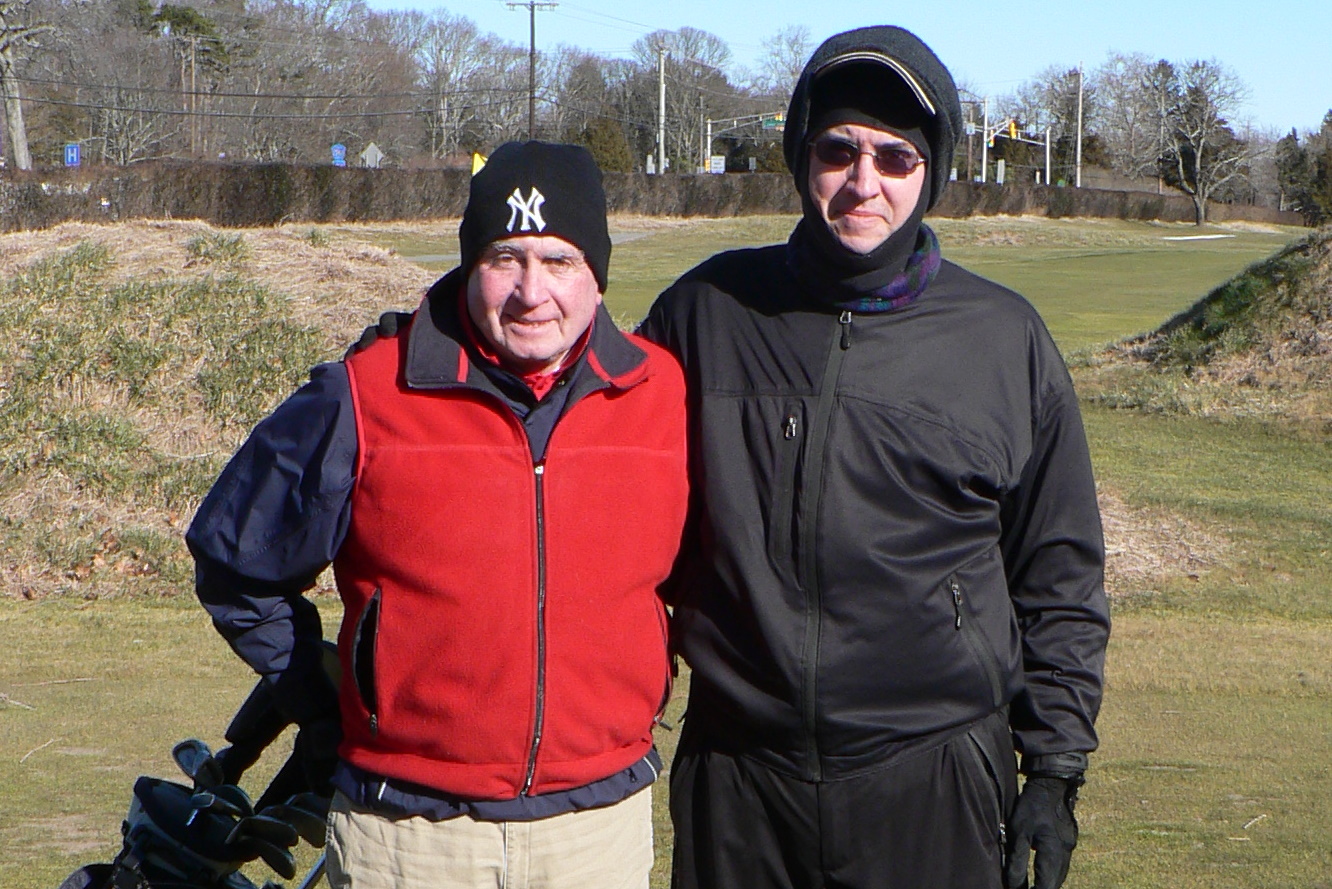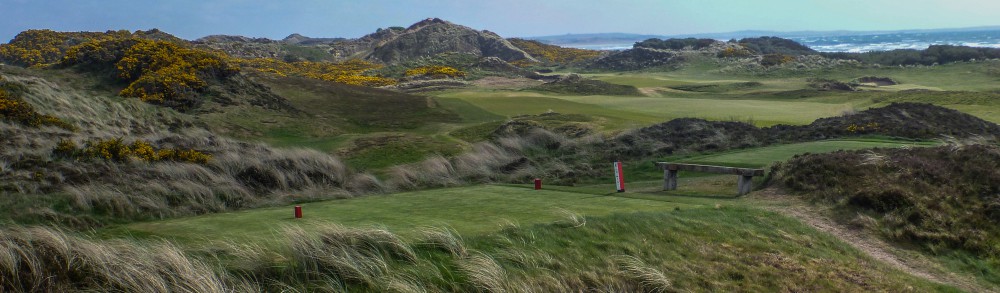

Marine Park Golf Course; Brooklyn, NY; March 4, 2012; 46 degrees.
There are a dozen public courses in New York City, and they stay open all winter, as long as the ground is snow-free—as it usually is, thanks to the urban heat island effect and the proximity of the Atlantic Ocean. On Sunday, as Rory McIlroy was moving to the top of the world ranking, six members of my regular Sunday Morning Group and I drove to Brooklyn for a round at Marine Park. (Several of our favorite city courses have enticingly warm-sounding names: Marine Park, Pelham Bay, Dyker Beach.)
Marine Park is situated a few miles from J.F.K. International and a few hundred yards from Floyd Bennett Field, which was the city’s first official airport. (When Howard Hughes set a record by flying around the world in ninety-one hours, in 1938, his trip began and ended at Floyd Bennett. The old runway area is now a somewhat dystopian-looking public park and a New York Police Department helicopter base.) The golf course covers a little over two hundred acres inside the elbow formed by Flatbush Avenue and the Belt Parkway. It was designed by Robert Trent Jones and was completed in 1963—just in time for the World’s Fair, which was held virtually next door, in Queens, the following year. The holes have a genuinely linksy feel: few trees, subtly undulating topography, exasperating wind off Jamaica Bay (another warm-sounding name). There’s more broken glass in the bunkers than you’d find at Troon or Carnoustie, and the views from some of the fairways include more barges and giant dump trucks. But the greens on Sunday were fast and terrific, even though nobody had mowed them in months.

Hacker (real name), Marine Park.
In 2007, New York City accused the company that was operating Marine Park of having ties to organized crime, and revoked its lease. The new lessee is investing millions in the course, and has renovated the club house and added a driving range. We saw huge piles of topsoil alongside a number of the fairways—raw material for improvements to come. The guy manning the cash register in the golf shop, who was also the starter, told us that the days when old car parts and toilet seats would sometimes pop up through the turf are gone.
When we’d finished our round (after playing the last few holes as a sevensome, since there were slowpokes ahead of us and no one behind), we caravaned to Pipin’s Pub, in Bay Ridge. We’ eaten lunch there before—on New Year’s Day 2008, after playing a cold, wet round at Dyker Beach—and ever since then we’d been meaning to go back, partly because almost the entire first page of the menu is devoted to various kinds of cheeseburger. The day’s winners threw all their winnings into the lunch pot, as we almost always do during the off-season, and we ended up leaving a huge tip because with seven people the arithmetic was just impossible.

Pipin's Pub. Photo taken by nice waitress with Irish accent.