Five Rules of Golf That My Friends and I Got Wrong on Our Recent Buddies Trip

rulesofgolf

According to a veteran sportswriter I know, there are three lethally boring topics in golf: junior golf, the rules of golf, and I forget the third. But I think the rules are interesting, in part because they constitute a legal system that attempts to provide a specific remedy for every conceivable situation, leaving essentially no role for “discretion.” And, although I usually believe I know the rules better than the average casual player (which isn’t saying much), I often encounter surprises.

miscrules

On our recent golf trip to Scotland and Ireland, my friends and I got many rules wrong, undoubtedly, but five of our errors, in particular, stand out—and four of them were made by players with single-digit handicaps. First, one of mine:

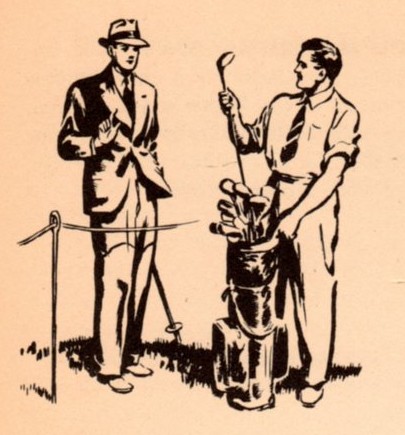
1. At a golf school I attended in the early 1990s, one of the instructors hit several gorgeous bunker shots after turning his sand wedge backward, but then told us, “Unfortunately, hitting the ball with the back of the club is illegal.” I cited him on the trip as my authority (in a situation I’ve forgotten)—and I was wrong. If hitting the ball with the back of the club was illegal 20 years ago, it’s not illegal now. Decision 14-1/1 says:

A player may play a stroke with any part of the clubhead, provided the ball is fairly struck at (Rule 14-1) and the club conforms with Rule 4-1.

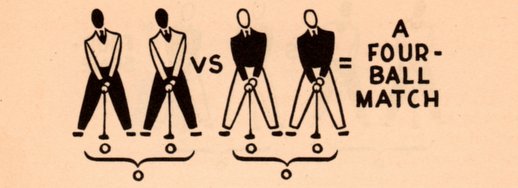
2. There were twelve guys on our trip, divided into two teams of six. Each of our morning rounds was a four-ball match in which a pair from one team played a pair from the other team.
four-ball

On one green, my partner’s ball was farthest from the hole, but I putted first—and made the putt, annoying one of our opponents, who was farther from the hole than I was. He felt that I had illegally pressured him by playing out of turn. But he was wrong. Because my partner was farthest from the hole, either he or I could putt first. Rule 30-3b says:

Balls belonging to the same side may be played in the order the side considers best.

(Because this was match play, if I really had played out of turn an opponent could have required me to replay my shot at the right time. In stroke play, the farthest player is also supposed to play first, but there’s no penalty if someone screws up. For a good explanation of the differences between match play and stroke play, go here.)

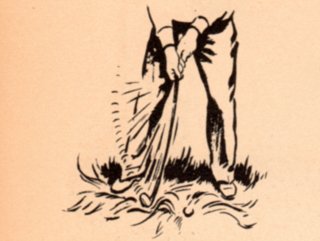
3. On another hole, a player accidentally struck his ball with a practice swing, and said there was no penalty because he hadn’t made a stroke. He was right about the stroke but wrong about the penalty. Decision 18-2a/20 says:

Q. A player makes a practice swing and accidentally moves his ball in play with his club. Has he made a stroke?

A. No. He had no intention of moving the ball – see Definition of “Stroke.”  However, he incurs a penalty stroke under Rule 18-2a for moving his ball in play, and the ball must be replaced.
practice

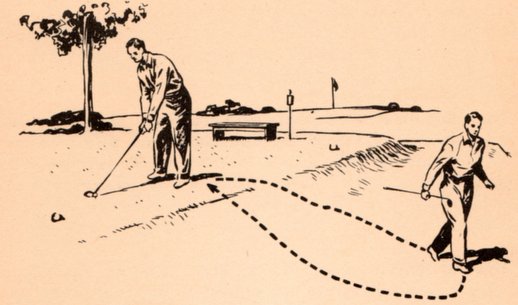
4. On a par 5, one player hit a long second shot into thick rough and couldn’t find it. So he dropped another ball approximately where he figured the first one must have ended up, and played from there. I assumed he was just playing along for fun, but he believed that he was still in the hole, and he explained that he had added a stroke for losing his ball. But he was wrong. His only legal recourse would have been to return as near as possible to the spot where he’d hit his second shot, and play another ball from there, at a penalty of “stroke and distance”—or two shots. And if he lost that ball, too, he’d have to do it again, same deal.
lostball

5. Everybody on the trip knew that there was a penalty for hitting a wrong ball, but no one was sure exactly what it was, especially in four-ball match play. Now we know. Rule 30-3c says:

If a player incurs the loss of hole penalty under Rule 15-3a for making a stroke at a wrong ballhe is disqualified for that hole, but his partner incurs no penalty even if the wrong ball belongs to him. If the wrong ball belongs to another player, its owner must place a ball on the spot from which the wrong ball was first played.
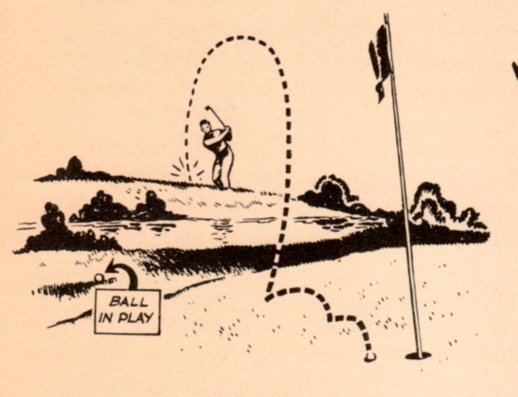
wrong ballI could go on.
Two Useful Sleep-Related Accessories for Golf Trips

P1120362

My wife can fall asleep in a room in which all the lights are turned on and sunlight is streaming onto her face, while I can be awakened from a deep sleep by the message light on my cell phone. My friend Tony is similarly afflicted. His wife, in sympathy, bought an LED headlamp, so that she could read in bed without bothering him, but every time she turns to gaze lovingly at his sleeping form she zaps him in the eyes and wakes him up.
Hotel rooms can be a huge problem, even when I’m traveling without my wife. During a golf trip to San Antonio last year, I had to use a Kleenex box and two wash cloths to disable the electric eye on the light switch in the bathroom, which blasted me with daylight-level illumination when I got up in the night to take a whiz:
bathroomelectriceye
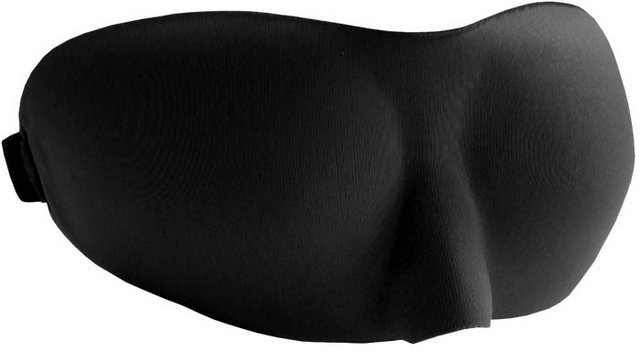
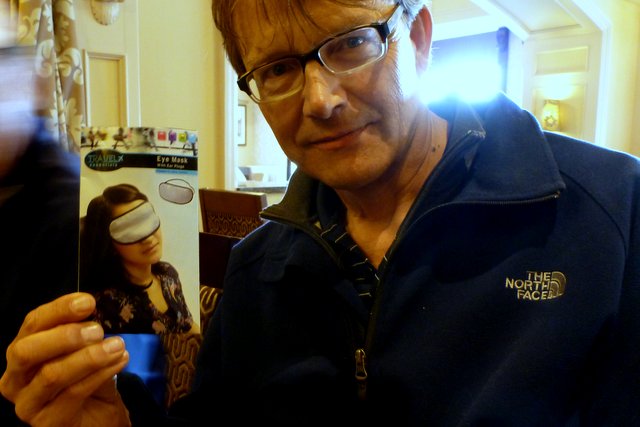
Because it’s hard to knock out all the potentially annoying light sources in a hotel room, I now travel with a sleep mask. I’ve tried several, and the one I like the best is made by Dream Essentials. It comes with a pair of ear plugs and what the company’s website describes as “a complimentary drawstring carry pouch,” and it makes me look like the Human Fly:
dreamessentials
It’s especially useful during summertime golf trips to Britain and Ireland, because at that time of year at that latitude the sun never quite goes all the way down. I like it so much that I now use it at home, too.
A sleep mask to avoid, unless you have a hat size of about 5 or enjoy feeling that your eyes are being squeezed flat by an elastic band, is this one, from Samsonite, even though it also comes with ear plugs:
samsonitemask
During my recent buddies trip to Scotland and Ireland, I spoke so convincingly about the benefits of wearing a sleep mask that J.P. went out immediately and bought one at a drugstore up the street from our hotel in Campbeltown, near Machrihanish. He now swears by it, too.
jproyalhotel

Great Golf Courses: Machrihanish and Machrihanish Dunes

Machrihanish Golf Club, near Campbeltown, Scotland, May, 2014.

Machrihanish Golf Club, near Campbeltown, Scotland, May, 2014.

Machair is a Gaelic word that means pretty much the same thing as links, the sandy, wind-shaped coastal grasslands where the game of golf arose. It’s pronounced “mocker,” more or less, but with the two central consonants represented by what sounds like a clearing of the throat. The word is still used in parts of Scotland—for example, on the island of South Uist, in the Outer Hebrides. The photo below, of me and my golf clubs, was taken on the machair at Askernish, the ghost course, on South Uist, in December 2008:

owenaskernish2008The word machair is also preserved in a number of places in Ireland and Scotland: Magheramore, Maghera Strand, Machair Bay, Macharioch, and Machrihanish. Those last two are villages on the Kintyre Peninsula, in southwestern Scotland. The southernmost tip of the peninsula, called the Mull of Kintyre, was celebrated in 1977 in a song by Paul McCartney, who owns a house nearby. A few miles north of the Mull is Machrihanish Golf Club, which was founded in 1876, with twelve holes, and was enlarged three years later by Old Tom Morris. Here’s the view from the first tee at Machrihanish — one of the coolest opening shots in golf (the beach is very definitely in play):

machrihanishfirstteeAnd right next to Machrihanish is a second course, Machrihanish Dunes, which was designed by David McLay Kidd, the architect of Bandon Dunes. It opened in 2009. It has my favorite kind of clubhouse:

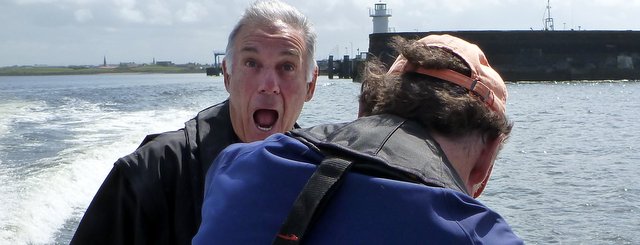
dunesclubhouseMachrihanish was the setting of Michael Bamberger’s book To the Linkslandwhich was published in 1992. One of the most and least appealing features of Machrihanish is that it isn’t easy to get to. If you’re traveling by car, the round trip from Glasgow can be more than seven hours, without much in the way of golf along the route. Flying is possible, although scheduling can be problematic, especially if you’re trying to connect from an international flight. The workaround my friends and I used during a recent buddies trip—with help and planning from Celtic Golf—was to go by water, on a chartered boat, which was operated by Kintyre Express. We made the trip, from Troon, in less than an hour and a half. The boat ride turned out to be one of the week’s many highlights:

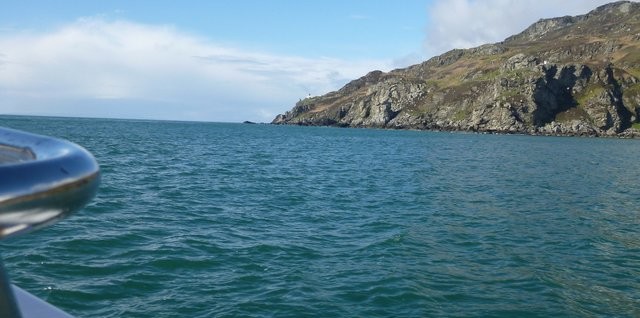
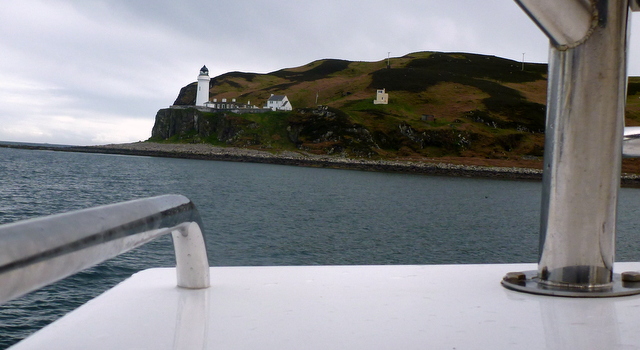
tonyrichardboatWe passed this lighthouse on the way:

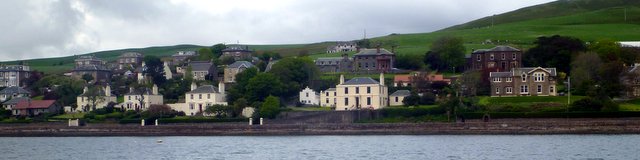
lighthousefromboatAnd this is what we saw as we entered the harbor at Campbeltown, the town closest to Machrihanish:

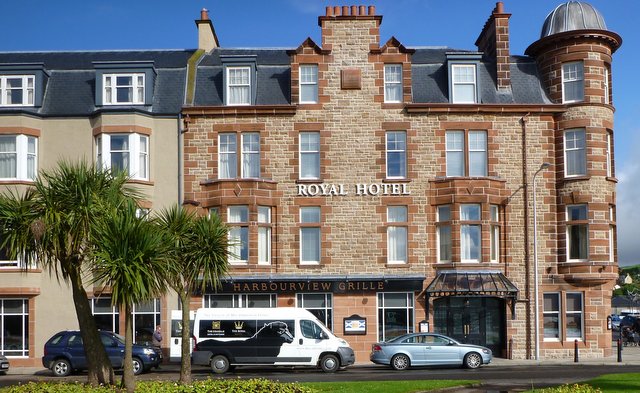
campbeltownviewOur hotel was right on the harbor, a short walk from where the boat tied up:

royalhotelAnd both courses were just a short drive (by van) from the hotel. This is Peter A., putting from a fairway at Machrihanish:

peterfairwayputtThe two guys in the photo below, who were out for a walk with their wives in Campbeltown, chatted with us about golf, and then came back without their wives to tell us a story about Tony Lema. I think they were interested in us partly because I had played two Scottish courses they hadn’t believed any American golfer would even have heard of: Reay and Strathpeffer.

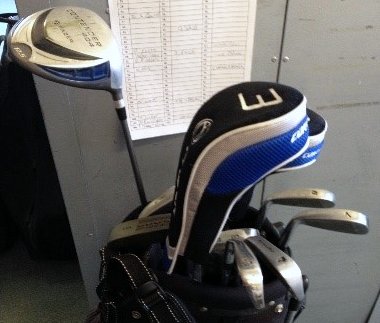
twoscottishguysThe photo below is a view of the water from Machrihanish Dunes. The course was built, with numerous conservation restrictions, on what the British call a Site of Special Scientific Interest. The maintenance crew doesn’t use fertilizer, and there’s no irrigation system. Only a tiny fraction of the land was disturbed during construction. And the course is terrific.
P1120528

The photo below is of a former R.A.F. base, which borders both courses. A U.S. Navy SEAL commando unit used to be stationed there. Part of the facility still functions as Campbeltown’s airport. The runway is so long that even I could land an airplane on it, probably.

machrihanishairbase

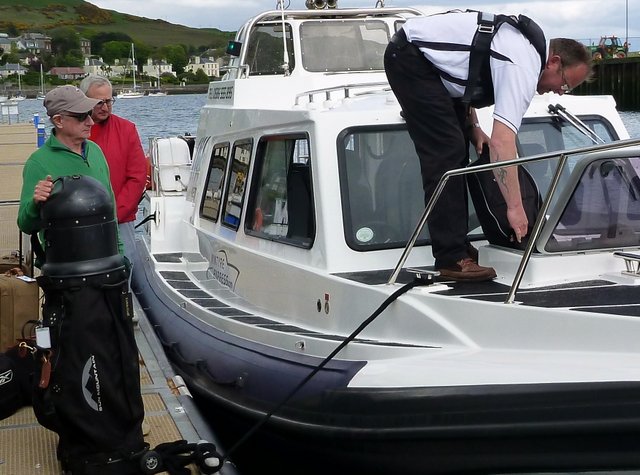
After three days at Machrihanish, we got back on our boat and headed to our next destination: Northern Ireland, which is actually closer to Campbeltown than Troon is. Here’s the skipper, loading our golf bags in Campbeltown harbor:

That's Robert G. holding my awesome Sun Mountain Atlas golf-bag travel cover, which I bought years ago, after Northwest Airlines snapped the head off my driver during a trip to Bandon Dunes. It has traveled all over the world with me. I'm sorry to say that Sun Mountain doesn't make it anymore.

That’s Robert G., on the left, holding my awesome Sun Mountain Atlas golf-bag travel cover, which I bought about ten years ago, after Northwest Airlines snapped the head off my driver during a trip to Bandon Dunes. My friends call it R2D2. It has traveled all over the world with me. I’m sorry to report that Sun Mountain doesn’t make it anymore.

On the way to Northern Ireland, we passed the Mull of Kintyre, an area of weird currents and whirlpools, a place where a guy had recently drowned, a goat (basking on some rocks) that was descended from goats that were brought to Ireland by the Spanish Armada, and what used to be the cottage of Gugliemo Marconi—whose name was not derived from machair, and who may or may not have been a golfer, but who was one of the inventors of radio. In fact, he made his first long-distance transmission was from the cottage, which is right on the water, to an island a few miles away. Here’s the cottage as it looks today:

marconicottage

The weather was perfect during our trip. The skipper took us close to both coasts, so that we could get a better view.

shorefromboat

Here we are landing in Ballycastle, where the first thing we did was go to a grocery store and buy about a thousand dollars worth of junk food. Then back to golf.

ballycastlearrival

Traveling to Golf by Air, Land, and Sea

machrihanish

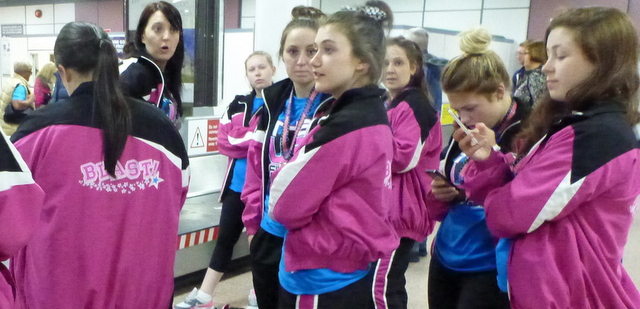
I don’t like to fly on the same plane with soccer teams, Cub Scout dens, Shriner lodges, or similar groups, because it’s too easy to imagine the headline the following day: “Plane Carrying All Members of Small Order of Spanish Nuns Goes Down in North Atlantic.” So I felt more than slightly anxious when, a few minutes before our scheduled departure, two dozen members of a Scottish cheerleading team, who had had to run to make their connection, boarded our plane. I learned later that the team was from the Blast Cheer & Dance Academy, in Glasgow, and that they had just won an international title of some kind at a big competition in Virginia Beach, Virginia. 

blast

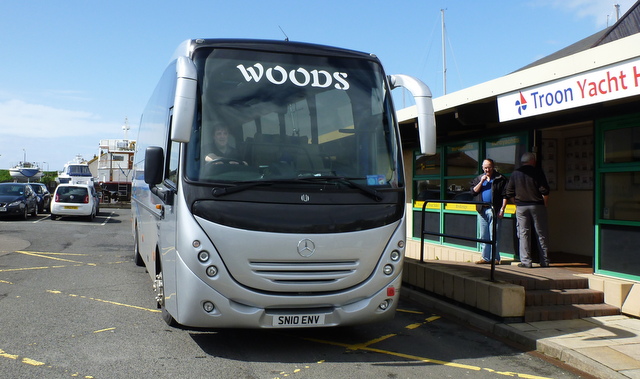
Miraculously, the flight went smoothly, and on Saturday morning at 7:30 eleven friends and I landed in Scotland, ready to play golf. We were met at the airport by a bus from Celtic Golf, which planned our trip.

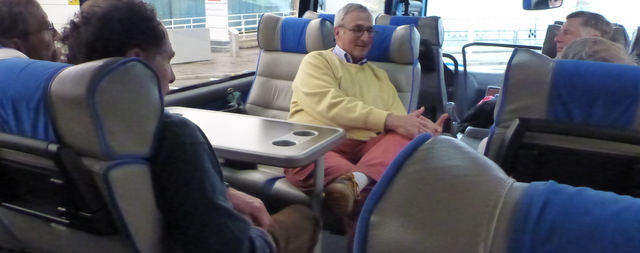
on the bus

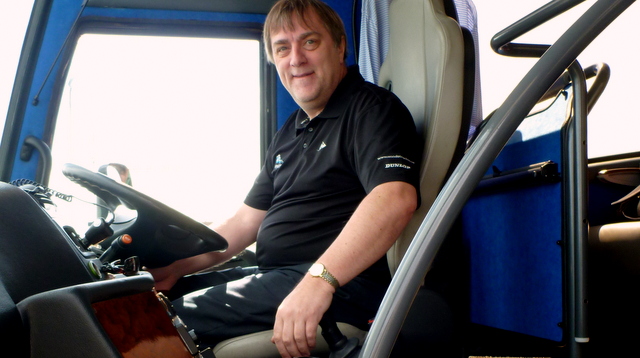
Our bus driver’s name was Dave, and that’s also the name of a quarter of the people on our trip. The only kind of people we have more of is lawyers. When the lawyers reply-all to golf-trip emails, the boilerplate disclaimers at the bottom pile up like litter against a parking-lot fence.

Dave

That first day, straight from the airport, we played two rounds, one at Western Gailes and one at Dundonald, which is next door. Everybody loved Western Gailes and was basically OK with Dundonald, which is owned by the people who own Loch Lomond. The picture below is from Western Gailes, and two of the people in it are named Dave.

western gailes

Dave the driver had told us to be ready to roll at 10:30 the next morning. I didn’t see Peter A. as we were loading our stuff onto the bus, so at 10:35 I called his room from the front desk of our hotel. He picked up after about twelve rings, and said, Yeah, yeah, I’m on my way—and five minutes later we left. That afternoon, he told me that he had actually been asleep when the phone rang, and that he had set a personal record for getting dressed, packing a suitcase, and vacating a hotel room.

bus

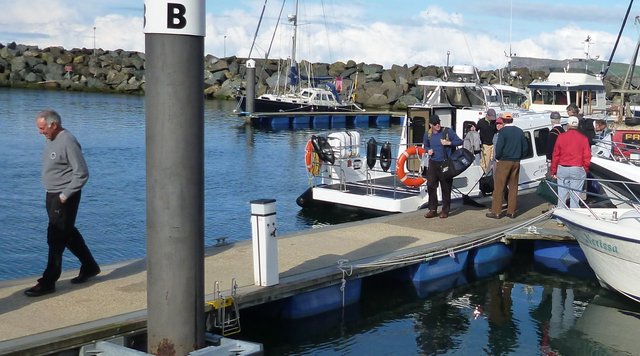
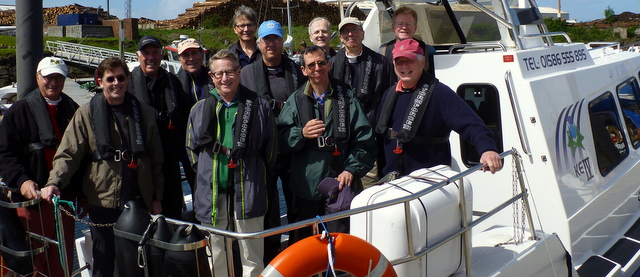
That morning, the bus took us not to a golf course but to Troon Harbor, where we boarded a chartered twelve-passenger motorboat, owned by a company called Kintyre Express. The boat took us to Campbeltown, the home of Machrihanish Golf Club, on the Kintyre Peninsula. 

P1120258

Machrihanish is hard to get to by car; going by boat knocks a couple of hours off the trip. Nice scenery, too.

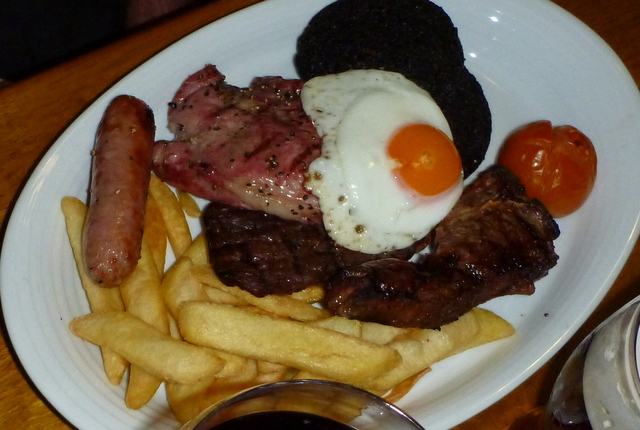
lighthouseMachrihanish has been on my golf dream list for a long time. I’ll have more to say about it later. After three days there, we had to get back on our boat, and move on to our next destination, so that we could play more golf, but somewhere else. I’ll have more to say about that soon, too. In the meantime, here’s what Tony and David M. had for dinner our first night in Campbeltown:

mixed grill

Reader’s Trip Report: Northeastern Scotland

Fraserburgh Golf Club, Scotland, March 13, 2014.

Fraserburgh Golf Club, Scotland, March 13, 2014.

Seth Low, a reader and, not incidentally, a member of the Sunday Morning Group, recently returned from a winter trip to Aberdeen, Scotland. It wasn’t a golf trip, but he hung around for a few extra days and played several courses I like a lot—among them Fraserburgh, shown above. Excerpts from his report:

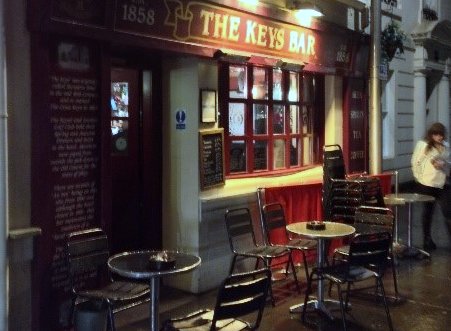
The non-business portion of my trip started in St. Andrews. I did some local scouting at the Keys Bar, where I ran into Dave, an American expat who has lived in St. Andrews, on and off, for twenty-seven years. He caddies during the golf season and, as far as I could tell, hangs out at the Keys in the off season. 
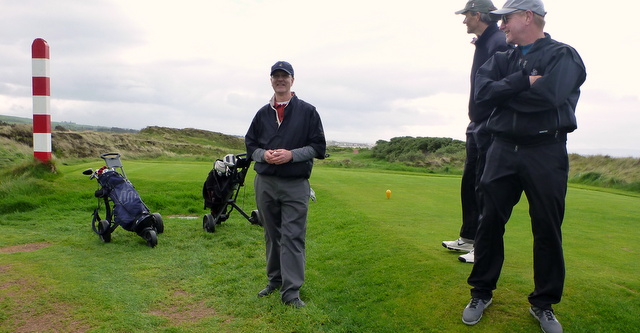
seth low keys bar

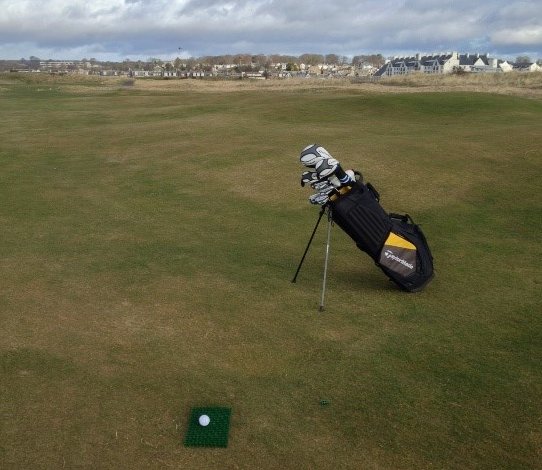
The next day, I took a train to Carnoustie, half an hour to the north. Perhaps because of the time of year, or perhaps because of the weather, I went out solo, no one in front of me or behind me. I muscled an ugly 4-iron into the wind, and then had my first go at hitting from a “winter mat.” Apparently, these are standard in Scotland. I am not a good golfer, but I can generally get the ball headed in the right direction. However, I could not master the mat. My reward for a good drive was inevitably a sculled iron.

seth low winter mat

I found myself hoping I would miss the fairway, to be spared the mat, and when my ball landed close to the rough I kicked it in. It was interesting to find myself in this alternate golf reality, and I spent a good deal of time wondering what it said about me as a golfer (and as a person) that I was more comfortable playing from what most people think of a bad lie.

Fourth green, Carnoustie. The white stuff on the ground (not the ball) is hail.

Fourth green, Carnoustie. The white stuff on the ground (not the ball) is hail.

Next, I headed north, to Fraserburgh, and, once again, went out on my own. I was the beneficiary of a new employee, who told me that mats were unnecessary, despite signs saying otherwise. The course wanders through the shoreline dunes and is truly spectacular.

Fraserburgh Golf Club, thirteenth hole.

Fraserburgh Golf Club, thirteenth hole.

To navigate among the dunes, I had to follow the signs carefully, which wasn’t always easy. If wondered if they were in Doric, a dialect spoken by folks in the area, but it turned out that they had just been beaten up by a long and windy winter.

seth low doric sign

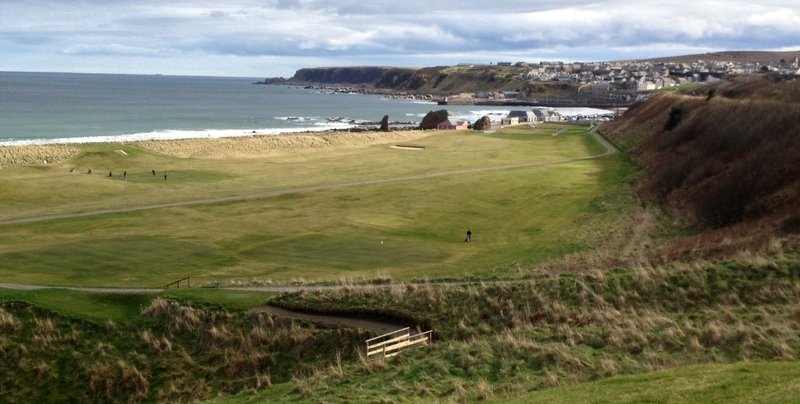
On my last day in Scotland, I headed west from Fraserburgh, at the recommendation of this blog, to play Cullen Golf Club. [Editor’s note: No one who asks me for a Scottish golf recommendation will escape being told about Cullen.] The clubhouse was empty, so I wandered around until a member came in and showed me some clubs I could use. I managed to assemble an almost-full set, consisting of a couple of Wilsons, a couple of irons of an unrecognizable brand, and a Fazer Contender 404 driver:

seth low golf bag

Cullen’s fairways weave across each other, and there is a complex set of bells and “yielding” protocols that the locals know. The course is complicated by a right-of-way that allows walkers to get from the ridge above the course to the beach below. All in all, it was a somewhat hectic scene, and I was happy to be joined by Graeme, a local member, who was out for a Sunday round. Like many in the area, he worked on a fishing boat before getting a job in the oil-and-gas industry. Now he is a cook on an oil rig, where he works two weeks on, two weeks off, four weeks on, four weeks off—leaving plenty of time for golf. I came away with what I hope will be a new addition to my golf lexicon: “hitting into the skink.” I am not sure what it means, but I like the way it sounds.

The first hole, second tee, fifteenth green, sixteenth tee, seventeenth green, and eighteenth hole at Cullen.

The first hole, second tee, fifteenth green, sixteenth tee, seventeenth green, and eighteenth hole at Cullen.

The Muny Life: The Beav, in Concord, New Hampshire

P1090355-001My Muny Life column in the January Golf Digest was about Beaver Meadow Golf Course, in Concord, New Hampshire—known to regulars as “the Beav.” The course has an unusual policy of keeping groups well away from the first tee until it’s their turn to play—because, the starter told me, “We find that people hit the ball better if no one is watching.”

P1090382

The Beav’s original nine holes were laid out in 1896 by Willie Campbell, a transplanted Scotsman, who had also laid out some of the early holes at The Country Club, in Brookline, Massachusetts. He was The Country Club’s first head professional, and then he held the same job at Myopia Hunt Club and Franklin Park Golf Course, which opened in 1896 and is the second oldest public golf course in the country. (It’s now known as William J. Devine Golf Course, and was one of the subjects of an earlier Muny Life column.)

Frederick Law Olmsted's 1891 plan for Franklin Park, five years before the creation of the golf course.

Frederick Law Olmsted’s 1891 plan for Franklin Park, five years before the creation of the golf course.

Campbell had heart problems. He died in 1900, at the age of thirty-eight, but he played golf till almost the end. According to his obituary in the Boston Evening Transcript: “Last spring, when unable to drive a ball more than seventy-five or a hundred yards, owing to his weakness, Campbell beat the best ball of two leading amateur players at [Franklin Park] simply by his marvelous accuracy in approaching and putting.” (Willie’s wife, Georgina, took over his job at Franklin when he died, thus becoming the first woman golf pro in the United States.) Campbell is memorialized at the Beav with an annual tournament in his honor:

That (Photoshopped) face isn't Campbell's, but I don't know whose it is.

That (Photoshopped) face isn’t Campbell’s, but I don’t know whose it is.

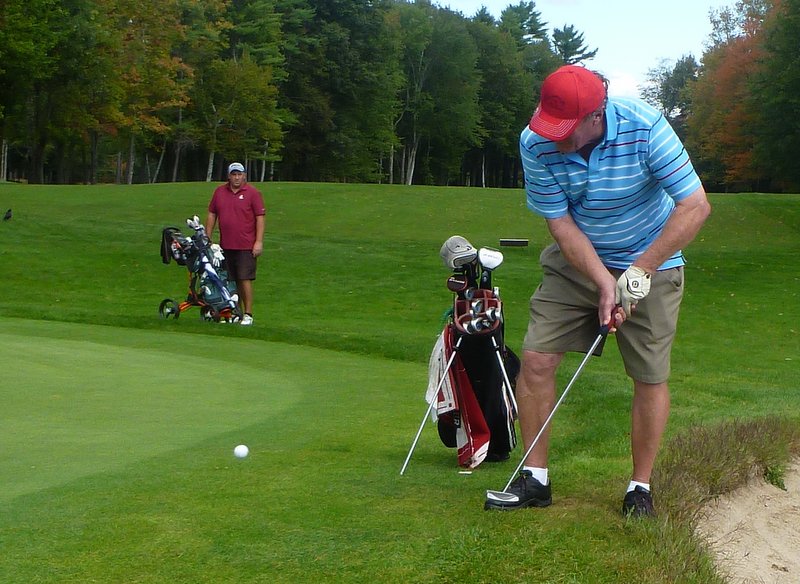
My principal guide to the Beav was Dave Andrews, a retired television news reporter. Dave swings righty but writes and putts lefty, and he was able to use his ambidexterity to his advantage with this tricky shot, from the collar of a bunker:

P1090394-001

Dave is an avid supporter of women’s golf. Beaver Meadow used to host a Symetra Tour event called the Northeast Delta Dental International, and Andrews served twice as the tournament’s (volunteer) caddie master. He and several of his friends also sometimes serve as volunteer caddies at women’s mini-tour events in Florida, where they go to escape New England winters, and at the LPGA’s Q School. That’s Dave and Hannah Yun below, at the 2011 Q School, where he helped Yun earn her 2012 LPGA rookie card.

andrews yun

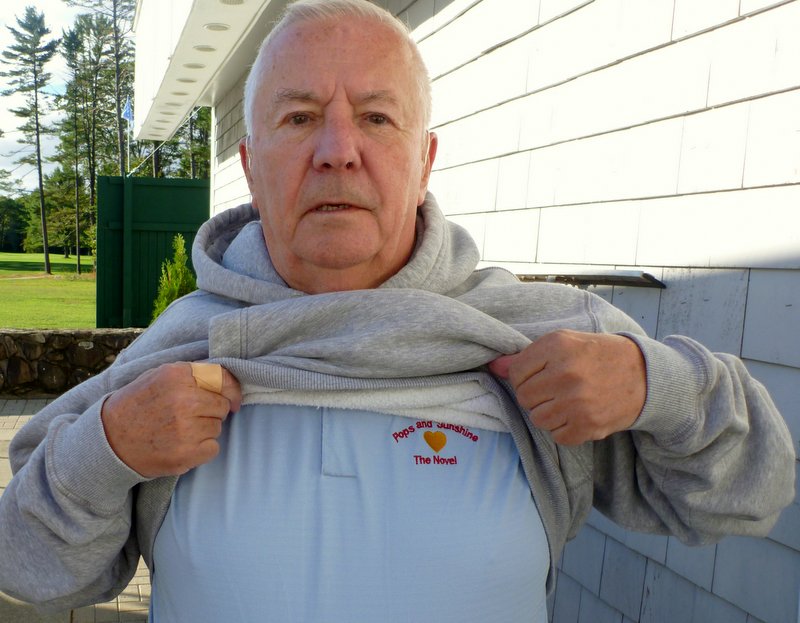
Dave is the author of a novel called Pops and Sunshine, which makes good use of some of his experiences as a caddie and as a regular at Beaver Meadow. The guys who hang around with him have been big supporters not only of women’s golf but also of the book. This is Tinker Foy, who has been a Beav member for more than fifty years:

P1090440-001Tinker’s son, Denny, was Dave’s partner in a tournament that was underway when I arrived. Denny has the rarest and most prized of all golf tans, the sunglasses-stem line:

P1090331Another of Dave’s regular golf buddies is Russ Matthews. Russ sold his company when he was in his forties, and now plays golf a hundred percent of the time, Dave told me. He has been to Scotland a couple of times, and when he isn’t playing golf he’s watching it on TV. He’s part of the group that goes to Florida each winter, but Russ said he wouldn’t want to live there full time, because he likes the change of seasons. “I played hockey when I was a kid,” he said. “When I started, I just had figure skates, and I taped magazines to my legs, as shin guards.” He had a heart attack not long after I visited, but he’s doing fine now. Here he is:

P1090298

Every year, Beaver Meadow plays a two-weekend tournament, called the Beaver Cup, against a club in Phoenix, New York, called Beaver Meadows. There’s a golf club in Virginia that has almost the same name as my golf club, and one of these days the Sunday Morning Group is going to challenge them to something. In the meantime, I hope the guys from the Beav will drop by (after the snow has melted) for a round at our place.

P1090381-001

A Ghost Course in Southern New Jersey

The Great Trial, Blue Heron Pines East, October, 2003.

The Great Trial, Blue Heron Pines East, October, 2003.

On the morning of the second day of the Sunday Morning Group’s fourth annual autumn golf trip to Atlantic City, in 2003, Hacker (real name) gave everyone printed driving directions to Blue Heron Pines East, the course we were scheduled to play that day, but then drove himself and Harry, his navigator, to a course called Harbor Pines, which we weren’t playing until the next day and which was twenty-five minutes from Blue Heron. We had to shuffle the tee times while we waited for them to realize they’d screwed up. Then, after the round, we held a trial in the clubhouse—there were several lawyers on the trip—and sentenced the two of them to buy everybody’s lunch. Harry never fully understood why he was being forced to pay for so many bacon cheeseburgers, but everyone else, including Hacker, thought the whole thing was pretty funny.

That's Hacker in the middle and Harry on the right. Harry claimed later that he'd been represented by incompetent counsel.

The reading of the charges. That’s Hacker in the middle and Harry on the right. Harry claimed later that he’d been represented by incompetent counsel.

Blue Heron Pines East, which was designed by Steve Smyers, was one of our favorite golf courses, but in 2007 a real-estate developer bought it, and announced a plan to build an enormous condominium complex right on top of most of the holes. A year later, the global economic implosion helped to kill the condominium project, but the golf course remained closed and was allowed to revert to New Jersey. Earlier this month, during this year’s S.M.G. trip, Hacker and I drove over to have a look at the ruins, after playing a round at what used to be called Blue Heron Pines West. (It was designed by our close personal friend Stephen Kay and is still doing business, as Ron Jaworski’s Blue Heron Pines). Here’s what used to be the sign at the entrance of the East course:

P1100102And here’s the old driving range and part of the old parking lot:

P1100084

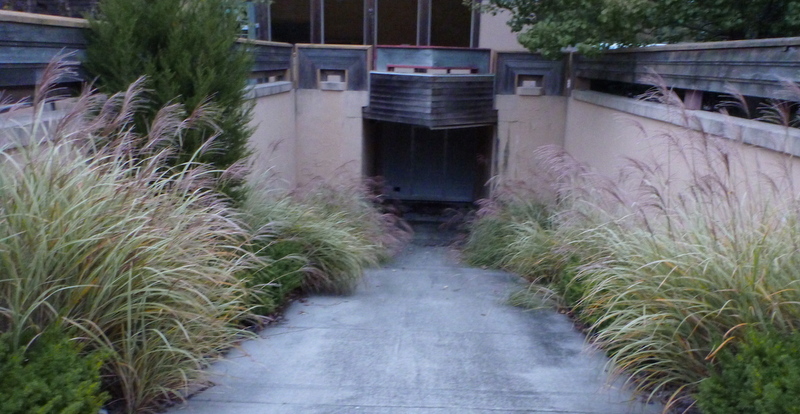
And here’s the ramp leading down into what used to be the cart barn:

P1100099

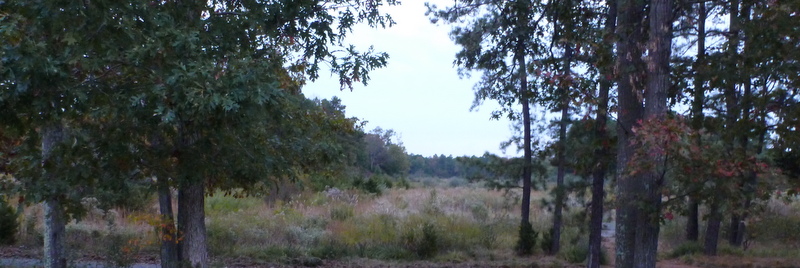
And here, through the opening in the trees, is what was once the fairway of the first hole, a really nice short, uphill par 4. The green was on the rise in front of that bank of trees in the distance:

P1100096

And here’s the patio outside the clubhouse. We held the trial on the other side of those double doors, in what was then the grillroom:

P1100087

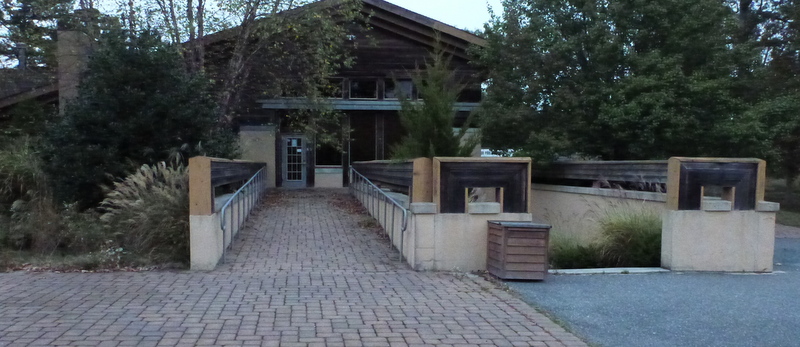
And here’s another view of the clubhouse, and of what used to be the entrance of the golf shop:

P1100082

We learned during this year’s trip that the property has a new owner, who just received approval for a new condominium plan. That means, I guess, that people aren’t suddenly going to come to their senses and give us back our golf course. We like the surviving course a lot, but it would be nice to have both. And if the condominiums really do get built we won’t even be able to explore the remains.

P1100098

A few years ago, for The New Yorker, I wrote about another ghost course, on an island in the Outer Hebrides, in northwestern Scotland. You can read about that lost golf course here.

A Golfer’s Bucket List: No. 6

Home course, flooded fairways, September, 2011.

Home course, flooded fairways, September, 2011.

Play in weather so miserable (lightning excluded) that yours is the only group left on the course. Old golf joke: An obsessed golfer heads to the club in pouring rain for his regular Saturday-morning game. The storm turns out to be too intense even for him, so he returns home, takes off his wet clothes, and slides back into bed next to his wife. “The weather’s horrible,” he whispers, and she says, “And can you believe it? My idiot husband is out there playing golf.”

Gairloch, Scotland, May, 2007.

Gairloch, Scotland, May, 2007.

He should have stayed at the club. Golf was invented in a country where bad weather is almost the only kind, so to take the game’s full measure you have to play it occasionally when all the sensible people are indoors watching Sports Center. There’s something sublime about putting through casual water or over pea-size hail, especially if you have the course to yourself.

On the road to Tralee, Ireland, May, 2006.

On the road to Tralee, Ireland, May, 2006.

Phil Mickelson’s Open Victory and the Difficulty of Mentally Influencing the Outcome of Recorded Sporting Events

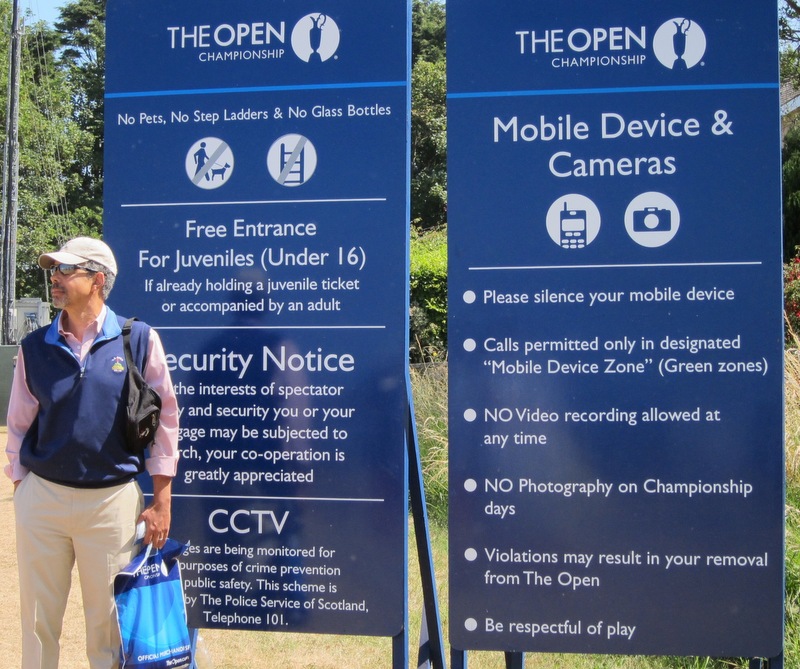
Rick Hunt, a reader, was at the Open both days this weekend. He took this photo on Saturday

Rick Hunt, a reader, was at the Open both days this weekend. He took this photo on Saturday

In 2006, my wife and our two children and I flew from New York to Las Vegas so that we could rent an R.V. and spend ten days visiting the remarkable national parks in southern Utah and northern Arizona, after first taking a guided tour of the greatest man-made object in the universe, the Hoover Dam.

Me, standing in awe before one of the many fascinating dioramas in the visitors' center at the Hoover Dam, June, 2006.

Me, standing in awe before one of the many fascinating dioramas in the visitors’ center at the Hoover Dam, June, 2006.

Our flight coincided almost exactly with the final round of the 2006 U.S. Open, and because I am a good father I grumbled very little about having to spend the afternoon traveling with my loved ones rather than lying on the couch at home and staring at the TV. My saintly attitude was rewarded during the flight: there were video screens in the backs of the seats on our plane, and I got to watch the tournament anyway. In fact, the broadcast lasted almost exactly as long as the flight. The picture broke up as we were touching down at McCarran International Airport, in Vegas, but by then the tournament was all but over. Phil Mickelson had just pushed his tee shot on the final hole into the corporate tents to the left of the eighteenth fairway, but he had the thing sewn up, and, besides, the guy’s a magician. Good show, Phil!

The next morning, in my wife’s and my room at the Bellagio (or wherever), I turned on the TV to watch Open highlights. Weirdly, the guys on Golf Central weren’t talking about Mickelson; they were talking about Geoff Ogilvy, whom I scarcely remembered having noticed during my life, much less during the broadcast the day before. Suddenly, I worried that what I had watched on the plane had been not a live program but a videotape of some historical triumph of Mickelson’s. It took me five minutes of careful Golf Channel viewing to figure out what had happened.

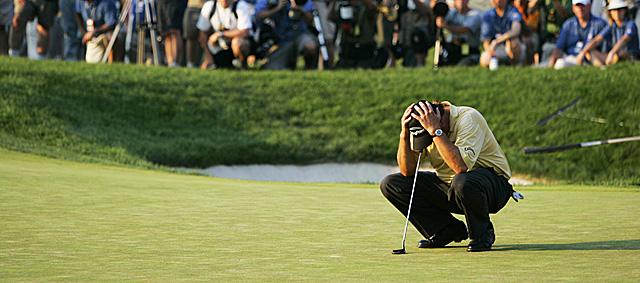
Mickelson winged foot

Naturally, I blamed myself for Mickelson’s last-hole double-bogey, since I was mentally rooting for him toward the end of the tournament, and the in-flight broadcast cut out at the moment when he needed me most. And this week I blame myself for his victory, at Muirfield, because I wanted Tiger Woods to win but was unable to mentally undermine his opponents: instead of watching the golf tournament on TV, I was (selfishly) playing in a golf tournament of my own.

Rick Hunt, at the Open. If I'd been there myself, I might have had better luck influencing the outcome.

Rick Hunt, at the Open. If I’d been there myself, I might have had better luck at influencing the outcome.

Influencing the outcome of televised sporting events is harder than many people believe, because a technique that brings victory today may have the opposite effect tomorrow. Mumbling obscenities, swaying hypnotically, and making hula-like hand motions in front of the screen will usually keep a long putt from going in—especially if the hole remains on camera and the putter is Lee Westwood—but the same method sometimes fails disastrously, perhaps by accidentally nudging an errant ball onto the correct line.

Curiously, the best method for salvaging victory when things are going poorly is to turn off the TV—a tactic whose effectiveness is explained by quantum mechanics: unless they are observed directly, athletic competitions, like muons and mesons, exist in all possible states simultaneously. Turning off the TV during a big tournament restores the universe’s indifference to the final score, thereby giving Tiger (let’s say) a chance to rediscover his swing. This quantum effect may also explain why viewers are able to influence even videotaped sporting events—as long as the viewers don’t know in advance how everything came out.

For that reason, I had planned to remain ignorant of the Open outcome so that I could watch a recording of the final round when I got home and bring in the winner I wanted. Sadly, though, as I was standing in line at the scorer’s table I overheard some guy telling some other guy that Mickelson had won.

I watched the recording anyway, but without much enthusiasm. I had to hit the mute button many times, because the announcers were so annoying, and I found myself wishing that someone would invent an app (or whatever) that would turn Curtis Strange’s accent into something less grating (converting nahn, fahn, and mahn into nine, fine, and mine, for example); would automatically bleep out the phrase “plenty of green to work with”; and would prevent Andy North from referring to Royal Birkdale, where the Senior Open Championship will be played next week, as a “links-style” golf course.   

Hacker (real name), Royal Birkdale, May, 2010.

Hacker (real name), Royal Birkdale, May, 2010.


Four Miles From Muirfield is the Golf Course I Dream About

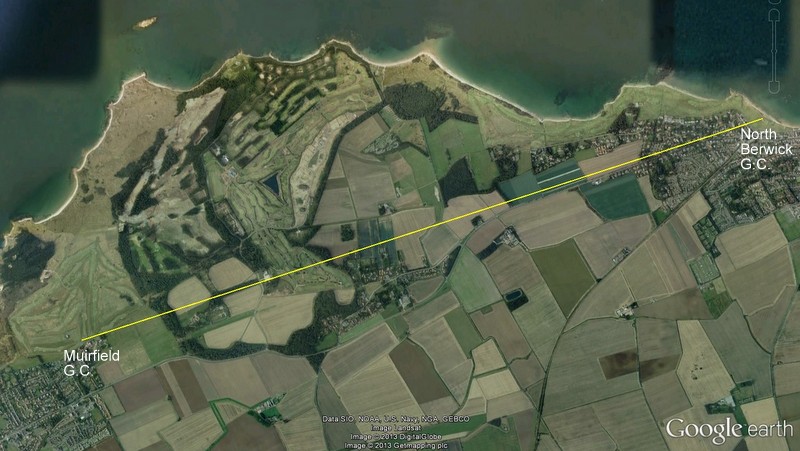
Four miles, as the golf ball flies.

Four miles, as the golf ball flies.

If my wife ever throws me out of the house and they won’t let me move into the Crow’s Nest at Augusta National, I’m going to hide out in North Berwick, Scotland, just a few miles along the coast from Muirfield Golf Club. I’ve played North Berwick pretty many times over the years, and it’s probably the course I think about the most, except for my home course. Among the many permanently memorable holes is the thirteenth, a par-four, on which the green is on the far side of a very old stone wall:

Thirteenth green, North Berwick Golf Club, Scotland, May, 2008.

Thirteenth green, North Berwick Golf Club, Scotland, May, 2008.

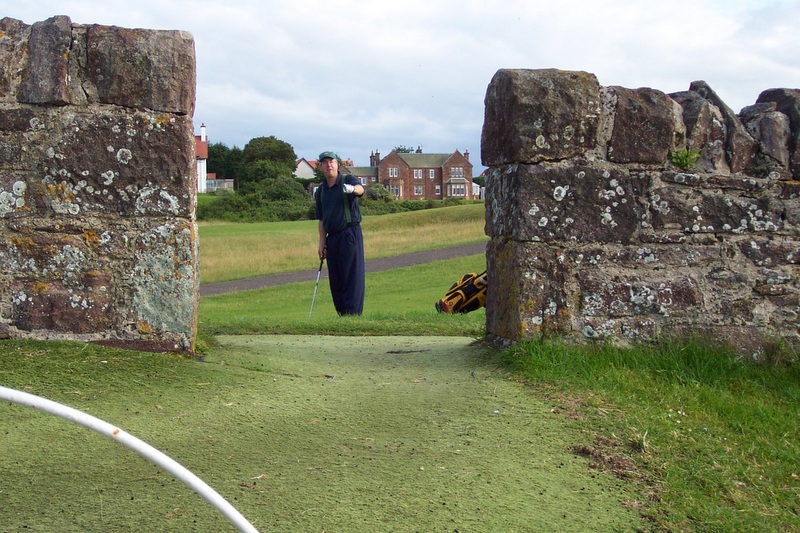
On a visit in 2004, I missed the green to the right and tried to chip through an opening:

DCP_3091I missed the gap, and then l was really in trouble. During two of my most recent visits to North Berwick, I stayed in a small hotel overlooking the course, called Blenheim House. Sad to say, the young couple who owned it, Milton and Ailsa, gave up last year and sold it to someone else. I don’t know if it’s back in business.

R.I.P.: Blenheim House Hotel, North Berwick, May, 2008.

R.I.P.: Blenheim House Hotel, North Berwick, May, 2008.

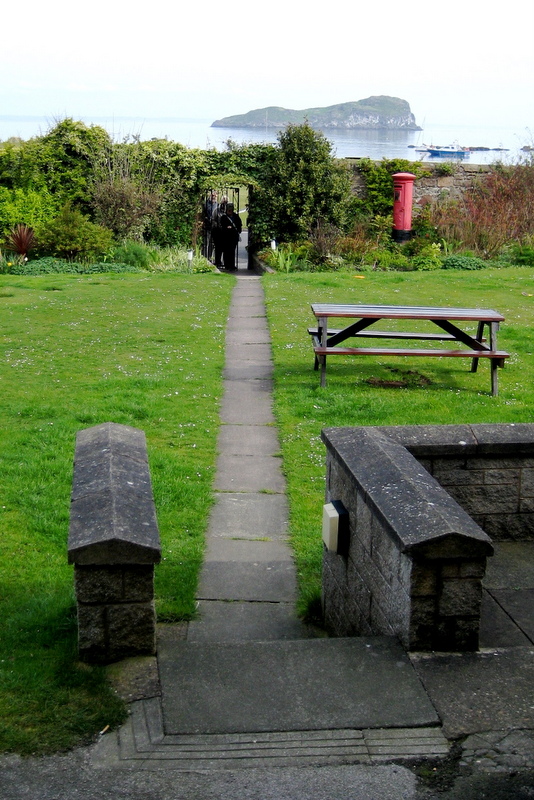
One of the great things about that hotel was that you could get to the golf course simply by walking through a gate in the back garden:

IMG_0015

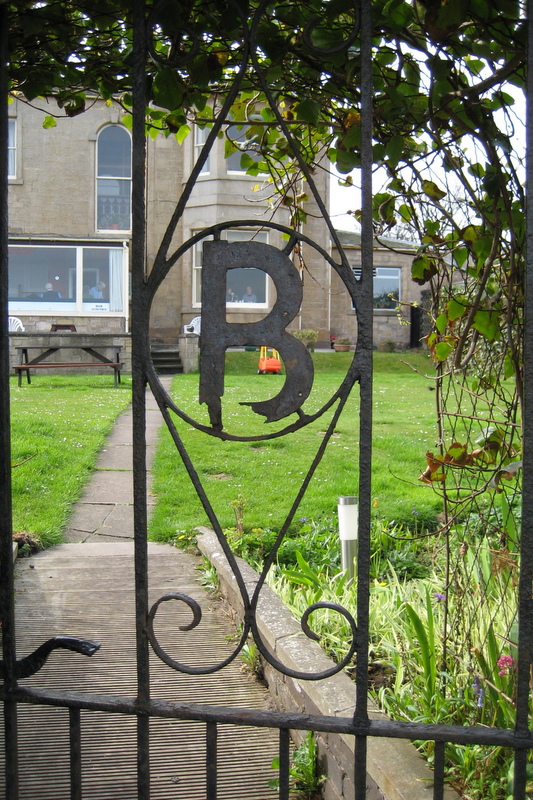
Here’s the gate, viewed from the golf-course side. The people in the windows are eating breakfast:

IMG_0019

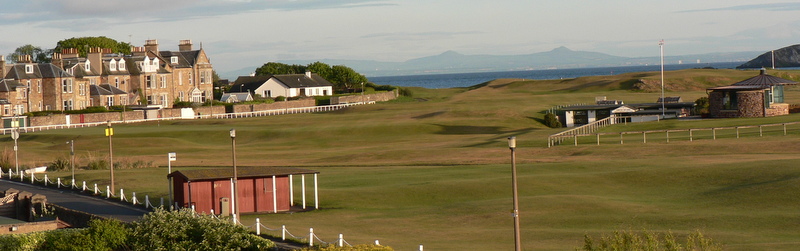
During the relatively few daylight moments when I wasn’t playing golf, I gazed at the golf course from the window in my room. Here’s what I saw:

P1030696

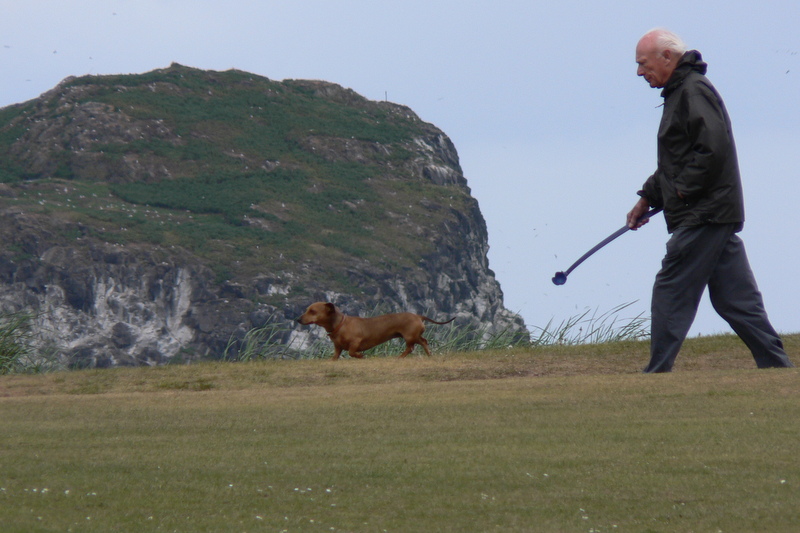
The cylindrical stone building at the far right is the starter’s shelter; the semi-subterranean white structure just to the left of it is the golf shop. The eighteenth green is at the far left, and the clubhouse is out of the picture to the left of that. The opening tee shot at North Berwick usually calls for something like a five-iron, and the second is essentially blind, and several of the other holes are almost as unusual. When I looked out my window one morning, before breakfast, I saw a guy walking a dachshund just east of the course:

P1030703

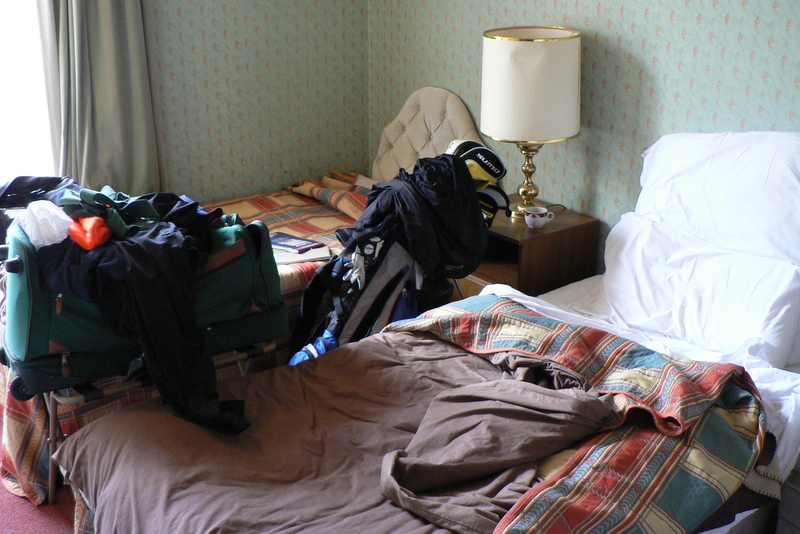
Here’s what my room looked like. As you can see from the size of the suitcase, this was before I had realized I could cram all the clothes I need for an overseas golf trip into a carry-on bag:

P1040668One afternoon in 2007, when I was in Scotland on a Golf Digest assignment, I teed off at North Berwick by myself. After a few holes I was joined by an old man, who had come through a gate leading to one of the houses overlooking the course. He had lost his wife sixteen years before, he said. He walked along with me and asked me questions and held the flag while I putted, and I played really well for as long as he was there. He said that if someone offered him a plane ticket to New York he would go in five minutes, and I briefly considered trying to work out a temporary life swap. He said that he had once been to Chicago, and that while he was there a shoeshine man had asked him if he was French. He said no, Scottish, and the shoeshine man said, “You speak English very well.”

IMG_0033

On the fourteenth hole, the old man and I caught up to and joined three Swedes. He knew them already, because he had run into them the night before, in the bar at the Blenheim. They were part of a group of six, and they had played Muirfield the previous day, and they were going home in the morning. One of them said that the flight from Edinburgh to Stockholm was just an hour, and that he would be going straight from the airport to his office—a thought that made everyone temporarily adopt a grim facial expression. The old man walked along with us until he got back to his gate. It turned out that he was very interested in Swedish girls, and other girls.

IMG_0034

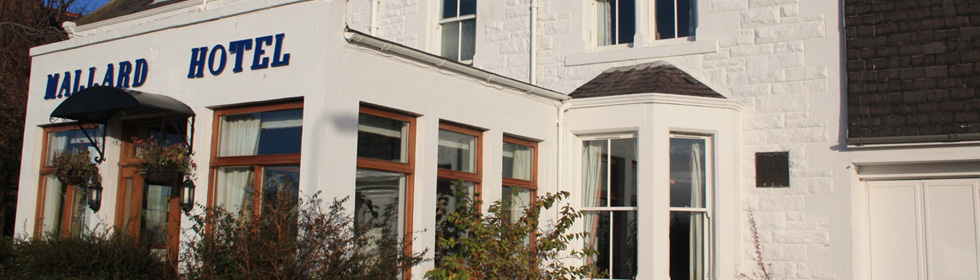
That night, I stayed not at Blenheim House but at the Mallard Hotel, in Gullane. Incidentally, “Berwick” is pronounced BARE-ick, and “Gullane” us pronounced GILL-en. There are three golf courses in Gullane: No. 1, No. 2, and No. 3. Muirfield Golf Club is virtually next door and can be seen from the top of Gullane Hill, and a caddie at Gullane once described it to me as Gullane No. 4—although Muirfield members don’t think of themselves that way.

mallard

I ate dinner that night at a pub called the Old Clubhouse. Directly across the street from both the pub and my hotel was the Gullane Golf Club’s six-hole children’s course, which costs nothing to play, as long as you’re not an adult. As I walked to dinner, I saw a man and his nine- or ten-year-old daughter. He was teeing up balls for her, and she was hitting the most gorgeous draws with a driver. She was hitting from a tee toward a green, but she was using the hole as a driving range. What a swing! And beyond the children’s course I could see Gullane No. 1 and No. 2.

First green, Gullane No. 1, looking back toward town. The knobby thing at  top right overlooks North Berwick and is visible in the photo with the rainbow, below.

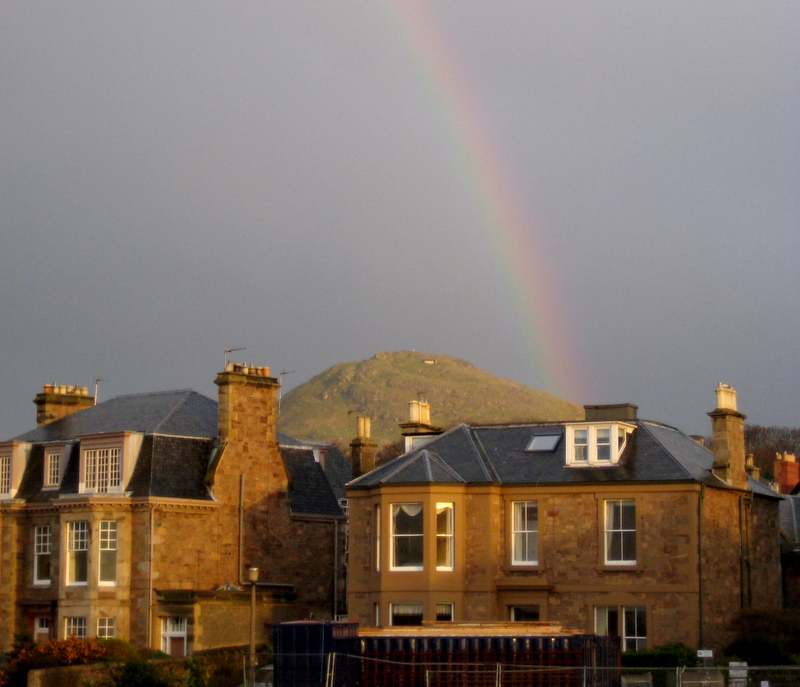
First green, Gullane No. 1, looking back toward town. The knobby thing at top right overlooks North Berwick and is also visible in the photo with the rainbow, below.

The next year, I went back to Scotland with eight friends from home, and we spent the first two nights of the trip in North Berwick. On the second day, we saw this:

IMG_0043

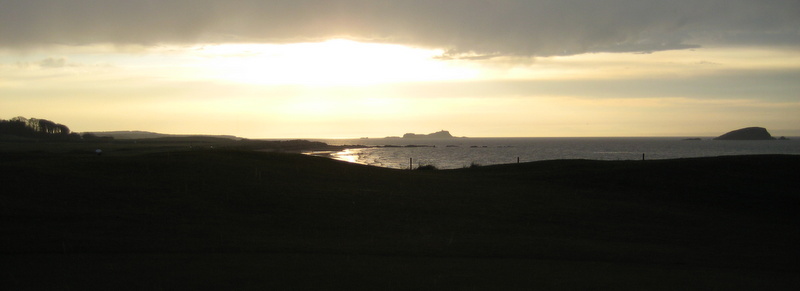
And that evening we saw this:

IMG_0042

I almost feel picking a fight with my wife, to see if I can’t tempt her to give me the boot.