Reader’s Trip Report: Midnight at the Grave of Old Tom Morris

Open-Cohens-Sachses

In July, Adam Sachs and Mark Cohen, readers in Kansas City, celebrated their sons’ bar mitzvahs by taking them to Scotland to watch the British Open and play golf at Cruden Bay, Kingsbarns and Luffness. Here are the boys, both thirteen years old, at the Old Course at St. Andrews—Elliott Cohen on the left, Phinney Sachs on the right:

Open-Elliott-Phinney

And here are Mark and Adam, setting an example:

Open-Cohen-Sachs

They saw Tom Watson, who during his heyday was known in Kansas City as the Fourth Franchise, and the boys learned that the Scots know nothing about making pizza:

Open-pizza

Adam writes:

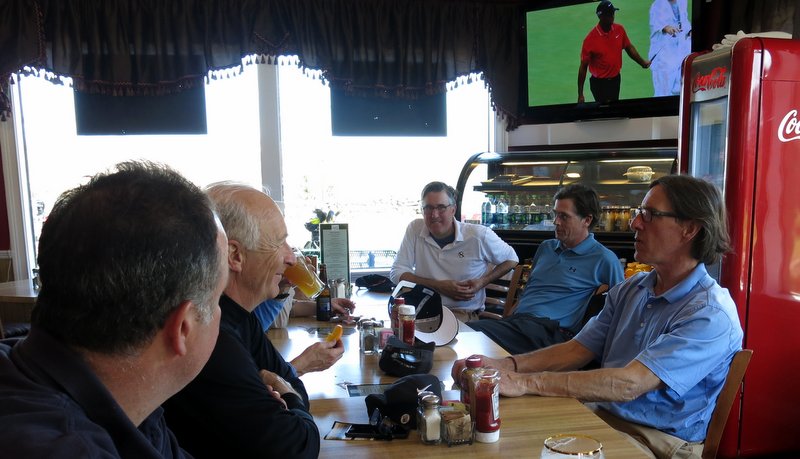
“Because the Old Course is close to everything in St. Andrews, we couldn’t help running into players, caddies, journalists and golf-industry hangers-on. The boys got John Daly’s autograph, twice. On Tuesday, at Kingsbarns, which is one of the most enjoyable courses I’ve ever played, we were held up by the French pro Victor Dubuisson, who was two groups ahead of us. He ended up missing the cut, so maybe he should have been practicing on the Old Course instead. Tom Lehman’s sons were between us and him, and we all spent a lot of time standing around. On Friday night, I saw Darren Clarke, who also missed the cut. He was leaning against a wall outside a bar, smoking a cigarette and drinking a beer, and when I called to the boys to come back and meet ‘a real Ryder Cup hero’ he chatted with us and signed their golf flags.
IMG_8647

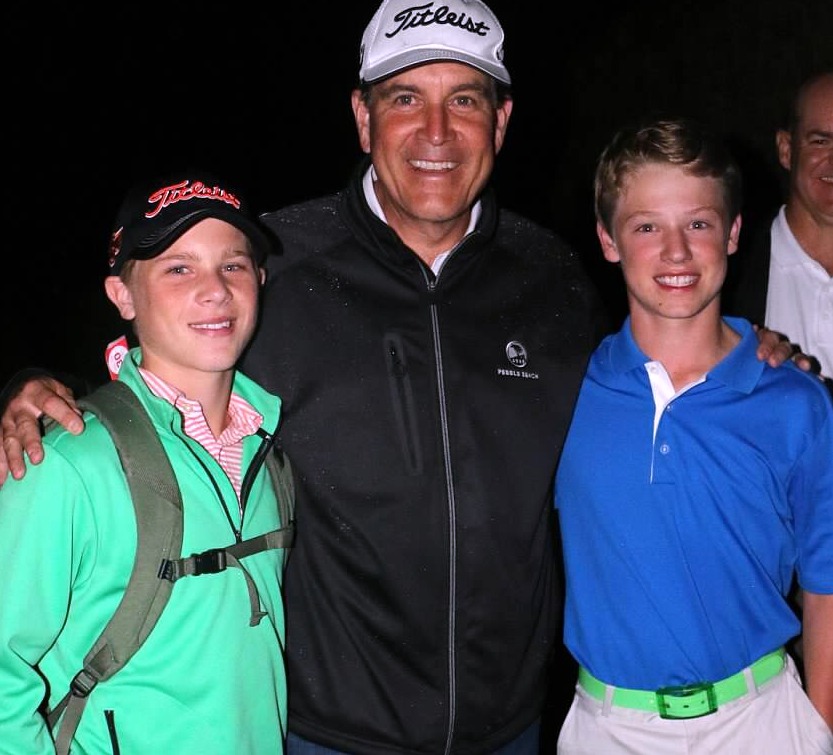
“On Saturday night, we ran into Jim Nantz, who was in St. Andrews as a spectator only (the U.S. broadcast was on ESPN).

Open-Nantz-street

“At midnight, we joined him and a group of his friends for a misty walk to the graves of Old and Young Tom Morris. The cemetery gate was locked, so Phinney and Elliott had to help Nantz, Mark, me, and all the other old guys get over the fence.

Open-Graveyard

Afterward, we went to the bar at the Dunvegan Hotel, around the corner from the 18th green. On the way, Phinney asked Nantz if he would record a voice-mail message for his cell phone. He did:

Nantz told Phinney that Phil Mickelson had asked him to do the same thing, and that Mickelson reciprocated by recording one for him.”
Open-Elliott-Nantz-Phinney

The Cohens and Sachses went back to the cemetery during the daytime, when the gate was unlocked. There was lots of death in the Morris family:

Open-Morris-grave

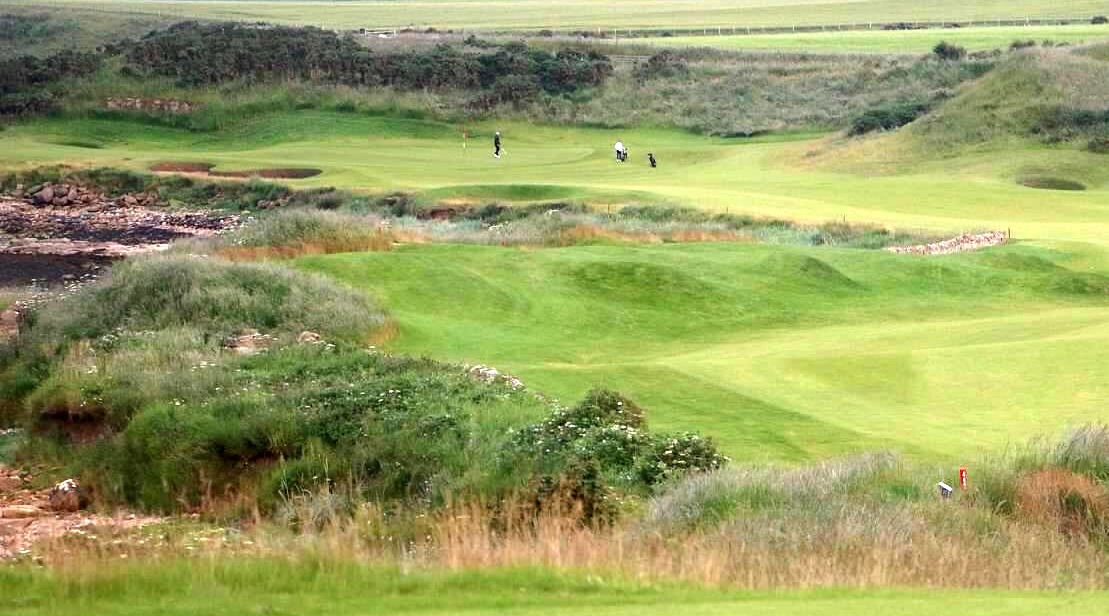
Among the trip’s many other highlights was golf at Cruden Bay. That’s where Adam took this photo of Phinney and Elliott:

Cruden-Bay-Phinney-Elliott

Cruden Bay is one of my favorite courses, too. I ate dinner in the clubhouse there after a late-afternoon round a few years ago, and I heard the waitress ask someone at the table behind me, “Would you like pineapple with it, or a fried egg?” I didn’t dare turn around to see what “it” was. But, like all four Cohens and Sachses, I love the course!

cruden-bay-green

The Other Royal & Ancient Golf Club — This One in the United States

chappyscreenshot

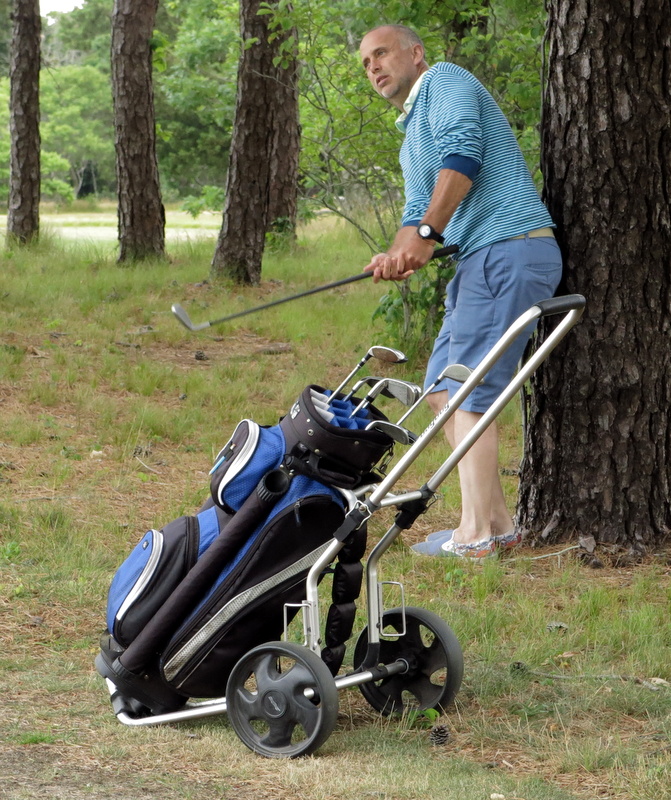
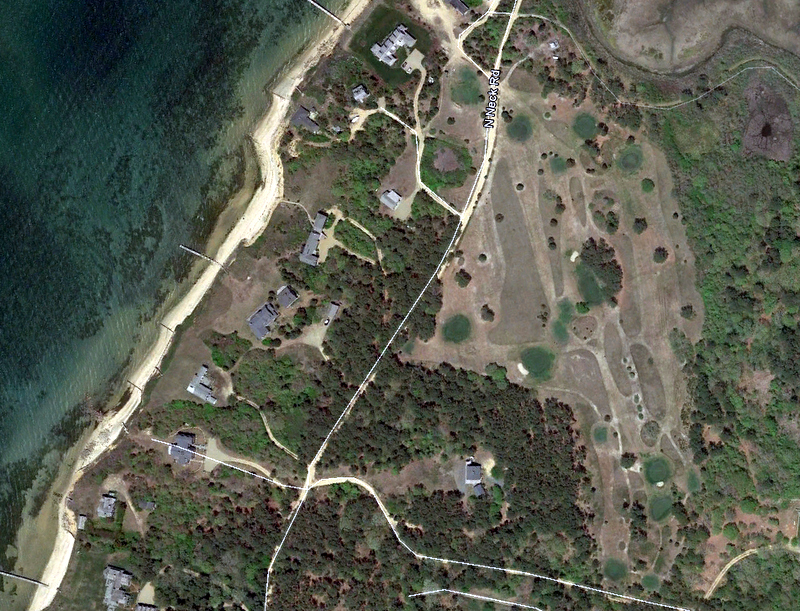
My family and I spend time on Martha’s Vineyard every summer, and, like the President, I usually manage to sneak away a couple of times to play golf. This year, I played a course I’d never heard of, despite the fact that it’s been around, in one form or another, for almost a hundred and thirty years. It’s called the Royal & Ancient Chappaquiddick Links.

chappylogosquare

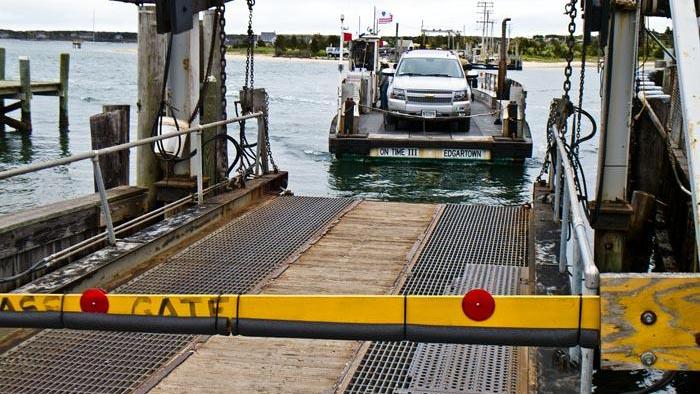
To get to it, you first have to take the tiny car ferry from Edgartown to Chappaquiddick Island:

chappyferry

Then, for ten minutes or so, you have to do whatever your GPS tells you to do. I made the trip with my friends Luke Morgan and David Peek. Our fourth was Brad Woodger, the manager and superintendent, whose great-grandfather Frank Marshall created (and named) the course in 1887. Marshall got the idea while hiking on Scottish and Irish linksland during a backpacking trip to Europe. Here’s Woodger during our round:

bradwoodger

He told me:

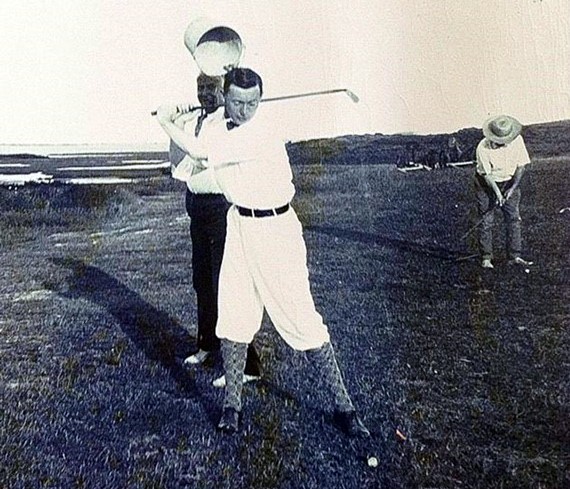
My great-grandfather eventually became a dentist for the Boston Opera, but before settling into his career he visited Chappy every summer to fish and sail and muck about. He and friends and family laid out 24 holes on the island’s North Neck, and by 1905 the course was functional and frequented by a large cast of Boston area characters.

ChappyOldSwing

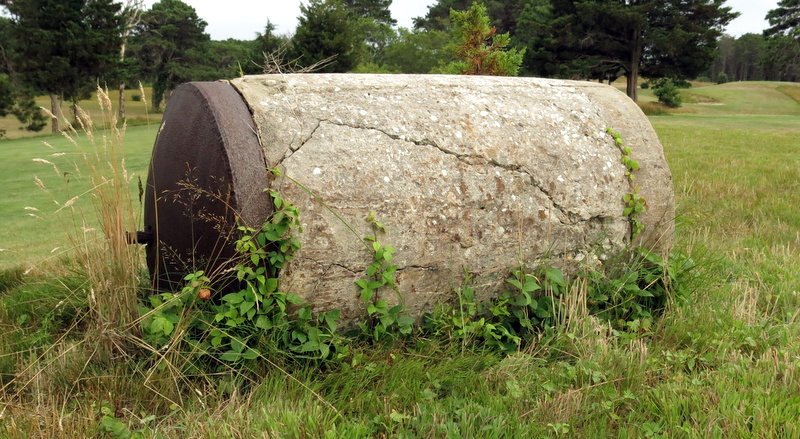
Sheep grazed everywhere, and the Links required little maintenance until the sheep decided to graze the greens, too. For a brief period, Frank changed the putting surfaces to sand, but the sand turned out to be harder to maintain than native fescue. Here’s an old concrete green roller from the early years:

greenroller

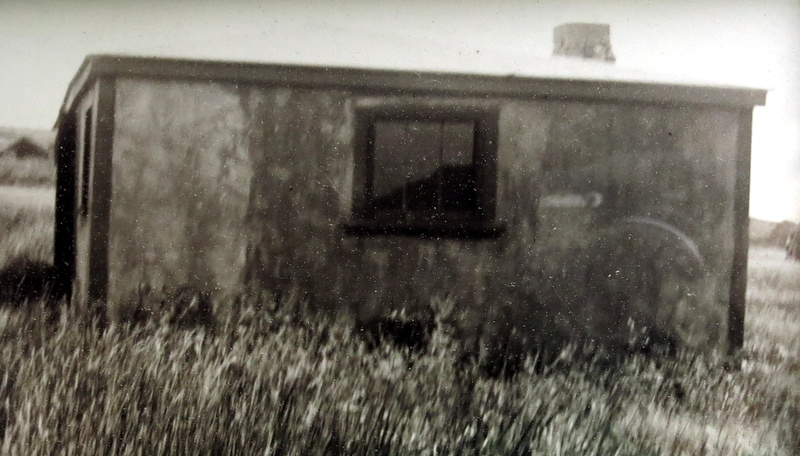
“In 1910, Frank added a tennis court, a clubhouse, and a Tea Barn. The Tea Barn was eventually expanded to serve as a year-round home for Frank’s daughter Mary. The clubhouse became storage for my clothes. Here’s the original clubhouse:

oldchappyclubhouse

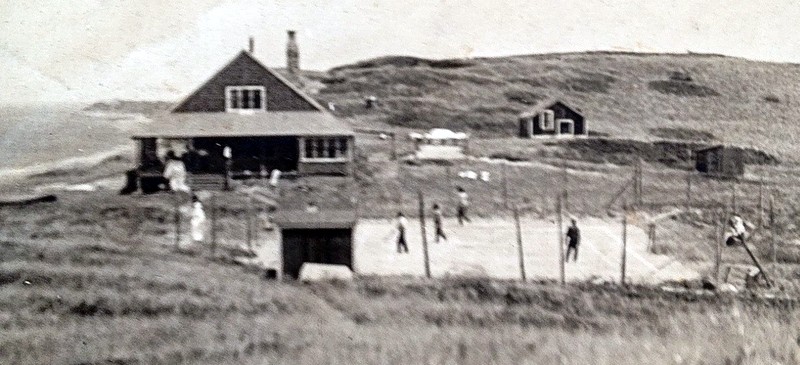
“And here’s the tennis court:

ChappyOld

“The Links went dormant during the Depression and the Second World War, and they became overgrown with Chappy’s newest residents: scrub oak and pitch pine. Frank’s son and his wife reclaimed seven holes in the mid-1950s. In 1986, the least likely or qualified (but most available) candidate, me, took over. In 2008, along with the financial support of George Bennett, and the partnership of Kim Bennett and her father Bob (no relation to George), we renovated and expanded the course to nine holes.”

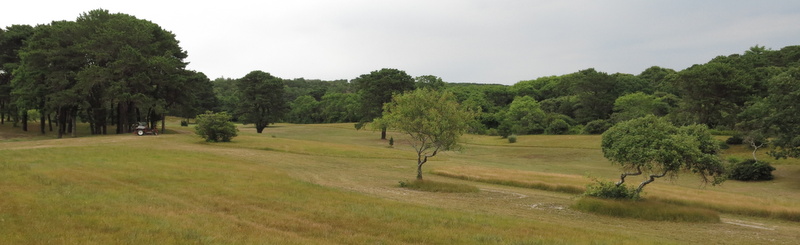
The course is just 1,325 yards long, but don’t let that fool you, because it’s a gas to play. Here’s what it looks like on the ground:

chappyranda

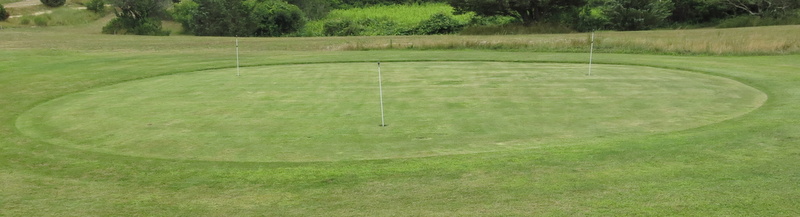
And here’s the practice green:

chappyRAgreen

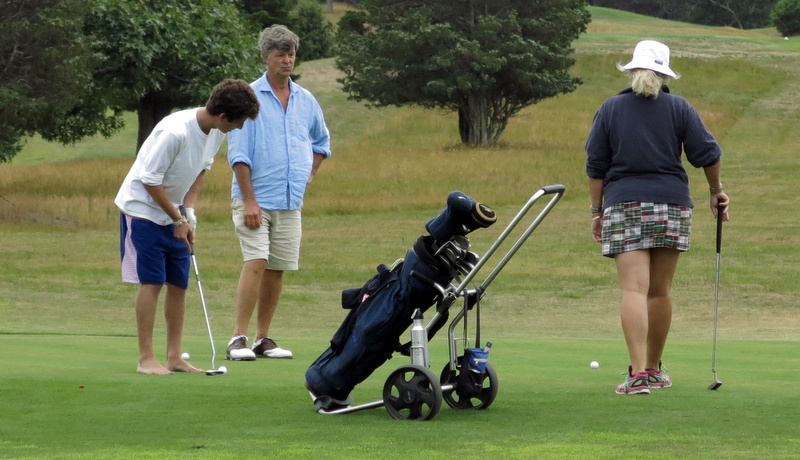
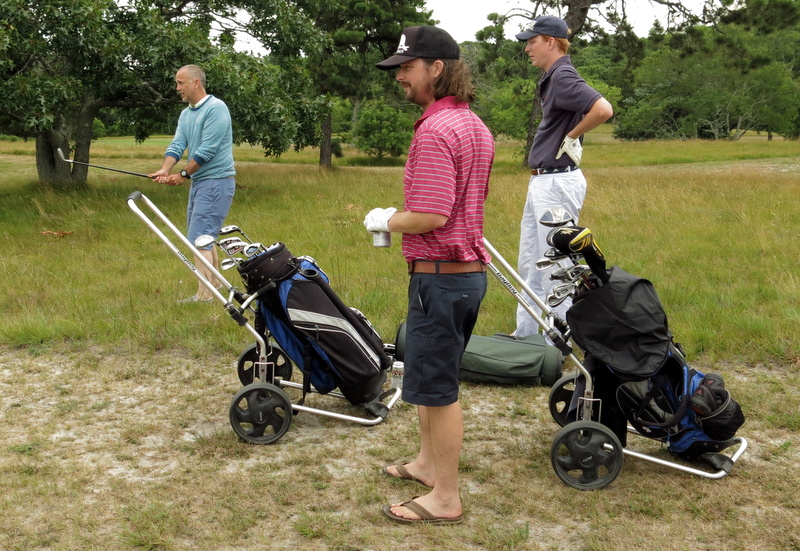
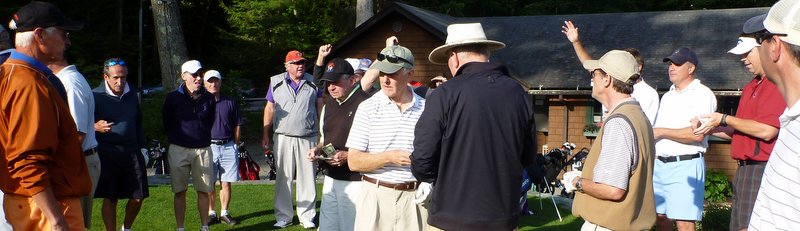
The most famous people ever to have played the R & A, Woodger told us, are probably the father and son of the musician John Cougar Mellencamp. They weren’t there on the day we visited, but these people were:

otherplayers

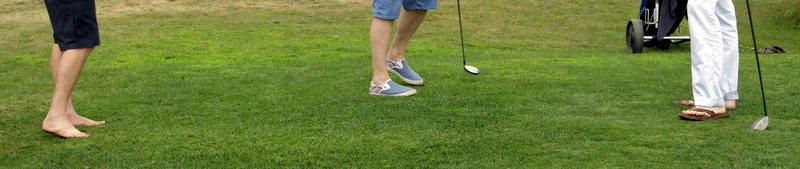
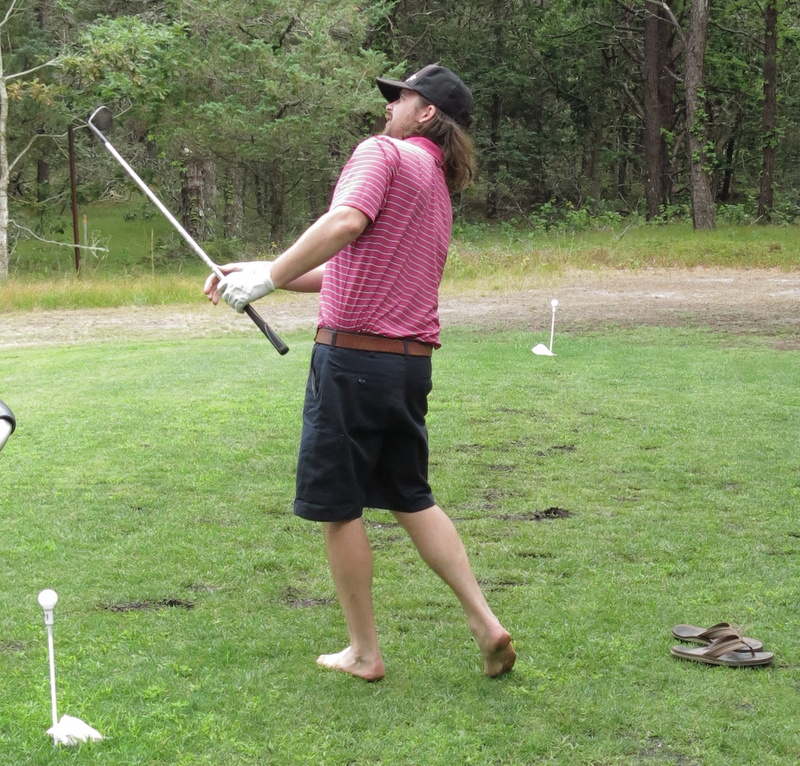
They had roughly the same idea about appropriate footwear that we did:

golfshoeselection

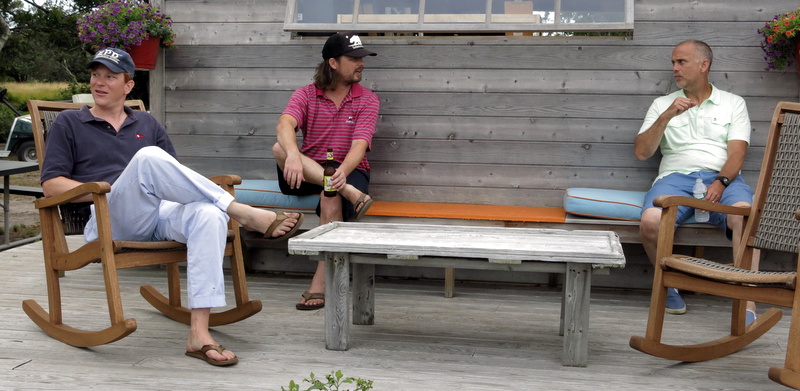
After our round, we had a beer and a Diet Coke on the back porch of the current clubhouse. If Luke and David seem eerily familiar to you, it could be because you are one of the vanishingly small number of people who, in 2013, watched the the short-lived ABC Family reality-TV show The Vineyard, in which they appeared as extras. That’s Luke on the left and David in the middle:

beerclubhouseThe beer and Diet Coke, along with a few snacks, were kept in a small refrigerator inside the clubhouse. Hanging above the refrigerator was a list of frequently asked questions about it:

beerfaq

A memorable day. Here’s the front of the clubhouse. Only so many people can stand inside it at one time. If you have sharp eyes and aren’t reading this on your phone, you may be able to make out the fridge, through the door. It’s over on the right:

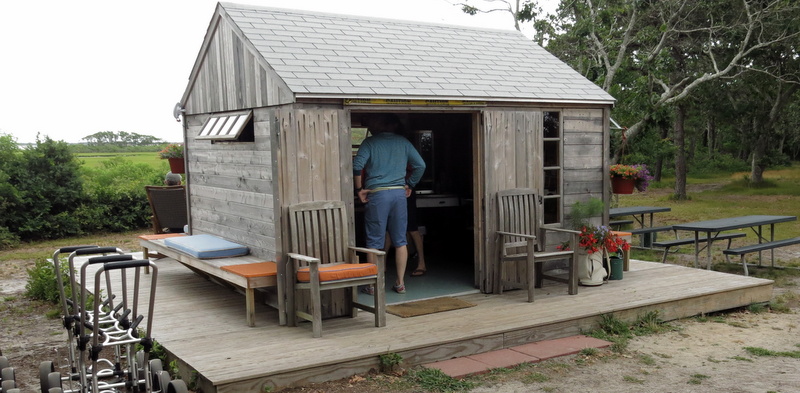
clubhousefront

And here are some other photos:

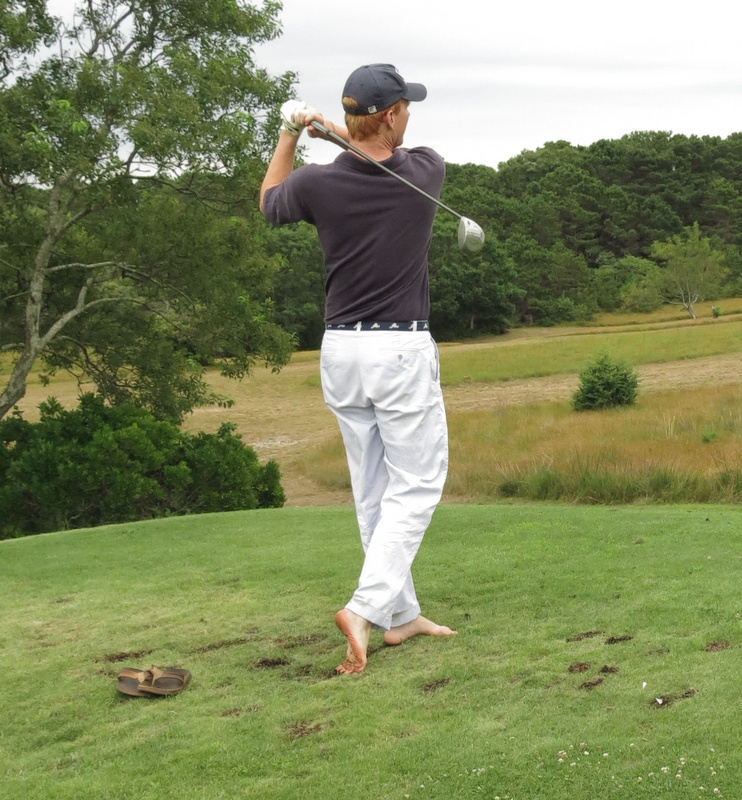
ontheteechappy

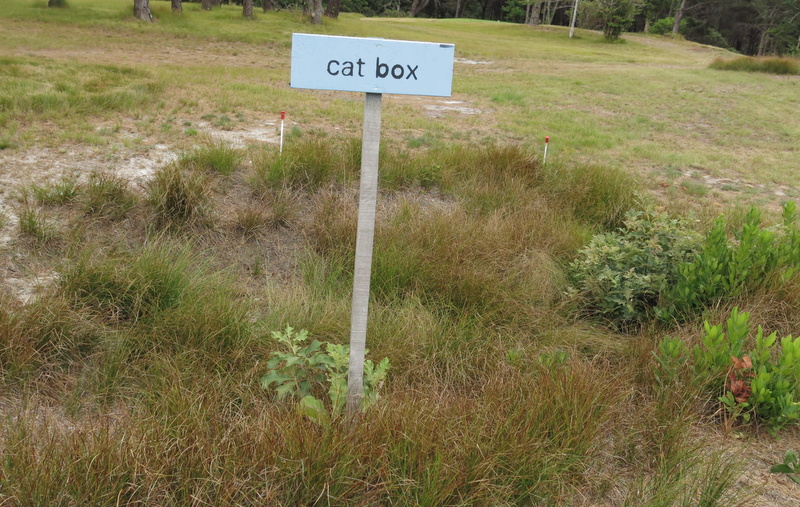
catboxbhappy

Those little poles on the tee box in the photo above are lights for night golf.

lukemorgan

davidpeek

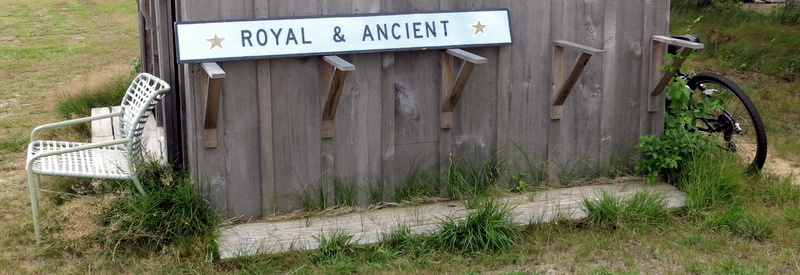
randasign

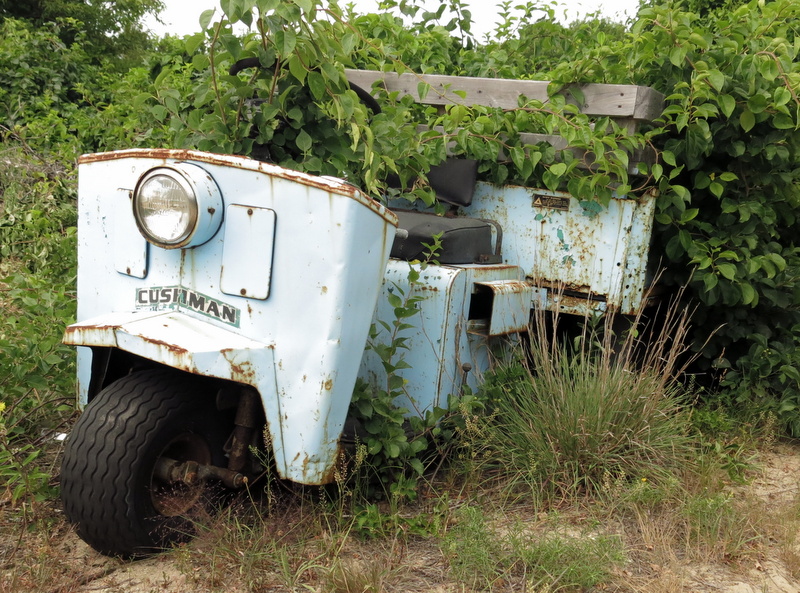
I’m not sure what this is, or was:

abandonedthing

Is This the World’s Greatest Golf Course?

P1130274

On Memorial Day weekend, I played Friday afternoon (lost five dollars), Saturday morning (came in third in a two-man scramble, playing with Tim), Saturday afternoon (advanced to the final in the member-member, also playing with Tim), Sunday morning (won six dollars), Monday morning (won low gross in the nine-hole Memorial Day mixed shamble, playing with Madeline—my golf wife—and an actually married couple), and Monday afternoon (lost five dollars). Then I played again on Friday (lost five dollars) and Saturday morning (won the member-member, one-up, playing with Tim.) That was a pretty good eight-day run, so I wasn’t totally bummed when we had thunder, lightning, and heavy rain just before 7:00 the following morning.

wundermapam
I sent an email to the Sunday Morning Group saying I’d bring a couple of decks of playing cards, and Hacker (real name) suggested that we eat our cheeseburgers and hot dogs (supplied by Barney) for breakfast, instead of lunch. But the lightning had stopped by 7:30, so we played golf instead of setback. One very good thing about rain is that it scares away slackers: twenty regulars showed up, and we had the course to ourselves.

P1150667

Getting soaked was better than inhaling pine pollen—something we’ve done a lot of this spring:

P1150687Because I was up early on both Saturday and Sunday, before I left for the club I watched some of the Irish Open — by which, of course, I mean the Dubai Duty Free Irish Open Hosted by the Rory Foundation. The D.D.F.I.O.H.R.F. was held this year on a course that many golfers would pick as the best in the world: Royal County Down, in Newcastle, Northern Ireland.
P1100527

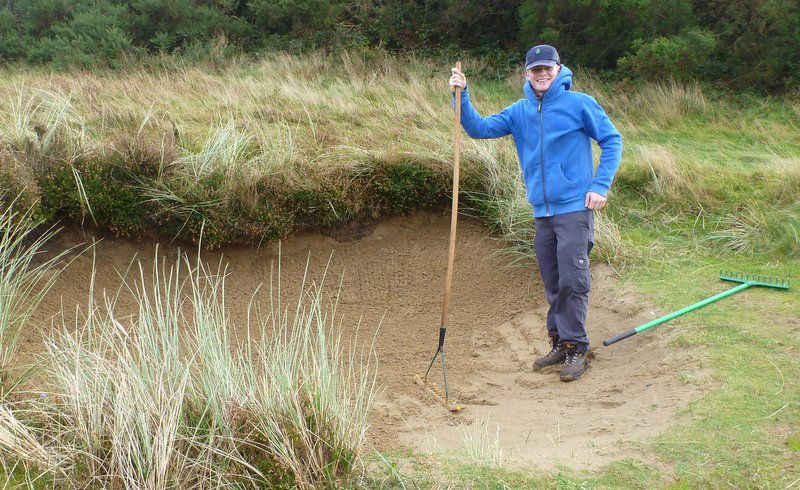
Among its many memorable features are its bunkers, which are maintained by vengeful demons:

P1100739

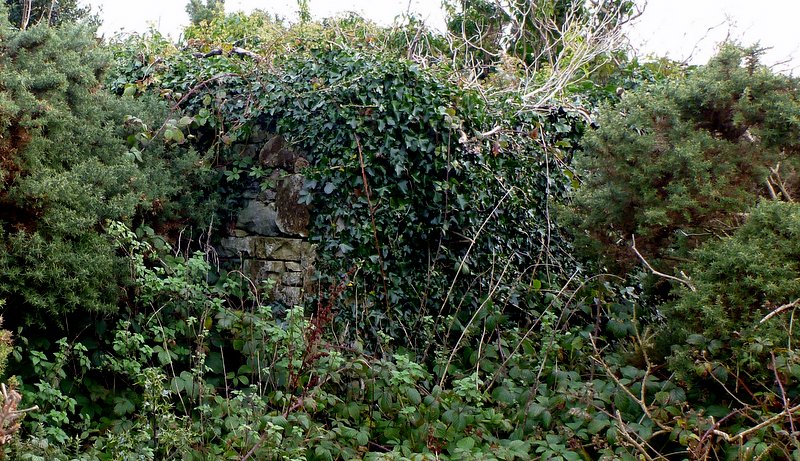
During a round at Royal County Down in 2013, my playing partner and I waded into a jungle of whins and briers near the eleventh tee to look for a century-old relic that a caddie had told me about two years before: the remains of a small stone building, which the maintenance crew had uncovered during an aggressive gorse-removal project. We found it, at some risk to our clothing, although it was so overgrown that we couldn’t see much more than one corner.

P1100734

Later that day, Harry McCaw—a past captain of both Royal County Down and the Royal and Ancient Golf Club of St. Andrews—told me that he thought the structure might once have served as the literal “club house”: the place where early players stored their clubs.

P1100513

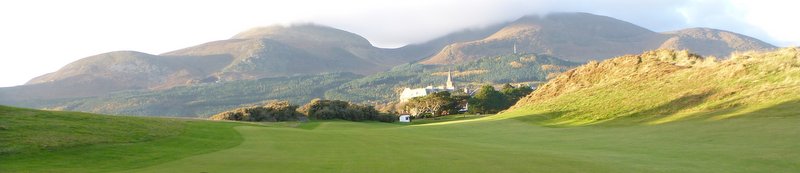
I had driven to Newcastle from Dublin, a hundred miles to the south, and during part of the trip I followed Mourne Coastal Route, a scenic highway. Irish roads are narrow under any circumstances; they become narrower if your eyes are repeatedly drawn to the hills and out to sea—a danger that day, because the sky was so clear that I could see the Isle of Man, halfway to the English mainland.

P1100797

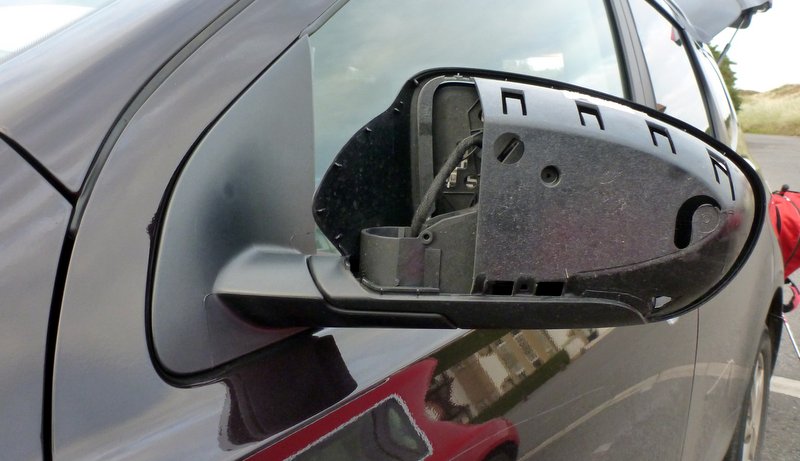
My parents once visited Ireland with another couple, and on an especially harrowing stretch of road my mother, who was sitting in the back seat with the other wife, yelled at my father to stop steering so close to the edge. He innocently raised both hands, to remind her that, in Ireland and the U.K., the driver sits on the right, not the left. During my own trip, I knocked the cowling off the passenger-side mirror of my rental car. I told the clerk at Avis when I returned the car, but she said it happened all the time, and not to worry about it.

P1100843

Will the Open Championship ever be held at Royal County Down? Fingers crossed.

Golf in Morocco: A Better Way to Haggle

I visited Morocco on a golf junket in 2000, and although my companions and I spent a lot of our time playing golf we did other stuff, too.

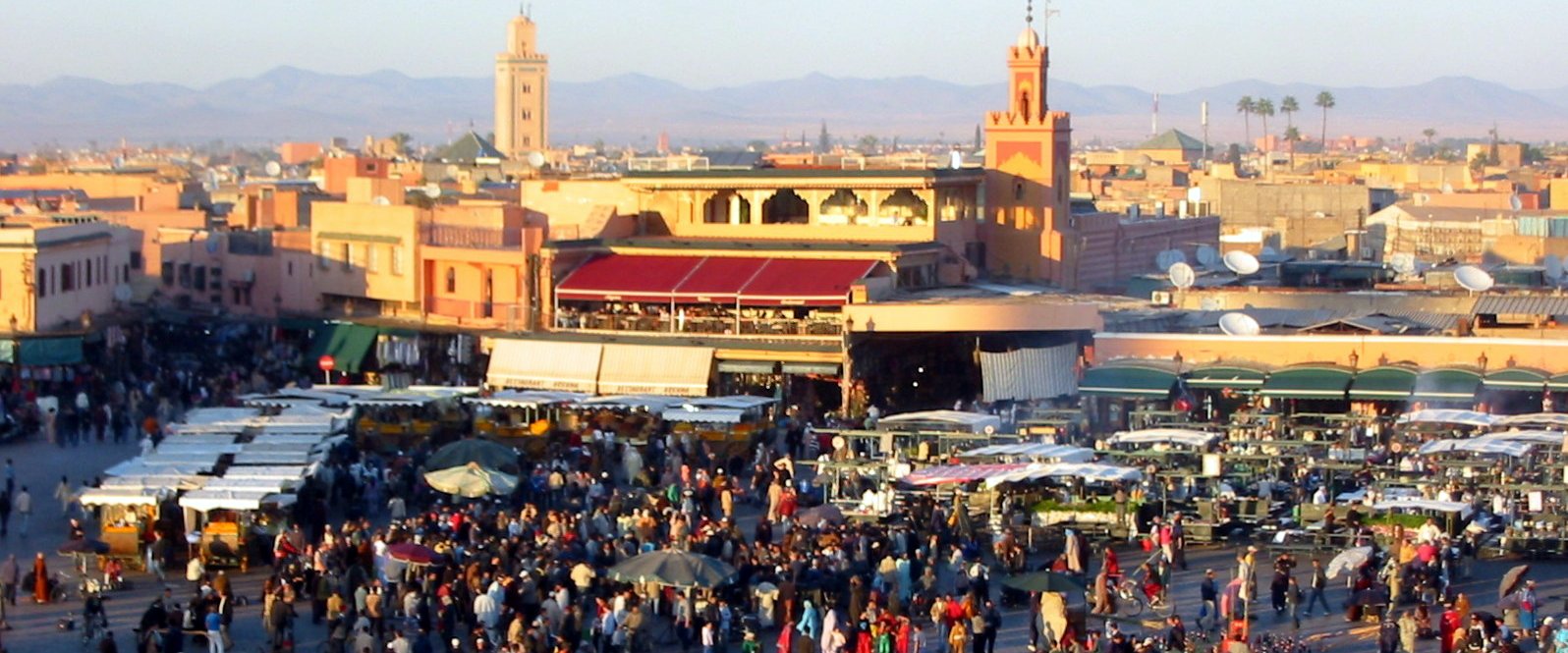
moroccogolfdlo.jpgWe did a fair amount of nosing around in the Jamaa el Fnaa, Marrakech’s huge central square and outdoor marketplace, just outside the front door of our hotel. (You can see both the square and the hotel in Alfred Hitchcock’s “The Man Who Knew Too Much.”)
djemaelfnaa

In the square, for a few pennies, you could have your photograph taken with a large snake draped over your shoulders, and then, for a few dollars, have the snake (now slowly wrapping itself around your neck) removed.

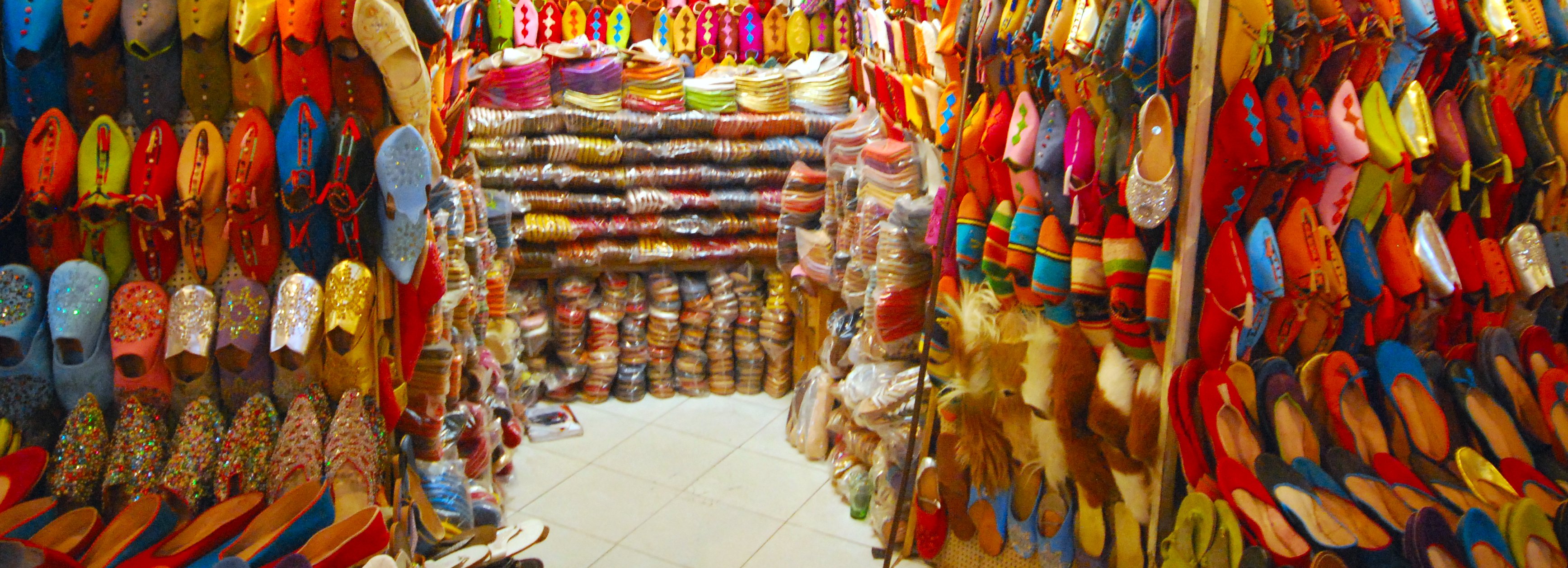
snakeguyfnaa Most guidebooks say that the prices in Moroccan markets are highly negotiable, and that tourists should haggle aggressively. I dutifully bargained a little at one vendor’s stall—and bought my son a key chain attached to a chunk of plastic in which a scorpion had been embedded—but I hated feeling that I was going to the mat over a trivial sum with a man who clearly needed every dirham he could lay his hands on.

marrakechsouk

Then, suddenly, I had a conceptual breakthrough: instead of bargaining down, why not bargain up? I tried my idea first in a taxi, which I was sharing with two other sportswriters. When the driver told us that the fare was eighty dirhams (about eight dollars), I said, “No! A hundred!” He did a perfect cartoon double-take, then looked at me with deep suspicion. I said, in halting schoolboy French, “You are an excellent driver. Eighty is not enough. A hundred and ten!” He then not only laughed but also drove us all the way across a busy intersection, which he had previously seemed inclined to abandon us in the middle of.

dlomarrakech

A little later, in a maze-like souk, I reverse-haggled over the price of a leather purse, for my daughter—“The work is so beautiful!” I said. “Your price is too low!”—and ended up with both a free second purse and an invitation to spend Ramadan with the family of the shopkeeper (I think).
To be continued.

Cart-only Rules Should be Against the Rules

richtercarts

My home course isn’t open yet, but spring is finally truly here, and last weekend 16 of us played at Richter Park, one of the best munis in the United States: great course, stirring scenery, terrific pro, committed regulars, you name it. There’s just one problem: Richter doesn’t allow walking on weekend mornings, even if you pay the cart fee. The thinking, presumably, is that carts are good for pace of play. But, as anyone who walks regularly knows, four golfers on foot will almost always play faster than four golfers in two carts, because four golfers in two carts will almost always spend most of their time either doing nothing (because they’re waiting for someone else to do something) or aimlessly driving around. (The U.S.G.A., which is studying pace of play, should test this. And why not? They spend money on stuff that’s way dumber.)

wehatewalkers

We actually ended up walking almost as far as we would have if we’d walked, because on Sunday Richter was cart-paths-only. The starter had told us that weekend rounds usually take about five hours, and I expected the cart-path requirement to make things worse. But even the slowpokes ahead of us beat five hours, and by a wide margin. I’ve thought about that since then, and I believe the reason, paradoxically, is that having to keep carts on cart paths forces riders to think more like walkers. They plan ahead, to some extent, and that speeds them up. Still, I’ll be happy to be back on my home course, where even three and a half hours is considered dawdling—like these guys, who were sunning themselves in the lateral hazard to the left of the fairway on Richter’s sixteenth, a claustrophobia-inducing par 5:

richterturtle

Burgers, beer, and the Masters afterward, of course.

richtergrill

Golf in Morocco: Silver Tongs for the King’s Cigarette

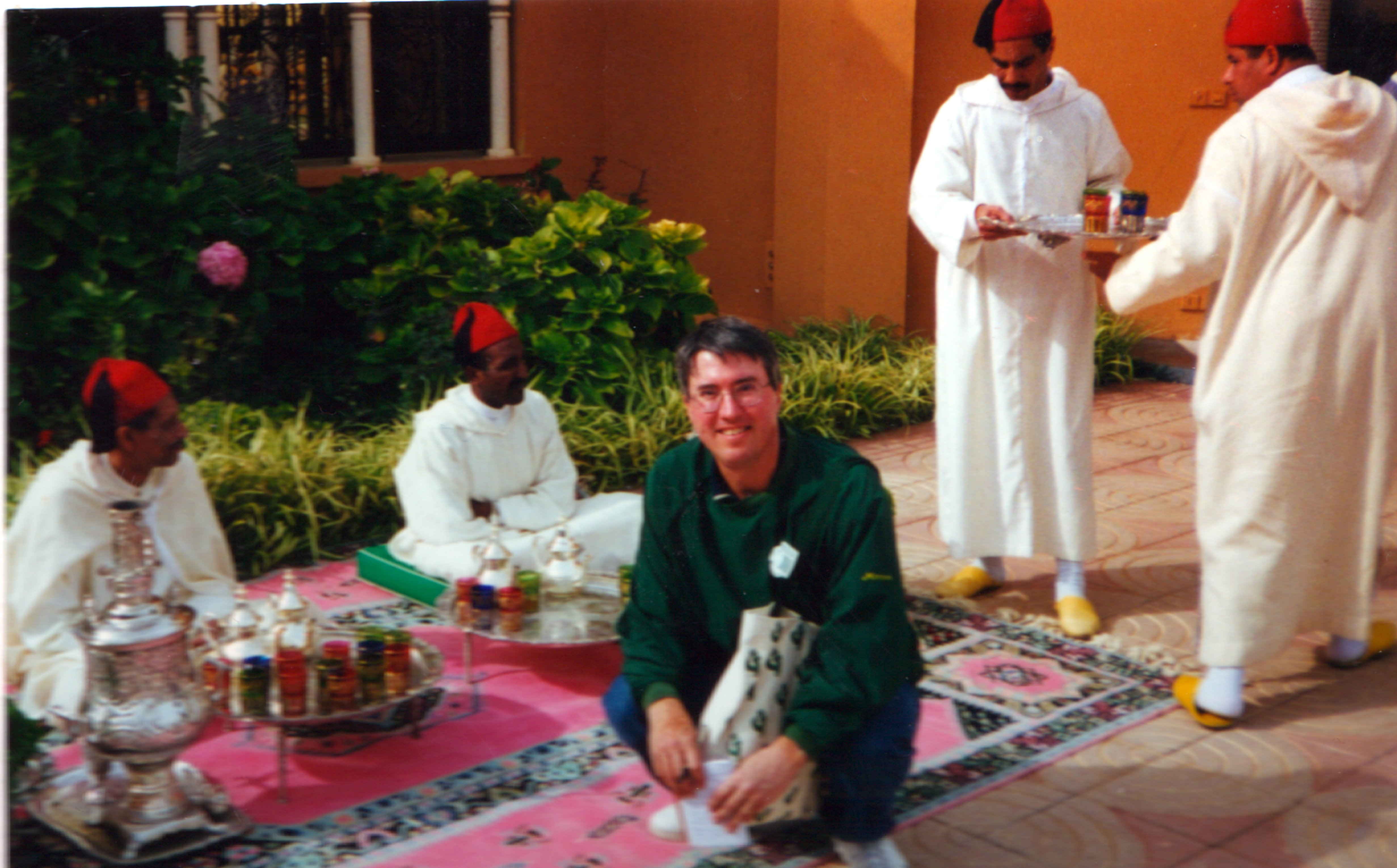
This past week, the European Tour was in Morocco, for the Hassan II Trophy. I attended that tournament in 2000, and I liked Morocco so much that, a few months later, I went back, with my wife and our two children. The Trophy didn’t become an official tour event until 2010, and when I was there it was played on a different course, but the broadcast of this year’s event brought back a lot of happy memories. Here I am having tea at the royal stables, in Bouznika:

dlomoroccotea2000

The tournament is named for (and was founded by) King Hassan II, who ruled Morocco from 1961 until his death, in 1999—the year before I visited. Hassan was a passionate golfer. He employed a squadron of caddies (one of whom was responsible for gripping the royal cigarette with a pair of silver tongs while the King swung his club), and shot mediocre scores that easily could have been worse (because kings are not obligated to play from bad lies or extricate themselves from bunkers). Hassan viewed golf not merely as a palliative to the tedium of absolute power but also as a potential bridge between his country and the United States—then, as now, the world’s most enticing source of exportable prosperity.

HasasanIIgolf-001

Hassan took up golf during the presidency of Dwight Eisenhower, whose widely chronicled enthusiasm had imbued the game with sort of hokey Free World allure—as did the contemporaneous rise of Arnold Palmer, who was golf’s first television star, and, a little later, the emergence of Jack Nicklaus, who turned pro the year of Hassan’s coronation.

morocco-lgflag (1)

The King was not a natural player, however, and by the mid-1960s he was looking for an American instructor to help him bring his scores out of the triple digits. He settled on Claude Harmon, who had won the Masters in 1948 and was the head pro at Winged Foot. Harmon made numerous visits to Morocco in the late sixties and early seventies, in return for which the King gave him, among other things, jeweled daggers, rugs, swords, a cigar box stuffed with cash and a Lincoln Continental Mark III. Harmon eventually moved his family to Rabat. In the early seventies, his eldest son, Butch—later the teacher of Tiger Woods—served as the head pro at Royal Dar es Salaam Golf Club, where the Trophy was held in 2000.

Dar-Es-Salaam-Rabat

During the tournament’s formative years, Hassan II had concerns unrelated to golf. In 1971, his forty-second birthday party was crashed by more than a thousand rebellious soldiers; they killed nearly a hundred guests before the King, who had hidden in a bathroom during the worst of the shooting, effected a change of heart in one of the revolt’s commanders by looking him in the eye and reciting the first verse of the Koran. (The rebel knelt and kissed his sovereign’s hand.) The following year, the King’s plane was attacked in the air by four F-5 fighters from his own Air Force. One of the plane’s engines was destroyed, but it managed to land in Rabat—where the rebels continued to strafe it until the King grabbed his plane’s radio and shouted, “Stop firing! The tyrant is dead!” Both incidents were followed by the inevitable bureaucratic shufflings and summary executions. Then the King went back to working on his game.

To be continued.

reaganhassan


The Only Foolproof Way to Preserve Golf Memories

When my wife was growing up, her parents kept the family’s snapshots in, literally, a shoe box. Right now, by contrast, I’ve got many thousands of images spread among four or five personal computers, an external hard drive, an iPad, my smartphone, the camera in my golf bag, two other cameras, and the servers at Google, Amazon, Microsoft, Instagram, Carbonite, Shutterfly, Snapfish, Mixbook, and probably a few others—plus an assortment of thumb drives and memory cards, which I’m constantly almost putting into the wash. Storing photographs in digital form is extremely convenient, but there’s a danger. You wouldn’t be happy today if, a dozen years ago, you had decided to archive your children’s baby pictures on Iomega Zip disks.

Mixbookcover

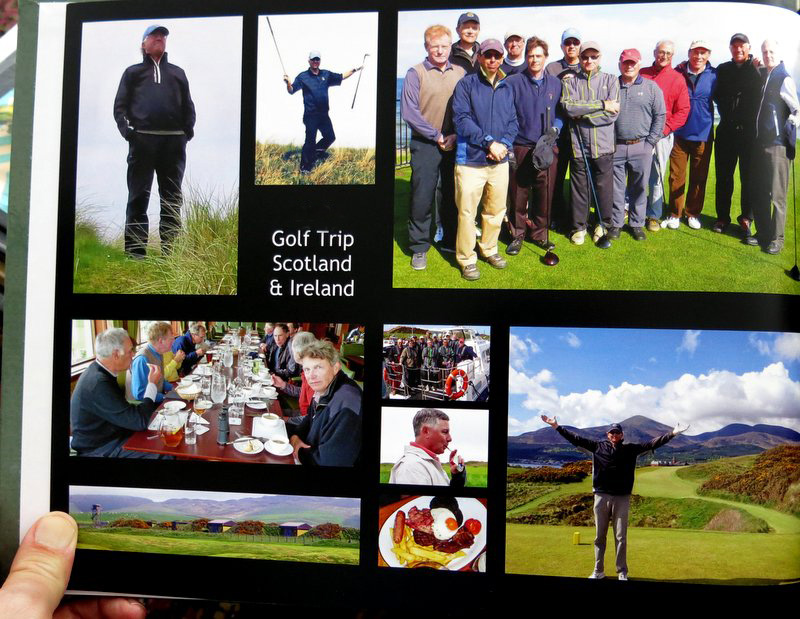
The solution is to employ a picture-storage format that can’t become obsolete. For more than thirty years, I’ve been a semi-obsessive compiler of physical photo albums, which now fill two large shelves in my living room. The earliest of those albums contain printed photographs glued to paper, but I’ve become a total convert to self-published photo books, which consume less shelf space, are easier to assemble, and can easily be recreated if they’re damaged or lost. The first one I made covered a family trip almost a decade ago. Since then, I’ve made at least twenty, including several that document golf trips abroad.

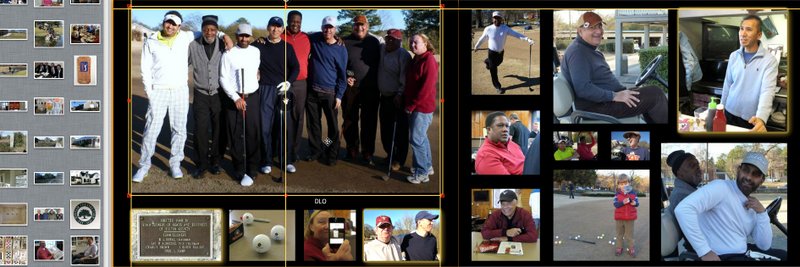
mixbooksample

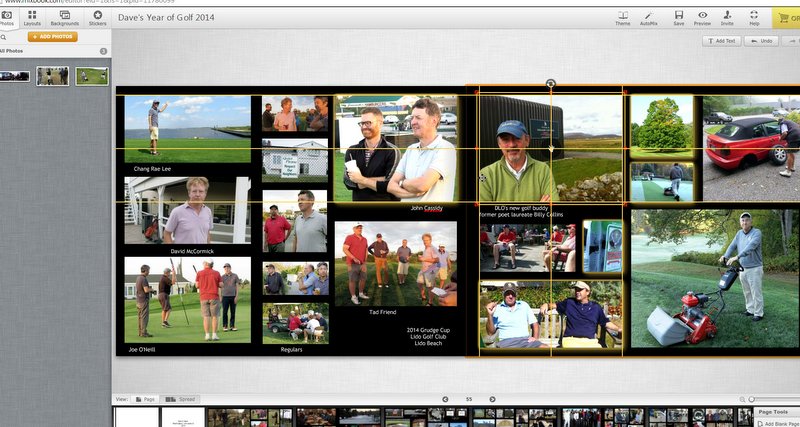
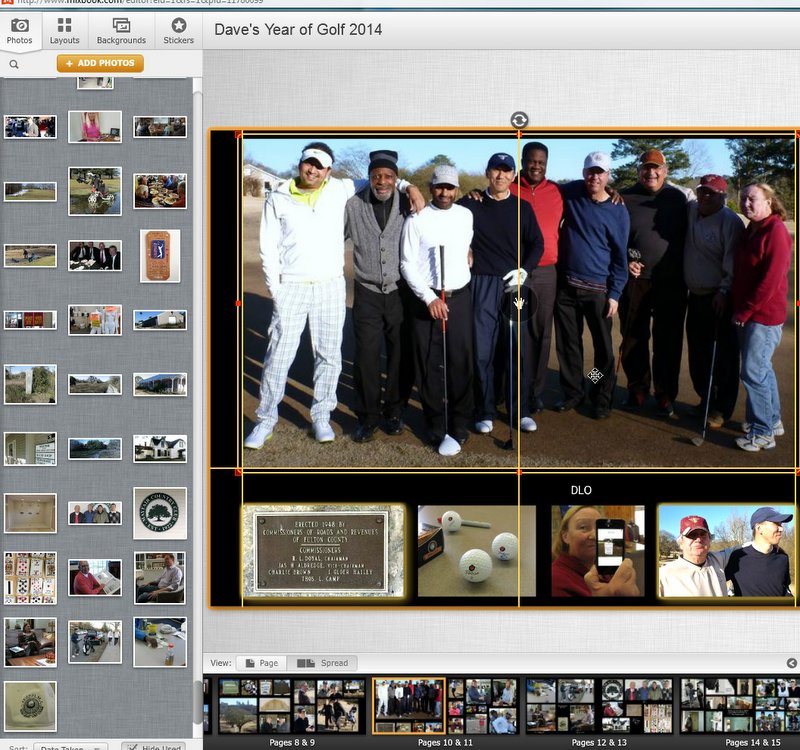
I’ve used four different online services to make those books, and I’ve watched the technology improve steadily. My current favorite service is Mixbook, which lets you easily edit, resize, crop, and arrange photographs on pages whose design you can customize as much or as little as you like. Here’s what a spread looks like when you’re working on it. The yellow lines are alignment aids; they appear each time you fiddle with a picture:

Mixbookpageedit

You can add text. You can scan scorecards and add those. You can invite friends to contribute material, too. You can work on a project a page or two at a time. You can wait to place your order until whatever service you’re using is offering a deep discount—as they all do repeatedly.

Mixbooksinglepage

If you’re stuck for a tee gift for your member-guest  how about giving every player a photo book full of pictures taken during the tournament? You could even give each one a different cover, featuring a photo of the recipient. And, if you’re stuck for a birthday present for your wife, why not give her a book that lovingly documents what you’re up to when you’re not around?

mixbookspread

Incidentally, if you’re an Amazon Prime member, you can store an unlimited number of photographs on Amazon Cloud Drive—an easy way to unclog a hard drive.

How He Hit That: My Pitching Wedge from Jimmy Kimmel’s Teeth

kimmelteethsqu

A dozen years ago, in an effort to scientifically determine the effect of alcohol on the golf swing, Golf Digest sent me and three of my regular golf buddies—Barney, Jim, and Hacker (real name)—to Las Vegas for four days, and gave us unlimited access to golf, casinos, and beer. They also recruited a second foursome, whose members included Jimmy Kimmel (then of the Man Show) and Carson Daly (then of MTV).

The format was nine-hole scramble. On the fourthtee, Barney made a rude noise in my backswing, and Kimmel said, “If Sal had asked me beforehand, ‘What are the chances that one of them will fart before one of us?’, I would have said a million to one.” After that, we were pals. On the fifthtee, Kimmel asked me, “Do you meet a lot of lesbians in your line of work?” On the seventh hole, he drove a cart onto the green, parked it next to the hole, and asked, “Am I in anyone’s line?”

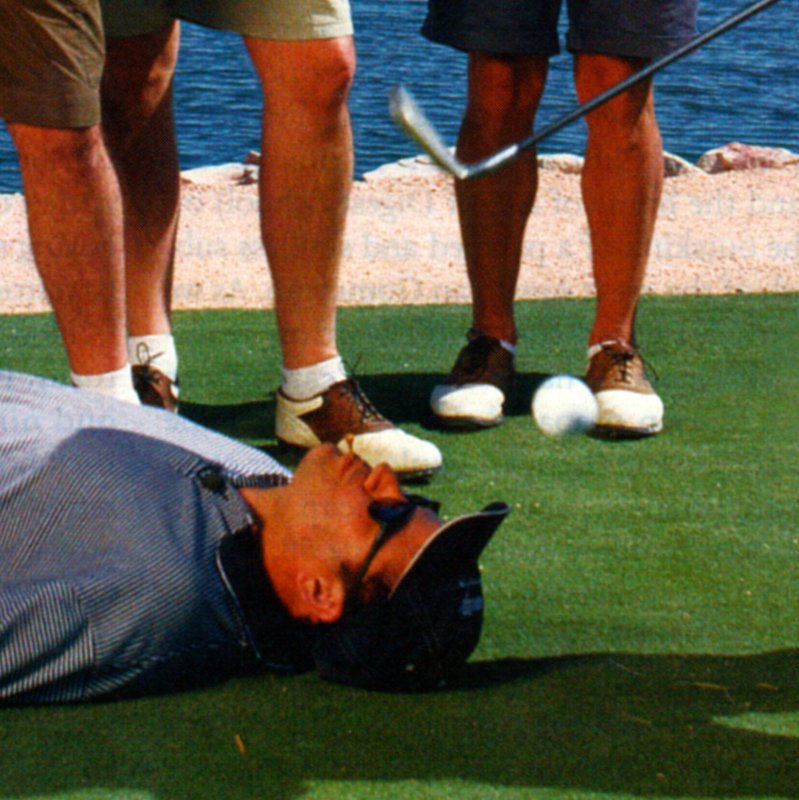
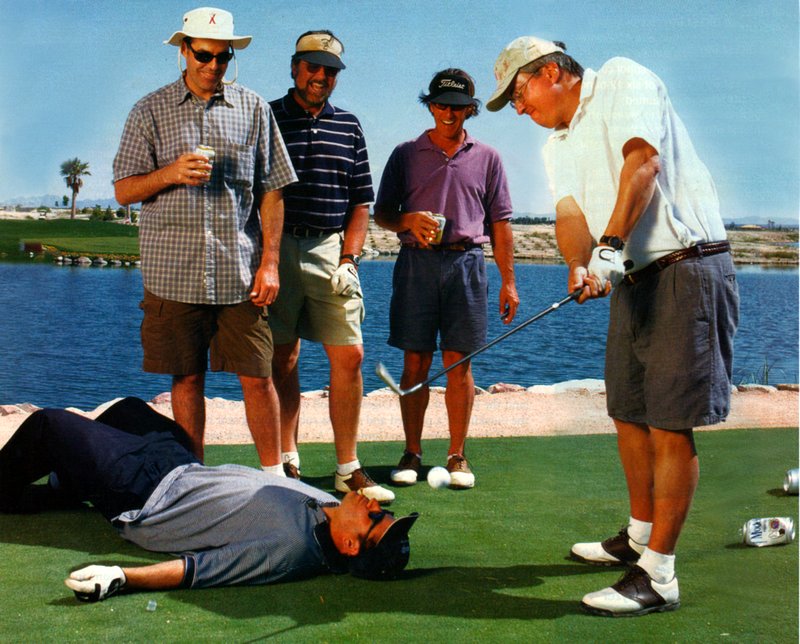
Playing nine holes took four hours, during which the average intake was a dozen beers and a couple of Bloody Marys. My friends and I won the match (five-up, two under par), and when it was over Hacker threw a pair of golf shoes belonging to one of them into the lake. Then Kimmel lay on the ground, placed a ball on a tee clenched between his teeth, and let me hit it with a pitching wedge:
kimmelteethowen
Here’s how I hit that shot: I don’t remember. You can read about the whole adventure here.

Two Golf-trip Travel Tips

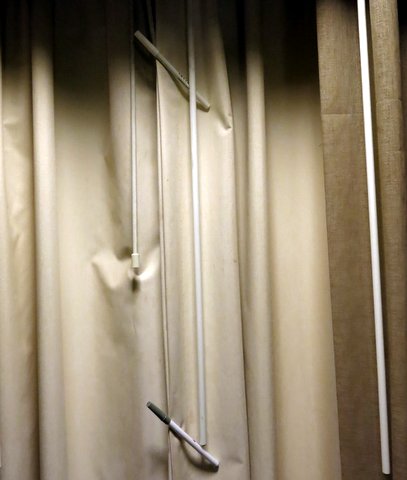
Tip No. 1: If there’s anything I can’t stand, it’s intrusions of light and noise into hotel rooms in which I’m trying to sleep. I felt angry and exasperated recently when I realized that the intermittently loud refrigerator in my room (I forget where I was staying) could not be silenced: it was bolted into its cabinet, which was bolted to the wall, and the control knob inside the refrigerator had been removed. There was no way I could unplug or disable it, short of tearing the cabinet apart, but I did invent a simple new way to fully close the curtains, by using the clips on the caps of a couple of cheap hotel-room ballpoint pens:

IMG_5877

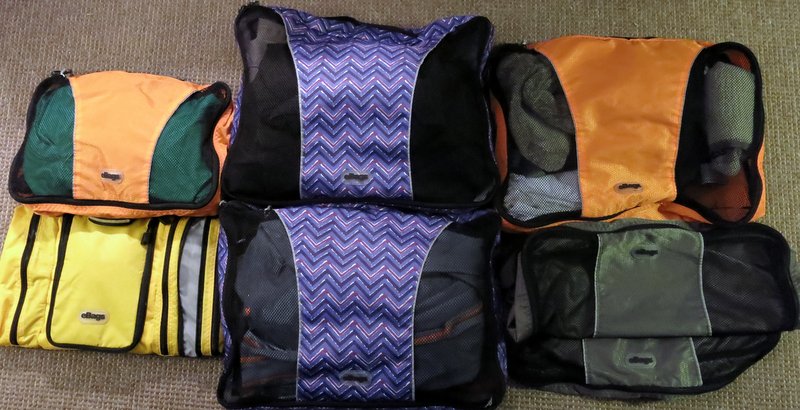
Tip No. 2: eBags, one of a select group of companies for which I am an unpaid shill, makes several of my favorite travel accessories, among them Packing Cubes, which are zippered fabric bags that keep the contents of a suitcase from becoming a chaotic, wrinkled mess.
fullarraycubes

In the photo above, you see a week’s worth of golf-trip gear—all of which will fit into an eBags TLS Mother Lode Mini 21” Wheeled Duffel, which in turn will fit into the overhead compartment of an airplane. Upper left: medium orange Packing Cube containing a tee shirt (for sleeping) and a pair of lightweight fleece pants (for in-room apres-golf lounging). Lower left: my eBags Pack-it-Flat Toiletry Kit, which is actually not a Packing Cube but is fully Packing Cube-compatible. Center: two large festive Packing Cubes containing shirts, pants, and a sweater. Upper right: large orange Packing Cube containing underwear, socks, handkerchiefs. Lower right: two empty large gray Packing Cubes, for laundry. If I’m traveling with a rainsuit, I’ll put it in one of the gray Packing Cubes and stuff that into my golf-bag travel cover. And if I know I’m going to need a sports coat somewhere I fold it inside out and put it in a Packing Cube of its own. That keeps it from getting wrinkled, even if the other stuff in the suitcase squeezes it flat.

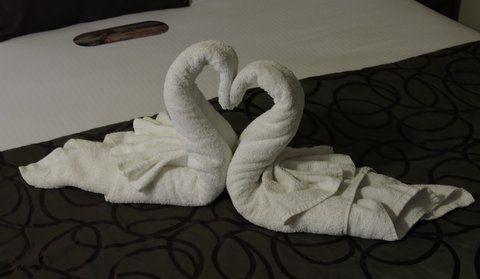
hotelroomsurprise

Golf-gear Innovations From a U. S. Marine

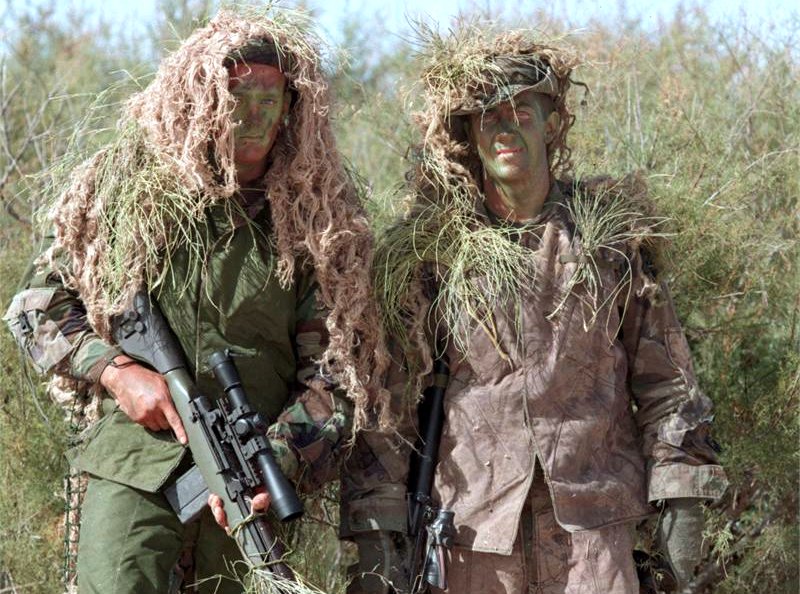
Mike Shelley spent five years in the United States Marine Corps. Among the pieces of equipment that he and his buddies found indispensable were slender lengths of nylon kernmantle rope, known popularly as 550 cord, paracord, or parachute cord. (That’s Shelley on the left in the photo below.)

shelleyrecon

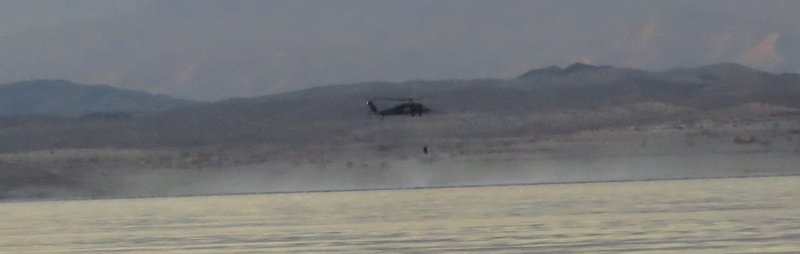
“I was in a special operations unit,” he told me recently. “We’d carry a compass in one pocket, a knife in another pocket, fire starters in another pocket, whatever. And to keep all that stuff from getting lost we had our combat utility uniforms retrofitted so that every pocket had a little loop sewn inside it. You’d tie a length of parachute cord to your gear and another to the loop in a pocket, and that way you would know that, when you jumped from a helicopter into the ocean in the middle of the night, your gear couldn’t fall out and sink to the bottom.”

choppermead

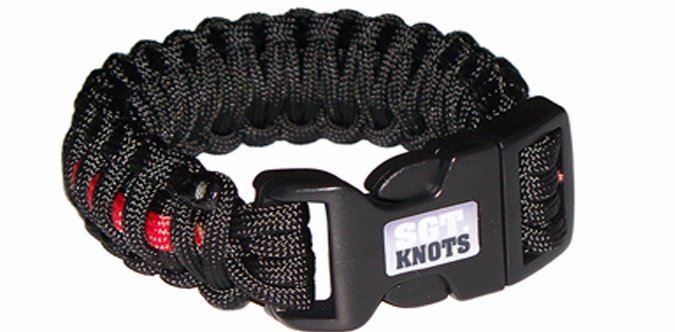
Shelley entered an MBA program when he got out of the Marines, and in 2010, as a class project, he founded an online company called SGT KNOTS. “I bought five spools of parachute cord, and I tried to think of everything I could possibly make from it, to put it out there and see what would sell,” he said. “I was really only trying to teach myself about e-commerce, but about three days after I launched SGT KNOTS a catalog company that supplies police departments all over the country contacted me and said they wanted to start buying parachute-cord survival bracelets, 500, 1,000 at a time. So there I was, in my basement, sitting on my couch, making these things as fast as I could for three weeks straight.”

redlinebracelet

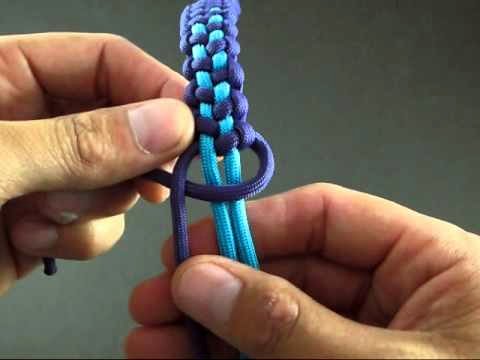
He rapidly expanded his manufacturing capability, in part by connecting with an inmate work program at a county jail in New Hampshire. Today, SGT KNOTS sells not just a large variety of finished items but also spools of paracord and other raw materials, which are popular with people who make stuff to sell from card tables at flea markets and gun shows.

hqdefault

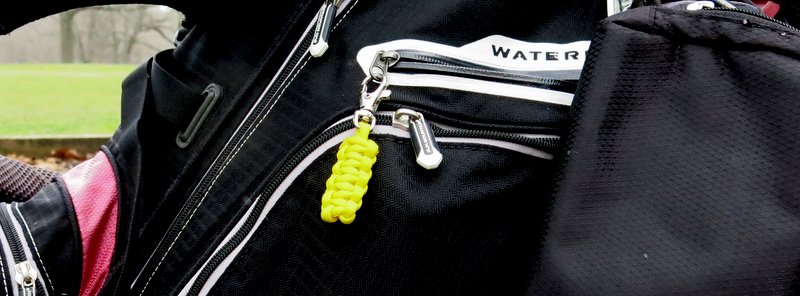
My first purchase from SGT KNOTS was a package of three paracord zipper pulls. I attached one to the zipper on my golf bag’s waterproof pocket, which is where I keep my wallet and my phone while I’m playing golf:

golfbagzippull

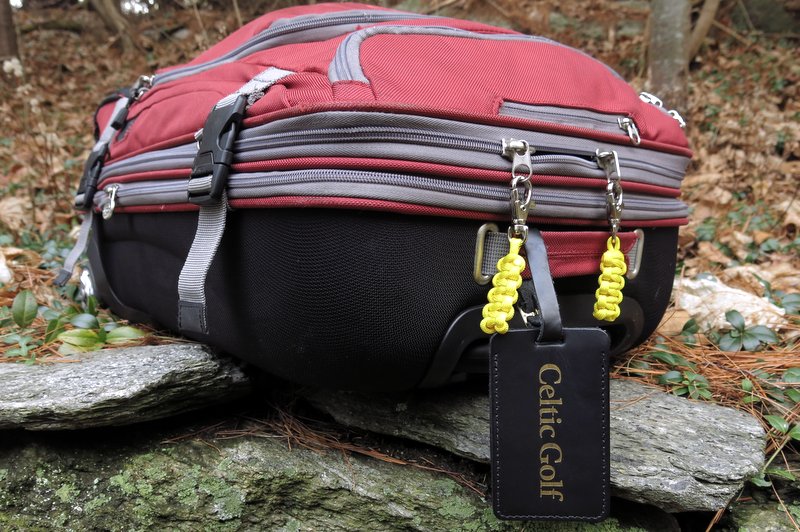
And I used the others to replace two frayed zipper pulls on my favorite golf-trip suitcase:

suitcasezippulll

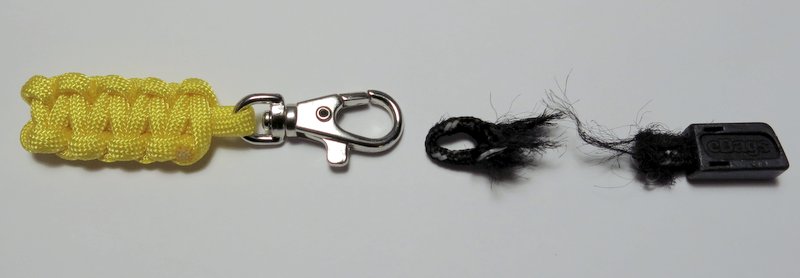
My SGT KNOTS pulls are easy to spot and grab, and the ones on my suitcase are clearly visible from all the way across an airport luggage carousel. Warning: SGT KNOTS zipper pulls aren’t cheap, and the metal clasp on each one is big — too big to fit through the eye of the metal pull on the zipper in the fly of your jeans (for example). Here’s one of my SGT KNOTS zipper pulls next to a chintzy one that it replaced:

pullcompare

But for the right applications they’re worth the investment, and in an emergency you could unknot the cord on one and use it to garrote an annoying match-play opponent (say), or replace a broken lace a golf shoe, or do a little impromptu fishing in a water hazard:

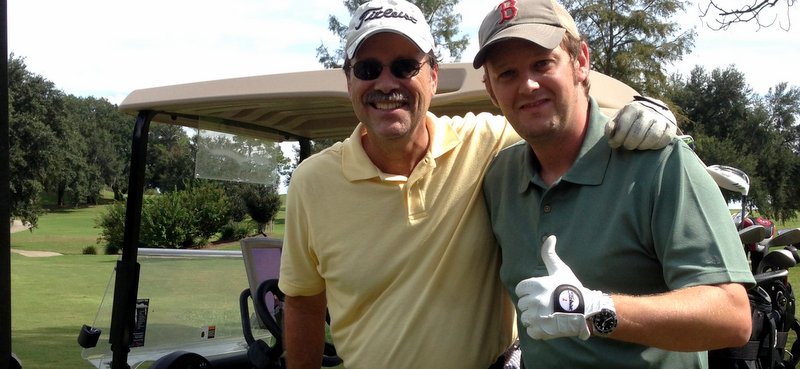
Shelley himself took up golf a couple of years ago. (That’s him on the right in the photo below.) “I never thought about these zipper pulls for golf bags,” he told me, “but I’m always looking for new ideas. I could make a custom zipper pull for a golfer, so that the colors would match the bag, and I could put a different loop on the end. I think my StretchFit Elastic Laces, which are made from bungee cord, are fantastic for golf shoes. They hug your foot, and you can adjust how much they hug.”

sgtknotsgolf

I can think of other golf applications—like, how about a cord to attach your putter headcover to your golf bag, so that you don’t have to keep retrieving it from the lost-and-found? (A Marine would call that a “dummy cord.” Good name.) Or a paracord monkey fist for the beer opener you keep in your golf bag—useful for breaking up ice? You may have ideas of your own. If so, let Shelley know. If we ask nicely, he might make stuff just for us.

sgtknotskoozie2

“We used so much paracord in the Marines that we would joke about it,” Shelley said. “Like, if you can’t fix it with duct tape or parachute cord, it can’t be fixed.”