Stop Filling Out Your Bracket, Right Now, and Plan a Golf Trip to Ireland

dollareuro

Eleven golf buddies and I are going to Ireland in early May. I thought we were being shrewd when we bought our plane tickets, several months ago, because air fares were lower than they had been for years. But they’ve fallen further since then:

Kayak page

By comparison, I paid $550 for the same flight on my first golf trip to Ireland. That was in 1992—twenty-four years ago. What’s more, the dollar is super-strong against the euro right now. In fact, traveling to Ireland to play golf is arguably cheaper than staying home, especially if you take the money from your wife’s 401k. And, if you need someone to handle the planning, you can get in touch with my old friend Jerry Quinlan, at Celtic Golf. Mention my name, and Jerry will give you the same discount he gave my friends and me. That is to say, he’ll charge you his normal rate. But you won’t have to lift a finger.

CArne

Reader’s Trip Report: Are Canadian Golfers Lousy Tippers?

Photo by Eric Levin

Photo by Eric Levin

Late last year, Eric Levin, the deputy editor of New Jersey Monthly, wrote an article, for Colorado Avid Golfer, about playing in and around Palm Beach without going broke. He found several reasonably-priced courses that he liked a lot, among them two that are owned and operated by Palm Beach County.

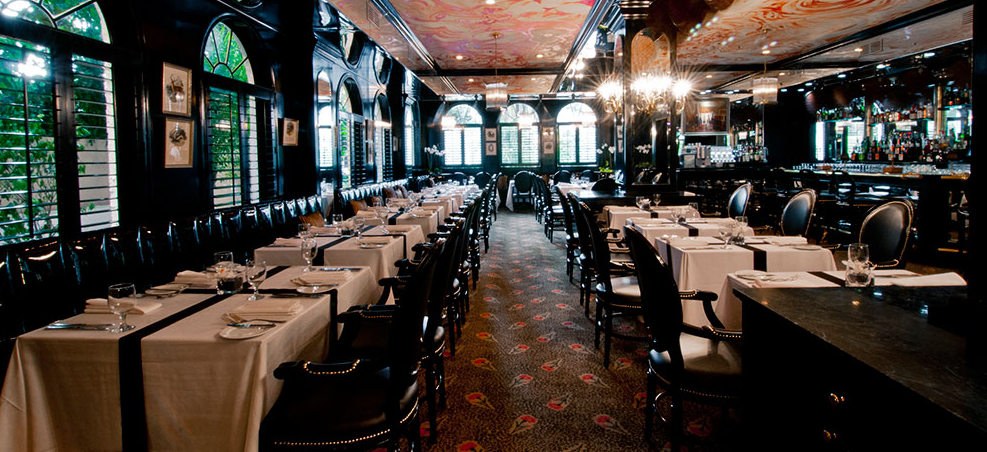
Between rounds, he and his wife had a meal at the Leopard Lounge, a legendary Palm Beach restaurant. They got into a conversation with “a slim, silver-haired man with a manicured mustache and a German accent,” who said that in the 1980s he had paid $25,000, at an auction, for a hat that Elvis Presley wore in the Army. “Presley’s Army hat, he reckoned, is worth many times what he paid for it,” Levin wrote. Too valuable to wear while playing golf? I can’t say.

leopardlounge

In addition to the courses he wrote about, Levin visited one that he didn’t end up playing, even though he shares my conviction that there is no such thing as a bad golf course.

Photo by Eric Levin

Photo by Eric Levin

Levin’s report:

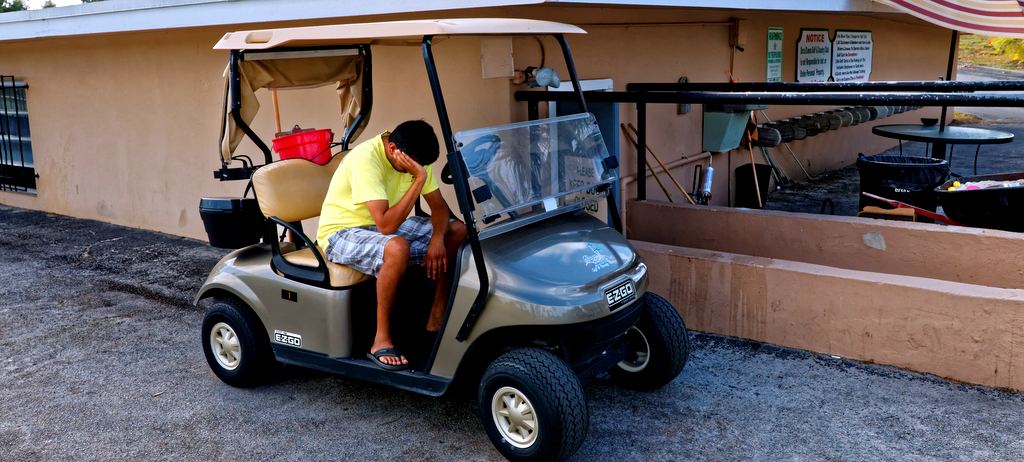
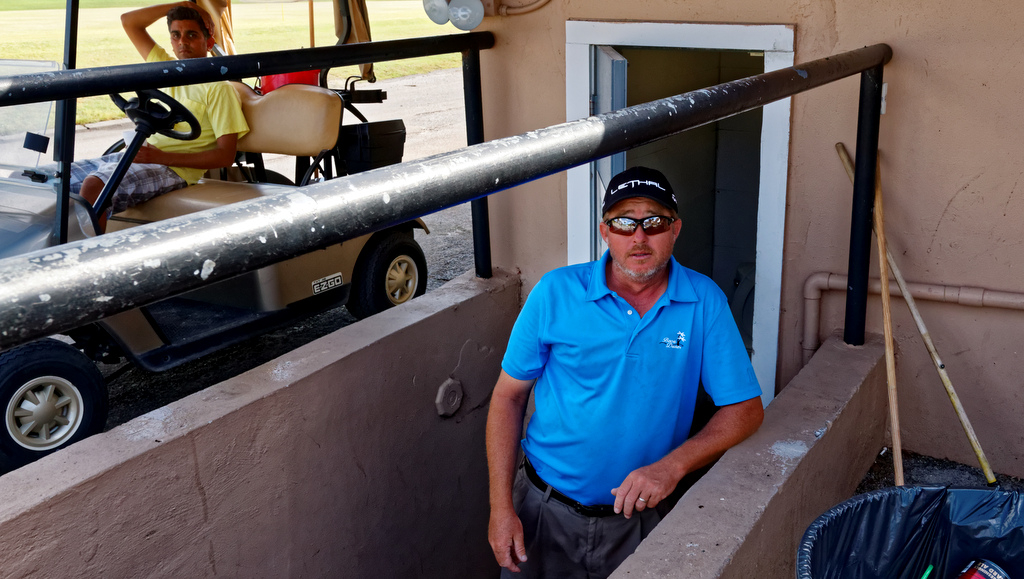
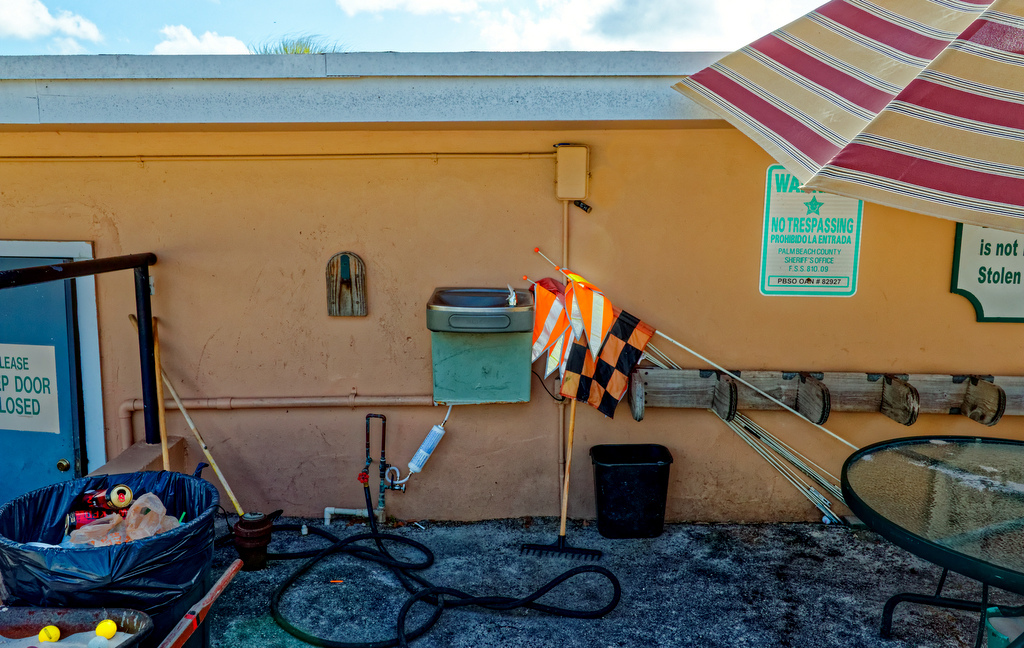
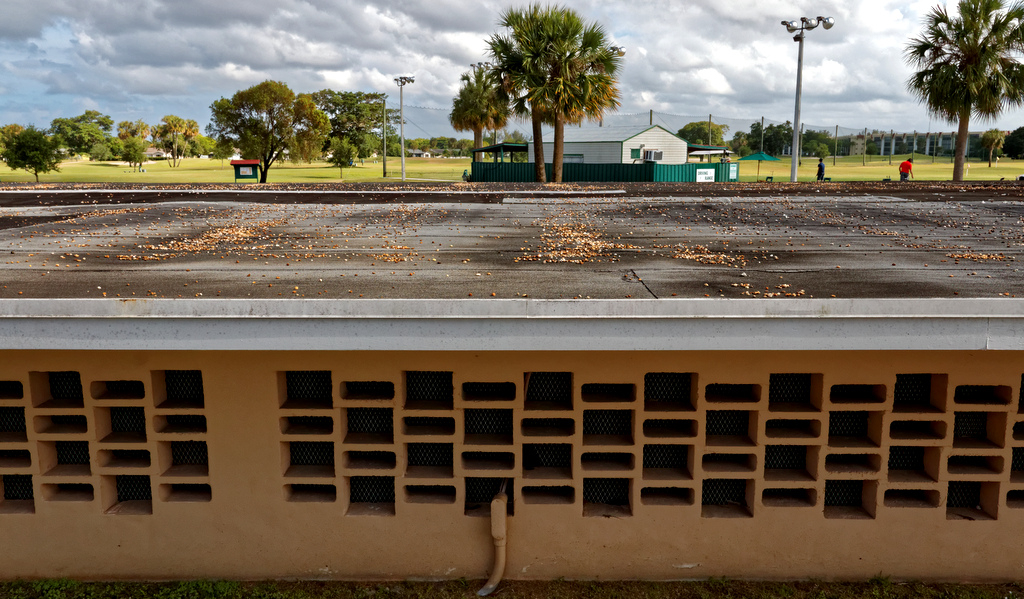
“I’ll call it Glory Glades. The clubhouse, behind an imposing facade complete with portico and curving driveway, turned out to be an enormous catering facility. The pro shop was a dreary, dimly-lit shoe box. But I did find one thing to love — or, rather, one person. I’ll call him Kenny. I ran into him outside the cart shed. He was a well-built, middle-aged guy in reflector shades, and he was wearing a Glory Glades logo shirt. He described his job as ‘bagger-slash-starter.’ He said, “I love everything about golf, from playing it, to talking about it, to helping people, to just being outdoors.'”

Photo by Eric Levin

Photo by Eric Levin

Kenny had only one golf-related beef, Levin told me: French Canadians, who, in his experience, are lousy tippers. Is this a known trait of our separatism-inclined golf brothers to the North? I myself have noticed that German golfers seem somewhat ruder than the international average, whether they’re wearing Elvis Presley’s Army hat or not, and that Korean golfers are slower—but that’s about as far as my ignorant stereotyping of non-Americans goes.

Photo by Eric Levin

Photo by Eric Levin

Back to Levin:

“Kenny told me he makes $7 an hour, plus tips, and lives about a mile from the course, with his wife and their two young children. He and his family moved from Broward County, where he worked 80 hours a week managing a grocery store, because the schools in Palm Beach County are better. His need for tips was obvious. He said that, on a good day in the high season (roughly Thanksgiving to Easter), he can make $200, but that very little of that comes from French Canadians. ‘Now here’s the crazy part,’ Kenny told me. ‘When they need something, they can speak English. But when it’s time for a tip or that kind of thing, suddenly they’re speaking French.'”

I assume that President Trump (who owns a golf course nearby) will put an end to all that, maybe with a Game of Thrones-style wall of ice along the Canadian border. Meanwhile, here are two more of Levin’s photographs of Glory Glades (which looks plenty good enough to me):

Photo by Eric Levin

Photo by Eric Levin

Photo by Eric Levin

Photo by Eric Levin

Golf in New Zealand: Cape Kidnappers

P1020477

I visited New Zealand on a reporting assignment in 2007. I was the guest of the hedge-fund billionaire Julian Robertson and his wife, Josie, who has since died. We spent most of our time at Kauri Cliffs, a huge property Robertson owns at the northern end of the North Island. (You can read about that part of my trip here and here.) On Sunday, the Robertsons attended the early service at the tiny Anglican church in Kerikeri. “If you believe in a deity, you owe that deity an hour a week,” Robertson told me.
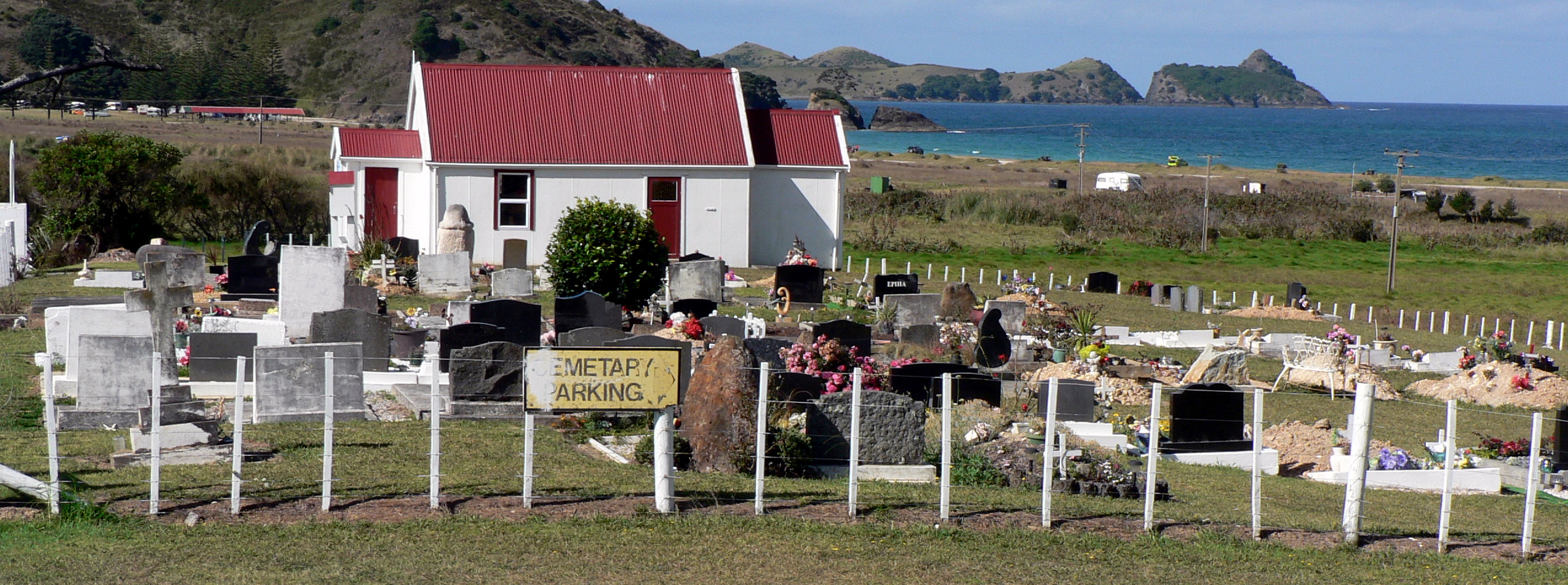
This is the church. They spell some things differently in New Zealand, apparently.

This is the church. They spell some things differently in New Zealand, apparently.

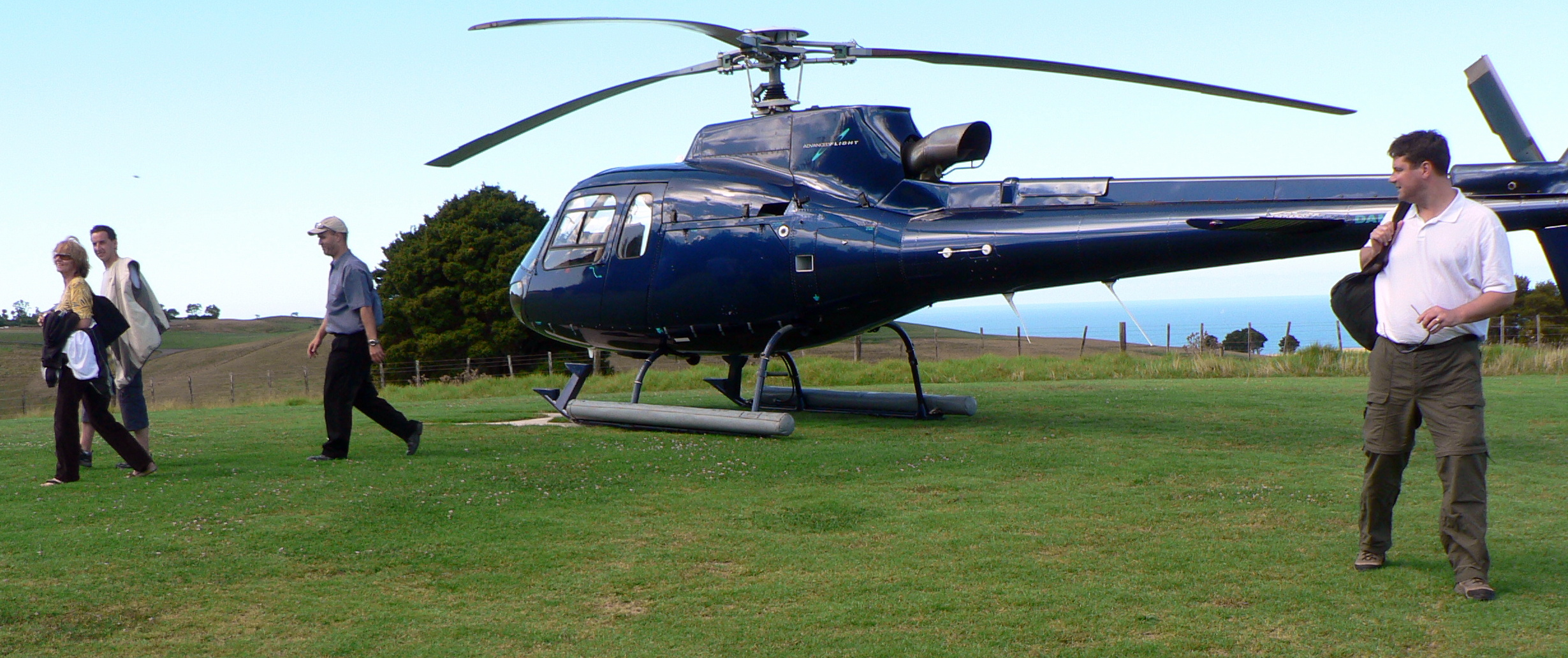
Then we headed south, to Cape Kidnappers, Robertson’s other big real-estate holding on the North Island. (He also owns 11,000 acres on the South Island.) The trip takes about ten hours if you go by car, but it’s quicker if you travel as we did: by helicopter to Auckland and then by Gulfstream to Hawkes Bay.
P1020445

The Gulfstream part of our journey was so short that the plane never really flew level: we went up, then we went down. In fact, the most grueling leg was probably the final one, the drive from the front gate at Cape Kidnappers to the clubhouse, a five-mile trip that, if you observe the posted speed limit and brake for wandering cattle, can take a half an hour.
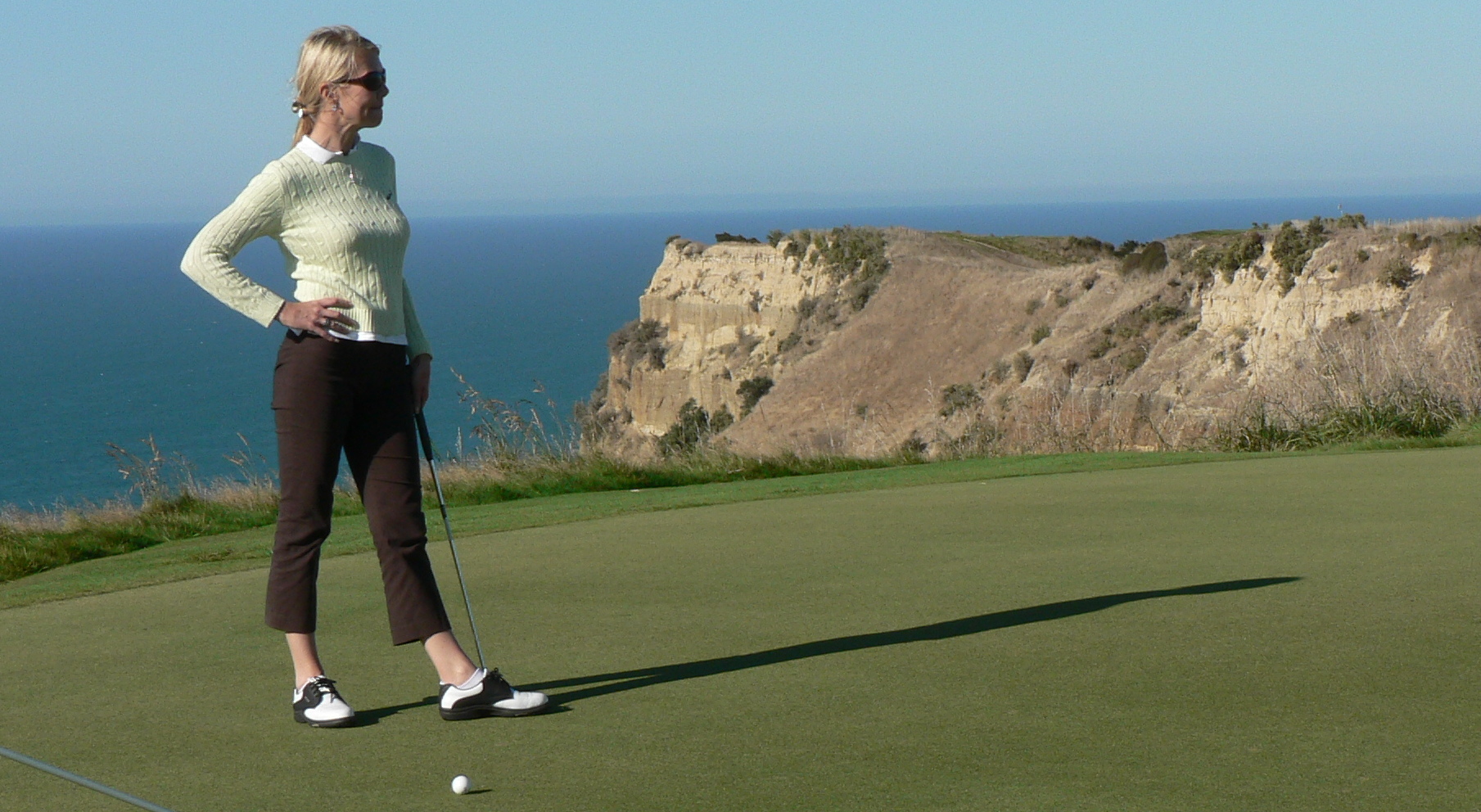
P1020522-001

We made that drive in a rental car, which we had picked up at the little airport in Hawkes Bay. I went into the terminal with Diana McCarty, Robertson’s director of New Zealand operations, to make the arrangements. As we crossed the tarmac, she commented that people inside the terminal would probably be wondering who I was, since I had just emerged from a $40-million aircraft accompanied by a blond who was young enough to be my third wife. A useful rule of thumb, when evaluating any remark made to you by an attractive woman much younger than yourself, is that if you aren’t sure whether the remark was an insult, it was an insult. Nevertheless, I sucked in my gut and walked a little taller.
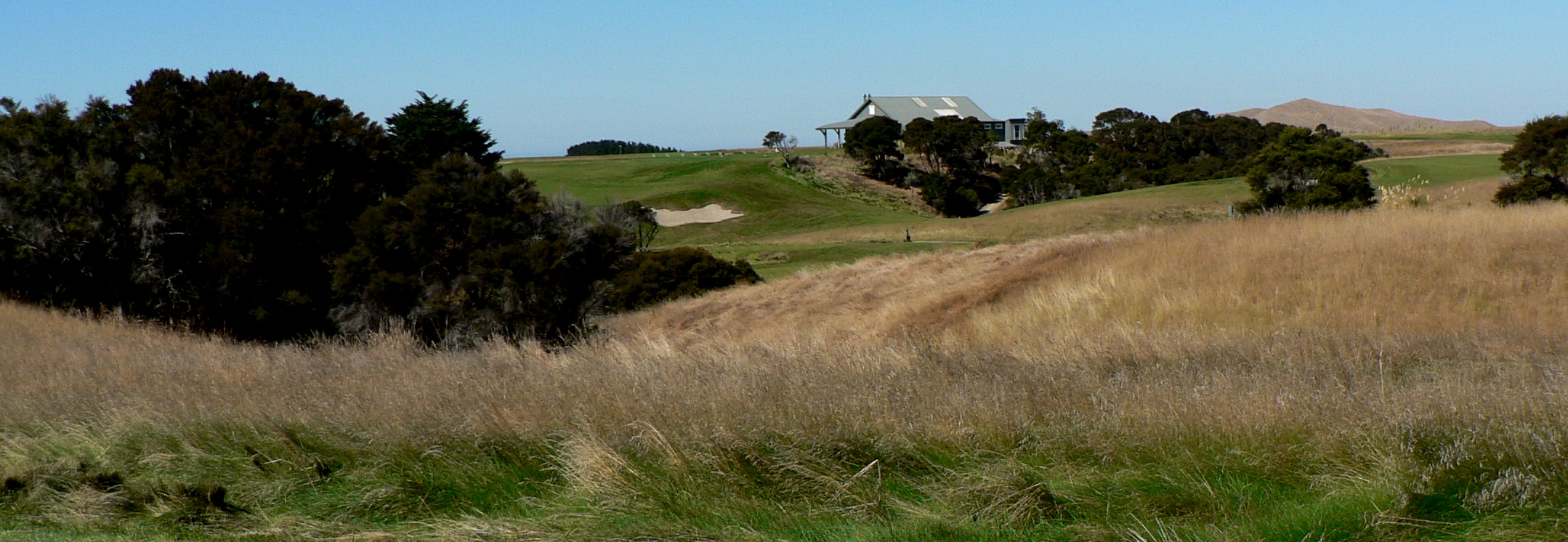
That little building in the distance is the clubhouse.

That little building in the distance is the Cape Kidnappers clubhouse.

The golf course at Cape Kidnappers was designed by Tom Doak, but it wouldn’t have been if Robertson, back in 2001, hadn’t received what he initially believed to be shabby treatment at Bandon Dunes, which had opened two years before. He was visiting with his sons and had expected to play the already legendary Bandon Dunes course twice. Sorry, he was told; you’ll have to play our new course, Pacific Dunes, first. Robertson was furious—he has a temper, which he has worked for years to control—but his anger vanished after a few holes, and he hired Doak to design a course for him, too.

P1020494

Doak creates magical golf holes by seemingly doing little more than identifying them in the existing terrain, rather than by dynamiting them out of bedrock. He views a bulldozer as a construction tool of last resort, and he likes brown grass and doesn’t like chemicals. “Cape Kidnappers cost half as much to build as Kauri Cliffs,” Robertson told me, “and it costs half as much to maintain.”
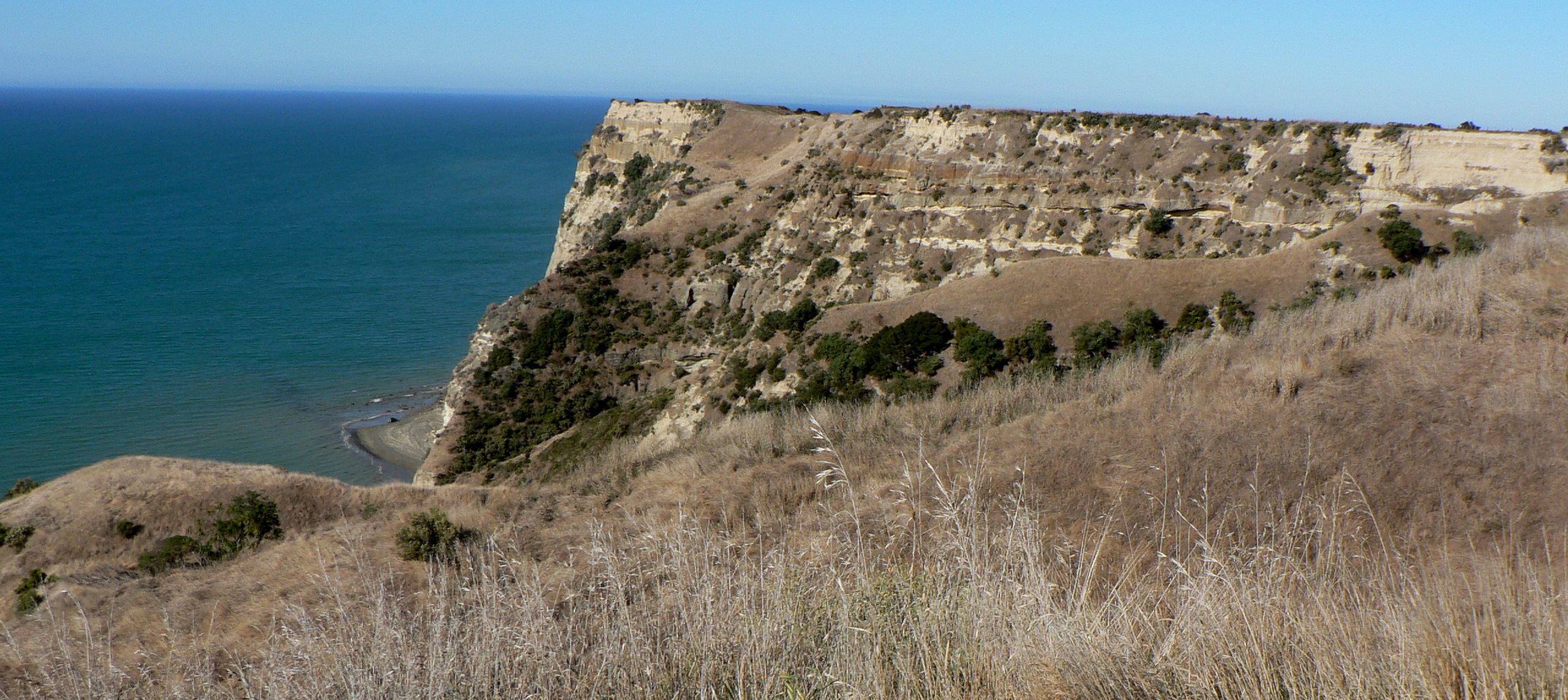
P1020514

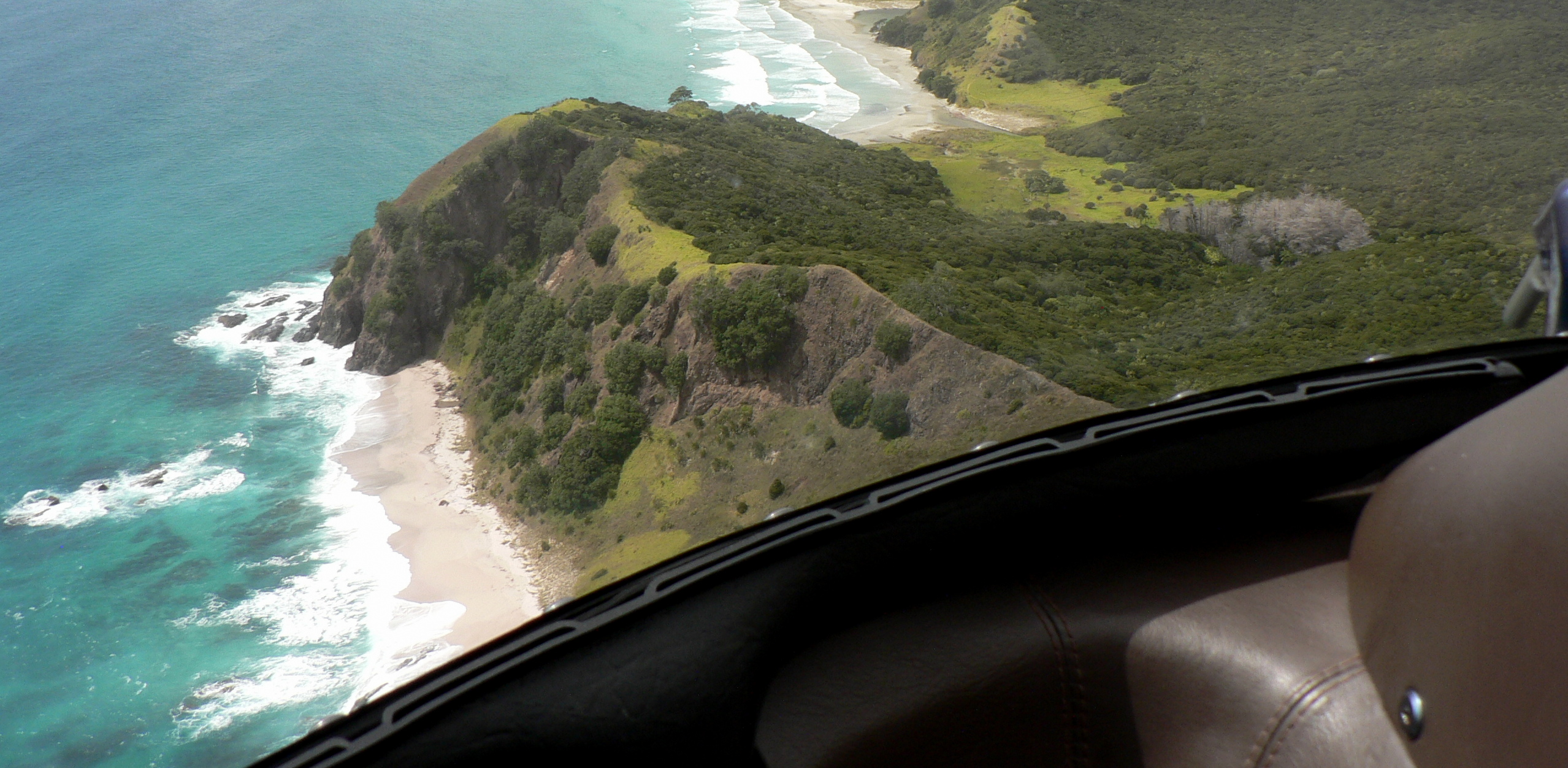
Both courses are laid out on sheep-and-cattle farms on high cliffs above the Pacific, but the climate, topography, and general feel are very different. The most visually impressive holes at Kidnappers, if you view the course from the air, are the ones that run out and back over several finger-like promontories, which reach out toward the water, high above the waves — although the best holes, I think, are inland. (From the ground, the promontory holes don’t really feel as though they’re perched on promontories. You need a helicopter to get the full effect.)

P1020531

The lodge at Cape Kidnappers is called the Farm, and it’s just as nice as the one at Kauri Cliffs. If you’re pretty rich, you should spend a couple of weeks there with your wife:

FarmCapeKidnappers

It was still under construction, so we stayed in Te Awanga, at a bed-and-breakfast place called Merriwee, which Doak discovered. The Robertsons had stayed there often, and had become good friends with the owner, a divorced woman with grown children who filled in occasionally as a substitute kindergarten teacher, and several of her neighbors. Her house is more than a century old.
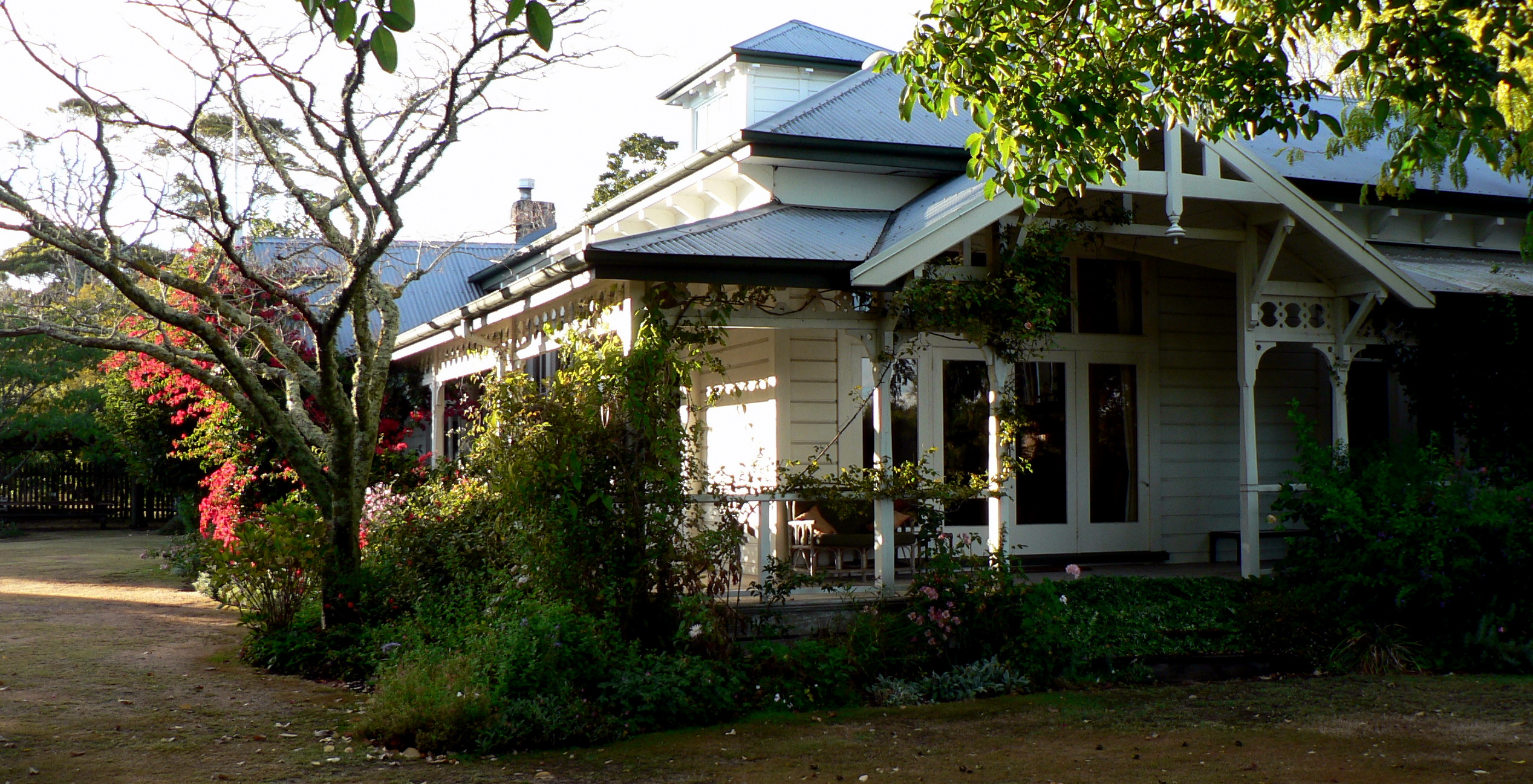
P1020570

Here’s Robertson, sneaking something from the breakfast table:

P1020566

The Robertsons left the next day, because they had business elsewhere. I rented a car of my own and drove back to Kidnappers for a final round. A huge rainstorm had been predicted for the afternoon, but it disappeared somewhere over the Pacific, leaving only tremendous banks of fast-moving clouds, which the setting sun lit up. I had the course virtually to myself, and got around on foot in just a couple of hours. I had a new driver—one of those big square ones that sounded like fungo bats—and it echoed all over the course. I tried to swing it quietly so that the pro wouldn’t know how many balls I was playing. The only tiny seed of disappointment, lurking in the back of my mind, was my knowledge that, the following evening, I would be on my way home.

Josie and Julian Robertson, Cape Kidnappers, March 11, 2007.
Josie and Julian Robertson, Cape Kidnappers, March 11, 2007.

Golf in New Zealand: Post-golf Activities

P1020374

me of my happiest memories of New Zealand involve activities that weren’t golf—a first for me on any trip for which my luggage includes my clubs. I ate great food and met nice people, and I saw basking seals, a twenty-one-hundred-year-old tree, and stingrays nearly the size of Stingrays. I also saw sharks, from a helicopter. They were feeding near the breakers a hundred feet off Ninety Mile Beach, a strip of sand that runs up the northwestern edge of the North Island. As the pilot took us down for a closer look, I asked whether the presence of large marine carnivores so close to the water’s edge didn’t deter swimmers. “Oh, no,” he said. “Most of the swimmers don’t know they’re there.”
P1020393

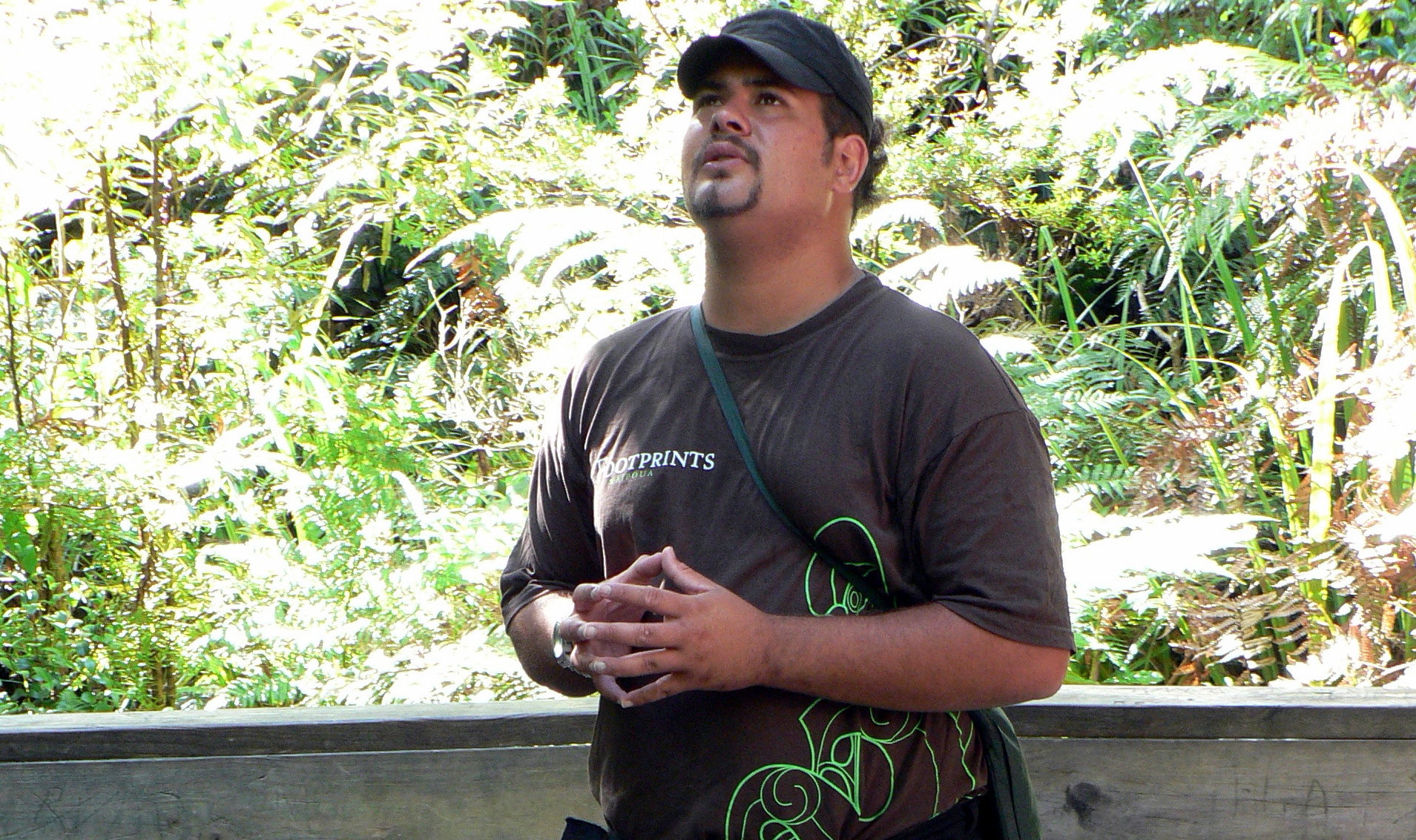
Shark-spotting was just one small part of day-long menu of activities known locally as the Full Julian, after Julian Robertson, the creator and owner of Kauri Cliffs, the resort where I was staying. Four other guests and I traveled by helicopter to the Waipoua Forest, where our Maori guide sang a song of tribute to Tane Mahuta, an enormous kauri tree that predates Christianity:

P1020353

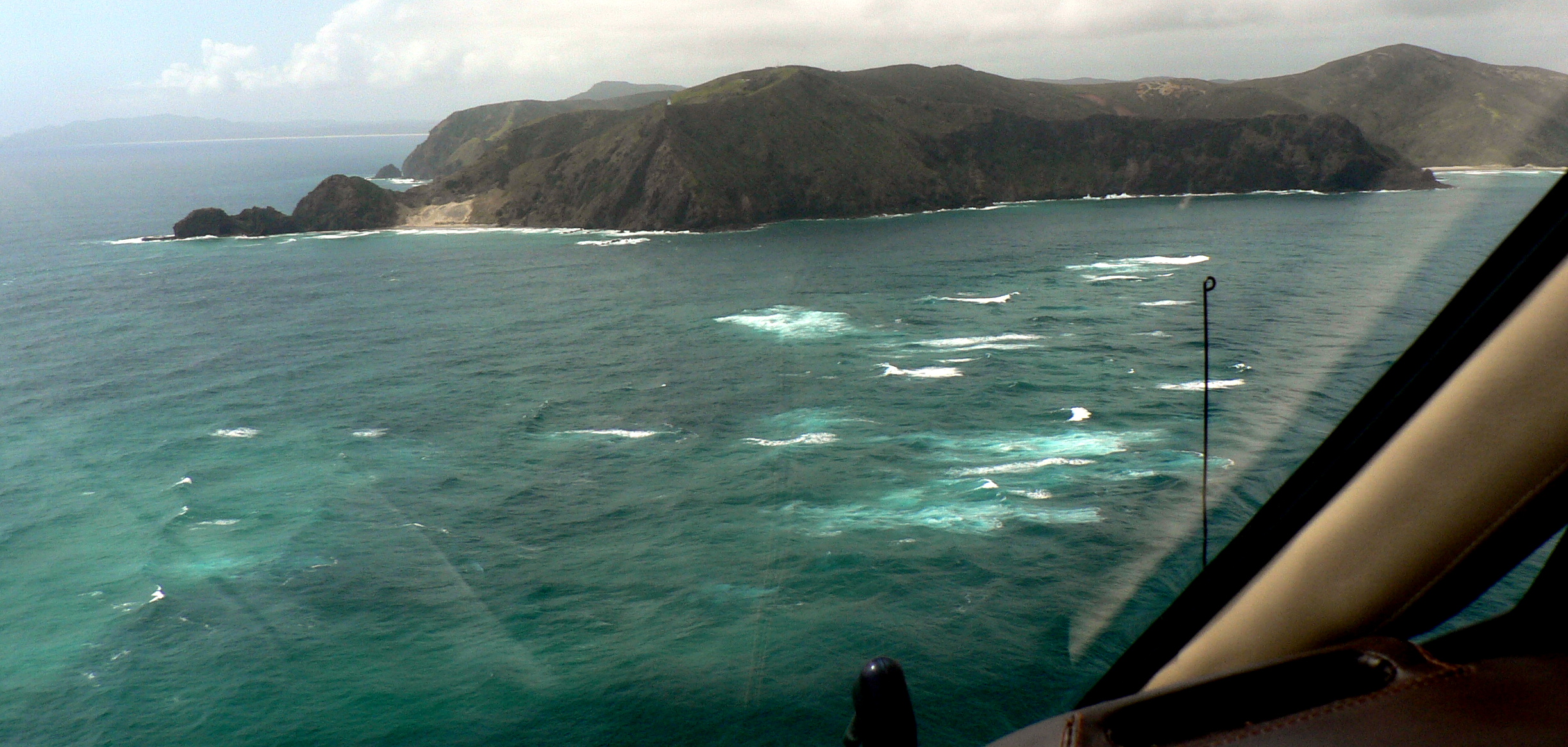
Then we flew to the northern tip of the island and hovered above a turbulent spot, just off the coast, where Pacific Ocean currents collide with those of the Tasman Sea:

P1020382

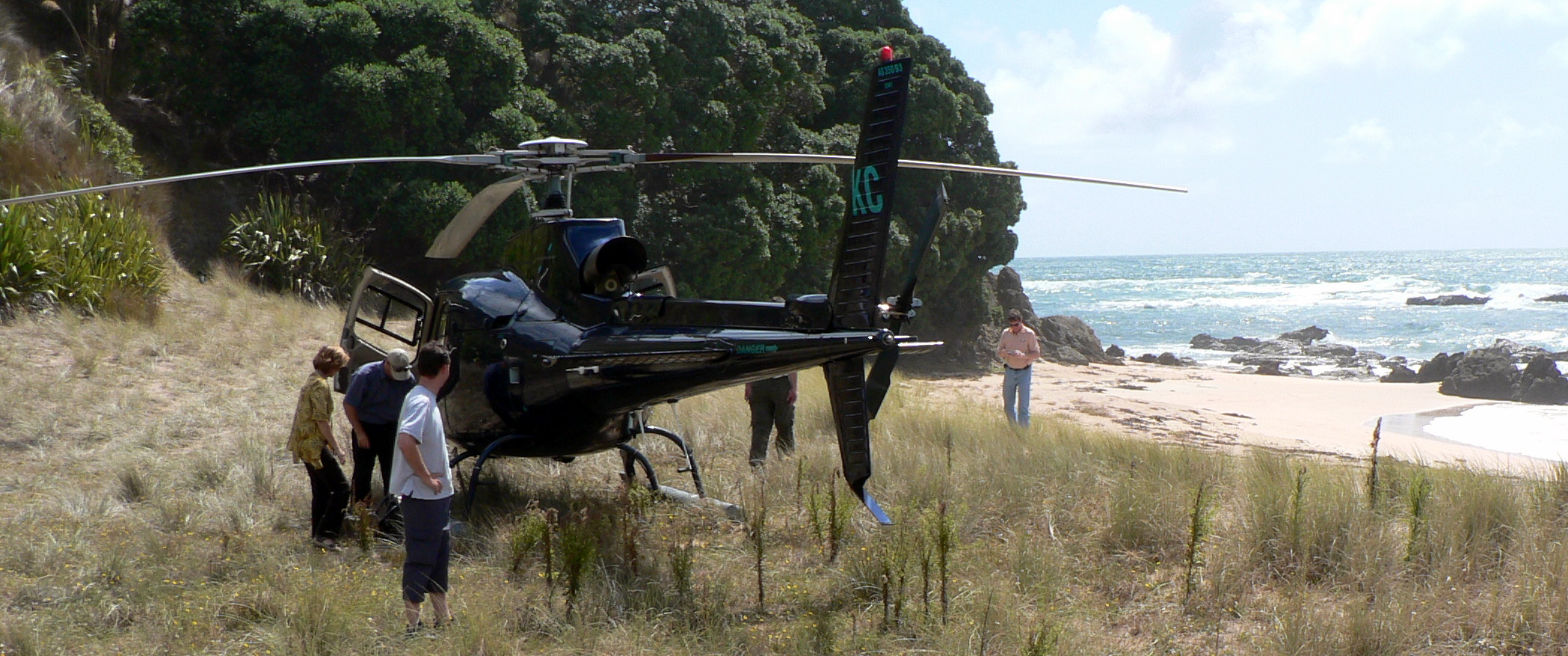
Then we set down for a beach picnic:

P1020398

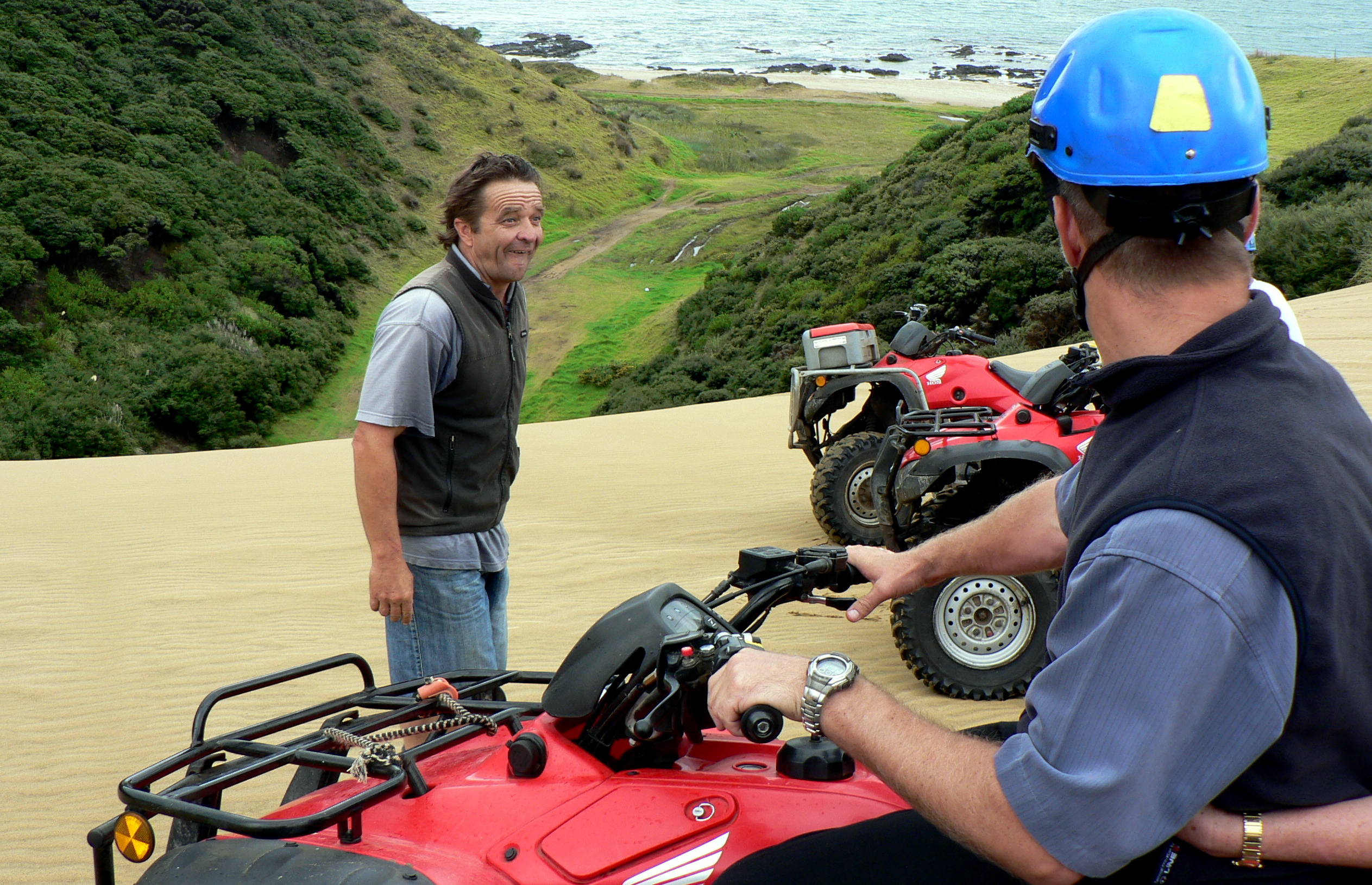
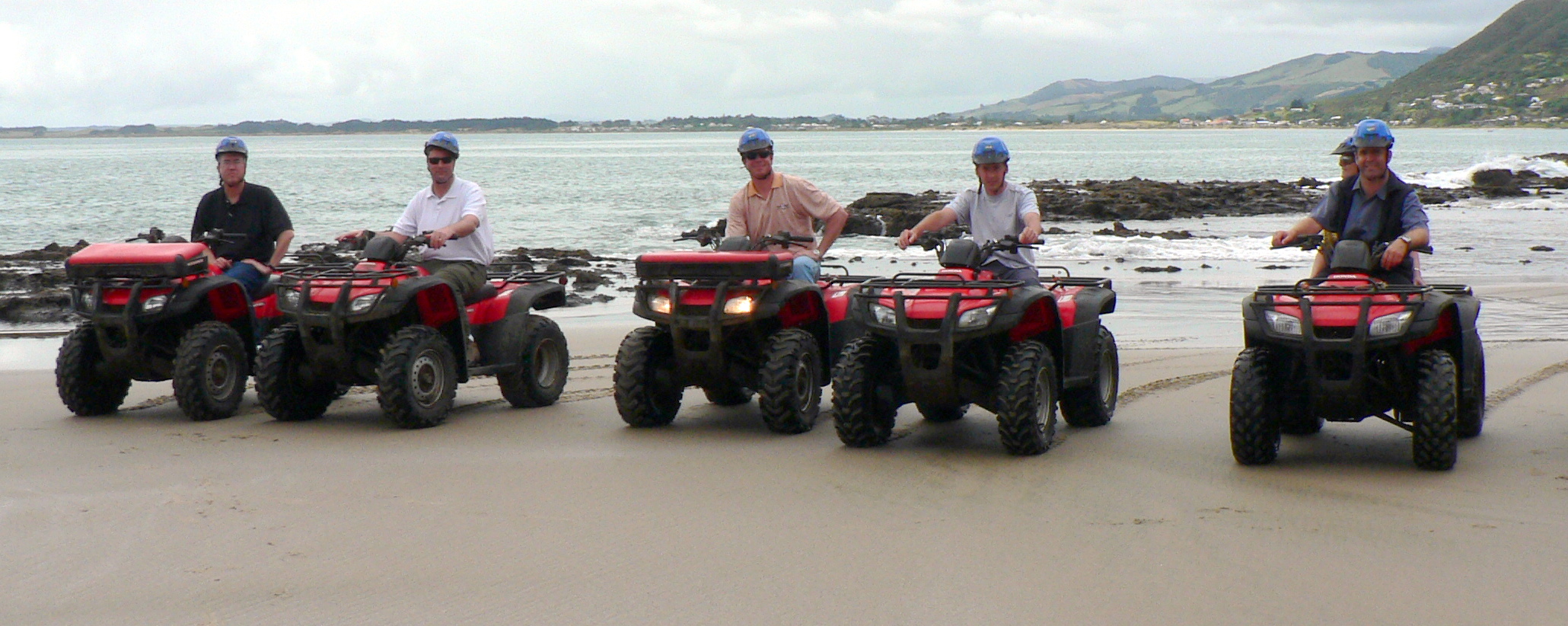
And then we raced down dunes on rented ATVs. Here’s our adult supervision, standing at the top of a dune we were about to race down:

P1020430

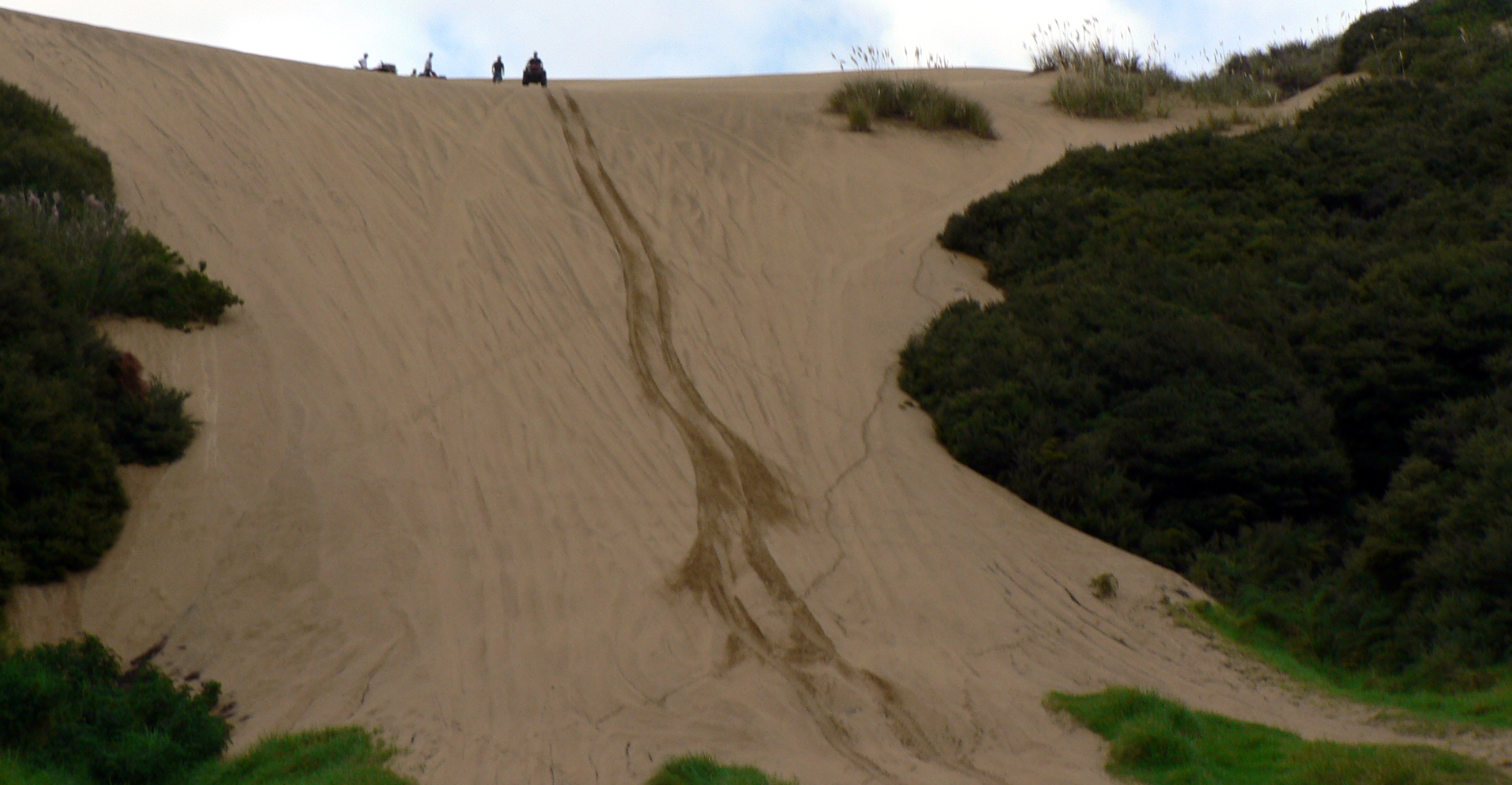
And here’s what the same dune looked like from the bottom:

P1020433

Everyone made it down. I don’t remember how we got back up.

P1020411

Two nights later, I did something that surprised me by being even more fun: I went midnight possum hunting, under the supervision of a Kauri Cliffs employee who is a veteran of the British equivalent of the Green Berets. All New Zealand mammals, except for a couple of rare species of bats, were introduced to the islands by humans and are thus considered varmints until proven otherwise. Possums—which are bushier and less sinister-looking than American opossums—were imported in 1836 by some Australians who were hoping to establish a fur trade. Now there are 80 million of them, and they eat the eggs of the kiwi, New Zealand’s nearly extinct flightless national bird, and they have no natural predators, except people. I hadn’t fired a gun since summer camp in Colorado, forty years before, and was astonished to discover I have a talent for felling treed marsupials with single shots to the head. I had been a somewhat reluctant participant in our hunting expedition, but if, toward the end, our guide had suggested that we stay out till dawn I would have eagerly agreed. Possum-killin’ was also the favorite Kauri Cliffs activity of the golfers Dave Stockton and Dave Stockton, Jr., who, during a visit shortly before mine, went out every night.

P1020296

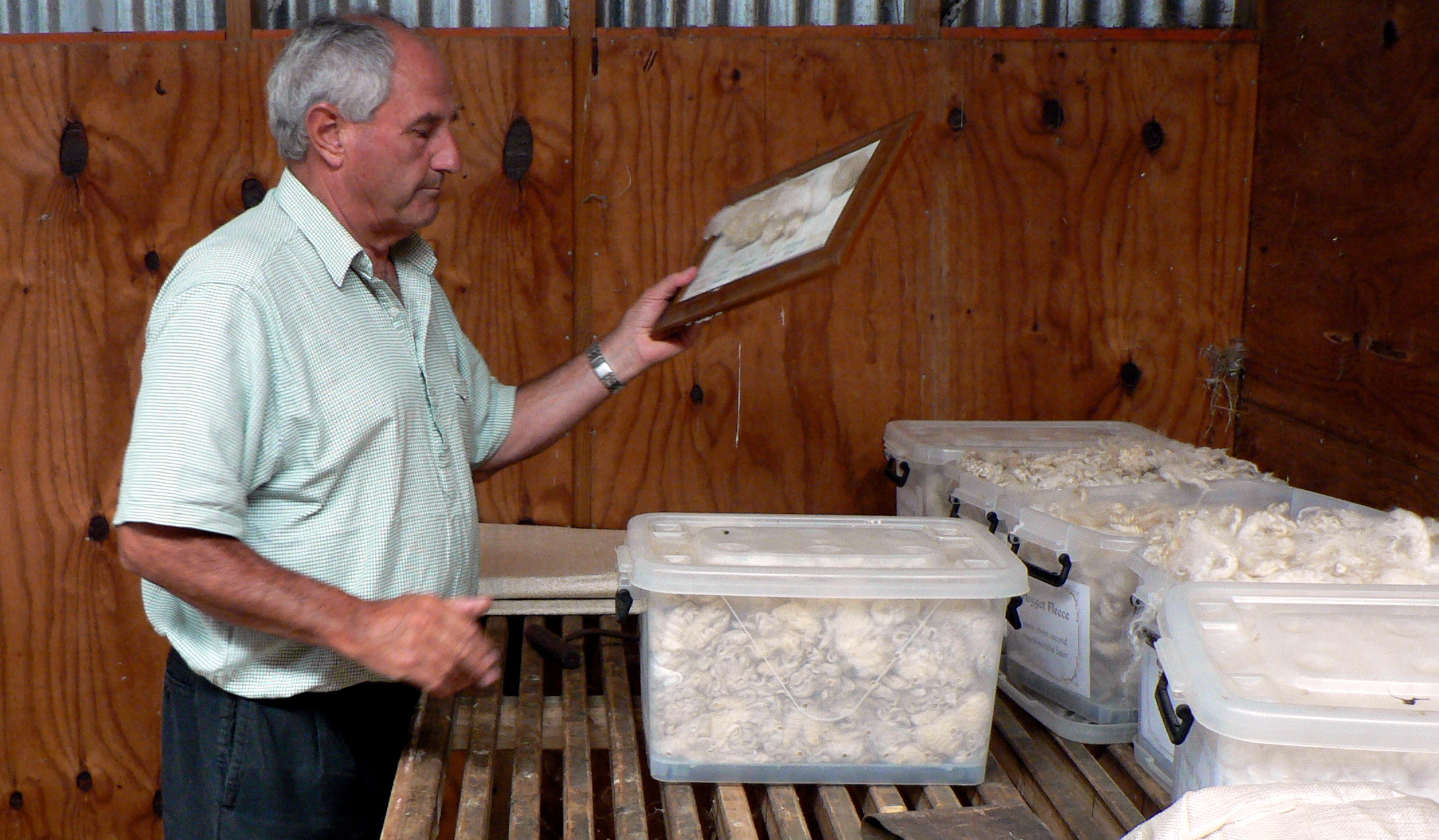
One afternoon, following a round of golf, I toured the entire property with the man in charge of the agricultural side of Robertson’s New Zealand operation. (That’s him in the photo above.) We visited the sheep-shearing shed, climbed over a 9000-volt electric fence, scaled an old volcano whose summit is the highest point on the farm, visited a couple of stunning beaches, saw some cattle that were about to be slaughtered, and ran into the Kauri Cliffs farm manager, who was responsible for twenty-five hundred beef cattle and five thousand sheep. The manager was wearing a golf hat and driving a big ATV, and there were three scruffy farm dogs standing just behind his seat. He said, “Kauri Cliffs is not a golf course with a farm on it. It’s a 6,000-acre-farm with a golf course at one end.” Then he roared off, and the dogs, like surfers, had to shift their weight in complicated ways to keep from falling off.

It’s summer in New Zealand right now. Do you understand what I’m saying?

To be continued.

Golf in New Zealand: Kauri Cliffs

kauri cliffs view

One of the most remarkable things my wife has ever said to me is that, if I ever told her I thought we ought to live in New Zealand, she’d be ready to move that minute. This was highly surprising, both because she doesn’t really even like to travel and because Donald Trump wasn’t running for President yet. I think her interest was based partly on the scenery in The Lord of the Rings movies and partly on the fact that New Zealand is so far from everywhere else that if you holed up there you would no longer have to think quite so much about the world’s most serious problems. I myself might be tempted to move, if I could persuade all my regular golf buddies to go, too.

P1020275

I visited New Zealand in 2007, in the company of the hedge-fund billionaire Julian Robertson and his wife, Josie—who has since died.

P1020548

We spent the first few days at Kauri Cliffs, a resort the they had created on a 6,000-acre farm in the Bay of Islands region, near the northern end of the North Island. “I had no idea what I’d bought,” he told me. “It turned out to be one of the most magical pieces of land you will ever see, but when I bought it I didn’t even know that it had waterfalls. I saw it at the worst time of the year, August, and it was nothing but a filthy wet sheep farm, and I really bought it mainly because it was cheaper than a modest New York City apartment.”

P1020321

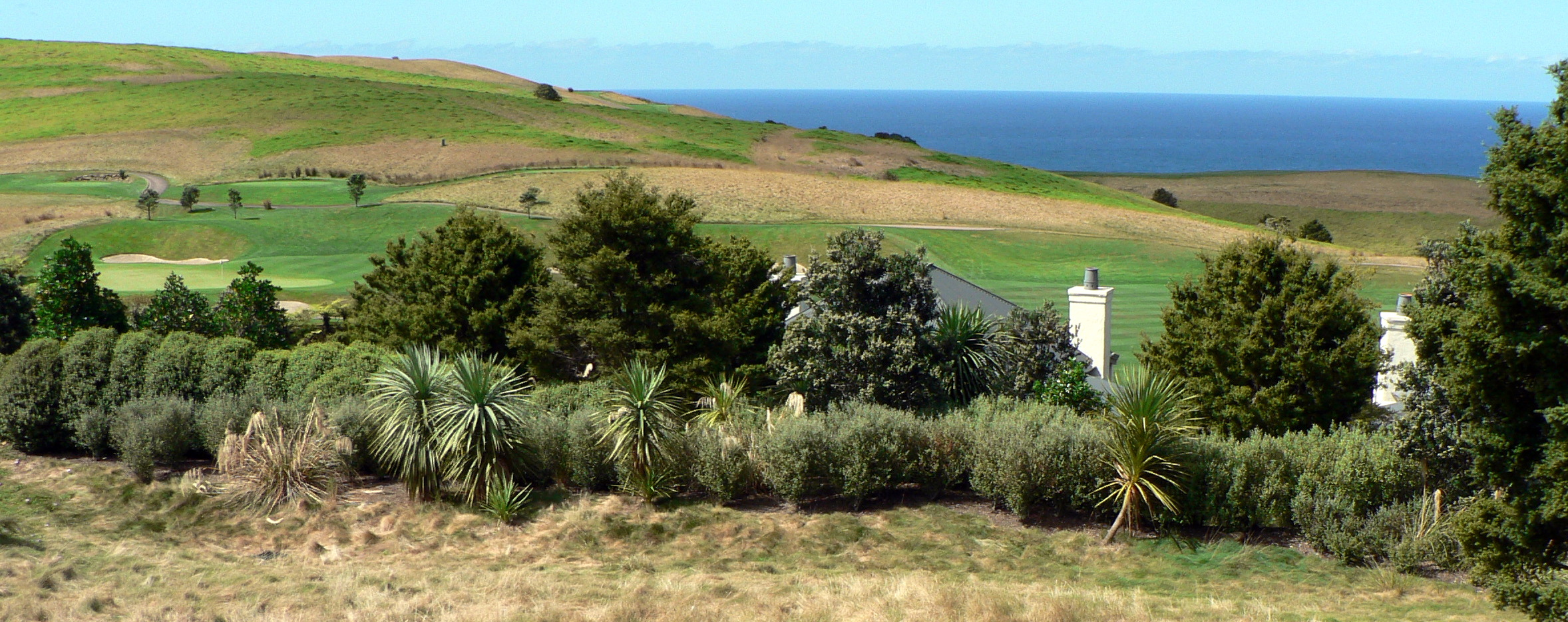
In 1997, he hired David Harman, a golf architect he admired, to design a course for the eastern edge of the property, along cliffs that rise high above the Pacific. That course is now No. 49 on Golf Digest’s list of the World’s 100 Greatest Golf Courses. It’s just ahead of North Berwick Golf Club, in Scotland—one of my favorite golf courses of all time. Kauri Cliffs is a terrific course, too, and the views from the ocean holes are spectacular.

P1020466

Josie didn’t see the place until the course was almost finished, and when she did she said they would have to build a lodge, too, in order to attract enough golfers to keep the course in operation. “I said, That’s ridiculous, this is a great golf course and they will come,” Julian told me. “Well, Josie was right; they wouldn’t have come. Kauri Cliffs is about as far away from everywhere else as you can get, so it was a real stroke of genius of hers that we did it. And, as it turns out, the lodge business down here has been very, very good.”

P1020469

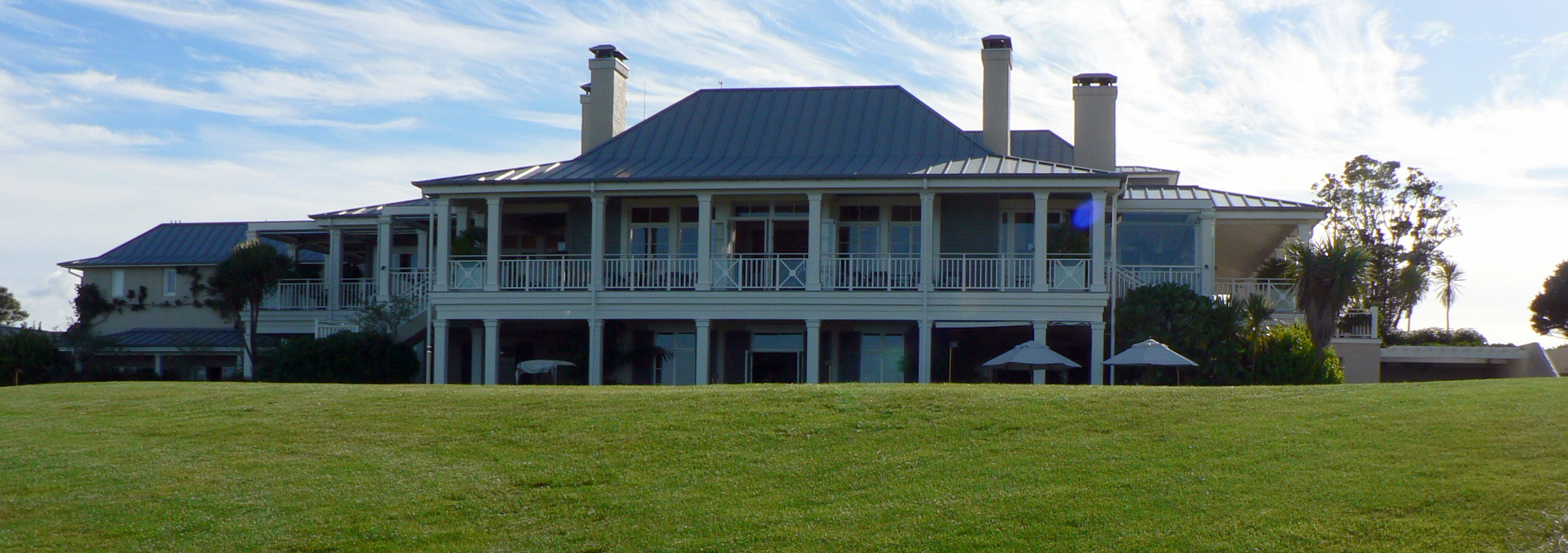
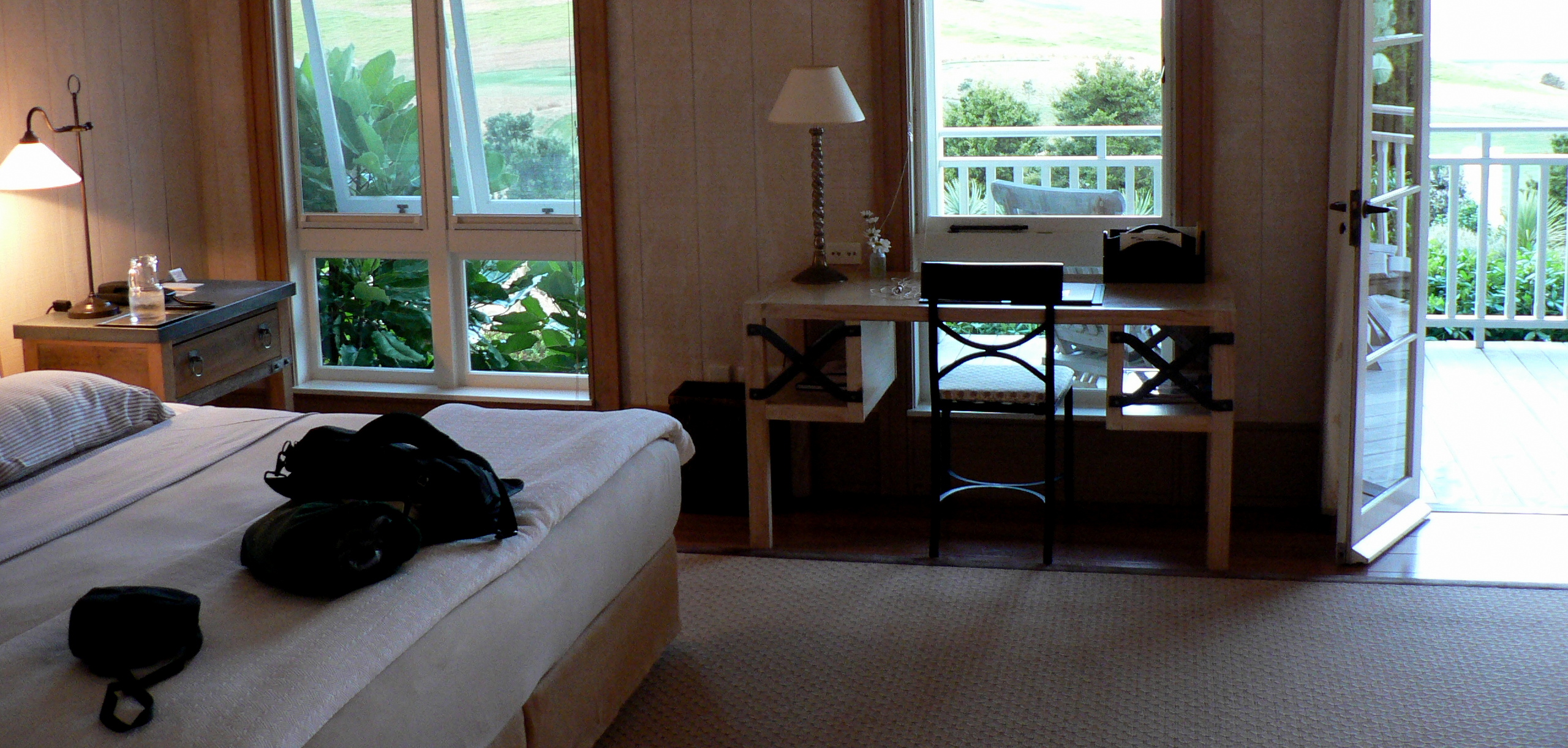
The accommodations at Kauri Cliffs consist of eleven two-bedroom cottages arranged along a secluded walking path, plus the Owner’s Cottage, which is larger, has its own garden and infinity-edge swimming pool, and can be rented (for more than $6,000 a night in the high season) when the Robertsons aren’t in residence. Each suite-size half-cottage has a porch, fireplace, dressing room, and spa-like bathroom, and it looks out over the golf course to the sea. This was the view from my room:

P1020255

When the resort was being designed, Josie had a big fight with the architect over air-conditioning: the architect argued that no self-respecting five-star hotel could possibly do without it, and Josie argued that it most definitely could. The winner, naturally, was Josie—and she was right. The outdoor daytime temperature at Kauri Cliffs hovers around room temperature virtually all year long, and one of the great pleasures of staying there is waking up to birds and ocean breezes rather than the cold hum of an HVAC system.

P1020232

To be continued.

Report From the Phoenix Open: Coping With a Ten-Drink Limit

beeronpatio

Chic, CJ, Jaws, and Brian—all members or honorary members of the Sunday Morning Group—somehow persuaded the Department of Homeland Security to let them spend four days in Scottsdale without supervision, then paid for the trip by withdrawing money from their wives’ 401ks. Or so I assume. Here are Jaws, CJ, and Chic at the men’s member-guest either last summer or the summer before:

P1140155

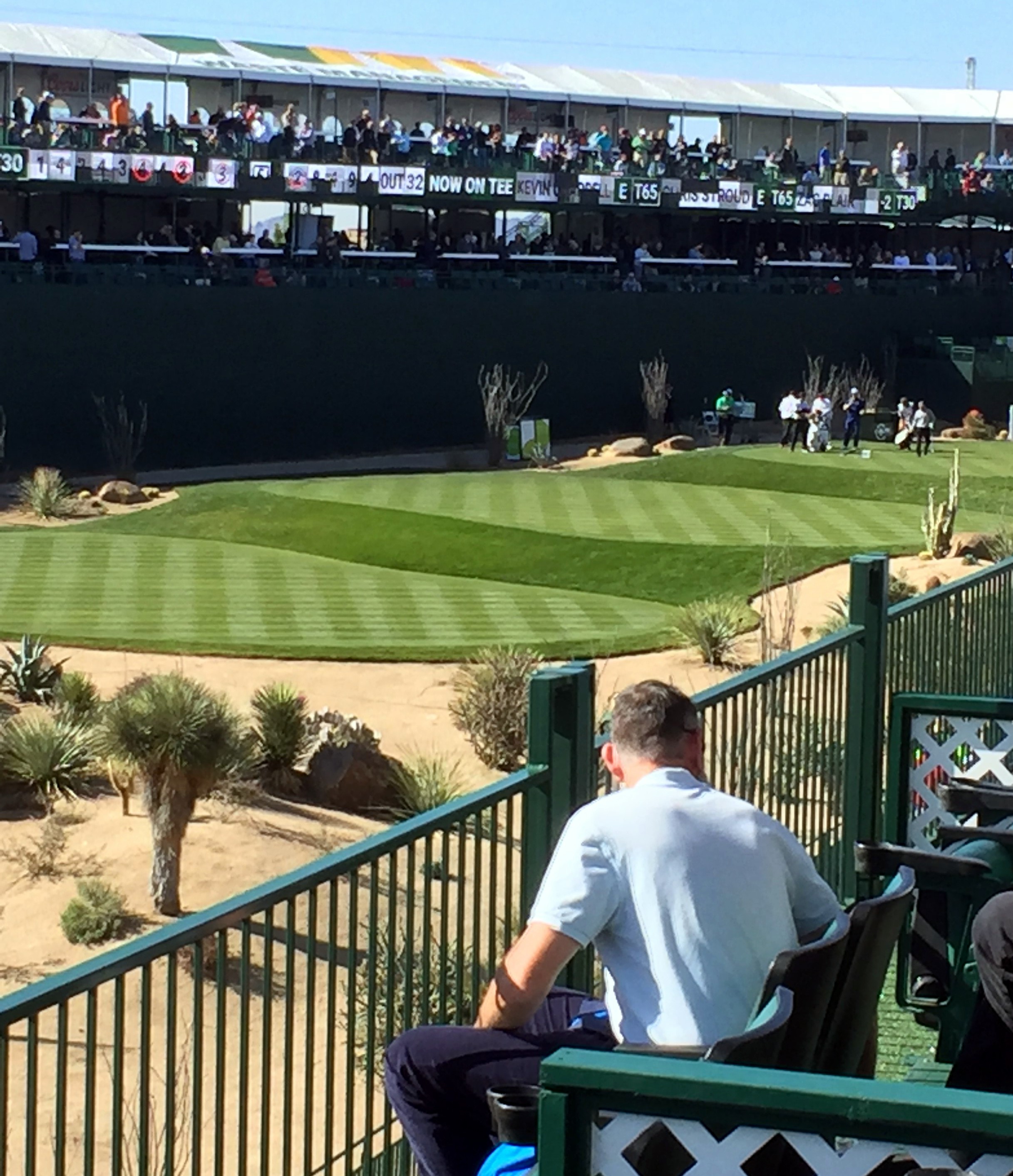
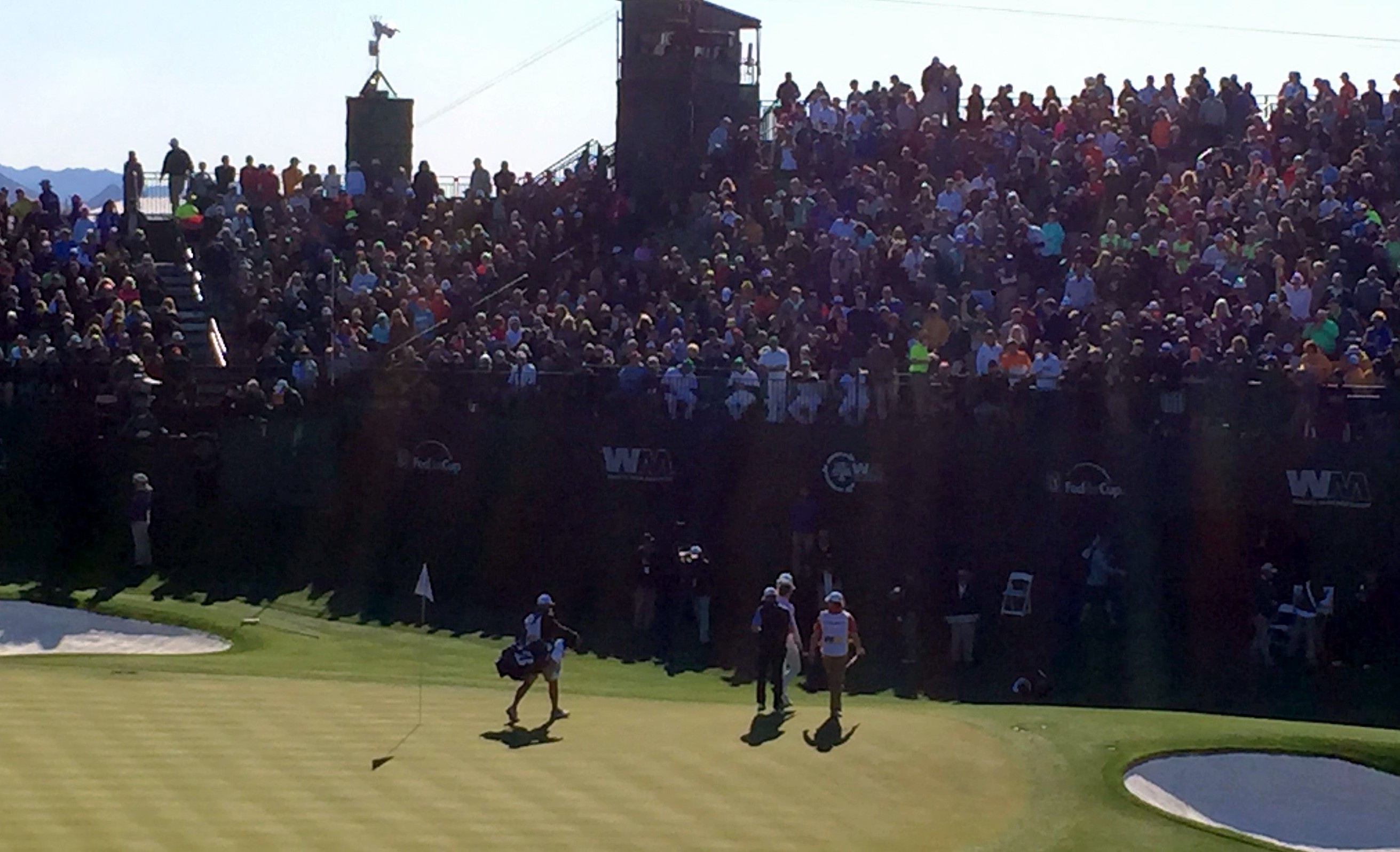
In Scottsdale, they’ve been dividing their time between the Waste Management Phoenix Open and Grayhawk Country Club, a few miles away. Before they left, I swore in Chic as this blog’s official representative in the grandstands on the sixteenth hole. Getting reports from him hasn’t been easy, but here’s one:

“Apparently with the skybox tix u have a 10 drink limit but if u tip the girl enough she doesn’t keep count. So my 10 drinks only counted as 2 in her book.”

All things considered, his photos are remarkably unblurry:

Chic Phoenix 1

Back to Chic:

“The bleachers seem to be the place to be. Which was below us not below us just fiscally below us. They had guys dressed in Masters caddies outfits. Bubba thru a lot of stuff to the fans. Saturday is green out day. Everyone to wear green and support the waste management cause. Golf now then golf in the am. Then tourney rest of day.”

Chic Phoenix 2

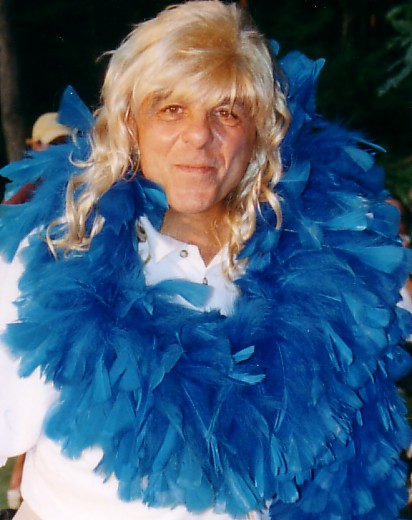
That was yesterday. When they got to the Grayhawk, Chic discovered that he had an old Uncle Frank ball in his bag. Uncle Frank was a beloved SMG member, who died from lung cancer seven or eight years ago. After the cancer had spread to his brain, he was given a marathon radiation treatment, during which his head had to be immobilized in a halo brace, a birdcage-like contraption that was anchored to his shoulders and his skull. When the session ended, 18 hours after it began, he asked the nurses to take him to the children’s oncology ward before removing the brace. A couple of days before, at home, he had made a basketball backboard out of Styrofoam, and now he asked the nurses to attach it to the back of his head. He let the children in the ward shoot free throws with a Nerf ball, three shots for a dollars. “Hey,” he told me later, “I made twenty-three bucks.” Here’s how he dressed for our first-and-almost-last clubhouse sleepover, in 2002:

boa 2

When Uncle Frank died, we had his name printed on lots of golf balls, and divided them up among ourselves. The idea was to lose the balls in interesting places, so that his name would keep popping up for years, as a kind of memorial. I myself have lost them on great courses in three different countries. Back to Chic:

“I thought trying to lose the frank ball in Arizona might be a nice send off. Well the ball lasted 6 holes. I tried to lose it but it hung in there. 1 pic from its adventure:”

Chic Phoenix 3

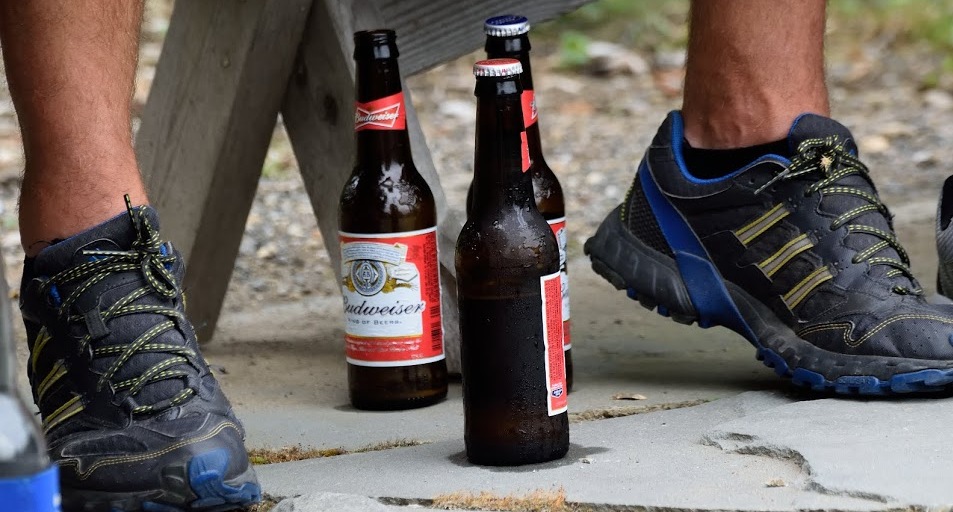
Incidentally, the thing that Brian is the most famous for, at home, is knowing how to use a beer can to open a beer bottle:

Back-roads Scotland: Grantown-on-Spey

P1020893

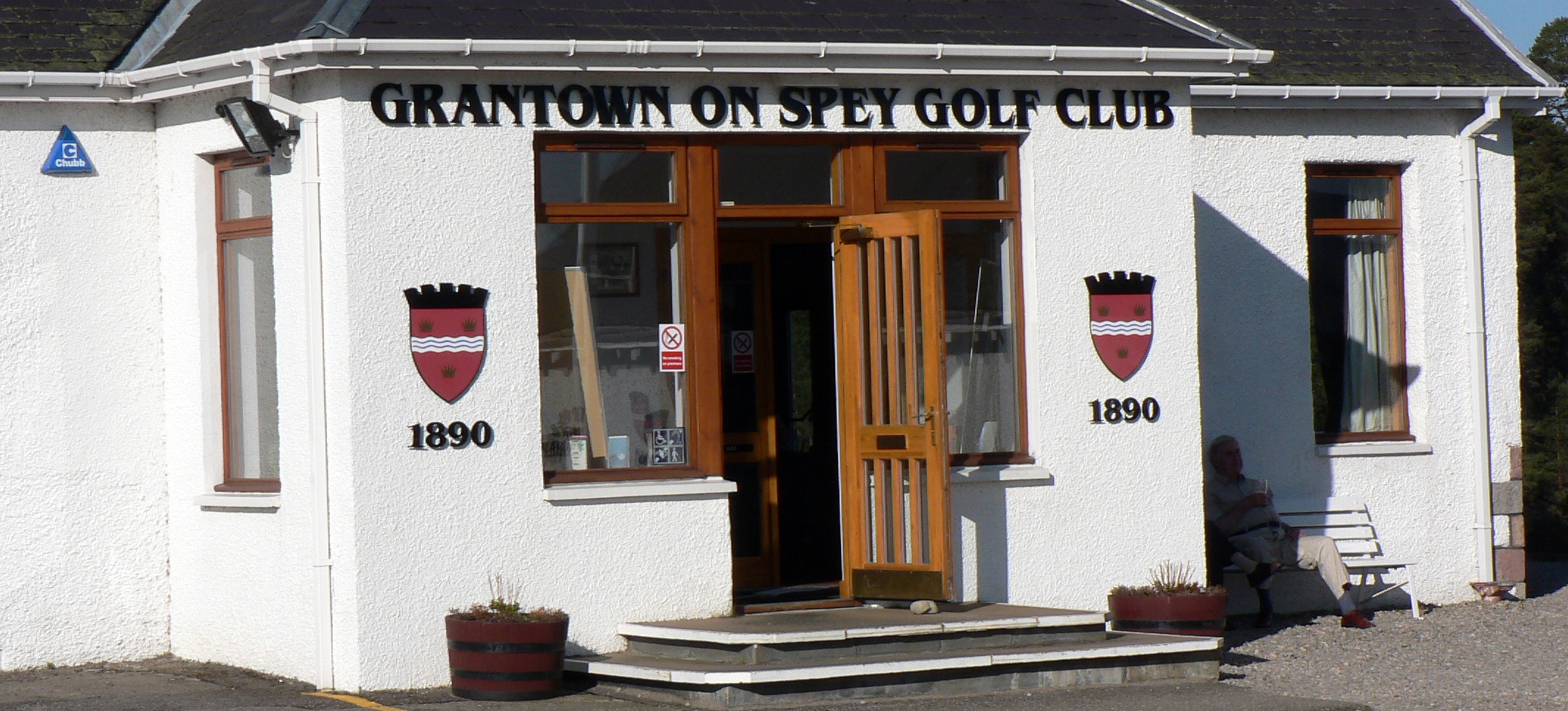
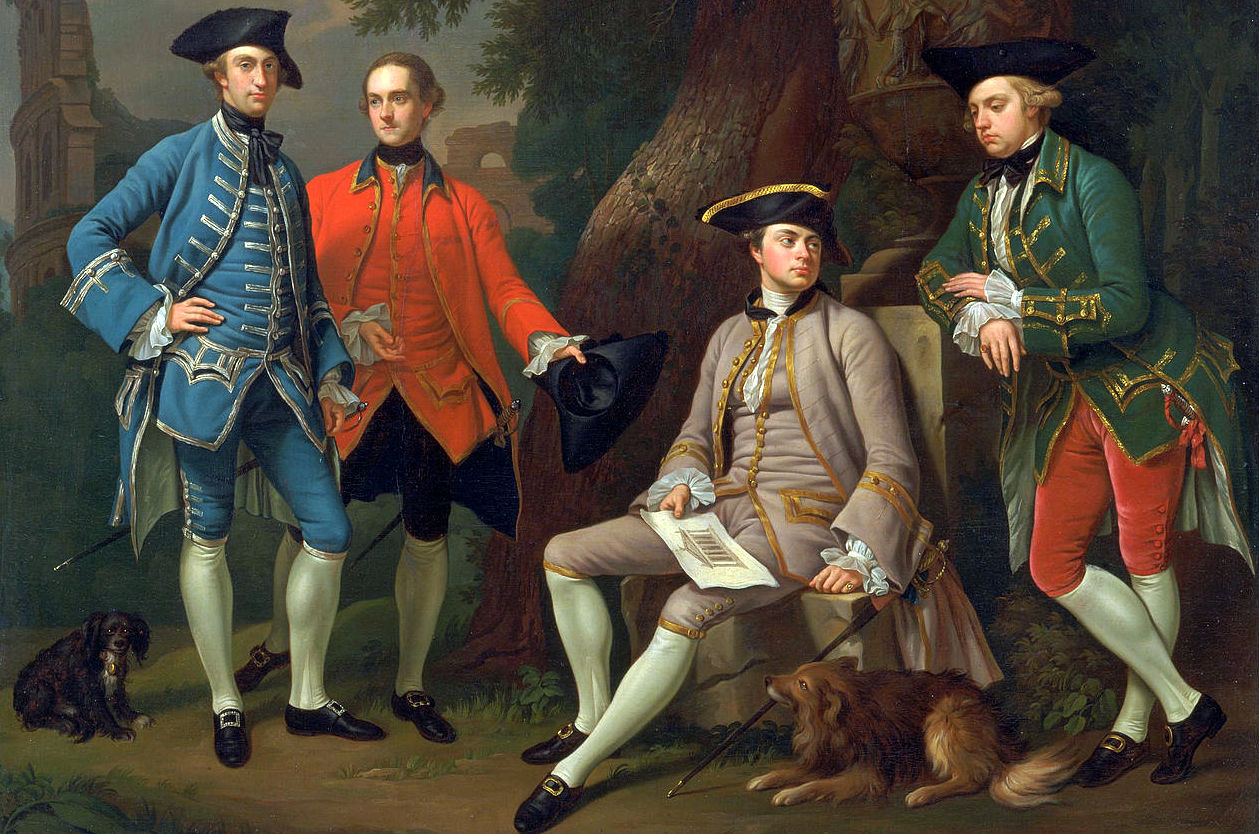
Grantown-on-Spey is a small town on the Spey River, near the northern edge of Cairngorms National Park, in Scottish whiskey country. It was the birthplace of Bobby Cruikshank, a Scottish golf pro whose principal claim to fame is that he lost to Gene Sarazen in a semi-final match in the P.G.A. Championship twice, in 1922 and 1923. The town was founded in 1765 and was named after a local rich guy, James Grant, who is at the far left in the foursome below. I don’t know why the golf clubs these guys are holding don’t have heads:

jamesgrant

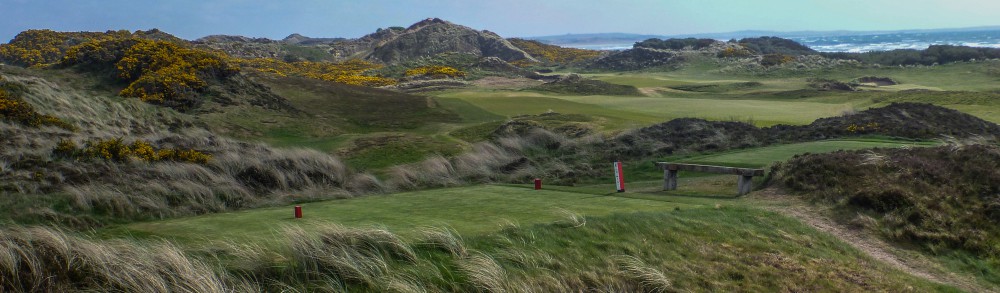
The local course isn’t one I would plan a trip around, but I did enjoy playing it. It was designed by Willie Park and James Braid in 1890, during the second Scottish golf boom, which accompanied the rise of the railroads. (The first American golf boom took place at the same time. In those days, just about the only thing you needed to be a golf-course architect in the United States was a Scottish accent.)

P1020882

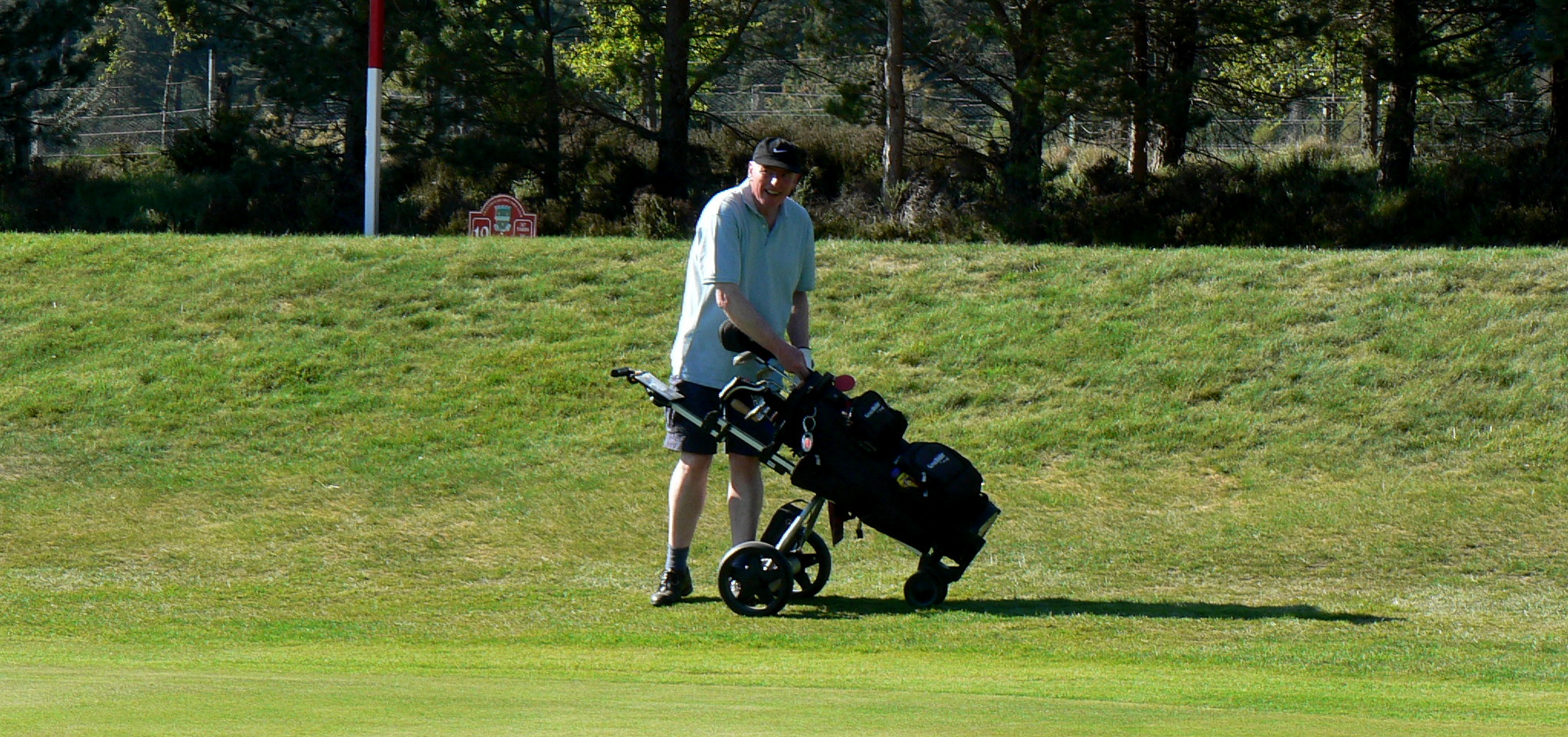
There’s a practice area in a field next to the course. A member with a tube of shag balls was working on his short game.

P1020879

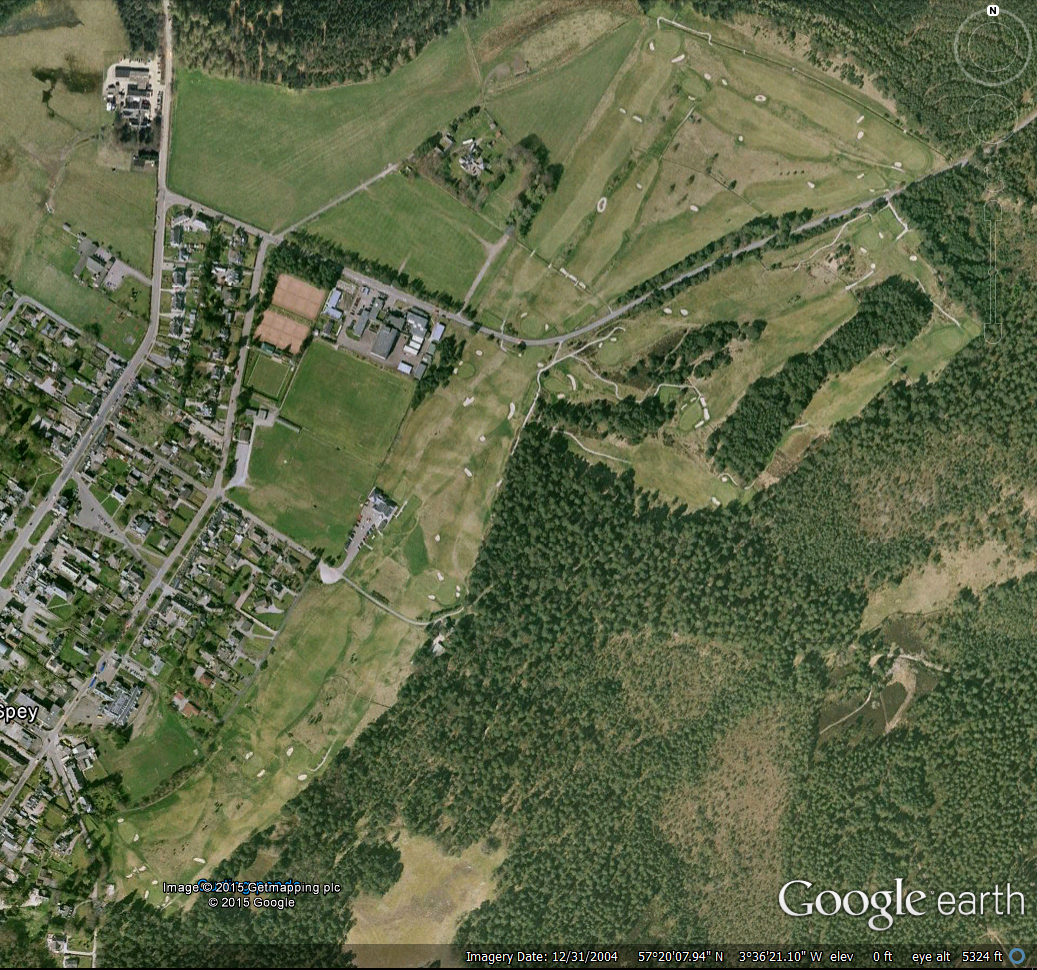
Ladies’ Night was about to begin, but the pro said I could tee off ahead of the crowd. A member of another club had told me that Grantown is really three distinct six-hole golf courses—and he was right. The first six holes are flat; Nos. 2-5 work around the corners of a big triangular field, at upper right in the aerial shot below. They were more fun to play than you might think.

grantowngoogle

To get to the second six holes, I went through a gate and across a road, into much more dramatic terrain.

P1020877

I liked those six holes the best.

grantownspeyhole-001

The final six holes are quirky, and are squeezed into a sort of open valley bordered by two schools. I surprised myself, after my round, when I realized that I could mentally walk through all 18 holes, something I’m usually terrible at unless I’ve played a course four or five times.

P1020876

As I finished, I saw the last of the women’s groups heading out—the grans of Grantown. There were several foursomes, and then the last group was a sixsome:

P1020892

Two guys were drinking beer on a bench in front of the golf shop when I finished. A carnival had been set up in a field next door, but I didn’t stick around for that.

P1020894

Reader’s Trip Report: Tarandowah Golfers Club

tarandowah-golfers-club-1035962-1607522-regular

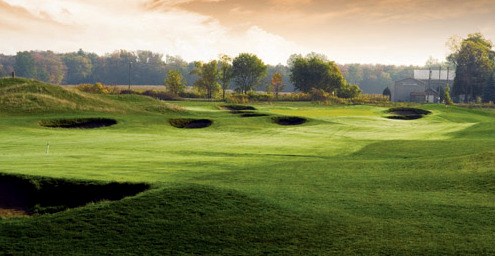
When my friends and I look for places to play during the winter, we usually go south—to Bridgeport, Brooklyn, or the Bronx—but maybe we should go north instead. John Wilson, a reader in Canada, wrote recently to say he had just played a round at Tarandowah Golfers Club, in Springfield, Ontario, a few miles north of the northern shore of Lake Erie, about halfway between Buffalo and Detroit. Pictures of the course made me want to jump in my car.

tarandowah

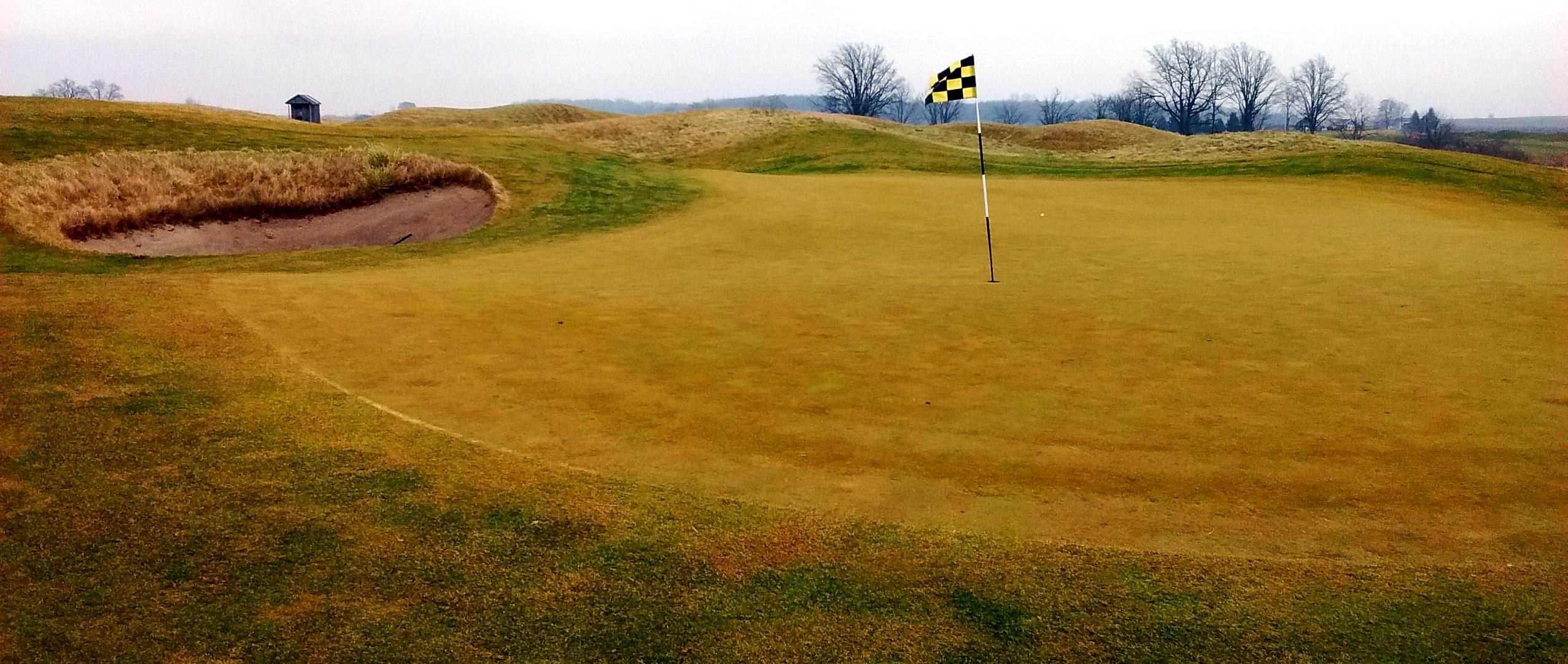
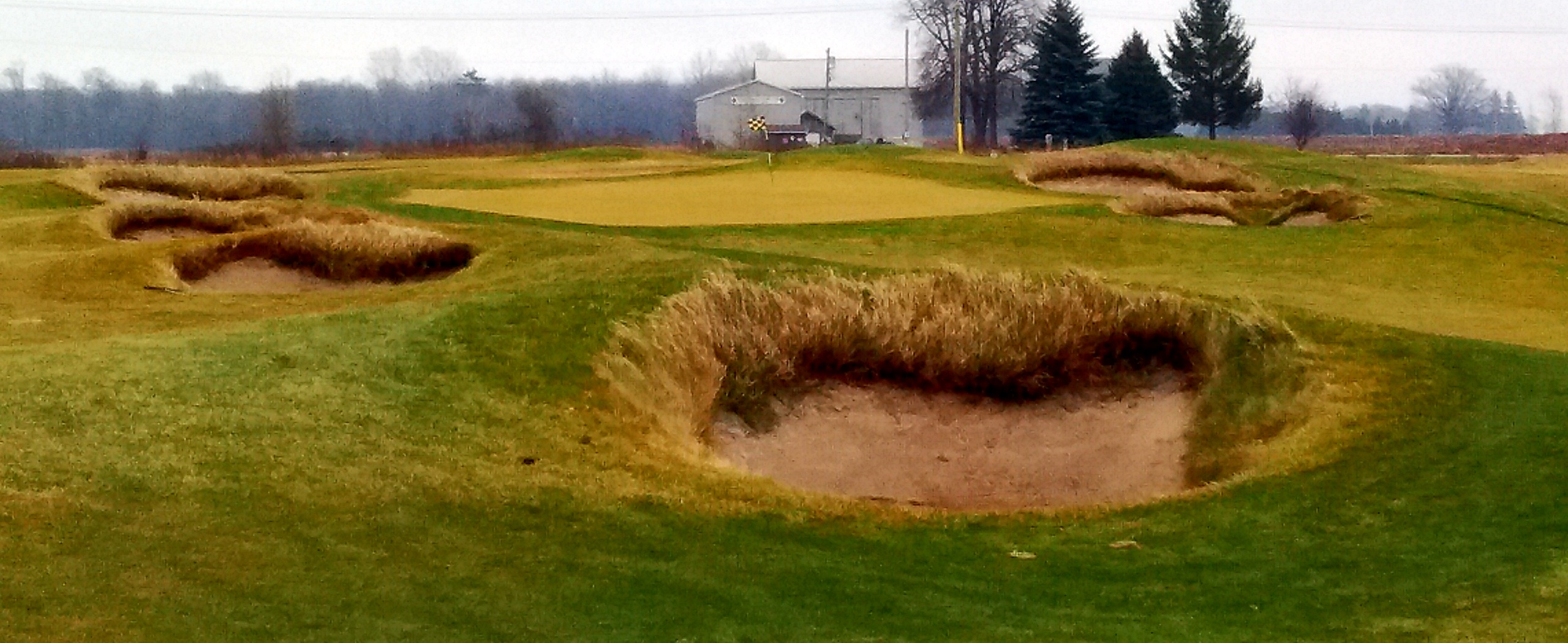
Tarandowah was designed by Martin Hawtree, who has done big projects at Lahinch, Portmarnock, Formby, Royal Liverpool, and Royal Birkdale — all among my favorite courses in the world. He also designed Trump International in Aberdeen, Scotland, and has done a major renovation and redesign at Trump International in Doonbeg, Ireland. His firm, Hawtree Ltd., was founded more than a century ago by his grandfather Fred; it’s the oldest continuously operating golf-architecture firm in the world. (All three generations of Hawtrees have worked on Royal Birkdale.) Tarandowah is very much in the spirit of all those great old links courses. Here’s a photo Wilson took during his recent round:

IMG_20151210_103615840

And here’s another:

IMG_20151210_111733042

His report:

“I work on the greens crew at St. Thomas Golf & Country Club, in Union, about half an hour away. It closes every year after the third weekend in November, so it has been shut down for a while. Tarandowah is one of several public courses in this area that stay open as long as the weather permits. I played with a St. Thomas member I see every day when I am working but rarely get to make a game with. We played in three hours (walking) at a cost of $25 per person — not bad for a Hawtree design.”

St. Thomas, which was founded in 1899, has a heck of a course, too. Here’s the third hole, on which nearly every shot has a decent chance of ending up in that creek:

stthomasthird

During the past three winters, St. Thomas has undertaken a major tree-thinning project — something many old golf courses need to do. “Joe Vargas, from Michigan State University, and David Oatis, from the U.S.G.A., were the primary consultants on the project,” Wilson told me, “and my superintendent, Wade Beaudoin, wrote an article about it.” (You can read Beaudoin’s article here.) So far, more than a thousand trees have come down. Here are some of them:

stthomastreeremoval2012

During a round at Tarandowah a little over a year ago, Wilson noticed that a sorry-looking dog was following his foursome. “I assumed she was a stray, because she was covered in burrs and thick mud,” he told me. “My friends thought I was crazy to rescue a dog during a round of golf, but I took her home and cleaned her up. Later, I learned that she belonged to a farm near the golf course. I shed a few tears when I dropped her off with her rightful owners. During my round last week, she came running across the fields, and my smile was a mile wide. Her name is Gracey.”

IMG_20151210_102248295_HDR

“The forecast for next week calls for temperatures in the mid-forties,” he continued, “so there’s still more time for December golf in Ontario. On Tuesday, though, I’m heading to L.A. for a family visit. I already have a tee time for Rancho Park, which I haven’t played yet. Hopefully, the round will be less than five hours.”

Well, good luck with that one. Maybe less than six.

004

You Have to Play for Something

IMG_4042

“What’ll we play for?” I asked.

“Oh, let’s not play for anything,” he said. “Let’s just play for fun.”

So we played for fun, but it wasn’t fun.

Some people have the idea that placing a modest wager on a round of golf is a desecration of some abstract ideal of recreation, or something. But golf without risk is also golf without reward. In my experience, the guys who insist on playing “just for fun” also tend to slap at six-footers as though the point of the game were merely to get on to the next hole. They never experience the exhilaration of sinking a ten-foot curler with a 25-cent greenie on the line.

P1150051

Hustlers aside, the purpose of playing for money isn’t economic; it’s psychological. The parties to a two-dollar nassau aren’t trying to get rich. They’ve merely agreed to suspend disbelief, for the next few hours, in the significance of what they’re doing. Competing for money is one of the few opportunities a grownup has to play the way children do—to increase the pleasure of a make-believe activity by taking it sort of seriously.

P1150478

The size of a golf wager doesn’t matter, as long as it isn’t so high that it makes any of the participants worry about the sum instead of the game. In Scotland once, I played a local stranger for a golf ball, and we both played as hard as if we were playing for the Ryder Cup. (And I still have his golf ball.) If we’d played “just for fun,” we’d have had a fine day anyway, but the round would have been less memorable.

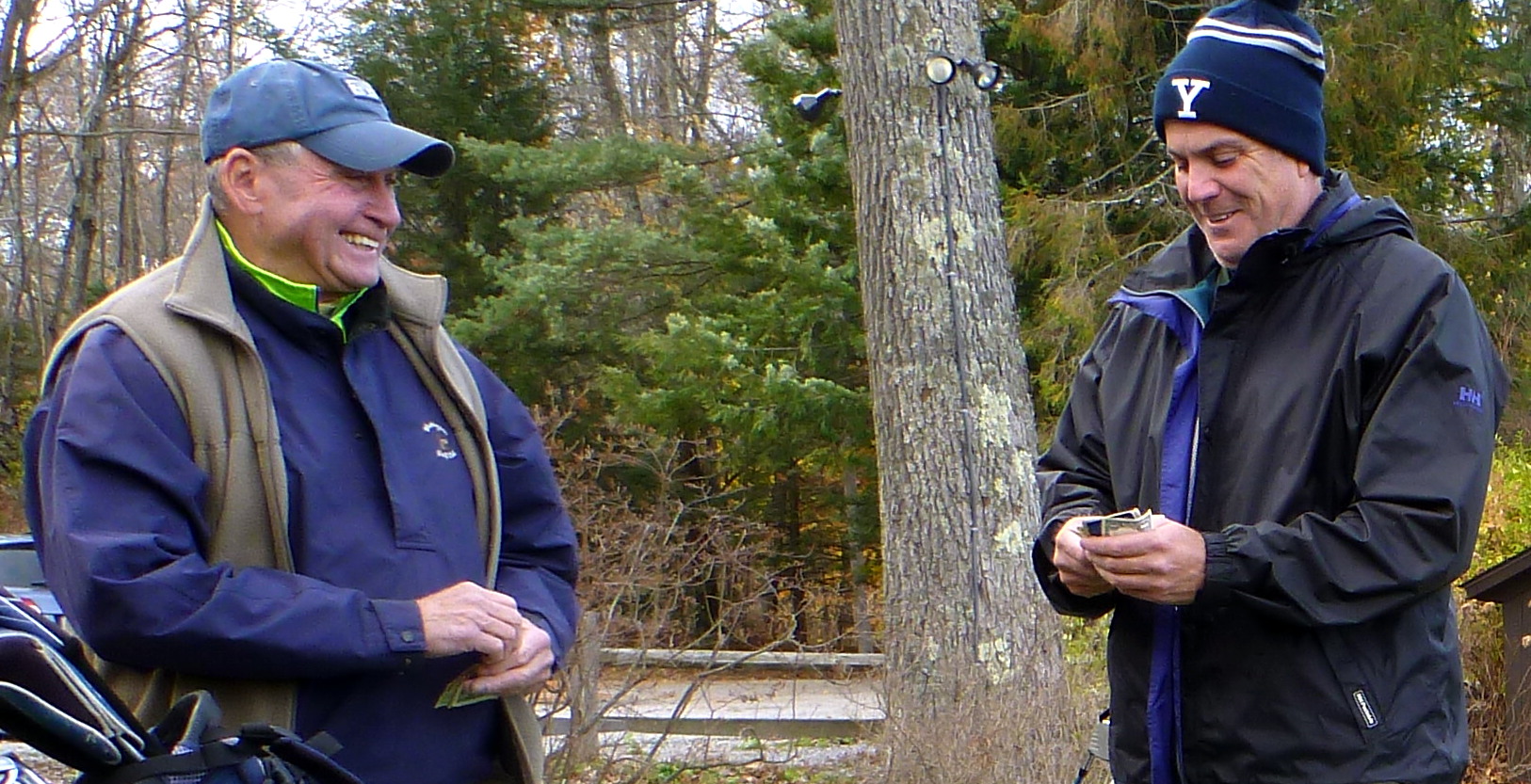
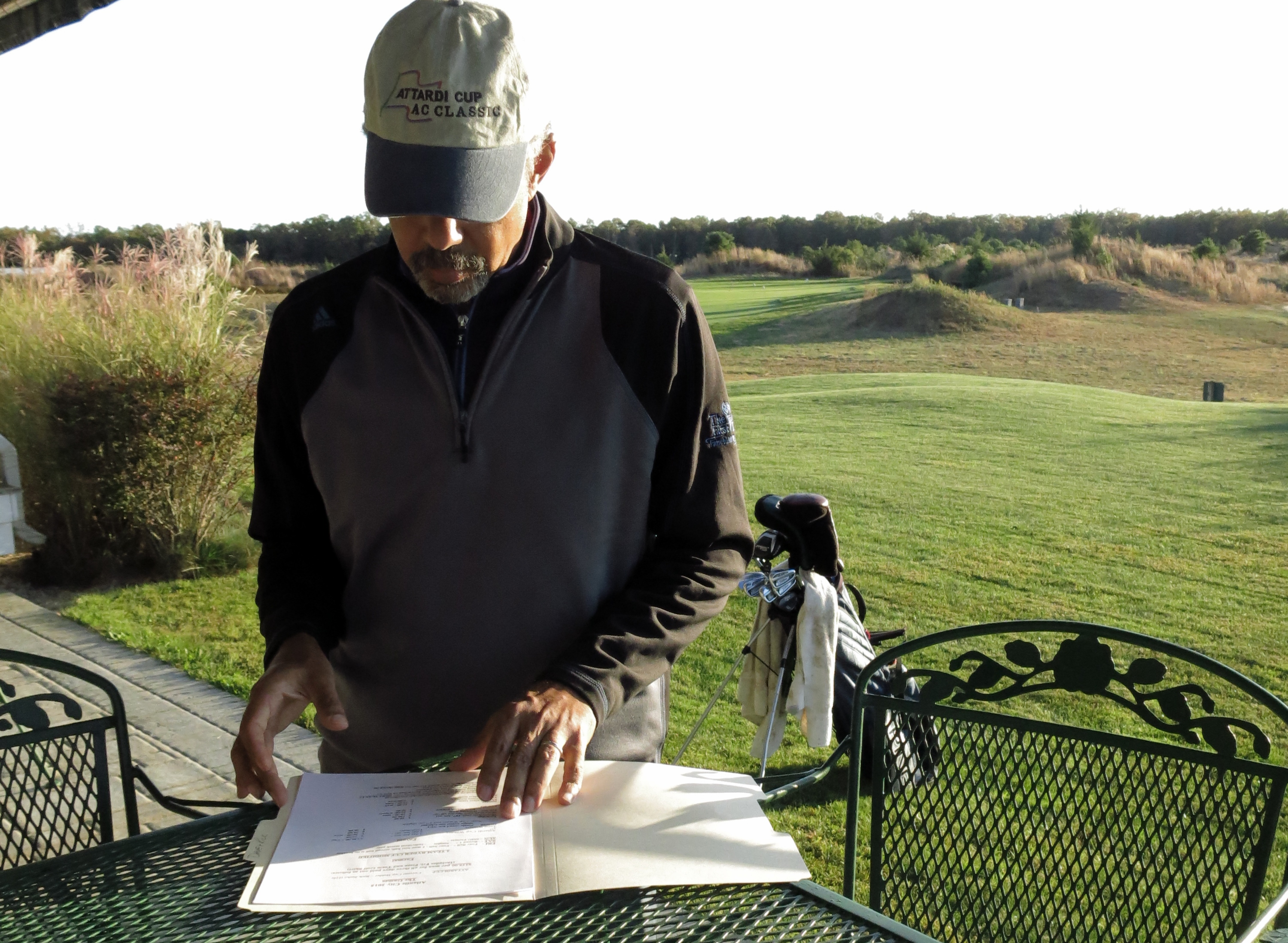
P1150520When the same players play together for long enough, their gains and losses tend to be self-canceling, because luck, over time, regresses to the mean. Every fall, the guys I play with on Sunday mornings take a weekend golf trip to Atlantic City. Before we start, we each give Hacker (real name) $100. He keeps track of all our competitions and distributes the winnings at the end.

IMG_4060

One year, he lost his master sheet and stayed up all night recreating it from our scorecards. I told him he should have just handed every player an envelope containing $100 and said, “Here’s what you won.” By that point, the actual money was irrelevant: we’d already had our fun.

IMG_1483

A Perfect Autumn Buddies Trip

David

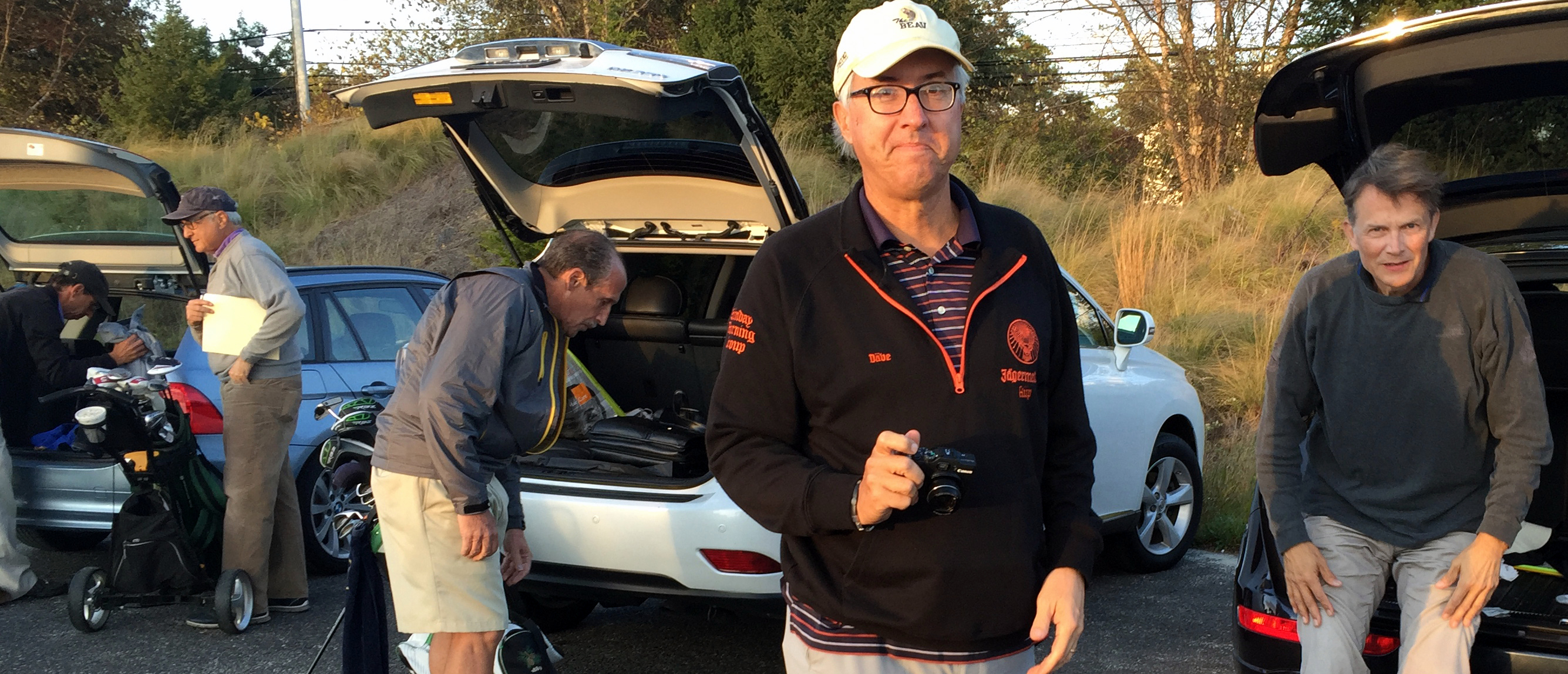
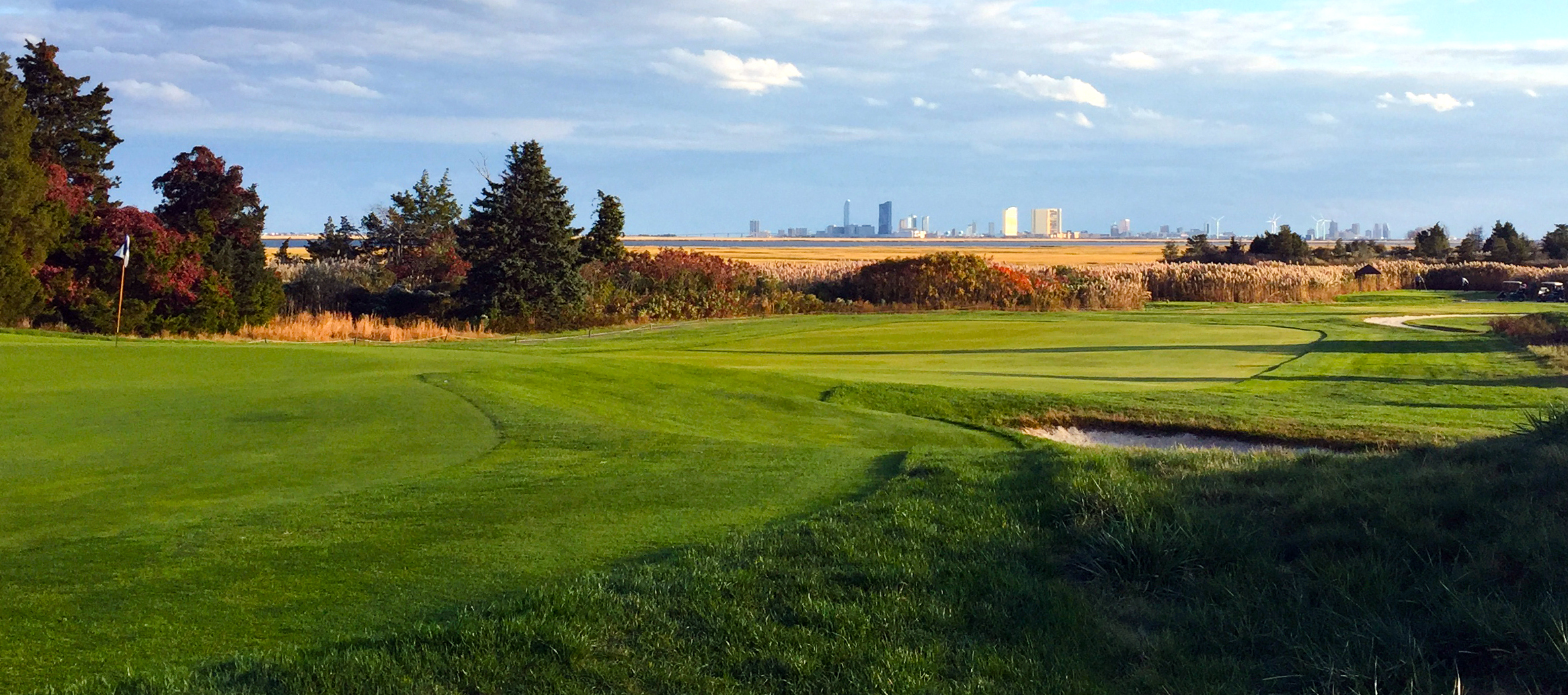
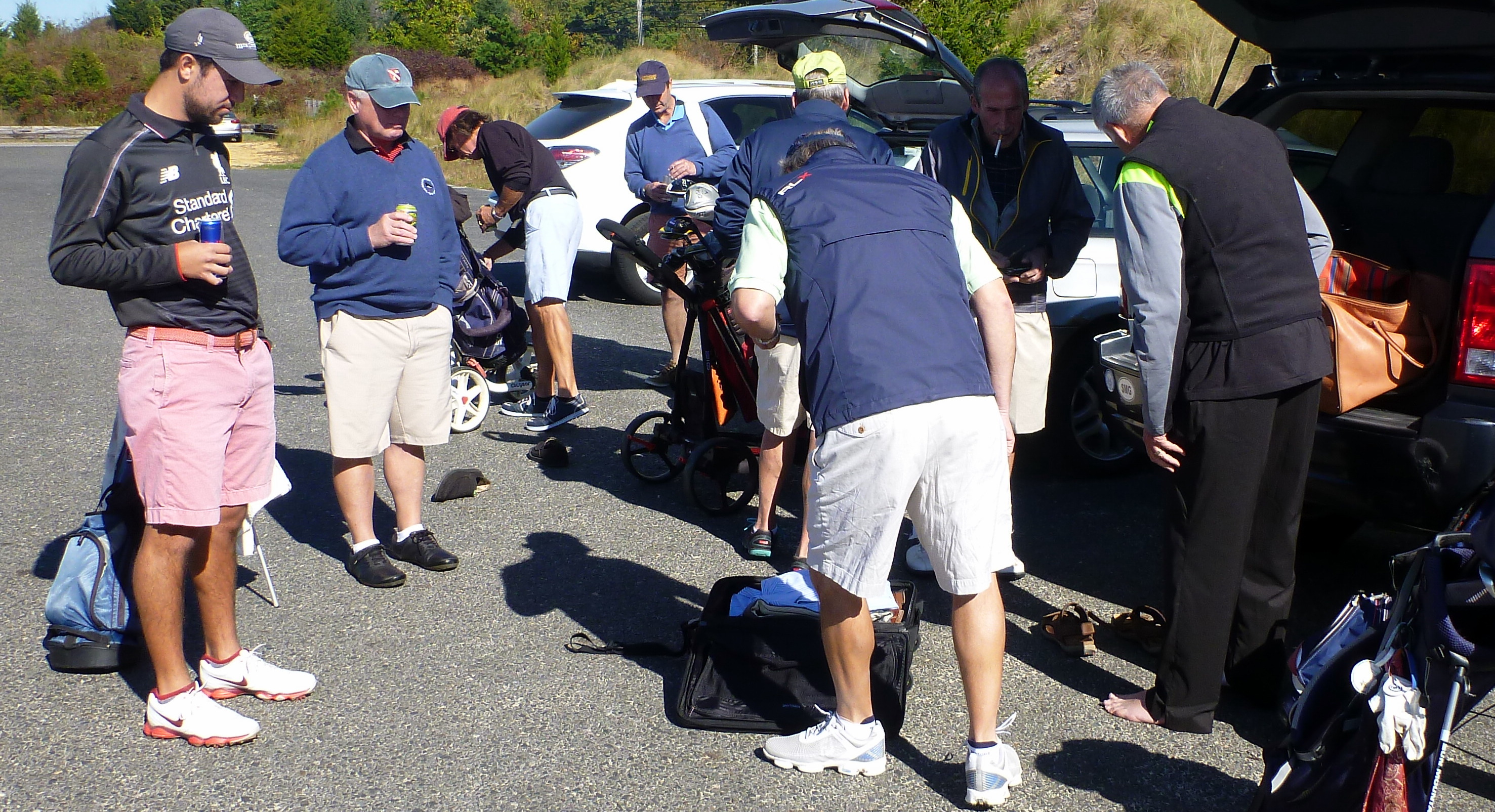
Every October, the Sunday Morning Group celebrates the approach of the winter golf season by taking a long-weekend golf-only buddies trip to Atlantic City, a little over four hours south of where we live.

view2

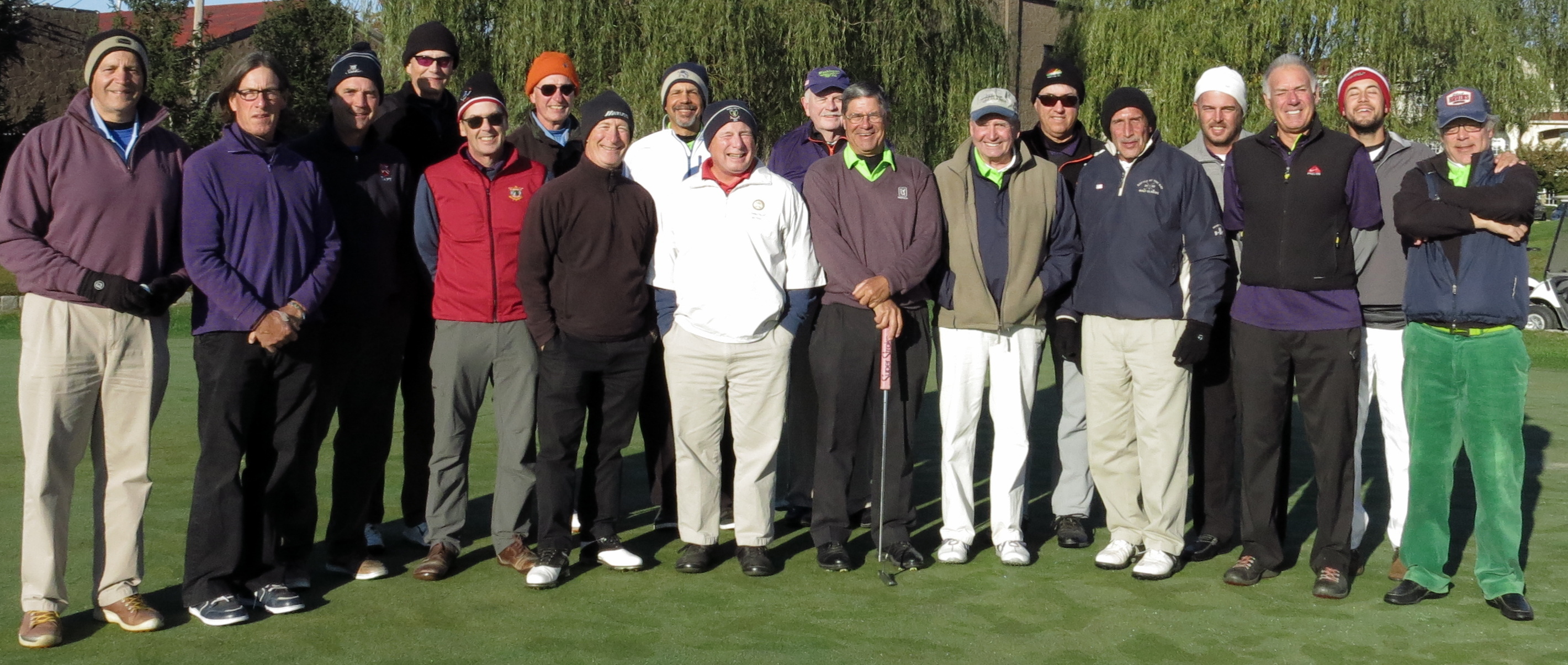
This year was Trip No. 16. We had 20 golfers, two of whom must have been in the men’s room when the bag-drop guy took this photo:

IMG_1321

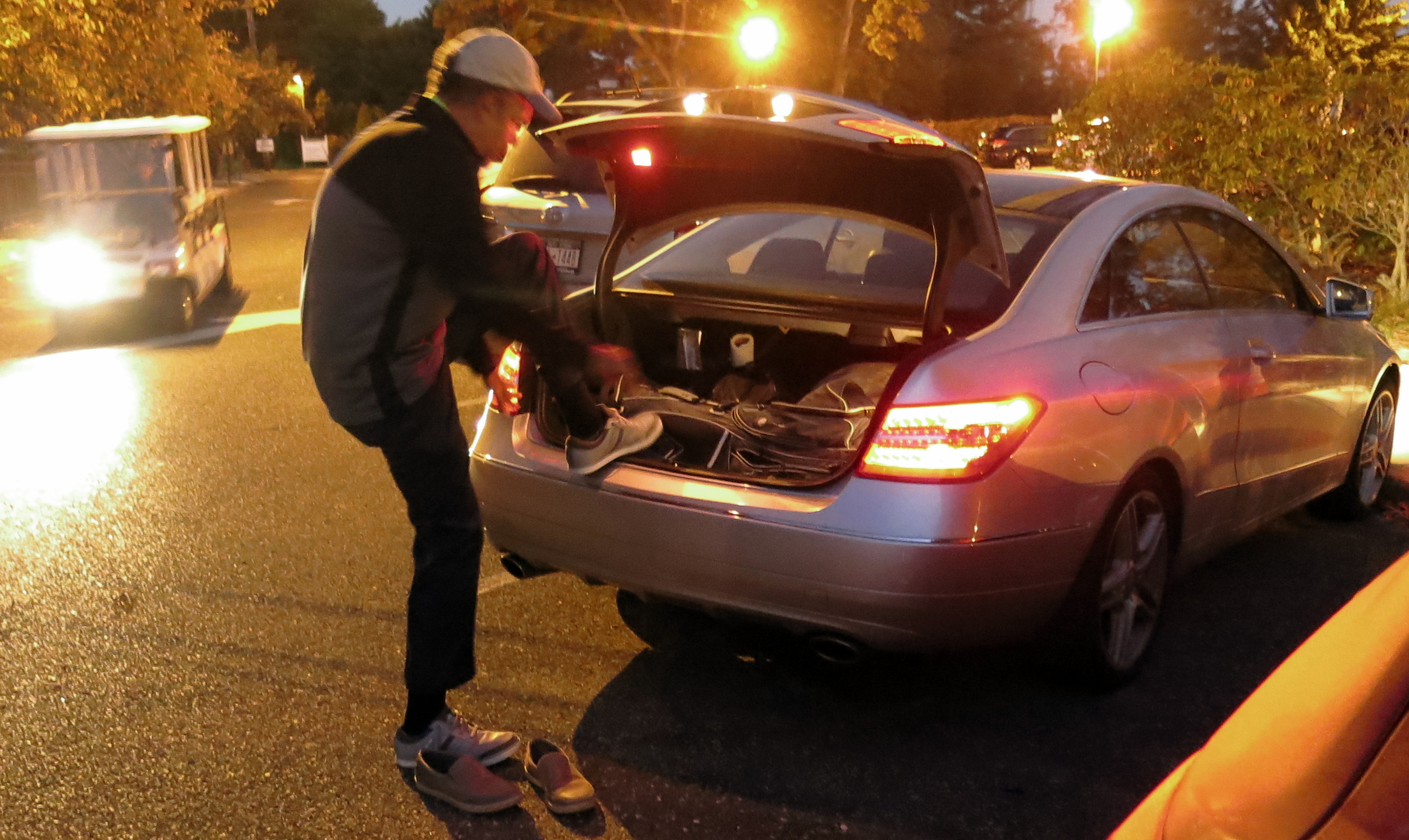
As always on these trips, we did more waiting than we usually have to do at home. But the waiting was actually part of the fun—including waiting for the sun to come up at Seaview:

IMG_1241-001

Waiting for J.P. to arrive at Twisted Dune:

P1160920

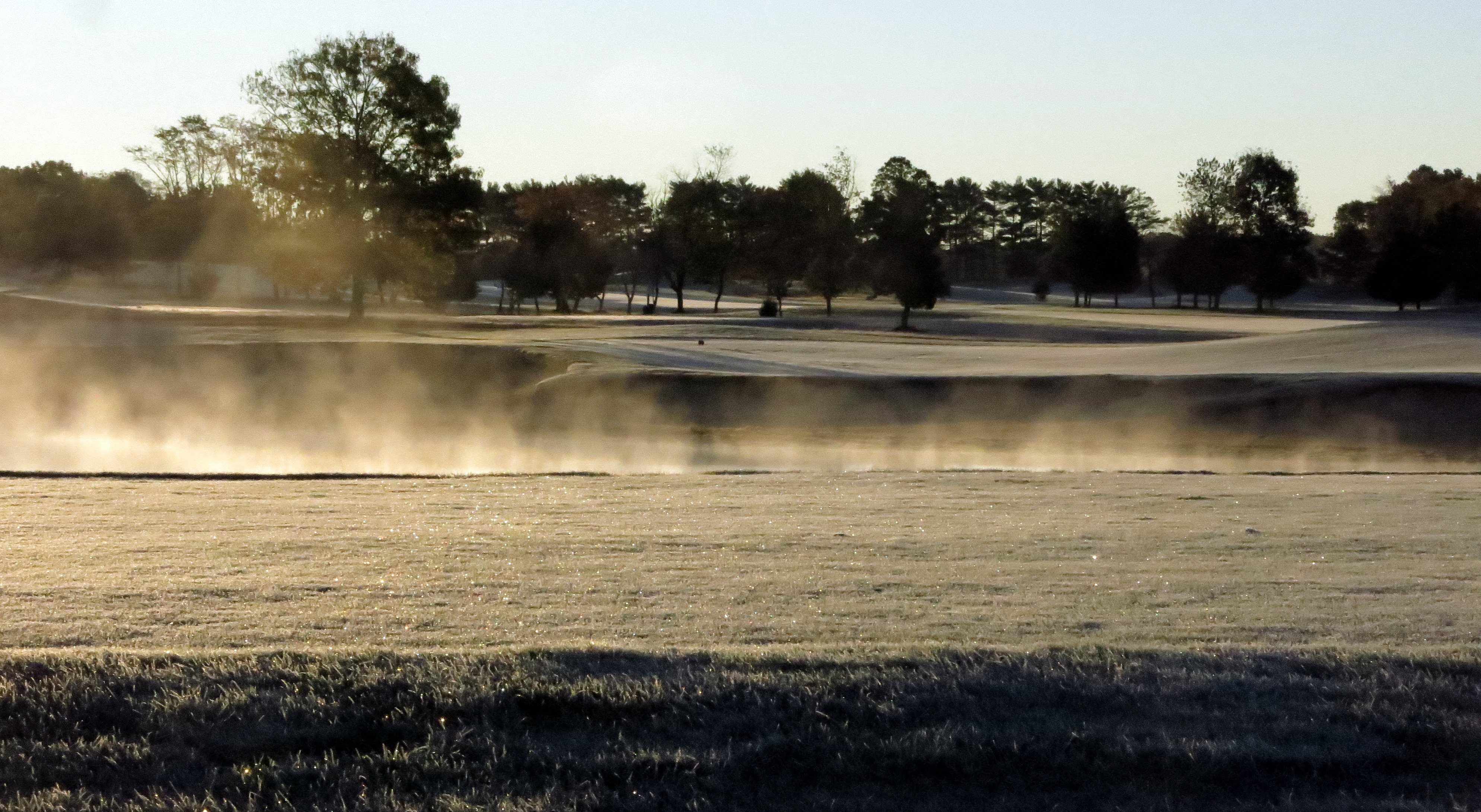
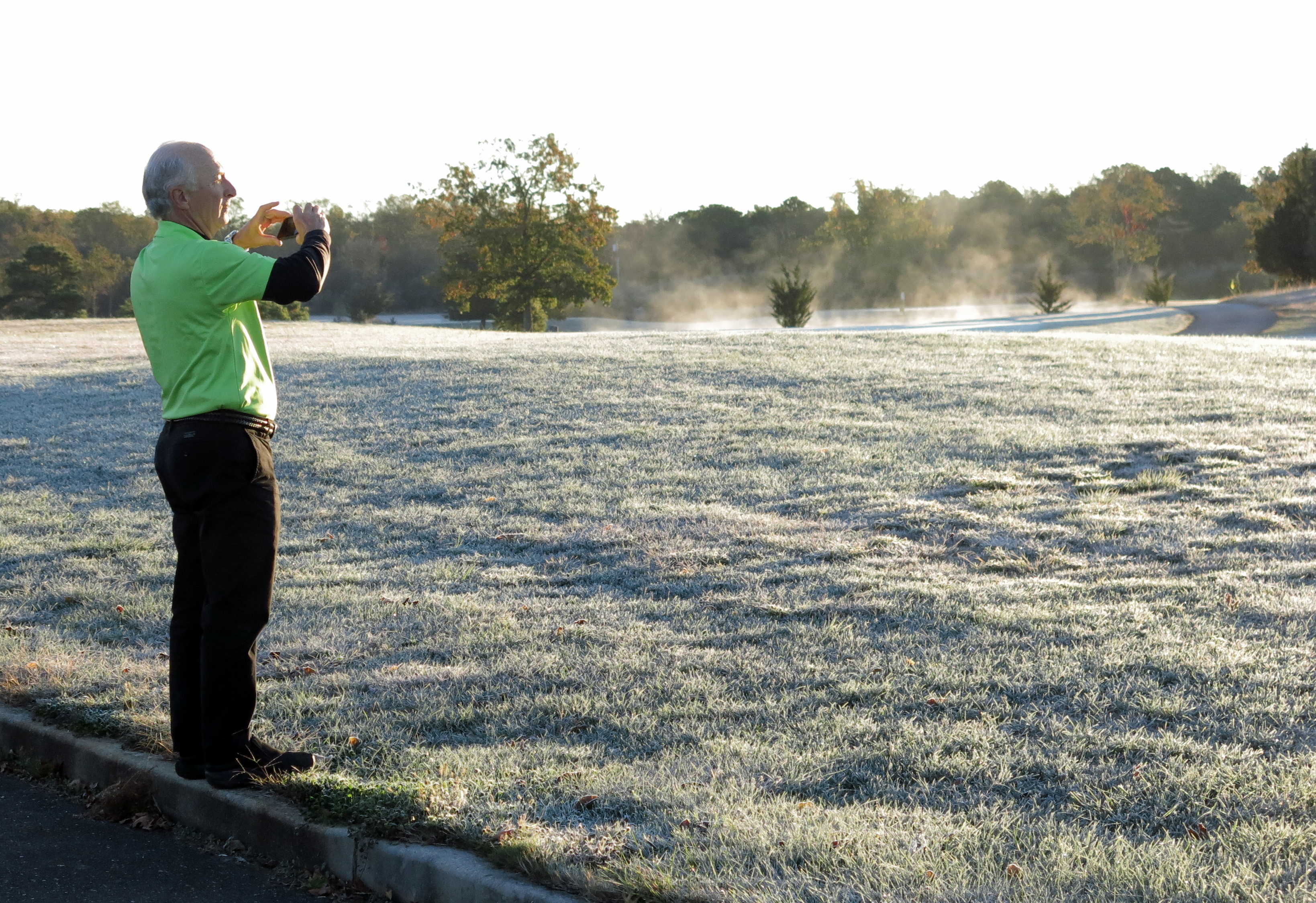
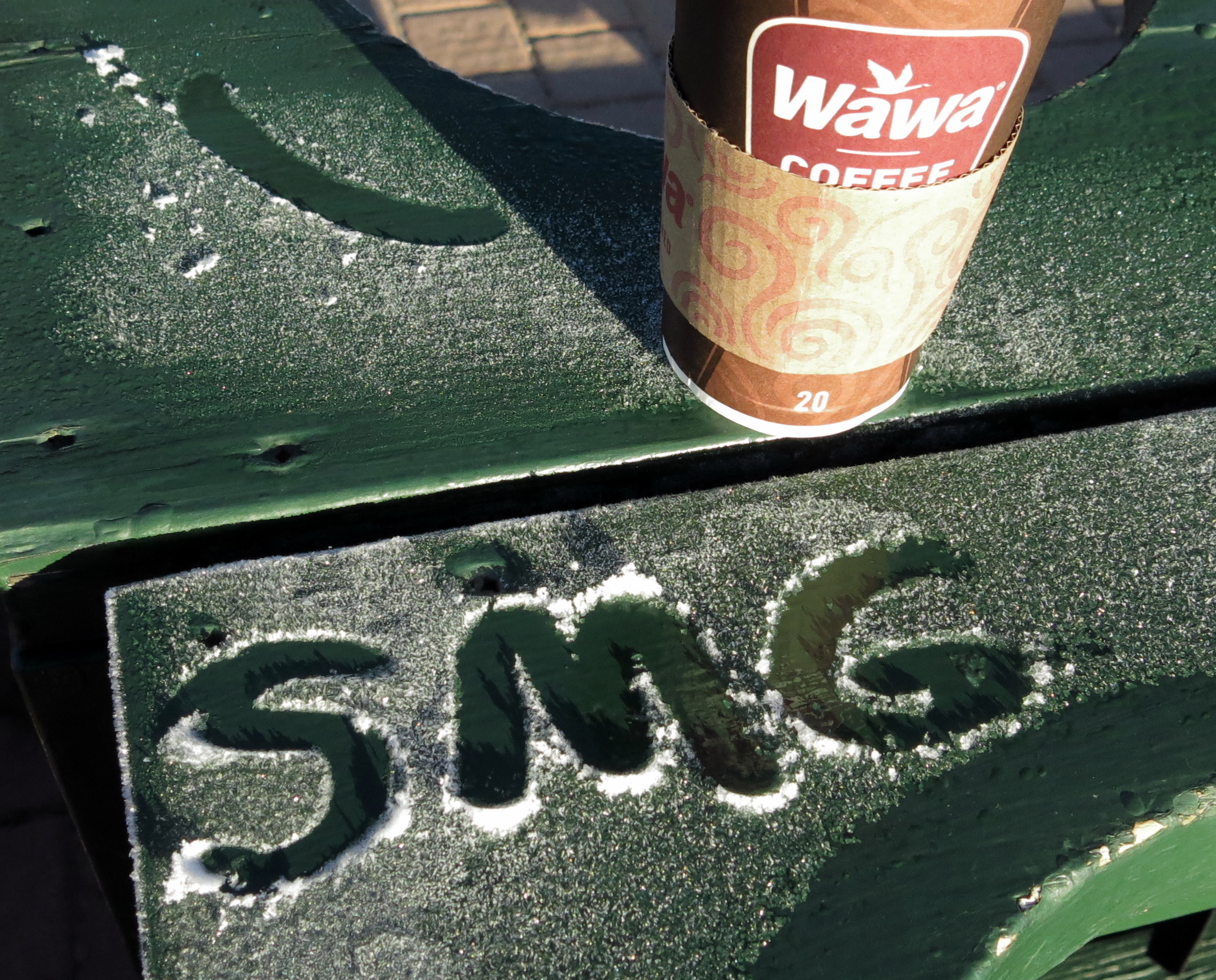
Waiting for the frost to burn off at Renault Vineyards:

IMG_1273

IMG_1287

IMG_1310

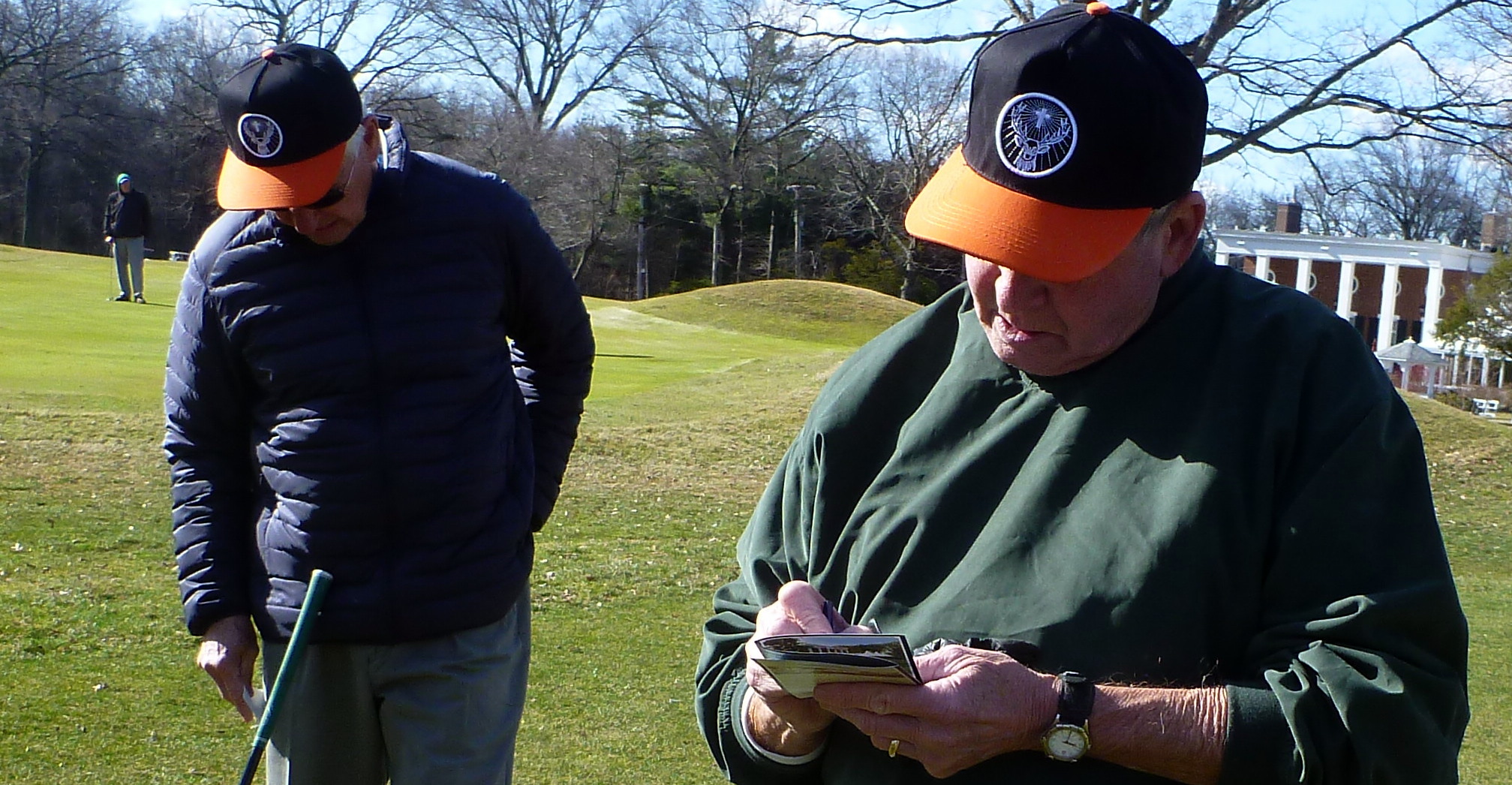
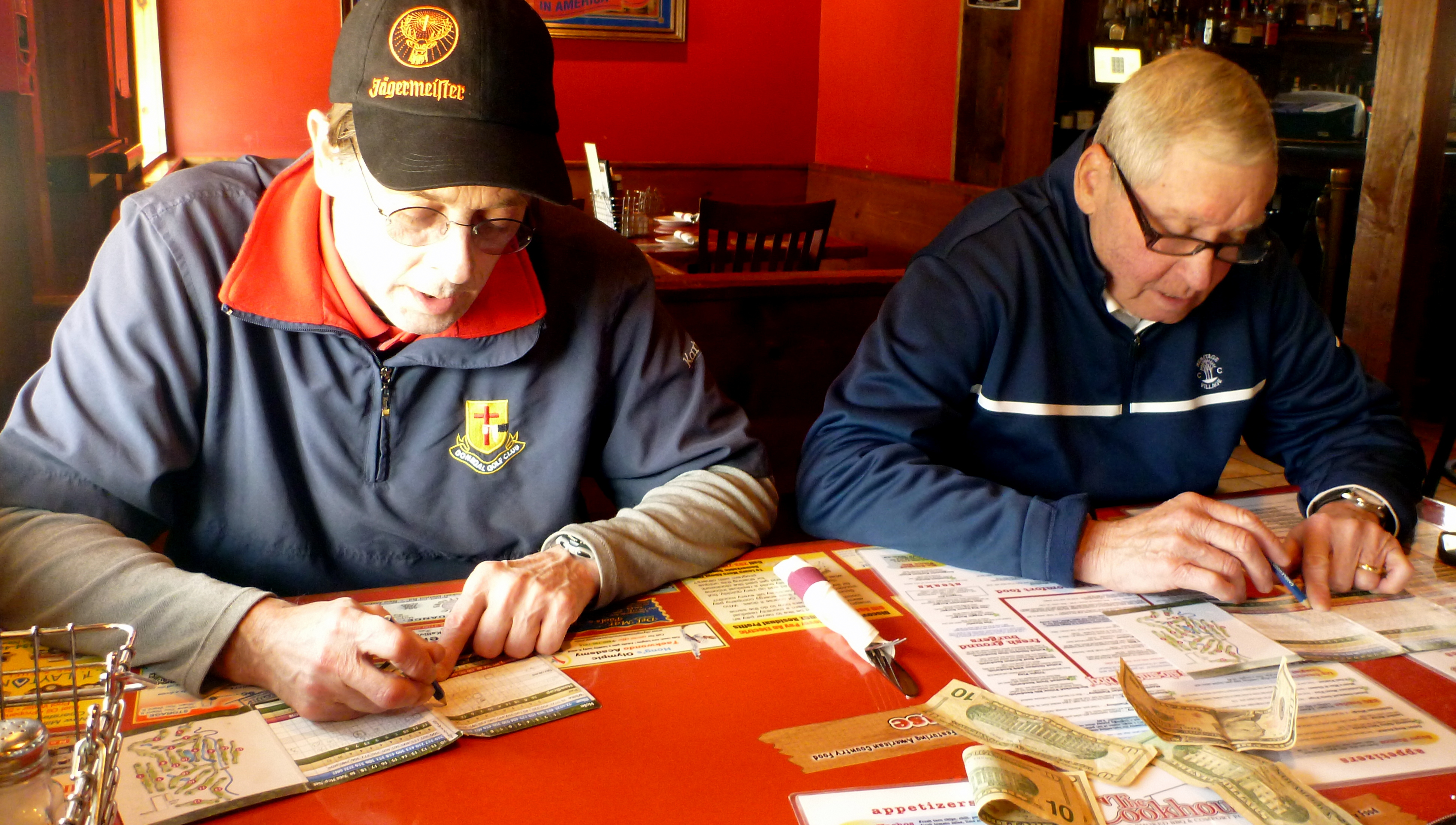
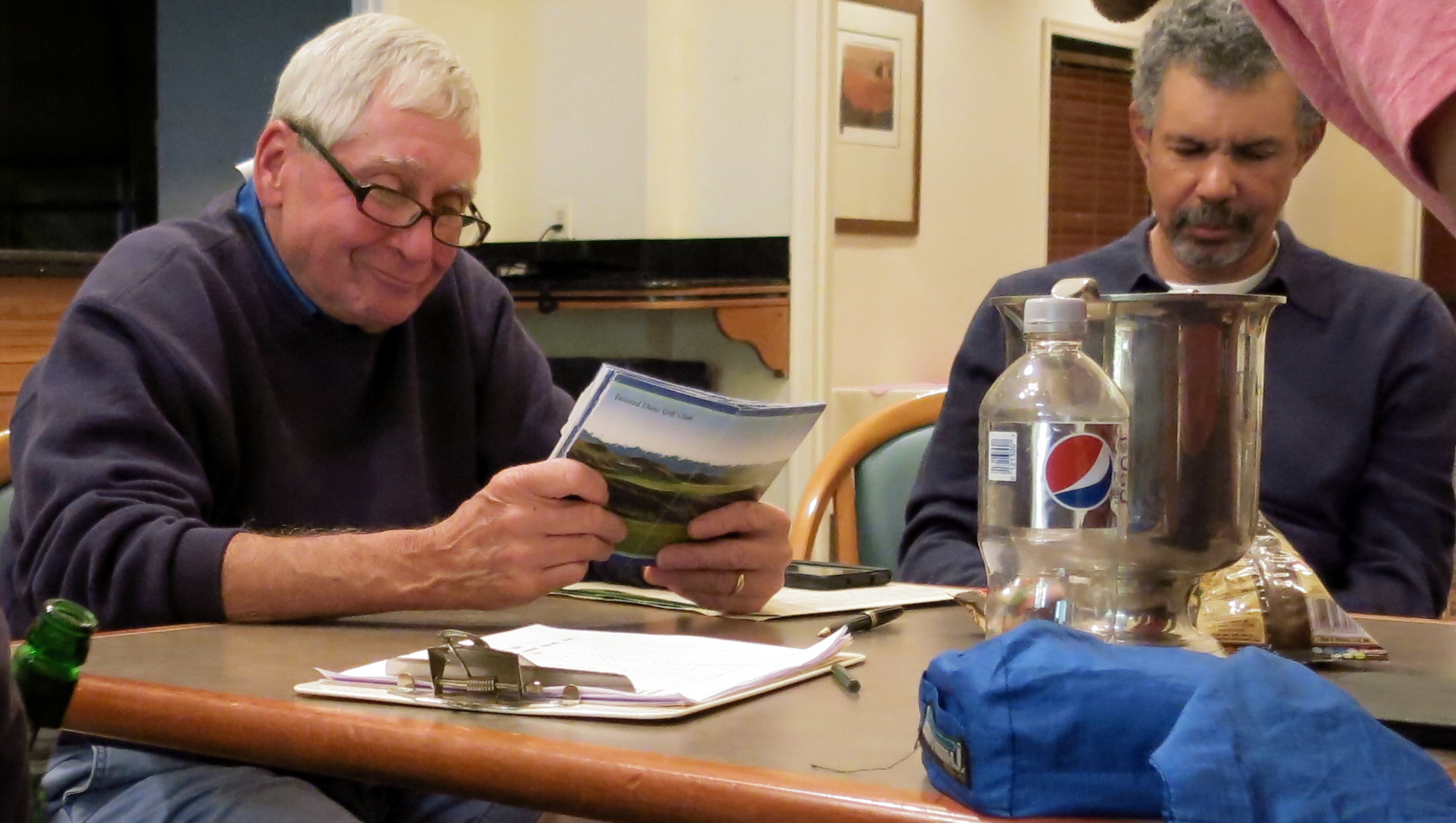
Waiting for Hacker (real name) and me to finish entering the day’s hole scores in the awesome do-everything spreadsheet that Tim created for the trip:

more numbers

Waiting for the slowpokes in the group ahead of us to get the hell out of the way on the Bay Course at Seaview:

P1160950

Waiting for the guys in our own last group to finish at Twisted Dune:

IMG_1172

Waiting for our pizzas to be delivered to the lobby of the Sonesta in Somers Point:

IMG_1232

Waiting for Tony to realize he was never going to catch the 50-dollar bill that Gary, our terrific superintendent, kept dropping between his open fingers:

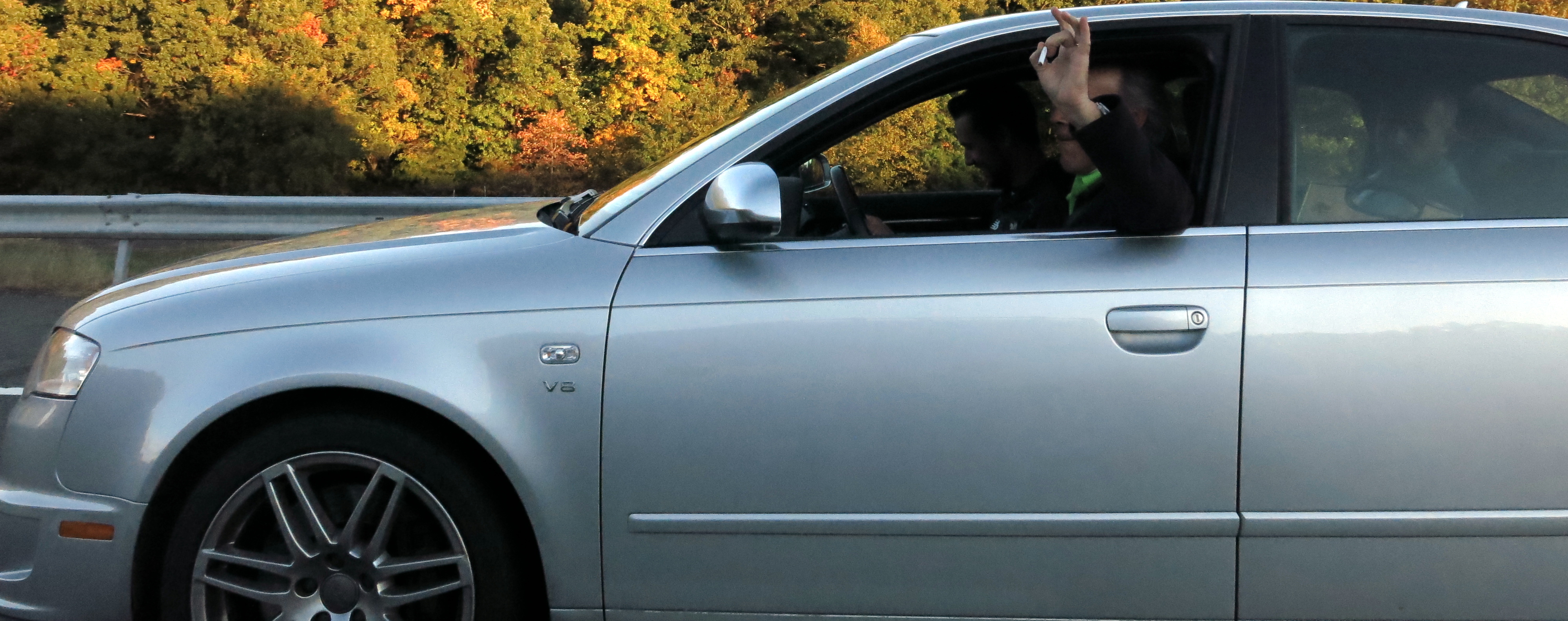
Waiting for Reese, on the way home, to attempt a rare cross-lane lit-cigarette hand-off, to Paul, at speed on the Garden State Parkway:

IMG_1353

Waiting to find out which of our favorite meals our wives had spent all weekend preparing to celebrate our return:

IMG_1364

And, in effect, waiting for the thing that no one likes to think about, much less talk about. We all look a lot older than we did during our first A.C. trip, 16 years ago:

AC2000