Back-Roads Scotland: Cullen

In 2007, I traveled to Scotland on an unusual Golf Digest assignment. I landed in Glasgow without tee times or an itinerary, and I rented a car and set out in a more or less random direction, with the goal of playing only courses I’d never heard of before. You can read my article about that trip here or here.

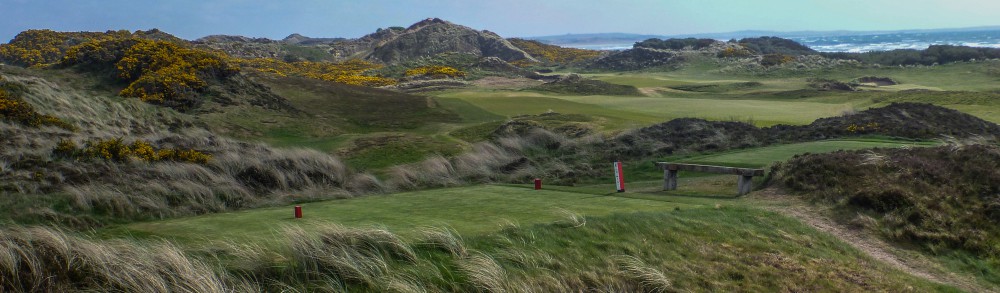
One of my favorite stops was a quirky course called Cullen, in Aberdeenshire, on the southern coast of the Moray Firth. The original nine holes were laid out by Old Tom Morris, and the course has blind shots, crossing fairways, otherworldly topography, and a cool tee shot that you hit from the top of a cliff. Partway through my round, I joined (as the fifth player) a group of older golfers from a club called Hopeman, about thirty miles to the west. They were on a golf outing, and this was their second round of the day, and they were playing a scramble, in competition with three other groups from their club. Most of them were carrying flasks, from which they were sipping a mixture of something and Drambuie—I couldn’t quite make out the recipe—and their golf bags were so full of empty beer bottles that they clanked when the wind, which was fierce, knocked them over.

They urged me to have a swig from one of their flasks. I declined, because I’d quit drinking about a year before, but they were so relentless that I eventually decided it would be better to risk falling off the wagon than to come to blows. As soon as I’d drunk a capful, though, they began to worry about their supply. “Are you driving?” one asked. His brow was furrowed with concern. When I said I was, he and the others concluded that offering me another swig or a beer would be unwise. Toward the end of the round, one of them asked, in a slurry brogue, “Wha hoe wah noo?” and only I could understand him: “What hole are we on now?” (It was the seventeenth.) Photo below. That’s the eighteenth green in the distance. I went back a year later with friends from home.

The boys from Hopeman: "Wha hoe wah noo?"

The specialty in the clubhouse—at left in the photo above, behind the big rock—is Cullen Skink, a fish soup that has its own Wikipedia entry.

The bent flag shows how hard the wind was blowing.

Looking back toward the clubhouse and the town.

The boys from Hopeman and some of their beverages.

Here’s where my friends and I stayed in Cullen when we went back the following year:

Golf in the Footsteps of the Three Stooges

On Sunday, twelve of us played  Van Cortlandt Park, in the Bronx, one of a dozen courses owned by the city of New York. It opened the summer of 1895, six years after my home club, and is the oldest public course in the United States. It also has what may be the world’s coolest locker room, which still contains the original wooden lockers (photos above and below). The Three Stooges considered Van Cortlandt their home course. Other visitors have included Babe Ruth, Willie Mays, Jackie Robinson, Joe Louis, and my friends and me. (On Sunday, even though it was 28 degrees when we left home, three of us wore shorts.)

Sunday Morning Group, Van Cortlandt locker room, March 11, 2012.

The original Van Cortlandt golf course was built for $642.80. It had just nine holes, of which the last was more than 700 yards long. For a few years in 1960s, the city operated three ski slopes on the four short, hilly, quirky closing holes, at the southern end of the park. (You get to those holes by crossing under the Major Deegan Expressway, on a concrete walkway with tall fences on either side.) But now the golf course is just a golf course, even during the so-called winter.

Emerging from under the Major Deegan Expressway, on the way to the fifteenth tee.

Van Cortlandt was originally known as the Meadows, and it was very popular, even though in 1895 hardly anybody in America owned golf clubs or knew anything about how to hit a golf ball. In 1899, Tom Bendelow—a 30-year-old Scotsman and former typesetter, who eventually designed 650 courses in North America—expanded Van Cortlandt to 18 holes. By 1920, according to the Parks Department, it was handling 5,000 players a week.

This is what golf in America looked like in 1895, the year Van Cortlandt opened.

Bendelow’s design survived until the 1940s, when Robert Moses began building highways on top of it. Today, the course is divided into four roughly equal-size lobes. They are separated by two highways (the Major Deegan and the Mosholu Parkway) and a fence-enclosed swamp called Tibbetts Brook, which resembles the Dead Marshes in The Lord of the Rings, except murkier.

This way across Tibbetts Brook.

On Sunday, the first of our three tee times was 7:56. That meant leaving home at a little before 6:00, which really meant leaving home at a little before 5:00, since daylight saving time had gone into effect overnight. And that, for me, meant getting up at what my brain still thought was 3:30. It was worth it, though—what else could I have done on a Sunday morning in March, except maybe work on my taxes?—and I was actually awake and waiting when my alarm went off, as I usually am the night before I play golf.

Because we were going to Van Cortlandt, we were able to lure Ferris out of hibernation. The night before, he sent us this email:

My childhood home was at 1 Tibbetts Road, in Yonkers, and our property line was Van Cortlandt Park. My friends and I used to cut holes in the chain-link fence near the fourth green and play the three holes on this side of the Major Deegan and Mosholu Parkway. We would steal the bamboo whips that the ‘parkies’ used to whip the dew off the greens, and occasionally we would also steal the flags, and we would sell golf balls. Since the approaches to some of the holes were blind, we could run out and grab balls that had just been hit and then sell them to the next groups that came by. We did all this while keeping an eye out for the parkies’ pickup trucks. When we saw them come rumbling over the hill, we would scoot back through the hole that we had cut in the fence, and then hide in the woods. The following day, the hole would be wired closed, so we always carried a heavy-duty wire-cutter in one of our golf bags. Of course, most of us had old bags, with hickory-shafted clubs. My house was about two hundred yards from the course. I’ve never paid to play at Van Cortlandt, and I’ve never played the holes on the other side of the highways.

Ferris's fence, with a modern hole, just beyond the fourth green.

For lunch, we went to the Bronx Ale House, just a few minutes away. To see what that was like, check out the photos on this (non-golfer’s) blog. Pay particular attention to the picture of the Alehouse Burger. Here was Sunday’s beer menu:

Bronx Ale House.

You can read an old New Yorker article of mine about playing winter golf in New York City here. The photo below is of the line of golfers at the first tee as we walked off the fourteenth green, on our way to the holes on the other side of the Major Deegan. There were more golfers waiting in front of the clubhouse.

Sunday Golf in Brooklyn

Marine Park Golf Course; Brooklyn, NY; March 4, 2012; 46 degrees.

There are a dozen public courses in New York City, and they stay open all winter, as long as the ground is snow-free—as it usually is, thanks to the urban heat island effect and the proximity of the Atlantic Ocean. On Sunday, as Rory McIlroy was moving to the top of the world ranking, six members of my regular Sunday Morning Group and I drove to Brooklyn for a round at Marine Park. (Several of our favorite city courses have enticingly warm-sounding names: Marine Park, Pelham Bay, Dyker Beach.)

Marine Park is situated a few miles from J.F.K. International and a few hundred yards from Floyd Bennett Field, which was the city’s first official airport. (When Howard Hughes set a record by flying around the world in ninety-one hours, in 1938, his trip began and ended at Floyd Bennett. The old runway area is now a somewhat dystopian-looking public park and a New York Police Department helicopter base.) The golf course covers a little over two hundred acres inside the elbow formed by Flatbush Avenue and the Belt Parkway. It was designed by Robert Trent Jones and was completed in 1963—just in time for the World’s Fair, which was held virtually next door, in Queens, the following year. The holes have a genuinely linksy feel: few trees, subtly undulating topography, exasperating wind off Jamaica Bay (another warm-sounding name). There’s more broken glass in the bunkers than you’d find at Troon or Carnoustie, and the views from some of the fairways include more barges and giant dump trucks. But the greens on Sunday were fast and terrific, even though nobody had mowed them in months.

Hacker (real name), Marine Park.

In 2007, New York City accused the company that was operating Marine Park of having ties to organized crime, and revoked its lease. The new lessee is investing millions in the course, and has renovated the club house and added a driving range. We saw huge piles of topsoil alongside a number of  the fairways—raw material for improvements to come. The guy manning the cash register in the golf shop, who was also the starter, told us that the days when old car parts and toilet seats would sometimes pop up through the turf are gone.

When we’d finished our round (after playing the last few holes as a sevensome, since there were slowpokes ahead of us and no one behind), we caravaned to Pipin’s Pub, in Bay Ridge. We’ eaten lunch there before—on New Year’s Day 2008, after playing a cold, wet round at Dyker Beach—and ever since then we’d been meaning to go back, partly because almost the entire first page of the menu is devoted to various kinds of cheeseburger. The day’s winners threw all their winnings into the lunch pot, as we almost always do during the off-season, and we ended up leaving a huge tip because with seven people the arithmetic was just impossible.

Pipin's Pub. Photo taken by nice waitress with Irish accent.

Snoring Golfers

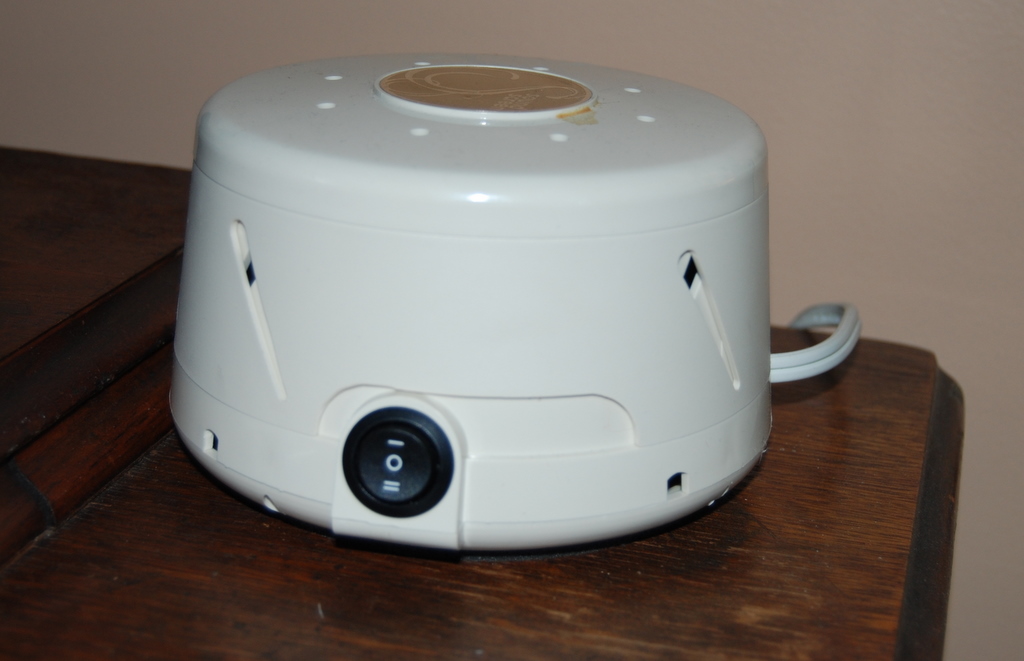
Marpac Sound Screen

Nighttime noise is an issue when you travel with grown men.  On a ski trip when my kids were in high school, I shared a room with two other fiftyish dads and spent much of the night trying to decide which was more annoying, the chainsaw-like snoring or the innumerable brief trips to the bathroom. When my friends and I travel for golf, we try to pair the snorers and coughers with the heaviest sleepers, and make sure that the guy with the anti-apnea machine shares a room with someone who likes white noise. I myself employ two snoring-related sleep aids: gumdrop-size silicone ear plugs and a vaguely wishbone-shaped appliance called a Nozovent, which sprongs my nostrils wide open.  (One night, while my wife and I were getting ready for bed at home, I groggily inserted my earplugs into my nose instead of my ears—as the first one went in, I thought, Whoa, time to buy some fresh ones—then realized what I had done and laughed so hard I nearly suffocated.) On a golf trip to Pinehurst in 2006, I shared a room with two friends. One was a world-class snorer, but the noise he made, though extraordinarily loud, was so steady that it was easy to sleep through. What woke me was a fart (same guy)—like exploding a paper bag. My entire body rose about six inches from my mattress, and it took me a while to get back to sleep. At the bottom of this post is a picture from that trip.

After the death of my father, whose snoring was audible throughout our house, my mother gave me his old white-noise machine, a Marpac Sound Screen. My wife and I keep it in the kitchen—for our dog, Henry, who barks in the middle of the night if he hears raccoons knocking over the cat-food dishes on our back step. Half a dozen friends and I are taking a golf trip to Ireland in April. We’ve all decided to splurge on single rooms, but if we hadn’t I’d take the Marpac with me.

Pinehurst golf trip 2006–with Fairbairn’s greeting for new arrivals.


Global Warming Invitational

January 1, 2009. Hacker (real name) and David Owen, Bay Course, Absecon, New Jersey.

For six or seven years, my friends and I have managed to play golf on either New Year’s Day or New Year’s Eve. We’ve played at Dyker Beach Golf Course, in Brooklyn; Pelham Bay Golf Course, in the Bronx; and on the three AboutGolf simulators at Maggie McFly’s, in Brookfield, Connecticut. On New Year’s Day 2009, Hacker (real name), Other Gene, and I had to drive to Atlantic City, New Jersey, four hours to the south, to find grass. We stayed at the Seaview Resort & Spa, in Absecon, and had the Bay Course (which was designed by Donald Ross in 1914) to ourselves for two days. (Photo above.)

This year, for the first time in recorded history, we were able to play at home. My Sunday Morning Group gives one extra stroke to anyone who plays in shorts after November 1, and two extra strokes after December 1. Three of us got extra strokes on New Year’s Day.  (Photo below.)

David Owen, fourth from the right; Hacker (real name), seventh from the right, holding beer.