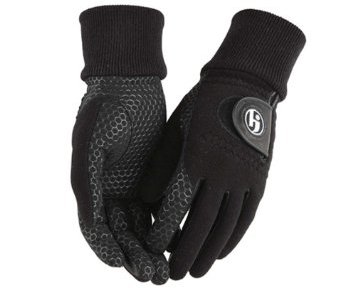
My friends and I haven’t been able to play golf in about a month now, so I’ve been wearing my winter golf gloves mainly to walk the dog. The ones I like best are still Winter Xtreme, by HJ Glove. They’re thick but flexible, and they have nice grippy silicone webbing on the palms and fingers. And Amazon has them in stock—something that hasn’t always been true. Meanwhile, our improved-and-personalized Jägermeister sweatshirts are back from the embroiderer:
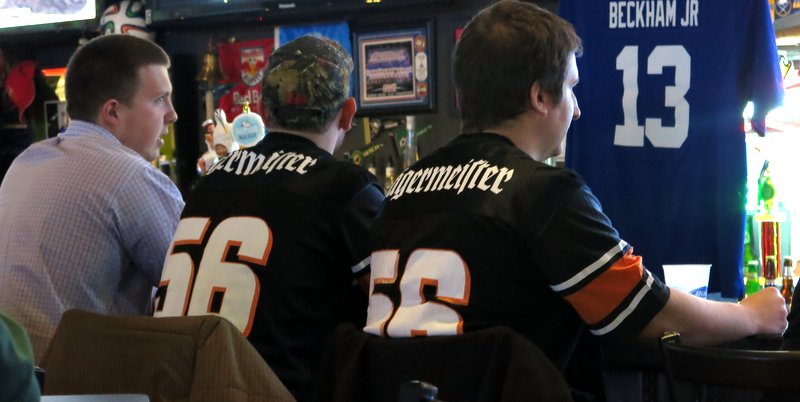
We went to 1st and 10, our favorite sports bar, to hand them out, and also because it was 50-cent-wings night. Totally coincidentally, the owner of the bar was handing out Jägermeister jerseys with the name of the bar on them to guys on a bowling team that he sponsors:
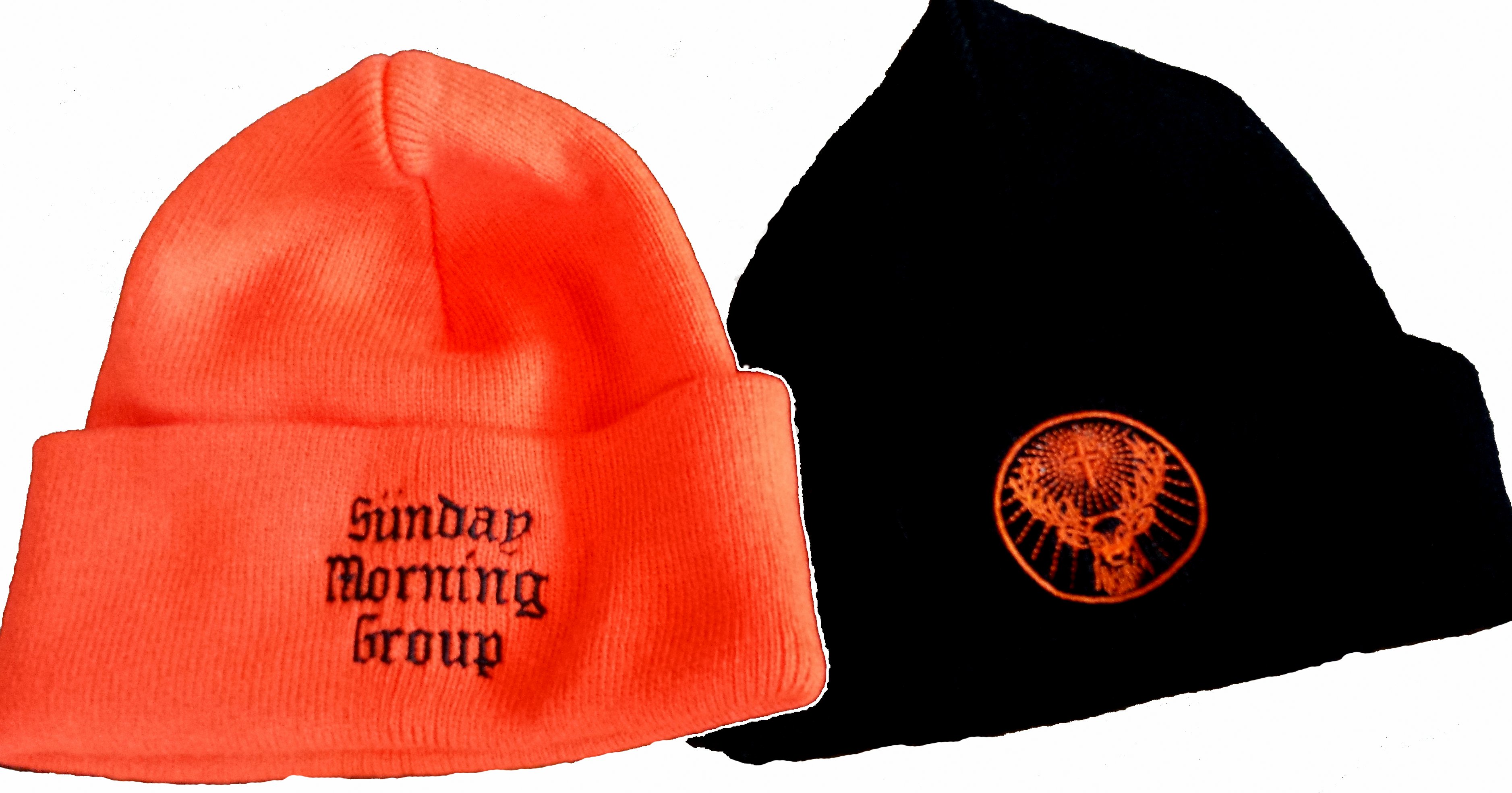
When he saw that we were, in effect, Jägermeister brothers, he gave us jerseys, too. So when I went to Stop & Shop on the way home, to buy milk, baked beans, corn meal, and eggs, I was wearing two Jägermeister shirts, one on top of the other. And then a couple of days later the embroiderer finished our winter hats:
My favorite headcover was made of black plush and had the Grateful Dead’s red-white-and-blue “Steal Your Face” skull logo embroidered on it. I got to play golf with Jim Furyk once, and before we teed off his caddie, Fluff Cowan, looked into my bag and said, “So, you’re a fan of the boys, eh?”—one of my proudest moments in the game. My 5-wood eventually wore a hole through the fabric, and I had to take that headcover out of service. The huge online store on the Dead’s official website used to have lots of branded golf stuff, but not anymore.
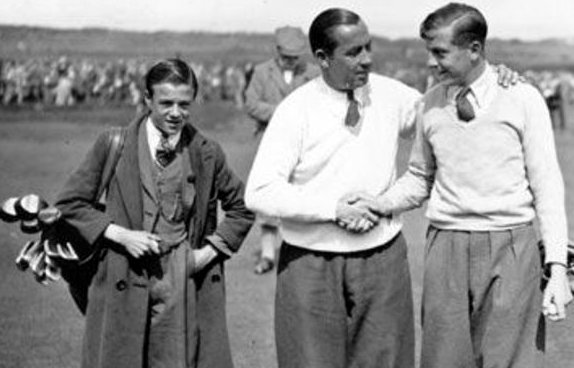
Headcovers must be a product of the apparently irresistible human urge to clothe inanimate objects—the same urge that gave us doilies, dust ruffles, chair skirts, and toilet seat covers. Most golfers probably assume that headcovers have an important protective function, but that seems unlikely. The purpose of a golf club is to be slung repeatedly at hard things lying on the ground, so why should you need to swaddle it just to carry it in a bag? Olden-days golfers—whose clubs were made by hand and were therefore arguably worth special handling—didn’t use them:
So why do we? Chuck Furjanic, who is the author of Antique Golf Collectibles: A Price and Reference Guide, told me that headcovers date from at least the early 1910s. Nevertheless, I spent a pleasant afternoon flipping through the pages of most of the golf books in my office, and couldn’t find a headcover in a photograph or illustration from earlier than 1935. Walter Hagen didn’t use them (and Henry Cotton didn’t either):
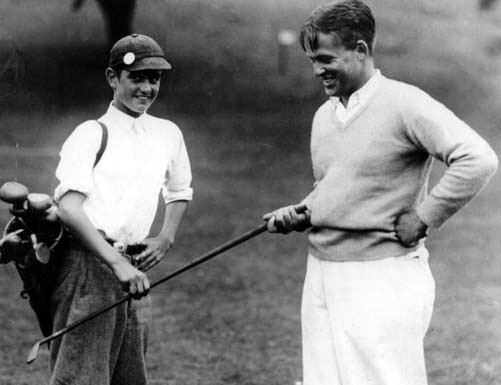
My research indicates that Bobby Jones won the Grand Slam without headcovers, that most golfers carried their woods naked until the late thirties or early forties, and that the headcovers of yesteryear started out looking like children’s socks, then evolved into sweaters for weasels. No headcovers here:
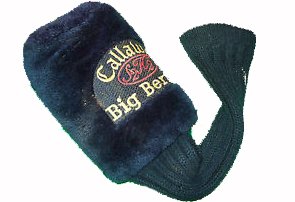
My first metal woods—a TaylorMade set, which I bought in 1991—came without headcovers. Their successors—a trio of Big Berthas, purchased less than a year later—came with huge ones, although they’d probably seem almost dinky today:
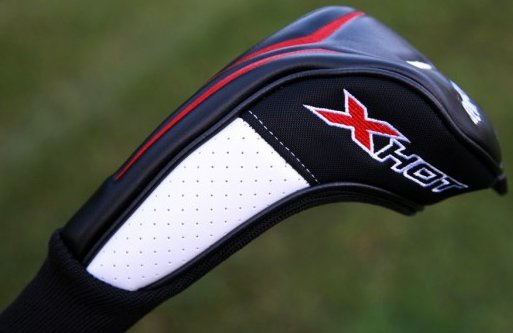
Those two transactions bracketed the beginning of the modern headcover era. Today, it’s impossible to buy a wood or even a hybrid without also receiving a complicated sheath that appears to have been manufactured in the same Chinese factory that makes shoes for NBA players and props for George Lucas movies. Someone I played golf with once told me that getting rid of headcovers would speed up the game by twenty minutes a round, and I believe it. Putting a modern headcover back onto a modern driver can be as exasperating and time-consuming as putting a snowsuit onto a toddler.
Using headcovers on irons is still for beginners only, like using a clicker to count shots or carrying tees in a bandolier. And thank goodness for that. But who knows? A lot of people didn’t think that soft spikes would catch on, either.
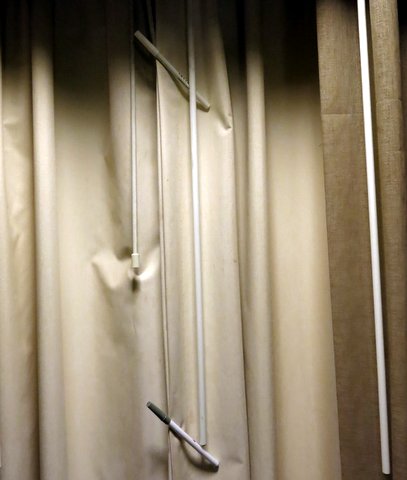
Tip No. 1: If there’s anything I can’t stand, it’s intrusions of light and noise into hotel rooms in which I’m trying to sleep. I felt angry and exasperated recently when I realized that the intermittently loud refrigerator in my room (I forget where I was staying) could not be silenced: it was bolted into its cabinet, which was bolted to the wall, and the control knob inside the refrigerator had been removed. There was no way I could unplug or disable it, short of tearing the cabinet apart, but I did invent a simple new way to fully close the curtains, by using the clips on the caps of a couple of cheap hotel-room ballpoint pens:
Tip No. 2: eBags, one of a select group of companies for which I am an unpaid shill, makes several of my favorite travel accessories, among them Packing Cubes, which are zippered fabric bags that keep the contents of a suitcase from becoming a chaotic, wrinkled mess.
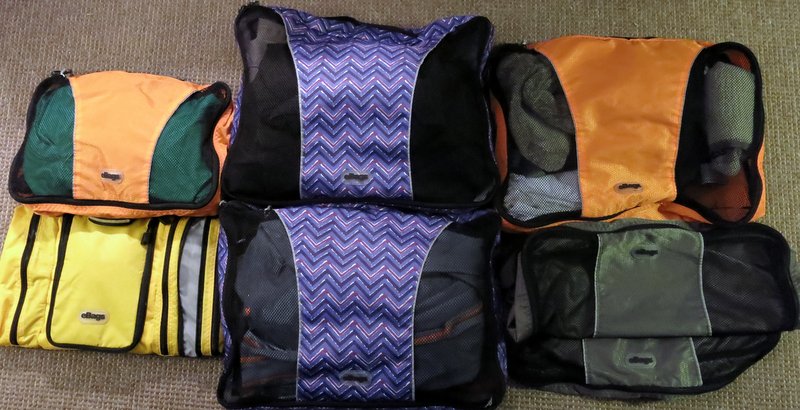
In the photo above, you see a week’s worth of golf-trip gear—all of which will fit into an eBags TLS Mother Lode Mini 21” Wheeled Duffel, which in turn will fit into the overhead compartment of an airplane. Upper left: medium orange Packing Cube containing a tee shirt (for sleeping) and a pair of lightweight fleece pants (for in-room apres-golf lounging). Lower left: my eBags Pack-it-Flat Toiletry Kit, which is actually not a Packing Cube but is fully Packing Cube-compatible. Center: two large festive Packing Cubes containing shirts, pants, and a sweater. Upper right: large orange Packing Cube containing underwear, socks, handkerchiefs. Lower right: two empty large gray Packing Cubes, for laundry. If I’m traveling with a rainsuit, I’ll put it in one of the gray Packing Cubes and stuff that into my golf-bag travel cover. And if I know I’m going to need a sports coat somewhere I fold it inside out and put it in a Packing Cube of its own. That keeps it from getting wrinkled, even if the other stuff in the suitcase squeezes it flat.
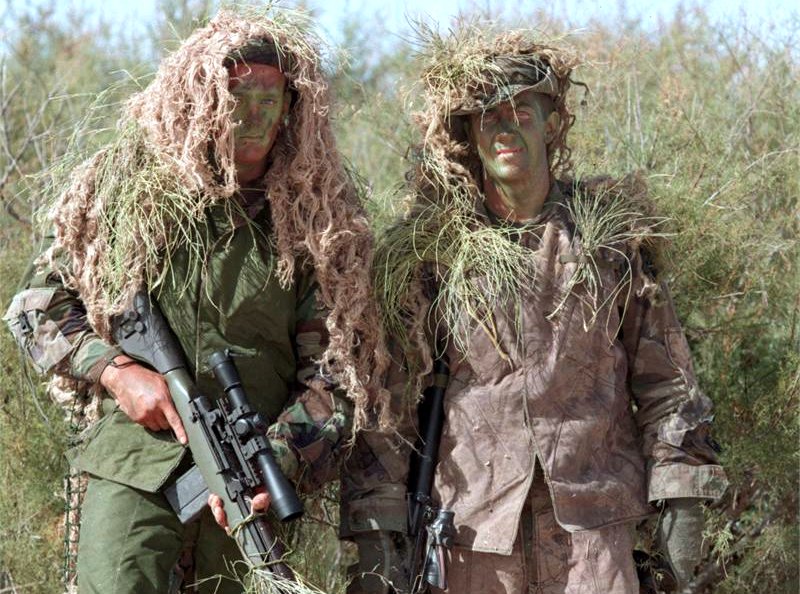
Mike Shelley spent five years in the United States Marine Corps. Among the pieces of equipment that he and his buddies found indispensable were slender lengths of nylon kernmantle rope, known popularly as 550 cord, paracord, or parachute cord. (That’s Shelley on the left in the photo below.)
“I was in a special operations unit,” he told me recently. “We’d carry a compass in one pocket, a knife in another pocket, fire starters in another pocket, whatever. And to keep all that stuff from getting lost we had our combat utility uniforms retrofitted so that every pocket had a little loop sewn inside it. You’d tie a length of parachute cord to your gear and another to the loop in a pocket, and that way you would know that, when you jumped from a helicopter into the ocean in the middle of the night, your gear couldn’t fall out and sink to the bottom.”
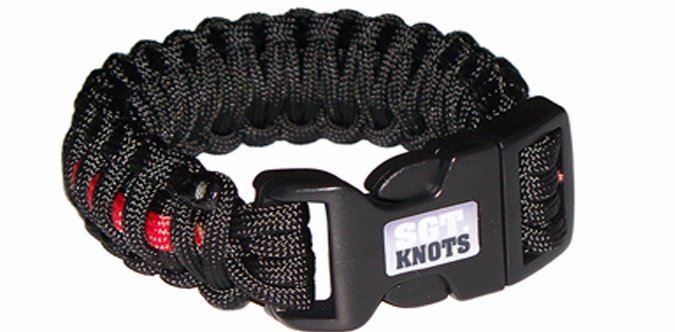
Shelley entered an MBA program when he got out of the Marines, and in 2010, as a class project, he founded an online company called SGT KNOTS. “I bought five spools of parachute cord, and I tried to think of everything I could possibly make from it, to put it out there and see what would sell,” he said. “I was really only trying to teach myself about e-commerce, but about three days after I launched SGT KNOTS a catalog company that supplies police departments all over the country contacted me and said they wanted to start buying parachute-cord survival bracelets, 500, 1,000 at a time. So there I was, in my basement, sitting on my couch, making these things as fast as I could for three weeks straight.”
He rapidly expanded his manufacturing capability, in part by connecting with an inmate work program at a county jail in New Hampshire. Today, SGT KNOTS sells not just a large variety of finished items but also spools of paracord and other raw materials, which are popular with people who make stuff to sell from card tables at flea markets and gun shows.
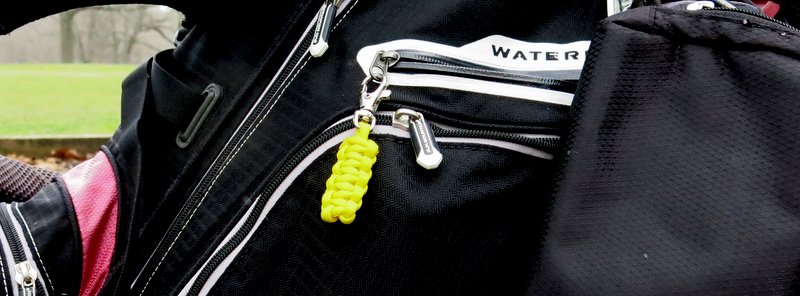
My first purchase from SGT KNOTS was a package of three paracord zipper pulls. I attached one to the zipper on my golf bag’s waterproof pocket, which is where I keep my wallet and my phone while I’m playing golf:
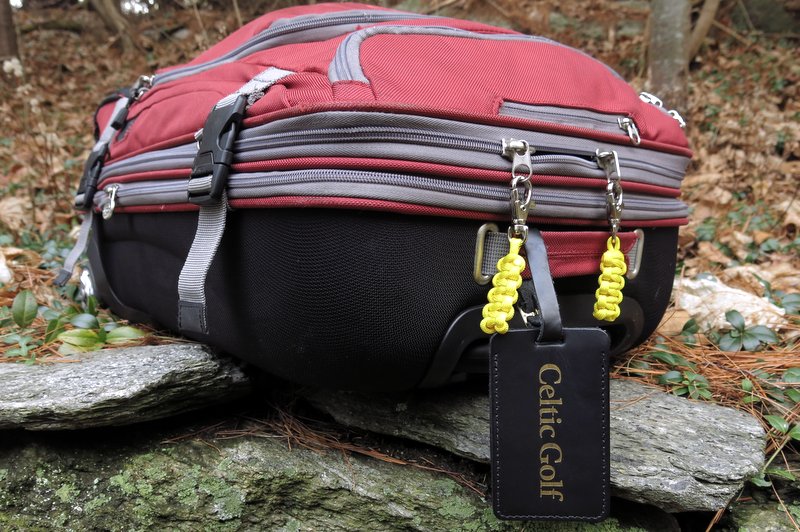
And I used the others to replace two frayed zipper pulls on my favorite golf-trip suitcase:
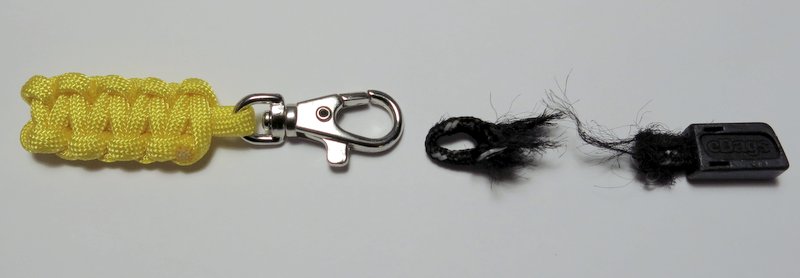
My SGT KNOTS pulls are easy to spot and grab, and the ones on my suitcase are clearly visible from all the way across an airport luggage carousel. Warning: SGT KNOTS zipper pulls aren’t cheap, and the metal clasp on each one is big — too big to fit through the eye of the metal pull on the zipper in the fly of your jeans (for example). Here’s one of my SGT KNOTS zipper pulls next to a chintzy one that it replaced:
But for the right applications they’re worth the investment, and in an emergency you could unknot the cord on one and use it to garrote an annoying match-play opponent (say), or replace a broken lace a golf shoe, or do a little impromptu fishing in a water hazard:
Shelley himself took up golf a couple of years ago. (That’s him on the right in the photo below.) “I never thought about these zipper pulls for golf bags,” he told me, “but I’m always looking for new ideas. I could make a custom zipper pull for a golfer, so that the colors would match the bag, and I could put a different loop on the end. I think my StretchFit Elastic Laces, which are made from bungee cord, are fantastic for golf shoes. They hug your foot, and you can adjust how much they hug.”
I can think of other golf applications—like, how about a cord to attach your putter headcover to your golf bag, so that you don’t have to keep retrieving it from the lost-and-found? (A Marine would call that a “dummy cord.” Good name.) Or a paracord monkey fist for the beer opener you keep in your golf bag—useful for breaking up ice? You may have ideas of your own. If so, let Shelley know. If we ask nicely, he might make stuff just for us.
“We used so much paracord in the Marines that we would joke about it,” Shelley said. “Like, if you can’t fix it with duct tape or parachute cord, it can’t be fixed.”
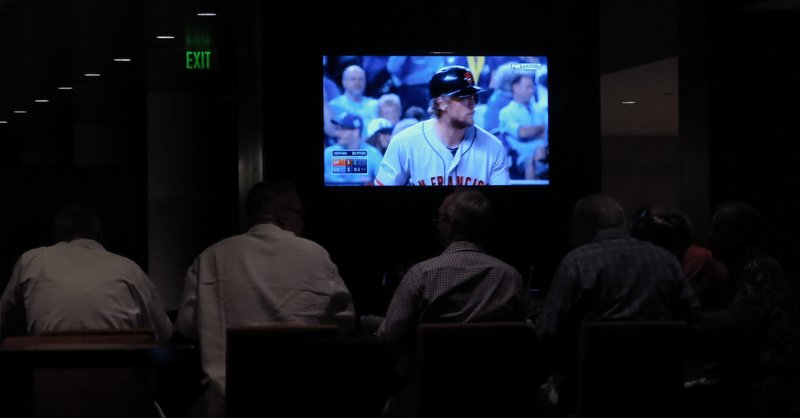
During a recent Golf Digest assignment in Florida (at Streamsong Resort—see “Buddy This!”, in the January issue), my foursome was seated so far from the TV above the bar in the grillroom that no one at our table could follow what was happening in the World Series:
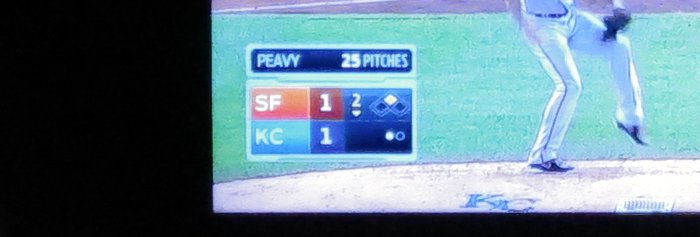
To deal with that problem, I periodically took a zoomed picture of the screen and enlarged the image until we could read the score in the lower left-hand corner:
The same trick works at golf tournaments, if you’re standing too far from a leaderboard to see what it says. And you can use it when you yourself are playing golf and can’t quite tell where the flag is on that green way up there.
You can also use it around the house — when (for example) you need to read the serial number on a light fixture on the ceiling but don’t feel like going all the way downstairs to get the stepladder:
I discovered this trick on my brother’s father-in-law’s boat, in Maine, on a day several years ago when we wanted to land at a dock on a small island but couldn’t get close enough to the shore to read the phone number we were supposed to call to ask permission:
Somewhat similarly, if you wear bifocals you can turn them upside down when you need to take a close look at something above your head. (I mentioned this trick to an electrician friend, who told me that he owns a pair of trifocals in which the top and bottom sections are both for looking at things close-up.) And then there’s this, when you’re too old to get out of bed anymore, even for golf:
A laser rangefinder can function as a low-power telescope (mine is 6X). Quite possibly, that’s strong enough to identify the idiot driving his cart along the edge of a greenside bunker two holes away, so that you can call the golf shop and report him. A rangefinder is good for on-course bird-watching, too. A few winters ago, at Lyman Orchards, we noticed a pileated woodpecker demolishing a dead tree directly above the tee on which we were standing. We passed around my rangefinder, and watched.
Your loved ones have a hard time buying presents for you, so you try to help: “How about some of my favorite golf balls?” You write down the name of the kind you like—the exact name, including the “X” after the “V1”—and your loved ones take the piece of paper with them when they go shopping. And there, in the ball department of the huge golf store at the mall, they see the kind you want.
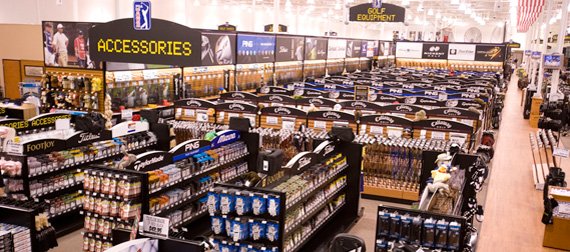
But, holy cow, those balls cost almost fifty dollars a dozen! That’s, like, four bucks a ball! Luckily, though, on a shelf nearby are some identical balls (equally spherical, equally white) that cost only a quarter as much—and they come 18 to the box, instead of just 12! So your loved ones buy you two boxes of those! Three dozen balls for half the price of one dozen! That’s probably enough to last you for the rest of your life!
Oh, well. There’s nothing you can do about it, except to hit those balls into the woods with your brand-new approach wedge (which you ordered and wrapped yourself).
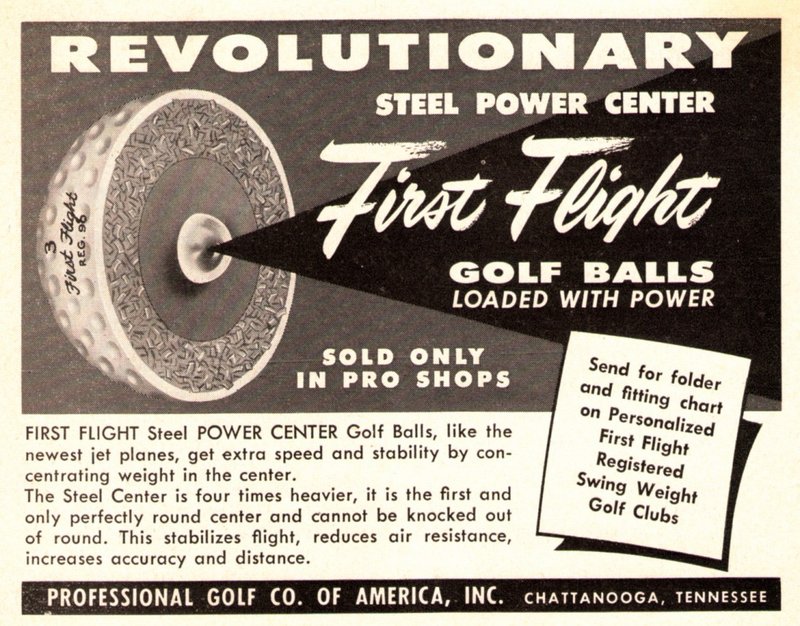
Alternatively, you could suggest to your loved ones that they shop for you in the past, in the pages of Golf Digest from a little over half a century ago. If they do, they’ll be sure to find lots of (attractively priced) items that any modern golfer would be delighted to find under the tree, including:
There wasn’t much snow to begin with, and most of what there was had melted by Saturday, but Gary, our terrific superintendent, closed the course temporarily, because it was so cold that the remaining snow and the frost were unlikely to go away before dark. That didn’t affect me directly, because I’m traveling without my clubsfor a little over a week, on a reporting assignment that’s only tangentially related to golf. It didn’t affect Hacker (real name), either, because he had decided that, paradoxically, playing golf for three consecutive days with a broken finger had made the finger worse, not better. Still— and I think I speak for everyone—I am opposed to any form of weather that causes golf to be suspended. And then, on Monday, Gary closed our course for the season.
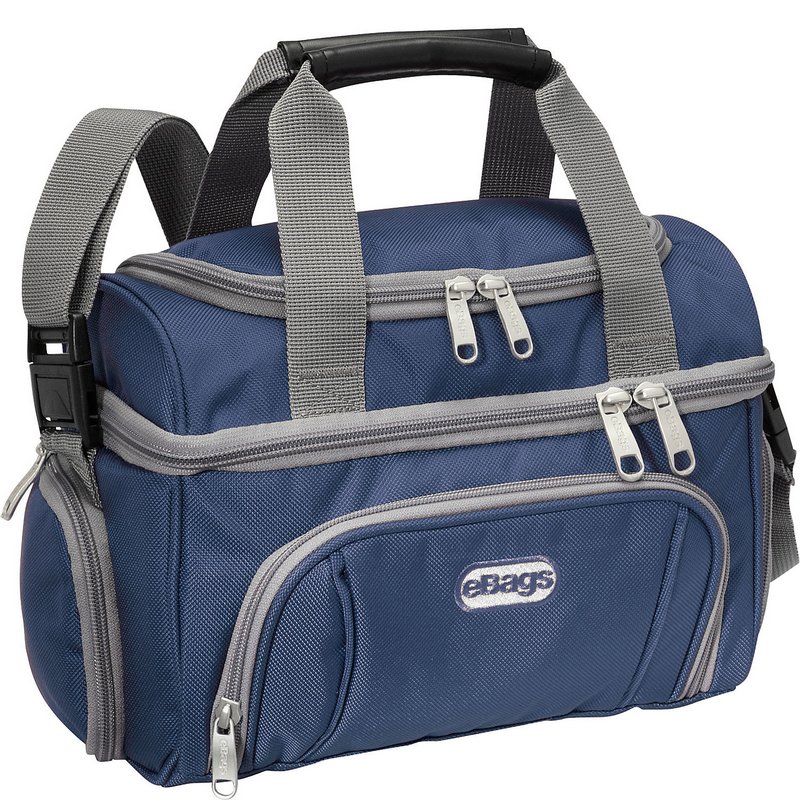
Before our mini-storm hit, I had an opportunity to test two new pieces of equipment. Both are from eBags, one of a select group of companies for which I am an unpaid shill. The first item is the eBags Crew Cooler II:
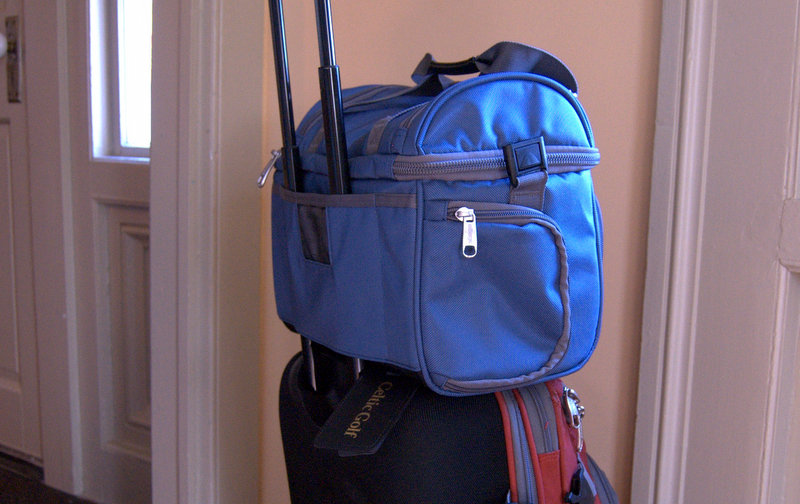
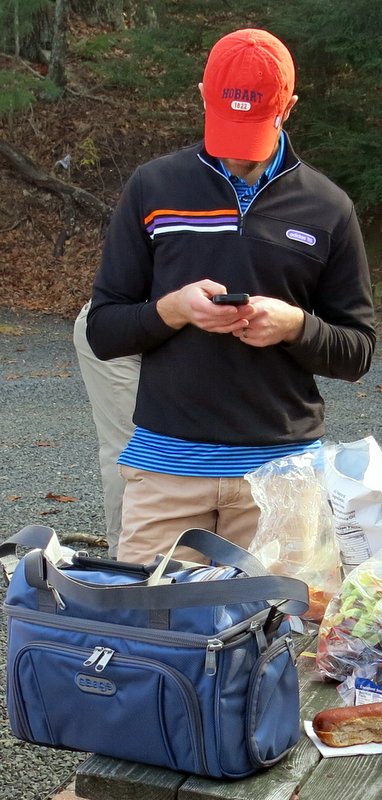
It was designed as carry-on luggage for pilots and flight attendants, but it’s perfectly suited to golf. It has an insulated cold compartment with a removable—and replaceable—waterproof liner, for beer and ice; it has a zippered top insulated compartment for stuff that doesn’t have to be kept super cold, like sandwiches and Snickers bars; and it has lots of other useful features, including two mesh pouches, on the sides, for beverage bottles. It also has a slot on the back that lets you slide the whole thing onto a roller bag so that you can make it do double duty as a carry-on bag when you fly somewhere nice to play golf:
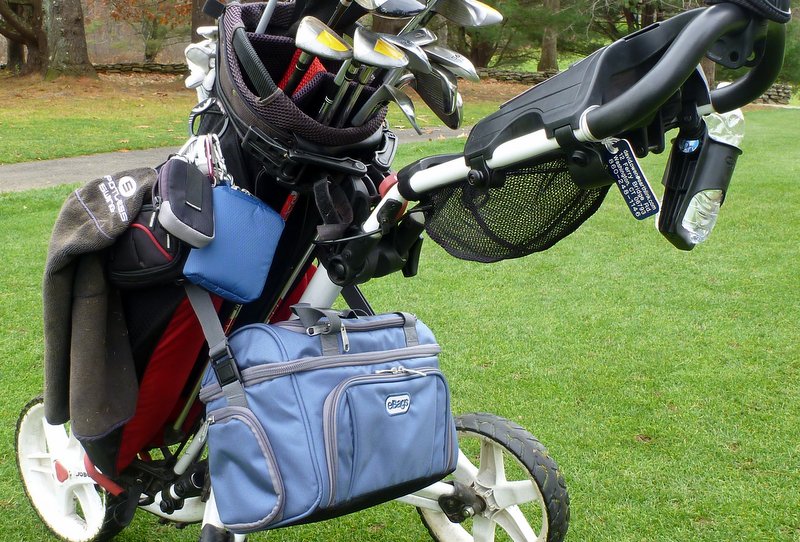
I attached mine to my pushcart by tightening the shoulder strap around my golf bag:
By doing that, I solved an age-old alcohol-transport problem, which Matt Manco, a reader in Louisiana, once addressed from the other direction, using his Sun Mountain Micro-Cart:
Just above my Crew Cooler I attached another recent acquisition: an eBags Padded Pouch—the blue thing in the photo below. It contains my laser rangefinder, and I like it much better than the case that came with the rangefinder, because it’s softer (though padded!) and it doesn’t stick out as much. I used a little carabiner to attach it to the towel ring on my bag, along with (as you can see) a lot of other stuff:
Padded Pouches come in sets of three, and they’re incredibly useful for carrying or packing smallish delicate or annoying items, like phones, cameras, chargers, cables, batteries, power cords, whatever:
I’ve got six, and I traveled with four of them last week, including one that I filled with the CDs of the audio version of Book Three of A Game of Thrones, which I listened to as I spent a week driving through Arizona, Nevada, and Southern California.
As I drove home from my dermatologist’s office, I felt more than slightly annoyed. Slicing two bumps from the side of my nose had taken the doctor roughly eleven seconds, from Novocain to Band-Aid, yet had cost me more than a thousand dollars. With five minutes of instruction, I figured, I could have performed the operation myself, using tools I already own. But I calmed down a few weeks later, when I went back for a follow-up appointment. One of the bumps was just a harmless old-guy surface enigma, the doctor said. The other, though, was something I really did need a licensed physician to deal with: a basal cell carcinoma—skin cancer.
Golfers face an elevated risk of developing all sorts of skin trouble—especially golfers who, like me, grew up in the sunburn era, when kids were pretty much expected to broil away the top few layers of their epidermis every summer. Most of the sun-related products that people used in those days were intended not to prevent damage caused by solar radiation but to exacerbate it. My pals and I used to bet Cokes on who could peel off the largest intact sheet of stomach skin.
My bump removal took place a decade ago. A few days later, I showed up at the golf course with a pair of small bandages on my nose. The bandages attracted comment, and I was partly comforted and partly appalled to learn how many other members of my small club had suffered various skin cancers, most of them more troubling than mine. Friends showed me galaxies of scars on their arms, foreheads, faces, ears, and bald spots. Two current members and two former members have even been treated for melanoma, the hydrogen bomb of dermatological problems. One of the current members lost most of one calf in an operation to remove her tumor; one of the former members received 140 stitches in his stomach. Both are still alive, though—unlike a guy I knew in high school, who was too late in discovering the asymmetrical, irregularly bordered, unevenly colored, large-diameter mole lurking in the folds of his belly button.
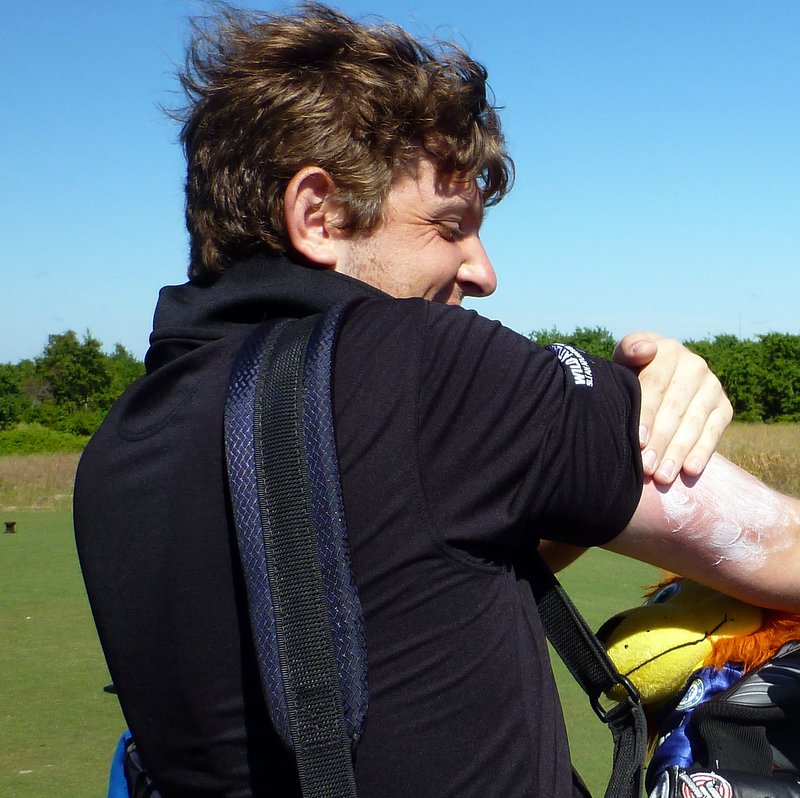
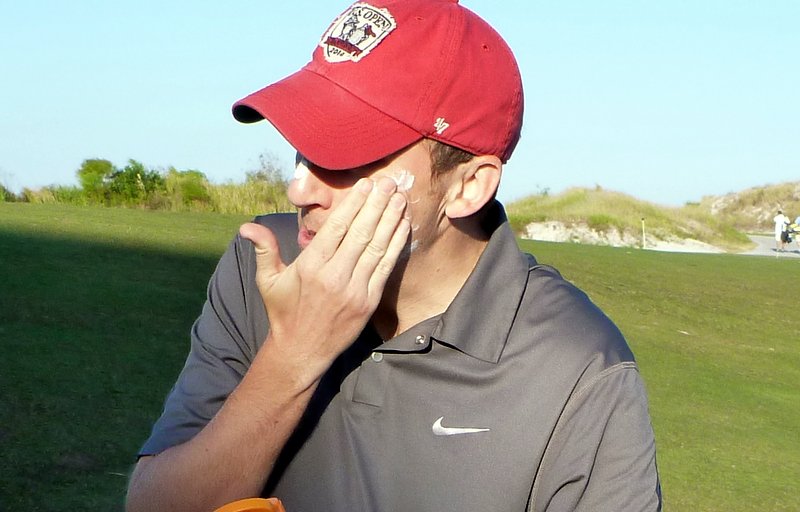
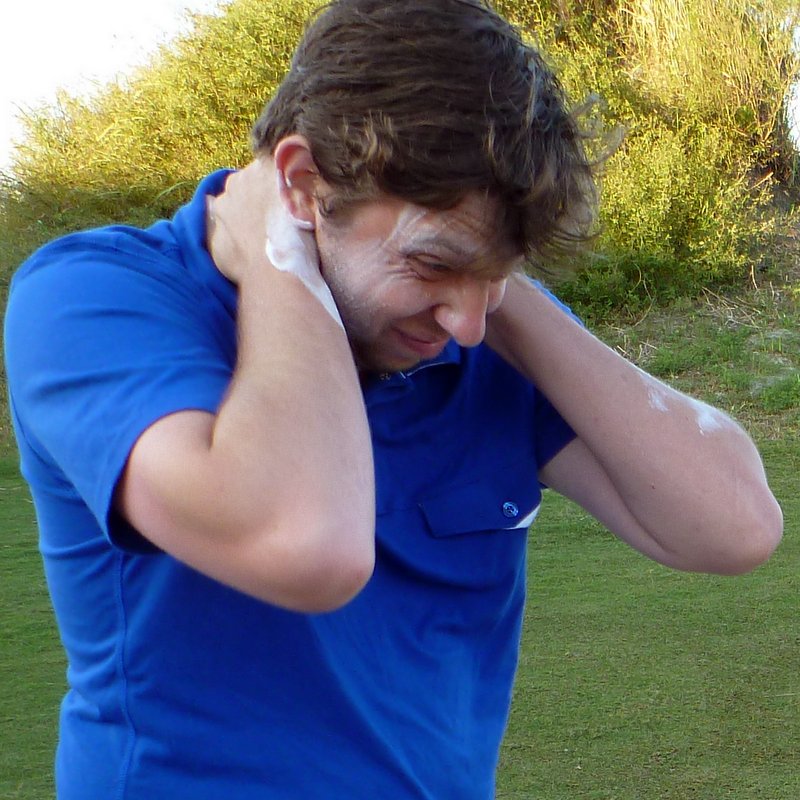
Last month, one of the guys on the Sunday Morning Group’s annual buddies trip to Atlantic City told me about a sunscreen that, he said, was created specifically for golfers. It’s from New Zealand, and it’s used by large and growing number of tour pros and caddies. It’s called GolfersSkin, and it’s terrific: it’s sweat-proof, and it isn’t greasy, and it doesn’t stain golf shirts, and (according to my wife) it “smells like fine coconut cologne.”
It comes in three forms: lotion, “hands-free stick,” and lip balm. I bought ’em all, and I keep the stick and the lip balm in my golf bag, for touch-ups. And here’s the one-liter dispenser, for the clubhouse or, if you play enough golf, the trunk of your car:
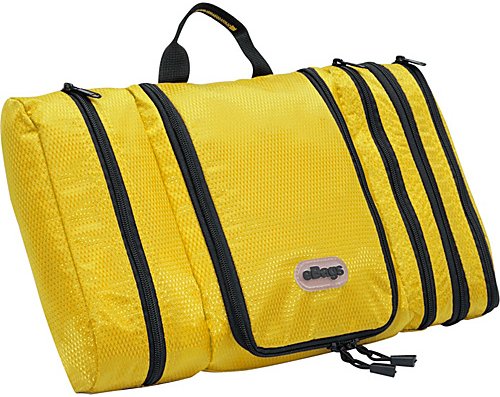
eBags, one of a select group of companies for which I am an unpaid shill, makes my favorite carry-on bag, my favorite laptop backpack, my favorite packing accessories, and, now, my favorite travel toiletry case—all with lifetime warranties:
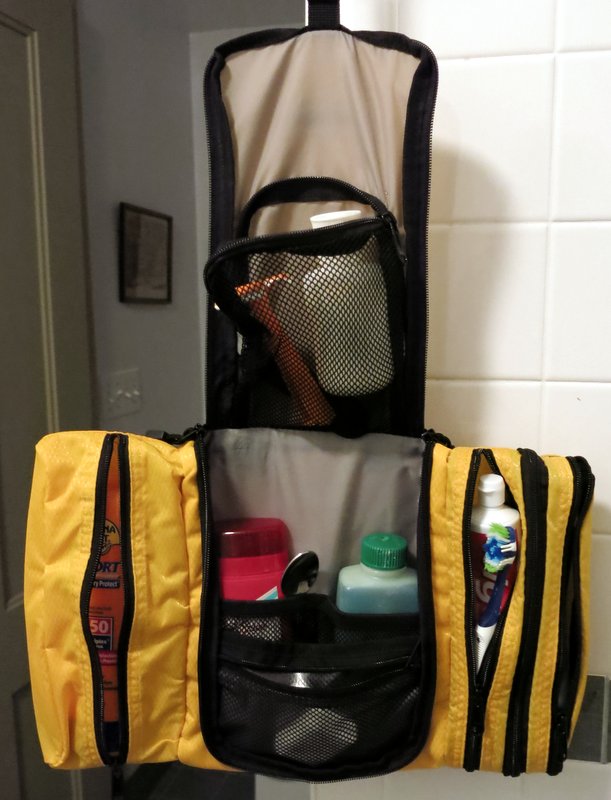
It’s called the eBags Pack-it-Flat Toiletry Kit. There’s tons of room inside, yet it folds almost as flat as a tee shirt, so it’s easy to cram into an overstuffed suitcase. And it has a hook, which you can use to hang it next to the sink in a hotel bathroom. That’s especially convenient if the hotel bathroom is so small that you would otherwise be in danger of knocking your toothbrush into the toilet:
(The spoon next to the deodorant isn’t for cough medicine. It’s for when I buy a pint of Cherry Garcia at Wawa after a hard day of golf, and don’t want to ask for a spoon. The zipper to the right of the toothpaste opens an extension that adds a couple of inches of storage space.)
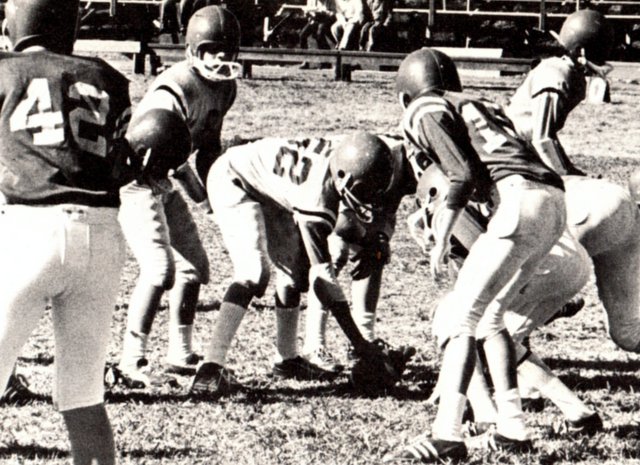
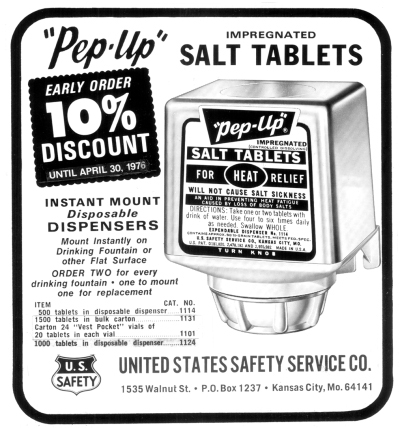
I played football in junior high school and for a little while in high school, in the late 1960s and very early 1970s. We had two-a-day practices each August, before school began. This was in Kansas City, where summertime temperatures occasionally reached a hundred degrees, and the humidity was so high that the air felt like aswimmable liquid, and the droning of cicadas gave the heat anaural dimension. My school’s locker room had a salt-tablet dispenser. We were encouraged to help ourselves before practice but weren’t supposed to drink much water, which was said to cause cramps.
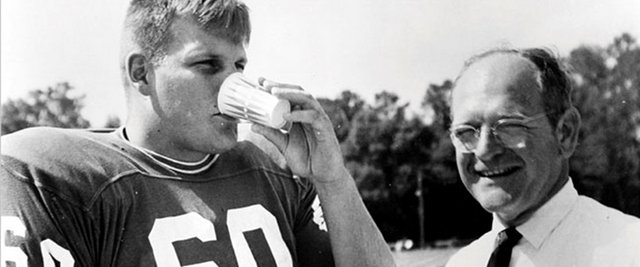
Taped to the wall was a large photograph, labeled “Johnny Condition,” of someone throwing up into a toilet—probably a water guzzler. There was a drinking fountain behind home plate on the baseball diamond; we were allowed to visit it once or twice each morning and afternoon during football practices, but we were encouraged not to swallow. Then, midway through a practice in 1970, our coaches gave us each a paper cup containing an orange liquid, which they had produced by stirring powder into a big plastic tub. The powder had been invented by scientists at the University of Florida, and the liquid was called Gatorade. It was the dawning of the Age of Hydration.
Nowadays, of course, there are people who won’t attend a thirty-minute office meeting without a big bottle of something to sip on. But overdoing it is undoubtedly healthier than underdoing it. And I’ve observed, over the course of many summers, that not drinking enough water on a hot day has a major impact, late in a round, on my ability to swing a golf club. Drinking water also gives me something soothingly self-distracting to do while my opponent dithers over a shot in a tense match.
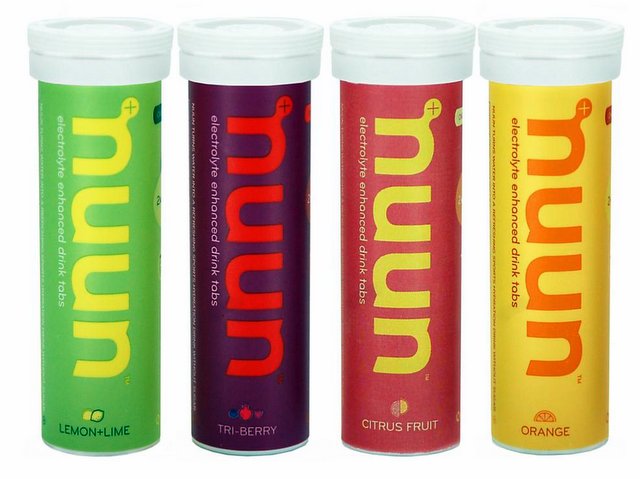
The problem with Gatorade and other sports drinks is that they’re loaded with sugars or artificial sweeteners, and if you drink them like water they’re also expensive. Recently, I’ve discovered an excellent workaround: “Active Hydration” tablets made by a company called Nuun.
They contain the good stuff in sports drinks, including electrolytes (whatever those are) and various other things, and they don’t contain sugar. They come in plastic tubes, which you can safely keep in your golf bag, and when you drop one of the tablets into your water bottle it fizzes. Do you hear me? It fizzes.