The Only Foolproof Way to Preserve Golf Memories

When my wife was growing up, her parents kept the family’s snapshots in, literally, a shoe box. Right now, by contrast, I’ve got many thousands of images spread among four or five personal computers, an external hard drive, an iPad, my smartphone, the camera in my golf bag, two other cameras, and the servers at Google, Amazon, Microsoft, Instagram, Carbonite, Shutterfly, Snapfish, Mixbook, and probably a few others—plus an assortment of thumb drives and memory cards, which I’m constantly almost putting into the wash. Storing photographs in digital form is extremely convenient, but there’s a danger. You wouldn’t be happy today if, a dozen years ago, you had decided to archive your children’s baby pictures on Iomega Zip disks.

Mixbookcover

The solution is to employ a picture-storage format that can’t become obsolete. For more than thirty years, I’ve been a semi-obsessive compiler of physical photo albums, which now fill two large shelves in my living room. The earliest of those albums contain printed photographs glued to paper, but I’ve become a total convert to self-published photo books, which consume less shelf space, are easier to assemble, and can easily be recreated if they’re damaged or lost. The first one I made covered a family trip almost a decade ago. Since then, I’ve made at least twenty, including several that document golf trips abroad.

mixbooksample

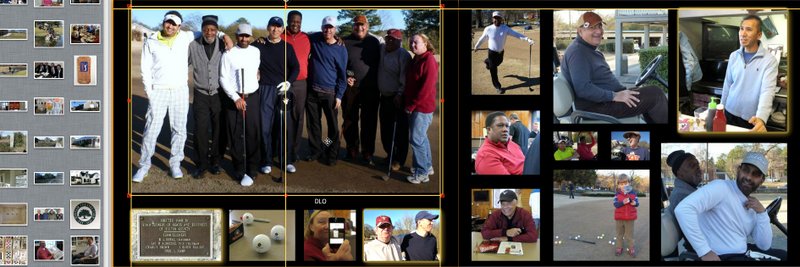
I’ve used four different online services to make those books, and I’ve watched the technology improve steadily. My current favorite service is Mixbook, which lets you easily edit, resize, crop, and arrange photographs on pages whose design you can customize as much or as little as you like. Here’s what a spread looks like when you’re working on it. The yellow lines are alignment aids; they appear each time you fiddle with a picture:

Mixbookpageedit

You can add text. You can scan scorecards and add those. You can invite friends to contribute material, too. You can work on a project a page or two at a time. You can wait to place your order until whatever service you’re using is offering a deep discount—as they all do repeatedly.

Mixbooksinglepage

If you’re stuck for a tee gift for your member-guest  how about giving every player a photo book full of pictures taken during the tournament? You could even give each one a different cover, featuring a photo of the recipient. And, if you’re stuck for a birthday present for your wife, why not give her a book that lovingly documents what you’re up to when you’re not around?

mixbookspread

Incidentally, if you’re an Amazon Prime member, you can store an unlimited number of photographs on Amazon Cloud Drive—an easy way to unclog a hard drive.

Making Awesome Golf Stuff Even Awesomer

Waste Management Phoenix Open - Final Round

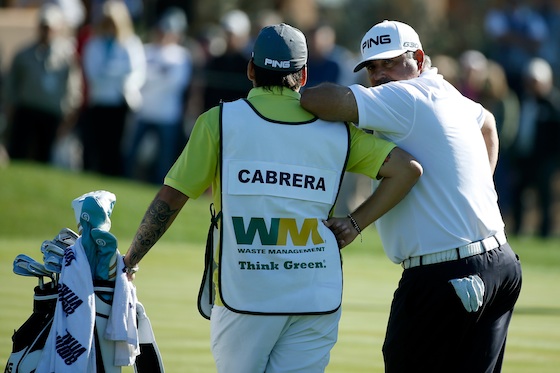
A group of professional caddies is suing the PGA Tour for requiring them to wear bibs bearing the logos of companies that pay fees to the tour but not to the caddies—and I hope they win, because it’s true, as one sportswriter said, that the tour is forcing the caddies to serve as “unpaid human billboards.” It’s a good thing they didn’t ask me to represent them in their lawsuit, though, because my own first reaction would have been “Wow! Free caddie bibs!” My friends and I not only happily wear logo-covered golf stuff that nobody pays us to wear; we even spend money of our own to add additional logos to our already-logo-covered stuff, the better to emulate Jim “5-Hour Energy-and-Web.com-plus-SunGard-Financial-among-many-other-companies” Furyk and his fellow tour members. You can read more at this blog’s official home, on the Golf Digest website. And if you “subscribe” to myusualgame.com, by filling in your email address in the blank on the right side of this page, you’ll be notified every time I post something new. And, if you’re willing to wait a month or so, you can find complete versions of all my old posts on this site, too, by paging down until you reach them.

IMG7602001

Nine Holes With a Mysterious Stranger, Plus Losing on Purpose

Dayton Olson was a talented amateur who turned pro in 1965. He played in one PGA Tour event and one Champions Tour event—the 1983 U.S. Senior Open, at Hazeltine—and made the cut in both. He also won the 1963 Manitoba Open, a PGA Tour Canada tournament now known as the Players Cup. He owned driving ranges in Minnesota, and died in 2011.

daytonolson

Recently, his son Mike, a reader in Oregon (and a talented amateur himself, with a lifetime low handicap of plus-2) wrote with some reminiscences:

Winning the Manitoba Open got my dad a ten-year exemption. We lived in Minnetonka, and every summer we would go up to Winnipeg for a little vacation, and my dad would play in the tournament. When I was old enough, I would caddie for him, and he would let me bring my clubs. I played with him during a practice round before one of the Opens, and at about five in the evening, when we were on the tenth tee, this guy comes walking around some shrubs and asks if he can join us. I thought he was a nut, or an old hacker, but he and my dad knew each other, and my dad whispered, “Just watch him.” He teed his ball on a golf pencil, and I was thinking I don’t want to play with this clown—but then he striped it 260 down the middle. He played very fast, and would often talk while he was swinging, but he kept hitting near-perfect shots. It was intimidating for me—but he was very friendly, and when I would hit one of my few good shots he would say, “There ya go, kid—good one.” He seemed like he was just fooling around, and he took zero time, especially for putts, which he didn’t even line up, but he still shot about two-under for nine holes.
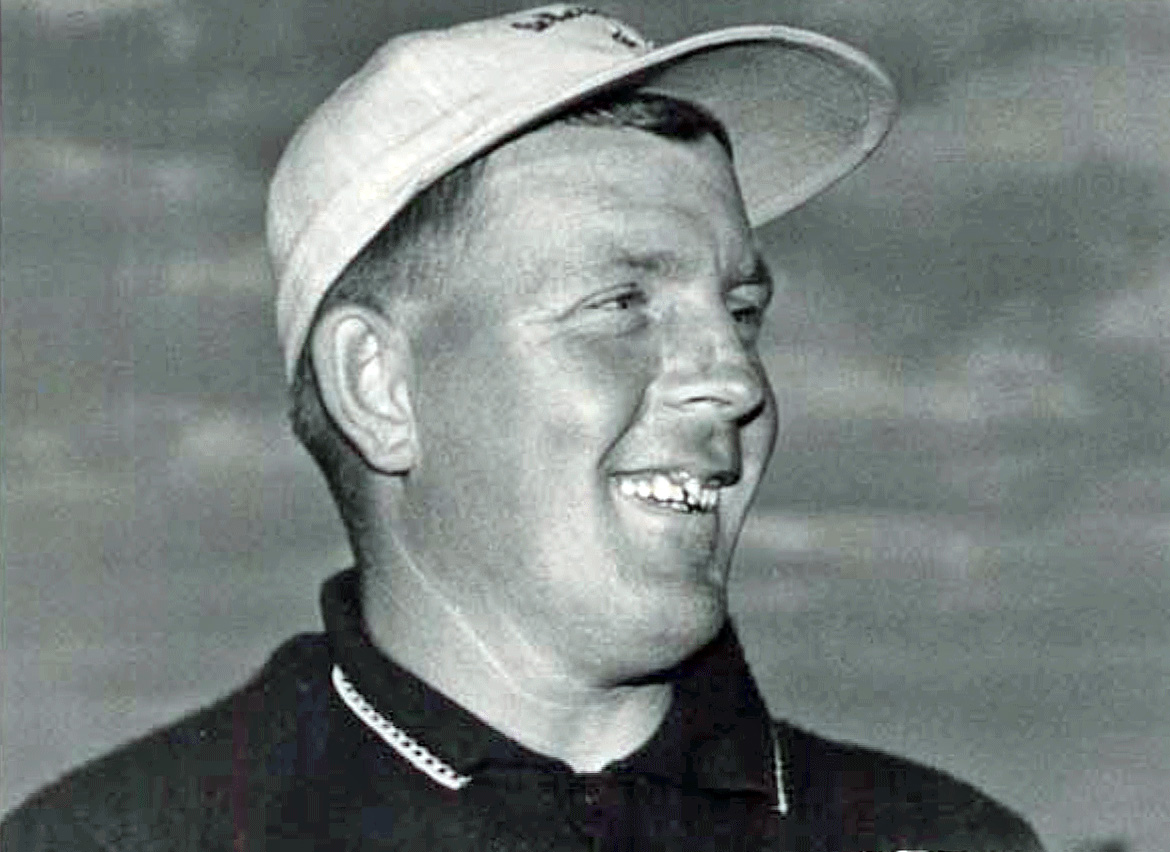
Moesmiling The stranger was the Canadian golf legend Moe Norman (photo above), who, among numerous other accomplishments, had won the Manitoba Open three years in a row, in 1965-67. Olson saw him again at the same tournament in 1971, when he was fifteen:

I caddied for my dad, and he did well in the tournament, and when he was finished we left his bag by the practice green and he went into the clubhouse. Moe was leading, so I stayed. He ended up in a tie, and 60 or 70 of us went out to watch the playoff. On the second hole, Moe has about a 40-footer for birdie, and he lags it up, like, two inches from the hole, and the other player, a young guy from Florida, says “Pick it up” —and Moe scoops up the ball with his putter. As they’re walking to the next tee, some tournament officials come running up, and they’re telling Moe he can’t pick up his ball like that, because this is stroke play, not match play. And Moe can’t believe it. He says, “He gave me the putt—are you guys deaf?” And then, “Well, this sure is a bunch of crap. I’m never coming back here. Winnipeg is a bush town anyway.” And he starts walking off the course.

The other player was John Elliott, Jr., then in his early twenties. He had served in the Army in Vietnam, and had won the Bronze Star. He was married to Sandra Post, a Canadian pro, who won eight times on the LPGA Tour, including the 1968 LPGA Championship. (The marriage didn’t last.) Today, Elliott is a teaching pro in Florida and an occasional Golf Digest contributor.

April 07-Your Game, : How to Hit Practice Shots

Elliott told the tournament officials that he was responsible for Norman’s violation, and that he didn’t want to win because of a mistake that he had caused. The gallery and the tournament sponsor got involved, too, and, in the end, the officials decided to let the playoff continue. Back to Olson:

They ran after Moe, and begged him to come back. You could tell he was really angry, and that he didn’t want to keep playing. But eventually he did. They let him replace his ball and tap it in. When they got to the eighteenth green, Elliott almost made a fifteen-footer for birdie, and made par. And Moe—who had hit one of the most beautiful 7-irons I’ve ever seen—had maybe an eight-footer for birdie. He doesn’t even look at it, but hits it way too hard, like six feet past the hole, and then he hits the next putt almost without stopping, and misses that one, too. And it was obvious to me that he had missed on purpose. He shook Elliott’s hand and walked straight into the parking lot. The whole thing was strange, but also kind of humorous, because to me Moe seemed funny when he was mad.

Elliott won $1,500, Norman $1,125. (One stroke back: John Mahaffey.) A week later, at the Alberta Open, Norman and Elliott tied for the lead and played together again, in the final round. That time, Norman birdied four consecutive holes on the final nine and won by three.
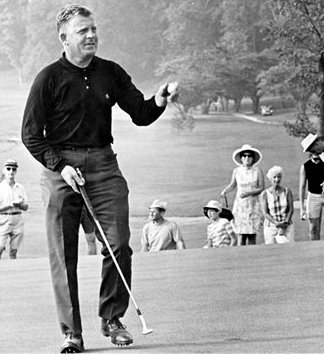
moefairway

Olson and his dad spent a lot of time together on golf courses, and they won a father-son tournament conducted by the Oregon Golf Association when his dad was a super-senior. Olson continued:

I have won four club championships and my lowest score ever on a par-72 course is 65, but I have never been and never will be one tenth as good as my dad was. He was just an outstanding player. The only rotten thing is that he had horrible arthritis in his fingers, wrists, and hands. And he didn’t have it just when he was old; it started when he was in his forties. He still managed to play good, though. I caddied for him all the time—Carson Herron, the father of Tim Herron, was a member of his regular foursome—and he never ceased to amaze me.

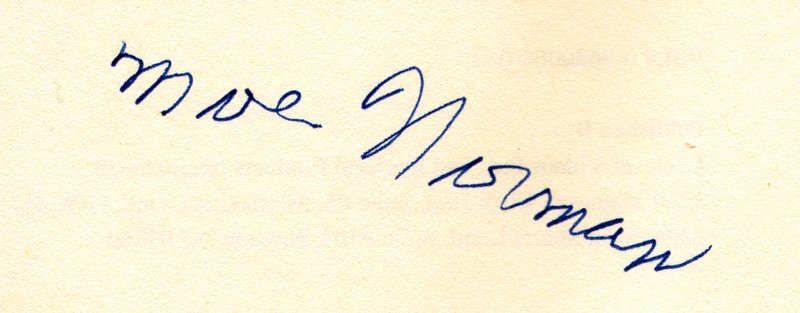
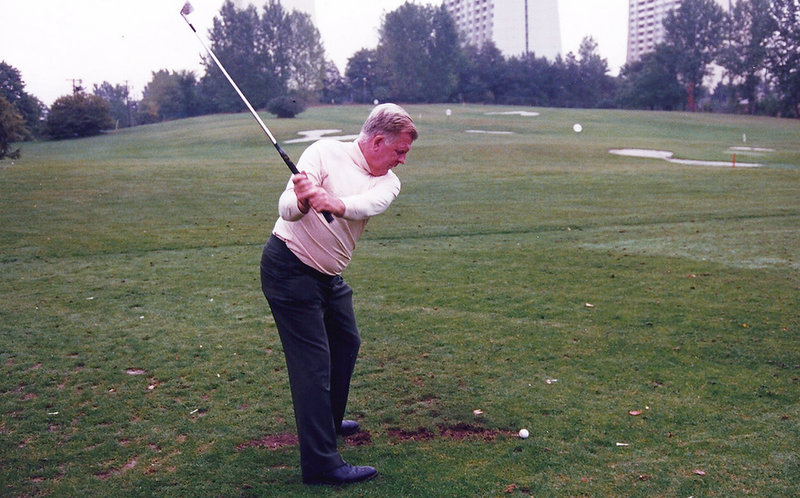
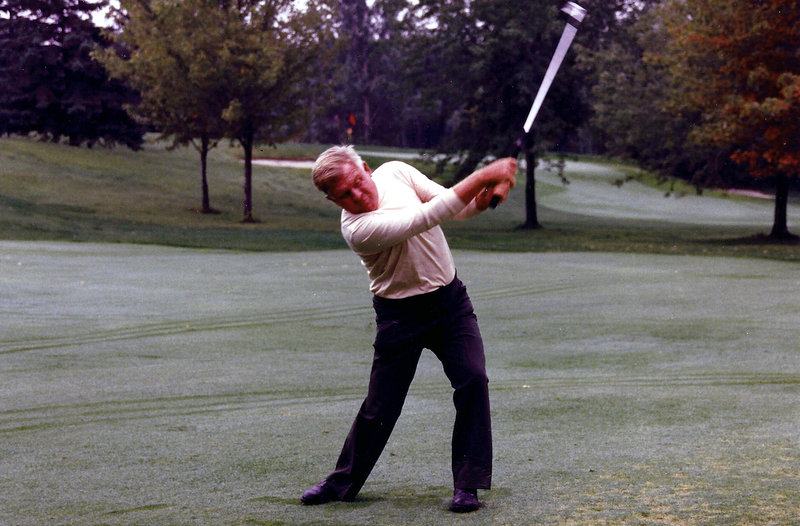
Here are a few photos, from 1987, of Norman swinging, courtesy of Tim O’Connor and Todd “Little Moe” Graves, who have just published The Single Plane Golf Swing: Play Better Golf the Moe Norman Way. (The autograph at the bottom is from my copy of an earlier book of O’Connor’s, a biography of Norman called The Feeling of Greatness.) Graves teaches Norman’s swing at his own school, the Graves Golf Academy. I’ve played several rounds with him, and I once played a round with both him and Norman, and I wish I could strike the ball one tenth as well as either of them. Make that one hundredth.
MoeOakdale87a

MoeOakdale87b

MoeOakdale87c

MoeNormanAutograph

An Empirical Proof of Golf’s Superiority to Tennis

levering

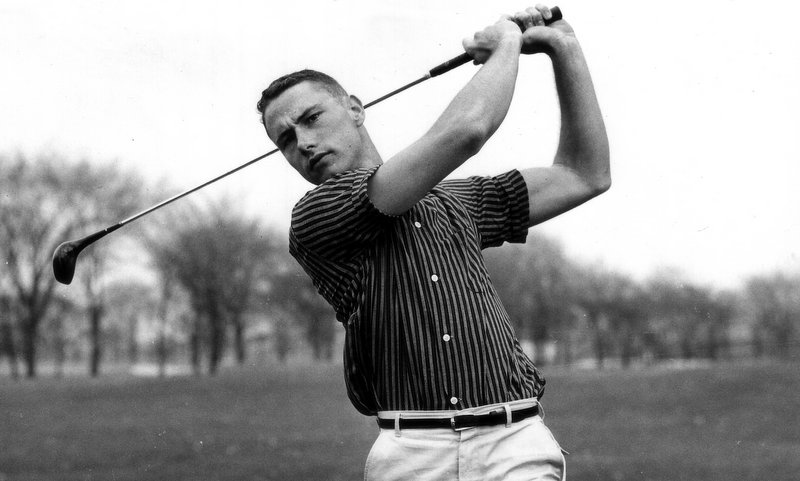
Gary Levering, a lawyer and real-estate developer in Houston, died last year. He played on the golf team at Northwestern from 1957 to 1961 (photo above, courtesy of Northwestern Athletics), and once he’d established himself in his career he reimbursed the university for his scholarship. He believed that golf was a more difficult sport than tennis. To prove it, he signed up for lessons at the Houston Racquet Club and won the club championship two years later: Q.E.D. He earned a perfect score on the test the U.S.G.A. uses to certify rules officials, and was known to friends as Dr. Golf. I learned about Levering from Keith Kimmick, a reader and a commercial-insurance executive. He heard Levering give a talk about bipolar disorder, from which he suffered, at River Oaks Country Club, and when the talk was over Kimmick asked what he could do to help.

Kimmick has served on the advisory board of the Depression and Bipolar Support Alliance of Greater Houston ever since. “Fortunately, I don’t suffer from this illness,” he told me recently, “but I admired Gary for stepping out to tell the world about himself. The D.B.S.A. provides free assistance for those that suffer from bipolar and depression through trained facilitators. I spend most of my time working a booth at various health functions throughout the city, spreading the word.”

Levering and Kimmick became golf buddies, too. Levering owned a house in Pebble Beach and was a member of Cypress Point Club, which always hovers near the top of Golf Digest’s 100 Greatest. During guest rounds there, Kimmick got to know Mike Reese, a longtime Cypress caddie. Reese died of a brain aneurysm in 2007, at the age of 49, and Kimmick wrote a tribute, of which this was part:

Casey Reamer, Cypress Point Club’s head pro, remembers Mike as a true perfectionist on the golf course. One day when Mike was caddying for him, Casey had accidentally left his Bushnell (electronic measuring device) in his golf bag. They are not permitted at Cypress Point Club, but Mike insisted that Casey test his yardages. On the 7th hole, Mike said he was 178 yards from the pin and the Bushnell indicated 179 yards. On the 8th hole, Mike said he was 134 yards and the Bushnell flashed 134 yards to the mark. On the 9th hole, Mike said he was 117 yards and the Bushnell indicated 116 yards. Casey responded to Mike that he was very impressed that he was right on target with the Bushnell once, and within a yard the other two times. Mike very professionally flipped the Bushnell over where the sticker read within one yard up to 1500 yards, and said, “I believe the Bushnell was off one yard on those other two holes.”
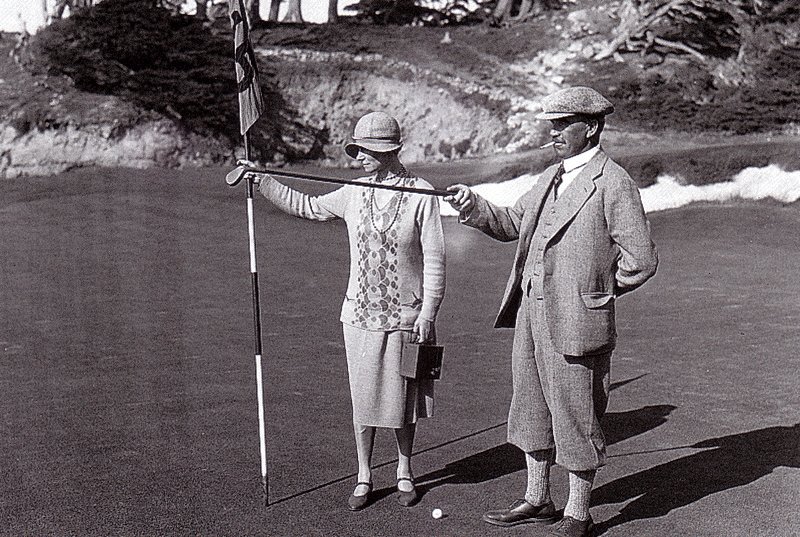
Kimmick and Reese shared a love for Cypress memorabilia. Kimmick’s collection is extensive, and he has shown me images of some of his favorite items. I’m going to write about one of them in a future post. (Not the photo below, which is part of my own Cypress collection. It’s of Alister MacKenzie and his wife, Hilda, on the fifteenth green when the course was new. That box in Hilda’s hand is a camera—and check out her shoes.
MacKenziesCPC

Amy Alcott, Walter Keller, Dean Martin, and Riviera

amyalcott

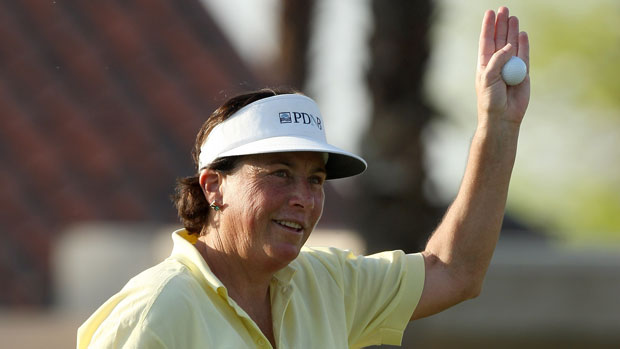
On Saturday, Jim Nantz interviewed the great Amy Alcott—who won twenty-nine LPGA Tour events, beginning in 1975, when she was nineteen—during the CBS broadcast of the Northern Trust Open (nee the Los Angeles Open), at Riviera. In 1995, on assignment at Riviera for Golf Digest, I met Walter Keller, who had been Alcott’s teacher. He told me that he first saw her on the practice tee at Riviera when she was a young girl. “I fell in love with the kid right there,” he said. “She hit a beautiful shot, and I said, ‘Hit another.’ She did. ‘Hit another.’ She did. I turned to her mother and said, ‘You are a blessed woman.’” Keller arranged for Alcott to become a member of the club—and here he is a little later, with Alcott and Tony Sills (another student of his) and a significant collection of junior trophies:

alcottkellersillstrophies.jpg

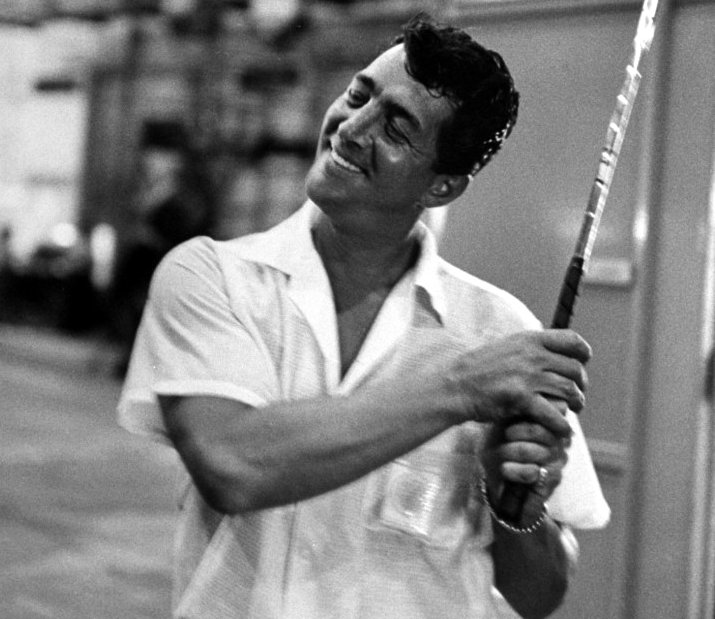
Keller, who died in 2003, at the age of ninety-five, said that Alcott had a difficult relationship with her father but that club members looked out for her. “She had twenty fathers here,” he said. “Dean Martin would see her on the driving range, swing by in his cart, and say, ‘Hey, Amy, let’s play nine holes.” One of many, many reasons to love Riviera.

Dinoandluckies

The Muny Life: Mayfair Country Club

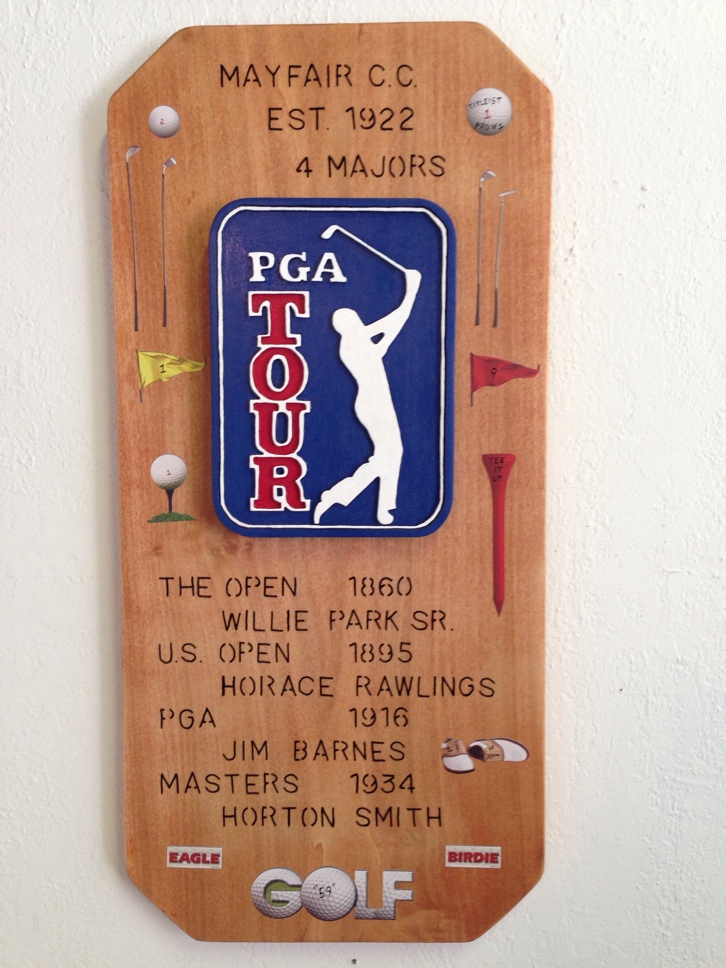
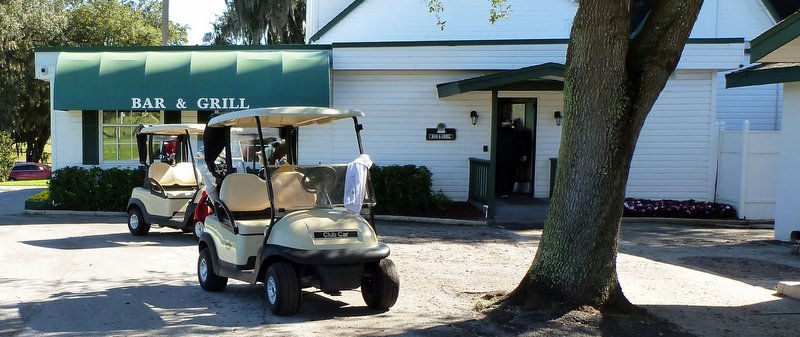
Recently, I wrote about Mayfair Country Club, a muny in Sanford, Florida, and its interesting connection to Moe Norman. But wait! There’s more!
mayfairsignnew

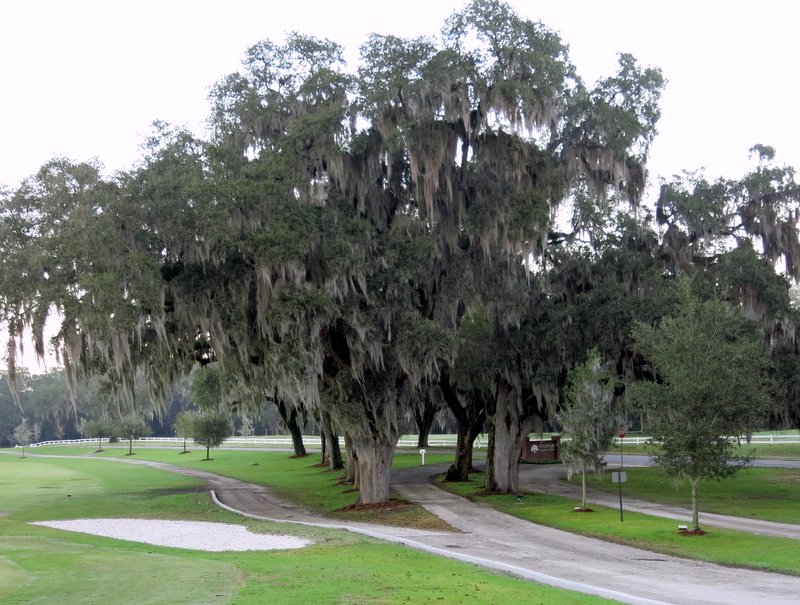
The driveway at Mayfair is flanked by enormous live oaks. They were planted in in 1847, when the property was part of a citrus plantation. The city of Sanford bought 152 acres in 1922 and created the Sanford Golf Club, which at first had just four holes.

liveoaks

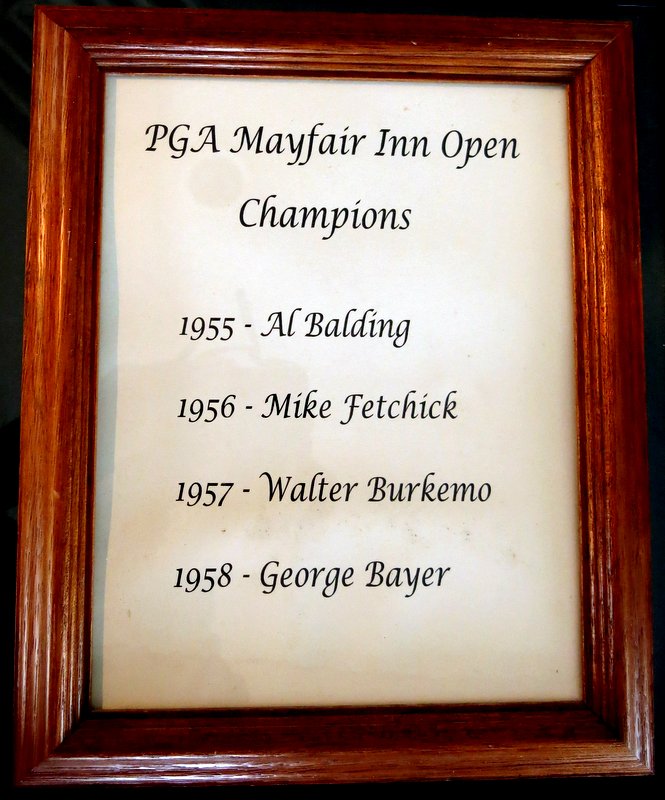
Later, the city leased the course to a variety of outside operators, among them the New York Giants baseball team. The Giants ran it from 1953-’61 and renamed it the Mayfair Country Club, after Sanford’s Mayfair Inn, which the team also owned. (The Giants used the inn as a dormitory for minor-leaguers, in addition to running it as a resort.) From 1955-’58, the club was the home of the Mayfair Inn Open—unofficially known as the New York Giants Open.

winnersign

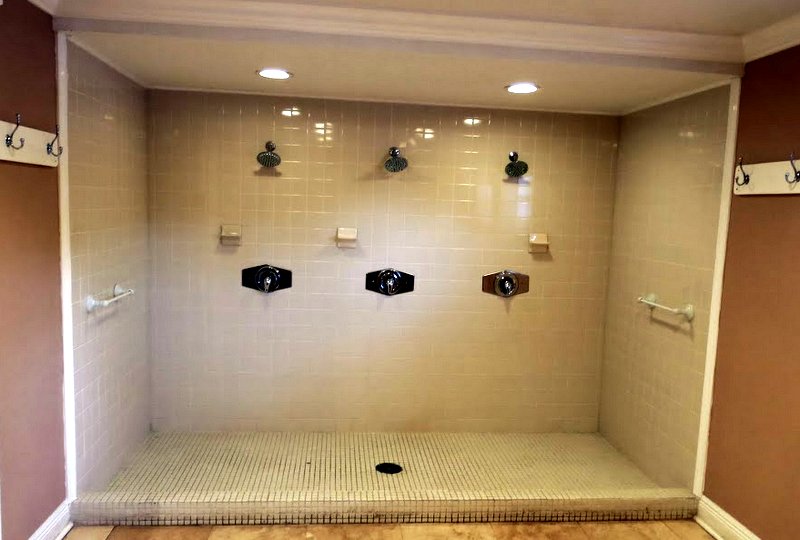
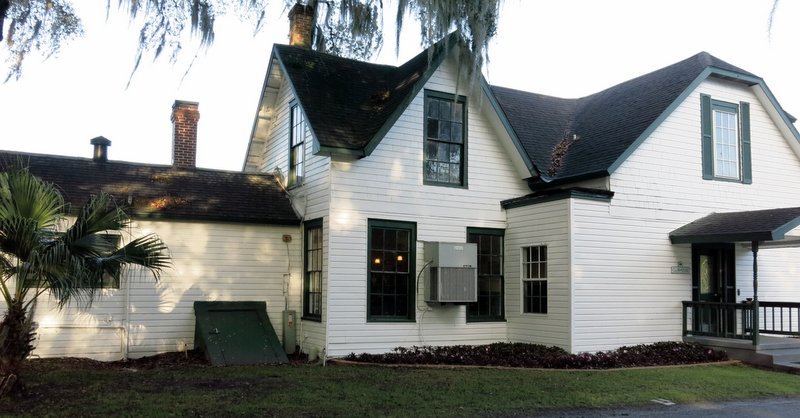
In 2009, a guest at a raucous graduation party shot and killed a young man standing at the bar in the clubhouse. (According to the guys I had lunch with, the shooting was an accident, in the sense that the shooter was trying to kill a different young man, who resembled the victim from behind.) But the murder was an anomaly, and Mayfair has survived an economic downturn that many other Florida courses haven’t. The city of Sanford and Integrity Golf have made major improvements to the course and the clubhouse, including these slightly unnerving showers:

MayfairShowers

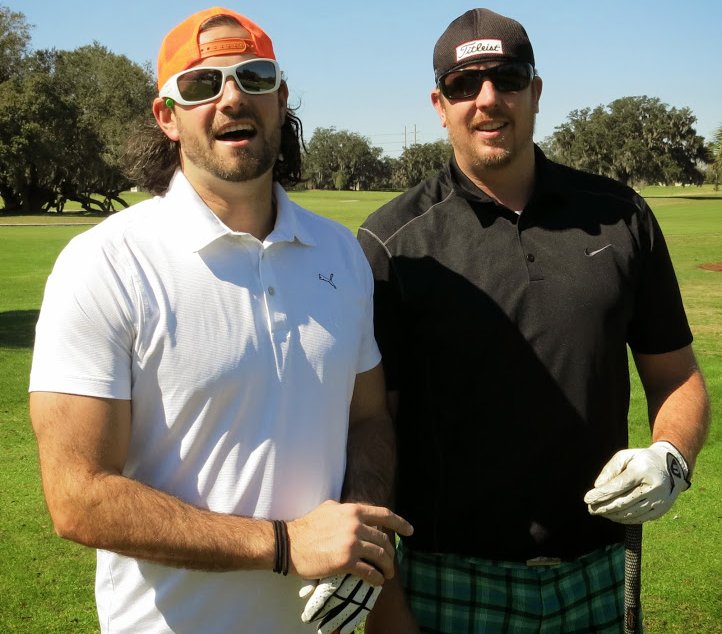
I played in Mayfair’s regular Sunday-morning game, which has two components: a Stableford and skins. (One of the guys in the game referred to the club as St. Mayfair, because it’s where they all go on Sunday.)

mayfairguys

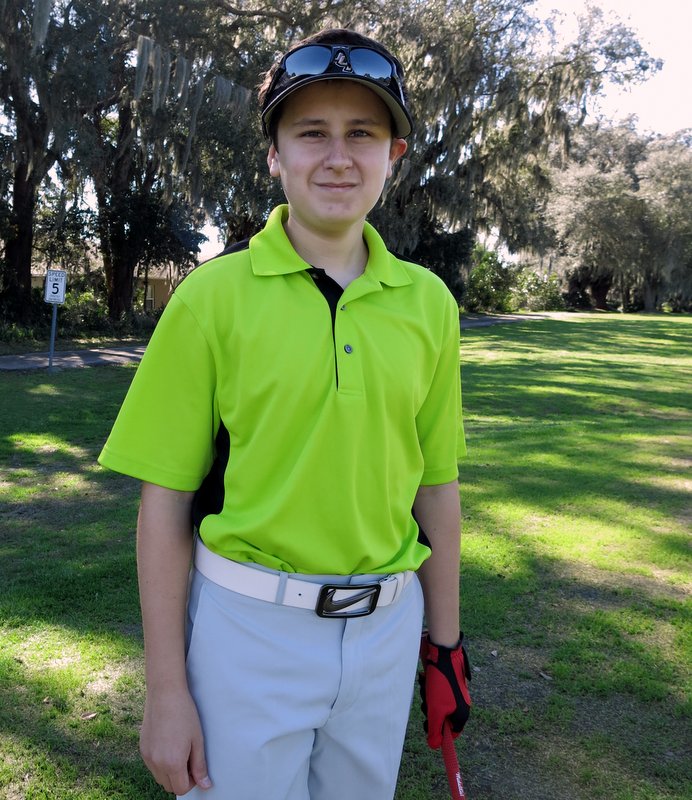
Jean-Pierre Ely, the club’s general manager, was in my group. He’s was born in Germany, and his grandmother knew Bernhard Langer’s parents. His family moved to the United States in 1998 after his mother won a green card in a lottery. He’s 28. His ambition is to play on the PGA Tour. That’s him on the right,with one of the club’s starters:

starterjp

There’s something cool about playing a golf hole that Ben Hogan had a definite opinion about (the fourth, a sinuous par 4, which he once described as one of the toughest bunker-free par 4s he’d ever played), and, later, buying a sleeve of balls in a golf shop that Sam Snead used to drive over while taking a shortcut to what was then the 10th green.

P1110931

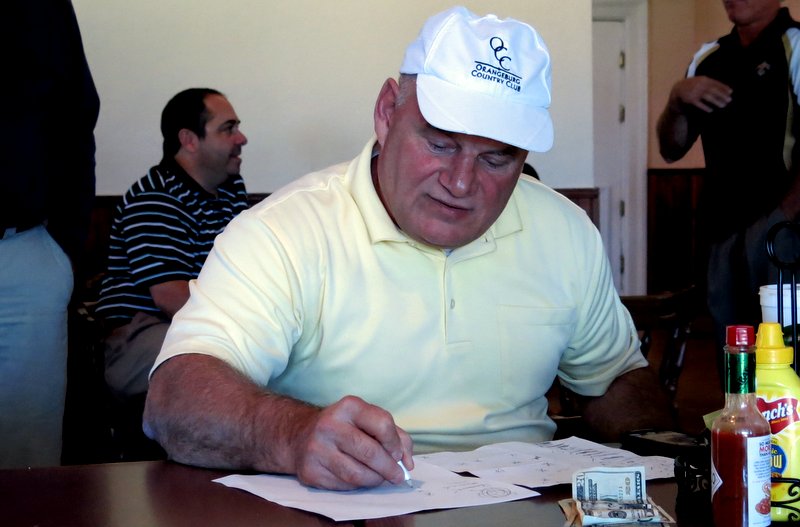
Ely won the Stableford, while the best that I could manage was to prevent someone else from winning a skin on the third, a short par 4. Sorting out the prizes took time, because for a while the pot appeared to be $10 light. Billy Griffin, a regular, scanned the crowd near the bar and said, “I can look at somebody and tell if he hasn’t paid.” The problem turned out to be that one participant had accidentally signed up twice. “In that case,” someone said, “you need to put in another ten.” I said something at some point, and Griffin said, “Hey, new guy. Sit down.” So I sat down. Here’s the group’s official record-keeper:

mayfairaccounting

John, one of the regulars, used to work for the tour player Mike Souchak. A friend of his told me, “John has 42 clubs in his bag. When he lifts the bag out of his truck, the truck rises.” John said, “I’m down to 16 or 18. But I’ve got a few beers in there, too.” Here’s a board that one of the regular groups at Mayfair uses to make up teams, or something:

cardboardsquare

Nice course! Nice club! I’d like to go back.

Ladies OrlandoP1110959IMG_0689Photo 1P1110939IMG0798IMG754

mayfairsignback.jpg

Moe Norman Slept Here (Richard Nixon Did Not)

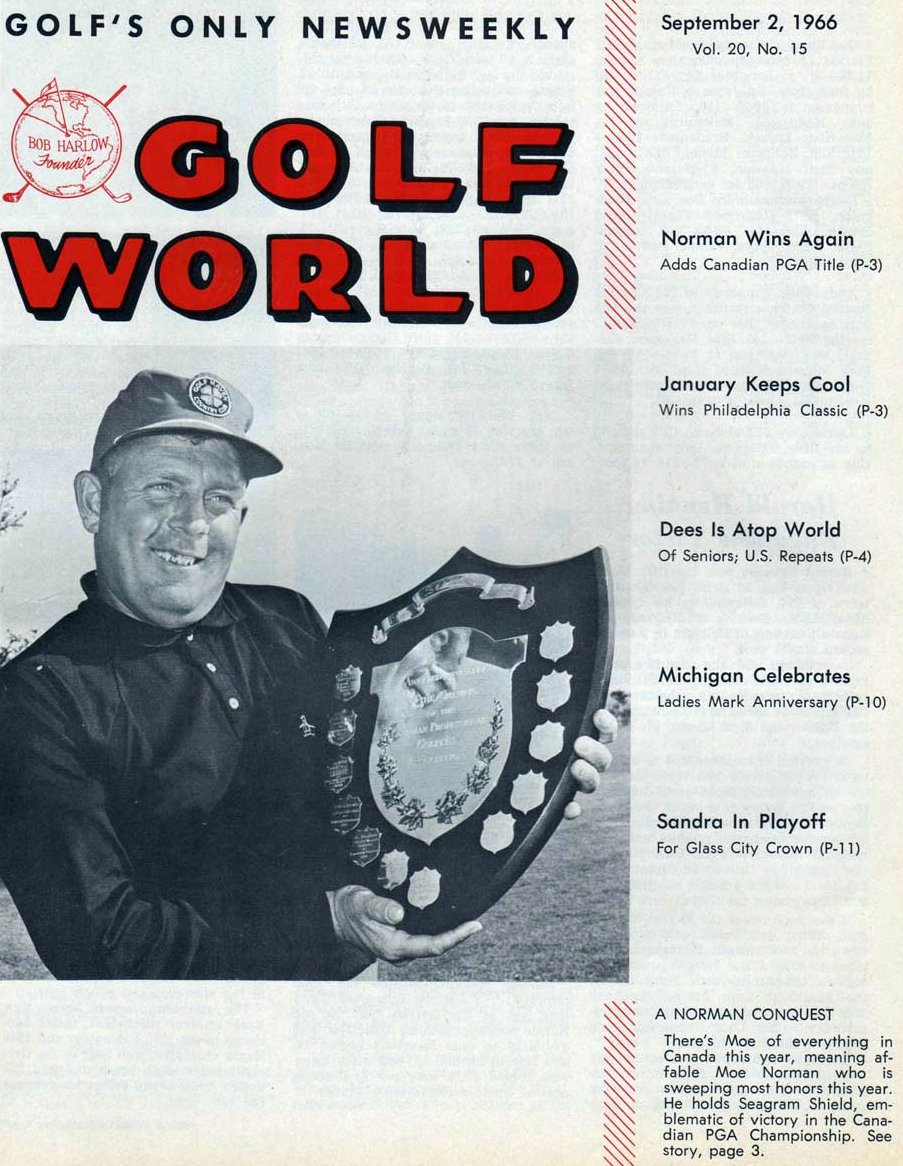
The Canadian golf legend Moe Norman had a wide stance, a short takeaway, a lumberjack motion, and a finish that made him look like he was dangling from a rope, yet many knowledgeable players, Tiger Woods among them, have ranked him with Ben Hogan as one of the greatest ball strikers of all time.

Moe Norman Golf World 9-2-66

Norman also almost certainly suffered from autism. He worked in a rubber-boot factory early in his career, and, although he won more than 50 amateur and professional titles in Canada, he felt like an outcast when he played in tour events in the United States (including the Masters, twice). His finances were precarious until the final decade of his life, when Wally Uihlein, of Titleist, learned of his distress and gave him the kind of retirement he deserved.

moenormanswing

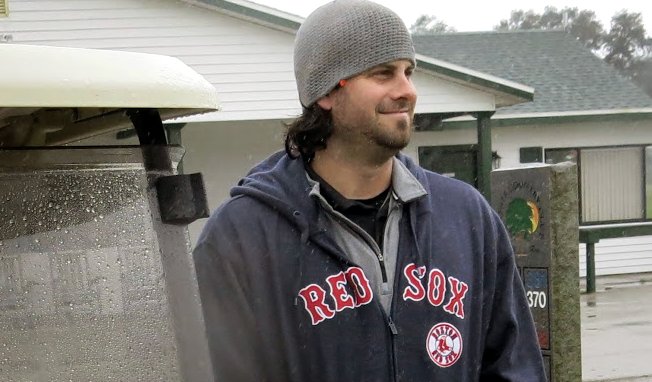
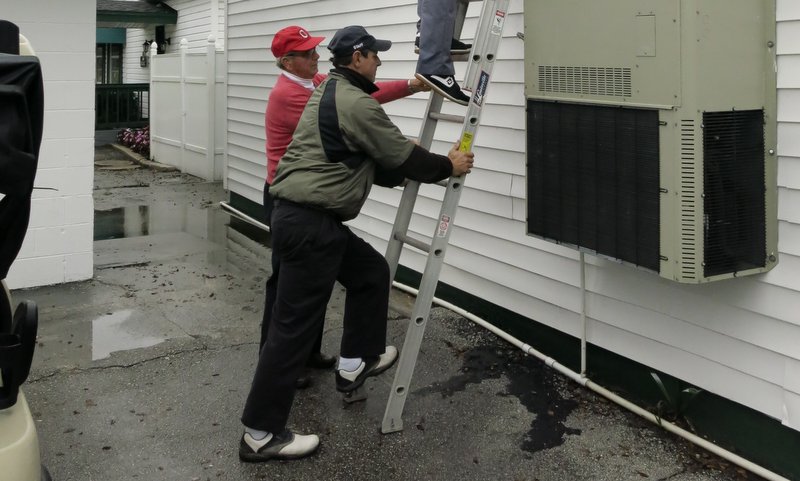
Norman spent his winters in Florida, and, until Uihlein stepped up, supported himself mainly by hustling and giving exhibitions. At one point, the pro at Mayfair Country Club, a muny in Sanford, let him stay, rent-free, in an apartment on the second floor of the clubhouse. I visited Mayfair last winter. The stairs to that apartment had been removed in a renovation, so in order to show me the place Mike Kenovich, the superintendent at the time, had to find a ladder.

moeladder

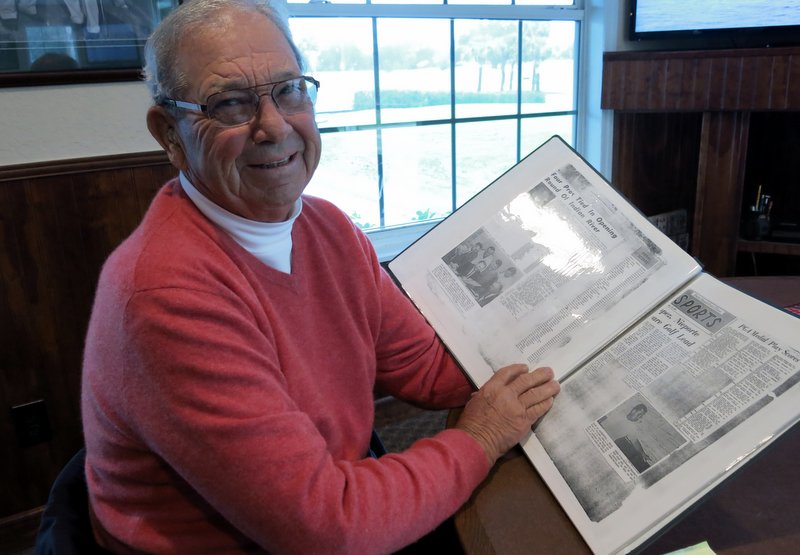
Then he and I and Jean-Pierre Ely, the general manager, climbed to the roof, while Bernie Haas—who competed with Norman in several tournaments in Florida in the 1960s and was inducted into the Northern Ohio PGA Hall of Fame in 1995—steadied the ladder by keeping a foot on the bottom rung. That’s Haas in the red hat in the photo above, and Kenovich starting to climb. And those are Ely’s feet disappearing up above. Here’s Haas in the club’s Oak House Restaurant, later, with one of his golf scrapbooks:

haasscrapbook

Haas was an assistant pro at Burning Tree, in Washington, D.C., in the late 1950s. One of his students there was Vice President Richard Nixon. Nixon’s boss played so much golf that Nixon figured he’d better learn, too, and because he had no friends he would invite Haas to play with him. “He wasn’t a very good golfer,” Haas said, respectfully. Nixon once told Clifford Roberts that he wouldn’t mind being a member of Augusta National, and Roberts, who didn’t like him any better than Eisenhower did, said, “I didn’t know you were that interested in golf.” And that was the end of that.
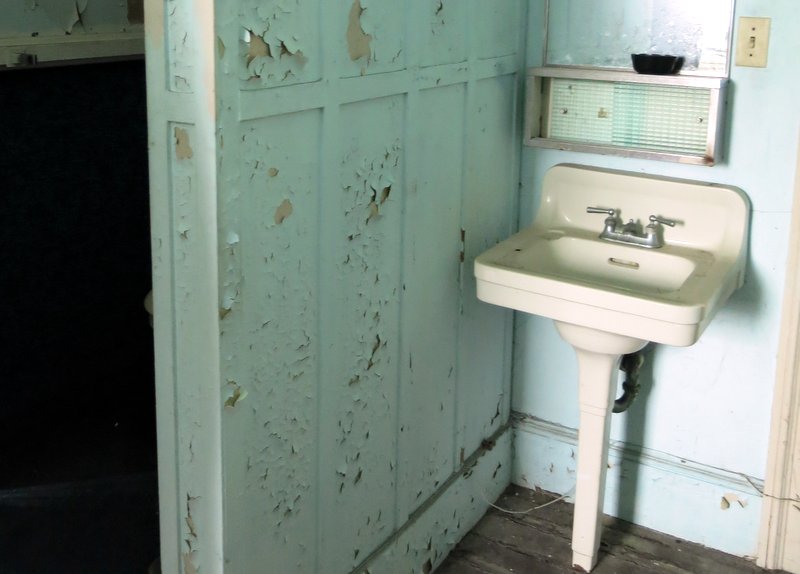
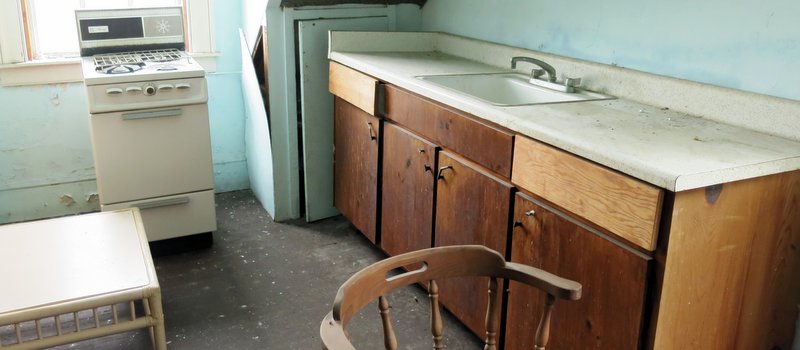
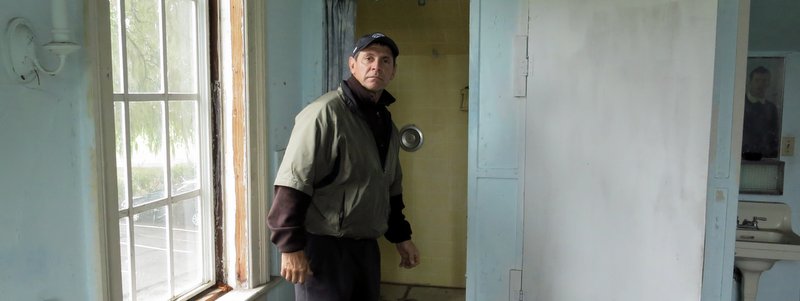
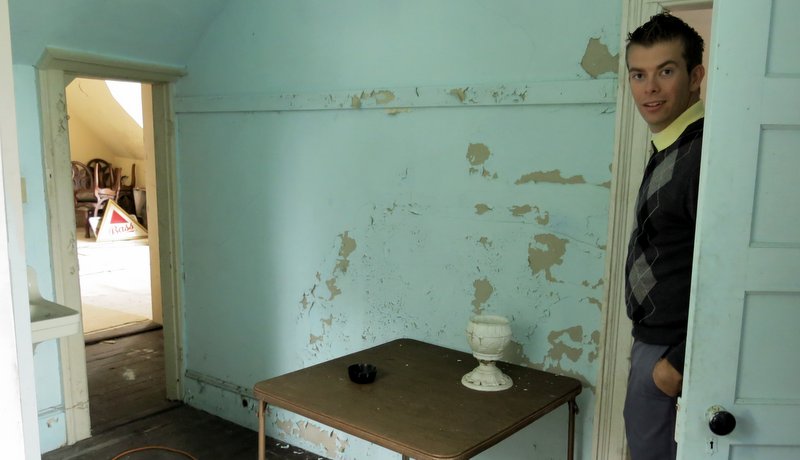
Anyway, here’s what’s left of the apartment where Norman stayed:
kenovichely
mayfairsink
mayfairkitch
mayfairshower
mayfairapt
The walls were crumbling, but I could picture Norman, whom I spent some time with in the mid-1990s, standing at a window and waiting for the sun to come up so that he could tee off again.
mayfairclubhouse
Mayfair has a long, interesting history. I’ll have more about that—and about Moe Norman—soon.

IMG_0661

IMG_0735

These Are Still the Best Winter Golf Gloves — Plus Other Apparel News

xtreme

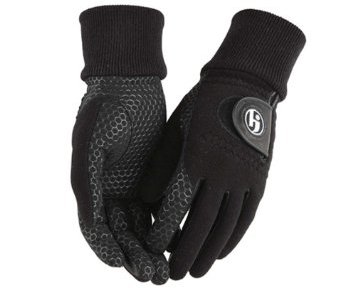
My friends and I haven’t been able to play golf in about a month now, so I’ve been wearing my winter golf gloves mainly to walk the dog. The ones I like best are still Winter Xtreme, by HJ Glove. They’re thick but flexible, and they have nice grippy silicone webbing on the palms and fingers. And Amazon has them in stock—something that hasn’t always been true. Meanwhile, our improved-and-personalized Jägermeister sweatshirts are back from the embroiderer:

jagersweatshirt

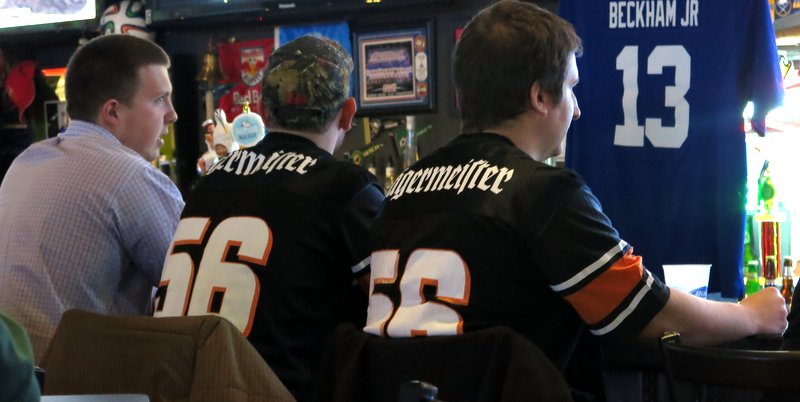
We went to 1st and 10, our favorite sports bar, to hand them out, and also because it was 50-cent-wings night. Totally coincidentally, the owner of the bar was handing out Jägermeister jerseys with the name of the bar on them to guys on a bowling team that he sponsors:

jagerbowling

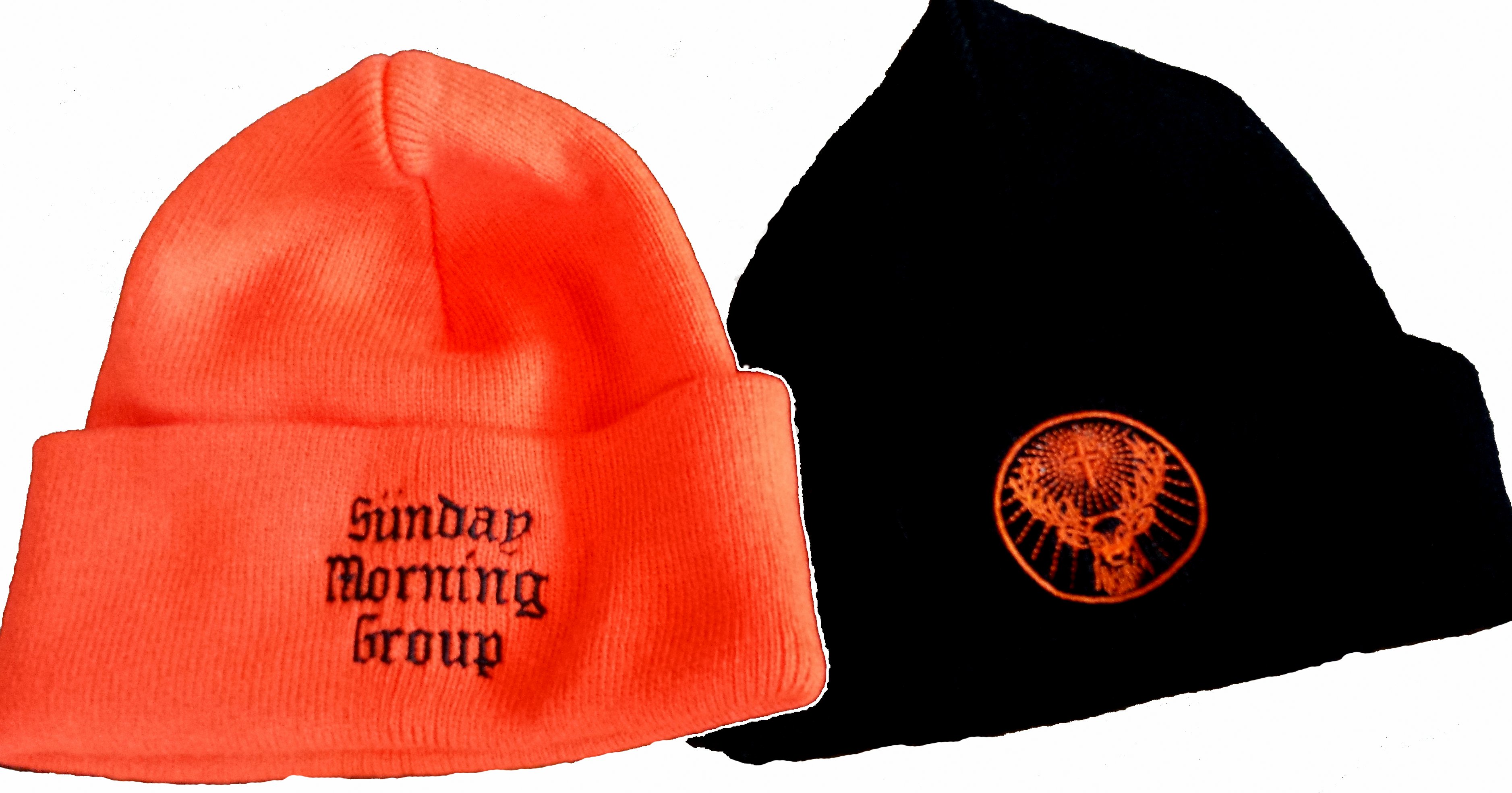
When he saw that we were, in effect, Jägermeister brothers, he gave us jerseys, too. So when I went to Stop & Shop on the way home, to buy milk, baked beans, corn meal, and eggs, I was wearing two Jägermeister shirts, one on top of the other. And then a couple of days later the embroiderer finished our winter hats:

smghatsps

Now all we need is grass.

IMG_7392

The First Thing We Do, Let’s Kill All the Headcovers

stealyourface

My favorite headcover was made of black plush and had the Grateful Dead’s red-white-and-blue “Steal Your Face” skull logo embroidered on it. I got to play golf with Jim Furyk once, and before we teed off his caddie, Fluff Cowan, looked into my bag and said, “So, you’re a fan of the boys, eh?”—one of my proudest moments in the game. My 5-wood eventually wore a hole through the fabric, and I had to take that headcover out of service. The huge online store on the Dead’s official website used to have lots of branded golf stuff, but not anymore.

deadbearmugs

Headcovers must be a product of the apparently irresistible human urge to clothe inanimate objects—the same urge that gave us doilies, dust ruffles, chair skirts, and toilet seat covers. Most golfers probably assume that headcovers have an important protective function, but that seems unlikely. The purpose of a golf club is to be slung repeatedly at hard things lying on the ground, so why should you need to swaddle it just to carry it in a bag? Olden-days golfers—whose clubs were made by hand and were therefore arguably worth special handling—didn’t use them:

shinnecockcaddie1895

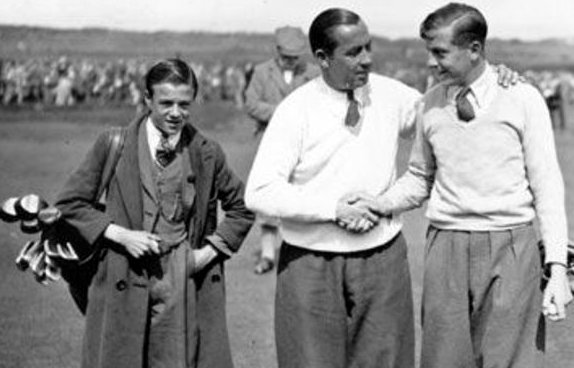
So why do we? Chuck Furjanic, who is the author of Antique Golf Collectibles: A Price and Reference Guide, told me that headcovers date from at least the early 1910s. Nevertheless, I spent a pleasant afternoon flipping through the pages of most of the golf books in my office, and couldn’t find a headcover in a photograph or illustration from earlier than 1935. Walter Hagen didn’t use them (and Henry Cotton didn’t either):

hagencotton

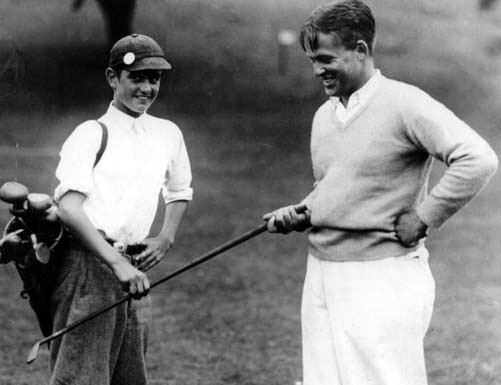
My research indicates that Bobby Jones won the Grand Slam without headcovers, that most golfers carried their woods naked until the late thirties or early forties, and that the headcovers of yesteryear started out looking like children’s socks, then evolved into sweaters for weasels. No headcovers here:

bobbyjonesandcaddy

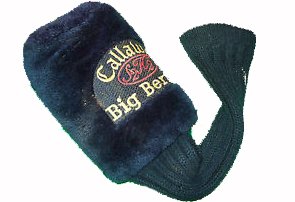
My first metal woods—a TaylorMade set, which I bought in 1991—came without headcovers. Their successors—a trio of Big Berthas, purchased less than a year later—came with huge ones, although they’d probably seem almost dinky today:

bigbertha

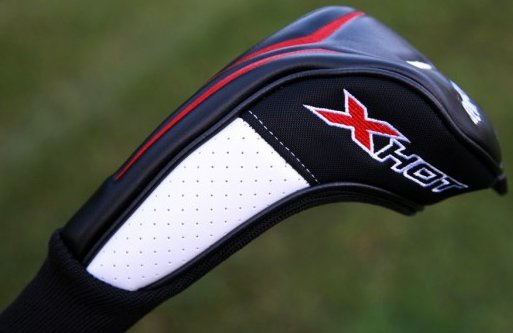
Those two transactions bracketed the beginning of the modern headcover era. Today, it’s impossible to buy a wood or even a hybrid without also receiving a complicated sheath that appears to have been manufactured in the same Chinese factory that makes shoes for NBA players and props for George Lucas movies. Someone I played golf with once told me that getting rid of headcovers would speed up the game by twenty minutes a round, and I believe it. Putting a modern headcover back onto a modern driver can be as exasperating and time-consuming as putting a snowsuit onto a toddler.

golfxhotcover

Using headcovers on irons is still for beginners only, like using a clicker to count shots or carrying tees in a bandolier. And thank goodness for that. But who knows? A lot of people didn’t think that soft spikes would catch on, either.

GDIronMitts

How He Hit That: My Pitching Wedge from Jimmy Kimmel’s Teeth

kimmelteethsqu

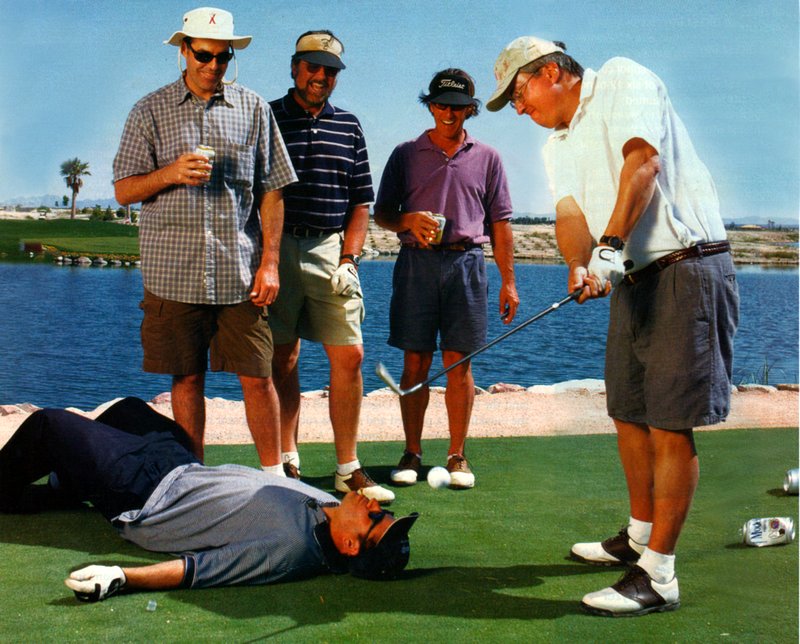
A dozen years ago, in an effort to scientifically determine the effect of alcohol on the golf swing, Golf Digest sent me and three of my regular golf buddies—Barney, Jim, and Hacker (real name)—to Las Vegas for four days, and gave us unlimited access to golf, casinos, and beer. They also recruited a second foursome, whose members included Jimmy Kimmel (then of the Man Show) and Carson Daly (then of MTV).

The format was nine-hole scramble. On the fourthtee, Barney made a rude noise in my backswing, and Kimmel said, “If Sal had asked me beforehand, ‘What are the chances that one of them will fart before one of us?’, I would have said a million to one.” After that, we were pals. On the fifthtee, Kimmel asked me, “Do you meet a lot of lesbians in your line of work?” On the seventh hole, he drove a cart onto the green, parked it next to the hole, and asked, “Am I in anyone’s line?”

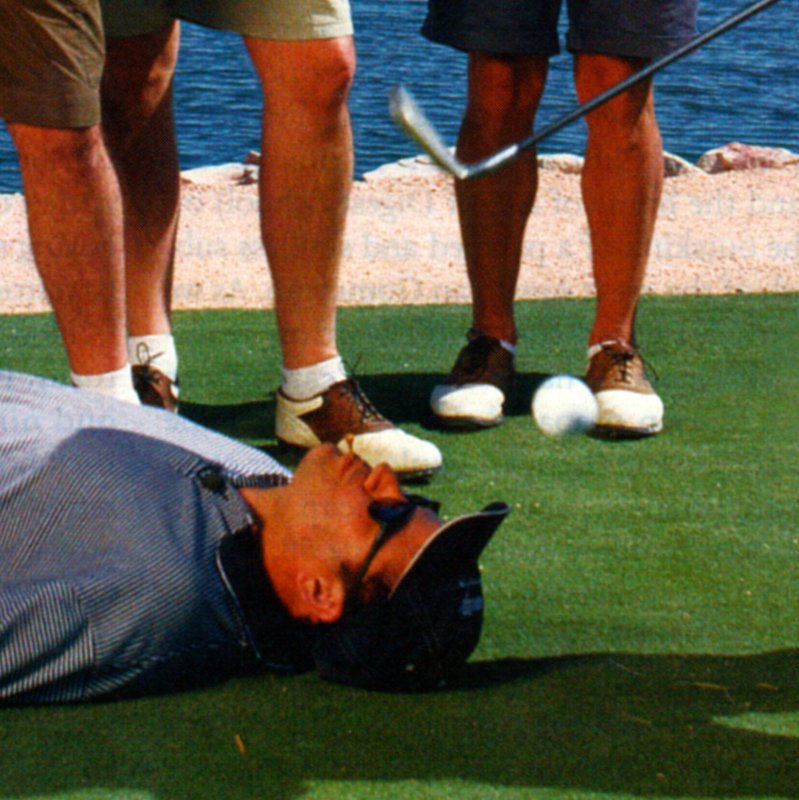
Playing nine holes took four hours, during which the average intake was a dozen beers and a couple of Bloody Marys. My friends and I won the match (five-up, two under par), and when it was over Hacker threw a pair of golf shoes belonging to one of them into the lake. Then Kimmel lay on the ground, placed a ball on a tee clenched between his teeth, and let me hit it with a pitching wedge:
kimmelteethowen
Here’s how I hit that shot: I don’t remember. You can read about the whole adventure here.