My Close Personal Friend Donald Trump

Donald T. and David O. in front of the waterfall at Trump International Golf Club, West Palm Beach, Florida, March, 2012.

For the July issue of Golf Digest, I wrote an article about Donald Trump and his newest golf course, Trump International Golf Links, near Aberdeen, Scotland. Back in March, Trump and I played  a round at his course in Palm Beach (photo above), and I spent one night at Mar-a-Lago, which Trump saved from demolition in the 1980s and now operates as a private club (photo of in-room amenities below).

Mar-a-Lago: only the best.

Trump is unimpressed by golf courses he doesn’t own, especially when he compares them with his Scottish course (which will open next week). “I know Bandon Dunes,” he told me over lunch. “The biggest dune there is like one tenth the size of our smallest dune. It’s a toy. And they get such great reviews. Every one of my courses is, like, amazing.”

Trump’s courses really are amazing; the one in Bedminster, New Jersey, was recently chosen by the U.S.G.A. to host the 2017 U.S. Women’s Open, and the others are stand-outs, too, although they aren’t necessarily as great as he says they are. A few years ago, he bought a bankrupt course in southern New Jersey, called Pine Hill, and turned it into Trump National Golf Club Philadelphia (it’s just over the state line from Pennsylvania). According to him, it should probably be considered the best course in the world (other than his course in Scotland).

“It’s a better course than Pine Valley,” he told me, “because it has much better elevation. And I love Pine Valley, but this course is better. Now, it will never be judged better, because nobody will ever give me the fair shake of doing that. But that’s OK. It’s a better course than Pine Valley—and the Pine Valley people say that, too, although they won’t say it publicly. Two of them came over to me and said, ‘Mr. Trump, this is better than Pine Valley, but please don’t ever quote me.'”

Trump’s courses, wherever they are, do often have cool cars parked in front of them:

Three Ferraris plus my rented maroon Kia, Trump International Golf Club, West Palm Beach.

Automobile arrangements like that don’t happen by accident. When I told the parking attendant I didn’t think I’d ever seen three Ferraris in a row, he said the boss had told him to be sure I noticed.

Trump is a very good golfer, even though he says he is.

In the photo above, Trump’s hair is hidden by his hat, which he didn’t take off during golf or at lunch, but I got to study it over dinner that night, at Mar-a-Lago. From straight on—which is presumably how he sees it in a mirror—it looks almost normal, but if you get any kind of an angle on it you can tell how structurally complex it is. And he must do it himself, because his wife wasn’t with him and I don’t think he was traveling with a hairdresser. I was impressed.

D.T. and John Nieporte, the head pro.

Off the record, I had a swell time hanging around with Trump. (Trump uses “off the record” not to protect confidences but to give emphasis to public knowledge he hopes you’ll quote—as in, “Off the record, I took down the trees and made the front page of the Washington Post four days in a row”—and I’m going to start doing that, too.) He’s a little exhausting to be with, because his only real topic of conversation is himself, but he doesn’t make you feel nervous or inferior, the way so many billionaires seem to do nowadays.

He’s also accessible. A decade ago, I wrote a long article for The New Yorker about concrete, and in it I quoted him at some length, since he built the first concrete office building in New York and knows a lot about the subject—although he was sometimes hard to understand because during our entire telephone conversation he was eating an apple. But he took my call, and he had interesting things to say.

A Better Way to Play Skins

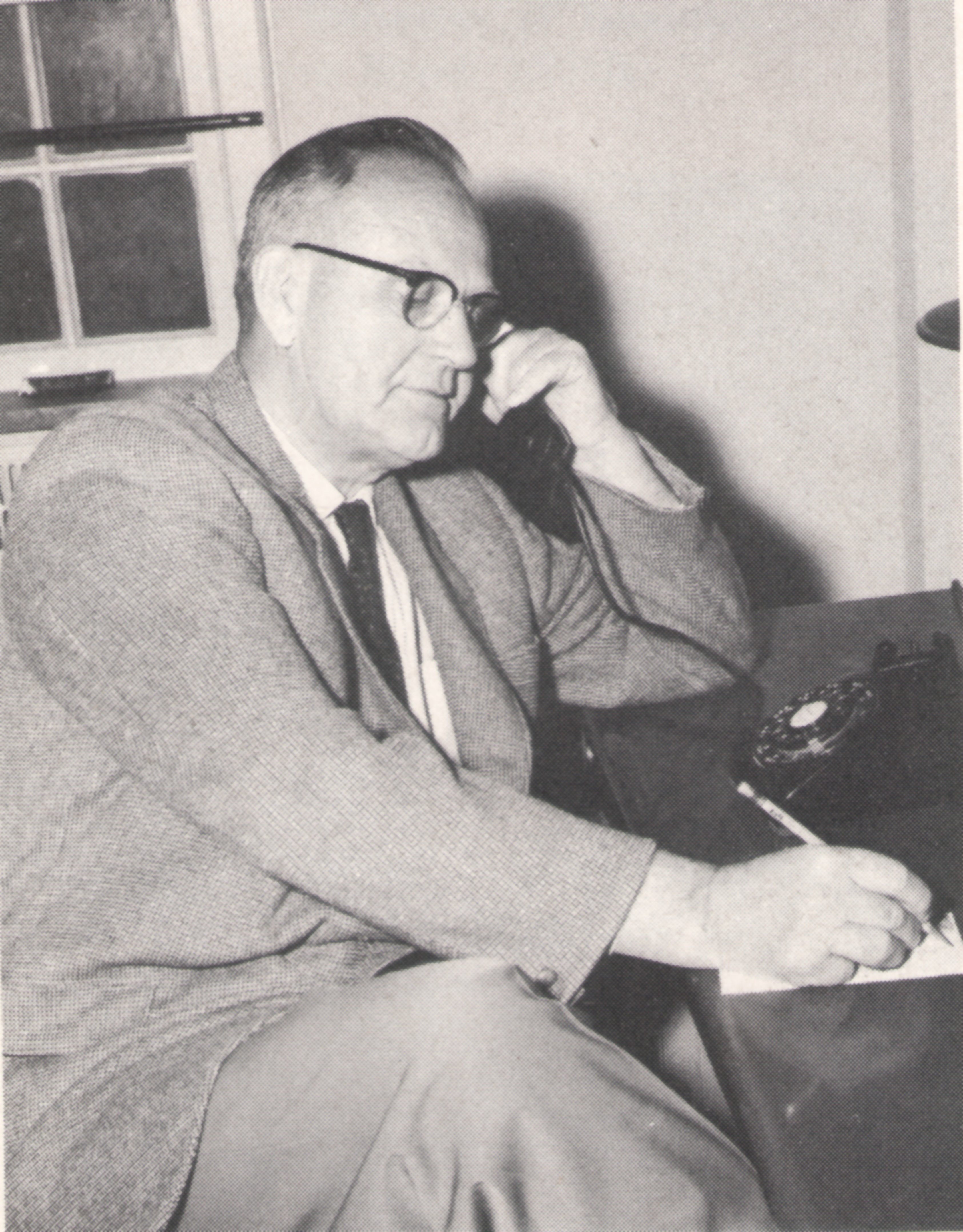
Gillen (right) and a close personal friend.

A big problem with almost any skins game is that it gives an unfair advantage to players with high handicaps. My friend Tim—who is the mathematician-in-residence of my regular Sunday Morning Group—invented an improved version seven or eight years ago, and my regular golf buddies and I have played it ever since. Tim’s version eliminates all the weaknesses of the regular game. It’s so good, in fact, that we call it Perfect Skins. Here’s how it works:

Each player, on the first tee, throws in some mutually agreed-upon sum—say, ten bucks. That money is divided into two skins pools, one for the front nine and one for the back, and every skin won is worth a proportional share of its pool. (If three skins are won on the front nine, for example, each is worth a third of the front-nine skin pool; if a single player finishes with two of those three skins, he wins two-thirds of the pool.) The object is the same as in any skins game: to win holes outright, with scores unequaled by other players. But there’s a twist: in Perfect Skins, a player who loses a hole outright, with a score that’s worse than everyone else’s, gives up a skin—or acquires a negative one, if he has none to give up. Let’s say the sixth hole is birdied by one player, parred by two players, and bogeyed by the fourth; in that case, the player with the birdie wins a skin while the player with the bogey loses one. We call negative skins “Gillens,” after the last name of the particular player whose long-running success at regular skins Tim was trying to thwart with his invention. Gillen hates Perfect Skins.

Any player with a negative skin balance may buy himself back to zero before teeing off on any hole during the nine-hole match, at the price of one dollar per negative skin, with the money going into the pool for that nine—but he may do so only once during the nine. That leads to the really interesting part of the game: Winning a skin when your balance is negative feels like a waste, because it merely moves you back toward zero rather than earning you a share of the pool. But buying back too early in a match raises the risk that one or two bad holes near the end of the nine could give you a deficit too large to eliminate before the end of the nine.

If you haven’t used your buyback yet, acquiring a negative skin is often less costly than permitting another player to win a positive one and thereby gain a share of the pool. That means that attempting a very risky shot may be to your advantage, if there’s a chance that doing so will prevent another player from winning the hole, or if doing so will ensure an outright loss by a player who now has a positive balance—unless you yourself hold a couple of skins, in which case your best strategy may be to play defensively. A player who ends the nine with a negative skin balance—say, because he lost the final two holes outright—owes the pot two dollars for each negative skin still in his possession at the end of the nine.

Perfect Skins eliminates all the shortcomings of regular skins: it greatly reduces the influence of luck, because erratic players are punished for their disasters in addition to being rewarded for their fluky good fortune; it eliminates the high-handicap advantage, because the players with the most strokes are also the ones who are the most likely to suffer the kinds of disasters that lead to negative skins; it keeps everyone in the game, because not losing a hole can be just as important as winning it, and players who suffer a string of bad holes can redeem themselves by buying back into the game; it adds a new level of pressure, especially on the final tee, because skins aren’t safe until the last putt has fallen.

I’ve played Perfect Skins in threesomes, foursomes, and fivesomes, and it works beautifully, though somewhat differently, in all those combinations. With three players, for example, the skin balance changes on every hole unless all three players tie—meaning that the standings can shift dramatically over just a few holes. With five players, in contrast, outright victories are harder to come by, so that a single skin successfully held to the end of the match could end up being worth the entire pool. In all combinations, the most important issue for any player with a negative balance is deciding when to buy back to zero. You have to think realistically about how well or poorly you’re likely to play the holes that lie ahead, and who still has strokes, where you yourself have strokes, and where you can afford to be aggressive.

Tom Watson, Seventh Grader

Wheezer, 1962

Tom Watson and I had the same seventh-grade math teacher. Watson is six years older than I am, but we attended the same school, in Kansas City. It was called Pembroke-Country Day then and is called Pembroke Hill now. It was boys-only in our day; it began to go co-ed when I was a senior.

My father had had the same math teacher, too, many years before. In my father’s day, the math teacher’s nickname was Tarz, short for Tarzan, because he was built like Johnny Weissmuller; by the time Watson and I had him, his nickname was Wheezer. He looked like Lyndon Johnson, with tremendous gravity-stretched jowls and ear lobes. Age must have lengthened his scrotum, too, because he was always careful to lift his testicles out of the way before sitting in a chair or leaning back against the front of his desk. Sometimes, my friends and I, as we took our seats for math, would pretend to lift our testicles out of the way, too.

Wheezer supervised one of my study halls. One day, an eighth-grader hid a running tape recorder inside a locker in the back of the room, and every five or ten minutes the tape would scream, “WHEEEEEEE-ZER!” There would be pandemonium; then, gradually, everyone would settle down; then it would happen again.

When Watson was in high school, in the mid-sixties, he was the captain of the golf team, of course, but he was also an outstanding shooting guard on a very good basketball team, and he was the quarterback (and leading rusher) on the football team, which won a conference championship. He would put his golf clubs away every August, when two-a-day football practices began, and he wouldn’t touch them again until February, when basketball season was over—a mentally and physically healthy approach to sports that athletic prodigies don’t follow anymore.

I never saw Watson play golf, but I did cheer for him at basketball and football games. Then, in 1967, he went off to Stanford without a scholarship, figuring he’d end up in the insurance business.

Watson was the subject of one of my first magazine articles, a profile for Esquire, which ran in 1982. I had to revise the ending over the summer, as it went to press, because he suddenly won the U.S. Open, at Pebble Beach, after making his famous chip-in birdie on the seventeenth. And then, in July, after the issue could no longer be updated, he won the British Open, too.

These photographs are from Pembroke-Country Day’s yearbook for 1967, when Watson was a senior and I was in sixth grade. I’m pretty sure I was in the bleachers at the football game below, because my friends and I didn’t miss many. Watson is at the far left.

My Close Personal Friend Tiger Woods

In late 2005 and early 2006, on assignment for Men’s Vogue in Los Angeles and Orlando, I got to spend some time hanging around with Tiger Woods. (Woods wanted Vogue to pay attention to his clothing lines and so had agreed to be interviewed at some length by a print reporter, something he ordinarily hates and rarely does.) He buffaloed me on at least one issue—he described his marriage as one of the proudest achievements of his life—but I liked him a lot, and I enjoyed being with him, and I found him much more interesting to talk to than, for example, any of the handful of Major League Baseball players I had to interview, many years ago, on an assignment for the short-lived magazine Inside Sports. (Imagine the most annoying jock in your high school class permanently frozen at his moment of maximum annoyingness.) Woods gets close to zero credit for being forthcoming, but, actually, over the years he has intelligently explained a huge amount about what goes on in his mind as he competes—more than any other great athlete I can think of.

He has also been surprisingly nonchalant about the potential peril of getting out of the bed in the morning. He loves roller coasters. He races down double-black-diamond slopes despite not knowing all that much about skiing. He has taught himself to hold his breath underwater for four minutes, and he has dived to a hundred feet without scuba tanks. He has gone bungee jumping in New Zealand. And he drives his car too fast, in my middle-aged opinion. Also, of course, those cocktail waitresses.

In Florida, the idea was that Woods would put on a Prada suit and zip around Lake Butler on a jet ski while the photographer chased him in a power boat. But there was a problem. The sky had darkened steadily through the morning, and the wind had picked up to thirty miles an hour, and the National Weather Service had issued a small-craft advisory. The owner of the power boat said the water was so choppy that if he ventured onto the lake he might not be able to return to the same dock. Canceling the shoot would be the prudent thing to do, everyone agreed—except Woods. “It’s not that rough,” he said, like a ten-year-old making a case for visiting Disney World in a thunderstorm.

Woods eventually prevailed on the weather issue. After a few minutes on the water, though, he circled back toward the dock, and I and all the other people on shore assumed that the ugly conditions had brought him to his senses. But then he shouted, “How fast is this thing supposed to go?” It turned that he hadn’t been able to crank the jet ski to anything like its top speed, 60 m.p.h., and he couldn’t figure out what might be wrong. A neighbor of the jet ski’s owner removed several handfuls of weeds from under the hull, and Woods happily took off again, at full throttle.

Thirty minutes later he was back on land, very pleased. As he changed out of his wet clothes, he said, “Watch this,” and poured a half-cup of water from one of his Cole Haan oxfords

With a great deal of trepidation, I’m going to open this blog to comments. But I can always change my mind. Real names, please.