
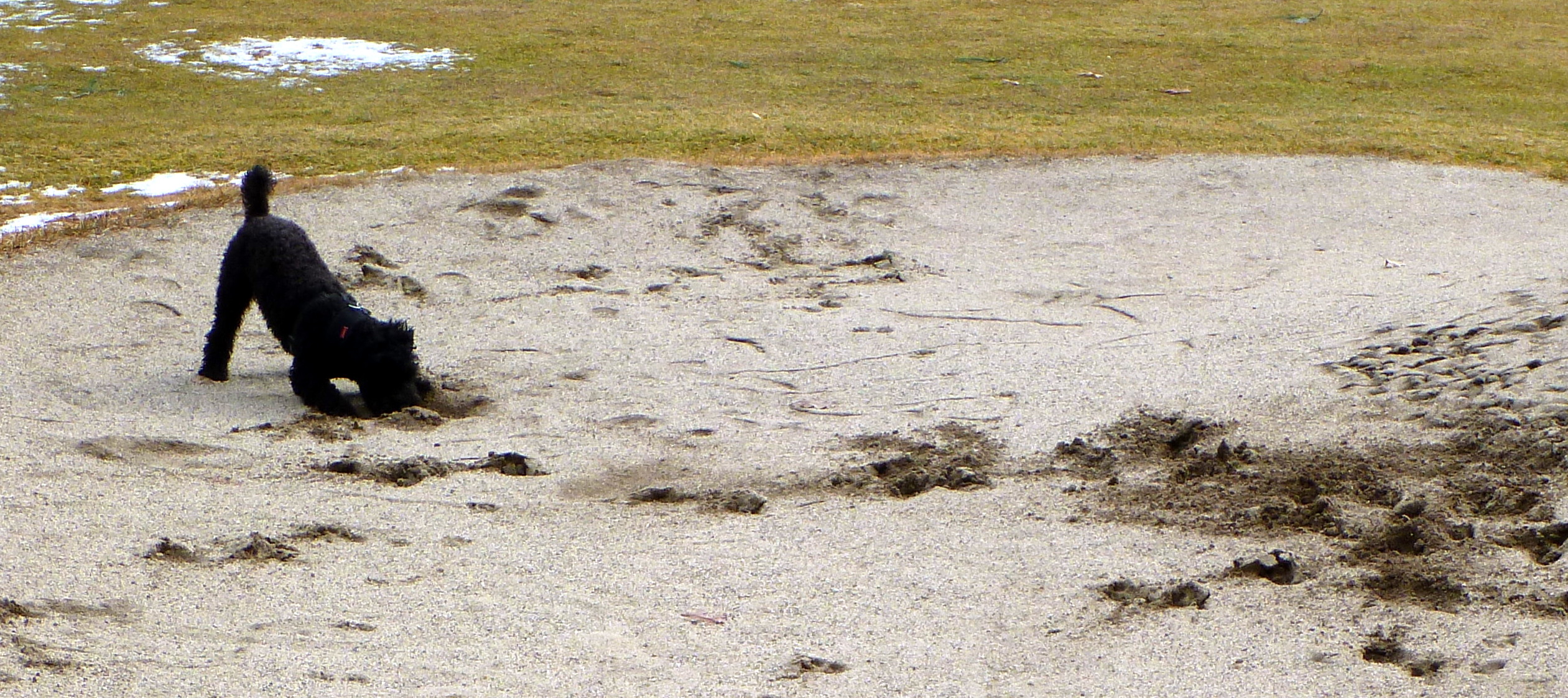
Golf, much more than other sports, is a game of good and bad luck. A great drive rolls into a divot: bogey. A lousy drive bounces off a boundary stake: birdie. Such unpredictability isn’t a defect. The tension between happy accidents and undeserved disasters helps to turn mere hackers into obsessives and philosophers. To make tennis comparably thought-provoking, you’d have to shift the lines during rallies and randomly lift and lower the net.
Yet golfers complain. Instead of savoring the game’s sublime inconsistency, we yearn for courses as predictable as tennis courts. We grumble when greens aren’t flawless, when fairways aren’t uniformly carpet-like, when sand is either too fluffy or not fluffy enough. A friend of mine once skulled an explosion shot, then slammed his wedge against his bag and cursed the greenkeeper’s crew for having failed to undo the effects of the previous day’s hard rain. Tour pros are even more finicky. If the sand in one trap isn’t indistinguishable from the sand in every other, they gripe.
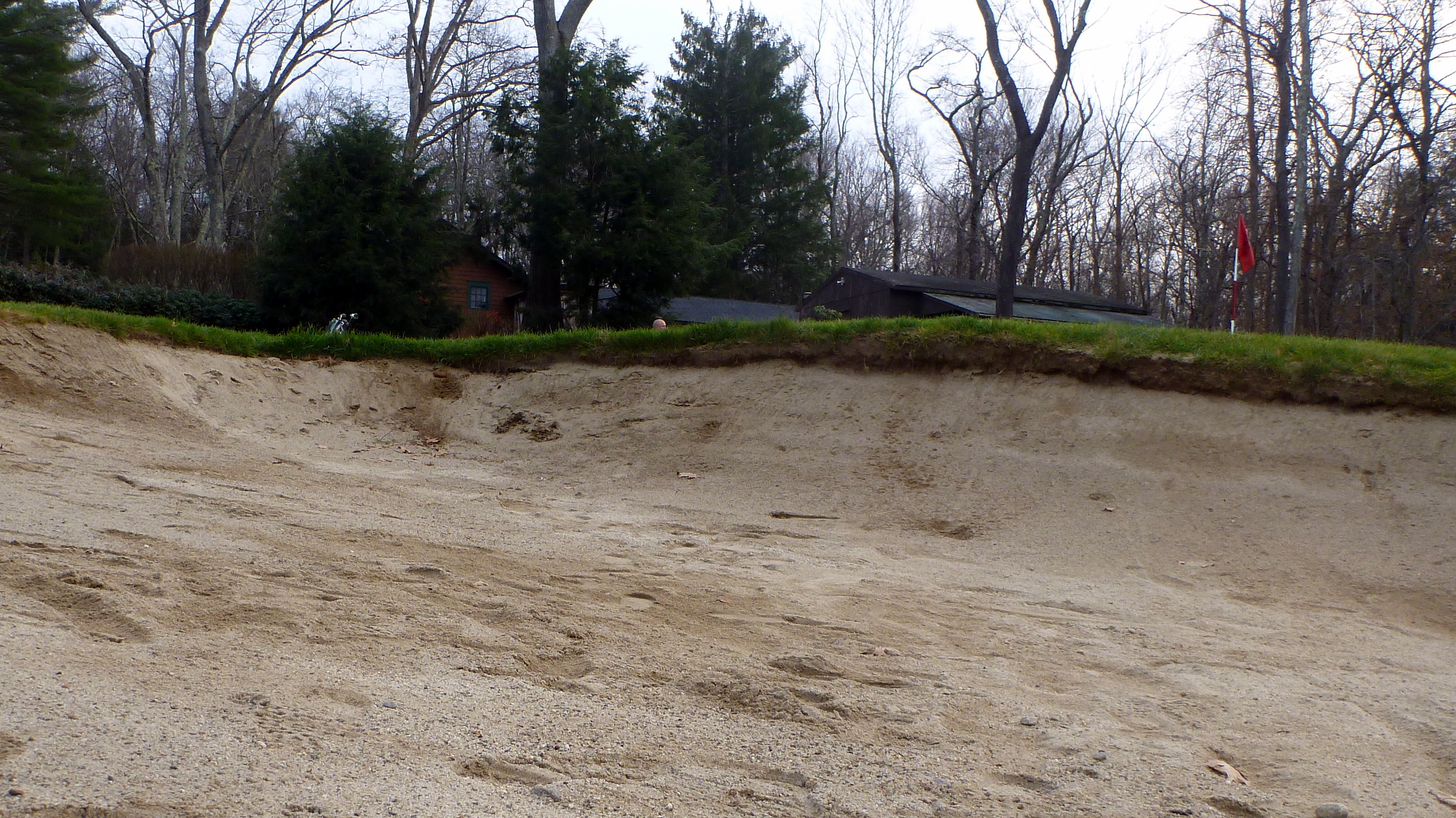
Complaints about “unfair” bunkers are especially contrary to the spirit of golf: aren’t hazards supposed to be hazardous? On TV, the standard greenside-bunker shot is about as thrilling to watch as a two-foot putt. You know the guy is going to spin it close, and he knows he’s going to spin it close—otherwise, he wouldn’t have yelled “Get in the bunker!” when his ball was in the air. Sand’s function in a tour event is often just to make the surrounding grass seem troublesome.
There’s a simple remedy: follow the example of Pine Valley, the legendary New Jersey golf club, which for decades has been listed at or near the top of nearly every ranking of the best courses in the world. Pine Valley has many, many bunkers—some small, some large, some soft, some hard some coffin-shaped, some bottomless, some seemingly miles across—but no rakes. The club’s maintenance regularly smooths everything out, but, if your ball ends up in a footprint (or behind a rock or under a cactus), that’s your tough luck, and you deal with it. As you should.
Rake-free bunkers would make televised golf a lot more interesting to watch. They would even be good for choppers like you and me. Pristine, consistent bunkers are expensive to build and maintain. Why not let a course’s sandy areas take care of themselves, and spend the savings on something more obviously beneficial, like cutting back overgrown trees? Most golfers, who can’t hit sand shots anyway, wouldn’t notice a difference. (That guy I mentioned earlier skulls balls from well-conditioned bunkers, too.) Everyone else either would learn an arsenal of useful new shots or would get better at doing what bunkers are supposed to make golfers want to do: stay out of them in the first place.
Amen
Can you be more specific about the content of your article? After reading it, I still have some doubts. Hope you can help me. https://accounts.binance.info/en-ZA/register?ref=B4EPR6J0
Your point of view caught my eye and was very interesting. Thanks. I have a question for you. https://www.binance.com/register?ref=QCGZMHR6
Thank you for your shening. I am worried that I lack creative ideas. It is your enticle that makes me full of hope. Thank you. But, I have a question, can you help me?
Xoso6688, huh? I’ve heard whispers. Feels like a fresh place to try my luck. I hope it brings me fortune! Check it out: xoso6688
3333betcom… The name’s got a ring to it! Never played there before, but I’m always up for a new betting spot. Fingers crossed! Give it a look: 3333betcom
4playbr, sounds interesting! Maybe I’ll give it a shot tonight – if I’m feeling lucky, who knows what might happen? My next stop: 4playbr
Everything is very professional and the customer support team is helpful. I feel safe playing on bd8777but knowing the site is secure.
Finally found a site that doesn’t crash every five minutes. The navigation is intuitive and the bonuses are generous. Love laga88login so far!
I’ve been trying a few sites lately, but this one really stands out for its speed and reliability. Definitely worth checking out idbatak5d
Great atmosphere and very friendly community. It is the perfect spot to unwind and try your luck. I always choose phxz777.